Matsya Narayana Temple Chennai
Matsya Narayana Temple in Uthandi, Chennai, Tamil Nadu. Situated near the glistening shores of the Bay of Bengal, this temple is not only a pilgrimage destination; it’s an experience that takes you back to the epic stories, divine power, and the essence of conservation. Buckle up, then, and let’s immerse ourselves in the incredible world of the Matsya Narayana Temple!
You see, in India, each stone, each corner, each wavelet in the water has stories of gods and goddesses, of sages and heroes whispered to it. And the Matsya Narayana Temple is no exception. It is very close to my heart, and I’m confident by the time we’re through for the day, it shall be close to yours as well. It’s a place where you can feel the presence of the divine and see the splendor of devotion.
History of Matsya Narayana Temple: A Relatively New Shrine with Ancient Roots
So, when we discuss the history of Indian temples, we tend to envision buildings that are thousands of years old. But the Matsya Narayana Temple in Uthandi is not quite like that. It is a relatively new addition to Tamil Nadu’s religious landscape, constructed on the liberally gifted land to the Chinmaya Mission about 25 years ago. This makes it a tribute to modern piety and the abiding strength of faith. Although the physical edifice is recent, the god it shelters, Lord Matsya Narayana, dates back to the dawn of time itself. This temple is a new paean to an ancient avatar of Lord Vishnu, infusing old wisdom into a new era.
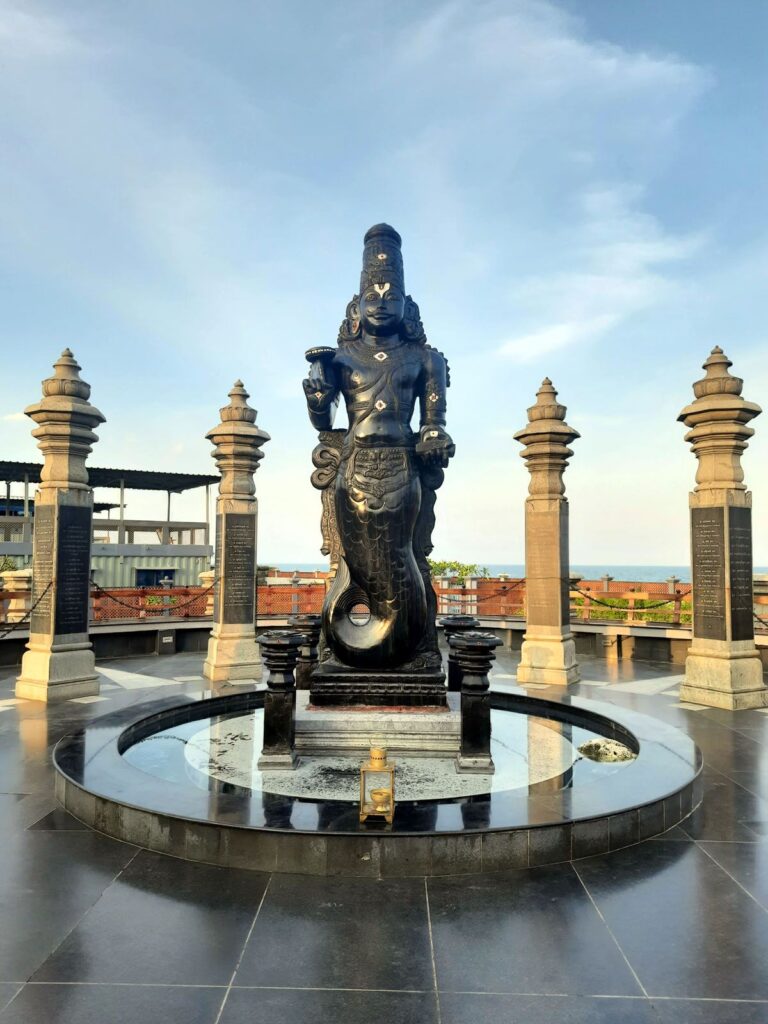
The concept behind this Matsya Narayana Temple is quite unique. Unlike many traditional temples where the idols are enclosed within walls, here, many of the statues are open to the sky, embracing the elements. It’s like Lord Vishnu himself is directly blessing the vast expanse of the sky and the sea. This open-air design creates a truly liberating and spiritual atmosphere, making your darshan (sacred viewing) even more personal and profound.
Read More>> Shri Bettada Byraveshwara Temple
Legend of the Matsya Narayana Temple: The Cosmic Fish and the Great Deluge
Oh, the myths! This is where the Matsya Narayana Temple comes alive. Dedicated to Lord Vishnu in his Matsya avatar, the first incarnation among the Dashavatara (ten major avatars), this is no ordinary fish; this is the cosmic fish, the deliverer of creation!
The story of Matsya is beautifully narrated in several Hindu scriptures, highlighting the protective and preserving nature of Lord Vishnu. Let me share a popular version with you, as mentioned in the Bhagavata Purana and the Matsya Purana:
“At the dawn of a Kalpa (a cycle of creation), a mighty deluge, a pralaya, rushed to engulf the whole creation. A demon named Hayagriva had stolen the sacred Vedas (the source of all knowledge) from Lord Brahma when he was asleep. Without the Vedas, the world could not be recreated, Lord Vishnu, the preserver, knew. To recover the Vedas and save all creations from the coming flood, Lord Vishnu became a huge fish, Matsya.”
This is where the story becomes even more thrilling. There was a devout king called Manu, who was doing his morning oblations by offering water in a river. When he cupped his hands, a small fish swam into his palms and begged him for help against larger fish. Manu, with his gentle heart, put the fish into his kamandalam (water pot). But the fish continued to grow, eventually exceeding the pot, then the pond, the lake, and finally, the ocean! That’s when Matsya showed Manu his real divine form as a huge, gigantic fish.
Matsya also forewarned Manu of the impending great flood that would level everything in seven days. He asked Manu to construct a big boat and bring pairs of all animals, all kinds of seeds, and the seven great sages (Saptarishis) along with their spouses. As the deluge came, Matsya again manifested himself, and Manu, following instructions, tied the boat to Matsya’s giant horn with Vasuki, the sacred serpent, as a rope. Matsya then took them through the raging waters safely until the flood receded. Following the deluge, Lord Vishnu, as Matsya, overpowered Hayagriva and returned the Vedas to Brahma so that the creation could start all over again.
Thus, the Matsya Narayana Temple is not merely about a fish; it is about divine intervention, guarding of knowledge, and perpetuation of life itself. It serves as a reminder that even amidst complete chaos, there is always hope and a guiding hand. This myth makes the Matsya Narayana Temple immensely significant.
Read More>> Prashar Rishi Temple, Himachal Pradesh
Cultural, Spiritual, and Mythological Significance of the Temple
Cultural Significance: It is a colorful center where the ancient customs are preserved. The Matsya avatar stories get transmitted generation after generation, usually by temple ceremonies, traditional paintings, and bhakti songs. It emphasizes virtues such as sympathy (as exhibited by Manu towards the fish) and trust in divine providence. The calm atmosphere of the temple also provides a venue for cultural meetings and religious debates.
Spiritual Significance: To the devotees, the Matsya Narayana Temple is a source to acquire protection, wisdom, and success against adversities by seeking blessings. The first avatar, Matsya, represents the origin of creation and the maintenance of dharma (righteousness). Worshiping Lord Matsya Narayana is said to pardon one for his sins and bring about spiritual evolution. The innovative open-air architecture facilitates a direct experience with the divine and the natural, creating an ambiance of peace and serenity.
Most people feel a deep sense of tranquility here, which is worth its weight in gold in our otherwise hectic lives. The proximity of the Bay of Bengal does much to add to the spiritual environment, and the soothing hum of the waves further contributes to the meditative experience.
Mythological Significance: As we’ve outlined, the temple is a living exemplar of the legend of the Matsya avatar, a foundation stone of Hindu mythology. It’s a tangible embodiment of one of Lord Vishnu’s greatest acts of cosmic conservation. It emphasizes the repeating cycle of creation and destruction, and the preserver’s role of Vishnu.
Read More>> Kanchi Kamakshi Temple: One of Powerful 18 Shakti Peethas
Festivals and Special Days: When the Matsya Narayana Temple Truly Shines
Similar to any other colorful Hindu temple, the Matsya Narayana Temple observes various festivals with great enthusiasm. These are the days when it is most lively with worship and festivities at the temple.
Matsya Jayanti: This is certainly the most significant festival that is observed at the Matsya Narayana Temple. This is the birth day of Lord Matsya. It occurs on Chaitra Shukla Paksha Tritiya, the third of waxing moon in the Hindu month of Chaitra (typically March or April). On this day, there is special abhishekam and pujas done. Fasts are often kept by devotees, Vishnu mantras are recited, and Vishnu Sahasranama (a thousand names of Lord Vishnu) is chanted. The temple is covered in flowers, and the devotional energy is alive and pulsating. It’s just a beautiful sight to see.
Vaikuntha Ekadashi: Though indirectly associated with Matsya avatar, Vaikuntha Ekadashi is an important day for all Vishnu temples, including the Matsya Narayana Temple. It is believed that on this day, the Vaikuntha Dwaram (the gate to Lord Vishnu’s heaven) is open, and the devotees who go through it achieve salvation. Special rituals and prayers are performed.
Saturdays: On Saturdays as a whole, the day is auspicious for praying to Lord Vishnu. You can expect a decent crowd at the Matsya Narayana Temple on Saturdays, with a large number of devotees visiting to pray and seek their blessings.
Other Auspicious Days: Festivals such as Rama Navami, Janmashtami (birthday of Lord Krishna), and Diwali are also celebrated with full ritualistic prayers and festive decoration, attracting a decent number of devotees to the Matsya Narayana Temple.
Crowded Days:
Generally, the Matsya Narayana Temple is more crowded during Matsya Jayanti, Vaikuntha Ekadashi, and Saturdays. Parking will be a little difficult during these periods, so it’s best to time your visit accordingly. Weekends are generally more crowded than weekdays. If you want a quiet experience, visit during a weekday morning.
Read More>> Venugopala Swamy Temple Kannambadi: Lost for Decades Under Water
Special Poojas Conducted at the Matsya Narayana Temple
The Matsya Narayana Temple provides several special poojas that the devotees can attend to gain specific blessings. Although the specific list and fees may differ, typical poojas include:
Archana: A standard offering where the priest recites your family names and gotra (family lineage) while presenting flowers to the deity.
Abhishekam: Ritual washing of the idol using different sacred liquids such as milk, curd, honey, ghee, and fruit juices. This is usually conducted on special occasions and is highly meritorious.
Homam/Havan: Fire worship done with a specific intent, such as to seek prosperity, good health, or elimination of obstacles. These are usually done on special request or during grand festivals at the Matsya Narayana Temple.
Vishnu Sahasranama Archana: Reciting the thousand names of Lord Vishnu is thought to be very potent for spiritual elevation and general well-being.
Annadanam: The temple may also provide or solicit Annadanam (donation of food) on specific days, which is a big act of charity in Hinduism.
Always contact the temple authorities in advance for information regarding special poojas and their schedules.
Read More>> Shree Jagannath Temple Hyderabad
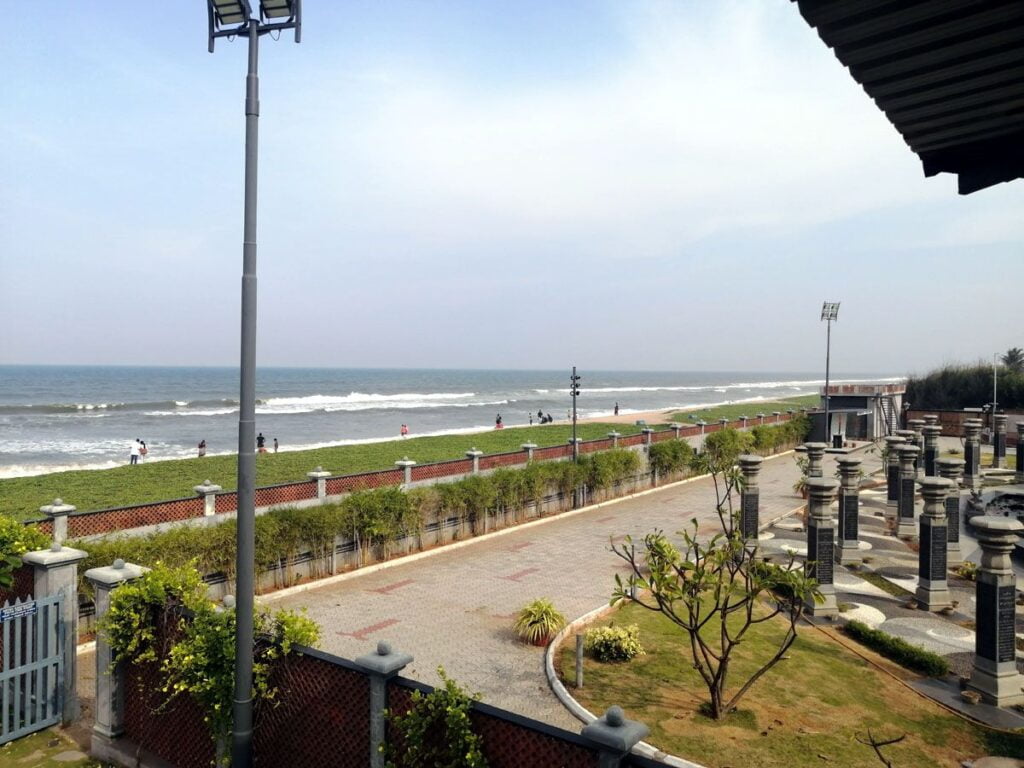
Unique Architectural Style and Carvings of the Matsya Narayana Temple
The Matsya Narayana Temple architecture is what makes it stand out in the first place. It’s a stunning combination of classic South Indian temple architecture with a very open and contemporary style.
Open-Air Structure: As I said, much of the temple, even the main Matsya Narayana idol, is left open to the sky. It is a very rare architecture where one gets an unparalleled feeling of oneness with nature and cosmic energy. It means that the divine is not limited within walls but pervasive. The pleasant sea breeze from the Bay of Bengal contributes to the peaceful environment.
The 12-foot Granite Matsya Idol: The deity presiding over the temple, Lord Matsya Narayana Perumal, is a stunning 12-foot tall granite idol carved out of one block of granite. The imposing but graceful figure is the crowning glory of the Matsya Narayana Temple.
108 Pillars with Inscriptions: The 108 pillars, approximately 9 feet in height, go around the central Matsya Narayana idol. And this is the interesting part: all these pillars are engraved with passages from the Vishnu Sahasranama and Ashtothara Shatanamavali (108 names of the divine). The inscriptions are in Tamil, Sanskrit, and English, thus being understood by more people. It’s a fantastic method to inform tourists about the scriptures as they make parikramas of the deity. It really makes the Matsya Narayana Temple a learning destination.
Pebbled Pathway: You will also find a pebbled pathway inside the temple complex. It is not merely for show; it’s said to impart an acupressure treatment as you tread along, providing physical and spiritual relief. It’s such thoughtful gestures that make the Matsya Narayana Temple a whole experience.
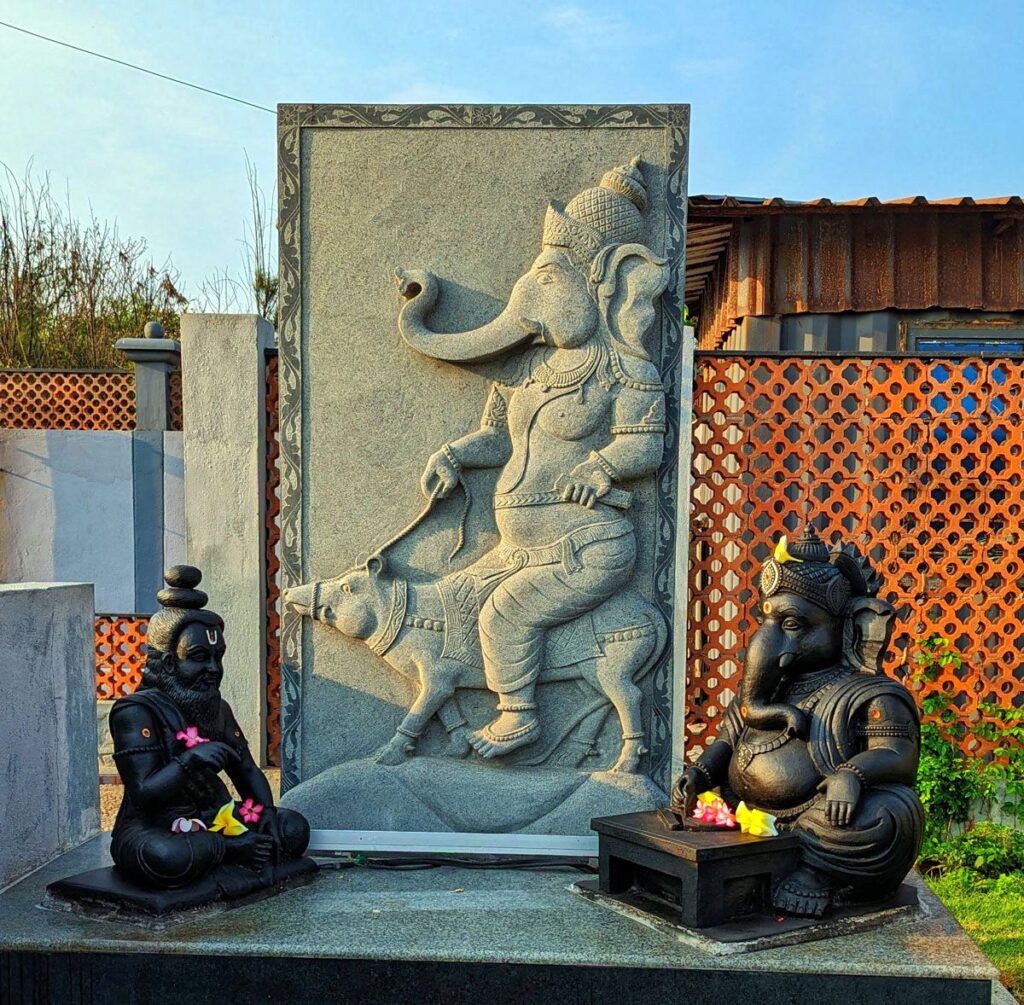
Meditation Park: The temple complex also has a tranquil meditation park with images of Lord Ganesha, Lord Hanuman, and Lord Shiva. This presence of multiple deities highlights Hinduism as an inclusive religion and offers various points for veneration and reflection. The general layout reflects simplicity, harmony with nature, and a meditative environment. The detailed carvings, although not as old as in some other temples, are nevertheless lovely and feature various scenes from mythology, contributing to the temple’s beauty.
Read More>> Thuravoor Temple of 2 Powerful Deities Narasimha & Sudarsana
Myths and Beliefs Associated with the Matsya Narayana Temple
Outside of the primary legend, there are a number of beliefs and common myths surrounding the Matsya Narayana Temple and the Matsya avatar in general:
Shield from Calamities: It is believed by devotees that worshipping Lord Matsya Narayana will shield them from all forms of calamities, tragedies, and evil energies, just as he saved Manu and creation from the deluge. Several visit the Matsya Narayana Temple for the explicit purpose of seeking divine security in times of trouble.
Conferring of Knowledge and Wisdom: As Matsya avatar recovered the Vedas, he is also related to knowledge and wisdom. Students and aspirants of academic achievement frequently go to the Matsya Narayana Temple to pray for academic success.
Healing Illnesses: The pebbled path, as stated, is thought to have healing properties, and certain followers feel that walking barefoot on it on a regular basis can cure certain physical illnesses because of the acupressure points.
Granting Wishes: Similar to most gods, it is a general perception that pure prayer and devotion at the Matsya Narayana Temple can result in the granting of genuine wishes and desires. Serenity and Peace: Numerous visitors speak of the tremendous feeling of peace and tranquility they have while being on the grounds of Matsya Narayana Temple, attributing it to the strong divine energy emanating there.
Read More>> Murudeshwar Temple Karnataka: India’s 2nd Massive Shiva Statue
Matsya Narayana Temple Timing: Schedule Your Peaceful Visit
The Matsya Narayana Temple typically has timings that enable both morning and evening darshan. Though always better to confirm with the temple authorities directly, here are the general timings:
Morning: 6:30 AM to 12:00 PM (or 10:30 AM some sources indicate)
Evening: 5:00 PM to 8:30 PM (or 4:30 PM to 8:30 PM some sources indicate)
These schedules allow you to soak in the peaceful atmosphere of the Matsya Narayana Temple. As an experienced guide, I would recommend visiting early morning or late evening if you want to experience a peaceful trip and not encounter big crowds. Watching the sunrise or sunset on the sea with the temple ambiance is simply enchanting.
Hindu Places to Visit Near the Matsya Narayana Temple
As the Matsya Narayana Temple is situated on East Coast Road (ECR) in Chennai, there are a few other prominent and stunning Hindu temples and points of interest nearby. You can simply add your visit to the Matsya Narayana Temple to these close-by places for a worthwhile spiritual and cultural day trip.
ISKCON Temple, Chennai: Not far from here, this magnificent temple for Lord Krishna is famous for its lovely architecture, colorful festivals, and peaceful environment.
Sri Shirdi Sai Baba Temple, Injambakkam: Another favorite spiritual attraction for Sai Baba devotees, which provides a prayerful and meditative environment.
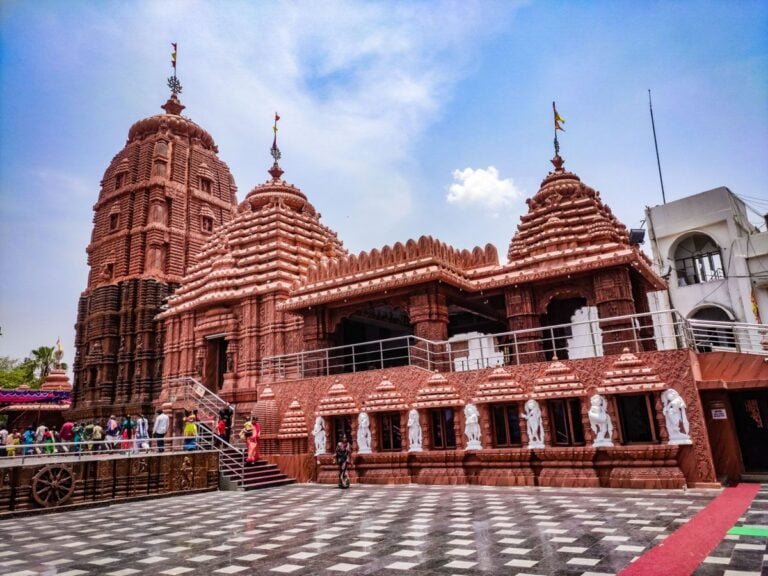
Puri Jagannath Temple, ECR: A duplicate of the well-known Jagannath Temple in Puri, Odisha, this temple worships Lord Jagannath, Balabhadra, and Subhadra.
Sri Nithya Kalyana Perumal Temple, Thiruvidandhai: This is an ancient temple, one of the 108 Divya Desams (sacred shrines of Vishnu) and is particularly revered by those who come to seek blessings of marriage.
Mahabalipuram: Although not a temple in the singular, this UNESCO World Heritage destination is a must see. It’s a group of ancient rock-cut temples and monolithic sculptures of the Pallava dynasty. It’s a brief drive south on ECR and provides an in-depth look at South Indian architecture and history. The Shore Temple here is especially iconic.
These surrounding locations make the location of the Matsya Narayana Temple a dense fabric of religious and historical marvels.
Read More>> Masani Amman Temple Coimbatore
Accommodation Options Around the Matsya Narayana Temple
Since it is located on the busy East Coast Road (ECR), you’ll have various accommodation options around the Matsya Narayana Temple, supporting various budgets and tastes.
Luxury Resorts: ECR offers luxury resorts with access to the beach, swimming pool, and other amenities. Try the likes of Radisson Blu Resort Temple Bay Mamallapuram (a bit further south though), or independent beachfront villas and resorts in Uthandi and Covelong.
Mid-Range Hotels: There are a number of comfortable hotels with decent services at affordable prices. Look at options in locations such as Injambakkam, Thiruvanmiyur, or Sholinganallur, which are all driving distance from the Matsya Narayana Temple.
Budget-Friendly Accommodations: If you are traveling on a low budget, there are guesthouses and even smaller lodges available in the local areas. Advanced booking is always advisable, particularly if you travel during holidays or peak season.
Most of these places provide easy accessibility to the ECR, which will make traveling to the Matsya Narayana Temple and other local sights very convenient.
Read More>> Nageswaran Temple Kumbakonam: Abode of Lord of Divine Serpents
How to Reach the Matsya Narayana Temple
Accessing the Matsya Narayana Temple is very easy, considering it is on a major arterial road.
By Air: The closest airport is Chennai International Airport (MAA). From the airport, you may take a taxi or ride-sharing services (Ola/Uber) straight to the temple in Uthandi. It is about a 45-60 minute drive, depending on traffic conditions.
By Train: The closest large railway station is Chennai Central (MAS) or Chennai Egmore (MS). From here, you can board a local suburban train to a stop such as Velachery or Thiruvanmiyur and then take an auto-rickshaw or taxi to the temple. Alternatively, a taxi direct from the railway station is also possible.
By Road:
From Chennai City: Matsya Narayana Temple is found along the East Coast Road (ECR) at Uthandi, about 25-30 km south of the city center of Chennai. It is easily accessible by car, taxi, or public buses that traverse the ECR.
Self-Drive: If you are driving, ECR is a smooth scenic highway, so the drive is pleasant. The temple is a few kilometers ahead of VGP Golden Beach Resort in case you are approaching from Chennai.
Buses: Government and private buses ply on the ECR route regularly. You can get down at Uthandi and take a short auto-rickshaw ride to Matsya Narayana Temple.
Local Transportation: When you’re within the Uthandi locality, auto-rickshaws and cycle rickshaws can be found easily for local trips. Ride-sharing services also work fine here.

FAQs on the Matsya Narayana Temple
Being a tour guide, I receive numerous questions regarding this great spot frequently. These are some of the questions that people commonly ask and may assist you while planning your trip to the Matsya Narayana Temple:
Q1: Is there an entry fee for the Matsya Narayana Temple?
No, generally there is no entry fee to visit the Matsya Narayana Temple. However, donations for the temple’s upkeep are always welcome, and there might be charges for special poojas or offerings.
Q2: Are foreigners allowed in the Matsya Narayana Temple?
Yes, indeed! Matsya Narayana Temple greets the devotees and guests from any nationality and background. Temples in India are famous for their free-hearted hospitality.
Q3: Which time of day is best to visit for a serene experience?
As I had stated, early mornings (immediately after opening) or late evenings (just before closing) are best for a quieter experience at the Matsya Narayana Temple. The crowd is usually thinner, and the ambiance is extremely peaceful and meditative.
Q4: Is photography permitted inside the temple?
Whereas, photography of the outside and overall temple grounds is generally permitted, it’s not typically allowed within the sanctum sanctorum where the central deity is housed. Check for signs or ask temple officials to be certain. It’s a matter of respect for the holy place.
Q5: Is there a dress code for visiting the Matsya Narayana Temple?
Although there isn’t a formal enforcement, it’s always polite to dress modestly when you go to any Hindu temple. For women, this generally means covering shoulders and knees. For men, traditional Indian outfits or simple, casual clothes are acceptable. Avoid revealing clothes.
Q6: Can I purchase offerings or flowers from the temple?
Yes, you’ll often find small stalls just outside the Matsya Narayana Temple that sell flowers, coconuts, incense sticks, etc., to be used as offerings.
Q7: Is the temple wheelchair friendly?
Yes, thank God, the Matsya Narayana Temple in Uthandi has wheelchair friendly entrances and exits, which makes the temple accessible for everybody.