Bajreshwari Devi Temple Kangra
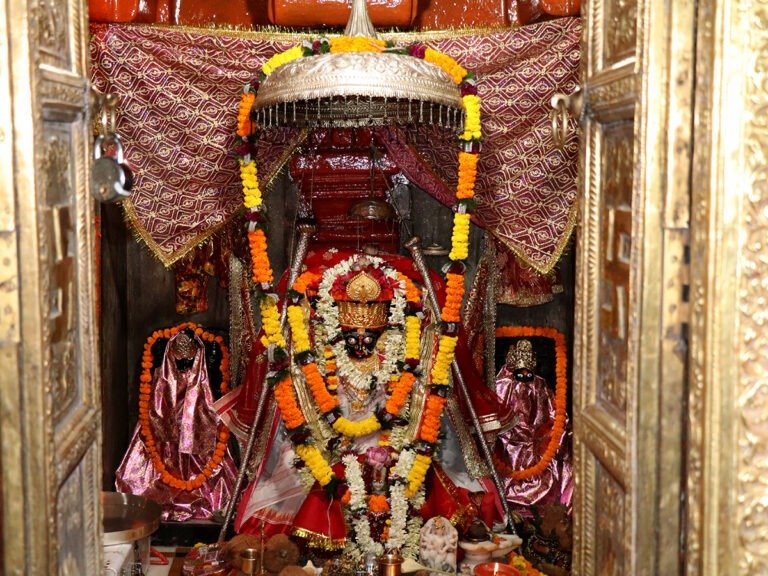
Bajreshwari Devi Temple is one of the ancient Hindu temples located in the beautiful town of Nagarkot in the Kangra district of Himachal Pradesh, this temple is a crown jewel of the Kangra Valley. It may also be referred to as the Kangra Devi Temple, as it is the most sacred temple in this place.
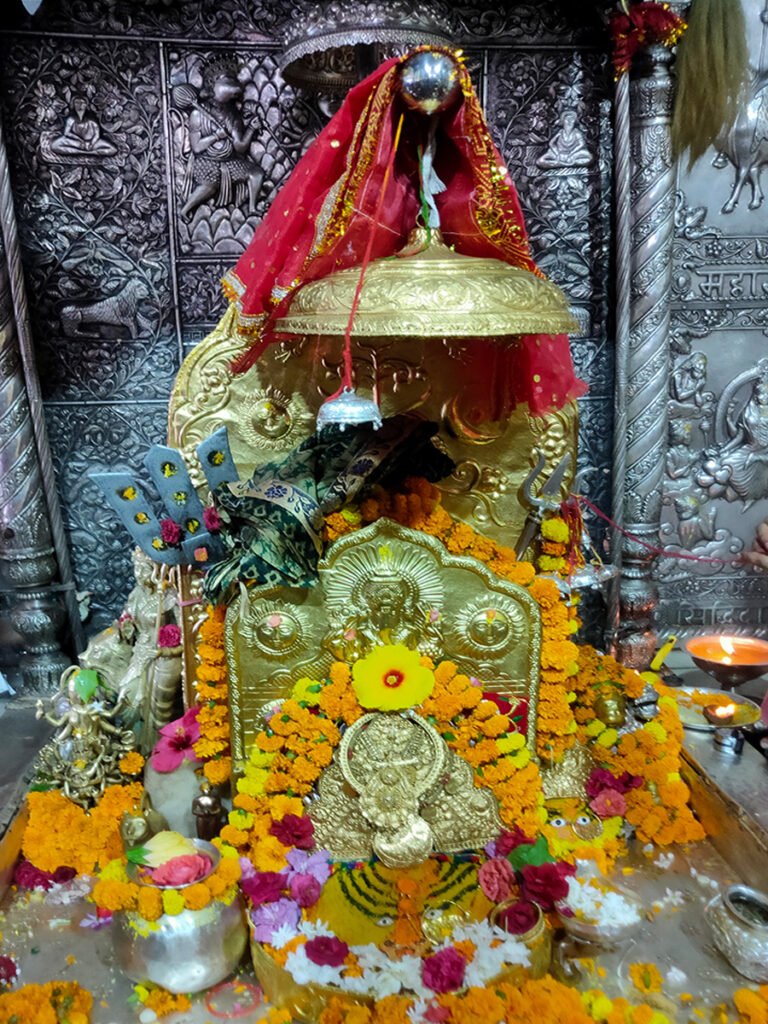
This holy place is one of India’s most significant Shakti Peethas, a site where the divine power of the Goddess is said to be most energetic. As soon as you arrive here, you can’t help but feel a profound sense of calm and to be attuned to something powerful and ancient. It’s a journey that will move your soul, and I’m here to guide you through every level of its amazing story.
Introduction: A Glimpse into the Divine
Imagine a temple that has seen centuries of worship, endured brutal invasions, and emerged from the ruins of a devastating earthquake. That, my friends, is the tale of the Bajreshwari Devi Temple. Its past is as dramatic and engrossing as the mountains that nurture it. This is not only a house of worship; it’s an icon of strength, a shining light of hope for millions of followers who throng here annually. The temple is devoted to Goddess Vajreshwari, otherwise referred to as Vajrayogini, the fierce and benevolent incarnation of Goddess Durga. The “Vajreshwari” in itself means “the lady of the thunderbolt,” a name that speaks volumes about her great power.
The temple is situated in the busy town of Kangra, which makes it the focal point of pilgrimage. You can sense the lively atmosphere of the town as you make your way through the congested lanes to the temple. The air is thick with incense, mantras, and the ringing of bells. The architecture itself is a stunning mix of styles, and the fort-like building announces to you immediately that this temple has a history of holding firm in the face of adversity. We’ll get into everything from the interesting myths to the nitty-gritty of how to plan your trip. So, let’s set out to the heart of the Bajreshwari Devi Temple.
Brijeshwari Temple Kangra History: A Saga of Resilience and Faith
The history of the Bajreshwari Devi Temple is a roller-coaster of triumph and tragedy. The early temple is thought to have been built by the Pandavas in the Mahabharata period. Yes, you got that right! The very same Pandavas who are our heroes of our great epic. Legend has it that Goddess Durga is said to have manifested in their dreams and ordered them to construct a temple dedicated to her in the town of Nagarkot so that she could protect them and grant them victory. Obedient to her heavenly command, the Pandavas constructed a stunning temple, which would become a hub of great spiritual energy for centuries to come.
With its popularity and, more notably, the huge wealth that it accumulated, however, came the vulnerability of being targeted by conquerors. Its most notorious encounter with a foreign nation was the frequent plundering by Mahmud of Ghazni during the early 11th century. Historians claim that the temple was so full of gold, silver, and precious gems that Ghazni plundered it several times, taking tonnes of treasure with them. He even destroyed the temple, making it a mosque for a while. But faith, they say, is a power greater than any army. Following Ghazni’s invasion, the local Hindu rulers, aided by the Raja of Delhi, retaken the fort and reestablished the temple, placing a new idol in enshrinement.
The temple was again desecrated in the 14th century at the hands of Firoz Shah Tughlaq. But again, it was rebuilt, this time by no lesser hand than the great Mughal emperor Akbar and his renowned finance minister, Todar Mal. Akbar, in a display of respect for local beliefs, went to the temple and assisted in restoring its former glory. Subsequently, Maharaja Ranjit Singh of the Sikh Empire also played an active part, adorning the domes of the temple with gold.
The worst tragedy in the recent history of the temple was the 1905 earthquake that ravaged the old temple, leaving behind only ruins. It was a heart-wrenching experience for the whole region. But the devotion in the region could not be crushed. The temple was rebuilt with the assistance of an ardent temple committee in 1920, and that is the beautiful building we have today. The temple as it exists today, though newer in its form, still carries with it the weight of its past and the unshakeable devotion of its followers. The history of this temple is a poignant reminder that though buildings fall, the essence of devotion and the sanctity of the site never fade.
Read More>> Mithila Shakti Peeth Bihar-Nepal
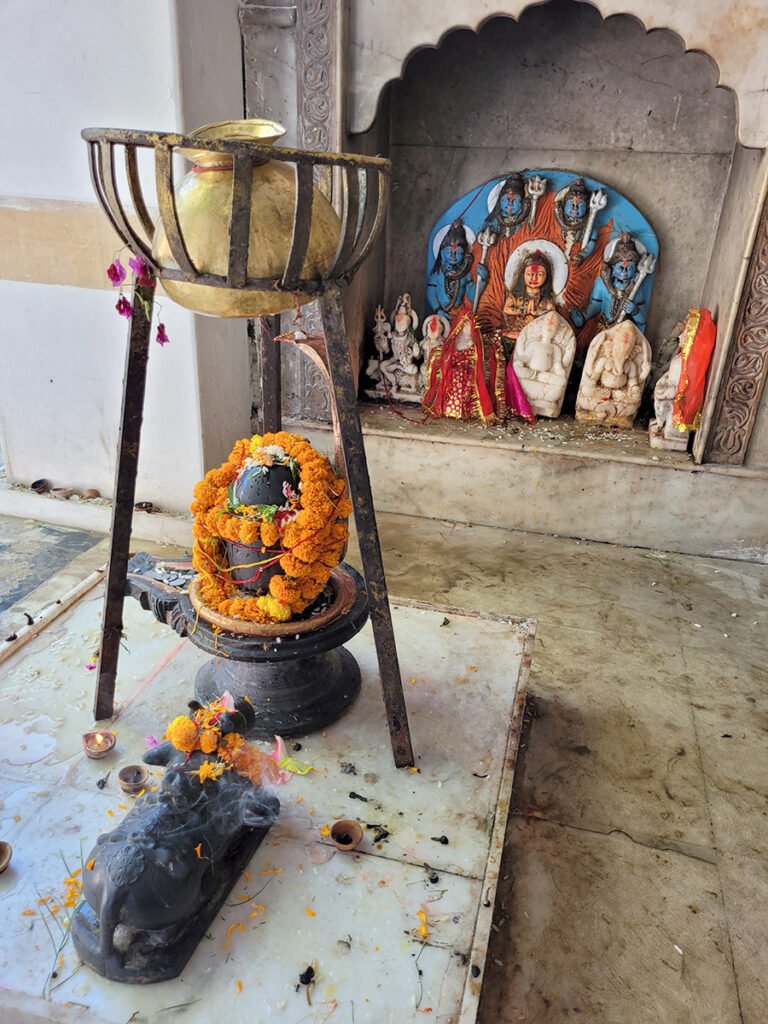
The Legend of the Temple: The Shakti Peetha Connection
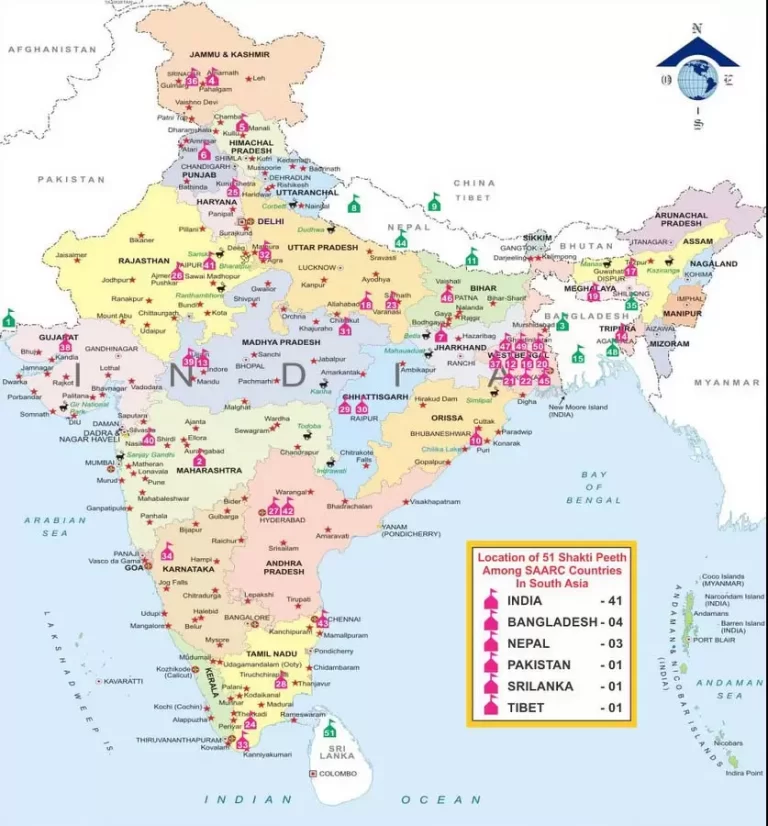
Legend of the Bajreshwari Devi Temple is organically associated with one of the strongest and most revered ideas in Hinduism: the Shakti Peethas. For those who are unaware, Shakti Peethas are sacred spots where the body parts of Goddess Sati are said to have dropped. The legend is the core component of the Shiva-Sati mythology, and it eloquently describes why this temple is so holy.
The legend goes something like this: Sati, daughter of King Daksha and first wife of Lord Shiva, immolated herself in a Yagna (fire ritual) conducted by her father. Daksha had intentionally insulted Shiva by not issuing an invitation to the ceremony. Filled with sorrow and anger, Lord Shiva lifted Sati’s dead body and started performing the Tandava, the dance of cosmic destruction. The whole cosmos shook in fear of his fury. To rescue the earth from complete destruction, Lord Vishnu, employing his Sudarshana Chakra, cut Sati’s body into 51 fragments. Wherever her fragments landed, those became the holy Shakti Peethas.
As per this deep mythology, Goddess Sati’s left breast is said to have fallen here very same location, making Bajreshwari Devi Temple a dominating Shakti Peetha. This is the reason why the temple is regarded as a source of food and divine energy. It is a site where the nurturing love and protective energy of the Goddess are experienced most intensely. Pilgrims visit it in search of her blessings, hoping that she would nurse and guard them, as a mother guards her child. The air itself that surrounds the temple carries this maternal energy and becomes an experience in itself, something unique and spirituality enriching.
Read More>> Jalandhar Shakti Peeth Devi Talab Mandir
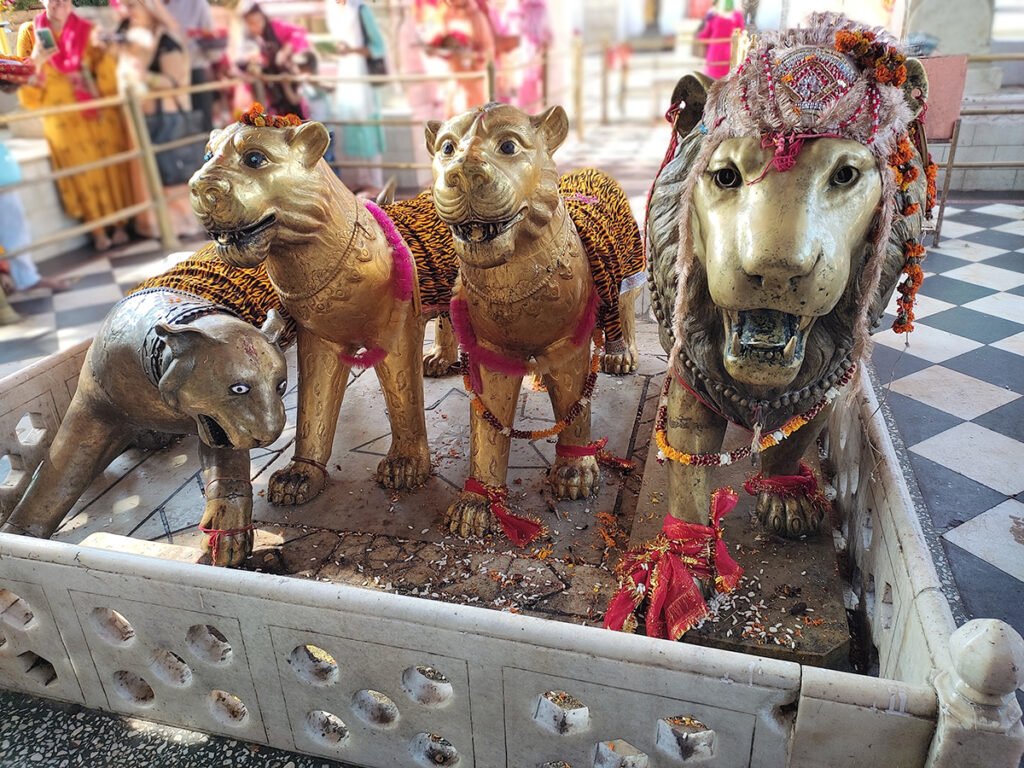
Cultural, Spiritual, and Mythological Significance
The Bajreshwari Devi Temple is of enormous significance on many levels—cultural, spiritual, and mythological.
Mythologically speaking, as mentioned above, its Shakti Peetha status is its major claim to fame. The tale of Sati and the establishment of the Shakti Peethas is a foundation of Hindu mythology, and being one of them confers upon the temple a unique status. It’s a tangible representation of a heavenly event that is worshipped throughout the entire subcontinent. To pilgrims, this isn’t an anecdote; it’s a living experience.
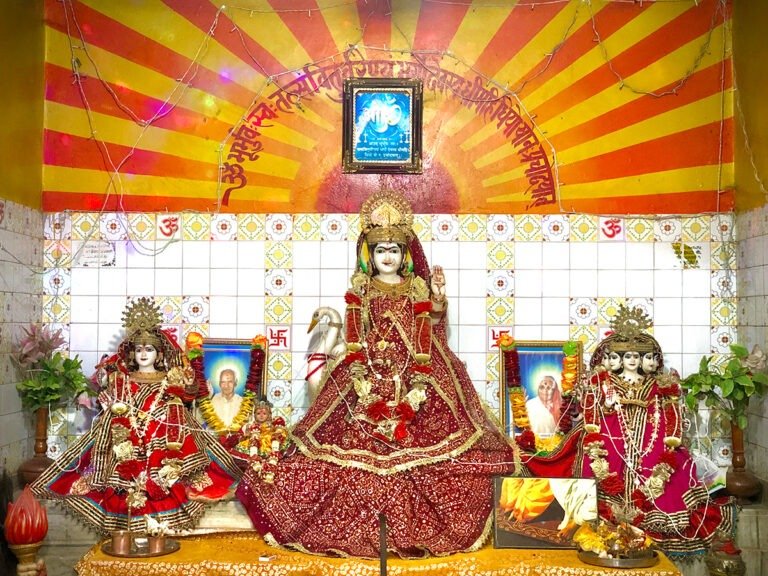
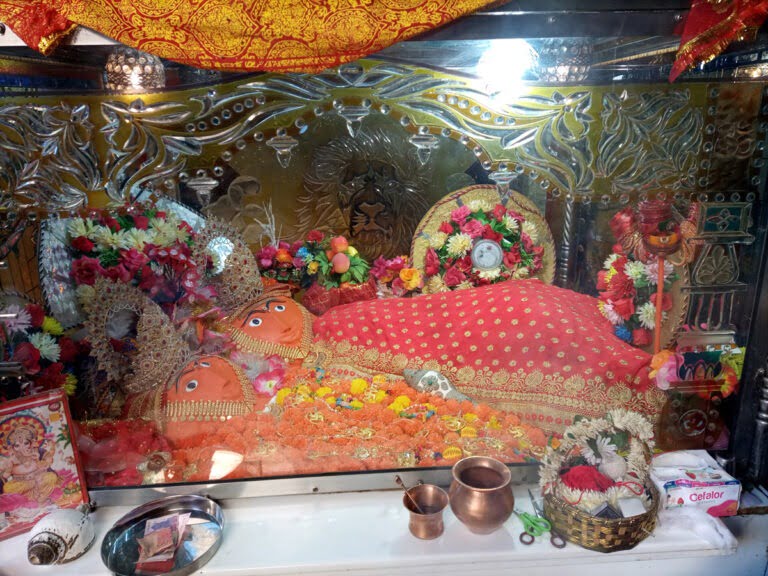
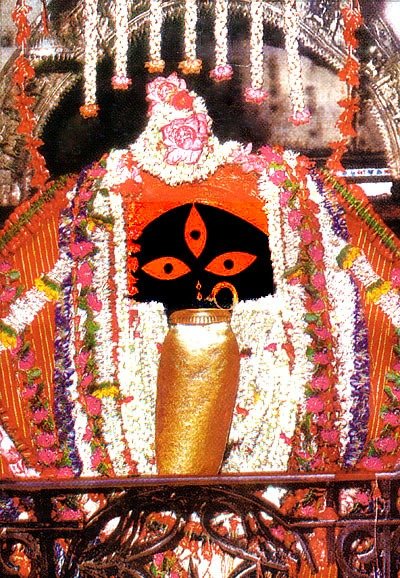
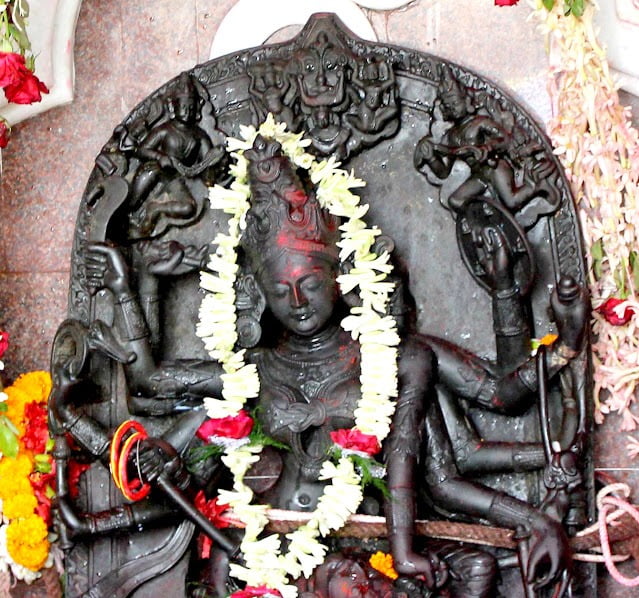
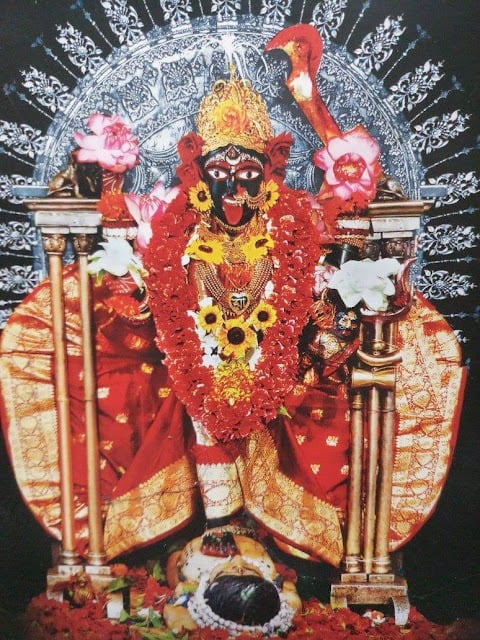
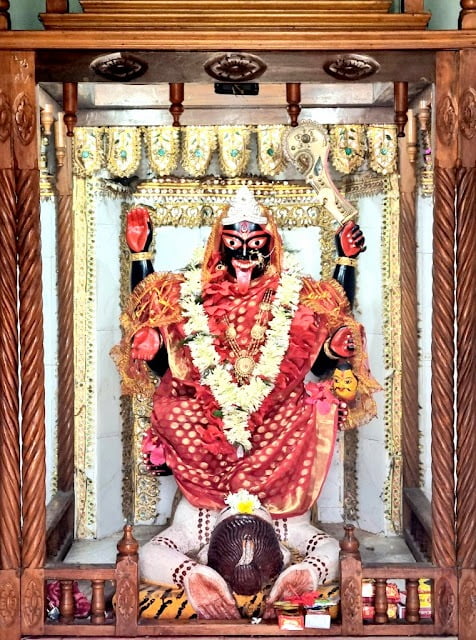
The religious significance of Bajreshwari Devi Temple is experienced by all who enter it. The central deity, Goddess Vajreshwari, is revered in the form of a Pindi, a conical stone image that is believed to be a manifestation of the Goddess herself. This is a very special form, representing the primordial energy of the world.
The calm ambiance, the chanting of prayers in rhythms, and the strong feeling of devotion among fellow pilgrims form a space where one feels very comfortable in linking to inner self as well as the divine. It is said that praying here with a clean heart can fulfill one’s desires as well as offer protection from all evil. The temple is a center for introspection, prayer, and strong spiritual cleansing.
Culturally, the Bajreshwari Devi Temple is a focal point of life in the Kangra valley. It is a point of convergence for one and all, a place where local customs and traditions are revered with immense passion. The temple is also inseparable from the history of Kangra itself. Having weathered invasions and natural calamities, it has become a symbol of the region’s untamable will. The festivals performed here, the local handicrafts available in the nearby market, and the oral traditions from generations all orbit this single revered space. The Bajreshwari Devi Temple is not a mere place of worship; it is the cultural center of Kangra.
Read More>> Sri Kshetra Dharmasthala Temple: Miracles of Lord Manjunatha
Festivals and Special Days: A Celebration of Divine Power
The Bajreshwari Devi Temple is in full swing when it is celebrating its festivals. These are the periods when the temple is most thronged, and the atmosphere is charged with a lively, celebratory spirit. Navratri and Makar Sankranti are the two most important festivals.
Navratri: The Festival of Nine Nights
Navratri is certainly the largest festival here, observed twice a year with much grandeur and fanfare—once during the Hindu month of Chaitra (March-April) and the second time during Ashvin (September-October). The temple is adorned with lights and flowers for nine nights, and the air is charged with a sense of excitement as thousands of devotees throng from across India.
Special aartis and pujas are conducted the entire day, and Devi Saptashati, a holy text devoted to the Goddess, is chanted in the valley. It’s a day for fasting, prayer, and commemorating the victory of good over evil. The last day, Vijaya Dashami, is a grand celebration, celebrating the victory of Goddess Durga. Special programs are organized by the temple committee, and the whole town joins in the festivities.
Makar Sankranti: The Butter Festival
A very special ritual is observed at the Bajreshwari Devi Temple during Makar Sankranti (mid-January most of the time). There is a local legend that says after killing the demon Mahishasura, Goddess Durga had few injuries. In order to cure her wounds, she used makhan (butter) over her body. As a tribute to this event, the Goddess Pindi is smothered in thick fresh home-churned butter for a whole week. The ceremony is one of great beauty and is said to possess enormous healing powers.
Pilgrims are of the opinion that a pilgrimage at this time, and a prayer to the Goddess, can heal them of their sickness. This unique ritual is a big attraction for both pilgrims and visitors, and one of the most populated times to go to the Bajreshwari Devi Temple.
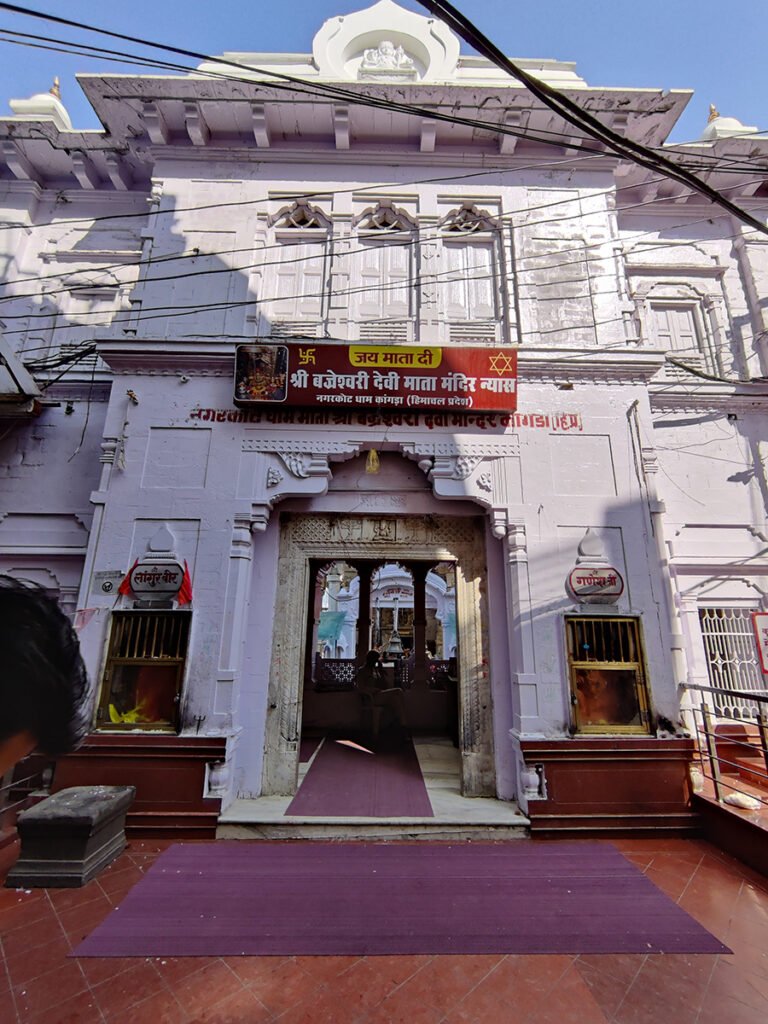
Unique Architectural Features and Carvings
As you walk toward the Bajreshwari Devi Temple, you can’t help but be struck by its unique style of architecture. While many other ancient temples have tall, conical shikharas, this temple boasts three unique domes. This distinctive look is a byproduct of its past. Following the earthquake in 1905, when the temple was reconstructed, the architecture was inspired by the Islamic and Sikh style of the area that dominated then.
The central gate, the Nagarkhana or house of the drum, looks similar to the entrance of the Bassein fort, encircled by thick fort-like walls. You will find inside the inner sanctum where the Pindi of Goddess Bajreshwari is housed. The walls and ceilings are filled with elaborate carvings and stunning frescoes showing scenes from Hindu mythology.
You can view elaborate sculptures of different gods and goddesses, heavenly beings, and mythological tales that give the walls a life of their own. The combination of various architectural motifs—from the more traditional Hindu designs to the more contemporary dome shape—is a narrative of the temple’s violent history and its unyielding spirit. It is physical evidence of how the Bajreshwari Devi Temple evolved and endured over the centuries, incorporating elements from other cultures while maintaining its fundamental identity.
Read More>> Uttarkashi Temple Kashi Vishwanath
Myths and Beliefs
The Bajreshwari Devi Temple is a shrine full of myths and beliefs that are entrenched in the local society. One of the most popular beliefs is based on the ability of the Goddess to fulfill wishes. It is believed that if you fasten a tiny red strand (a moli) around a particular pillar of the temple complex and pray with a clean heart, the Goddess will definitely grant the wish. Pilgrims come here with this particular intention, and you’ll find innumerable threads wrapped around the pillars, each a silent request. The other strong belief is the healing power of the temple. We have already discussed Makar Sankranti butter ritual but the healing power is a perennial belief.
Followers with other diseases, particularly skin diseases and other chronic diseases, go to the temple and offer special pujas in hopes of miraculous cure. It is believed that the Goddess energy is a powerful healer, and numerous locals and pilgrims report being healed after attending the Bajreshwari Devi Temple. The temple also holds the legend of Dhayanu Bhagat, a renowned devotee of the Goddess. The myth tells us that he was a devout follower who, as a testament to his unshakeable faith, donated his head to the Goddess.
Within the temple grounds, you can see an idol of Dhayanu Bhagat, a witness to the strength of devotion and the intimate bond between the Goddess and her genuine followers. These myths and legends are what render the Bajreshwari Devi Temple a site of deep spiritual experience, where reality and belief tend to get intertwined.
Read More>> Sree Suvarna Temple Powai
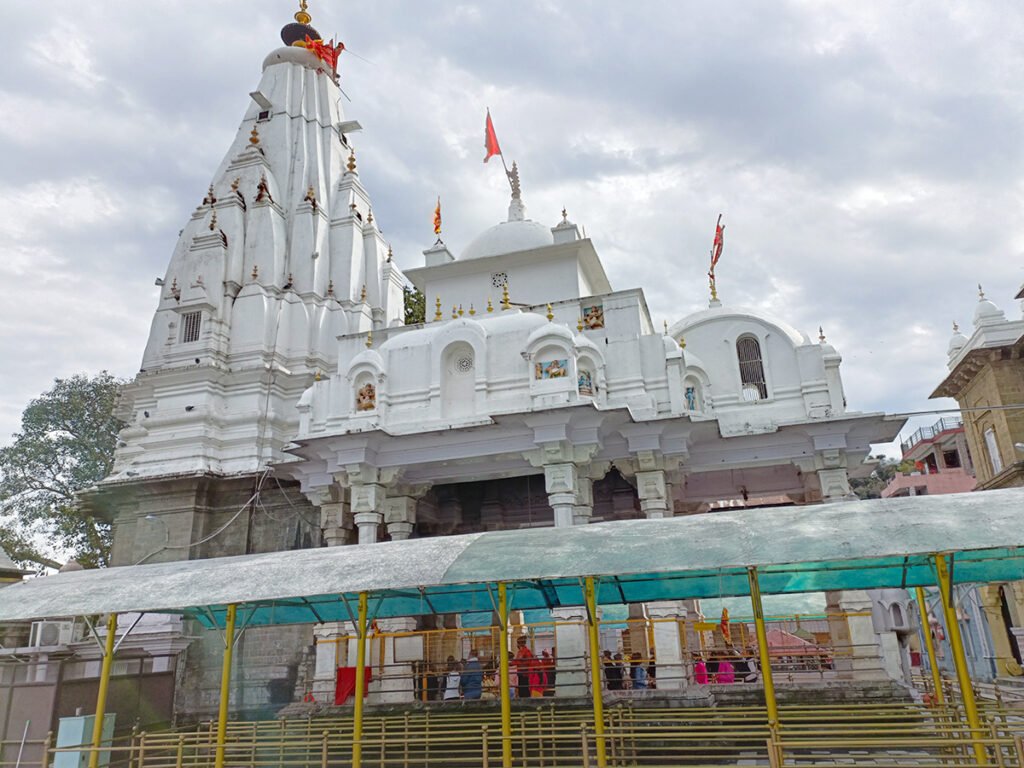
Kangra Devi Temple Timings and Pujas
The Bajreshwari Devi Temple is bustling, with morning and evening pujas and aartis that are a sight to behold. The temple timings during summer and winter are somewhat different.
- Summer Timings (April to September): The temple remains open from 5:00 AM to 9:00 PM.
- Winter Timings (October to March): The temple remains open from 6:30 AM to 8:00 PM.
The day-to-day aartis are an especially special time. The morning aarti is done just before sunrise, and the evening aarti is done immediately after sunset. It is a sacred ritual, with the rhythmic bell ringing, chanting mantras, and the gorgeous hymns in praise of the Goddess. If you wish to see the temple in its most peaceful form, I would suggest going early in the morning.
In order to miss the huge crowds, especially during Navratri, go early in the morning. The temple can become crowded, and a visit in the morning provides for a private and serene darshan. The main entrance to the temple has a Nagarkhana where classical drums and trumpets are used during the aarti functions, enhancing the splendor of the event.
Places to Visit Near the Temple
The Kangra Valley is a treasure trove of spiritual sites. And your pilgrimage to the Bajreshwari Devi Temple can become a part of a long journey across the region, dotted with numerous other temples and historic sites.
Jwalamukhi Temple: This is one of the most renowned temples of Himachal Pradesh and lies around 30 km from Kangra. It’s a temple of burning fire, where the venting natural gas emanating from the rocks is revered as an embodiment of the Goddess. The temple is yet another of the 51 Shakti Peethas, where the tongue of Sati is said to have fallen. It’s a really miraculous and wonderful place.
Chamunda Devi Temple: Situated on the banks of the Baner River, the Chamunda Devi Temple is a major pilgrimage point. It’s a temple devoted to Goddess Chamunda, a fierce incarnation of Durga. This temple is famous for its exquisite carvings and peaceful surroundings. It is a center for Yoga and Tantra and also has a rich spiritual heritage.
Kangra Fort: Situated just beside the Bajreshwari Devi Temple is the stunning Kangra Fort, perhaps the oldest and largest of the Himalayan forts. Though not a temple, it has incredible historical and cultural importance. The fort witnessed centuries of wars, and its remains are a thrilling tale of the history of this region. A visit here provides a wonderful means to grasp the historical importance of the temple itself.
Masroor Rock Cut Temple: Commonly referred to as the ‘Ellora of Himachal,’ this is a rock-cut monolithic complex of temples dating from the 8th century. The temples are dedicated to Lord Shiva and famous for their beautiful Indo-Aryan architecture and ornate carvings. A UNESCO World Heritage site and a place one should not miss if he or she is an art and history enthusiast.
These locations, including the Bajreshwari Devi Temple, constitute a pilgrimage circuit that many pilgrims follow, and as a result, the Kangra Valley is a destination for a really soul-stirring religious pilgrimage.

Accommodation: Where to Stay
Visiting the Bajreshwari Devi Temple is convenient, as Kangra is a well-developed town with numerous stay options and travel routes.
Accommodation: Kangra town also boasts a range of hotels and guesthouses to fit any pocket. To stay comfortably, you can get hotels such as Hotel Clarks Inn Suites Kangra and other highly recommended hotels. There are also numerous homestays and smaller lodges that provide a more local and personalized experience.
These are usually operated by local families and give you a fantastic chance to get immersed in the culture. The city near it is Dharamshala, which also has a great selection of accommodation, and you can take a bus or taxi to Kangra for visiting easily.
How to Reach the Temple
By Air: The closest airport to the Bajreshwari Devi Temple is Gaggal Airport (DHM) and it is just around 10-15 km away. Flights from major cities such as Delhi are available. Hiring a taxi from the airport to the temple is quite easy.
By Train: The closest railway station is Kangra, which is a narrow-gauge train station on the Kangra Valley Railway line. The closest broad-gauge train station is Pathankot Junction (PTK), which is approximately 85 km from here. From Pathankot, you can go by bus or taxi to Kangra.
By Road: Kangra is extremely well connected by road. State-run buses and private buses from Delhi, Chandigarh, and other major cities in Punjab and Himachal Pradesh run regularly. The road journey is scenic, with beautiful views of the mountains and valleys. If you’re driving, you’ll find that the roads are generally in good condition, although they can be winding. Taxis are also readily available from nearby towns and cities. The temple is located at the heart of Kangra town. Therefore, it’s easily accessible once you are there.
Trending Questions About Bajreshwari Devi Temple
As a professional guide, I often get asked a lot of questions about this temple. Here are a few trending questions and their answers to help you plan your visit:
What is the best time to visit Bajreshwari Devi Temple?
The ideal time to visit is during the Navratri (March-April or September-October) and Makar Sankranti (January) festivals to indulge in the lively festive mood and unique rituals. For a less touristy and serene experience, it is better to visit off-season or on a weekday. The climate in Kangra is nice between the months of March and June and between September and November.
Is Kangra Devi Temple one and the same with Bajreshwari Devi Temple?
Yes, they are one and the same temple. The Bajreshwari Devi Temple is also commonly referred to as the Kangra Devi Temple because it is the most important and worshiped temple in the Kangra district.
Why is this temple a Shakti Peetha?
The temple is a Shakti Peetha because, as per Hindu mythology, it is said that the left breast of Goddess Sati fell at this point when Lord Vishnu cut her body into pieces with his Sudarshana Chakra. It thus is a very sacred and energetic place for the adoration of the divine feminine force.
What are the major poojas or special rituals held here?
The major rituals are the daily morning and evening aartis. The most distinctive ritual is for Makar Sankranti, where the Pindi of the Goddess is smeared with a generous amount of butter. People also pray and fasten red threads on a pillar to make a wish.
Can I go to the Kangra Fort and the temple in the same day?
Yes! The Kangra Fort is very near to the Bajreshwari Devi Temple, and it will not be difficult for you to visit both on a single day. It’s a wonderful idea to mix a spiritual pilgrimage with a historical tour. I would suggest you begin your day early so that you can explore both destinations at leisure.
Conclusion: A Journey of Faith and History
My friends, our pilgrimage to the Bajreshwari Devi Temple is complete, but I hope the history and spirituality we’ve shared will remain with you. This is not a temple; it’s a testament to the unshakeable beliefs of people, the strength of a culture, and the abiding power of the sacred. The Bajreshwari Devi Temple is a location where every nook has a story, every prayer chant has a message, and every boulder carries a history. If you are a religious pilgrim looking for blessings, or a tourist wanting to grasp the depth of India’s spiritual culture, this temple will leave a lasting impression on your soul.