
Baidyanath Temple – Sacred Jyotirlinga with Location Dispute
Baba Baidyanath Temple also known as Vaidyanath Jyotirlingam (although there is a dispute of another location with same name) is one among the sacred 11 Jyothirlingas and one among 51 Shakti Peethas. It is one of the ancient holy residences of Lord Shiva. There is some controversy about the exact location. It is claimed it is situated at Deogarh, Jharkhand. However, a particular group quotes it to be at Parli, Maharashtra while others say that it is located at Baijnath, Himachal Pradesh.
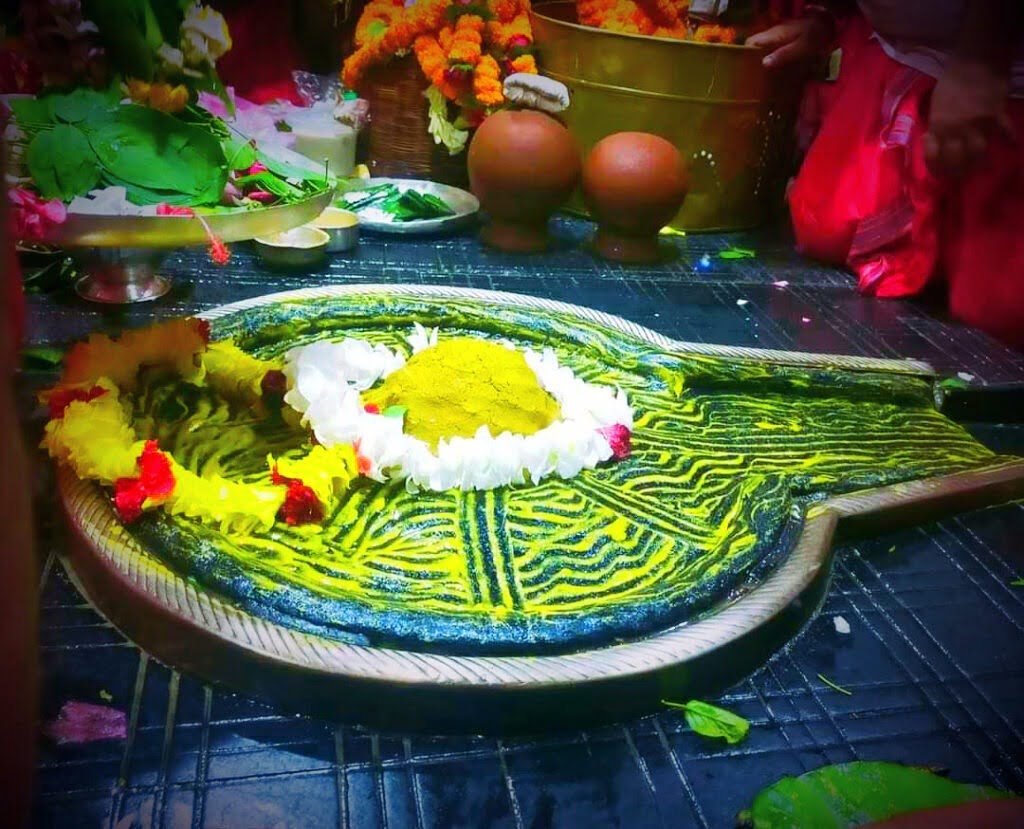
According to Shiva Mahapuran, it is mentioned as “Baidyanatham Chithabhoomau” Here the word “Chithabhoomau” possibly refers to the ancient name of the location of Vaidyanathan, interpreting it with the present location, it is said Deoghar which is located in Nort-East part of the country. Also the word “Chithabhoomau” means the place where corpses are burnt in a short funeral place.
Contents
- 1 Myths and Beliefs of Baidyanath Temple:
- 2 History of Baidyanath Temple:
- 3 Legend of the Temple
- 4 Cultural, Spiritual, and Mythological Significance of the Temple
- 5 Festivals and Special Days
- 6 Unique Architectural Styles and Carvings
- 7 Places to visit near Baidyanath Temple:
- 8 Accommodation Options at Baba Baidyanath Dham
- 9 How to reach Baidyanath Temple:
Myths and Beliefs of Baidyanath Temple:
- Devotees who visit Baidyanath Jyotirlinga must visit the Yogeshwari Devi temple located in Ambejogai.
- According to the mythology Daksha yagna and Sati self-immolation, it is the holy place where the “Heart” fell down.
The reason behind this myth is:
A marriage between Lord Baidyanath and Goddess Yogeshwari was fixed. But by the time the marriage party reached the wedding place, the auspicious time had passed. As a result, members of the marriage party turned into statues.
It is also called the place where Amrit Manthan (Churning for Nectar) was done. When gods and demons started churning the ocean, Amrit and Dhanwantari (14 gems) emerged. When demons tried to grab Amrit, Lord Vishnu hid the Amrit in the form of Maya (beautiful lady) and Dhanwantari in Shiv linga. When demons tried to take Dhanwantari, there were flames by their touch. When the same thing was done by gods with devotion, there was nectar flow. That is why people still touch the Shiva linga with any basis of caste, creed or colour.
In another context, Baidyanath Jyotirlinga was covered with a dense forest, which is filled abundantly with medicinal plants. There was a saint named Vaidyanath (who is an expert in using medicinal herbs). He used to worship Lord Shiva with devotion, and once the lord appeared, and was blessed with a boon to stay permanently in the form of Linga. Hence it is believed devotees who visit this place and touch the linga with devotion will be free from all kinds of diseases.
Baidyanath Jyotirlinga place is located between Ujjain and Kanyakumari also known as Kantipur (Madhyarekha Vaijayanti)
Healing Powers: Since the “Lord of Physicians,” it’s popularly believed that praying here can heal diseases and grant good health. Some come with particular health issues, praying for their relief.
Wish Fulfillment: The Jyotirlinga itself is commonly referred to as Kamna Linga, or “wish-fulfilling lingam.” The faithful are of the opinion that one’s ardent wishes prayed for at Baidyanath Temple can be fulfilled.
Sacred Pond Shivganga: A pond by the name of Shivganga is located right adjacent to the Baba Baidyanath Dham. According to legend, Ravana created the pond by shooting his arrow into the ground to satiate his thirst when he had to relieve himself. The devotees usually take a sacred bath in this pond prior to entering the temple in the belief that it purifies them.
The Broken Lingam: The tiny fracture at the tip of the Jyotirlinga is a physical reminder of Ravana’s failed attempt to rip it out by force, a testament to the legend.
The Sacred Thread: The red thread that runs between the Shiva and Parvati temples is a powerful symbol of marriage and union with God, so it is highly auspicious for married couples.
Read More>> Bhadrachalam Temple | Bhadradri Seetha Ramachandra Swamy
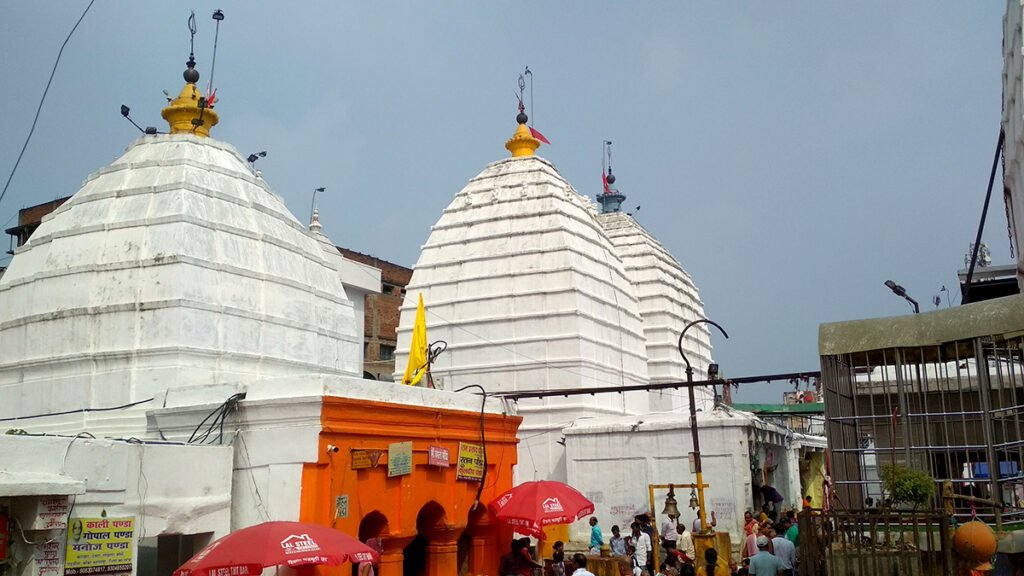
History of Baidyanath Temple:
History is very less defined about Baidyanath Temple. According to the mythologies of Hindu, at this place, Ravana the demon king worshiped Lord Shiva to get heavenly boon which he utilized to raise havoc and catastrophe in the world. Ravana offered his ten heads as sacrifice to Lord Shiva. Pleased with this gesture, Lord Shiva came down on earth and healed injuries from Ravana’s bodies. Being the doctor who portrayed himself as a healing man, he is also referred to as Vaidya (“doctor”). This is why this temple is named in this context.
The oldest archaeological evidence that dates back to around the 8th century AD was discovered relating to the Baidyanath Temple. However, it is quite believed that the temple has much more ancient existence, which might also be 4th century AD when it was founded by the Gupta dynasty.
Baba Baidyanath Dham has seen many renovations and extensions over the centuries. The main temple structure was built during the 16th century by Raja Puran Mal of Gidhaur. Mansarovar, a pond was constructed in Deoghar in the 18th century by the brother of the Mughal emperor.
It is regarded as one of the holiest places of worship for all the Hindus, situated in Bihar and visited by pilgrims from all different parts of India. The Baidyanath temple witnesses a heavy rush during the Shravan month of the Hindu calendar where thousands of devotees take part in the Kanwar Yatra pilgrimage.
Read More>> Magnificent Ramanathaswamy Temple: A Marvel of Architecture
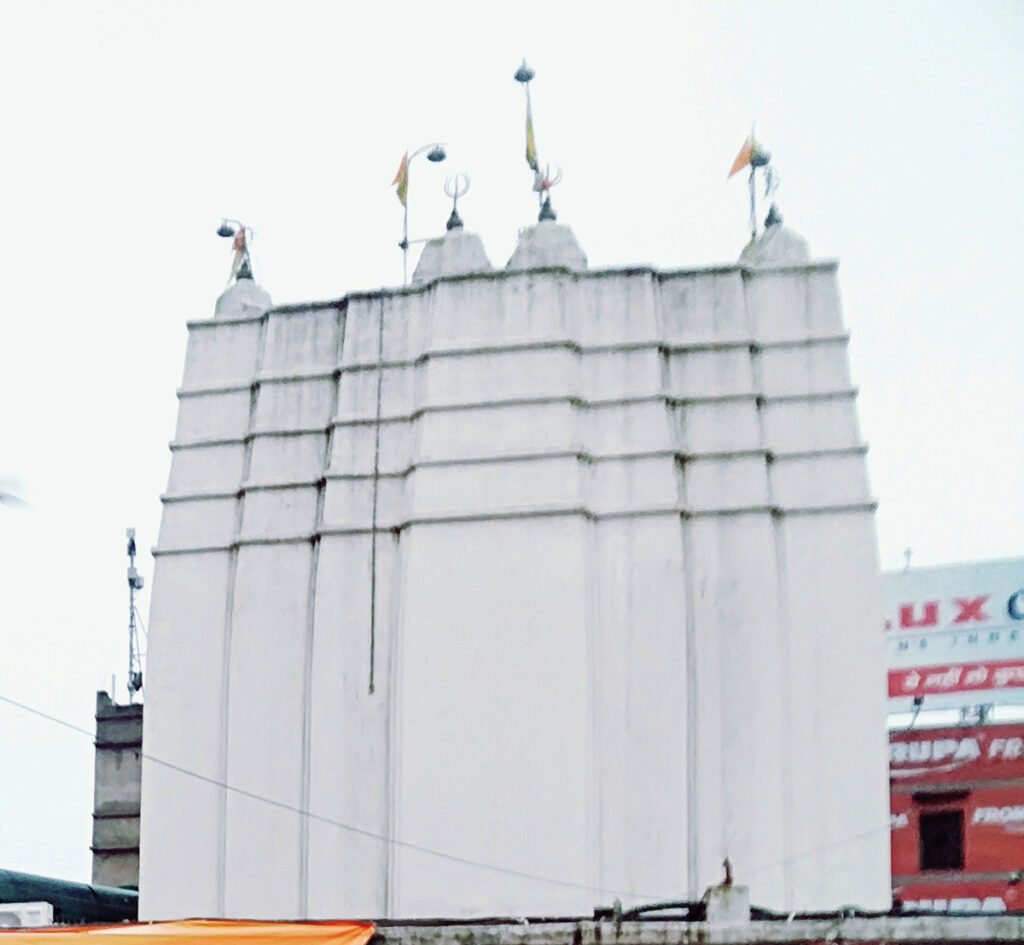
Legend of the Temple
This is my favorite part, because the stories connected to Baidyanath Temple are truly magical! There are actually two very famous legends that make this place so special.
The Story of Ravana and the Jyotirlinga:
Imagine a long, long time ago, during a time called Treta Yuga. There was a very powerful demon king named Ravana, from Lanka (that’s an island far away). Ravana was an ardent devotee of Lord Shiva. He invited Lord Shiva to Lanka so that he could defend his kingdom. Lord Shiva, being satisfied with Ravana’s devotion, agreed to a special plea. He imparted one of his Jyotirlingas – a pillar of light – to Ravana and instructed him, “Ravana, you may take this to Lanka, but there is one very important condition: you shall not put it down on the ground anywhere until you arrive in Lanka. If you do, it will remain stuck there forever!”
Ravana, in great excitement, set out. But the other gods were in a tizzy! If Ravana possessed Lord Shiva’s power in Lanka, he could become too powerful and create trouble for all. So, they hatched a clever scheme. Lord Varuna, the water god, quietly entered Ravana’s stomach as he journeyed along, making Ravana extremely, extremely thirsty and in need of a bathroom break. Ravana had no option but to drop the Jyotirlinga.
Suddenly, Lord Vishnu, in disguise as a humble Brahmin lad (a wise priest), stepped in. Ravana, in dire need, requested the boy to hold the Jyotirlinga for a couple of minutes while he relieved himself. The boy consented but, the moment Ravana’s back was turned, set the Jyotirlinga down firmly on the ground and vanished! When Ravana came back, he found the holy lingam cemented where it was.
He attempted with all his strength to lift it, even chipping a little bit off the top in his frustration (you can still find that chipped-off bit on the lingam today!). Still, it wouldn’t move. When he realized he had been fooled, Ravana still prostrated himself before the Jyotirlinga and worshipped it daily. Where he set it down is now called Deoghar, meaning “home of the gods.”
Read More>> Kondagattu Anjaneya Swamy Temple
The Tale of Baiju and Vaidyanath:
There’s yet another sweet tale of how Baidyanath Temple came to be named so. Following Ravana, there was a simple, pious hunter named Baiju who used to pray this very Jyotirlinga. He was so devoted and true in his worship that devotees began to address the Lord as “Baidyanath,” which translates to “the Lord of Baiju.” It proves that Lord Shiva is fond of all, regardless of being a king or a simple hunter.
This temple is also quite unique since it’s said to be one of the Shakti Peetha. As per ancient Hindu texts, when Goddess Sati (Lord Shiva’s initial wife) sacrificed her life, Lord Shiva was devastated and carried her corpse, wandering in the universe sorrowfully. To pacify him and rescue the world from his huge grief, Lord Vishnu dissected Sati’s body into 52 parts using his sacred discus.
These fragments dropped in various locations throughout India, and every location became a sacred Shakti Peetha. Sati’s heart is said to have dropped right here in Deoghar! That is why this site is referred to as Hriday Peetha as well. This makes the Baidyanath Temple stand out, as it contains both a Jyotirlinga of Lord Shiva and a Shakti Peetha of Goddess Sati.
Cultural, Spiritual, and Mythological Significance of the Temple
The Baba Baidyanath Dham is not somewhere you go; it’s an experience, a sense of peace and devotion.
Spiritually, it’s said that by coming to this Jyotirlinga, you can rid yourself of your troubles and sins, and even cure your body and mind. The name “Baidyanath” itself translates to “Lord of Physicians,” referring to Lord Shiva’s ability to heal. Lots of people come here and pray for good health.
Mythologically, as we’ve studied, it’s associated with two extremely powerful narratives – Ravana’s devotion and the descent of Sati’s heart. These narratives are a gigantic aspect of our Hindu culture and provide us with lessons on devotion, sacrifice, and the immense power of the gods.
Culturally, Baba Baidyanath Dham is a lively center point, particularly during festivals. It unites individuals from all corners of India, regardless of their origins or the language they use. They all arrive for one reason: to obtain blessings from Lord Shiva and Goddess Parvati. The traditions, the songs, the prayers, and the bright attire you’ll witness here are all part of the rich cultural fabric of India.
This double significance as a Jyotirlinga and a Shakti Peetha makes Baidyanath Temple immensely valuable. It represents the holy union of Shiva and Shakti – the male and female forces responsible for creation and preservation of the universe. Some couples come here to get blessings for a joyful and harmonious married life, feeling that this would make their union even stronger.
Read More>> Unbelievable Facts About Udiyanoor Devi Temple You Never Knew!
Festivals and Special Days
Oh, to witness Baidyanath Temple in all its vibrancy, you have to be there at its festivals! The climate is charged with chanting, music, and the ecstatic cries of pilgrims.
Shravani Mela: It is the largest and most popular one, which occurs during the Hindu month of Shravan (July-August). Imagine hundreds of thousands of individuals, known as Kanwariyas, trekking for miles, even more than 100 kilometers, with holy water from the Ganges River at Sultanganj! They transport this water in containers known as Kanwars on their shoulders, barefoot, repeating “Bol Bam!” It is a remarkable display of belief and perseverance. They present this holy water to the Jyotirlinga. Baba Baidyanath Dham is open 24 hours a day during this period and queues are very, very long sometimes taking several hours, but spirits are high!
Maha Shivaratri: Another extremely significant festival for Lord Shiva, typically in Feb or March. The devotees fast day and night, offer special prayers, and recite “Om Namah Shivaya.” Baidyanath temple is adorned with flowers, and special abhishekams are conducted throughout the night. It is a night of deep devotion and festivities in Lord Shiva’s cosmic dance.
Kartik Purnima: This full moon day of the Hindu month of Kartik (November) is also marked with special aartis and rituals.
Navaratri and Diwali: Although mainly for Goddess Durga and prosperity, these two festivals are also observed with zeal, particularly at the Shakti Peetha, with special pujas and adornments.
Crowded Days: The whole Shravan month is very crowded, as you might have imagined. Weekends and other important festival days such as Maha Shivaratri are also very crowded. For a more relaxed darshan (seeing of the deity), it would be wise to go on a weekday during non-festival times, particularly early morning.
Read More>> Divine Aswaklanta Temple Where Lord Krishna & Arjuna Rested!
Unique Architectural Styles and Carvings
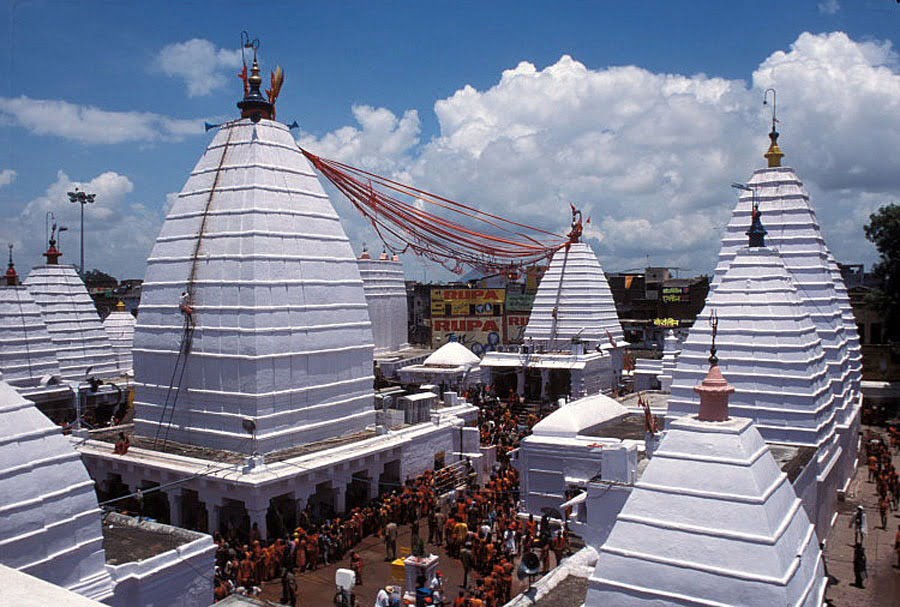
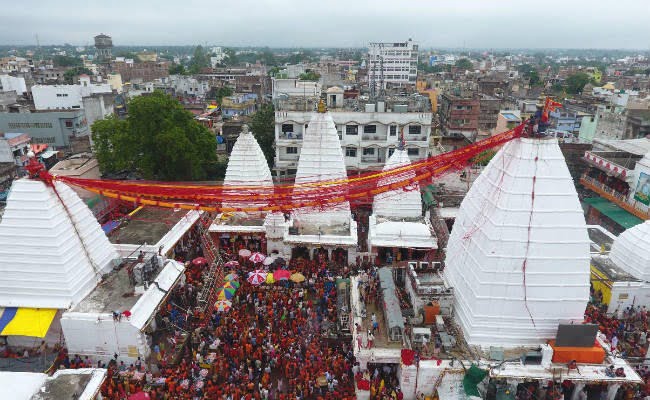
The Baidyanath Temple itself is a stunning representation of the traditional North Indian temple architecture, or the Nagara style. The central temple has a vast, pyramidal shikhara (the spire of the temple) that touches the heavens, representing a mountain peak – the dwelling place of Lord Shiva.
One such very special thing that you will see at the top of the main Baidyanath temple is not a common trident (Trishul) like on the majority of Shiva temples, but a Panchshool (a five-pronged trident). Priests think this Panchshool symbolizes the ability to demolish the five major human sins: lust, wrath, greed, infatuation, and jealousy. Is this not interesting? There are three golden vessels at the top of the shikhara, attributed to Raja Puran Mal’s gift, and a lovely lotus jewel named Chandrakanta Mani.
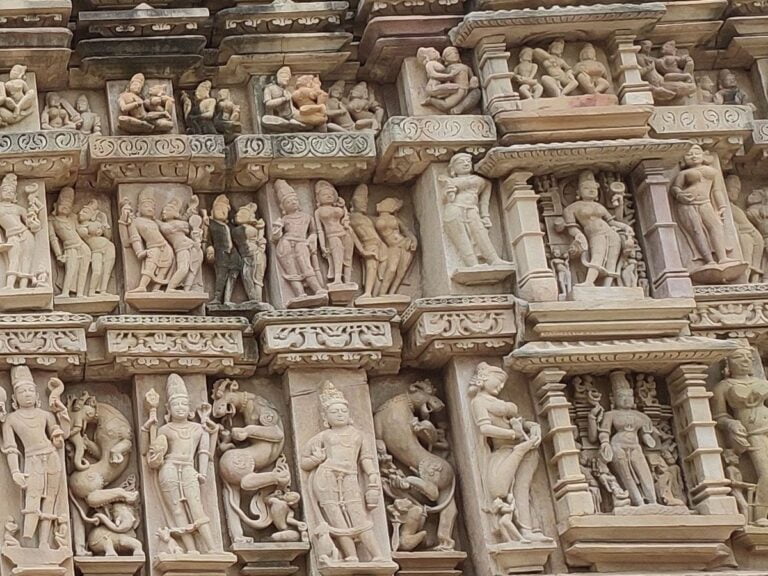
The temple complex is more than one building; it’s a group of 22 other little temples belonging to different gods and goddesses such as Goddess Parvati, Lord Ganesha, Lord Hanuman, Lord Surya (Sun God), and many others. This indicates how all the gods are in one large divine family. The Maa Parvati temple is, in fact, bridged with a holy red thread to the main Shiva temple, indicating the inseparable union of Shiva and Shakti. The walls of Baba Baidyanath Dham may have some delicate carvings, but not many are focusing here on the sculptures. The entire complex is surrounded by enormous white stone walls, making it look grand and ancient.
Read More>> Famous Kollur Mookambika Temple: Discover the Unseen Powers
Baidyanath Temple Timing:
Plan your visit to Baidyanath Temple ahead of time!
The temple typically opens extremely early in the morning, approximately 4:00 AM, and remains open until around 9:00 PM.
There is typically a brief afternoon break, usually between 3:30 PM to 6:00 PM, when the temple closes for the deity’s rest and preparing for the evening rituals.
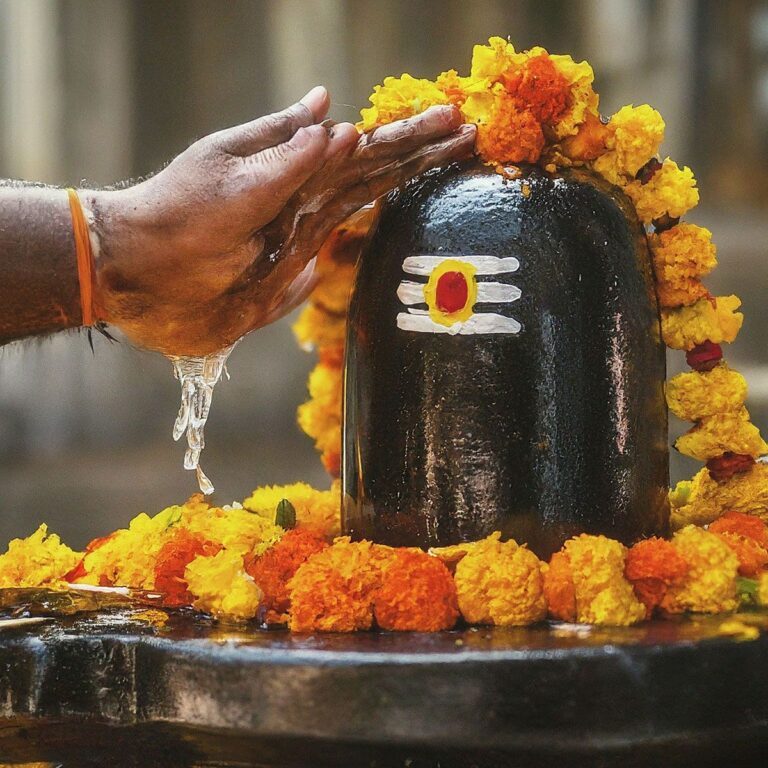
Morning Darshan (Kancha Jal): The initial hour or so between 4:00 AM and 5:00 AM is for a special puja known as Kancha Jal, when devotees get an opportunity to directly pour water onto the lingam. This is an extremely revered period.
General Darshan: That is typically from 5:00 AM to 4:00 PM, and again from 8:00 PM to 10:00 PM.
Evening Shringar Puja and Aarti: Between 7:00 PM and 8:00 PM, there is a lovely Shringar Puja where the god is dressed, and then the evening Aarti. It’s an amazing experience!
As I said earlier, the Shravan month of July-August is extremely busy, with the Baba Baidyanath Dham at times remaining open 24 hours to accommodate pilgrim traffic. Maha Shivaratri too attracts huge crowds. For less of a crowd, hit weekdays other than during these peak festival times, and early morning soon after opening works best.
Read More>> Famous Sundarnath Temple Araria Bihar | Sundar Nath Dham
Special Poojas Performed
At Baba Baidyanath Dham, you can actually witness and even be a part of some special poojas (worship rituals) that are extremely powerful:
Rudrabhishek Puja: This is one of the most important rituals offered to Lord Shiva. It is the process of continuously pouring several holy liquids such as milk, water, honey, ghee, and yogurt over the Shivling while reciting Vedic mantras. It is believed to overcome obstacles, acquire good health, and endow longevity.
Gat Bandhan Puja: It is a stunning ritual done for wedded couples. A holy red ribbon is tied from the pinnacle of the prime Baidyanath Temple to the Maa Parvati temple, signifying the everlasting tie of Shiva and Parvati. Couples who do this puja ask for blessings for a healthy and happy married life.
Shringar Puja: This is the ritual dressing of the Jyotirlinga with flowers, fruits, sandalwood paste, sacred ash (bhasm), and attractive garments. It’s aesthetically pleasing and a means of expressing devotion.
Mantra Jap: Several devotees and priests constantly chant strong mantras such as “Om Namah Shivaya” here. Participating in or simply listening to these chants can surround you with peace and positive energy.
Jalabhishek: The most popular offering is merely pouring holy water (particularly from the Ganges) on the Shivling, usually performed by millions during Shravani Mela.
You may be able to book these special poojas through local priests or Baidyanath temple administration.
Places to visit near Baidyanath Temple:
Basukinath Temple: Another very significant place of worship among the Hindus, the temple is for the god Shiva, and it lies in a place from Deoghar around 42 kilometers, and it can be visited on a pilgrimage circuit.
Naulakha Mandir is a temple, which is said to have been constructed in the early 20th century at a cost of nine lakhs. Its architecture is brilliant and the carvings are also outstanding.
Trikuta Parv: This is a hill located near Deoghar that would offer a panoramic view of the town and other surroundings. It is also a place for trekking under the utter beauty of nature surrounding the area.
Satsang Ashram: The Satsang Ashram is another place meant for meditation and other related spiritual activities. It’s again a quiet retreat to spend some time there.
Tapovan: Situated 10 kilometers from Deoghar, Tapovan is a nice destination that has lots of greenery surrounding it. Tapovan is perfect for those who want a picnic or a nature walk.
Harila Jori: This is the confluence of two rivers, the Harila and Jori. It is a quiet, peaceful place situated at some distance from Deoghar, in some valley, and encircled by aesthetic beauty.
Rikhia Yogashram: Swami Satyananda Saraswati is the founder of ashram here. The place is for learning and researching yoga as well as meditation.
Nandan Pahar: Nandan Pahar is one of the small hills from which wide panoramic views can be seen of Deoghar. This tourist place has an abode called temple and park for recreation.
Kundeshwari Temple: Situated about 10 kilometers from the town of Deoghar, this temple is given to Goddess Parvati. This is a very enchanting as well as natural setting where you can sit in peace.
Of course, this town has some Jain temples such as Chandrakoop Jain Temple, Kesariya Ji Jain Temple, and Tower Chowk Jain Temple for those who want to see Jain architecture and culture.
Read More>> Trimbakeshwar Jyotirlinga Temple.
Accommodation Options at Baba Baidyanath Dham
Deoghar is a tourist town, so there are plenty of options, ranging from various budgets:
Budget-Friendly: There are numerous guesthouses, dharamshalas (pilgrim rest houses), and small hotels near the Baidyanath Temple that have simple but clean rooms. You can try accommodations like Hotel Shree Hari, Hotel Yashoda International, or other local lodges.
Mid-Range: If you are planning something a little more comfortable, you can choose hotels such as Hotel Mahadev Palace, Hotel Rajkamal, and Geetanjali International. These typically provide facilities such as air conditioning, attached bathrooms, and even restaurants at times.
Higher-End/Comfort: For a luxurious stay, you may opt for hotels such as Imperial Heights or The Grand Sona, which provide improved facilities, spacious rooms, and even swimming pools at times.
It’s always advisable to reserve your accommodation in advance, particularly if you’re visiting during the peak season or festive times, as they get booked so fast!

How to reach Baidyanath Temple:
It’s very easy to reach Baidyanath Temple now!
By Air: The closest airport is Deoghar Airport (DGR), which has direct connectivity from major cities in India. After landing, Baidyanath temple is just a few kilometers away.
By Train: Deoghar also has its own railway stations: Deoghar Junction (DGHR) and Baidyanathdham Junction (BDME), which are just very close to the temple (2-3 km). Jasidih Junction (JSG) is another major railway station that is 7 km away, which is well connected to most parts of India. From any of the stations, you can very conveniently take an auto-rickshaw or taxi to the Baba Baidyanath Dham.
By Road: Deoghar is also connected by road to other major cities of Jharkhand and nearby states such as Bihar, West Bengal, and Odisha. You can travel by private buses, state transport buses, or take taxis to Deoghar. The roads are good and the journey is smooth. If you are driving, do note that Guntur is very far away (approximately 1400+ km), and so the drive would be lengthy of around 27 hours! It’s best to fly or train in that case.