Chinnamasta Devi Temple Jharkhand
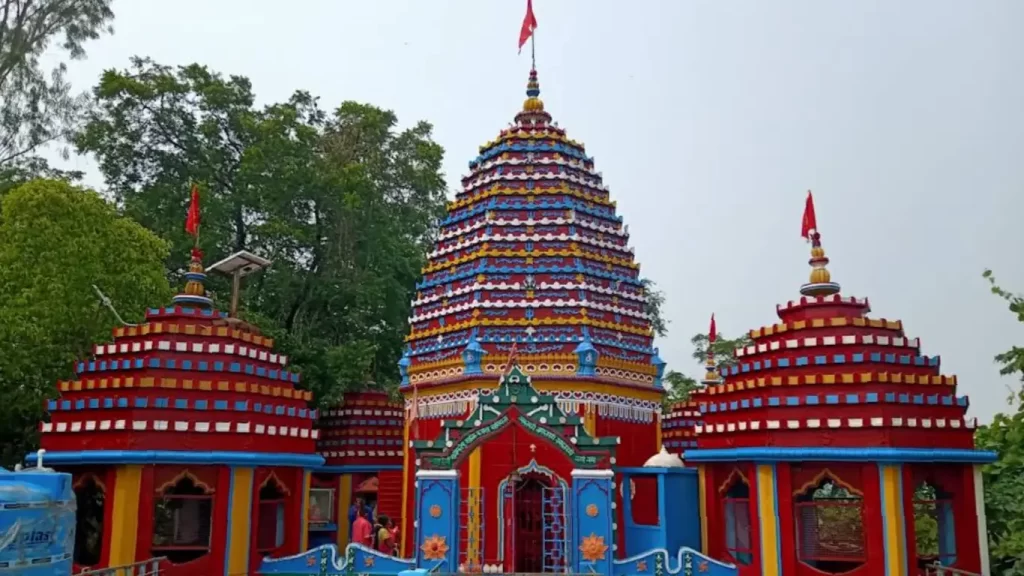
Chinnamasta Devi Temple is a holy Hindu pilgrimage place lying in the lush, hilly landscape of Rajrappa, which is in the Ramgarh district of Jharkhand, India. This temple, often referred to by devotees as Chinnamastika Mandir, is situated at a very important natural location: the confluence of the Damodar and Bhera (also known as Bhairavi) rivers. The Bhera river flows from a height and falls into a beautiful waterfall before joining the mighty Damodar, thus forming a breathtaking Sangam or confluence.
The principal deity of the temple is Goddess Chhinnamasta, the sixth of the ten Mahavidyas or Wisdom Goddesses in Hindu Tantrism. Her name literally means ‘She whose head is severed,’ and the fierce iconography of this goddess makes this temple different from almost any other temple you will see. It is considered a Shakti Peetha—a place where the divine energy of the Mother Goddess is powerfully present.
This is no ordinary religious site but a strong Tantrik powerhouse, which is believed to be no less famous than the historically well-known Kamakhya Temple in Assam. It draws pilgrims not just from Jharkhand but also from West Bengal, Bihar, and even Nepal for the potent blessings of Maa Chhinnamasta. Let us step inside the gates and unravel the layers of history and legend woven into this sacred soil.
Contents
- 1 Chinnamasta Devi Temple History: Tracing Its Ancient Roots
- 2 Legend of the Temple: The Story of the Self-Decapitated Goddess
- 3 Iconography: A Vision of Life, Death, and Power
- 4 Cultural, Spiritual, and Mythological Significance
- 5 Festivals and Auspicious Days: When the Temple Roars
- 6 Unique Architectural Styles and Carvings
- 7 Myths and Beliefs: The Power of Self-Transcendence
- 8 Chinnamasta Devi Temple Timings and Daily Rituals ⏰
- 9 Places to Visit Near the Temple
- 9.0.1 Shri Jogadya Shaktipeeth, Kshirgram, West Bengal
- 9.0.2 Vibhash Shakti Peeth | Kapalini (Bhimarupa) Shaktipeeth
- 9.0.3 Ujani Shaktipeeth Shri Mangal Chandi Temple
- 9.0.4 Nandikeshwari Temple | Nandipur Shakti Peeth, Sainthia
- 9.0.5 Shree Trishrota Maa Bhramoree Debir Shaktipeeth Temple
- 9.0.6 Anandamayee Shakti Peeth Temple
- 10 How to Reach the Temple
- 11 Accommodation Options
Chinnamasta Devi Temple History: Tracing Its Ancient Roots
The history of the Chinnamasta Devi Temple is ancient, dating way back before the current structure was built.
The Sacred Site of Rajrappa
Rajrappa has been a confluence of spirituality since time immemorial. Before being identified and transformed into a formal Hindu temple complex, the site was a popular place of worship among the local tribal communities, such as the Santhals, who still come here to immerse the ashes of their loved ones in the Damodar River. They call this place “Thel Kopi Ghat” in their folk songs, believing it to be their final resting place. This is a fine and ancient confluence of different faiths and local traditions on this sacred piece of land.
Architectural Periods
While the site itself is ancient and finds mention even in the Vedas and Puranas as a powerful Shakti source, the exact date of the construction of the temple is debated. What we know is that the current structure-and the strong establishment of the Chhinnamasta cult here-became well-established by the 18th century.
- Ancient Temple: It is believed that the original, ancient temple structure was destroyed over time. This often happens with old powerful shrines.
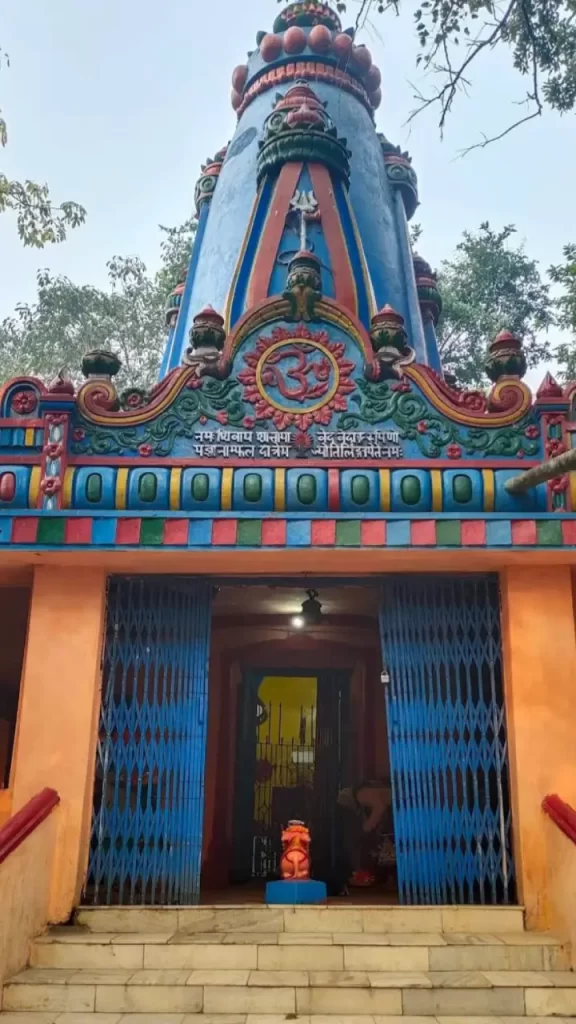
- Tantric Influence: The temple you now see is of later construction and has a unique Tantric form of architecture. You will notice the resemblance of this architecture to the Kamrup region of Assam, such as the Kamakhya temple, featuring a dome-shaped top. This unique architectural choice immediately signals its importance as a major center for Shakti Upasana. The ten temples of the Mahavidyas surrounding the main shrine further solidify its identity as a principal Tantric pilgrimage spot.
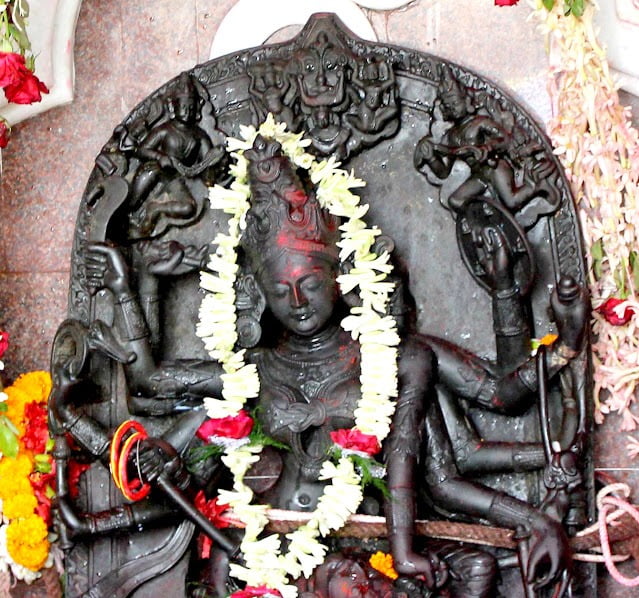
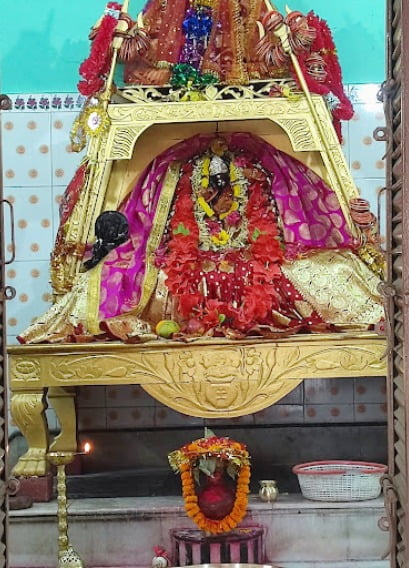
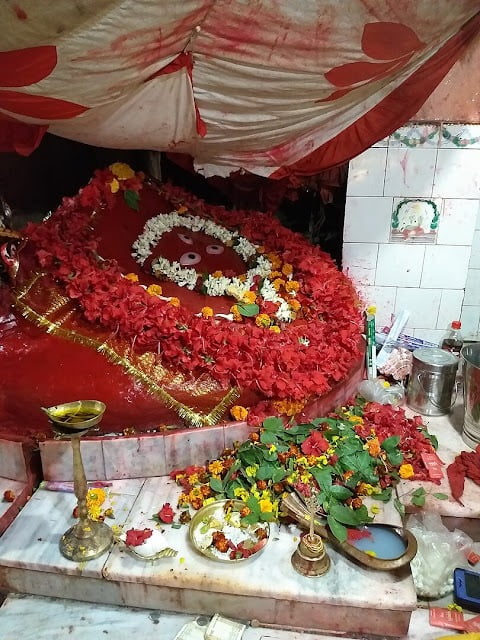
The central concept inside the main shrine is not a sculpted man-made idol but a natural rock covered with an ashtadhatu (eight-metal alloy) kavacha or cover. It is this natural rock that forms the worshipped Goddess Chhinnamasta, reinforcing the primal, naturalistic essence of this fierce deity.
Read More>> Shree Neelkanth Mahadev Temple
Legend of the Temple: The Story of the Self-Decapitated Goddess
The most intriguing and dramatic legend in Hindu mythology is that of Goddess Chhinnamasta, representing the paradox of self-sacrifice united with life-giving energy. While there are a few versions of the story, the central theme is profound compassion and transformation.
The Narada-Pancharatra Version
One of the most widely held legends comes from the Narada-Pancharatra and other Tantric texts.
It is said that Goddess Parvati, a form of the Divine Mother, along with her two attendants, Dakini and Varnini, sometimes also called Jaya and Vijaya, came to bathe in the Mandakini River. She stayed there for a pretty long time and returned home, and after returning, both the attendants felt very hungry. They begged the Goddess for food as their hunger became unbearable.
Parvati, filled with maternal compassion, first asked them to wait until they reached home. But their desperate hunger was unquenched. Seeing her devotees suffer and understanding that all life-force, or prana, essentially belongs to the Divine, the compassionate Goddess made a great decision. She took a sharp scimitar-a curved sword-and, in an astounding act of divine will, she cut off her own head.
- The three jets of blood have spontaneously spurted from her bleeding neck.
- One jet flowed into the mouth of her severed head which she held in her left hand.
- The other two streams went into the mouths of the attendants, Dakini and Varnini, and they felt immediately satiated.
The Goddess had sacrificed her body to feed her attendants, representing the ultimate form of maternal care and the continuity of creation, preservation, and dissolution. This fearsome yet merciful form of the Divine Mother was known as Chhinnamasta or Chinnamastika.
Scriptural Mention Markandeya Purana
To give a further idea of the antiquity and greatness of this figure, we can trace her story and the theme of her sacrifice within Hindu scriptures. While the Rajrappa site itself may not be explicitly named, Chhinnamasta’s act is narrated in texts like the Shri Markandeya Purana.
“In the Markandeya Purana, it is mentioned that after slaying thousands of Asuras (demons)… Jaya and Vijaya—the two ‘sahyagonis’ (companions) of Maa Bhagwati—wanted to gulp more blood. Their thirst… was still not over… When Mata Bhagwati came to know about their thirst, She cut-off Her own head and offered Jaya and Vijaya blood and quenched their thirst. From then onwards, this incarnation of Devi Bhagwati came to known as Maa Chhinnamastika or Mata Chinnamasta.”
That text provides the mythological rationale for the presence of the Goddess here, and links her fierce, self-sacrificing form directly to the core lineage of the Divine Mother, Devi Bhagwati.
Iconography: A Vision of Life, Death, and Power
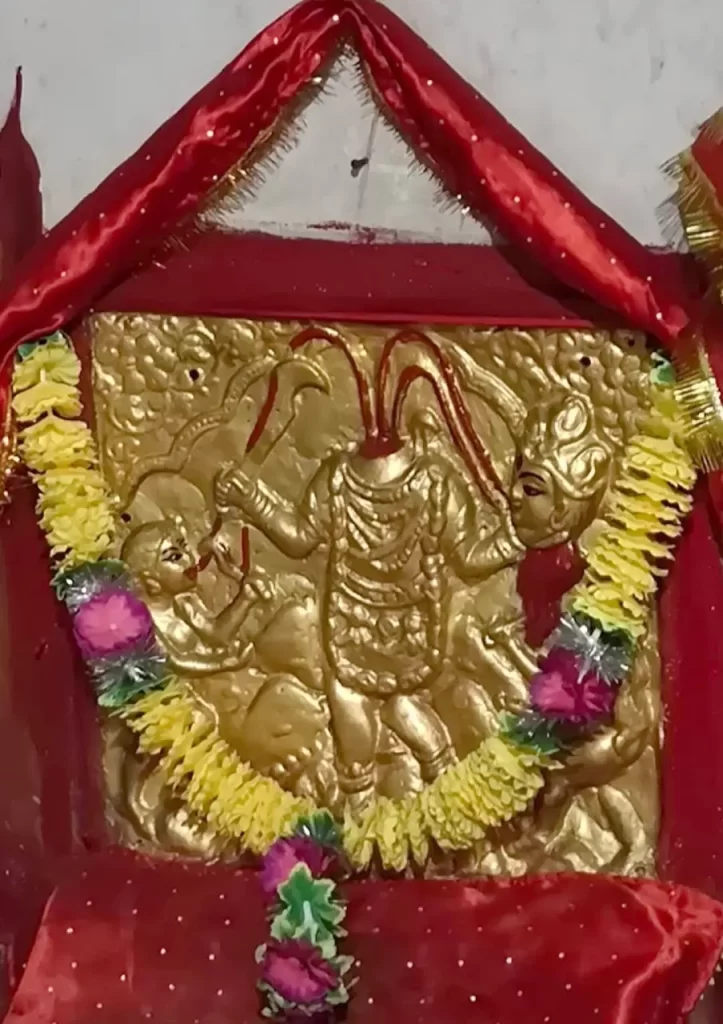
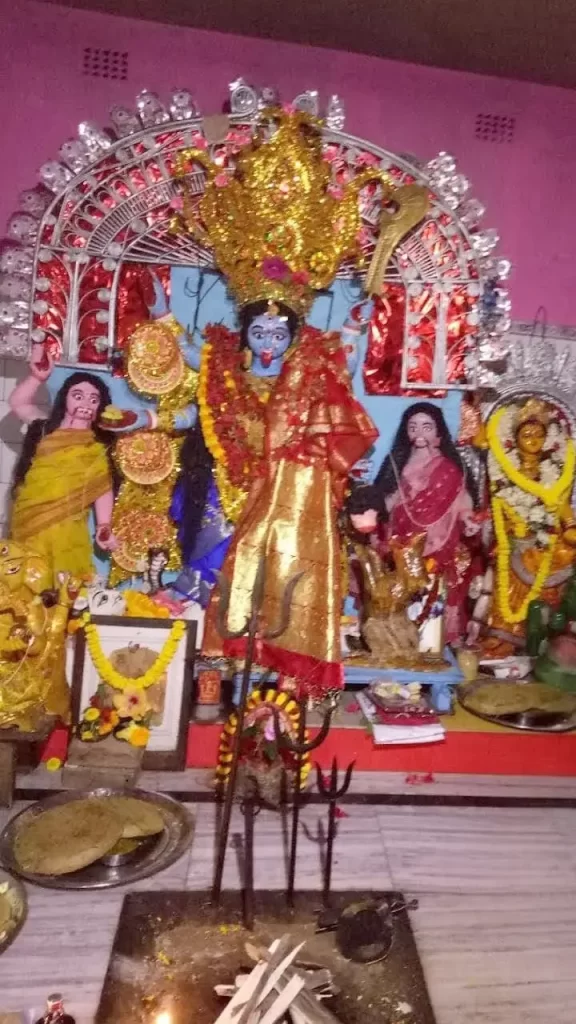
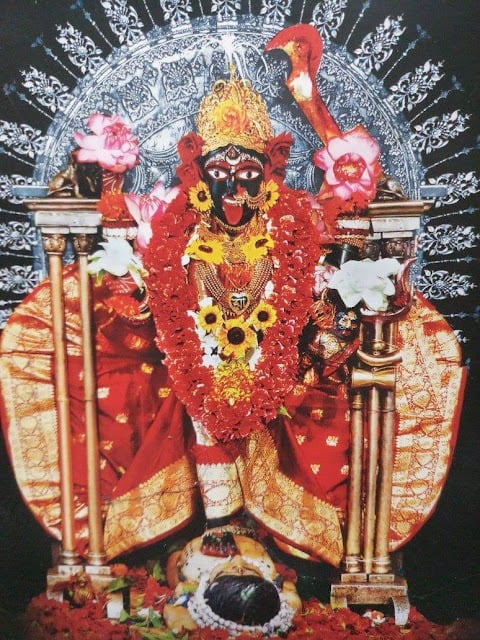
The first time you approach the idol in the Chinnamasta Devi Temple, it will surely leave an unforgettable impression on your mind with its fearsome, yet beautiful, iconography. This is no picture of a body but a powerful visual representation of deep Tantric philosophy.
The Self-Decapitated Form
- The Goddess is represented nude, standing on a lotus flower.
- She holds in one hand her own severed head and in the other a scimitar or sword.
- Three jets of blood spring from her neck. The central jet flows into the mouth of her own severed head, which appears blissful, serene, or even ecstatic. Her attendants, Dakini and Varnini, drink the two flanking jets.
- Symbolism: This blood is Prana or the life-force. The central stream, drunk by the head, represents the Goddess feeding herself-the ultimate self-sustaining and self-realized spiritual state beyond the body. The other two streams represent the sustenance of the universe and her devotees. This act also symbolizes the awakening of the Kundalini Shakti, with three streams corresponding to the three main energy channels (Nadis) in the human body: Ida, Pingala, and Sushumna.
Standing on Kamadev and Rati
The Goddess stands on the figures of the God of Love, Kamadev, and his consort, Rati, in sexual union depicted in the viparita-rati posture—the female on top of the male.
Symbolism: This is one of the most potent symbols in the temple. It indicates the Goddess’s complete mastery over desire, lust, and the cycle of creation and procreation. Standing atop them denotes that even the power of creation and desire is subservient to the higher power of the Divine Mother. The confluence of the Bhera, or Bhairavi Nadi, meaning female energy, and Damodar, or male energy, rivers outside the temple is seen as a physical, natural representation of this very cosmic union and the Goddess’s cardinal role within it.
Read More>> Mopidevi Subramanya Swamy Temple
Cultural, Spiritual, and Mythological Significance
The Chinnamastika Mandir is not merely an important Hindu place; it is a spiritual nerve center that has a multi-layered importance.
Shakti Peetha or The Tantric Center
This temple is widely regarded as a significant Tantrik center, second only to Kamakhya in esoteric importance. It is one of the Shakti Peethas, which marks a place where the energy of the Divine Feminine is exceptionally concentrated.
- Spiritual Transformation: Worshipping Maa Chhinnamasta is specifically recommended for overcoming the influence of the planet Rahu, a shadow planet associated with confusion and sudden troubles in astrology. It is believed that Her worship helps devotees transcend the limitations of the physical mind and ego, leading to inner transformation. The act of cutting off the head is a symbolic way of shedding the ego, which is considered the biggest barrier on one’s path to spiritual progress.
- Self-Control and Life Force: The Goddess is the paradox that represents both life and death, creation and destruction. She is the fierce destroyer of evil, yet the loving and life-giving Mother. And by controlling the flow of blood or Prana, she teaches devotees to master their life force and energy.
A Sanctuary for Tribal Faith
Besides the formal Hindu worship, Rajrappa is of great cultural significance to the local Santhals and other tribes. It was this blending of Shakta (Hindu) and indigenous tribal traditions in worship that reflects the broad-based inclusiveness of the spiritual landscape of the Indian subcontinent. The immersion of ashes in the Damodar here by the tribals makes the river bank a sacred crematorium (Smashana or Thel Kopi Ghat), a traditional location favored by Tantriks for their rituals.
Protection by Shiva: The Dham Status
The entire complex is considered to be a Dham -a great pilgrimage center-because the abode of Goddess Maa Prachanda Chandika is guarded by Lord Shiva in all four cardinal directions. There are four Mahadev temples within the complex that stand guard over the central shrine:
- Kaleshwar Mahadev in the East.
- Narahna Mahadev in the West.
- Muchhkund Mahadev in the North.
- Shiv Bari Temple in the South.
This setup ensures that the powerful, fierce energy of the Goddess is contained and balanced by her divine consort Shiva, providing a secure spiritual atmosphere for all devotees.
Festivals and Auspicious Days: When the Temple Roars
It is during its major festivals that the real vibrancy and spiritual intensity of Chinnamasta Devi Temple come alive. This is when the temple grounds become a sea of humanity, transforming the serene river confluence into a bustling, sacred fair.
- The nine nights of Navaratri-both the main one in Autumn/Sharad and the one in Spring/Vasanta-are the most significant periods for worship here.
- Devotees arrive in massive numbers, performing elaborate poojas and homams to invoke the power of the Mother Goddess.
- The atmosphere is filled with mantras and aarti, as Maa Chhinnamasta is one of the ten Mahavidyas, who is specially honored during this time.
Chhinnamasta Jayanti
This is the divine birth anniversary of the Goddess. It is celebrated every year on the Chaturdashi, the 14th day during the Shukla Paksha of the Vaishakha month that falls in April/May. A big mela is held to mark this day as sacred, considering it as one of the most appropriate days to get her blessings for spiritual growth and success over enemies.
Special and Crowded Days
If you want to experience the peak crowds and the most intense rituals, plan your visit around these times:
- Tuesdays and Saturdays: Traditionally, these are considered days of good fortune for Maa Kali and other fierce forms of the Mother Goddess. Animal sacrifice is still carried out on these days, especially during Kali Puja, though many devotees now opt for symbolic offerings.
- Full Moon (Purnima) and New Moon (Amavasya) Nights: Because of the strong Tantric tradition of this temple, the Amavasya, or No Moon Night, is especially a time of intense ritual practice and Tantra Sadhana for the local priests and initiated devotees.
- Makar Sankranti (January): A major fair is also organized around this harvest festival, drawing huge crowds.
- Mundan Karma: The mundan karma or the first head-shaving ceremony for children is very popular here, since it means a child is dedicated to the Goddess, and there begins a symbolic ego-shedding process right from childhood.
Special Poojas and Rituals
Unique to this Chinnamastika Mandir are the Tantric forms of worship:
- Vehicle Worship: One of the most common and unique rituals is the blessing of new vehicles. According to the devotees, bringing one’s new cars or bikes to the Goddess and performing a first pooja will ensure a long life to the vehicle and bring good luck to the owner.
- Wish-fulfilling Thread: A practice where devotees will tie a red thread around a certain rock in the temple complex signifies a vow or some wish that they are seeking to have granted by the Goddess.
- Mitigation of Rahu Dosha: Special poojas and yagnas are performed here as a remedy for the malefic effects of the planet Rahu in a person’s horoscope. This involves the chanting of the special Chhinnamasta Beej Mantra.
Read More>> Karni Mata Temple Udaipur
Unique Architectural Styles and Carvings
As we discussed, the Chinnamasta Devi Temple’s architecture has strong ties with the Tantric tradition, which can be clearly seen in the design and its surrounding complex.
The Main Structure of the Temple
The main shrine with a simple yet sturdy dome-shaped top is characteristic of the Kamrup or Assam style often seen in temples of Tantric importance. The structure is built to house the core energy of the Shakti Peetha.
The real architectural and artistic wonder lies in the detailed carvings that surround the shrine and in the arrangement of the overall complex.
The Temple Complex (Das Mahavidyas)
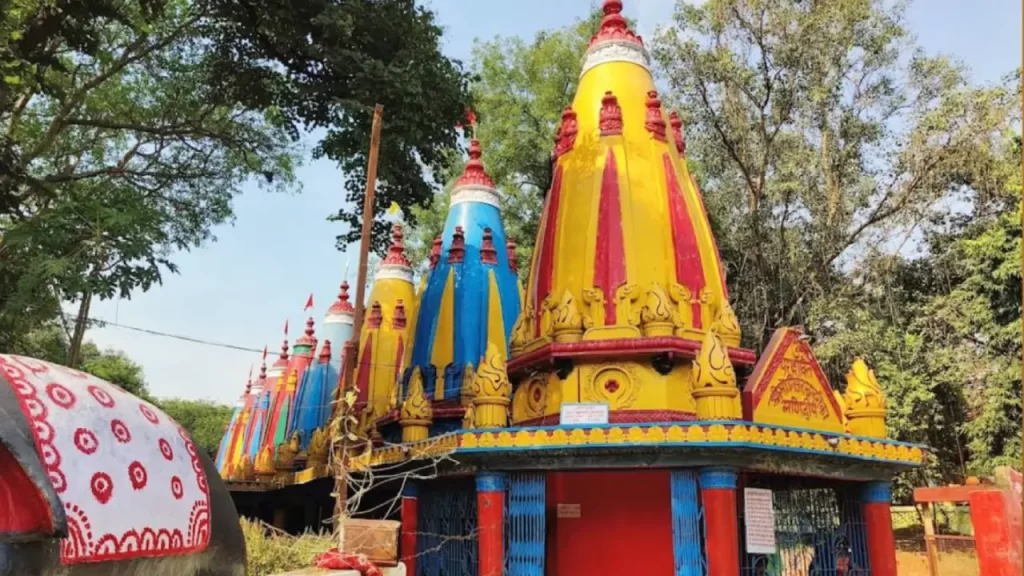
One of the most important architectural features is the presence of ten smaller temples built around the central shrine, dedicated to the ten Mahavidyas, or ten ferocious and benevolent forms of the Goddess. The deities are:
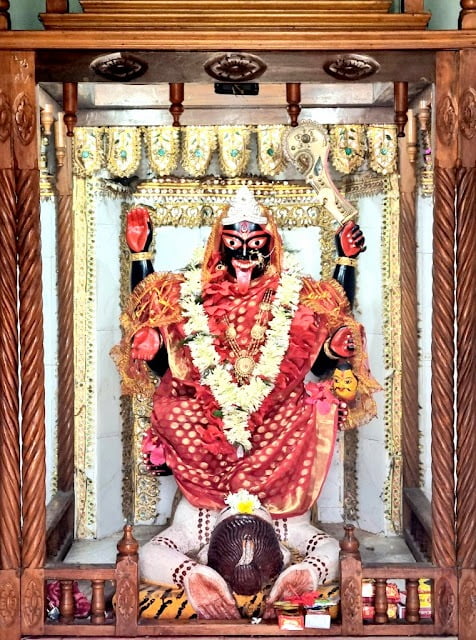
- Kali
- Tara
- Tripura Sundari (Shodashi)
- Bhuvaneswari
- Tripura Bhairavi
- Chinnamasta – central shrine
- Dhumavati
- Bagalamukhi
- Matangi
- Kamala
This deliberate arrangement creates a powerful Maha Yantra-a mystical diagram-with the central Chinnamastika Mandir being the Bindu, or center point, of the entire spiritual field. When you walk through this complex, you are essentially walking through a three-dimensional representation of the divine, cosmic power of the Mother Goddess.
Other gods
The complex is home to shrines for many other important deities as well, representing a complete Hindu pantheon under the protection of the Great Goddess. You’ll find temples and shrines dedicated to:
- Lord Surya (Sun God)
- Lord Hanuman
- Lord Shiva-the four guardians previously mentioned
- Ashtamatrika (Eight Mother Goddesses)
- Dakshina Kali
These small shrines constantly go through maintenance and restoration processes, which keep the entire sacred energy field of Rajrappa vibrant and protected.
Myths and Beliefs: The Power of Self-Transcendence
The myths and beliefs regarding Maa Chhinnamasta are deep, and beyond mere worship, it touches on deep yogic and philosophical truths.
The Ego’s Sacrifice
The most central belief is that the self-decapitation of the Goddess is a metaphor for the slaying of the Ego, or Ahamkara.
Myth: The head contains the mind, which is the seat of the ego, attachments, and dualistic thinking (this is mine, that is yours; I am good, you are bad).
Belief: The Goddess shows us that true spiritual enlightenment and moksha can only be attained by going beyond the mind and ego, as shown by her very act of severing her own head. The serenely smiling countenance of the head shows that there is no pain but the joys of transcendence and freedom from the limitations brought about by the imprisonment in the physical body.
Vajrayana Connection
Fascinatingly, the worship of this fierce goddess is not confined to Hinduism. In the Buddhist Tantric tradition, she is known under the names of Vajrayogini or Chinnamunda Vajrayogini, which means The Headless Vajrayogini. This figure, too, is depicted as holding her own severed head, a symbol of the wisdom of emptiness-shunyata-and the radical transformative power of wisdom over ignorance. It speaks to the deep spiritual connectedness of the subcontinent.
Instantaneous Results
It is a strong belief among people, especially the Tantric sadhaks, that Maa Chhinnamasta is a goddess who grants instantaneous results, be it gaining victory over enemies, finding solutions to pressing problems, or achieving rapid spiritual augmentation. People believe in the fierce and lightning-like energy of the Goddess, which works swiftly and powerfully in one’s life. This is why worship is often advised to be performed with great care and sincerity.
Read More>> Tulja Bhavani Temple Tuljapur
Chinnamasta Devi Temple Timings and Daily Rituals ⏰
A visit to the Chinnamastika Mandir requires a bit of planning because the daily schedule is designed around the traditional aartis and darshans of the Goddess.
| Season | Opening Time | Closing Time |
| Summer | 4:00 AM | 10:00 PM |
| Winter | 5:30 AM | 9:30 PM |
Please Note: The temple remains closed for a short duration, usually around 30 to 60 minutes, during the Aarti (ritual of light) and Bhog (offering of food) times. The exact times for Aarti can vary, so it is always best to check locally or with your guide upon arrival if you wish to participate.
The major daily rituals are:
- Mangala Aarti: The early morning ceremony to wake up the Goddess.
- Bhog and Balya Bhog: Offering of food to the deity, usually late morning and afternoon.
- Sandhya Aarti: It is the primary evening Aarti performed at sunset and hence is very powerful and highly attended.
- Shayan Aarti: The ritual before closing, where the Goddess is prepared for rest.
If you intend to perform any special pujas, such as a rudrabhishek or a navagraha pooja at one of the subsidiary shrines, it is advisable to come early and consult a temple priest.
Places to Visit Near the Temple
The pilgrimage to the Chinnamasta Devi Temple forms part of a greater, enlightening journey into the spiritual and natural splendor of the area.
The Rajrappa Waterfalls (Bhera River Sangam): Immediately outside the temple complex is the beautiful confluence of the Damodar and Bhera rivers. The Rajrappa Falls are formed when the Bhera River drops about 20 feet as it joins the Damodar. It’s a wonderfully scenic place, and boating facilities are available. The river confluence itself is holy and is the natural counterpart to the temple’s Tantric iconography.
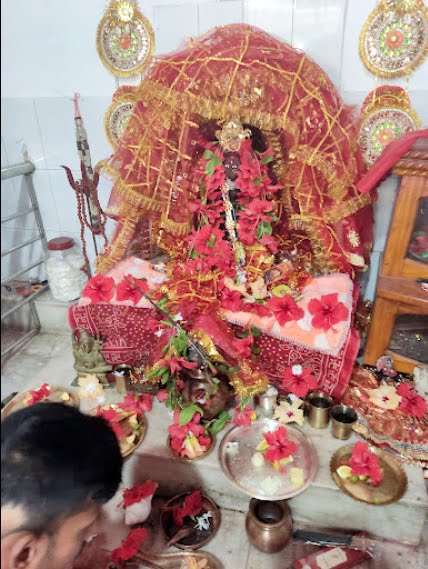
The Ten Mahavidya Shrines: Don’t stop at the main shrine; the whole compound is a complex of temples dedicated to the Das Mahavidyas. You have to make sure to pay obeisance at each of the nine surrounding shrines if you want to absorb the full spiritual energy of the complex.
Hot Water Spring: Near this temple, there is a hot water spring, a natural wonder and one of the most visited places of the area. Natural hot springs usually have a sacred character, possess special healing properties, and enhance the uniqueness of the landscape.
Lord Shiva Temples: Since the Goddess’s abode has been protected by Lord Shiva, take the time to pay a visit to the four protective Shiva temples, including Kaleshwar, Narahna, Muchhkund, and Shiv Bari within the campus for complete blessings of the divine couple.

How to Reach the Temple
Planning a Trip to the Holy Chinnamastika Mandir is easy since several options for travel and staying are available.
By Air (Nearest Airport):
- The nearest major airport would be Birsa Munda Airport in Ranchi, the capital of Jharkhand.
- The distance between Ranchi to Rajrappa is about 70-75 km.
- You can hire a taxi or take a pre-booked car directly from the airport to the temple.
By Train (Nearest Railway Station):
- The most convenient railway station is Ramgarh Cantonment RMT.
- The station is about 28 km away from the temple.
- Taxis, auto-rickshaws, and local buses are readily available outside the station to take you to Rajrappa.
By Road (Road Network):
- By road, the temple is well-connected, lying about 28 km away from Ramgarh Cantonment along NH 20.
- Regular buses and shared vehicles are available from Ramgarh, Ranchi, and Hazaribagh.
- If going by your vehicle, the roads are generally in good condition though the hilly terrain will need careful driving.
Read More>> Basara Gnana Saraswati Temple
Accommodation Options
Since Rajrappa is a major pilgrimage and tourist spot, you will find several lodging choices:
Dharamshalas: This is usually the first choice among pilgrims. Basic, reasonably priced accommodation, which is run by the temple trust itself or local bodies. Offering traditional and no-frills accommodation, the stay is all about the spiritual experience.
Local Guest Houses: You’ll find several private guest houses and smaller hotels in the area of Rajrappa with basic to mid-range facilities.
Ramgarh/Ranchi: If you prefer more comfortable, modern hotel chains and amenities, then it is better to stay in Ramgarh Cantonment or, even better, in Ranchi. You can then make a day trip to the temple as the drive is manageable.
I hope this detailed guide has prepared you for a deeply enriching and spiritually intense visit to the Chinnamasta Devi Temple!
2 Comments