
Manakula Vinayagar Temple
Manakula Vinayagar Temple is just 400 meters west of the glinting Bay of Bengal, this temple is more than a shrine, a living witness to devotion, to history, and to astonishing endurance. Its very name is one of narrative: “Manal” is sand, and “Kulam” is pond, so it is literally “the deity by a sand pond.” This is where Lord Ganesha, or Vinayagar as he is referred to in Tamil, decided to make his home for centuries.
The moment you enter the road towards the temple, you can sense a change around you. The French colonial aura of Puducherry disappears, and you are surrounded by a lively, spiritual environment. The incense scent, the chant in rhythm, and the devotees walking towards the temple paint a strong picture of devotion. I have been bringing visitors here for years, and each time, I discover something else that amazes me. Manakula Vinayagar Temple really has a place in everyone’s heart, locals included.
Contents
- 1 A Glimpse into the Past: Manakula Vinayagar Temple History
- 2 The Legends Surrounding the Temple
- 3 A Deeper Look: Cultural, Spiritual, and Mythological Importance
- 4 Festivals and Celebrations
- 5 A Feast for the Eyes: Distinct Architectural Style and Carvings
- 6 Myths and Beliefs: What Makes this Temple Special
- 7 Planning Your Visit: Manakula Vinayagar Temple Timings and Crowds
- 8 Accommodation Options Near the Temple
- 9 How to Reach Manakula Vinayagar Temple
- 10 Places to Visit Near Manakula Vinayagar Temple
- 10.0.1 Salai Kumaraswamy Temple Tirunelveli
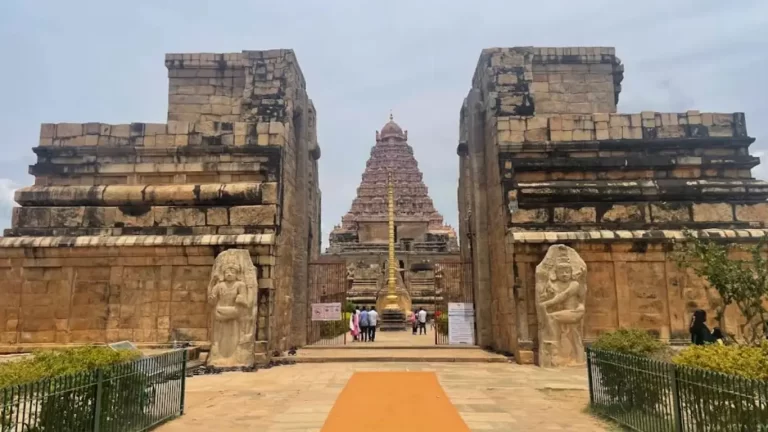
- 10.0.2 Gangaikonda Cholapuram Temple
- 10.0.3 Sivanmalai Temple: Murugan’s Sacred Box Predicts the Future
- 10.0.4 Thiruvidaikazhi Murugan Temple: Remove Sins of Even the Gods
- 10.0.5 Kanchi Kamakshi Temple: One of Powerful 18 Shakti Peethas
- 10.0.6 3BCE Pathala Sembhu Murugan Temple: Underground Copper Pot
- 11 FAQ
A Glimpse into the Past: Manakula Vinayagar Temple History
The history of the Manakula Vinayagar Temple is as captivating as the temple itself. It’s a story that goes back over 500 years, long before the French set foot in this beautiful coastal town. Imagine, a temple that has stood the test of time, witnessing the ebb and flow of empires, and retaining its spiritual sanctity. It’s a marvel to think about.
The history of the temple has deep roots among the local population. It was a religious centre for the indigenous Tamil people, an icon of their religion and culture. But what really challenged its resilience came during French colonial times. This is where one of the most renowned tales of the Manakula Vinayagar Temple begins.
In 1688, when the French were building their fort in the area, a French officer, one who did not have faith in the idol’s power, decided to take down the Ganesha statue from the temple. He commanded his soldiers to discard it into the sea. But here came a miracle. Every time they discarded the idol into the sea, it reappeared back in its original position at the temple. The officer attempted this again and again, but the idol was always restored.
The people were jubilant, and even the French officer, chastened by this miracle, abandoned his efforts to demolish the temple. This is the reason why a few locals affectionately call the deity “Vellaikkaran Pillai,” or “the god of the white men.” This remarkable tale of resistance and intervention by the divine is the core of the history of the temple and is one of the many proofs of the great power of Manakula Vinayagar.
Read More>> Yamai Devi Temple Aundh: Mystery of the Black Stone Goddess
The Legends Surrounding the Temple
The tale that I presented above is just one of many tales surrounding the Manakula Vinayagar Temple. There is another lovely story that talks of a great saint, a Siddhar, who supposedly lived 300 years ago. This saint, whose eyes shone like diamonds and whose forehead was wide, achieved enlightenment right here, at this temple, and is said to have reached the state of Samadhi (a state of being free spiritually) within its hallowed walls.
Due to this strong spiritual bonding, it’s extremely auspicious for parents to bring their newly born babies to this temple for the first prayers. It’s a practice that still exists today, and it’s such an emotive moment to see new parents bringing their babies to seek the blessings of Manakula Vinayagar for their child’s future.
These tales are not myths; they are a part of the living heritage of this temple. They reveal to us how much this temple is enmeshed in the lives of the people here, and how it has been a source of hope and faith for centuries.
A Deeper Look: Cultural, Spiritual, and Mythological Importance
The Manakula Vinayagar Temple is not only a historical landmark. It is of tremendous cultural, religious, and mythological importance to the people of Puducherry and more.
Cultural Significance
The temple is an important center for the local Tamil community. It’s a place where traditions are transmitted from one generation to the next. The rituals, the festivals, and even the temple art and architecture within the temple compound speak volumes about the Tamil culture. The survival of the temple during the French period is a strong representation of cultural identity and resilience. It indicates that however much the outside forces might be, religion and tradition can withstand them.
Spiritual Importance
Spiritually, the temple is a divine place for Lord Ganesha, the “remover of obstacles” and god of new beginnings, wisdom, and knowledge. People believe that by making their prayers to Manakula Vinayagar, they will be able to overcome life’s obstacles and get his blessings for prosperity and success. The peaceful and energizing aura of the temple makes it an ideal spot for meditation and contemplation. Numerous individuals visit here to seek solace and peace, far from the din and chaos of everyday life.
Mythological Significance
Though the temple is not specifically referred to in ancient Hindu texts or Puranas, the god himself is an embodiment of eternal Hindu mythology. The 32 varied forms of Ganesha, each symbolizing a different facet of his divine powers, are lovingly described in the temple corridors. This makes the temple a sort of visual encyclopedia of Ganesha’s mythological forms and tales. The deity’s placement here, looking out towards the sea, is the only such aspect of this temple. He is not only remover of obstacles on land, but also a protector of those who set sail into the ocean.
Read More>> Uttarkashi Temple Kashi Vishwanath
Festivals and Celebrations
The Manakula Vinayagar Temple is brought to life with colors and passion during its festive times each year. These are the times when you should visit the temple if you want to see it at its most celebratory.
Brahmotsavam
The temple’s biggest festival is the Brahmotsavam, a 24-day mega-festival in the months of August and September. It is one marvelous festival that includes special poojas, processions, music, and dance recitals. In this festival, Urchava Murthy (the processional deity) is brought out in a grand procession on various vahanas (vehicles) every day, such as a beautiful golden chariot. The excitement is palpable, and thousands of devotees come to witness these heavenly happenings.
Ganesh Chaturthi
Naturally, the festival of Lord Ganesha, Ganesh Chaturthi, is a much-revered day with a lot of enthusiasm and passion. The temple is adorned tastefully, and special prayers and rituals are held all day long. It’s a celebration day pure and simple, where worshippers offer gifts and celebrate the birth of their favorite elephant-headed deity.
Other Special Days
Apart from the grand festivals, there are some days of the week which are particularly sacred to worship at the Manakula Vinayagar Temple. Tuesdays and Fridays are very busy, as most devotees think that their prayers are granted faster on those days. The temple also observes other significant festivals during the year, including the Maasi Magam, during which the processional deity is taken to the sea for a holy dip.
A Feast for the Eyes: Distinct Architectural Style and Carvings
Perhaps one of the most pleasing features of the Manakula Vinayagar Temple is its breathtaking Dravidian architecture. The temple is a work of art in South Indian craftsmanship, and every nook and cranny has a story to tell.
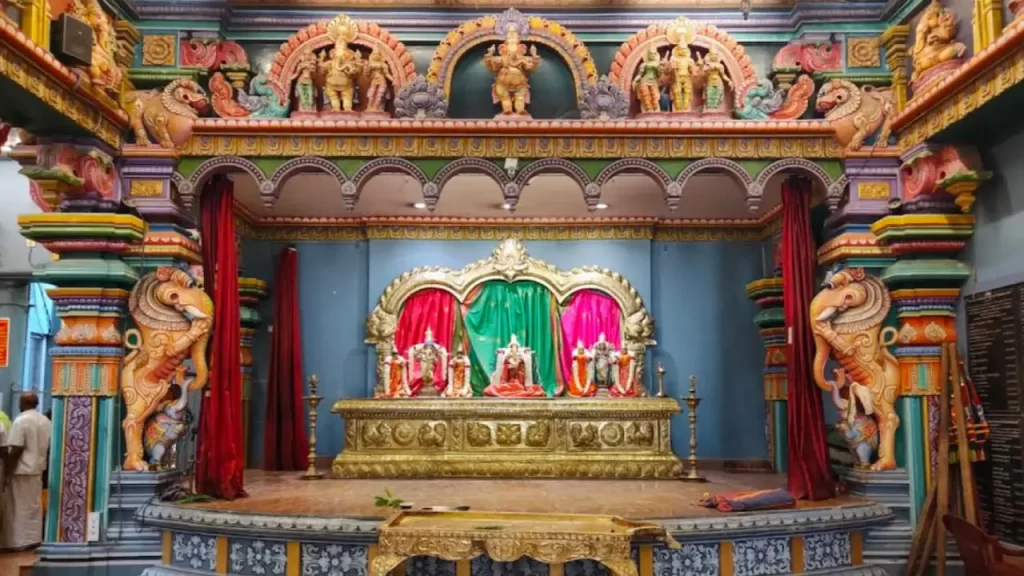
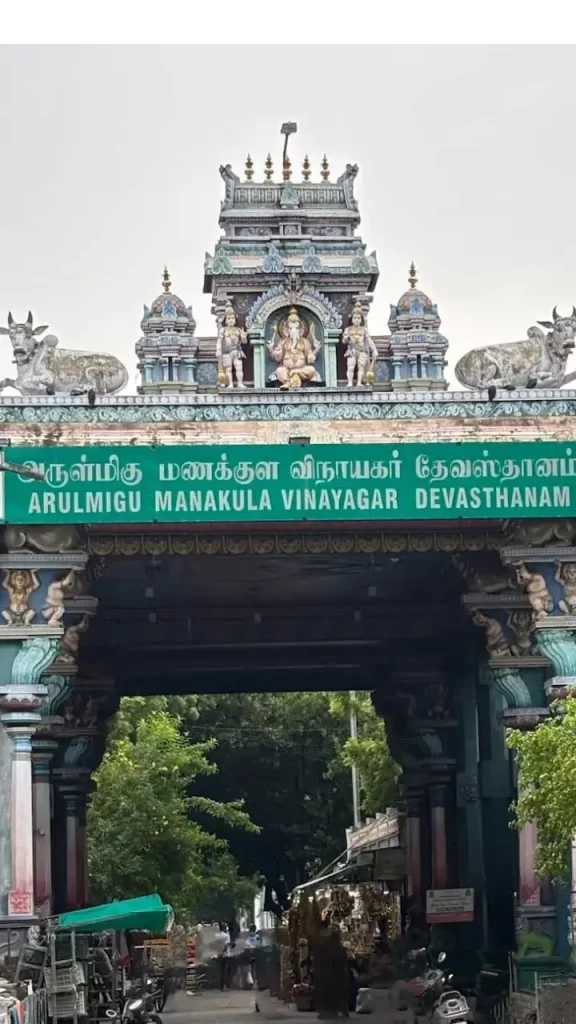
The lively gopuram of the temple is worth a sight. It has detailed carvings and painted sculptures of different deities and scenes from Hindu mythology. You’ll realize upon entering that the temple is spread over a vast area, with a lovely combination of a typical Dravidian temple layout and French colonial influence.
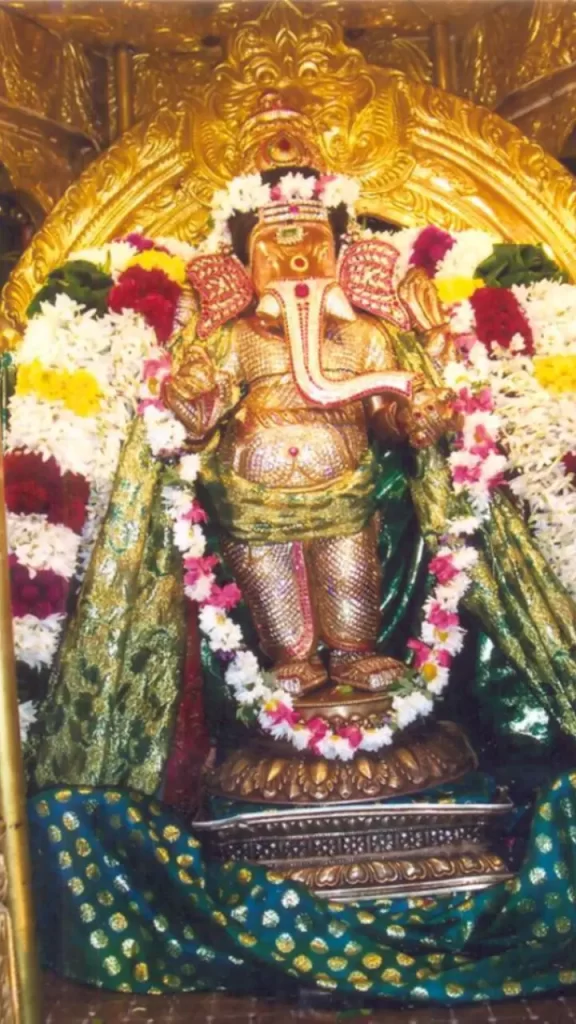
The central sanctum (Garbhagriha) contains the exquisite golden image of Lord Ganesha, who is also said to be Swayambhu (self-manifested). The lord here is depicted with four arms, with an Angusam (elephant goad) and a Pasam (noose) in his upper two hands, while the lower ones are in blessing pose (Abhaya Mudra and Varadha Mudra).
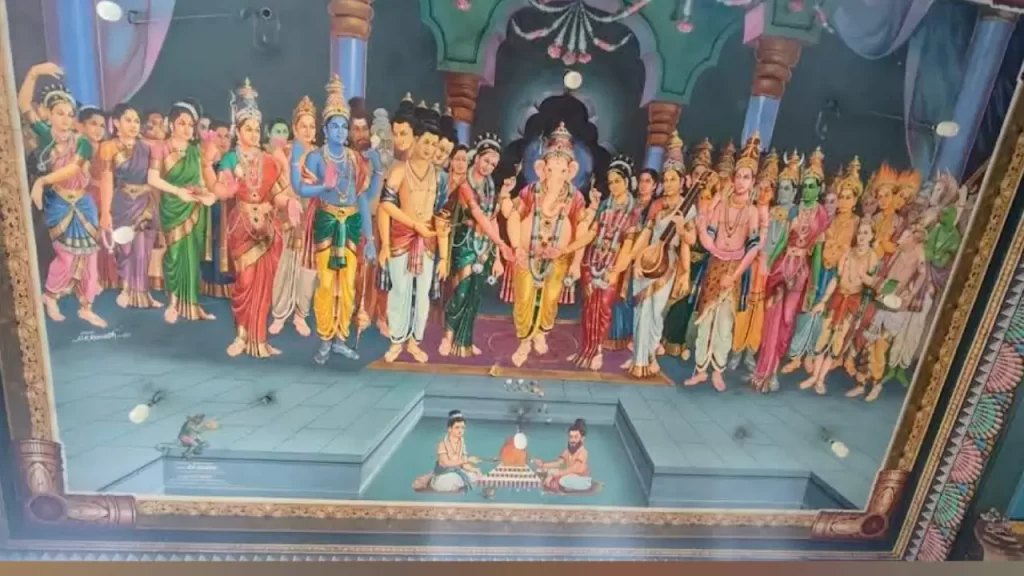
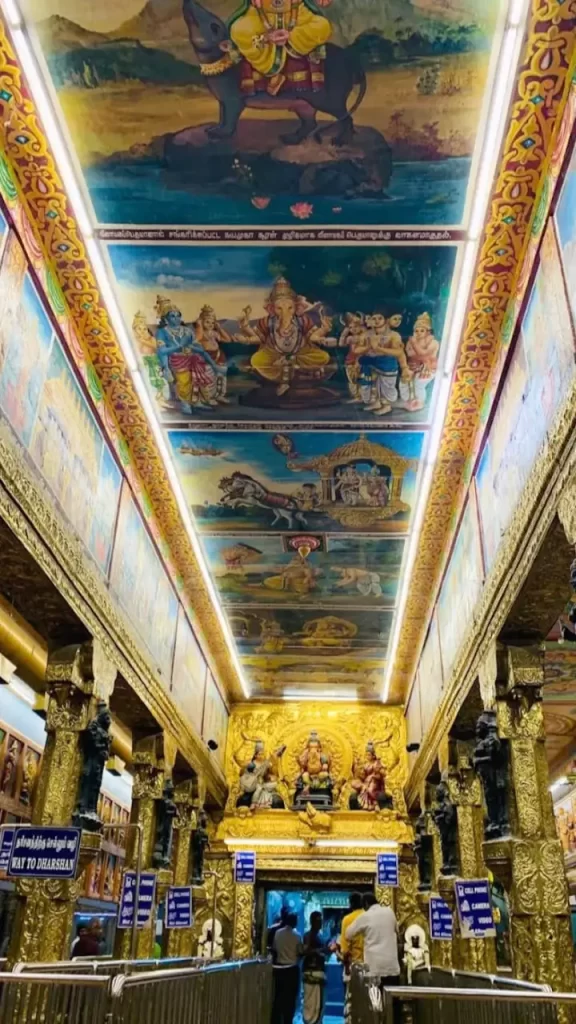
But the real artistic gem is located in the corridors of the temple. The inner walls are adorned with stunning frescoes and paintings that tell stories of Ganesha’s life, including his birth and the slaying of the demon Gajamukhasura. The corridors also boast an incredible array of carvings in stone, depicting the 32 different forms of Vinayagar. This is a one-of-a-kind sight unique to this temple and a must-visit for anyone who is interested in Hindu iconography.
Yet another highlight is the Kodi Kambam, a gold-plated flagstaff measuring 18 feet. The golden chariot of the temple, crafted out of teakwood and ornamented with 7.5 kg of gold, is another example of the faith and creativity of the individuals who constructed and cared for this temple.
Read More>> Sri Kshetra Dharmasthala Temple: Miracles of Lord Manjunatha
Myths and Beliefs: What Makes this Temple Special
Aside from the grandiose architecture and colorful festivals, there are a few myths and beliefs that have made the Manakula Vinayagar Temple a one-of-a-kind destination.
The Temple Elephant, Lakshmi
One of the temple’s greatest attractions for many years was its sacred elephant, Lakshmi. She was a kind-natured creature who blessed worshipers by lightly touching her trunk to their heads. Both locals and travelers alike held this practice dear. Although Lakshmi is gone, her memory and tradition continue to live on, representing the strong relationship between the divine and nature in Hinduism.
Beliefs on Childbirth
followers firmly believe that praying at this temple can benefit couples wishing to have children. Many turn up to pray for a child, and once their prayers have been granted, they return with the newborn baby to the temple to invite the blessings of Manakula Vinayagar. This practice sustains the temple’s image as a site of new starts and life.
Offerings and Rituals
The special items offered here are also part of the exclusive temple experience. The devotees tend to offer a special sweet known as Modak or Kozhukattai, as Ganesha’s favorite dish. You can also notice people shattering coconuts in front of the temple, a symbolic act of shattering one’s ego and surrendering to the divine.
Planning Your Visit: Manakula Vinayagar Temple Timings and Crowds
The Manakula Vinayagar Temple is crowded, and having the timings in hand can enable you to arrange your trip at a calmer time.
The temple is usually open from 5:45 AM to 12:30 PM and then again from 4:00 PM to 9:30 PM. It is advisable to go early in the morning or late in the evening, when the crowd is slightly less. As I said before, Tuesdays, Fridays, and festive days such as Ganesh Chaturthi are the busiest. If you want a less busy visit to immerse in the spiritual environment, I would suggest a weekday morning.
Pooja and Abhishekam (idol bathing) are conducted at designated times during the day. It is a lovely sight to see. You may verify the temple official website or inquire with someone locally for the exact timing.
Manakula Vinayagar Temple Pooja Timing:
Here is a general daily pooja schedule for the Manakula Vinayagar Temple:
Morning:
- Nadai Thirapu (Opening of the Sanctum): 5:45 AM
- Kaalasanthi (Morning) Abhishekam: 6:30 AM
- Theeparathanai (Aarti): 7:30 AM
- Uchikaalam (Midday Pooja): 11:00 AM
- Nadai Sathal (Closing for the Afternoon): 12:30 PM
Evening:
- Nadai Thirapu (Reopening of the Sanctum): 4:00 PM
- Saiyangalam (Evening) Abhishekam: 4:30 PM
- Theeparathanai (Aarti): 5:30 PM
- Arthajama Pooja (Night Pooja): 9:00 PM
- Nadai Sathal (Closing for the night): 9:30 PM
Read More>> Hidden Power of Haridwar Mansa Devi Temple: #1 Wish Granted!
Accommodation Options Near the Temple
Puducherry has a diverse selection of accommodations available, ranging from heritage luxury hotels to small guesthouses. As the Manakula Vinayagar Temple is situated in the city center, there are plenty of choices within walking distance.
Luxury and Heritage Hotels: For an unforgettable experience, you can stay at one of the elegant restored French colonial villas in the White Town neighborhood. These hotels capture a mix of old-world style and contemporary amenities.
Mid-Range Hotels: There are numerous clean and well-furnished hotels around the temple that suit various budgets. You can quickly find a clean, cozy, and conveniently located place to stay.
Budget Guesthouses: If you’re a budget backpacker or have a tight budget, there are some cheap and hospitable guesthouses and homestays available.
Being close to the temple has its advantages. You can walk easily to the temple for an early morning darshan (sight of the deity) or evening walk after a day of touring. The neighborhood is also equipped with great restaurants and cafes.
How to Reach Manakula Vinayagar Temple
Access to the Manakula Vinayagar Temple is very convenient, as Puducherry is well connected by road, rail, and air.
By Air: The closest international airport is Chennai International Airport (MAA), which is around 155 km. You can take a taxi or bus from there to Puducherry. Puducherry also has a small airport (PNY) that has limited regional flights.
By Train: The closest railway station is Puducherry Railway Station (PDY), which has good connectivity from major cities such as Chennai and Villupuram. From the station, it’s just a short drive by taxi or rickshaw to the temple.
By Road: Puducherry is well-connected by road. It’s very convenient to visit by bus from Chennai, Bengaluru, and other neighboring cities. If you drive, the East Coast Road (ECR) connecting Chennai is a stunning drive. Once you arrive at Puducherry, the temple is in the heart of the city and easy to get to on foot, bike, or an auto-rickshaw.
Read More>> Chelamattom Sreekrishna Swami Temple: Powerful Temple for Ancestors
Places to Visit Near Manakula Vinayagar Temple
Your search for the divine does not have to stop at the Manakula Vinayagar Temple. Puducherry and the surrounding region have numerous other important Hindu temples and places of spirituality.
Sri Aurobindo Ashram: This is a stones-throw distance from the temple and is a globally famous spiritual community that was established by Sri Aurobindo and his disciple, The Mother. It is a place of serenity, meditation, and education.
Arulmigu Vedapureeswarar Temple: This is another old temple in Puducherry of Lord Shiva. It’s famous for its interesting architecture and peaceful environment.
The Matrimandir in Auroville: Although not a temple technically, the Matrimandir is a center of silent concentration and the spiritual center of Auroville, an experimental village dedicated to human unity. It’s just a short drive from the city and a sight that is truly captivating.
Chidambaram Nataraja Temple: It’s a bit of a trek, but if you’re up for it, the temple of Lord Nataraja in Chidambaram is a must-see. It’s one of India’s most revered and significant Shiva temples.

FAQ
I’ve heard numerous questions from tourists throughout the years, and I’d like to cover some of the most asked questions to assist you with your vacation.
Q1: What does the name of the temple mean?
The name Manakula Vinayagar Temple originated from the Tamil names “Manal” (sand) and “Kulam” (pond), describing its site adjacent to a sandy pond along the Bay of Bengal. This popular name has persisted for centuries and describes the temple’s singular location.
Q2: Is there a dress code for the temple?
Yes, as with the majority of Hindu temples, it is polite to dress modestly. Wearing traditional Indian clothing or clothing that falls below the shoulder and knees is advisable. This is an act of respect for the holiness of the site.
Q3: Can foreigners come to the temple?
Yes! The Manakula Vinayagar Temple is open to all people, of whatever nationality or religion. It’s a temple of peace and harmony. Just be respectful of the temple’s customs and traditions.
Q4: Are cameras allowed within the temple?
Photography is usually not permitted within the main temple premises, particularly the sanctum sanctorum. It’s better to be mindful of these restrictions in order to preserve the spiritual sanctity of the area.
Q5: When is the best time to visit?
The weather in Puducherry is optimal between October and March, when it is cooler and less humid. However, if you wish to witness the colorful festivals, you should visit around the Brahmotsavam of August-September or Ganesh Chaturthi that falls in August or September generally.
In summary, a trip to the Manakula Vinayagar Temple is not only a pilgrimage to a sacred temple; it’s a journey to the soul of Puducherry’s culture and spirituality. Hopefully, this guide will assist you in planning your trip, and I’m confident that you will depart with a sense of tranquility and awe, just as I do every time. Safe travels!
3 Comments