
Shree Stambheshwar Mahadev Temple
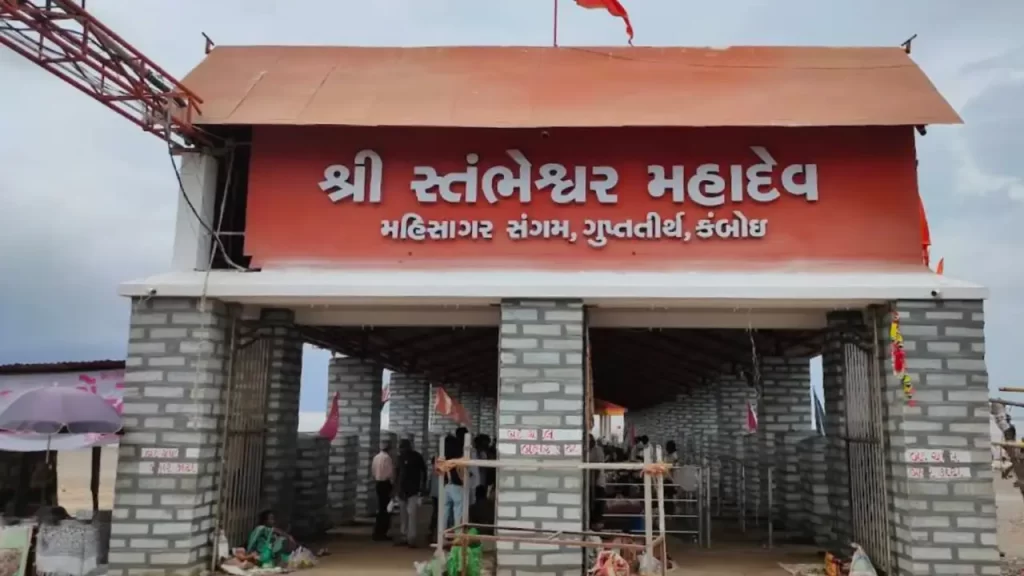
Shree Stambheshwar Mahadev Temple is commonly known as the ‘Gayab Mandir’ (Lost Temple), also known as the Submerging Temple of Gujarat. Can one imagine the amazement of seeing an ancient temple disappear beneath the churning waves?
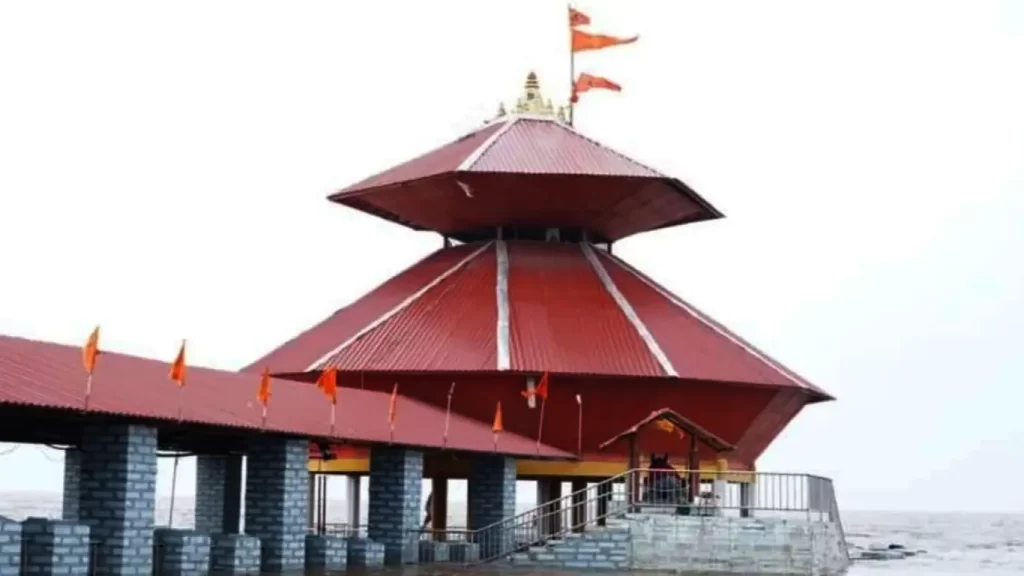
This is what brings all the pilgrims, as well as interested travelers, to the site every day. The sight of the sea reclaiming the steps, flooding the entire Shiva Lingam, only to withdraw, leaving the temple washed clean, is a sight that nobody who experiences it can ever forget. This is because, when worshipping at the site of holiness, even the sturdiest frameworks are not a barrier, but are forced to bend.
The Shree Stambheshwar Mahadev temple is more than a marked location for the darshan of a deity; it is a deep spiritual teaching on the cycles of creation and destruction, as is that of the universe itself.
Location: The location is situated in the Kavi Kamboi Village, Jambus.
Deity: Lord Shiva, in the form of the Stambheshwar Mahadev.
Unique Characteristics: Completely submerged during high tide, appears during low tide.
In fact, when you are visiting Shree Stambheshwar Mahadev, what you are witnessing is more than a historical monument. It is a meeting with God that occurs on a daily basis.
Contents
- 1 Shree Stambheshwar Mahadev Temple History:
- 2 Legend of the Temple: Lord Kartikeya’s Atonement
- 3 Cultural, Spiritual, & Mythological Significance
- 4 Unique Architectural Style and Carvings
- 5 Festivals, Special Days, and Ritual
- 6 Shree Stambheshwar Mahadev Temple Timings:
- 7 Stambheshwar Mahadev Temple Mystery:
- 8 How to Reach the Temple
- 9 Accommodation Options
- 10 Sights to Visit Near the Temple
Shree Stambheshwar Mahadev Temple History:
Although the architecture of the temple that exists today is modern, perhaps only 150 years old, as is the Shree Stambheshwar Mahadev Temple, the Shiva Lingam is said to be of antiquity, traceable to Hindu mythology.
The temple that exists today is a simplistic one, with architecture that has been designed to protect against the pounding force of the tides, but this particular location has been a holy Teerth Kshetra, a place of pilgrimage, for thousands of years. The history of Shree Stambheshwar Mahadev is a true testament to devotion.
For generations, this shrine has been preserved by local fishermen and followers, who come against all odds to pay homage every single day. It is a tradition that has been continued from antiquity by modern hands.
Legend of the Temple: Lord Kartikeya’s Atonement
The historical relevance and antiquity of Shree Stambheshwar Mahadev Temple exist in the legend that is described in the Hindu scriptures.
The Legend of Tarakasura
- The legend of Shree Stambheshwar Mahadev is inextricably linked with Lord Shiva’s son, Kartikeya, and the powerful demon Tarakasura.
- Tarakasura was a highly potent asura who, despite his asura background, was a passionate and devoted worshipper of Lord Shiva.
- By undergoing extremely harsh penance, he secured a special boon from Lord Brahma, which stated that he would die only at the hands of a six-day-old son of Lord Shiva. Feeling that he is nearly immortal, he started causing destruction on the three worlds, troubling the Devas (Gods), as well as innocent beings.
- In order to bring an end to his tyranny, Lord Shiva, at the behest of Devas, brought into existence his son, Kartikeya.
- Even when he was merely six days old, he led the divine army and defeated Tarakasura in a fierce fight.
Read More>> Chinnamasta Devi Temple Jharkhand
The Pillar of Forgiveness
The Devas were rejoicing at this victory, but Lord Kartikeya felt overcome with remorse. Tarakasura, after all, was a huge worshiper of his own father, Lord Shiva. It is a huge sin to kill a worshiper of Shiva, even when he is behaving maliciously.
Lord Vishnu comforted Kartikeya, who was overcome with grief, by telling him that killing a bad soul who threatened the harmony of the universe is a very noble thing, not a sin. But to wash his squeaky clean conscience of the guilty pun, he advised him to do a special worship.
Kartikeya followed the divine command and asked the celestial designer, Vishwakarma, to make three holiest Shiva Lingams out of which he fixed one in this very location to worship it with utmost dedication to cleanse his sins.
It is a spot where a ‘pillar’ (stambh) of devotion and atonement was set up, henceforth bekannt as Shree Stambheshwar Mahadev Temple.
Quoting the Holy Text
This Moksha Tirtha, as well as the area around it, is described in the Skanda Purana, which is one of the eighteen major Puranas. The Skanda Purana talks of a divine pillar known as Vishwanandak Stambh, which has been installed by the Devas at the Mahi Sagar Sangam Teerth Kshetra, which is the meeting point of the Mahi River, now exactly where the temple is standing.
This reference attests to the long-standing antiquity, religious significance, and importance of the Shree Stambheshwar Mahadev temple in Hindu cosmology. This is not a merely local tradition; it is an incident that is imprinted on the scriptures.
Cultural, Spiritual, & Mythological Significance
The significance of Shree Stambheshwar Mahadev Temple has been extended in various dimensions:
Religious Relevance: The Divine Abhishekam
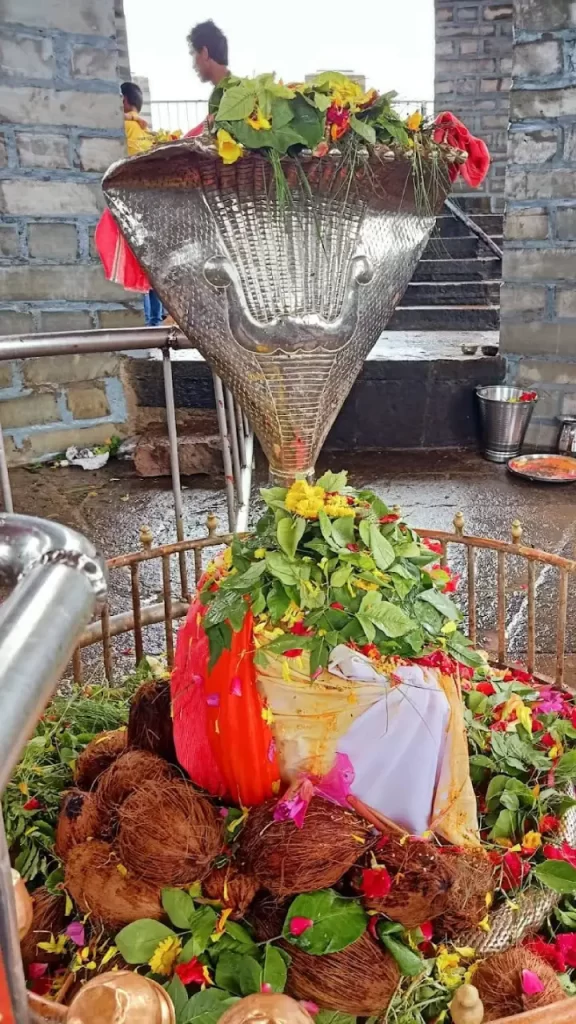
For a believer, this daily immersion is not a natural phenomenon, but a deeply spiritual event. It is a reference to the belief that ‘Samudra Dev, the Ocean God, or Mother Ganga herself, as the sea, arrives twice a day to carry out ‘Jalabhishekam’ (bathing with water) on Lord Shiva’s Lingam.’
- The ocean’s hug is considered an expression of the presence of Lord Shiva and the reverence of nature for the divine.
- This constant cleaning process is a sign of rebirth, a washing away of sins. The followers believe that a glimpse of the Shree Stambhswar Mahadev temple during this period, or right after it has surfaced, is extremely auspicious, as it aids in the purification of the soul.
The Power of Atonement
It is a significant point that the Shree Stambhwar Mahadev Temple is an extremely important pilgrimage center because of its legendary association with the atonement of Lord Kartikeya. The temple is a very significant pilgrimage center for people seeking forgiveness for sins, especially when these are committed unknowingly.
A Symbol of Harmony
The presence of the temple, which has been steadfast in the face of the regularly fluctuating mighty sea, is an exemplification of the ideal of steadfast faith in the ever-changing temporal scene. It instills in the followers the lesson of going along with the mighty forces of life, even as one maintains his/her inner strength.
Read More>> Shree Neelkanth Mahadev Temple
Unique Architectural Style and Carvings
The Shree Stambheshwar Mahadev Temple is remarkable in terms of architecture, as it has designs that are meant for survival purposes, unlike other temples in Gujarat, which are meant for showcasing.
Additionally, the location of the temple is strategic, as it
- Simple and Robust: The temple is keep low, with a robust structure that is capable of withstanding the force of the tides twice a day. It is a structure that is a marvel to civil engineers.
- The Stambh (Pillar) Foundation: The meaning of the name “Stambheshwar” itself is “Lord of the Pillar.” Although the current structure may lack large pillars, the foundation of the structure is rock-solid in order to keep it grounded against the massive power of the sea.
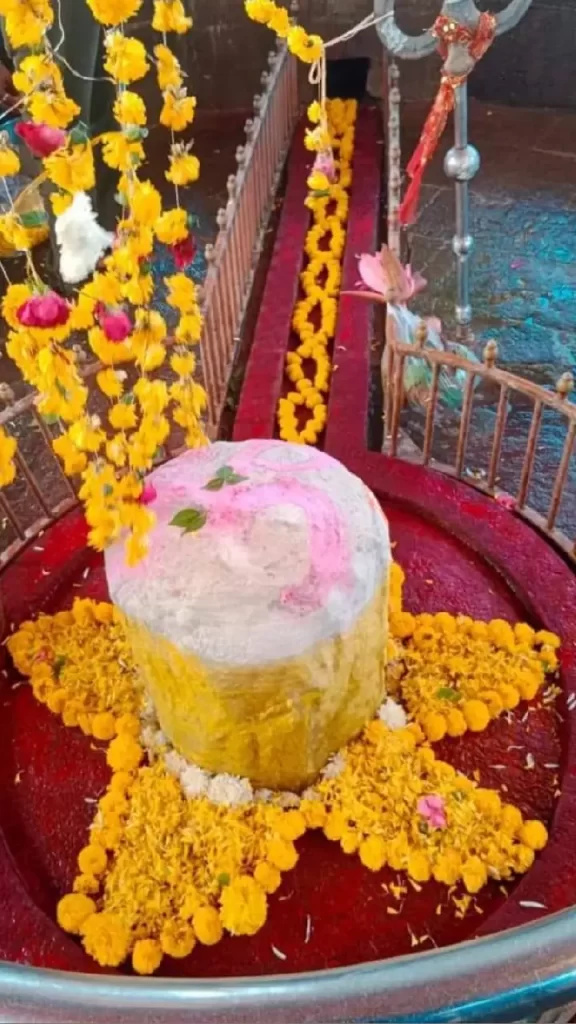
- Garbha Griha (Sanctum Sanctorum): The garbha griha houses a beautifully carved, roughly 4-foot-tall Shiva Lingam. In the low tide season, you can even go closer to the Shiva Lingam to worship.
- Effective Drainage System: The temple has a very efficient drainage system. Whenever the high tide recedes, the water drains out quickly, making the inside of the Garbha Griha dry and clean for the next prayer ceremony. This is necessary for the uninterrupted prayers that take place in the Shree Stambheshwar Mahadev Temple.
The temple’s beauty is in its utility, which is complete harmony with the sea. It is an architectural conversation that focuses on man, god, and nature.
Read More>> Karni Mata Temple Udaipur
Festivals, Special Days, and Ritual
The Shree Stambheshwar Mahadev Temple is visited on special occasions, which increases the spiritual feel, although all visits are blessed.
Special Days & High Attendance Periods
Maha Shivratri: It is the most prominent festival in tribute to Lord Shiva. The temple experiences a huge rush of devotees. Special pujas and aartis are performed during the low tide season.
Shravan Month: The entire Hindu month of Shravan, which is the monsoon season, is regarded as the most pious time for worshiping Shiva. The Shree Stambheshwar Mahadev Temple has the maximum rush on Mondays (Somvar) during this month.
Purnima and Amavasya: The full moon and new moon phases are generally characterized by high high tides and low low tides, thus making the phenomenon even more astounding. The days are also extremely auspicious.
The Key Ritual: Abhishekam & Darshan
The chief ritual activity of the followers praying at Shree Stambheshwar Mahadev is the performance of ‘Abhishekam’ on the Shiva Lingam when the tide is low.
Low Tide Worship: The worship takes place when the temple is open, with the devotees conducting rudra abhishekam, wherein the idol is worshiped with milk, water, flowers, and bilva patra (bel leaves). The image of the mighty sea, fresh from baptizing the idol, is a beautiful sight.
Collective Aartis: Special aartis are conducted in the morning and evening. But tourists need to plan their worship such that they are out of the temple before the high tide reaches the temple, making it difficult to reach the shrine.
The most crowded dates are the Mondays of the Shravan month and the date of Maha Shivratri. If you want a less crowded, private experience, you can consider visiting on a weekday that is not a monsoon season date.
Shree Stambheshwar Mahadev Temple Timings:
This is the most significant part of the temple for any prospective visitor to the Shree Stambheshwar Mahadev Temple.
Unlike most temples, which follow a fixed timing, the Shree Stambheshwar Mahadev Temple depends only on the tides of the Arabian Sea when it comes to accessibility.
Timing is Everything
General Accessible Hours: The temple is generally accessible for a period of 6 to 8 hours a day during the low tide periods.
Submersion: The temple remains underwater throughout the remaining hours, when it is high tide.
No Fixed Schedule: It is extremely essential to recognize that the timing of the low as well as high tides keeps fluctuating with every passing day. This happens in accordance with the Gujarati calendar.
Essential Visitor Advice:
- Check the Tide Chart: It is essential that you check the local tide chart before organizing a visit to the Shree Stambheshwar Mahadev temple. The temple management is known to put up the times for low tide outside the temple or on the official website.
- Plan to Arrive Early: Make sure to give yourself a two-hour window to arrive, complete your puja, and spend some time witnessing before the tide changes.
- Witness the Submersion: If timed correctly, watching from the shores while the rising tide begins to encroach on the temple is a sight that is bound to move your heart. It is the way the sea performs its daily service.
Don’t bank on a common timing; check with the concerned authority, or find the latest tide timing for the Shree Stambheshwar Mahadev Temple before embarking on your journey!
Read More>> Tulja Bhavani Temple Tuljapur
Stambheshwar Mahadev Temple Mystery:
The daily vanishing and appearance of Shree Stambheshwar Mahadev Temple has, of course, led to a number of local legends and trending questions.
Is the Temple a Miracle or a Natural Phenomenon?
This is the trending question that everyone wants to know! The scientific reason is the huge tidal variation in the Gulf of Khambhat, also known as the Bay of Cambay. This region has one of the highest and lowest tides in the world, which results in the complete covering of the land with a layer of water, leaving the temple floor bare.
The Devotees’ Perspective: The accuracy and regularity of the submersion are, to the devotees, a sign of the playful, profound, and mystical interaction of Lord Shiva with his devotees, the elements, a ‘divine’ miracle. However, from a scientific perspective, there is a
The Scientific View: It is a fantastic demonstration of a natural phenomenon that has been optimally harnessed by a clever, resilient design, from the perspective of a critic. “Why choose?” I say. It’s a miracle of nature, a manifestation of faith, a reminder that the presence of the divine can be revealed within the very laws of nature itself.
The Name of the Temple
The most common local lore is that the name Stambheshwar originates from “the pillar of light” or “the celestial pillar” that has been installed in this spot after the victory over Tarakasura, the demon. It is said that Shiva Lingam is installed on top of the western side of the “invisible pillar” from antiquity.
How to Reach the Temple
Accessing the Shree Stambheshwar Mahadev temple takes a certain amount of planning, but the journey is worth all the trouble.
By Air:
The closest major airports are:
Vadodara Airport (BDQ): About 75-80 km
Sardar Vallabhbhai Patel International Airport, Ahmedabad (AMD), Gujarat: 150 km Both from the airports, a private taxi, a taxi, or a government bus can be taken towards Jambusar and then Kavi Kamboi.
By Rail:
The nearest major railway station is:
Vadodara Junction (BRC): About 80 km from here
Bharuch Junction (BH): 80 km away.
After alighting from your train, the best way to reach Shree Stambheshwar Mahadev Temple from Kavi Kamboi is by a local taxi or a cab. The journey takes approximately 2 to 2.5 hours.
By Road:
- The temple is very well connected via road, especially from Vadodara and Bharuch.
- In case, you are driving, the path would mostly take you via Jambusar to the coastal village of Kavi Kamboi. The roads are mostly fine, which makes the journey to the Shree Stambheshwar Mahadev Temple an enjoyable one.
Read More>> Sri Kshetra Dharmasthala Temple: Miracles of Lord Manjunatha
Accommodation Options
Owing to the fact that Kavi Kamboi is a small town, luxury accommodations are scarce in the vicinity of the Shree Stambheshwar Mahadev Temple. In most cases, people prefer to stay in the nearby cities.
Near the Temple (Kavi Kamboi)
Shree Stambheshwar Mahadev Tirth: This is a temple trust-run campsite that is a short drive from the shrine. Such campsites are common in pilgrimage sites, with simple, clean, non-AC accommodations, and are mostly meant for worshipers who come on pilgrimage.
Nearby Cities
For a more general set of hotels, consider the following major cities closest to Big Bear Lake:
- Bharuch: Provides a decent choice of hotels from mid-range to upmarket ones. (About 80 km from Diu)
- Vadodara: Being a large urban center, Vadodara has very good staying facilities, ranging from economy to luxury. (About 75 km from Vadodara).
It is always advisable to pre-book your stay, especially when visiting during peak times, such as Shravan, which is a peak season, or around Maha Shivratri, to ensure a convenient stay for your visit to Shree Stambheshwar Mahadev Temple.
Sights to Visit Near the Temple
Your journey to Shree Stambheshwar Mahadev Temple can also include a short excursion to a couple of other very significant and interesting destinations nearby:
Shri Kavi Tirth (Jain Temples): Located in the Kavi village, which is close to the Mahadev temple, this is a significant Jain pilgrimage center, with a serene environment, carvings, and a multi-religious spiritual element to your trip.
Kolamba Mata Mandir: This is a local temple that is a major attraction and is dedicated to the goddess Kolamba Mata. The temple reflects the rich cultural traditions of the Gujarat coast, which one can experience by visiting the temple.
Statue of Unity: If you are on a journey from Vadodara, the massive Statue of Unity, which is a tribute to Sardar Vallabhbhai Patel, is a landmark that you should consider visiting. It is one of the tallest statues in the world, but it takes a full-day trip to visit.