Char Dham Yatra Complete Guide: Route, Registration, Itinerary & Travel Tips
The Char Dham Yatra of Uttarakhand—known historically as the Chhota Char Dham—is one of India’s most sacred high-altitude pilgrimage circuits. Nestled deep within the Garhwal Himalayas, this sacred journey takes devotees across four revered shrines: Yamunotri, Gangotri, Kedarnath, and Badrinath.

To complete the yatra properly, you must follow the traditional clockwise circumambulation (pradakshina) from west to east, register on the official Uttarakhand government portal, and prepare for high-altitude trekking.
Crucial Clarification: Do not confuse this Himalayan circuit with the original Badi Char Dham established by Adi Shankaracharya across the four corners of India (Badrinath in the North, Rameshwaram in the South, Puri in the East, and Dwarka in the West). The journey detailed here is the Garhwal Himalayan pilgrimage located entirely within the state of Uttarakhand.
Quick Information: The Four Sacred Shrines at a Glance
| Pilgrimage Shrine | Presiding Deity | Elevation | District | Trek Distance (One-Way) | Nearest Motorable Head |
| Yamunotri | Goddess Yamuna | 3,291 m (10,797 ft) | Uttarkashi | 5–6 km (Steep ascent) | Janki Chatti |
| Gangotri | Goddess Ganga | 3,100 m (10,170 ft) | Uttarkashi | 0 km (Roadside shrine) | Gangotri Temple Complex |
| Kedarnath | Lord Shiva (Jyotirlinga) | 3,583 m (11,755 ft) | Rudraprayag | 16–18 km (High alpine) | Gaurikund |
| Badrinath | Lord Badri Vishal (Vishnu) | 3,133 m (10,279 ft) | Chamoli | 0 km (Short paved walk) | Badrinath Bus Stand |

The Sacred Circuit: The Importance of the West-to-East Route
Hindu pilgrimage tradition places immense spiritual emphasis on the ritual of pradakshina—moving around a sacred center in a clockwise direction. Across the Garhwal region, this sacred order reflects both scriptural symbolism and natural geography:
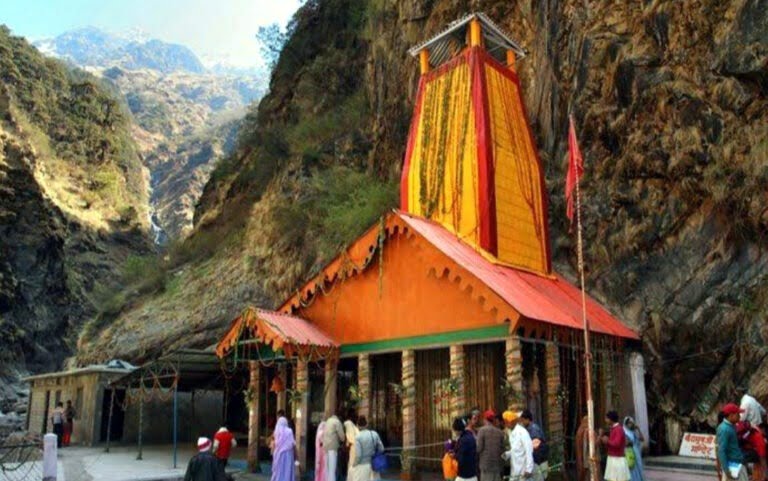
- Yamunotri Dham: The pilgrimage begins at the source of the sacred Yamuna River. In Hindu tradition, bathing in the thermal waters of Yamunotri cleanses karmic burdens and removes the fear of untimely death, as Goddess Yamuna is the sister of Yama, the deity of justice and mortality.
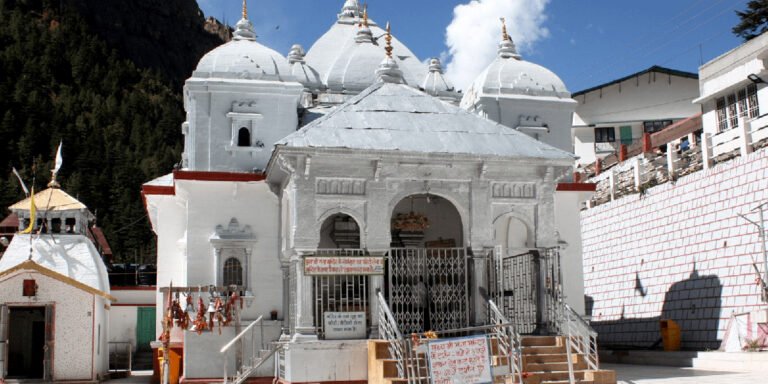
- Gangotri Dham: Traveling eastward, pilgrims approach the seat of Mother Ganga. At Gangotri, devotees offer prayers of gratitude and purify the mind, acknowledging the river’s descent from the heavens through Lord Shiva’s locks.
- Kedarnath Dham: Purified by the sacred waters, the pilgrim climbs into the high alpine zone of the Mandakini Valley to face Kedarnath, the northernmost of the 12 Jyotirlinga temples in India. This represents self-discipline, inner surrender, and penance.
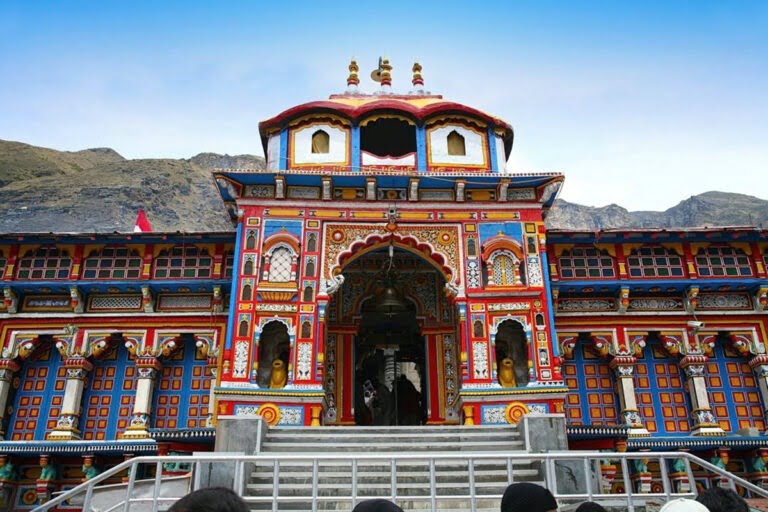
- Badrinath Dham: The yatra culminates at the peaceful sanctuary of Badrinath in the Alaknanda Valley, where Lord Vishnu rests in meditation. Badrinath represents spiritual liberation (moksha) and peaceful fulfillment.
Following this traditional order also allows your body to adapt naturally to the rising altitude, reducing the risk of altitude sickness before you undertake the challenging trek to Kedarnath.
Read more about >> Khajrana Ganesh Temple Indore – Enigmatic 18th Century Idol

The Four Sacred Temples: History, Sthala Puranas, and Spiritual Essence
1. Yamunotri Dham: The Mountain Sanctuary of Goddess Yamuna
Perched along the flank of Bandarpoonch peak, Yamunotri honors Goddess Yamuna. The central temple was constructed in the nineteenth century by Maharani Guleria of Jaipur, having survived multiple avalanches and severe earthquakes over the centuries.
Near the main sanctum sanctorum lies the boiling thermal spring known as Surya Kund. Devotees place raw rice and potatoes inside small muslin cloth bags and dip them directly into the steaming waters. Within minutes, the food cooks through and is brought home as sacred prasadam.
Directly adjacent stands the Divya Shila, a reddish rock slab where pilgrims offer respectful prayers before stepping inside the temple sanctum.
2. Gangotri Dham: The Seat of the Heavenly River
Set among silver firs and towering deodars along the Bhagirathi River, Gangotri marks the spot where King Bhagiratha undertook centuries of severe penance to bring the sacred river down from the heavens to liberate the souls of his ancestors.
The original granite temple was built in the early eighteenth century by the Gurkha general Amar Singh Thapa.
While the temple marks the formal seat of worship, the physical glacial source of the river—Gaumukh—lies roughly 18 kilometers further up the valley along the Gangotri Glacier. Within the temple courtyard, pilgrims perform sacred ancestral rites (pinda daan) along the granite riverbanks.
3. Kedarnath Dham: The Eternal Throne of Mahadeva
Standing tall against the snowy backdrop of the Kedarnath peak and Kedar Dome, Kedarnath is one of the most revered sanctuaries of Lord Shiva. According to the Mahabharata tradition, following the Kurukshetra war, the Pandavas sought out Lord Shiva to atone for the sin of slaying their kin. Shiva took the form of a celestial bull and dove into the earth; the triangular hump of the bull surfaced directly at Kedarnath.
The enduring stone temple—credited historically to the eighth-century philosopher Adi Shankaracharya, who took samadhi directly behind the shrine—is assembled from enormous, interlocking stone slabs capable of withstanding centuries of heavy snow and glacial floods.
Inside the unlit inner sanctum rests the self-manifested, triangular rock lingam worshipped daily through sacred rituals.
4. Badrinath Dham: The Abode of Badri Vishal
Nestled between the twin peaks of Nar and Narayana along the banks of the roaring Alaknanda River, Badrinath is dedicated to Lord Vishnu. Legend tells that Lord Vishnu sat here in deep meditation amid freezing winds; his consort, Goddess Lakshmi, took the form of a wild jujube tree (Badri tree) to shelter him from the harsh elements.
The distinctive, multi-colored entrance facade of the temple leads to an ancient black stone (Saligram) idol of Lord Badrinarayan seated in the meditative padmasana posture.
Before entering the sanctum, pilgrims bathe in the mineral-rich waters of Tapt Kund, a natural hot sulphur spring situated just below the temple steps along the riverbank.

Mandatory Registration: Official Government Procedures
The Government of Uttarakhand requires every pilgrim to complete compulsory biometric registration before embarking on the Char Dham Yatra. Unregistered travelers are turned back at highway checkpoints in Rishikesh, Haridwar, and Kotdwar.
Official Registration Methods
Registration is completely free and can be completed through three verified government channels:
- Online Web Portal: Access the official Uttarakhand Tourism Tourist Care Portal (
registrationandtouristcare.uk.gov.in). Create an individual or family account, upload valid government identification (Aadhaar Card, Voter ID, or Passport), select your intended dates for each Dham, and download your registration letter containing a unique QR code. - Mobile Application: Download the official Tourist Care Uttarakhand mobile app from Google Play Store or Apple App Store to maintain digital copies of your Yatra e-Pass.
- Official WhatsApp Channel: Initiate registration by sending a text message reading
YATRAto the official government WhatsApp helpline number (+91 8394833833) and follow the automated prompts.
Important Travel Requirement: Keep physical paper copies of your QR-code registration pass on your person at all times. Network coverage in deep Himalayan gorges can be spotty, and physical passes are scanned at access points before base camps.

10-Day Road and Trek Itinerary
This practical 10-day itinerary balances mountain driving conditions with safe acclimatization, beginning and ending in Haridwar or Rishikesh.
Day 1: Haridwar/Rishikesh to Barkot (215 km | 7–8 Hours)
Begin your journey early in the morning to avoid highway congestion. The route winds through Mussoorie or Dehradun before following the Yamuna River valley up to Barkot. Settle into your hotel early, pick up any missing cold-weather gear, and rest your body for tomorrow’s steep climb.
Day 2: Barkot to Yamunotri Dham and Return (45 km drive + 10–12 km round-trip trek)
Drive to Janki Chatti, the motorable road head. From here, begin the steep 5–6 km ascent to Yamunotri on foot, pony, or doli. Take a holy dip in the outer bathing enclosures, cook your rice offering at Surya Kund, and receive blessings in the sanctum. Return down to Janki Chatti before dusk and drive back to Barkot for the night.
Day 3: Barkot to Uttarkashi (82 km | 4 Hours)
Enjoy a gentler driving day down into the Bhagirathi Valley. Arrive in Uttarkashi by midday. Visit the sacred Kashi Vishwanath Temple in Uttarkashi, which houses an enormous, ancient bronze trident (Shakti Trishul). This stop gives your body time to rest and adjust to the altitude.
Day 4: Uttarkashi to Gangotri Dham and Return (100 km each way | 4 Hours per leg)
Drive along the rushing Bhagirathi River through the picturesque apple orchards of Harsil Valley. The road brings you directly to the Gangotri Temple courtyard. Take a holy dip, perform rituals along the stone ghats, and step inside the main shrine. Return to Uttarkashi for your overnight stay.
Day 5: Uttarkashi to Guptkashi or Sonprayag (200–220 km | 8–9 Hours)
This is the longest mountain driving day of the journey, cutting across connecting ridges from the Bhagirathi Valley into the Mandakini Valley. Pass through Tehri or Srinagar and follow the river up to Guptkashi or Sonprayag, the staging grounds for Kedarnath.
Day 6: Sonprayag to Gaurikund and Trek to Kedarnath (16–18 km Trek)
Take the local shared taxi from Sonprayag to Gaurikund early in the morning (around 5:00 AM). Begin the rigorous climb along the paved trail flanking the roaring Mandakini River.
Pass through intermediate rest stations at Jungle Chatti, Bheembali, and Lincholi. As you reach the high alpine meadow of the Kedar Valley, check into your pre-booked GMVN tent or guesthouse. Attend the moving evening aarti outside the ancient stone temple under the stars.
Day 7: Kedarnath Darshan, Trek Down, and Drive to Pipalkoti (16–18 km downhill trek + 90 km drive)
Step into the inner sanctum for morning darshan. Begin your walk back down to Gaurikund by 7:30 AM. Cross back over to Sonprayag, rejoin your private vehicle or driver, and drive along the river valley toward Chamoli or Pipalkoti to rest for the night.
Day 8: Pipalkoti to Badrinath Dham (75 km | 4 Hours)
Drive past Joshimath and climb through the sheer granite walls of the Alaknanda Gorge up to Badrinath. Bathe in the mineral waters of the Tapt Kund hot springs before entering the temple for evening darshan and Aarti. Spend the night in the town of Badrinath.
Day 9: Badrinath, Mana Village, and Drive to Rudraprayag (160 km | 6–7 Hours)
Drive three kilometers past Badrinath to Mana Village, the last inhabited Indian village before the border with Tibet. Visit the ancient rock shelters of Vyas Gufa and Ganesh Gufa, and cross the stone natural bridge known as Bhim Pul over the foaming Saraswati River.
Begin your descent along the highway, pausing to admire sacred river confluences (prayags) along the route back to Rudraprayag for the evening.
Day 10: Rudraprayag to Rishikesh/Haridwar (140 km | 5 Hours)
Descend the final stretch of highway along the sacred confluences of Karnaprayag, Rudraprayag, and Devprayag (where the Alaknanda and Bhagirathi rivers merge to form the Ganga). Arrive back in Rishikesh or Haridwar by late afternoon, completing your sacred pilgrimage.

Logistics, Transport, and Scam Prevention
Helicopter Bookings: The Golden Safety Rule
Helicopter services to Kedarnath operate from three base helipads in the Mandakini Valley: Guptkashi, Phata, and Sersi.
Important Scam Warning: Every year, deceptive third-party travel websites, social media pages, and fake booking agents steal money from pilgrims by selling fraudulent helicopter tickets.
The sole authorized portal for booking Kedarnath helicopter tickets is the official IRCTC HeliYatra website (
heliyatra.irctc.co.in). You cannot purchase helicopter tickets without a valid state registration number. Never transfer money via direct UPI or personal bank links to private agents claiming to hold helicopter quotas.
Pony, Mule, and Doli (Palanquin) Options
If you are unable to walk the steep trails at Yamunotri or Kedarnath, traditional animal transport and porters are available:
- Fixed Government Rates: Rates for ponies, mules, kandi (wicker baskets carried on backs), and dolis (four-person palanquins) are regulated and fixed by the district administration at Janki Chatti and Gaurikund.
- Biometric Animal Health Checks: Mules and ponies are tagged with RFID microchips and given regular veterinary health screenings at base camps. Avoid hiring non-registered handlers along the trail. Always pay at official administration booking windows to receive an official receipt.
Road Travel Options: Private Car vs. Public Bus
- Self-Drive / Private Cabs: An experienced mountain driver is essential. Avoid driving low-clearance hatchbacks; choose high-clearance SUVs or sturdy commercial vehicles capable of handling rocky patches and seasonal river crossings. Night driving in the higher hills is strictly prohibited by traffic police.
- GMVN & State Roadways Buses: The Uttarakhand Transport Corporation (UTC) and private joint-rotation consortia run daily scheduled buses from Haridwar and Rishikesh throughout the yatra season. You can book safe, affordable government guesthouses directly through the Garhwal Mandal Vikas Nigam (
gmvnonline.com).
Health, Safety, and High-Altitude Preparation
The Kedarnath trek climbs to nearly 3,600 meters (almost 12,000 feet) above sea level, where the air is noticeably thinner and temperatures can drop below freezing within minutes.
Understanding High-Altitude Sickness
Acute Mountain Sickness (AMS) can affect anyone, regardless of age or physical fitness. Pay close attention to early warning signs:
- Persistent throbbing headache
- Dizziness and lightheadedness
- Loss of appetite and nausea
- Shortness of breath during gentle walking
If symptoms worsen into unsteadiness, confusion, or a wet, rattling cough, descend immediately. Do not attempt to push forward to the temple. Emergency medical relief posts run by government healthcare teams are located at regular intervals along the trail from Gaurikund to Kedarnath, equipped with oxygen support and hyperbaric bags.
Packing Essentials Checklist
- Layered Clothing: Thermal undergarments (2–3 pairs), fleece sweaters, a windproof and water-resistant down jacket, and heavy woolen gloves and caps.
- Sturdy Footwear: Broken-in trekking shoes with deep rubber tread; avoid smooth-soled running sneakers or fashion footwear.
- Rain Gear: A sturdy poncho or heavy-duty raincoat is far more practical than an umbrella along gusty, narrow mountain paths.
- Personal Medical Kit: Broad-spectrum pain relievers, digestive medication, glucose powder, oral rehydration salts (ORS), band-aids, knee braces, and a portable finger pulse oximeter to monitor blood oxygen levels.
- Power & Money: Cold mountain air quickly drains mobile phone batteries; pack a high-capacity power bank. ATMs in the upper mountain towns often run out of cash or lose power, so carry sufficient physical currency for local expenses.
Frequently Asked Questions (FAQ)
What is the best month to undertake the Char Dham Yatra?
May to June and September to mid-October offer the best weather conditions. May and June are warm and sunny, making them popular for family travel, though crowds are at their peak.
Avoid the peak monsoon season (July to mid-August), as the Garhwal Himalayas are prone to severe cloudbursts, swollen rivers, and rockfalls along the highways. September brings crisp, clear autumn skies, colorful valleys, and manageable queues for darshan.
Can senior citizens safely complete the Kedarnath trek?
Yes, thousands of senior pilgrims complete the journey every year. However, elderly travelers must complete a full medical screening—especially for heart conditions or respiratory concerns—before departure.
Make use of registered palanquins (doli), ponies, or official helicopter services, and always schedule an extra acclimatization night at intermediate stops like Guptkashi or Bheembali instead of rushing the ascent in a single day.
How are the opening and closing dates of the temples determined?
The temple dates follow the sacred Hindu calendar:
Yamunotri and Gangotri: Open on the auspicious day of Akshaya Tritiya (usually late April or early May) and close shortly after Diwali on Bhai Dooj.
Kedarnath: The opening date is declared each year on Maha Shivaratri by the priests of the Ukhimath Omkareshwar Temple; it closes on Bhai Dooj.
Badrinath: The opening date is determined on Basant Panchami by the royal family of Tehri Garhwal; it closes around mid-November during a special closing ceremony.
During the cold winter months, the deities are brought down in sacred processions to their winter homes: Goddess Yamuna resides at Kharsali, Goddess Ganga at Mukhba, Lord Kedarnath at Ukhimath, and Lord Badrinath at Pandukeshwar and Joshimath.
Is registration mandatory even for independent travelers not on a tour package?
Yes. Every visitor—whether traveling on an all-inclusive group bus, driving their own vehicle, or trekking independently—must carry an individual biometric registration pass issued by the Uttarakhand Tourism Development Board.
Are there any dress codes or photography restrictions inside the temples?
Dress modestly in comfortable traditional or full-coverage attire (such as kurta-pyjamas, dhotis, or warm tracksuits with shawls).
Photography, video recording, and social media filming are strictly prohibited inside the inner sanctums (garbhagriha) of all four temples. Store your phones, cameras, and leather belts safely in your daypack or at the official footwear counters before stepping across the temple thresholds.
Final Pilgrimage Reflection
The sacred Char Dham Yatra is far more than a sightseeing drive across the Himalayas—it is an enduring journey of patience, devotion, and inner discovery.
As you leave the plains and journey up along the sacred river valleys, honor the delicate Himalayan ecosystem: avoid single-use plastics, treat fellow pilgrims and local service providers with kindness, and tread with quiet reverence across these ancient mountains.