Kedarnath Temple: History, Jyotirlinga Significance, Timings, and Complete Char Dham Yatra Guide
Kedarnath Temple is one of the holiest Hindu shrines dedicated to Lord Shiva. Located at an altitude of 3,583 meters (11,755 feet) in the Rudraprayag district of Uttarakhand, it is the highest among the 12 Jyotirlingas of Lord Shiva, the most sacred of the five Panch Kedar shrines, and a key pillar of the Char Dham Yatra in Uttarakhand.

Perched on the Garhwal Himalayan plateau near the source of the Mandakini River, the ancient stone temple is surrounded by snow-covered peaks, including the towering Kedarnath Dome and Kedar Peak. Unlike most Shiva temples that house a cylindrical carved icon, Kedarnath worships a natural, conical, three-sided rock formation revered as a Swayambhu (self-manifested) Lingam shaped like the hump of a bull.
Because heavy winter snowfall buries the valley for half the year, the temple stays open to pilgrims for only six months between late April or early May and October or November. Moreover, Kedarnath cannot be reached directly by motor road. Visitors must either complete a rigorous 16-kilometer uphill trek from Gaurikund or take an authorized shuttle helicopter from nearby valley helipads.
Whether you are researching the temple’s sacred history in the Mahabharata or planning your first pilgrimage to the Himalayas, this complete guide covers verified temple timings, rituals, architectural secrets, registration rules, and step-by-step travel logistics.
Quick Information: Kedarnath Temple at a Glance
| Feature | Verified Details |
| Temple Name | Shri Kedarnath Temple (Kedareshwar) |
| Main Deity | Lord Shiva (worshipped as a conical, hump-shaped Swayambhu Jyotirlinga) |
| Spiritual Classification | One of the 12 Jyotirlingas, Chota Char Dham, and head of the Panch Kedar |
| Location | Kedarnath Town, Rudraprayag District, Uttarakhand, India |
| Elevation | 3,583 meters (11,755 feet) above sea level |
| River & Glacier Nearby | Mandakini River bank; near Chorabari Glacier (Gandhi Sarovar) |
| Seasonal Opening Window | Open ~6 months (Late April/Early May around Akshaya Tritiya to Oct/Nov on Bhai Dooj). Exact dates are declared annually on Maha Shivaratri. |
| Winter Worship Seat | Omkareshwar Temple, Ukhimath (Rudraprayag District) from November to April |
| Daily Darshan Window (Typical) | Morning: ~4:00 AM to 3:00 PM (with midday ritual break) Evening: ~5:00 PM to 9:00 PM (Subject to daily weather and crowd management by BKTC) |
| Nearest Roadhead | Sonprayag (for private vehicles) and Gaurikund (shuttle point where the trek starts) |
| Trek Distance & Difficulty | Approx. 16 km one-way from Gaurikund; steep high-altitude climb (6 to 9 hours on foot) |
| Authorized Helicopter Helipads | Phata, Sersi, and Guptkashi (booked only via IRCTC HeliYatra) |
| Nearest Railway Station | Rishikesh Railway Station (~216 km to Gaurikund) / Yog Nagari Rishikesh |
| Nearest Airport | Jolly Grant Airport, Dehradun (~238 km to Gaurikund) |
| Entry Fee & Registration | General Darshan is free; Special Poojas have official fees. Uttarakhand Government Biometric Yatra Registration is mandatory and free. |
| Governing Body & Official Portal | Shri Badarinath–Kedarnath Temple Committee (BKTC) |

Dual Spiritual Significance: Jyotirlinga, Char Dham, and Panch Kedar
Very few Hindu temples hold multiple foundational titles across different scriptural traditions. Kedarnath stands at the intersection of three major pilgrimage circuits in India.
1. The Northernmost of the 12 Jyotirlingas
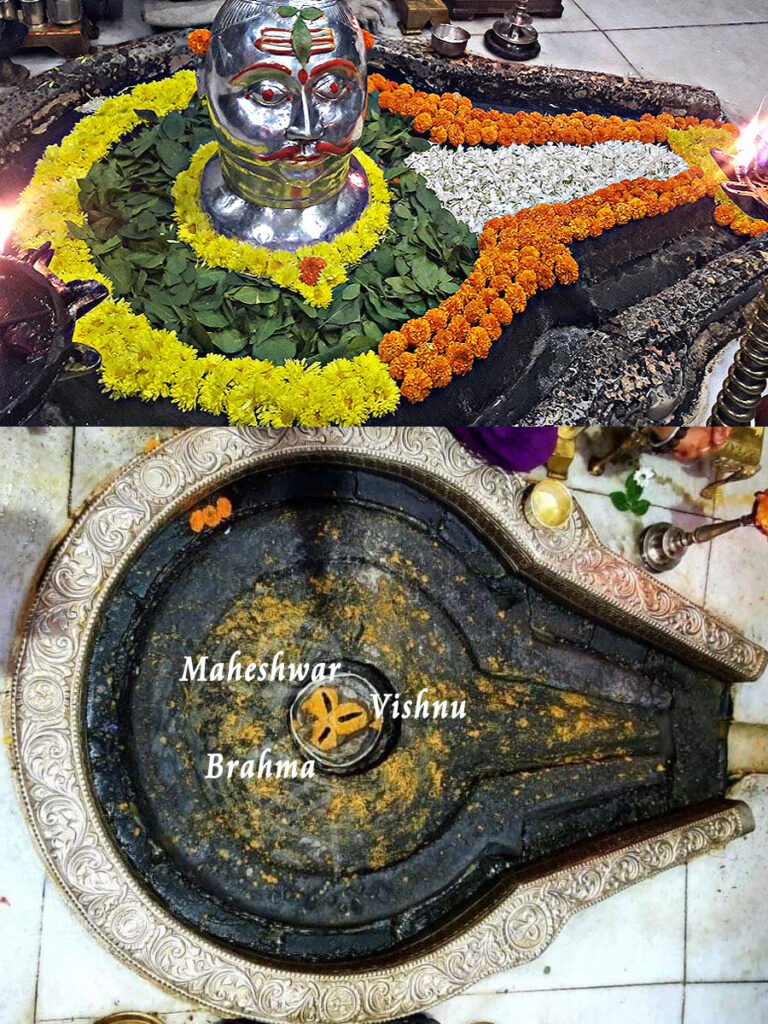
In Shaiva tradition, a Jyotirlinga (Lingam of Light) is a shrine where Lord Shiva appeared as a fiery column of infinite light to settle a dispute between Lord Brahma and Lord Vishnu over creation’s supreme power. Out of the twelve revered Jyotirlinga shrines spread across India, Kedarnath is the northernmost and sits at the highest elevation. Devotees recite its name daily in the traditional Dwadasha Jyotirlinga Stotram with the verse “Himavad पृष्ठे (prishthe) Kedaram”—honoring the Lord of Kedar seated upon the snow-Clad back of the Himalayas.
2. Chota Char Dham vs. All-India Char Dham (Clearing the Confusion)
Many first-time visitors wonder how Kedarnath fits into the Char Dham (Four Sacred Abodes). In Hinduism, there are two distinct circuits known by this name:
- The All-India Char Dham (established by Adi Shankaracharya): Comprises four shrines at the four cardinal corners of India—Badrinath Temple in the North, Puri Jagannath in the East, Rameswaram in the South, and Dwarkadhish in the West.
- The Uttarakhand Char Dham (popularly called Chota Char Dham): A high-altitude Himalayan pilgrimage circuit wholly within Uttarakhand state. Pilgrims traditionally travel from west to east, visiting:
- Yamunotri Temple (source of the Yamuna River)
- Gangotri Temple (source of the Bhagirathi/Ganga River)
- Kedarnath Temple (abode of Lord Shiva)
- Badrinath Temple (abode of Lord Vishnu)
In the Uttarakhand circuit, visiting Kedarnath before proceeding to Badrinath is a deeply cherished tradition.
3. The Head Shrine of the Panch Kedar
Kedarnath is the foremost among the five Panch Kedar temples located in the Garhwal region. Each of the five temples corresponds to a specific part of Lord Shiva’s bull form, connecting local Himalayan geography directly to the epic story of the Mahabharata.

Sacred Legend and History of Kedarnath Temple
To understand Kedarnath fully, it helps to separate the sacred devotional accounts preserved in Hindu texts (Puranas and epic traditions) from the architectural history studied by historians and archaeologists.
The Legend of Nar-Narayan
According to the Kedara Khanda of the Skanda Purana, after the creation of the universe, the twin sages Nar and Narayan (revered as incarnations of Lord Vishnu) performed severe penance before an earthen Shiva Lingam at Badrikashrama in the Himalayas. Pleased with their devotion, Lord Shiva appeared before them and offered a boon. The sages humbly requested that Shiva take up permanent residence in the region as a Jyotirlinga so that devotees could find liberation from sorrow and worldly cycles. Granting their wish, Shiva manifested in the snow peaks of Kedar as Kedareshwar.
The Pandavas and the Origin of the Bull-Hump Lingam
The most famous traditional account connecting Kedarnath to the Panch Kedar comes from the aftermath of the great Kurukshetra war in the Mahabharata.
After defeating the Kauravas, the five Pandava brothers were burdened by the guilt of Gotra Hatya (killing their own cousins and elders) and Brahmahatya (slaying teachers and warriors of priestly lineage in battle). Seeking forgiveness from Lord Shiva, the Pandavas handed over their kingdom and traveled first to Kashi (Varanasi). However, Shiva was still displeased with the bloodshed of the war and wished to test their sincerity. He left Kashi and retreated secretly into the Garhwal Himalayas, disguising himself as a bull (Nandi) grazing among cattle in the Guptkashi (“Hidden Kashi”) valley.
When the Pandavas tracked him to the mountains, Bhima—the strongest of the five brothers—spotted a remarkable bull and recognized Lord Shiva inside the disguise. Bhima stood straddling two mountains to corner the herd. While the other cattle walked beneath Bhima’s legs, the divine bull refused and began sinking directly into the earth to disappear.
Bhima lunged forward and grabbed the bull by its hump and hind legs to pull him back. Though the rest of the bull’s body vanished into the ground, the triangular hump remained above the earth in Bhima’s grasp. Moved by the Pandavas’ unwavering determination and repentance, Lord Shiva appeared in his divine light, absolved them of their sins, and declared that he would forever be worshipped at that spot in the shape of the triangular conical hump.
According to the Panch Kedar tradition, the other parts of the bull reappeared at four nearby places in Garhwal:
- Kedarnath: The hump (Pishtha) of the bull.
- Tungnath: The arms (Bahu)—recognized as the highest Shiva temple in the world.
- Rudranath: The face (Mukh).
- Madhyamaheshwar: The navel and stomach (Nabhi).
- Kalpeshwar: The matted hair (Jata).
Adi Shankaracharya and the Revival of the Shrine
In popular Hindu tradition, the 8th-century philosopher-saint Adi Shankaracharya played a vital role in reviving the worship format at both Kedarnath and Badrinath, unifying northern and southern Indian spiritual traditions by appointing South Indian priests to lead the Himalayan rituals. Tradition holds that after establishing the four monastic seats (Mathas) across India, Adi Shankaracharya attained Mahasamadhi (final liberation) at Kedarnath at the young age of 32. Today, a reconstructed Adi Shankaracharya Samadhi Sthal stands directly behind the main temple complex, featuring a serene seated statue of the philosopher.

Architectural History: Katyuri Stone Engineering
From an archaeological and architectural standpoint, historians attribute the standing stone structure of Kedarnath Temple to the Katyuri dynasty period (roughly between the 8th and 12th centuries CE), with later repairs and patronage by the rulers of the Garhwal kingdom (notably King Bhoj of Malwa in some accounts and later Garhwal monarchs).
What amazes modern engineers is how the temple was built at nearly 12,000 feet without modern machinery:
- Interlocking Ashlar Masonry: The temple is built on a raised six-foot stone platform using massive, evenly cut grey stone slabs. The stones were joined without traditional mortar using an ancient interlocking technique involving iron clamps (Dowels) and melted metal joints.
- Three Main Sections:
- Garbhagriha (Sanctum Sanctorum): Houses the irregular, conical, three-faced natural rock Lingam of Lord Kedareshwar under a conical stone spire (Shikhara).
- Antarala (Vestibule): A small connecting passage between the inner sanctum and the outer hall.
- Mandapa (Assembly Hall): The outer hall where pilgrims gather for darshan. Inside the Mandapa walls stand carved stone figures of the five Pandava brothers, Draupadi, Lord Krishna, Nandi, and Virabhadra (one of Shiva’s fierce attendants). Outside the main doorway sits a large stone statue of Nandi the Bull, standing guard facing the sanctum.
The 2013 Flash Floods and the Miracle of Bhim Shila
In June 2013, catastrophic cloudbursts and the sudden breach of the Chorabari Tal glacial lake above Kedarnath triggered a massive flash flood and mudslide down the Mandakini valley. While surrounding buildings, lodges, and pathways were swept away, the ancient stone temple structure survived with its core foundation and sanctum intact.
During the peak of the deluge, a gigantic boulder tumbled down with the roaring water and wedged itself roughly 50 meters directly behind the back wall of the temple. This boulder split the force of the mud and debris into two streams that flowed around the sides of the shrine, shielding the Garbhagriha from direct impact. Today, this boulder is worshipped by devotees as Bhim Shila (the Divine Rock of Bhima), painted with sacred markings right behind the temple.
Inside the Sanctum: The Conical Lingam and Unique Worship Traditions
Visiting Kedarnath feels very different from visiting plains temples because of its high-altitude customs and ancient priesthood rules.
The Conical Rock Lingam
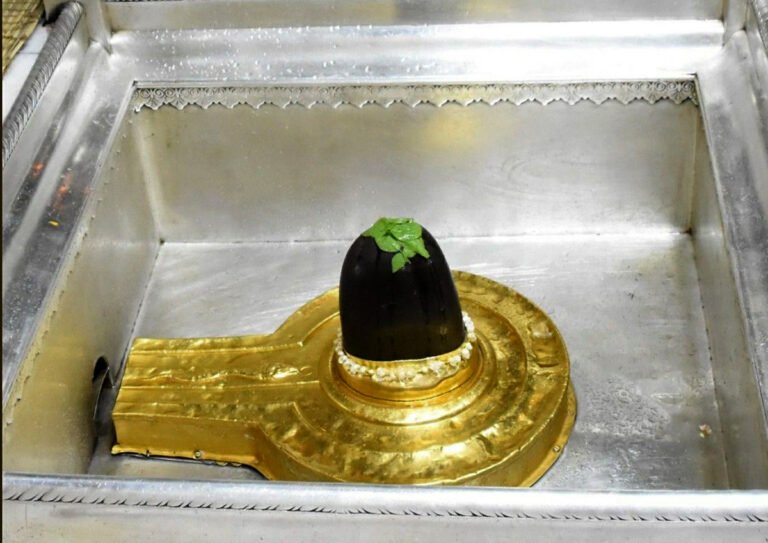
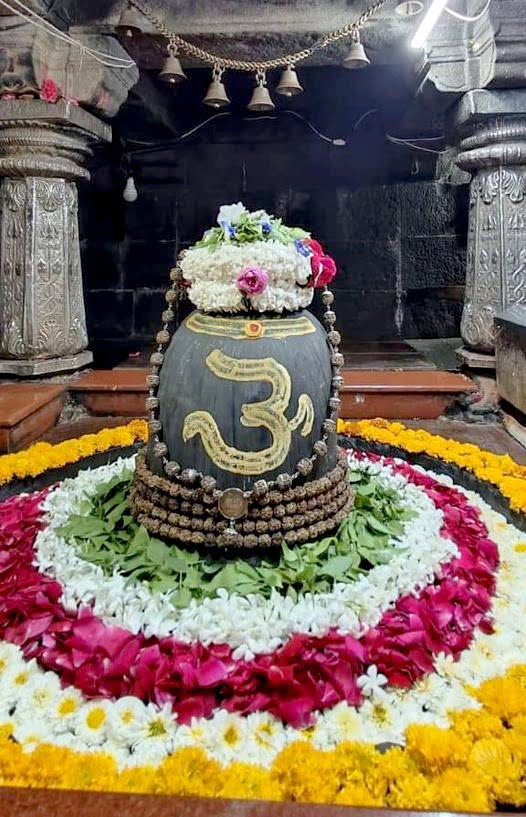
When you enter the Garbhagriha, you do not see a polished black cylindrical stone. Instead, you see a natural, rough-surfaced, triangular/conical rock rising from the floor—about 3.6 meters (12 feet) in circumference and roughly 3.6 meters in height/base footprint. Because it represents the hump of Shiva’s bull form, pilgrims during the morning Abhishekam period traditionally apply pure ghee (clarified butter) and offer belpatra (bael leaves) and Gangajal according to the temple committee’s prevailing sanctum access rules.
The Veerashaiva (Lingayat) Rawal Tradition
Just as Badrinath Temple is served by Nambudiri Brahmin priests from Kerala, Kedarnath Temple follows a centuries-old tradition of priests from the Veerashaiva (Lingayat) community of Karnataka.
- The head priest of Kedarnath is called the Rawal.
- While the Rawal serves as the spiritual head and oversees major seasonal ceremonies (like the opening and closing of the portals), he does not personally perform the daily sanctum rituals inside the temple. Instead, he delegates daily worship to a panel of five head priests from the same Veerashaiva lineage, who rotate their duties each year.
- Worship mantras and procedures follow traditional Shaiva Agama protocols preserved by this lineage.

Morning Nirvana Darshan vs. Evening Shringar Darshan
Daily worship at Kedarnath is divided into two distinct phases with very different rules for visitors:
- Morning Nirvana Darshan (~4:00 AM to ~3:00 PM): In the morning, the conical Jyotirlinga is worshipped in its natural, unadorned rock form (Nirvana Swaroop). During the early pre-dawn hours, booked special Rudrabhishek and Mahabhishek poojas take place, followed by public Dharma Darshan. Depending on crowd volume and current rules set by the Shri Badarinath–Kedarnath Temple Committee (BKTC), pilgrims may either enter the inner sanctum briefly or offer prayers from the threshold during peak surges.
- Midday Break (~3:00 PM to 5:00 PM): After the afternoon Bhog (food offering), the sanctum doors close for cleaning and elaborate decoration (Shringar).
- Evening Shringar Darshan and Aarti (~5:00 PM to 9:00 PM): When the doors reopen in the evening, the Lingam is dressed in rich silk garments, crowned with a silver five-faced mask (Panchmukhi Mukut), and adorned with garlands of marigolds, Rudraksha beads, and sacred ash (Bhasma). During evening Shringar Darshan, no one is permitted to touch the Lingam—pilgrims view the decorated deity from the Mandapa hall and attend the soulful evening Sandhya Aarti.
When Does Kedarnath Temple Open and Close? (6-Month Cycle)
Because temperatures at 11,755 feet drop well below freezing and heavy snow blocks the valley from November through April, Kedarnath operates strictly on a seasonal calendar:
- Opening Date (Late April or Early May): The temple opens every year on or around the auspicious day of Akshaya Tritiya in the Hindu month of Vaishakha. The exact date and auspicious morning hour (muhurat) are calculated by Vedic scholars and officially announced by the BKTC on Maha Shivaratri (usually in February or March) at Omkareshwar Temple in Ukhimath.
- Closing Date (Late October or Mid-November): The temple closes for the winter every year on Bhai Dooj (also called Yama Dwitiya), two days after Diwali, at around 8:30 AM following special closing prayers.
What Happens in Winter? Omkareshwar Temple, Ukhimath and the Akhand Jyoti
When the doors of Kedarnath are locked on Bhai Dooj, worship of Lord Kedareshwar does not stop.
- Before locking the heavy doors, the priests light a large ghee lamp inside the sanctum known as the Akhand Jyoti (Eternal Flame). Devotees revere the tradition that when the temple doors are unlocked six months later in May, this lamp is still found burning inside the snow-bound sanctum, alongside fresh-looking bael leaves offered on closing day.
- The silver five-faced ceremonial image (Utsava Murti) of Lord Kedareshwar is placed inside a decorated wooden palanquin called the Panchmukhi Doli. Accompanied by priests, military bands, and thousands of devotees, the Doli is carried down on foot over three days (stopping at Rampur and Guptkashi) to Omkareshwar Temple in Ukhimath (at ~1,300 meters altitude in Rudraprayag district).
- From November to April, winter Palka worship of Lord Kedarnath takes place daily at Ukhimath, allowing devotees who cannot trek to high altitudes to receive darshan during the winter months.
Bhairavnath Temple: The Guardian Deity Who Protects Kedar Valley
Roughly 500 to 800 meters uphill to the south-east of the main Kedarnath Temple sits an open hilltop stone shrine dedicated to Baba Bhairavnath (Bhukund Bhairav), a fierce manifestation of Lord Shiva.
In local Garhwali tradition, Bhairavnath is the Kshetrapal (divine guardian) of the entire Kedar valley. When Kedarnath Temple closes for winter and all priests and residents descend to lower altitudes, Baba Bhairavnath is believed to guard the deserted snow-covered shrine from evil forces and natural calamities.
Because of this bond, Kedarnath’s opening and closing rituals are directly tied to Bhairavnath Temple:
- After Kedarnath opens in May, formal evening Shringar Aarti and full daily rituals inside Kedarnath do not begin until the first Tuesday or Saturday when the Bhairavnath Temple opening ceremony is performed.
- Similarly, in autumn, the ceremonial closing of Bhairavnath Temple takes place on the Tuesday or Saturday immediately preceding Diwali—officially signaling that Kedarnath’s seasonal closing is just days away.
A short 15-to-20-minute uphill walk from the main Kedarnath plaza brings you to Bhairavnath Temple, which also offers the best panoramic view of the entire Kedarnath township and valley.
Major Festivals Celebrated at Kedarnath
- Temple Opening Ceremony (Akshaya Tritiya Window): Thousands of pilgrims gather in the cold morning air as the Panchmukhi Doli arrives from Ukhimath, army brass bands play devotional tunes, and the main portals open for the first darshan of the year.
- Shravan Maas (July–August): The entire lunar month of Shravan is sacred to Lord Shiva. Even though monsoon rains make the mountain trek challenging during this window, special Rudrabhishek prayers are chanted daily.
- Raksha Bandhan / Shravani Annakoot Mela (August): On the night before Raksha Bandhan, the famous Bhatuj (Annakoot) Festival is celebrated at Kedarnath. During this unique annual ritual, the entire conical Shiva Lingam is covered with a thick paste of freshly cooked rice (Bhat) and grains symbolizing an abundant harvest, before being washed clean after midnight prayers.
- Samadhi Pooja & Closing Ceremony (Diwali to Bhai Dooj): On the morning of Bhai Dooj, the priests perform Samadhi Pooja, covering the natural rock Lingam with sacred ash (Bhasma), dry fruits, bael leaves, and a warm sheep-wool blanket (Sann) before sealing the sanctum doors for winter.
- Maha Shivaratri (Celebrated at Ukhimath): Because Kedarnath is buried under snow during February/March, Maha Shivaratri is celebrated with grand night-long vigils at the winter seat in Ukhimath, where the upcoming summer opening date is formally declared.



Where Is Kedarnath Temple Located and How to Reach It?
Kedarnath is situated in the Rudraprayag district of Uttarakhand inside the Kedarnath Wildlife Sanctuary region of the Garhwal Himalayas, as documented by the Rudraprayag District Administration. Because there is no direct motorable road all the way to the temple, every trip involves reaching the base towns of Sonprayag and Gaurikund first, followed by a trek or helicopter ride.
1. By Air
- The nearest domestic airport is Jolly Grant Airport in Dehradun (DED), located approximately 238 kilometers from Gaurikund.
- From Dehradun airport, regular taxis and buses run via Rishikesh, Devprayag, Srinagar (Garhwal), Rudraprayag, and Guptkashi to reach Sonprayag (usually an 8-to-10-hour mountain drive depending on traffic).
2. By Train
- The nearest railheads are Rishikesh Railway Station and Yog Nagari Rishikesh (YNRK) (~216 km from Gaurikund), or Haridwar Junction (HW) (~241 km from Gaurikund).
- Many pilgrims prefer arriving at Haridwar or Rishikesh the evening before, taking an early morning Uttarakhand Transport Corporation (UTC) bus, shared jeep, or private taxi at 4:00 AM–5:00 AM toward Sonprayag.
3. By Road (Up to Sonprayag and Gaurikund)
The mountain highway follows the sacred rivers of Garhwal along NH-7 and NH-107:
- Route: Haridwar → Rishikesh → Devprayag (confluence of Alaknanda and Bhagirathi) → Srinagar → Rudraprayag (confluence of Alaknanda and Mandakini) → Tilwara → Agastyamuni → Guptkashi → Phata → Sersi → Rampur → Sitapur / Sonprayag.
- Important Vehicle Cut-Off Rule: Private cars and tour buses must park at the multi-level parking facilities in Sitapur or Sonprayag. Private vehicles are not allowed beyond Sonprayag.
- Sonprayag to Gaurikund Shuttle (5 km): From the Sonprayag security check-post, pilgrims board local government-regulated shared Bolero/Maxx shuttles for a short 5-kilometer drive along a narrow mountain road to Gaurikund, the official starting point of the foot trek.
Complete Guide to the 16 km Gaurikund to Kedarnath Trek
The trek from Gaurikund (1,982 meters / 6,502 feet) to Kedarnath Temple (3,583 meters / 11,755 feet) is approximately 16 kilometers long (around 17 to 18 km if you count the walking distance from the Sonprayag shuttle queue to the temple courtyard). Over this 16 km stretch, you gain nearly 1,600 meters (5,250 feet) in elevation, making it a steep and physically demanding high-altitude climb.
Stage-by-Stage Trek Milestones
| Trek Stage | Approx. Distance from Gaurikund | Approx. Altitude | What to Expect & Facilities |
| Gaurikund | 0 km (Start Point) | 1,982 m (6,502 ft) | Sacred Gauri Mai Temple, shops, cloakrooms, pony/palki booking counters. |
| Jungle Chatti | ~4 km | 2,410 m (7,906 ft) | First major climb out of Gaurikund; drinking water, tea stalls, basic medical camp, toilets. |
| Bheembali | ~6 km | 2,700 m (8,858 ft) | Mid-lower rest hub; GMVN canteen, police assistance booth, shelter sheds, medical oxygen post. |
| Rambara Bridge | ~9 km | 2,850 m (9,350 ft) | Site of the old market destroyed in 2013; steel bridge crosses over the Mandakini River to the new alignment. |
| Chhodi Linchauli & Big Linchauli | ~11.5 km | 3,300 m (10,826 ft) | Steep switchbacks (hairpin bends); GMVN tent colony, medical relief center, resting benches. |
| Kedarnath Base Camp | ~14.5 km | 3,520 m (11,548 ft) | End of the steep mountain climb; large tent colonies, helipad vicinity, food stalls. |
| Kedarnath Temple Plaza | ~16 km | 3,583 m (11,755 ft) | Flat 1.5 km paved walk from Base Camp past the Mandakini bridge to the main temple entrance. |
Pony, Palki (Dandi), and Kandi Options
If you or elderly family members cannot walk the 16 km uphill trail, the Rudraprayag district administration provides regulated alternatives from Gaurikund:
- Ponies / Mules (Kandi/Ghoda): Horseback ride up and down the trail. Always book at the official prepaid counter in Gaurikund/Sonprayag and verify the handler’s ID card.
- Palki / Dandi (Sedan Chair): Carried on the shoulders of four porters; ideal for senior citizens or pilgrims with knee problems who cannot sit astride a horse.
- Kandi (Wicker Basket Carrier): A sturdy basket carried on the back of a single porter, used for small children or light elderly passengers.
- Pithu (Luggage Porter): Porters who carry your duffel bags up to Kedarnath so you can walk with just a light daypack.
Tip: Rates for ponies, palkis, and pithus are fixed each season by the District Magistrate of Rudraprayag based on passenger weight and route stage. Check the official rate board at Sonprayag before paying.
How to Book a Helicopter to Kedarnath Officially (Avoid Scams)
Helicopter shuttles fly to Kedarnath from three valley helipad zones along the Guptkashi–Sonprayag highway:
- Guptkashi Helipad (longest flight time, ~12–15 minutes)
- Phata Helipad (~8–10 minutes flight time)
- Sersi Helipad (~7–8 minutes flight time)
CRITICAL WARNING: Helicopter tickets to Kedarnath are heavily targeted by online fraudsters running fake websites and WhatsApp booking numbers.
- There is only ONE official portal authorized by the Uttarakhand Civil Aviation Development Authority (UCADA) to book Kedarnath helicopter shuttle tickets: IRCTC HeliYatra (heliyatra.irctc.co.in).
- You cannot book a helicopter ticket unless you have first completed your mandatory Uttarakhand Tourism Yatra Registration and received your unique registration number.
Step-by-Step Practical Preparation for Your Yatra
1. Complete Mandatory Biometric Yatra Registration First
Every pilgrim visiting Kedarnath (or any of the four Char Dham shrines) must register with the Uttarakhand Government before starting the journey. Registration is completely free.
- Official Portal: Visit registrationandtouristcare.uk.gov.in or use the official Tourist Care Uttarakhand mobile app.
- Carry a printed and digital copy of your Yatra Registration Letter with QR Code, along with your original government photo ID (Aadhaar Card, Voter ID, or Passport). Your QR code is scanned at Rishikesh/Haridwar checkpoints and again at the Sonprayag trek entry gate before you are allowed onto the path.
2. Best Time to Visit Kedarnath (Month-by-Month Weather Guide)
- May to Mid-June (Peak Summer Season): The most popular time to visit. Days are pleasant (8°C to 15°C), nights are cold (0°C to 4°C), and residual snow walls often line the upper trek near Linchauli. Expect heavy pilgrim crowds and long queues; book stays and transport well in advance.
- Late June to August (Monsoon Season — High Caution): Heavy monsoon rainfall triggers frequent landslides along the Rudraprayag–Sonprayag highway, and thick mountain fog regularly grounds helicopter flights. Visit during July–August only if you have flexible buffer days and monitor daily weather alerts closely.
- September to October (Post-Monsoon / Autumn — Best Scenic Window): Arguably the best time for a peaceful yatra. The monsoon clouds clear out, revealing crystal-clear views of the Kedarnath Dome, crowds are noticeably thinner than in May, and the mountain air is crisp—though night temperatures drop below freezing (-2°C to -6°C) by mid-October.
3. Essential Packing Checklist and Dress Code
- Dress Code: While there is no rigid uniform like some South Indian temples, visitors are expected to wear modest, traditional, or warm full-length clothing that covers the shoulders and legs respectfully. Inside the freezing climate of Kedarnath, layered winter wear is both respectful and essential for survival.
- What to Pack in Your Daypack:
- Heavy thermal innerwear (top and bottom), fleece jacket, and a windproof/waterproof down jacket.
- A sturdy rain poncho (mandatory—mountain rain can start within minutes even on a sunny morning; umbrellas get blown inside out by valley winds).
- High-ankle waterproof trekking shoes with good grip (broken in before the trip) plus 3–4 pairs of woollen socks.
- Woollen beanie cap, waterproof gloves, neck warmer, and UV sunglasses (to prevent snow glare).
- Basic medical kit: Diamox (only after consulting your family doctor for altitude sickness), ORS packets, pain-relief spray, bandages, and any personal blood pressure or diabetes medication.
- Power bank (cold weather drains phone batteries twice as fast), BSNL/Jio SIM card, and sufficient physical cash (UPI and ATMs frequently fail at 11,755 feet when network towers get overloaded).
4. High-Altitude Health and Safety Rules
Because you climb from 6,500 feet at Gaurikund to nearly 12,000 feet at Kedarnath in a single day, Acute Mountain Sickness (AMS) and sudden breathlessness are real risks:
- Do not trek on an empty stomach, and avoid overeating heavy oily food during the climb. Sip warm water mixed with glucose or ORS every 30 minutes.
- Walk slowly (
Kachhua Chaal): Maintain a steady, slow pace and take short 2-minute breathing breaks on the steep switchbacks after Rambara and Linchauli. - Medical Screening: Patients with severe heart conditions, uncontrolled high blood pressure, or severe asthma should undergo a medical checkup before attempting the trek. Six government medical relief posts (MRP) equipped with oxygen cylinders operate along the 16 km trail and near the temple. If you feel dizzy, nauseous, or breathless, stop immediately at the nearest medical booth.
Accommodation and Facilities at Kedarnath and Base Towns
Because land around the Kedarnath plateau is limited and ecologically fragile, accommodation at the top is basic and meant purely for resting overnight in sub-zero cold:
- At Kedarnath Top (3,583 m): The state-run Garhwal Mandal Vikas Nigam (GMVN) operates budget cottages, dormitories, and insulated tent colonies at Kedarnath Base Camp and near the temple (
gmvnonline.com). Private dharamshalas and simple lodges are also available around the temple plaza, though room heating is minimal and hot water is usually sold by the bucket. - Along the Trek Route (Linchauli & Bheembali): GMVN tent colonies at Linchauli allow tired trekkers to break the climb overnight if they start late from Gaurikund.
- At the Base Hubs (Guptkashi, Phata, Sersi, Rampur, Sitapur, and Sonprayag): If you want comfortable hotels with attached western bathrooms, geysers, and parking, stay in Guptkashi, Phata, Sersi, or Sitapur. Most families stay at Sitapur/Sonprayag the night before the trek, wake up at 3:30 AM to join the Gaurikund shuttle line, visit the temple, and either stay one night at Kedarnath top or return the same evening if travelling by helicopter.
Nearby Sacred Places to Visit Around Kedarnath
If your schedule and energy allow, consider adding these deeply revered sites along the Kedarnath route:
- Gauri Kund & Gauri Mai Temple (At the Trek Start): Named after Goddess Parvati (Gauri), who performed penance here to win Lord Shiva’s heart. While the historic hot sulphur spring tank was damaged during the 2013 floods, the ancient Gauri Mai Temple remains an essential first stop before climbing to Kedar.
- Triyuginarayan Temple (~12 km from Sonprayag): A remarkable ancient stone temple dedicated to Lord Vishnu where, according to Hindu tradition, the celestial wedding of Lord Shiva and Goddess Parvati took place in the presence of Lord Vishnu (acting as Parvati’s brother) and Lord Brahma (acting as the officiating priest). Inside the temple burns the Akhand Dhuni—a perpetual sacred fire believed to have been burning continuously since their wedding across four Yugas.
- Chorabari Tal / Gandhi Sarovar (~3 km uphill from Kedarnath): A high-altitude glacial lake at the foot of the Chorabari Bamak glacier where a portion of Mahatma Gandhi’s ashes was immersed in 1948. (Note: Check with local police posts at Kedarnath before walking toward Chorabari, as trail access beyond the temple is often restricted depending on weather and rockfall conditions.)
- Vishwanath Temple & Ardhanareshwar Temple, Guptkashi: Located on the main highway before Phata, this quiet stone complex houses a revered Shiva Lingam and two water spouts symbolizing the Yamuna and Ganga rivers pouring into the Manikarnika Kund.
- Omkareshwar Temple, Ukhimath: Located across the valley from Guptkashi, this is the winter home of both Lord Kedarnath and Lord Madhyamaheshwar (the second Kedar).
Frequently Asked Questions (FAQs) About Kedarnath Temple
1. Why is the Shiva Lingam in Kedarnath Temple triangular or conical?
Unlike carved cylindrical Shiva Lingams found in most temples, the Swayambhu (self-manifested) Lingam at Kedarnath is an irregular, three-sided conical rock formation. According to the Mahabharata and Panch Kedar tradition, Lord Shiva disguised himself as a bull to elude the Pandavas. When Bhima held onto the bull as it dived into the earth, its conical hump remained above the ground at Kedarnath and turned to stone.
2. Is Kedarnath part of the 12 Jyotirlingas or the Char Dham?
Kedarnath is part of both. It is the northernmost and highest of the 12 Jyotirlingas of Lord Shiva across India, and it is also the third shrine in the Uttarakhand Chota Char Dham pilgrimage circuit (alongside Yamunotri, Gangotri, and Badrinath). Note that the All-India Char Dham founded by Adi Shankaracharya includes Badrinath, Puri, Rameswaram, and Dwarka—though almost all pilgrims visiting Badrinath also visit Kedarnath right next to it.
3. Can we touch the Jyotirlinga inside Kedarnath Temple?
During early morning Nirvana Darshan and pre-booked Rudrabhishek pooja hours, devotees have traditionally been allowed inside the Garbhagriha to touch the conical rock Lingam and offer ghee and bael leaves. However, during peak May–June crowd surges, the temple committee (BKTC) often switches to queue-based darshan from the sanctum doorway to prevent stampedes. During evening Shringar Darshan (after 5:00 PM), touching the Lingam is strictly prohibited for everyone.
4. How many kilometers is the Kedarnath trek and how long does it take?
The official foot trek from Gaurikund to Kedarnath Temple is 16 kilometers one way (about 17–18 km including the walk from the Sonprayag check-post and Base Camp plaza). For an average fit adult, the uphill trek takes 6 to 9 hours, while walking back down takes 4 to 6 hours.
5. Where is Lord Kedarnath worshipped during the 6 winter months?
From November (after Bhai Dooj) until late April, heavy snow makes Kedarnath inaccessible. During these six winter months, the ceremonial silver five-faced idol (Panchmukhi Doli) of Lord Kedareshwar is brought down in a grand procession and worshipped daily at Omkareshwar Temple in Ukhimath in Rudraprayag district.
6. How can I book a special Pooja or online Aarti at Kedarnath?
All official advance bookings for Mahabhishek, Rudrabhishek, Shodashopachara Pooja, and evening Aarti participation are handled exclusively through the official Shri Badarinath–Kedarnath Temple Committee (BKTC) portal at badrinath-kedarnath.gov.in. Limited offline counters also operate at the temple office subject to daily slot availability.
7. Is photography allowed inside Kedarnath Temple?
You are allowed to take photos and videos of the outer stone facade of Kedarnath Temple and the Nandi statue from the designated courtyard barriers. However, photography and videography inside the Mandapa hall and the inner Garbhagriha (sanctum) are strictly prohibited. Mobile phones must be switched off or kept inside your pocket/bag before stepping onto the main temple porch.
Final Tips for a Safe and Blessed Kedarnath Yatra
Standing before the ancient grey stones of Kedarnath Temple with the snow peaks of Kedar Dome rising behind the golden spire is an unforgettable experience—whether you approach it as a lifelong devotee of Lord Shiva or an admirer of Himalayan heritage.
To make sure your pilgrimage goes smoothly, complete your free Uttarakhand government registration early, book accommodations or IRCTC helicopters well ahead of the May rush, respect the mountain weather by carrying proper rain and winter layers, and give yourself at least one extra buffer day on your itinerary. Above all, walk the 16-kilometer trail at a gentle, unhurried pace so you can absorb the quiet majesty of the Mandakini valley safely.