Garbarakshambigai Temple: Secret of Fertility & Safe Birth
Garbarakshambigai Temple is not a site of ancient stones and sculptures; it’s a site where miracles occur, where love and prayers flourish, and where an exceptionally benevolent Goddess grants families the most treasured gift of all.
Picture yourself walking into a serene village called Thirukarugavur, located in the stunning Thanjavur district of Tamil Nadu, India. This is where the temple called Garbarakshambigai Temple is, a haven of peace and solace to so many individuals. Being your amiable tour guide, I’m excited to introduce you to a magical tour of this sacred temple, unveiling its ancient mysteries and amazing tales. So, grab my hand, and we’ll start our journey!
A Holy Welcome to Thirukarugavur!
As you initially step foot inside the Garbarakshambigai Temple, you can’t help but feel a sense of serenity wash over you. There’s a soothing gentle rustle of leaves in the air, the fragrance of jasmine flowers (which, as we’re soon to find out, are extremely significant here!), and the soft hum of prayers. It is not merely a temple; it is a sanctuary where dreams are fostered and hopes are fulfilled, particularly for those who dream of the pitter-patter of tiny feet.
Consider me your own personal narrator, poised to regale you with the incredible stories of this sacred mother goddess, Goddess Garbarakshambigai. We’ll go into each and every detail, discover old myths, and learn why this Garbarakshambigai Temple is so much loved by so many.
Garbarakshambigai Temple History: Stories from Centuries Ago
Our travels back into the history of the Garbarakshambigai Temple transport us way, way back in time, to the times of great kings and great sages. Try to imagine a time when huge temples were constructed not only with cement and stone, but with great faith and devotion!
This old temple is said to have been built by the great Chola dynasty, perhaps as early as the 7th century A.D. The Cholas were great builders, and you can see it in the fact that this temple still holds up so well today. Some even say it may have begun as early as the 3rd century BC!
It is not only renowned for its miracles, but also for its history. You can see a number of old inscriptions on the walls and pillars of the temple. They are similar to ancient texts in which stories about the kings of the bygone era are described, such as King Koparakesari Varman, Raja Raja I, Rajendra Chola I, and Kulottunga Chola. They demonstrate that these kings gave special donations and gifts to the temple so that it would be taken care of and worshiped even more. It’s as if they wrote us little notes to read, describing how much they cared about this place!
The Garbarakshambigai Temple is even more unique because it was mentioned in ancient Hindu texts. It is worshiped in the Tevaram, which is a series of lovely Tamil poems from the 7th century. These poems were composed by renowned Tamil saint poets known as the Nayanmars, such as Appar, Sundarar, and Sambandhar. When a temple is referred to in the Tevaram, it’s referred to as a Paadal Petra Sthalam, meaning it’s an extremely, extremely sacred site, sanctified by the divine poets themselves. This temple is one of the 276 such sites in Tamil Nadu!
Also, the Garbarakshambigai Temple is one of the five Pancha Aranya Sthalams. “Pancha” refers to five, and “Aranya” refers to forest. So, it’s one of five special temples in ancient forests. This was once a lovely jasmine garden, and “Mullai Vanam” in Tamil refers to “Jasmine Forest.” That’s why the main Lord here, Lord Shiva, is called Mullaivananathar – the Lord of the Jasmine Forest!
So, you see, this temple is not just any building; it’s a monument of faith that has existed for centuries, hosting countless prayers and blessings.
Legend of the Temple: The Divine Protector
Now, let’s learn about the most beautiful and endearing legend of the Garbarakshambigai Temple. This is the legend that names the Goddess and makes this temple world-famous.
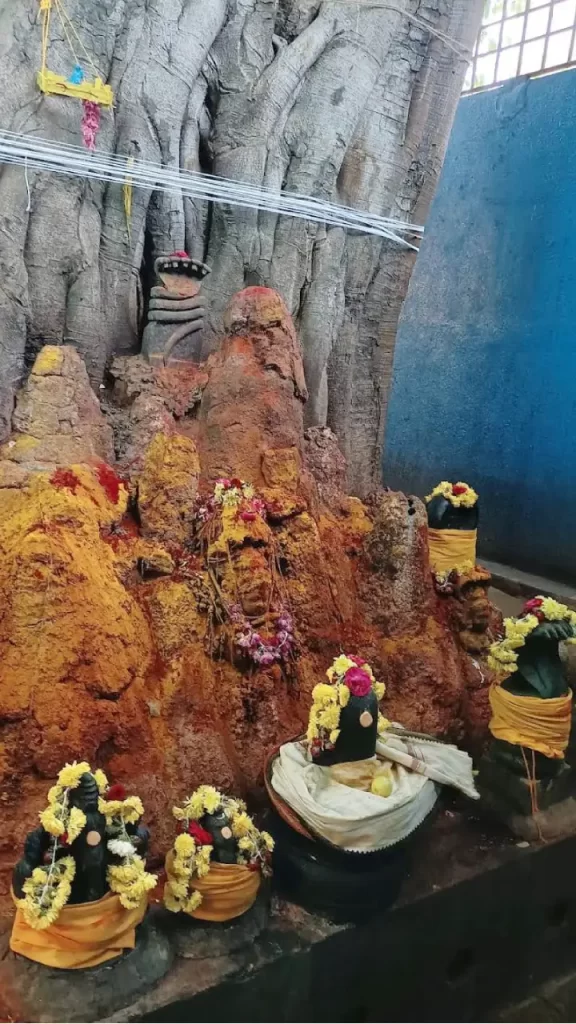
One day, in this same jasmine forest, dwelt a very devoted couple, Sage Nidhruva and his wife, Vedikai. They were very blissful, but they desired a child to make their family complete. Therefore, they were counseled by the other wise sages to ask for the boon of Lord Shiva, who dwelt in this very Mullai Vanam (Jasmine Forest). There was not even a Shiva Lingam cut by human hands, so they offered prayers to an ant hill that had naturally appeared in the form of a Shiva Lingam.
Following many days of earnest prayers and penance, Vedikai became pregnant! They were thrilled. One day, when Sage Nidhruva was out, a very aged and wise sage named Urdhvapada came to their modest dwelling, in search of food. Vedikai, who was pregnant and seriously ill, was extremely fatigued. She was lying down and did not hear the sage asking for alms. Sage Urdhvapada, unaware of the fact that she was pregnant and ill, took her lack of response as an offense and wrongly assumed that she was refusing to respond to him. Being enraged, he cursed her.
Oh dear! Due to the curse, Vedikai unexpectedly became severely ill, and her unborn child began to suffer. She was panicked and screamed for Goddess Parvati, the divine consort of Lord Shiva, to save her dearest child. She prayed from the bottom of her heart, entreating the Goddess to save her darling child.
And guess what? The benevolent Goddess Parvati overheard her tearful pleas! She promptly appeared in front of Vedikai in a beautiful form, abounding with love and compassion. In order to save the baby, Goddess Parvati worked a miracle! Goddess Parvati lovingly shielded the baby by placing it inside a sacred pot (Kalasam or Garbha Kalasam) until the baby had grown up and was ready to be born. When the time was right, a healthy baby boy was born from the pot, and the grateful parents named him Naidhruvan.
But the story doesn’t end there! Vedikai had another problem. After the baby was born, she couldn’t feed him because she had no milk. So, she prayed again to the Goddess. And once again, the Goddess responded! She sent Kamadhenu, the divine wish-fulfilling cow, to the temple. Kamadhenu dug into the ground with her hoof, and pure, holy milk started flowing out, forming a small pond directly in front of the temple! This is called Ksheera Kundam (the “milk pond”) and it remains so even today, filled with sacred water.
Overwhelmed with gratitude, Vedikai pleaded Goddess Parvati to reside in this holy site forever, to safeguard all women who are pregnant, and to grant blessings to those who want to become mothers. The Goddess, for her boundless love, consented! And thus, she is still here as Garbarakshambigai, meaning “The Mother who guards the womb.” “Garbha” denotes womb, “Raksha” denotes to guard, and “Ambigai” is an alternate name for the Goddess.
This is what makes the Garbarakshambigai Temple so sacred. It’s where the Goddess herself stepped in to save life, and still does it for all her followers.
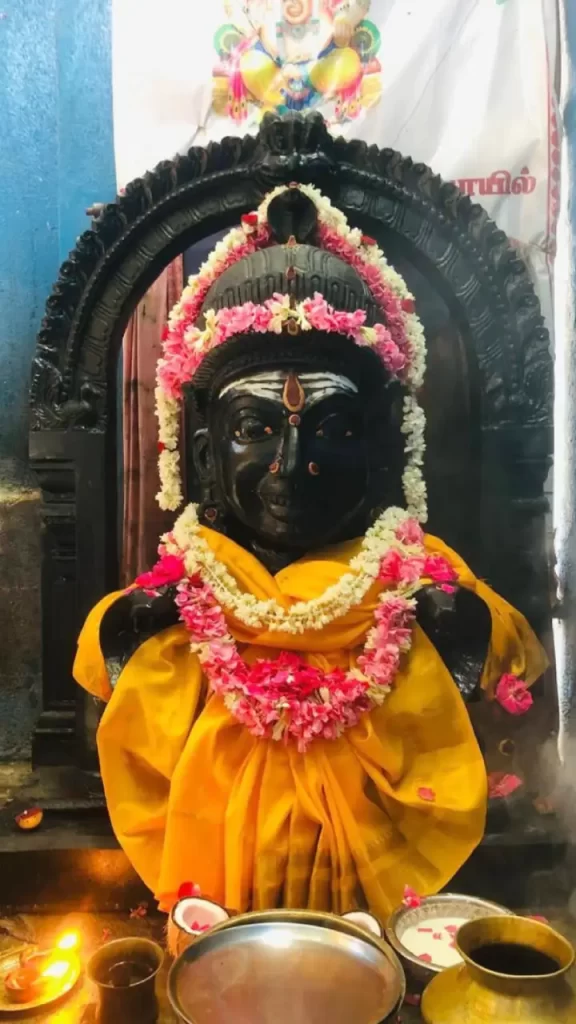
Significance of the Temple: A Haven of Hope
The Garbarakshambigai Temple is very important to many believers, particularly to childless couples and to pregnant women who pray for a safe childbirth. The shrine is regarded as one of South India’s most powerful and merciful temples for these particular boons.
Blessings of Fertility: This temple is a source of hope for childless couples. Many devotees come to the Garbarakshambigai Temple with sincere prayers, hoping that the Goddess will grant them the blessing of conception. There are millions of stories and testimonials from devotees who conceived after praying here, and as such, it is a very popular pilgrimage destination for this reason.
Protection During Pregnancy: For pregnant women, the Goddess is a divine guardian. Women visit here for good wishes for an uneventful and healthy pregnancy so that their unborn baby grows well in the womb and they have an easy delivery. The very name “Garbarakshambigai” indicates her as the “womb protector.”
Safe Deliveries: The temple is famous for safe and simple childbirth. Several women pray for speedy relief from labor pain and uneventful delivery. No maternal or infant deaths are believed to have happened during childbirth among devotees who pray genuinely to the Goddess at this temple.
Sacred Ghee and Oil Prasadham: Perhaps the most distinctive and important feature of the Garbarakshambigai Temple is its unique prasadhams (blessed offerings) to the devotees:
Ghee for Conception: Infertile couples are provided with their own special ghee (clarified butter) blessed by the Goddess. It is assumed that eating this ghee for a particular duration, along with prayers, facilitates conception.
Castor Oil for Safe Delivery: Castor oil sanctified by the Goddess is given to pregnant women. Use of this oil is supposed to provide safe and easy delivery, minimizing complications and pain.
These prasadams are not simple foodstuff; they are supposed to have the divine power and blessings of the Goddess.
Relief from Diseases: Though mostly celebrated for fertility and childbirth, Lord Mullaivananathar (Lord Shiva) here is also prayed to for good health and happiness. The divine Punugu paste (sweet-smelling incense from Asian Civet cat) presented to the Shiva Lingam, composed of ant-hill soil, is said to possess curing powers for skin sickness and other diseases.
The Garbarakshambigai Temple is indeed a real-life symbol of motherhood of the divine kind, benevolence, and defense, and people from all spheres of life visit here in search of comfort, hope, and the realization of their most earnest aspirations.
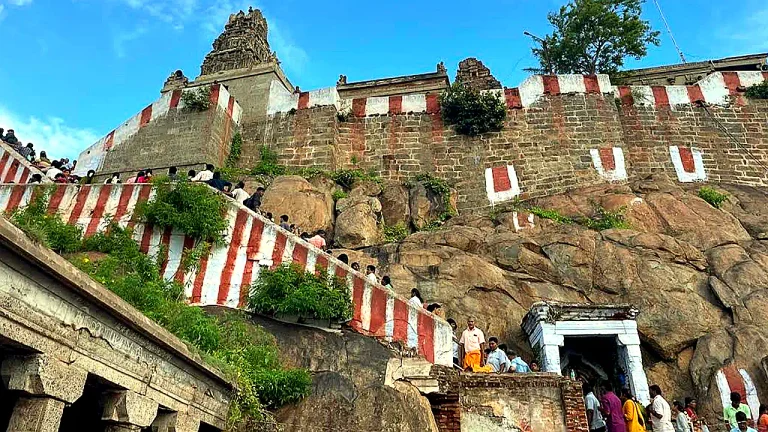
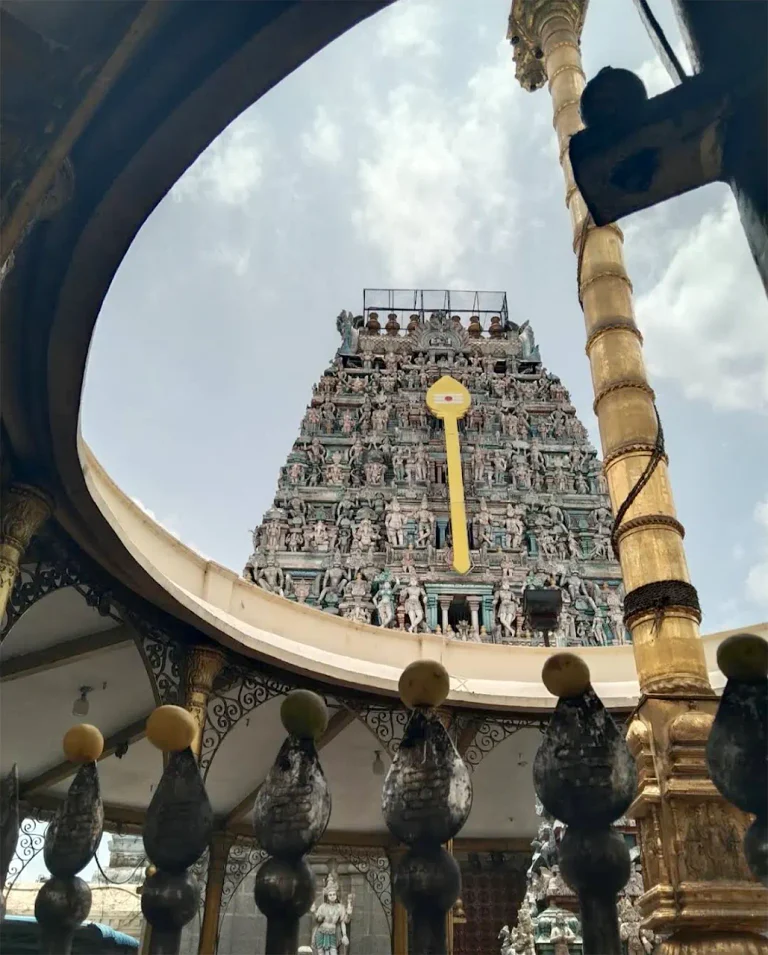

Garbarakshambigai Temple Architecture: A Glimpse into Ancient Craftsmanship
The Garbarakshambigai Temple is a beautiful example of Dravidian architecture, a style of building temples that is common in South India. Imagine how skilled the ancient builders were to create such a magnificent structure that has stood for so many centuries!
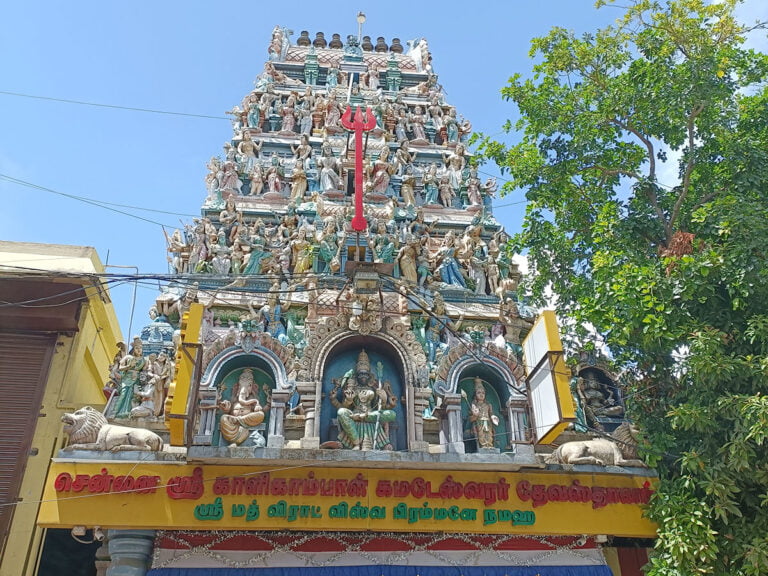
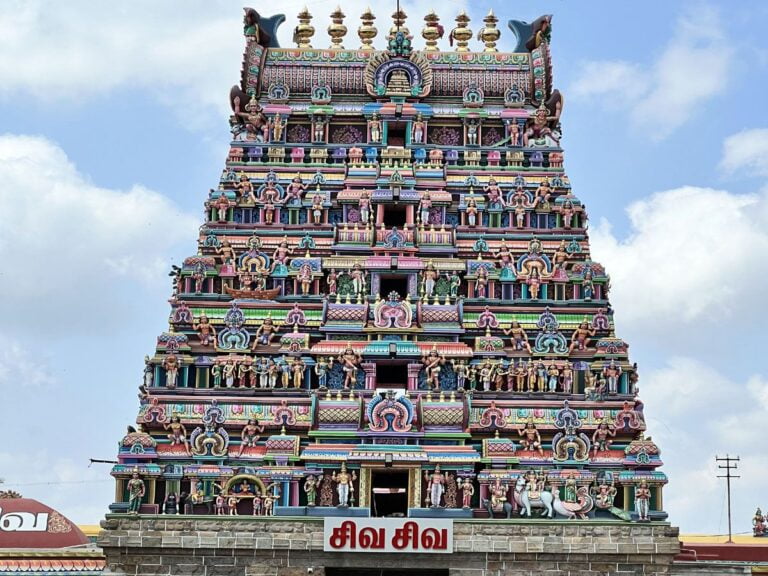
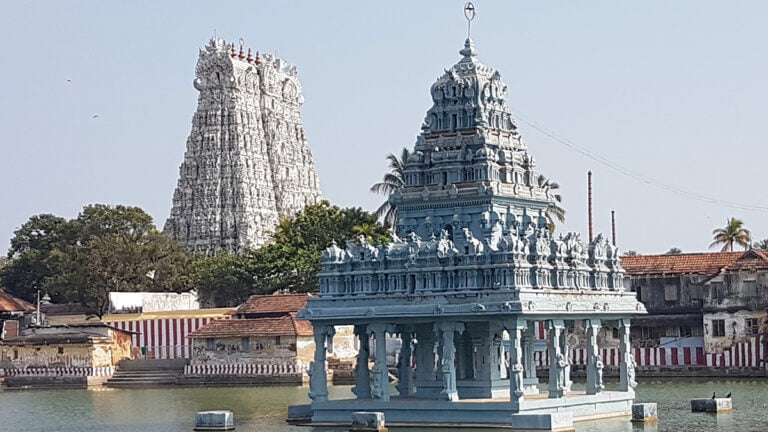
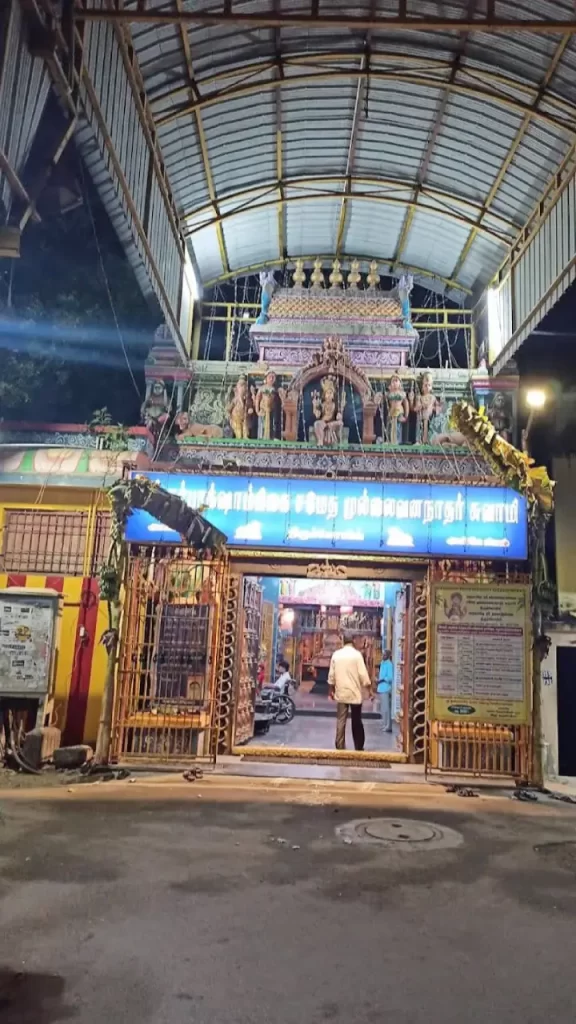
Rajagopuram: As you near the temple, you’ll first encounter the imposing Rajagopuram, a high, towering gateway. The one in front of the Garbarakshambigai Temple is five-tiered, which means it’s like an imposing, five-storeyed tower, beautifully ornamented with numerous sculptures of gods and goddesses, also mythological beings. It’s like an imposing welcome arch, inviting you into the holy precinct. The principal Rajagopuram is oriented toward the south.
Temple Layout: The temple complex itself is very large, occupying an area of approximately 460 feet by 284 feet. There are a number of prakarams or precincts, which are open courtyards surrounding the principal shrines. These areas provide for devotees to walk around the deities, a custom known as pradakshina or circumambulation.
Sanctum Sanctorum (Garbhagriha): The very center of the temple is the Garbhagriha, where the main deities live.
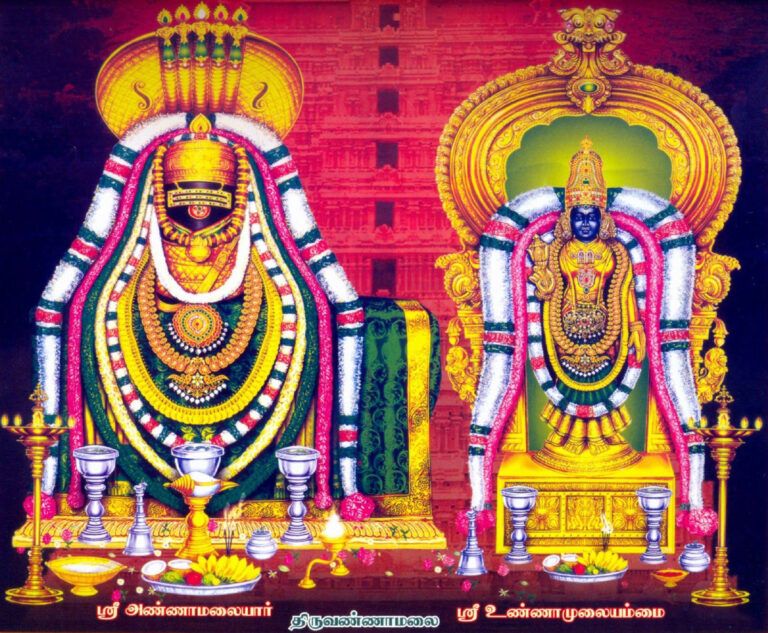
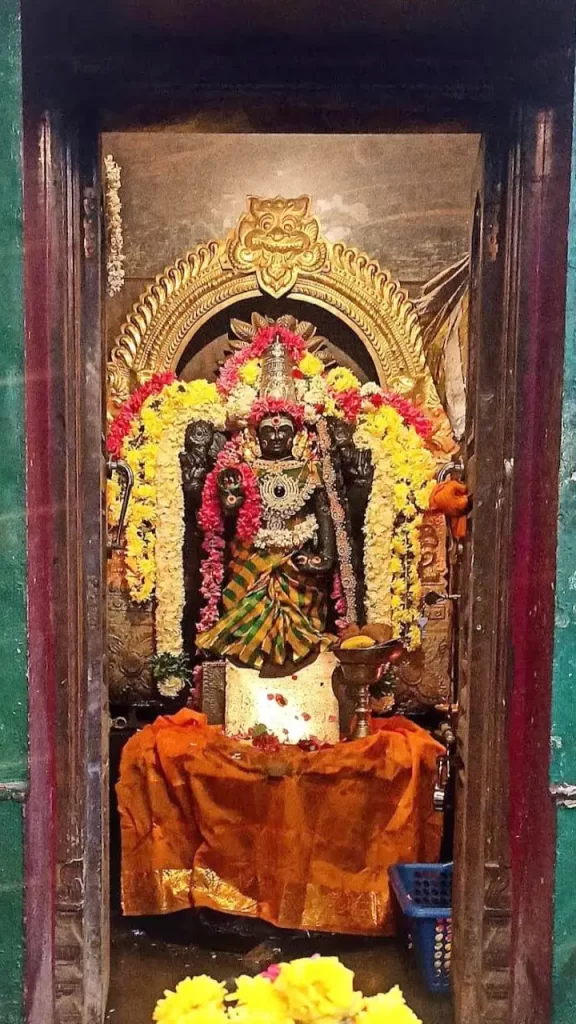
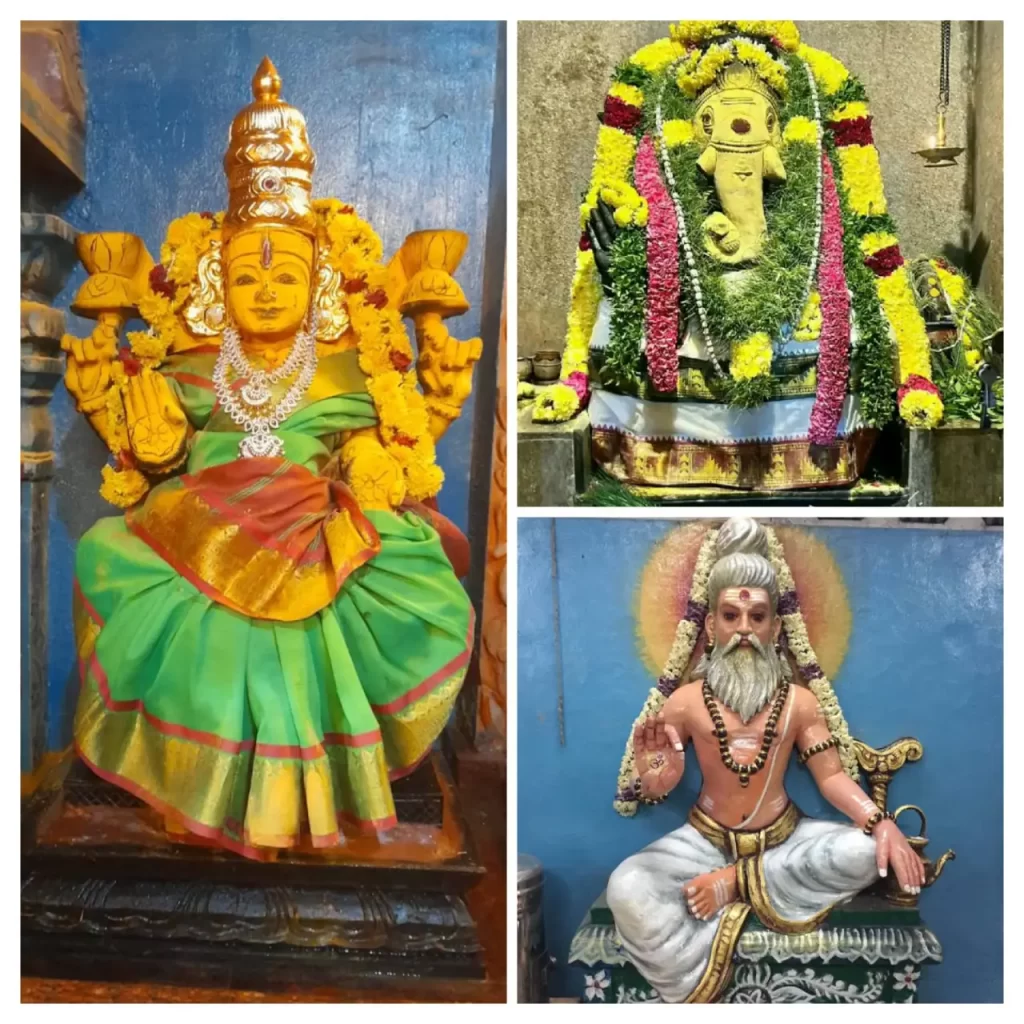
Goddess Garbarakshambigai: Her idol is a lovely, seven-foot statue, which faces the east. She’s posing in a majestic attitude, with one hand on her hip as if guarding the womb, and the other hand in Abhaya Mudra, a gesture of protection, peace, and banishing fear. Her idol is believed to be swayambu, which means that it occurred naturally and was not sculpted by humans.
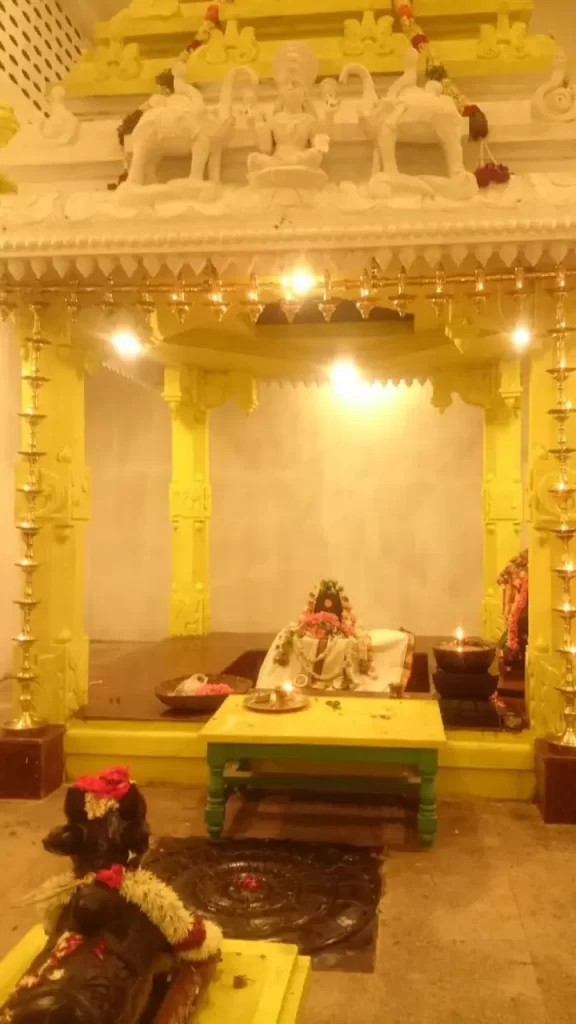
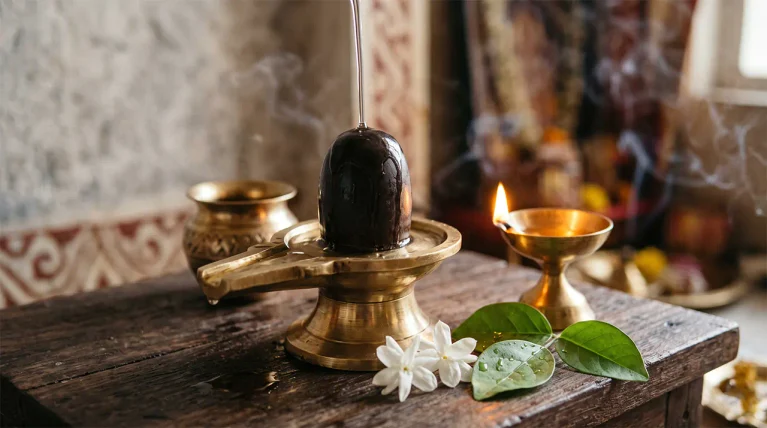
Lord Mullaivananathar (Shiva Lingam): The Shiva Lingam is here most special! It is of ant-hill mud (putru mann in Tamil). Due to this, no water abhishekam (sacred bathing) is done for the main deity since water would cause the mud to dissolve. In its place, the Lingam is smeared with a unique scented paste named Punugu on certain days, particularly Valarpirai Pradosham (the 13th day after a new moon in the waxing phase). Even today, you can find an impression of a jasmine creeper over the Lingam, a remembrance of the original “Mullai Vanam.”
Mandapams: The temple also contains a number of mandapams, or halls with numerous pillars. Mandapams are utilized for ceremonies, prayers, and sitting and meditating by devotees. Finely carved pillars on these mandapams typically have mythological tales illustrated on them. The temple also has a Nataraja mandapam and a Vasantha mandapam.
Ksheera Kundam: In the front is the Ksheera Kundam, sacred milk pond formed by Kamadhenu. The devotees like to take a sacred dip or sprinkle water from it before entering the main temples.
The Garbarakshambigai Temple’s architecture is not only about its size or how beautiful it looks; it’s about the details and the care taken in creating a great spiritual setting for all who come here.
Myths and Beliefs: Faith That Changes Lives
The Garbarakshambigai Temple is full of myths and beliefs that have defined the devotion of centuries. They are not mere fantasies of yesteryears; they are lived traditions that continue to inspire great faith and a profound sense of association with the divine.
The Miracle Power of the Ghee and Oil: Belief in the miraculous miracle power of blessed ghee for conception and castor oil for safe delivery is the core at the Garbarakshambigai Temple. Couples carry these prasadams back home, consuming or applying them with unshakable belief, and return to give thanks once their desires are granted. You will frequently witness the temple walls decorated with strings of bangles presented by mothers who have successfully delivered, a reflection of their thankfulness.
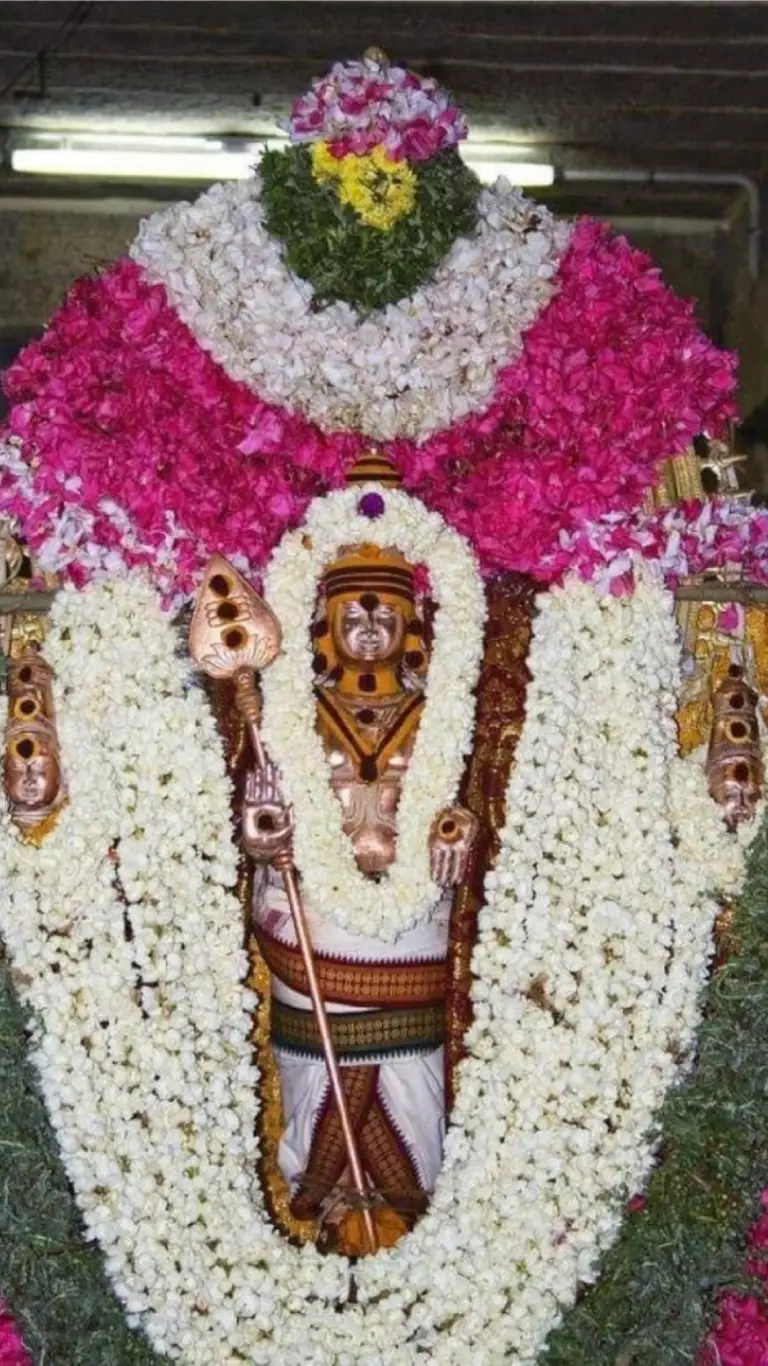
Swarna Kavacham: At festivals, Goddess Garbarakshambigai is attired in a dazzling golden armor (Swarna Kavacham). To behold the Goddess in this shiny appearance is extremely auspicious and spiritually rejuvenating.
The Jasmine Forest Affiliation: The name of the principal deity, Mullaivananathar (Lord of the Jasmine Forest), and the jasmine creeper imprint on the Shiva Lingam, associate the temple strongly with the jasmine plant. It is said that the jasmine flowers presented here are of special importance for people who want blessings for fertility.
Attuning to the Divine Mother: Most devotees have an intense sense of personal connection with Goddess Garbarakshambigai. They regard her as not only a goddess but as a kind, compassionate mother who is aware of their innermost dreams and hardships, and always willing to provide solace and protection. This sense of personal connection makes the prayer conducted at the Garbarakshambigai Temple feel supremely intimate and potent.
Testimonies of Miracles: The temple survives on infinite individual testimonies of miracles. Pilgrims tend to hear from other pilgrims how their prayer was answered, how they got pregnant after years of attempts, or how they had an unproblematic delivery in spite of complications. Such shared testimonies reinforce faith in the Goddess’s unlimited grace.
These beliefs and myths are not only a part of history at the temple; they are living, active traditions which continue to motivate and change the lives of thousands of people and families who desire the divine blessings of Garbarakshambigai Temple.
Garbarakshambigai Temple Timings: When to Seek Blessings
If you are scheduling your trip to the Garbarakshambigai Temple, being aware of the temple timings is quite useful to ensure you enjoy a serene and rewarding darshan (sacred viewing) of the gods.
Typically, the Garbarakshambigai Temple adheres to a daily opening and closing schedule with set times for various poojas (temple worship rituals).
Following are the usual temple timings:
Morning Hours: 5:30 AM to 12:30 PM
During these hours, several morning routines such as Ushakala Pooja (early morning worship) and Kalasandhi Pooja (morning worship) are offered. Usually, devotees can have darshan during these hours.
Afternoon Break: 12:30 PM to 4:00 PM (occasionally 1:00 PM to 4:00 PM or 4:30 PM)
The temple normally closes during these times for rest of the deities and internal temple processes.
Evening Hours: 4:00 PM to 8:30 PM
The temple is reopened in the evening/afternoon for devotees. Sayaraksha Pooja (evening worship) and Ardhajama Pooja (night worship prior to closing) are conducted during this time.
Pooja Timings (Approximate):
Ushakala Pooja: 5:30 AM – 6:00 AM
Kalasandhi Pooja: 8:30 AM – 9:30 AM
Uchikkala Pooja: 12:00 PM
Sayaraksha Pooja: 5:30 PM – 6:00 PM
Ardhajama Pooja: 8:00 PM – 8:30 PM
Crowded Days:
The Garbarakshambigai Temple sees more people on weekends, public holidays, and during auspicious day events such as Pournami (the full moon day), Amavasya (new moon day), and Pradosham (the 13th day of the lunar fortnight).
Tuesday and Friday mornings are particularly busy since these days are deemed especially auspicious for Goddess worship.
Festival days are very crowded, but they have a lively and spiritually intensive environment. We will discuss those later!
It’s worth checking the official website of the temple or calling them for the latest timings, particularly if you’re scheduling your visit around a special ritual or during a big festival. Even during busy times, the divine atmosphere at the Garbarakshambigai Temple is really inspiring.

Special Days and Rituals: A Calendar of Devotion
The Garbarakshambigai Temple is brought alive with a whole range of colorful festivals and daily ceremonies throughout the year. These festivals are not simply a series of events; they are warm expressions of faith, with traditional music, elaborate decorations, and collective prayers filling the air.
Navaratri: One of the most important festivals in the Garbarakshambigai Temple is celebrated over nine nights, generally between September and October. It’s a celebration of Goddess Durga, Lakshmi, and Saraswati, but particularly Goddess Garbarakshambigai. The temple is splendidly decorated, and different aspects of the Goddess are offered each day. It’s an extremely busy but hugely festive time.
Aadi Pooram: This festival is celebrated during the Tamil month of Aadi (July-August) in honor of Goddess Amman. This is the day when Goddess Andal revealed herself, and there are special rituals for the Goddess, such as a flower procession.
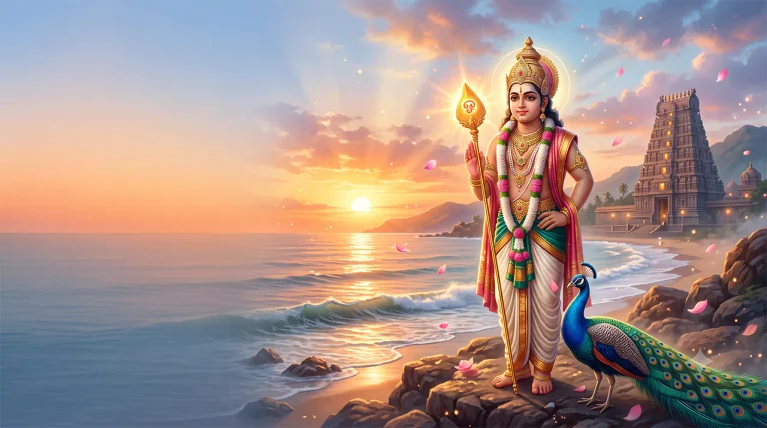
Vaikasi Visagam: This is the festival, typically in May-June, in honor of Lord Muruga (Subrahmanya) and is celebrated through special poojas for Lord Mullaivananathar.
Annabishekam: It is a special and elaborate ritual conducted generally in the month of Aippasi (Oct-Nov), where cooked rice covers the Shiva Lingam (Mullaivananathar) fully. It’s a symbolic worship to Lord Shiva, and the rice is later offered as prasadam.
Kanthasashti and Karthigai Deepam: These are other significant festivals, particularly Karthigai Deepam (the lights festival, typically in November-December), when the whole temple complex is lit with lamps and the result is a breathtaking view.
Daily Rituals (Pooja): Besides the great festivals, the Garbarakshambigai Temple conducts five daily kalam (times) of pooja according to the Kamikagamam (a collection of ancient texts that dictate temple rituals):
Ushakala Pooja (early morning)
Kalasandhi Pooja (morning)
Uchikkala Pooja (noon)
Sayaraksha Pooja (evening)
Ardhajama Pooja (night, before closing) These rituals conducted on a daily basis ensure that the divine power in the Garbarakshambigai Temple is always sustained and provided to the devotees.
Special Poojas and Offerings:
Thanga Thottil (Golden Cradle): People who are blessed with a child following their prayer at the Garbarakshambigai Temple also give a baby in a small golden cradle as an expression of gratitude.
Ear Piercing and Head Tonsuring: These are usual ceremonies done by parents in the temple for their child, representing an offering and praying for their child’s welfare.
Sreemantham (Baby Shower): Most pregnant women who have prayed in the temple return to do their traditional baby shower ritual inside the temple compound, asking the Goddess for her continued favors.
These festive days and ceremonies make a trip to the Garbarakshambigai Temple more than a pilgrimage but an exuberant cultural and spiritual event, bridging devotees to centuries of tradition and steadfast belief.
Places to Visit Around the Temple: Take Your Pilgrimage Further
After experiencing the deep peace and blessings of the Garbarakshambigai Temple, you may like to visit some other pretty and historic Hindu temples in the area. The Thanjavur district is aptly called the “Granary of Tamil Nadu” as well as a “Temple Town” because of the large number of ancient temples!
Here are some lovely sites you can visit, adding depth to your spiritual experience:
Mullaivananathar Temple (same complex): You’re already there! Keep in mind that this is the primary shrine for Lord Shiva, who is the consort of Goddess Garbarakshambigai. Don’t miss performing your prayers to Lord Mullaivananathar for good health and well-being.
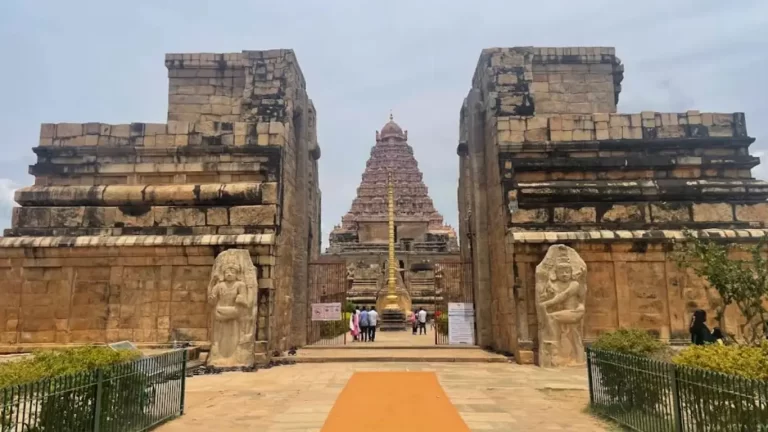
Brihadeeswarar Temple (Big Temple), Thanjavur: This is a UNESCO World Heritage Monument and among the most beautiful temples in India, constructed by Raja Raja Chola I. It’s located approximately 20-25 km from Thirukarugavur. The massive vimana (main tower) of the Shiva temple is a wonderful sight, and its structure is just breathtaking. An absolute must-see!
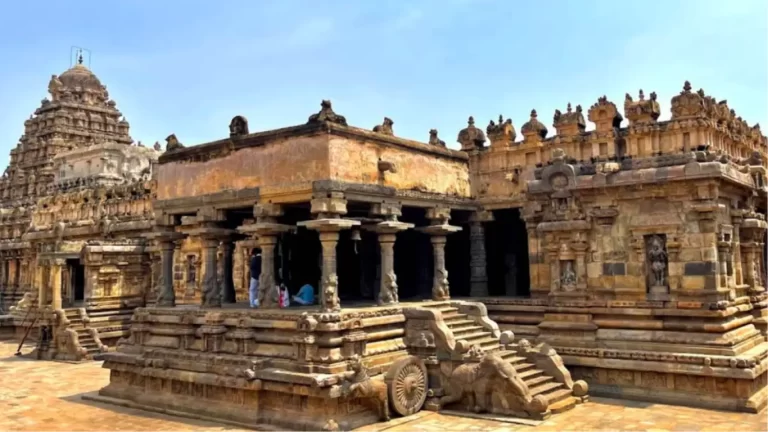
Darasuram Airavatesvara Temple: This stunning Shiva temple, another UNESCO World Heritage Site, is near Kumbakonam (around 30-35 km from Thirukarugavur). It is famous for its exquisite stone carvings, which represent the peak of Chola art and architecture.
Gangaikonda Cholapuram Temple: Another majestic Shiva temple created by Rajendra Chola I, and a UNESCO World Heritage Site located a little farther (approximately 50-60 km). It’s an awe-inspiring monument, reflecting the strength and artistic skills of the Chola Empire.
Kumbakonam Temples: Kumbakonam, popularly referred to as the “Temple Town,” is approximately 20 km away from Thirukarugavur and consists of hundreds of temples. Some notable ones are:
Adi Kumbeswarar Temple: A large Shiva temple.
Sarangapani Temple: A large Vishnu temple.
Chakrapani Temple: Temple dedicated to Lord Vishnu’s chakra.
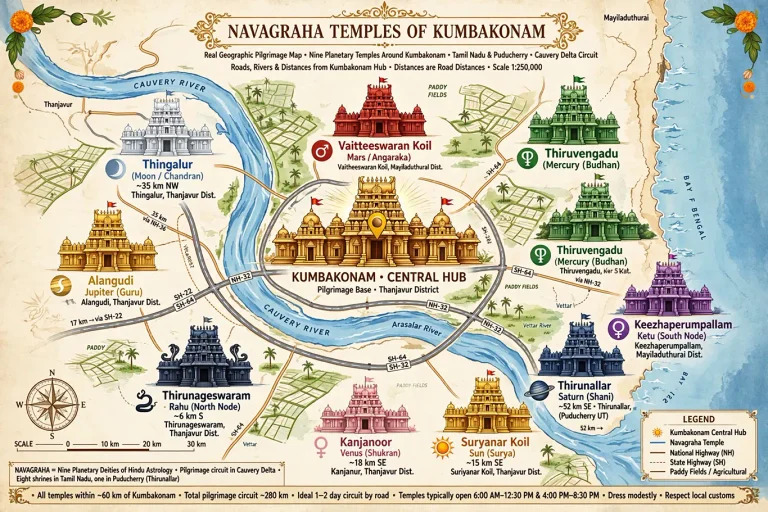
Navagraha Temples: If you are keen on visiting temples devoted to the nine celestial bodies (planets), there are numerous such temples around Kumbakonam and Thanjavur.
Punnainallur Mariamman Temple: Situated near Thanjavur, this temple is devoted to Goddess Mariamman and is quite popular among the local people.
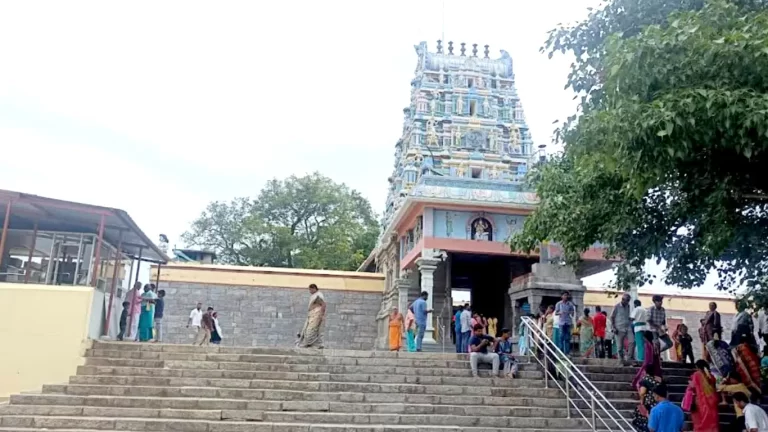
Swamimalai Murugan Temple: One of the six residences of Lord Muruga (Arupadaiveedu), the temple is constructed on a man-made hill and is an important pilgrimage center for Lord Muruga believers. It’s close to Kumbakonam.
Papanasam Ramalingeswarar Temple: Another Shiva temple close to Papanasam, near Thirukarugavur.
It’ll be great if you visit these nearby temples as you’ll have a better appreciation of the rich religious and architectural heritage of Tamil Nadu and make your trip even more memorable.
How to Reach Garbarakshambigai Temple: Your Journey to Divine Blessings
It is quite easy to reach the Garbarakshambigai Temple in Thirukarugavur since it’s a popular pilgrimage center. You have a number of easy travel options:
By Road:
From Thanjavur: Thirukarugavur is about 20-25 km from the city of Thanjavur. It is easy to take the local buses (such as bus numbers 24, 34, 16, and 44) or a taxi or auto-rickshaw straight from Thanjavur to the Garbarakshambigai Temple.
From Kumbakonam: The temple is roughly 20 kilometers from Kumbakonam. Bus (such as numbers 11 and 29), taxi, and auto-rickshaw are easily available from Kumbakonam.
From Papanasam: Thirukarugavur is situated very near to Papanasam (approximately 6 km east) and can be easily accessed by auto or local bus.
The temple lies on the Thanjavur-Kumbakonam main road.
By Rail:
Nearest Railway Station: The nearest railway station is Papanasam Railway Station, located around 6-7 kilometers away. But it’s a small station.
Large Railway Stations: The important railway nodal points are Thanjavur Junction (approximately 20-25 km) and Kumbakonam Railway Station (approximately 20 km). Both of these stations have very good connectivity to major cities in Tamil Nadu and other states of India. From either of these stations, it is easy to hire a taxi or board a local bus to the Garbarakshambigai Temple.
By Air:
Nearest Airport: The nearest airport is Tiruchirappalli International Airport (TRZ), also called Trichy Airport, which is around 70-80 kilometers from Thirukarugavur.
After reaching Trichy airport, you can take a pre-paid taxi or bus to Thanjavur or Kumbakonam, and then use local transport to reach the temple.
Whatever medium of travel you may opt for, the trip to the Garbarakshambigai Temple is a trip of devotion that takes you to a point of enormous divine blessings and solace.