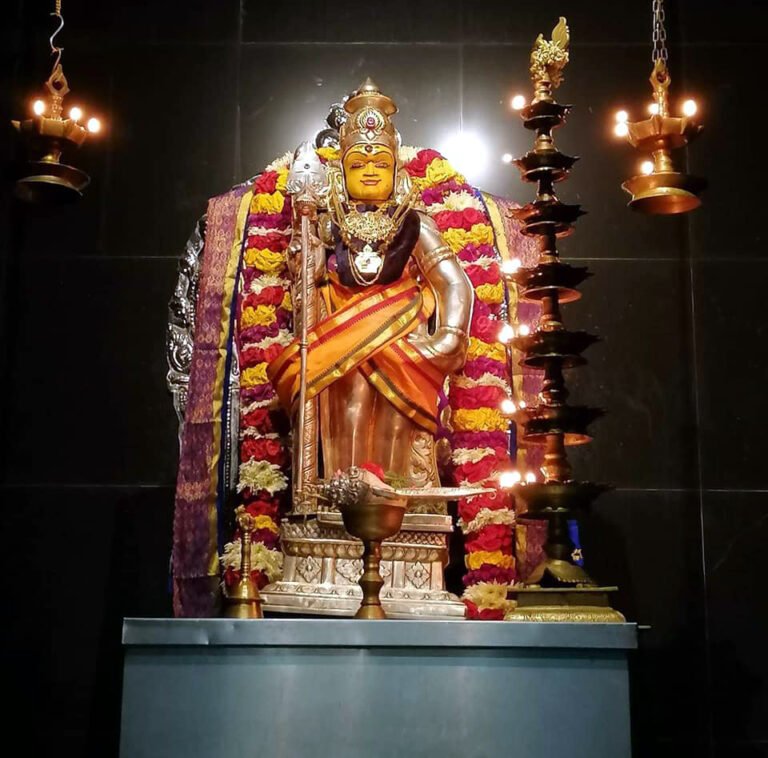
Garbarakshambigai Temple Thirukkarugavur: Timings, History, Rituals & Pilgrim Guide
The Sri Garbarakshambigai Amman Temple (officially known as the Sri Mullai Vana Nathar Temple) in Thirukkarugavur, Tamil Nadu, stands as one of South India’s most spiritually significant shrines. Celebrated across centuries in the sacred Tamil Tevaram hymns as a revered Paadal Petra Sthalam, this ancient temple is universally renowned as a supreme sanctuary for childless couples seeking the blessing of progeny, expectant mothers praying for a safe pregnancy, and women desiring uncomplicated childbirth.
Much like devotees embark on the sacred 12 Jyotirlinga pilgrimage across India or worship the elemental energies at the renowned Pancha Bhuta Sthalam temples, pilgrims travel to the Cauvery delta specifically to seek the grace of the Supreme Mother as Garbarakshambigai—the divine guardian who protects the womb (Garba = womb, Raksha = to protect, Ambigai = Goddess). Nestled amidst the fertile paddy fields and coconut groves of the Cauvery Delta, the temple radiates a tranquil, deeply maternal spiritual energy that draws thousands of pilgrims from across the globe every month.
Quick Information: Sri Garbarakshambigai Temple
| Parameter | Verified Detail |
| Temple Name | Sri Mullai Vana Nathar Temple / Sri Garbarakshambigai Amman Temple |
| Main Deities | Sri Mullai Vana Nathar (Swayambhu Shiva Lingam) & Sri Garbarakshambigai Amman (Parvati) |
| Location | Thirukkarugavur village, Papanasam Taluk, Thanjavur District, Tamil Nadu – 614302 |
| Temple Classification | Paadal Petra Sthalam (18th shrine south of River Cauvery in Chola Nadu) |
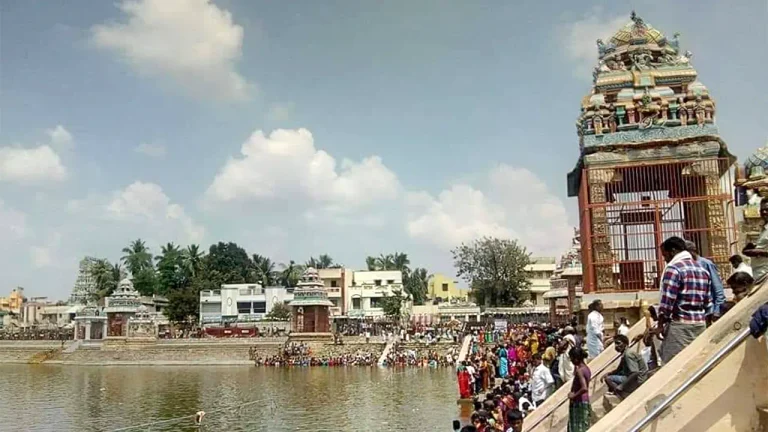
| Sacred Temple Tank (Theertham) | Ksheera Kundam (Milk Tank / River Vettar) |
| Sthala Vriksham (Sacred Tree) | Mullai (Jasmine creeper / Jasminum auriculatum) |
| Daily Darshan Timings | Morning: 6:00 AM – 12:30 PM | Evening: 4:00 PM – 8:00 PM (Extended on Fridays and festival days) |
| Key Prasadhams | Consecrated Cow’s Ghee (for conception) & Castor Oil (for safe delivery) |
| Nearest Railway Station | Papanasam (PML) – 6 km; Kumbakonam (KMU) – 20 km; Thanjavur (TJ) – 22 km |
| Nearest Airport | Tiruchirappalli International Airport (TRZ) – approx. 82 km |
| Official Administrative Body | HR&CE Department, Government of Tamil Nadu |
| Recommended Attire | Strict traditional Indian clothing (Dhoti/Kurta for men; Saree/Salwar for women) |
The Sthala Purana: Sacred Legends of Thirukkarugavur
The spiritual identity of Thirukkarugavur is anchored in classical puranic history, recording how divine intervention saved an unborn child when mortal hope was lost.
The Legend of Vedhavathi and the Divine Protection of the Fetus
According to ancient tradition, a pious sage named Nidhruva lived in this sacred jasmine forest (Mullai Vanam) with his wife Vedhavathi. For years they remained childless, until through arduous penance and sincere prayers to Lord Shiva and Goddess Parvati, Vedhavathi conceived.
While she was in an advanced stage of pregnancy, Sage Nidhruva left the hermitage to perform religious obligations. During his absence, an irritable and powerful rishi named Urdhvapada visited the ashram seeking hospitality. Overcome by the physical exhaustion and unconscious fatigue of late pregnancy, Vedhavathi failed to immediately rise, welcome the sage, and offer traditional respects.
Enraged by what he perceived as deliberate insolence, Sage Urdhvapada uttered a devastating curse: the fetus within her womb should disintegrate and separate from her body. As the curse took effect, the fetus slipped away, causing unbearable physical agony and emotional terror.
In total surrender, Vedhavathi fell at the feet of the Divine Mother. Responding immediately to her maternal cry, Goddess Parvati manifested, retrieved the displaced fetus, placed it safely inside a divine golden pot (Kalasam), and nurtured the child until full term. When the baby was ready to emerge, the Goddess delivered a radiant male child named Naidhruvan and placed him gently in his mother’s arms.
To provide nourishment for the newborn, Lord Shiva summoned the celestial cow Kamadhenu, who scraped the ground with her hoof, causing celestial milk to spring forth and form the sacred temple tank, Ksheera Kundam (Ksheera meaning milk). Moved by gratitude, Vedhavathi prayed that the Goddess remain enshrined forever at this sacred site, extending that same fierce, motherly protection to any woman who surrenders her fears at her feet. The village thus became known as Thiru-Karu-Gavur (Karu = fetus/embryo, Gavu = to shield or protect, Ur = town).
The Jasmine Forest and Sri Mullai Vana Nathar
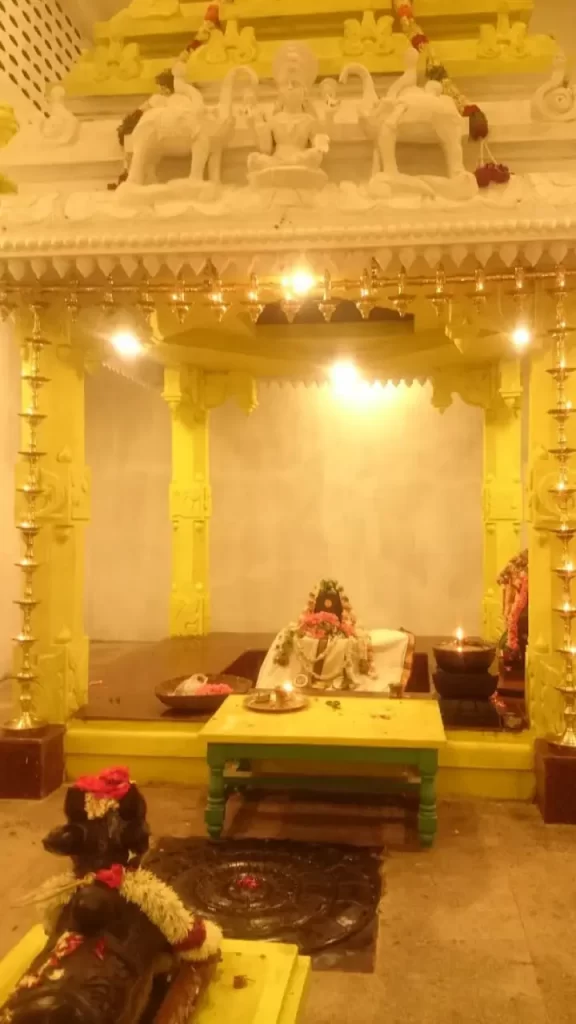
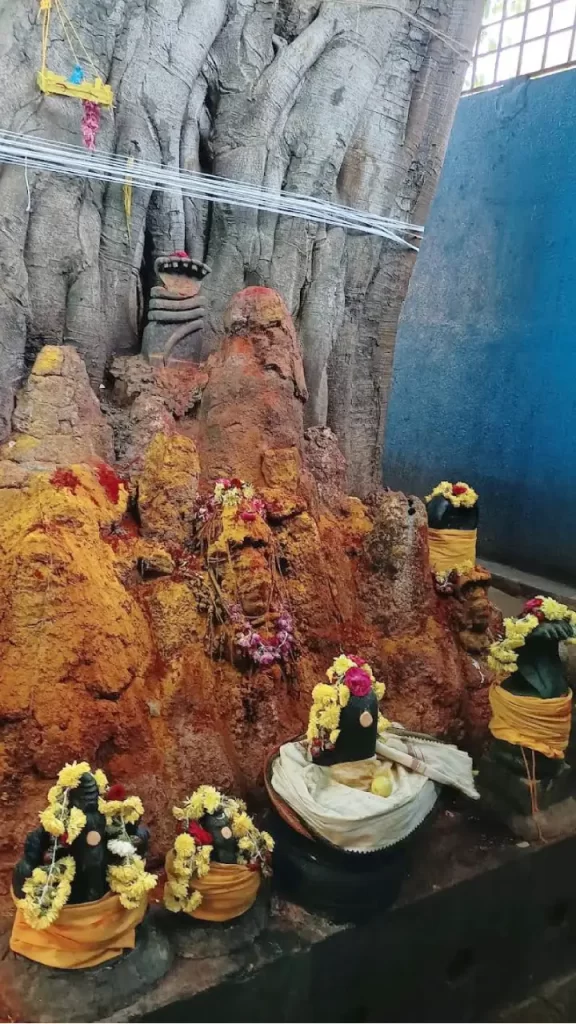
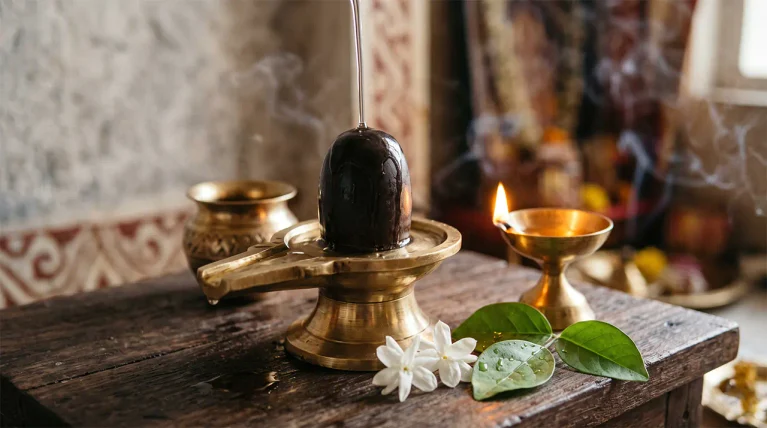
The regional name for Lord Shiva here is Mullai Vana Nathar (“Lord of the Jasmine Garden”). Tradition recounts that the Shivalingam at this shrine is an organic Swayambhu (self-manifested) form discovered within a dense cluster of wild jasmine vines.
Because the central lingam is made of natural anthill earth (Putrumann), water abhishekam is strictly forbidden directly upon the lingam itself. Instead, the lingam is coated only with a special fragrant civet paste (Punugu Sattam), while ritual holy baths are performed exclusively on the surrounding granite base (Avudaiyar). Even today, deep linear markings resembling the intertwined stems of jasmine creepers remain distinctly visible across the Shivalingam.
Architectural Grandeur and Epigraphical History
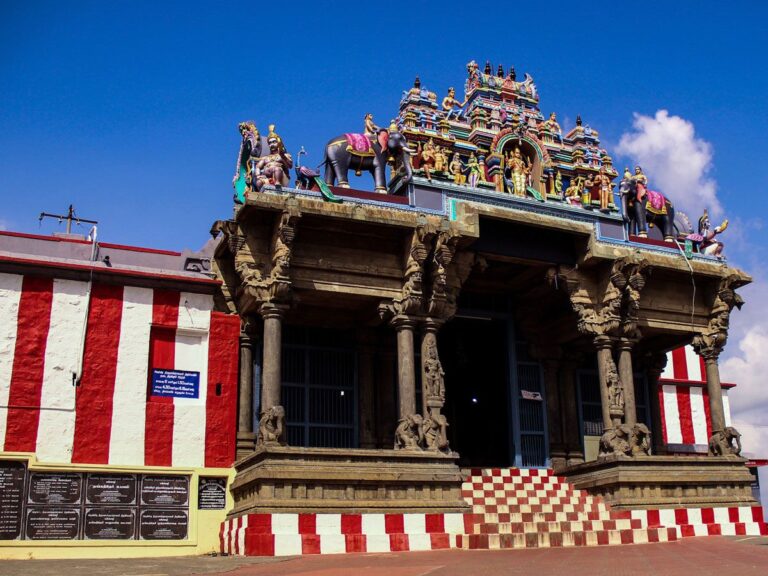
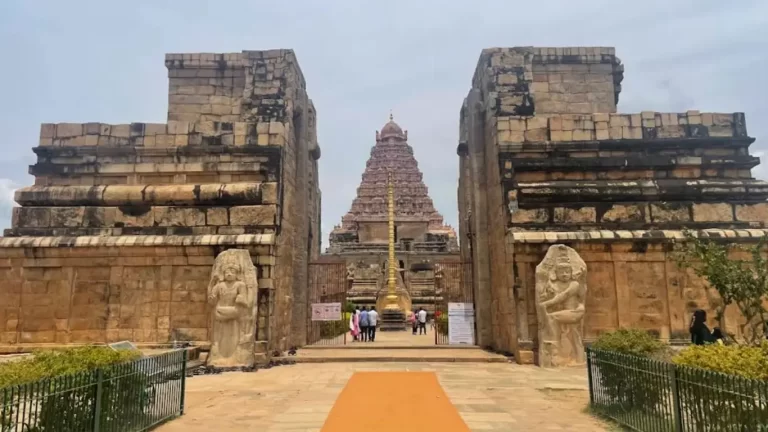
The temple stands within a peaceful, rural clearing, enclosed by grand perimeter walls constructed of weathered granite blocks that showcase classic early and middle Chola craftsmanship, recognized widely by the Archaeological Survey of India (ASI).
The Rajagopuram and Mandapams
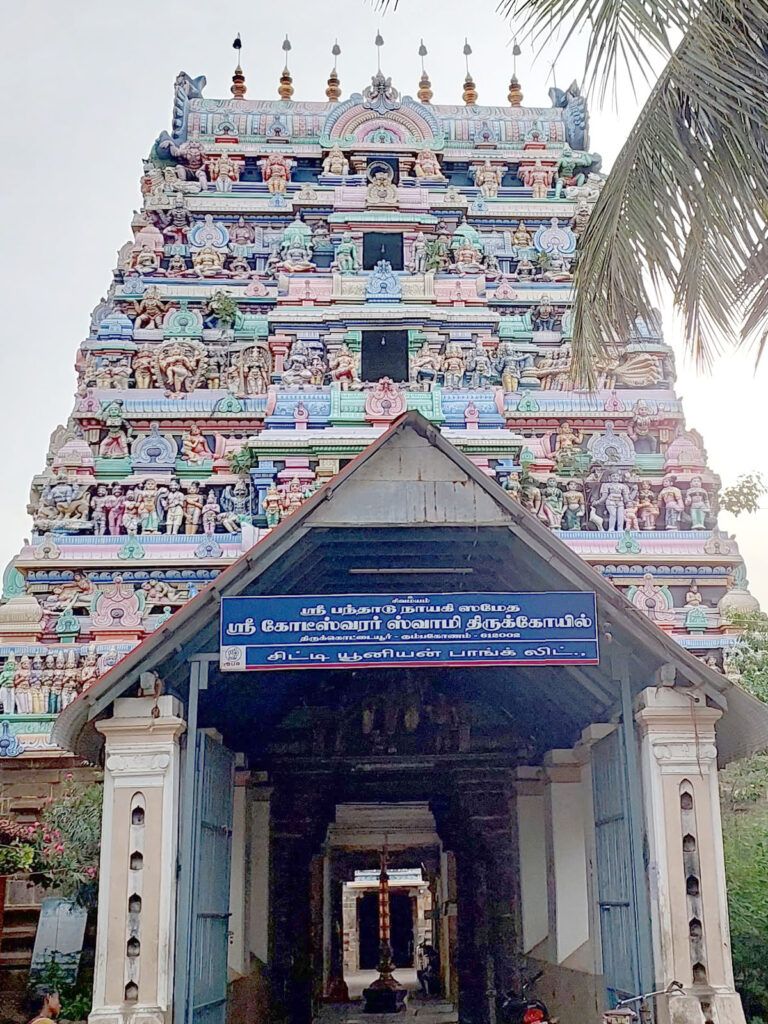
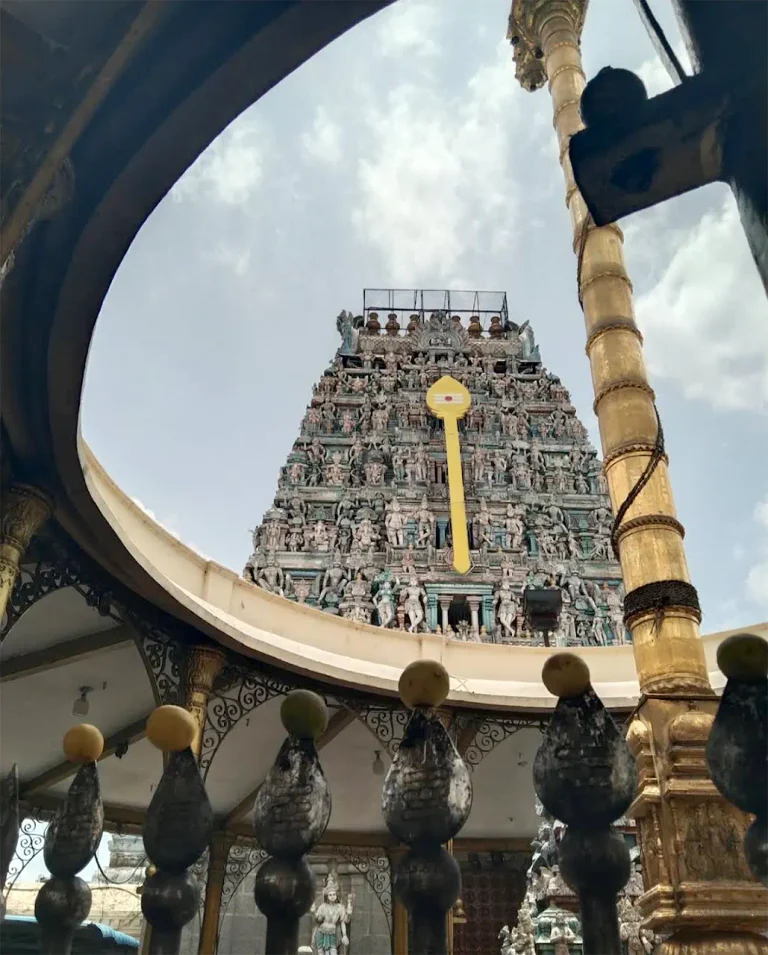
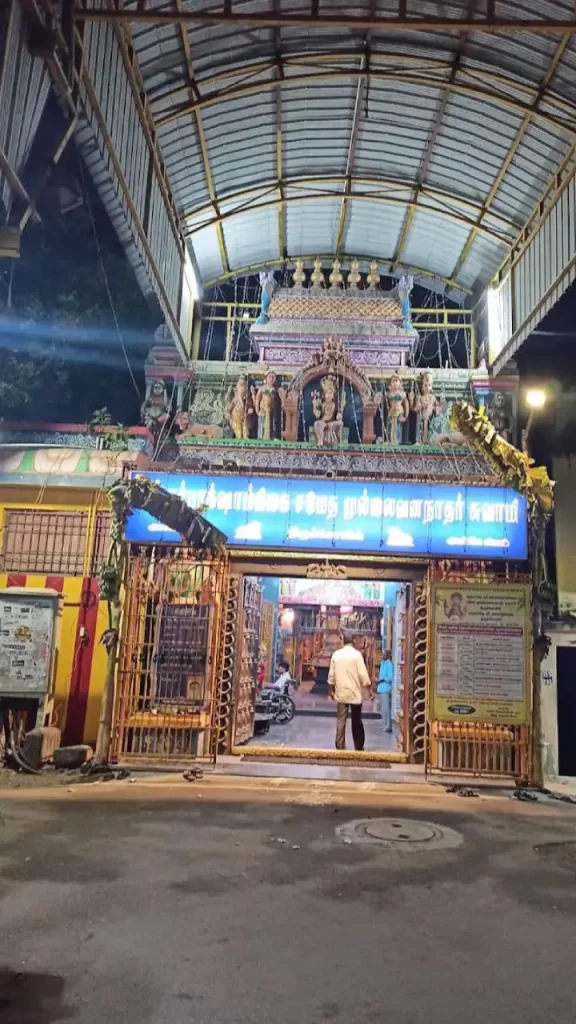
Pilgrims enter the complex through an imposing 5-tiered eastern Rajagopuram adorned with stucco figures illustrating scenes from the Sthala Purana, Shiva Leelas, and Shakta traditions. Passing beneath the main tower, visitors traverse a broad, covered stone pavilion (Maha Mandapam) supported by monolithic pillars featuring relief carvings of traditional temple guardians, floral motifs, and celestial attendants.
Sanctum of Sri Mullai Vana Nathar
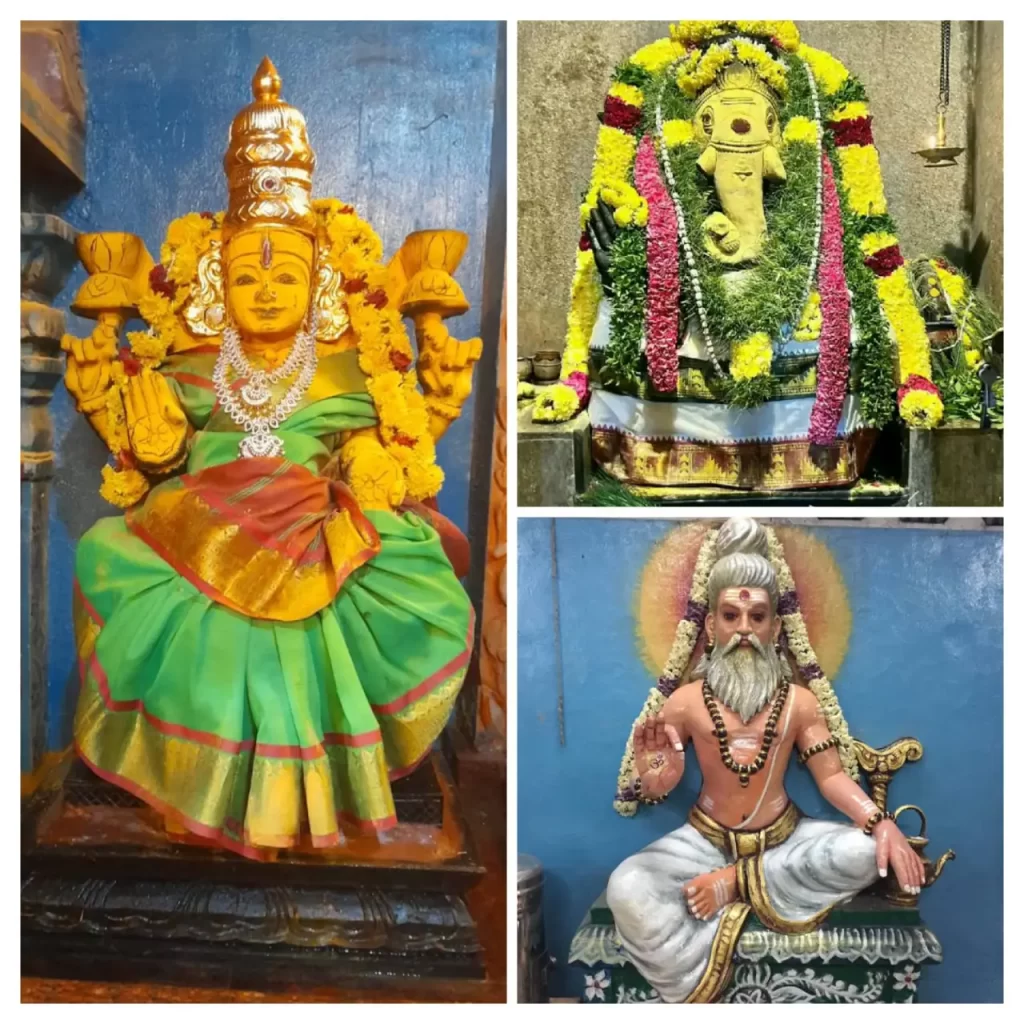
The inner sanctum (Garbhagriha) of Lord Shiva faces east. In adherence to traditional Shaiva Agamic layout, the niches (Koshtas) along the outer sanctum wall enshrine:
- Nardhana Vinayakar (dancing Ganesha) on the southern wall.
- Dakshinamurthy seated in meditation beneath the banyan tree, renowned here for clearing spiritual impediments.
- Lingodbhava along the western wall, flanked by Brahma and Vishnu in worship.
- Brahma and Goddess Durga along the northern wall.
- A dedicated sub-shrine for Chandikeswarar, where devotees quietly clap their hands to conclude their worship.
Sanctum of Sri Garbarakshambigai Amman
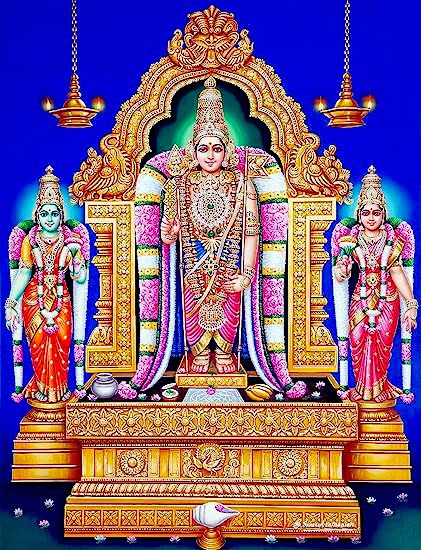
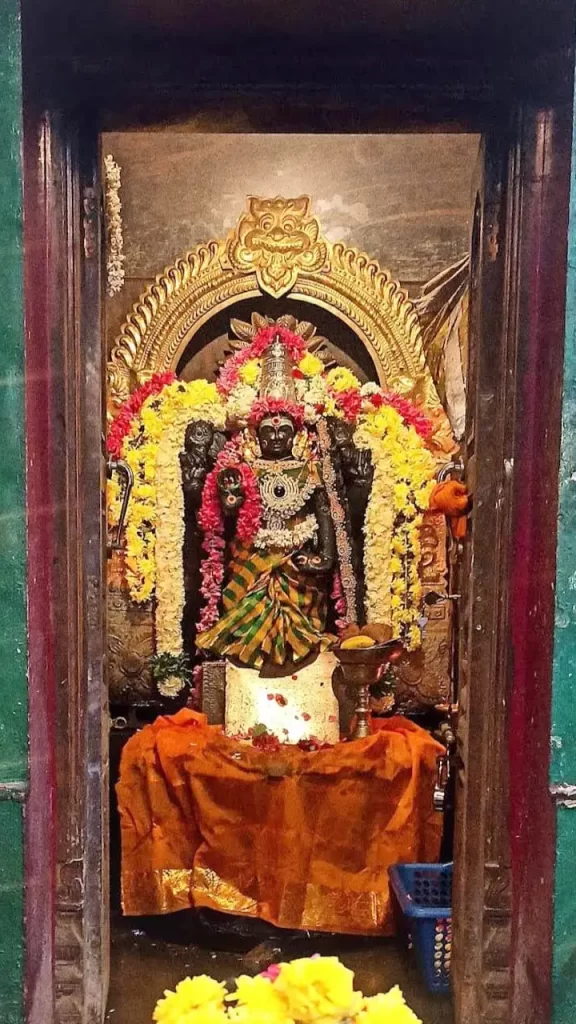
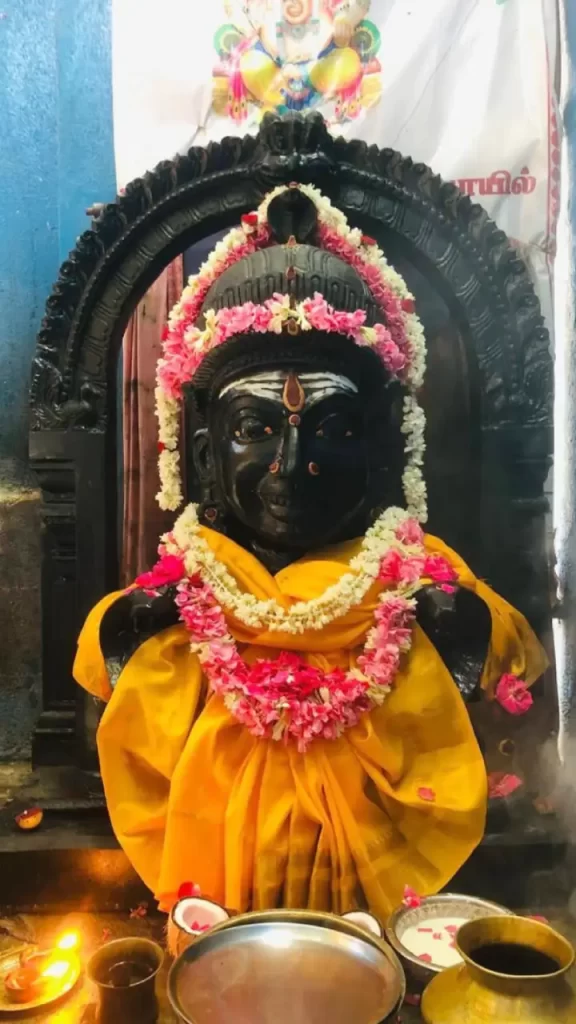
Located to the left of the main shrine and facing south is the sanctum of Sri Garbarakshambigai Amman. Much like the profound feminine energy worshipped across the 51 Shakti Peethas in India, the standing granite idol here stands approximately six feet tall, depicting the Goddess in an upright posture with four arms:
- The upper hands hold the divine noose (Pasha) and elephant goad (Ankusha).
- The lower right hand is held in the posture of blessing (Abhaya Mudra), granting fearlessness.
- The lower left hand rests gently on her hip in the reassuring Katyavalambita posture.
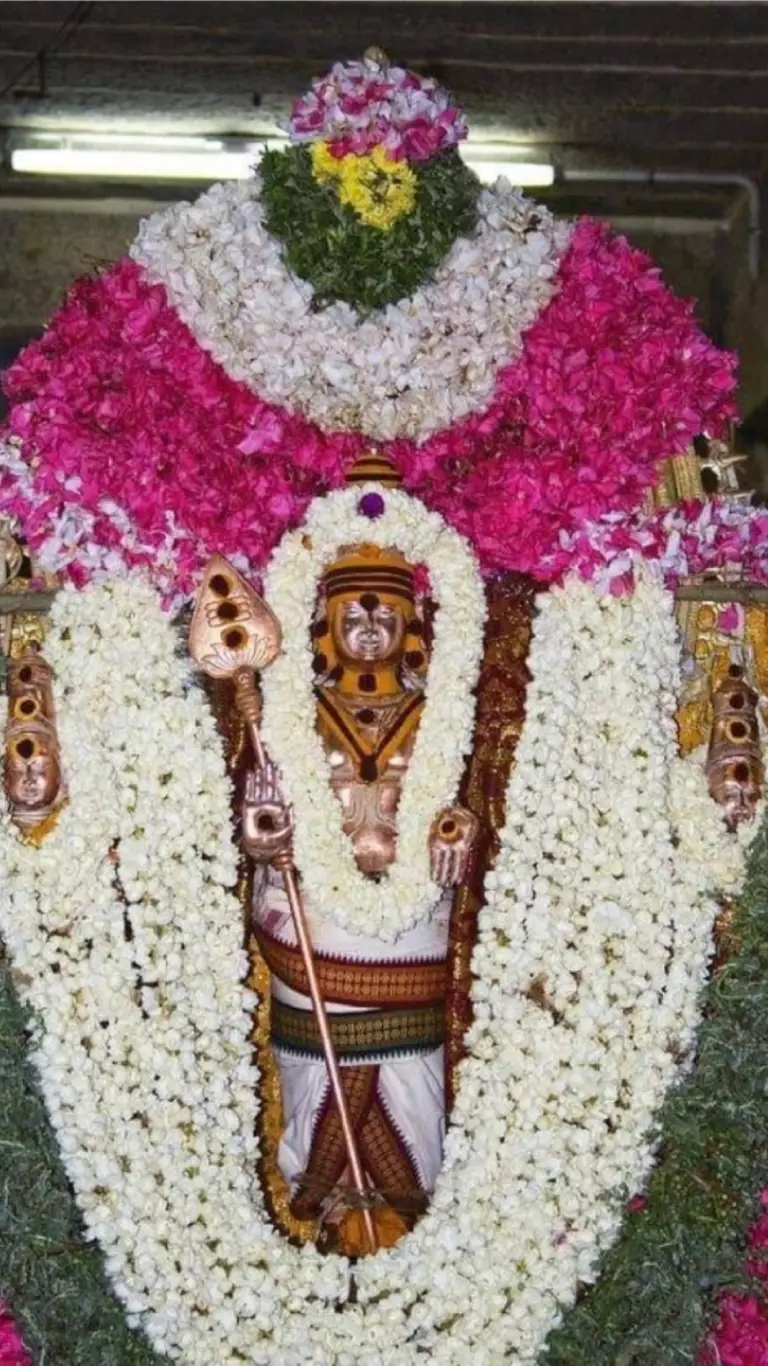
Her countenance radiates compassionate grace. Adorned in pure silk sarees and fresh garlands of jasmine and lotus, her presence evokes a deep sense of peace that visibly moves expectant parents standing before her threshold.
Daily Pooja Schedule & Temple Ritual Timings
The temple conducts six daily worship services (Kala Poojas) in accordance with ancient Agamic injunctions.
| Pooja Service | Standard Timing | Spiritual Focus |
| Ushakkala Pooja | 6:00 AM – 6:30 AM | Morning invocation and awakening of the deities. |
| Kalasandhi Pooja | 8:30 AM – 9:00 AM | Early offerings, chantings of the Tevaram hymns. |
| Uchikala Pooja | 12:00 PM – 12:30 PM | Midday naivedyam and maha aarti before afternoon closure. |
| Sayaratchai Pooja | 5:30 PM – 6:00 PM | Evening lamps lit across all prakarams; special aarti for Amman. |
| Irandam Kala Pooja | 7:00 PM – 7:30 PM | Night rituals and sacred food offerings. |
| Arthajama Pooja | 7:45 PM – 8:00 PM | Final night aarti and formal closure of the sanctums. |
Note: On special occasions such as Pradosham, New Moon (Amavasya), Full Moon (Pournami), and throughout the Tamil month of Margazhi, morning schedules may commence earlier, accompanied by extensive crowds.

Comprehensive Ritual Guide: Prasadhams for Conception and Safe Delivery
The primary draw for most devotees visiting Thirukkarugavur is the acquisition and consecration of the temple’s two signature prasadhams: Ghee Prasadham and Castor Oil Prasadham. Understanding the distinction between these two offerings is essential for every devotee.
1. The Blessed Ghee Prasadham (For Conception)
This ritual is intended for married couples who wish to conceive.
- The Process: Pure cow’s ghee placed in containers is set before the feet of Goddess Garbarakshambigai during archana. Mantras invoking her grace are chanted to infuse the offering with protective energy.
- The Regimen (Mandalam – 48 Days):
- The couple begins the regimen on an auspicious day after their visit.
- Every night before retiring to sleep, both husband and wife take approximately half a teaspoon of this consecrated ghee.
- Devotees chant the dedicated prayer:“Aham Thvam Namami Garbarakshambike, Raksha Raksha Jaganmathe, Bhakthanam Abhayapradhe.”
- If the consecrated supply runs low, it is permissible to mix a small quantity of pure, warm home-prepared cow’s ghee into the blessed vessel to maintain continuity over the 48-day period.
2. The Consecrated Castor Oil / Vilakkenna (For Safe Delivery)
This offering is exclusively for women who are already pregnant.
- The Process: Sesame or castor oil brought by the devotee or acquired at the temple counter is placed before the deity and blessed.
- Application Method:
- This oil is not meant to be consumed internally.
- The pregnant woman applies a few drops of this consecrated oil gently over her lower abdomen in a clockwise direction every evening or morning, praying for the child’s proper development, normal positioning, and an uncomplicated, painless delivery.
- Many families keep the remaining consecrated oil safely in their home pooja room right up to the onset of labor pains.
3. Punugu Chattam Offering (For Skin & General Healing)
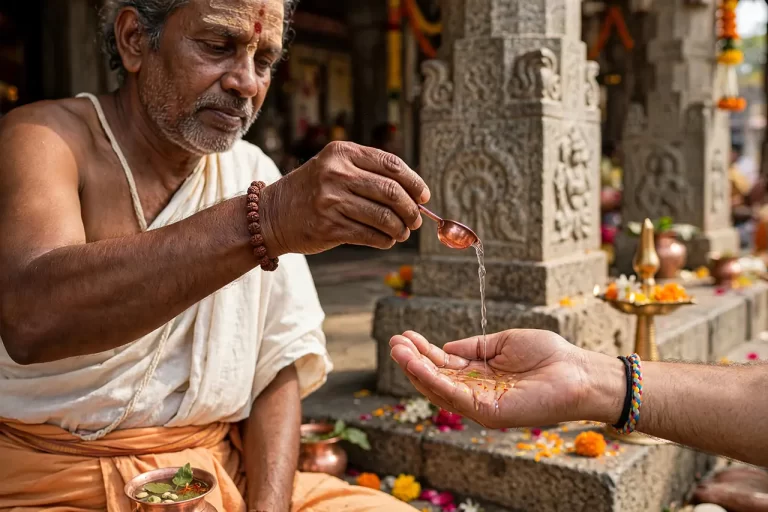
Lord Mullai Vana Nathar possesses a unique reputation among Saivite shrines for curing chronic physical ailments, particularly stubborn skin disorders. Because the lingam is composed of natural ant-hill earth, devotees facing prolonged skin afflictions sponsor the offering of Punugu Chattam (a naturally fragrant civet ointment) on specified festival days to receive healing blessings.
4. Golden Chariot & Thulabharam
- Thulabharam: Once a healthy child is delivered by the grace of the Goddess, many families return to Thirukkarugavur to fulfill their vows (Prarthana). A common practice is the Thulabharam, where the infant is placed on a balance scale opposite gifts of equal weight—commonly jaggery, rice, bananas, coins, or pure cow’s ghee—which are then offered directly to the temple.
- Thanga Thottil (Golden Cradle): Parents who receive children through the Goddess’s grace can sponsor the Golden Cradle Service, placing the infant in the golden cradle kept within the Amman shrine while priests chant benedictory hymns.
Major Annual Festivals
While daily visits are deeply rewarding, experiencing Thirukkarugavur during its principal temple festivals allows devotees to witness rich Chola cultural traditions in full vigor.
- Vaikasi Brahmotsavam (May – June): The premier annual festival celebrated over ten days. Procession deities are taken through the four village mada streets atop distinct mounts (Vahanas), culminating in the grand chariot festival (Ther Thiruvizha) and holy bath (Theerthavari) in the Ksheera Kundam.
- Navaratri Festival (September – October): Goddess Garbarakshambigai is adorned daily in unique decorative forms (Alangarams) representing various aspects of the Mother Goddess. Special laksharchanas and musical recitals draw thousands of devotees every night.
- Margazhi Thiruvathirai (December – January): Commemorating the cosmic dance of Lord Nataraja with dawn abhishekams and sacred food offerings (Thiruvathirai Kali).
- Aadi Pooram (July – August): Celebrating the cosmic motherhood of Parvati. Expectant mothers gather in extraordinary numbers to offer glass bangles to the Goddess, which are subsequently distributed as protective blessings to visiting women.
How to Reach Thirukkarugavur
Thirukkarugavur is situated centrally within the Thanjavur–Kumbakonam heritage triangle, making transport accessible via multiple modes.
By Air
- The nearest commercial airport is Tiruchirappalli International Airport (TRZ), situated approximately 82 km west. Pre-paid taxis and app-based cabs operate from the airport directly to Thirukkarugavur, with travel times averaging around 2 hours via the Trichy–Thanjavur four-lane highway (NH 83) and onward via Papanasam.
By Train
- Papanasam Railway Station (PML): The closest railhead, just 6 km away. Several passenger and express trains operating along the Chennai–Tiruchirappalli chord line make scheduled halts here. Auto-rickshaws and local town buses wait directly outside the station gates.
- Kumbakonam Railway Station (KMU): Located 20 km northeast, this major junction connects directly to Chennai Egmore, Bengaluru, Coimbatore, Madurai, and Rameswaram. Train schedules and booking can be confirmed via Indian Railways IRCTC.
- Thanjavur Junction (TJ): Located 22 km southwest, offering extensive express rail connections across peninsular India.
By Road & State Buses
- From Kumbakonam: Government and private mini-buses depart every 15–20 minutes from the Kumbakonam Old Bus Stand bound for Thirukkarugavur or via Papanasam. Taxis take roughly 35 minutes along state highways through scenic delta farmland.
- From Thanjavur: Regular town buses run from the Thanjavur Old Bus Stand via Saliamangalam to Papanasam, where connecting autos and buses to Thirukkarugavur are available. Route schedules can be tracked on the Tamil Nadu State Transport Corporation (TNSTC) portal.
Practical Pilgrimage Advice & Visitor Guidelines
- Crowd Management & Best Days: Fridays, Sundays, Tuesdays, and Full Moon days witness heavy lines, particularly during the morning hours. For elderly visitors or pregnant women, visiting between 8:00 AM and 10:30 AM on a Wednesday or Thursday ensures the most tranquil, unhurried darshan.
- Dress Code: Adhere strictly to traditional attire. Men must wear dhotis or pyjamas with upper cloth or shirts (shorts and lungis are forbidden). Women should wear sarees, half-sarees, or modest salwar kameez with dupattas.
- Footwear Storage: Free and nominal-fee footwear counters are situated near the outer gopuram.
- Photography: Strictly prohibited inside the inner mandapams and sanctum sanctorum. Devotees are encouraged to silence mobile phones upon crossing the outer threshold.
- Where to Stay: Thirukkarugavur itself is a quiet, rural hamlet with limited overnight lodging. Pilgrims are advised to establish their accommodation base in Kumbakonam or Thanjavur, both of which feature extensive hotel options ranging from economical family lodges to heritage boutique resorts.
Nearby Shrines to Complete Your Pilgrimage Circuit:
- Thanjavur Brihadeeswarar Temple: Located just 22 km away, no pilgrimage to this region is complete without visiting the monumental Brihadeeswarar Temple in Thanjavur, celebrated worldwide as a UNESCO World Heritage Great Living Chola Temple.
- Swamimalai Murugan Temple: Situated approximately 18 km north near Kumbakonam, this hilltop shrine is revered as one of the sacred Arupadai Veedu (Six Abodes of Murugan).
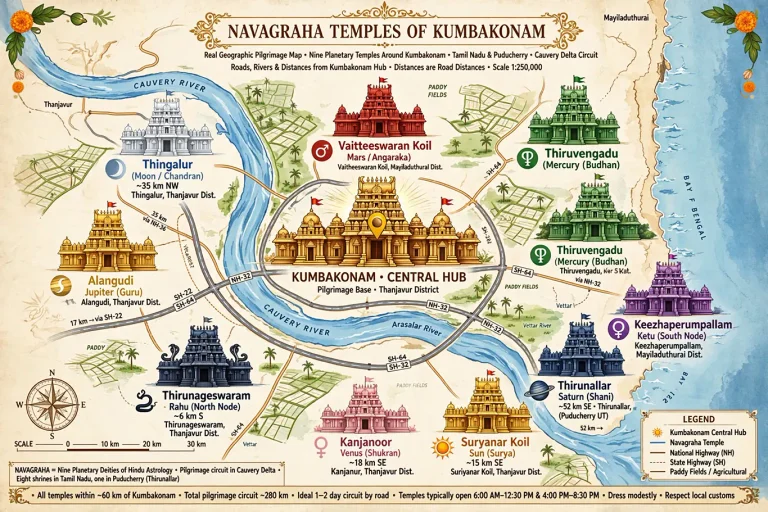
- Kumbakonam Navagraha Circuit: Thirukkarugavur forms an ideal transit stop while visiting the prominent Kumbakonam Navagraha Temples, particularly for families seeking planetary harmony alongside fertility blessings.
- Palaivananathar Temple (Papanasam): Situated only 6 km away, this ancient Paadal Petra Sthalam is famed for its monumental granary and the sacred presence of 108 Shivalingams.

Frequently Asked Questions (FAQs)
Can unmarried women or couples without immediate pregnancy plans visit the temple?
Yes. Sri Garbarakshambigai Amman is worshipped by unmarried individuals praying for the removal of marriage obstacles (Vivaha Prapthi), as well as general family harmony and physical well-being.
What should we do if we cannot visit the temple in person?
Devotees who live far away or are unable to travel due to medical bedrest can contact the official temple devasthanam administration directly. The temple office provides an authorized postal prasadham service, sending consecrated Ghee or Castor Oil via speed post to registered addresses within India.
Are there any dietary restrictions while consuming the Ghee Prasadham?
While undergoing the 48-day (Mandalam) ghee intake, tradition encourages both husband and wife to adhere to a clean, sattvic lifestyle. Abstinence from alcohol, tobacco, and non-vegetarian food during this devotional period is traditionally recommended to cultivate an auspicious, serene frame of mind.
How long does a general darshan take?
On regular weekdays, darshan across both the Shiva and Amman sanctums can be completed comfortably within 30 to 45 minutes. On auspicious Fridays or festival mornings, queues may extend from 1.5 to 3 hours. Special darshan tickets are available at the counter to expedite the wait.
What is the significance of the temple’s sacred tree (Sthala Vriksham)?
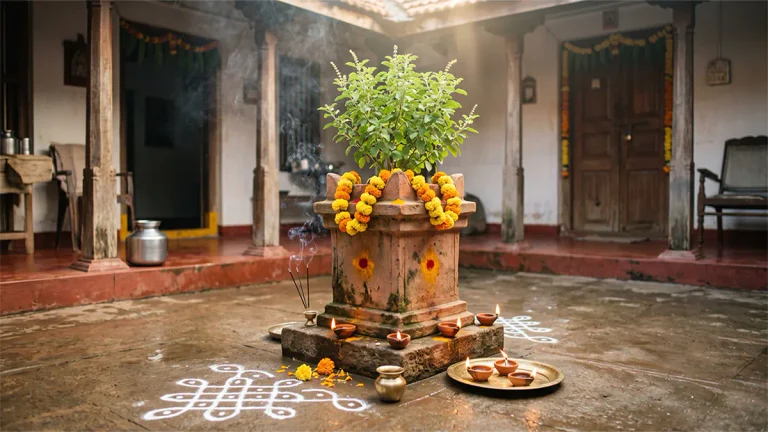
The sacred tree is the Mullai (wild jasmine). According to belief, circumambulating the Sthala Vriksham with pure devotion clears planetary doshas and brings peace to the mind.