Sri Kshetra Dharmasthala Temple: Miracles of Lord Manjunatha
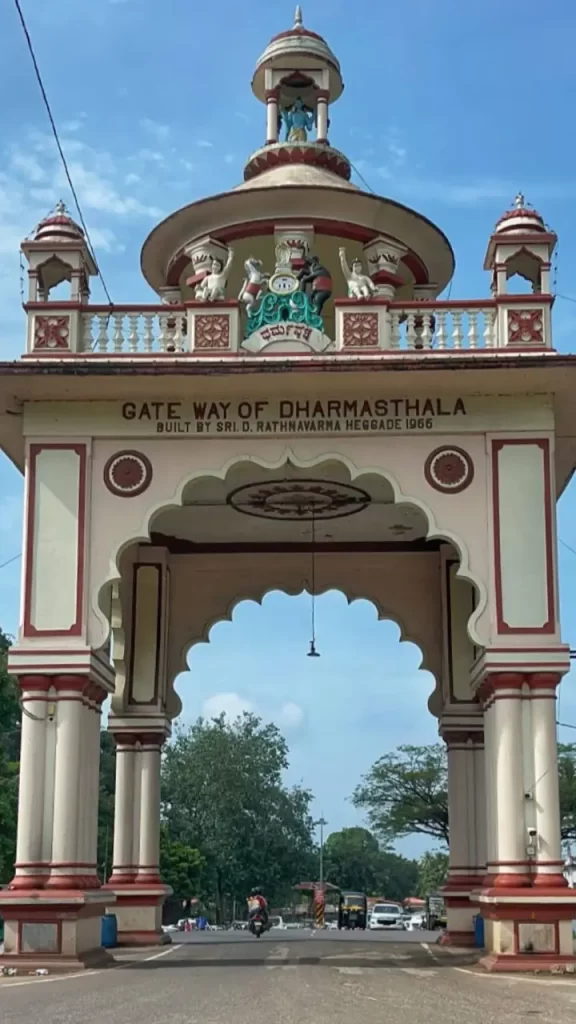
Sri Kshetra Dharmasthala Temple of Lord Manjunatha Swamy, a really remarkable pilgrimage centre. Hidden away in the peaceful Western Ghats hills, along the peaceful banks of the Netravathi River in the Belthangady Taluk of Dakshina Kannada District, this temple is more than a place of worship; it’s a living witness to religious tolerance and service to humanity.
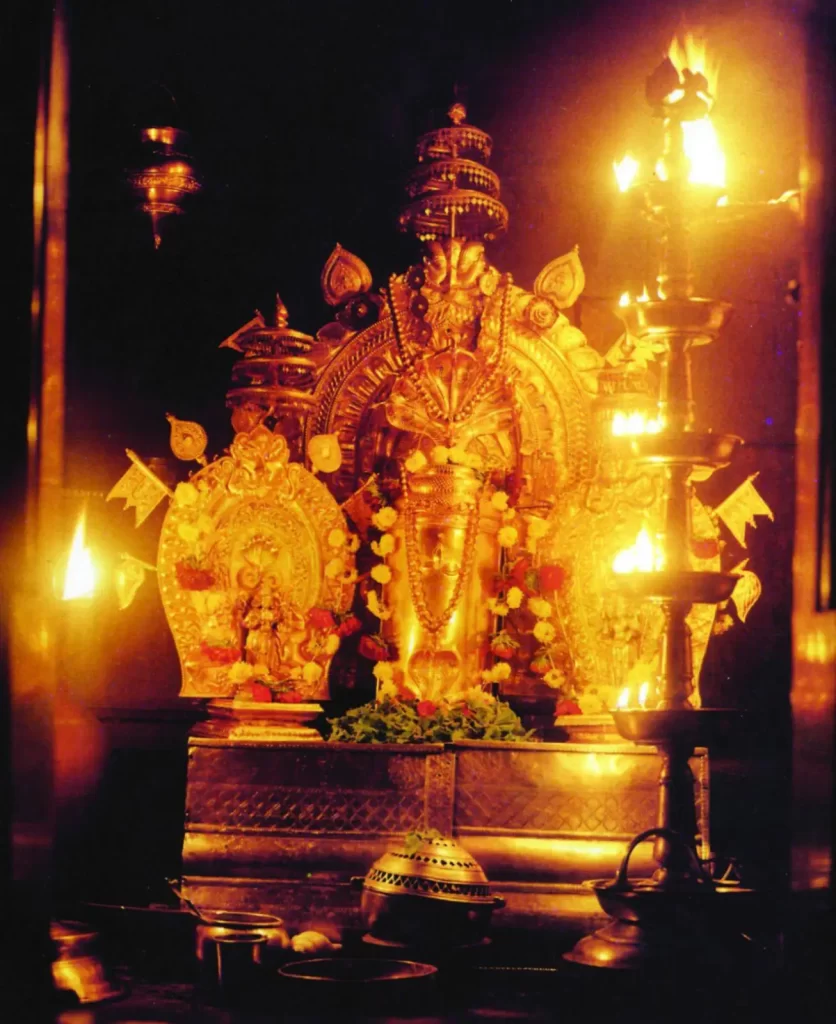
You see, Dharmasthala is not a typical temple town. It’s a town where antiquated traditions mix perfectly with contemporary acts of benevolence, where individuals from various segments of society come together with one purpose in mind – devotion. It’s a destination that touches your heart and leaves an everlasting imprint on your soul. Come, let us discover the magic of Dharmasthala temple.
The Abode of Righteousness
The very name ‘Dharmasthala’ speaks volumes. ‘Dharma’ refers to righteousness, duty, truth, and faith, whereas ‘Sthala’ refers to place. Therefore, Dharmasthala literally translates to ‘The Abode of Righteousness’. This deep meaning is interwoven into all aspects of the temple’s being and its governance. What lends this site to being so special is its singular ethos: a Hindu temple of Lord Shiva (Lord Manjunatha Swamy) run by a hereditary Jain family, the Heggades, with Vaishnavite Brahmin priests conducting the rituals. It is this extraordinary mixing of faiths that makes the Dharmasthala temple so very special as an icon of universal harmony.
The temple’s consecration of Lord Manjunatha Swamy, a representation of Lord Shiva, is at the core of its spiritual attraction. Pilgrims from all over travel to find blessings, comfort, and spiritual satisfaction. But aside from the spiritual, Dharmasthala is also famous for its remarkable social service activities, especially the “Annadanam” (free food) program to feed thousands of pilgrims a day, and the “Mass Marriages” program, where a worthy platform is given to couples from financially underprivileged backgrounds to sanctify their unions. It’s one place where service to mankind is regarded as service to God.
Read More>> Gangaikonda Cholapuram Temple
The Enduring Dharmasthala Temple History
Each stone at Sri Kshetra Dharmasthala Manjunatha Swamy Temple speaks of centuries gone by. The history of this holy site is as engrossing as it is motivational, dating back more than 800 years. It’s a story of divine intervention, unshakeable faith, and the commitment of a family who, for generations, has been the custodian of ‘Dharma’.
The tale starts in the 16th century, at the village of Kuduma (the original name of Dharmasthala). There was a devout Jain family consisting of Birmanna Pergade and his wife, Ammu Ballalthi, and their four sons. The family was famous for their hospitality and generosity, treating every guest and traveler with open arms.
One day, as the legend goes, the guardian angels of Dharma, called the Dharma Daivas – Kalarahu, Kalarkayi, Kumaraswamy, and Kanyakumari – came to the house of Pergade as humans, looking for a space where Dharma was truly practiced and could be spread further. Satisfied with the family’s authentic hospitality and righteous living, the Daivas made their true forms known in a dream to Pergade. They commanded him to leave his house, consecrating it to the worship of the Daivas, and to devote his lifetime to the spread of Dharma.
Birmanna Pergade, with unshakeable devotion, followed the divine commands at once. He relocated his family to a new house and started worshipping the Daivas in his native house, which was now the hallowed Nelyadi Beedu. According to the wishes of the Daivas, temples were constructed, and rituals were instituted.
Subsequently, the Daivas once again visited Pergade, ordering him to fix a Shiva Linga and worship Lord Manjunatha Swamy. To complete this task, Annappa Swamy, a chieftain as well as a devotee, was dispatched to Kadri, which was close to Mangaluru, to fetch a Shiva Linga. Therefore, the Dharmasthala temple in honor of Lord Manjunatha Swamy was constructed around this Shiva Linga.
Since then, the Pergade descendants, who are Jains, have remained the hereditary administrators of the temple, popularly referred to as the ‘Dharmadhikaris’ or ‘Heggades’. This special system of administration, in which a Jain family administers a Hindu temple, has been preserved over centuries, perpetuating the atmosphere of interfaith harmony that characterizes Dharmasthala. The present Dharmadhikari, Dr. Veerendra Heggade, is the 21st in this succession, perpetuating the noble traditions of his ancestors.
The Enchanting Legend of Dharmasthala Temple
The Dharmasthala temple legend is not merely a story; it’s a creation myth that accounts for the very nature of this holy site. It marries divine providence, human piety, and the founding of an extraordinary spiritual tradition in a dazzling narrative.
As explained, the narrative is about Birmanna Pergade and his wife, Ammu Ballalthi. They were plain, religious people with big hearts. They used to keep their house in Kuduma open to pilgrims and travelers alike, a benchmark of hospitality.
It is said that the four guardian spirits of Dharma – Kalarahu, Kalarkayi, Kumaraswamy, and Kanyakumari – were on the lookout for a location on Earth where ‘Dharma’ was practiced in its purest form. They came to Pergade’s residence in the guise of normal guests. They saw the selfless service of the couple, their tenderness, and their firm stickiness to righteous ideals. The Daivas were greatly impressed, and they concluded that this was the perfect spot to put down their presence and propagate Dharma.
That night, the Daivas appeared in Birmanna Pergade’s dream, revealing their divine forms and their purpose. They instructed him to consecrate his home for their worship and dedicate his life to the cause of Dharma. Overwhelmed by this divine vision, Pergade, without a moment’s hesitation, moved his family to another residence and transformed his ancestral home into a sanctuary for the Daivas. This became the Nelyadi Beedu, the heart of the sacred complex.
The Daivas next, so it is said, instructed Pergade to place a Shiva Linga, describing how the real nature of Dharma could be attained through the presence of Lord Shiva. To accomplish this divine instruction, Pergade asked assistance from Annappa Swamy, a devout devotee. Annappa Swamy, with tremendous speed and devotion, fetched a Shiva Linga from Kadri, within Mangaluru, overnight. This Shiva Linga was subsequently consecrated, and the temple for Lord Manjunatha Swamy was founded.
The myth points to the divine imprimatur behind the distinctive management of Dharmasthala temple. The Daivas themselves elected a Jain family, the Pergades (later called Heggades), to be its custodians for this Shiva temple. This says a lot about the unity of faith and the fact that ultimate Dharma is above sectarian considerations. The Heggade dynasty, for generations, has borne this sacred responsibility, seeing to it that the ideals of justice, charity, and interfaith coexistence are the pillars of Dharmasthala.
Read More>> Hidden Powers of Haridwar Mansa Devi Temple: #1 Wish Granted!
The Deeper Significance of Dharmasthala Temple
Sri Kshetra Dharmasthala Manjunatha Swamy Temple is significant on many levels – cultural, religious, and mythological. It’s not merely a temple; it’s a living hub that touches so many lives.
Cultural Significance of the Temple
The cultural fabric of Dharmasthala is rich and multicoloured, really true to India’s composite culture.
A Syncretic Model of Religious Co-Existence: The most arresting cultural feature is its singular interfaith management. A Hindu temple, one devoted to Lord Shiva, run by a Jain family (the Heggades) with Vaishnavite Brahmin priests performing the rituals – this is an eloquent expression of religious tolerance and co-existence. It demonstrates the ability of various religions not only to co-exist but to also work together for a greater spiritual and public good. This system is a rare and precious cultural phenomenon.
Preservation of Arts and Heritage: The Heggade family, especially Dr. Veerendra Heggade, has been an ardent patron of art and culture. They have gone out of their way to revive and restore such traditional arts as Yakshagana, a colorful folk theatre unique to Karnataka. There is even a Yakshagana school within walking distance of the temple. The Manjusha Museum, filled with a vast repository of ancient artifacts, sculptures, paintings, and even antique cars, is one more example of their dedication to cultural preservation.
Community Service and Social Initiatives: Dharmasthala has initiated and maintained a range of social welfare schemes that have set cultural standards. The Annadanam (mass feeding) daily reflects the Indian spirit of hospitality and unselfish service. The Mass Marriages scheme, started to alleviate the economic cost of weddings and eschew the dowry system, has evolved into a cultural movement, offering a respectable beginning to thousands of couples. These efforts show a real-life application of ‘Dharma’ in the welfare of the society.
Center for Interfaith Dialogue: The Sarva Dharma Sammelana (multi-religious conference) held every year is a unique cultural event in which religious leaders of different faiths meet to discuss and foster interfaith understanding and harmony. This promotes the culture of mutual respect and dialogue, which is vital in the current world.
Spiritual Significance of the Temple
Dharmasthala temple holds profound spiritual significance for millions of devotees, making it an abode where the devotees connect with the divine.
Home of Lord Manjunatha Swamy: The main religious attraction is Lord Manjunatha Swamy, an incarnation of Lord Shiva. The faithful are of the opinion that obtaining His blessings in this sacred Kshetra can accrue incredible spiritual credit, cure agony, and fulfill desires. The Shiva Linga itself is said to be extremely powerful.
Sacred Presence of Dharma Daivas: The four Dharma Daivas of Kalarahu, Kalarkayi, Kumaraswamy, and Kanyakumari form an essential part of the spiritual sanctity at Dharmasthala. The guardian spirits are worshipped for their action of creating and safeguarding Dharma in this world. Pilgrims usually visit their shrines and seek their protection and blessings.
Power of Faith and Charity: The unshakeable faith shown by the Heggade family and the millions of devotees who participate in the temple’s charitable activities produces a dynamic spiritual environment. Selfless service, especially through Annadanam, is viewed as a superior form of spiritual practice (seva). Numerous visitors are blessed with feelings of peace and spiritual rejuvenation just from being in this environment of giving and devotion.
Pilgrimage Centre: Dharmasthala is one of the greatest pilgrimage sites in Karnataka and South India. It’s said that a trip to this place cleanses one’s mind, blesses with good fortune, and opens doors to spiritual development. The nearby Netravathi River is said to be sacred as well, and most devotees take a sacred dip before visiting the temple.
Mythological Significance of the Temple
Although Dharmasthala is not as regularly named in the prominent Hindu Puranas as certain ancient temples, its mythological significance lies in its origin myth and its special association with the principle of Dharma.
The Quest of the Dharma Daivas: The primary myth is about the quest of the Dharma Daivas in search of a land where righteousness existed. Their selection of Kuduma (Dharmasthala) and their divine inspiration to Birmanna Pergade forms the mythological foundation for the temple’s sanctity. It suggests that this location was chosen by God as a sign of Dharma.
Divine Blessing for Interfaith Harmony: The mythological episode of the Daivas commanding a Jain householder to build a Shiva temple conveys a deep sense of universalism. It implies that divine blessings are not limited to one specific religion or lineage but are reserved for those who practice Dharma, regardless of their religious background. This mythological basis offers a divine reason behind the distinctive pluralism seen at Dharmasthala.
Annappa Swamy’s Faithfulness: The legendary speed at which Annappa Swamy retrieved the Shiva Linga from Kadri is also within local mythology, indicating the high faith and spiritual authority involved in the temple’s founding.
Even though they are infrequent in the form of straight quotes from very old, commonly known Puranas that mention the Dharmasthala temple by name because of its local growth and distinct origin, the philosophy it represents is centered on Hindu philosophy. The term ‘Dharma’ is a fundamental aspect of Hindu scriptures. For example, the Mahabharata and Ramayana are epic poems based on the victory of Dharma.
The Bhagavad Gita, the central book of the Mahabharata, reiterates one’s Dharma or righteous duty always. The very nature of Dharmasthala – “Sarva Dharma Sama Bhava” (equal respect to all faiths) and “Annadanam” (food donation) – follows in the traditional tenets of many Hindu scriptures, the propagation of universal brotherhood, selfless service, and compassion. Though a particular verse may not specify “Dharmasthala,” the essence of its being is in complete harmony with scriptural focus on righteous living and welfare of all. The local folklore and oral traditions become the temple’s own puranic stories, generation after generation, establishing its mythological importance in the eyes of its followers.
Festivals and Special Days at Dharmasthala Temple
Dharmasthala temple is a center of energetic activity during the entire year, with various festivals and special occasions attracting huge crowds. Every celebration has distinctive importance, which lies firmly in tradition and faith. Major Festivals:
Laksha Deepotsava (Festival of Lights): This is surely the grandest and most spectacular festival that is celebrated at Sri Kshetra Dharmasthala Manjunatha Swamy Temple. Organized every year during the sacred month of Kartika (typically November-December), “Laksha Deepotsava” translates to “festival of one hundred thousand lamps.” For five days, the whole temple town, ranging from the temple courtyards and walkways to the nearby hills, is lit up with an endless number of oil lamps, forming an awe-inspiring and otherworldly sight. Apart from the spectacles of sight, the festival comprises cultural events, literary conferences (Sahitya Sammelana), and the Sarva Dharma Sammelana (Interfaith Meet), wherein religious leaders of all religions come together to enhance understanding and concord.
Annual Rathotsava (Car Festival): The Rathotsava, another important event, is usually conducted in February (Magha Masa). On this day, the ceremonial idol of Lord Manjunatha Swamy, the Utsava Murthy, is decorated and seated on a richly decorated wooden chariot. The devotees, with great enthusiasm, then pull this grand chariot through temple roads. It is a picture-perfect and spiritually uplifting procession, representing the Lord’s presence among His people.
Mahashivaratri: Since Dharmasthala temple is a temple devoted to Lord Shiva, Mahashivaratri is devoutly and enthusiastically celebrated. There are special poojas, abhishekams, and late night bhajans. Fasts are observed by the devotees and prayers are offered to Lord Shiva, as they believe it is a day auspicious for spiritual emancipation.
Navaratri: The nine-day festival in honor of Goddess Durga is observed with special poojas at the Goddess Ammanavaru temple inside the temple complex. Cultural events, music, folk dances, and harikathas (spiritual-themed storytelling) are conducted, creating the festive mood.
Ganesha Chaturthi: The festival of worship of Lord Ganesha, the remover of obstacles, is celebrated with special poojas at the temple. Ganesha idols are worshipped and then immersed in the temple tank.
Chandramana Ugadi: This is the New Year celebration based on the Chandramana (lunar) calendar, especially in Karnataka. It is a time for a new start, and special prayers are made at the temple.
Annual Jathre: A nine-day fair typically held in April, consisting of special poojas for the gramadevatha (village deity) and Dharma Nemothsava for the Dharma Daivas and Shri Annappa Swamy. These are fairs at a local level that provide evidence of the rich cultural texture of the area.
Read More>> Chelamattom Sreekrishna Swami Temple: Powerful Temple for Ancestors
Special Poojas and Rituals:
Dharmasthala temple provides numerous poojas and sevas (services) for the devotees to join in and attain blessings.
Abhisheka and Archana: Both are daily worship performed for the deity. Abhisheka is ritual bathing of the idol using holy liquids such as milk, curds, ghee, honey, and tender coconut water, usually coupled with chanting mantras. Archana is offering flowers and chanting the deities’ name. These are offered many times a day.
Thulabhara Seva: This is a special and important offering at Dharmasthala. In this ritual, a devotee donates a weight of commodities equivalent to their own weight to the temple. These commodities may be rice, sugar, fruits, coins, or even particular grains. It’s a symbolic act of surrender and thanksgiving, where devotees offer a portion of themselves or their income to the divine. The temple arranges for this seva at certain times of the day.
Anna Prasadam: Though not a pooja per se, the Annadanam (free food service) conducted every day is a sacred ritual of unselfish service. Wholesome meals are served to thousands of pilgrims throughout the day, reflecting the temple’s dedication to sustaining body and soul.
Crowded Days and Best Time to Visit:
Dharmasthala temple witnesses a consistent flow of tourists throughout the year, but certain months are a lot more packed than others.
Peak Seasons: November to February is usually the prime time to visit because of comfortable climate conditions. But that also is the busiest time.
- Laksha Deepotsava (November-December) witnesses huge throngs of pilgrims.
- Mahashivaratri (February-March) is another off-season period.
- Weekends, holidays, and school breaks are always busier.
- Amavasya (New Moon) and Pournami (Full Moon) days also draw more pilgrims.
Moderately Crowded: The periods slightly ahead of and behind the peak winter season, i.e., October and March, can be decent choices if you want relatively fewer people but pleasant weather.
Least Crowded (but difficult weather): The summer season (April-May) can be hot, and the monsoon season (June-September) is rainy, not favorable for sightseeing. These seasons tend to have relatively fewer tourists.
Tips for Visiting on Peak Days:
In case you decide to visit at peak times, it’s strongly advisable to:
- Reserve your lodging well in advance.
- Go very early in the morning for darshan (sighting of the deity) to steer clear of long waiting lines.
- Prepare to face crowds and longer waits for poojas and prasadam.
- Use online services for booking seva if offered, to make your experience easier.
The atmosphere on busy days, while hectic, is frequently charged with reverence and mutual spiritual fervor, creating a special experience of its own.
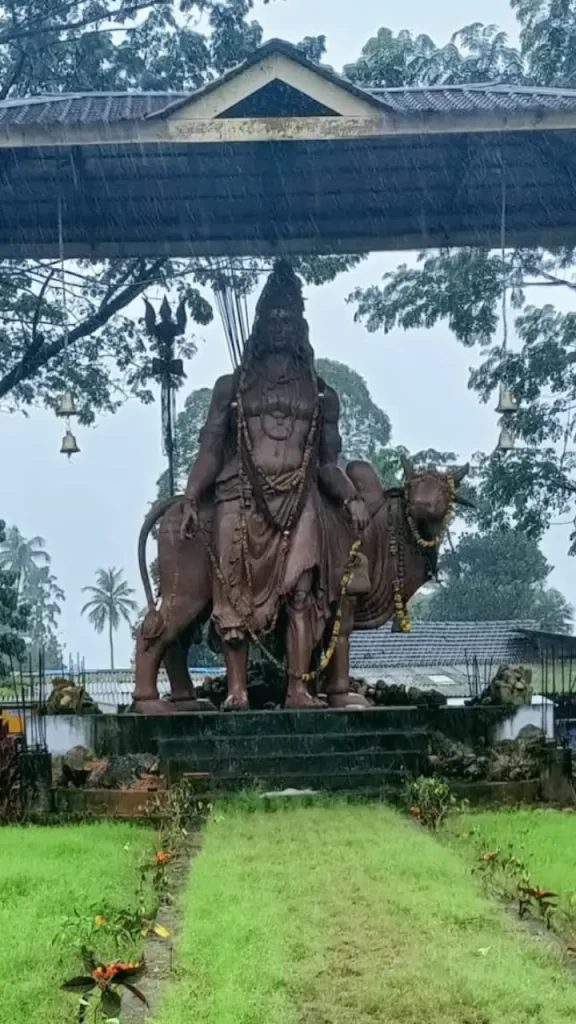
Special Architectural Features and Sculptures
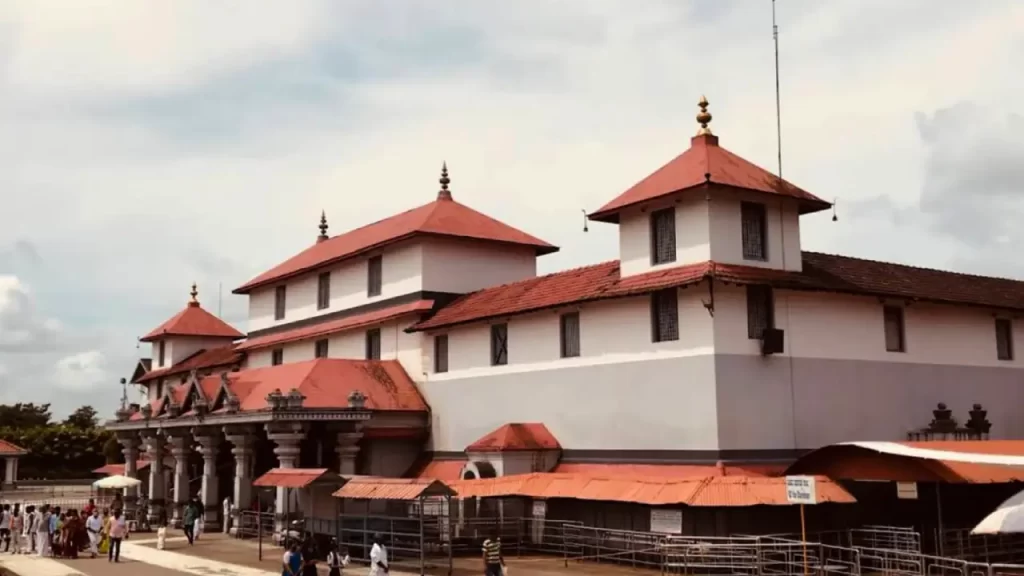
The Sri Kshetra Dharmasthala Manjunatha Swamy Temple architecture offers an interesting combination of traditional South Indian temple architectures, largely following the Kerala temple style with some local influences. Although the present main temple structure itself appears quite modernized because of repair works, its foundation and the finer details inside and outside the complex reflect a vibrant artistic tradition.
Architectural Style:
Kerala Influence: Contrary to most of Karnataka’s grand temples that have been following the Dravidian method with lofty gopurams (gateway towers), the Dharmasthala temple uses a less elaborate, yet refined, architectural design that takes after Kerala temples. This method usually characterizes:
- Square Plan: The sanctum sanctorum and the central temple building are normally constructed on a square plan.
- Pyramidal Roof: The most striking feature is the multi-tiered pyramidal roof which is steep. This is usually built using wood and overlaid with gold-plated copper sheets. It is a practical form of roof for the heavy monsoon rains of the Western Ghats as it shelters the wooden interior structure.
- Simplicity and Functionality: There is a natural simplicity within the design, emphasizing functionality and sacred space, rather than external intricate embellishments found in some of the other temple forms.
Materials Used:
The foundation structure of the temple is generally constructed with long-lasting materials such as granite and laterite, which form a solid foundation.
Heavy use of wood, stone, and metal can be seen within the complex, especially inside the innermost sanctum and peripheral buildings. Wood is also a malleable material that supports intricate carvings.
Carvings and Artistic Features:
Although the exterior simplicity may hit you first, the real artistic value of Dharmasthala temple lies in its beautiful carvings, especially the wood and stone ones.
Delicate Woodwork: Delicately carved wooden pieces, particularly in the doorway, ceiling, and interior panels of the temple. They usually feature:
- Mythological Scenes: Scenes from Hindu epics and Puranas, featuring gods, goddesses, heavenly beings, and heroic exploits.
- Floral and Geometric Motifs: Dainty and intricate floral patterns, vines, and complex geometric motifs that cover different surfaces.
- Divine Forms: Statues of gods and heavenly beings that contribute to the spiritual atmosphere.
Stone Sculpture: Stone carvings, although not as dominant as the wooden ones in the central temple, still exist and can be observed quite often in the lower level elements, pillars, and smaller temples within the complex.
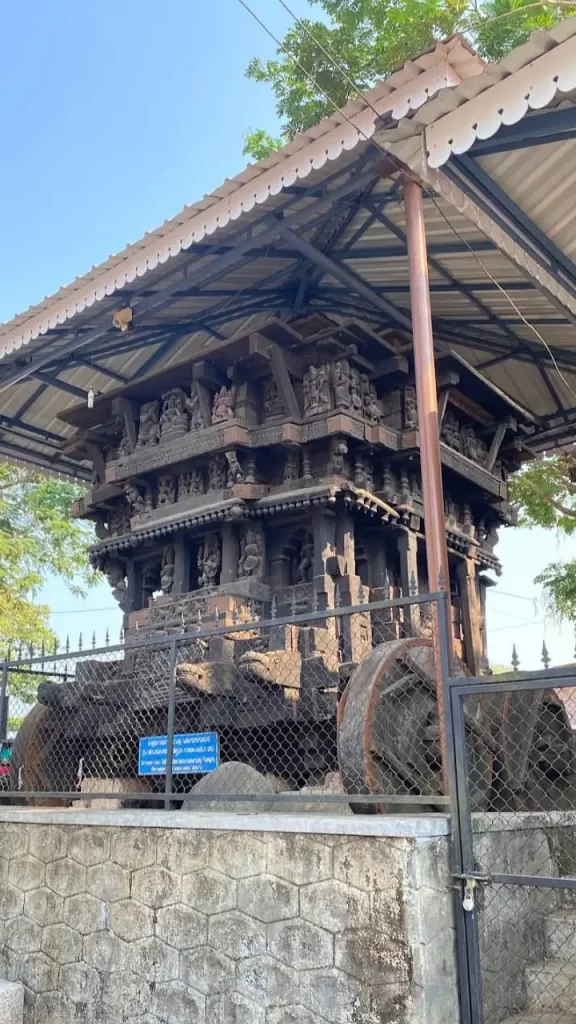
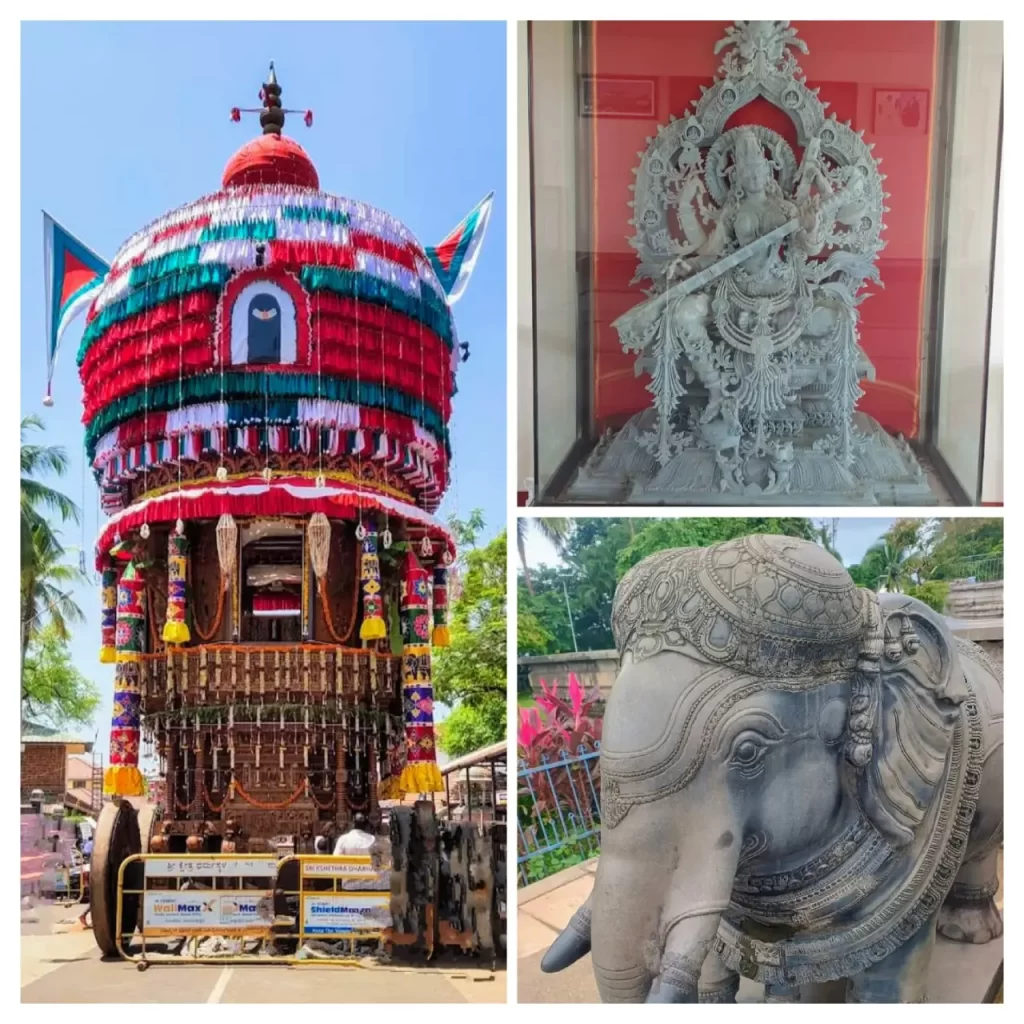
Temple Chariots (Rathas): One of the finest exhibitions of craftsmanship at Dharmasthala is the array of old wooden temple chariots. These grand rathas, frequently recovered and restored carefully from other temples in the area by the Heggade family, are pieces of art themselves. They are usually exhibited outside the central temple complex, under canopies, and include:
- Narrative Panels: There are innumerable wooden panels covering the chariots with colorful narratives from Hindu mythology, especially those from the lives of Shiva, Vishnu, and other gods.
- Figurative Sculptures: Figurative sculptures of several divine and semi-divine personalities, animals, and mythical beings are carefully carved on the wood, which reflects the artistry of age-old craftsmen.
- Symbolic Motifs: Each carving, whether a lotus or lion, has symbolic significance, layering the chariot with spiritual meaning.
Bronze and Metal Work: Though less wide-reaching than wood and stone, you may see fine work in brass or other metals, especially on ornamental details, lamps, and possibly some small idols or shrine decor.
Recent Renovations: It should be pointed out that the temple has been under well-planned renovations in recent years. The renovations are intended to maintain the architectural integrity and safeguard the ancient aspects from weather conditions, while keeping the structures strong for the vast number of devotees. Special care is taken to restore the wood carvings and implement protective steps without diminishing the original look.
The architectural design and detailed woodwork at Dharmasthala temple reflect the state’s rich artistic heritage and the efforts to retain it. They encourage pilgrims not only to pray but also to admire the deep craftsmanship and legends carved in wood and stone.
Read More>> Shri Bettada Byraveshwara Temple
Myths and Beliefs Surrounding Dharmasthala Temple
Similar to most ancient and hallowed spiritual hubs in India, Sri Kshetra Dharmasthala Manjunatha Swamy Temple is filled with an interesting tapestry of myths and powerful beliefs that are an inextricable part of its identity and attract millions of devotees. These stories that have been passed down generations add to the temple’s mystique and spiritual potency.
Major Myths and Beliefs:
The Divine Appearance of Dharma Daivas: The fundamental myth, as we’ve described, is that the four Dharma Daivas (Kalarahu, Kalarkayi, Kumaraswamy, and Kanyakumari) selected this very location, formerly known as Kuduma, due to the outstanding devotion to Dharma of the Pergade family. This faith lies at the heart of the whole spiritual tradition of Dharmasthala, implying that the site itself is divinely consecrated and guarded by these powerful beings. It is felt by the devotees that these Daivas still watch and guard the Kshetra.
Lord Manjunatha Swamy’s Presence: The faith is strong that Lord Shiva, in the avatar of Manjunatha Swamy, came here as per the command of the Dharma Daivas. This presence is felt to be extremely powerful, and genuine prayers to Lord Manjunatha are said to be granted, and peace, prosperity, and freedom from suffering are believed to ensue.
The Divine Mandate of the Heggade: The inherited trusteeship of the Heggade clan (Jains) of a Hindu temple is not merely a piece of history but also an ingrained belief. It is viewed as a divine mandate bestowed upon them by the Dharma Daivas, emphasizing the concept that spiritual stewardship is rooted in righteousness and universal principles, not sectarian affiliation. Devotees implicitly trust the Heggade family’s administration, believing their decisions are guided by divine will for the welfare of all.
Power of Annadanam and Universal Charity: Here, the firm belief is that feeding the hungry is highest worship and charity. Not only is the Annadanam at Dharmasthala a service, but it is also regarded as a religious ritual, and being involved in it, either as a receiver of food or as a donor, is believed to gain great spiritual merit. This faith only adds to the temple’s status as a center for unselfish giving.
Miraculous Cures and Problem Solution: Several devotees visit the Dharmasthala temple with certain problems, diseases, or desires. There exists a common belief in the miracle power of Lord Manjunatha Swamy and the Dharma Daivas to cure diseases, settle disputes, and fulfill desires. Folks narrate countless instances of prayers being fulfilled, making others more confident in their faith.
Truth and Justice (Dharma Vicchara): Traditionally, Dharmasthala was also famous as a dispensary of justice. During ancient days, individuals would approach the Heggade to settle disputes, and their decision was final, on the lines of Dharma principles. Though the practice is not that formalized now, the faith in the temple as a source of truth and justice remains strong. It is believed by people that one cannot speak an untruth in the presence of the gods here without suffering repercussions.
Guardianship by Annappa Swamy: Annappa Swamy is worshiped as a strong protector of the Kshetra, who brought the Shiva Linga. Devotees are of the opinion that asking for his blessings ensures protection from injury and a hassle-free pilgrimage. The temple of Annappa Swamy is frequented by many.
Mass Weddings and Auspicious Start: People firmly believe that marriages conducted at Dharmasthala temple are particularly blessed and result in a blissful married life. This is the major reason for the success of the mass wedding scheme, as couples aspire to seek the blessings of Lord Manjunatha for their new venture.
Modern Debates and Accusations:
One should keep in mind that over the recent past, like any other prominent institution, Dharmasthala temple has had some allegations and controversies as well. Reports and investigations have been made regarding some claims of historical mass burial and unsolved cases, particularly the Sowjanya rape and murder case. These controversies have created huge public interest and concern. It’s important to realize that these are social and legal matters which are being investigated presently by agencies such as the Special Investigation Team (SIT).
Although such debates are sensitive and ongoing, they are distinct from the deeply spiritual faith and devotional practices of the millions of pilgrims who travel to Dharmasthala each year. The devotion of worshipers to the sanctity and authority of the Dharmasthala temple and its gods is unshakeable, even in the face of outside controversy. The religious and philanthropic activities of the temple remain its priority, which are at the heart of its existence for the overwhelming majority of its patrons.
Temple Timings and Darshan Information
To organize your trip to Sri Kshetra Dharmasthala Manjunatha Swamy Temple in an effective manner, being aware of the timings of the temple is important. These timings enable you to witness the darshan (sightseeing of the deity), attend poojas, and avail yourself of the Annadanam (free meal service).
General Temple Timings
The Dharmasthala temple usually follows with fixed timings for darshan, poojas, and prasadam. Kindly remember that sometimes the timings tend to be a bit different during any major festivals or special occasions, so it is always best to visit the official temple web page or ask locally upon reaching for the latest schedule.
Morning Darshan, Pooja, and Prasadam: 6:30 AM to 2:00 PM
The devotees can have darshan of Lord Manjunatha Swamy and other deities during this time. Poojas are conducted, and Anna Prasadam (free food) is given.
Abhisheka and Archana Timings: 8:30 AM to 11:00 AM
These particular rituals are done within this window. If you want to see or attend an Abhisheka or Archana, this is the time to be present at the temple.
Thulabhara Seva: 7:30 AM and 12:30 PM
If you intend to perform the unique Thulabhara Seva (offering commodities equal to your body weight), these are the designated times. It’s advisable to inform the temple authorities in advance or arrive early to make arrangements.
Evening Darshan and Pooja: 7:00 PM to 8:30 PM
The temple reopens for evening darshan and poojas. This is a serene time to visit, often with fewer crowds than the morning.
Annadanam (Free Food Service):
- Morning: Generally served until 1:30 PM.
- Evening: Commences around 7:00 PM.
The temple is famous for its grand-scale Annadanam. Thousands of visitors are provided hot, nourishing food in the huge dining halls. This is a positively astounding feature of the Dharmasthala experience.
Key Things to Note for Your Visit:
- Dress Code: While there isn’t an extremely strict dress code enforced for all visitors, it is respectful to dress modestly when entering the temple. For men, it is generally preferred to remove shirts and vests before entering the inner sanctum, similar to many South Indian temples. Women are requested to dress decently.
- Photography: Photography is not permitted within the temple complex, particularly the main sanctum. Please abide by these regulations to preserve the sanctity of the site.
- Footwear: You will have to take off your shoes to enter the main temple complex. There are special facilities for storing footwear.
- Queue Management: During peak days, particularly weekends and festive seasons, expect long queues for darshan. The temple administration has done a great job in managing crowds, but one needs to exercise a lot of patience.
- Accessibility: The temple complex is largely accessible, though it is advisable for people with mobility issues to inquire about special arrangements or help at the time of entry.
By reminding yourself of these timings and standards, you can have a trouble-free and spiritually rewarding trip to Dharmasthala temple.
Read More>> Kanchi Kamakshi Temple: One of Powerful 18 Shakti Peethas
Sites to See Near Dharmasthala Temple
Though the Sri Kshetra Dharmasthala Manjunatha Swamy Temple is the main attraction, the area around Dharmasthala has natural beauty and other important spiritual locations that you can visit to make your pilgrimage all the more fulfilling. Some important Hindu sites to see near Dharmasthala are:
Annappa Betta (Annappa Swamy Temple)
- Importance: This little hill by the name of Badinede Betta is quite near the central Dharmasthala temple. It contains a shrine for Annappa Swamy, who, according to myth, brought Shiva Linga from Kadri for the construction of the Manjunatha Swamy Temple. The four Dharma Daivas are also said to be living here.
- Experience: Pilgrims regularly come to this place to say prayers to Annappa Swamy for his safety and blessings. Climbing is not very difficult, and it gives a nice view of the locality.
Chandranatha Swamy Basadi
- Importance: Although Dharmasthala temple is a Hindu temple, the Heggade family members are Jains, and Jain influence is prevalent in the area. The Chandranatha Swamy Basadi is an exquisite Jain temple that worshipers a Jain Tirthankara, Lord Chandranatha. It is a significant hub for Jains and is another reflection of the religious harmony of Dharmasthala.
- Experience: The Basadi (Jain temple) is constructed of white marble and provides a peaceful environment to meditate. It’s a must-see to realize the distinctive blending of religions in Dharmasthala.
Bahubali Statue (Gomateshwara Statue)
- Significance: On Rathnagiri Hill close to the Dharmasthala temple, stands this grand monolithic statue of Lord Bahubali, measuring 39 feet in height. Bahubali, a highly revered Jain saint, represents non-violence, sacrifice, and world brotherhood. It is one of Karnataka’s five monolithic Bahubali statues.
- Experience: The statue is a wonder of ancient sculpture and provides a bird’s eye view of the landscape of Dharmasthala. It’s a spiritually elevating experience for Jains and a stunning sight for all visitors.
- Distance: About 60-70 km from Dharmasthala.
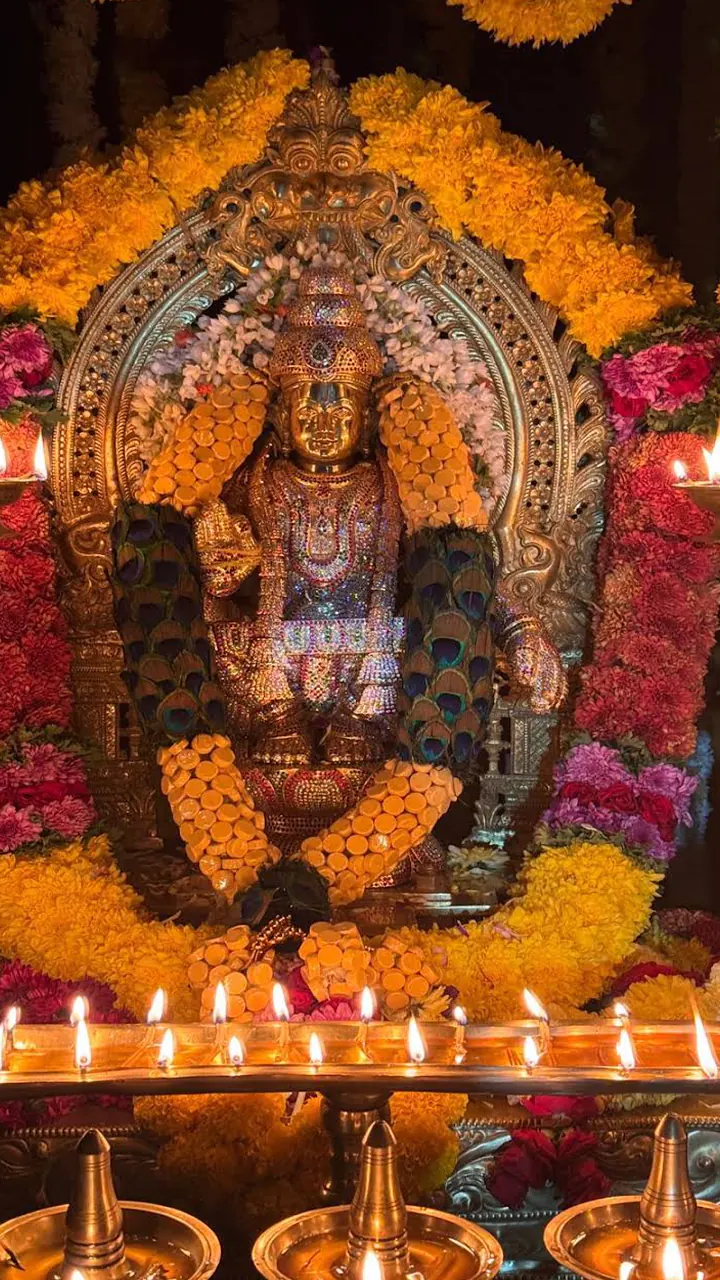
- Significance: One of the most popular pilgrimage sites in Karnataka, it is consecrated to Lord Subrahmanya (Kartikeya), serpentine deity. It is especially famous for Sarpa Dosha Nivarana poojas (ceremonies to appease serpent gods and eliminate evil influences).
- Experience: A powerful and deeply spiritual temple, often visited by those seeking relief from various afflictions and for progeny blessings. The temple is nestled amidst the picturesque Western Ghats.
- Distance: Approximately 100 km from Dharmasthala.
- Meaning: A world-famous Hindu temple dedicated to Lord Krishna, founded by the great saint Sri Madhvacharya. Udupi is a great hub for Madhwa philosophy and is also famous for its peculiar ‘Kanakana Kindi’ (a narrow window through which Lord Krishna is worshipped).
- Experience: A vibrant and lively temple town. The darshan of Lord Krishna here is a truly captivating experience. You can also explore the various Ashta Mathas (monasteries) around the main temple.
Kateel Sri Durga Parameshwari Temple
- Distance: Around 45-50 km from Dharmasthala.
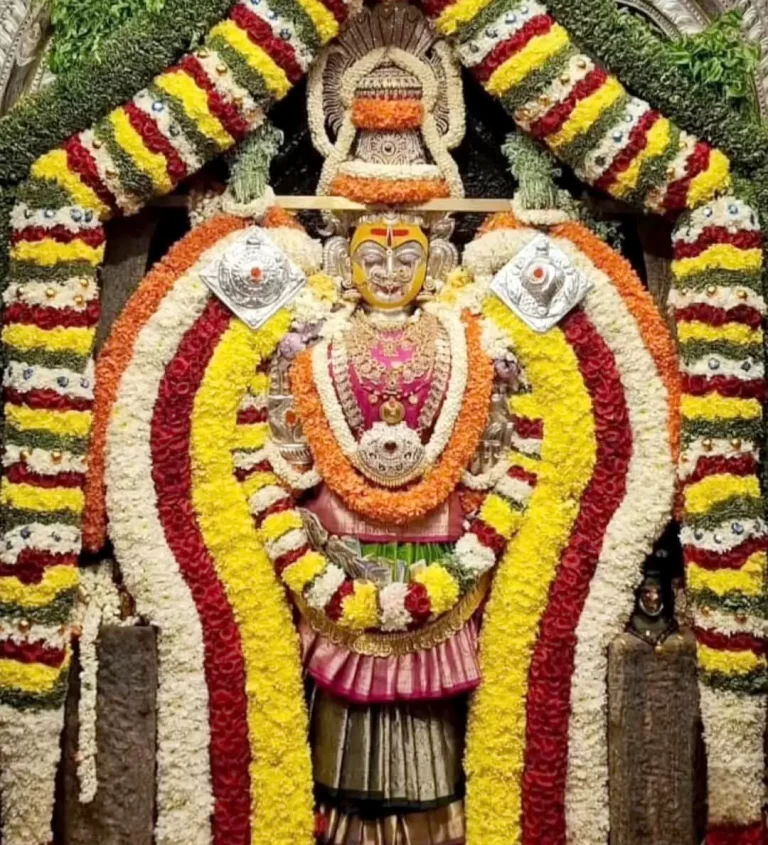
- Importance: It is an ancient temple and is devoted to Goddess Durga Parameshwari, located in the middle of a small island of the Netravathi River. It is a very powerful Shakthi Peetha and a very important deity in the coastal Karnataka area.
- Experience: The temple site is special and scenic. Pilgrims come to the temple seeking the Goddess’s favor for protection and granting of wishes.
The above attractions in close proximity provide a full pilgrimage circuit, where you can visit various aspects of Hinduism and Jainism, and experience the rich spiritual diversity of Karnataka.

Accommodation Options Near Dharmasthala Temple
Since Sri Kshetra Dharmasthala Manjunatha Swamy Temple is so very popular, pilgrims and tourists have plenty of accommodation facilities to choose from. They vary from budget guest houses managed by the temple authorities to private hotels as well as homestays, depending on the comfort level and amenities provided.
Temple-Managed Accommodation:
The Dharmasthala temple management (Shri Kshetra Dharmasthala Rural Development Project – SKDRDP) offers a large number of guest houses and lodges, whose main purpose is to offer economical and convenient accommodations for pilgrims.
Advantages:
- Proximity: Most of these lodges are extremely near the temple, at times even within walking distance.
- Affordability: They are typically the most budget-friendly options.
- Basic Amenities: They offer clean, basic rooms with essential facilities like beds, fans, and attached bathrooms. Some might offer AC rooms as well.
- Security: Being managed by the temple, they are generally considered safe and reliable.
Booking: It is strongly advised that these accommodations be booked ahead of time, particularly if you are planning to go for weekends, holidays, or festival times, since they get filled up extremely fast because of their popularity and reasonable prices. The official temple website or online booking sites may have facilities.
Private Hotels and Lodges:
Apart from the temple-run establishments, Dharmasthala also boasts an increasing number of private hotels and lodges, which provide various options depending on comfort and services.
Budget to Mid-Range Hotels:
- There are a number of options like Pragathi Residency, Janardhana Residency, Supreme Lodge, Hotel Rays Inn, and so on.
- These typically offer rooms with AC or non-AC options, sometimes with televisions and basic room service. They are a good balance between comfort and cost.
Slightly Higher-End/Comfort Options:
Facilities such as Aananda Wellness and Resorts (although a bit further away from the immediate temple vicinity), OCEAN PEARL UJJIRE, and Adithya View may have more services such as improved eating facilities, possibly a slightly higher-class environment, and better service.
Homestays
For a more local and personal stay, there are some homestays available around and in Dharmasthala, like Maison Parnakuti Adigas Homestay or A.S. Mountain Homestay. These can provide a quieter accommodation and often local food.
Things to Consider When Choosing Accommodation:
- Location: Decide whether you prefer to be within walking distance of the temple or something a bit farther away for tranquility.
- Budget: Plan your budget range, as options range widely in price.
Amenities: Put the amenities you require (AC, hot water, TV, in-house dining, parking) in order of priority. - Booking in Advance: This cannot be emphasized enough, particularly for the peak months. Online travel agents (OTAs) such as MakeMyTrip, Holidify, or hotels directly are good options for booking.
- Reviews: Look for recent reviews on travel websites to have an idea of the quality and service being provided by various establishments.
- Temple Guest Houses: Always look to the temple’s own guest houses first and check availability and reservation procedures since they are usually the most convenient and cost-effective for pilgrims.
Regardless of whether you want a basic, devout accommodation or something more luxurious, Dharmasthala has a variety of options to make your visit as enjoyable as can be.
Read More>> Kalluthipara Temple: Lord Krishna Divine Footprint in Stone!
How to Reach Sri Kshetra Dharmasthala Manjunatha Swamy Temple
Reaching Sri Kshetra Dharmasthala Manjunatha Swamy Temple is quite easy, as it’s a well-connected pilgrimage town in Karnataka. Below is an overview of how you can travel there by different means of transport:
By Road:
Road travel is the most widely used and easy means of reaching Dharmasthala, as it’s well connected by roads.
From Major Cities of Karnataka:
- From Bangalore (Bengaluru): Dharmasthala is about 300-320 km from Bangalore. You may travel by NH 75 (through Nelamangala, Kunigal, Hassan, Sakaleshpura). It takes about 6-7 hours by bus or car.
- From Mangalore (Mangaluru): Dharmasthala is roughly 75 km east of Mangalore, which is a big city and port. This is a scenic and comparatively short drive of around 1.5-2 hours.
- From Mysore: Around 250 km, and approximately 5-6 hours.
- From Udupi: Approximately 100 km, 2.5-3 hours.
Bus Services:
- Karnataka State Road Transport Corporation (KSRTC) has several buses, direct and express, to Dharmasthala from large cities and towns in Karnataka (Bangalore, Mangalore, Mysore, Udupi, Hubli, etc.) and neighboring states.
- Several private bus companies also operate services to Dharmasthala. You can refer to websites such as RedBus for booking.
Private Cabs/Taxis: Booking a private taxi or cab is a convenient alternative, particularly if traveling in family or wanting freedom. There is provision for stopping on the route.
By Rail:
Although Dharmasthala does not have a railway station, the closest major railway stations are well connected.
- Mangalore Railway Station (MAQ/MLC): This is the nearest major railway junction, approximately 74 km away. Mangalore is well covered by trains to many other parts of India, including Bangalore, Chennai, Mumbai, and Hyderabad. You can easily get a taxi or board a bus to Dharmasthala from Mangalore.
- Kabaka Puttur Railway Station (KBPR): A small station, about 45 km from Dharmasthala, with poor connectivity.
- Subrahmanya Road Railway Station (SBHR): About 60 km, and the station is used mainly by pilgrims heading to Kukke Subrahmanya and can be considered in case of travel from that direction.
By Air:
The closest airport to Dharmasthala temple is Mangalore International Airport (IXE).
- Mangalore International Airport (IXE): Approximately 65 km from Dharmasthala. This airport is well connected with major Indian cities such as Bangalore, Mumbai, Chennai, Delhi, Hyderabad, and a few international cities in the Middle East.
- From the Airport: After reaching Mangalore, it is very easy to hire a pre-paid taxi or travel by local bus to Dharmasthala.
Getting Around Dharmasthala
Once you are there in Dharmasthala, the principal temple and related sites such as the Bahubali Statue, Manjusha Museum, and Annappa Betta are not very far from one another. You can walk to them easily, or hire local auto-rickshaws for ease of commute.
Great Tip: During peak periods (weekends, holidays, festivals), transport and lodging may be in demand. It is always wise to reserve your travel tickets and lodging in advance so that there are no last-minute problems.
Most Asked Questions regarding Dharmasthala Temple
As a professional tour guide, I am constantly asked different questions regarding Sri Kshetra Dharmasthala Manjunatha Swamy Temple. Aside from the generic information, there are certain popular questions that indicate modern-day interest and concern. Let’s discuss some of them.
1. Is Dharmasthala strictly for Hindus? Can non-Hindus visit?
By no means! This is one of the most impressive things about Dharmasthala temple. Although it is a Hindu temple consecrated to Lord Shiva, it is a beacon of secularism and interfaith tolerance. Individuals from all faiths – Hindus, Jains, Christians, Muslims, and others – are invited and encouraged to come. The temple’s founding philosophy is “Sarva Dharma Sama Bhava” (equal respect for all religions) and its services, such as Annadanam, are provided to all regardless of caste, creed, or religion. The use of a Jain family for this unique administration adds to this inclusivity. So, yes, all are welcome.
2. Why is the “Heggade” family so important in Dharmasthala?
The “Heggade” family is very special. They are the hereditary Dharmadhikaris (administrators/guardians) of the Dharmasthala temple. This Jain householders’ line has been running the affairs of this Hindu temple for more than 800 years, dating back to Birmanna Pergade. They maintain responsibility for the maintenance of the temple, festivals’ organization, the extensive charitable activities (such as Annadanam and mass marriages), and the development of the Kshetra in general. The present Dharmadhikari, Dr. D. Veerendra Heggade, is greatly admired for his leadership and vision and is continuing the family tradition of unselfish service and propagation of Dharma. The role is unique in Indian religious life.
3. What is Dharmasthala’s “Annadanam,” and why is it significant?
Annadanam literally translates to “the gift of food.” At Dharmasthala temple, it’s the daily, no-cost mass feeding of tens of thousands of pilgrims who travel to the temple. This is an enormous task, and it’s one of the temple’s greatest acts of service and charity. It’s significant because:
- Embodiment of Dharma: It showcases the very essence of ‘Dharma’ – selfless service and kindness towards all living things.
- Eradicates Hunger: It makes sure that no pilgrim remains hungry, irrespective of their economic conditions.
- Brings People Together: Individuals of every walk of life sit together and have a meal, promoting a sense of belongingness and equality.
- Spiritual Merit: Giving or taking Annadanam is said to generate tremendous spiritual merit, both for donors and recipients. It’s heart-warming to observe this huge operation, run with such precision, like a well-oiled machine, feeding the body and soul alike.
4. What about the recent controversies and allegations against Dharmasthala?
This is a delicate but significant question. Recently, there have been public debates and legal inquires, mainly in connection to a whistleblower’s claim of having witnessed historical mass burials and unsolved cases, including the Sowjanya rape and murder case. It’s significant to know the following:
- Current Investigations: These are serious charges that have prompted the government of Karnataka to constitute a Special Investigation Team (SIT). Investigations are still in progress.
- Separation of Faith and Allegations: The faith of the millions of devotees in the spiritual purity of Dharmasthala temple and Lord Manjunatha Swamy is not shaken. The allegations are regarding purported crimes and how they were dealt with, which are unrelated to the religious activities of the temple and benevolent actions.
- Public Scrutiny: That these matters are being discussed and probed openly by the authorities reflects an effort towards finding truth and justice.
As a visitor, you will largely be exposed to the spiritual and philanthropic side of the temple. The investigations are legal externalities that the authorities are addressing.
- Are there any restrictions on entry or dress code?
As already indicated, religiously, there are no restrictions on entry; members of any religion can visit. For entering the inner temple grounds, however, there are usual dress code requirements, typical of most South Indian temples:
- Modest Dress: Tourists are typically asked to dress modestly.
- Men: Frequently asked to remove their shirts and vests prior to entering the innermost shrine.
- Women: Asked to wear modestly (e.g., sarees, salwars, or other traditional clothing that covers the shoulders and knees).
- Footwear: Need to be removed prior to entering the temple complex.
These are regarded as a mark of respect for the sacred site and are widely adhered to by all visitors.
Conclusion: The Ever-Embracing Spirit of Dharmasthala
As we conclude our visit to Sri Kshetra Dharmasthala Manjunatha Swamy Temple, I trust that you’ve come to appreciate deeply this truly remarkable place of pilgrimage. It’s not merely a temple; it’s a living testament to the timelessness of devotion, the splendor of religious tolerance, and the life-changing power of unselfish service.
From its intriguing history based on divine revelation and the unflinching commitment of the Heggade family, to its distinctive architectural syncretism and the strong myths that inform its spiritual topography, each element of Dharmasthala temple is imbued with a profound sense of intent.
What specifically distinguishes Dharmasthala is its unshakeable adherence to ‘Dharma’ in its widest meaning – covering righteousness, charity, and universal brotherhood. The daily Annadanam, serving thousands irrespective of caste or creed, is an icon of compassion. The Mass Marriages, facilitating dignified marriages, are a reflection of social commitment. And the Sarva Dharma Sammelana, encouraging interfaith understanding, is a shining example of pluralism.
Visiting Dharmasthala temple is not just about seeking blessings from Lord Manjunatha Swamy or the Dharma Daivas; it’s about experiencing a living tradition where service to humanity is considered the highest form of worship. It’s a place that welcomes everyone, offering solace, hope, and a renewed sense of purpose.