Vidyashankara Temple Sringeri: The Marvel of the 12 Zodiac Pillars
Perched on the tranquil banks of the sacred Tunga River in Karnataka’s Western Ghats, the Vidyashankara Temple in Sringeri is one of India’s most extraordinary architectural and astronomical wonders. Built in the 14th century, this monument bridges the transition between Hoysala stone craft and the imperial grandeur of the Vijayanagara Empire.
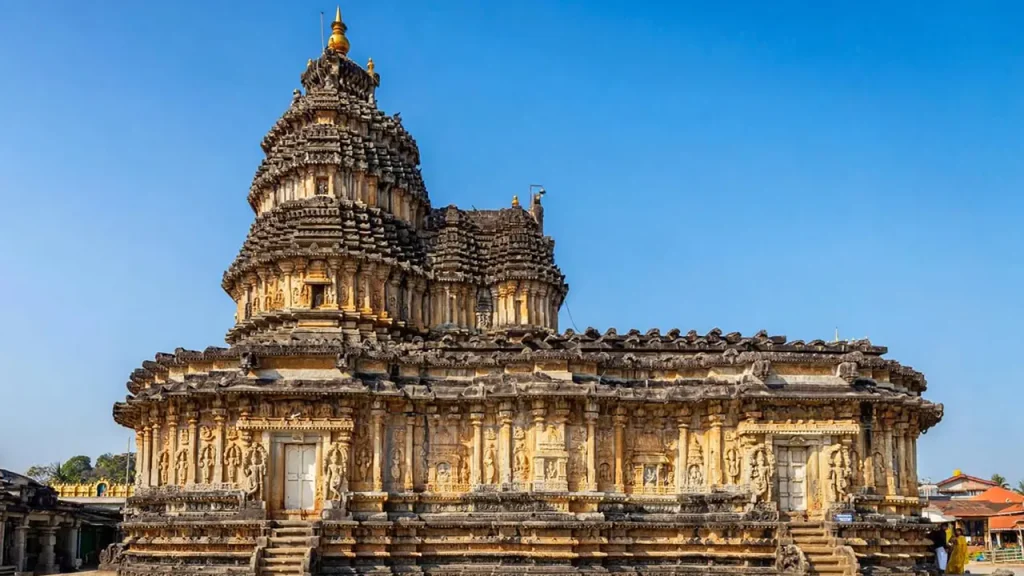
The temple is globally celebrated for its 12 Zodiac Pillars (Rashi Stambhas), an architectural feat where the rays of the rising sun strike specific pillars in the exact sequence of the twelve solar months of the Hindu calendar. Whether you are a pilgrim seeking spiritual connection at the first matha established by Adi Shankaracharya or a lover of ancient Indian science, this comprehensive guide covers the temple’s history, astronomical engineering, darshan timings, rituals, and practical visitor advice.
Quick Information: Vidyashankara Temple at a Glance
| Information Field | Verified Details |
| Temple Name | Sri Vidyashankara Temple (ಶ್ರೀ ವಿದ್ಯಾಶಂಕರ ದೇವಾಲಯ) |
| Presiding Deity | Lord Shiva (worshipped as Vidyashankara Linga) |
| Complex Affiliation | Dakshinamnaya Sri Sringeri Sharada Peetham |
| Location | Sringeri, Chikkamagaluru District, Karnataka, India (Pin: 577139) |
| Architectural Style | Composite Hoysala-Dravidian (Vesara) with an apsidal (gajaprishta) rear |
| Year of Consecration | Circa 1338 CE (14th Century CE) |
| Daily Darshan Timings | Morning: 7:00 AM – 1:00 PM | Evening: 5:00 PM – 8:30 PM |
| Primary Architectural Feature | 12 Zodiac Pillars (Rashi Stambhas) functioning as a solar calendar |
| Best Season to Visit | October to March (Cool, pleasant mountain weather) |
| Major Festivals | Navaratri, Shankara Jayanti, Karthika Deepotsava, Maha Shivaratri |
| Nearest Railway Station | Udupi Railway Station (approx. 85 km) | Shimoga (approx. 95 km) |
| Nearest Airport | Mangalore International Airport (IXE) (approx. 105 km) |
| Official Administrative Body | Sringeri Sharada Peetham (sringeri.net) |
The Sacred Setting: Why Sringeri Holds Primordial Importance
Sringeri derives its name from Rishyashringa-giri, named after the Vedic sage Rishyashringa who appears prominently in the Bala Kanda of the Ramayana. Surrounded by the dense tropical canopies of the Malnad region, the town is traversed by the perennial, sacred Tunga River, renowned for its sweet and pure water (Ganga Snanam, Tunga Panam).
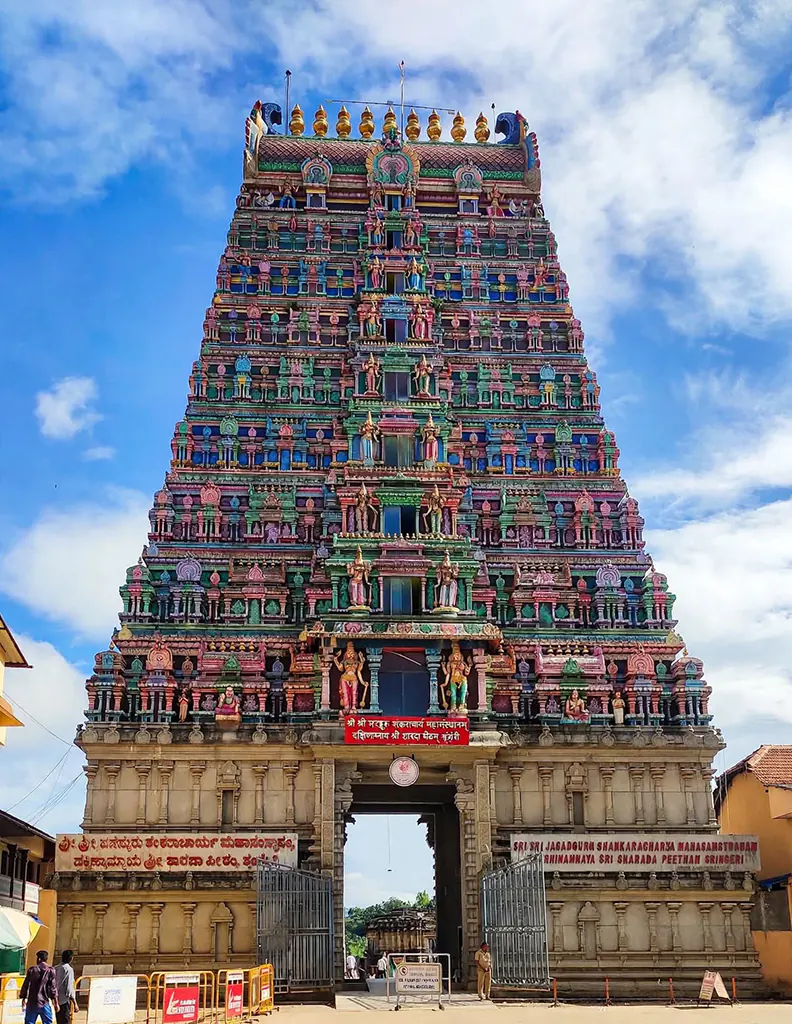
In the 8th century CE, the revered philosopher-saint Adi Shankaracharya chose Sringeri as the southern seat (Dakshinamnaya Peetham) among the four cardinal monastic centers he established across India.
According to living tradition, Shankaracharya was walking along the banks of the Tunga when he witnessed an unusual sight: a cobra had flared its hood to provide shade to a spawning frog suffering under the blistering midday sun. Moved by the sight of natural predator and prey exhibiting spontaneous compassion, he recognized the spot as a Jnanabhumi (land of supreme wisdom and peace) and consecrated the Sri Sharada Peetham, installing Goddess Sharadamba as the presiding deity of wisdom and learning.
Centuries later, this spiritual ground gave rise to the Vidyashankara Temple, turning the complex into an epicenter of both philosophical discourse and astronomical inquiry.
History and Royal Patronage: The Rise of the Vijayanagara Empire
The Vidyashankara Temple was constructed around 1338 CE. It stands as a living memorial and commemorative shrine (Samadhi / Adhishthana) built over the mortal remains of Jagadguru Sri Vidyatirtha, the 10th pontiff of the Sringeri Sharada Peetham.
Sri Vidyatirtha was a towering spiritual preceptor of medieval India. His foremost disciples were Sri Bharati Tirtha and Sri Vidyaranya—the scholarly sage who provided the spiritual inspiration and political guidance that led brothers Harihara I and Bukka Raya I to establish the Vijayanagara Empire in 1336 CE.
To honor their supreme guru, the Vijayanagara emperors and Vidyaranya mobilized the finest master sculptors from across Southern India. The temple was engineered not merely as a place of traditional ritual, but as an enduring monument reflecting the advanced mathematical, architectural, and astronomical knowledge of the era.
Architectural Genius: The Synthesis of Hoysala and Dravidian Craft
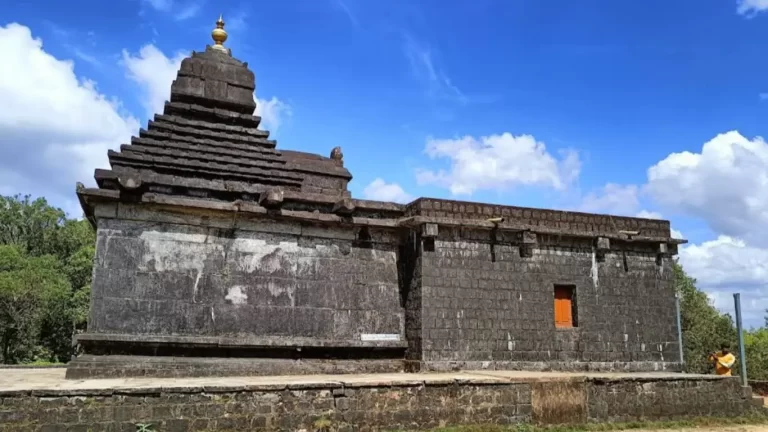
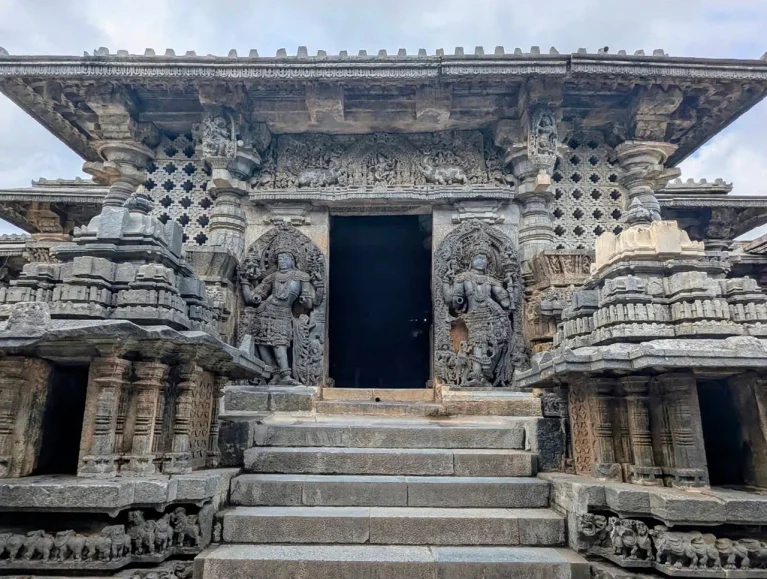
Architecturally, the Vidyashankara Temple is one of the most distinctive structures in Karnataka. It does not belong solely to the southern Dravidian tradition, nor does it follow the strict star-shaped plan of Hoysala shrines like those in Belur or Halebidu. Instead, it represents a composite synthesis (Vesara).
1. The Gajaprishta (Elephant-Back) Apsidal Plan
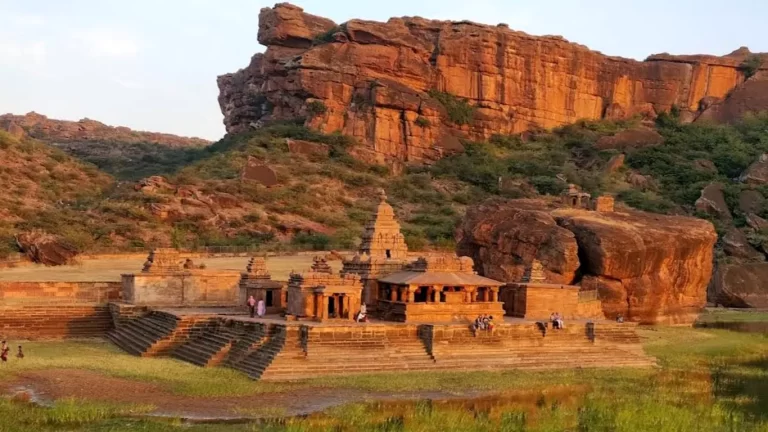
The western portion of the temple (the sanctum sanctorum) is built in an apsidal design, traditionally called Gajaprishta or elephant-back contour. This curved design is relatively rare in 14th-century Hindu architecture and echoes early Buddhist chaitya halls and early Pallava rock-cut architecture, such as those seen in the historical rock monuments of the Badami Cave Temples.
2. High Molded Plinth (Adhisthana)
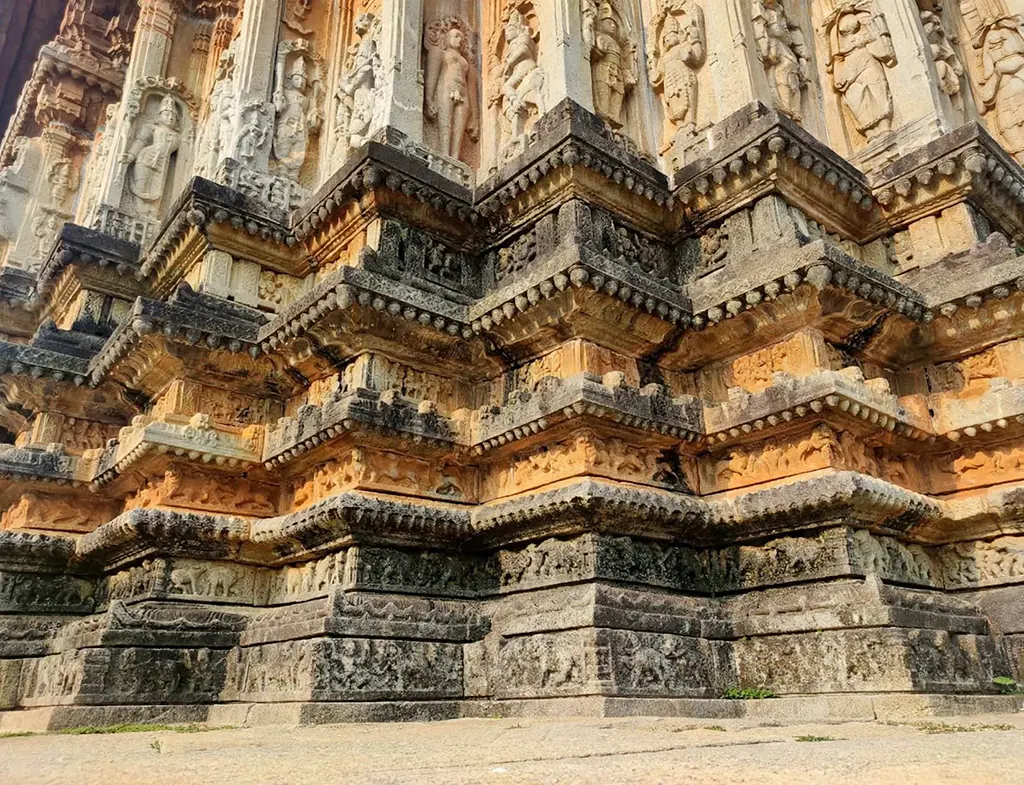
The entire temple stands upon a raised granite basement (adhisthana) carved with horizontal decorative friezes:
- The Base Frieze: Carved with marching rows of elephants symbolizing stability and strength.
- The Middle Frieze: Depicts horses, lions, and floral scrollwork.
- The Narrative Panels: Detail sculptured episodes from the Ramayana, Mahabharata, Bhagavata Purana, and legends of Adi Shankaracharya’s life.
3. Outer Wall Sculptures
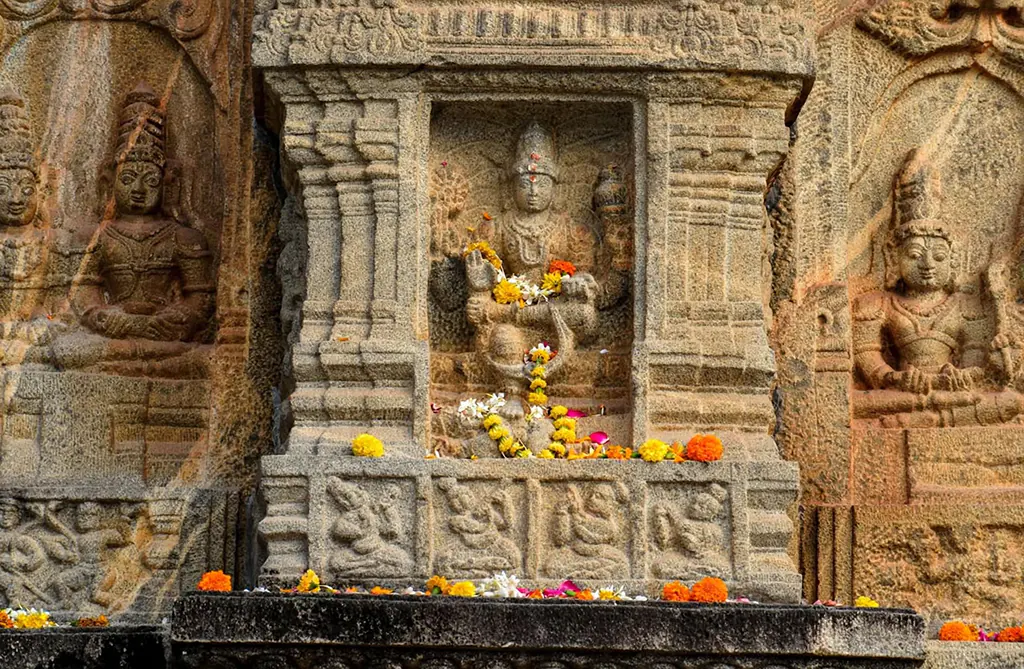
The outer walls of the circumambulatory path feature 61 distinct relief niches presenting virtually the entire pantheon of Sanatana Dharma:
- Various manifestations of Lord Shiva (Dakshinamurthy, Nataraja, Bhairava, Ardhanarishvara).
- Forms of Lord Vishnu (including the Dashavatara).
- Goddess Durga, Saraswati, and Lakshmi.
- Sub-shrines within the structure housing Lord Brahma, Vishnu, and Maheshwara with their consorts.
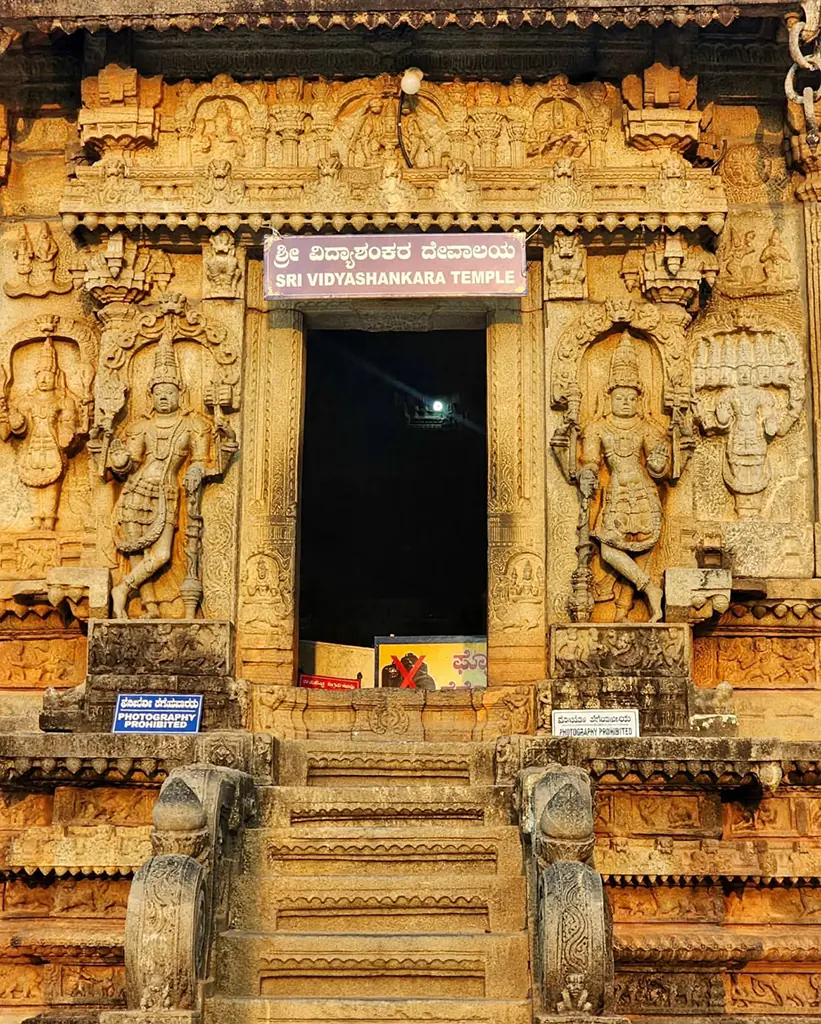
The 12 Zodiac Pillars (Rashi Stambhas): Ancient Solar Engineering
The defining feature of the Vidyashankara Temple is its assembly of 12 Zodiac Pillars, locally known as the Rashi Stambhas, situated inside the enclosed main hall (Mukhamandapa).
How the Astronomical Mechanics Work
- Zodiac Carvings: Each of the 12 pillars is carved with the zodiac sign (Rashi) it represents: Aries (Mesha), Taurus (Vrishabha), Gemini (Mithuna), Cancer (Karka), Leo (Simha), Virgo (Kanya), Libra (Tula), Scorpio (Vrischika), Sagittarius (Dhanus), Capricorn (Makara), Aquarius (Kumbha), and Pisces (Meena).
- Solar Ingress Alignment: The temple is oriented precisely along an east-west astronomical axis. There are large stone-latticed openings and an eastern doorway through which the early morning rays enter the hall.
- The Calendar Effect: As the earth moves around the sun, the morning solar rays illuminate only that pillar which corresponds to the astronomical solar month (Sankranti) in which the sun is currently residing. For instance:
- When the sun enters the sign of Aries during the spring month of Chaitra, the morning rays illuminate the Mesha Stambha.
- During the winter solstice (Makara Sankranti), the sunlight falls directly on the Makara Stambha.
- Sundial Calculation: Beyond tracking the monthly passage of the sun, the pillars were historically used to determine the exact time of sunrise, planetary transits, equinoxes, and festival tithis without mechanical clocks.
The Mystery of the Stone Balls
Adorning several of these granite pillars are carved roaring lions (Yalis). Inside the open mouths of these stone beasts are smooth, perfectly spherical stone balls. Pilgrims can gently roll these stone balls with their fingers; however, the balls cannot be extracted from the mouth because the opening is smaller than the diameter of the ball. The entire piece—pillar, lion, and captive stone sphere—was chiseled out of a single monolithic block of hard granite.
Continue Reading >> Ahobilam Temple: Complete Guide to Nava Narasimha Shrines, History, Trekking & Timings
Daily Rituals and Sevas at Vidyashankara Temple
Unlike modern monument sites managed strictly as historical museums, the Vidyashankara Temple remains a vibrant, consecrated center of living Hindu worship.
Sanctum Deities
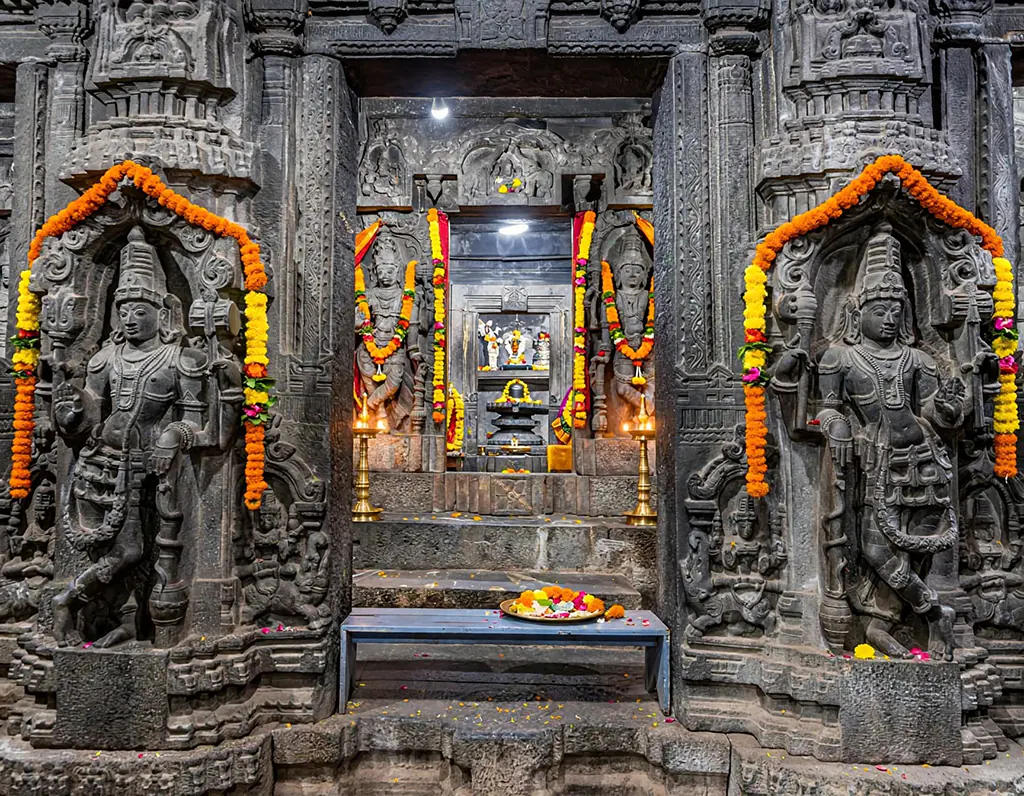
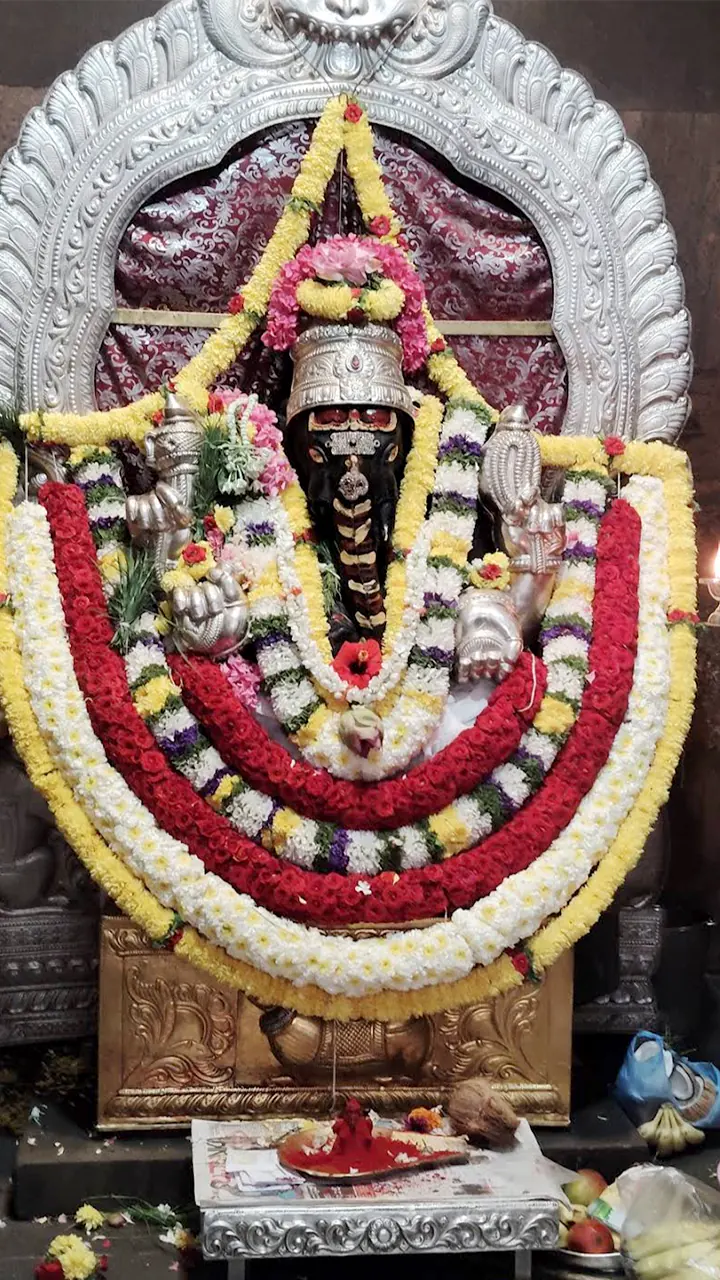
The main sanctum houses a magnificent Shiva Linga consecrated over the Samadhi of Jagadguru Sri Vidyatirtha. It is flanked by deities of Ganapati and other attendant divinities. Regular Vedic worship is carried out by priests initiated into the Shukla Yajurveda and Krishna Yajurveda traditions.
Key Daily Timings & Pooja Schedule
- Morning Darshan: 7:00 AM to 1:00 PM
- Mahamangalarathi (Morning): Approximately 12:00 PM – 12:30 PM
- Evening Darshan: 5:00 PM to 8:30 PM
- Night Mahamangalarathi: Around 8:00 PM
Sacred Offerings (Sevas)
Devotees can book verified sevas directly through the temple administrative counters:
- Rudrabhisheka: The ritual bathing of the Vidyashankara Linga with the sacred waters of the Tunga, milk, curd, honey, ghee, and sandalwood paste, accompanied by the chanting of the Sri Rudram.
- Archana: Chanting of the 108 (Ashtottara) or 1,000 (Sahasranama) holy names of Lord Shiva with bilva leaves and sacred flowers.
- Aksharabhyasa: While primarily conducted at the adjoining Goddess Sharadamba Temple, initiation of children into the world of alphabets and education is the spiritual hallmark of a pilgrimage to Sringeri.

Sacred River Traditions: The Holy Fish of the Tunga
Directly steps away from the northern base of the Vidyashankara Temple lie the ancient stone steps (Sandhyavandana Snana Ghat) descending into the clear waters of the Tunga River.
A living tradition observed by every pilgrim is the feeding of the sacred fish (Mahseer and local carp) that inhabit the river. These fish are strictly protected from fishing by religious decree and are regarded as sacred creatures under the protection of the matha.
Vendors along the pathway provide clean puffed rice (mandakki), which pilgrims scatter onto the surface of the river. The water instantly churns as hundreds of harmless, large fish gather near the stone steps to feed. Devotees also offer prayers along the river ghat during morning and evening twilight.
Major Festivals Celebrated at Sringeri
The temple complex hosts vibrant festivities throughout the year, combining traditional monastic discipline with devotional celebration:
- Sharada Sharannavaratri (September/October): The premier 11-day festival of Sringeri. While dedicated primarily to Goddess Sharadamba, the entire complex is illuminated with tens of thousands of lights, culminating in the Shathachandi Homa on Mahanavami and the grand Durbar of the reigning Jagadguru.
- Karthika Deepotsava (November/December): Observed on the full moon night (Karthika Poornima), when the entire outer granite plinth of the Vidyashankara Temple is covered with thousands of flickering clay oil lamps.
- Maha Shivaratri (February/March): Marked by round-the-clock Rudrabhishekas, continuous Vedic chanting, and special midnight poojas at the Vidyashankara sanctum.
- Shankara Jayanti (April/May): Celebrates the birth of Adi Shankaracharya with 5 days of rigorous philosophical debates, Vedic recitations, and processions.
What to Visit Around the Temple Complex
A visit to the Vidyashankara Temple is part of an integrated sacred circuit within the Sringeri matha grounds and its immediate environs:
- Sri Sharadamba Temple: Located mere steps from Vidyashankara Temple, this modern gold-and-granite shrine houses the consecrated gold idol of Goddess Sharada, installed by Sri Vidyaranya to replace the original sandalwood murti installed by Adi Shankaracharya.
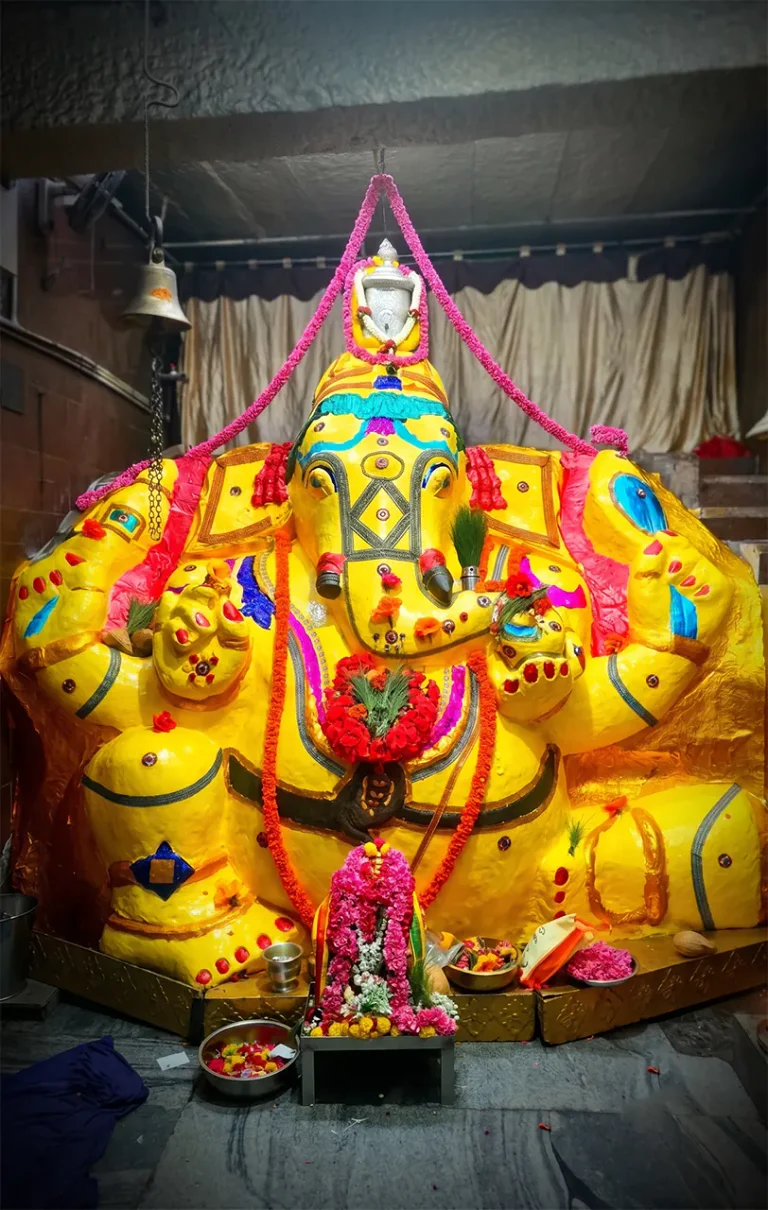
- Torana Ganapati Temple: A small, powerful shrine dedicated to Lord Ganesha, where devotees pray before undertaking any new endeavor or spiritual vow. Similar to iconic Ganesha shrines like Bangalore’s Dodda Ganapathi Temple, pilgrims offer prayers here first.
- Narasimhavana: Located across the Tunga River via a pedestrian suspension bridge (Vidyatheertha Sethu). This quiet woodland retreat houses the residence and meditation quarters of the reigning Jagadguru Shankaracharya, along with shrines dedicated to preceding gurus.
- Sri Malahanikareshvara Temple: Situated atop a hillock in the center of Sringeri town, this historic Shiva temple features steps carved into the rock and offers panoramic views of the Western Ghats.
- Kigga (Rishyashringa Temple): Located roughly 9 km from Sringeri, this village is home to the Sri Shringa Rishi Temple, where the linga features a horn-like projection atop it, representing sage Rishyashringa.
Practical Pilgrimage Planning & Visitor Logistics
Dress Code and Code of Conduct
The Sringeri Sharada Peetham maintains strict traditional discipline to preserve the spiritual sanctity of the shrines:
- Men: Must wear traditional attire such as a dhoti (veshti) or clean trousers. Men are strictly required to remove their shirts and vests before stepping into the inner sanctum of the Vidyashankara and Sharadamba temples.
- Women: Traditional Indian attire—sarees, half-sarees, or salwar kameez with a dupatta. Western wear such as shorts, sleeveless tops, and mini-skirts are prohibited.
- Footwear: Must be deposited at the free footwear counters outside the temple complex before crossing the main gates.
- Photography: Mobile phones and cameras are strictly banned inside the sanctum sanctorum and interior halls of both temples.
Annadana (Free Temple Meals)
In keeping with centuries-old Sanatana Dharma hospitality, the Sringeri Matha serves free, wholesome vegetarian lunch and dinner (Annaprasada) daily to thousands of pilgrims at the massive Sri Bharati Tirtha Prasada Nilaya dining hall located within the complex.
- Lunch Timings: 12:15 PM to 2:30 PM
- Dinner Timings: 7:15 PM to 8:30 PM
Where to Stay in Sringeri
- Temple Guest Houses (Matha Accommodation): The administrative office operates several pilgrim guest houses (such as Sri Sharada Kripa, Sri Shankara Kripa, and Sri Bharati Tirtha Kripa). Rooms are clean, well-maintained, and economical. Rooms are allocated on a first-come, first-served basis upon arrival at the accommodation office (Sri Matha Information Center).
- Private Hotels and Homestays: Private hotels such as Hotel Sharada Comforts, Sringeri Residency, and traditional Malnad homestays are available along the town’s perimeter for those requiring pre-booked private lodging during peak festival dates.
How to Reach Sringeri
By Air
The nearest airport is Mangalore International Airport (IXE), located approximately 105 km away. The airport connects to major Indian metros (Mumbai, Bangalore, Delhi, Hyderabad) and Middle Eastern hubs. Taxis from Mangalore Airport to Sringeri take about 3 hours via the Western Ghats road.
By Train
Sringeri has no direct railway station due to the mountainous terrain. The best railheads are:
- Udupi Railway Station (UD): Located ~85 km away (ideal for travelers arriving via Konkan Railway from Mumbai, Goa, or Kerala).
- Shimoga Railway Station (SME): Located ~95 km away (well-connected to Bangalore and Mysore).
- Kadur Railway Station (DRU): Located ~135 km away on the Bangalore–Hubli line. Regular state buses and private taxis ply between these rail stations and Sringeri.
By Road
Sringeri is well linked to major Karnataka cities via state highways:
- From Bangalore (approx. 320 km): Travel route via NH75: Bangalore → Hassan → Belur → Mudigere → Balehonnur → Sringeri. KSRTC operates regular Rajahamsa, Non-AC Sleeper, and Airavat luxury buses overnight from Bangalore.
- From Mangalore (approx. 105 km): Mangalore → Moodabidri → Karkala → Kudremukh National Park / Agumbe → Sringeri.
- From Udupi (approx. 85 km): Udupi → Manipal → Hebri → Agumbe Ghats → Sringeri. The drive through the Agumbe rainforest pass is famous for its hairpin bends and breathtaking sunset vistas.
Exploring Broader Karnataka Temple Circuits
Travelers planning an extended heritage or spiritual pilgrimage through Karnataka can easily combine Sringeri with several other revered sites across the region:
- Coastal Karnataka Circuit: From Sringeri, descend the ghats toward the coastal pilgrimage corridor to seek darshan at the sacred Kollur Mookambika Temple, or travel south toward Udupi Sri Krishna Mutt and the seaside shrine of Murudeshwar.
- Southern Karnataka Circuit: Journey through Hassan and Mysore to experience the magnificent hill shrine of Sri Chamundeshwari Temple Mysore.
- Bangalore Heritage Circuit: If entering Karnataka through the capital city, pilgrims frequently visit revered city temples like the tranquil Kumbalgodu Ayyappa Temple before boarding Western Ghat express routes.
Frequently Asked Questions (FAQs)
What makes the 12 Zodiac Pillars in Vidyashankara Temple unique?
The 12 Zodiac Pillars (Rashi Stambhas) are sculpted with astronomical precision. Sunlight entering through the eastern doorway strikes only the specific pillar corresponding to the solar month in which the sun resides according to the Hindu astrological calendar, effectively serving as an ancient stone calendar and sundial.
Can tourists climb or touch the 12 Zodiac Pillars?
Visitors can walk through the central hall and admire the carvings from close quarters during normal visiting hours. However, touching, leaning against, or defacing the ancient granite carvings is strictly prohibited to preserve the structural integrity of the 14th-century monument.
Who built the Vidyashankara Temple in Sringeri?
The temple was built around 1338 CE by the founders of the Vijayanagara Empire—Harihara I and Bukka Raya I—under the guidance of sage Vidyaranya, in honor of their spiritual preceptor, Jagadguru Sri Vidyatirtha.
What are the daily temple timings for darshan?
The temple is open every day from 7:00 AM to 1:00 PM in the morning and from 5:00 PM to 8:30 PM in the evening. Timings may be extended during major annual festivals such as Navaratri and Shivaratri.
Is there a strict dress code at Sringeri Vidyashankara Temple?
Yes. Men are encouraged to wear dhotis or modest trousers and must remove their shirts, vests, and socks before entering the sanctum sanctorum. Women are expected to wear sarees or traditional salwar suits with a dupatta. Western short clothing is not permitted.
Is free food available for pilgrims at Sringeri?
Yes. The Sringeri Sharada Peetham provides complimentary, freshly prepared vegetarian meals (Annaprasada) twice daily to all visiting devotees at the Sri Bharati Tirtha Prasada Nilaya hall inside the matha complex.
How much time is needed to visit Vidyashankara Temple?
A thorough visit to the Vidyashankara Temple and the adjoining Sharadamba Temple requires approximately 2 to 3 hours. If you plan to feed the sacred fish at the river ghat, visit Narasimhavana across the bridge, and partake in temple prasada, plan for half a day.