Golu Devta Temple: Pilgrimage Guide, Temple Differences, and Petition Rituals
Golu Devta is venerated across the Kumaon Himalayas as the supreme dispenser of justice (Nyay ke Devta). Unlike standard pilgrimage destinations centered solely on formal Vedic rituals, shrines dedicated to this folk deity function as informal spiritual courts. Devotees unable to find resolution through civil courts, administrative offices, or family disputes bring their grievances directly to the deity by hanging written petitions—often typed on official Indian non-judicial stamp paper—alongside brass bells.
The most famous of these shrines is Chitai Golu Devta Temple, situated just outside Almora. A second prominent shrine sits at Ghorakhal, near Nainital. Understanding which temple fits your travel itinerary and how to navigate the traditional petition customs ensures a smooth pilgrimage.
| Feature | Chitai Golu Devta Temple | Ghorakhal Golu Devta Temple |
| District | Almora, Uttarakhand | Nainital, Uttarakhand |
| Presiding Deity | Golu Devta (Incarnation of Shiva/Bhairava) | Golu Devta |
| Key Distinction | Primary historic shrine; dense canopy of legal stamp papers & bells | Major hill shrine located near Bhowali and Sainik School |
| Standard Timings | 06:00 AM – 08:00 PM (Subject to seasonal daylight) | 06:00 AM – 07:30 PM |
| Entry Fee | Free | Free |
| Nearest Railhead | Kathgodam (approx. 88 km) | Kathgodam (approx. 35 km) |
| Core Tradition | Submitting written letters for judicial/personal relief | Hanging bells upon answered prayers |
Chitai vs. Ghorakhal: Understanding the Two Major Temples
Travelers frequently confuse the two primary Golu Devta temples because both feature hundreds of brass bells and serve the same deity. Clarifying their locations avoids significant transit delays across Kumaon’s mountain roads.
Chitai Golu Devta Temple (Almora)
- Location: 8.5 km east of Almora along the road toward Pithoragarh.
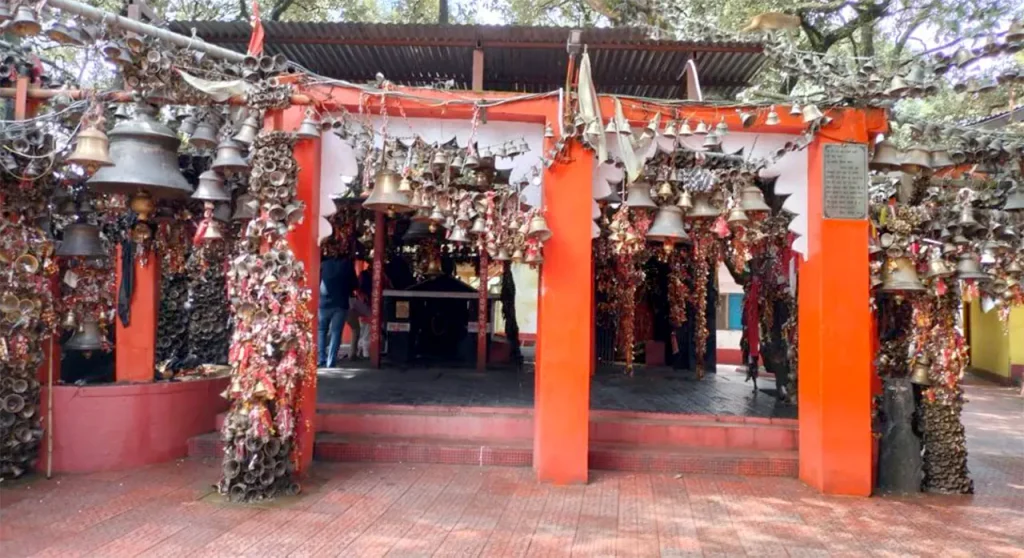
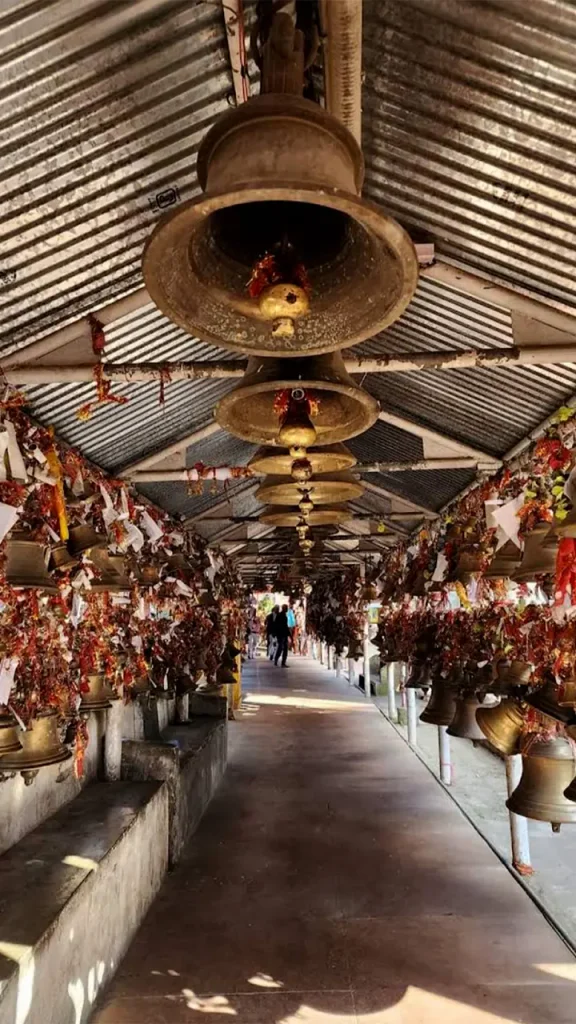
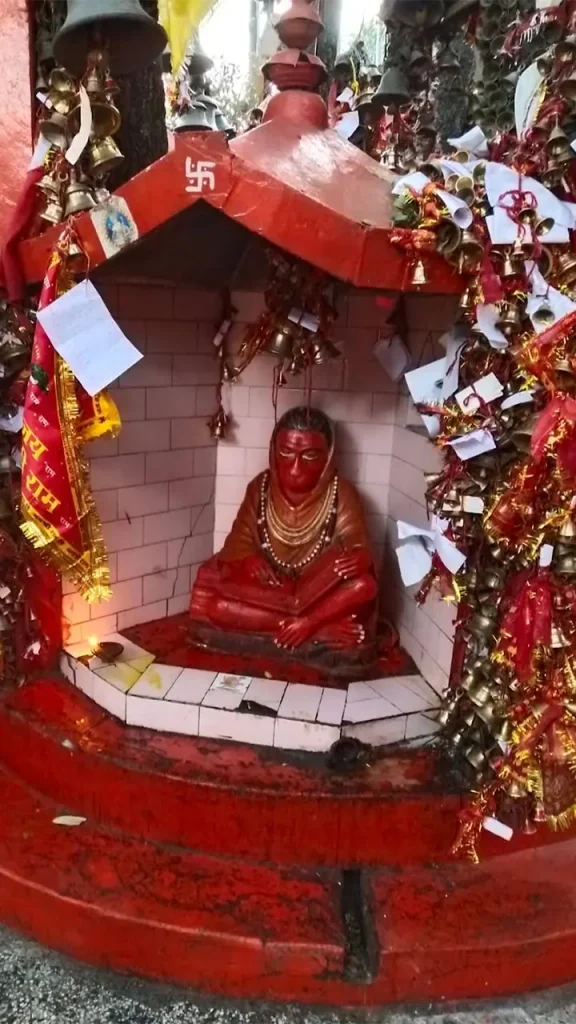
- Character: This is the spiritual epicentre of the petition tradition. The temple courtyard, railings, and ceilings are densely covered with handwritten notes, judicial stamp papers, court summons copies, and thousands of brass bells ranging from miniature tokens to massive multi-kilogram donations.
- Best Suited For: Those traveling along the Almora–Binsar–Jageshwar circuit who want to witness the original petition and bell-hanging custom.
Ghorakhal Golu Devta Temple (Nainital / Bhowali)
- Location: Situated on a ridge approximately 4 km above Bhowali and 15 km from Nainital town, right next to the historic Sainik School Ghorakhal.
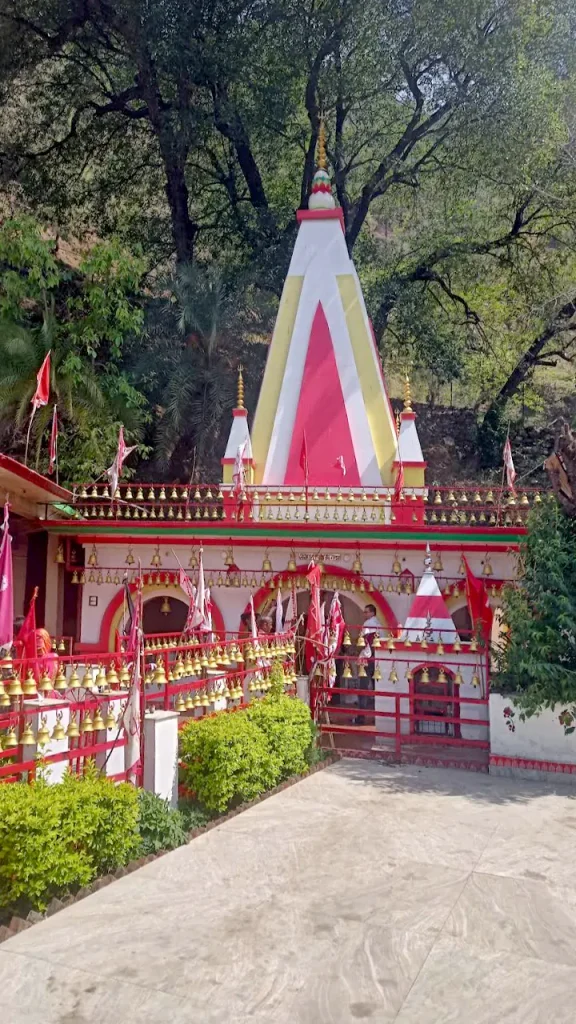
- Character: High-elevation shrine offering panoramic valley views. It also possesses a dense display of bells tied across overhead corridors, though written legal paperwork is less voluminous here than at Chitai.
- Best Suited For: Travelers staying in Nainital, Bhimtal, or Sattal who have limited time and cannot make the longer mountain drive to Almora.
Religious Significance & Regional Tradition
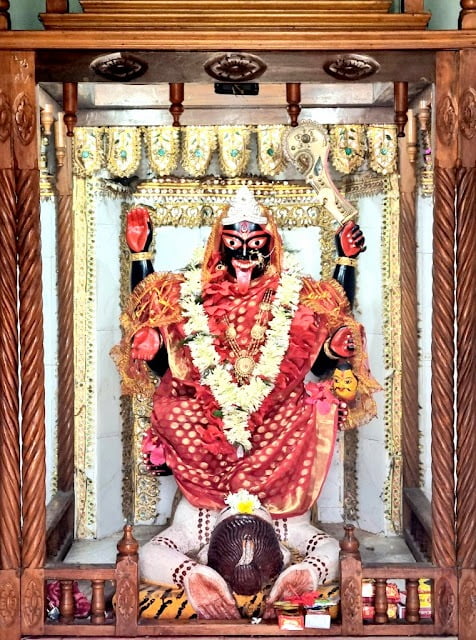
In the cultural framework of Kumaon, Golu Devta occupies a distinct position that blends folk animism, royal ancestor reverence, and mainstream Shaivism. While classical Puranic literature does not formally list Golu Devta among the canonical twelve Jyotirlingas or primary Shaivite pantheons, regional oral traditions (Jagars) regard him as an avatar of Lord Shiva, specifically associated with Bhairava.
The Folk Tradition (Jagar Narrative)
According to regional folklore preserved by community singers (Dangariyas), Golu Devta was born as Prince Goril to King Jhalrai (associated with the medieval Katyuri dynasty of Champawat) and Queen Kalinka. Folk tales recount court intrigues involving the king’s other jealous queens, who attempted to drown the infant prince in a river and replaced him with a stone. Rescued by a fisherman, the boy grew up to reveal his divine heritage, exposed the conspiracy, and established an unbending code of justice across his father’s territories.
Following his death or departure from earthly rule, he was deified as a guardian spirit (Kuldevta and Ishtadevta) who intervenes when human institutions fail to provide fairness.
Documented History vs. Oral Legend
Historians and folklorists link the Golu Devta tradition to the medieval Katyuri and early Chand dynasties that governed Kumaon between the 7th and 18th centuries. While folklore attributes supernatural feats to Prince Goril, historical evidence suggests he may have been an exceptionally principled military general or royal administrator whose fair judgments earned him posthumous deification—a frequent development in central Himalayan folk religion.

The Petition Custom: How to Submit a Grievance
The practice of filing formal petitions (Marzi) is unique in Indian temple worship. The process follows established local customs:
- Drafting the Petition: Devotees write down their specific complaint or request. While many use standard notebook paper, individuals dealing with legal, property, or civil disputes frequently purchase non-judicial stamp paper (₹10, ₹50, or ₹100) from civil courts in Almora or Haldwani.
- Content of the Letter: The petition typically addresses the deity formally as the Supreme Justice of Kumaon, detailing the incident, naming opposing parties if relevant, stating the injustice suffered, and requesting divine arbitration. Devotees usually add their signature, home address, and date.
- Tying the Document: After paying respects at the sanctum, the letter is tied using sacred red thread (Mauli) onto the iron railings, mesh screens, or existing bell clusters surrounding the temple complex.
- The Vow (Mannat) and Resolution: Traditionally, devotees vow that if their grievance is fairly resolved, they will return to the temple and offer a brass bell. The size or weight of the bell corresponds to the individual’s promise and financial capability.
Temple Timings & Daily Schedule
The Chitai and Ghorakhal temples maintain accessible daily hours throughout the year.
- Morning Opening: 06:00 AM (Summer) / 06:30 AM (Winter)
- Evening Aarti: Approx. 06:30 PM to 07:00 PM (Varies with local sunset)
- Night Closing: 08:00 PM
There are generally no scheduled afternoon closures, though priests may briefly rest or clean the sanctum between 01:00 PM and 02:00 PM on low-traffic weekdays. Confirm locally on arrival if visiting specifically for direct priest assistance with a Sankalp.
Continue Reading >> Hidden Power of Haridwar Mansa Devi Temple: #1 Wish Granted!
Pujas, Offerings, and Rules
- Puja Offerings: Modest offerings of batasha (sugar drops), laddoos, flowers, incense, unbroken raw rice (Akshat), and vermilion are standard. Stalls outside sell pre-packaged puja baskets.
- Bells: Devotees can purchase bells directly outside the temple gate. Ensure you retain the wire or red thread provided by shopkeepers to secure the bell firmly to the designated metal framework.
- Prohibited Practices: Animal sacrifice was completely banned by legal directives and community resolutions in the early 21st century. Offerings are strictly vegetarian.
- Dress Code: While there is no rigid traditional dress code (like dhotis required in select South Indian shrines), visitors must dress modestly. Sleeveless tops, short skirts, and beachwear are culturally inappropriate.
- Footwear & Leather: Footwear must be removed at designated stands outside the main complex gate. Leather belts and wallets are generally tolerated in the outer courtyard, but removing them before entering the immediate sanctum is respectful practice.
- Photography: Photography of the outer courtyards, petition walls, and bell canopies is generally allowed. Direct photography or videography inside the inner sanctum (Garbhagriha) facing the deity is strictly prohibited.
Architecture and Layout
Chitai Golu Devta Temple reflects simple, functional Kumaoni hill architecture adapted to high volumes of foot traffic:
- Courtyard and Approach: A paved walkway lined with vendor stalls leads to an open courtyard sheltered by overhead metal frames, from which tens of thousands of brass bells hang in layers.
- The Sanctum: A compact, square single-chamber shrine topped with a modest hill-style shikhara. Inside sits the image of Golu Devta, typically depicted mounted on a white horse, holding a bow and arrow, embodying vigilant justice.
- Surrounding Screens: Heavy-gauge wire mesh screens enclose the periphery, specifically installed to give pilgrims sufficient surface area to tie their paper petitions without damaging the stone walls of the main shrine.
How to Reach
Chitai Golu Devta Temple (Almora)
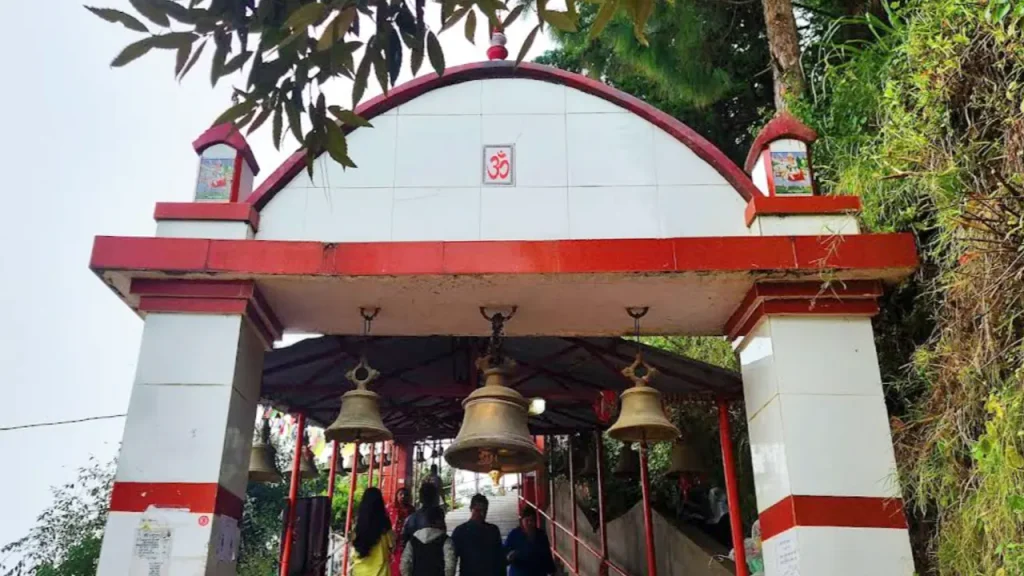
- By Road: Situated on NH 309A. Shared taxis (jeeps) and local private buses ply continuously between the Almora Main Bus Stand/KMVN area and Chitai (takes 20–30 minutes).
- By Train: The nearest railhead is Kathgodam (KGM), located approximately 88 km away. Taxis and shared regional cabs run regularly from the station directly up to Almora (approx. 3.5 to 4 hours of winding hill road).
- By Air: The closest domestic facility is Pantnagar Airport (PGH), roughly 120 km southwest. Flights are limited; travelers typically opt for Delhi–Kathgodam trains or direct road drives from Delhi NCR (approx. 360 km, 8–10 hours).
Ghorakhal Golu Devta Temple (Nainital District)
- By Road: Readily reached by taxi or auto-rickshaw from Bhowali (4 km) or Nainital (15 km). The road branches off from the Bhowali–Bhimtal connector road.
- By Train: Kathgodam is approximately 35 km away (1.5 hours by taxi).
Continue Reading >> Triyuginarayan Temple: Journey to the Eternal Flame
Practical Facilities & Accessibility
- Parking:
- Chitai: Dedicated roadside parking bays exist near the gate, but capacity fills quickly on weekend mornings and festival days, forcing cars to park along narrow highway shoulders.
- Ghorakhal: An open parking ground sits near the temple entrance and Sainik School approach road.
- Accessibility & Stairs:
- Chitai: Involves walking down a paved, stepped approach (roughly 40 to 60 gentle steps depending on where you disembark). Wheelchair access is not fully integrated; elderly visitors with severe knee issues will require steady arm support.
- Ghorakhal: Moderate incline from the parking area to the sanctum with paved stairs.
- Restrooms & Refreshments: Basic municipal toilet facilities exist near the parking lots at both sites. Numerous local teashops serve hot tea, Maggi, and regional snacks.
Best Time to Visit
- March to June (Summer): Pleasant daytime temperatures (15°C to 28°C). Ideal for sightseeing, though midday sun can heat the bare stone floors of the courtyard; bring socks.
- October to November (Autumn): Clear post-monsoon Himalayan skies and crisp mountain air. Excellent for road trips across Almora.
- December to February (Winter): Cold, with morning temperatures dropping near 0°C to 5°C. Heavy woolens are mandatory.
- Monsoon Caution (July to August): Heavy rains in Uttarakhand cause periodic landslides and roadblock delays along the Kathgodam–Almora highway. Travel with flexible schedules.
- Peak Festival Rush: The nine days of Chaitra Navratri (March/April) and Sharad Navratri (September/October) witness extensive crowds, long queues, and community feasts.
Continue Reading >> Tungnath Temple: The Highest Shiva Shrine in the World 12k ft
Nearby Sites to Combine
- Jageshwar Dham (35 km from Chitai): A complex of over 100 stone Shaivite temples dating from the 7th to 12th centuries, nestled in a dense deodar valley.
- Kasar Devi Temple (10 km from Chitai): Renowned for its panoramic Himalayan views and peaceful, meditative atmosphere along the Crank’s Ridge area.
- Binsar Wildlife Sanctuary (30 km from Chitai): Forested reserve featuring broad oak and rhododendron canopies, offering viewpoints of Kedarnath, Trishul, and Nanda Devi peaks.
- Bhimtal and Naukuchiatal (10–15 km from Ghorakhal): Serene freshwater lakes offering peaceful boating, far less congested than downtown Nainital.
FAQ SECTION
Is there an entry ticket for Chitai Golu Devta Temple?
No. Entry to Chitai Golu Devta Temple is completely free for all visitors. You only pay for any puja materials or brass bells you voluntarily purchase from outside vendors.
Can anyone write a petition to Golu Devta, or is it restricted to locals?
Anyone can submit a petition regardless of caste, creed, religion, or nationality. The practice is open to all visitors who wish to bring personal grievances, family issues, or court cases before the deity.
Do I have to write the petition on legal stamp paper?
No. Stamp paper is not mandatory. Many devotees use ₹10 or ₹50 non-judicial stamp papers for formal disputes, but a clearly written note on ordinary lined notebook paper or blank paper tied with red sacred thread (Mauli) is equally accepted in local tradition.
What happens to the letters tied at the temple?
Due to the sheer volume of thousands of petitions submitted every year, the temple committee periodically unbinds older, weathered papers to make room for new ones. These old letters are cleared with respect, traditionally immersed in sacred running waters or ritually burned according to local religious guidelines.
How heavy or large should the bell be when returning to fulfill a vow?
There is no prescribed weight or size. Pilgrims donate bells based on their personal means—ranging from tiny 100-gram brass bells to substantial bells weighing over 50 kilograms. Sincerity of intent (Bhav) is considered the essential factor.
Which temple should I visit if I am staying in Nainital?
If you are based in Nainital and have only half a day, visit the Ghorakhal Golu Devta Temple near Bhowali (about 15 km away). If you have a full day and want to experience the primary historic temple famous for thousands of stamp papers, take the 3-hour scenic drive to Chitai Temple near Almora.
Are animal sacrifices still performed at Golu Devta temples?
No. Animal sacrifice was historically associated with regional folk rites centuries ago, but it has been completely discontinued and legally prohibited across all major temple complexes in Uttarakhand. All modern offerings are purely vegetarian.
What are the opening and closing times of Chitai Golu Devta Temple?
The temple opens around 06:00 AM and closes at approximately 08:00 PM every day. It remains accessible throughout the afternoon, though evening aarti times shift slightly according to seasonal sunset.