Kasar Devi Temple, Almora: History, Timings, Significance & Visitor Guide
Kasar Devi Temple is an ancient rock-cut shrine situated atop a ridge at an elevation of roughly 2,116 meters (6,942 feet) on the outskirts of Almora, Uttarakhand. Overlooking the Hawalbagh Valley and offering an expansive panoramic vista of the snow-clad Central Himalayas—including Nanda Devi, Trishul, and Panchachuli—the site holds a dual legacy. For centuries, it has served regional pilgrims as a powerful seat of Devi worship. Over the last century, it evolved into an international magnet for philosophers, writers, and spiritual seekers.
This guide provides practical details for visiting Kasar Devi: historical records, religious background, accessibility requirements, visiting hours, and travel routes.
Quick Answer / Temple at a Glance
- Location: Kasar Devi Ridge, 8 km north of Almora, Almora District, Uttarakhand, India
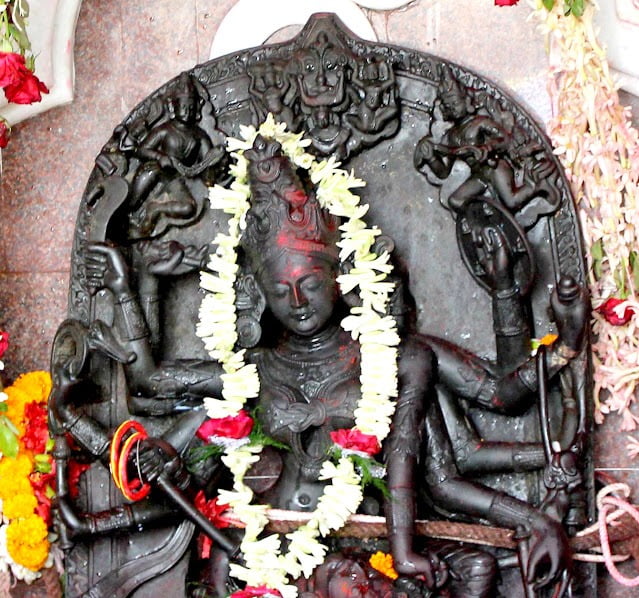
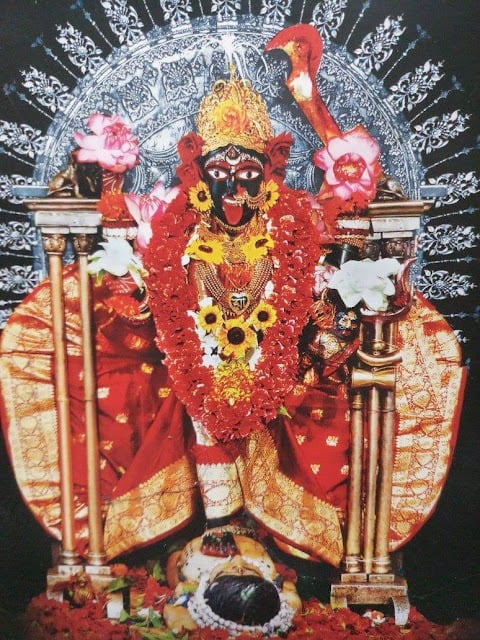
- Presiding Deity: Kasar Devi (an incarnation of Goddess Durga / Kaushiki)
- Associated Shrines: Lord Shiva (Bhairavnath) temple located in the same courtyard
- Temple Timings: Open daily from 6:00 AM to 7:00 PM (subject to daylight variations in winter)
- Entry Fee: Free entry for all visitors
- Climb Required: Yes; approximately 100 to 150 paved stone steps from the Almora–Bageshwar highway roadhead
- Nearest Railway Station: Kathgodam (approx. 88 km)
- Nearest Airport: Pantnagar (approx. 124 km)
- Best Time to Visit: September to November (clear Himalayan views) and March to May (mild weather)
Kasar Devi History & Origin
Documented History and Modern Intellectual Heritage
While local tradition dates the shrine to ancient centuries, physical inscriptions in the nearby Kumaon hills confirm early rock-carving traditions associated with the Katyuri dynasty, who ruled regions of Kumaon between the 7th and 12th centuries CE. The temple’s current masonry structures and paved compounds reflect successive renovations undertaken by regional rulers and community patrons during the Chand dynasty and subsequent periods.
The modern prominence of Kasar Devi began in the late 19th century:
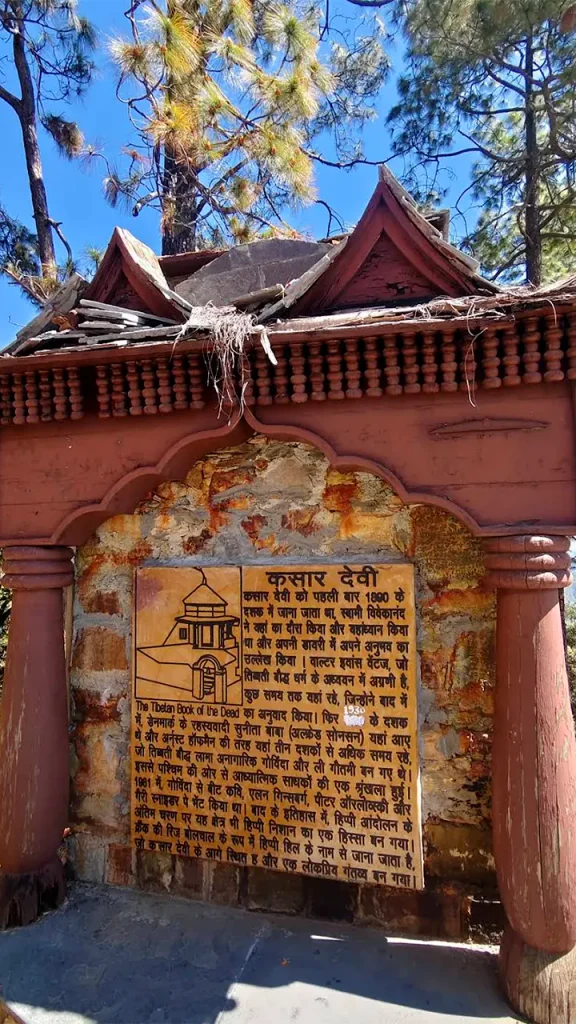
- Swami Vivekananda (1890): Swami Vivekananda visited Almora in August–September 1890 and meditated in the secluded caves around Kasar Devi. He noted the exceptional quiet of the ridge in his diaries and letters, inspiring several disciples to settle in the Kumaon hills.
- The “Crank’s Ridge” Era (1930s–1960s): The ridge attracted Western scholars, artists, and Buddhist practitioners. Notable long-term residents included the Danish mystic Alfred Sorensen (Sunyata), the scholar-monk Lama Anagarika Govinda, and the American writer Walter Evans-Wentz (translator of The Tibetan Book of the Dead). By the 1960s, Beat generation figures, including Allen Ginsberg, Peter Orlovsky, and later Timothy Leary, frequented the ridge, establishing its reputation as a counter-cultural center.
Sthala Purana and Scriptural Associations
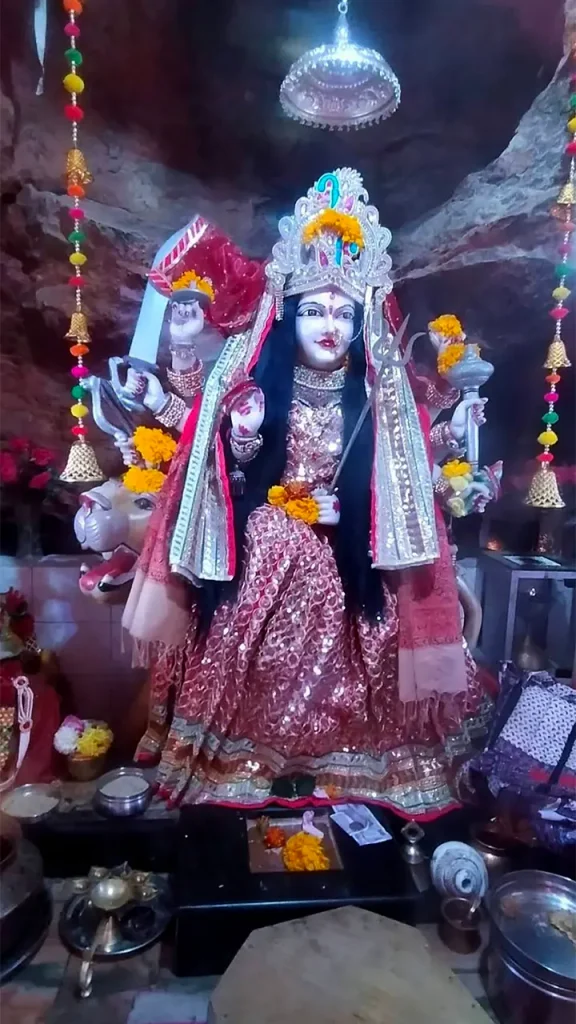
According to regional oral tradition, Kasar Devi is identified with the narrative found in the Devi Mahatmya portion of the Markandeya Purana. Tradition holds that Goddess Kaushiki (formed from the cellular sheath of Goddess Parvati) slew the demon generals Chanda and Munda, and subsequently defeated Shumbha and Nishumbha, in these Himalayan foothills. The sanctum sanctorum houses a natural rock cave where the footprint or natural rock manifestation (swayambhu) of the Devi is venerated.
The Science Behind the Ridge: Fact vs. Popular Claims
Online travel guides frequently assert that “NASA proved Kasar Devi is one of only three places on Earth—alongside Stonehenge and Machu Picchu—possessing a unique geomagnetic field due to the Van Allen radiation belt.”
To keep information grounded and factually accurate:
- The Van Allen Belts: The Van Allen radiation belts are zones of energetic charged particles captured by Earth’s magnetosphere, extending thousands of kilometers into space above Earth’s atmosphere. They are not localized surface phenomena that touch individual hilltops.
- Geomagnetic Realities: The Central Himalayan belt exhibits natural geological variations, granite crust compositions, and high-altitude atmospheric clarity. While researchers have studied crustal geomagnetism across the Himalayan arc, there is no published NASA white paper designating Kasar Devi, Stonehenge, and Machu Picchu as an exclusive “geomagnetic trio.”
- The True Value: The ridge’s quietude, absence of industrial acoustic pollution, dry pine-oak forest air, and direct Himalayan sightlines explain why meditators from Vivekananda onward found the site uniquely suited for sustained contemplation.
Continue Reading >> Uttarkashi Temple Kashi Vishwanath
Architecture and Temple Complex Layout
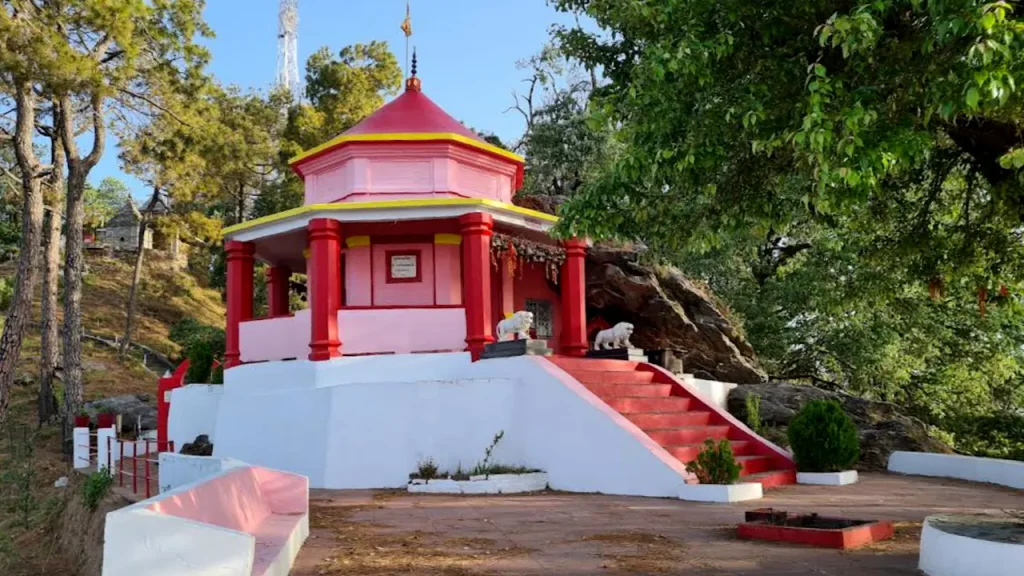
The Kasar Devi complex rests on a level terrace carved into the crest of the hill. It consists of two distinct components:
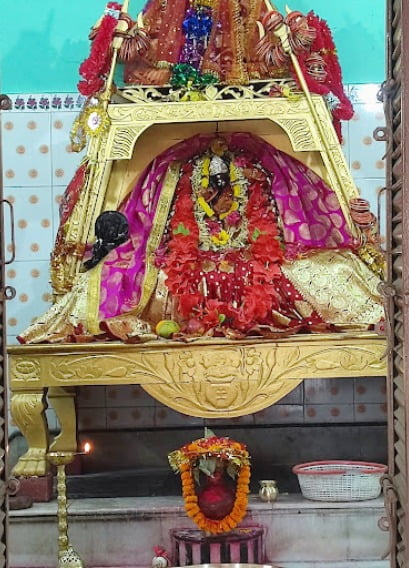
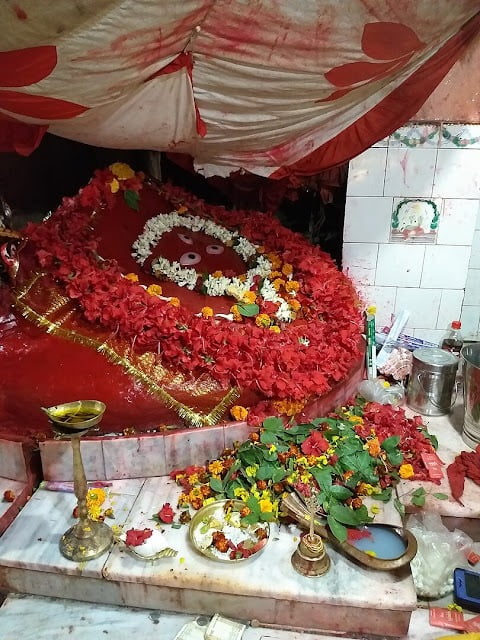
- The Cave Temple of Kasar Devi: The core sanctum is an indigenous rock cave. Rather than a modern sculpted murti, the central focus is a natural rock formation consecrated with vermilion, representing the Goddess. The rock facade has been enclosed with a modest concrete-and-brick portico to shield the sanctum from weather.
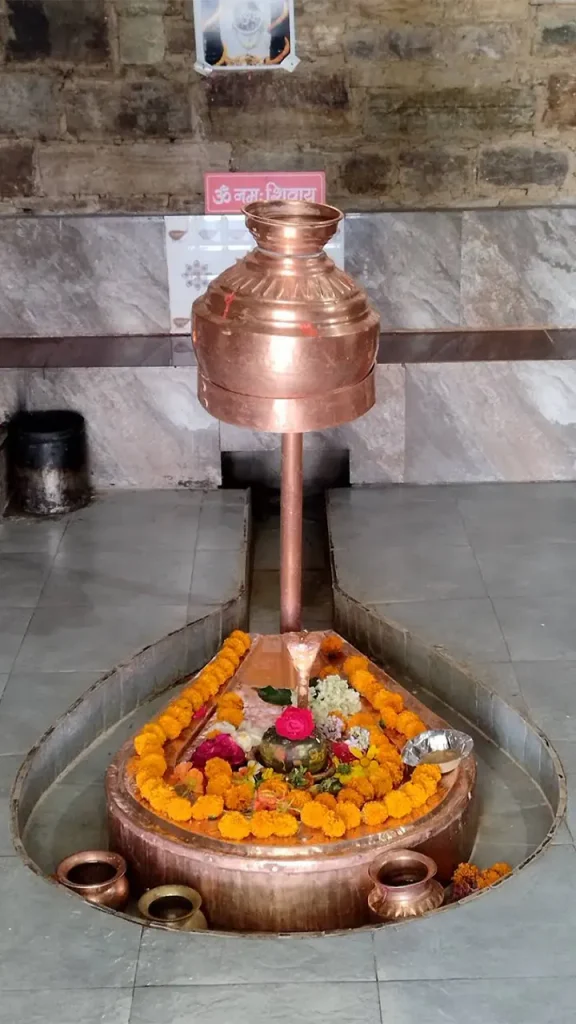
- The Shiva (Bhairavnath) Temple: Positioned slightly above the Devi shrine within the same perimeter wall, this shrine features a modest north-Indian Nagara-style stone spire (shikhara). It houses a Shiva Lingam along with traditional brass icons.
- Dhuni (Sacred Fire): An enclosed hearth area near the complex maintains an ash-covered dhuni, traditionally kept burning by resident ascetics.
Kasar Devi Temple Timings and Daily Schedule
The temple remains open seven days a week throughout the year.
| Event / Period | Standard Timings | Winter Variations (Nov–Feb) |
| Temple Gates Open | 6:00 AM | 6:30 AM |
| Morning Aarti | 7:00 AM – 7:30 AM | 7:15 AM – 7:45 AM |
| General Darshan & Meditation | 7:30 AM – 12:00 PM | 7:45 AM – 12:00 PM |
| Midday Recess (Inner Cave) | Usually remains accessible; priests take a break | Same |
| Evening Aarti | 6:30 PM | 5:45 PM – 6:00 PM |
| Temple Gates Close | 7:00 PM | 6:30 PM |
Note: Timings are managed by local temple trustees and priests. Minor variations occur depending on seasonal sunrise and sunset.
Pujas, Rituals & Offerings
- Daily Darshan: Devotees present simple offerings of fresh flowers, red cloth (chunri), coconuts, and sweets (batasha or peda).
- Navratri Observances: During both Chaitra (March/April) and Sharad (September/October) Navratri, the temple sees increased activity with continuous recitations of the Devi Mahatmya (Durga Saptashati). Special havans are conducted in the courtyard.
- Prasadam: Offerings made to the Devi are returned in part as consecrated dry sweets or vibhuti/vermilion. There are no paid ticketed sevas or online ritual booking counters; worship remains traditional and direct.
Continue Reading >> Garjiya Temple | Girija Devi Temple
Festivals & Important Days
The Kasar Devi Mela (Kartik Poornima)
The defining festival of the temple occurs on Kartik Poornima (the full moon day of the Hindu month of Kartik, usually falling in November).
- Community Significance: Villagers from Almora, Hawalbagh, and surrounding Kumaon hamlets assemble in traditional attire for an annual hill fair (mela).
- Ritual Observations: Special night vigils, folk music, cultural dances, and community markets occur around the base of the ridge. Devotees light lamps across the temple courtyard.
- Visitor Impact: Road access from Almora becomes congested during the fair day; visitors should plan for pedestrian delays along the access path.
Dress Code & Visitor Etiquette
- Dress Code: There is no rigid traditional dress code (such as mandatory dhotis or saris). However, modest attire covering shoulders and knees is expected out of respect for local customs.
- Footwear: Shoes, sandals, and leather goods must be deposited at the designated open racks before stepping onto the raised temple stone courtyard.
- Photography: Photography of the exterior structures, outer courtyards, and Himalayan views is permitted. Photography of the inner cave sanctum during active worship is discouraged by the local priest.
- Meditation Protocol: If sitting inside the cave or along the outer ledge for meditation, maintain silence. Avoid playing audio devices without headphones.
How to Reach Kasar Devi
Kasar Devi is situated on the Almora–Bageshwar road, approximately 8 km from Almora town center (Mall Road).
By Road
- From Almora (8 km): Shared or private taxis run regularly from the Almora taxi stand (KMVN / Mall Road area) up to the Kasar Devi ridge. The drive takes 20–30 minutes.
- From Nainital (70 km): Reachable via Bhowali and Almora in approximately 2.5 to 3 hours by private car or state transport buses.
- From Delhi (approx. 375 km): The driving route runs via Hapur – Moradabad bypass – Rampur – Bilaspur – Rudrapur – Haldwani – Kathgodam – Bhowali – Almora – Kasar Devi. Driving time is generally 8 to 10 hours depending on plains traffic.
By Train
- Nearest Station: Kathgodam Railway Station (KGM), located approximately 88 km south.
- Kathgodam is connected by direct daily trains from New Delhi, including the Kathgodam Shatabdi Express and the Ranikhet Express.
- From Kathgodam, state buses (UTC), shared jeeps, and private taxis are readily available outside the station to Almora and Kasar Devi.
By Air
- Nearest Airport: Pantnagar Airport (PGH), approximately 124 km away. Commercial flight operations are limited and subject to seasonal scheduling.
- Most long-distance travelers fly to Indira Gandhi International Airport, New Delhi (DEL), and continue by overnight train or private road transport to Almora.
Parking & The Final Ascent
- Vehicles stop along designated widenings of the Almora–Bageshwar road near the village entry gate.
- Step Climb: Visitors must climb a well-laid flight of approximately 100 to 150 stone steps flanked by pine trees to reach the main shrine terrace. Handrails are present along portions of the path, but the climb may pose challenges for travelers with severe knee or respiratory conditions.
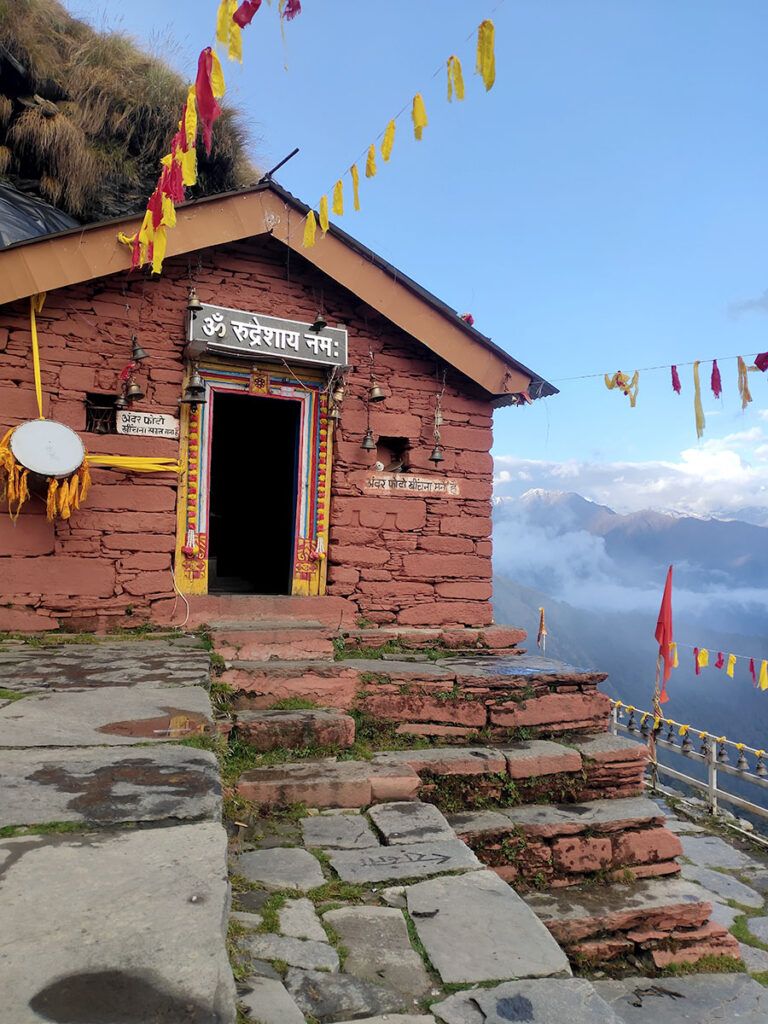
Continue Reading >> Rudranath Temple: The Ultimate Guide
Visitor Facilities & Practical Considerations
- Restrooms: Basic public toilet facilities are available near the main roadhead parking area. Facilities are limited on the upper temple terrace.
- Drinking Water: Available at local cafes and shops near the road entry; carrying a reusable water bottle is recommended.
- Cloakrooms: No formal paid luggage cloakroom exists. Keep travel bags in your vehicle or hotel; shoe storage is available near the entrance.
- Accessibility: The site is not wheelchair accessible due to the natural stone staircases required to ascend the ridge.
- Food & Accommodation: Kasar Devi village features numerous homestays, guesthouses, and heritage properties along the ridge road, catering to both budget backpackers and families. Local cafes serve regional Kumaoni meals (bhatt ki churkani, mandua rotis) alongside standard Indian and international food.
Best Time to Visit
- For Mountain Views: Late September through November offers the lowest atmospheric haze, providing clear views of Trishul and Nanda Devi peaks at sunrise.
- For Quiet Reflection: Weekday mornings between 7:00 AM and 10:00 AM outside of major festival dates are the quietest hours on the ridge.

Recommended Nearby Destinations
Combining Kasar Devi with adjacent heritage and nature sites in the Almora belt creates a balanced pilgrimage and cultural itinerary:
- Katarmal Sun Temple (approx. 25 km): A 9th-century complex of stone shrines built by the Katyuri kings, ranking among the most significant sun temples in Northern India after Konark.
- Binsar Wildlife Sanctuary (approx. 24 km north): A protected oak and rhododendron forest known for Himalayan bird species, walking trails, and the Zero Point view platform.
- Chitai Golu Devata Temple (approx. 12 km): Famous for thousands of brass bells and written petitions suspended across its grounds, dedicated to the regional deity of justice, Golu Devata.
- Crank’s Ridge Trail: A scenic walking trail directly adjacent to the temple running along the pine ridge, passing the former homes of historic writers and artists.
Practical Advice for First-Time Visitors
- Prepare for Cold Mornings and Evenings: Even in summer, ridge winds bring sudden drops in temperature after sunset. Pack a light fleece or windcheater between April and June, and heavy woolens from October to March.
- Footwear Choice: Wear sturdy walking shoes with adequate tread for the stone stairway leading up to the complex.
- Connectivity & Payments: Mobile reception (Airtel, Jio) is stable on the ridge. However, roadhead tea stalls and small taxi operators often experience UPI network delays; carry modest amounts of physical cash for local fares and offerings.
- Sunrise Darshan: Arriving around 6:15 AM to 6:30 AM allows visitors to attend the morning prayer while observing sunrise light hitting the Nanda Devi range from the temple viewing benches.
FAQ SECTION
Where is Kasar Devi Temple located?
Kasar Devi Temple is situated on a high ridge in Kasar Devi village, roughly 8 kilometers north of Almora town along the Almora–Bageshwar highway in Uttarakhand, India.
What are the temple timings at Kasar Devi?
The temple is open daily from 6:00 AM to 7:00 PM. In the winter months (November to February), timings adjust slightly according to daylight, typically opening by 6:30 AM and closing around 6:30 PM after the evening aarti.
Is Kasar Devi Temple connected to NASA?
Popular travel lore claims NASA conducted studies proving Kasar Devi possesses a unique geomagnetic vortex linked to the Van Allen belt alongside Stonehenge and Machu Picchu. However, there is no official scientific documentation from NASA confirming this specific claim. The temple’s genuine reputation stems from its documented historical tranquility, high altitude, and quiet environment that attracted figures like Swami Vivekananda and Lama Anagarika Govinda.
How many steps must one climb to reach Kasar Devi Temple?
Visitors must climb roughly 100 to 150 paved stone steps starting from the vehicle drop-off point on the main road. The climb takes about 5 to 10 minutes at an easy pace.
Which deity is worshipped at Kasar Devi Temple?
The primary sanctum is dedicated to Kasar Devi, venerated as an incarnation of Goddess Durga (associated in tradition with Goddess Kaushiki). An adjacent shrine on the same terrace is dedicated to Lord Shiva in the form of Bhairavnath.
Is Kasar Devi Temple wheelchair accessible?
No. Because access requires climbing a series of masonry stone steps up the hillside, the temple is not accessible for wheelchairs or visitors unable to ascend stairs without assistance.
How do I reach Kasar Devi from Kathgodam?
Kathgodam Railway Station is roughly 88 km away. From the station, you can take a shared taxi, private cab, or state transport bus to Almora, then take a local taxi (approx. 20–30 minutes) directly to the Kasar Devi gate.
What is the significance of the Kasar Devi Fair (Mela)?
The Kasar Devi Mela is an annual cultural and religious fair held on the day of Kartik Poornima (November). It attracts residents from surrounding Kumaoni villages for special prayers, folk songs, local trading, and night-long celebrations.