Mahanandi Temple: Timings, History, Pushkarini & Complete Visitor Guide
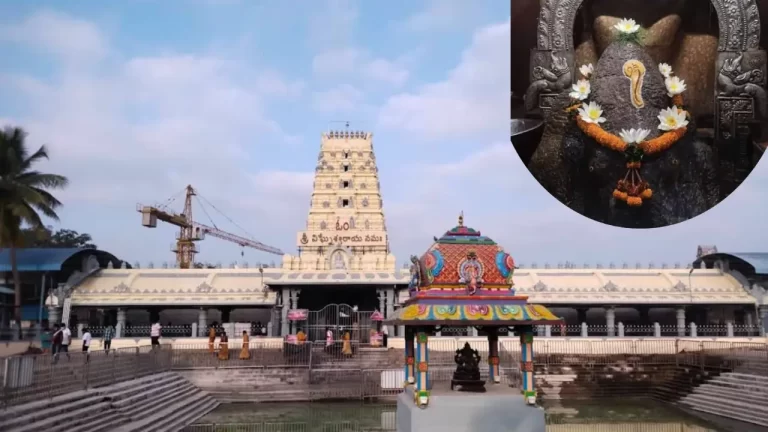
Mahanandi Temple is a world-famous Hindu temple dedicated to Lord Shiva, located in the peaceful green foothills of the Nallamala forest in the Nandyal District of Andhra Pradesh, India. Known officially as the Sri Mahanandiswara Swamy Temple, this sacred place is more than 1,300 years old. It is famous across India for two special wonders: a self-manifested (Swayambhu) Shiva Lingam that carries the holy mark of a cow’s hoof, and a natural freshwater spring that pours crystal-clear water through the temple day and night, keeping the same pleasant temperature in every season of the year.
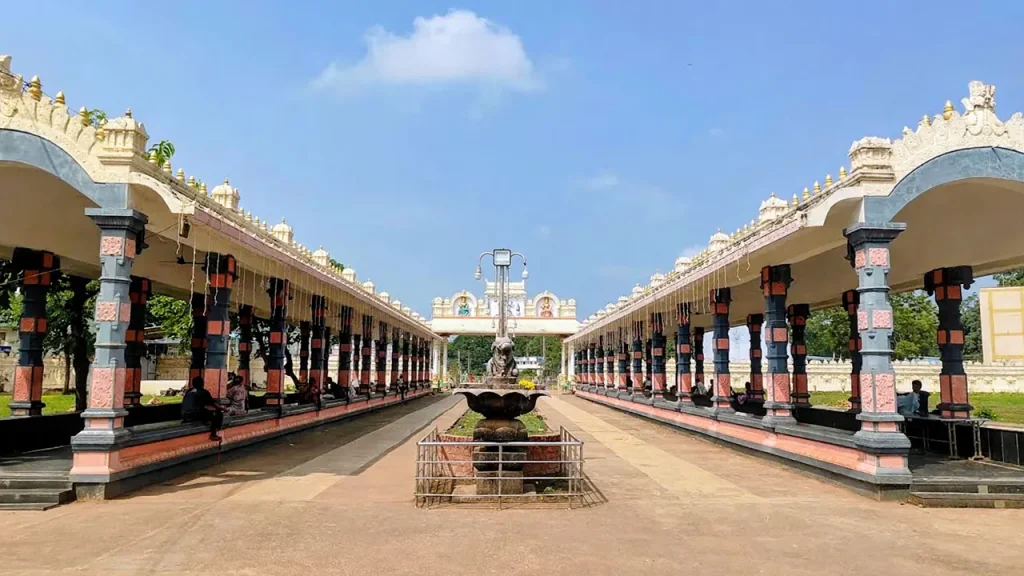
Mahanandi is also the central jewel of the Nava Nandi pilgrimage—a sacred circuit of nine temples dedicated to Nandi, the holy bull and prime devotee of Lord Shiva. Whether you are a pilgrim seeking deep spiritual blessings, a traveler who loves ancient stone architecture, or a family looking for a peaceful holy journey, this complete guide gives you everything you need to plan your visit.
Quick Information: Mahanandi Temple at a Glance
| Feature | Details |
| Temple Name | Sri Mahanandiswara Swamy Temple (Mahanandi) |
| Main Deity | Lord Shiva (Mahanandiswara Swamy) and Goddess Parvati (Kameswari Devi) |
| Temple Type | Ancient Hindu Temple / Swayambhu Shiva Shrine / Head of Nava Nandi Circuit |
| Location | Mahanandi Village, Nandyal Mandal, Nandyal District, Andhra Pradesh, India |
| District Headquarters | Nandyal (Approx. 15 km away) |
| General Darshan Timings | 5:30 AM to 1:00 PM and 3:00 PM to 9:00 PM daily |
| Special Wonder | Continuous natural freshwater spring flowing through sacred Gundams (Pushkarinis) |
| Best Time to Visit | October to March (Pleasant weather; peak festival during Maha Shivaratri) |
| Nearest Railway Station | Nandyal Junction (NDL) – 17 km; Kurnool City (KLU) – 85 km |
| Nearest Airports | Kurnool Airport, Orvakal (KJB) – 70 km; Hyderabad International Airport (HYD) – 285 km |
| Dress Code | Traditional Indian attire (Dhoti/Kurta for men; Saree/Salwar for women) |
| Official Administrative Body | Endowments Department, Government of Andhra Pradesh |
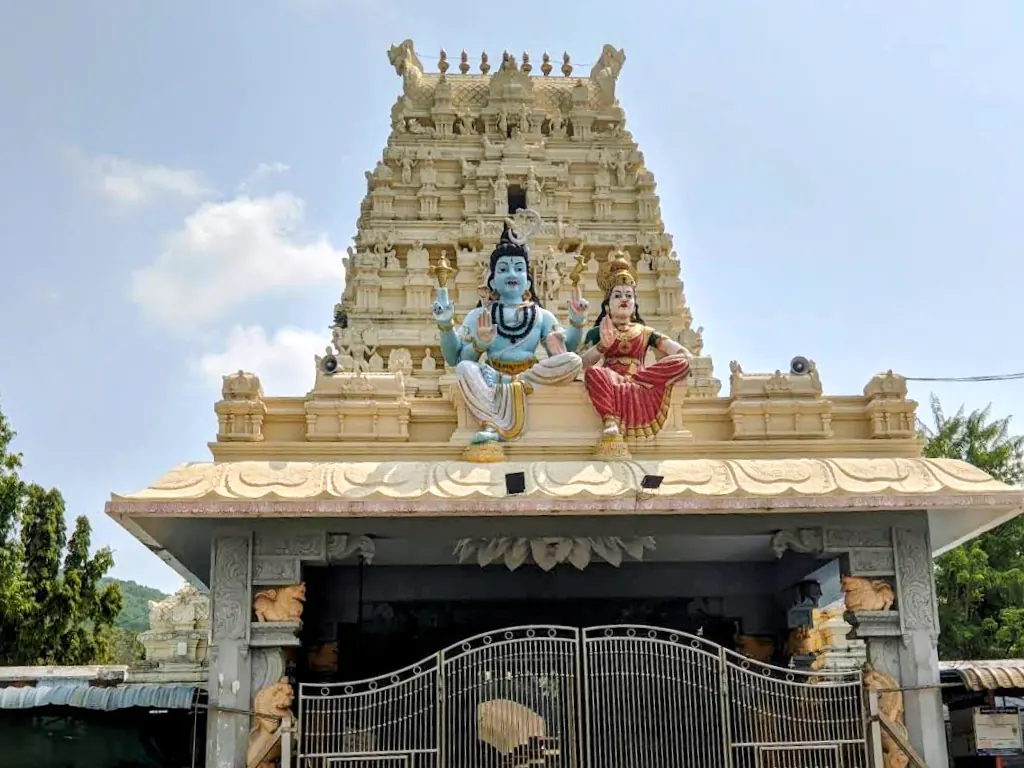
Why Mahanandi Temple Is Sacred: The Living Water and the Divine Bull
In Hindu tradition, Nandi the bull represents loyalty, unwavering devotion, strength, and truth. At Mahanandi, devotion to Lord Shiva is deeply linked to the story of Nandi.
Unlike many temples where the Shiva Lingam is carved out of polished black granite by human hands, the Lingam at Mahanandi is Swayambhu, which means it appeared naturally out of the earth. When you look closely at the Lingam inside the sanctum, you can see a natural hollow on top. Devotees revere this hollow as the indentation of a cow’s hoof.
The second reason for Mahanandi’s fame is its pure, living water. Deep beneath the main sanctum, beneath the very foundation of the Shiva Lingam, a perennial spring bubbles up from the earth. The water is so transparent that you can count small coins lying at the bottom of the five-foot-deep stone tank. No matter whether it is scorching summer or freezing winter, the water flows without stopping. It stays naturally warm during cool winter mornings and refreshingly cool during hot summer afternoons.
Pilgrims traveling through the Rayalaseema region often combine their visit to Mahanandi with a sacred journey to the renowned Srisailam Mallikarjuna Swamy Temple, which rests higher up in the same dense Nallamala mountain range.
The Legend (Sthala Purana): Sage Silada and the Divine Calf
The sacred story of Mahanandi is told in ancient regional texts and local temple lore. Long ago, a great sage named Silada performed intense penance to please Lord Shiva. He had one sincere wish: he wanted a child who would always be devoted to the Supreme Lord.
Pleased by his devotion, Lord Shiva blessed him, and a divine child was born from the sacrificial ground. The child was named Nandi. As Nandi grew up, he meditated deeply on Lord Shiva. To honor his pure heart, Lord Shiva made Nandi His eternal vehicle (vahana), His chief guard, and the leader of all His attendants (Ganas).
Another chapter of the temple legend describes a king named Mahananda who ruled this land. The king kept a royal herd of cows that grazed in the lush Nallamala forest. Every evening, one gentle cow returned home without giving any milk. Surprised and curious, the cowherd followed the cow secretly into the deep forest.
He watched in awe as the cow stood over a small termite mound (valmikam) and gently poured her milk over it on her own accord. The cowherd immediately reported this wonder to King Mahananda. The next day, the king came to see it with his own eyes. As the king walked closer, the cow became startled. In her haste to step away, her hoof accidentally pressed down upon the soft mound.
When the king looked down, he saw that the mound had turned into solid rock bearing the clear imprint of the cow’s hoof. That night, Lord Shiva appeared in the king’s dream and revealed that He resided in that very rock. He instructed the king to build a temple around the holy spot. That same stone mound became the Swayambhu Lingam worshipped today as Mahanandiswara Swamy.
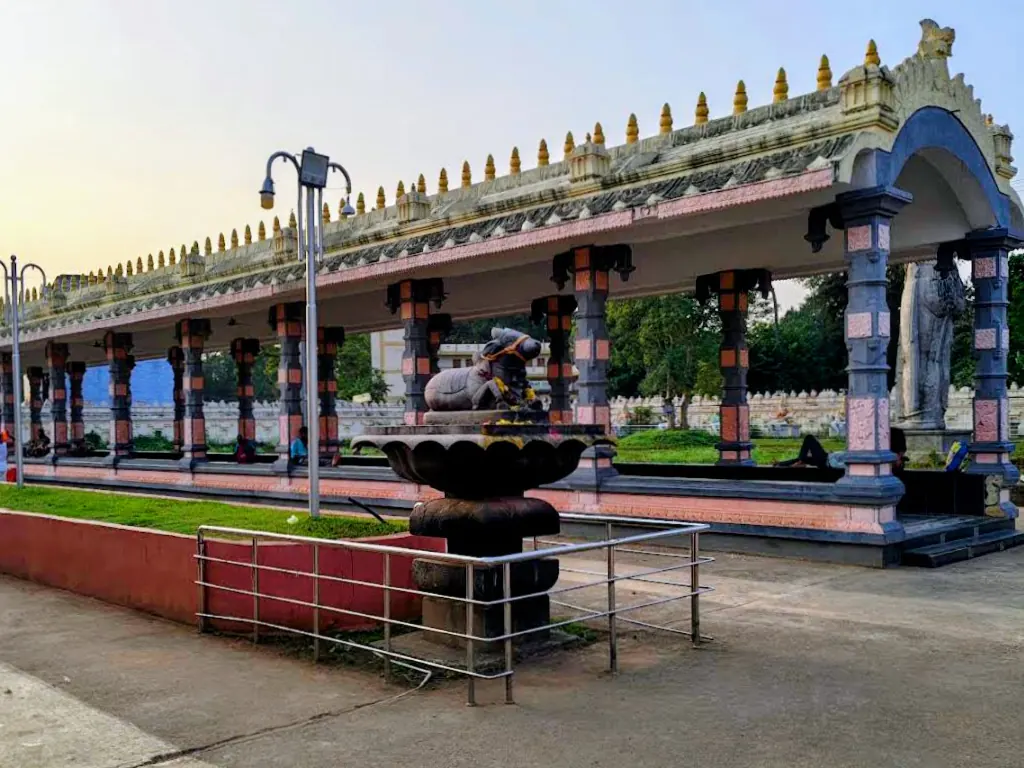
The Wonder of Mahanandi Pushkarini: Rudra Gundam, Vishnu Gundam, and Brahma Gundam
The water system at Mahanandi is considered an ancient engineering and spiritual marvel. The temple complex features three sacred water tanks, known locally as Gundams:
- Rudra Gundam: This is the main open tank located right in front of the inner sanctum. The sacred spring emerges here after touching the roots of the holy Lingam. Devotees are permitted to take a holy dip in the Rudra Gundam. The water is approximately 5 feet deep, and stone steps lead safely down into the tank on all sides. Taking a bath here before entering the sanctum is believed to wash away physical weariness and purify the mind.
- Vishnu Gundam: Located nearby, this smaller tank receives water channelled from the primary flow. It reflects the peaceful architectural design of the medieval temple layout.
- Brahma Gundam: This tank completes the holy trinity (Trimurti).
What makes this system truly unique is that the water never stagnates. The spring produces a massive, continuous volume of fresh water every minute. After filling the three temple tanks, the clean overflow is directed through stone conduits into irrigation canals outside the temple walls. This fresh holy water irrigates over 2,000 acres of fertile green paddy fields, banana groves, and fruit orchards around Mahanandi village.
Much like the sacred step-wells found at the historic Yaganti temple with its famous growing Nandi, the water at Mahanandi represents a divine gift of life that keeps the entire rural community prosperous.
Temple History and Architecture
The history of Mahanandi spans multiple great South Indian dynasties.
Chalukyan Beginnings (7th to 8th Century CE)
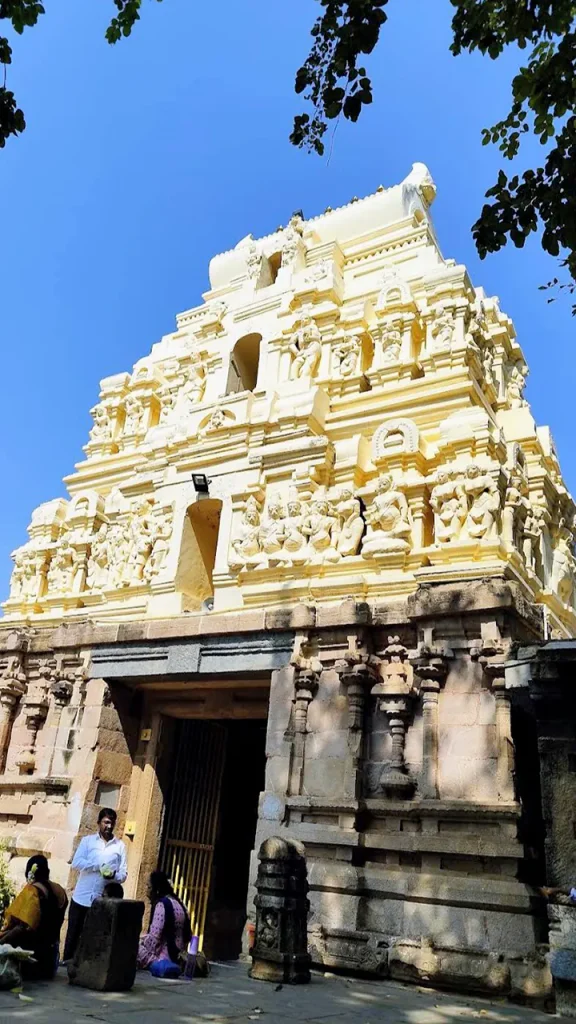
Historical records and temple stone styles show that the earliest construction at Mahanandi began during the reign of the Badami Chalukyas around the 7th century CE. The Chalukyan builders were masters of stone, and you can see their signature style in the vimana (the tower over the main sanctum). The tower rises with stepped tiers and horizontal stone bands in the classic early Nagara and Vesara styles common to the Krishna and Tungabhadra river valleys.
Kakatiya and Hoysala Additions
Over the centuries, the temple was carefully protected and expanded. Kings from the Kakatiya dynasty and the Hoysalas contributed stone mantapas and shrines to honor Goddess Parvati and Lord Ganesha.
Vijayanagara Empire Splendor (15th to 16th Century CE)
During the height of the Vijayanagara Empire, emperors and royal commanders who held great reverence for Shaivite forest shrines renovated the outer courtyards. They built the grand pillared halls (Mukha Mantapa), carved detailed figures of lions, dancers, and celestial beings on the stone pillars, and raised the protective outer walls.
The temple faces east, welcoming the soft rays of the morning sun. Inside the main courtyard, you will find:
- The Main Sanctum: Housing Sri Mahanandiswara Swamy.
- Sri Kameswari Devi Shrine: The peaceful sanctum dedicated to Goddess Parvati, known here as the Mother who fulfills righteous prayers.
- Navagraha Shrines: Dedicated to the nine cosmic planets.
- Vinayaka and Subrahmanya Shrines: Where devotees break coconuts and offer prayers for removing obstacles.
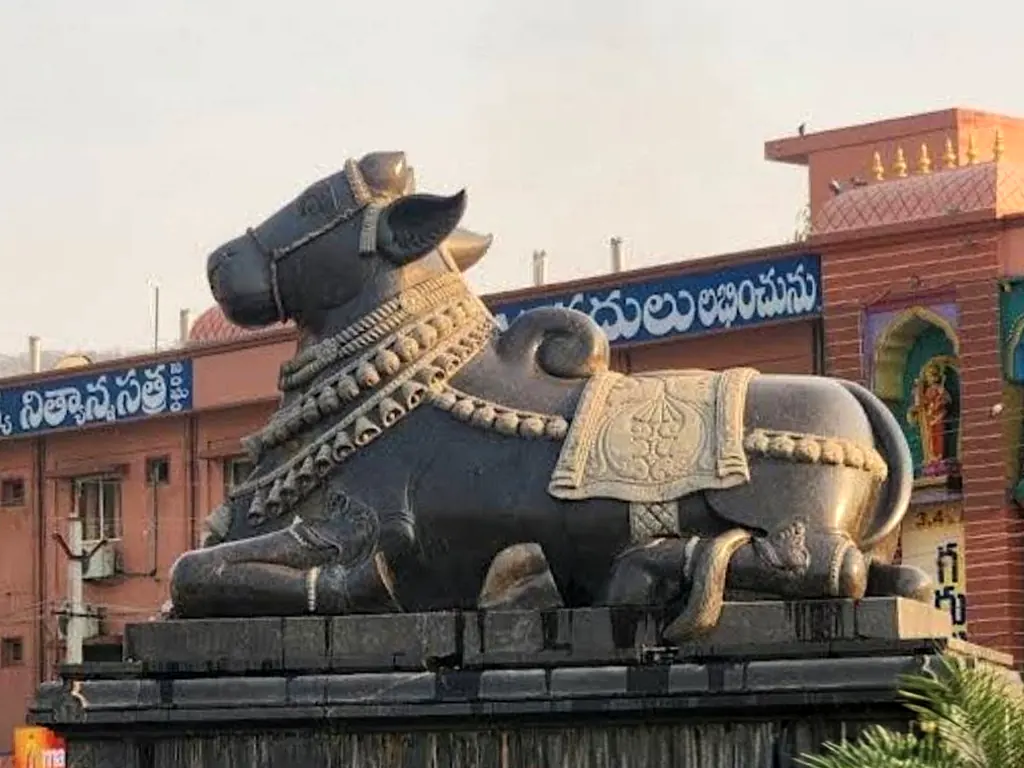
Mahanandi Temple Timings (Darshan and Pooja)
Mahanandi Temple opens early in the morning so pilgrims can take their holy bath in the Rudra Gundam and witness the sunrise rituals.
| Time Slot | Ritual / Darshan Type | Pilgrim Guidance |
| 5:30 AM – 6:00 AM | Temple Opening & Suprabhatam | The quietest and most serene time for early darshan. |
| 6:00 AM – 8:00 AM | Rudrabhishekam & Morning Pooja | Devotees can participate in special milk and water abhishekam. |
| 8:00 AM – 12:30 PM | Sarva Darshan (Free General Darshan) | Open for all devotees; lines move steadily. |
| 12:30 PM – 1:00 PM | Maha Naivedyam & Afternoon Aarti | Temple sanctum closes briefly for afternoon offerings. |
| 1:00 PM – 3:00 PM | Afternoon Break | Temple doors remain closed; reopens at 3:00 PM. |
| 3:00 PM – 6:00 PM | Afternoon Sarva Darshan | Good time for daytime visitors arriving by road. |
| 6:00 PM – 7:30 PM | Sandhya Aarti & Evening Abhishekam | The temple is lit up beautifully with oil lamps and lights. |
| 7:30 PM – 8:45 PM | Night Sarva Darshan | Final opportunity for general darshan. |
| 9:00 PM | Ekantha Seva & Temple Closing | Sanctum closes for the night. |
Note: On special festival days like Maha Shivaratri, Mondays of Karthika Masam, and Solar/Lunar Eclipse days, timings change according to temple traditions. Always confirm locally if traveling during festival periods.
Mahanandi is the centerpiece of a complete pilgrimage circuit known as the Nava Nandulu (The Nine Nandis). All nine temples are situated in and around the town of Nandyal within a radius of about 15 to 35 kilometers. Many pilgrims make it a spiritual goal to visit all nine temples in a single day, from sunrise to sunset.
Here is the complete list of the Nine Nandi Temples:
| Temple Name | Approximate Location / Distance from Nandyal | Spiritual Significance |
| 1. Prathama Nandi | Close to Nandyal Railway Station (1 km) | The “First Nandi”; historically the starting point of the circuit. |
| 2. Naga Nandi | Inside Nandyal town (near Shiva temple) | Dedicated to removing Sarpa Dosha (snake-related astrological obstacles). |
| 3. Soma Nandi | Near Atmakur road / Nandyal outskirts (5 km) | Dedicated to the Moon God (Chandra); known for its quiet, peaceful atmosphere. |
| 4. Surya Nandi | East of Nandyal, along the route to Mahanandi (6 km) | Dedicated to the Sun God (Surya); devotees pray here for health and vitality. |
| 5. Shiva Nandi | Near Thimmapuram village (12 km) | A beautiful rustic temple surrounded by peaceful village farmland. |
| 6. Krishna Nandi (Vishnu Nandi) | Near Mahanandi forest fringe (14 km) | Represents the harmony of Lord Shiva and Lord Vishnu worship. |
| 7. Garuda Nandi | Near the main Mahanandi forest approach (15 km) | Honors Garuda, the divine eagle; quiet forest surroundings. |
| 8. Vinayaka Nandi | Near the entrance arches of Mahanandi village | Where Lord Ganesha is worshipped alongside Nandi to remove all journey obstacles. |
| 9. Mahanandi | Mahanandi village (15 km east of Nandyal) | The grandest, largest, and presiding shrine of the entire Nine Nandi circuit. |
To complete the full Nava Nandi circuit smoothly, it is best to hire a local auto-rickshaw or taxi from Nandyal town early in the morning (by 6:30 AM). Local drivers know the rural roads well and can guide you through the circuit in a neat circle, ending at Mahanandi for an evening holy bath and final darshan.
Best Time to Visit Mahanandi
The geographical location of Mahanandi at the base of the Nallamala forest creates distinct seasonal climates:
- Winter (October to February): This is the best time to visit. The weather is cool, pleasant, and breezy. Temperatures range between 18°C and 30°C. Taking a dip in the naturally tepid waters of Rudra Gundam during a chilly morning is an unforgettable experience.
- Monsoon (July to September): The Nallamala forests turn vibrant green, and the surrounding countryside looks lush and fresh. The water springs flow with full power. Rain can be heavy occasionally, but it rarely disrupts temple visits.
- Summer (March to June): Summers in Rayalaseema are hot and dry, with temperatures often rising above 40°C. If you must visit in summer, plan your darshan early in the morning before 10:00 AM or in the evening after 5:30 PM.
Major Festivals
The most important festival is Maha Shivaratri (celebrated in February or March). Tens of thousands of pilgrims walk on foot through the forest hills to gather at Mahanandi. The temple remains open almost continuously throughout the holy night, filled with chanting, special abhishekams, and chariot processions (Rathotsavam). Another deeply holy period is Karthika Masam (October–November), where every Monday draws large crowds for lighting oil lamps (Deepotsavam).
How to Reach Mahanandi Temple
Mahanandi is well-connected by road and rail through the commercial and district hub of Nandyal.
1. By Train
The easiest way to reach Mahanandi by rail is through Nandyal Junction (Station Code: NDL), which is just 17 kilometers away. Nandyal is a well-connected railway hub on the Guntur–Guntakal line. Regular express trains link Nandyal directly to:
- Hyderabad / Secunderabad
- Vijayawada and Guntur
- Bengaluru (Bangalore)
- Hubballi and Goa
- Tirupati
From Nandyal railway station, local government buses (APSRTC), shared passenger autos, and private taxis run frequently to Mahanandi every 15 to 20 minutes throughout the day.
2. By Road
Mahanandi lies approximately 15 km east of National Highway 40 (NH 40, which connects Kurnool and Kadapa). The road from Nandyal passes through green fields and rural arches, making for a scenic 25-minute drive.
- From Nandyal: 15 km (25 minutes)
- From Kurnool: 85 km (1.5 to 2 hours via NH 40)
- From Hyderabad: 285 km (5 to 6 hours via NH 44 up to Kurnool, then NH 40 to Nandyal)
- From Vijayawada: 240 km (5 hours via Guntur and Vinukonda)
- From Tirupati: 280 km (5.5 hours via Kadapa and Allagadda)
The state transport agency, APSRTC, runs frequent direct rural shuttle buses between Nandyal Old Bus Stand / Main Bus Stand and Mahanandi from 5:00 AM until 9:30 PM.
3. By Air
- Kurnool Airport, Orvakal (IATA: KJB): The nearest regional domestic airport, located about 70 km northwest. It operates regional flights connecting select cities like Bengaluru, Chennai, and Visakhapatnam.
- Rajiv Gandhi International Airport, Hyderabad (IATA: HYD): The nearest major international airport, situated about 285 km away. From Hyderabad airport, travelers can hire an outstation cab or board an express bus southward toward Nandyal.
For up-to-date regional administrative announcements and road safety guidelines, pilgrims can consult the Nandyal District Official Portal, maintained by the Government of Andhra Pradesh.
Dress Code, Rules, and Visitor Etiquette
To maintain the sanctity of this ancient shrine, visitors are asked to observe traditional decorum:
- Dress Code: Traditional modest clothing is encouraged. Men are expected to wear dhotis with shirts or kurtas and pyjamas. Women should wear sarees, half-sarees, or salwar-kameez with dupattas. Western casuals such as shorts, bermudas, and mini-skirts are not permitted inside the sanctum line.
- Pushkarini Bathing Rules: Devotees must not use commercial soaps, shampoos, or washing detergents inside the Rudra Gundam. The water is holy and flows directly to surrounding agricultural lands; keeping it pure is both a religious duty and an environmental responsibility.
- Footwear Storage: Safe footwear stalls are available outside the main temple entrance for a nominal fee. Do not leave shoes near the stone steps leading down to the water tanks.
- Photography: Photography of the inner sanctum and the Shiva Lingam is strictly forbidden. You may take family photographs in the outer courtyards and open gardens.
Accommodation, Food, and Pilgrim Facilities
Mahanandi is a village, so facilities are simple, clean, and peaceful:
- Temple Choultries and Guest Houses: The Sri Mahanandiswara Swamy Devasthanam runs several pilgrim guest houses, cottages, and basic community dormitories (choultries). Rooms are budget-friendly and can be booked at the devasthanam administrative counter near the temple entrance.
- Hotels in Nandyal Town: If you are looking for modern amenities, air-conditioned rooms, and multi-cuisine family dining, staying in Nandyal town (15 km away) is the most comfortable option. Nandyal has numerous well-rated 2-star and 3-star business hotels located close to the bus station and railway junction.
- Food and Prasadam: The temple provides Nitya Annadanam (free sacred lunch) for visiting pilgrims every day, typically served between 12:00 PM and 2:00 PM in the dedicated dining hall. Outside the temple, small local vegetarian mess halls serve fresh South Indian breakfast items (idli, dosa, vada) and traditional Andhra thali meals. Delicious temple laddu and pulihora prasadam packets can be purchased at the official devasthanam prasadam counters.
Nearby Pilgrimage Sites to Visit Along with Mahanandi
A visit to Mahanandi can easily be expanded into a rewarding 2-to-3-day pilgrimage across the heart of Andhra Pradesh:
- Ahobilam (Nava Narasimha Kshetram): Located about 60 km south of Nandyal, the sacred Ahobilam Nava Narasimha Swamy Temple is the only pilgrimage center in India where all nine sacred forms of Lord Narasimha are worshipped across the upper and lower hills of the Eastern Ghats.
- Yaganti (Uma Maheshwara Temple): Located about 65 km west of Mahanandi near Banaganapalle, this historic 15th-century temple is renowned for its continuously growing stone Nandi, natural sage caves (Agastya Cave, Venkateswara Cave), and its clean hillside pushkarini.
- Belum Caves: Located approximately 85 km from Mahanandi, these are the second-largest natural limestone cave systems in the Indian subcontinent, famous for their long underground passages, stalactite formations, and deep mineral shafts.
- Srisailam: Located approximately 175 km north through scenic forest ghat roads, this is one of India’s twelve supreme Jyotirlingas and eighteen Maha Shakti Peethas.
For comprehensive state-level travel circuits and registered tour operators, travelers can review official guidelines through Andhra Pradesh Tourism.
Frequently Asked Questions About Mahanandi Temple
1. Is bathing allowed in the Mahanandi temple tank?
Yes. Devotees are permitted to take a holy bath in the main stone tank called Rudra Gundam, which sits directly in front of the temple sanctum. The water is clean and continuously refreshed by a natural spring. Soaps and detergents are strictly banned.
2. What is special about the water at Mahanandi?
The water originates from a perennial spring under the Swayambhu Shiva Lingam. It remains at a steady, lukewarm temperature during the cold winter months and stays cool and refreshing during hot summer days. The water is so transparent that objects on the bottom are clearly visible.
3. How long does general darshan take at Mahanandi?
On regular weekdays, darshan typically takes between 20 and 45 minutes. On Mondays, weekends, and monthly Pradosham days, it may take 1 to 2 hours. During the annual Maha Shivaratri festival, lines can extend to several hours due to massive pilgrim turnouts.
4. Can we cover all Nine Nandi temples in one day?
Yes. The Nava Nandi circuit covers a driving loop of approximately 70 to 80 kilometers across the Nandyal rural belt. By starting from Nandyal town around 6:30 AM in a hired taxi or auto, you can visit all nine temples comfortably by 5:00 PM or 6:00 PM, concluding at Mahanandi.
5. What is the nearest railway station to Mahanandi Temple?
The nearest railway station is Nandyal Junction (NDL), located approximately 17 kilometers away. It has direct train connections to major South Indian cities, including Hyderabad, Vijayawada, Guntur, and Bengaluru.
Plan Your Pilgrimage with Peace and Devotion
Mahanandi Temple is a sacred sanctuary where ancient stone architecture, deep spiritual faith, and natural natural beauty come together. As the clear mountain water flows silently past the feet of Lord Shiva and out into the surrounding fields, it reminds every visitor of the timeless spiritual traditions of India.
Whether you come to take a purifying holy dip in the crystal waters of Rudra Gundam, explore the historic 7th-century Chalukyan carvings, or complete the sacred nine-Nandi circuit, Mahanandi offers a calm, uplifting pilgrimage experience. Plan your journey during the pleasant winter months, keep adequate time for peaceful darshan, and let the quiet grace of the Nallamala forest touch your heart.