Gangapur Dattatreya Temple
Gangapur Dattatreya Temple, nestled within the tiny but deeply significant village of Ganagapur in Karnataka. It’s not a place to visit; it’s a pilgrimage, a heart and soul journey. The atmosphere here is palpable, filled with centuries of faith and the hope of a living Guru. Most call this site by its formal name, Sangama Datta Temple Ganagapur, due to the strong juncture of two sacred rivers in the area. So let us start our sojourn at this holy site, a refuge for many seekers of truth and comfort.
Contents
- 1 Introduction to a Divine Land
- 2 Gangapur Dattatreya Temple History
- 3 The Legend of the Temple
- 4 Cultural, Spiritual, and Mythological Importance
- 5 Festivals and Special Days
- 6 Unique Architectural Style and Carvings
- 7 Myths, Beliefs, and a Powerful Experience
- 8 Gangapur Dattatreya Temple Timings and Daily Rituals
- 8.0.1 Mahaganapathi Temple Malleswaram
- 8.0.2 Gangapur Dattatreya Temple
- 8.0.3 Sri Kshetra Dharmasthala Temple: Miracles of Lord Manjunatha
- 8.0.4 Shri Bettada Byraveshwara Temple
- 8.0.5 Vidyashankara Temple Sringeri 12 Pillars Reveal Your Destiny
- 8.0.6 Venugopala Swamy Temple Kannambadi: Lost for Decades Under Water
- 9 Places to See Around the Temple
- 10 Accommodation Options
- 11 How to Reach the Temple
Introduction to a Divine Land
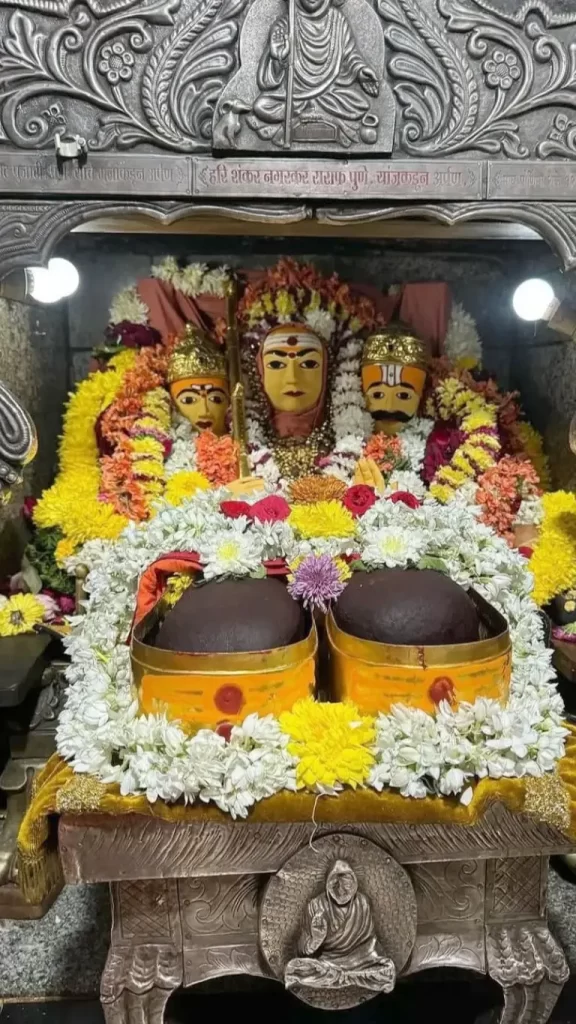
Have you ever imagined being at a site where a great saint had tread, where his blessings linger still? That is the essence of Ganagapur. This village in the Afzalpur taluka of the Gulbarga (Kalaburagi) district of Karnataka is a “Guru Sthan”–an abode of the Guru. It’s consecrated to Shri Narasimha Saraswati Swami, who is greatly revered as the second rebirth of Lord Dattatreya himself. The main deity here is not an idol, but the Nirguna Padukas—the saint’s sacred sandals, which are considered his very presence. This itself makes the Gangapur Dattatreya Temple a one-of-a-kind spot.
Individuals from all walks of life, from all parts of India, and even the world, visit here in search of solutions to their issues, remedies for their diseases, and peace for their distressed minds. The fervor here is huge, and you will find it exhibited in every ceremony and in every face. This holy place is referred to in the sacred book, Shri Guru Charitra, which is a foundational scripture for the Datta Sampradaya.
In this passage, Shri Narasimha Saraswati did make a strong vow to his devotees: “Vasathi Rani Sangamase Jate Nithya Bikshese Taya Vare Ganagapurase Madhyana Kaala Pareyasa.” Translated to, “I shall remain in this Ganagapur kshetra in secret. My existing form will be felt by anyone who bathes in the Bheema-Amarja Sangam and seeks the darshan of my Padukas here.” This vow is the foundation of faith of every devotee that goes to the Gangapur Dattatreya Temple.
Read More>> Salai Kumaraswamy Temple Tirunelveli
Gangapur Dattatreya Temple History
The temple history of Gangapur Dattatreya Temple is closely intertwined with the life of Shri Narasimha Saraswati. He was born in Karanjapur, now known as Karanja in the state of Maharashtra, during the 14th century. Upon a life of spiritual service and the performance of many miracles, he established residence in Ganagapur for the final 24 years of his worldly existence. It was here that he imparted the path of righteousness and self-realization to his disciples and the local people. His presence turned this tiny village into a great spiritual center.
Before departing to Kardali Van near Srisailam for taking Samadhi, he deposited his Nirguna Padukas—the sandals—symbolically for his continued presence. These Padukas do not remain a relic; they are said to be imbued with his living energy. This is the reason why the Gangapur Dattatreya Temple is said to be a Siddha Kshetra, where prayers are granted immediately and where the guru’s divine presence can be sensed at all times.
The temple before you now is the Nirguna Math, which was set up for him to live in, and it remains the focal point of worship. Ganagapur town is also referred to by other names such as Gandharvapur and Gangabhavan, which are said to be of ancient origin. The Shri Guru Charitra, written by Sarasvati Gangadhara, gives a vivid account of the Guru’s miracles and teachings, and the significance of this holy place.
The Legend of the Temple
Legend surrounding the Gangapur Dattatreya Temple is what lends it its depth of spiritual atmosphere. One of the most well-known legends, as given in the Shri Guru Charitra, is that of the barren buffalo. An impoverished Brahmin woman, who had no means of livelihood, was blessed by Shri Narasimha Saraswati. The Guru requested alms in the form of milk from her barren buffalo. She hesitated, citing that the buffalo had not yielded milk for years. The Guru was firm, and to her complete surprise and the astonishment of the whole village, the barren buffalo started producing large quantities of milk. This miracle confirmed the divinity of the Guru and the holiness of the soil.
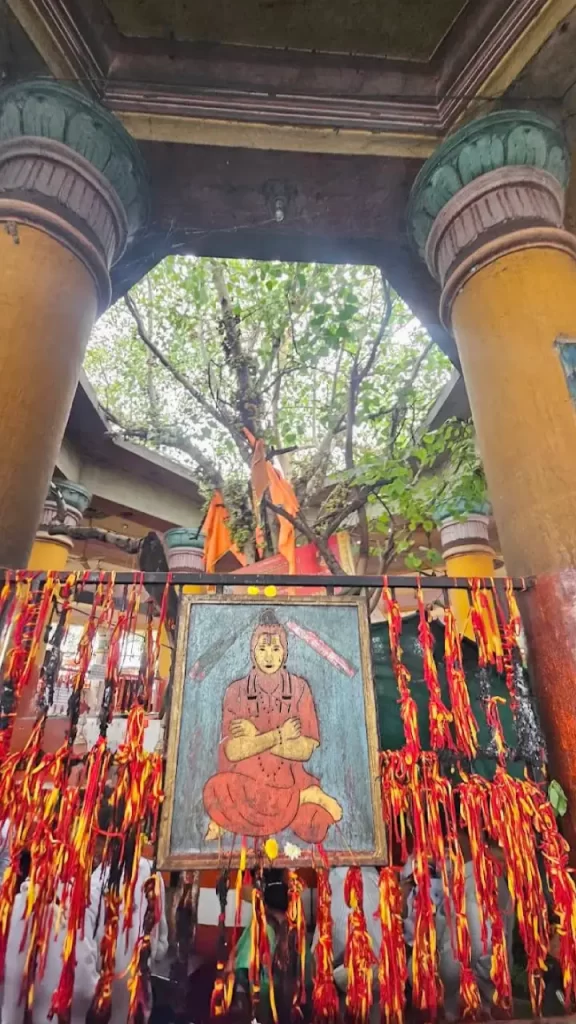
Another important legend is of the Brahmarakshasa (ghost) which infested the Audumbar tree. Everyone was afraid to approach the tree. But Shri Narasimha Saraswati, with his huge spiritual power, released the Brahmarakshasa from its suffering and gave it moksha (liberation). This is the reason why the Audumbar tree, located near the Sangama, is so highly revered. The tree is not a tree but a witness to the Guru’s mercy and spiritual strength.
One of the most intimate and self-effacing legends is the Guru’s vow of Madhyanha Bhiksha. He vowed that even in his Samadhi, he would return to the village daily at midday to receive bhiksha (alms). This custom, referred to as Madhukari Seva, remains an integral meaningful practice in Ganagapur. Devotees take part in this ritual, having a notion that by way of offering food and by receiving bhiksha from a minimum of five houses, they are actually getting the blessings of the Guru himself. This is the true essence of the Gangapur Dattatreya Temple—a temple where the Guru is not a remote deity but a living being part of the daily life of his devotees.
Read More>> Manakula Vinayagar Temple
Cultural, Spiritual, and Mythological Importance
The Gangapur Dattatreya Temple is of great cultural, spiritual, and mythological importance. It is amongst the most potent peethas (centers of spiritual power) of Lord Dattatreya. Lord Dattatreya himself is a singular deity, an incarnation of the Trimurti—Brahma, Vishnu, and Shiva. He is worshipped as the initial Guru and fount of all spiritual learning.
For Datta Sampradaya devotees, it is their spiritual homeland. The Shri Guru Charitra is the most significant scripture of this tradition, and it narrates the life and teachings of not only Shri Narasimha Saraswati but also his past incarnation, Shri Shripad Shri Vallabha. The performance of parayan includes reading the whole text of Shri Guru Charitra at the temple or beneath the holy Audumbar tree is believed to wash away one’s sin, cure illness, and bring fulfillments.
Mythologically, the site is associated with Lord Parashurama, an incarnation of Lord Vishnu, who is said to have conducted a great Yajna here. Parayan is a Hindu ritual that is widely performed in India. The Bhasma pile close to the Sangam is believed to be the leftovers of this Yajna. This Bhasma is very strong and is brought home by several devotees to ward off evil energies and to cure sickness. This ancient history with the Puranas raises the Sangama Datta Temple Ganagapur from a mere temple to a veritable mythological and divinely gifted piece of land.
Festivals and Special Days
The Gangapur Dattatreya Temple is a place of continuous spiritual activity, but certain days and festivals draw a particularly large crowd.
Guru Purnima: This is one of the most significant festivals celebrated here. It is a day dedicated to honoring one’s Guru. Thousands of devotees flock to Ganagapur to seek the blessings of Shri Narasimha Saraswati and participate in special pujas and aartis. The atmosphere is charged with devotion and reverence.
Datta Jayanti: This celebration is a birthday anniversary of Lord Dattatreya. Observed in grand style, it includes elaborate pujas, special Paduka abhishekam, and grand procession. The temple and the surroundings are tastefully decorated, and all the villagers participate in the festivities.
Narasimha Jayanti: The birthday of Shri Narasimha Saraswati is another significant day. The temple is filled with a tremendous number of devotees who visit to pay their homage and watch the unique rituals.
Thursdays: Thursdays are thought to be particularly auspicious days to go to Ganagapur because they are named after Lord Dattatreya. Numerous individuals attend specifically on Thursdays in order to do parayan or watch the popular Madhyanha Aarti. The crowd is significantly larger on Thursdays, and the atmosphere is very charged.
Pournima (Full Moon Day) and Amavasya (New Moon Day): Both these days are also very auspicious and visit by a great number of pilgrims who are of the view that rituals performed on these days bring special blessings. The temple becomes particularly crowded on these days, so fix your visit accordingly.
The daily rituals, such as the early morning Kakad Aarti, the afternoon Madhyanha Aarti, and the evening Shej Aarti and Pallakhi Seva, are also very important and should not be missed. The Madhyanha Aarti at noon is a powerful experience, particularly for those seeking relief from evil spirits. More on that later.
Read More>> Yamai Devi Temple Aundh: Mystery of the Black Stone Goddess
Unique Architectural Style and Carvings
Although the Gangapur Dattatreya Temple is not famous for its large, elaborate carvings as some well-known temples are, its architecture possesses a simplistic, peaceful, and utilitarian charm typical of the Datta Sampradaya. The central Nirguna Math is a simple building, constructed for prayer and meditation. The emphasis here is not on the material but the spiritual.
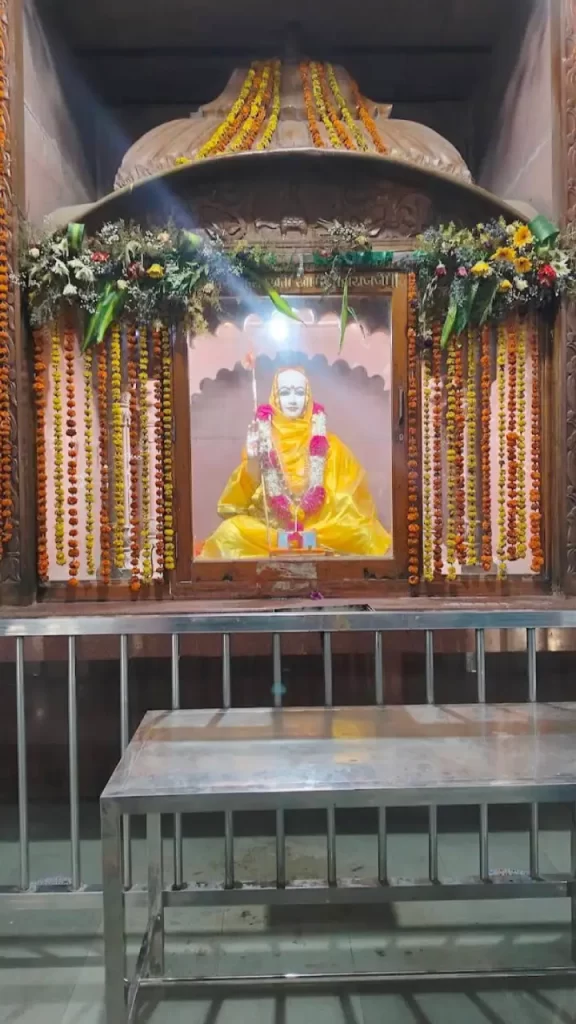
The sanctum sanctorum, known as the Garbha Griha, contains the Nirguna Padukas of Shri Narasimha Saraswati. The Garbha Griha is closed off, but you may take a darshan through a small opening in a silver frame. The Padukas themselves are brownish-red and are described as being soft to touch, like they are made out of a part of a human body, a fact that is astounding and immensely mysterious.
There are also other smaller shrines in the temple complex, one of which is that of Chintamani Ganesha, said to have been installed by Shri Narasimha Saraswati himself. The Audumbar tree, whose presence dates back centuries, is a natural landmark and focal point of the spiritual ambience of the temple. The overall complex design is one that imparts a sense of tranquility, conducive to intense contemplation and prayer. The architectural design, though minimalist, well accomplishes its role as a strong spiritual dwelling, a setting where the human spirit is able to connect with divinity.
Myths, Beliefs, and a Powerful Experience
The Gangapur Dattatreya Temple is renowned, or rather notorious, for its role in removing mental illness, pitru dosha (ancestors’ curse), and freedom from ghosts and black magic. It is not a myth; it is a deeply ingrained belief based on the experience of thousands of followers.
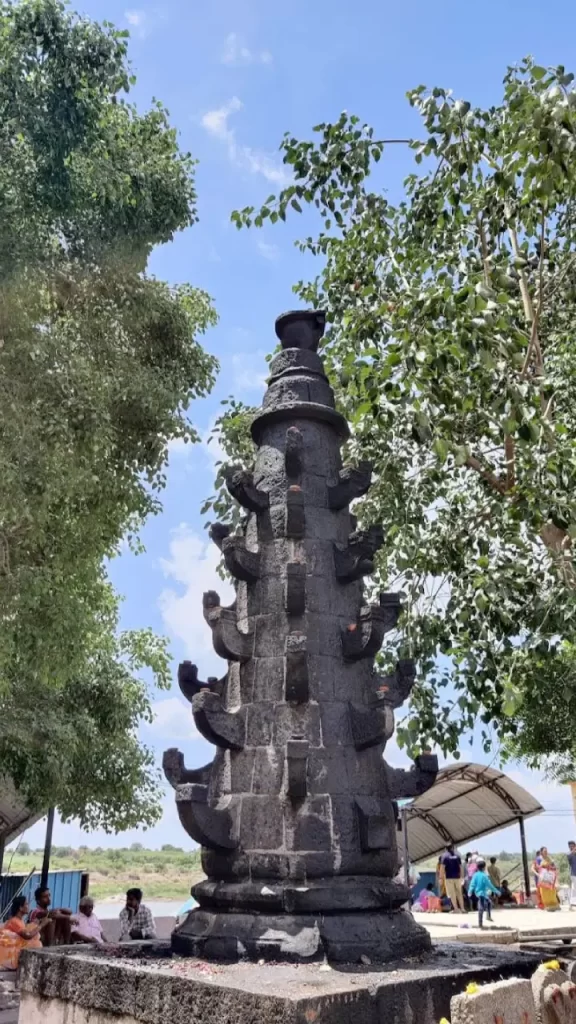
The most dramatic and popular ritual is the Madhyanha Aarti at midday. It’s an experience one will never forget. When the aarti starts, you will witness such individuals, whom people believe are possessed by evil powers, begin to yell, tremble, and develop other abnormal behaviors. They will scream in eerie voices, bang their heads against walls, or even attempt to climb poles inside the temple compound.
According to belief, the strong divine vibrations of the aarti push the devilish powers out of the victim’s body. I witnessed this firsthand, and it’s an extremely raw and emotional experience. Once the aarti ends, these individuals tend to fall on the ground and then rise up, with a feeling of peace and calmness. It is a strong witness to the healing and freeing power of this holy site.
The other fundamental belief is the significance of Madhukari Seva, begging from a minimum of five houses. This humility act is thought to be an act of contacting the Guru, who had vowed to come for daily bhiksha. Devotees feel they are getting the direct prasad and blessings from the Guru by performing this ritual.
The Ash Hill Bhasma (holy ash) is also greatly sought after. The Bhasma has healing and protective qualities, according to belief, and devotees use it on themselves and take it home as a potent form of prasad. These rituals and beliefs make visiting the Gangapur Dattatreya Temple a profoundly engaging and transformative experience, one that pushes your perception of the spiritual world.
Read More>> Uttarkashi Temple Kashi Vishwanath
Gangapur Dattatreya Temple Timings and Daily Rituals
To make the most of your visit to the Gangapur Dattatreya Temple, it’s crucial to know the timings and daily rituals.
Morning (Kakad Aarti): The temple opens very early, at around 3:00 AM, with the Kakad Aarti. This is a beautiful, peaceful ritual to start the day.
Morning Pujas and Darshan: From 7:00 AM to 2:00 PM, different pujas and abhishekas take place. This is the time when the devotees mainly offer their prayers. The Dharma Darshan (free entry) is open all day.
Madhyanha Aarti: This occurs at 12:00 PM, and as said, it is the busiest and most hectic part of the day. The temple is particularly crowded in this period, so expect a huge crowd.
Evening (Pallakhi Seva): At approximately 7:30 PM to 8:30 PM, the Pallakhi Seva (palanquin procession) occurs. The Utsav Murthy (processional idol) of Lord Dattatreya is taken on a palanquin in circumambulating the temple. This is performed by devotees with tremendous enthusiasm, singing hymns and bhajans.
Shej Aarti: The temple is closed by 9:00 PM with the Shej Aarti (bedtime ritual).
The temple remains open seven days a week, although Thursdays, Pournima, and festive days are the most crowded. If you do not like crowds and people, then it would be advisable to go on any other weekday that is not a Pournima.


Places to See Around the Temple
Though Sangama Datta Temple Ganagapur is the primary point of visitation, the location has several other important locations around it that form part of the pilgrimage.
The Bhima-Amarja Sangam: This is the union of the Bhima and Amarja rivers. A holy bath here is said to be necessary for every devotee. The Sangam is also said to have the ability to cleanse sins and grant wishes. It is where Shri Narasimha Saraswati undertook his Anusthan (penance). There is a temple by the Sangam where his Shella Padukas (stone sandals) are revered. Bathing at Sangama Datta Temple Ganagapur is part of the spiritual experience.
The Audumbar Tree: Situated close to the Sangam, this very old tree is where Shri Narasimha Saraswati had done his tapas. Parayan of the Shri Guru Charitra is done under its shadow by devotees, as they are convinced that the presence of the Guru lives even today here.
Ash Hill: This is a hill close to the Sangam which is a hillock of holy ash. This bhasma is said to have been obtained from a Yajna conducted by Lord Parashurama. Pilgrims collect some of this bhasma as a potent prasad.
Shri Kalleshwar Temple: This temple of Lord Shiva is also highly significant. According to legend, the poet Narahari, who was a devotee of Lord Kalleshwar, visualized Shri Narasimha Saraswati as Lord Shiva here and became his ardent devotee. This temple is said to be equal to the well-known Gokarna temple.
Ashta Teerthas: There are eight sacred ponds or teerthas surrounding Ganagapur, each with significance. Bathing in all eight is a very meritorious deed. Some of them are named Nrusimha teertha, Sreepaada teertha, and Paapa Nashaka teertha.
Read More>> Miraculous Shirdi Sai Baba Temple
Accommodation Options
Ganagapur is a small village, and while it’s a major pilgrimage center, don’t expect luxury five-star hotels. The accommodations are simple and cater to the needs of pilgrims.
Lodges and Dharamshalas: There are numerous lodges and dharamshalas (rest houses for pilgrims) such as Shri Swami Samarth Seva Kendra, Sri Anasuya Datta Lodge, and Dandawate Ashram. They have simple facilities such as single, double, and sometimes family rooms. Some have AC and eating facilities.
Private Houses: Some local priests and families rent out rooms or small cottages to pilgrims. This may be a more intimate and authentic experience.
Advance Reservation: It is advisable to reserve your accommodation well in advance, particularly if you are visiting on a Thursday or festival day such as Guru Purnima or Datta Jayanti, since the village fills up very quickly.
How to Reach the Temple
It is relatively easy to reach the Gangapur Dattatreya Temple, and one can go there in a number of ways.
By Air: The closest airport is Kalaburagi (Gulbarga) Airport, which is 38 km away. From the airport, take a cab or a private car to Ganagapur. Hyderabad International Airport is another big option, around 250 km away.
By Train: This is the most sought-after method of reaching Ganagapur. The closest railway station is Ganagapur Road (station code GUR), which is 21 km from the temple. From the station, shared autos and buses are easily available to take you to the temple. A large number of trains from major cities such as Hyderabad, Bengaluru, Mumbai, and Pune halt at this station. The Gulbarga Railway Station is another alternative, approximately 40 km away, where you can take either a bus or taxi.
By Road: Ganagapur is easily accessible by road. State buses and private buses from bigger cities such as Hyderabad, Solapur, and Gulbarga are available at regular intervals. You can also travel by your own car or private taxi to the village. The roads are in a pretty good condition, and the drive is also very picturesque.
A tour of the Gangapur Dattatreya Temple is not merely a journey; it is a spiritual journey. The sacred power of the Nirguna Padukas and the living presence of the Guru make it a special pilgrimage. Whether you are a devotee or an inquisitive tourist, the tour will have a lasting effect on your soul.
2 Comments