Gowdagere Chamundeshwari Temple: Famous 61 ft Panchaloha statue
The Gowdagere Chamundeshwari Temple, located amidst the tranquil landscapes of Gowdagere village in the Channapatna Taluk of Ramanagara district, Karnataka, serves as a towering pillar of the contemporary Hindu resurgence movement. The temple is officially known all throughout India as the Shri Chamundeshwari Basavappanavara Kshetra, and it marks the link between the scriptures of antiquity and the present-day spiritual phenomena. What was once a peaceful farming village known only to its farmers has now turned into an international pilgrimage site.
Whether you are a devout follower hoping to directly receive blessings for your life’s karmic predicaments, a researcher interested in the growth of modern day folk religions, or a tourist looking to experience the cultural heritage of Karnataka, the Gowdagere Chamundeshwari Temple is the place to go. As a professional tour guide who has researched and worked in this spiritual site, I welcome you to take a look at this comprehensive guide on the mystical aspects of Gowdagere.
Introduction: Cosmic Mother of the Silk Town Outskirts
Overview of the Temple
As one approaches the geographical boundary of the renowned Channapatna known for its beautiful wooden toys and silk weaving, the picturesque rural landscape is transformed into something new and unique. As one passes through the dense green canopy of coconut groves and ragi fields, one sees the majestic figure of the Gowdagere Chamundeshwari temple emerge.
The unique temple that is known as the Shri Chamundeshwari Basavappanavara Kshetra is exclusively devoted to Sri Chamundeshwari, an aggressive but caring incarnation of the Cosmic Power or Adi Parashakti. The temple stands tall as a unique modern architectural wonder that blends in scriptural grandeur with popular spiritualism that can be accessed by anyone irrespective of social status.
Significance and Uniqueness
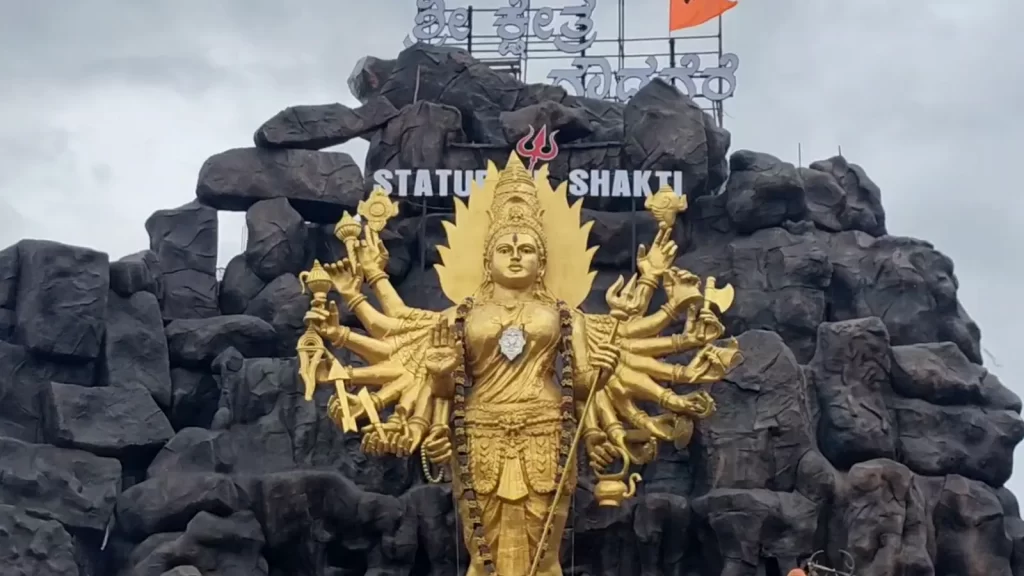
The uniqueness of the Gowdagere Chamundeshwari Temple lies in the fact that it combines both majestic grandeur and localized miracles. The pride of the Shri Chamundeshwari Basavappanavara Kshetra is certainly the awe-inspiring 61-foot tall Panchaloha (five-metal alloy) statue of Goddess Chamundeshwari. What is truly amazing about the statue is the presence of 18 arms each carrying a symbolic celestial weapon designed to safeguard humankind from malevolent entities.
In addition to its architectural splendor, the temple holds great significance because of its strong spiritual vibrations. This temple serves as a spiritual hub that attracts thousands of people seeking solace from the adverse effects of black magic (Kshudra Shakti), curse from ancestors (Pitri Dosha), perpetual misfortune in business, and bad personal habits such as alcoholism and gambling. It is a divine healing center where faith works wonders.
Target Audience
There are three categories of modern pilgrims that the spirituality of Gowdagere appeals to:
- The Troubled and Spiritual Seekers: Devotees experiencing psychological, legal, or financial problems and coming to take part in the unique Sankalpa Coconut Tying ritual of the temple.
- History Lovers and Anthropologists: Scholars and history lovers curious about the transformation of a local village ritual into a well-planned spiritual center within one generation.
- Travelers and Weekend Adventurers: Tourists traveling on the Bengaluru-Mysore Expressway to make their trip a memorable cultural experience.
Historical Background: From a Child’s Play to a Global Sanctuary
Founding Stories and Legends
The founding story of the Gowdagere Chamundeshwari Temple is a very heartwarming tale of divine timing. While most medieval temples have been built based on royal decrees and imperial conquests, the Shri Chamundeshwari Basavappanavara Kshetra was established owing to the playful activities of the children in the village. Many years back, some cowherds and children from the village played in an uncultivated field in Gowdagere. Inspired by the construction of the temples in the neighboring villages, they collected mud, broken bricks, leaves, and twigs to construct their toy temple.
While digging in the ground to find a foundation for their play, one of the village boys named Mallesh found a tiny idol of Goddess Chamundeshwari buried in the soil. They put the idol within their toy temple and offered wild flowers in imitation of the intricate rituals performed by the temple priests.
Not long after this discovery, Mallesh found himself undergoing strong spiritual trances (Devi Prerana). In those states, he spoke with unusual authority, disclosing confidential information about the lives of the people and their problems and providing solutions. Worried about their son’s condition, Mallesh’s parents approached traditional astrologers and spiritual masters. They concluded that the land was filled with the divine spirit, and that Mallesh was selected as a temporary medium to transmit energy from the Goddess.
The incident that marked the temple’s fame happened when a rich landowner faced disastrous crop failures and strange illnesses among his family members. Undergoing trance state, the boy indicated a certain spot on the property of the rich man. The farmers dug up the earth, finding objects used in evil rites aimed at causing them damage.
As soon as the evil objects were unearthed and the prayers were offered to the newly discovered idol of Chamundeshwari, the crops grew well, and the family members recovered. This news quickly spread throughout Karnataka, making the small village of Gowdagere known all over the state practically overnight.
Read More>> Bande Mahakali Temple Bangalore
Key Historical Events and Spatial Evolution
Structurally, the development of the gowdagere chamundeshwari temple is reflective of the increasing devotion of its devotees. There are various stages of development in the site:
- Mud and Leaves Period: The initial outdoor altar where the idol that was discovered by the village children was placed.
- Tile Shingle Shrine: A simple brick and mortar structure that was erected by thankful locals with early contributions.
- Maha-Kshetra Period: The current phase of growth, characterized by the formation of Shri Chamundeshwari Basavappanavara Kshetra trust, construction of large-scale Dasoha Hall and creation of 61 feet high Panchaloha idol.
Connection with Dynasties, Saints and Lineage of Basavappa
Though worship of Goddess Chamundeshwari has been traditionally associated with the Royal Wodeyar Dynasty of Mysuru, who revere the deity as their foremost guardian on Chamundi Hills, the gowdagere chamundeshwari temple is special since it is a shrine constructed by the masses and for the masses.
This temple is spiritually linked to Basavappa, a divine temple bull. According to local folklore, Basavappa is regarded not as just another cow, but rather as an incarnation of Nandi – the divine bull and the constant companion of Lord Shiva. Lineage of Basavappa at the Shri Chamundeshwari Basavappanavara Kshetra temple makes it unique spiritual environment where the protective energy of Shakti works in perfect harmony with the grounded devotion of Shiva’s companion.
Religious and Cultural Significance: The Eternal Triumph of Cosmic Balance
Deity or Deities Worshipped
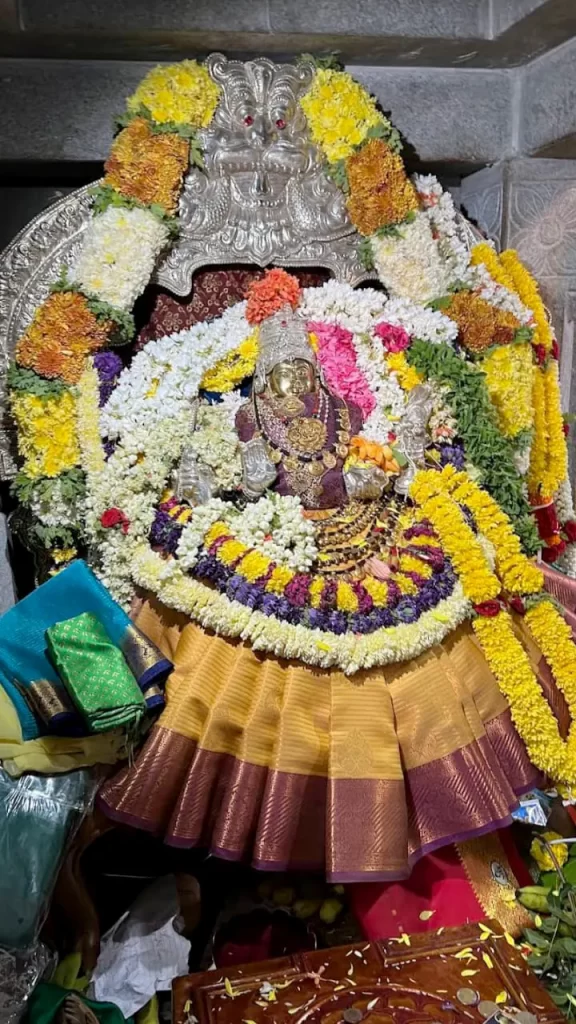
At the Gowdagere Chamundeshwari Temple, the goddess Sri Chamundeshwari Amma is the main object of worship. According to traditional Hindu beliefs, Chamundeshwari is considered the defender and protector of Mother Durga. She is the ultimate warrior goddess who comes to defend her devotees when all other efforts fail.
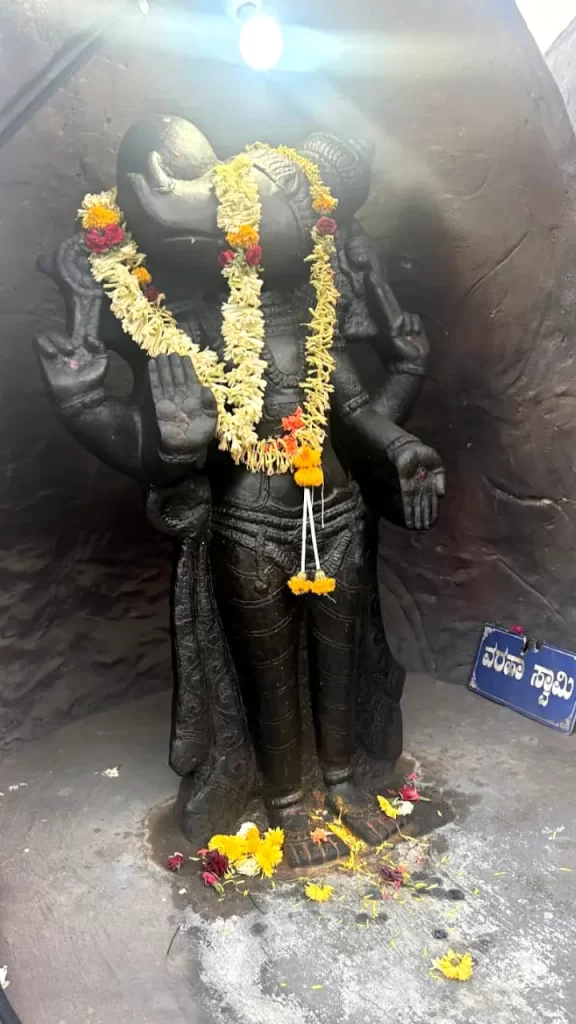
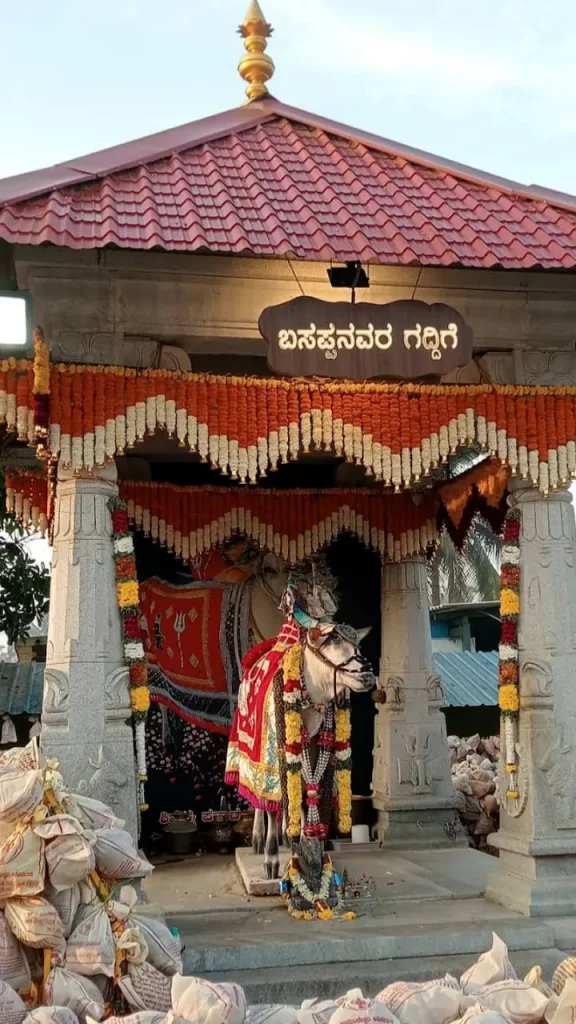
Other than the main deity, the Shri Chamundeshwari Basavappanavara Kshetra also shows great reverence to the Basavappanavara Gadduge, which is the holy resting place of the sacred temple bull. This unique combination helps ensure that both Shiva and Shakti energies are equally present at the temple.
Religious Importance in Scriptures and Puranas
In order to get a good grasp on the importance of this deity in Hindu religion, one needs to explore ancient Hindu scriptures. The epic fights and significance of Goddess Chamundeshwari can be found in the Devi Mahatmya (which is part of the Markandeya Purana) and in parts of the Skanda Purana.
The ancient texts describe her emergence with striking clarity:
“When the demon egocentric generals, Chanda and Munda, tried to gain supremacy over the cosmic order by employing violent means and tricks, the Supreme Goddess took on a ferocious form emerging from her forehead. She wielded divine knowledge and celestial weapons to counteract these evil forces that were posing a threat to the cosmos. On witnessing this triumph, the cosmic council exclaimed, ‘O Mother! Since you have eradicated these forces of darkness, you will forever be known as Chamunda or Chamundeshwari.”
By entering the Shri Chamundeshwari Basavappanavara Kshetra, you enter a place which embodies this protective power. According to local priests, the practices that take place there are aimed at evoking such powers of defense so that visitors can protect themselves from problems and evil forces in their lives.
Read More>> Chinnamasta Devi Temple Jharkhand
Festivals and Special Events
The religious calendar of the Gowdagere Chamundeshwari Temple includes many important events:
- Sharad Navaratri: The ten days long celebration which is considered to be the peak of worship at the temple. During the celebration, the inner deity is dressed up in different traditional dresses (Alankaram), which symbolize all her functions as a cosmic power: she is celebrated as the Goddess Saraswati and the protecting warrior Mahakali.
- The Annual Chamundeshwari Jatre: An impressive regional festival when the Utsava Murthy (festival idol) is installed on the beautifully decorated wooden chariot which is pulled through local streets by thousands of pilgrims.
- Ugadi and Karthika Maasa: These days are associated with lighting rituals when thousands of traditional clay oil lamps (Deepotsava) are used to illuminate the whole complex.
Architecture and Design: A Harmonious Blend of Ancient Masonry and Modern Vision
Architecture Style
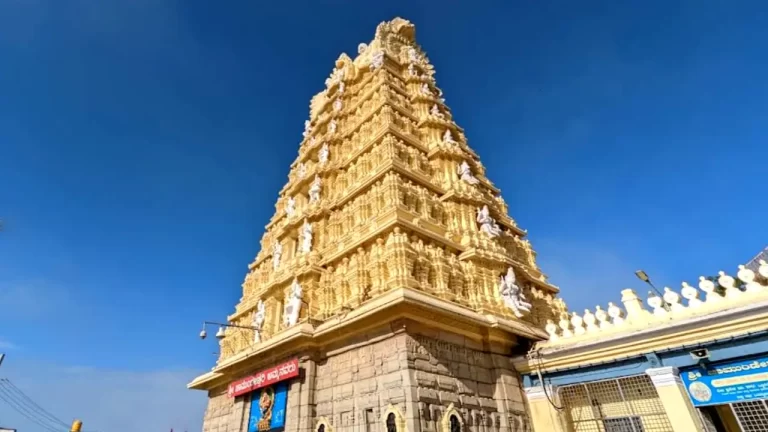
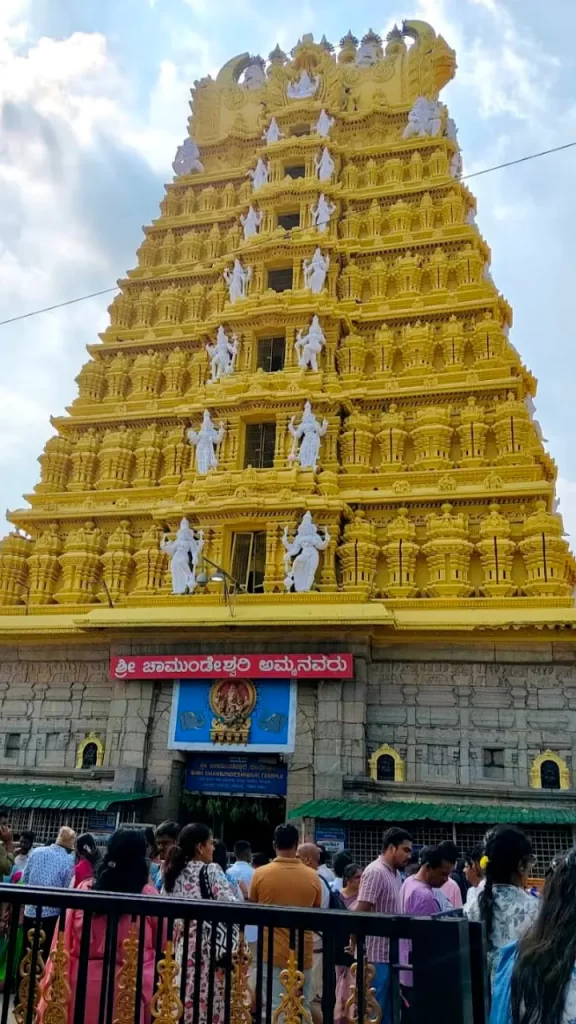
Gowdagere Chamundeshwari Temple has an excellent combination of both old-style architecture and modern structural engineering. The interior part of the temple has an authentic Dravidian architectural style that is common among the temples in South India, with mandapams, granite walls, and multi-storied gateway tower called Gopuram.
On the other hand, the exterior section has a modern structural engineering design to enable the large-scale monument to accommodate thousands of pilgrims.
Notable Features and Iconic Monuments
- 61-Foot Panchaloha Masterpiece: An awe-inspiring piece of contemporary metal sculpture. Made from five holy metals, the enormous statue of Goddess Chamundeshwari has 18 arms, each one holding a significant object, such as Trishula (Trident), which is used to maintain cosmic order; Pasha (Noose), which is used to subdue one’s ego; and Khadga (Sword), which is used to cut through ignorance. The statue is directed towards the east to capture the early morning sunlight.
- The Rajagopuram: The main entrance gate has hand-painted stucco sculptures depicting some of the important episodes from the Devi Bhagavata Purana.
- The Dashavatara Corridor: A wide concrete walkway decorated with statues of the ten forms of Lord Vishnu, who is considered the supreme deity of all deities.
- The Musical Fountain System: An ingenious installation placed at the foot of the enormous statue. It plays music and creates water designs during the evenings.
Construction Materials and Methods Used
The temple construction makes use of an ideal choice of materials which will not only ensure spiritual cleanliness but also ensure longevity of the structure. For instance, the construction of the inner sanctum is done using high density black granite. This material is chosen due to its ability to withstand several centuries of daily rituals involving bathing (Abhishekam).
For the construction of the massive 61 foot statue, Panchaloha formula was adopted, which means the statue is made of a blend of five metals namely gold, silver, copper, iron and zinc. This particular metallic mixture is used because of its ability to retain spiritual energy as well as resist environmental conditions.
Symbols Associated with the Temple
All structures present in the Shri Chamundeshwari Basavappanavara Kshetra have a deeper meaning attached to them. The presence of 18 hands in the great statue is symbolic since it shows that the protection provided by the Goddess is in all directions.
For instance, the entrance to the temple has been designed in such a way that the ceiling height is relatively low. This means that people who enter the temple must bow their heads down automatically.
Read More>> Karni Mata Temple Udaipur
Main Attractions and Sacred Highlights: The Pilgrim’s Journey
Sanctum Sanctorum (Garbhagriha)
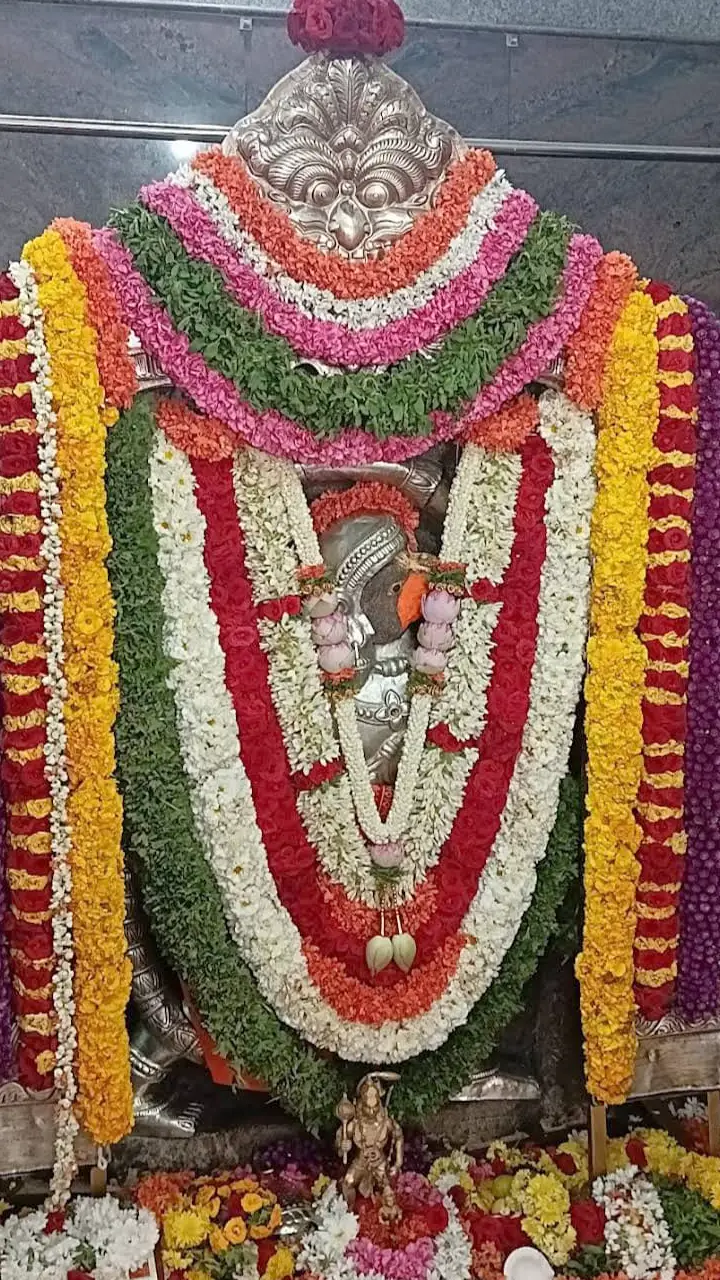
The spiritual heart of your pilgrimage experience will be the inner sanctum of the gowdagere chamundeshwari temple. Here in the silent and well-lit stone chamber lies the original stone idol with high levels of spiritual energy found by the village children. The atmosphere around the idol is suffused with the heady fragrances of natural camphor, jasmine garlands, and Kumkum (vermilion powder).
Another important feature of the inner sanctum is the divine and compassionate look in the eyes of the deity. Devotees have commented on feeling an intense peace and mental clarity when visiting the shrine for the Maha Mangala Aarti.
Sub-Shrines and Sacred Structures Surrounding the Temple Complex
Here are some of the key places in the Shri Chamundeshwari Basavappanavara Kshetra that you should not miss:
- Basavappanavara Gadduge: This tranquil and beautiful spot houses the shrine of the original sacred bull of the temple known as Basavappa. Devotees visit the shrine praying for harmony within the family, resolution of property disputes, and prosperity in agriculture.
- Naga Devata Peetha: This peaceful corner with stone plaques dedicated to the Naga Devatas where devotees pray for overcoming astrological problems (Rahu-Ketu Dosha).
- Navagraha Shrine: This shrine dedicated to the nine celestial planets, positioned in accordance with traditional Vastu Shastra principles.
Sculptures, Inscriptions, and the Temple Museum
The temple premises have a very special historical museum that chronicles the swift changes that the temple underwent over time. This consists of old photos from the time when the first idol was discovered, old newspaper clippings about the first reports in the region, and a set of folklore relics unearthed in the clearing of the Gowdagere farmland. The exhibits provide a wonderful account of how the humble devotion of the locals turned the local field into a renowned pilgrim center.
The Sacred Pond and Commemoration Grounds
The outer periphery of the temple complex has an aesthetically designed sacred pond (Kalyani) that is used for the ritualistic Teppotsava during festivals. Around the Kalyani are neatly mowed green lawns and seating areas for the convenience of visitors.
Temple Timings, Daily Rituals, and the Esoteric Coconut Vow
Operating Timings
For ensuring a fruitful visit to the Shri Chamundeshwari Basavappanavara Kshetra, it becomes important for one to have information about the timings of this temple. Here are the timings of this temple on a daily basis:
Opening Hours in Morning: 7:00 AM to 2:00 PM
Closure Time During Mid-Day: 2:00 PM to 3:30 PM
Opening Hours in Evening: 3:30 PM to 9:00 PM
Daily Pujas Timings in Details
Here is the timing chart of daily pujas in this temple where the rituals are performed by professional traditional priests:
07:30 AM – Pratah Kala Pooja & Abhishekam: The day starts with morning wake-up prayers after which the abhishekam (ritualistic bath) is done with fresh milk, pure honey, tender coconut water, and sandal paste of the main idol.
12:30 PM – Maha Naivedya Offering: In the noon, the offerings of freshly cooked vegetarian food items made in the temple kitchens.
07:30 PM – Maha Mangala Aarti: This is the spiritual highlight of the day when there is a puja ceremony accompanied with multiple tiers of brass oil lamps along with drum beating and chanting.
Read More >> Tulja Bhavani Temple Tuljapur
The Signature Miracle: The Sankalpa Coconut Tying Ceremony
The most iconic spiritual activity that takes place inside the Gowdagere Chamundeshwari Temple is the exclusive Coconut Tying Ceremony. When you have tough problems in your life, such as complicated legal matters, unexpected financial troubles, unexplained illness, or even family feuds, you can perform this ceremony to clarify your intention and gain God’s help.
The rows and rows of coconuts on the temple’s outer walls create an impressive sight that symbolizes the common belief and hope of thousands of pilgrims who visit this sacred temple.
Dress Code at the Shri Chamundeshwari Basavappanavara Kshetra
In order to maintain the sanctity of the Shri Chamundeshwari Basavappanavara Kshetra, we kindly ask visitors to wear decent clothes:
- For Men: Traditional outfits like dhotis or kurtas, or simple trousers. It is appreciated if you remove your shirt during some special viewing times, but it is not obligatory when entering the temple.
- For Women: Sarees, salwar kameez, or traditional long skirts. Your attire should cover your shoulders and knees properly. Beachwear, shorts, or torn jeans are not suitable at the temple premises.
Festivals, Public Events, and Managing the Crowds
Key Annual Festivals and Holy Processions
The gowdagere chamundeshwari temple is at its peak during annual festivals:
Sharad Navaratri for Ten Days: A fun-filled festival that occurs in September and October when the whole site is decorated with flowers and lights. It has many processions that attract many visitors throughout the year.
Chariot Festival (Rathotsava): An annual festival that occurs during spring when there is a huge procession of the god’s chariot through the streets as hundreds of devotees pull it along.
Weekday Patterns and Best Times to Visit
To fully appreciate your visit to Shri Chamundeshwari Basavappanavara Kshetra, you need to plan your visit according to the usual weekday patterns:
For a Calm Visit: You should consider visiting on Wednesdays and Thursdays between 8:30 AM and 11:30 AM when the temple is not crowded, giving you an opportunity to reflect amidst the serene atmosphere.
For an Active Visit: Tuesdays, Fridays, and Sundays are the busiest days at the temple due to the presence of lots of pilgrims and music. Entry into the temple could take as long as two hours.
Read More>> Sri Kshetra Dharmasthala Temple: Miracles of Lord Manjunatha
Travel Logistics, Fees, and Visitor Support Facilities
How to Get to the Temple Complex
The Gowdagere Chamundeshwari Temple is fortunate enough to have an ideal location with great transportation facilities to the important Bengaluru-Mysuru highway route:
By Plane: The nearest international airport is Kempegowda International Airport (BLR) in Bengaluru, situated roughly 95 kilometers away from the temple. Travellers can hire a taxi from the airport and travel straight to the temple on the Bangalore-Mysore Expressway.
By Train: The nearest railway station is Channapatna Railway Station (CPT). It is easily accessible through regular trains that run between Bengaluru and Mysuru. Auto-rickshaws and taxis are easily available from the station to the temple, which is 13 kilometers away.
By Bus: Tourists can board any KSRTC bus bound for Mysuru from the Majestic Bus Station in Bengaluru and alight at Channapatna Railway Station. Thereafter, local shuttle buses and auto-rickshaws ply frequently to the Gowdagere bus stand, which is just a flat 500 meters away from the temple entrance.
Special Entry Fee and Access Arrangements
There are no entry fees charged at the Shri Chamundeshwari Basavappanavara Kshetra temple. However, during the peak days and holidays, there is a special access arrangement called a Special Fast Track Darshan Ticket, which costs some money, usually ₹50 – ₹100. This service is designed to help those visitors who have to travel with their kids and grandparents to get fast access to the temple.
Visitor Services
- The Anna Dasoha Service: The great thing about this temple is the hospitality offered. There is an enormous modern dining hall where visitors can enjoy healthy and delicious vegetarian meals (Prasadam), which is available at zero cost from early afternoon until the end of the day.
- Toilets and Water Dispensers: There are clean modern toilets available in the main parking area. Besides, filtered water is available everywhere in the temple.
- Parking Space: The temple offers an organized parking space for hundreds of vehicles.
Access for Elderly and Disabled Visitors
The Gowdagere Chamundeshwari Temple has been constructed in such a manner that it is easy to access and move around within. The roads leading to the entrance of the temple and near the 61-foot statue are paved and flat and, therefore, good for wheelchair users and strollers. Wheelchairs can be borrowed from the main administrative building of the temple.
Read More>> Hidden Power of Haridwar Mansa Devi Temple: #1 Wish Granted!
Dos and Don’ts: Preserving the Sanctity of the Space
In order to ensure that the serene ambience of this spiritual center is not disturbed, kindly follow the following guidelines:
Dos
Do remove your shoes and leave them at the free shoe storage counter before stepping into the main stone path.
Do receive the traditional blessings and Kumkum prasadam with your right hand.
Do partake of the free Anna Dasoha meal offered at the temple, and make sure you eat neatly and do not waste food.
Do feel free to ask for assistance from the temple personnel if you are confused about participating in the traditional rituals.
Don’ts
Don’t click pictures or record videos inside the inner sanctum (Garbhagriha), as per the traditional practice. However, photography is allowed everywhere else in the temple complex.
Don’t carry single-use plastic bags or litter the temple premises. The temple management wishes to keep their premises clean and green.
Don’t touch the coconuts which are tied to the outer wall by other devotees.
Nearby Attractions: Discovering the Treasures of Ramanagara District
It will not take much effort on your part to turn your visit to the gowdagere chamundeshwari temple into an entire day out because there are several interesting places in the vicinity:
Channapatna Toy Craftsmen (12 km from here): Channapatna is known for producing traditional and environmentally friendly wooden toys that are colored with natural dyes. A tour of these workshops can be a great way to appreciate the traditional craft and buy some souvenirs.
Thimappana Betta (16.5 km from here): An amazing rock formation consisting of two hills, providing wonderful panoramic views of the surrounding area and suitable for picturesque photo shoots.
Kanva Reservoir (13 km from here): A spacious lake formed by the Kanva river. This is a good place for birdwatching, picnicking, and enjoying the sunset.
Ramanagara Silk Market (20 km from here): The site of one of the biggest Asian markets where silk cocoons are traded.
Read More>> Basara Gnana Saraswati Temple
Frequently Asked Questions (FAQs)
Q1: Where is the Gowdagere Chamundeshwari Temple located?
The temple is situated in the peaceful village of Gowdagere in the vicinity of the Bevurmandya post, in Channapatna Taluk, Ramanagara District, Karnataka (Postal Code: 562108). The temple lies approximately 13 kilometers from the main city of Channapatna.
Q2: What accommodation facilities are there near the temple?
Although the temple offers resting quarters to far-flung travelers, the temple itself does not provide any hotel facilities. However, individuals searching for accommodation facilities may opt for the various hotels and resorts located in the neighborhood of the temple on the Bengaluru-Mysuru highway, as well as in Ramanagara and Bengaluru cities.
Q3: What makes the temple unique with respect to overcoming negative influences?
From its very beginning till today, the Shri Chamundeshwari Basavappanavara Kshetra has been known as a sanctuary for people wanting to overcome negative influences. According to the devotees, the divine presence within the temple helps to overcome all personal troubles, negative attitudes, and problems in one’s life.
Q4: Is photography allowed at the temple?
Visitors are permitted to take photographs of the majestic 61 feet tall Panchaloha statue, the outer sculptures, and the gardens. However, photographing is restricted within the inner stone sanctum (Garbhagriha) to preserve the quiet nature of the daily prayers.
Q5: What is the way that I can take part in the coconut tying ceremony?
It is very easy for you to buy a ritual kit from the counter of the temple itself. Afterward, you will be assisted in getting it blessed by the priest and then tying it on the prayer grids around the wall.