Banke Bihari Temple Vrindavan: Timings, History, Rituals, and Pilgrimage Guide
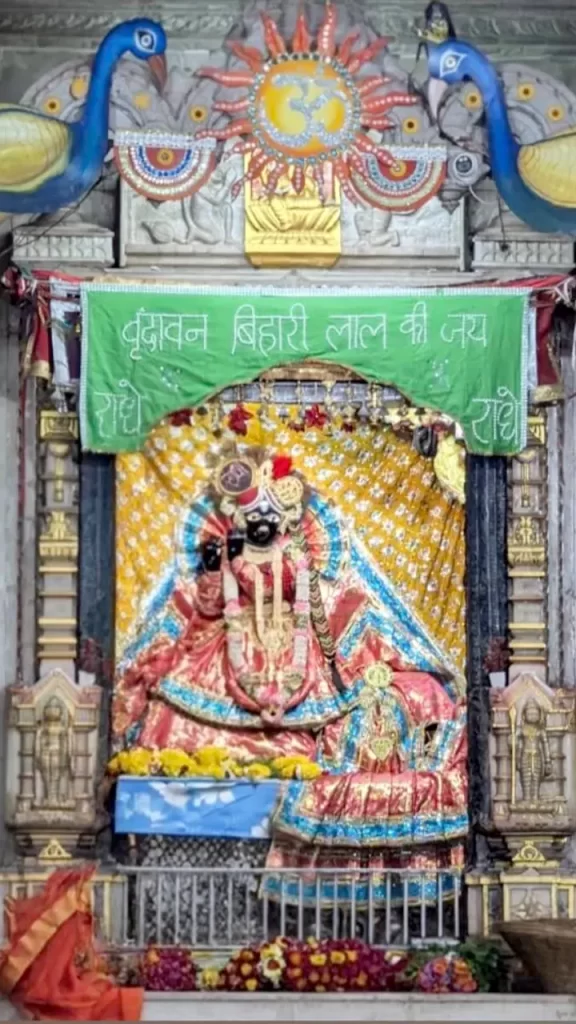
The Shri Banke Bihari Temple in Vrindavan, Uttar Pradesh, is one of the most revered and spiritually vibrant shrines in Hinduism. Dedicated to Lord Krishna in his enchanting Banke Bihari form—standing in the charming, bent tribhanga posture—this historic temple draws millions of pilgrims every year from across India and around the globe.
Unlike conventional Hindu temples, Banke Bihari Mandir follows a deeply affectionate, tender tradition of devotion (Vatsalya and Madhurya Bhava). Here, you will hear no loud ringing bells, no blaring conch shells, and no early morning dawn aartis. The deity is served not with formal royal distance, but treated as a beloved, divine child who must not be startled or disturbed from his sweet slumber.
Whether you are planning your very first pilgrimage to the sacred land of Braj or returning to seek the divine blessings of Thakurji, this comprehensive visitor guide provides verified darshan timings, aarti schedules, temple history, unique ritual traditions, safety precautions, and practical travel logistics.
Quick Information: Shri Banke Bihari Mandir
| Detail | Verified Information |
| Temple Name | Shri Banke Bihari Ji Mandir (श्री बांके बिहारी मंदिर) |
| Main Deity | Lord Krishna (Banke Bihari — Krishna in the threefold bent Tribhanga posture) |
| Location | Goda Vihar, Vrindavan, Mathura District, Uttar Pradesh, India (PIN: 281121) |
| Architectural Style | Traditional Rajasthani-contemporary North Indian temple architecture (Built 1864 CE) |
| Founder / Manifestor | Swami Haridas (16th-century saint-musician of the Haridasi Sampradaya) |
| Summer Darshan Timings | Morning: 07:45 AM – 12:00 PM | Evening: 05:30 PM – 09:30 PM |
| Winter Darshan Timings | Morning: 08:45 AM – 01:00 PM | Evening: 04:30 PM – 08:30 PM |
| Entry Fee | Free for all devotees. (No official paid VIP darshan tickets exist) |
| Major Festivals | Janmashtami, Holi / Phoolon ki Holi, Hariyali Teej, Bihar Panchami, Sharad Purnima |
| Nearest Railway Station | Mathura Junction (MTJ) – approx. 14 km |
| Nearest Airport | Agra Airport (KHER) – approx. 70 km | Delhi Indira Gandhi Intl (DEL) – approx. 160 km |
| Visitor Advisory | High crowd density; beware of aggressive monkeys; secure eyeglasses and mobile phones |
Read More>> Chinnamasta Devi Temple Jharkhand
Banke Bihari Temple Darshan & Aarti Timings
The daily schedule at Banke Bihari Temple changes twice a year according to the seasons: Summer (Greeshma) and Winter (Shishir). These adjustments ensure the daily routine mirrors natural human comfort, allowing the deity adequate rest during cold mornings and hot afternoons.
Crucial Travel Note: The seasonal transition typically occurs around major festivals—the summer schedule begins shortly after the festival of Holi, while the winter schedule takes effect following Diwali. Always confirm the current seasonal schedule before visiting.
Why Is There No Mangala Aarti at Banke Bihari Temple?
In almost all major Vaishnava shrines across India, the day begins with Mangala Aarti—an auspicious dawn ritual performed before sunrise (often around 4:00 AM or 5:00 AM).
At Banke Bihari Mandir, Mangala Aarti is strictly prohibited throughout the year, with exactly one exception: the midnight of Shri Krishna Janmashtami.
According to local Braj traditions and the teachings of Swami Haridas, Thakurji stays awake until late into the night sporting, dancing, and engaging in divine pastimes (Raas Leela) with Radha and the Gopis in the sacred groves of Vrindavan. The priests (Goswamis) believe that waking a child deity at daybreak causes physical discomfort. Hence, the morning darshan begins only after the child has rested fully, opening at around 7:45 AM in summer and 8:45 AM in winter.
Understanding the Curtain (Parda) Tradition
When you stand in the sanctum sanctorum during darshan hours, you will notice something fascinating: every two to four minutes, the temple sevayats (priests) draw a velvet curtain across the sanctum, closing off the view of the deity for several seconds before reopening it.
This ritual, known locally as Jhadap Darshan, has deep roots in Braj devotional lore. Tradition holds that the gaze of Banke Bihari is so intensely captivating and full of love that if a devotee looks into his eyes continuously without interruption, the Lord may become overwhelmed by their devotion and physically accompany them away from the temple. The curtain is pulled frequently to break this trance-like gaze, ensuring that Thakurji remains comfortably enshrined in his sacred sanctum.
Read More>> Mopidevi Subramanya Swamy Temple
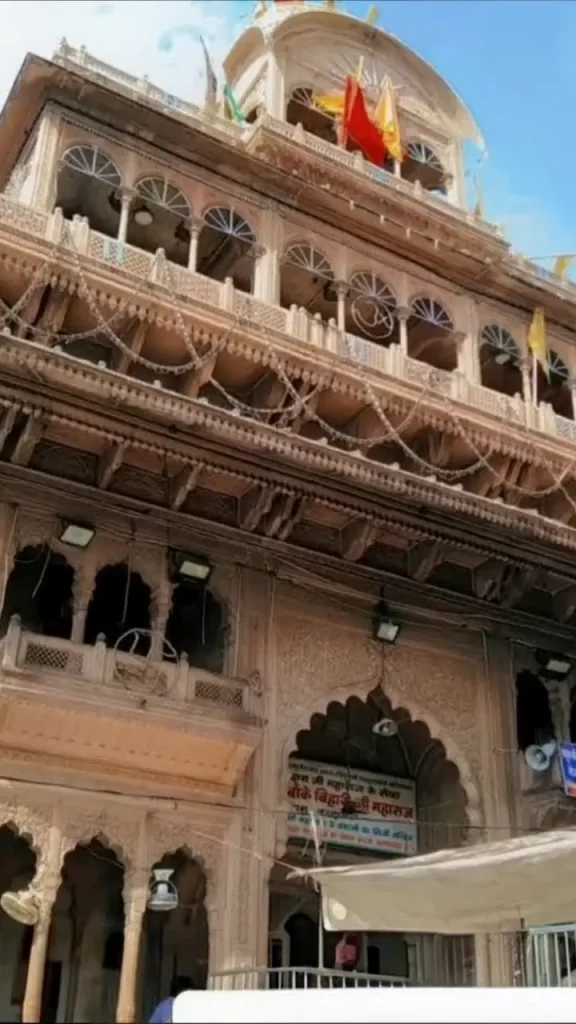
The Origins: Story of Swami Haridas and Nidhivan
To understand Banke Bihari, one must understand Swami Haridas, the legendary 16th-century saint, poet, and classical musician who was also the musical guru of Tansen (the royal court musician of Emperor Akbar).
Swami Haridas belonged to the devotional tradition of Nimbarka Sampradaya and was the revered founder of the Haridasi (or Sakhi) tradition. He lived an austere, meditative life in the secluded forest grove of Vrindavan known as Nidhivan. Haridas did not sing for worldly kings or earthly riches; his music was an intimate spiritual offering to the Divine Couple, whom he addressed affectionately as Shri Shyama-Kunjbihari.
The Divine Manifestation (Prakatya)
According to temple tradition, as Swami Haridas sang his soul-stirring devotional compositions in Nidhivan, the celestial couple—Lord Krishna and Shri Radha—appeared before him in physical form, pleased with his selfless love.
Overwhelmed by their radiant spiritual glow, Swami Haridas realized that mortal human eyes could never withstand such divine brilliance. Furthermore, he wondered how he, a humble penniless ascetic, could ever arrange royal garments and precious ornaments worthy of the Divine Mother and Father.
He lovingly pleaded with the Divine Couple to merge into a single form that common people could behold and worship easily. Listening to his gentle prayer, Radha and Krishna merged their divine forms into a single, breathtaking black-stone deity (vigraha)—Shri Banke Bihari.
This original image manifested in Nidhivan in the 16th century. For many generations, the deity was worshiped within the sacred bower of Nidhivan itself. Later, in 1864 CE, descendants of the Goswamis and devout patrons raised funds to construct the present magnificent stone temple nearby, moving Thakurji to his permanent home where he resides today. When visiting Vrindavan, visiting both Banke Bihari and the sacred, mysterious grove of Nidhivan complex in Vrindavan completes this deeply spiritual pilgrimage circuit.
Read More>> Tulja Bhavani Temple Tuljapur

Architecture and Unique Traditions
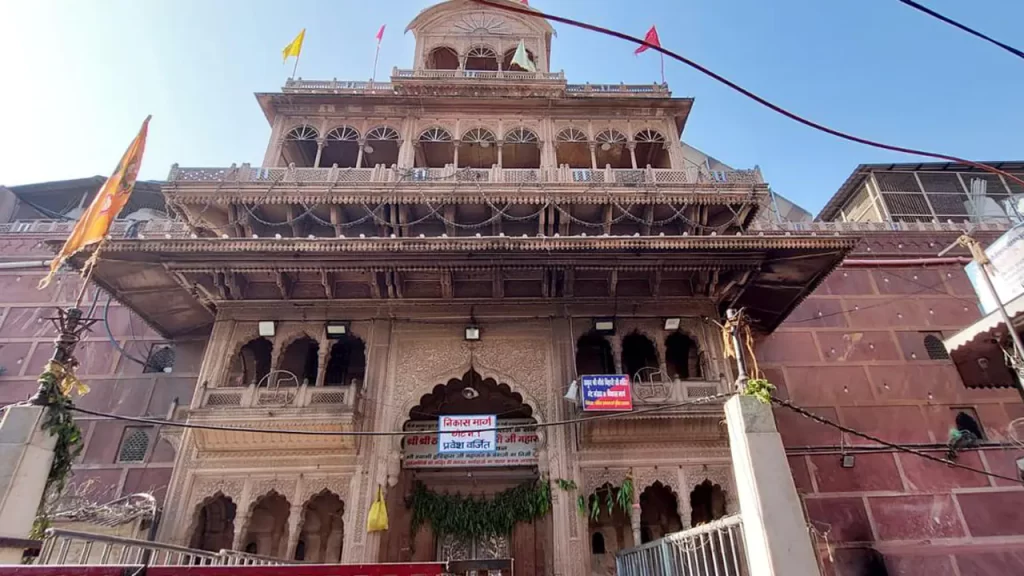
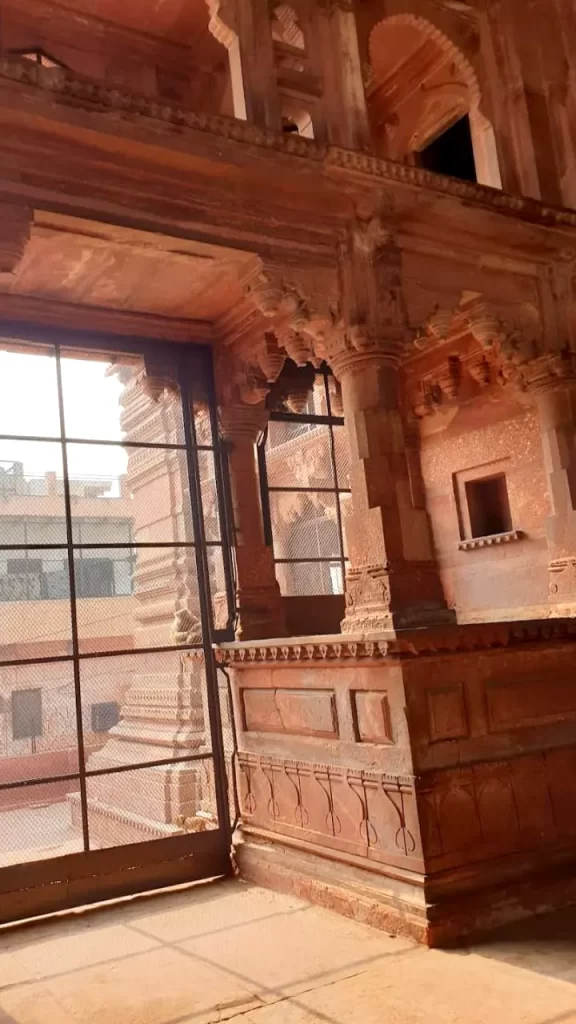
The physical temple of Shri Banke Bihari was built in the mid-19th century using the regional stone-carving traditions prevalent in North India and Rajasthan. The temple features a vast, open central courtyard encircled by multi-tiered carved stone balconies, arched colonnades, and traditional pavilions.
The Total Absence of Temple Bells and Conches
Walk into any traditional Indian temple—whether it is the grand Shri Krishna Janmabhoomi in Mathura or shrines across South India—and the first sound you encounter is the resonant chime of brass bells suspended from the ceilings.
At Banke Bihari Temple, you will not find a single bell hanging anywhere in the premises. The blowing of the conch shell (shankhanaad) is also entirely prohibited.
The theological reason for this is grounded in the Bhavana (mood of worship):
- The Lord is worshiped as a gentle, tender child.
- Sudden, loud metallic sounds or sharp conch blasts can startle him.
- The worship is carried out with peaceful Vedic chants, soulful community singing (Samaj Gayan), and soft, melodious prayers offered directly by the heart.
Major Festivals Celebrated at Banke Bihari
While the temple is filled with devotees every single day, several annual festivals transform the atmosphere into a sea of devotional celebration:
1. Shri Krishna Janmashtami (Midnight Mangala Aarti)
Celebrated during the Hindu month of Bhadrapada (August–September), Janmashtami marks the divine birth of Lord Krishna. This is the only night of the entire year when the famous Mangala Aarti is performed (typically around 1:30 AM to 2:00 AM, following the midnight birth celebration). Tens of thousands of devotees assemble in the streets of Vrindavan just to catch a glimpse of this once-a-year aarti.
2. Hariyali Teej (The Golden and Silver Swing)
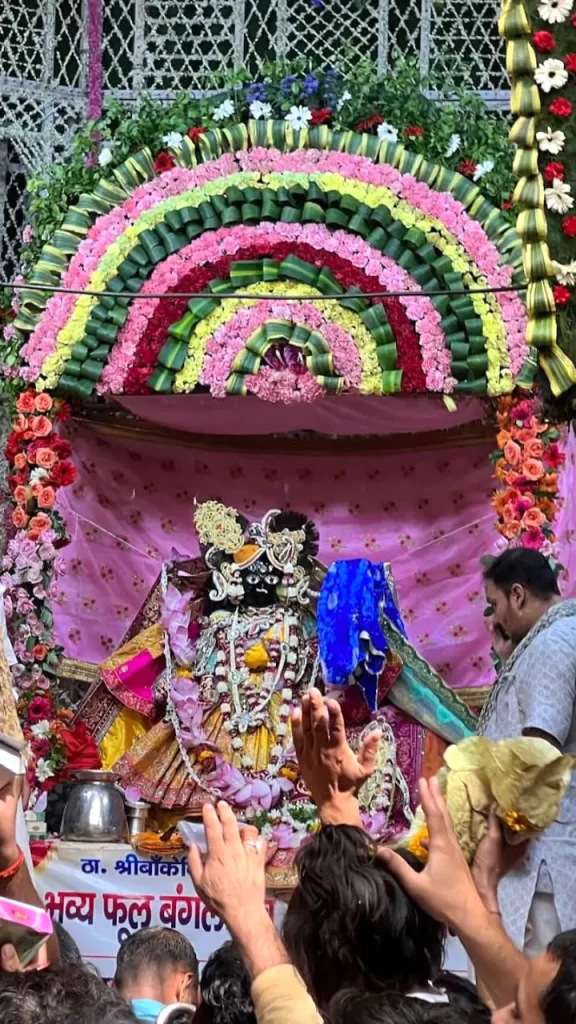
Celebrated in the monsoon month of Shravana (July–August), Hariyali Teej is one of the most visually stunning festivals at the temple. On this day, Thakurji leaves his sanctum throne and is placed upon a spectacular, intricately carved swing (Jhula) overlaid entirely with gold and silver. The entire inner courtyard is decorated with fresh green foliage, fragrant flowers, and vibrant silks.
3. Phoolon Ki Holi and Lathmar Celebrations
During the month of Phalguna (February–March), the entire Braj region becomes the world capital of Holi. At Banke Bihari, priests shower natural herbal colors (gulal) and fragrant flower petals (Phoolon ki Holi) over the assembly of devotees. Visiting Vrindavan during this season allows you to experience traditional Braj festivities, which can be combined with witnessing the celebrated Lathmar traditions at the Radharani Temple in Barsana.
4. Bihar Panchami
Celebrated on the fifth day of the waxing moon (Shukla Panchami) in the month of Margashirsha (November–December), Bihar Panchami marks the anniversary of the appearance of Banke Bihari Ji to Swami Haridas in Nidhivan. Special musical assemblies, grand feasts (Chappan Bhog), and ceremonial processions are organized between Nidhivan and the main temple.
5. Sharad Purnima (The Flute Darshan)
On the autumn full moon night of Sharad Purnima, Thakurji is adorned in pure white garments. This is the only evening in the entire year when Banke Bihari Ji holds a golden flute (Murli) and wears a special regal crown (Mukut), commemorating the celestial Maharaas.
Read More>> Uttarkashi Temple Kashi Vishwanath
Practical Visitor Guide: Crowds, Safety, and VIP Darshan Reality Check
A visit to Banke Bihari is spiritually uplifting, but it requires patience, awareness, and realistic preparation due to the sheer volume of visitors moving through old Vrindavan’s narrow lanes.
The VIP Darshan Reality Check
Many first-time visitors are approached in the lanes by touts claiming they can arrange a “VIP Darshan pass” or “direct line entry” for a fee.
- The Truth: Banke Bihari Temple is managed under strict administrative and judicial supervision. There is no legitimate paid online booking portal or commercial VIP ticket counter. Entry into the temple is completely free.
- While accredited temple priests (Goswamis) have customary access to usher families through specific side gates when safety permits, paying random street fixers often leads to disappointment, unnecessary arguments, or being deposited right back into the regular crowd.
Beware of the Vrindavan Monkeys (Bandar Advisory)
The rhesus macaques inhabiting the alleys surrounding Banke Bihari Temple are notorious for their speed and cleverness:
- Remove Eyeglasses and Sunglasses: Monkeys target prescription glasses and sunglasses instantly. They snatch them off your face, climb to a rooftop, and wait for someone to throw them a juice box or fruit before dropping them. Keep glasses tucked inside your shirt or bag.
- Never Carry Open Bags or Prasad in Hand: Keep flower offerings, sweets, and mobile phones zipped inside a sturdy backpack worn on your front, or concealed beneath a scarf.
- Avoid Eye Contact: Do not stare down or bare your teeth at the monkeys, as they perceive this as an act of aggression.
Best Time and Day to Visit
- Best Days of the Week: Tuesday, Wednesday, and Thursday see comparatively manageable crowd levels.
- Days to Avoid (If You Dislike Extreme Congestion): Saturdays, Sundays, Ekadashi, and public holiday weekends experience severe overcrowding.
- Ideal Arrival Time: Reach the queue lines approximately 30 to 45 minutes before the sanctum gates open (around 7:15 AM in summer or 8:00 AM in winter) to ensure a smooth, peaceful entry.
Navigating with Seniors and Young Children
Due to narrow entrance corridors and surge movements in the crowd, visiting on peak weekend evenings can be physically exhausting for elderly citizens and toddlers.
- Avoid bringing wheelchairs directly into the sanctum lanes during peak hours, as the steps, crowded cobblestones, and narrow passages make maneuvering nearly impossible.
- If traveling with elderly family members, choose weekday mornings during the winter schedule, hire an e-rickshaw right up to the nearest accessible vehicle barrier, and proceed slowly.
How to Reach Banke Bihari vrindavan
Vrindavan is well connected by road, rail, and air to major urban centers across Northern India.
By Train
The most convenient railhead is Mathura Junction (MTJ), located approximately 14 kilometers from Vrindavan. Mathura is a primary junction on the main Delhi–Mumbai and Delhi–Chennai railway lines, receiving superfast and express trains from across the country daily.
- From Mathura Junction, you can easily hire a shared or private electric rickshaw (e-rickshaw), auto-rickshaw, or taxi directly to the Vrindavan municipal parking stands.
By Road
Vrindavan is situated directly off the Yamuna Expressway (connecting Greater Noida to Agra) and National Highway 19 (Delhi–Agra NH-19).
- From Delhi / NCR: The drive takes approximately 2.5 to 3.5 hours via the Yamuna Expressway.
- From Agra: The drive is roughly 1 to 1.5 hours (approx. 70 km).
- Parking Note: Private vehicles must be parked in designated municipal parking grounds outside the core heritage zone (such as near the Vrindavan Expressway exit or Chhatikara Road). From there, clean, quiet electric rickshaws transport pilgrims to the inner market lanes.
By Air
- Agra Airport (KHER): Located approximately 70 km away, with limited domestic flights.
- Indira Gandhi International Airport, New Delhi (DEL): Located roughly 160 km away, offering comprehensive domestic and international connectivity. Taxis are easily available from the airport terminal to Vrindavan.

Nearby Temples to Complete Your Braj Darshan
When traveling to Vrindavan, you can effortlessly combine your visit to Banke Bihari with several other historically renowned spiritual landmarks across the Braj circuit:
After having darshan at Banke Bihari, many families spend their evening exploring the sprawling lawns and musical water fountains at Prem Mandir Vrindavan before concluding their pilgrimage. For official tourism maps, verified cultural circuits, and state guest house accommodations, visitors can also refer to the Uttar Pradesh Tourism Department portal and travel advisories issued by the Mathura District Administration.
Frequently Asked Questions About Banke Bihari Temple
1. What are the best hours to attend darshan at Banke Bihari?
The best time to visit with minimal crowd friction is during morning hours on weekdays (Tuesday through Thursday), arriving around 7:30 AM in the summer or 8:30 AM in the winter.
2. Is mobile photography permitted inside the temple?
Photography and video recording inside the main sanctum sanctorum facing Thakurji are strictly prohibited. Temple security personnel enforce this rule to preserve the sanctity of the sanctum and keep lines moving.
3. What is the dress code for Banke Bihari Temple?
While there is no rigid, formalized uniform (like those enforced in some southern Indian temples), modest traditional Indian attire is expected. Devotees are encouraged to wear clothes covering their shoulders and knees (kurtas, dhotis, sarees, or salwar kameez). Avoid shorts, sleeveless tops, and revealing clothes.
4. Where should I leave my shoes before entering the temple?
Shoe storage counters are available outside the main entry lanes. Alternatively, if you purchase floral offerings or traditional pedas from reputable sweet shops along the approach lanes, shopkeepers will safely safeguard your footwear on their racks while you proceed to darshan.
5. Why is the deity known as “Banke Bihari”?
“Banke” means bent in three places (tribhanga—the graceful pose with knees bent, waist tilted, and head gently angled as Krishna plays the flute), while “Bihari” means one who delights or sports happily. Together, Banke Bihari signifies the Supreme Enchanter who delights in love and pastimes with his devotees.