Shree Kiriteswari Shaktipeeth Temple, Murshidabad: Complete Darshan, History, and Travel Guide
Shree Kiriteswari Shaktipeeth Temple is an ancient Hindu pilgrimage shrine located in Kiritkona village near Dahapara, in the Murshidabad district of West Bengal. Venerated as one of the 51 sacred Shaktipeethas of India, tradition holds that the sacred crown (Kireet) of Goddess Sati fell here. The temple is renowned for its non-anthropomorphic worship, where devotees venerate a sacred stone slab symbolizing the divine headpiece.
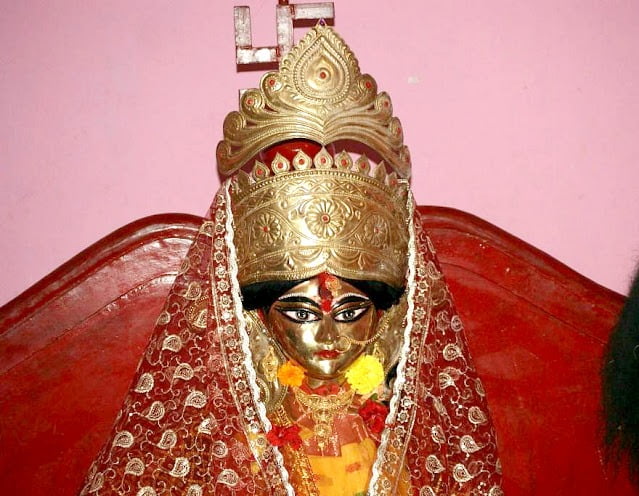
Quick Information: Shree Kiriteswari Shaktipeeth
| Attribute | Details |
| Temple Name | Shree Kiriteswari Temple (also known as Kireetpeeth or Mukuteshwari) |
| Main Deity | Devi Kiriteswari (Form of Goddess Durga / Vimala) |
| Presiding Bhairava | Samvarta (also addressed as Sambhar) |
| Sacred Relic | Sati’s Kireet (Crown or Headpiece), venerated as a holy stone slab |
| Location | Kiritkona Village, Post Dahapara, Nabagram Block, District Murshidabad, West Bengal, India |
| PIN Code | 742123 |
| Daily Temple Timings | Morning: 6:00 AM – 12:30 PM | Evening: 4:00 PM – 8:00 PM (Subject to seasonal daylight variations) |
| Bhog / Anna Prasad Timing | 12:00 PM – 1:00 PM daily (Prior coupon booking recommended by 10:30 AM) |
| Best Season to Visit | October to March (Comfortable winter climate; coincides with Navratri and Ratanti Kali Puja) |
| Major Festivals | Ratanti Kali Puja (Magha month), Durga Puja, Navratri, Dipanwita Kali Puja |
| Nearest Railway Station | Dahapara Dham Railway Station (~3 km); Lalbagh Court Road (~5 km); Berhampore Court (~20 km) |
| Nearest Commercial Airport | Netaji Subhash Chandra Bose International Airport (CCU), Kolkata (~215 km) |
| Entry Fee & Booking | General entry is free; nominal charges apply for special puja offerings and Anna Bhog |
Read More>> Kankalitala Shakti Peeth Temple
Spiritual Significance: Why Kiriteswari is a Revered Shaktipeeth
According to sacred Hindu epics and the Puranas, following the destruction of Daksha’s sacrifice, Lord Shiva carried the sacred remains of Devi Sati across the universe in his grief-stricken cosmic dance (Rudra Tandava). To restore balance to the cosmos, Lord Vishnu dispatched his Sudarshana Chakra, severing Sati’s body into 51 sacred fragments. Each location on Earth where a fragment touched the ground became consecrated as a Shaktipeeth.
At Kiriteswari, tradition states that Sati’s Kireet—her adorned crown or ornate headpiece—fell to the earth. Because the head and crown symbolize sovereignty, spiritual consciousness, and grace, Kiriteswari is revered among Tantric and Puranic practitioners as a focal point of supreme cosmic energy.
In scriptural anthologies such as the Peetha Nirnaya and Tantra Chudamani, the presiding deity is addressed as Devi Vimala (or Kiriteswari), and her consort, the protector Bhairava, is venerated as Samvarta.
Devotees revere this site not only for material blessings but as a peaceful sanctuary for meditation, spiritual surrender, and liberation (moksha). Unlike temples associated with tumultuous outer ceremonies, Kiriteswari maintains an atmosphere of quiet, introverted sanctity.
Read More>> Kashi Vishalakshi Temple Varanasi

The Sanctum Sanctorum: Understanding the Relic Worship
First-time visitors to Shree Kiriteswari Temple are often surprised to discover that there is no traditional human-form idol in the inner sanctum (garbhagriha).
Instead, the focal point of all worship is a sacred, ancient black stone slab.
- The Sacred Symbol: This stone altar is revered as the sanctified petrified representation of Sati’s crown.
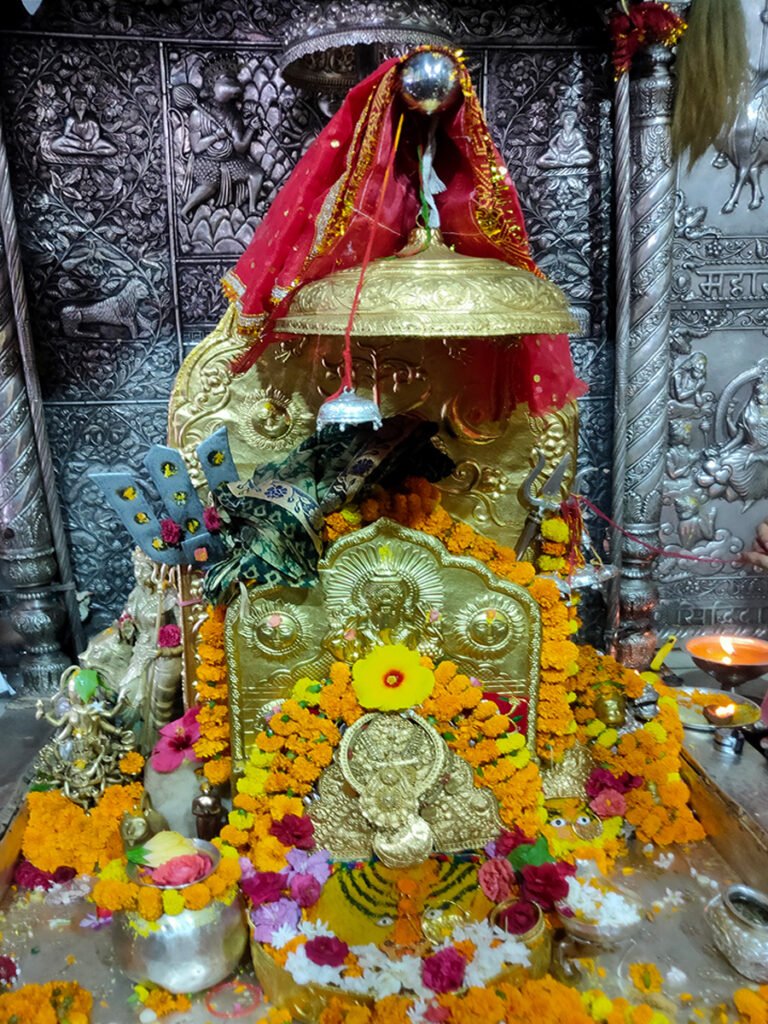
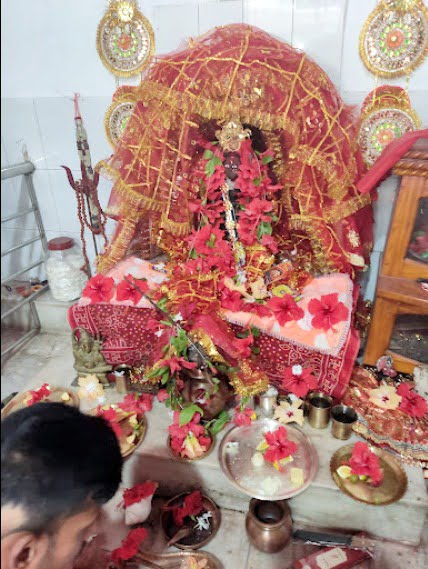
- The Ritual Adornment: The holy stone is covered in pure red silk fabric (chunari), smeared with fresh vermilion (sindoor), and decorated with fragrant floral garlands, bilva leaves, and sacred hibiscus.
- The Procession Altar: A smaller symbolic metal face of the Goddess is placed beside the stone during daily darshan so pilgrims may focus their meditative devotion (dhyana).
Because of this unique relic-based tradition, the priests conduct rituals following Vedic and Tantric traditions without installing a permanent stone murti. Worshipping the direct symbol rather than an anthropomorphic carving emphasizes the formless, all-pervading nature of the Supreme Divine Mother.
Read More>> Manibandh Shakti Peeth Pushkar
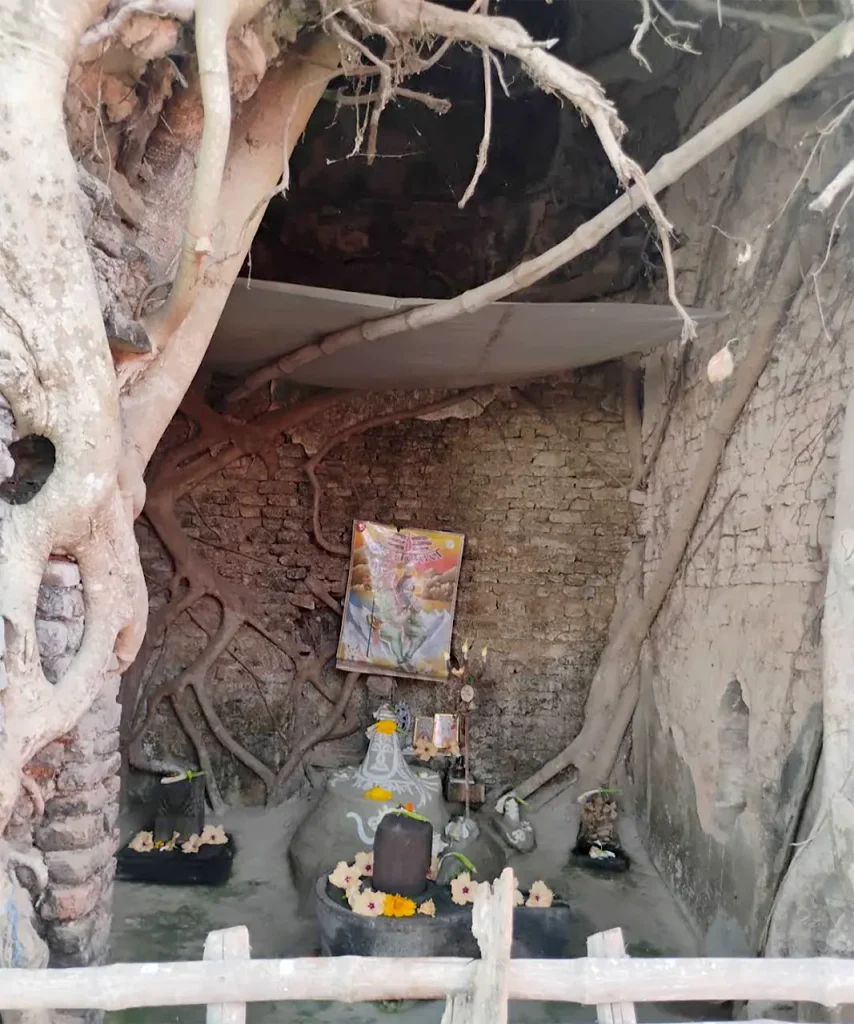
History and Heritage: The Living Temple vs. The Ancient Ruins
A comprehensive pilgrimage to Kiriteswari requires visiting two distinct areas within Kiritkona village: the active modern temple complex and the ancient brick temple ruins.
1. The Ancient Temple Ruins (The Darpanarayan Legacy)
A short walk from the active temple grounds brings visitors to the evocative ruins of the 18th-century temple complex. Commissioned by King Darpanarayan Roy, a prominent royal treasurer and patron of the arts in Bengal, this historic structure was constructed using regional burnt-clay bricks.
Over the centuries, severe floods from the Bhagirathi River system, seismic tremors, and the passage of time weakened the monument, leaving behind graceful arched brick colonnades, foundation platforms, and octagonal structural relics. Today, these ruins are recognized as important heritage artifacts under archaeological surveillance, providing a window into Bengal’s historic past.
2. The Current Living Shrine (The Sovabazar Patronage)
When the ancient temple deteriorated beyond safe use, the sacred relic was reverently relocated to the adjacent complex where it resides today. Substantial structural renovation and patronage were later provided by Raja Nabakrishna Deb of the Sovabazar Raj family, an influential 18th-century noble who also patronized renowned Durga Puja celebrations in Kolkata.
Local historical narratives also record a unique tradition of interfaith respect during the Nawabi era of Bengal. It is documented in local oral traditions that Nawab Mir Jafar, during his final days, expressed deep respect for the healing spiritual aura of Kiriteswari and requested holy sanctum water (charanamrita) from the temple priests—a narrative cherished locally as a symbol of shared human reverence across different communities in rural Bengal.
Read More>> Shirdi Sai Baba Temple Maharashtra
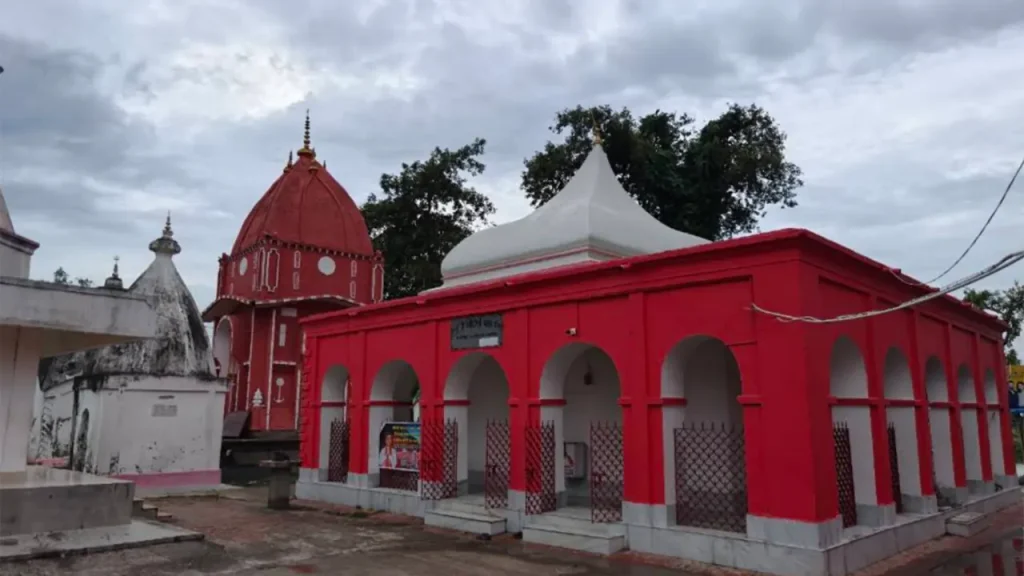
Architecture of Kiriteswari: Bengal Terracotta and Chala Style
The architectural design of Kiriteswari Temple reflects traditional Hindu temple architecture typical of the rural Bengal plains, where stone was scarce and artisans relied on alluvial clay, high-fired brick, and timber roof engineering.
- Roof Geometry: The central sanctum exhibits characteristics of the classic Bengal Chala design, mimicking the gently curved eaves of traditional rural thatched cottages to shed heavy monsoon rainwater effortlessly.
- Terracotta Elements: While modern plaster renovations cover portions of the active temple exterior, remnants of ornamental brick moulding and terracotta panels can still be observed in the nearby heritage structures, featuring geometric floral motifs and miniature spiritual carvings.
- The Natmandir (Prayer Hall): Directly facing the sanctum is a pillared congregation pavilion (Natmandir) where devotees gather for congregational prayers, bhajan recitation, and meditation away from the sun.
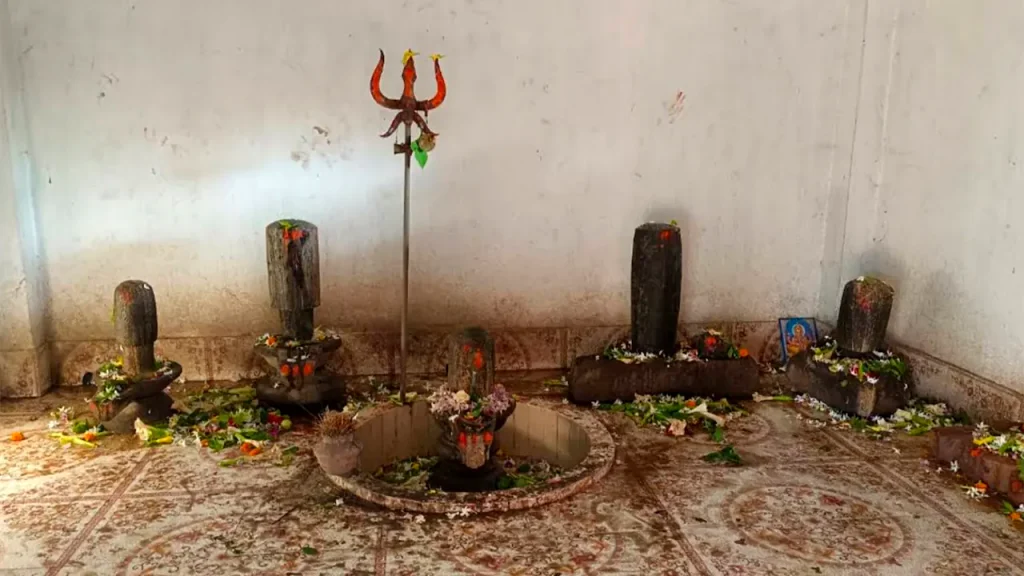
- Shiva Shrines: Flanking the primary Devi sanctum are multiple smaller subsidiary shrines dedicated to Lord Shiva, reflecting the enduring scriptural union of Shakti and her eternal protector, Bhairava.
Kiriteswari Temple Timings, Darshan Schedules, and Offerings
The temple remains open to pilgrims throughout the year. The schedule follows seasonal daylight shifts.
Regular Daily Timings
- Morning Opening: 6:00 AM
- Morning Darshan & Archana: 6:30 AM – 12:00 PM
- Raj Bhog Offering (Sanctum Closed): 12:00 PM – 12:30 PM
- Afternoon Rest (Vishram – Doors Closed): 12:30 PM – 4:00 PM
- Evening Reopening & Darshan: 4:00 PM – 7:30 PM
- Sandhya Aarti (Evening Light Ceremony): 6:30 PM – 7:00 PM
- Night Closure: 8:00 PM
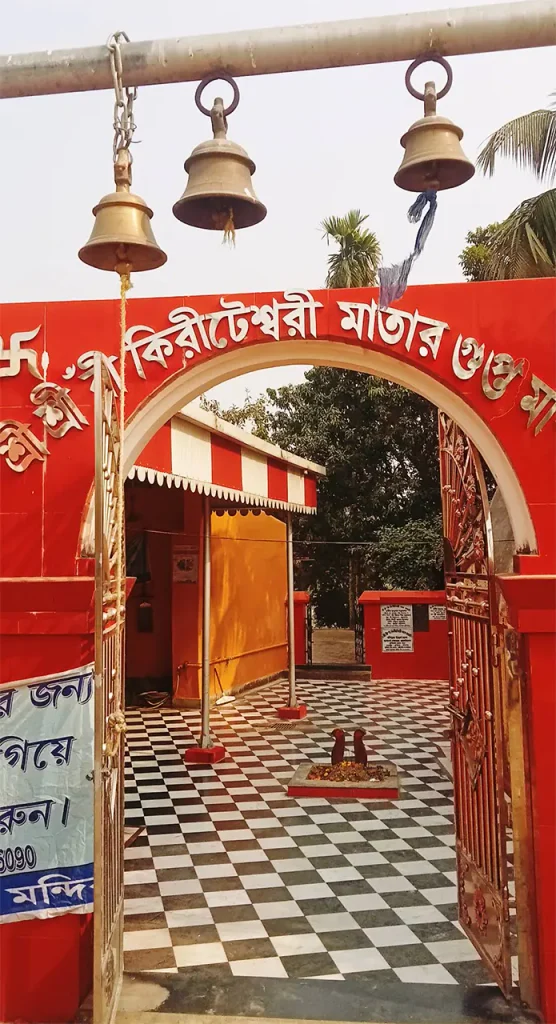
Anna Bhog (Sacred Food Offering) Guidelines
Pilgrims wishing to partake of the consecrated midday meal (Anna Bhog Prasad) must register and purchase a coupon from the temple committee office upon arrival.
- Booking Time: Best booked before 10:30 AM on the day of your visit.
- Menu: A traditional, pure vegetarian Bengali meal comprising fine rice, aromatic dal, seasonal vegetable curries (labra), sweet tomato chutney, and payesh (rice pudding).
- Cost: Highly subsidized, running between ₹50 and ₹100 per leaf-plate meal depending on current trust guidelines.
Festivals and Auspicious Occasions
While daily darshan provides a calm and tranquil experience, thousands of devotees gather during major annual religious festivals.
- Ratanti Kali Puja (Magha Month – January/February): This is the most famous annual festival at Kiriteswari. A massive week-long rural fair (Mela) surrounds the temple grounds. Devotees from Murshidabad, Nadia, Birbhum, and Burdwan travel here to offer special oblations and witness midnight rituals.
- Navratri and Durga Puja (Ashwin Month – September/October): The autumnal Durga Puja festival is observed with classical Vedic hymns, Chandi Path, and special morning worship. The temple premises are brightly illuminated.
- Dipanwita Kali Puja (Kartik Month – October/November): Celebrated concurrently with Diwali, hundreds of earthen oil lamps (diyas) encircle the temple steps and the adjoining pond, creating a glowing spiritual ambience.
Comprehensive Travel Guide: How to Reach Shree Kiriteswari
Kiriteswari Temple is situated on the quieter western bank of the Bhagirathi River in the Nabagram development block of Murshidabad.
1. By Train (Most Convenient for Day Visitors)
The rail network connects the nearby stations with major hubs across Eastern India:
| Station Name | Distance to Temple | Recommended Trains & Connectivity | Local Transfer Options |
| Dahapara Dham (DHPD) | ~3 km | Local suburban passenger trains running between Katwa and Azimganj | Battery Toto or walking |
| Lalbagh Court Road (LCAE) | ~5 km | Express and passenger trains on the Howrah–Azimganj loop line | Auto-rickshaws, Totos, cycle rickshaws |
| Berhampore Court (BPC) | ~20 km | Hazarduari Express, Bhagirathi Express from Sealdah Station | Hired private taxi or bus to Lalbagh/Dahapara |
| Murshidabad Station (MBB) | ~8 km (via river crossing) | Direct express trains from Kolkata | Ferry crossing across Bhagirathi to Dahapara + Toto |
2. By Road
- From Kolkata (approx. 215 km / 6–7 hours): Take National Highway 12 (NH 12) via Barasat, Ranaghat, Krishnanagar, and Plassey up to Berhampore. From Berhampore, divert toward Cossimbazar or Lalbagh, cross the Bhagirathi River over the modern road bridge, and navigate toward Dahapara–Kiritkona.
- From Bolpur / Shantiniketan (approx. 85 km / 2.5 hours): Travel through Kandi and Nabagram directly to reach the western approaches of Kiritkona village.
3. Local Transfers and River Crossing
If staying in historic Murshidabad town (near Hazarduari Palace), you can take a picturesque mechanized country ferry boat from the Lalbagh Ghat across the Bhagirathi River to the Dahapara bank. Once on the western bank, eco-friendly electric rickshaws (Totos) can take you directly to the temple gate in roughly 15 minutes.
Visitor Rules, Dress Code, and Practical Travel Advice
- Attire and Dress Code: While there is no rigid sectarian dress mandate, modest and respectful Indian attire is expected. Saree, salwar kameez, or long skirts are recommended for women; dhotis, kurtas, or full-length trousers are standard for men. Please avoid sleeveless tops and short trousers.
- Footwear Protocol: Footwear must be removed before stepping onto the raised marble circumambulation path (pradakshina) and entering the Natmandir. Designated shoe storage racks are managed by local flower vendors near the gate.
- Photography: Photography of the inner sanctum stone altar is strictly prohibited to preserve the sanctity of the shrine. You may photograph the outer grounds, courtyards, and ancient brick ruins.
- Accommodation: Kiritkona is a peaceful rural village with no major hotels. Visitors should stay in Berhampore (which offers a range of modern hotels) or Murshidabad / Lalbagh (where government tourist lodges and heritage hotels operate).
- Cash Availability: Rural ATMs in Dahapara frequently run low on cash. Keep modest currency notes on hand for flower baskets (dala), Toto fares, and donation receipts.
Nearby Temples & Historic Sites for an Extended Pilgrimage
You can easily combine your visit to Kiriteswari with other renowned spiritual and cultural landmarks:
- Tarapith Temple in Birbhum: Located approximately 70 km southwest, this prominent Tantric center dedicated to Goddess Tara forms a powerful pilgrimage combination with Kiriteswari.
- Attahas Shaktipeeth: Situated near Katwa, where Sati’s lower lip is said to have fallen, completing an auspicious regional Shakti circuit.
- Historic Murshidabad Circuit: Across the river lie the majestic Hazarduari Palace, the sprawling Nizamat Imambara, Katra Mosque, and the historic terracotta temples of Baranagar in Azimganj, showcasing some of the finest brick carvings in India.
Frequently Asked Questions about Shree Kiriteswari Temple
Which body part of Goddess Sati fell at Kiriteswari?
Traditional scriptural texts, including the Peetha Nirnaya, state that the Kireet (sacred crown or ornate headpiece) of Goddess Sati fell here, giving the temple its name.
Is Kiriteswari an active temple or just historical ruins?
Both exist side by side. Active daily worship, aarti, and bhog offerings occur in the main living temple. The adjacent 18th-century terracotta brick temple built by King Darpanarayan Roy stands as a protected historical ruin.
How much time is needed to visit the temple?
A standard darshan and walk through the grounds takes about 45 to 60 minutes. If you plan to partake of the consecrated afternoon Anna Bhog prasad, budget approximately 2 to 2.5 hours.
Are VIP or special darshan passes required?
No. Shree Kiriteswari Temple does not enforce commercial VIP ticketing. All devotees stand in a single, respectful queue. Lines move quickly outside of festival periods.
What is the best way to travel from Hazarduari Palace to Kiriteswari?
The fastest route is to take a local Toto to Lalbagh Sadar Ghat, cross the Bhagirathi River on a 5-minute passenger ferry to Dahapara Ghat, and hire another Toto directly to the temple gates in Kiritkona.