Talakaveri Temple: Divine Origin of the Sacred Kaveri River
Talakaveri Temple is situated high in the rolling, misty green Brahmagiri Hills in a lovely region of India known as Coorg, or Kodagu, in Karnataka state. Imagine somewhere where a powerful river is born, a little baby taking its first breath! That’s what Talakaveri is – it’s the holy birthplace of the great River Kaveri, one of South India’s most significant rivers.
Now, picture me, your amiable tour guide, standing right here next to you, about to regale you with all the tales of this enchanting place. We’ll delve into its mysteries, hear out its ancient legends, and imbibe the serene tranquility that pervades the atmosphere. This is no ordinary temple; it’s a spot where legends and nature join hands, and you can sense it in your soul!
Contents
- 1 Talakaveri Temple History: A Peek into the Past
- 2 Legend of the Talakaveri Temple: Where Rivers Turn into Goddesses!
- 3 Cultural, Spiritual, and Mythological Significance of the Talakaveri Temple
- 4 Festivals and Special Days at Talakaveri Temple
- 5 Unique Architectural Styles and Carvings
- 6 Myths and Beliefs: Stories from the Heart
- 7 Talakaveri Temple Timings
- 8 Why is Talakaveri So Important?
- 9 Sites to See Around Talakaveri Temple
- 9.0.1 Mahaganapathi Temple Malleswaram
- 9.0.2 Gangapur Dattatreya Temple
- 9.0.3 Sri Kshetra Dharmasthala Temple: Miracles of Lord Manjunatha
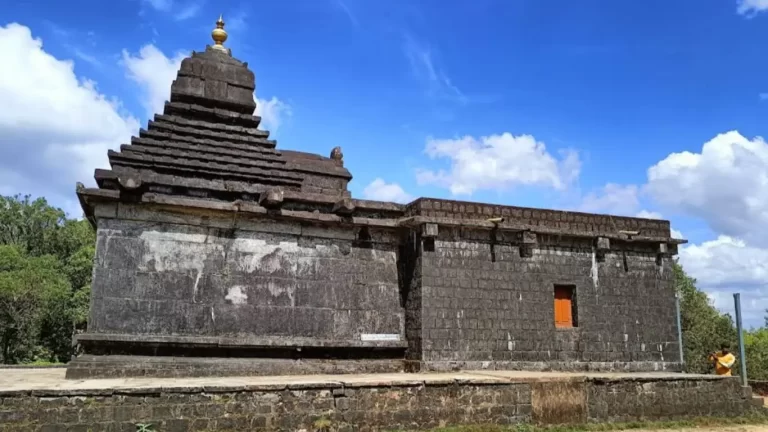
- 9.0.4 Shri Bettada Byraveshwara Temple
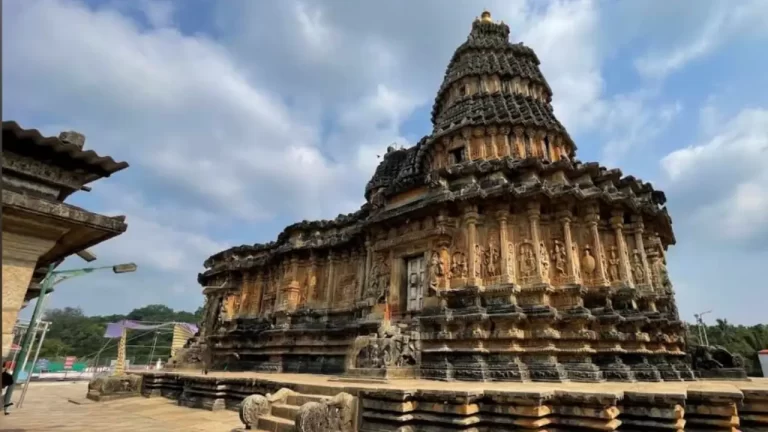
- 9.0.5 Vidyashankara Temple Sringeri 12 Pillars Reveal Your Destiny
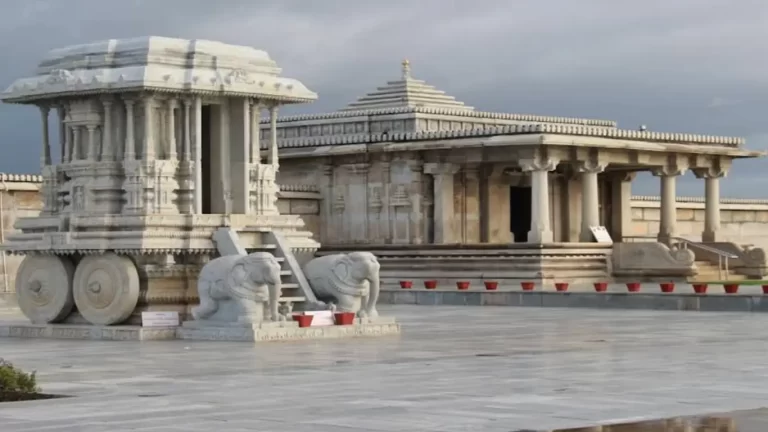
- 9.0.6 Venugopala Swamy Temple Kannambadi: Lost for Decades Under Water
- 10 Accommodation Options Near Talakaveri Temple
- 11 How to Reach Talakaveri Temple
- 12 FAQs about Talakaveri Temple
Talakaveri Temple History: A Peek into the Past
Every old site has a story, isn’t it? And Talakaveri Temple has a very old one! Although we don’t know super precise dates on how exactly it all began, we do know that people have found this location very holy for a very, very long time. Remember way back hundreds and hundreds of years ago?
The temple that you see now may have been constructed and extended by various kings and individuals who were fond of this site. For instance, some historical records inform us that the temple was renovated in about 1790 AD, when Maharaja Veera Rajendra Wodeyar was the king of Kodagu. Isn’t that amazing? Imagine kings loving this special place so much!
The priests who maintain the Talakaveri Temple also have a long history of their own. They are part of a clan known as the Achar family, and their history here dates more than 200 years! It’s almost like a tradition within a family to take care of this sacred spot, from grandfathers to fathers to sons. They are such custodians of the birthplace of the river, ensuring all the rituals and prayers are performed just so.
Legend of the Talakaveri Temple: Where Rivers Turn into Goddesses!
Now, on to the actually fun part – the legends! Suppose a river isn’t mere water but a goddess herself. That’s what folks think about River Kaveri!
There is a very popular legend associated with Talakaveri and a very wise sage by the name of Agastya. A sage is a very wise and sacred individual. It is said in legend that Lord Brahma, who is similar to the creator of the world in Hindu mythology, requested Sage Agastya to bring the sacred Ganga River to southern India because the land was parched and required water.
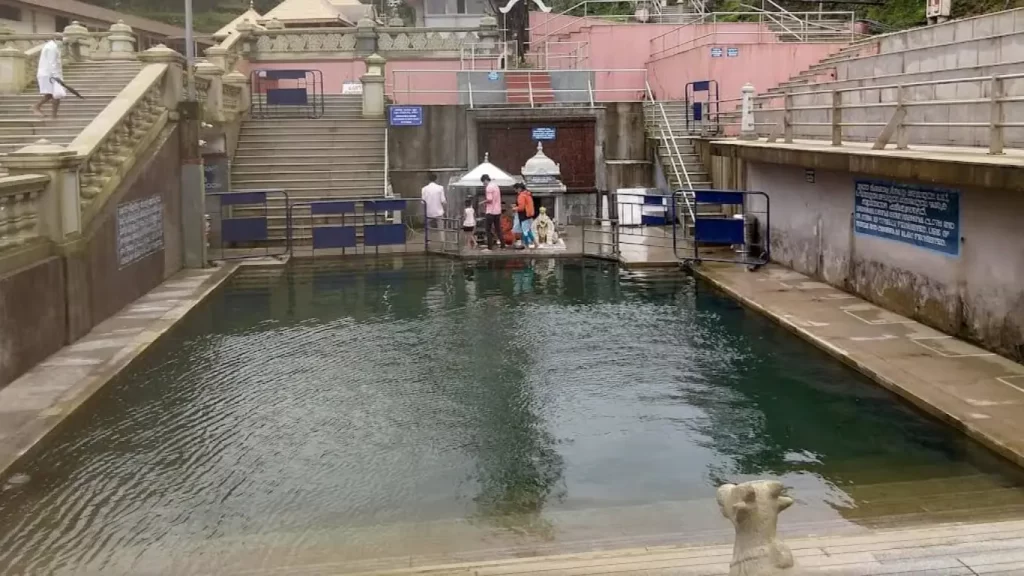
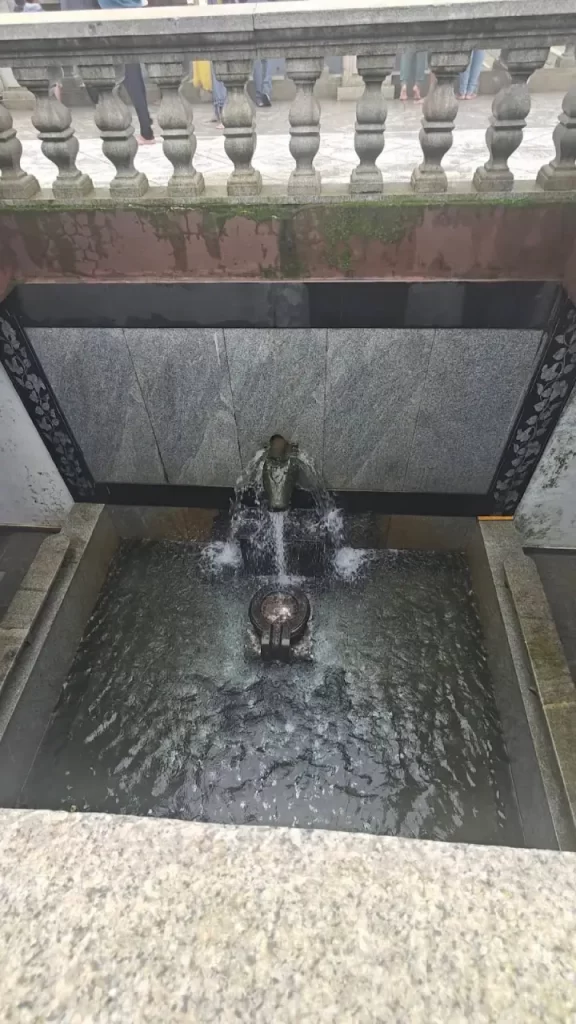
But the Ganga River is very powerful, and if it came all at once, it might flood everything! So, Sage Agastya asked Lord Shiva for help. And guess what? Lord Shiva changed the powerful Ganga into a gentle, kind river called Kaveri. And where did this beautiful River Kaveri first appear? Right here, at Talakaveri, from a small sacred pond called a Kundike!
Another lovely segment of the legend informs us that the three major gods of Hinduism – Brahma, Vishnu, and Mahesh (Lord Shiva) – even descended before Sage Agastya under a sacred Ashwantha tree here! What an honour to behold such divine figures! These tales make Talakaveri not only a site where a river begins, but a site with heavenly magic and fortune.
Read More>> Nelluvaya Sree Dhanwanthari Temple
Cultural, Spiritual, and Mythological Significance of the Talakaveri Temple
You know, Talakaveri isn’t just about a temple complex; it’s about an emotion, a faith, and a very crucial river that nourishes so many lives.
Culturally, it’s a site where traditions are preserved. Kodagu people, in particular, have a very strong connection with the River Kaveri, as if she were their mother. They worship her, pray to her, and think that she is responsible for prosperity and well-being. Talakaveri is a trip where they pay homage to their heritage and their connection with nature.
Spiritually, it’s a place of pilgrimage, so it’s an extremely significant site for individuals to come and feel closer to God. Standing here, up in the hills, amongst the peaceful beauty of nature, you just feel at peace. A lot of people come here to have a holy bath in the Kundike water, feeling that it wipes away cares and blesses you. The air here smells so fresh, as if it is vibrating with ancient prayers.
Mythologically speaking, as we have just discovered, Talakaveri is the birthplace of a goddess! How special this must make it. The legends of Sage Agastya, Lord Shiva, and Goddess Kaveri are not mere stories; for many, they are divine truths that tell the story of how this nectar-like river came into being.
Festivals and Special Days at Talakaveri Temple
Just as we have birthday celebrations, the Talakaveri Temple has special days, particularly those associated with the River Kaveri!
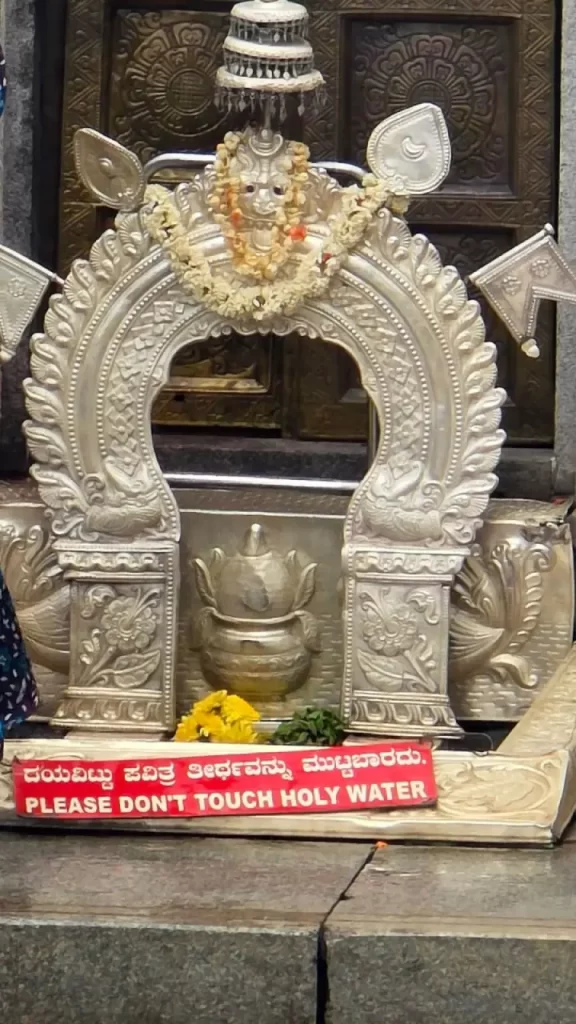
The most prominent festival here is known as Kaveri Sankramana. It occurs in mid-October, typically on the first day of the Hindu calendar’s Tula month. It’s the day when all believe that the sacred water in the Kundike suddenly spurts up miraculously! It’s referred to as Theerthodbhava. Thousands and thousands of individuals visit Talakaveri on this day. It’s a highly crowded day, but it’s also a day filled with joy and piety. Individuals have holy baths and pray. There are specific poojas (prayers) conducted at the Talakaveri Temple and even within homes of the Kodava community. Picture this – a huge, cheerful fair with plenty of shopping, delicious food stalls, and exciting rides – that’s Kaveri Jatre for you!
Apart from Kaveri Sankramana, other celebrations such as Makar Sankranti (which takes place in January) are also celebrated with a lot of enthusiasm. During these days, the temple is all the more vibrant and colorful!
Read More>> Madapuram Kali Temple Madurai
Unique Architectural Styles and Carvings
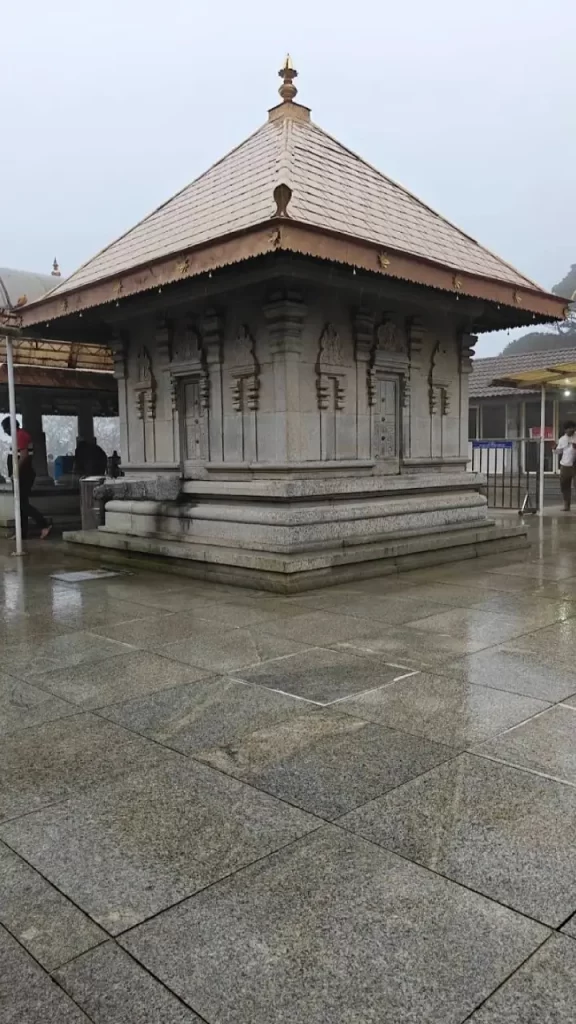
Now, let’s discuss the temple building itself! The Talakaveri Temple building is very traditional South Indian architecture. It’s not complicated but quite elegant. Think of a snug house that’s just right, and there’s a particular room where the god resides. That’s roughly how a temple is!
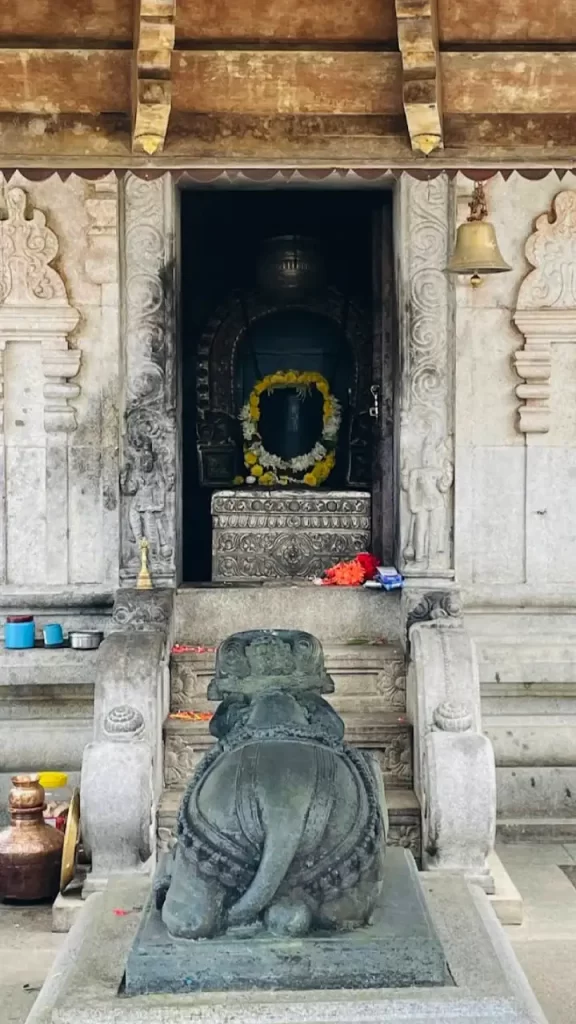
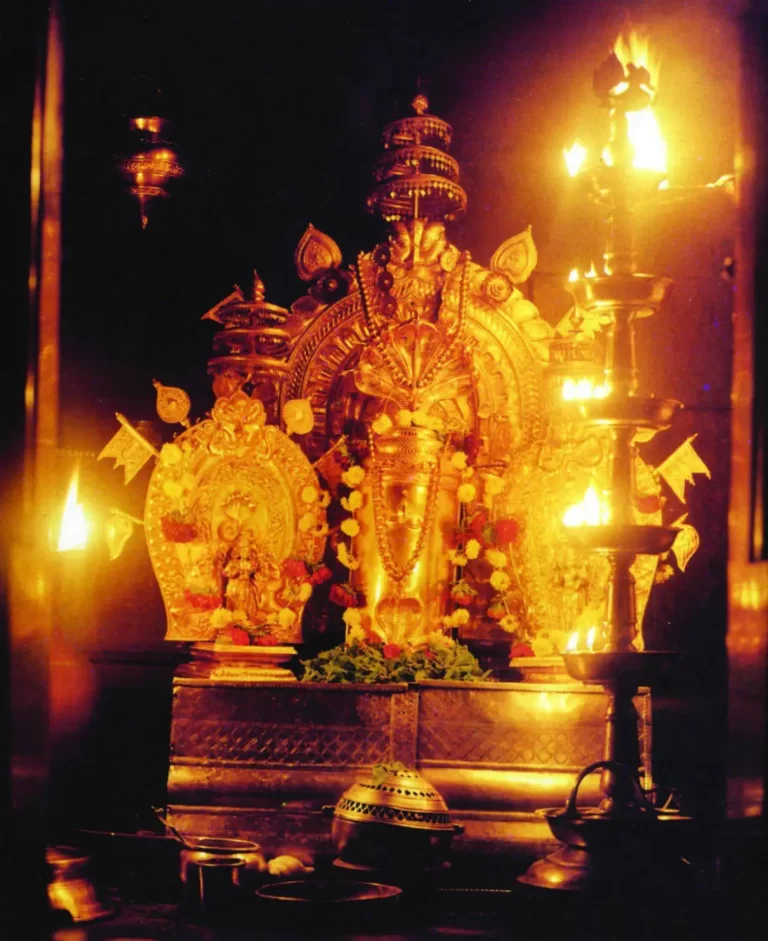
The central part of the temple is known as the garbhagriha, which is similar to the special inner chamber where Goddess Kaveri is worshiped. Some beautiful carvings may be around the temple. They depict stories of ancient times or present nice designs. They are similar to small pictures cut out of the stone, which makes the Talakaveri Temple even more unique and lovely. The entire place has been planned in such a way that you will feel relaxed and connected to the divine.
Myths and Beliefs: Stories from the Heart
Apart from the primary legend of the birth of Kaveri, there are some lovely beliefs and myths surrounding Talakaveri.
Most people think that a dip in the holy Kundike water on festive days can cleanse sins and bestow good fortune. It’s a way of pressing a soul reset button!
Some believe that the fresh, clear water at Talakaveri possesses unique healing properties.
The Brahmagiri hill, which runs parallel to the Talakaveri Temple, is also highly significant. It is thought that seven wise sages, known as the Sapta Maharishis, conducted a very sacred prayer or yagna atop its peak. That’s why numerous tourists ascend the steps of the top of the Brahmagiri hill – not only for the breathtaking 360-degree views of the foggy green mountains (which are simply spectacular!), but also to experience the spiritual vibrations left behind by these old sages.
You may even notice individuals wrapping small bells or colored cloth around trees or railings as a mark of their prayers and wishes. It’s a means of leaving a part of themselves here at this sacred location.
Read More>> Kedaragouri Temple Bhubaneswar
Talakaveri Temple Timings
In case you decide to go to Talakaveri Temple, you may want to know when it is open. Typically, the temple is open to visitors from around 6:00 AM in the morning to 6:00 PM in the evening. It’s open nearly every day of the year, and that’s fantastic! However, as with most temples, the hours may be slightly adjusted during large festivals or special ceremonies. At times, they may even have a small afternoon break. Therefore, it’s always better to verify prior to visiting, particularly if you wish to stay for a unique Aarti (prayer ceremony) which typically occurs in the morning and evening.
Why is Talakaveri So Important?
You may ask, “Why is this site so extremely significant?” Well, think about it: if the water that you drink, the water that makes plants produce food, and the water that keeps you cool on a scorching day all originated from the same special location. That’s what River Kaveri does for millions of South Indians, particularly in the states of Karnataka and Tamil Nadu! She’s like the lifeline, sustaining the land and its people.
Therefore, Talakaveri is significant because:
It’s the fount of life: If it weren’t for the River Kaveri, life in South India would be quite different. It supplies water to drink, for agriculture, and for daily use.
It’s a symbol of purity: The origin of a river is usually the purest point, untainted and new.
It is a connection to the divine: The fact that Kaveri is considered to be a goddess makes this site a strong conduit between humans and the divine. To visit here is to go to the house of a benevolent mother who takes care of all.
It’s a spot of contemplation: The peaceful loveliness of the Brahmagiri Hills and the tranquil mood of the Talakaveri Temple lead you to reflect, relax, and get in touch with yourself and something greater than yourself.
Are there any unique poojas done here? Yes! Several devotees do rituals and offer prayers at the Kundike and within the Talakaveri Temple. Though individual names of many daily poojas may be to be known by priests, the most significant one is offering thanks to Goddess Kaveri for her never-ending flow and grace. People give flowers, coconuts, and light lamps as a symbol of their devotion.
Read More>> Thiruvambadi Sri Krishna Temple
Sites to See Around Talakaveri Temple
Your journey doesn’t need to end at Talakaveri! There are plenty of other beautiful sites around that you can visit, particularly if you enjoy nature and more temples.
Bhagamandala: Only a little distance from Talakaveri, the town is quite well-known. It’s here that three rivers confluence – River Kaveri, River Kanika, and a legendary river named Sujyoti. This confluence is termed a Triveni Sangam, and a sacred dip here is said to be of great significance. There is also a lovely temple of Lord Bhagandeshwara (Lord Shiva in one form) at Bhagamandala.
Abbey Falls: Picture a grand waterfall in which water cascades down from up above, creating a melodious sound! Abbey Falls is simply a sight to behold, nestled among green coffee estates.
Raja’s Seat (Madikeri): This is a beautiful garden with an observation point where you get to enjoy the most spectacular sunset over Coorg’s misty valleys. It’s an ideal location to unwind and appreciate nature’s canvas!
Omkareshwara Temple (Madikeri): A very unusual temple of Lord Shiva, constructed in a combination of Islamic and Gothic architectural styles. It even has a beautiful pond in front with fish!
Dubare Elephant Camp: If animals, particularly elephants, are your passion, then you must visit this place! You can learn about elephants, feed them, and even bathe them in the river!


Accommodation Options Near Talakaveri Temple
As Talakaveri is a little uphill in the hills, the nearest accommodations will be in and around Bhagamandala or Madikeri, which is the main town of Coorg.
You can stay in homestays, where it is almost like staying in one’s own home, and you get a warm, local experience.
There are also many hotels and resorts available, ranging from small, cozy budget ones to more expensive ones, depending on your choice.
Some of the popular ones include KSTDC Hotel Mayura Talacauvery in Bhagamandala, and several in Madikeri such as Taj Madikeri Resort & Spa, Club Mahindra Madikeri, and The Tamara Coorg. It’s always advisable to book your accommodation in advance, especially during peak season or festival periods!
Read More>> Swarnagiri Venkateswara Swamy Temple Bhuvanagiri Telangana
How to Reach Talakaveri Temple
Reaching Talakaveri is half the fun!
By Air: Nearest airports are Mangaluru (Mangalore) International Airport (approximately 150 km away) and Kannur International Airport (approximately 110 km away). The taxi can be booked from the airport.
By Train: Nearest railways are Mysore (approximately 120 km) or Mangaluru. From there, you can take a bus or taxi.
By Road: This is usually the most sought-after route to Talakaveri.
If you are approaching from Madikeri, it’s roughly a 48 km journey, which will take you 1.5 to 2 hours. The route goes through picturesque green hills, so take the view in! You can rent a taxi or board local buses from Madikeri to Bhagamandala, and then a taxi to Talakaveri Temple.
From larger cities such as Bengaluru (Bangalore), it is around 270 km, and from Mysuru (Mysore), it is around 120 km. The roads are well maintained, and you can travel by bus or rent a private vehicle.
Remember, the final leg to Talakaveri may be a little twisty, so if you tend to get car sick, keep that in mind! But honestly, the scenery and the sense of arriving at this sacred site are well worth it!
Read More>> Chennakesava Temple Belur: Finest Hoysala Architecture
FAQs about Talakaveri Temple
Here are some handy answers to questions that people tend to ask about Talakaveri Temple:
Is there an entry fee? No, there is no entry fee to see the Talakaveri Temple.
Can physically disabled individuals visit with ease? Although the temple complex is accessible, climbing stairs to reach the top of Brahmagiri hill is required, which may be difficult for some.
Are foods and drinks available? Yes, one can normally find small stalls that sell snacks and water somewhere around the temple.
Is it open year-round? Yes, the Talakaveri Temple is open year-round.
What is the best time to go? Post-monsoon and winter months (September to March) are usually the best times to visit, as the weather remains cool and the surroundings are verdant green.
One Comment