
Tulja Bhavani Temple Tuljapur
Tulja Bhavani Temple, in the town of Tuljapur, in the Dharashiv (earlier Osmanabad) district of Maharashtra, India. This is not only a temple but a living example of faith, courage, and godly grace.
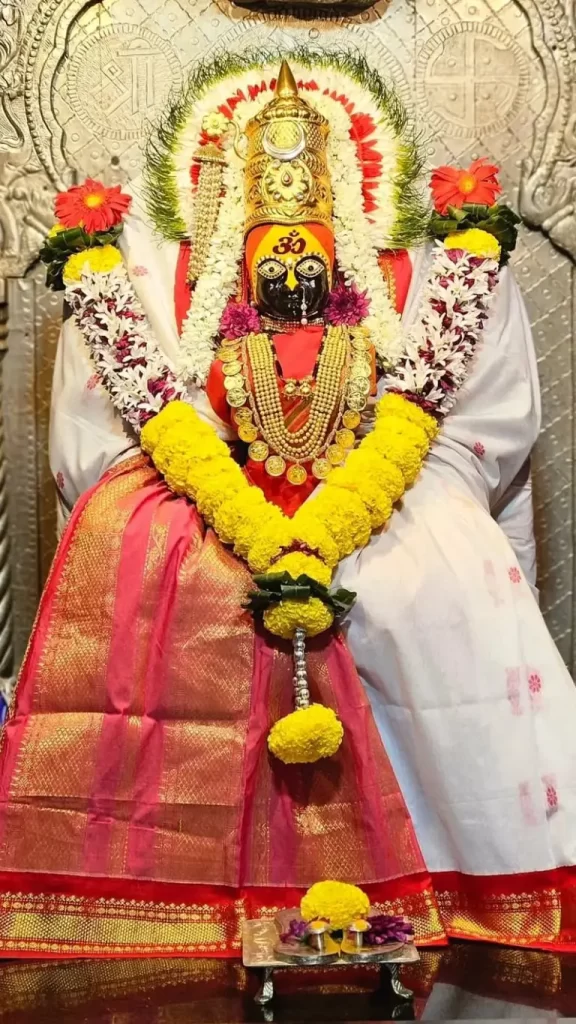
Also referred to as one of the Shakti Peethas (seat of cosmic power) in Maharashtra, the Tulja Bhavani Temple is the family deity, or Kulswamini, of hundreds of families, particularly the Maratha community. It is a location where history and mythology are blended together, where the cries of “Jai Bhavani, Jai Shivaji” still resound, and where you can sense the vast spiritual power that has attracted millions of pilgrims for centuries.
Contents
- 1 The Sacred Abode of the Goddess
- 2 Tulja Bhavani Temple History
- 3 Legend of the Temple
- 4 Cultural, Spiritual, and Mythological Significance of the Temple
- 5 Festivals and Special Days
- 6 Distinct Architectural Design and Carvings
- 7 Tulja Bhavani Temple Timings
- 8 Hindu Sites to See Around Tulja Bhavani Temple
- 9 Accommodation Options
- 10 How to Reach the Temple
The Sacred Abode of the Goddess
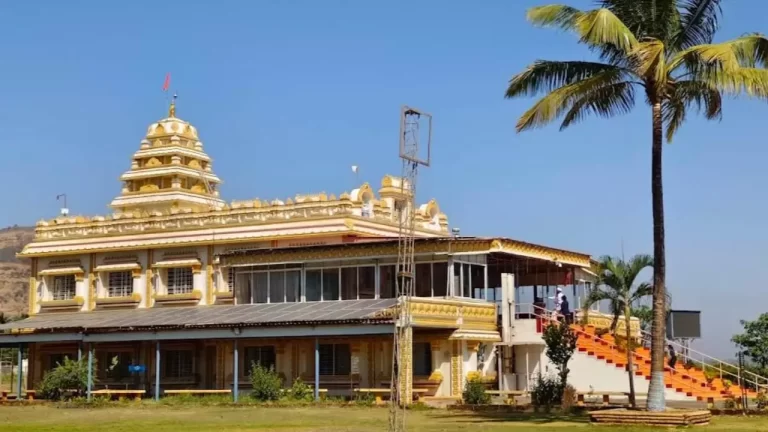
Welcome to Tuljapur, where the divine goddess Tulja Bhavani lives. This holy place is situated atop a hill in the Balaghat range of mountains, gazing over a peaceful landscape. As one draws near, one can feel the atmosphere around oneself change, filled as it is with peace and devotion. The very name of Tuljapur originates from the goddess herself, a testimony to her significance and the reverential love she inspires.
The Tulja Bhavani Temple is more than a temple of worship; it’s a pulsating hub of cultural activity, a historical landmark, and an inspiration to her devotees. She is an embodiment of Goddess Shakti, the primeval cosmic energy, and is revered in her fierce and protective incarnation. She is the mother who safeguards her children from harm, chases away darkness, and grants victory to the virtuous. This is why Jagdamba, the mother of the universe, is also called so.
For most, a trip to this temple is a very personal one. You could be a Kuladevi devotee, a history buff, or just a seeker of blessings from god. Whatever the reason, the goddess has open arms for you. We will stroll through the temple complex hand in hand, revealing its numerous secrets, and you will feel that you’ve been here before, so strong is the spiritual connection of the place. The trek to the Tuljabhavani mandir is a heart pilgrimage.
Read More>> Manakula Vinayagar Temple
Tulja Bhavani Temple History
To really enjoy the Tulja Bhavani Temple, you must learn about its long and interesting history. Although the temple itself has roots in ancient mythology, its construction and historical importance date back to the medieval era.
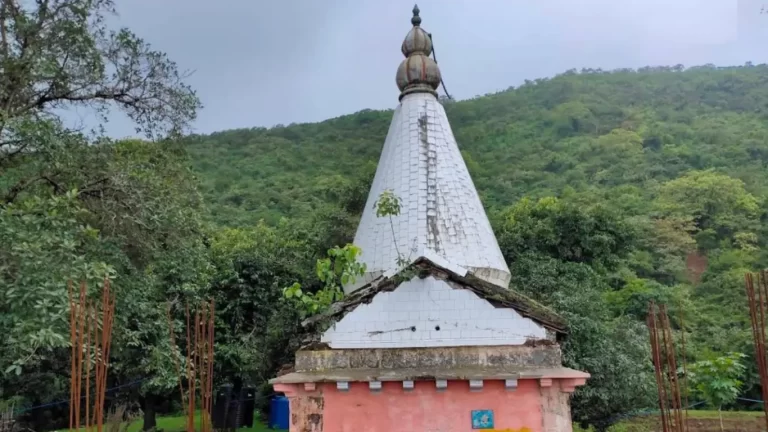
The temple that we have today is thought to have been built during the 12th century CE. It’s said to have been built by the Kadamb dynasty under a king named Mahamandaleshwara Māradadeva. The architecture of the temple, especially the portion that is in Hemadpanti style, speaks about the skillfulness of its time. Hemadpanti is a unique style of architecture of the Yadava era that features black stone and designs without mortar.
However, the history of the Tulja Bhavani Temple is most well known and inseparably associated with the Maratha Empire and its founder, Chhatrapati Shivaji Maharaj. Shivaji Maharaj was a strong devotee of the goddess. She was his Kuladevata and Ishtadevi (personal guardian deity). It is almost universally believed and part of Maratha lore that prior to leaving on any large military campaign, Shivaji Maharaj would worship at this temple to obtain the blessings of the goddess.
The most well-known legend, one which you will have told you by each priest and local, is that the goddess herself granted her blessing to Shivaji Maharaj and gifted him with the Bhavani Talwar (Bhavani Sword). This was no ordinary sword; it was a sacred one, a symbol of her favor and a promise of success in his struggle for Swarajya (self-rule). This act solidified the goddess’s position not only as a deity, but also as a guiding presence in the history of Maharashtra. The chant “Jai Bhavani, Jai Shivaji!” became the battle cry of the Marathas, representing the divine power that backed their moral cause.
The temple has undergone different cycles of reconstruction and refurbishment over the centuries, but its religious essence has not been touched. It’s a reflection of people’s staunch faith that remains unshaken. You can observe the mix of different ages in its architecture, from the old stone sculptures to the newer additions that have been made by successive kings and pilgrims. The history of the place is a canvas painted with colors of faith, war, and divine favor.
Legend of the Temple
Tulja Bhavani Temple is filled with interesting legends describing its creation and significance. The most well-known legend is recorded in the Skanda Purana, one of the principal Hindu sacred writings. It’s a tale of good versus evil, and the eventual victory of divine power.
It is said that once there was a demon named Madhu-Kaitabh (also known as Kukur), who was a terror for gods and humans alike. He was causing destruction and havoc wherever he went. The gods and sages, along with Lord Brahma, being unable to kill him, took the help of the primordial cosmic energy, Adi Shakti.
In order to safeguard the righteous, the goddess took on a powerful, destructive manifestation. She was fueled by the powers of all the other goddesses (Sapta Matas)—Brahmani, Vaishnavi, Maheshwari, Kaumari, Varahi, Indrani, and Chamunda. There was a bloody and devastating war. The goddess, with her collective strength, defeated the demon, and peace and order were restored in the universe.
There’s a particular legend associated with the site of the temple. It is believed that the sage Kardama and his wife Anubhuti resided in this place. On the death of the sage, Anubhuti was alone bringing up her young infant child on Yamunachala hill (belonging to the Balaghat range) and was doing penance to Goddess Bhavani to protect herself.
The same demon, Kukur, came and attempted to bother her. When Anubhuti cried for help, Goddess Bhavani appeared immediately and slew the demon. Moved by gratitude and devotion, Anubhuti invoked the blessings of the goddess to make her abode on this very hill and safeguard her devotees eternally. The goddess, gratified with her devotion, consented. Thenceforth, she was referred to as Tulja Bhavani, the goddess who saved her dearest devotee and made this holiest of abodes.
This lovely legend brings out the focal position of the goddess as a guardian. It’s because of this reason that a very large number of people visit here in order to ask for her divine intervention and protection against the challenges of life. You can feel the sense of security and divine presence when walking around the temple complex. The Tulja Bhavani Temple legend is not merely a tale; it’s a core belief that underpins the religion of her followers.
Read More>> Sri Kshetra Dharmasthala Temple: Miracles of Lord Manjunatha
Cultural, Spiritual, and Mythological Significance of the Temple
Tulja Bhavani Temple is a temple that is significant on many levels and goes way beyond its geographical location.
Spiritual Significance: Being one of the 3.5 Shakti Peethas of Maharashtra, it is an important place of worship of Shakti. These places are thought to be the locations where the spiritual energy of Goddess Shakti is most strong. For the followers, a visit to the Tuljabhavani mandir is an attempt to tap into this ancient energy, to request blessings for power, bravery, and spiritual realization. The goddess represents Adi Parashakti, the supreme divine energy that brings into being, keeps in existence, and destroys. Her devotion is an attempt at liberation from ego and ignorance.
Cultural Significance: The goddess is the Kulswamini of innumerable families, particularly from Maharashtra, Karnataka, and Andhra Pradesh. A pilgrimage to Tuljapur for these families is a longstanding sacred tradition. The temple’s association with Chhatrapati Shivaji Maharaj has also resulted in it being an emblem of Maratha identity and pride. The temple practices, festivals, and customs are a living embodiment of the culture of the region. Oti Bharan ceremony, in which married women give a saree, blouse, coconut, and some other things to the goddess, is a lovely custom symbolizing prayers for her blessings for long, prosperous marital life.
Mythological Significance: The myths of the temple, as recorded in the ancient scriptures such as the Skanda Purana, confer mythological status upon it. The legend of the goddess killing the demon Kukur reinforces her position as a destroyer of evil and a guardian of the innocent. This theme of divine justice and triumph is at the heart of the temple’s mythology and is an inspiration to devotees. The goddess is not only a fierce warrior; she is a loving mother who rescues her children at times of distress. The legends connected to the Tulja Bhavani Temple are not only historical texts; they are spiritual realities that govern the lives of her devotees.
Festivals and Special Days
The Tulja Bhavani Temple buzzes with activity, particularly during the big festivals. If you wish to see the real energy of this site, visit when these festival days arrive.
Navratri: This is the largest and most congested festival at Tuljabhavani mandir. The nine evenings of Navratri, generally in September or October, are celebrated with great fervor. The whole temple is covered with lights and flowers. Special abhisheks and pujas are done, and the deity is dressed in various alankars (ornate forms) every day. The climax on Vijayadashami (Dussehra) is especially grand, as it marks the victory of the goddess over the demon. It is the day when you can see special poojas and a large procession of the goddess’s idol. The mood is charged, with devotional songs and a throng of devotees.
Chaitra Pournima: The full moon day in the Hindu month of Chaitra is another significant festival. There is a big fair, and pilgrims from all parts of the region visit to present their prayers.
Shakambhari Navratri: This is a second nine-night celebration of the goddess, held in December-January. This is not quite as busy as the main Navratri, but it’s still an important time for followers.
Palkhi Procession: On some special occasions, the central idol of the goddess, i.e., a Chal Murti (portable idol), is brought out in a palkhi (palanquin) procession within the temple. This is a lovely and unusual sight, as the goddess herself graces her devotees by moving among them. The idol is also transferred from its throne to a bed outside the sanctum sanctorum three times a year.
Crowded Days: Tuesdays, Fridays, and Sundays are crowded days as they are lucky days for the goddess. Navratri, Dussehra, and Chaitra Pournima are very crowded festivals. If you want a quiet darshan, it is advisable to go on a weekday in non-festival times. The temple is always full of devotion, so you will always have a crowd, but these festive days attract an extraordinary number of pilgrims.
Read More>> Sree Suvarna Temple Powai
Distinct Architectural Design and Carvings
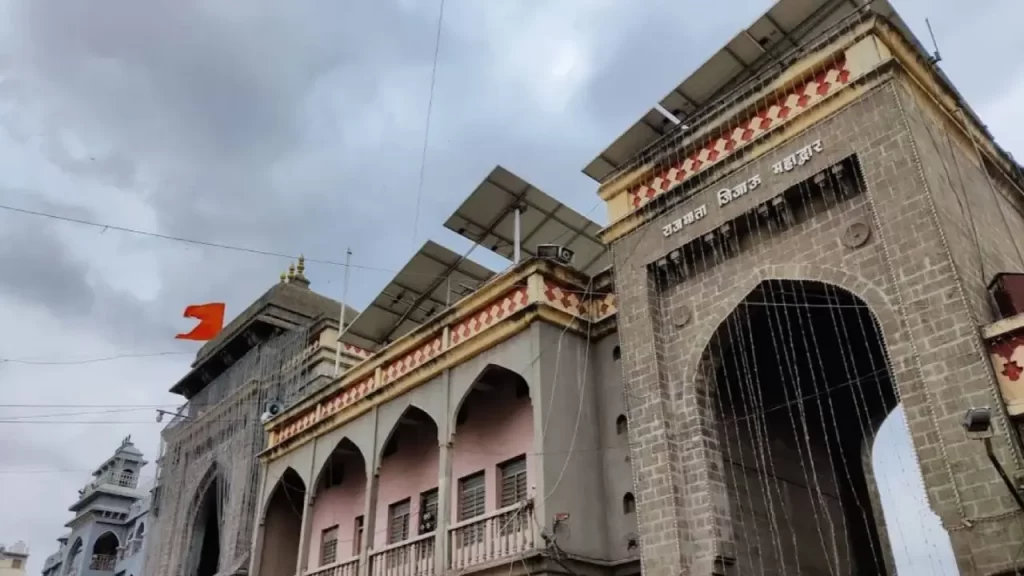
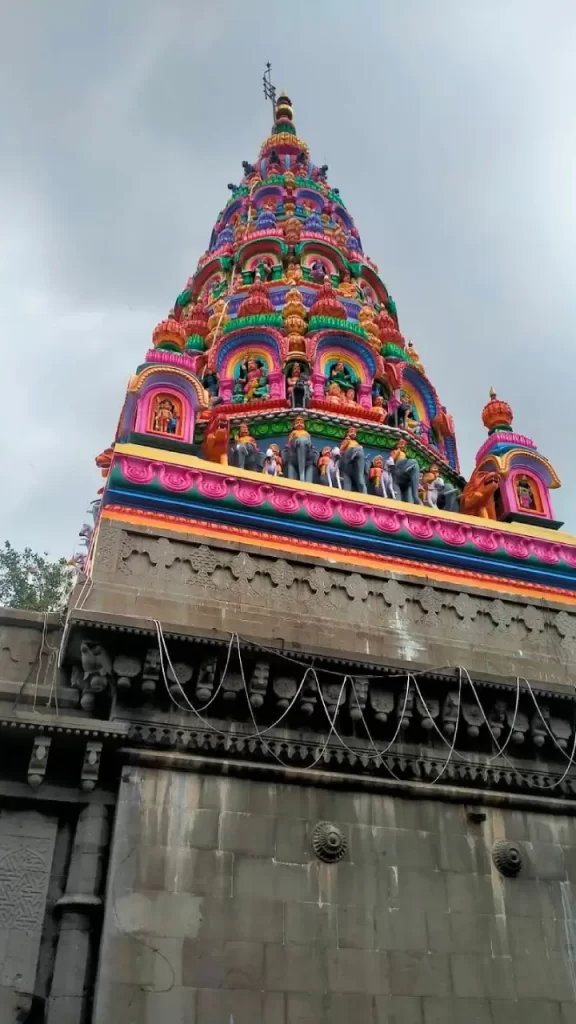
The Tulja Bhavani Temple architecture is one to admire. It is a blend of various styles, with strong roots of the Hemadpanti style during the Yadava regime. This style features interlocking stones as it is built without the use of cement or mortar. As you enter the temple, you’ll go through one of the two principal gates—the Raje Shahaji Mahadwar and the Rajamata Jijau Mahadwar, named after Shivaji Maharaj’s parents. This is a lovely gesture to pay tribute to the family who had such strong bonding with the goddess.
The temple complex is large and unique in its spread. You’ll go down many stone stairs to get to the main temple. Devotees take a ritual bath in one of the holy tanks, or tirthas, on the grounds before entering the sanctum. Two notable ones are the Gomukh Tirtha and Kallola Tirtha. It is said that a dip here cleanses the soul prior to appearing in the presence of the divine. The Gomukh Tirtha derives its name from a perennating spring whose source bears the form of a cow’s mouth.
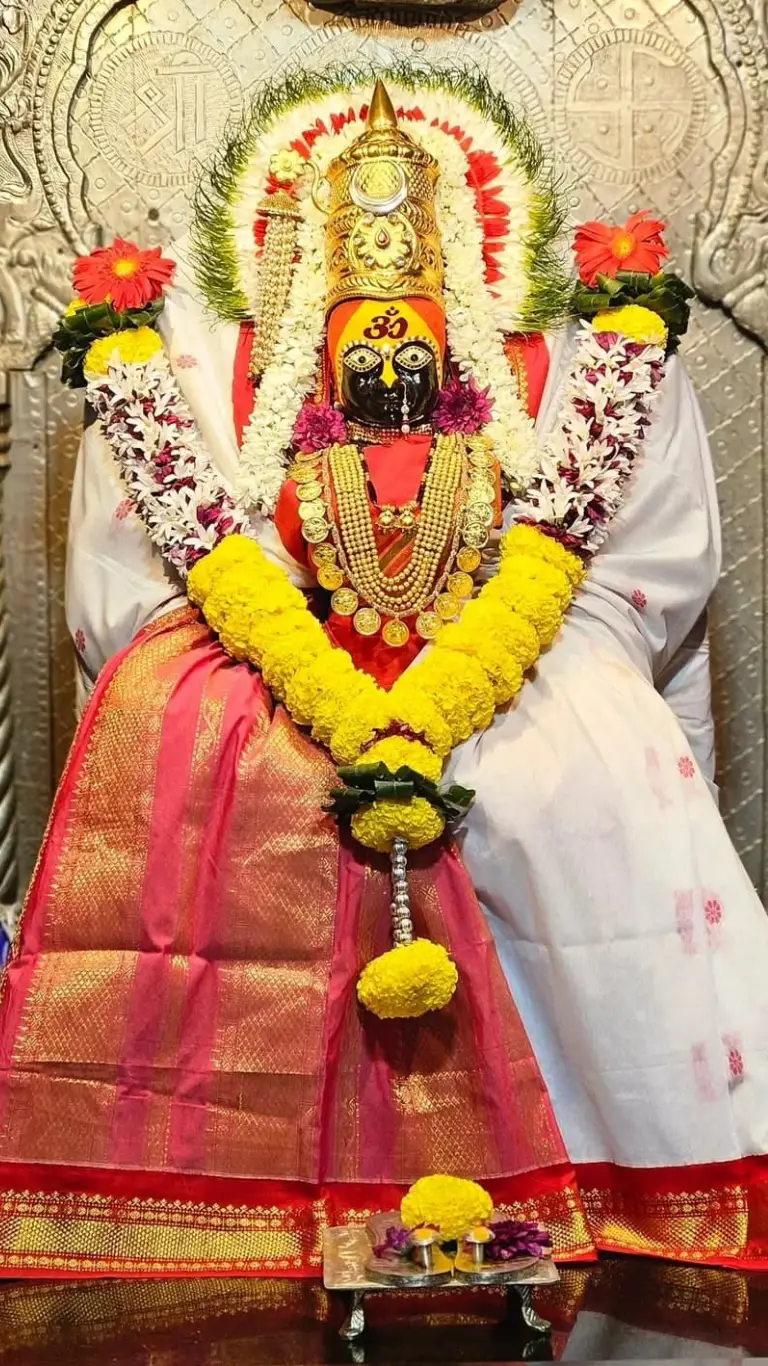
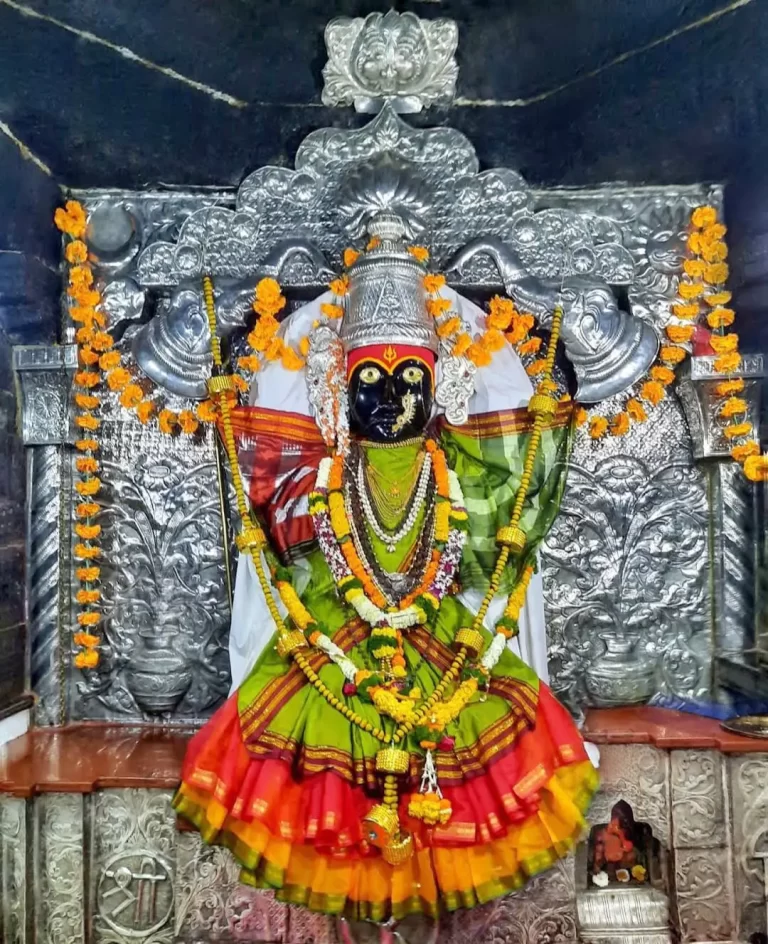
The sanctum sanctorum is constructed with black stone, and the entrance to it is covered with a gorgeous silver sheet, embellished with carving. The central idol of Goddess Bhavani is a three-foot granite idol. She is shown with eight arms, and each arm holds a different weapon, standing victoriously upon the head of the defeated demon Mahishasura. This stance is a great image of her as a guardian and annihilator of evil.
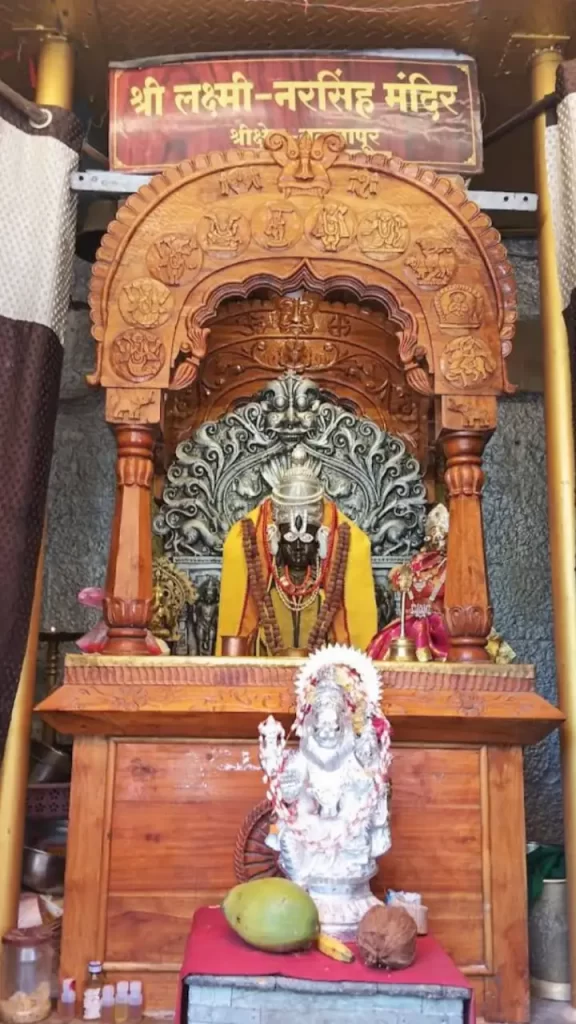
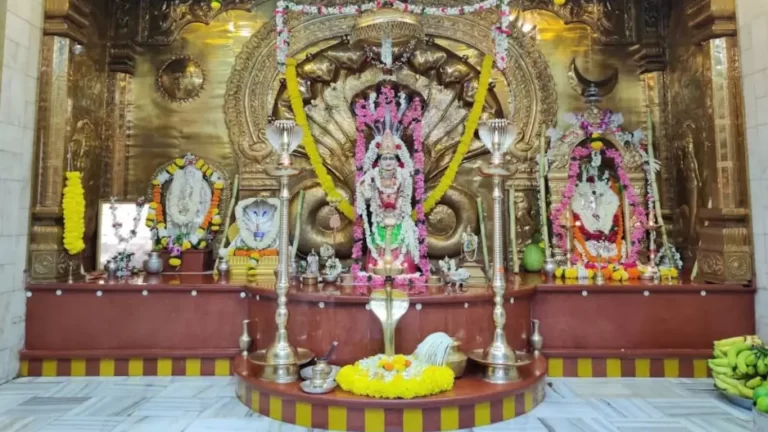
What is truly exceptional is the fact that the idol is a Swayambhu or self-created idol. This implies that it was not carved by the hands of man, and this increases its holiness and mystique. The Tuljabhavani mandir is one of the very few mandirs where you will be able to witness such a deep and old idol. Within the complex, there is also a Yagna Kund (holy fire pit) and temples for other gods such as Lord Ganesha, Lord Shiva (in the form of Kalbhairav), and Goddess Annapurna.
This presence of other gods speaks to the temple’s universalism and appeal to the larger Hindu pantheon. Myths and Beliefs The Tulja Bhavani Temple is full of myths and beliefs that have been inherited over the centuries. They are not mere entertainment; they constitute the very essence of worship here.
The Bhavani Sword Blessing: The most famous belief is that it was Goddess Bhavani herself who blessed a sacred sword to Chhatrapati Shivaji Maharaj. This Bhavani Talwar sword is said to have been the inspiration of his strength and victory in combat. The story stands as a powerful reminder that there is divine power to help those who will fight for an honest purpose.
The Moving Idol: It is believed that the principal idol of the goddess is a Chal Murti and that it is moved three times a year. During these special times, the idol is removed from its principal seat and put upon a bed. This ceremony is referred to as the Shej-Aarti (ritual of sending the deity to sleep). This distinctive practice supports the argument that the goddess is an alive woman, who sleeps and blesses her followers.
The Prophetic Stone: In front of the main temple, a small black stone in honor of Lord Ganesha can be found. People believe that it possesses prophetic powers. Inquisitive devotees or those who have doubts can keep a coin on the stone and hold it. The movement of the stone is supposed to give answers. These legends and beliefs are not superstition; they are part of the spiritual journey at the Tulja Bhavani Temple. They give a feeling of proximity to the divine and a means for the devotees to sense the presence of the goddess in their lives.
Tulja Bhavani Temple Timings
Knowledge of the temple hours is important for a comfortable and fulfilling darshan. The hours may vary, particularly during festivals, so best to look it up on the official site or a trusted website prior to going. The Tulja Bhavani Temple usually opens early morning, 4:00 AM, and closes late evening, 10:00 PM. The day is interrupted by a series of rituals and aartis.
Kakad Aarti (Early Morning Aarti): This is the morning’s first ritual, beginning at 4:30 AM. It is a quiet and calm experience, and the lines are relatively shorter.
Abhishek Puja: The idol of the goddess is ritualistically bathed with Panchamrut (a combination of milk, curd, honey, ghee, and sugar) and other sacred fluids. This is typically done between 6:00 AM to 10:00 AM.
Vastralankar & Dhoop Aarti: The goddess is dressed in a saree and jewels, and then an incense aarti is performed. This is done at approximately 11:00 AM.
Evening Puja & Aarti: Evening abhishek and aarti are conducted, generally between 7:00 PM and 9:00 PM.
Shej-Aarti: The last ritual for the day, in which the deity is laid to rest, is conducted around 9:30 PM.
The temple is open for darshan throughout the day, with brief breaks for special pujas. Keep in mind that on Tuesdays, Fridays, and festival days, the queues can be very long, sometimes taking several hours. Planning your visit for a weekday morning is your best bet for a more peaceful experience. The Tuljabhavani mandir is a place of constant energy, and these rituals are the heartbeat of the temple.
Read More>> Hidden Power of Haridwar Mansa Devi Temple: #1 Wish Granted!
Hindu Sites to See Around Tulja Bhavani Temple
Your religious odyssey need not end here at the Tulja Bhavani Temple. There are a lot of other temples and holy sites around here that you can visit.
Kallola Tirtha: This sacred tank is one of the most significant ones in the vicinity of the temple. A dip here is said to cleanse all sins. Three tirthas, Ganges, Yamuna, and Saraswati, feed the tank, making it a greatly sacred place.
Ghatshila Temple: The temple is for Lord Rama. Lord Rama and his brother Lakshmana are said to have journeyed through these regions in search of Goddess Sita. Goddess Bhavani is said to have shown them the way towards Lanka.
Vishnu Tirtha: Situated towards the northeast of the central temple, this is another holy water tank that pilgrims come to for ritual purification.
Dhakte Tuljapur: Situated outside the town, this is a smaller temple for a smaller manifestation of Goddess Tulja Bhavani. It’s a serene destination to visit, far from the crowd of the main temple.
Akkalkot Swami Samarth Maharaj Temple: Although slightly more distant (approximately 56 km), this is an extremely significant pilgrimage site. The temple is a dedication to Shri Swami Samarth, a holy spiritual guru.
Solapur: Solapur city is just 45 km away and has a few religious and historic places to visit, such as the Bhuikot Fort and other temples. A visit to Solapur can be combined with a visit to the Tulja Bhavani Temple very easily.
Visits to these nearby locations can provide you with a better insight into the spiritual and cultural context of the place.

Accommodation Options
Accommodation around the Tulja Bhavani Temple is not difficult to find, ranging from affordable lodges to better-class hotels.
Bhakt Niwas: There are Bhakt Niwas or pilgrim rest houses available from the temple trust and local communities. These are typically inexpensive and offer basic facilities. These are a wonderful choice for those who are on a pilgrimage since they provide a clean and simple place to stay.
Hotels: There are some lodges and hotels in and around Tuljapur. A few of them are Annapurna Executive, Ambai Executive Lodge, and Hotel Darshan Executive. These have a variety of amenities, ranging from air-conditioned rooms to in-house restaurants. It is always best to make a reservation in advance, particularly if you are traveling during a festival.
Solapur: If you want more upmarket or greater variety in accommodation, you might prefer to stay at Solapur and take a day trip to Tuljapur. It’s a short, comfortable drive.
How to Reach the Temple
Accessing the Tulja Bhavani Temple is fairly easy, since the town of Tuljapur is adequately connected by road and has excellent connectivity to big cities in Maharashtra and other neighboring states.
By Air: Solapur is the nearest airport (approximately 51 km). It is a domestic airport with restricted connectivity. The nearer major airports are at Pune (approximately 250 km) and Hyderabad (approximately 270 km). From these airports, you can take a taxi or use a bus to reach Tuljapur.
By Train: The closest railway station is at Solapur (around 45 km). Solapur is a large railway junction and is directly connected to cities such as Mumbai, Pune, Hyderabad, and Bengaluru. From Solapur, there are plenty of buses or cabs readily available to Tuljapur.
By Road: This is the most commonly used method of approaching the temple. Tuljapur has excellent connectivity by a series of state and national highways. Maharashtra State Road Transport Corporation (MSRTC) buses ply daily from major cities such as Solapur, Pune, Mumbai, and Hyderabad to Tuljapur. Private taxi services can also be rented or you can take your own vehicle. Roads are mostly good and smooth.
Whichever way you travel, the trip to the Tulja Bhavani Temple is just the start of a rewarding and spiritually enriching experience. I hope this guide assists in planning your pilgrimage. Remember, the goddess awaits to bring you to her heavenly home. “Jai Bhavani, Jai Shivaji!”
5 Comments