Somnath Jyotirling Temple: Magical Link to the Moon & Earth!
Somnath Jyotirling Temple is situated in Prabhas Patan, a beautiful town close to Veraval in the Saurashtra area on the western coast of Gujarat, India. It is not a temple like any other; it is the first and most significant of the twelve special residences of Lord Shiva, known as Jyotirlingas, throughout India. Isn’t that thrilling? As it has been on six destructions by the Muslim conquerors, it is said to be the “shrine of eternal”.
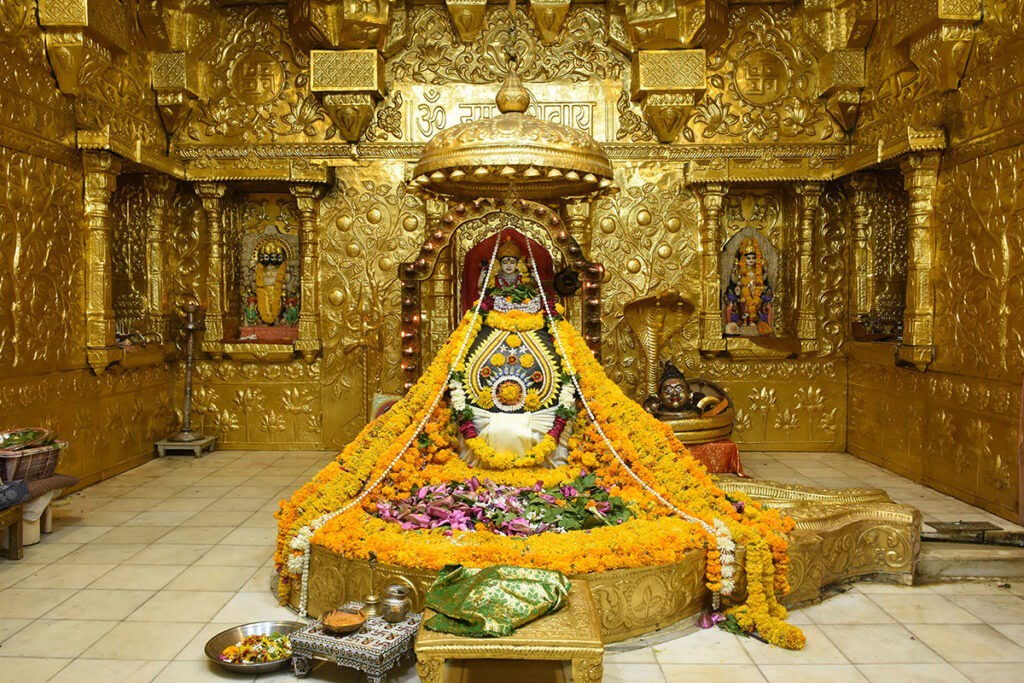
As per Puranas, Somnath Jyotirling Temple existed before the beginning of the Common Era. In order to cure himself Soma the god of the moon, who is being cursed by Daksha for neglecting his other wife and loving only one of his daughters, built the temple in gold and later got relief partly from the curse with the blessing of Lord Shiva. In the later period Ravana was built in silver and Lord Krishna in wood.
Somnath Temple History: A Tale of Resilience
Now, let’s travel back in time, way, way back! Somnath Jyotirling Temple’s story is like an epic adventure novel with lots of chapters. You imagine you create a pretty sandcastle on the beach, and then the waves come along and destroy it. But you don’t quit, right? You rebuild it again, maybe even bigger and tougher! That’s somewhat like what happened to our Somnath Jyotirling Temple.
This temple has been constructed and reconstructed countless times – some claim even seventeen times! It’s been raided by invaders who sought to claim its treasures, but each time, courageous and devoted individuals stepped forward to reconstruct it, only to make it more resplendent. This indicates how resilient people’s devotion can be.
The very first temple, legend claims, was constructed by the Moon God himself using gold! Can you picture a golden temple? Then, in various times, it was reconstructed with silver by an illustrious king called Ravana, and then with sandalwood by Lord Krishna. The current stunning stone temple before you today was constructed much later, in the 1950s, owing to the efforts of a very significant leader of India, Sardar Vallabhbhai Patel. So when you go there, you’re not merely witnessing a structure; you’re witnessing an icon of never-giving-up determination and single-minded devotion.
Read More>> 3000 yr Old Sacred Neerputhoor Shiva Temple Water Encircled
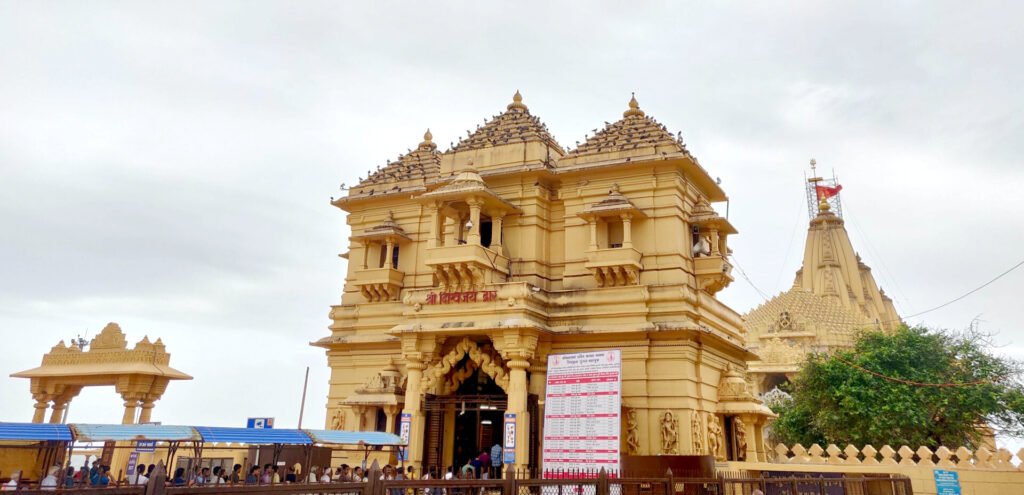
Legend of Somnath Temple: The Moon God’s Prayer
All great temples have a great tale, and Somnath Jyotirling Temple has one which is simply magical! It’s about the Moon God, Chandra Deva, or Soma.
Long ago, Chandra Deva was wedded to 27 lovely daughters of a very learned sage called Daksha Prajapati. However, Chandra Deva favored one daughter, Rohini, over the others, and the other daughters felt neglected and unhappy. They informed their father, Daksha, of this. Daksha was extremely sad and cautioned Chandra Deva to treat all his wives in the same manner. But Chandra Deva would not listen. So, Daksha got very angry and gave Chandra Deva a curse: he would lose his shine and become dimmer and dimmer!
Imagine the world without the bright moon at night! Everything became dark and sad. All the other gods felt worried and asked Daksha to remove the curse. Daksha felt a little bad too and told Chandra Deva to pray to Lord Shiva. Chandra Deva reached this very location, a sacred confluence of three rivers – Hiran, Kapila, and the mythical Saraswati – into the Arabian Sea. He prayed and prayed to Lord Shiva with all sincerity.
Lord Shiva, so merciful, was impressed by Chandra Deva’s devotion. He did not remove the entire curse, but he ensured that Chandra Deva would lose his brightness for 15 days and regain it for the following 15 days. Hence, we observe the moon waxing (increasing in size) and waning (decreasing in size) in the sky! And since Lord Shiva assisted Soma (the Moon God) here, the location came to be called Somnath, which literally means “Lord of the Moon.” Isn’t that a nice story?
Read More>> Peruvanam Mahadeva Temple Thrissur
Cultural, Spiritual, and Mythological Significance of the Temple
The Somnath Jyotirling Temple is just extremely significant in so many ways!
Cultural Significance: It’s sort of a great old book of Indian history. The story of the temple, how many times it was rebuilt, and how folks come here to pray and celebrate illustrate just how rich and old our traditions are. It’s an object lesson on faith, persistence, and how people come together.
Spiritual Significance: For individuals who have faith in Lord Shiva, a visit to the Somnath Jyotirling Temple is a highly special spiritual pilgrimage. It’s said that if you approach here with a clean mind, you can get your desires fulfilled and feel nearer to God. It’s a temple where individuals get peace and sense the divine power. It is said that a visit to this temple will wipe away one’s sins and grant blessings from Lord Shiva.
Mythological Significance: This temple has strong roots in ancient Hindu myths and myths, particularly those concerning Lord Shiva and the Moon God. It is one of the Twelve Jyotirlingas, which are said to be sites where Lord Shiva descended as a burning column of light, demonstrating his unlimited power. In the Shiva Purana, an extremely ancient Hindu text, there is mention:
“Saurashtre Somnathancha Srisailam Mallikarjunam Ujjainyam Mahakalam Omkaramamaleshwaram Paralyam Vaidyanathancha Dakinyam Bhimashankaram Setubandhecha Ramesham Nagesham Darukavane Varanasyantu Vishvesham Tryambakam Gautamitata Himalaye Tu Kedaram Ghushmesham Cha Shivalaye Etani Jyotirlingani Sayam Pratah Pathennarah Sarvapapa Vinirmuktah Shivlokam Samapnuyat”
And this entails that by memorizing these twelve Jyotirlingas, such as Somnath, one can get liberation from sins and reach the Shiva abode. Even the Rig Veda and Skanda Purana speak of this holy site! It is also said to be the place where Lord Krishna, after his existence on earth, gave up his body near this same location, providing one more level of profound mythological importance.

Festivals and Special Days
Picture a huge party for God! That’s what festivals at the Somnath Jyotirling Temple are like.
Maha Shivaratri: This is the largest and most thrilling festival here, and it is celebrated as the “Great Night of Shiva.” The temple shines with light, devotees recite special prayers throughout the night, and numerous special rituals are conducted. It is similar to a gigantic birthday bash for Lord Shiva!
Kartik Purnima: This full moon night is another special time. People take holy dips in the Triveni Sangam, believing it cleanses them. The temple is beautifully lit with thousands of lamps, creating a truly magical sight.
Shravan Month: The whole month of Shravan (generally July-August) is extremely sacred for Lord Shiva. Numerous devotees come during this period, and special abhishekams (showering the Shiva Lingam with milk, water, and other holy things) and prayers are done every day.
Crowded Days: To experience the temple being full of people and feel the intense energy of piety, then Mondays tend to be extremely crowded, as Monday is Lord Shiva’s day. Weekends and, obviously, important festivals like Maha Shivaratri are also extremely busy. For less crowded visit, weekdays tend to be less busy.
Read More>> Mahakaleshwar Jyotirlinga: Powerful Mahakal Temple in Ujjain
Unique Architectural Style and Carvings
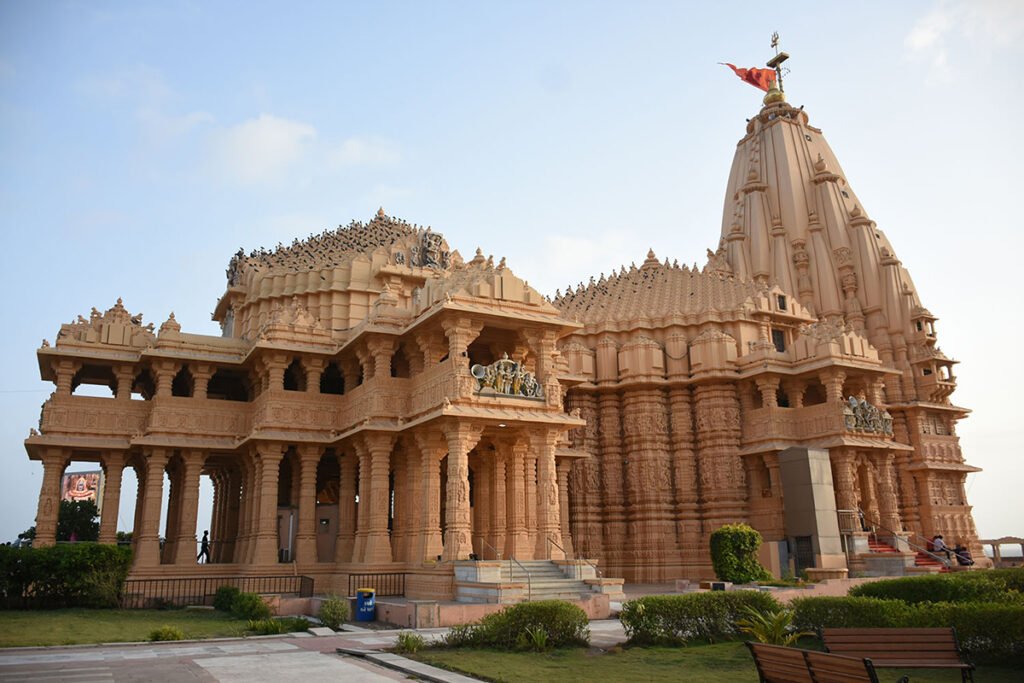
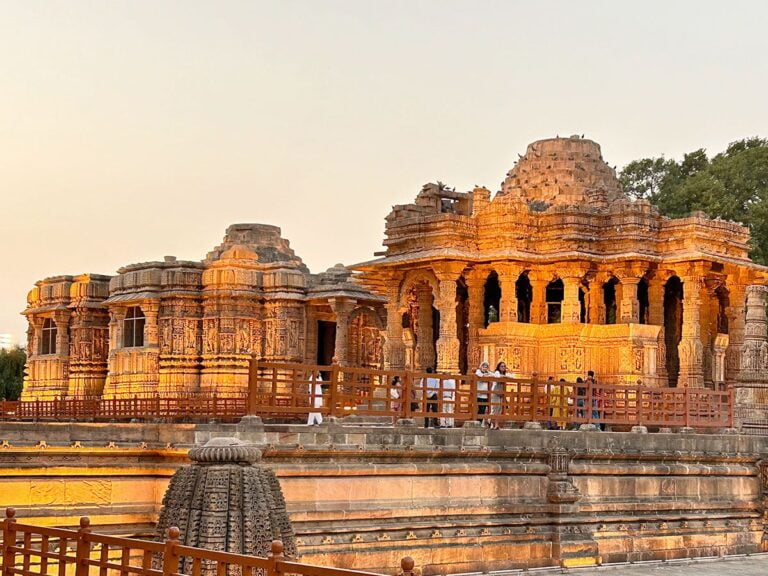
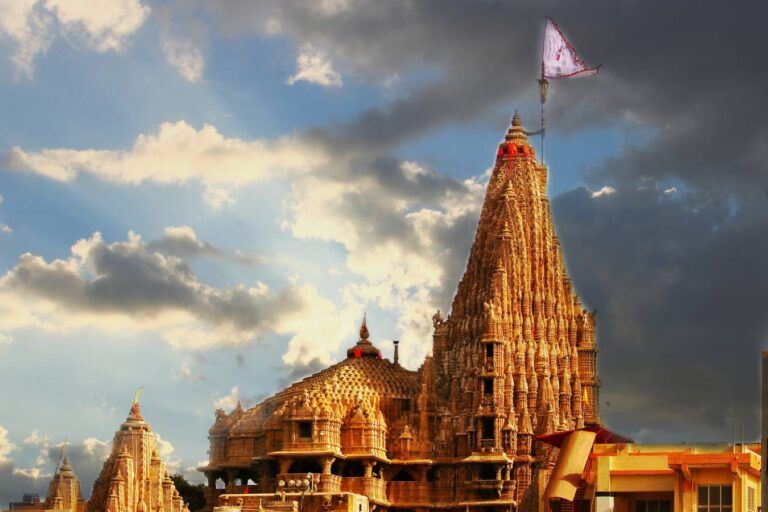
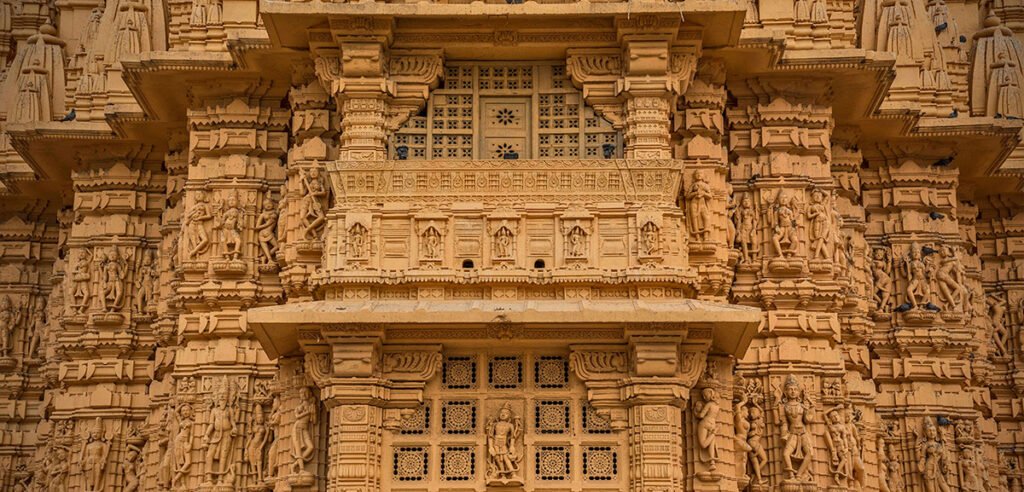
The Somnath Jyotirling Temple is not only ancient; it’s a work of art as well! It’s constructed in a unique style known as Chaulukya architecture, renowned for its elaborate details and majestic buildings.
If you observe the temple, you’ll notice:
Tall Spire (Shikhara): The temple features an extremely tall, pointed tower, known as a shikhara, which goes skyward, as if it’s touching the heavens.
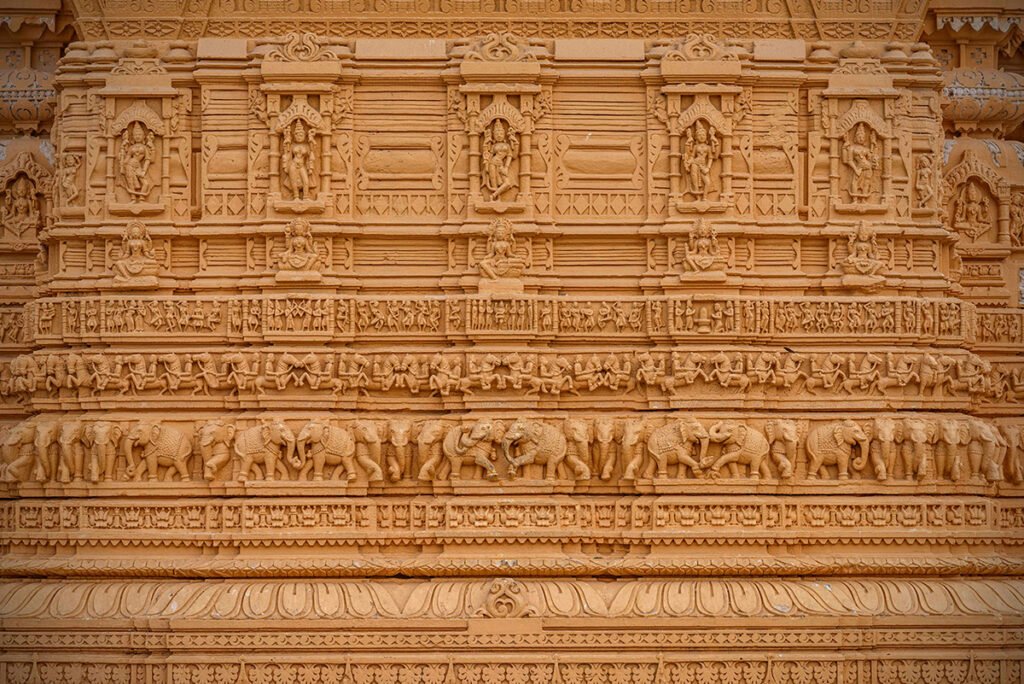
Elegant Carvings: The walls, columns, and even the smallest niches in the temple are laden with stunning carvings. Visualize artists with immense skill chiseling out stories, gods, goddesses, and exquisite patterns from the stone. You can gaze at these elaborate paintings for hours. They depict Hindu myths, so the temple resembles a living storybook. You may find depictions of dancing women, divine figures, and scenes from ancient sagas such as the Mahabharata and Ramayana.
Strong Stones: The temple is constructed with strong sandstone, which provides it with its warm, hospitable color as well as making it extremely durable. The construction team employed an ingenious method of interlocking stones, practically like puzzle pieces, without cement, which makes the building extremely strong and capable of passing the test of time and even earthquakes!
Garbhagriha (Sanctum Sanctorum): This is the central, most holy area of the temple in which the Jyotirlinga (the sacred icon of Lord Shiva) is housed. It’s a very serene and intense location.
One quite intriguing fact about where the temple is located is written on a pillar, which is named the Baan Stambh (Arrow Pillar). It states that if you use a straight line from that pillar to the south, there is no land until Antarctica! Is that astounding?
Read More>> Chilkur Balaji Temple (Visa Balaji): Where Wishes Come True
Myths and Beliefs
The Somnath Jyotirling Temple has a lot of interesting myths and beliefs surrounding it:
The Syamantaka Jewel: According to some accounts, an extremely valuable and enchanted jewel known as the Syamantaka Mani, linked to Lord Krishna and said to possess supernatural powers, once hid here.
Divine Protection: Though the temple was destroyed numerous times, it would always come back alive. This has resulted in a widespread belief that the Somnath Jyotirling Temple enjoys special divine protection and Lord Shiva himself brings it to life.
Lord Krishna’s Association: As discussed above, it’s said that Lord Krishna departed from his mortal body in nearby Bhalka Tirtha and subsequently proceeded to his heavenly abode from the Triveni Sangam, adjacent to the Somnath temple. This makes the region even more holy for Lord Krishna devotees.
Washing Away Sins: It is a popular belief that a visit to the Somnath Jyotirlinga and darshan (glimpse of the deity) with a clean heart would wash away one’s sin and confer spiritual merit upon an individual.
Read More>> Famous Pedakakani Temple/ Pedakakani Malleswara Swamy Temple
Somnath Temple Timings
The Somnath Jyotirling Temple remains open for visitors from 6:00 AM to 9:30 PM daily.
The Aarti (special prayer with lamps) takes place three times a day:
7:00 AM (morning aarti)
12:00 Noon (mid-day aarti)
7:00 PM (evening aarti)
Additionally, there’s a fabulous “Jay Somnath” Sound and Light Show from 8:00 PM to 9:00 PM that narrates the interesting tale of the temple. It’s a fantastic way to get to know more about its vibrant history.
Special Poojas Performed
At the Somnath Jyotirling Temple, poojas (worship rituals) of different kinds are performed during the day. The most important ones are the daily Abhishekam, when the Shiva Lingam is bathed in holy offerings, and the Aartis. You can even arrange special poojas such as the Bilva Pooja, where devotees present bilva leaves (which are extremely holy to Lord Shiva) to the deity. The Rudrabhishekam, a very old Vedic pooja involving chanting of hymns, is also conducted, filling the temple with an intense and serene energy.
Official Website:
For Online Bookings, Prasad, Donations and other rituals please visit: https://somnath.org
Read More>> Danteshwari Temple Dantewada
Why is this place so significant?
The Somnath Jyotirling Temple is very significant because it’s:
The First Jyotirlinga: It’s said to be the very first location where Lord Shiva appeared as a column of light, hence the first among the twelve Jyotirlingas. This makes it extremely revered by Shaivites (worshippers of Lord Shiva).
A Symbol of Resilience: Its repeated destruction and rebuilding make it a strong symbol of persevering faith and the indomitable spirit of devotion in India.
A Confluence of History and Mythology: It’s a venue where ancient legends and recorded history meet, providing travelers with a remarkable encounter that merges religious devotion with a glimpse into India’s history.
A Pilgrimage Center: Millions of pilgrims from around the globe travel to the Somnath Jyotirling Temple in search of blessings, spiritual comfort, and divine contact.
Read More>> Thiruvizha Mahadeva Temple Kerala
Popular places to visit near Somnath Jyotirling Temple:
Your trip to the Somnath Jyotirling Temple doesn’t need to stop there! There are so many other places of interest in the vicinity that you and your family can visit:
Triveni Sangam: This is the stunning union (point of meeting) of the three rivers – Hiran, Kapila, and Saraswati – before these join the Arabian Sea. It’s highly sacred, and people take a holy dip here in large numbers.
Bhalka Tirth: This is a highly revered place where Lord Krishna is said to have been accidentally shot by a hunter’s arrow before departing his mortal form. It’s a serene and sad site.
Dehotsarg Tirth: Near Bhalka Tirth, this is where Lord Krishna is reported to have left for his divine home. Here you’ll see a lovely temple and a peaceful setting.
Geeta Mandir: A modern temple with 18 pillars, each inscribed with a chapter from the Bhagavad Gita, a holy Hindu scripture. It’s a place of wisdom and peace.
Ahilyabai Temple: This older Somnath temple was built by Queen Ahilyabai Holkar in the 18th century, a little away from the main temple. It’s a quieter place for devotion.
Prabhas Patan Museum: If you’re a history buff, this museum close to the temple is filled with ancient artifacts, sculptures, and inscriptions that tell you even more about the temple’s intriguing history.
Somnath Beach: After all the temple-hopping, you can wind down and appreciate the breathtaking view of the Arabian Sea at Somnath Beach. Though swimming may not always be advisable, it’s an ideal place for a serene stroll and witnessing the sunset.
Read More>> 11th CE Lempuyang Temple: Bali’s Magical Gate to Heaven!
Accommodation Options
Do not worry about where you will stay! Somnath has plenty of spots for families to rest and relax.
Hotels: There are a variety of hotels, from cheap to expensive ones, near the Somnath Jyotirling Temple and in the nearby city of Veraval. Most have family rooms and nice amenities.
Dharamshalas and Guesthouses: For a budget-friendly and traditional accommodation, there are plenty of dharamshalas (pilgrim rest houses) operated by different trusts. These are usually simple and clean and may even offer meals.
Resorts: If you want a more leisurely and roomy accommodation with facilities such as play areas for children, there are resorts slightly away from the central temple complex.
It’s always better to reserve your stay prior, particularly if you’re visiting during peak season or festival times.
Read More>> Bathu ki Ladi Temple Kangra: Mystery of Vanishing Temple
How to Reach Somnath Temple
Getting to Somnath Jyotirling Temple is quite convenient!
By Air: The closest airport is Diu Airport (DIU), which is roughly 82 km. From Diu, you can take a taxi or bus to Somnath. Alternative airports such as Rajkot (approximately 214 km) and Ahmedabad (approximately 400 km) are available, but they are farther away.
By Train: Somnath has a railway station of its own, Somnath Railway Station (SMNH), which is extremely near the temple (around 2.6 km). Alternatively, you can reach Veraval Railway Station (VRL), which is an important railhead and barely around 7 km from Somnath. Numerous trains connect Veraval to most of the big cities in India.
By Road: Somnath is also well connected by road to different cities in Gujarat as well as other cities in India. You can find buses (government and private) very easily or rent taxis from cities like Ahmedabad, Rajkot, Surat, and Dwarka. The road journey along the coast is very picturesque!
So, my dear friends, a visit to the Somnath Jyotirling Temple is not a journey; it’s an experience which will make your heart full of awe, learn from ancient legends, and expose you to the stunning power of religion. It’s a temple where there is a story in every stone and a prayer in every whisper of wind. I hope you have an absolutely unforgettable trip to this amazing abode of Lord Shiva! Jay Somnath!