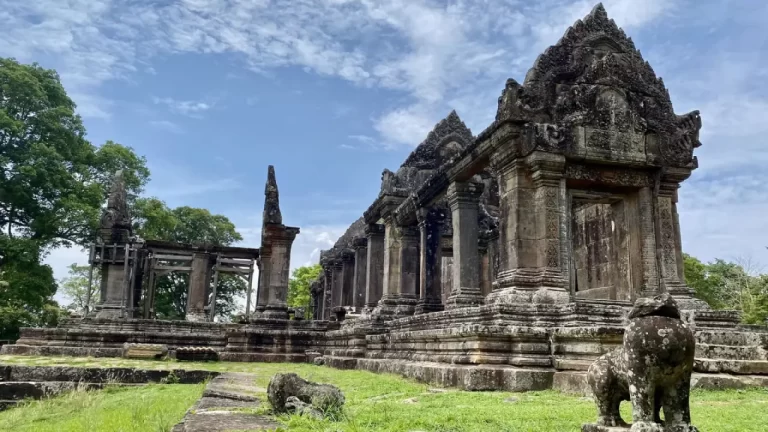
Pura Lempuyang Temple Bali: The Complete Guide to the Gate to Heaven
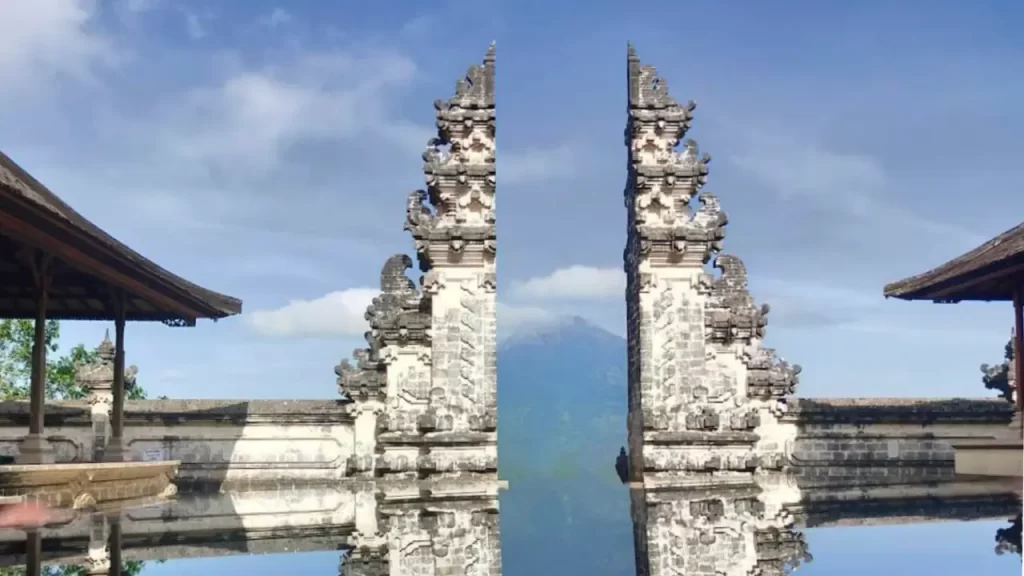
Pura Lempuyang Temple Bali Gate to Heaven: Perched high on the mist-shrouded slopes of Mount Lempuyang in Karangasem, East Bali, Pura Penataran Agung Lempuyang stands as one of the oldest, holiest, and most visually striking Hindu sanctuaries in Indonesia. Known globally across social media as Bali’s “Gate to Heaven,” the temple’s soaring split gateway (Candi Bentar) frames an unobstructed, dramatic view across the valley directly toward the sacred volcanic peak of Mount Agung.
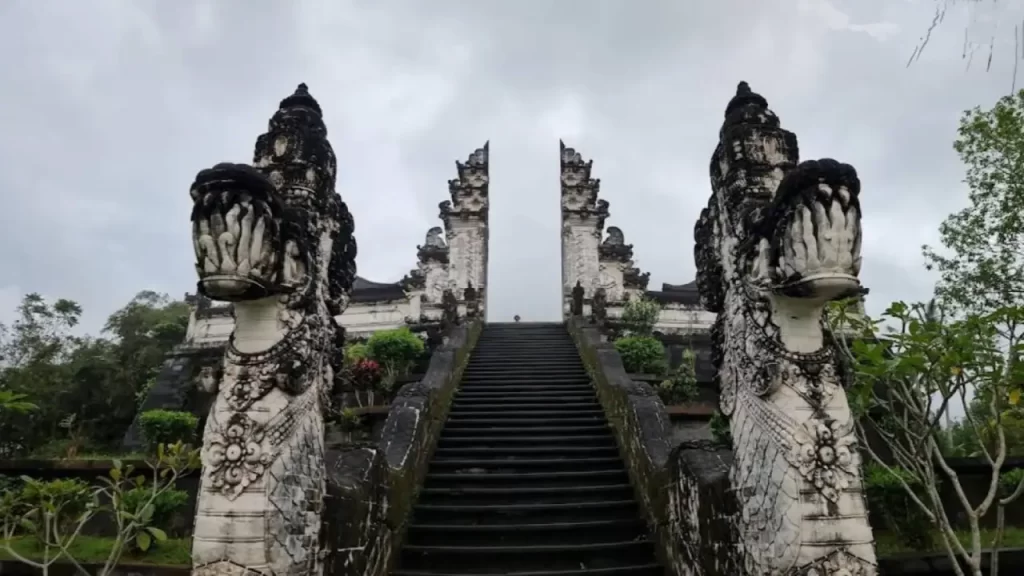
For international travelers, the site is famous for its ethereal, mirror-like photographs. But for Balinese Hindus, this mountain shrine is something vastly deeper: a cornerstone of the island’s spiritual equilibrium. Pura Lempuyang is designated as one of the Sad Kahyangan Jagat—the six sacred directional sanctuaries of Bali that guard the island against negative cosmic energies.
Whether you are visiting as a Hindu pilgrim seeking spiritual blessings at one of Southeast Asia’s greatest Shaivite sanctuaries or as a traveler planning your visit around sunrise photography, this complete guide covers verified entry fees, transport logistics, photo queue strategies, dress codes, and the sacred history behind this ancient mountain shrine.
Quick Information: Pura Penataran Agung Lempuyang
| Detail | Information / Verified Logistics |
| Official Balinese Name | Pura Penataran Agung Lempuyang (Part of the Pura Luhur Lempuyang complex) |
| Popular International Name | The Gate to Heaven |
| Presiding Deity | Sang Hyang Iswara (Aspect of Shiva associated with the East and the color White) |
| Classification | Sad Kahyangan Jagat (One of Bali’s six supreme territorial sanctuaries) |
| Location | Tribuana Village, Abang Subdistrict, Karangasem Regency, East Bali, Indonesia |
| Opening Hours for Visitors | 06:00 AM – 07:00 PM Daily (Open 24 hours for Hindu worshipers) |
| Entrance Fee (Foreign Visitors) | IDR 55,000 – IDR 100,000 per person (approx. $3.50 – $6.50 USD; includes sarong rental) |
| Mandatory Shuttle Bus (Terminal to Gate) | IDR 45,000 – IDR 50,000 per person round-trip |
| Photo Queue Fee | Included in entrance; small voluntary donation given to the local volunteer photographer |
| Best Time to Visit | 05:30 AM – 07:00 AM (to beat the 2–3 hour photo queue and catch Mount Agung before cloud cover) |
| Dress Code | Strict temple attire required: Sarong and waist sash covering knees and shoulders |
| Distance from Major Hubs | ~2.5 to 3 hours drive from Ubud, Seminyak, or Kuta; ~30 mins from Amed or Candidasa |
Read More>> Thousand Pillar Temple: India’s Amazing 1000 Pillar Temple!
The Spiritual Significance: Why Balinese Hindus Revere Pura Lempuyang
To understand Pura Lempuyang, one must step beyond camera lenses and understand the sacred geography of Balinese Hinduism (Agama Hindu Dharma).
In traditional Balinese cosmology, the island is guarded by nine directional sanctuaries known as the Kahyangans. Six of these are supreme temples, known as the Sad Kahyangan Jagat. Pura Lempuyang is the guardian of the East (Purwa). In Hindu philosophy, the east is ruled by Sang Hyang Iswara (Lord Ishvara, a supreme aspect of Shiva). The east represents the dawn, spiritual awakening, light, and the color white. For this reason, white flags, white umbrellas (tedung), and white ceremonial fabrics dominate the shrines during festivals.
Local legend inscribed in the ancient palm-leaf manuscript (Babad) tells that when the supreme deity Sang Hyang Pasupati divided Mount Meru—the cosmic axis of the universe—to stabilize the shaking island of Bali, he created three main sacred peaks:
- Mount Agung (the highest, seat of Mahadeva/Shiva)
- Mount Batur (seat of Vishnu and Dewi Danu)
- Mount Lempuyang (seat of Ishvara)
Thus, Mount Lempuyang is not an isolated tourist hill; it is considered a physical piece of cosmic Mount Meru anchored in Balinese soil.
Read More>> Most Powerful Mata Baglamukhi Temple Bankhandi Kangra
The Architecture of the “Gate to Heaven”: The Candi Bentar
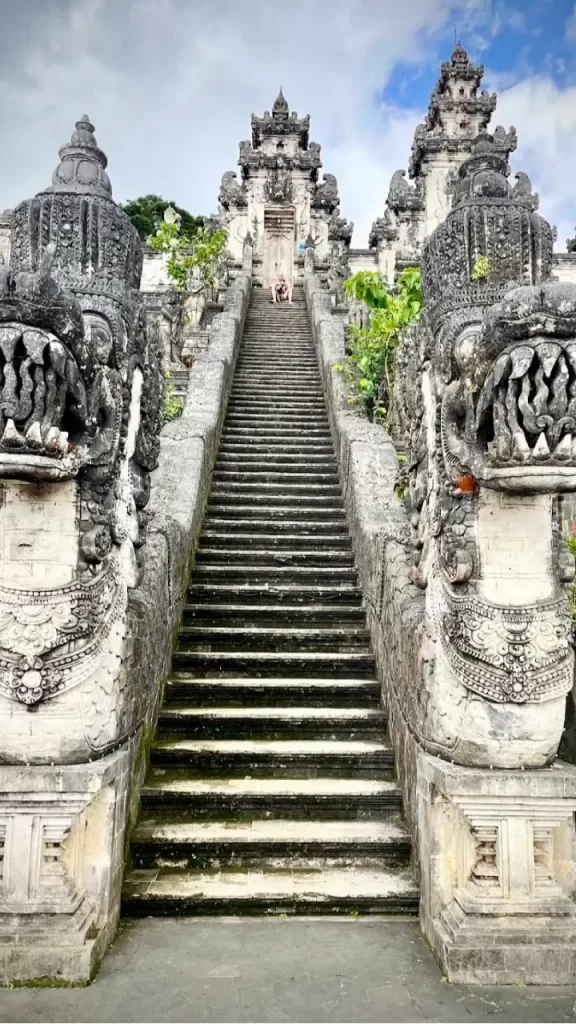
The soaring gateway that draws visitors from across the globe is known as a Candi Bentar (split gateway).
In Balinese classical architecture, a Candi Bentar represents the splitting of Mount Meru into two equal cosmic halves—representing the duality of universal forces: good and evil, light and dark, sun and moon (Rwa Bhineda). When a pilgrim or visitor steps through the center of the split gate, they symbolically step out of the profane, chaotic world (Nista Mandala) and into the realm of sacred order, balance, and devotion (Madya Mandala and Utama Mandala).
Rising from the central courtyard of Pura Penataran Agung are three grand stone staircases carved with long, undulating bodies of sacred Nagas (dragon-serpents). The central staircase is sacred and reserved strictly for Hindu priests (Pedanda) and ritual processions carrying deities during temple festivals; visitors and devotees use the flanking left and right staircases to access the prayer courtyards.
The Truth About the “Water Mirror” Photo: What Every Visitor Must Know
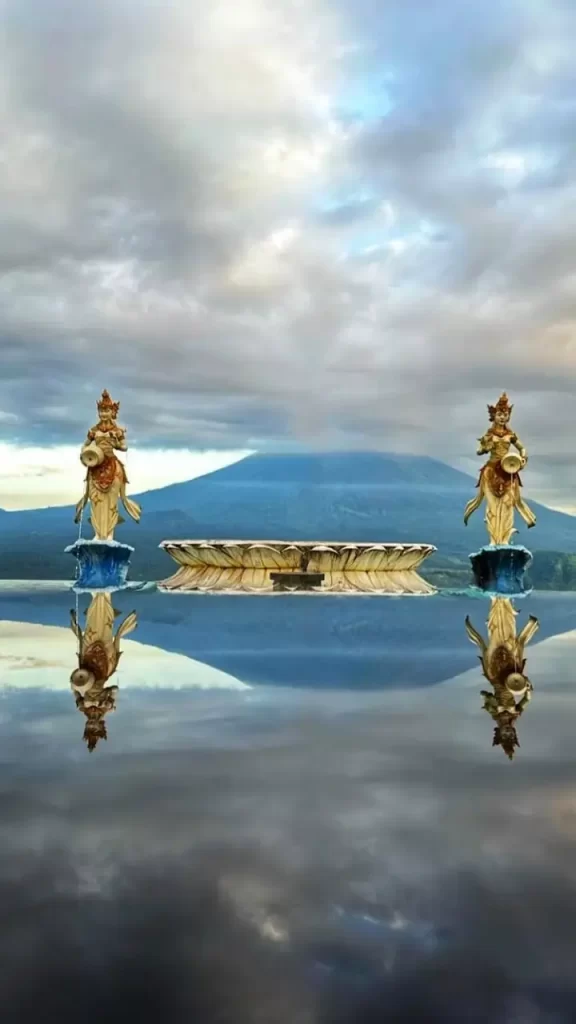
A viral phenomenon on Instagram and TikTok shows travelers standing between the soaring white pillars of the Candi Bentar, their reflection shimmering in what looks like a clear, glassy lake beneath their feet.
The Reality: There is no lake, pond, or pool of water at Lempuyang Temple.
The courtyard floor is solid stone paving. The reflection effect is created by ingenious local Balinese photographers who sit on low stools in front of the gate holding a small, rectangular pocket mirror directly beneath your smartphone camera lens. The glass creates an optical reflection that mirrors the sky, the temple gate, and Mount Agung.
Knowing this ahead of time prevents the disappointment that unprepared travelers sometimes experience. Even without the mirror trick, the natural view—standing on the edge of the stone terrace with Mount Agung towering through the mist directly opposite—is one of the most breathtaking sights anywhere in Asia.



Step-by-Step Logistics: How the Visit and Photo Queue System Works
Because thousands of visitors arrive daily, the local customary village council (Desa Adat Purwayagung) runs a structured ticketing and queue system.
1. Arrival at the Lower Terminal (Terminal Bis Purwayagung)
Private tour cars, hired vans, and large vehicles are not permitted to drive directly up the steep, narrow mountain switchbacks to the upper temple gate.
- You must park at the designated lower parking area.
- Here, you purchase your official entry ticket and your mandatory shuttle bus ticket (elf minibuses).
- The shuttle ride takes approximately 5–10 minutes up steep inclines to the main drop-off station.
2. Receiving Your Queue Number
When you show your ticket at the upper entrance counter, you are assigned a printed queue number specifically for taking photos at the main Candi Bentar.
- If you arrive at 06:00 AM: Your wait time may be 30 to 60 minutes (Queue numbers 1–50).
- If you arrive by 09:00 AM: Your queue number may be in the 200s or 300s, meaning a wait time of 2 to 3.5 hours.
- If you arrive at midday: Wait times regularly exceed 3 to 4 hours.
3. Waiting Courtyard Protocol
While waiting for your number:
- Numbers are called out in English and Indonesian over a loudspeaker.
- You can sit under shaded pavilions, visit local warungs (cafes) for fresh Balinese coffee (Kopi Bali) and fresh fruit, or explore the surrounding lower courtyards.
- Do not wander too far: If your number is called and you do not step forward within a few minutes, you may lose your turn.
4. Taking the Photo
When your number is called:
- Hand your smartphone to the designated local photographer stationed on the bench facing the gate.
- You are given roughly 1 to 2 minutes at the gate.
- The photographer will rapidly instruct you through 3–4 poses (standing neutral, hands in prayer/namaste, looking toward Mount Agung, or a walking pose).
- Leaping, kissing, yoga inversions, or disrespectful poses are strictly forbidden by temple authorities.
Read More>> Anjani Mahadev Temple: Waterfall on Shivling
The Mount Lempuyang Complex: Exploring the 7 Sacred Mountain Temples
Most tourists leave immediately after taking their photo at the lower gate, entirely unaware that Pura Penataran Agung is only the first of a chain of seven sacred temples scattered across Mount Lempuyang.
For Hindu devotees, spiritual seekers, and hikers, the complete mountain circuit (Tirta Yatra) is a life-changing pilgrimage taking between 4 to 6 hours.
The Seven Temples of Mount Lempuyang (From Base to Summit):
- Pura Penataran Agung Lempuyang: The large lower complex featuring the iconic split gate and white dragon staircases.
- Pura Telaga Sawang: A serene intermediate shrine nestled among mountain trees.
- Pura Bisma: A quiet meditation stop honoring ancestral spiritual guardians.
- Pura Lempuyang Madya: Positioned in the deep mountain forest; dedicated to ancestral spirits.
- Pura Telaga Mas: Known as the “Temple of the Golden Holy Spring,” where pilgrims collect sanctified water (Tirtha).
- Pura Pasar Agung: The resting station before the final steep summit ascent.
- Pura Lempuyang Luhur (The Peak Sanctuary): Perched at the very summit of Mount Lempuyang (over 1,050 meters above sea level). Reaching it requires climbing over 1,700 concrete steps through lush cloud forest inhabited by wild grey macaques. The atmosphere here is quiet, misty, and profoundly sacred.
Pilgrim Tip: If you intend to trek all seven temples, begin your hike no later than 06:30 AM. Carry ample drinking water, wear sturdy hiking shoes beneath your sarong, and hire a local village guide from the entrance counter.
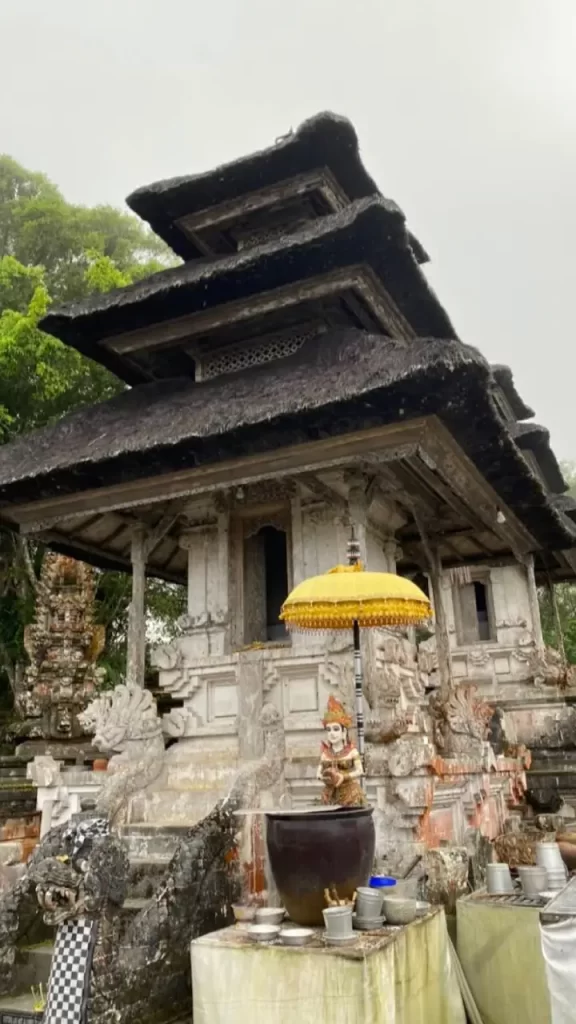
Temple Rules, Dress Code, and Sacred Etiquette
Pura Lempuyang is an active, sanctified place of worship, not an open-air studio. The Balinese Hindu community welcomes visitors of all faiths, provided sacred protocols are strictly observed.
1. Mandatory Attire
- Sarong and Sash: Both men and women must wear a sarong (kamben) wrapped around the waist covering the knees, secured with a ceremonial sash (selendang). A sarong rental is generally included with your entrance ticket.
- Covered Shoulders: Sleeveless shirts, tank tops, and low-cut tops are forbidden. Wear a T-shirt or bring a light scarf/jacket to drape over your shoulders.
2. Spiritual Taboos and Cultural Restrictions
- Menstruating Women & Bleeding Persons: In accordance with Balinese Hindu ritual purity (Cuntaka), women during menstruation or anyone with open bleeding wounds are forbidden from entering the temple grounds. This is a standard rule across all Balinese Hindu temples.
- Mourning Period: Anyone who has suffered a death in their immediate family within the last 42 days must not enter until ritual purification is complete.
- No Poses with Feet Facing the Shrines: When sitting or posing, avoid pointing the soles of your feet toward the shrines or priests. The feet are considered spiritually unclean.
- No Climbing on Monuments: Never climb on the stone gate pedestals, the dragon stair railings, or inner shrines to obtain a better camera angle.
- No Drones: Flying consumer drones over the temple complex is strictly forbidden to preserve privacy for worshipers and avoid disturbing religious rites.
How to Reach Pura Lempuyang: Transport and Drive Times
Pura Lempuyang is located in the easternmost regency of Bali (Karangasem). Because it is far from South Bali’s tourist towns, transportation must be planned carefully in advance.
Drive Times from Major Bali Hubs:
- From Amed (East Coast): 30–40 minutes (approx. 18 km). The most convenient base for early sunrise arrival.
- From Candidasa: 45–50 minutes (approx. 25 km).
- From Ubud: 2 to 2.5 hours (approx. 65 km via the eastern highway).
- From Seminyak / Canggu / Kuta: 2.5 to 3 hours (approx. 75–80 km).
- From Ngurah Rai International Airport (DPS): 2.5 to 3 hours.
Transport Options:
- Hiring a Private Driver for the Day (Recommended):Cost: Approx. IDR 600,000 to IDR 800,000 ($40–$55 USD) for a full 10-hour day. Your driver can pick you up from your hotel at 03:30 AM, wait while you explore the temple, and take you to nearby East Bali landmarks afterward.
- Scooter / Motorbike Rental:Cost: Approx. IDR 80,000 to IDR 120,000 per day. Recommended only for experienced riders confident with winding mountain switchbacks and early morning darkness.
- Organized Group Day Tours:Widely available across booking platforms, but you will be traveling on a rigid schedule and will likely arrive during peak midday queue times.
Read More>> Martand Sun Temple: Where Sunbeams Kiss Stone
Best Time to Visit: Weather and Photography Strategies
Best Season: The dry season in Bali runs from April through October. During these months, mornings are generally crisp, clear, and rain-free, providing the best chance of viewing Mount Agung without thick cloud obstruction.
The Rainy Season (November – March): Frequent afternoon downpours and low cloud banks often shroud Mount Agung completely, leaving the background behind the gate pure white mist.
The Golden Rule for Mount Agung Views: Mount Agung almost invariably gathers heavy cloud cover by 09:30 AM or 10:00 AM. If you want the volcanic peak visible between the gate posts in your photograph, you must be in the queue by 06:00 AM.
Read More>> Divine Mata Vaishno Devi Temple | Shaktipeeth Complete Guide
Perfect East Bali Itinerary: Combining Lempuyang with Nearby Sites
Because the journey to Karangasem takes several hours from South Bali or Ubud, combine your temple visit with other historical and natural landmarks nearby:
Tirta Gangga Water Palace (25 mins from Lempuyang): A royal water park built in 1946 by the King of Karangasem, featuring stone stepping stones across pools filled with giant golden koi fish and Tiered fountains.
Taman Ujung Sukasada (40 mins from Lempuyang): A sprawling royal pavilion surrounded by vast water basins with views stretching out to the Lombok Strait.
Pura Goa Lawah (Bat Cave Temple): Another of Bali’s six Sad Kahyangan directional temples, built around a natural cave opening inhabited by thousands of nectar bats.
Frequently Asked Questions About Lempuyang Temple
Is Lempuyang Temple worth visiting given the long queues?
Yes, provided you set your expectations correctly. If you visit solely for a 30-second social media photo, waiting three hours can be frustrating. However, if you come to appreciate the sacred architecture, the cool mountain air, the dramatic vistas of Mount Agung, and the spiritual history of Balinese Shaivism, it remains one of the most magnificent temple complexes in Southeast Asia.
Can non-Hindus enter the inner prayer sanctum?
Non-Hindu visitors are welcome to explore the outer courtyards (Jaba Pisan) and the terrace surrounding the split gate (Candi Bentar). However, entry into the elevated inner sanctum (Jeroan) where the stone shrines (Pelinggih) stand is strictly reserved for Hindu devotees dressed in ceremonial attire for prayer and receiving holy water (Tirtha).
What happens if it rains during my visit?
The temple remains open during rain. However, the stairs become slick, and cloud cover will completely obscure Mount Agung. The local photographers continue working under umbrellas if rain is light. Bring a light waterproof poncho or umbrella.
Can you hire a local guide at the temple?
Yes. Official local village guides are available near the entrance desk. Hiring a guide (typically IDR 100,000 to 150,000) is highly recommended, especially if you plan to hike the higher mountain trails or want an authentic explanation of Balinese Hindu ritual traditions.
Preserving the Sacred Balance
Pura Penataran Agung Lempuyang is a testament to the living continuity of Hindu culture outside India. For centuries before smartphones existed, devotees ascended this mountain path in pure white cloth to honor Sang Hyang Iswara and seek harmony between humanity, nature, and the divine (Tri Hita Karana).
As you stand before the split gate looking across the valley toward Mount Agung, take a moment to look past the camera lens. Feel the mountain breeze, hear the chiming of the priest’s bronze bell (Genta), smell the sweet incense drifting from the woven palm-leaf offerings (Canang Sari), and honor this sacred guardian of the East as the holy mountain sanctuary it has always been.