Famous Tirumala Tirupati Venkateswara Swamy Temple Guide
Tirumala Tirupati Venkateswara Swamy temple, abode of the lovely hills of Tirumala, which belongs to the Tirupati district of the Indian state of Andhra Pradesh. As your ever-friendly guide, I’m extremely delighted to accompany you on a tour of the amazement of this awe-inspiring temple, where Lord Venkateswara, an incarnation of Lord Vishnu, resides and blesses all!
A Walk Through Time: Tirupati Temple History
Let us start our journey by going back, far back in time. This is not any ordinary structure; the Tirumala Tirupati Venkateswara Swamy temple has a rich history dating back over 1,700 years, even to 300 AD! Isn’t it amazing? Try to think about how many generations of devotees have set foot on this sacred site.
Imagine it as a great big tree, with its roots planted deep in the past. There have been so many mighty kings and dynasties, such as the Pallavas, the Cholas, and most notably the great Vijayanagara emperors, who adored this temple. They did not just come and go; they made it larger, stronger, and more gorgeous. They constructed fine high towers, shining gold ornaments, and ensured prayers and rituals were offered flawlessly every single day. It’s like they kept adding more and more amazing rooms and treasures to this divine palace.
One very wise and revered saint named Ramanujacharya, who lived a long, long time ago (in the 12th century!), played a huge role. He helped organize all the prayers and daily routines at the temple, making sure everything was done just right, according to ancient traditions. And guess what? The priests continue to adhere to his directives even today! So, when you glance at the magnificent temple, keep in mind that it is a labor of love and devotion from numerous generations.
Read More>> Bhojpur Shiva Temple | Bhojeshwar Temple Holds Huge Lingam
Tales from the Heavens: Legend of the Tirupati Temple
Now, let’s go into some really interesting stories about how Lord Venkateswara selected this specific hill for his holy abode. These are not merely stories; these are legends that have been loved by pilgrims for centuries, adding to the significance of the Tirumala Tirupati Venkateswara Swamy temple.
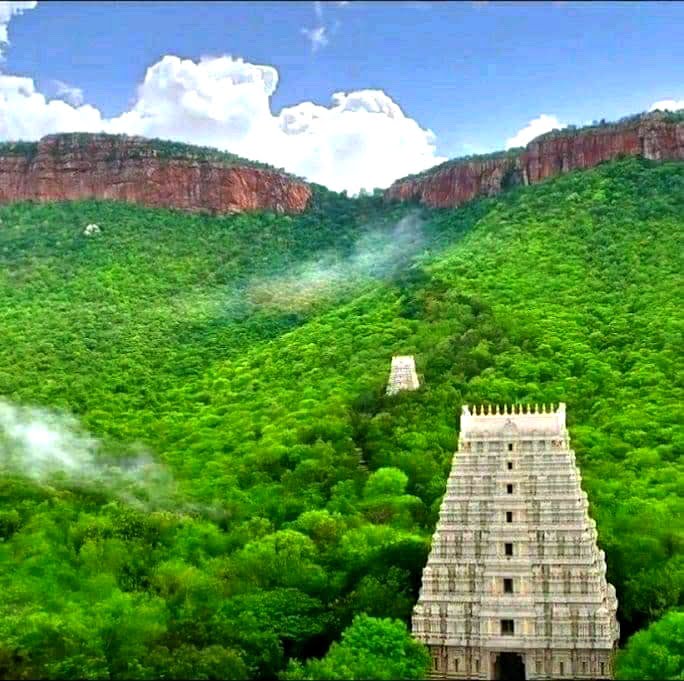
The favorite legend goes like this: Lord Vishnu descended to Earth. He was extremely sad because his dearest wife, Goddess Lakshmi, had departed from their celestial house, Vaikuntha. This was done after a sage, Bhrigu, by mistake kicked Lord Vishnu on his chest. Grieved, Lord Vishnu roamed and finally picked an anthill on the Seshachalam hills, known to us today as Tirumala.
Lord Brahma and Lord Shiva, two other extremely significant gods, noticed that Lord Vishnu was in grief. They wished to assist him in feeling happy once again. Therefore, they decided to come as a calf and a cow, and the Sun God requested Goddess Lakshmi to come as a cowherdess and sell them to a regional Chola king who governed the territory.
This mystic cow had a secret: daily, she visited the anthill where Lord Vishnu was in deep meditation and poured out her milk, nourishing him. The cowherd of the king observed that the cow was not producing milk at the palace. He was curious and somewhat enraged, so he trailed the cow one day.
When he observed the cow pouring out her milk on the anthill, he assumed the cow was wasting milk. In a rage, he lifted his axe to hit the cow. But just when the axe would have injured the cow, Lord Vishnu, who was within the anthill, emerged and absorbed the blow upon himself, saving the harmless animal! The cowherd was so shocked at this divine miracle that he died.
The Chola king, noticing his cow bleeding, arrived at the place. Lord Vishnu, in the avatar of Srinivasa, was extremely angry with the act of the cowherd and cursed the king to become a demon as a king is answerable for the acts of his people. The king pleaded with Him to forgive him, and Lord Srinivasa, as He is kind-hearted, informed him that he would be reborn as Akasharaja and that Srinivasa would wed his daughter, Padmavati.
Subsequently, Lord Srinivasa came across the lovely Princess Padmavati, in reality, Goddess Lakshmi reincarnated! He fell in love and wanted to marry her. But for a royal wedding on a grand scale, he required an enormous amount of money. Therefore, he borrowed money from Lord Kubera, the god of wealth. It is a beautiful notion that Lord Venkateswara continues to repay this loan, and this is a major reason why there are so many devotees giving money, gold, and other valuables at the Tirumala Tirupati Venkateswara Swamy temple – they are assisting the Lord in paying his celestial debt! Isn’t that a pretty thought, to be able to think you’re personally assisting the Lord?
Following his union with Padmavati, Lord Venkateswara and Goddess Padmavati both chose to remain on these seven hills, turning into stone idols, so they might eternally bless and guide humanity in this Kali Yuga age.
Explore More Temples>> Sri Puri Jagannath Temple: The Lord of the Universe
Famous Temple Activities:
In remembrance of the act, devotees offer donations so that the lord can pay back the whole money along with interest to Lord Kubera. People also offer head tonsures, as when Lord Tirumala Tirupati Venkateswara Swamy got hurt on his head, a small portion was bald. Unable to see such an attractive face having a mark, Princess Neela Devi offered some of her hair and covered the part.
Unknown facts about lord Venkateswara in Tirumala:
- This is a lock of hair on the head of the idol of Lord Venkateswara. Another myth says that the hair grows nearly by one centimeter each year.
- The idol of the gods is black stone, and it stands said to be always increasing.
- The idol sweats profusely, especially on Thursdays. The sweat is wiped off with silk cloth, which is sacrosanct. The idol is also said to be swayambhu, which means it did not emanate from any human interference. It is said to be self-manifested.
- In this context, the idol is said to be so mighty that it would grant the wishes of the worshippers.
Here are some other interesting facts about Tirumala Tirupati Venkateswara Swamy:
- Three names under which Tirumala Venkanna swamy is known are Srinivasa, Balaji, and Tirumala.
- He is considered the supreme god of Kali Yuga, or this world age.
- Actually, the lord can be taken as one god of money, success, and luck. It is the richest in the world and the most famous of this category. Millions of people all around this world visit this temple every year to receive some sort of blessing from Lord Venkateswara.
Read More>> 15 Best Places to Visit in Odisha
The Heartbeat of Faith: Cultural, Spiritual, and Mythological Significance
The Tirumala Tirupati Venkateswara Swamy temple is so much more than an aesthetically pleasing structure; it’s a dynamic hub of faith, tradition, and sacred energy. It’s a destination where millions visit to draw closer to God.
This temple is a rich cultural icon of India’s heritage. From the traditional attire of the pilgrims (such as dhotis for men and sarees for women) to the devotional songs (bhajans) that fill the air and the classical dances enacted, it all bears testament to our ancient traditions. It’s such a large, vibrant tapestry interwoven with the threads of devotion and history. And then there is the world-renowned Tirupati Laddu, a sweet treat offered as a blessing. It’s so unique it’s got a Geographical Indication (GI) tag, meaning it’s exclusive to this location, much like champagne is exclusive to France!
Spiritually, this temple is among the most powerful and revered destinations on the planet. People believe that Lord Venkateswara, also lovingly called Lord Balaji or Govinda, has chosen to reside here in the Kali Yuga (our current age) to protect and uplift humanity from all worries and troubles. When you finally stand before the magnificent idol of Lord Venkateswara, many people feel a deep sense of peace, immense joy, and an unbreakable connection to the divine.
One darshan (one glance) of the Lord here is said to grant unimaginable blessings, cleanse one of sins, and even grant moksha, or liberation from the cycle of birth and death. It’s a destination where your prayers are genuinely heard and your desires are said to be fulfilled. This is why it is also referred to as Kaliyuga Vaikuntha, or the “Vaikuntha (heavenly residence of Vishnu) in the Kali Yuga.”
Mythologically, the glory of the Tirumala Tirupati Venkateswara Swamy temple is eulogized in numerous ancient Hindu scriptures and Puranas. The Sri Venkatachala Mahatmyam is a particular text that is devoted to eulogizing the holy hill and the Lord, recounting history from various eras. Even ancient works such as the Padma Purana, Skanda Purana, and Bhavishya Purana refer to Lord Venkateswara as an incarnation of Vishnu, which reflects the extensive reverence for this god.
The very name “Venkata” itself is thought to have come from Sanskrit expressions meaning “destroyer of sins” or “burning up all evil,” necessarily highlighting the ability of this divine hill and its resident god to cleanse and elevate. The Silappadikaram, an ancient Tamil epic dating back to the 2nd century BC, refers to Lord Venkateswara as “Thiru Vengada Mudaiyavar” and vividly describes Lord Vishnu sitting majestically on the holy Vengadam hill, garbed in conch, discus, and golden attire, with the sun and moon for his attendants. This indicates the way this place and its Lord are really old and sacred!
Read More>> Vedadri Narasimha Swamy Temple
A Masterpiece in Stone: Unique Architectural Styles and Carvings
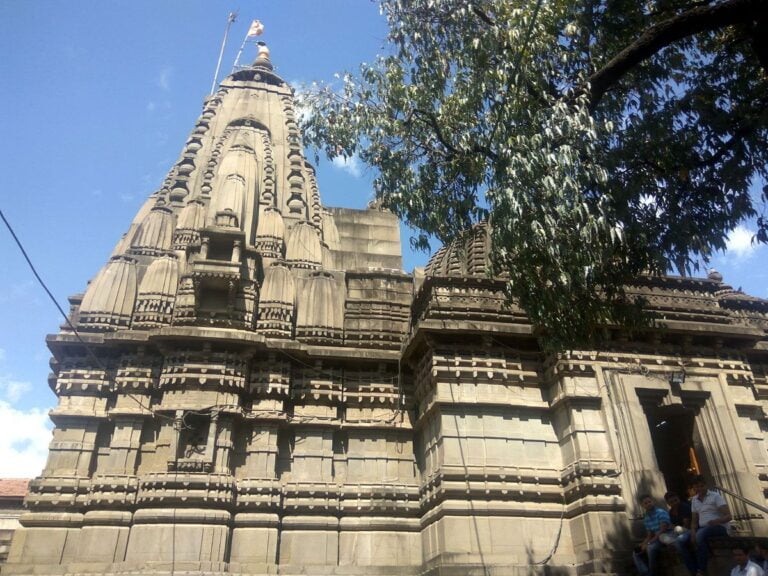
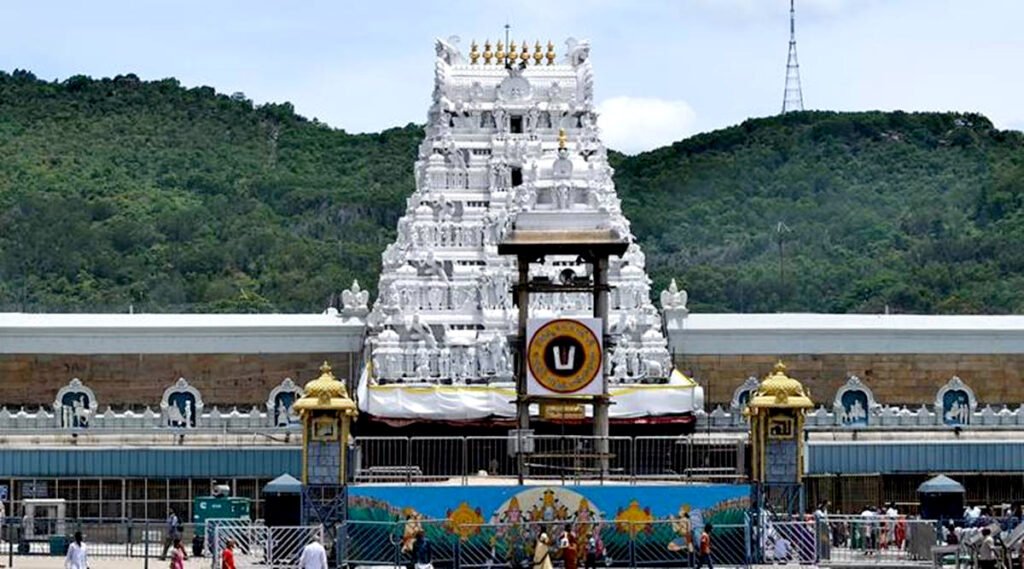
Think about a huge, complex puzzle, but rather than tiny pieces, it consists of humongous stones, all carefully placed together in a stunning edifice! The Tirumala Tirupati Venkateswara Swamy temple is an outstanding instance of Dravidian architecture, a very ancient and renowned type of construction that can be seen in South India, characterized by its high gateways and intricate carvings.
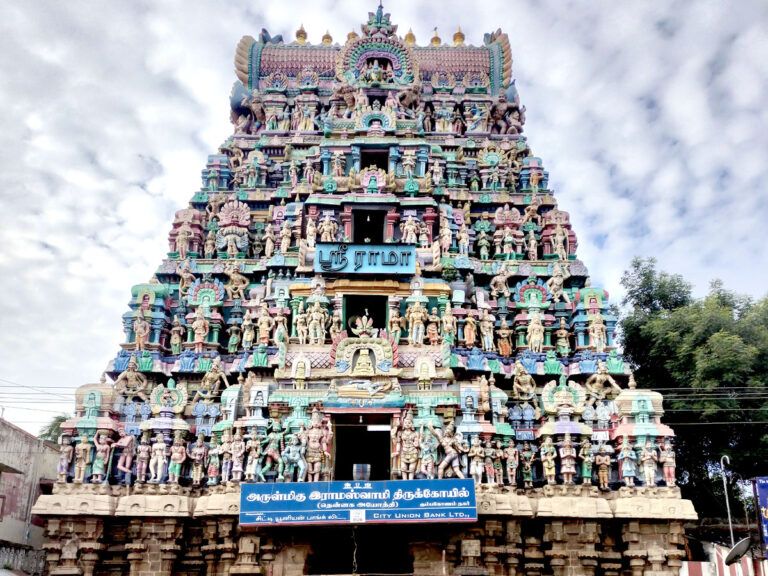
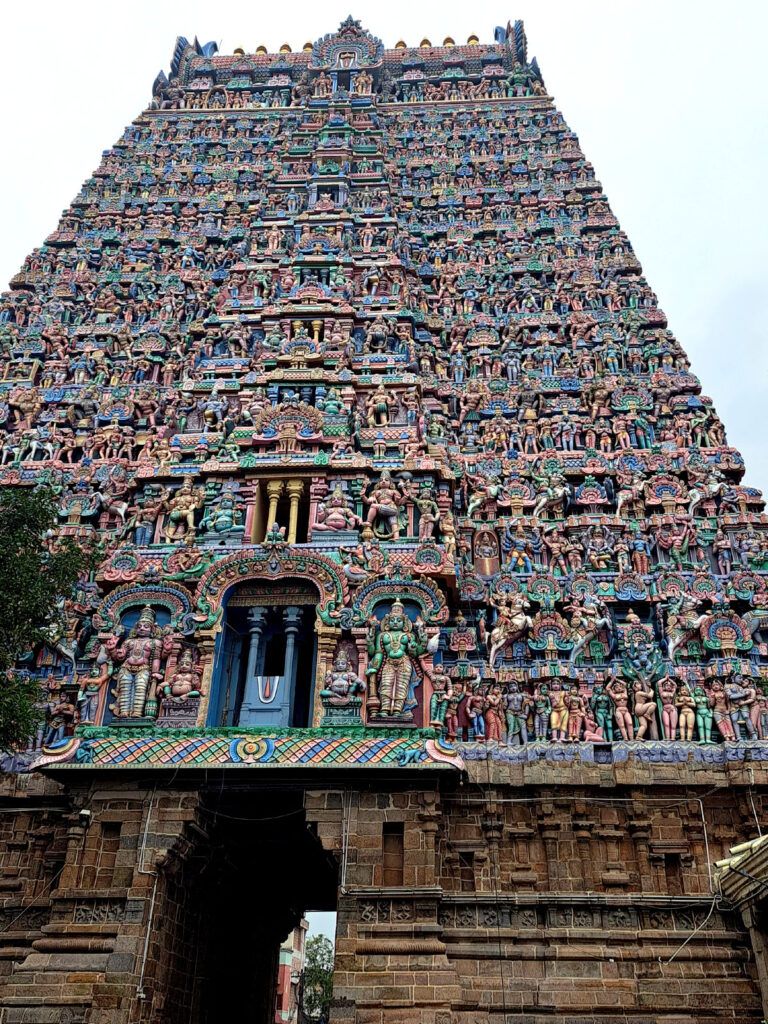
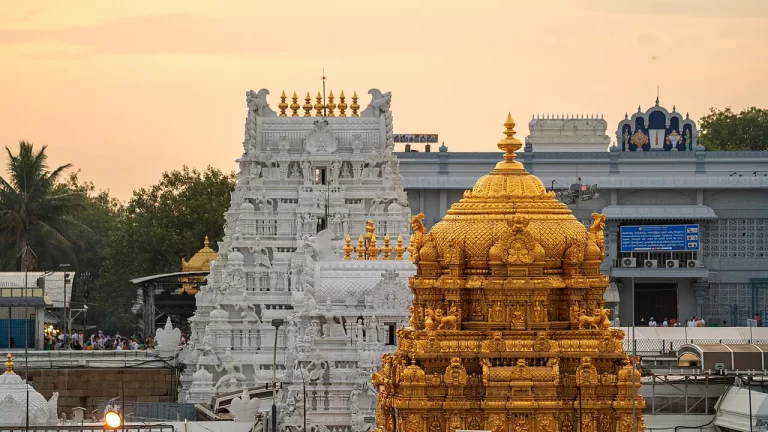
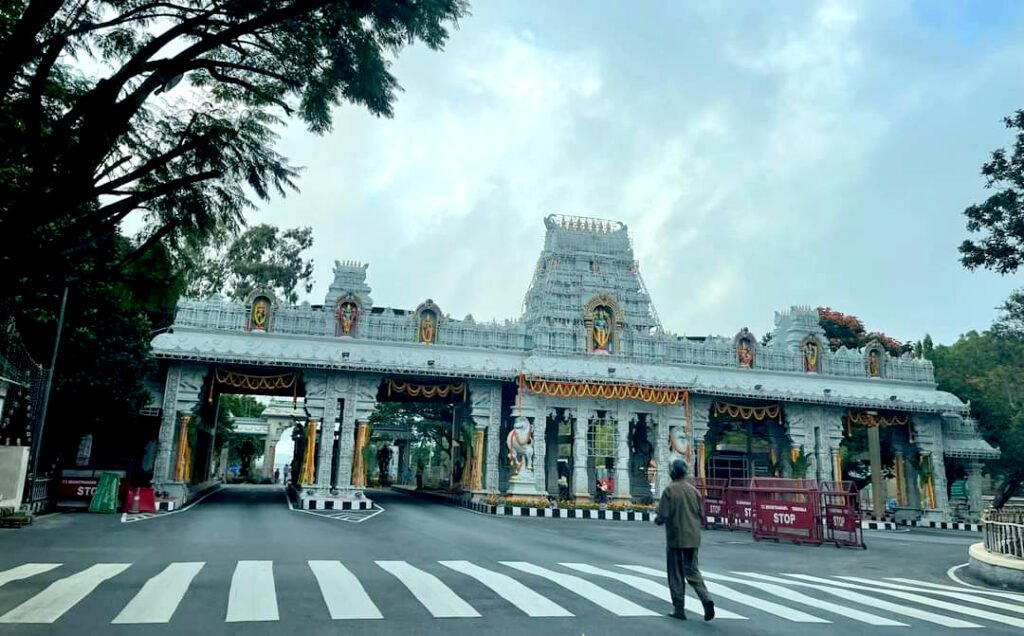
As you walk towards the temple, your gaze will be caught up by the humongous Gopurams, which are sort of super-tall, multi-colored entrance towers. The towers are all covered from top to bottom in thousands of little intricate carvings of gods, goddesses, mythical beasts, and scenes from very old Hindu legend. It’s like a huge, living comic strip carved in stone!
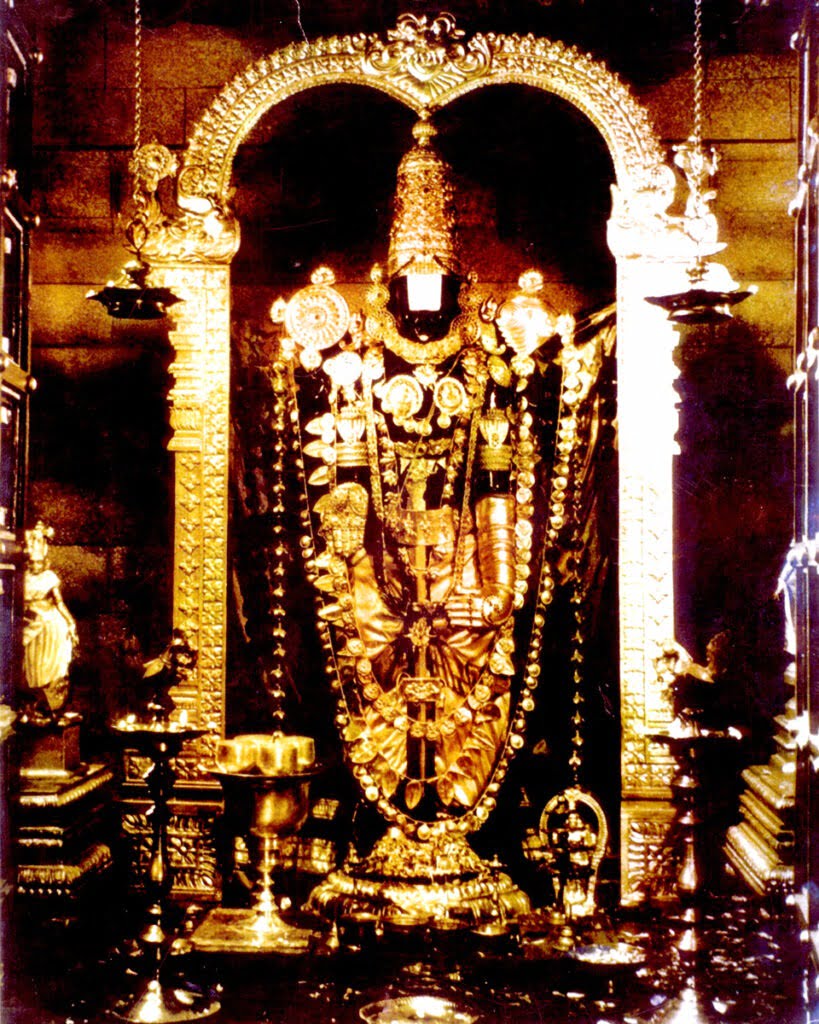
Within the temple, you’ll proceed through a series of prakaras (courtyards or enclosures), each bringing you closer and closer to the central shrine. The most revered section of the temple, where the idol of Lord Venkateswara is located, is referred to as the Ananda Nilayam. It comes with a resplendent golden roof that sparkles in the sunlight, appearing very divine and regal. The entire temple complex is a testament to the awe-inspiring ability and dedication of the artisans and engineers who toiled on it for centuries. Each pillar, each wall, each corner speaks a thousand words through its beautiful carvings, making the temple a grand open-air museum of art and spirituality.
Read More>> Garbarakshambigai Temple: Secret of Fertility & Safe Birth
Whispers of Divine Secrets: Myths and Beliefs
The Tirumala Tirupati Venkateswara Swamy idol itself is embedded with numerous wonderful and sometimes mystifying beliefs that intensify the faith of pilgrims.
Self-Manifested Deity: The deepest of beliefs is that the central idol of Lord Venkateswara swayambhu, or it came into being on its own from the ground, not sculpted by human hands. This renders the idol extremely holy and powerful, for it is regarded as a direct incarnation of the Lord.
Always Soft Real Hair: It is traditionally said that the hair of Lord Venkateswara’s idol is made of human hair, and it never tangles, nor does it become rough. Instead, it remains soft like a living being.
The Eternally Wet Back: An absolutely intriguing belief is that regardless of how many times the back of the idol is dried, it always stays wet. Devotees have even gone on to claim that if you hold your ear near the back of the idol, you can hear the soft sound of the ocean!
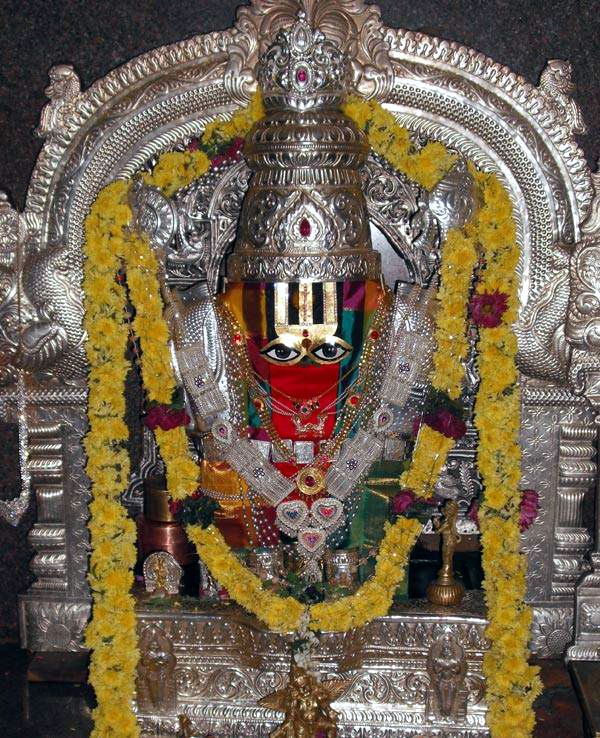
The Revealing Gaze (Tiruppavada): On Thursdays, as part of a special ceremony known as Tiruppavada, the big white namam (a camphor paste sacred mark that traditionally covers the greater part of Lord Venkateswara’s eyes) is reduced in size. This gives the devotees a fuller and unobstructed glimpse of his divine eyes, which is deemed to be extremely auspicious and potent. It is said that the first look of the Lord is so powerful that it must be diluted.
The Sacred Hair Offering: Among the most famous and unusual rituals at the Tirumala Tirupati Venkateswara Swamy temple is the hair offering, in particular by women, although men also take part. Pilgrims shave their heads entirely, symbolizing their letting go of ego, pride, and material possessions. It’s a strong expression of humility and total surrender before the Lord, and most people feel that this offering satisfies their most ardent desires and cleanses them. The practice is so important that the temple has enormous complexes known as Kalyana Kattas that are just for hair tonsuring.
These fascinating myths and legends provide depth of wonder and personal connection for the millions of pilgrims who walk through the Tirumala Tirupati Venkateswara Swamy temple, creating their journey a truly unforgettable one.

A Year of Celebration: Festivals and Special Days
The Tirumala Tirupati Venkateswara Swamy temple is always filled with the hum of devotion, but there are days that are special beyond special, filled with even greater joy, color, and spiritual vibrations!
The biggest and most extravagant festival is the Srivari Brahmotsavam. Think of a gigantic, divine carnival that is on for nine days, typically in September or October. Throughout these days, the Utsava Murti (the imitation idol for processions) of Lord Venkateswara, along with his divine spouses, Goddess Sridevi and Goddess Bhudevi, are brought out in grand processions in the streets around the temple.
They are transported on various vahanams (divine vehicles), each gorgeously ornated, symbolizing different celestial creatures such as the Garuda (eagle), Hanuman (monkey god), and so on. There is music, singing, dance, and an ocean of devotees watching this divine scene! Lord Brahma himself, the god of creation, is said to come down to Earth to perform this festival, hence the name “Brahmotsavam.” It’s definitely one of the busiest periods to go to the Tirumala Tirupati Venkateswara Swamy temple, but if you’re a fan of majestic festivals and energetic spirituality, it’s something like nothing else!
Read More>> Kondagattu Anjaneya Swamy Temple
Some other significant festivals and special occasions are:
Vaikunta Ekadashi: It’s a very sacred day, typically in December or January, when this temple has a special gate known as the “Vaikunta Dwaram” (the gateway to Vaikuntha, Lord Vishnu’s dwelling) opened. It is thought that going through this gate on this good day enables you to achieve salvation. This day also has huge gatherings.
Vasantotsavam: A beautiful spring festival that takes place in March or April, representing new beginnings.
Pushpa Yagam: A lovely and scented ritual in which the Lord is revered with a shower of thousands of bright, fresh blooms.
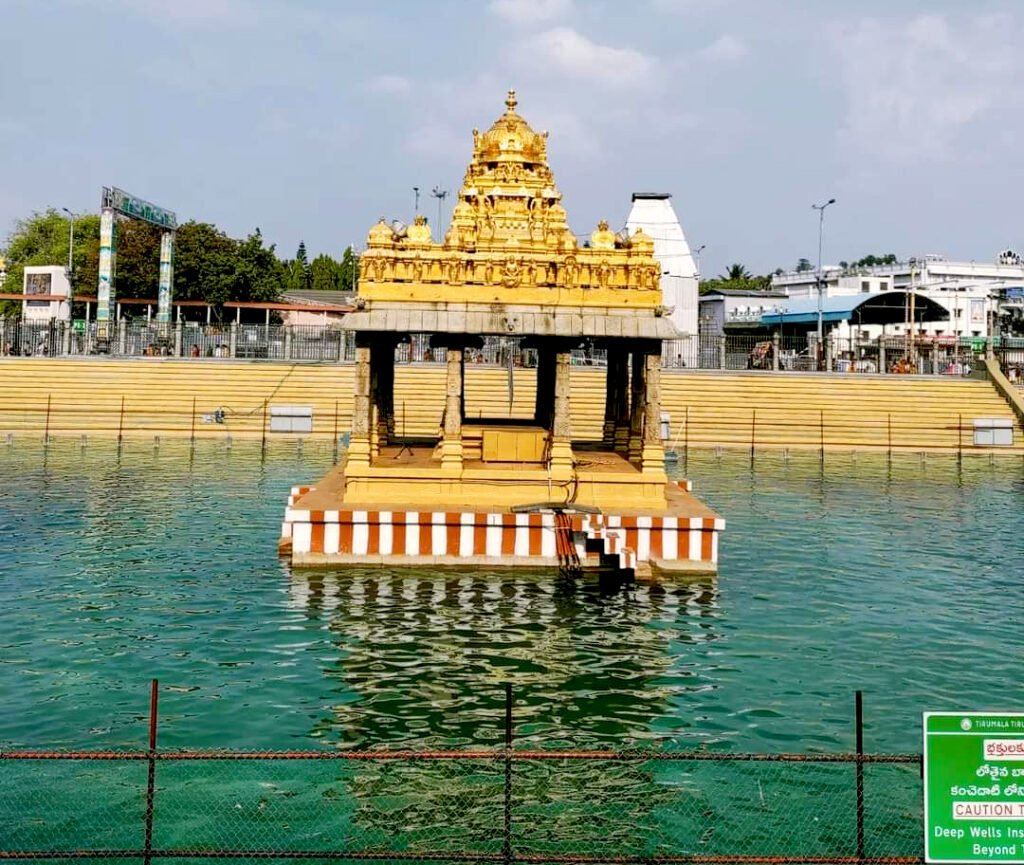
Teppotsavam: This is a delightful “float festival” in which the deities are taken for a beautifully decorated boat ride on the Swami Pushkarini, the temple tank sacred to Vaishnavites.
Ratha Saptami: Also referred to as “Surya Jayanti,” this January/February festival honors the Sun God, and the Utsava Murti is taken out in procession on seven vahanams on a single day.
While the temple is usually crowded every day, particularly on weekend and public holidays, major festival days such as Brahmotsavam and Vaikunta Ekadashi will assuredly be the most crowded. If you would like a quieter visit, organizing your trip on a weekday during non-festival months (such as the monsoon season, June to August) may provide a slightly less crowded experience.
Read More>> Hampi Uncovered: Achyuta Raya Temple Mystery You Need to See!
Daily Devotion: Special Poojas and Sevas
At Tirumala Tirupati Venkateswara Swamy temple, the day is full of a non-stop procession of sacred poojas (ritual worship ceremonies) and sevas (services rendered to the Lord), each with its own profound meaning and lovely rituals.
Suprabhatam Seva: This is the first of the day’s rituals, conducted very early in the morning (at 2:30 AM!). It’s as if rousing the Lord gently from sleep with lovely Sanskrit songs and prayers. Lots of devotees attempt to be there for this so that they can be present during the deity’s first waking hours.
Thomala Seva: After Suprabhatam, in this seva, the Lord is tenderly bedecked with fragrant flower garlands, fresh leaves, and age-old ornaments.
Archana: Here the temple priests chant in reverence the 1000 resplendent names of the Lord (Sahasranamavali), offering a flower or holy leaf with each name, soliciting the blessings of the Lord.
Kalyanotsavam: It is a symbolic divine wedding ceremony of Lord Venkateswara with his consorts Goddess Sridevi and Goddess Bhudevi. It’s a magnificent and grandiose ritual, highly in demand among the devotees, symbolizing the cosmic union and prosperity. You can buy tickets to attend this lovely ceremony.
Abhishekam: Done mostly on Fridays to the primary deity, this is a sanctified bath administered to the idol with different sacred substances such as milk, curd, honey, ghee, turmeric paste, and sacred water. It’s a very intimate and worshipful ritual.
Sahasra Deepalankarana Seva: During the evening, this serene seva consists of lighting a thousand oil lamps, forming a stunning sheen, as devotional hymns and songs are rendered. The Utsava Murti is usually taken out in procession at this time.
Ekanta Seva: This is the last ritual of the day, which is done late at night, where the Lord is symbolically placed to bed. A special lullaby song is sung, and the deity is presented with milk and fruits. This is a closed ritual, not available to pilgrims, but marks the end of the day’s worship.
All these sevas provide an individual method for devotees to engage in the worship and develop a personal connection with Lord Venkateswara. Some are public, while others may involve buying tickets in advance.
Read More>> Ramappa Temple: An 800 Years Old Architectural Marvel
Know Before You Go: Temple Timings
The Tirumala Tirupati Venkateswara Swamy temple is among the most crowded temples in the world, frequently open nearly 18-20 hours a day! It usually opens very early in the morning, approximately 2:30 AM, beginning with the Suprabhatam Seva, and usually closes late at night, approximately 1:30 AM (although on Fridays, it may close slightly earlier approximately 10:30 PM because of the prolonged Abhishekam).
Sarva Darshan (public darshan without charge) typically starts at 8:30 AM and goes on till late evening, with interruptions for special sevas.
If you’d prefer a faster darshan, Special Entry Darshan tickets are available (currently Rs. 300). These, in most cases, can be booked online in advance, and it is worth doing so, particularly if you’ve brought children with you, in order to cut down on waiting time in lines.
The temple also provides reserved darshan slots for senior citizens, differently-abled people, and parents with infants (typically children below 1 year of age) so that the visit is convenient for them.
It is extremely important to refer to the official Tirumala Tirupati Devasthanams (TTD) website or their official app for the most precise and current timings, as these may be adjusted due to festivals, special occasions, or crowd control.
Places to visit in and around the Tirumala Temple:
Tiruchanur Sri Padmavathi Ammavari Temple is one of the most sacred temples and situated at a distance of 5 kilometers from the famous town of Tirupati. This place is specifically meant for Goddess Padmavathi, who is hugely glorified as the consort of Lord Venkateswara. The temple is famous not only for its religious importance but also for the extensive minute refined carvings, making it a picturesque place. This center of pilgrimage draws devoted people and visitors with its sacred atmosphere and rich heritage.
Sri Kalyana Venkateswara Swamy Temple, situated in a tranquil locality of Srinivasa Mangapuram is, in fact a heavenly abode of peace and tranquility. This holy temple is at an approximate distance of nearly 12 kilometers from the renowned and world-famed city of Tirupati. The other is the temple in which hundreds of thousands of the devoted ones are coming to pay their utmost respect and reverence while paying obeisance to the great Lord Venkateswara.
Many hold in extremely high regard for its profound significance, intricately connected to the divine and sacred marriage between the revered Lord Venkateswara and the stunningly beautiful Goddess Padmavathi. This temple is really thronged with devotees as people come here to seek spiritual relief and also to receive blessings, mainly due to architectural grandeur that is nothing short of perfect besides offering a serene and scintillatingly panoramic view about it.
Sri Govindaraja Swamy Temple is in the very center of Tirupati and was surrounded on all sides by an atmosphere always filled with constant and lively activity. Such a magnificent temple is so believed to be one of the oldest places of worship in this world, attracting thousands of devoted worshippers and dozens of tourists belonging to hundreds of different backgrounds who came here with a zeal to experience its spiritual significance and cultural heritage.
The architectural designing of the temple does serve like an outstanding and superb expression of the brilliant and complicated features characterizing the ‘Dravidian’ style of architecture that goes well-known and has also been glorified for grandeur and peculiar artistic expressions. The temple is a confluence of vivid and colourful festivals throughout the year, which creates large crowds around it while making the scintillating and enriching benevolent and uplifting air that surrounds this holy shrine.
Chandragiri Fort is one of the oldest fortifications along with some of the most revered as well as sacredly scenic locations about 15 kilometers from the Lordly city of Tirupati. Dating back to the 11th century, this stunning monument was incredibly important in history; it was the capital of the very highly reputed Vijayanagara Empire, which thrived on immense contributions to art, architecture, and culture.
This glorious architectural diversity is so eloquently speaking and expression of the rich fragrance of its diverse cultural influence combined with the breathtaking panoramas scenery of the enchanted surroundings of the location, thus contributed to the entire building being exceptionally special and unique. Its profound historical importance along with remarkable architectural value has rendered it as one of the most sought-after and frequently visited destinations by history enthusiasts as well as by all sorts of travelers from all corners of this earth.
Silathoranam: This Silathoranam is an odd kind of rock formation where one can view the beauty of Tirumala Hills. The abnormal shape takes the form of a natural arch that was thought to be of high geologic and religious importance. Besides this, Silathoranam is a great tourism attraction which grabs many nature and photography enthusiasts who get clicked with its beauty and essence.
Along with temples, there are many magnificent nature-rich places to visit like Akasa Ganga, Kalipaka Thirtham, etc..
Read More>> Thousand Pillar Temple: India’s Amazing 1000 Pillar Temple!
A Comfortable Stay: Accommodation Options
At the end of a day of traveling, praying, and site-seeing, you’ll be in need of a good place to sleep. Both Tirumala and Tirupati have a variety of accommodations to meet different budgets and requirements.
TTD Accommodation in Tirumala: The Tirumala Tirupati Devasthanams (TTD), the organization that operates the temple, offers different classes of accommodation right at Tirumala. These vary from basic dormitory rooms (very cheap, sometimes as cheap as Rs. 20 per head) to cozy rooms, cottages, and guest houses. These are usually the most convenient since they are situated on the hill itself, but they get reserved very quickly, particularly in peak season and holidays. It’s strongly advisable to reserve these well in advance on the official TTD website (https://www.google.com/search?q=ttdsevaonline.com). They also provide amenities such as locker rooms and simple amenities.
Hotels of Tirupati Town: In Tirupati town, at the foot of the hills, you have a wide range of hotels, from inexpensive lodges to upscale 4-star and 5-star hotels. Most pilgrims prefer to stay in Tirupati for the larger selection of hotels, restaurants, and closer proximity to the railway station and airport and then commute up to Tirumala for darshan. Some of the best family-friendly options are Marasa Sarovar Premiere, Fortune Select Grand Ridge, and Taj Tirupati.
Private Lodges and Dharamshalas: There are also many private lodges, guest houses, and dharamshalas (charitable accommodations) in both Tirumala and Tirupati, offering various price points.
For families traveling with children, booking accommodation with amenities like comfortable beds, good bathrooms, and perhaps even an in-house restaurant will make your stay much more enjoyable. Always prioritize booking in advance, especially if your trip coincides with school holidays or major festivals.
Read More>> Divine Aswaklanta Temple Where Lord Krishna & Arjuna Rested!
How to reach Tirumala:
Your Pilgrimage to the Lord: How to Get to the Temple
Getting to the Tirumala Tirupati Venkateswara Swamy temple is fairly easy, with it being a popular pilgrimage spot and having good connectivity.
By Air: The closest airport is Tirupati Airport (TIR) at Renigunta, around 16 km from Tirupati town and around 39 km from Tirumala. Pre-paid taxis or local buses are easily available from the airport to Tirupati or even directly to Tirumala.
By Train: Tirupati Railway Station (TPTY) is a central railway station, well-connected to all the major cities in India. From the train station, one can travel by TTD-operated buses (which are extremely frequent and cheap) or private cabs to Tirumala.
By Bus: Tirupati has a big and crowded central bus stand (APSRTC Central Bus Stand) with plenty of buses linking it to cities and towns all over Andhra Pradesh, Telangana, Tamil Nadu, and Karnataka. From Tirupati, there are constant bus services (every few minutes!) taking you up the serpentine ghat road to Tirumala. This is a very affordable and popular option.
By Road (Private Vehicle/Taxi): It is also possible to drive to Tirupati and then to Tirumala. The ghat road to Tirumala is good and two-lane (one lane for going up, the other for coming down). Taxis are available in plenty from Tirupati. Do keep in mind that there are traffic controls and vehicle inspections, particularly during peak hours or festival seasons. Private vehicles are usually prohibited on the ghat road between 12 AM and 3 AM.
On Foot (Walking Paths): For those who wish to embark on a more spiritual and physically challenging journey, there are two sacred walking paths (known as sopanamargas) to Tirumala:
Alipiri Mettu: This is the most popular and longer path, beginning from Alipiri at the base of the hills. It takes climbing some 3550 steps and covers a distance of approximately 9 km. It takes about 3 to 5 hours, depending on your speed.
Srivari Mettu: This is a shorter but steeper path, beginning from Chandragiri. It has approximately 2388 steps and covers a distance of around 2.1 km. This path is usually shorter, approximately 2 to 3 hours. Both pedestrian routes are well-kept by TTD, with shelters, drinking water, toilets, and even free medical assistance en route. TTD also offers a great free luggage carry service for pilgrims trekking up – you can leave your luggage at the bottom and pick it up at the top! This is wonderful for family members since you do not have to carry heavy backpacks as you ascend.