Madmaheshwar Temple: Navel of Shiva & Secret to Forgiveness
Madmaheshwar Temple (मध्यमहेश्वर), situated deep in the picturesque Garhwal Himalayas of Uttarakhand, India. Visualize an area where snow-white mountains touch skyward with emerald green meadows stretching at the foot, and the atmosphere is thick with tranquility and spirituality. That’s Madmaheshwar for you!
This is no ordinary temple; it is a site rich in historic lore and overflowing with spiritual energy. It’s one of the Panch Kedar, the five sacred temples dedicated to Lord Shiva, one of Hinduism’s most significant gods. And the good news is that this trip to Madmaheshwar isn’t merely a temple visit; it’s a trek, a climb into some of the most stunning vistas you’ll ever encounter! So, let’s prepare to travel, learn, and experience the magic of this amazing destination together.
Madmaheshwar Temple History:
The history of Madmaheshwar Temple is connected with a very popular Hindu epic named the Mahabharata. This epic narrates the tale of a magnificent war between two sets of cousins, the Kauravas and the Pandavas. The Pandavas, once they had won the war, were extremely sad and remorseful because they had to fight and kill a lot of their own relatives and teachers. They wished to seek the pardon of Lord Shiva, the powerful and benevolent god.
They traveled to Varanasi, a highly sacred city, in order to locate Lord Shiva. However, Lord Shiva was angry that there had been this war and all this fighting, so he determined to hide himself from the Pandavas. He transformed himself into a bull and traveled to the Himalayas. The Pandavas were intent, however, on locating him. Bhima, a very powerful of the Pandava brothers, saw a bull in the Garhwal Himalayas. He knew at once that it was Lord Shiva disguised. Bhima attempted to grab the bull, but Lord Shiva in the form of the bull began to sink into the earth!
As he vanished, various parts of his body manifested in five different locations in the Himalayas. These five sites came to be known as the Panch Kedar temples. The bull’s hump manifested at Kedarnath, arms at Tungnath, face at Rudranath, hair at Kalpeshwar, and the navel and stomach appeared right here at Madmaheshwar!
It is said that the Pandavas themselves constructed these temples in order to worship Lord Shiva and take his blessings. So, when you go to Madmaheshwar Temple, you’re not looking at a building; you’re entering a legend whose age is in thousands of years, a legend of forgiveness, love, and the incredible might of Lord Shiva.
Read More>> 2500 Years Dwarkadhish Temple: Where Miracles Still Happen
Legend of Madmaheshwar Temple:
The legend of Madmaheshwar Temple is simply touching. The Pandavas, having constructed the temple, prayed to Lord Shiva with their entire heart. Lord Shiva, having seen their loyalty and their willingness to repent for their transgressions, ultimately appeared before them in his original form and pardoned them. This forgiveness is a crucial aspect of the Madmaheshwar Temple tale. It shows us that regardless of how wrong we do something, if we really regret it and ask for forgiveness, peace can be achieved.
This myth is referred to in ancient Hindu literature and Puranas. Although specific verse numbers may be difficult to identify for general stories, the Skanda Purana, especially the Kedarakhanda chapter, describes the greatness of the Panch Kedar temples and Shiva’s reappearance myth. It talks of the divine presence of Lord Shiva in these forms, blessing all those who make the pilgrimage. The overall spirit of the Puranas is that a visit to these places washes one’s sins away and gives spiritual liberation.
Read More>> Raghavendra Swamy Temple Mantralayam
Cultural, Spiritual, and Mythological Significance of the Temple:
The Madmaheshwar Temple is very significant for a number of reasons:
Cultural Significance: It’s a living legacy of ancient Indian culture and the strong religious beliefs of its people. The annual opening ceremony and closing ceremony, the procession of the idol to its winter home, and the manner in which local communities participate in its maintenance, all speak of its cultural significance. It’s a place where you can soak up the simple and deep way of life of the Himalayas.
Spiritual Significance: Devotees of Lord Shiva hold the Madmaheshwar Temple in very high regards spiritually. It’s said that by making a visit to this temple and performing puja on the navel-shaped lingam of Lord Shiva, one can wash away one’s sins and achieve salvation. Pilgrims flock here with the hopes of achieving peace of mind, empowerment, and closeness to the divine. The peaceful atmosphere, removed from the crowded pace of urban life, makes it an ideal location for meditation and contemplation.
Mythological Significance: As we know, its association with the Mahabharata and the Panch Kedar myth makes Madmaheshwar Temple unique within Hindu mythology. It’s not a temple; it’s a holy place where an extraordinary thing that happened long ago, reminding us about the eternal stories that rule our lives.
Read More>> Shri Kalabhairaveshwara Temple Bengaluru
Why this site is extremely significant and any special poojas conducted
Madmaheshwar Temple is especially significant as it symbolizes the “middle” or “navel” aspect of Lord Shiva, which is the essence of his being. It’s also a site where Lord Shiva is said to have forgiven the Pandavas, and hence it becomes an efficacious place for redemption and cleansing.
Though daily worship (puja) is conducted by the priests of the temple, special rituals are followed at specific times. A majestic procession, known as the “Utsav Doli,” brings the symbolic idol of Lord Madmaheshwar from its winter abode in Ukhimath to the main temple before the gates of the temple are opened to receive the pilgrimage season. It is in itself a lovely and sacred phenomenon. Special abhishekams (ritual bathing of the idol) using water and bel leaves are done during the main pilgrimage season.
The chanting of Rudra Gayatri mantra during these rituals is said to be highly beneficial. The people also think that doing seven rounds of the temple (circular movement around it) helps mitigate the ill effects of some planetary positions. The great festival of Lord Shiva, Maha Shivaratri, is also observed with intense devotion, though the temple remains shut in the winter season.
Read More>> Gangotri Temple | Complete Guide
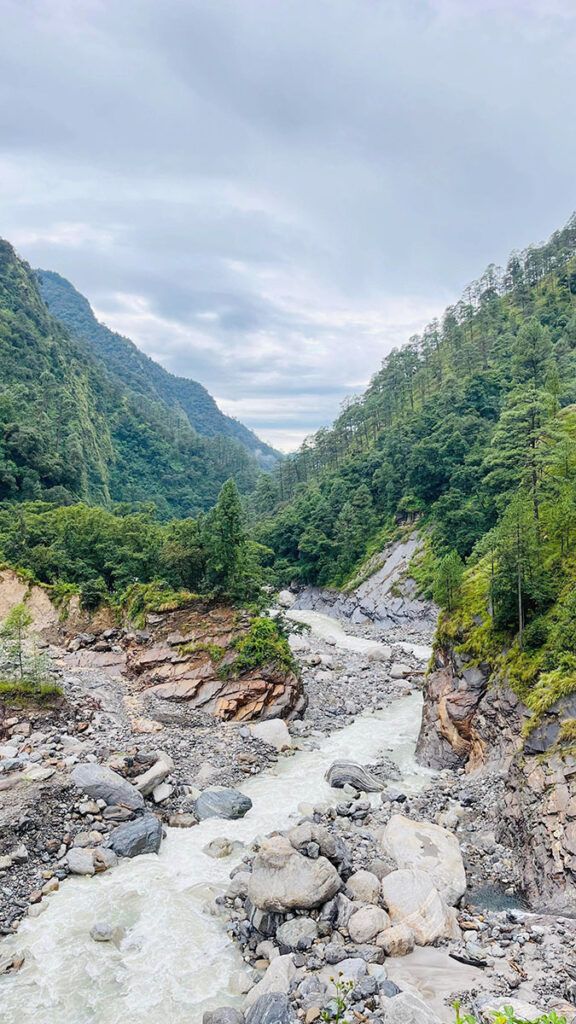
Distinct Architectural Designs and Sculptures
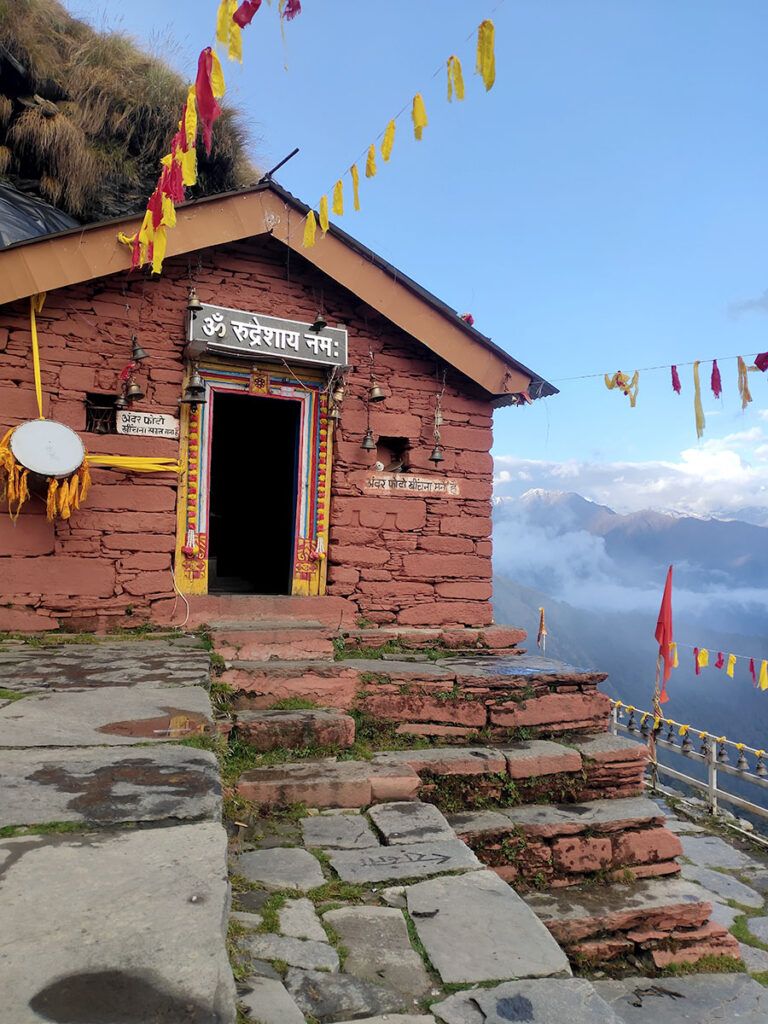
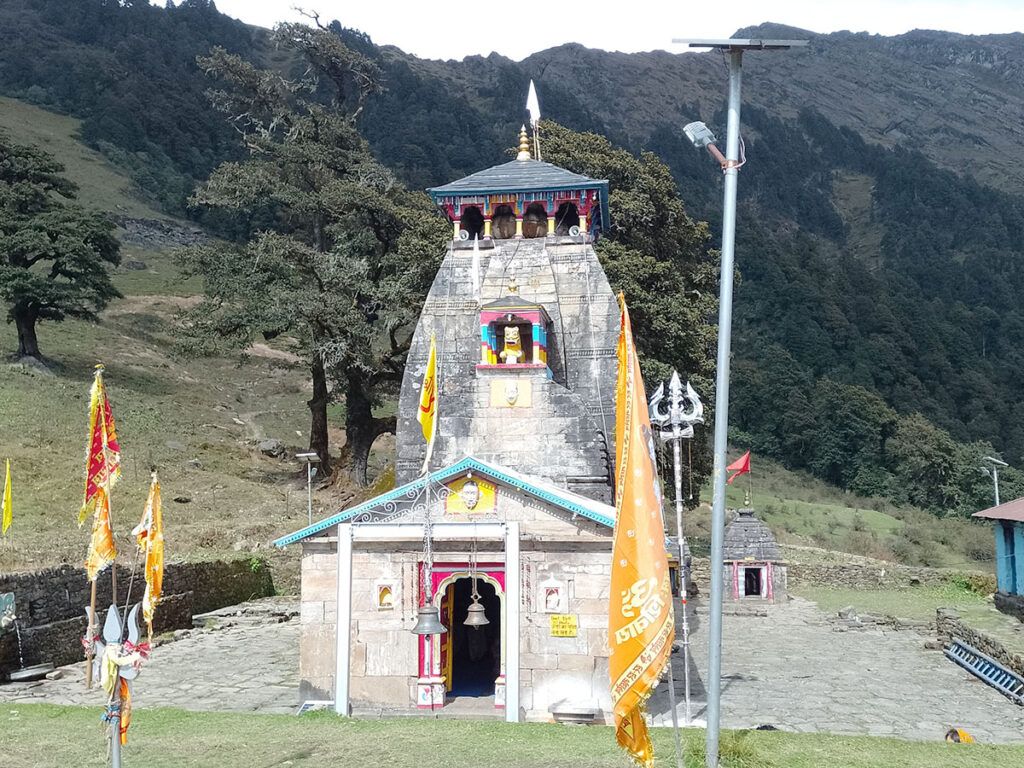
When you finally arrive at Madmaheshwar Temple, you’ll notice a stunning exhibit of stone architecture in the traditional North Indian style. It may not be as lavish or showy as some of the other popular temples, but its simplicity and blending with nature make it all the more special.
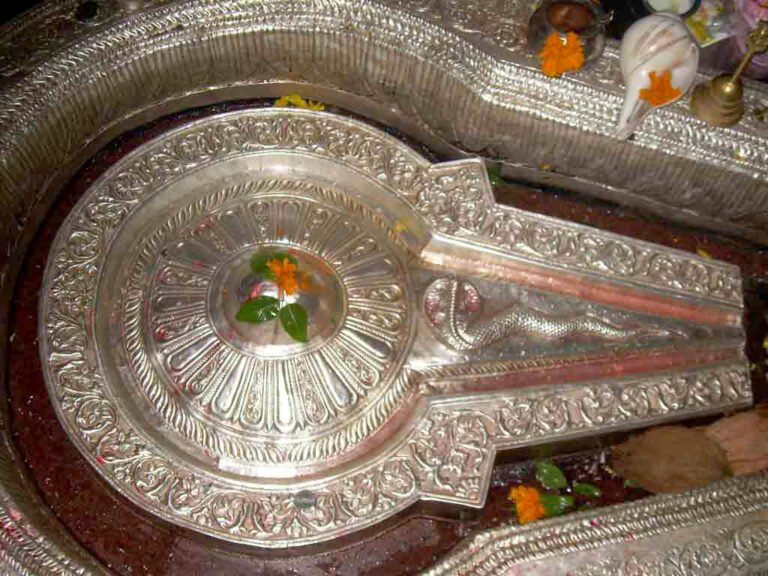
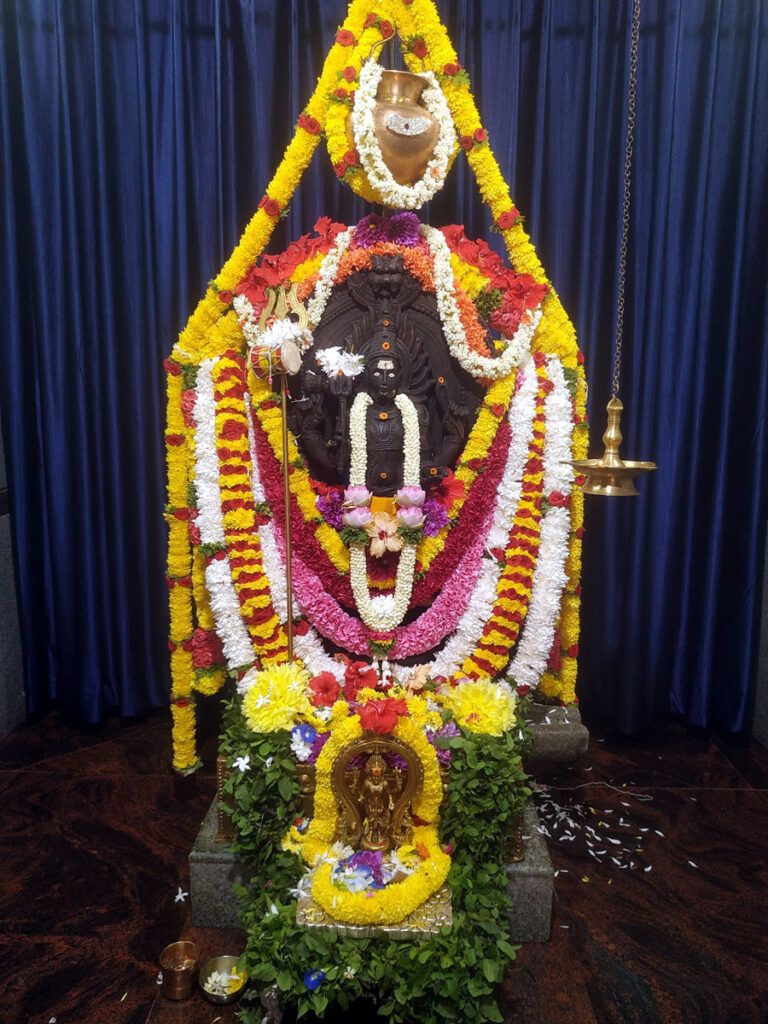
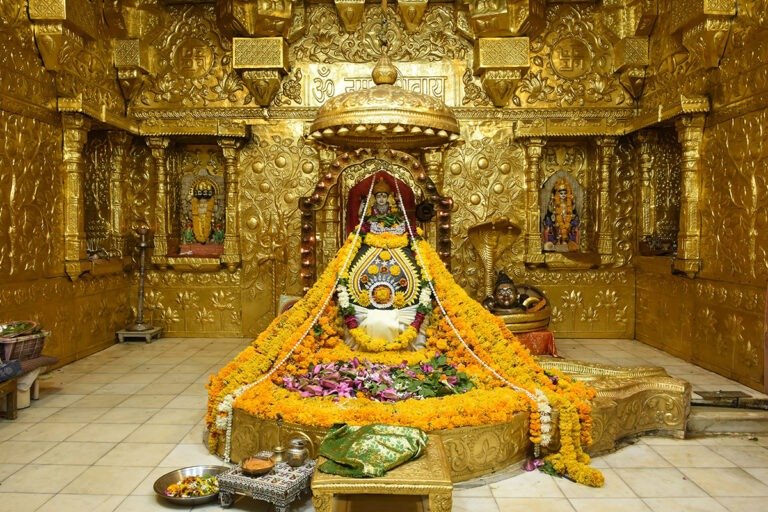
The temple is constructed of dark stone and exudes a humble but strong presence. Within, there is a special navel-shaped lingam (a symbolic form of Lord Shiva). The inner sanctum also accommodates Goddess Parvati, Lord Shiva’s wife, and Ardhanarishwara, a half-Shiva, half-Parvati figure, indicating the divine marriage of male and female energies.
Though extensive carvings such as those in bigger and more easily accessible temples may not be ubiquitous, the workmanship of the stone building itself and the idols inside speaks volumes about the ancient customs and piety of the constructers. The small but detailed work on the pillars and doorways, though minimal, is evidence of the immense work that was performed with the absence of contemporary tools, giving a feel of reverence and awe.
Read More>> Shri Jogadya Shaktipeeth, Kshirgram, West Bengal
Myths, Beliefs, and Daily Life
Aside from the central legend, numerous local myths and traditions abound about Madmaheshwar Temple. The locals believe that water at the temple is imbued with special cleansing properties. Others believe that just a single drop of this holy water has the power to purify an individual from the inside out. Many pilgrims pour water and bel leaves on the Shiva lingam, hoping it can balance out opposing energies and bestow good fortune.
The trek to Madmaheshwar Temple itself is also a spiritual activity. It’s said that the difficult hike cleanses the mind and body, preparing the worshipper for a more intimate encounter with Lord Shiva. The inaccessibility of the temple, cloaked in pristine nature, further makes people believe that this is a genuinely divine and unpolluted dwelling place of the gods.
Special Days and Rituals as well as busy days
The Madmaheshwar Temple opens to pilgrims usually in late May and closes in late October or early November because of heavy snowfall in the winter months. The opening and closing dates are determined by the temple committee and announced well in advance. For instance, in 2025, the temple will open on May 21st and close by about November 20th. For more details you may visit Uttarakhand Tourism Website.
The opening ceremony is a grand affair, beginning two days prior to the opening proper at the Omkareshwar Temple at Ukhimath, which serves as the winter abode of the idol. The “Utsav Doli” (the idol-bearing palanquin) then sets out on a scenic procession, passing through scenic villages such as Ransi and Gaundar before actually reaching Madmaheshwar Temple on the day of opening.
This time, particularly near the opening and closing dates, and during festivals such as Maha Shivaratri (though the deity is in Ukhimath at that time), can be very congested. Not so the months of May-June and September-October, which are most preferred and liked for a visit owing to pleasant weather for trekking. During the season, you will notice numerous pilgrims, sadhus (holy men), and trekkers, all of whom follow the same route to this holy home.
Madmaheshwar Temple Timing:
At the time of pilgrimage season (approximately May to October/November), the Madmaheshwar Temple typically opens from early morning (approximately 6 AM) to evening (approximately 9 PM) so that pilgrims have sufficient time to visit for darshan (seeing the deity) and worship. It’s nevertheless advisable to consult local information or the temple administration regarding exact timings as these can fluctuate a bit.
Places to visit near Madmaheshwar Temple:
Your trip to Madmaheshwar Temple can be part of a greater holy and adventurous discovery of the Garhwal Himalayas. These are some of the other important Hindu sites you can go near:
Ukhimath: As stated, this is Lord Madmaheshwar and Lord Kedarnath’s Shiva winter seat. It’s a lovely town with its own Omkareshwar Temple.
Kedarnath Temple: The first of the Panch Kedar, where the hump of Lord Shiva manifested. It’s a very famous and sacred temple.
Tungnath Temple: The world’s highest Shiva temple and the third among the Panch Kedar, where Lord Shiva’s arms manifested. It is also one of the main trekking places.
Rudranath Temple: The fourth Kedar, where Lord Shiva’s face manifested. This is said to be one of the most challenging treks.
Kalpeshwar Temple: The fifth and last Kedar, where Lord Shiva’s hair manifested. This temple is approachable all year round.
Triyuginarayan Temple: A highly revered site where ardent believers say Lord Shiva and Goddess Parvati were wedded. There is an unending flame here which is purported to have been ablaze since their wedding ceremony.
Kalimath Temple: A fierce Shakti Peeth, devoted to Goddess Kali, situated close to the Saraswati River banks.
Deoriatal: A stunning emerald lake that offers breathtaking reflections of the Chaukhamba peaks. It’s a relatively easy trek from Sari village.
Guptkashi: A significant town on the way to Kedarnath, known for its Vishwanath Temple.
Budha Madmaheshwar: Just 2 km from the main Madmaheshwar Temple, this small shrine offers an even more spectacular view of the Chaukhamba peaks.
Read More>> Kankalitala Shakti Peeth Temple
Accommodation Options
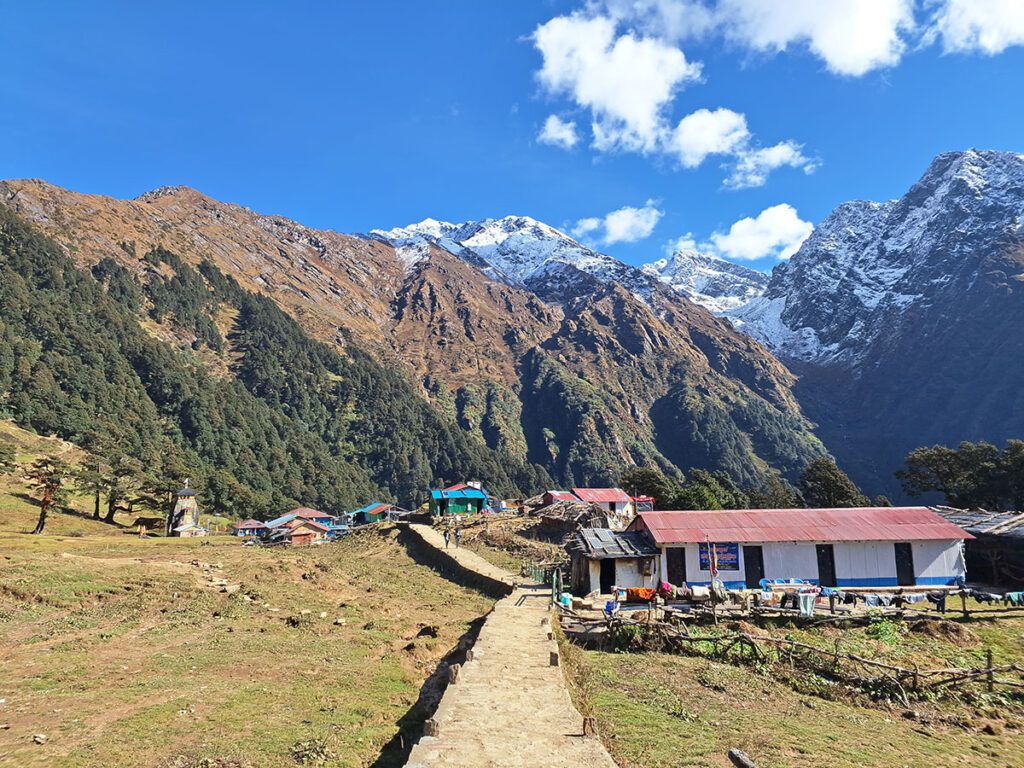
As Madmaheshwar Temple is located in a secluded area, the accommodation is mostly simple but cozy, aiming to offer a good night’s rest after your hike.
Guest Houses and Homestays: On the trekking trail, particularly in villages such as Gaundhar and at Madmaheshwar itself, you can find plain guest houses and homestays. These provide the opportunity to see village hospitality at its best and savor homemade meals.
Camping: Some trekkers also camp, particularly the lovely meadows around the temple. This provides a great experience of sleeping under the night sky of the Himalayas.
Ukhimath: If you want more hotels in place, Ukhimath, the winter home of the deity, has some. You can reside there and begin your trek to Ransi early morning.
Char Machan Resort (Guptkashi): A comfortable and popular resort in Guptkashi, which is a little distance away but has more facilities and easier access to other local sites of interest.
How to reach Madmaheshwar Temple?
Reaching Madmaheshwar Temple is an adventure unto itself! It is not a destination where you can drive in.
By Air: The closest airport is Jolly Grant Airport, Dehradun. From here, you’ll have to go by road.
By Rail: The closest railway station is Rishikesh. From Rishikesh, you’ll have to go by road.
By Road: You’ll drive by road to Ukhimath, and then on to Ransi village. Ransi is the last motorable spot. From Ransi, the adventure really starts!
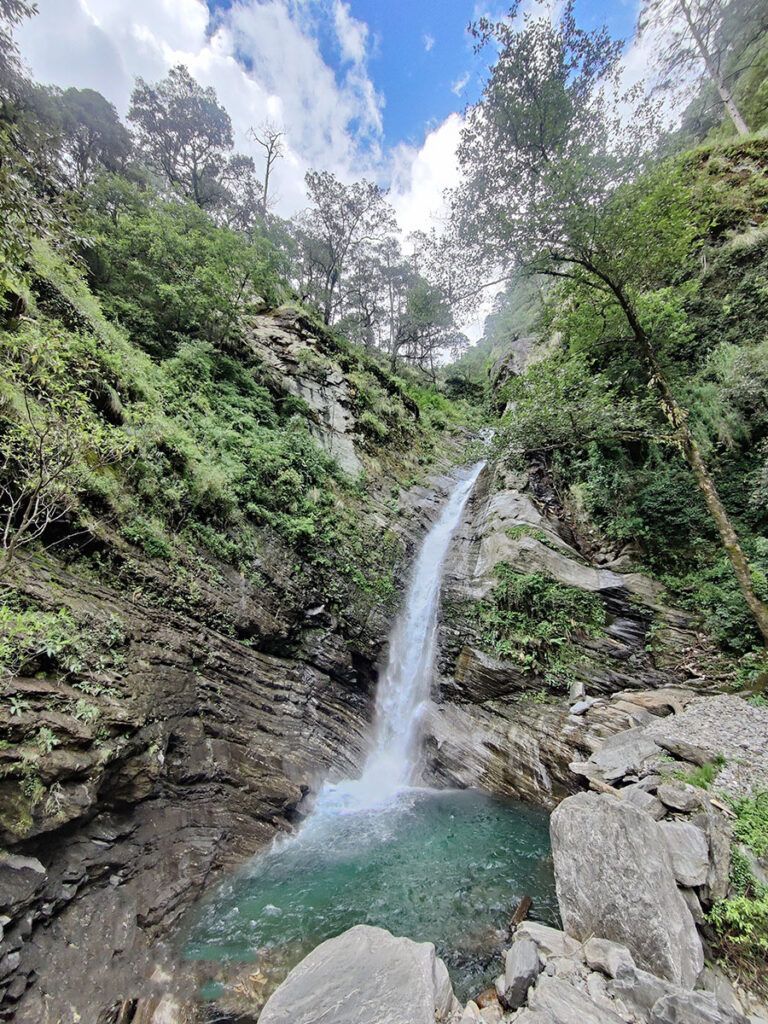
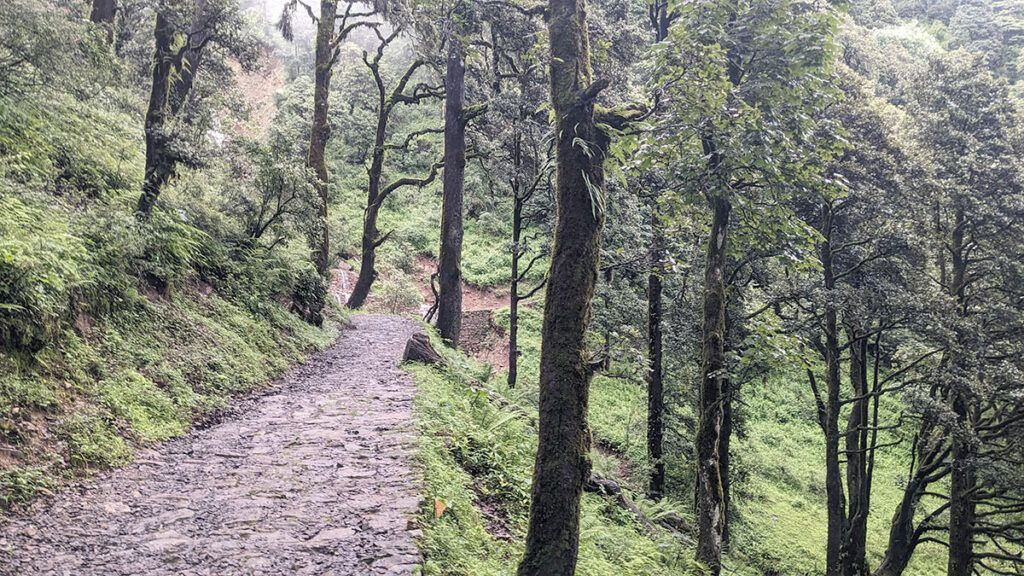
The Trek: From Ransi, it is a picturesque and moderately difficult trek of around 16-18 kilometers to Madmaheshwar Temple. The trek goes through quaint villages, dense forests, and lovely alpine meadows. The initial part of the trek, till Bantoli, is easy. But from Bantoli to Madmaheshwar Temple, the track gets tougher. It’s a trek that really pushes your spirit to the limit and repays you with stunning views and an immense feeling of achievement. Mules and porters are on hand if you want assistance with your baggage or find the trek too demanding.
My dear friends, a pilgrimage to Madmaheshwar Temple is not a journey; it’s an experience that will stay with you for eternity. It’s a walk into the soul of religion, nature, and age-old wisdom. The unassuming charm of the temple, the breathtaking views of the mountains, the serene ambiance, and the strong myths all come together to form an experience that will leave you with lifelong memories.