Bhadraj Temple Mussoorie: Famous Lord Balabhadra Temple
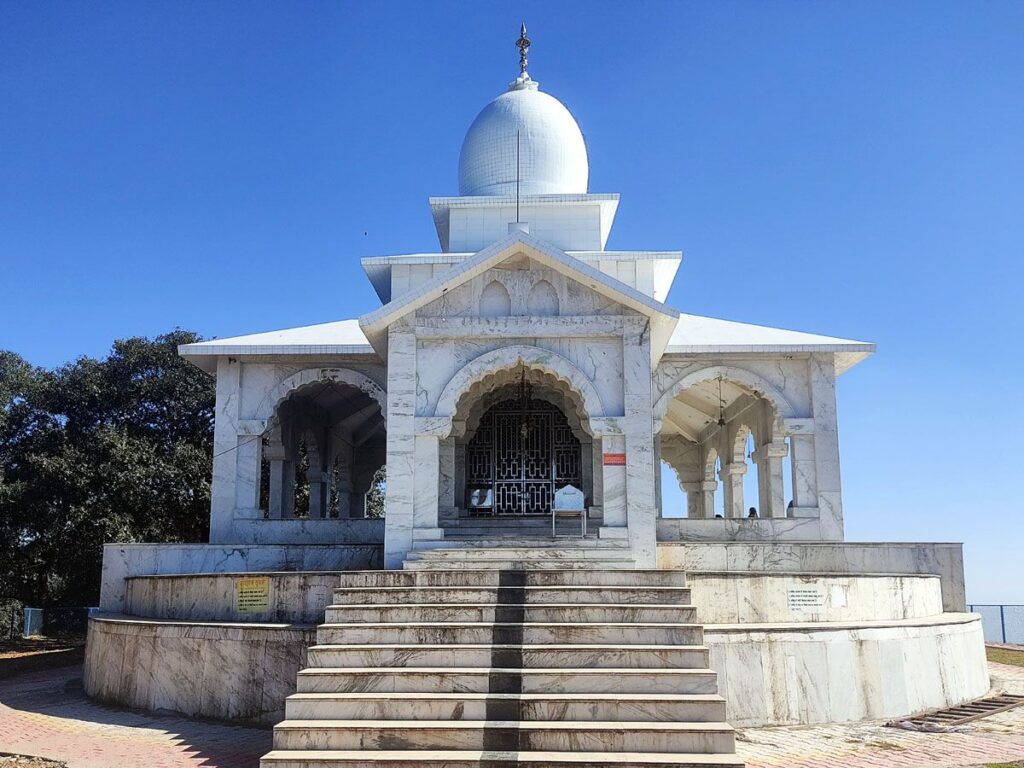
Bhadraj Temple: Sitting atop a hill summit, this temple has more than a stunning vista to offer; it has a deep sense of connection to a history and mythology that permeates the heart of the Garhwal Himalayas. Bhadraj Temple Mussoorie is not an assembly of stones and idols; it is a living, breathing monument of belief, a haven of tranquility, and a keeper of a vibrant cultural heritage.
Year after year, I have had the privilege of leading numerous visitors to this holy place. At each step of the trek, I see a change—the din and noise of urban life washing away, given way to the crisp mountain air and the soft voice of the wind rustling through the deodar trees.
The climb to the Bhadraj Temple is a necessary part of the journey, an exertion of the body that conditions the mind and spirit for the religious payback at the top. It is a place that beckons, not with a loud voice, but with a soft, insistent thrum that vibrates from the very ground beneath. So, let’s start our journey, from the meandering routes to the heavenly tales that render this temple a heaven on earth.
Bhadraj Temple History:
To properly comprehend the true nature of the Bhadraj Temple, we need to first look into its past. Although the temple’s history is shrouded in the fog of centuries, its existence has been a steady part of the lives of the people living around it for centuries. It is not a history written in majestic, written epics but one which is recorded within the memory of the community, from generation to generation.
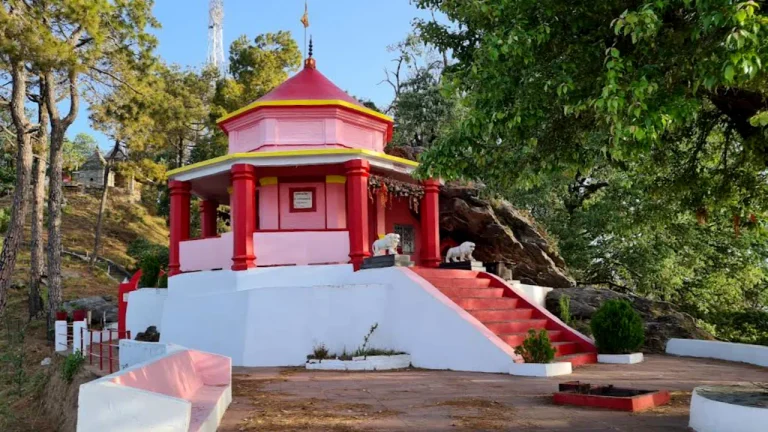
The present structure, a stunning marble temple, is a culmination of various renovations done over the years. Locals, however, are of the view that the original temple was much less elaborate, maybe a simple wooden temple, constructed by the locals to pay homage to Lord Bal Bhadra. The site itself, at a high elevation with a commanding view of the grand Doon Valley, was selected for its strategic and religious importance. In the days of yore, the lofty peaks like this were the residence of the gods, where the mortal world touched the heavens.
The temple history is the history of belief. For ages, pilgrims have undertaken the difficult journey to this holy hill, driven by the tales of Lord Bal Bhadra’s presence divine. The temple has been a silent witness to the shifting times—the vicissitudes of kingdoms coming and going, the arrival of the British, and the transformation of Mussoorie into a thriving tourist center. And yet, amidst all this, the spiritual sanctity of the Bhadraj Temple remained unscathed, a source of inspiration and solace for the hill people. It is a place reminding us of some things that never have or never will run out of date- like faith is.
Read More>> Badrinath Temple | Badrinarayan Temple
Legend of the Bhadraj Temple
The temple’s history is interesting, but its legend is what ultimately touches the heart and imagination. The Bhadraj Temple is devoted to Lord Bal Bhadra, better known as Lord Balram, the elder and greatly powerful brother of Lord Krishna. His legend in this place is one of penance, vow, and divine protection.
As per the local lore, Lord Balram was deeply perturbed following the cataclysmic Kurukshetra war as told in the Mahabharata epic. He had decided to keep clear of both sides, as they were both dear to him–the Pandavas led by his brother Krishna and the Kauravas with his disciple Duryodhana at their head. The carnage and the ethical complexities of the war troubled his mind. Looking for peace and consolation, he abandoned his kingdom and set out on a pilgrimage of penance. His search for a peaceful location took him to the peaceful hills of the Garhwal area.
He discovered the ideal location, a site of deep serenity, in an area called Binhar. The land was filled with simple-hearted shepherds who took care of their cattle and life in harmony with nature. They were captivated by the divine presence of Lord Balram and offered him their utmost respect and hospitality. In return, a master of warfare and physical prowess, who is Lord Balram, taught them various fighting techniques and blessed their land. Having fulfilled his obligations in the kingdom, Lord Balram prepared to leave for Badrinath. He gave his word to the Binhar people that he would come back as a divine stone to save them and their country from all evil.
Years go by, and a local man, Nandu Mehra, was digging on the banks of the Yamuna River in search of medicinal plants. He heard a voice from above calling out to him, telling him to dig up a sacred idol. He was scared but, accompanied by his friends, he dug and found a heavy stone statue of Lord Balram. The voice then directed him to carry the idol and set it at the topmost peak where it would become weighty, indicating its heavenly dwelling.
Nandu Mehra was astonished to see that the idol, which was heavy initially, miraculously lighted. However, when he reached the top of the very hill where Lord Balram had sat in meditation, the idol turned out to be impossibly heavy. He knew this was the sacred place. And hence, the Bhadraj Temple was established, fulfilling the divine promise and forever cementing the bond between the deity and his devoted followers.
Cultural, Spiritual, and Mythological Importance
The Bhadraj Temple Mussoorie is more than just a religious site; it is a cultural and spiritual heartbeat for the entire region. The people of the Garhwal hills hold a deep reverence for Lord Bal Bhadra, whom they consider to be the protector of their community, their crops, and their livestock. The god is a symbol of good fortune and strength, and blessings are requested for an abundant yield and peaceful life in the difficult mountainous region.
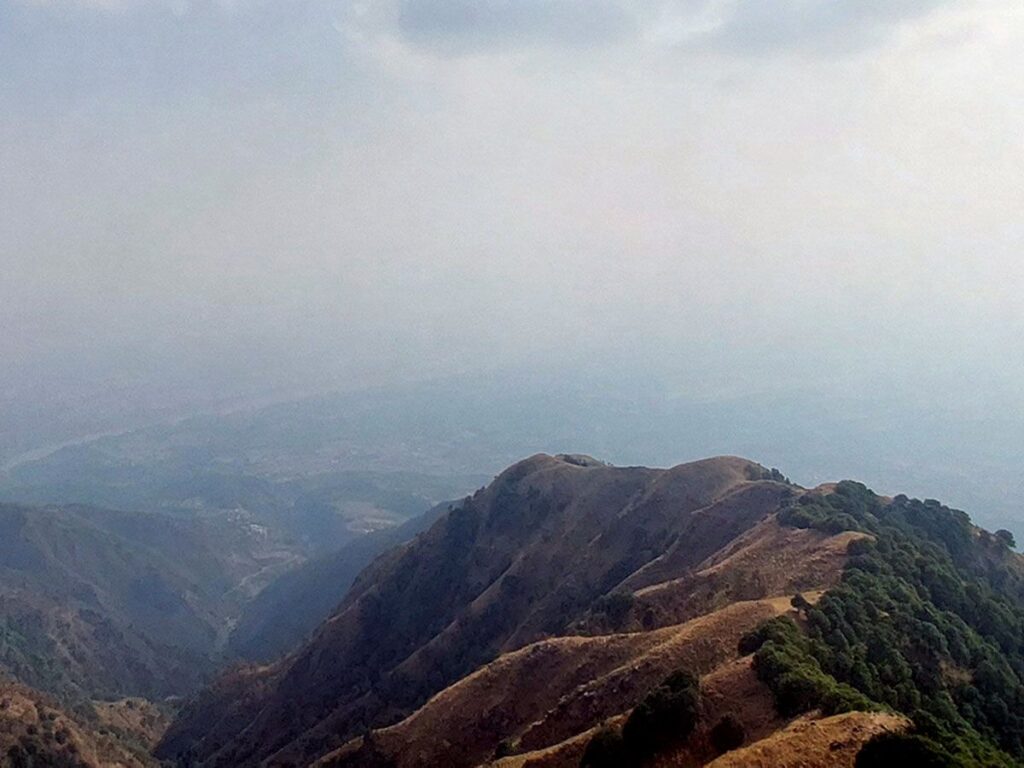
Spiritually, the temple is a haven of deep tranquility. Its remote position, far from the tourist throngs of Mussoorie, also makes it a suitable place for meditation and contemplation. The expansive horizons of the surrounding hills and the snow-capped Himalayan ranges, with prominent peaks such as Bandarpoonch and Swargarohini, fill one’s heart with awe and humility. The air is permeated with a “spiritual vibration” which can be discerned by any one who comes here with an open heart.
One common belief with pilgrims is that praying with a clean heart while at the Bhadraj Temple and making wishes can come true, reminiscent of the pilgrimage to the sacred Badrinath Temple. This has attracted thousands of pilgrims who venture on the demanding trek with hopeful and devoted hearts. The practice of serving milk, butter, and ghee to the god here is a special ritual in that these items represent purity, prosperity, and the agricultural harvest that Lord Bal Bhadra is said to guard.
From a mythological perspective, the temple’s association with Lord Balram positions it squarely in the large narrative of Hindu epics. Though the Puranas and other Hindu scriptures do not specifically mention this temple, they amply describe the life and divine authority of Lord Balram. Being the elder brother of Lord Krishna, he is worshiped as a great strongman, master of the mace (gada), and god of agriculture and fertility (represented by his weapon, the plough).
The worship of Lord Bal Bhadra at this temple, therefore, is a direct continuation of these ancient traditions and a way for the local people to connect with these mythological roots. The temple stands as a testament to the enduring power of these mythological tales in shaping the spiritual lives of people today.
Read More>> 2500 Years Dwarkadhish Temple: Where Miracles Still Happen
Festivals, Special Days, and the Bhadraj Fair
The calendar of the Bhadraj Temple follows a few important dates which pep up the serene hilltop. Among them is the Bhadraj Fair, an animated and festive event, which fills the hilltop with thousands of pilgrims as well as visitors. The fair takes place each year between August 15th and August 17th.
Over these three days, the entire hilltop is converted into a packed center of activity. Now, the air filled with the sounds of nature is covered alive with the rhythmic beats of local drums and the melodic tunes of folk songs and chatty pilgrims. The fair is not merely a religious event but also a celebration of the folk culture and local heritage of the Garhwal region. People from surrounding villages, and even from far-off states like Haryana and Punjab, flock here to offer their prayers and participate in the festivities.
The deity is subjected to special poojas and rituals. The deities are bathed with the sacred offering of milk. Here, it is washed with milk, which denotes prosperity and purity. The fair is an occasion on which local artisans and vendors set up stalls. They sell anything from handicrafts to the local delicacy.
It should be noted that the Bhadraj Temple Mussoorie is most crowded at this fair. If you like to be in a crowded, festive environment and want to see the rich cultural heritage of the area, then this would be the best time to visit. But if you are looking for a peaceful, serene, and contemplative experience, it would be advisable for you to plan your trip another time of the year.
Apart from the annual fair, other important days like Janmashtami (Lord Krishna’s birthday) are also celebrated with devotion, as the temple is dedicated to his brother. The spiritual energy is high on these days, making for a truly memorable visit.
Unique Architectural Styles and Carvings
The Bhadraj Temple architecture is a breathtaking structure of the typical North Indian temple style with specific local color.
In the overall constructions, the temple has been renovated several times. However, its inner framework and design remain intensely spiritual.
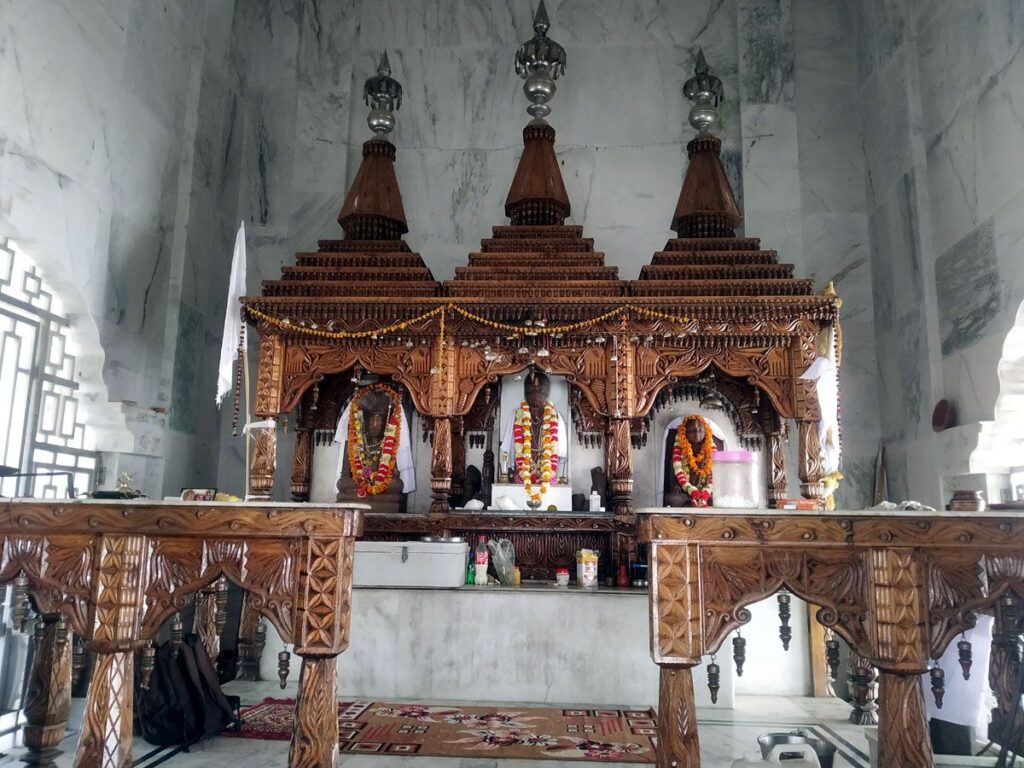
The sanctum sanctorum, commonly known as garbhagriha in the temple, is a small square-room that houses the leading idol of Lord Bal Bhadra. It is a humble and dark chamber, designed to focus the devotee’s mind entirely on the divine presence within. In front of the garbhagriha is a spacious hall, or mandapa, supported by four sturdy pillars. The ceilings of this hall are often adorned with paintings and carvings that depict scenes from Hindu mythology, which adds a layer of artistic and spiritual depth to the space.
The entrance to the temple is marked by a carved stone gateway, or torana, a feature common in many ancient temples. The carvings on this gateway, as well as on the temple’s outer walls, are a blend of traditional Hindu iconography and local folk art. Others have indeed even commented on the existence of what they perceive to be minor Buddhist influences in certain of the art motifs, testifying to the long historical cultural cross-pollination that exists within the Himalayan area.
The other interesting feature of the temple’s structure is a smaller shrine to Lord Shiva located on the left side of the main mandapa. This shrine has an independent roof, which is in pyramid shape, and has a Shiva Lingam inside it, showing that local worship is syncretic by nature so that multiple deities could be worshipped in a single sacred space. The beauty of this temple lies in its simplicity and elegance as well as its intricate carvings. It is indeed a beautiful example of Himalayan temple architecture.
Read More>> Yadagirigutta Temple: Where Lord Narasimha (Vishnu incarnation of Lion faced) Comes Alive in 5 Forms
Myths and Legends of Bhadraj Temple
The Bhadraj Temple Mussoorie is a treasure of local legends and myths passed on from generations. These myths give an otherworldly and nearly magical dimension to the spiritual mystique of the temple.
One of the most talked-about myths is the existence of hidden treasures in the vicinity of the temple. Legend has it that these treasures were left behind by ancient sages or even the gods themselves, and they are guarded by powerful, divine spirits. While no one has ever found this treasure, the belief adds an element of intrigue and adventure to the trek.
Another deeply held belief is in the temple’s miraculous powers. Many devotees, both local and from other parts of the country, have shared stories of how their sincere prayers at the temple led to unexpected healings, the fulfillment of wishes, and the resolution of long-standing problems. The temple is seen as a source of hope and divine intervention, a place where the gods listen closely to the pleas of their devotees.
Some visitors have also reported a feeling of an “otherworldly” presence or a unique, serene energy around the temple, especially during sunrise or sunset. The combination of the tranquil natural environment and the rich spiritual history of the place creates an atmosphere that many find profoundly moving and almost mystical. The locals believe that the entire hill is enveloped in a protective spiritual shield, a direct result of Lord Bal Bhadra’s long-standing presence and divine promise.
Bhadraj Temple Timings and Pooja Details
The Bhadraj Temple is unique in its accessibility. As it is a trekking destination and a pilgrimage site on a mountaintop, the temple is generally accessible to devotees throughout the day. While some sources may mention specific timings, the truth is that it does open up and welcomes everyone. However, it is always a good idea to start your trek early in the day to ensure you have enough time to complete the journey and spend some quality time at the temple before it gets dark.
The primary pooja here involves offering milk, butter, and ghee to the idol of Lord Bal Bhadra. It is a simple but deeply symbolic act of devotion. Devotees often carry these items with them on their trek to offer to the deity. The main poojas and rituals are, of course, performed with much fanfare during the annual Bhadraj Fair in August.
It’s important to remember that since this is a remote location, there might not be a full-time priest present. However, during the fair and on other special occasions, you will find priests and locals who are more than happy to guide you through the rituals. The true essence of the worship here lies in the simplicity of the offering and the purity of the heart with which it is made.
Read More>> 5th CE Yaganti Temple with Mysteries
Bhadraj Temple Timing & Rituals:
The Bhadraj Temple is unique in its accessibility. As it is a trekking destination and a pilgrimage site on a mountaintop, the temple is generally accessible to devotees throughout the day. While some sources may mention specific timings, the truth is that it does open up and welcomes everyone. However, it is always a good idea to start your trek early in the day to ensure you have enough time to complete the journey and spend some quality time at the temple before it gets dark.
The primary pooja here involves offering milk, butter, and ghee to the idol of Lord Bal Bhadra. It is a simple but deeply symbolic act of devotion. Devotees often carry these items with them on their trek to offer to the deity. The main poojas and rituals are, of course, performed with much fanfare during the annual Bhadraj Fair in August.
It’s important to remember that since this is a remote location, there might not be a full-time priest present. However, during the fair and on other special occasions, you will find priests and locals who are more than happy to guide you through the rituals. The true essence of the worship here lies in the simplicity of the offering and the purity of the heart with which it is made.
Accommodation Options
Since the Bhadraj Temple is on a remote hilltop, there are no large hotels or resorts right at the summit. However, for those who wish to spend a night close to the divine, there are a few options.
Many trekkers choose to camp near the temple premises, which is a popular option. The open grasslands near the temple offer several spots for setting up a tent. Waking up to a breathtaking sunrise over the Himalayas from this vantage point is an unforgettable experience.
For those who prefer a more comfortable stay, there are small guesthouses and homestays in the nearby villages that offer basic but clean accommodation.
The most convenient option for the majority of tourists is to reside in Mussoorie itself. The “Queen of Hills” provides an array of accommodation facilities that can be found to suit every pocket, ranging from five-star hotels to simple guesthouses. It is possible to easily begin the trek early in the morning and return in the evening, thus it is an ideal day trip from Mussoorie.
Read More>> Vidyashankara Temple Sringeri 12 Pillars Reveal Your Destiny
Places to visit near Bhadraj Temple:
A trip to the Bhadraj Temple Mussoorie can be a great starting point for exploring other spiritual and natural wonders of the region. Here are a few tourist places you might want to consider:
Jwala Devi Temple: Situated on a hilltop near Mussoorie, this temple is dedicated to the Goddess Durga. The trek to this temple is also rewarding, and the views from the top are spectacular.
Nag Devta Temple: A well-known temple dedicated to the snake deity, Nag Devta, this temple is located on the Cart Road in Mussoorie. It is an important place of worship for the local population and is believed to offer protection from all evils.
Sir George Everest House: Not really a religious place, it is a historical building and observatory. One of the most famous surveyors, Sir George Everest’s house, gives panoramic views of Doon Valley and Himalayan peaks. The historical significance of this place adds to its charm.
Benog Wildlife Sanctuary: Nature lovers and trekkers can enjoy paradise here. This sanctuary is located in the Benog Hill range, having beautiful trails which also offer bird watching and diverse flora fauna.

How to Get to the Bhadraj Temple
The Bhadraj Temple Mussoorie is reached via an adventure that forms part of the pilgrimage. The trek is the main method of getting there, and it is sometimes called the “Milkman’s Trail,” named so due to the fact that it’s the path followed by the local milkmen to deliver milk to the town of Mussoorie.
By Air: The nearest airport is Jolly Grant Airport in Dehradun, which is about 60 kilometers away. From there, you can hire a taxi to Mussoorie, which is the starting point for your trek.
By Train: The nearest major railway station is the Dehradun Railway Station. From Dehradun, a scenic one-hour drive will take you to Mussoorie.
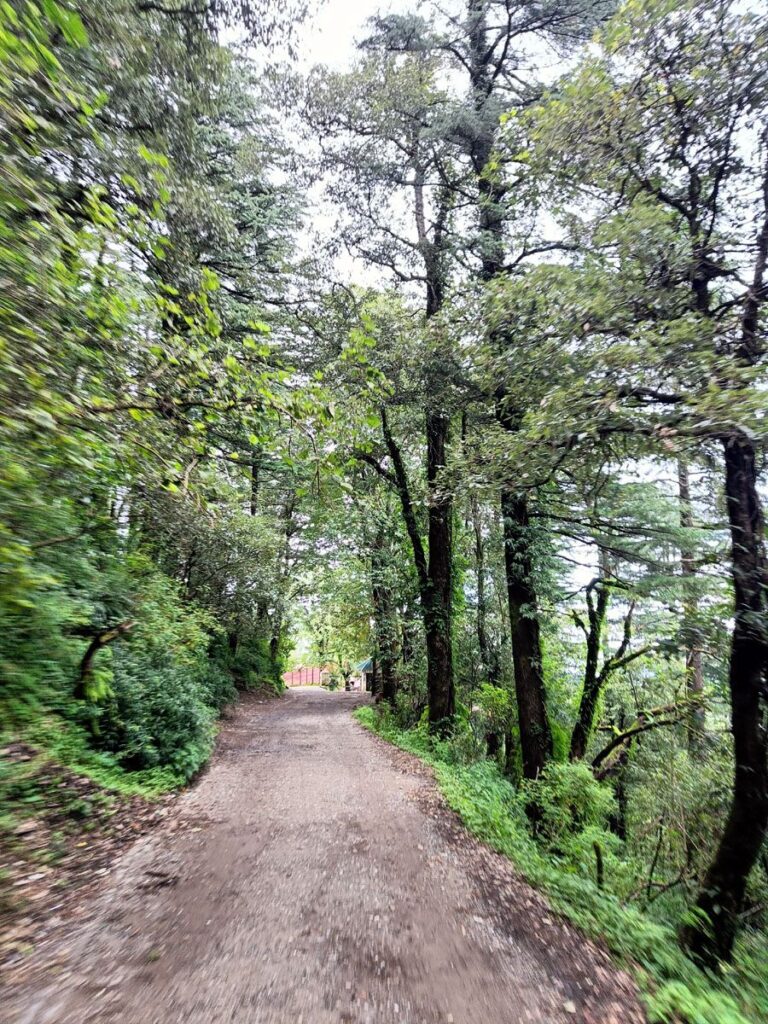
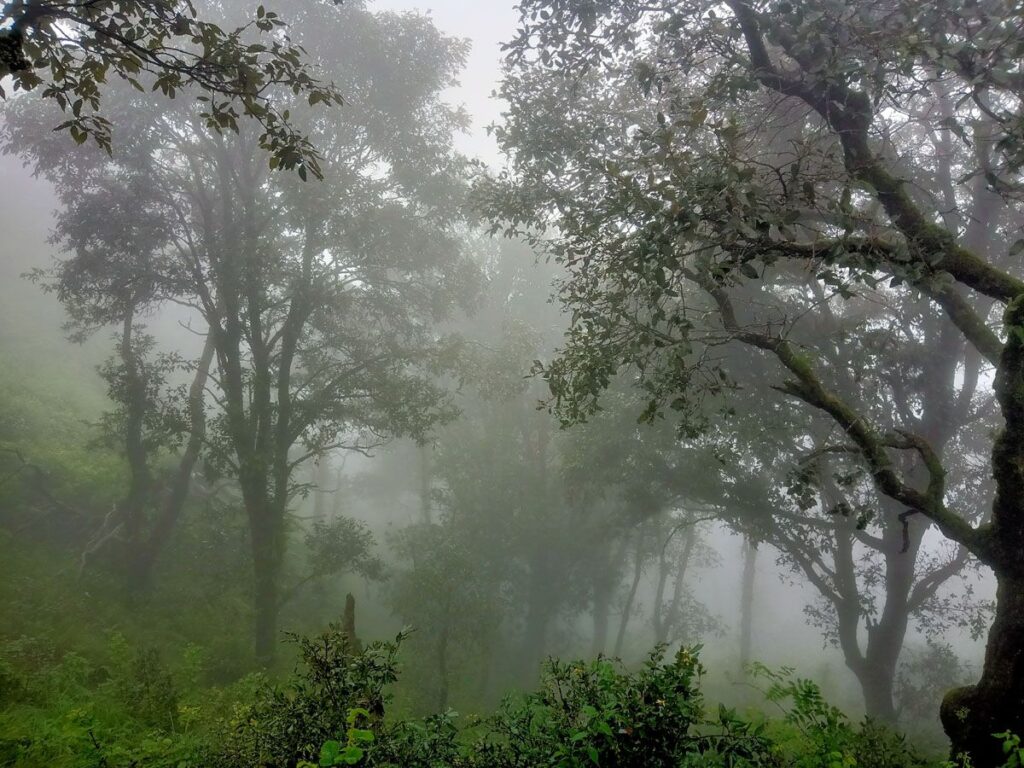
By Road: Mussoorie is well-connected by road from all major cities in North India. Once you reach Mussoorie, you mostly find the trail to the temple starting from a place named Cloud’s End. The distance of trek from Cloud’s End up to the temple goes around 11-15 kilometers, and the time taken for this would be roughly between 4 and 6 hours according to your fitness level and your pace. The trail is well-defined and passes through dense forests of oak and deodar, offering breathtaking views of the Doon Valley and the Yamuna River.
There is also an alternative route from a village called Dudhli, which is a shorter and steeper trek. Many people choose to drive up to Dudhli and then start their climb from there. Whichever route you choose, the trek is of moderate difficulty and is suitable for anyone with a reasonable level of fitness. I would always recommend hiring a local guide, as their knowledge of the trail, local flora and fauna, and the rich history of the area can make your journey much more enriching.
Read More>> Venugopala Swamy Temple Kannambadi: Lost for Decades Under Water
Frequently Asked Questions (FAQs)
Q. What is the best time to visit Bhadraj Temple?
A. The best time to visit is from April to June and September to November, when the weather is pleasant for trekking. If you want to experience the vibrant Bhadraj Fair, plan your trip for August 15th to 17th.
Q. Is the trek to the temple difficult?
A. This is a moderate treck. Though it is done easily by beginners at an average level of fitness, the climb can be tuff on some parts.
Q. What shall I pack for the treck?
A. You must bring comfortable trekking shoes, a water bottle, snacks, a light jacket, and a camera. Packing a small first-aid kit is always a good idea, and it’s recommended that you hire a local guide.
Q. Are there any limitations at the temple?
A. The temple is a sacred place, and it is important to dress modestly and behave respectfully. There may also be rules about not bringing footwear inside the temple premises, which you must follow. I hope this guide has provided you with the information you need to plan your own pilgrimage to Bhadraj Temple. The journey is one of immense beauty and spiritual growth, and I must believe it is going to be an experience you will cherish till the end of eternity. May peace and good fortune be blessed upon your path.