Bhadraj Temple Mussoorie: Complete Trek Route, History, and Pilgrim Guide
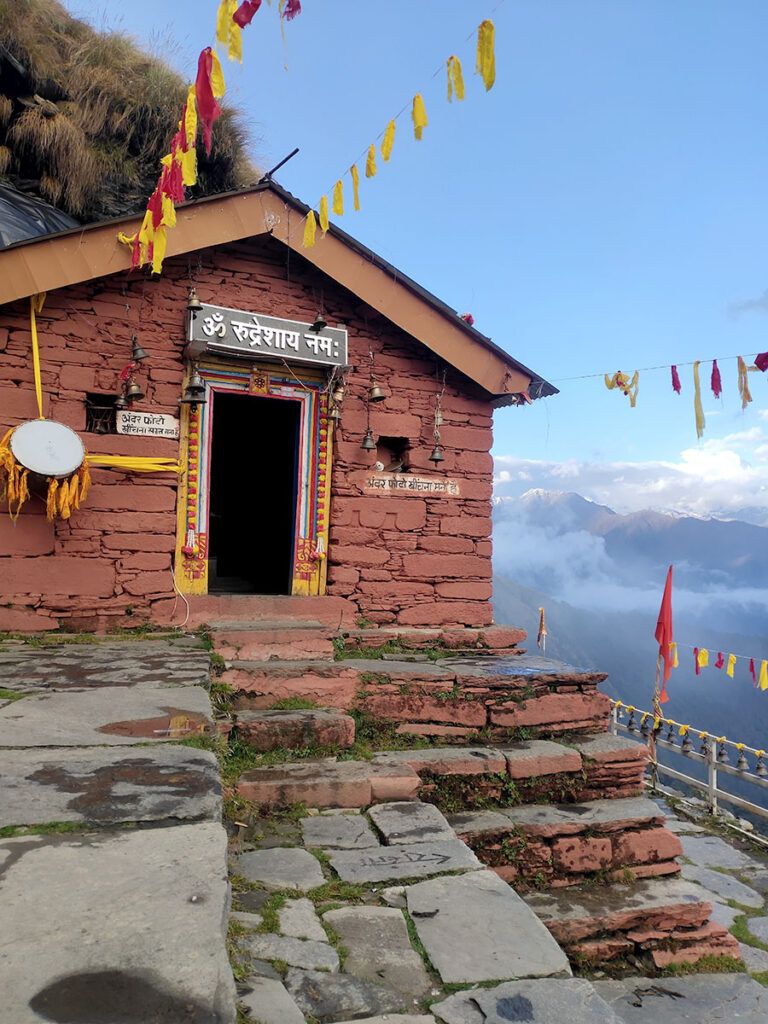
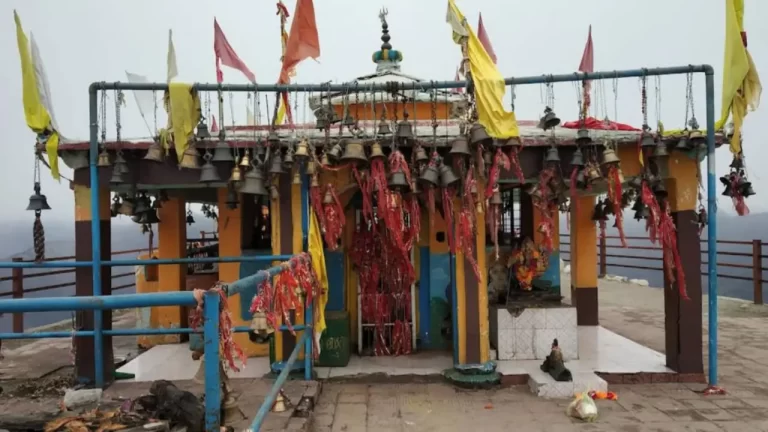
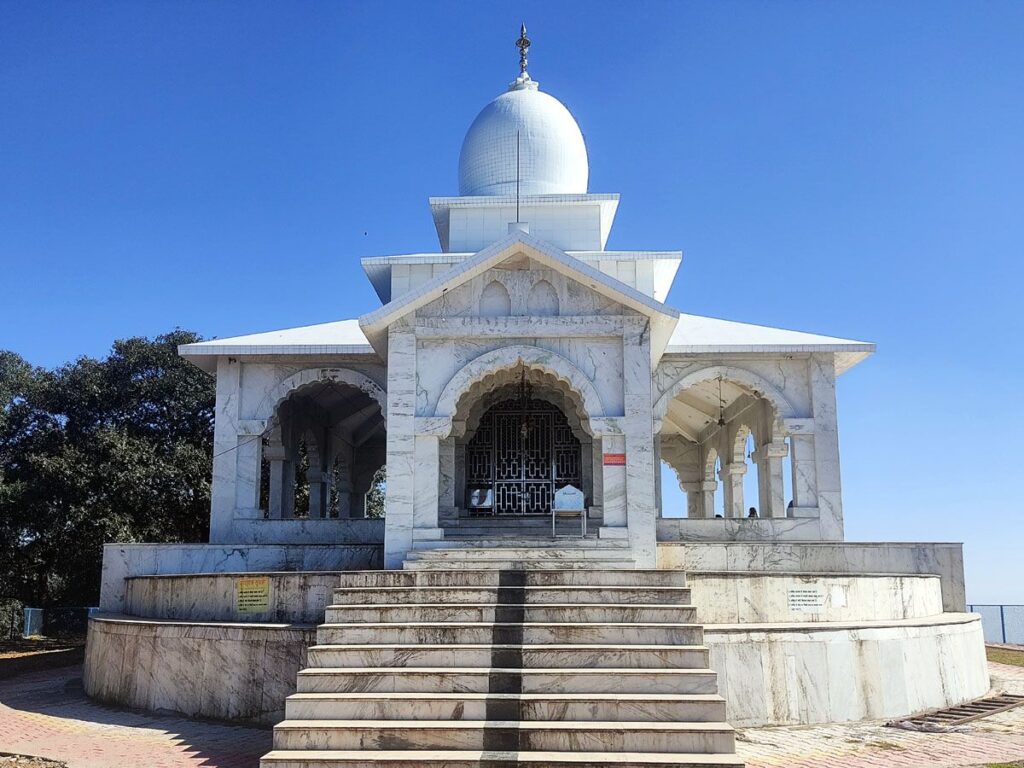
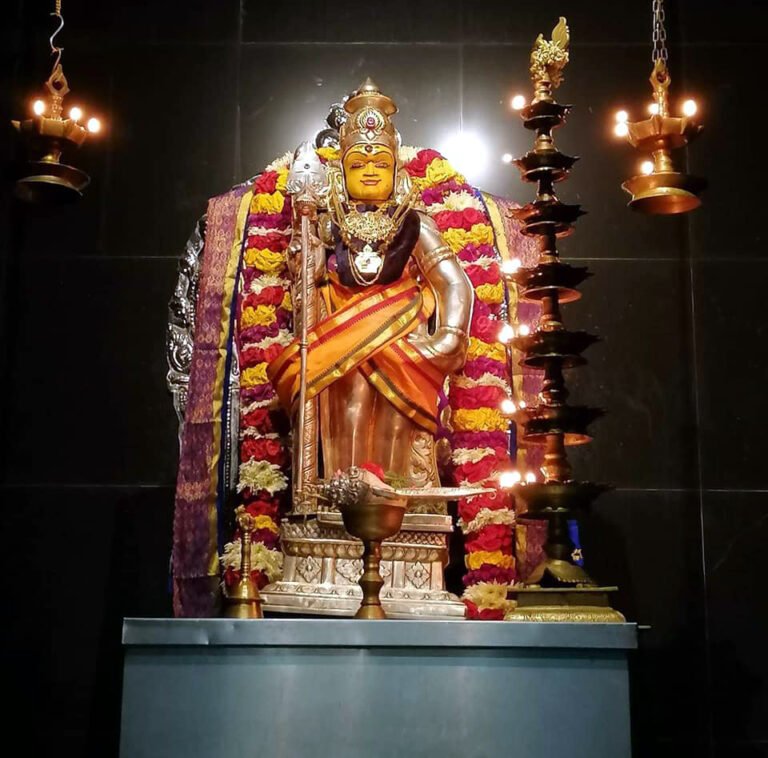
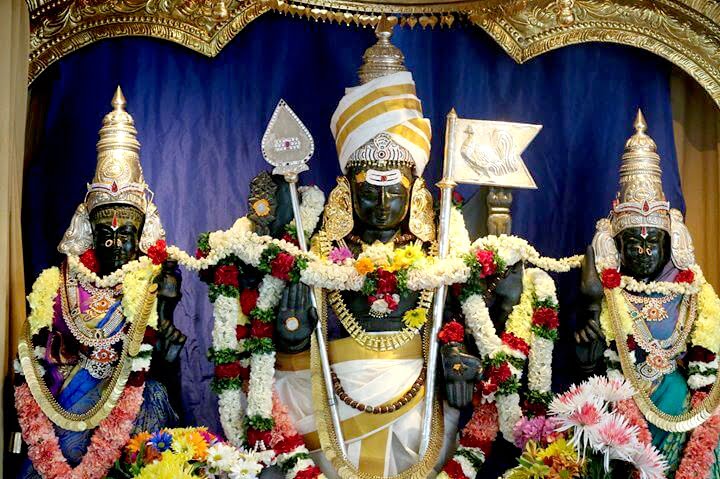
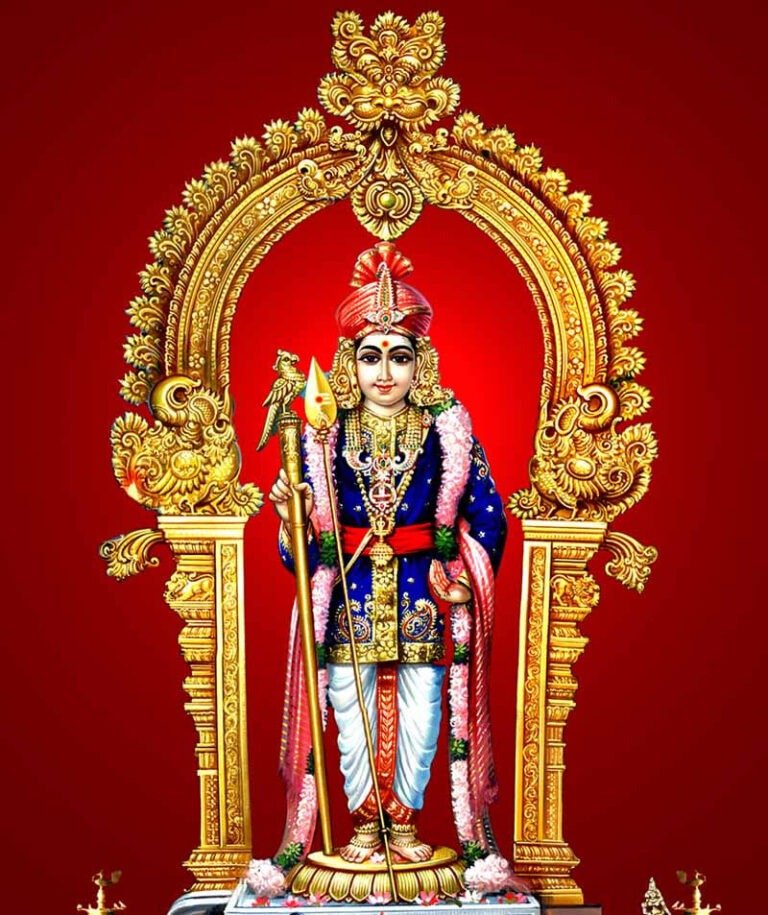
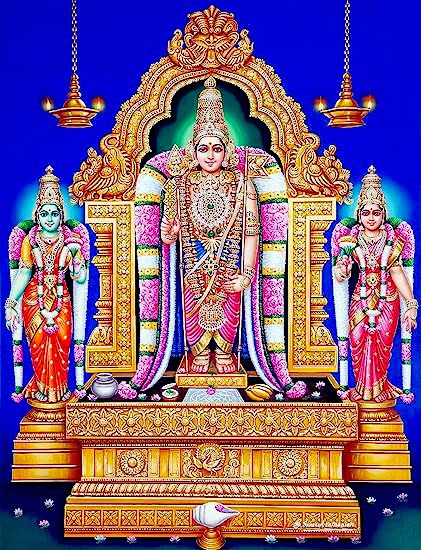
Perched at an elevation of roughly 2,200 meters (7,200 feet) on the western edge of the Mussoorie ridge, Bhadraj Temple is one of the rare Himalayan shrines dedicated to Lord Balbhadra (Balarama), the elder brother of Lord Krishna. Revered across the Garhwal and Jaunsar-Bawar regions as the supreme guardian deity of livestock and agriculture, the shrine stands atop a solitary mountain peak offering sweeping views of the Doon Valley, the silver ribbons of the Yamuna and Asan rivers, and the snow-capped summits of the upper Garhwal Himalayas.
Reaching the temple requires an invigorating walk through dense oak and cedar forests followed by a dramatic open grassland ridge. Whether you come as a devoted pilgrim seeking the blessings of Lord Balbhadra or as a nature enthusiast hiking along the trails of the Benog Wildlife Sanctuary, this guide provides the verified history, unique milk-and-butter rituals, trail distances, darshan timings, and practical advice you need for a safe and rewarding journey.
Quick Information: Bhadraj Temple at a Glance
| Feature | Details |
| Temple Name | Bhadraj Temple (Bhadraj Devta Mandir) |
| Main Deity | Lord Balbhadra / Balarama (Elder brother of Lord Krishna) |
| Location | Bhadraj Hill, beyond Cloud’s End, Dehradun District, Uttarakhand, India |
| Elevation | Approximately 2,200 meters (~7,200 feet) above sea level |
| Temple Timings | Sunrise to Sunset (approx. 6:00 AM – 6:30 PM daily) |
| Best Time to Visit | October to March (crisp views); August 15–17 (Annual Bhadraj Fair) |
| Trek Distance | ~7.5 to 8 km one-way from Cloud’s End (approx. 15–16 km round trip) |
| Trek Difficulty | Easy to Moderate (gentle ridge walk with a steady final ascent) |
| Starting Points | Cloud’s End (classic forest trail) or Dudhli Village (shorter, steeper trail) |
| Nearest Town / City | Mussoorie (~15 km to Cloud’s End); Dehradun (~40 km to Cloud’s End) |
| Nearest Railway Station | Dehradun Railway Station (approx. 40 km from base) |
| Nearest Airport | Jolly Grant Airport, Dehradun (approx. 68 km from base) |
| Entry Fee | Free entry; no advance booking required |
| Special Offerings | Fresh cow’s milk, homemade white butter (Makhan), and pure ghee |
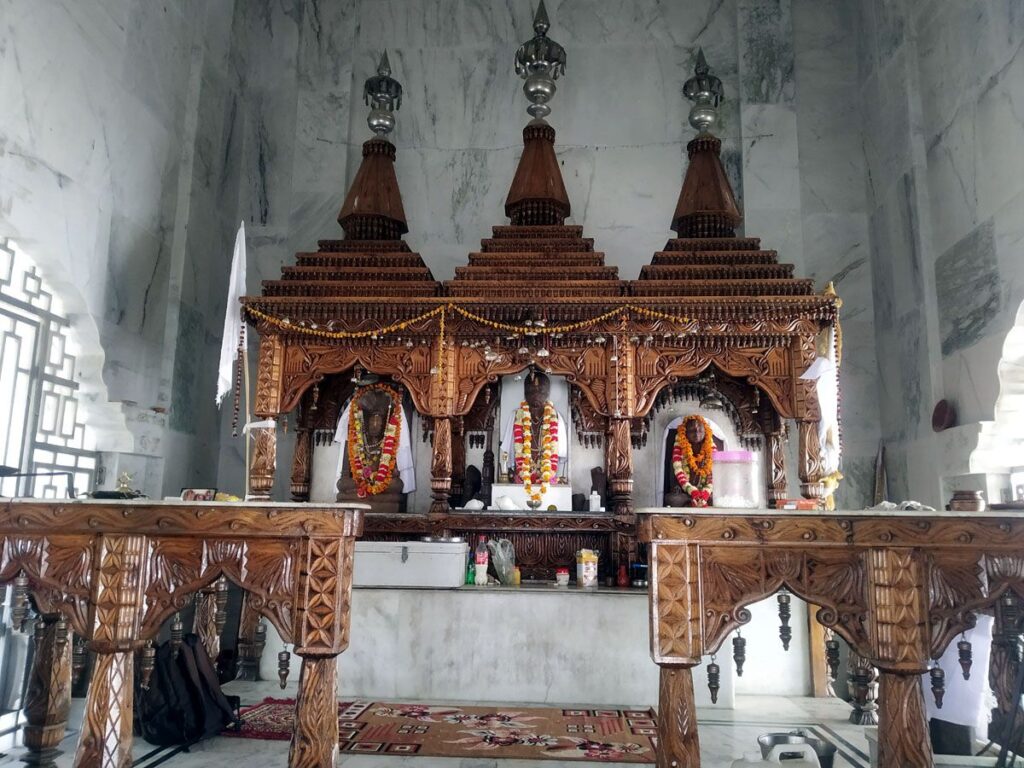
Religious Significance: Why Lord Balarama is Worshipped in Garhwal
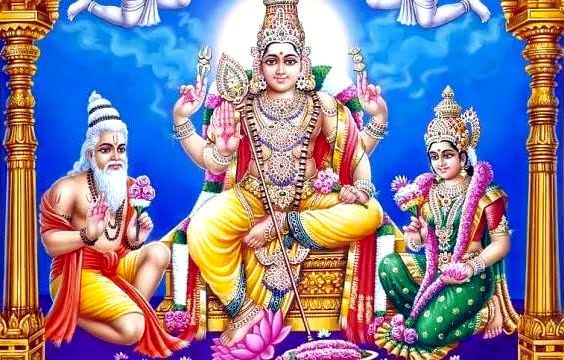
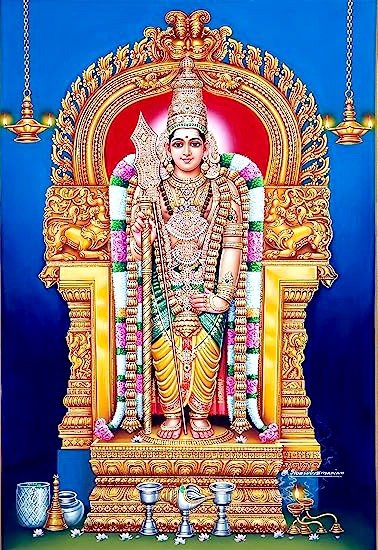
While temples dedicated to Lord Krishna and Lord Shiva abound across Uttarakhand, independent shrines honoring Lord Balarama are exceptionally rare in the northern Himalayas. In traditional Hindu iconography and theology, Balarama wields the plough (Hala) and the pestle (Musala), embodying agricultural abundance, physical vitality, fertility of the soil, and guardianship over domestic herds.
In the local cultural belt spanning Jaunsar-Bawar and lower Garhwal, villagers affectionately address the deity as Bhadraj Devta. He is regarded not as a distant mythological figure, but as an active, living protector of village cattle (Pashudhan).
For centuries, farming communities in surrounding settlements like Dudhli, Kempty, and Chhaskhet have placed their herds under his care. When a milch cow or buffalo gives birth, tradition dictates that the very first yield of milk, along with freshly churned butter, must not be consumed by the household. Instead, it is gathered, carried up the mountain trail, and offered directly to Lord Balbhadra at the summit shrine as a thanksgiving for the family’s health and agricultural prosperity.
Read More>> Badrinath Temple | Badrinarayan Temple
Ancient Legend and Sthala Purana of Bhadraj Hill
According to local oral traditions passed down through generations, the origins of Bhadraj Hill date back to the conclusion of the Mahabharata War during the Dvapara Yuga.
Having witnessed the immense destruction of the war at Kurukshetra, Lord Balarama chose to undertake extended pilgrimages across sacred mountain ranges to perform penance and meditation. Legend recounts that during his wanderings through the central Himalayas, he was drawn to this serene, isolated ridge standing tall above the Yamuna basin. He spent time here in quiet communion with nature, sanctifying the high peak with his presence.
In later centuries, local cowherds grazing their cattle along the forested hills observed their most productive cows voluntarily discharging milk over a specific cluster of rocks on the ridge summit. When the villagers investigated, they discovered a sacred stone manifestation representing Balbhadra. Recognizing the divine presence of the Lord of the Plough, the community built a humble stone sanctum at the spot. Over the years, that rustic structure was restored and developed into the clean, whitewashed marble and stone temple complex that stands today.
Read More>> 2500 Years Dwarkadhish Temple: Where Miracles Still Happen.
The Annual Bhadraj Mela: A Celebration of Pastoral Devotion
Every year, between August 15 and August 17 (coinciding with the transition into the sacred Hindu month of Bhadrapada / Shravan Sankranti), the solitary ridge transforms into an energetic cultural hub during the Bhadraj Mela.
Hundreds of villagers from neighboring Garhwali valleys and the Jaunsari tribal belt gather on the mountaintop. Dressed in traditional woolen waistcoats, colorful scarves, and festive attire, devotees carry bronze pots brimming with fresh milk and containers filled with pure white butter.
Key elements of the fair include:
- Abhishekam with Fresh Dairy: Devotees bathe the sanctum deities with gallons of fresh milk, praying for the protection of their animals against sickness and natural predators.
- Traditional Prasad Distribution: Unlike urban temples where sugar-laden sweets dominate, the primary prasad at Bhadraj consists of raw cow’s milk, buttermilk, and freshly churned butter (Makhan), consumed with deep reverence.
- Folk Music and Community Dances: The mountaintop echoes with the rhythm of the Dhol-Damau (traditional Garhwali drums) and Ransingha (horns), with elders and youth joining hands in traditional circle dances.
If you plan to attend during the mela days, be prepared for substantial crowds, vibrant folk traditions, and sudden monsoon showers across the ridge.
Read More>> Yadagirigutta Temple: Where Lord Narasimha (Vishnu incarnation of Lion faced) Comes Alive in 5 Forms.
Bhadraj Temple Trek: Route Breakdown and Logistics
Reaching Bhadraj Temple is one of the most rewarding day hikes in the Mussoorie region. Because no motorable roads lead to the top, every visitor experiences the gradual transition from shadowed oak groves to panoramic alpine meadows on foot.
There are two primary routes to reach the shrine.
Route 1: The Classic Trail via Cloud’s End (Recommended for Hikers)
- Starting Point: Cloud’s End Heritage Resort gate (~7 km west of Library Chowk / Gandhi Chowk, Mussoorie)
- Trek Distance: Approx. 7.5 to 8 km one-way (15 to 16 km round trip)
- Time Required: 5 to 6 hours for the full round trip (including darshan and rest)
- Trail Description:
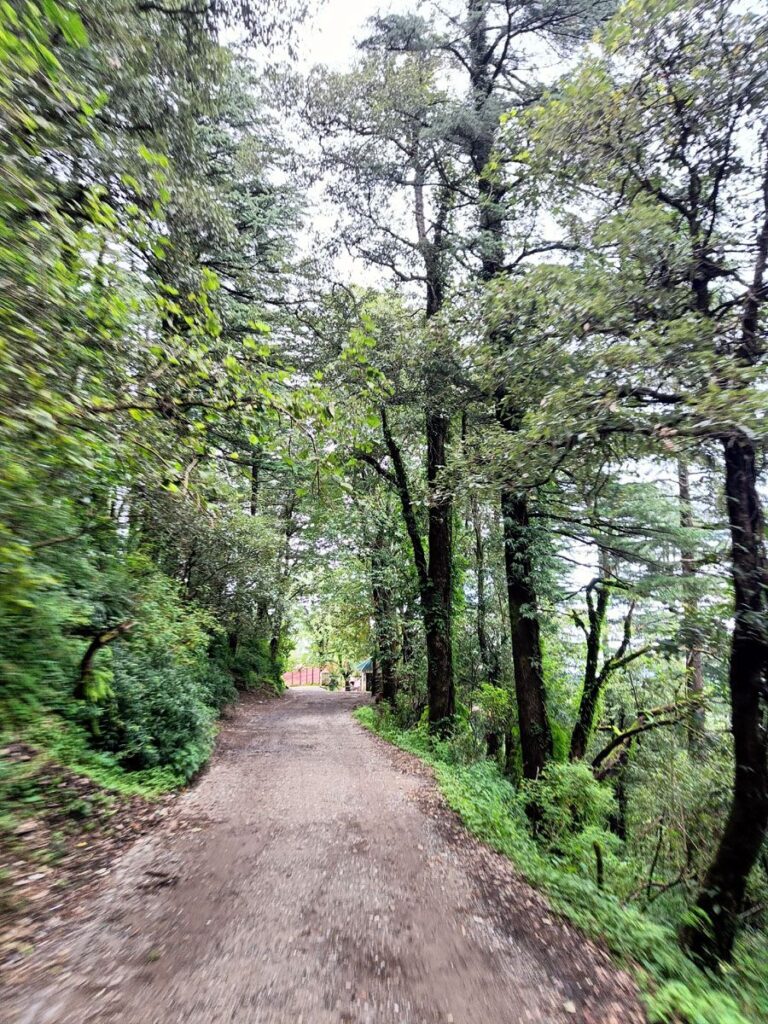
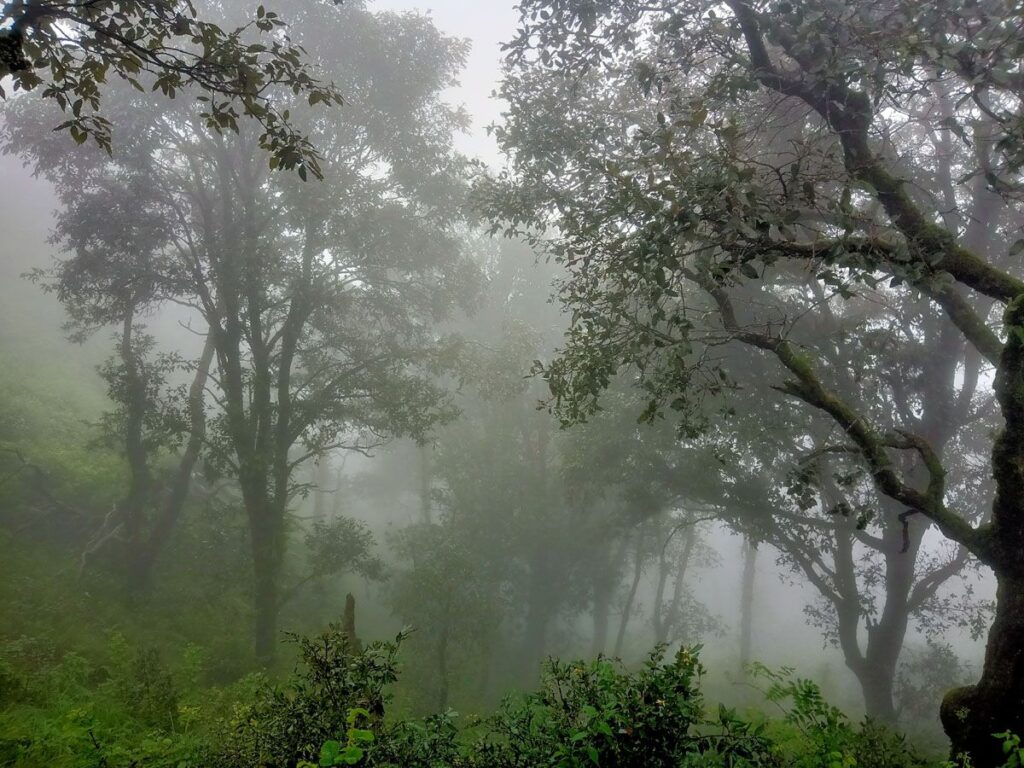
- Forest Section (First 3 km): The trail begins behind the historic Cloud’s End property, passing through a protected sanctuary buffer zone filled with towering Himalayan oak (Banj), blue pine, and deodar trees. The path is broad, well-defined, and gently undulating.
- Dudhli Ridge Approach (Next 2.5 km): The thick forest gradually yields to open country as you skirt the higher contours of Dudhli village. Here, grazing horses and cattle can often be seen against the backdrop of distant terraced farms.
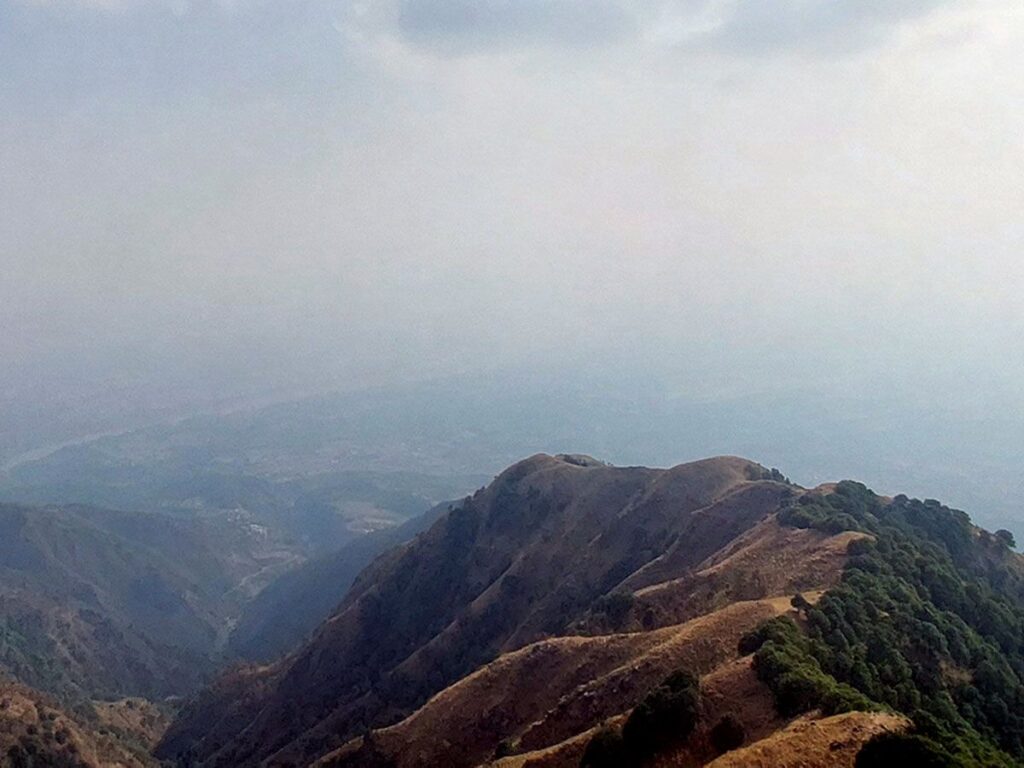
- The Final Ridge Ascent (Last 2 km): The last stretch is the most scenic part of the journey. The trail follows the spine of an exposed, grassy mountain ridge with sharp drops on both sides. To your north lies the deep cleft of the Yamuna River valley and the snow-clad peaks of Jaunsar; to your south sits the expanse of the Doon Valley. A final steady climb brings you up stone steps directly to the temple gates.
Read More>> 5th CE Yaganti Temple with Mysteries
Route 2: The Direct Ascent via Dudhli Village (Milkman’s Village)
- Starting Point: Dudhli Village motorable road terminal (accessible via a narrow, rough village link road branching off the Kempty-Mussoorie bypass)
- Trek Distance: Approx. 3 to 3.5 km one-way (6 to 7 km round trip)
- Time Required: 2.5 to 3.5 hours round trip
- Trail Description: This is a much shorter route commonly used by local village elders carrying morning milk offerings. However, what it saves in horizontal distance it makes up for in vertical steepness. The path climbs directly up the eastern slope to join the main ridge trail just below the final summit steps. It is steeper and rougher, making good hiking footwear essential.
Best Time to Visit Bhadraj Temple
Because Bhadraj sits at an altitude of over 7,000 feet, seasonal variations significantly change the trekking experience:
- Autumn and Winter (October to February): This is the ideal window for hikers and photographers. Autumn brings crisp air and bright blue skies, offering unobstructed views of prominent Himalayan massifs such as Bandarpunch, Swargarohini, and the Gangotri group. Winters are cold and windy, with temperatures often dropping to near freezing; occasional light snowfall turns the ridge white in peak winter months (January–February).
- Spring (March to April): A pleasant season characterized by blooming wild rhododendrons (Buransh) in the lower forest reaches and mild trekking weather.
- Summer (May to June): A convenient time for families visiting Mussoorie on holiday. Days can be warm on the exposed ridgeline, so early morning departures are strongly recommended.
- Monsoon (July to September): The hills turn emerald green, and misty cloud formations float directly over the ridge. However, trails become slippery, leeches may be encountered in forest leaf litter, and exposed ridgeline walking carries lightning hazards during active storms. Only seasoned hikers with proper rain gear and weather awareness should attempt the trek during peak rains.
Read More>> Vidyashankara Temple Sringeri 12 Pillars Reveal Your Destiny
What to Carry and Packing Essentials
There are no commercial stalls, permanent restaurants, or bottled water stations along the mountain ridge beyond the village outskirts. Planning ahead is necessary:
- Hydration (2 Liters per person): Carry sufficient drinking water in reusable flasks. There are no natural spring taps on the open ridge.
- Footwear: Sturdy sports shoes or hiking boots with deep tread. Avoid slick casual sneakers or formal leather footwear.
- Sun Protection: The final 3 kilometers along the ridge are entirely barren of tree cover. Carry a brimmed hat, UV sunglasses, and sunscreen.
- Windproof Jacket: Even on warm sunny afternoons, strong winds blow across the pass; carry a light windbreaker or fleece layer.
- Packed Light Snacks: Carry fruit, energy bars, roasted nuts, or dry snacks. Remember to carry all plastic packaging back down with you.
- Cash for Small Temple Donations: Digital UPI connectivity is intermittent or completely absent along the high ridge due to weak cellular coverage.

Essential Temple Etiquette and Responsible Pilgrimage
Visiting Bhadraj Temple combines spiritual reverence with wilderness conservation. Visitors should observe the following guidelines:
- Remove Footwear: A dedicated stone landing is located outside the inner sanctum where shoes and leather articles must be removed before entering the courtyard.
- Respect Traditional Offerings: If you wish to offer prasad, source pure milk, curd, or unsalted white butter from base villages rather than bringing plastic-packaged factory sweets.
- Strict Leave-No-Trace Policy: Bhadraj Hill is adjacent to the fragile ecosystem of the Benog Wildlife Sanctuary. The sanctuary provides habitat to endangered Himalayan fauna, including the mountain serow, barking deer, leopards, and over 100 species of birdlife. Do not discard plastic wrappers, plastic bottles, or food packets along the trail. Carry all waste back to Mussoorie for proper urban disposal.
- Photography Boundaries: While landscape and ridgeline photography is widely encouraged, avoid pointing cameras directly into the sanctum sanctorum during active aarti rituals unless permitted by the resident priest.
Read More>> Venugopala Swamy Temple Kannambadi: Lost for Decades Under Water
How to Reach Bhadraj Temple Base
To reach the trailhead at Cloud’s End, use the following transportation options:
- From Mussoorie (Gandhi Chowk / Library): Cloud’s End is approximately 7 to 8 km west of the town center. Local shared transport does not run frequently on this dead-end forest stretch; you can hire a private taxi from the Library Chowk taxi stand or ride a two-wheeler up to the Cloud’s End parking area.
- From Dehradun: Drive up via the Rajpur–Mussoorie Road or the newer Shimla Bypass–Hathipaon route (approx. 38 to 40 km, taking about 1.5 to 2 hours). Vehicles can be parked safely near the entry gate of Cloud’s End before beginning the foot journey.
- Public Transport Access: Take an early morning Uttarakhand Transport Corporation (UTC) bus or shared Maxx taxi from Dehradun Railway Station to Mussoorie Library Chowk, then hire a local cab to the Cloud’s End trailhead.
Frequently Asked Questions (FAQs)
1. Is the Bhadraj Temple trek suitable for beginners and children?
Yes. The classic trail from Cloud’s End has a gentle, gradual gradient across the first 5 kilometers, making it suitable for beginners, fit seniors, and children aged 8 and above. The only moderately steep climb occurs during the final 2 kilometers along the ridge steps. Ensure children stay close and avoid running near the steep slopes of the ridgeline.
2. Can we drive a car or ride a two-wheeler all the way to Bhadraj Temple?
No. Motorable roads terminate near Cloud’s End or the lower edge of Dudhli village. The final 3.5 km (from Dudhli) or 8 km (from Cloud’s End) must be covered on foot along forest trails and mountain ridges. No road exists on the high summit.
3. Are there stay options or hotels at Bhadraj Temple?
There are no hotels, modern guesthouses, or commercial lodges at the temple summit. The temple operates primarily as a day-pilgrimage destination. Devotees and hikers must begin their descent by 3:30 PM to reach base roadheads before nightfall. For overnight stays, choose resorts, homestays, or hotels in Cloud’s End, Hathipaon, or central Mussoorie.
4. Why is Lord Balarama offered milk and butter here?
Lord Balarama is venerated as the presiding deity of agriculture and pastoral prosperity. Surrounding village communities rely on dairy herds for their livelihood and dedicate their first churned butter and fresh milk to the deity in gratitude for safeguarding their cattle against wilderness perils.
5. What are the operational timings of the temple?
The temple gates open around sunrise (approx. 6:00 AM) and close around sunset (approx. 6:30 PM). There is no electric grid connection at the peak; hence, evening visits after dark are neither permitted nor safe due to the absence of trail lighting and the proximity of wildlife sanctuary terrain.