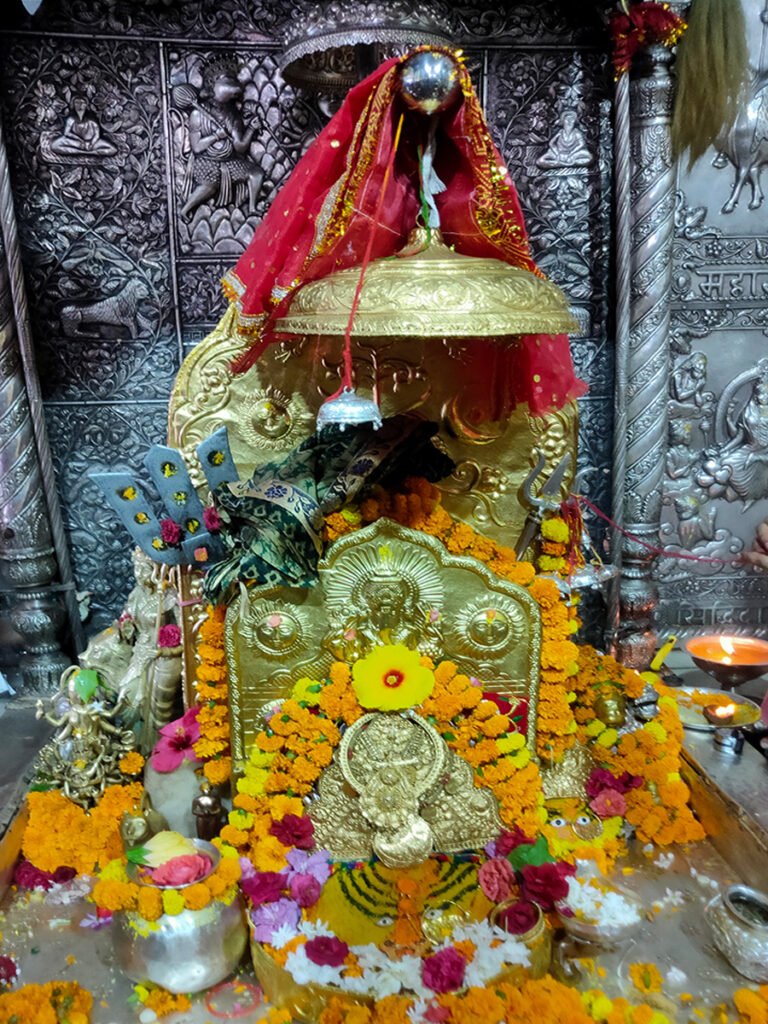
6CE Suchindram Thanumalayan Temple
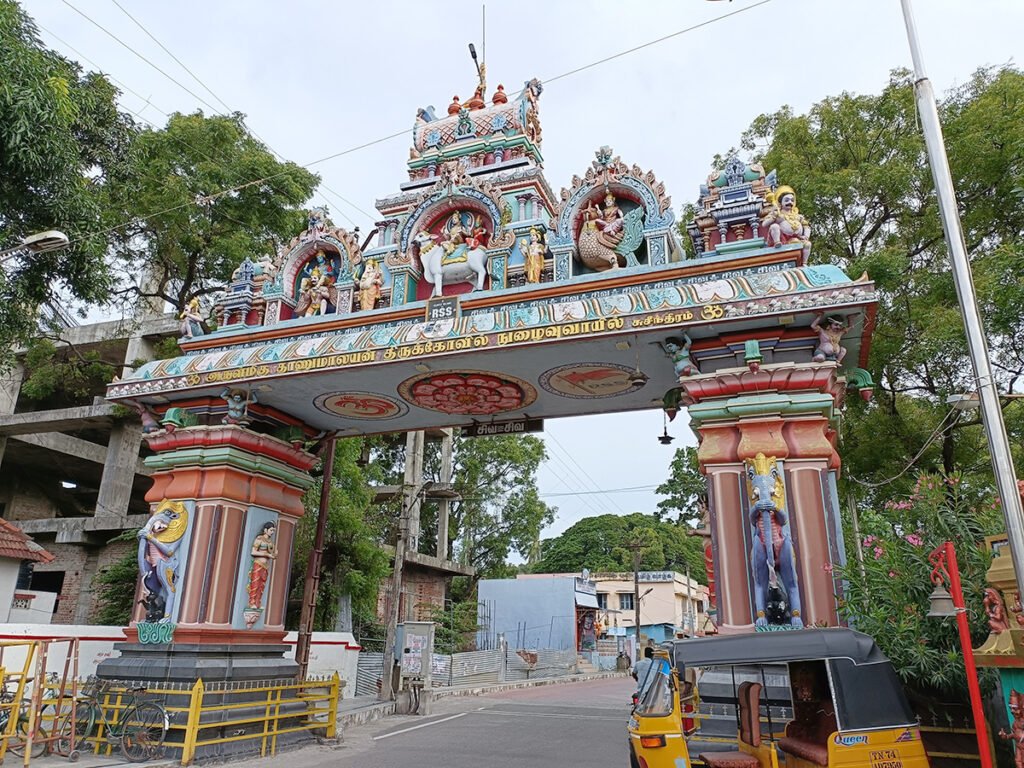
Thanumalayan Temple of Suchindram, Kanyakumari District, Tamil Nadu. It is also affectionately referred to as the Suchindram Thanumalayan Temple or, more briefly, the Suchindram Temple. Believe me, this is more than just a temple; it’s a living, breathing tale of devotion, history, and amazing craftsmanship.
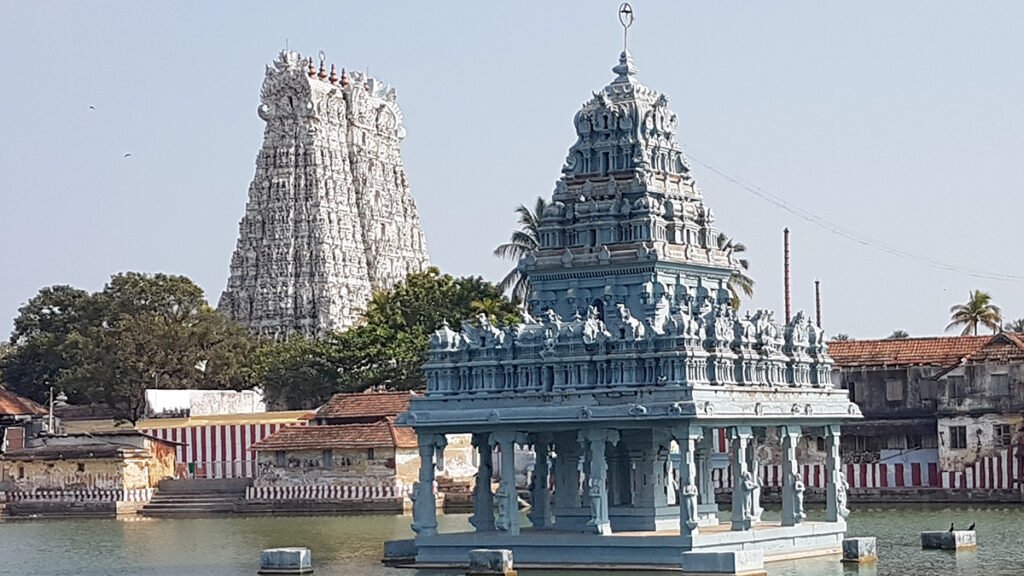
Think of a place where the three chief gods of Hinduism – Brahma, Vishnu, and Shiva – are combined into a single entity. Yes, that is what makes Thanumalayan Temple so special! It is an uncommon and deep experience, unifying followers from all divisions of Hinduism under a single divine roof. So, pack your water bottles, ready your hearts to be devoted, and let’s enter the age-old magic of Suchindram.
Suchindram Temple History: A Tapestry Woven Across Centuries
When it comes to discussing the history of the Suchindram Temple, we’re dealing with a timeline that goes centuries back. Although the current masonry structure goes back mostly to the 17th century, don’t be deceived. Inscriptions on the temple pillars and walls speak of a much older history, some of which date as early as the 9th century, suggesting its origin in the Chola dynasty period.
Yet more ancient, components of the building are thought to date back to the 6th century CE. It stands as a witness to the unstinted patronage of successive dynasties, ranging from the Ay kings of Kerala to the Cholas, Pandyas, and subsequently the Venad and Travancore monarchs, each leaving their respective architectural and cultural signature on this grand structure.
Consider it this way: every generation, every ruling dynasty, has contributed a thread to this fine fabric, turning the Thanumalayan Temple into a rich historical tapestry. The sheer grandeur and elaborate details of the temple complex are testaments to the piety and artistic skills of these ancient dynasties.
Read More: Kashi Vishalakshi Temple Varanasi.
Legend of the Thanumalayan Temple: Where Divinity and Devotion Entwine
Each of India’s ancient temples has a captivating myth, and the Suchindram Thanumalayan Temple is no different. It even has a couple of interesting stories behind its deep meaning.
The Story of Indra’s Purification:
One of the most well-known myths linked to the Suchindram Temple concerns the king of the devas, Lord Indra. As per the Sthala Purana, Indra attracted a curse from Sage Gautama for his improper behavior with the sage’s wife, Ahalya. To remove this curse, Indra was instructed to do penance at this very location. Indra worshipped the Trinity here, and it is said that he went through burning ghee to cleanse himself. The name “Suchi” in Suchindram is attributed to the Sanskrit term that means “purify.”
It is said that Lord Indra continues to visit the temple daily between midnight and dawn to conduct the “Ardhajama Pooja” (a ceremony conducted during the closing of the temple for the night). That is why the night-time rituals at the Suchindram Temple are finished by sunset, so that the night would remain free for worshiping Indra. Isn’t that a lovely thought? Imagine the king of gods himself to have come here to bless us!
The Story of Anasuya and the Trinity:
Another well-known legend tells of Sage Atri and his extremely chaste wife, Anasuya, who lived in the thick forest, then called Gnanaranya (now Suchindram). She was as devoted and chaste as it gets – even the heavens were eclipsed by her chastity. The celestial consorts of Brahma, Vishnu, and Shiva – Saraswati, Lakshmi, and Parvati – were intrigued and wished to verify Anasuya’s unshakeable purity. So they convinced their husbands, the Trimurtis (Brahma, Vishnu, and Shiva), to go see Anasuya incognito.
And thus, the three Lords came before Anasuya as Brahmin beggars, asking for alms. They presented a peculiar condition: they would eat only if she served them naked. Anasuya, realizing their divine sport through her own inherent wisdom and strength of chastity, saw through it. She prayed to her husband and threw a little holy water (reputedly the “Paatha Theertham” – water with which she bathed her husband’s feet) on the three Brahmins. At once, they were turned into innocent babies! Anasuya, perceiving them as her own children now, undressed and nursed them.
Upon hearing what had occurred, the Goddesses hurried to Suchindram and implored Anasuya to bring back their husbands to their natural forms. Anasuya, moved by their plea, so did. The pleased Trinity then went and blessed Atri and Anasuya, and in accordance with their ardent desire to have the Lords stationed here forever, the Trimurtis took the form of a special Lingam. This Lingam, Thanumalayan Temple’s central deity, depicts Brahma at the bottom, Vishnu in the middle, and Shiva at the top. This remarkable union of the Trinity in one idol is what makes the Suchindram Thanumalayan Temple have such a distinctive name: “Sthanu” (Shiva), “Mal” (Vishnu), and “Ayan” (Brahma).
Cultural, Spiritual, and Mythological Significance of the Temple
Suchindram Temple is not only a religious site; it’s a living hub of culture, a profound source of spirituality, and a treasured store of mythological stories.
Cultural Significance: The temple has been a melting pot of different artistic endeavors. From the elaborate sculptures to the big festivals, it portrays the changing cultural scenario of South India. It’s an institution where classical dance, music, and traditional arts have been promoted and cherished for centuries. The architecture of the temple itself is a blend of Tamil and Kerala styles, highlighting the cultural exchange and consonance that prevailed in this region.
Spiritual Significance: The Thanumalayan Temple is very sacred to the devotees. The Trinetra worship in one form symbolizes the unity of the final reality, bringing us back to the realisation that all manifestations of the divine are dependent on the one supreme Brahman. It is thought that travelling to this temple and performing prayers here will cleanse the mind, wash away one’s sins, and grant a long and prosperous life. The presence of Lord Hanuman’s towering idol also adds to its spiritual magnetism, especially for those seeking strength, devotion, and courage.
Mythological Significance: As we elaborated, the myths of Indra’s cleansing and Anasuya’s unshakeable virtue are inextricably woven into the temple’s identity. These myths are not allegories; they are living tales which provide moral lessons, depict divine norms, and tie devotes to an overarching cosmological drama. The temple remains a physical bridge to those antiquated Puranic narratives.
Read More: Attahas Temple Birbhum Shaktipeeth
Hindu Scriptures/Puranas as Evidence:
You requested evidence from Hindu scriptures. Suchindram Thanumalayan Temple is, in fact, held in high esteem in several Hindu scriptures, especially the Puranas and Sthala Puranas (local myths linked to a certain location of religious significance). Although it may be difficult to identify a single verse or chapter that specifically mentions “Thanumalayan Temple,” the implicit stories and idea of the combined worship of Trimurti are strongly rooted in the Puranic traditions.
To cite an example, the Skanda Purana and Brahmanda Purana frequently mention the excellence of pilgrimage centres and the potency of devotion. The Suchindram Sthala Purana itself, called Sucindrasthalamahatmya, describes the etymology and the importance of the Trimurti worship here, along with the myths of Indra and Anasuya. It explains how the Trimurtis manifested as a Lingam at the base of an Ashwatha tree (which afterwards turned into a Konrai tree), answering the prayers of Atri and Anasuya. This work is a direct scriptural source of the temple’s mythological origin.
Festivals: Days of Grandeur and Devotion
The Suchindram Temple really comes alive on its festival days, becoming a kaleidoscope of color, sound, and deep devotion. If you desire to see the temple in its most colorful self, these are the festival times to make the pilgrimage!
Annual Car Festival (Markazhi Festival): This is the biggest festival, and it falls in the Tamil month of Markazhi (December-January). It is a resplendent 10-day festival culminating into the Therottam (Car Festival) on the 9th day. Visualize three majestic chariots, elegantly decorated, drawn by thousands of devotees along the streets encircling the temple. Three different deities – Lord Shiva, Lord Vishnu, and Devi – are taken in each chariot representing the temple’s commitment to the combined Trinity. The air is filled with devotional songs, local music, and the cheerful atmosphere of the masses. It is indeed a spectacle to watch and a memory that will linger on long after you depart.
Teppam Festival (Float Festival): Attained in the Tamil month of Chithirai (March-April), the Teppam festival is another charming affair. The gods are decorated in a picturesque manner and taken out in a procession in a specially decorated float in the temple tank, Suchindram Pushkarani. The float, beautifully lit, moving across water under the night sky is an extremely peaceful and magical experience.
Crowded Days: As one can guess, at these big festivals, particularly the Markazhi Car Festival, Suchindram Thanumalayan Temple can become very crowded. Weekends, especially long weekends and holidays, also have plenty of devotees and tourists. If you would like a peaceful visit, then going on a weekday morning may be the best option. But if you wish to soak in the festive atmosphere and see the grandeur, then these busy days are exactly the time when the temple’s real glory comes alive.
Read More>> Chelamattom Sreekrishna Swami Temple: Powerful Temple for Ancestors
Distinct Architectural Forms and Beautiful Carvings
Get prepared to be awed by the sheer architectural genius of the Thanumalayan Temple. It is a work of art of Dravidian architecture, a mix of disparate forms gathered over centuries, a reflection of the various dynasties that helped to build it.
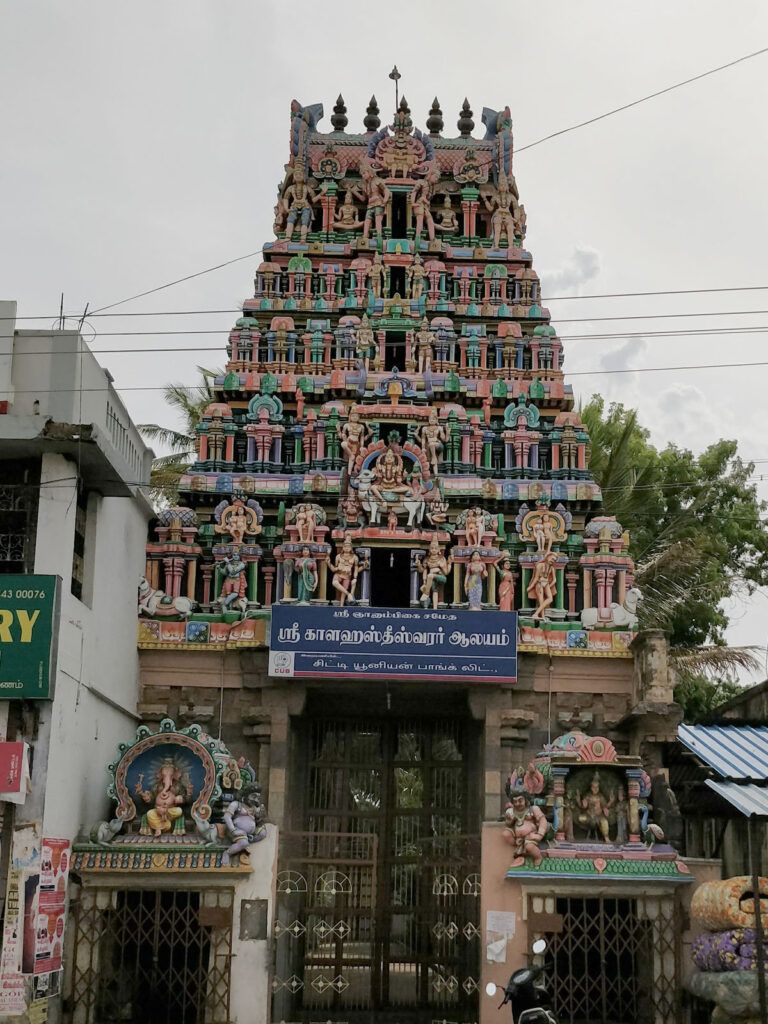
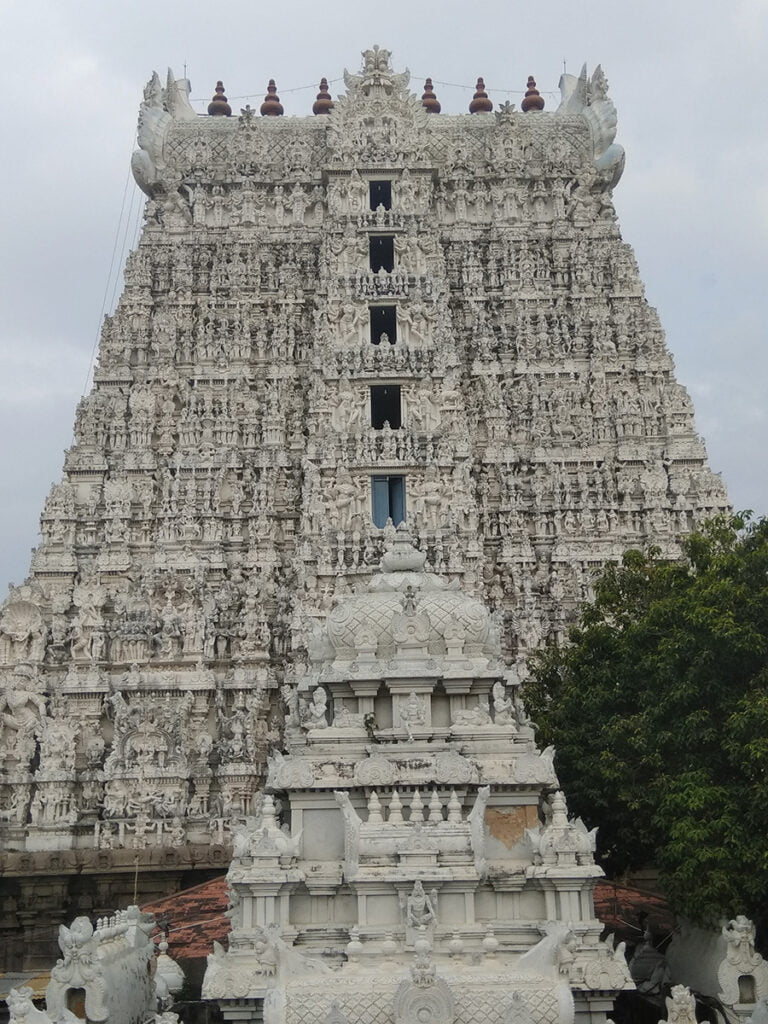
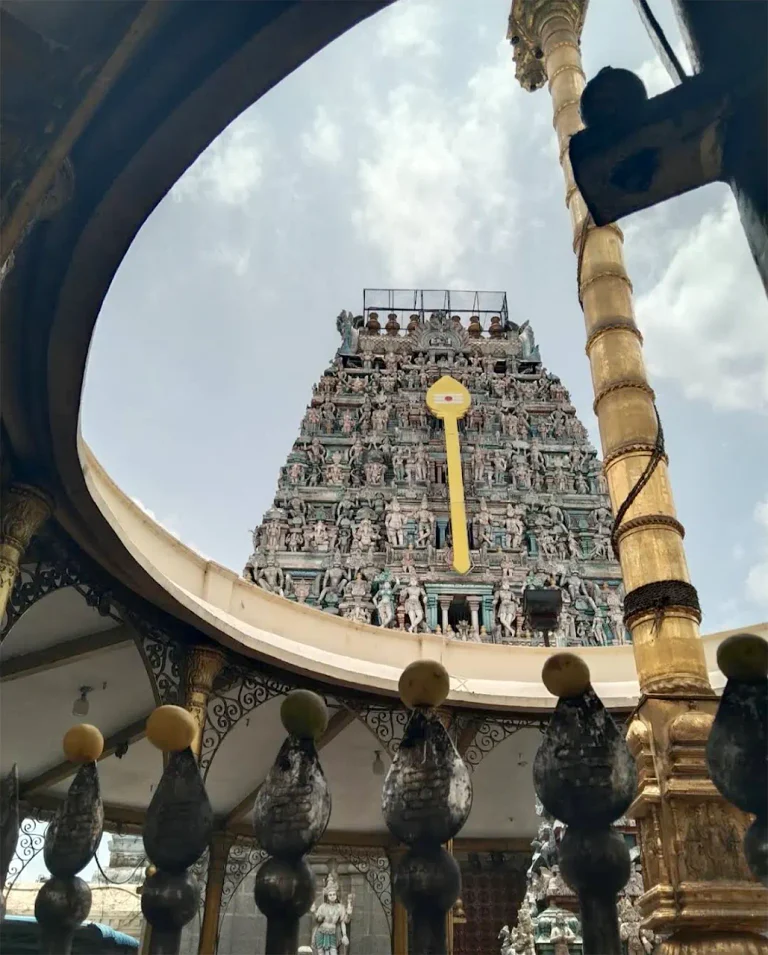
The Seven-Storeyed Gopuram: As you make your way to the temple, your gaze will be immediately arrested by the breathtaking, seven-storeyed Rajagopuram (gateway tower). Rising a sheer 134 feet, it’s covered in a multitude of exquisite stucco figures of various Hindu gods, mythological events, and heavenly bodies. Every level is a narration, an eyes-glued-to-the-view feast of ancient myths.
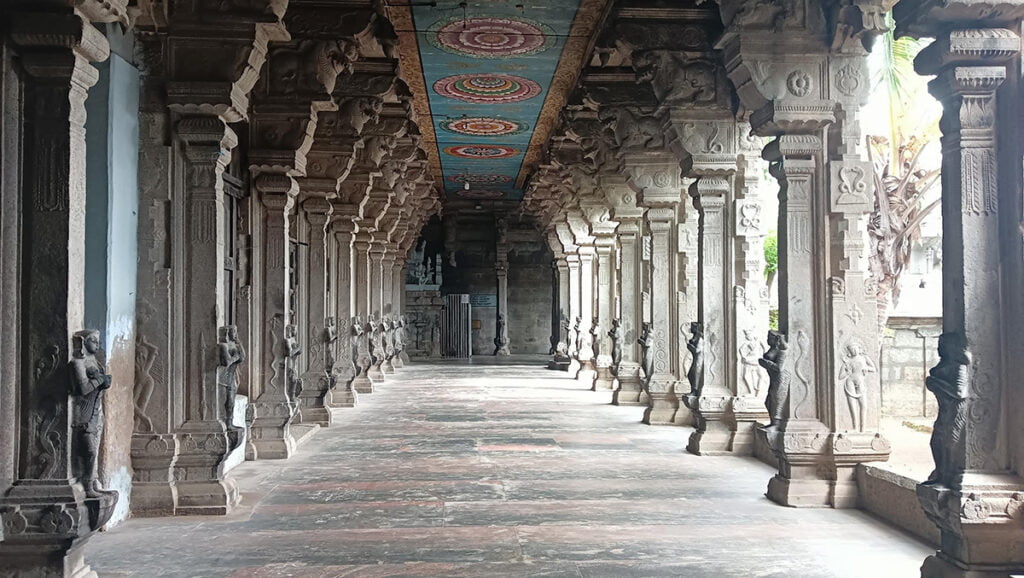
Musical Pillars: Perhaps the most surprising feature of the Suchindram Temple is its musical pillars found in the Alankara Mandapam. Made from a single granite slab, these 18-foot high pillars, when tapped gently, yield clear musical notes. It is a wonder of ancient engineering and acoustics, demonstrating the phenomenal skill of the craftsmen who constructed this temple. There are in fact two groups of these musical pillars, some having 33 minor pillars and others 25, each creating a distinct melodic sound. It is an experience impossible to forget to listen to them resonate. Although they are nowadays usually covered by grills to avoid damage, the sound still permeates.
The Towering Hanuman Statue: Enter the northern corridor, and you’re welcomed by the giant idol of Lord Hanuman towering an impressive 22 feet high, cut out from a single granite stone. Hanuman’s Viswaroopam (universal form) is indeed breathtaking. Strangely, this statue was actually buried in 1740 to save it from intruders such as Tipu Sultan and was only rediscovered and reinstalled in 1930. It is a great symbol of devotion, strength, and loyalty.
Nandi Mandapam: Right across the main shrine, you can see a gigantic 13-foot high statue of Nandi, Lord Shiva’s divine bull, made of lime and mortar. Its enormity and intricate craftsmanship are awe-inspiring.
Thousand-Pillar Hall (Chitra Sabha): The temple also has a dance hall of more than 1000 pillars, each one covered with beautiful carvings. These cover several mythological scenes, deities, and elements of Hindu iconography. The Citra Sabha here is also renowned for its mirror, which is said to be the symbol of Nataraja’s formlessness.
Intricate Carvings: Each pillar, each wall, each inch of the Thanumalayan Temple is a canvas for intricate carvings. You’ll get to see depictions of gods and goddesses such as Shiva and Parvati as Rishabaroodar (on Nandi), Vishnu on Garuda, Saraswati on Anna Vahana, and numerous forms of Shiva such as Maha Sada Siva Murthy and Dakshinamurthy. There are also intriguing episodes from the Ramayana and other Puranic stories. Peek closely, and you can even see figures of Manmadhan and Rathi, warriors, and even a special scene of Krishna running off with the gopis’ clothing. The attention to detail and artistic skill are jaw-dropping.
Read More: Shri Jogadya Shaktipeeth, Kshirgram, West Bengal
Myths and Beliefs: Whispers of the Divine
Apart from the sweeping legends, the Suchindram Temple is also threaded with several smaller myths and beliefs that contribute to its mystic and charm.
Indra’s Midnight Worship: As said, the faith that Lord Indra performs adoration of the Trimurtis here at night is a powerful one, giving rise to the unusual tradition of closing the temple gates early in the evening, leaving the night free for celestial rituals.
The Test of Honesty: In the past, the temple was also referred to as a site where honesty tests were carried out. It is believed that in situations where there was suspicion of theft or other offenses, people were taken to the temple and presented with a ritual that involved the boiling of ghee in order to test their honesty.
Temple Pond Significance: The temple tank, or Pushkarani, is sacred, and a dip in its waters is expected to wash away sins and impurities.
Miraculous Powers: Plenty of devotees have faith in the miraculous powers of the gods enshrined here and credit healing, success, and the grant of desires to their blind devotion.
Read More>> 11 CE Adinath Temple Khajuraho
Special Poojas and Offerings
The Suchindram Thanumalayan Temple conducts a range of poojas and special rituals daily for the devotees. The Thanumalayan Lingam, the presiding deity, is subjected to regular Abhishekam (sacred substances’ ablution) and Deepa Aradhanai (waving of lamp).
The major poojas and rituals include:
- Abhiseka Pooja for Thanumalayam Deity: Conducted early in the morning, at 4:45 AM.
- Daily Festival Pooja: At 5:30 AM.
- Tharai Abhiseka Pooja: At 6:30 AM.
- Mistanga Pooja: At 7:00 AM.
- Uchikkala Pooja, Deepa Aradhanai: Approximately 11:00 AM.
- Deepa Aradhanai, Ahala Pooja and Arthajama Pooja: Evening time, approximately 6:00 PM.
Devotees are also free to give specific archanas (special prayers) and abhishekams at a nominal fee. What’s special here is the worship given to all three gods in one setting, where devotees can ask blessings from Brahma, Vishnu, and Shiva all at once. Several also pray to the massive Hanuman statue, as it confers strength and wards off fear.
Read More>> Basara Gnana Saraswati Temple
Thanumalayan Temple Timings: Plan Your Visit
In order to make your darshan viewing of the deity smooth and comfortable, you should be aware of the Suchindram Temple timings.
The Thanumalayan Temple usually opens early morning and closes for a few hours around afternoon.
- Morning Timings: 4:00 AM to 12:00 PM (Noon)
- Evening Timings: 5:00 PM to 7:00 PM
Please keep in mind that these times of operation are sometimes slightly different during special occasions or holy days, so it’s always best to double-check locally if you’re there during a festival season.
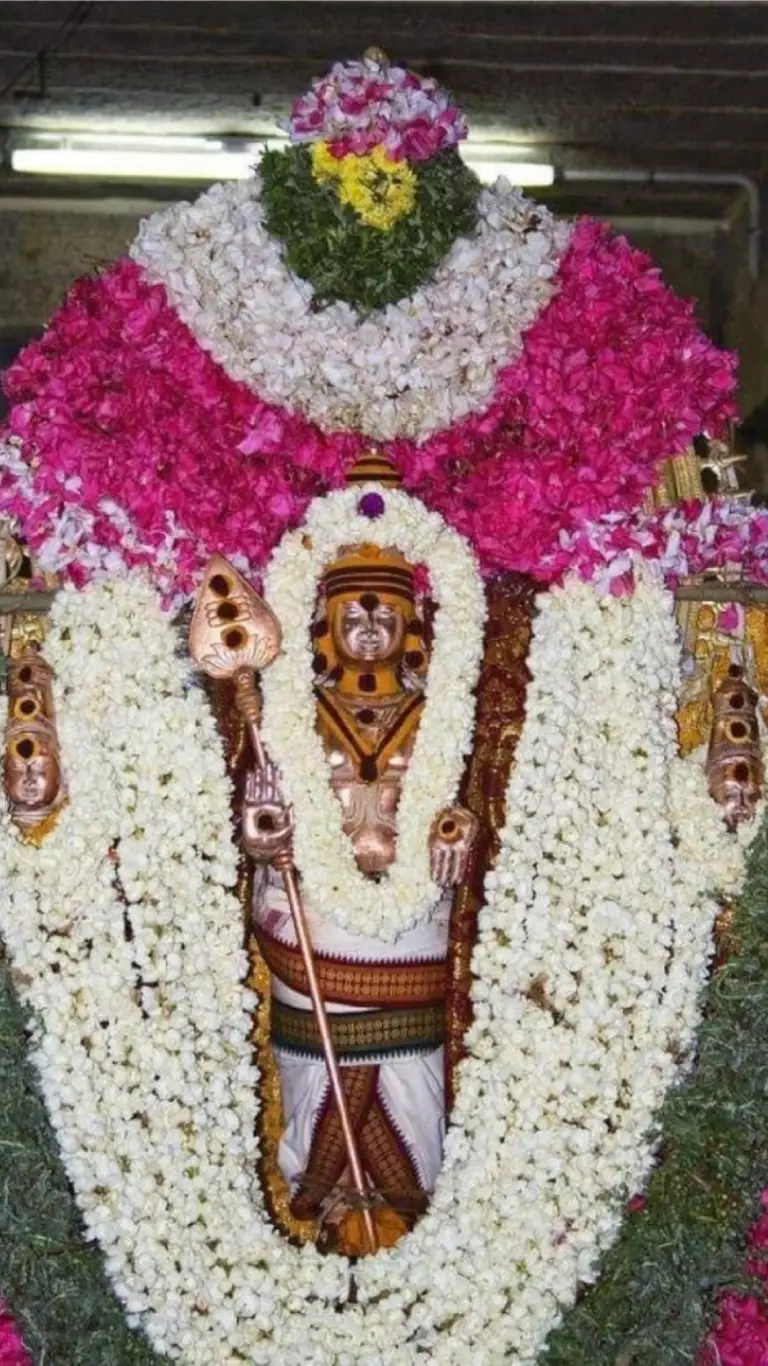
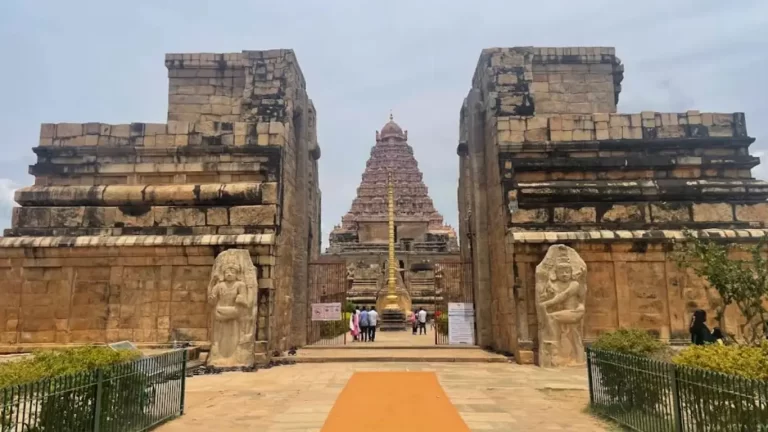
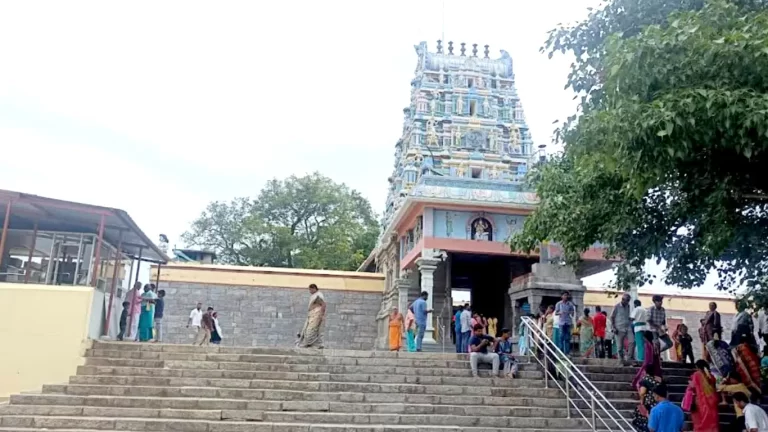

Sites to See Near Suchindram Temple
Your spiritual path need not terminate at the Thanumalayan Temple! Suchindram is ideally located close to other important Hindu pilgrimage centers and tourist spots, so it’s an excellent base for a tour of southernmost India.
Kanyakumari (Vivekananda Rock Memorial, Thiruvalluvar Statue, Kumari Amman Temple): A mere 11-12 km from Suchindram, Kanyakumari is where the Arabian Sea, the Bay of Bengal, and the Indian Ocean meet. It’s renowned for its spectacular sunrises and sunsets.
- Vivekananda Rock Memorial: A holy monument constructed on a rock upon which Swami Vivekananda sat in meditation and reached illumination. It can be accessed through ferry.
- Thiruvalluvar Statue: A 133-foot tall stone statue in honor of the great Tamil poet and thinker, Thiruvalluvar, standing beside the Vivekananda Rock Memorial.
- Kumari Amman Temple: A very old and sacred temple in honor of Goddess Kanya Kumari, the virgin goddess.
Nagercoil: The district capital, barely 7 km from Suchindram, Nagercoil also has its own temples and is a decent stop for local transport.
Padmanabhapuram Palace: Although not technically a Hindu temple, this wonderful wooden palace, once the residence of the rulers of Travancore, is a wonder of traditional Kerala architecture and features intricate Hindu designs and frescoes. It’s approximately 15-20 km from Suchindram.
Vattakottai Fort: A circular fort (although the name means circular, it’s actually rectangular) overlooking the sea, with wonderful views all around. It’s roughly 16 km from Suchindram.
Thiruchendur Murugan Temple: One of the well-known Murugan temples, and another of the Arupadai Veedu (six abodes of Lord Murugan), situated on the beach. It’s a little further away, but an important pilgrimage center.
Accommodation Options: Rest and Recharge
Suchindram itself has a couple of guesthouses and modest lodges. But if you want a greater variety of accommodations from budget to slightly more comfortable hotels, the best is to consider Nagercoil or Kanyakumari, both of which are within a short driving distance.
Nagercoil: As a larger town, Nagercoil has a decent range of hotels and lodges that suit different budgets. Here, you will get comfortable stays with basic facilities.
Kanyakumari: Being a tourist hot spot, Kanyakumari is full of hotels, resorts, and guesthouses, some with sea views. Pilgrims opt for Kanyakumari stay and have Suchindram as a day trip. You can avail anything ranging from budget lodges to upscale resorts here.
It is always best to make your accommodation reservation in advance, particularly if you’re going for the peak season or during festival periods, as rooms tend to fill up fast.
Read More>> Kanchi Kamakshi Temple: One of Powerful 18 Shakti Peethas
How to Get to the Thanumalayan Temple
It is fairly easy to get to the Suchindram Thanumalayan Temple, no matter whether you’re flying, by train, or by road.
By Air: Trivandrum International Airport (TRV) in Thiruvananthapuram, Kerala, is the closest, around 75-80 km away. A taxi or bus can be hired from the airport to Suchindram. Another flight option, though longer, is Madurai International Airport (IXM), some 240 km away.
By Train: The closest major railway station is Nagercoil Junction (NCJ), just approximately 7 km from Suchindram. Nagercoil is well connected to other big Indian cities. You can easily get local buses, auto-rickshaws, or taxis from Nagercoil to reach the temple.
By Road: Suchindram is well linked by road to Nagercoil, Kanyakumari, and other regions of Tamil Nadu and Kerala.
From Nagercoil: Local buses and auto-rickshaws are frequent. It’s a 15-20 minute drive.
From Kanyakumari: Frequent buses connect Kanyakumari and Suchindram and take 30-40 minutes. Taxis and auto-rickshaws are also easily available.
In case you’re driving your own car, the temple is situated close to the National Highway (NH 44, connecting Srinagar with Kanyakumari, and NH 66).
Read More>> Vidyashankara Temple Sringeri 12 Pillars Reveal Your Destiny
FAQs (Frequently Asked Questions) regarding Thanumalayan Temple
As a tourist guide, I have often been asked a multitude of questions regarding this magnificent temple. Below are some of the most frequently asked questions:
Q1: What should I wear when I visit the Suchindram Thanumalayan Temple?
A1: Similar to most South Indian temples, modest clothing is expected. Men are usually instructed to take off their shirt and wear traditional clothing such as dhoti or veshti to access the sanctum sanctorum, although trousers might be allowed in the outer sections. Women must dress in traditional Indian clothing such as sarees or salwar kameez, covering their shoulders and knees. It’s always better to overdo it and be properly dressed. Footwear needs to be taken off when entering the temple grounds.
Q2: Is it permitted to take photographs within the Suchindram Temple?
A2: Photography is generally forbidden within the inner parts of the temple and certain sensitive spaces of the temple complex. You can most likely photograph the gopuram and the exterior temple area, but it’s always best to search out notices or clarify with temple officials before snapping away. Be respectful of the sanctity of the site.
Q3: What is the importance of the “musical pillars” in the Thanumalayan Temple?
A3: The musical pillars are a proof of the excellence in ancient Indian architecture and acoustics. Made of one stone, they give different musical notes when struck. Their importance is in displaying the superior knowledge in sound engineering and material science that the artisans of the time had, in addition to their beauty.
Q4: Why is the Thanumalayan Temple sacred to the “Trinity”?
A4: The Suchindram Thanumalayan Temple stands out because it’s one of the rarest temples in India where Lord Brahma, Lord Vishnu, and Lord Shiva are all consecrated in a single form deity, embodied by the Lingam where Brahma is at the base, Vishnu in the middle, and Shiva at the top. This represents the unity of the supreme Brahman, ultimate reality, and the realization that all forms of divinity are manifestations of the one ultimate truth.
Q5: When is the best time to go to the Thanumalayan Temple?
A5: The winters (October to March) are mostly the best time to go considering the weather. If you want to see the majestic festivals, then plan your visit for December-January for the Car Festival or March-April for the Teppam Festival. For regular visits, mornings are generally less touristy and have a peaceful experience.
My Personal Takeaway
As your tour guide, having seen the splendor of the Thanumalayan Temple countless times, I can assure you this: it’s not mere stones and sculptures. It’s an experience. It’s the reverberation of centuries of petitions, the whispers of old-time legends, and the tangible presence of the gods. Standing in front of the conjoined Lingam of Brahma, Vishnu, and Shiva, you actually sense a cosmic harmony. When you strike those pillars of music, you listen to the tunes of ancient genius. And when you look at the massive Hanuman, you get a jolt of devotion.
Suchindram Thanumalayan Temple is where history, mythology, art, and faith meet, providing a rewarding experience to all who visit it. Whether you are a pious pilgrim hoping to seek blessings, a history buff wanting to unravel mystic secrets of the past, or an art enthusiast amazed at masterful craftsmanship, this temple has something deep to share. So, come and feel the divine oneness, and let Suchindram’s timeless energy envelop you. It’s an experience, friends, that you’ll never forget. Jai Hind! Jai Shri Ram! Om Namah Shivaya!