Chelamattom Sreekrishna Swami Temple: Powerful Temple for Ancestors
Chelamattom Sreekrishna Swami Temple: Located in the peaceful village of Chelamattom, within the stunning Ernakulam district of Kerala, India, this historic temple is not only a sacred site; it’s a living, vibrant tribute to centuries of devotion, fascinating myths, and intense spiritual power. As we set out on this adventure, I want you to be with me, here and now, breathing in the holy air, and deeply touching the divine presence that infuses each stone and each prayer.
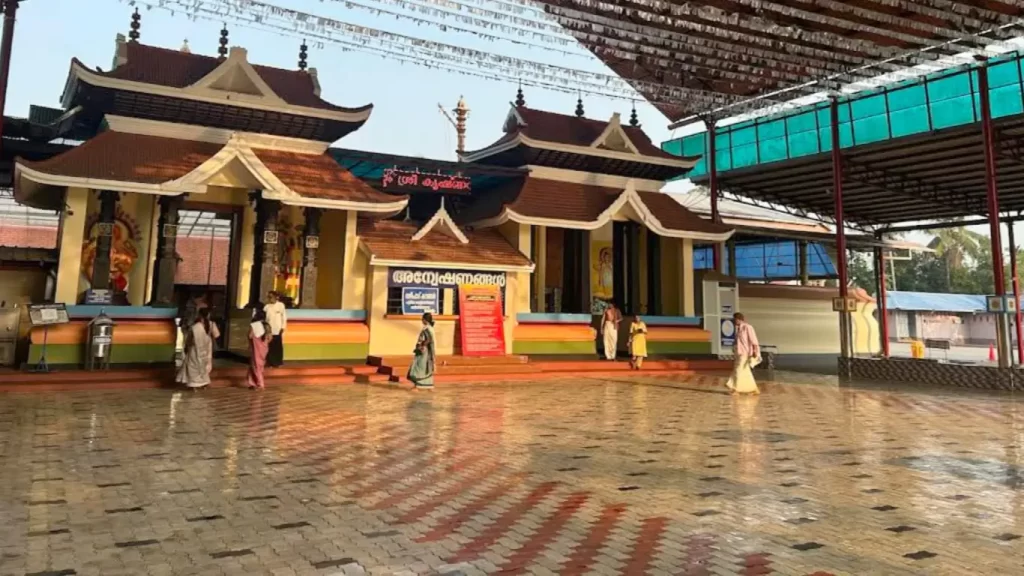
“The Chelamattom Temple is commonly known as Dakshina Kashi, or the ‘Kashi of the South,’ a name it has acquired because of its great significance for Pitru Tharpanam – the sacred rituals offered to the ancestors. Consider a site where the Periyar River, Mother Periyar as we fondly term it, flows unusually from west to east, a phenomenon regarded as extremely auspicious, akin to the Ganges at Varanasi. This very flow lends to the sheer spiritual strength of this revered place. So, get ready, because what we are about to discover is not merely a temple, but a spiritual sanctuary that touches the very essence of our existence.”
Contents
- 1 Chelamattom Temple History
- 2 Legend of the Chelamattom Sreekrishna Swami Temple
- 3 Cultural, Spiritual, and Mythological Significance of the Temple
- 4 Festivals and Special Days
- 5 Unique Architectural Styles and Carvings
- 6 Myths and Beliefs
- 6.0.1 The Yamapuri Connection
- 6.0.2 The Power of the Periyar River
- 6.0.3 Adi Shankara’s Blessing
- 6.0.4 No Sacrificial Altar, No Utsavabali
- 6.0.5 The Transition from Wooden to Stone Idol
- 6.0.6 Specific Offerings and Their Benefits
- 6.0.7 Special Poojas Conducted
- 6.0.8 Ancestral Liberation (Pitru Moksha)
- 6.0.9 For Wealth, Health, and Well-being
- 6.0.10 For Specific Desires and Protection
- 6.0.11 General Offerings and Daily Rituals
- 7 Chelamattom Temple Timings
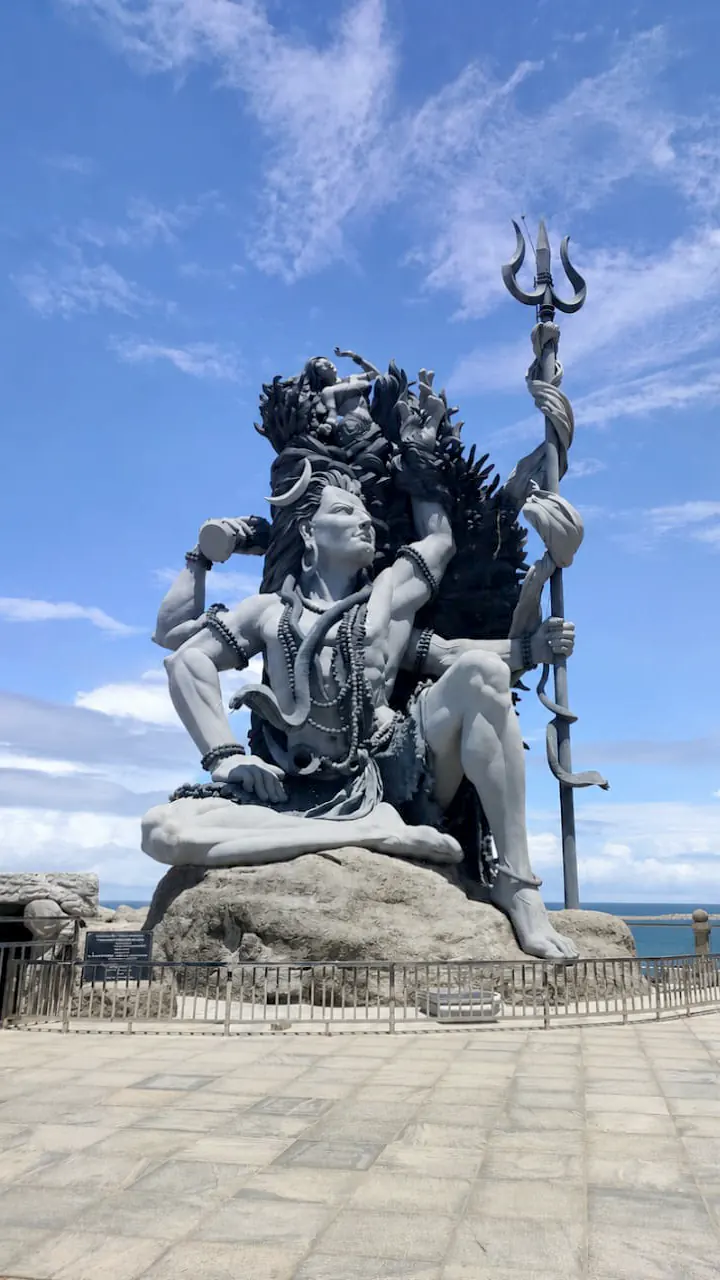
- 7.0.1 Azhimala Shiva Temple 58 ft statue
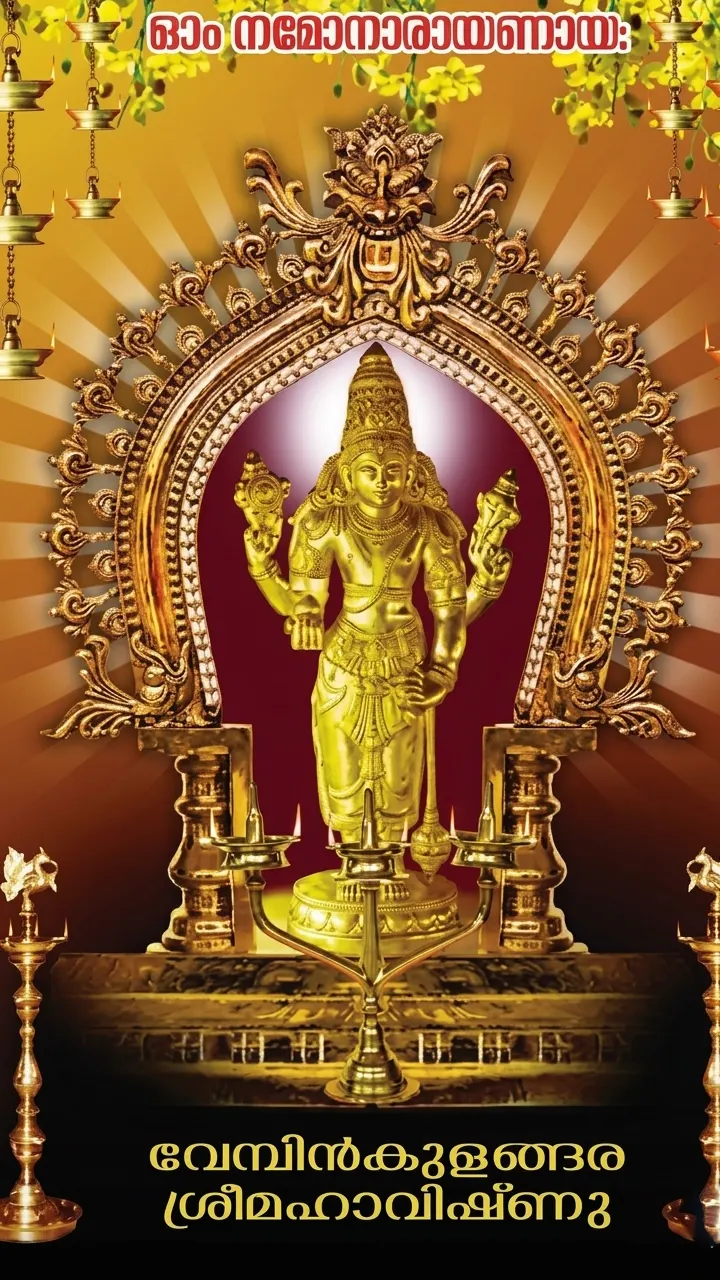
- 7.0.2 Vembinkulangara Sri Mahavishnu Temple
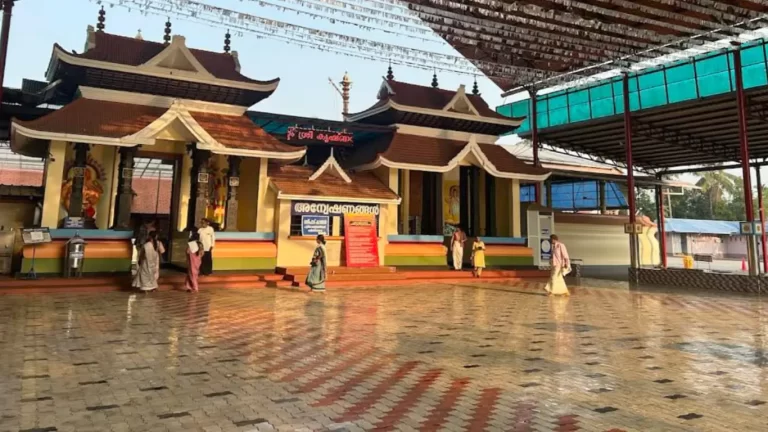
- 7.0.3 Chelamattom Sreekrishna Swami Temple: Powerful Temple for Ancestors
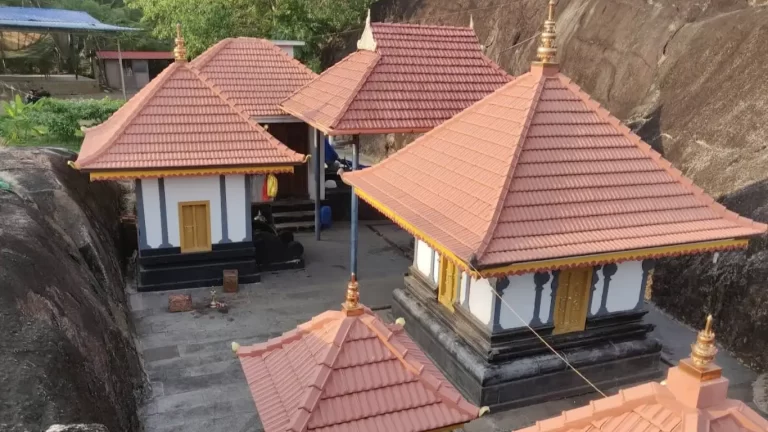
- 7.0.4 Kalluthipara Temple: Lord Krishna Divine Footprint in Stone!
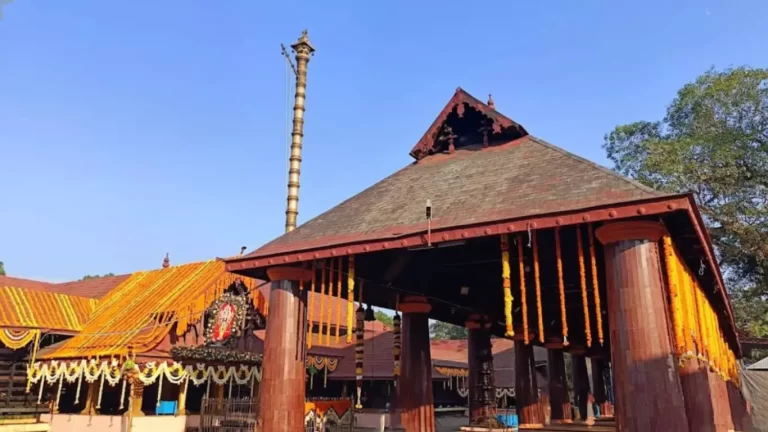
- 7.0.5 Thuravoor Temple of 2 Powerful Deities Narasimha & Sudarsana
- 7.0.6 Nelluvaya Sree Dhanwanthari Temple
- 8 Places to Visit Near the Chelamattom Temple
- 9 Accommodation Options
- 10 How to Reach the Chelamattom Sreekrishna Swami Temple
- 11 FAQs about Chelamattom Sreekrishna Swami Temple
Chelamattom Temple History
“My friends, there’s a story to every ancient temple, a genesis that runs through the fabric of time, and the Chelamattom Temple is no exception. Its past, though partially shrouded in the mists of antiquity, is filled with tales and legends handed down the ages. Though exact dates may be hard to come by in such very old places, traditional lore and written history lead one to believe it has stood for numerous centuries, some even opining that its origins may reach as far back as the 16th century CE, and possibly even further.”
“In the beginning, it is said that this holy place was essentially dominated by a pratishta (idol) of Lord Narasimha. Chelamattom temple compound was heavily linked with an extremely ancient Brahmin household called Veliyamkol Mana. This community venerating a swayambhu (self-formed) idol of Lord Shiva, called Anthimahakalan, actually right on the riverbank of the Periyar River. The divine play, however, was not yet over.”
“The present-day central deity, Lord Sreekrishna, has a captivating story behind him. According to legend, in one of the Periyar River’s great floods, a wooden box floated down on the churning waves, finally settling close to the Anthimahakalan temple. Some of the local Pulaya women saw this enigmatic box and attempted to pick it up, but it appeared to evade their hands, remaining afloat but not floating away. It was as if it were waiting for someone’s special hand.”
“Heard this strange story, the members of the Veliyamkol Mana were alerted. The head of the Mana came up to the chest, and to the surprise of all, he could easily bring it on to the shore. Within, safely placed, was a lovely idol of Lord Krishna. Realizing its sacred nature, the Namboothiri (Brahmin) first worshipped this holy vigraha (idol) in his own house. Later, according to divine will or astrological advice, a new sanctum was built close to the existing Narasimha temple, and the Lord Krishna idol was respectfully enshrined there.”
“Adding another twist to this complex history, there’s a tradition that a Lord Vamana’s idol also reached this hallowed complex. Another Brahmin family, the Thottamattom Namboothiri, had a potent Vamana idol that they kept in their home for worship. Finding its vast spiritual power perhaps too overwhelming for a household environment, they also dedicated it within the Chelamattom Sreekrishna Swami Temple grounds.”
“Interestingly, Lord Krishna’s first idol was supposedly a daru-vigraha, i.e., a wooden one. It is said that the current shila-vigraha (stone idol) was later installed by the order of Sakthan Thampuran, the Kochi King. There’s even a quaint story that the stone idol was initially meant for consecration in Thiruvananthapuram, but by some divine plan or possibly a lucky ‘accident’ (if you are a believer in accidents in such things!), it was installed here in Chelamattom. Such stories are not really folklore; they form the heart and soul of our temples, imbuing them with an unique identity and an un-denied charm.”
Read More>> Basara Gnana Saraswati Temple
Legend of the Chelamattom Sreekrishna Swami Temple
“Oh, the legends! They are the tales that give life to the stones and idols and make the divine tangible for our human hearts. The Chelamattom Sreekrishna Swami Temple is especially full of such fascinating tales. You see, these aren’t bedtime stories; they are presumed truths that disclose the very being of the deities and the divinity of the location.”
“One of the most illustrious legends that lends the Chelamattom Temple its deep significance, particularly as Dakshina Kashi, concerns Lord Krishna himself. According to tradition, the Sankalpam (divine thought or shape) of Lord Krishna worshipped here is the very shape He took when He was dwelling in Yamapuri, the kingdom of Yama, the God of Death. According to the legend, after the completion of his Gurukul studies, Lord Krishna, along with his brother Balarama and close friend Kuchela, went to their venerated Guru, Sage Sandipani, requesting his Gurudakshina (token of appreciation to the teacher).”
“Sage Sandipani, grieved at the death of his son who had drowned in the sea during a celestial eclipse, asked for his resurrection. Lord Krishna, using his divine powers, set out immediately to grant his Guru’s desire. He first called for Varuna, the King of Oceans. When Varuna claimed ignorance about the fate of the sage’s son, he hinted at the role of a Panchajan, a demon cannibal living in a conch shell. Lord Krishna quickly defeated Panchajan and acquired his conch shell, which became famous as Panchajanyam – the divine conch he is popularly known to have blown at the Mahabharata war.”
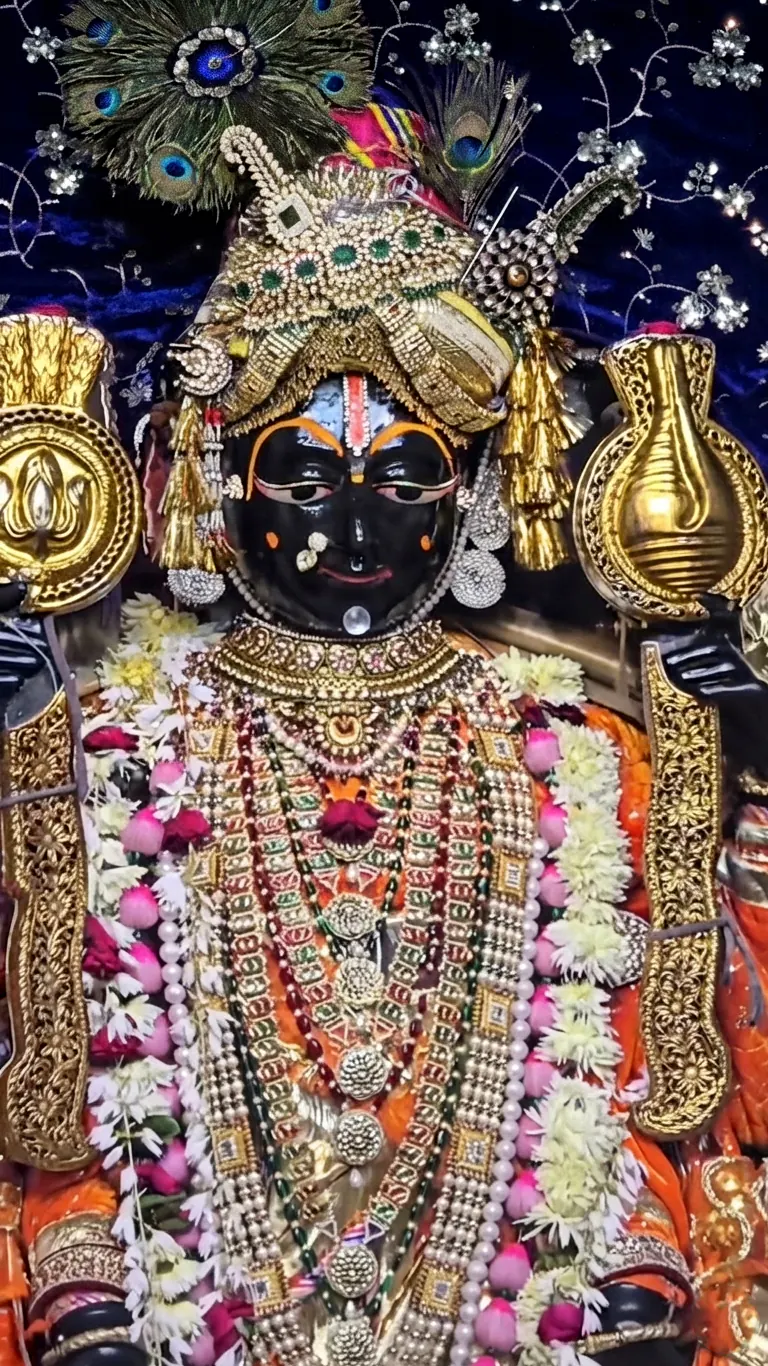
“Having the knowledge that the son of the sage was in Yama’s domain, Lord Krishna visited Yamaloka. There, understanding the authentic divine self of Lord Krishna, Yamadharma, the King of Death, respectfully brought the sage’s son back. It is in this divine visitation to the netherworld that Lord Krishna is said to have blessed all the souls in Hades with eternal bliss (Moksha). The idol of Lord Krishna at Chelamattom is depicted in a meditative stance, commemorating this great act of salvation.”
“This is a mighty legend and the main reason Chelamattam Sreekrishna Swami Temple is ranked as the most desirable and perhaps the sole temple where one can do Pitru Tharpanam and other religious oblations to appease the spirits of one’s ancestors. The unshakeable conviction here is that even the most deeply enmeshed or ‘maliciously placed’ souls can be liberated if the accompanying rituals, such as Thilahavanam (a certain fire ritual) and offering food to Brahmins, are done here at Chelamattam. Can you feel the magnitude of this belief? It’s absolutely humbling.”
“Another interesting legend identifies this great philosopher and saint, Adi Shankara, with this very location. It is supposed that Sri Sankaracharya, on his travel, came to the opposite bank of the Periyar River. He had to cross over, and at his prayer, a dwarfish boy, who was sportively boating on the river in an improvised boat, turned up and took him across to this shore in his simple boat in safety.
Gratified with the boy’s prompt assistance and willing nature, Sri Sankaracharya blessed the site, wishing that such helpful boys and boats would be always present here. This dwarfish boy, the legend has it, was no other than Lord Vamana himself, the fifth incarnation of Lord Vishnu. This supports the ancient existence of a Vamana Murthy deity at this temple, even in the times of Adi Sankaracharya.”
“These myths are not merely myths; they are the words that direct the beliefs of millions, influencing rituals, faith, and indeed the very religious topography of this hallowed land. They transport us to an era when gods roamed among men, when miracles were a living truth.”
Cultural, Spiritual, and Mythological Significance of the Temple
“Beyond its rich histories and engaging myths, the Chelamattom Sreekrishna Swami Temple stands tall in Kerala’s cultural, religious, and mythological landscape. It’s more than a building of bricks and stone; it’s a dynamic center of spirituality and heritage.”
Spiritual Significance: Dakshina Kashi and Pitru Tharpanam
“The preeminence spiritual significance of the Chelamattom Temple is due to its exclusive position as Dakshina Kashi. To those who know Hindu customs, the term Kashi (Varanasi) conjures images of sacred Pitru Tharpanam rites immediately. Just as Kashi on the banks of the Ganges is the supreme location for Pitru Tharpanam – offering oblations to one’s ancestors for liberating and peaceful souls – Chelamattam on the Periyar’s banks possesses an equal, if not greater, sanctity in the South.
The faith that Lord Krishna liberated souls in Yamaloka here makes it a one-of-a-kind location for these rituals. Countless devotees arrive from far and wide, particularly on Amavasya (new moon) days, to offer Bali Tharpanam for their deceased loved ones, ensuring their liberation from the wheel of rebirth and guiding them to higher realms. The cleansive waters of the Periyar, which flows east, are hugely effective for these rituals.”
Mythological Significance: The Trinity of Vishnu
“The fact that three incarnations of Lord Vishnu exist in the same compound – Lord Sreekrishna, Lord Narasimha, and Lord Vamana – adds a rich mythological significance to the Chelamattom Sreekrishna Swami Temple. This special gathering of three is symbolizing different aspects of the divine play of Lord Vishnu: Krishna, the lovely Purna Avatara (complete incarnation) and supreme being; Narasimha, the ferocious destroyer of evil and guardian of his devotees; and Vamana, the humble dwarf encompassing the universe. Worshipping all three together under one roof is regarded as extremely meritorious and confers overall blessings to devotees, taking care of various aspects of their life – from spiritual emancipation to protection from enemies, and the achievement of desires.”
Cultural Significance: An Reflection of Kerala’s Heritage
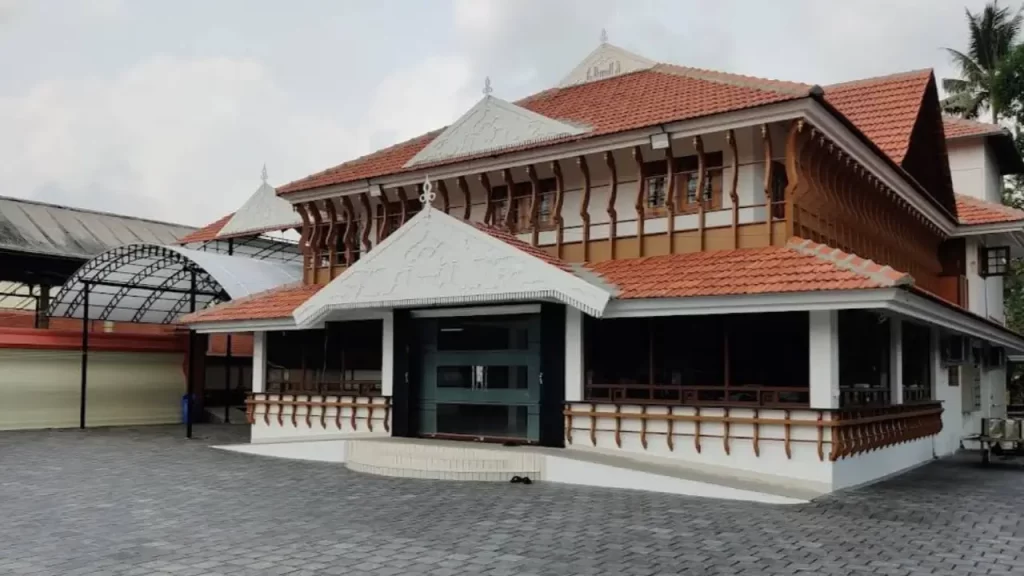
“Culturally, Chelamattom Temple is an unblemished example of Kerala’s rich religious heritage. The temple retains traditional Kerala temple architecture and traditions, maintaining customs followed over centuries. It is a custodian of ancient practices and knowledge, which makes it a draw for scholars, seekers of the spirit, and art lovers alike. The intricately carved stones, the traditional deepastambhams (pillars of light), and the very ambiance reflect the spiritual ethos that characterizes Kerala. The temple is also an important institution in the local community, being not only a religious hub but also a point of focus for social and cultural aggregation at festivals and special functions.”
Read More>> 11 CE Adinath Temple Khajuraho
Festivals and Special Days
“Festivals are the pulse of any temple, and in Chelamattom Sreekrishna Swami Temple they are enjoyed to the hilt with great religiosity, splendor, and a catch-as-catch-can spiritual enthusiasm. To see the real zest of this place, you must visit during a festival, although be prepared for throngs of people!”
Annual Festival (Utsavam)
“The most important annual festival, or Utsavam, is an eight-day extravaganza culminating on the Thiruvonam star in the Malayalam month of Kumbham (usually in February-March). This is the highlight of the temple calendar, attracting thousands of pilgrims from all across Kerala and even outside. Picture the air alive with the rhythmic beats of traditional temple percussion, the sweet melodies of hymns, and the fragrance of incense and camphor.
The highlight is the Arrattu ceremony, where the invoked idol of the Lord is regally mounted onto an elephant’s back and conducted ceremoniously to the temple pond or river for the ritual bath. The day before is filled with the grand Valiya Vilakku (grand lamp lighting), a sight to behold as thousands of lamps light up the temple complex, leading to a truly otherworldly atmosphere.”
Pitru Tharpanam Days (New Moon)
“As I have said, Chelamattom is renowned for Pitru Tharparanam. The temple’s most thronged days are certainly the Amavasya (new moon) days, especially during the Malayalam months of Thulam (October-November), Kumbham (February-March), Edavam (May-June), and Karkidakam (July-August). Karkidaka Vavu Bali is particularly important, attracting huge crowds who congregate on the banks of the Periyar to offer rites for their ancestors. On these occasions, the whole riverbank becomes a hallowed piece of ground of remembrance and worship. It’s a highly emotive experience to see so many people all performing these rites together, there’s an atmosphere of deference and hope for their departed ones. It is also traditional that after the Bali Tharpanam, purificatory rites are also held.”
Ashtami Rohini (Krishna Janmashtami)
“Being a temple of Sreekrishna, Ashtami Rohini, the birth anniversary of Lord Krishna (also referred to as Krishna Janmashtami), is also observed with great devotion and fervor. While perhaps not as well-populated as the Amavasya days, it is a day of special offerings, poojas, and prayers devoted to the mischievous and kind Lord Krishna. You can observe devotees offering Appam, Palpayasam, and other such sweet offerings, and Chelamattom temple is filled with devotional songs and chanting.”
Other Special Days
“Other important days are Vishu (Malayalam New Year in April), Onam (Kerala’s harvest festival in August-September), and the first day of each Malayalam month, all of which are visited by a significant number of devotees to offer prayers and seek blessings. Any favorable day for Lord Krishna, Lord Narasimha, or Lord Vamana would be special in this case.”
Unique Architectural Styles and Carvings
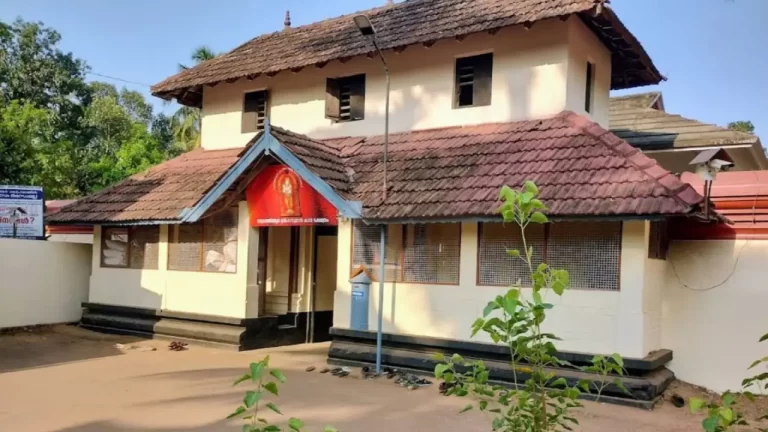
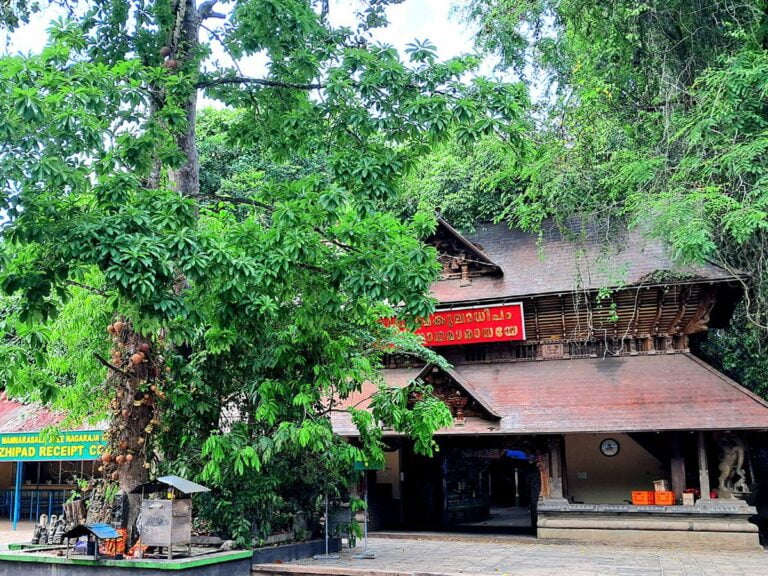
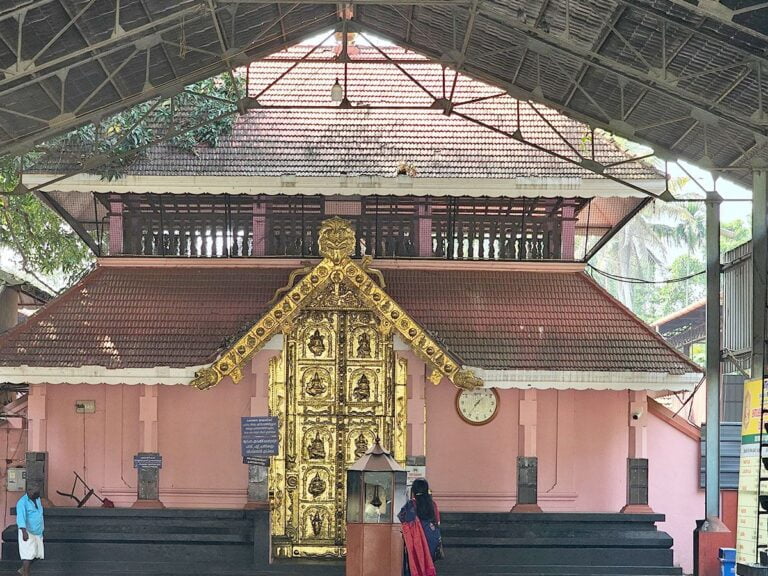
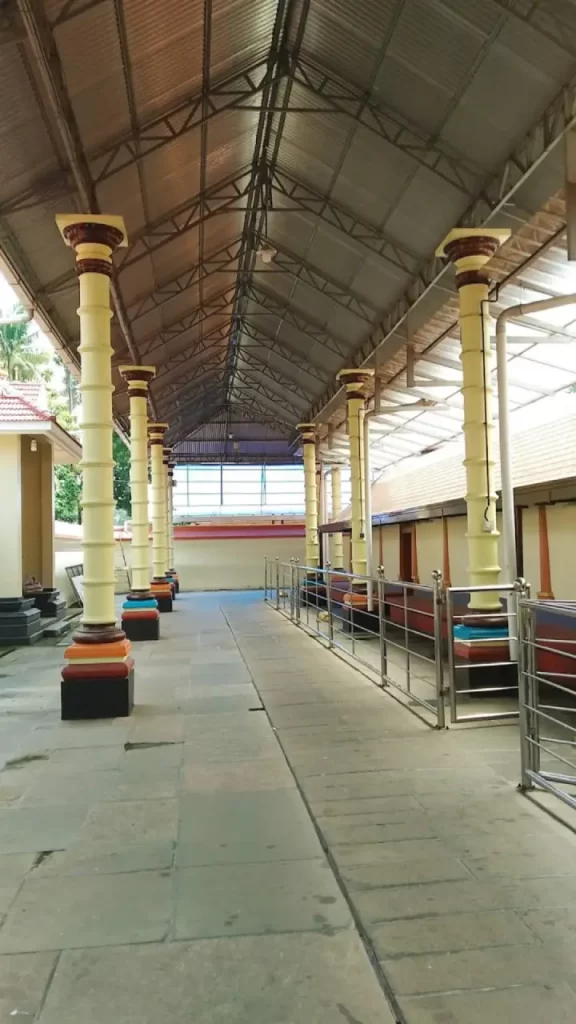
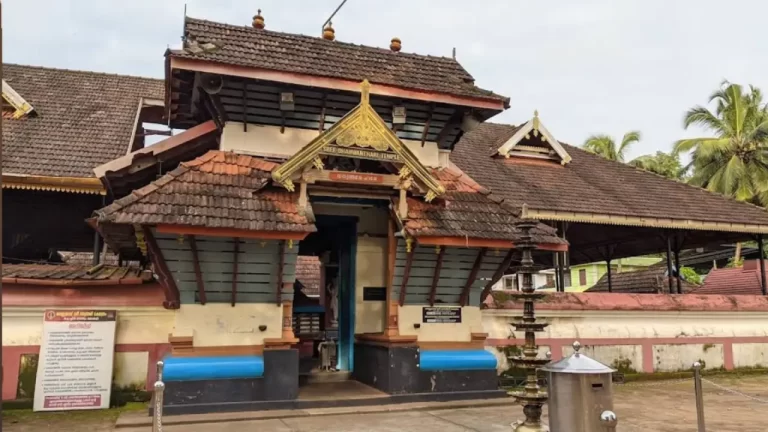
“Now, let’s look at the beautiful artistry of the Chelamattom Sreekrishna Swami Temple. The architecture of this one is a quintessential example of the Kerala style that is traditional and different in its simplicity, functionality, and spiritual bond with nature. In contrast to the high gopurams of Tamil Nadu, Kerala temples tend to have sloping roofs, wooden intricately carved features, and intimate compatibility with the immediate environment.”
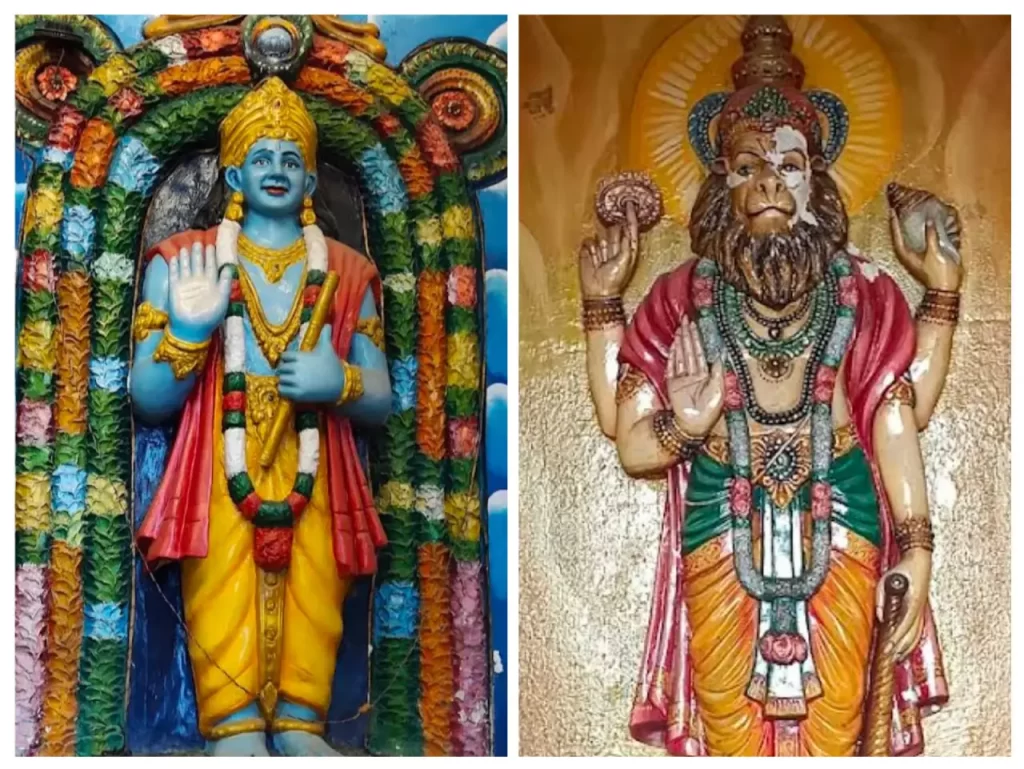
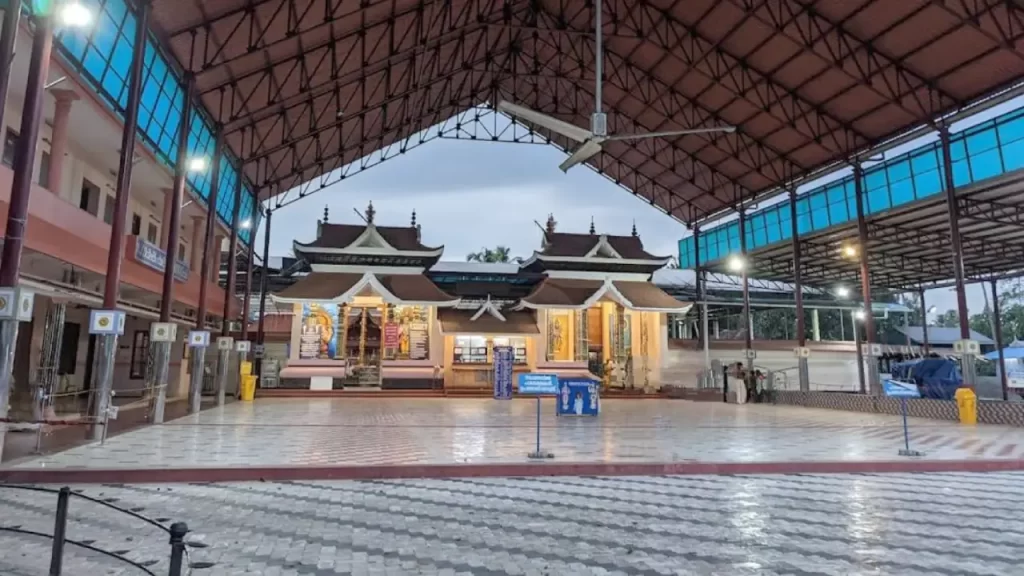
“The temple complex has a dwi-tala plan, that is, two main shrines of nearly equal significance under one roof, a relatively uncommon occurrence. The chief shrine, a square eka-tala (single-story) Sree Kovil (sanctum sanctorum), is for Lord Sreekrishna, facing east. Attached to it, to the north, is another Sree Kovil of identical pattern, facing east, for Lord Narasimha. This twin setup within the main building is a reflection of the twin respect for these powerful manifestations of Vishnu.”
“As you move around, observe the details carefully. The temple has stunning stone carvings that depict Hindu mythology stories. There are gorgeous dwarapalas (guardian deities) that guard the shrine entrances, their bodies delicately carved out of stone, standing sentinel to the divine inside. The walls may show us stories from the Puranas, representing the different leelas (divine plays) of Lord Krishna or the powerful ferocity of Lord Narasimha. These are not merely decorative; they are visual scriptures, teaching and inspiring the devotees through art.”
“Another striking feature you’ll find are the grand bronze Deepastambhams (pillars of light) that grace the front of the shrines. The one in front of Lord Krishna’s shrine is especially majestic, with several layers of lamps, while that of Lord Narasimha also has a lovely, though slightly shorter, bronze lamp post. Lit during festivals, these Deepastambhams make for an enchanting sight, lighting up the divine aura of the temple.”
“The chuttambalam, the closed circumambulatory walkway about the central shrines, has a number of entrances, providing ease in the movement of devotees. You’ll also notice individual balikal (sacrificial altars) for each central deity, although Lord Narasimha Moorthy’s is particularly smaller in size. The employment of wood in the building of roof structures, frequently decorated with elaborate carvings, is another characteristic of Kerala temple architecture, yielding both beauty and weather protection.”
“The overall design stresses function, air flow, and an atmosphere of tranquility and awe. It’s a design that speaks of reverence through craftsmanship, where every part, from the biggest beam to the smallest carving, has a spiritual function.”
Read More>> Bhakta Kannappa Temple Srikalahasti
Myths and Beliefs
“Every sacred site is a melting pot of myths and beliefs, and the Chelamattom Sreekrishna Swami Temple is no different. These are the threads that stitch the community together, direct their spiritual ways, and provide comfort and purpose in their lives. Let’s explore some of the dominant myths and beliefs surrounding this hallowed shrine.”
The Yamapuri Connection
“The most intrinsic belief, as we have discussed, is the Yamapuri connection of Lord Krishna. The devotees strongly believe that the Sankalpam of the Lord here is in the form that He took when He went to the house of Yama. This renders the temple an extremely potent location for Pitru Tharpanam, with the belief that rituals performed here guarantee freedom for the souls of ancestors. Many come here with a heavy heart, hoping to find peace and believing that their offerings here will really lead their loved ones towards peace.”
The Power of the Periyar River
“The flow of the Periyar River at Chelamattam is an eastward stream and is being considered as the ‘divine blessings’ -that is being equated with the sacred flow of Ganges at Kashi, thus making the Pitru Tharpanam rituals performed in its banks more spiritual. It is believed that a bath in those waters before the ritual cleanses the soul and makes the offerings positive.”
Adi Shankara’s Blessing
“The myth of Adi Shankara being ferried over the Periyar by Lord Vamana, and his subsequent benediction for the ever availability of useful people and boats, is a much-beloved legend. It stands for the divine presence and grace that has blessed this land for millennia. It also quietly links the temple to the tradition of spiritual masters who have trod this earth.”
No Sacrificial Altar, No Utsavabali
“Intriguingly, there is a peculiar belief and practice here: the temple compound has no sacrificial altar. Also, Utsavabali (a particular offering during festivities) and Udayasthamana Pooja (a special day-long ritual) are usually not conducted here. Another fascinating custom is that the idol is never brought out for procession during festivities without invoking it first. These peculiar customs distinguish Chelamattom Temple and are held in high esteem by the worshippers, usually owing to certain historical or mythological reasons that get transmitted orally.”
The Transition from Wooden to Stone Idol
“That the faith about the transformation of the Lord Krishna idol from wood (daru-vigraha) to stone (shila-vigraha) at the behest of Sakthan Thampuran, Kochi King, is also a part of the mysticism of the temple. That the story that the stone idol was destined for Thiruvananthapuram somehow reached Chelamattam contributes to the faith in divine fate and the particular will of the Lord for this temple.”
Specific Offerings and Their Benefits
“Devotees also have firm beliefs regarding the benefits of certain poojas and offerings. For example, Narasimha Manthrarchana is said to confer wealth, spiritual intelligence, and knowledge, and eliminate negative planetary influences and sin. Neyyabhishekam (ghee anointing) is done to end poverty. Offerings to the Rakshass (a benevolent spirit) are said to achieve victory in land affairs, while Noorum Palum is offered to appease the Nagas (serpent deities) for protection and fertility. Such beliefs are the very essence of everyday devotion, determining offerings and prayers on the basis of personal needs and aspiration.”
Special Poojas Conducted
“The Chelamattom Sreekrishna Swami Temple, being the extraordinary coming together of deities and holy importance, has poojas and offerings that are suited to various aspects of a devotee’s life. Let us examine some of the special poojas conducted here, each of which has its own import and wished-for result.”
Ancestral Liberation (Pitru Moksha)
Bali Tharpanam: The most important here is this, done mostly on new moon (Amavasya) days. Devotees make offerings of rice, sesame seeds, and other items to their deceased ancestors, in their name, asking for their release from the cycle of birth-rebirth and for peace after death. The special eastward flow of the Periyar River increases the effectiveness of this ritual.
Thilahavanam: Usually done in conjunction with Bali Tharpanam, it is a fire ritual where sesame seeds and other sacred offerings are made into the sacrificial fire, which has the special intention of appeasing and freeing ancestral spirits.
For Wealth, Health, and Well-being
Narasimha Manthrarchana: For Lord Narasimha, this pooja is a chanting of powerful mantras to invoke blessings for wealth, spiritual insight, knowledge, and safeguarding from evil planetary forces and sin.
Neyyabhishekam: A significant abhishekam (ritual bathing of the idol) in which ghee (clarified butter) is used to bathe the idol. This is said to eliminate poverty and usher in prosperity and wealth.
Dhanwanthari Manthram: In the form of Lord Dhanwanthari, the divine healer, this pooja is done for good health, cure from sickness, and general well-being.
Bhagya Sooktham (Narasimham): Pooja offered to Lord Narasimha is said to grant good luck and dispel misfortunes.
For Specific Desires and Protection
Santhana Gopalarchana: For couples requiring blessings for children, pooja is offered to Lord Krishna in his Santhana Gopala form, the bestower of progeny.
Swayamvara Archana: Those looking for an appropriate marriage partner and a blissful married life specifically perform this archana (chanting of names).
Vidhya Manthram: For scholars and those aspiring for academic achievements, this pooja entails chanting mantras for intelligence and wisdom.
Ganapathy Homam: Dedicated to Lord Ganesha, the remover of obstacles. It is done always when starting a new thing or cleansing hindrances in life.
Noorum Palum: Dedicated to the Nagas or serpent deities, it is believed that they are propitiated for fertility, freedom from skin disorders and well-being of the family as a whole.
Rekshasnivedyam: Dedicated to the Rakshass believed to gain victory in disputes over lands and properties.
General Offerings and Daily Rituals
Pushpanjali: Basic but deep flower offering to the god, with chanting, done for general good health and blessings.
Appam, Palpayasam, Ellupayasam, Kootupayasam: Different sweet offerings, each with its own traditional connotation and favored god.
Neyvilakku: Ghee lamp offering, representing light, knowledge, and eliminating darkness.
Annadanam: The distribution of food to the devotees and poor, a very meritorious act that is pleasing to the gods and bestows plentiful blessings.
“The temple follows a strict routine of daily poojas, starting with Usha Pooja in the morning, Uchcha Pooja during noon, and Athazha Pooja in the evening, so that there is a steady flow of devotion all through the day.”
Read More>> 6 Arupadai Veedu Murugan Temples
Chelamattom Temple Timings
“To plan your visit efficiently, you should be aware of the temple timings. Similar to the majority of traditional Kerala temples, the Chelamattom Sreekrishna Swami Temple follows a split schedule, with the temple being closed in the afternoon for a few hours.”
Morning Timings: Typically, the temple opens its doors at 5:00 AM and stays open until 12:00 PM (noon).
Evening Timings: Following a temporary closure, the temple is opened again at 5:00 PM and can be visited until 8:00 PM.
“Please note that these timings are sometimes slightly flexible on special festival days or on certain rituals, so it is always wise to confirm if you plan a visit on a certain holy occasion. Nonetheless, these overall timings will assist in planning your darshan (holy viewing of the deity) and poojas.”

Places to Visit Near the Chelamattom Temple
“Kerala, my friends, is indeed ‘God’s Own Country,’ and the area surrounding Chelamattom Sreekrishna Swami Temple is scattered with lots of other important Hindu temples, each distinct in its own history and attractions. If you have time, I strongly suggest taking your spiritual pilgrimage to these other nearby sacred places.”
Adi Shankara Janmabhoomi, Kalady: This is the most important local spiritual site. Kalady is where the great Advaita master and saint Adi Shankara was born. The Sree Ramakrishna Advaita Ashram and the Sri Adi Sankara Keerthi Sthamba Mandapam (memorial tower) are the major attractions here. It’s a site of deep philosophical and spiritual significance, where you can sense the energy of a real spiritual giant. It’s just a quick drive from Chelamattom.
Thrikkakara Vamanamoorthy Temple, Ernakulam: Another major pilgrimage centre is this ancient temple devoted to Lord Vamana (the fifth avatar of Lord Vishnu). This is purported to be the sole temple in India that is dedicated solely to Vamana. The temple is also renowned for the Onam festivities, as Vamana is organically part of the mythology surrounding King Mahabali and Onam.
Aluva Mahadeva Temple: Situated on the banks of the Periyar River in Aluva, this well-known Shiva temple is a sacred pilgrimage site, especially during the Maha Shivaratri festival. The swayambhu (self-existent) Shiva lingam here is believed to originate from the river itself and hence is a strong and special shrine.
Chengamanad Mahadeva Temple, Aluva: A very old temple of Lord Shiva, famous for its architectural design and serene surroundings.
Chottanikkara Bhagavathy Temple, Ernakulam: Perhaps one of the most popular Devi temples in Kerala, this temple is famous for healing mental ailments and other diseases. This is a very colorful and frequented temple, particularly by the people who visit seeking cure and blessings from Goddess Bhagavathy.
Iringole Kavu Temple of the Forest: Situated close to Perumbavoor, this historic temple is within a sacred grove (kavu) and is a shrine dedicated to Goddess Bhagavathy. It’s one of the 108 Durga temples of Kerala and is a peaceful and mystical experience, a genuine representation of the traditional Kerala temple architecture amidst nature.
Sree Poornathrayeesa Temple, Tripunithura: A majestic temple of Lord Vishnu in Tripunithura, near Kochi. It is famous for its grand festivals, particularly the Vrishchikotsavam, and its affluent traditional architecture.
“These are only some of the numerous sacred pearls which encircle Chelamattom. Each is a distinct experience and a further understanding of Kerala’s religious scenario.”
Read More>> Peruvanam Mahadeva Temple Thrissur
Accommodation Options
“For visitors planning a night’s stay or longer pilgrimage, there are a range of accommodations options within easy reach of the Chelamattom Sreekrishna Swami Temple. Since it’s situated in Ernakulam district, which is well connected and near Cochin International Airport (COK), you’ll have various options ranging from affordable guesthouses to more luxurious hotels.”
Near Kalady and Perumbavoor (Closer to the Temple):
Homestays and Guesthouses: There are good numbers of local homestays and small guesthouses available at Kalady and Perumbavoor, which are the nearest towns to Chelamattom. They provide a more intimate and usually cheaper experience. They may not provide all the luxuries of a large hotel, but they provide an opportunity to see the local way of life.
Budget Hotels: There are some humble hotels in Perumbavoor and Kalady, providing minimal comforts such as air-conditioned rooms, bathrooms attached, and occasionally in-house restaurants. Try searching for places like Princess Residency, Grace Mary Residency, or various OYO hotels around.
Near Cochin International Airport (Nedumbassery – 10-15 km from Temple):
“If you like new amenities and are arriving by air, it is an easy choice to stay around Cochin International Airport (COK) in Nedumbassery. Most hotels here provide airport transfers and improved amenities.”
Mid-Range to Luxury Hotels: There are more of these around the airport, including:
Flora Airport Hotel
Hotel Gee Bee Palace
Transit Suites by GrandWest
Diana Heights Luxury Hotel
Blue Bell Airport Hotel
PGS VEDANTA, COCHIN (serviced apartments)
In Kochi City (A Little Farther, but more choices):
“For those who want to integrate their spiritual pilgrimage with discovering Kochi city’s vibrant culture, you can choose to stay in Kochi itself and make a day trip to Chelamattom. Kochi has a huge choice of hotels, ranging from luxury resorts to boutique hotels.”
Luxury Hotels: Radisson Blu Kochi, Crowne Plaza Kochi, Grand Hyatt Kochi Bolgatty.
Mid-Range Hotels: Many well-known hotel chains and standalone hotels providing comfortable accommodations.
Budget-Friendly Options: There are a lot of choices of lodges, guesthouses, and homestays within Kochi.
Accommodation Tips:
Book Ahead: If you are planning to go when there are peak festival periods (such as the annual festival or Karkidaka Vavu), it is strongly recommended that you book ahead of time.
Check Reviews: Read recent reviews to confirm the location meets your criteria for cleanliness and service.
Location: Think about how you’re going to get there. If you own a vehicle, location freedom is higher. If you’re using public transport, it may be more convenient to stay nearer to bus stops or stations.
How to Reach the Chelamattom Sreekrishna Swami Temple
“How to reach the Chelamattom Sreekrishna Swami Temple is easy enough, considering that it lies in the well-connected Ernakulam district of Kerala. Here’s a step-by-step account of how you can reach here, by air, rail, or road.”
By Air:
Nearest Airport: The nearest big airport to Chelamattom is the Cochin International Airport (COK) situated at Nedumbassery. It is about 10-15 kilometers from here, and hence highly convenient for those traveling by air.
From the Airport: After reaching COK, one can simply take a taxi or a pre-paid cab directly to Chelamattom Sreekrishna Swami Temple. The trip will generally take 20-30 minutes, depending on traffic. Alternatively, for smaller distances, auto-rickshaws are also available from the airport to nearby towns such as Kalady or Perumbavoor, and then another auto or bus to the temple.
By Rail:
Nearest Railway Stations
Angamaly for Kalady (ANGM): This is the nearest railway station, roughly 13-15 kilometers from the temple. It’s a big station with good connectivity.
Aluva (AWY): A bigger railway junction, Aluva is also well connected and is roughly 20-25 kilometers from Chelamattom.
Ernakulam Town (ERN) / Ernakulam Junction (ERS): These are the major railway stations in Kochi city, roughly 35-40 kilometers away. They have very good connectivity to all major cities of India.
From Railway Station: From each of these stations, you can conveniently hire a taxi, auto-rickshaw, or board a local bus to get to the temple.
By Road:
Bus: The Chelamattom Temple is also well linked by road and is conveniently located between Kalady and Perumbavoor on the Main Central Road (MC Road).
Perumbavoor Bus Stand: It is one of the nearest big bus stands, roughly 5-7 kilometers from the temple.
Kalady Private Bus Stand: Approximately 4.5 km from the temple, it has good connectivity to the surrounding areas.
Private and KSRTC buses regularly run on MC Road, and you can get down at the Chelamattom stop.
Taxi/Auto-rickshaw: Taxis and auto-rickshaws are easily found from surrounding towns such as Kalady, Perumbavoor, Angamaly, and Aluva. Private cabs may also be hired for a comfortable ride from bigger cities such as Kochi.
Driving: If you drive your own car, the temple is conveniently accessible by the MC Road. Parking space is generally available near the temple grounds, although it may get packed during peak festivals.
Approximate Distances:
From Ernakulam (Kochi City): ~35-40 km
From Kalady: ~4.5 km
From Perumbavoor: ~5-7 km
From Angamaly: ~13-15 km
“No matter what mode of transport you choose, the ride to Chelamattom Sreekrishna Swami Temple is a memorable one, winding through Kerala’s lush landscapes, readjusting your mind and spirit for the sacred experience in store.”
Read More>> Thiruvizha Mahadeva Temple Kerala
FAQs about Chelamattom Sreekrishna Swami Temple
“As your guide, I get asked lots of questions regarding this amazing temple. So, let’s discuss some of the most common questions that are probably on your mind!”
Q1: Why is Chelamattom Temple known as Dakshina Kashi?
A1: The Chelamattom Sreekrishna Swami Temple is so named as Dakshina Kashi (Kashi of the South) mainly due to its great spiritual relevance for Pitru Tharpanam (ancestral rites). It is believed that Lord Krishna, in this avatar here, gave moksh to souls in Yamaloka. Also, the singular eastward flow of the Periyar River here is said to be as sacred as the Ganges at Varanasi, and hence it is a perfect location for these ancestral ceremonies.
Q2: Which are the major deities worshipped at Chelamattom Temple?
A2: The main deity is Lord Sreekrishna. The temple also boasts large shrines for Lord Narasimha and Lord Vamana, making it a special place to worship three key incarnations of Lord Vishnu under one roof. Sub-deities include Lord Ganapathy, Lord Sastha (Ayyappa), and Naga Devatas.
Q3: Is there a dress code to visit Chelamattom Temple?
A3: Yes, as in most traditional temples in Kerala, there is a dress code.
For Men: Traditional clothing such as a dhoti (mundu) is preferred. Shirts are not usually permitted within the Sree Kovil (sanctum sanctorum), although you can wear a shirt in the outer chuttambalam.
For Women: Sarees, salwar kameez, or other traditional Indian attire are acceptable. Shoulders and legs should be covered with modest clothing generally.
It’s always best to err on the side of caution and dress traditionally to show respect for the sanctity of the temple.
Q4: Are cameras and mobile phones allowed inside the temple?
A4: In general, electronic devices, such as cameras and mobile phones, are prohibited within the temple grounds, particularly within the chuttambalam (inner circumambulatory path) and around the Sree Kovil. This is to preserve the sanctity and serene environment of the temple. You may find lockers outside where you can leave your belongings.
Q5: What is the optimal time to visit Chelamattom Temple?
A5: The temple is usually nice to go to during the cooler season, October to March. If you want to see the great annual festival, schedule your visit during the Thiruvonam star in Kumbham (Feb-March). For Pitru Tharpanam, new moon (Amavasya) days, particularly Karkidaka Vavu (July-August), are special, but also the most crowded.
Q6: Are there any special architectural aspects of the temple?
A6: Yes, the Chelamattom Sreekrishna Swami Temple reflects traditional Kerala architecture in its sloping roofs, carvings on wood, and stone sculptures, especially the beautiful dwarapalas. A special feature is its dwi-tala structure, which has both Lord Sreekrishna and Lord Narasimha residing in separate but joined Sree Kovils under the same roof. The availability of lovely bronze Deepastambhams is also to be noted.
Q7: Is it possible for non-Hindus to enter the Chelamattom Temple?
A7: Non-Hindu access to temples in Kerala can be variable. While some temples may have prohibitions on non-Hindus stepping into the innermost sanctum, there are plenty of temples that welcome courteous visitors into the outer courtyards. It is always better to clarify with the temple authorities upon arrival or adhere to any notice boards for entry.
Q8: What are some significant offerings (vazhipadu) at the temple?
A8: The most sought-after offerings are Bali Tharpanam for ancestors, Neyyabhishekam for prosperity, Santhana Gopalarchana for descendants, Swayamvara Archana for marriage, Ganapathy Homam for removing obstacles, and a range of payasams (sweet puddings) such as Appam and Palpayasam. A comprehensive list of poojas and offerings is available at the temple counter or on the website.
“I hope these questions bring insight and invite you to experience the deep divinity of Chelamattom Sreekrishna Swami Temple yourselves. It’s not a trip to a place, but a journey to a deeper understanding of tradition and faith.”