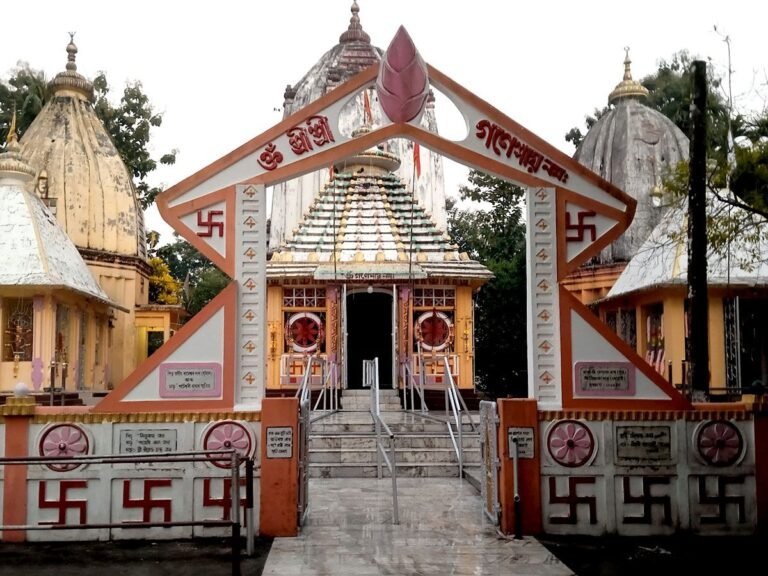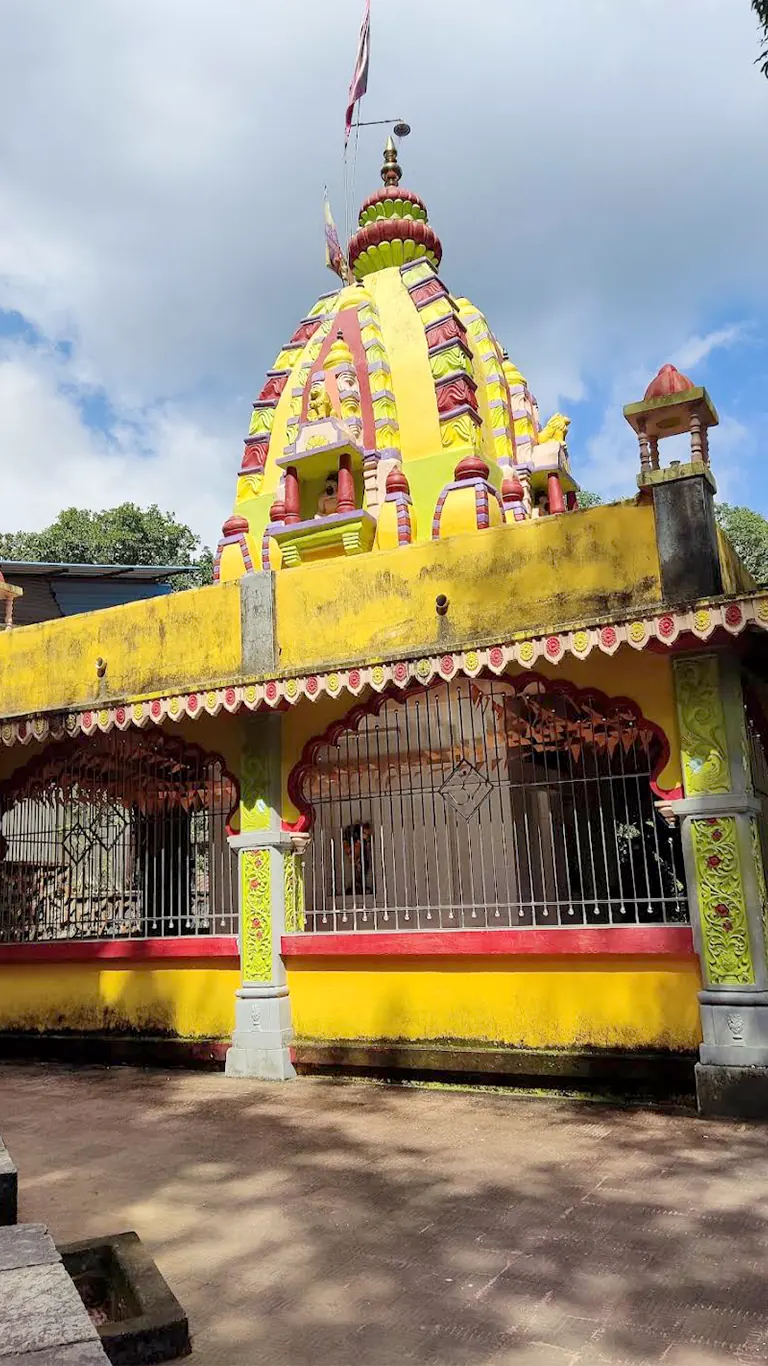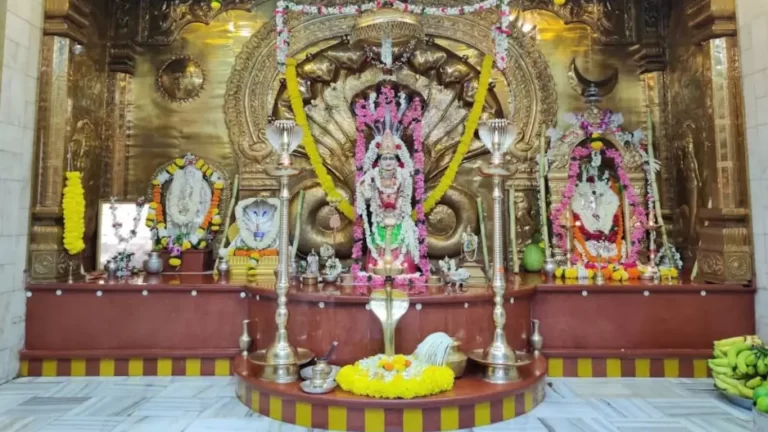
Girijatmaj Ganpati Temple Lenyadri
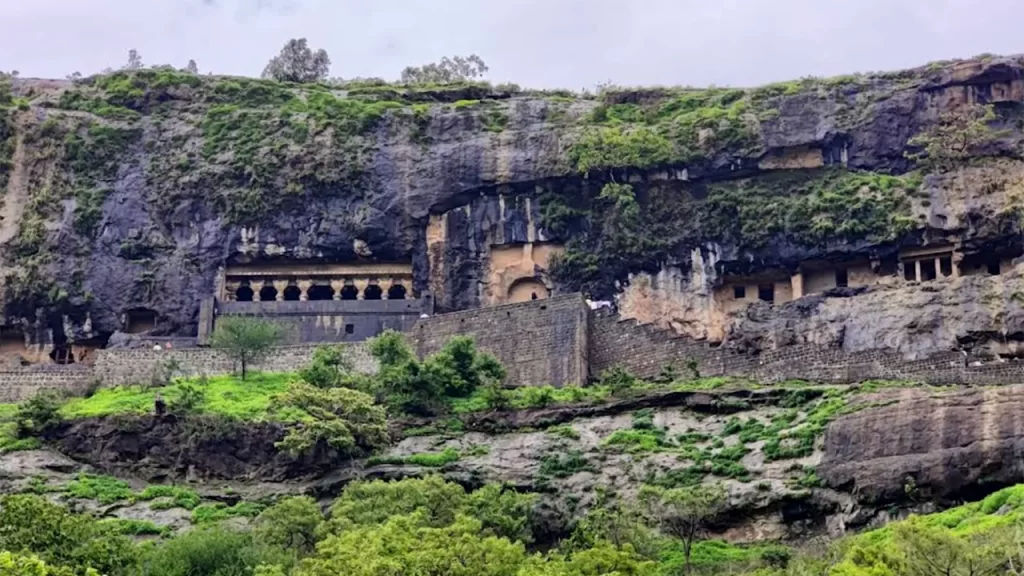
The Girijatmaj Ganpati Temple, which is also popularly referred to as the Lenyadri Ganpati Temple. Tucked away in the beautiful Lekhanadri or Lenyadri Hills, only about 5 kilometers away from the ancient city of Junnar situated in the Pune district of Maharashtra, this temple is different from what many people imagine when they think of temples. This temple isn’t characterized by a tall spire or a busy street that leads right up to its entrance. Instead, the Girijatmaj Ganpati Temple can be found within the depths of Cave 7, which is a part of a collection of 30 ancient rock-cut caves.
The temple enjoys immense historical significance as the only temple in the revered Ashtavinayak pilgrimage circuit that is situated on a mountain and in an ancient cave complex. As a tourist or pilgrim interested in experiencing this historical site, you will find a unique combination of architecture and spiritual sanctity awaiting you at this temple. Join me on a tour of this magical place!
Girijatmaj Ganpati Temple History
As your guide, I often emphasize that one needs to have insight about the dirt, stone, and stories beneath which these holy structures were built. The history behind the Lenyadri Ganpati Temple is nothing less than a miraculous fabric where the monastic life of Buddhism effortlessly merges with Hindu devotion practices.
Buddhist Origins and Satavahana Period
Much before this cave reverberated with the praises of “Ganpati Bappa Morya,” it served as a haven of quietude for Buddhist monks. Through archaeologic surveys, it has been found that the Lenyadri Ganpati Temple complex has an origin period between 1 BC – 3 AD. The period during which this cave complex was excavated belonged to the ruling dynasty of Satavahanas who reigned Western India and were great patrons of trade, art, and cave excavation.
The name ‘Lenyadri’ has a profound meaning attached to it which is quite simple to understand. The cave’s name comes from two words – the Marathi term ‘Lena’ meaning cave and the Sanskrit word ‘Adri’ meaning mountain/stone. Some of the inscriptions found in Brahmi script indicate that various merchants, royal and common people made generous contributions for the purpose of religious merit.
How Was the Shift to a Ganesha Temple?
At this point, you may ask yourself: how can a Buddhist Monastery evolve into such a popular temple dedicated to Lord Ganpati? The precise century in which this evolution took place remains shrouded in mystery. However, one thing that can be said for sure is that it happened sometime during the late medieval era when the worship of the Ganapatya (devotees of Lord Ganesha) sect began to rapidly grow in the state of Maharashtra.
The local population and sages realized that the natural formation of rocks in Cave 7 constituted a manifestation of Lord Bappa (Ganapati). Under the reign of the Peshwas – who were devoted followers of Lord Ganapati – the Lenyadri Ganpati temple underwent major renovations and attained cultural importance. It was included as the 6th temple to be visited in the highly valued Shastrokt Ashtavinayak Yatra.
There is also an interesting history of the Peshwas that adds to the mystery of the Pataleshwar cave temple. The Peshwas thought that the rough statue of the deity within the cave represented the back of Ganesha and not the front since his face was facing inward towards the inner recesses of the mountainous rock formation. However, efforts made by the Peshwas to find out the hidden chamber behind the rock did not meet any success.
Religious and Cultural Significance
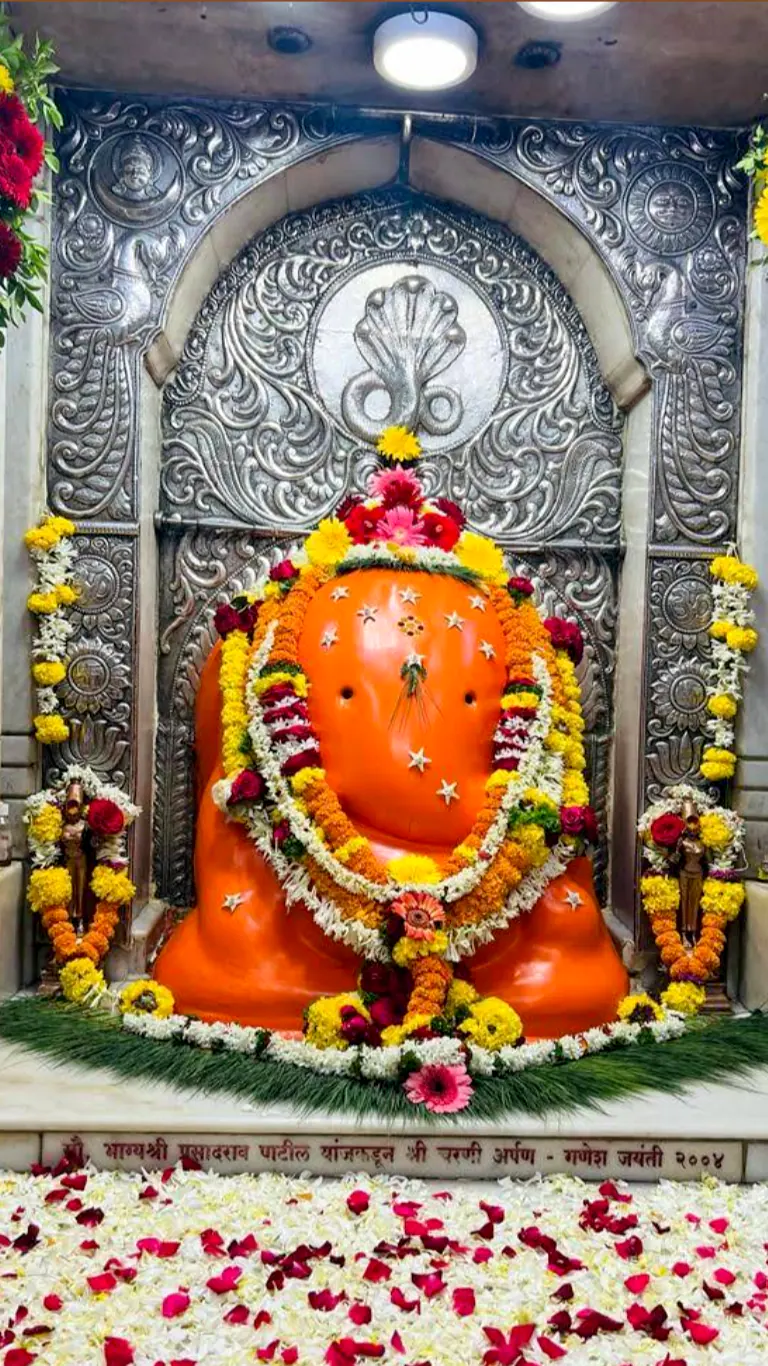
To fully appreciate the profound significance and spiritual importance of the Girijatmaj Ganpati temple, one must examine what lies behind the naming of this temple complex. The term “Girija” is another name used to denote Goddess Parvati (daughter of the mountain Giri), while ‘Atmaj’ refers to son. In this sense, ‘Girijatmaj’ could be translated as “Son of Parvati”. This site in particular, which comprises one of the nodes of Ashtavinayak pilgrimage, is unique in that Lord Ganesha here is venerated in his form of Bala Rupa, that is, as an innocent baby.
References in Holy Scriptures (Puranas)
The sacred nature of this temple and pilgrimage is further supported by references in ancient scriptures, including Ganesha Purana and various Sthala Puranas (regional scriptures). It is referred to in them as either Jeernapur, Lekhan Parvat, or Lekhanadri.
According to the holy scriptures, Goddess Parvati wished to have a child and, for this purpose, undertook strict Tapasya (penance) for twelve years, giving up all luxuries, feeding only upon rudimentary provisions, and meditating within these caves. In recognition of her devotion, Lord Ganesha appeared before her and assured her that he would take birth from her womb.
It is said in the texts that on the day of Bhadrapada Shukla Chaturthi, Parvati shaped an idol using the clay and ointments of her body. Ganesha appeared in this idol, making him come alive as a bright child with three eyes and six hands. The Ganesha Purana tells us that young Ganesha lived for fifteen blissful years at the very spot of Lenyadri, defeating the evil demons of Tripurasur, and playing the divine games of childhood amidst these rocky mountains.
Read More>> Surkanda Devi Temple
Architecture and Design
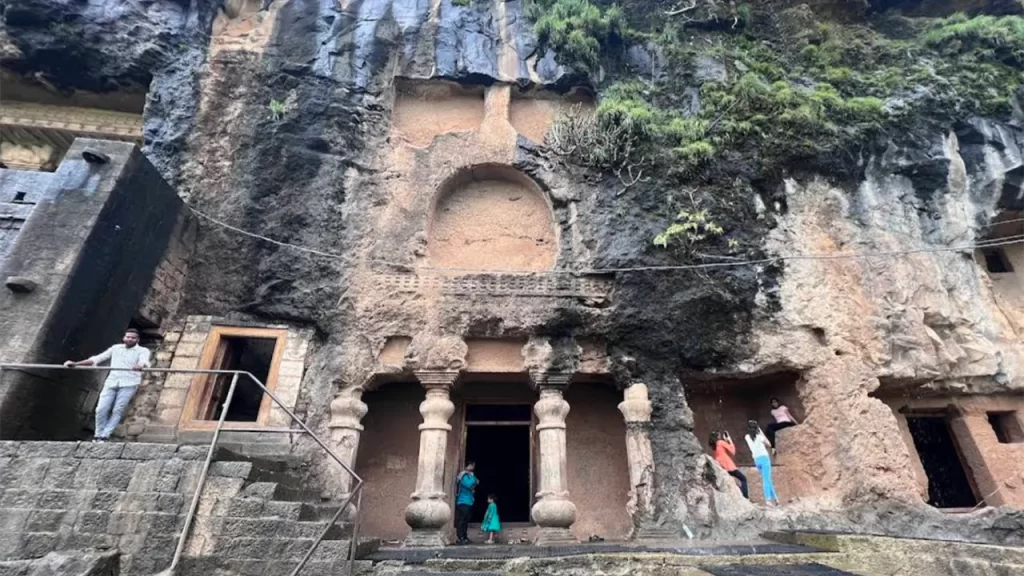
As we ascend the stairs and enter Cave 7, it’s worth taking a moment to appreciate the hands behind the carving of the Girijatmaj Ganpati temple. In architectural terms, the temple is a total disruption of the conventional model used in Hindu temples. The temple doesn’t have a towering Shikhara (spire) pointing heavenward nor a majestic Gopuram (gateway) that features hundreds of brightly colored mythological characters.
Lenyadri Ganpati temple is a perfect example of rock-cut architecture created by early Buddhists as a Vihara (monastery).
The Mystery of the Unpillared Hall
Walk into the assembly hall of the temple (Sabhamandap) and lift your head. Do you see anything odd? The hall is unsupported by any pillars.
Take a few moments to realize what this means. About 2,000 years ago, engineers carved the face of a cliff, removing solid rock, to form a huge hall measuring 53 feet in length, 51 feet in width, and 7 feet high. Building a broad rock ceiling devoid of any pillars bearing the pressure of the massive rock formation is a baffling structural engineering task.
Design Features and Plan
The architectural design is not only very practical but also extremely spiritual.
- Monastic Cells: The walls of the huge structure house twenty small meditation cells made from stone. These rooms were used by Buddhist monks who stayed and meditated within when it served as a Vihara. They contribute to the ancient atmosphere of the hall.
- Verandah: Before entering the huge hall, visitors first go through a verandah at the entrance. The verandah houses six huge pillars that have the beautiful capital of Satavahana style, depicting elephants, cows, and lions guarding the cave.
- Lighting: The whole cave faces South, whereas the innermost part faces East. The cave opening was done in such a manner that sunlight can illuminate the whole temple hall all day long without any dark corners.
Main Attractions or Highlights
When you enter the premises of the Girijatmaj Ganpati temple, there are several places that demand your attention. Here we outline the key points you definitely need to pay attention to when visiting the Lenyadri Ganpati temple:
Sanctum Sanctorum (Garbhagriha)
The center of worship is located in one of the cells behind the wall of the temple that has been transformed into a sacred Garbhagriha.
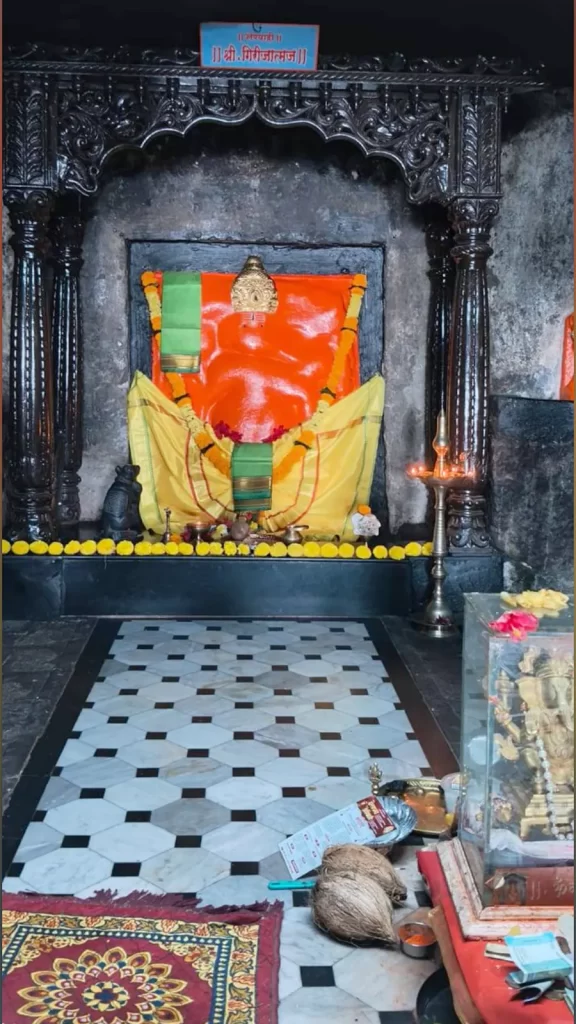
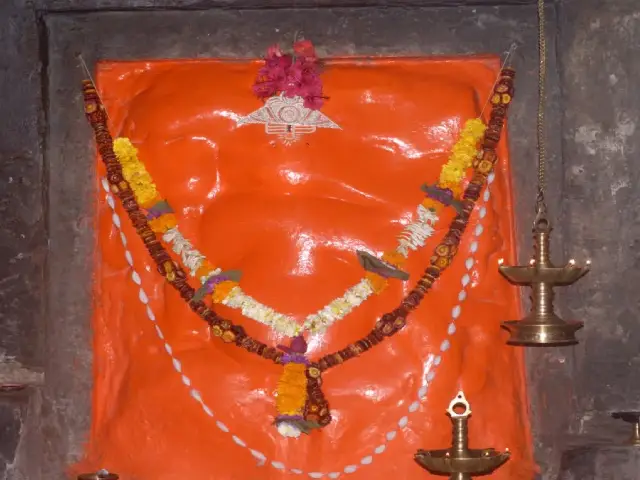
Instead of an idol carved from a single piece of marble or granite found in nearly all temples, the idol of Girijatmaj has been created as a fresco carved on the wall of the rocky cave. This is a low relief carving profusely smeared with saffron-orange colored Sindoor paste. As the carving is made on a live rock surface, it is not possible to perform the Pradakshina ritual in front of it.
As far as details are concerned, the idol itself is very plain and minimalistic. Ganesha’s face with a slightly tilted head allows devotees to admire only one eye. The idol looks very primitive and connected to the Mother Earth. The idol used to be protected by armor-plates covering its entire body; however, today the idol looks just like a bare stone.
The Historic Wall Murals
As you relax within the large chamber, examine the wall and ceiling made of plaster. You can view fragments of magnificent murals or paintings that tell stories about various episodes in Lord Ganesha’s life; from his playful activities when he was a little boy called Bal Ganesha, to the grand preparations for his wedding, and his dramatic clashes with evil powers.
The Double Water Cisterns
Right outside the entrance of the rock cave, you can spot two natural water tanks carved in rocks (Pohis). The tanks contain the rainwater that falls through the mountain rocks for over two thousand years. Even during the hottest season of the year, the tanks continue to retain fresh water that is pleasantly cold for weary visitors.
Read More>> Vajreshwari Temple Maharashtra
Lenyadri Ganpati Temple Timings and Rituals
For maximum experience of the divine power at the Ganpati temple of Girijatmaj, there is a necessity for your visit to coincide with the divine time schedule followed within the premises. This calls for knowing the timings of operations conducted at the temple along with their associated activities that take place each day.
Timings
This temple of God begins opening the doors of rocks as early as 5:00 AM until late hours in the evening at 8:00 PM (Note: Due to safety measures, the entry to steps might get closed after 6:00 PM due to the Archaeological Survey of India).
Daily Pujas
Daily pujas at Lenyadri Ganpati temple are very graceful and beautiful in simplicity:
- Panchamrut Pooja (Morning): Done in the early morning, the rock-cut idol is respectfully worshipped with milk, curd, honey, sugar, and ghee along with a fresh application of sindoor.
- Maha Aarti (Noon): Occurs between 12:00 pm to 12:30 pm, and it is done along with the ringing of brass bells in an echoing manner within the unpillared hall.
- Sayan Aarti (Evening): It is an evening aarti done immediately before the closure of the temple with great silence engulfing the hill temple.
- Insider Guide on Special Pujas: Different from other big commercial temples where rituals take place on behalf of the devotee behind the bars, in Lenyadri Ganpati temple you will have a much more intimate experience. You can sit in the hall, sing, and make your offerings without any interference. The local Devasthan Trust takes care of all the religious functions efficiently.
Dress Code & Climbing Etiquette
No strict dress code has been enforced here; however, as a mark of reverence for the holiness of the Girijatmaj Ganpati shrine, it is mandatory to dress decently. Refrain from wearing dresses, shorts, and other similar attire.
Important Tip: Given that you will be climbing up a mountain, it is essential to wear light clothes. Additionally, remove your shoes before entering the cave.
Festivals and Events
While this Ganpati temple preserves its peaceful, meditative ambience during normal working days, it becomes a sea of joy, colors, and spirituality during major Hindu festivities.
Major Festivals
If you want to immerse yourself into the peak level cultural celebrations in Maharashtra, try visiting the temples during these two major annual festivals:
- Ganesh Bhadrapada Chaturthi (Aug./Sep.)
This is the popular mainstream Ganesh birthday celebration held across India. Fairy lights illuminate the whole hill area, and marigolds decorate the stairs. Crowds of devotees assemble along the hill slopes chanting the “Ganpati Bappa Morya” slogan together. It is a festive mood with music playing everywhere and immense devotion from everyone. - Maghi Ganesh Jayanti (Jan./Feb.)
This is undoubtedly the most important festival celebrated exclusively at this particular temple since according to scriptures this is the period when Ganesha was born here from mother Parvati’s body. The temple management arranges continuous bhajans, palkhi parades around the hill, and mahaprasad for all visitors.
Crowd Levels & the Optimum Timing
- Peak Crowds: The weekend days (Saturday & Sunday), holiday periods, and both the fortnight periods of Bhadrapada & Maghi attract huge numbers of devotees, resulting in very heavy crowd levels. In case you visit the shrine at these peak timings, it will take around 2 to 4 hours of time for darshan, and the staircase to the cave shrine will be crowded.
- The Low-Traffic Days: To experience a calm, contemplative, meditative atmosphere, where you can sit peacefully within the unpillared shrine and do some reflection, consider visiting either on a Tuesday or an ordinary working day morning period (7:00 am to 10:00 am).
- The Ideal Timing: The optimum period to visit the Lenyadri Ganpati Temple is during the monsoons (June to September), followed by the beginning of winters. During the rainy season, the majestic Sahyadris get covered in green blankets of grass and small falls stream down from the black rocks just outside the cave shrines.
Practical Traveler Information: How to Reach and Facilities
All right, it’s time to get the facts out of the way! To get to the temple, you have to take an enchanting route through the agricultural lands of Maharashtra, which will lead you past vineyards and tomato farms.
How to Reach Lenyadri
How to Get There by Bus?
There are many regular state transport buses operated by the Maharashtra State Road Transport Corporation from Pune (bus stands at Shivajinagar or Swargate) and Mumbai to Junnar. After getting down at Junnar bus depot, you can hire a shared local auto rickshaw or a bus for a direct ride to the base of Lenyadri hills.
How to Get There by Car or Taxi?
Traveling from Pune to the temple by car/taxi down to Nashik highway or from Mumbai via Malshej ghat is strongly advised due to excellent road condition and picturesque landscape of rural Maharashtra.
How to Reach Cave No.7?
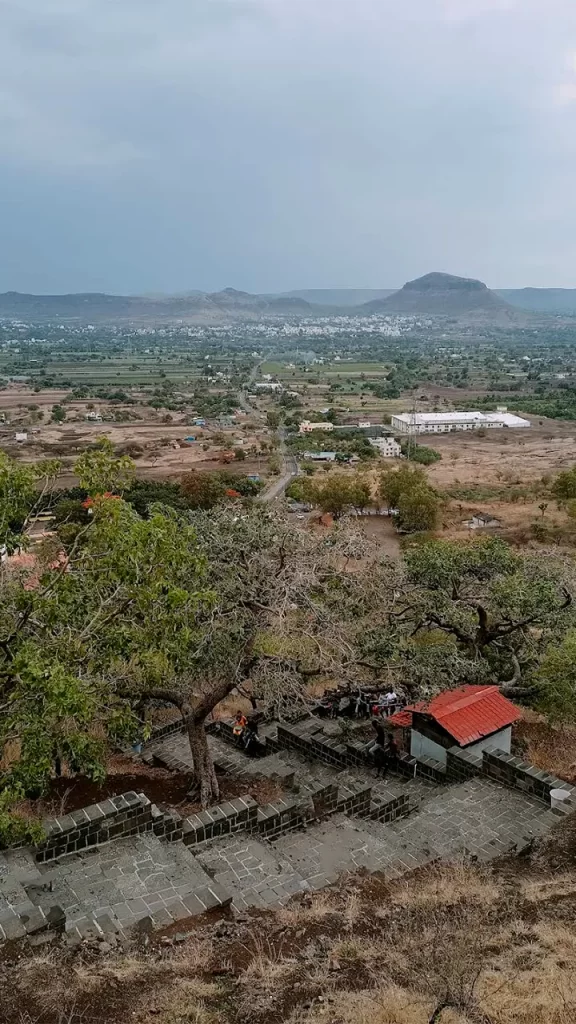
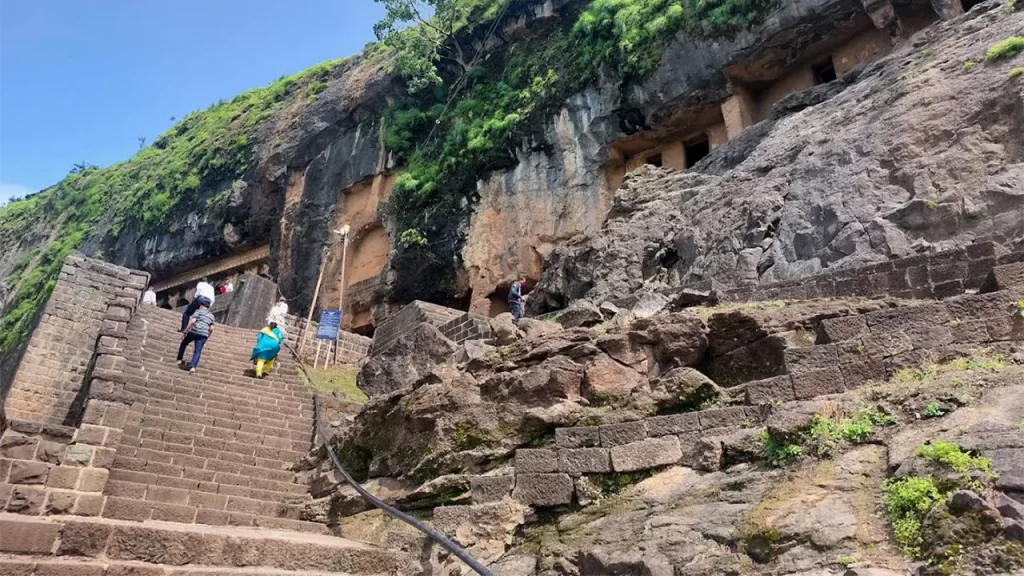
You’ll need to walk about 307 to 315 steps carved into the rocks, all paved and with railings on either side.
Duration: Walking up there takes from 20 to 40 minutes. Along the route, there are some bench-type stone rest spots for you to take a break, catch your breath and enjoy the splendid view of the Kukadi River winding through Junnar town below.
Read More>> Powerful Annavaram Temple Sri Veera Venkata Satyanarayana Swamy
Entry Fees & Travel Facilites
- Entry Fees: There is absolutely no entry fees to visit the Girijatmaj Ganpati temple. But considering that these are caves which are national monuments and thus fall under the purview of ASI, there could be a nominal token fee of around ₹5 to ₹25 for visiting these caves.
- Food: Devasthan Trust serves delicious, traditional Mahaprasad from Maharashtra for visitors for free or at subsidized costs between 12:00 PM to 2:00 PM. At the base of the hill, various local vendors serve fresh coconut water, spiced buttermilk, hot snacks, fruits, and local pedhas (sweet offerings).
- Restroom: Basic toilet facility can be found at the base of the hill at the parking area.
- Accommodation: Temple Trust arranges basic and economical accommodations for the visitors at the base of the hill (Yatri Niwas). In case one requires a good place to stay then there are mid-level hotel or eco-resort options in nearby Junnar town.
Accessibility to Elderly or Disabled Persons
Now let’s move to a practical analysis, considering the fact that being an old rock-cut cave temple, accessibility to the spot through wheelchairs cannot be made, and obviously there are no elevators or other mechanical aids present there.
But there is another good solution to this problem! If you are an elderly person or have any other difficulty in movement, then the people living around here provide you with a service using Doli, which literally means palanquin. Two or four sturdy young men can carry you up to the spot by placing you in a wooden chair for 307 steps.

Dos and Don’ts
To make your pilgrimage to Lenyadri Ganpati Temple an easy, safe, fun, and memorable one, here is a quick list of tips that should come handy:
The Do’s
- Do be on the look-out for the Monkeys! The entire area of Lenyadri hills is densely populated by extremely courageous, intelligent, and agile wild macaques. Ensure that you tuck your sunglasses, spectacles, cell phones, and wallet in your bag. Please do not hold open plastic bags, flowers, or boxes of eatables in hand because the monkeys would pounce on them without any hesitation.
- Do bring along your personal water bottle for yourself, but do not leave it loose. It must remain securely tucked into a backpack.
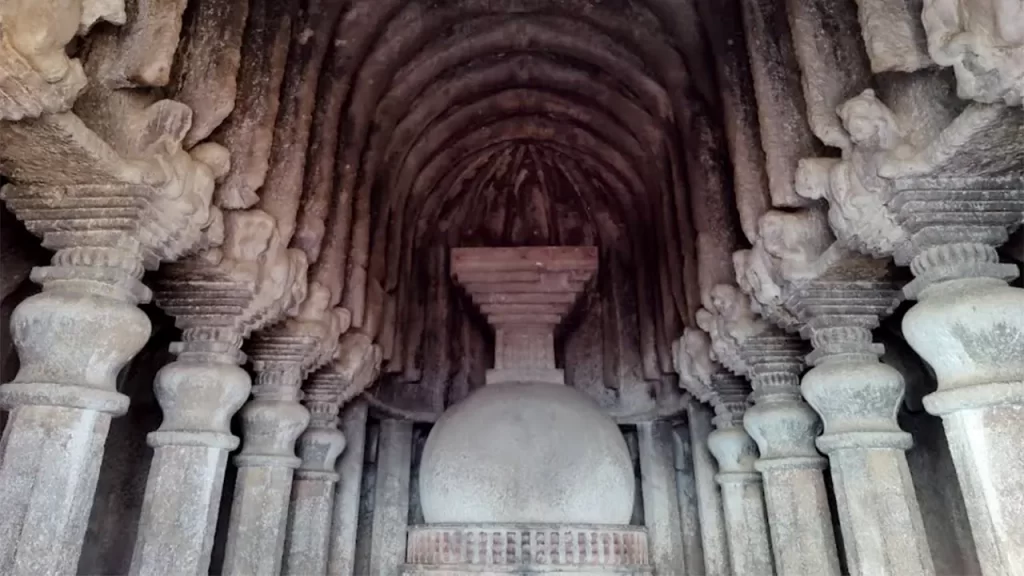
- Do take some time to explore the adjoining caves. While Cave No. 7 has the Girijatmaj Ganpati temple in its interiors, the adjoining caves have beautiful ancient Buddhist architecture, featuring an outstanding Chaitya (prayer hall with rock-cut stupa) in Cave No. 6.
- Do wear strong, sturdy, and rubber-soled shoes during the rainy season.
The Don’ts
- Don’t click photos inside the holy area. Although there are no restrictions on taking photographs outside in the hills, in the outdoor areas, and even inside the outer chamber of the caves, it is strictly not allowed to click photos of the main god in the holy Garbhagriha.
- Don’t feed the monkeys. They may become more violent towards other visitors because feeding them changes their natural demeanor.
- Don’t pollute the mountain with waste material. These caves are an invaluable world heritage site. Please ensure that you throw all garbage, like used plastic bottles and other waste, in the bins available at the bottom of the hill.
- Don’t try to climb the caves, or the writings and other engravings made on the walls of the caves.
Nearby Attractions
One of the great things about the Girijatmaj Ganpati temple is that there are a number of historical sites and scenic destinations around this wonderful place. You can make your visit to the temple a complete holiday destination in a weekend! Some of the popular tourist destinations near Girijatmaj Ganpati temple are:
- Vigneshwar Ganpati Temple, Ozar (14 KM away)
Travelers undertaking the Ashtavinayak Yatra will be glad to know that the magnificent Vigneshwar Ganpati temple at Ozar lies within an easy 30 minutes drive distance from Lenyadri. This famous religious site is situated amidst the serene banks of the Kukadi river and is noted for its sparkling gold colored domes, sprawling courtyard, and deep spiritual significance. Tourists usually prefer to visit both of these sister temples on the same day during their tour. - Shivneri Fort (13 KM away)
Historical lovers will love exploring this magnificent fort which was the birthplace of the legendary Maratha warrior-king Chhatrapati Shivaji Maharaj. Shivneri Fort boasts huge gateways, ancient water cisterns called ‘Ganga-Jamuna’ and a majestic memorial hall within. Climbing up the Shivneri fort rewards visitors with splendid panoramic views of the entire valley of Junnar. - Malshej Ghat (30 KM away)
For all nature lovers who come here in monsoon time, it becomes very necessary that they visit Malshej Ghat, which is famous as one of the best mountain ranges of Maharashtra due to its hazy and foggy valleys along with numerous waterfalls and visiting pink flamingoes. - Junnar Agro-Tourism and Local Markets
Junnar is known as the “Sanitarium of India” because it has exceptionally fresh air as well as fertile farms. One should spend an hour in the markets of the town, where one can get some fresh grapes and pomegranates of Junnar.
Read More>> Martand Sun Temple: Where Sunbeams Kiss Stone
Frequently Asked Questions (FAQs)
Q1: What makes the Lenyadri Ganpati temple different from all other Ashtavinayak temples?
It is completely unique as it is the only temple of its kind which is carved in rock and is set inside the cave complex of an ancient Buddhist shrine (Cave 7). Moreover, it is situated on a mountaintop which needs to be climbed by ascending a total of over 300 steps. Besides, unlike other shrines, here the statue of the deity is in the form of a wall mural.
Q2: How many steps do you have to climb to reach the shrine and what is the duration?
It involves climbing about 307-315 steps to reach the temple. In about 20-30 minutes, one can climb up the hill as it is not very steep. Rest houses are provided at several points along the way.
Q3: Are there dolis available to ferry senior citizens to the top of the hill?
Yes, of course. If you are visiting the temple in company with elders in your family or toddlers, you should use the Dolis facility available at the base of the hill. These dolis are basically chairs carried by locals to take visitors to the top of the hill safely.
Q4: Can one visit both Ozar and Lenyadri temples on the same day?
Certainly! Both Vigneshwar Temple in Ozar and the Lenyadri Ganpati temple are separated by only 14 kilometers (a travel time of around 30 minutes). Most tour packages and individual travelers manage to visit both temples in less than half a day.
Q5: Is there any entry ticket or advance booking needed for Darshan?
No booking or entry pass is necessary. One can visit the Girijatmaj Ganpati temple without prior booking. The Archaeological Survey of India (ASI) may levy a token amount of ₹5 to ₹25 per head as an entry fee.
Q6: What should be the way out to deal with the monkeys at Lenyadri?
It is advised to exercise full precaution when visiting the temple. One should keep all the things, particularly their glasses, eatables, water bottles, electronic gadgets, and other valuables zipped safely in their bag. One should never hold any loose things in a plastic bag, avoid making eye contacts with them, and refrain from feeding and petting them.
Conclusion
As the sun starts to set behind the Western mountains, filling the hand-carved pillars of the Lenyadri caves with a soft and golden light, it is impossible not to feel a wave of tranquility and serenity. The moment you find yourself in the magnificent unpillared hall of the shrine of the Goddess’ Child Ganpati, you understand that this temple is a symbol of perfect harmony between time, nature, and spiritual beliefs of its visitors.
For two thousand years, from the time the Buddhist monks carved out the pillars of the cave complex from a solid rock face, this mountain witnessed people who came here to worship their deity and seek inner strength, peace, and spirituality.
Thus, what is your plan for visiting the magical site of Lenyadri caves and meeting the gaze of Lord Ganpati? Do you have any other questions concerning your trip and traveling to the cave complex? Let me know if there is anything I can help you with. Safe travels, my dear reader, and may Lord Ganpati always be by your side! Ganpati Bappa Morya!