Bhoo Varaha Swamy Temple Kallahalli
Bhoo Varaha Swamy Temple, Kallahalli is situated in a picturesque village by the name of Kallahalli, on the banks of the scenic Hemavathi River, in the Krishnarajapete Taluk of the Mandya district, in our beautiful state of Karnataka, India. Just imagine a place where thousands of years have gone by, and so many secrets and stories have been created. That’s what this temple is! It’s not a building; it’s more like a huge storybook sculpted in stone, just waiting for us to read its incredible stories.
You see, when I arrived here the first time, I experienced a particular sort of peace, a soothing hum in the atmosphere. It’s an assurance that lets you know that this is a blessed spot. We’re about to find out why Bhoo Varaha Swamy Temple, Kallahalli holds so much significance to so many and why it’s such a marvel. So, take my hand (not literally, obviously, but let’s imagine!), and let’s embark on our journey!
Contents
- 1 The History of the Temple: A Journey Back in Time!
- 2 The Legend of the Temple: A Story of a Boar and Our Earth
- 3 Cultural, Spiritual, and Mythological Significance of the Temple
- 4 Festivals and Special Days: When the Temple Comes Alive!
- 5 Unique Architectural Styles and Carvings
- 6 Myths and Beliefs
- 7 Bhoo Varaha Swamy Temple Timing: Hours and Busy Days
- 7.0.1 Mahaganapathi Temple Malleswaram
- 7.0.2 Gangapur Dattatreya Temple
- 7.0.3 Sri Kshetra Dharmasthala Temple: Miracles of Lord Manjunatha
- 7.0.4 Shri Bettada Byraveshwara Temple
- 7.0.5 Vidyashankara Temple Sringeri 12 Pillars Reveal Your Destiny
- 7.0.6 Venugopala Swamy Temple Kannambadi: Lost for Decades Under Water
- 7.1 Special Poojas Performed
- 8 Places to Visit Near the Temple
- 9 Accommodation Options
- 9.0.1 Salai Kumaraswamy Temple Tirunelveli
- 9.0.2 Gangaikonda Cholapuram Temple
- 9.0.3 Sivanmalai Temple: Murugan’s Sacred Box Predicts the Future
- 9.0.4 Thiruvidaikazhi Murugan Temple: Remove Sins of Even the Gods
- 9.0.5 Kanchi Kamakshi Temple: One of Powerful 18 Shakti Peethas
- 9.0.6 3BCE Pathala Sembhu Murugan Temple: Underground Copper Pot
- 10 How to Reach the Temple: Bhoo Varaha Swamy Temple, Kallahalli Address
The History of the Temple: A Journey Back in Time!
Imagine a time, long, long ago, even before your great-grandparents were born, perhaps even 2500 years ago! That’s how old some people believe our Bhoo Varaha Swamy Temple, Kallahalli is. Isn’t that incredible? It’s like a grand old tree that has stood tall through many seasons.
There is a legend that a highly wise sage, a saintly man named Gautama Maharshi, lived and did meditation right here. He conducted special prayers and penance here, so this place became a very sacred place, a “Punya Kshetra.” Even it is said that he fixed the very first idol of Lord Varaha here. So, even prior to great kings arrived, this place was already sacred due to a wise sage.
Much later, later by many years, at the time of the great Hoysala rulers, there was a king named Veera Ballala III, and he had an extremely peculiar and mystical experience in this forest. He went out hunting, which was one of the favorite pastimes of kings at that time, and he lost his way. Exhausted, he sat down to rest beneath a large tree.
While resting, he witnessed something absolutely marvelous! He witnessed some wild hunting hounds running after a bunch of tiny rabbits. Now, normally, rabbits flee from dogs, okay? But what the king witnessed was otherwise. The rabbits crossed a tiny hill, and then, surprise, surprise! The rabbits turned back and began chasing the hounds! Can you see how shocked the king must have been?
He had a deep sensation that the site was very unique and possessed some sort of magical power. Therefore, he instructed his soldiers to excavate that small hill. And what did they uncover? A portion of a mammoth, ancient idol! Overjoyed, the king instructed them to dig further and further, and slowly but surely, a massive idol of Lord Varahaswamy came to life from the ground. The king was so stunned that he wanted to construct a temple there to accommodate this marvelous idol. And thus, the Bhoo Varaha Swamy Temple, Kallahalli became what it is now, a temple constructed surrounding a miraculous find!
This temple has withstood many, many years. It has weathered sunshine, heavy rains, and even the large floods of the river Hemavathi. It’s a silent witness to history, yet standing tall on the west bank of the river. Then a king called Mummadi Krishna Raja Wodeyar handed over the management of this temple to a holy shrine named ‘Parakala Mutt,’ and they have maintained it and done all the pujas (prayers) ever since.
A few years back, the temple was not very crowded, but then one nice industrialist from Dubai, Mr. Chandrashekar, saw in his dream an enormous Varahaswamy idol. He had looked and searched all over India, and after a long search, his path brought him to this very temple at Kallahalli! He was so thrilled to encounter the idol of his dream that he assisted in refurbishing and restoring life to the Bhoo Varaha Swamy Temple, Kallahalli. It’s a fairytale, isn’t it?
The Legend of the Temple: A Story of a Boar and Our Earth
Every special place has a story, and the Bhoo Varaha Swamy Temple, Kallahalli has a very important one that comes from our ancient Hindu scriptures, called Puranas. It’s about Lord Vishnu, who is one of the most important gods.
Long, long ago, there was a very wicked demon, a villain named Hiranyaksha. This demon was so powerful and so wicked that he actually lifted our whole Earth and threw it far, far into a cosmic ocean! Suppose our Earth were to sink into water! All people were terribly frightened.
In order to save our Earth, Lord Vishnu assumed a very special form, an avatar. He turned into a great boar, a wild pig, but a divine one! This is known as Varaha. Lord Varaha, with his great tusks, plunged into the sea. He battled on and on for a very long time with a fierce demon named Hiranyaksha. At last, after a tremendous struggle, Lord Varaha emerged victorious! Lord Varaha carefully lifted our Earth out of the water on his tough tusks and restored it to its former position. That’s why he is called “Bhoo Varaha” – “Bhoo” means Earth, and “Varaha” is the divine boar.
The myth states that Lord Varaha rested right here, in Kallahalli, after this very heroic act. Thus, the Bhoo Varaha Swamy Temple, Kallahalli rests on a place considered to be the location where our Earth was saved and where Lord Varaha restored peace to the world. Isn’t it a wonderful tale? It instructs us on how vital it is to save our Earth.
Cultural, Spiritual, and Mythological Significance of the Temple
This temple is not a structure; it’s a very significant aspect of our culture and of our beliefs.
Cultural Significance: The Bhoo Varaha Swamy Temple at Kallahalli is a living museum of art and tradition. Its wall carvings telling stories, the manner of prayers, and its festivals all reveal to us how affluent our culture is. It is a living testament to ancient stories. The peculiar Hoysala style architecture, even in its rudimentary form, informs us about the great craftsmanship of the people who created it many years ago.
Spiritual Significance: For most, going to the Bhoo Varaha Swamy Temple, Kallahalli, is a highly spiritual experience. It is a place where they are near God, where they can pray, seek blessings, and seek peace. It is widely believed that praying to Lord Varaha here can usher in good luck, safeguard them from troubles, and even resolve matters pertaining to land or property, as he is the Earth’s guardian. The air itself around the temple seems to vibrate with piety.
Mythological Significance: The temple has significant mythological connections to the story of Lord Varaha saving the Earth. It reiterates the concept of divine intervention, of evil being overcome by good, and of the Lord defending his creation. It is a location where the stories of the Puranas become real. The fact that Sage Gautama is said to have done penance here also lends to its sanctity and places it in very ancient days and holy rituals.
This is not the only Varaha temple, but it’s a highly important one. For example, in the Brahma Purana, it is stated that pilgrims must offer prayers to Sri Adi Varaha Swami first, prior to going to the well-known Tirupati Balaji Temple. Although that is referring to the Tirumala temple, it depicts the significance accorded to Lord Varaha in our scriptures.
While a particular direct quote regarding the Bhoo Varaha Swamy Temple, Kallahalli in major Puranas is not commonly seen in easily available texts, the spirit of the Varaha avatar and its importance is deeply entrenched in such ancient scriptures. The presence of such an ancient and worshiped idol here very strongly indicates a long tradition in the area of its divine origin and significance.
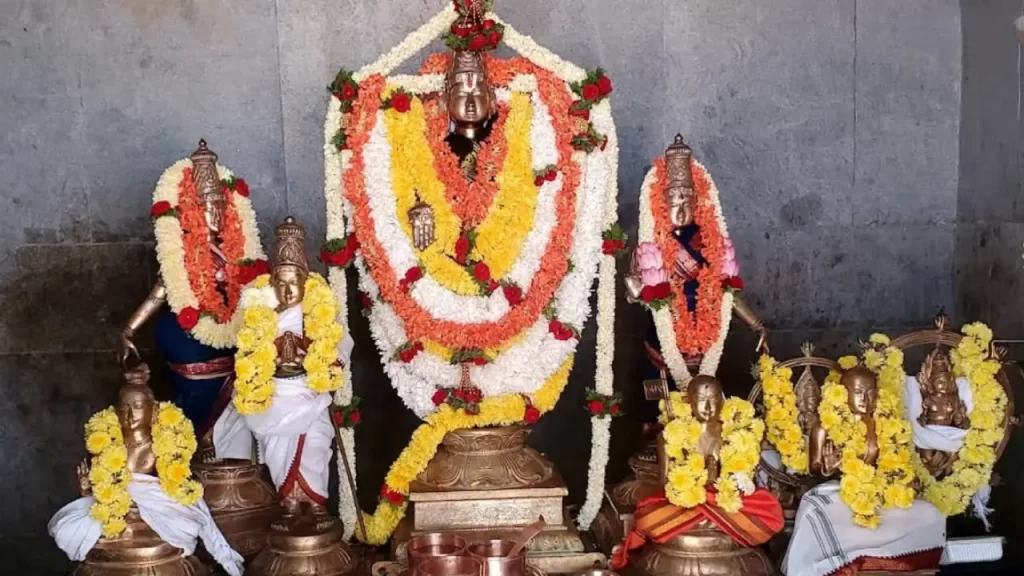
Festivals and Special Days: When the Temple Comes Alive!
Oh, the festivals are truly the most exciting times at the Bhoo Varaha Swamy Temple, Kallahalli! The temple, which is usually quite peaceful, buzzes with energy, colors, and joy.
The most important festival celebrated here is Varaha Jayanti. “Jayanti” means birthday, so it’s the celebration of Lord Varaha’s appearance on Earth! This usually happens around April or May, after the monsoon rains have calmed down and the river Hemavathi recedes. At Varaha Jayanti, thousands of followers descend from far and wide to join in. The atmosphere is filled with chants and the sweet scent of flowers. It’s a day of great festivity, special pujas, and a feast for your eyes and ears!
Another significant day is that of Vaikuntha Ekadashi, which too draws a large number of devotees. Special prayers and rituals are performed on this sacred day. The temple also takes part in the lavish Mysore Dasara festival, with special processions and rituals, which are an integral part of the festive atmosphere of the state.
On such special days, and particularly on Varaha Jayanti, the temple gets extremely, extremely crowded, but it’s a beautiful kind of crowd, filled with piety and cheerfulness. It’s more like a grand family reunion where everyone is celebrating together. Even on normal Saturdays, you can see more people coming because it’s a special day to go to temples.
Read More>> Talakaveri Temple: Divine Origin of the Sacred Kaveri River
Unique Architectural Styles and Carvings
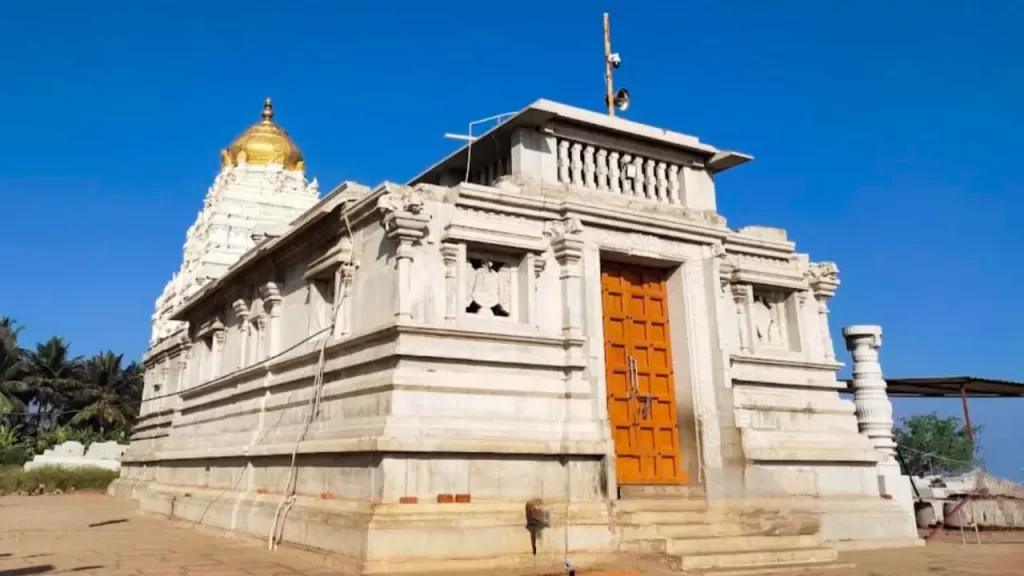
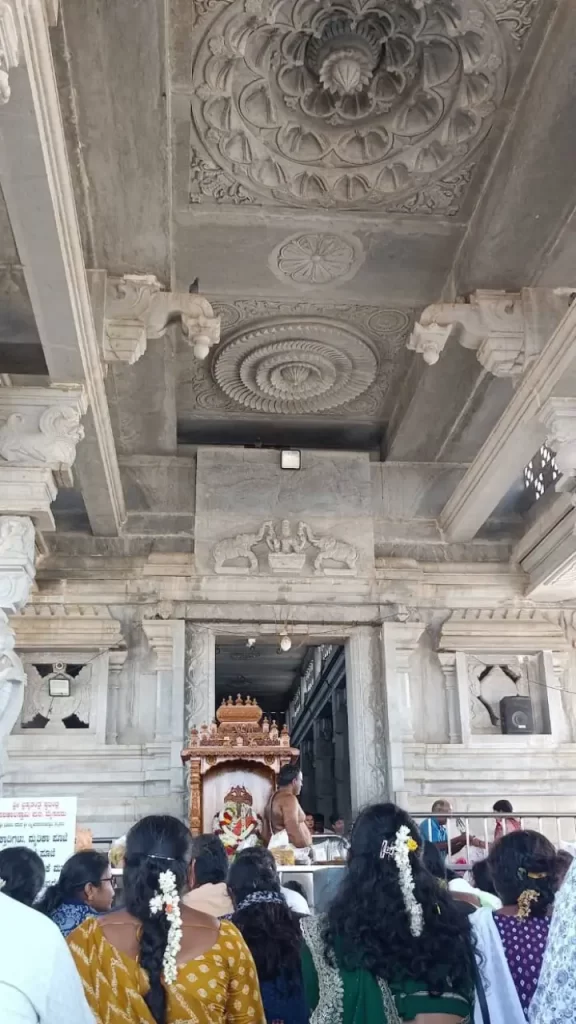
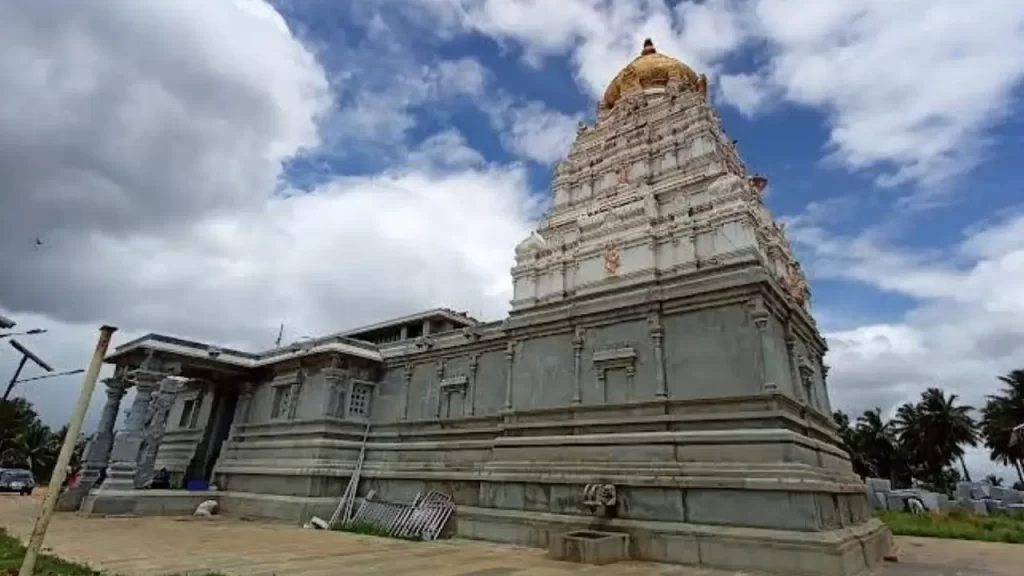
Now, let’s discuss the temple structure itself. The Bhoo Varaha Swamy Temple, Kallahalli, may seem plain at first glance, but it has some quite unique features. It’s a rectangular structure composed of big, grey stone blocks. It consists of two primary parts: the sanctum, which is the Lord’s own room, and the front hall, where the devotees assemble.
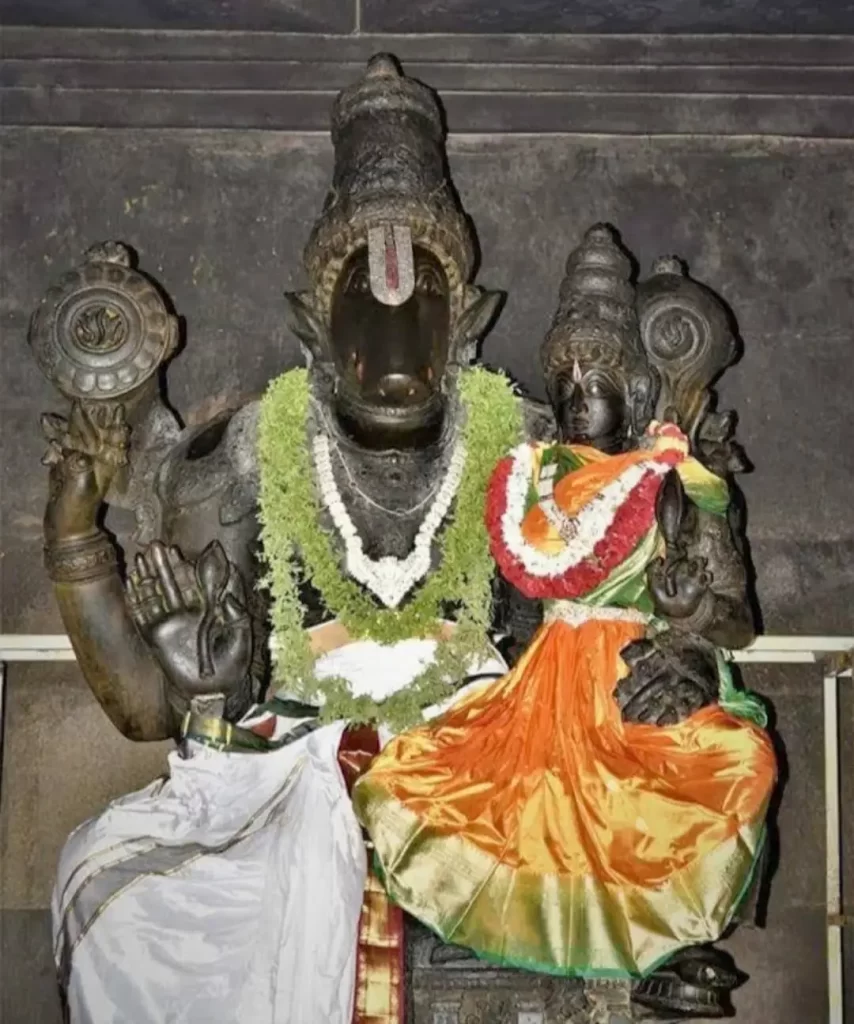
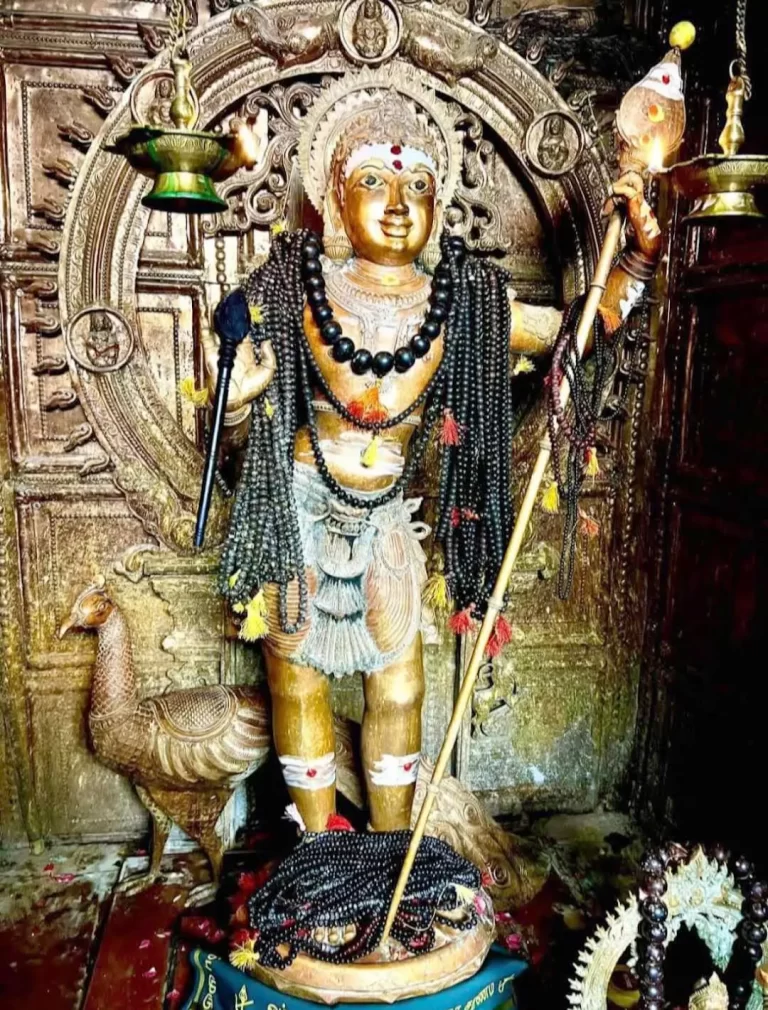
The most wonderful thing here is the idol of Lord Bhoo Varahaswamy. It’s a humungous, regal statue, measuring around 18 feet high! Can you think of something as tall as a two-story building? It’s made of one piece of grey stone, which is said to be Saligrama Shila, a highly sacred stone commonly seen in the Gandaki River.
Lord Varaha is depicted sitting, with one leg crossed and the other bent softly against the ground. He is in the form of a boar-headed human, representing his divinity. Observe his tusks – they are paler than the rest of his body! And his eyes are reddish in color, indicating his strength.
But that’s not all! Sitting graciously upon his folded left thigh is Goddess Bhoodevi (another form of Goddess Lakshmi, goddess of prosperity and wealth). She is approximately 3.5 feet tall and is holding a lotus flower in one hand while giving her other hand around Lord Varaha in a hug. This illustrates how Lord Varaha protects the Earth and is always guarding Goddess Bhoodevi. There are some carvings, too, depicting Lord Hanuman carved below the central idol, which is another interesting aspect!
The doors are enormous and made of wood, and the interior is simply breathtaking when you catch sight of the majestic deity. The starkness of the building brings out the grandeur of the idol. Although less ornately carved than some of the other Hoysala temples, the adherence to Vastu Shastra (ancient Indian theory of architecture that provides harmony and positive energy) is apparent in its design.
Myths and Beliefs
The Bhoo Varaha Swamy Temple, located in Kallahalli, is encircled by several intriguing myths and beliefs, which make it all the more unique:
Mystical Powers of the Idol: Most of the locals are of the opinion that the idol of Lord Varahaswamy here possesses mystical and powerful energies. Individuals bring their troubles and prayers with them, believing that the Lord will answer their prayers and guard them.
The Miracle of the Rabbit and Dog: That legend of the king finding the idol after seeing the rabbit chase the dog is a very powerful local legend. It underscores that this place is indeed divine and blessed. It’s a sign from God!
Land and Property Protection: As Lord Varaha saved the Earth, numerous devotees think that offering their prayers to him in Bhoo Varaha Swamy Temple, Kallahalli, assists them with problems concerning land, property, and agriculture. Farmers frequently go there to get blessings for good crops.
Offerings for Home Building: There is a special belief that if you make offerings here, you can purchase two bricks surrounding the temple – one for renovating the temple and one to retain for your home building. It is believed that Goddess Bhoomi Devi (Earth Mother) is appeased by this and blesses devotees who want to build or own a blissful home. This is a very special method of bonding with the divine.
Nawab’s Miracle: There is a story of a local Nawab who was seriously ill with a carbuncle and doctors were unable to assist him. He prayed to Bhuvaraha and was miraculously healed! This tale reflects the faith people have in the healing powers of the Lord.
These myths and legends are not mere ancient stories; they are very much alive in the hearts of the masses that travel to the Bhoo Varaha Swamy Temple, Kallahalli, bringing the essence of the location to life and giving it purpose.
Read More>> Famous Pedakakani Temple/ Pedakakani Malleswara Swamy Temple
Bhoo Varaha Swamy Temple Timing: Hours and Busy Days
It’s always nice to know when you can go! The Bhoo Varaha Swamy Temple, Kallahalli, is typically open:
Morning: 9:30 AM to 1:30 PM
Evening: 3:30 PM to 7:00 PM
Just keep in mind, these hours often vary, particularly on special festivities or surprise events, so it’s a good idea to inquire if you’re going to visit on a particular day.
As I said earlier, the temple becomes very congested during festivals such as Varaha Jayanti (April/May) and Vaikuntha Ekadashi. Weekends, particularly Saturdays, also attract more worshipers. If you are looking for a peaceful visit to enjoy more time gazing at the idol and absorbing in the serenity, attempt to go on a weekday morning. But if the rhythm of festival crowdedness is your thing and you would like to feel the dynamic energy, then a festival day will suit you perfectly!


Special Poojas Performed
At the Bhoo Varaha Swamy Temple, Kallahalli, daily special prayers and ceremonies, known as poojas or sevas, are conducted by the devout priests of the Parakala Mutt. The ritual is based on ancient Vedic ways and the Vaikanasa Agama system of worship.
Perhaps the most fascinating and important ceremony is Abhishekam to Lord Varahanatha. Picture a huge bath ceremony where the massive 18-foot (also reported as 14-foot in some books) statue of Lord Varaha is drenched with so many delightful things! This ritual anointing ceremony entails:
25 various kinds of flowers: Filling the atmosphere with their pleasant aroma.
Milk, yogurt, lemon, honey, sugarcane juice, and Gangajala (sacred water of the Ganges River): These chaste ingredients are showered over the deity.
Sandalwood paste, turmeric, and kumkuma (vermilion powder): These sacred pastes are applied to the idol.
Listening to this Abhishekam is an experience so divine. The chants, the scents, and the view of the stunning idol being bathed and dressed are so gorgeous. It makes you feel so attached to the divine!
Apart from the daily pujas and Abhishekam, other special prayers and offerings are done, wherein devotees offer special items, asking blessings and paying homage to the Lord.
Read More>> Nayakanahatti Thipperudra Swamy Temple
Places to Visit Near the Temple
Your Bhoo Varaha Swamy Temple, Kallahalli, tour can be part of a larger adventure! There are a number of other fun places to visit around there that you may enjoy:
Hemagiri Waterfalls: Not far from Kallahalli, these waterfalls are a lovely sight, particularly after the rains. It’s a pretty nice place to enjoy nature.
KRS Backwaters (Krishna Raja Sagara Dam Backwaters): Scenic and peaceful surroundings are provided by the backwaters of the popular KRS Dam. You can sit here in peace, observing the water.
Bookanakere Lake: A tranquil lake where you can unwind and appreciate the calmness of the location.
Melkote Wildlife Sanctuary: If you’re interested in animals and wildlife, this sanctuary might be an interesting outing. It has several birds and animals.
Melkote Temples: Melkote is an extremely well-known and significant pilgrimage town, famous for its lovely temples such as the Cheluvanarayana Swamy Temple and the Yoga Narasimha Swamy Temple, sitting atop a hill. The Raya Gopura there is also an interesting ruin.
Thonnur Lake: Another lovely lake, excellent for a relaxing day out.
Kunti Betta: For the thrill seekers, Kunti Betta is a twin hillock that is well-known for trekking and provides stunning vistas. It also has mythological significance with respect to the Mahabharata.
These destinations provide the best of nature, history, and spirituality, making your visit to the Bhoo Varaha Swamy Temple, Kallahalli, even more rewarding.
Read More>> Bhuleshwar Temple: 8 CE Shiva Abode in Islamic Garb
Accommodation Options
As Kallahalli is a village, you may not see very large hotels adjacent to the Bhoo Varaha Swamy Temple, Kallahalli. There would generally be some guesthouses or small lodges for overnight stay by pilgrims, though.
For more comfortable and wider range of accommodations, you would generally consider nearby larger cities or towns.
Krishnarajapete (K.R. Pete): The closest town, and you may be able to find some small lodges or guesthouses here.
Mandya: The district capital, Mandya, will have a wider selection of hotels, ranging from budget ones to a bit more comfortable ones.
Mysore: This is your best option for a variety of accommodation, from luxury hotels to cozy guesthouses and budget stays. Mysore is approximately 50-60 km away and has great connectivity. Most people would prefer to stay in Mysore and make a day trip to the Bhoo Varaha Swamy Temple, Kallahalli.
Hassan: Another city which has good accommodation facilities and is a good base if you are going to explore further into the area’s attractions.
It is always advisable to pre-book your accommodation, particularly if you are visiting during a festival or holiday season.
How to Reach the Temple: Bhoo Varaha Swamy Temple, Kallahalli Address
Getting to the Bhoo Varaha Swamy Temple, Kallahalli, is relatively easy, depending on where you are coming from!
By Road: This is the most convenient and regular mode to travel to the temple.
From Mysore: Kallahalli is around 50-60 kilometers from Mysore. You may take a taxi or a public bus. The journey usually takes you through KRS (Krishna Raja Sagara) or Bookanakere. It will take around 1.5 to 2 hours.
From Bangalore: If approaching from Bangalore, it’s a bit of a drive, around 180-200 kilometers. You can take the Bangalore-Mysore Expressway (NICE Road and afterwards NH275) and then take a diversion towards Krishnarajapete. It usually takes between 3.5 to 4.5 hours by road. Alternatively, you can travel from Bangalore to K.R. Pete by bus and then an auto or taxi from there.
From K.R. Pete (Krishnarajapete): The temple is within a short distance from K.R. Pete. You can easily get auto-rickshaws or local taxis to reach Kallahalli. It’s commonly accessed through Hosaholalu and Gangigere.
By Train: The closest big railway stations would be Mysore Junction (MYS) or Mandya (MYA). From there, you would have to take a taxi or bus to Kallahalli.
By Air: Mysore Airport (MYQ) is the nearest airport. For international or broader domestic connectivity, Bengaluru’s Kempegowda International Airport (BLR) is the primary airport. From either airport, you would drive.
A small tip: as you approach Kallahalli, you may notice signs or ask locals for directions to “Varahanatha Kallahalli,” for the temple has the same name as well.
3 Comments