Airavatesvara Temple, Darasuram: Timings, History, Architecture, and Complete Pilgrimage Guide
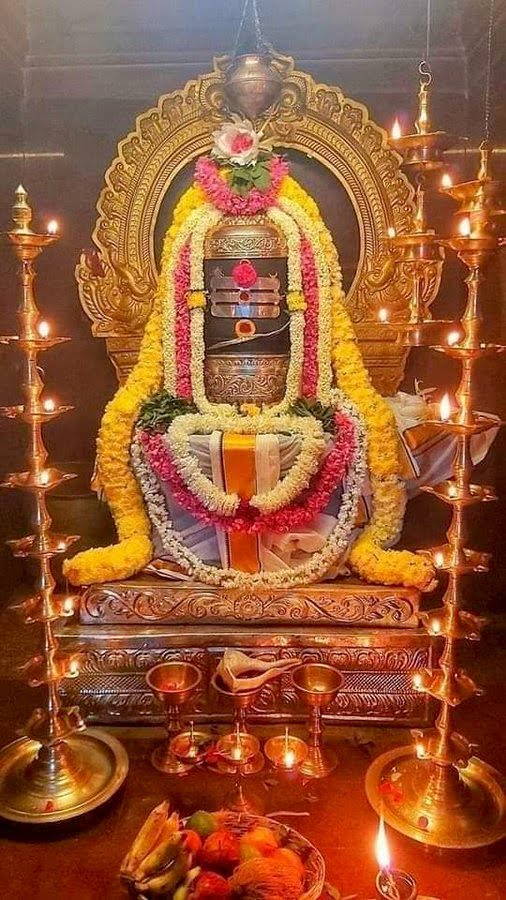
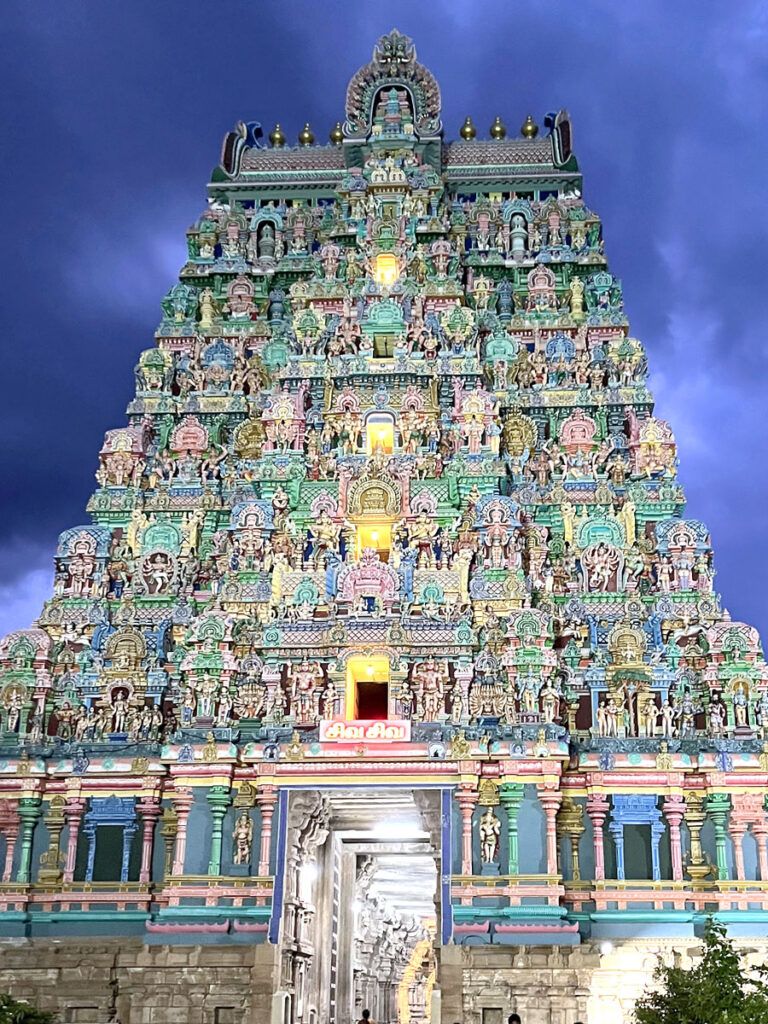
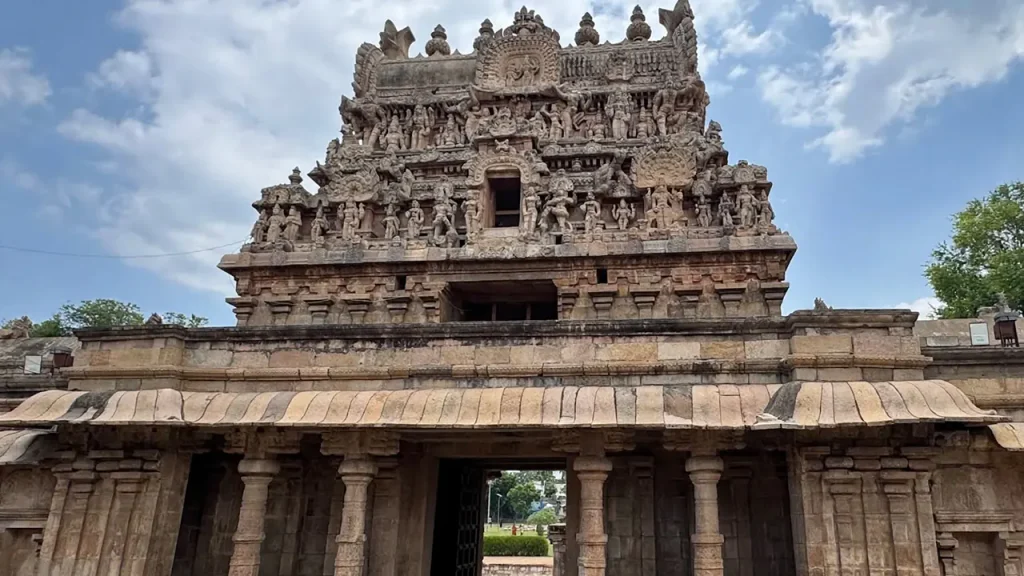
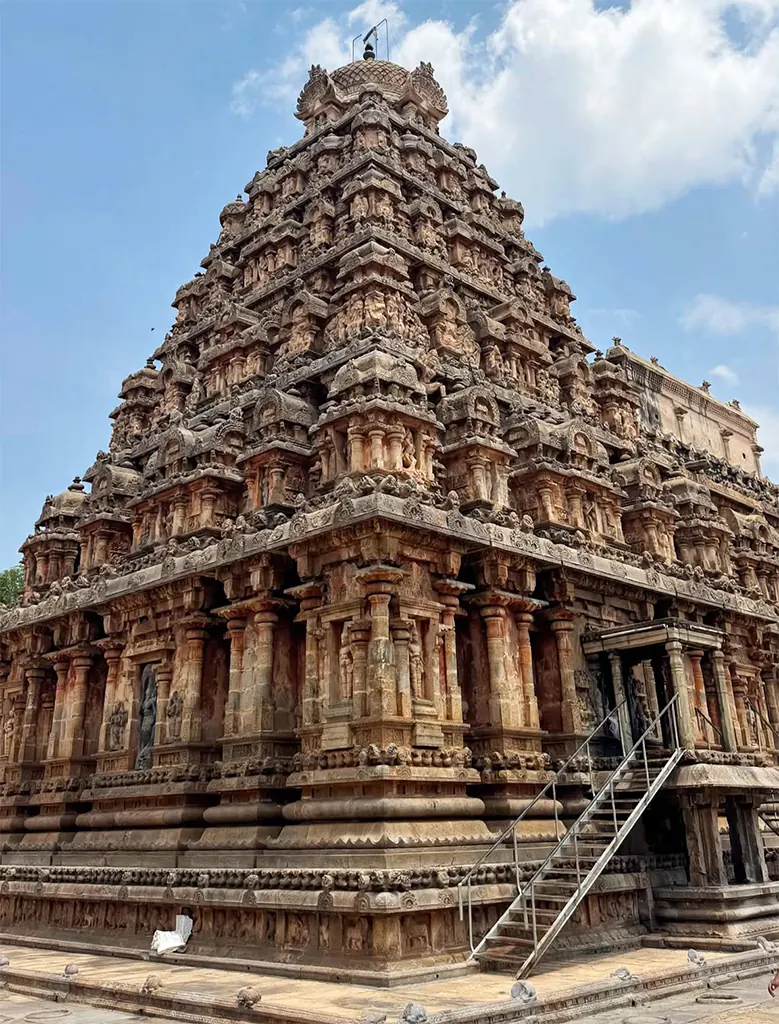
Airavatesvara Temple in Darasuram is a 12th-century Dravidian architectural masterpiece built by Chola Emperor Rajaraja II. Located just 4 kilometres southwest of Kumbakonam in Tamil Nadu, this sacred Shiva shrine is celebrated for its stone chariot mandapam, intricate miniature carvings, and singing musical steps. Along with the Brihadisvara Temple at Thanjavur and the temple at Gangaikonda Cholapuram, it forms the renowned UNESCO World Heritage site known as the Great Living Chola Temples.
The temple remains open daily from 6:00 AM to 12:30 PM and from 4:00 PM to 8:30 PM. There is no entry fee to explore the monument or receive darshan.
Quick Information: Airavatesvara Temple, Darasuram
| Detail | Verified Information |
| Temple Name | Airavatesvara Temple (also spelled Airavateshvara or Darasuram Temple) |
| Main Deity | Lord Shiva (worshipped as Airavatesvara Lingam) |
| Consort | Goddess Parvati (worshipped as Periya Nayaki Amman / Deva Nayaki) |
| Location | Darasuram, Kumbakonam Taluk, Thanjavur District, Tamil Nadu, India |
| Architectural Style | Later Chola Dravidian Architecture |
| Builder & Era | Rajaraja Chola II (Reign: 1146–1173 CE; constructed c. 1166 CE) |
| Heritage Status | Part of the UNESCO World Heritage Site: Great Living Chola Temples |
| Daily Darshan Timings | Morning: 6:00 AM – 12:30 PM | Evening: 4:00 PM – 8:30 PM |
| Best Time to Visit | October to March (pleasant winter climate for temple exploration) |
| Entry Fee | Free entry (Administered jointly as a protected monument and living temple) |
| Nearest Railway Station | Darasuram Railway Station (1 km; passenger trains) / Kumbakonam Railway Station (4.5 km; major junction) |
| Nearest Airport | Tiruchirappalli International Airport (TRZ), approximately 88 km southwest |
| Photography | Permitted in outer courtyards; strictly restricted inside the inner sanctum sanctorum |
The Sacred Legend (Sthala Purana) of Airavatesvara
In Hindu religious tradition, the name Airavatesvara means “The Lord Worshipped by Airavata.”
According to the temple’s sacred lore (sthala purana), Airavata, the celestial white elephant of Lord Indra, suffered a curse from Sage Durvasa for disrespecting a divine floral garland. The curse caused the elephant’s pristine white skin to turn dull, discoloured, and dark. Deeply distressed, Airavata roamed across sacred forests seeking redemption. He finally arrived at this holy spot in Darasuram, immersed himself in the temple tank (Yama Theertham), and worshipped the consecrated Shiva Lingam with fresh lotuses. Pleased with his devotion, Lord Shiva absolved the curse and restored Airavata’s radiant white hue. Hence, Lord Shiva here is reverently called Airavatesvara.
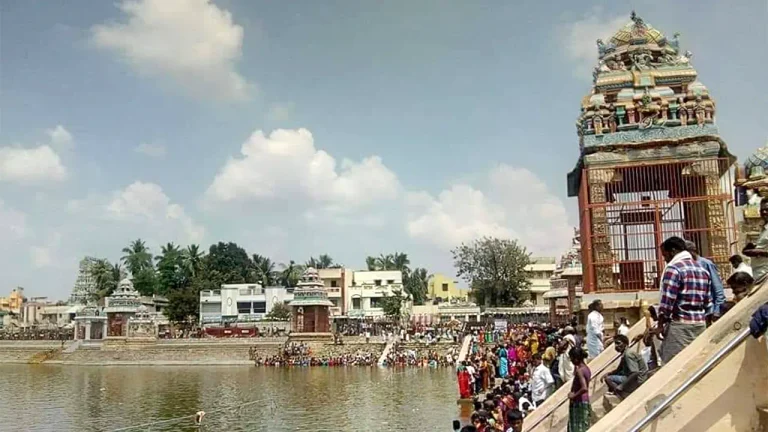
A companion legend associates the temple with Yama, the Lord of Death. Tradition states that Yama suffered from a persistent burning affliction across his entire body due to a sage’s curse. Unable to find relief, he bathed in the sacred waters of the temple spring and prayed before the presiding deity. The divine grace of Lord Shiva cured his burning sensations. To this day, the temple tank fronting the outer gopuram is known as Yama Theertham, and devotees continue to regard its waters as spiritually purifying.
Read More>> Bhoo Varaha Swamy Temple Kallahalli
Historical Origins and Royal Chola Patronage
While the massive Brihadisvara Temple in Thanjavur showcases the imperial might of Rajaraja Chola I, and the shrine at Gangaikonda Cholapuram reflects the grand vision of Rajendra Chola I, the Airavatesvara Temple at Darasuram represents the zenith of Chola artistic refinement and sculptural delicacy.
Constructed during the 12th century by Rajaraja Chola II (c. 1166 CE), the temple was originally designed as a sprawling royal complex called Rajarajapuram (which gradually corrupted phonetically over centuries into the modern name Darasuram). Unlike the soaring heights of the Thanjavur vimana, Rajaraja Chola II chose to focus on micro-architectural perfection, ornamenting every square foot of granite with dynamic reliefs, narrative friezes, and sculptural finesse.
Recognizing its peerless cultural and sculptural significance, UNESCO expanded the “Great Living Chola Temples” World Heritage inscription in 2004 to include Airavatesvara Temple alongside its two larger predecessors. Today, the monument is meticulously maintained by the Archaeological Survey of India (ASI) as a protected site, while regular worship ceremonies continue under the auspices of the Hindu Religious and Charitable Endowments (HR&CE) Department.
Architectural Highlights: Stone in Motion
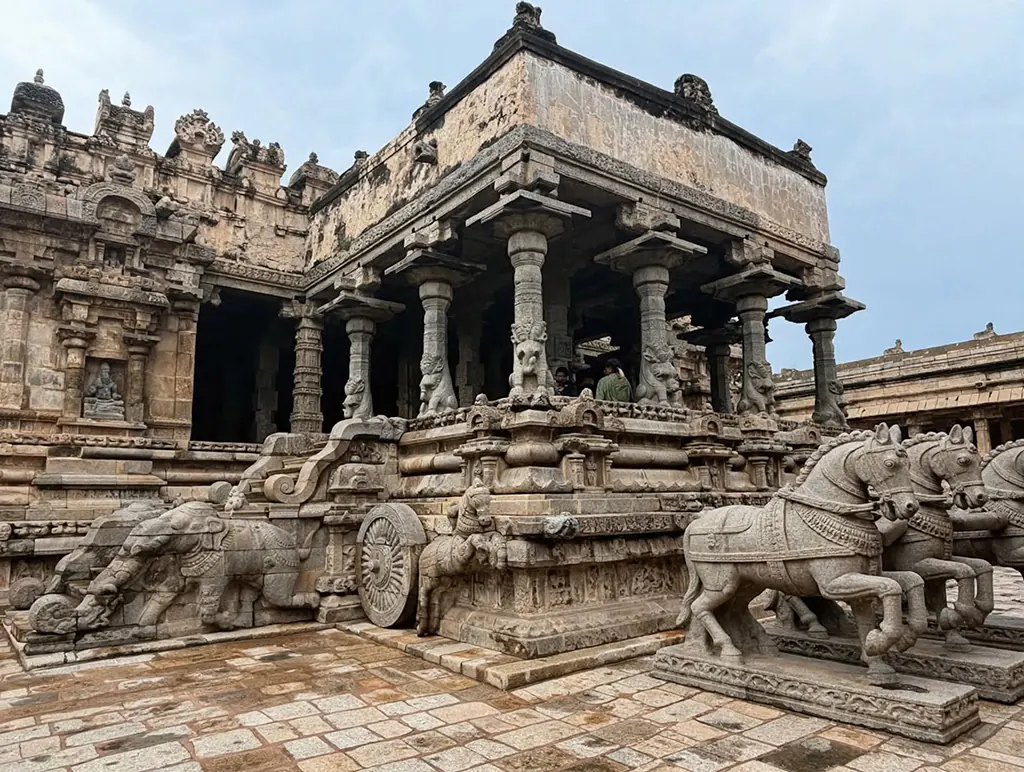
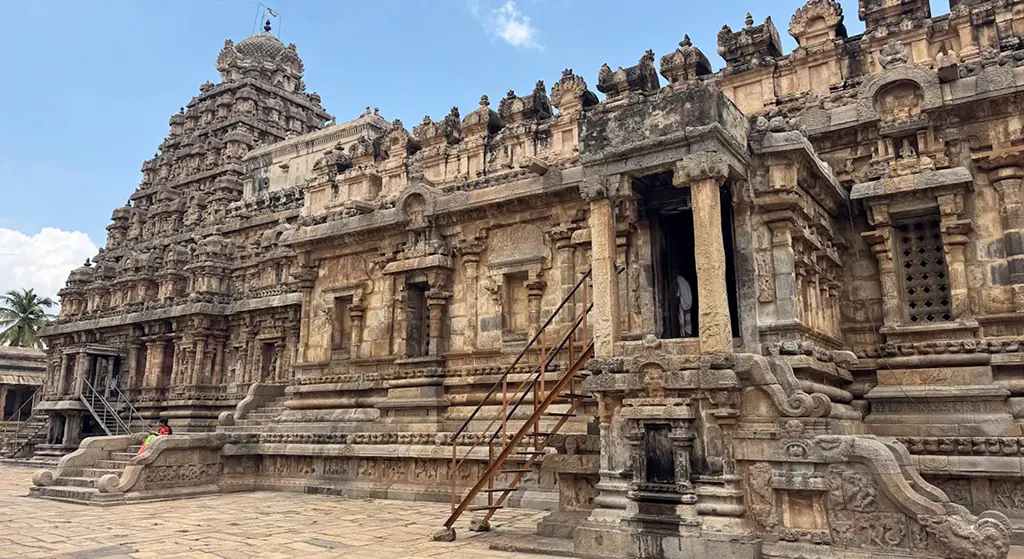
The design of Airavatesvara Temple resembles a temple chariot (ratha), an architectural motif that later influenced the Sun Temple at Konark and Vijayanagara royal shrines.
1. The Rajagambhiran Thirumandapam (Chariot Mandapam)
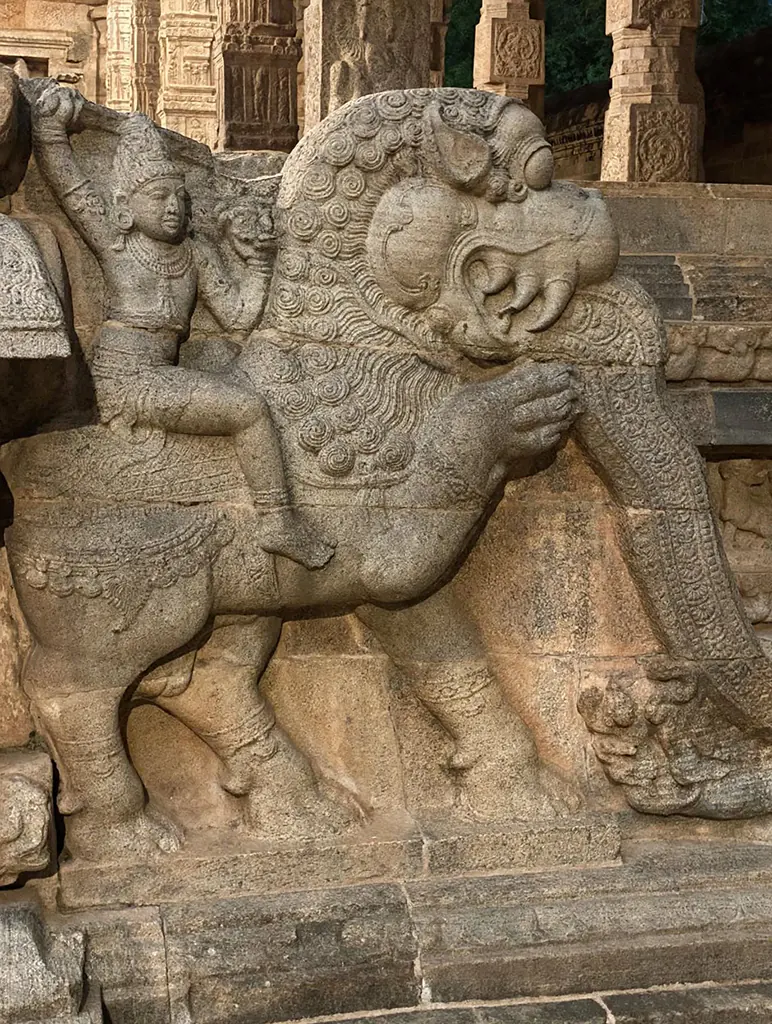
The front audience hall, named the Rajagambhiran Thirumandapam, is designed as a royal celestial chariot mounted on ornate stone wheels, complete with sculpted spokes, elaborate hubs, and leaping stone horses and elephants pulling the structure. The supporting stone pillars inside this porch feature intricate carvings of dancing apsaras, mythical creatures, and court musicians.
2. The Saptaswara “Singing” Steps
Near the chariot mandapam’s eastern entrance, a small flight of stone balustrade steps leads to the pillared courtyard. When struck lightly, each of these stone treads resonates with distinct, clear musical frequencies corresponding to the seven basic notes of Indian classical music (Saptaswaras).
Visitor Safety Notice: To protect these priceless acoustic stone steps from irreversible physical wear and chipping, the Archaeological Survey of India has cordoned off the singing steps with a protective brass grill. Visitors can observe the architecture closely, though physical tapping is strictly prohibited to preserve this ancient heritage.
3. The 108 Natya Karanas (Bharatanatyam Dance Postures)
Along the base of the mandapam pillars, Chola artisans carved panels depicting the 108 classical Karanas—the fundamental movement postures of Bharatanatyam codified in Bharata Muni’s Natya Shastra. Each panel captures graceful hand gestures (mudras), foot placements, and facial expressions with anatomical accuracy.
4. Miniature Friezes of the 63 Nayanmars
Circling the outer base of the sanctum sanctorum are miniature friezes chronicling the lives and miracles of the 63 Nayanmars (Shaivite poet-saints). These panels visually represent the sacred narratives detailed in Sekkizhar’s Periya Puranam, a classic Tamil epic compiled during the same historical era under the Chola court. Accompanying ancient Tamil epigraphical labels identify each saint’s life episode, making it an invaluable primary record for epigraphists and cultural historians.
5. Unique Composite Sculptures
The outer walls display brilliant artistic ingenuity in composite animal carvings. One of the most famous bas-reliefs features a shared head that simultaneously depicts a grazing bull (Nandi) and a frolicking elephant, depending on which side the viewer focuses on.
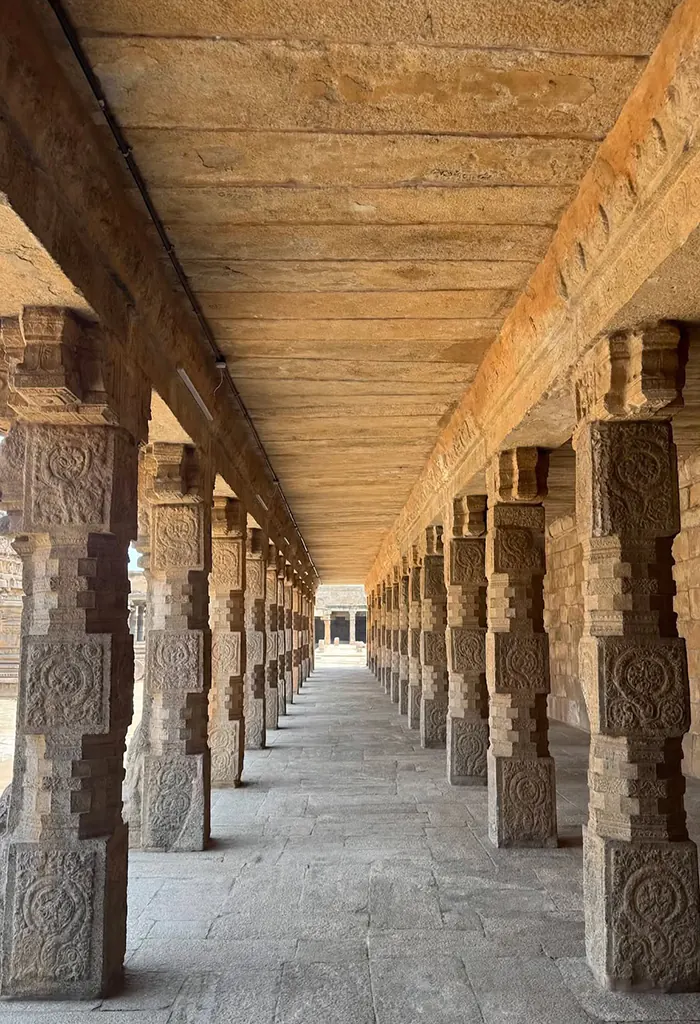
The Shrine of Periya Nayaki Amman
Adjacent to the main Airavatesvara compound sits the dedicated shrine of Lord Shiva’s divine consort, Goddess Periya Nayaki Amman (also known as Deva Nayaki). Originally, this enclosure was integrated into the grand master plan of the temple complex. Over successive historical upheavals, its separating walls fell away, leaving it as a visually distinct enclosure situated just a few yards north of the main complex.
Devotees traditionally visit the Periya Nayaki Amman temple immediately following darshan at the main sanctum to seek divine blessings for family prosperity, well-being, and marital harmony.
Read More>> Talakaveri Temple: Divine Origin of the Sacred Kaveri River
Darasuram Temple Timings (Daily Pooja and Major Festivals)
Because Airavatesvara Temple remains an active place of worship alongside its status as an archaeological monument, daily rituals proceed according to traditional Shaiva Agamic rites:
- Morning Opening: 6:00 AM
- Kala Santhi Pooja: Approx. 8:00 AM – 8:30 AM
- Uchikala Pooja (Noon Ritual): Approx. 12:00 PM
- Afternoon Closure: 12:30 PM to 4:00 PM
- Sayaratchai Pooja (Evening Ritual): Approx. 6:00 PM
- Arthajama Pooja (Night Closing Ritual): Approx. 8:00 PM
- Temple Gate Closure: 8:30 PM
Read More>> 4th Century Gokarna Mahabaleshwar Temple
Significant Annual Festivals
- Maha Shivaratri (February/March): The most significant festival celebrated here. The temple witnesses extended evening and night darshan, specialized Abhishekam across all four quarters of the night, and devotional music performances.
- Arudra Darisanam (December/January): Marks the cosmic dance of Lord Nataraja with elaborate floral decorations and holy processions.
- Pradosham: Observed twice every month during the twilight period (sandhya kalam), drawing local Shaivite devotees to witness sacred rituals for Lord Nandi and the presiding Lingam.
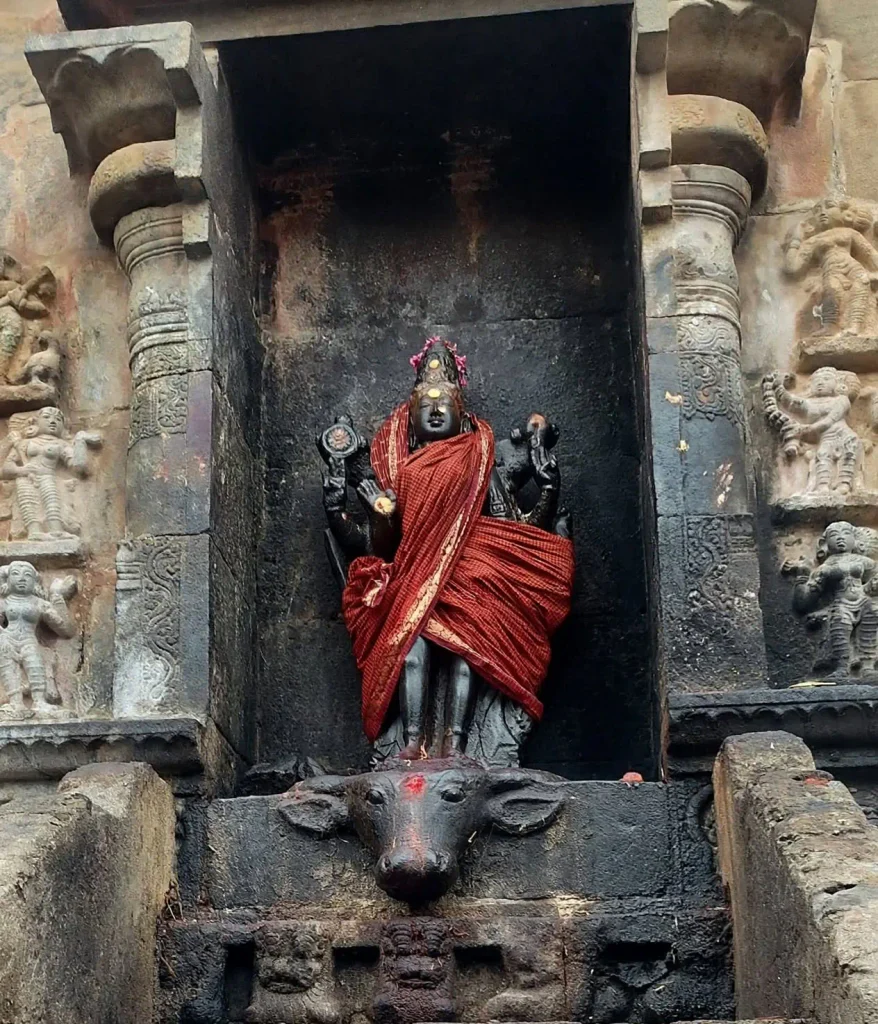
Practical Travel Information: How to Reach Darasuram
Darasuram is seamlessly connected by road and rail through the temple town of Kumbakonam.
By Road
- From Kumbakonam Town (4 km): Auto-rickshaws are readily available from Kumbakonam Railway Station and Central Bus Stand. One-way auto fares generally range between ₹100 and ₹150.
- Local Town Buses: Town buses operating between Kumbakonam and Thanjavur pass through Darasuram regularly. Ask the conductor for the Darasuram Temple stop.
- From Thanjavur (36 km): Regular intercity buses run between Thanjavur and Kumbakonam along NH 81, taking approximately 50 to 60 minutes.
By Train
- Darasuram Railway Station (DRZ): Located just 1 km from the temple; serves select passenger and regional shuttle trains running between Thanjavur and Mayiladuthurai.
- Kumbakonam Railway Junction (KMU): Located 4.5 km away; serves express trains connecting Chennai Egmore, Tiruchirappalli, Madurai, Coimbatore, and Bengaluru.
By Air
- Tiruchirappalli International Airport (TRZ): The nearest airport, situated approximately 88 km southwest. Taxis from the airport to Darasuram take approximately two hours via the well-maintained highway.


Essential Visitor Guidelines and Etiquette
- Dress Code: Because Airavatesvara is a consecrated, living temple, visitors should dress respectfully. Traditional attire is recommended: dhotis, pyjamas, or modest trousers with shirts for men; sarees, salwar kameez, or modest long dresses for women. Shorts, sleeveless tops, and beachwear are inappropriate.
- Footwear: Footwear must be removed before entering the inner paved stone courtyard. A footwear storage stand is available outside the main gopuram entrance.
- Best Time of Day to Visit: The stone courtyard absorbs significant heat under the afternoon sun. The ideal visiting window is between 7:00 AM and 10:00 AM, or in the late afternoon between 4:30 PM and 6:30 PM, which also provides the best lighting for architectural photography.
- Hiring Licensed Guides: Authorized ASI-licensed local guides are frequently available near the gopuram entrance. Engaging a guide is highly recommended to discover obscure stone carvings, such as the miniature mythological narratives and mathematical motifs hidden along the pillar bases. Always confirm the fee beforehand.
Read More>> Chamundeshwari Temple Mysore: Architectural Marvel & Spiritual Wonder
Pilgrimage Circuit: Combining Nearby Temples
A visit to Darasuram fits into broader spiritual and cultural itineraries across the Cauvery delta:
- The Great Living Chola Temples Circuit: Combine Airavatesvara with the majestic grand Brihadisvara Temple in Thanjavur (36 km away) and the serene shrine at Gangaikonda Cholapuram (35 km north) for an immersive journey into Chola dynastic heritage.
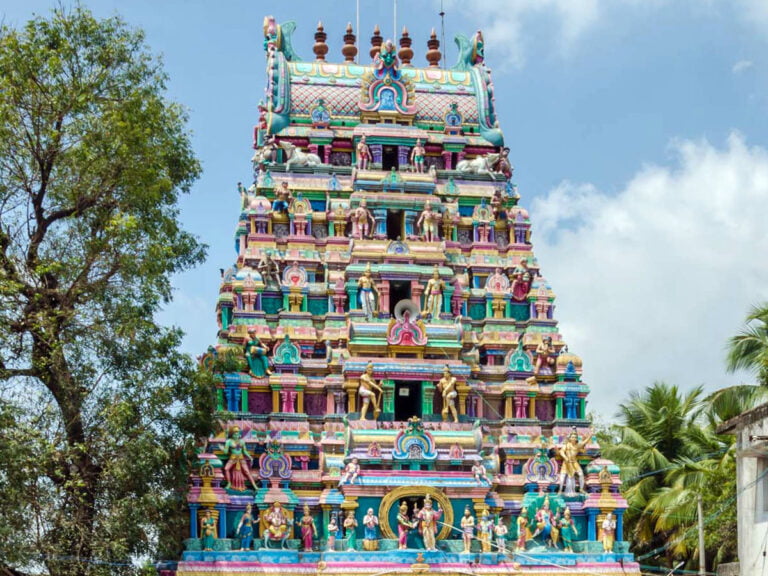
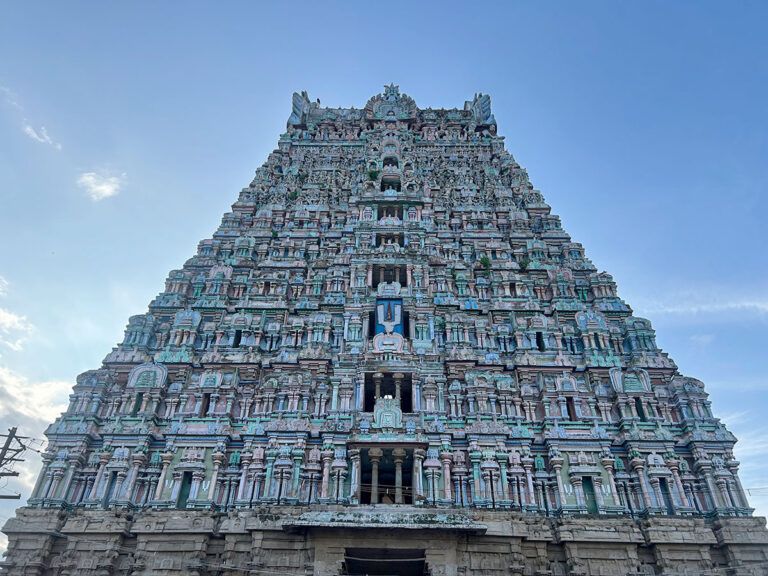
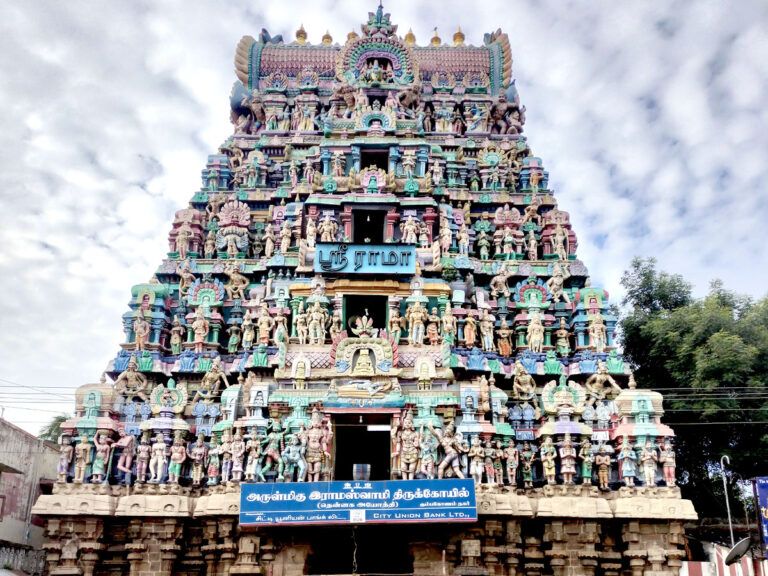
- Prominent Kumbakonam Temples: Within a 10-minute drive, explore other prominent temples in Kumbakonam, including the Adi Kumbeswarar Temple, Sarangapani Temple, Ramaswamy Temple, and the historic Mahamaham Tank.
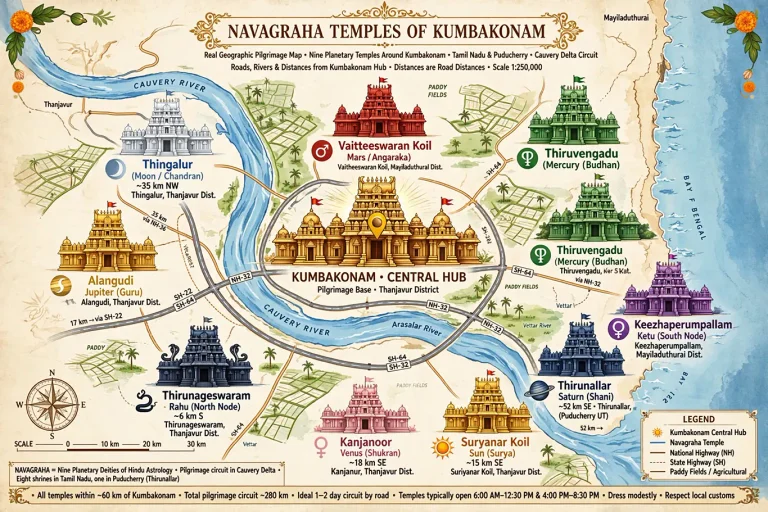
- Navagraha Pilgrimage Route: Darasuram serves as an ideal central base when planning a comprehensive tour across the famous Kumbakonam Navagraha pilgrimage circuit, such as the Thingalur Moon Temple and Alangudi Jupiter Temple.
For official regional tour packages and guided itinerary assistance, visitors can consult the Tamil Nadu Tourism Development Corporation.
Frequently Asked Questions about Airavatesvara Temple
Why is the temple called Airavatesvara?
The temple is named after Airavata, the divine white elephant of Lord Indra. According to temple tradition, Airavata worshipped Lord Shiva here to break a sage’s curse that had darkened his white skin, successfully restoring his celestial purity.
Can visitors play the musical steps at Darasuram?
No. The Archaeological Survey of India (ASI) has placed a protective metallic enclosure over the carved stone musical steps (Saptaswara steps) to prevent physical wear, abrasion, and surface chipping. Visitors can observe their exquisite architecture from a close distance.
What are the daily darshan timings at Airavatesvara Temple?
The temple is open every day from 6:00 AM to 12:30 PM in the morning, and from 4:00 PM to 8:30 PM in the evening. The premises are closed during the midday window between 12:30 PM and 4:00 PM.
Is there an entry ticket for Airavatesvara Temple?
No. Entry to the Airavatesvara Temple premises and sanctum is free for all domestic and international visitors.
How much time is needed to explore the temple complex?
A typical, rewarding visit takes between 1.5 and 2.5 hours. This provides sufficient time for sanctum darshan, appreciating the 108 dance panels and Chariot Mandapam, and visiting the nearby Periya Nayaki Amman shrine.