Brahmeswara Temple Bhubaneswar: History, Architecture & Visitor Guide
The Brahmeswara Temple in Bhubaneswar stands as a timeless jewel of medieval Indian architecture, offering a captivating look into 9th-century religious art, stone craftsmanship, and Shaivite tradition. Located in the historic heart of Odisha’s capital, this temple rewards travelers, pilgrims, and history enthusiasts with an intimate glimpse into the evolution of Kalinga temple design.

Whether you are mapping out a comprehensive temple trail across the “Temple City of India” or seeking a quiet, spiritually rich sanctuary away from massive crowds, understanding the architecture, background, and surrounding attractions enhances your entire experience.
Quick Information Table
| Feature | Details |
| Temple Name | Brahmeswara Temple |
| Main Deity | Lord Shiva (Brahmeswara) |
| Location | Tankapani Road, Bhubaneswar, Odisha, 751002 |
| Dynasty / Period | Somavamshi Dynasty (circa 9th Century CE) |
| Architectural Style | Kalinga Style (Rekha and Pidha orders) |
| Daily Timings | 5:00 AM – 9:00 PM (Open all days of the week) |
| Entry Fee | Free |
| Best Time to Visit | October to March (cooler winter months) |
| Major Festivals | Maha Shivaratri, Karthika Purnima |
| Nearest Transport | Bhubaneswar Railway Station (~3 km), Biju Patnaik Airport (~4 km) |

Introduction to Brahmeswara Temple
Constructed during the height of the Somavamshi rule, the Brahmeswara Temple is dedicated to Lord Shiva. Its name is derived from a composite form associated with Brahma, Vishnu, and Shiva, though the sanctum strictly houses a powerful Shiva lingam. Unlike the towering and densely packed Lingaraj Temple, Brahmeswara provides an accessible environment where visitors can closely examine intricate sculptural panels depicting divine figures, celestial musicians, and fierce guardian deities.
The temple complex is set within a neatly maintained, green courtyard featuring a traditional temple tank (pond) on its premises. It serves as a classic early example of a panchayatana layout, featuring a central shrine accompanied by four smaller subsidiary shrines.
Historical Timeline and Epigraphic Significance
Historical analysis and epigraphic records place the construction of the Brahmeswara Temple in the late 9th century CE. Traditional accounts and recovered stone inscriptions connect its commissioning to Queen Kolavati, mother of the Somavamshi king Udyotakesari.
This era marked a decisive turning point in Odishan temple architecture. Artisans began moving away from plain, massive stone blocks toward deeply recessed walls, elaborate scrollwork, and narrative friezes. The engineering milestones achieved here directly paved the way for grander architectural wonders in subsequent centuries across Odisha.

Architectural Splendor and Design Layout
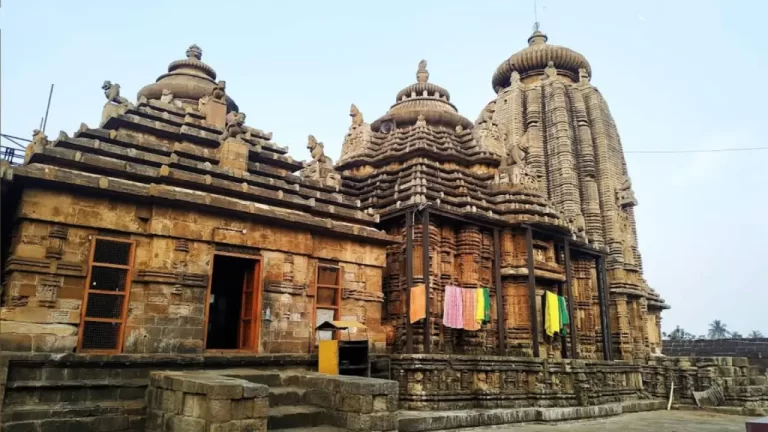
The temple layout follows the classic dual-structure format of Kalinga architecture, consisting of the main sanctum (vimana) and the front assembly hall (jagamohana).
1. The Vimana (Sanctum Tower)
The curvilinear tower rises above the sanctum, characterized by vertical projections (rathas) that create rhythmic vertical lines. Capped by an amalaka (ribbed disk) and a kalasha (finial), the tower exhibits precise proportional balance.
2. The Jagamohana (Assembly Hall)
The rectangular porch features a tiered pyramidal roof (pidhas). Its interior and exterior surfaces are covered in detailed stone carvings that have survived centuries of weathering with remarkable clarity.
Unique Sculptural and Iconographic Innovations
Art historians frequently study the Brahmeswara Temple because of its groundbreaking iconographic program:
- Pioneering Depictions of Musicians: It is widely cited as one of the earliest temples in the region to feature carvings of musicians playing drums, cymbals, and flutes on exterior walls, blending secular music culture with divine worship.
- Guardian Deities (Dikpalas): The exterior walls house powerful representations of protective deities, including fierce carvings of fierce forms like Bhairava and Chamunda, reflecting esoteric spiritual dimensions.
- Decorative Motifs: Intricate floral scrolls, entwining serpents, and geometric lotus medallions frame the primary doorways.

Rituals, Festivals, and Daily Worship
Daily worship at Brahmeswara adheres to traditional Agamic guidelines. Priests perform ritual ablutions (abhishekam) of the lingam, accompanied by rhythmic bell ringing and the burning of camphor during morning and evening aartis.
- Maha Shivaratri: The most vibrant time to visit the temple. Thousands of devotees converge here to observe night-long vigils, fasts, and special prayers.
- Karthika Purnima: Marked by morning rituals and ceremonial lamp lighting around the courtyard.
Places to Visit Near Brahmeswara Temple
Bhubaneswar is dense with ancient heritage. If you are visiting the Brahmeswara Temple, several remarkable historical, cultural, and spiritual landmarks are located within a short distance:
1. Rajarani Temple (Approx. 1.5 km away)
Famous for its multitiered clusters of miniature towers (turreted rekhas) and exquisite, golden-hued sandstone sculptures of celestial maidens (alasa kanyas), the Rajarani Temple is an absolute must-visit architectural masterpiece.
2. Lingaraj Temple (Approx. 2 km away)
Dominating the old town skyline, the massive 11th-century Lingaraj Temple is the defining monument of Bhubaneswar. While non-Hindus are not permitted inside the inner courtyard, a designated viewing platform offers a panoramic view of the towering 54-meter shrine.
3. Mukteswara Temple (Approx. 2 km away)
Often celebrated as the “Gem of Odishan Architecture,” the Mukteswara Temple is renowned for its iconic arched gateway (torana) and flawless, miniature-shrine carvings. It marks the transition point between early and mature Kalinga temple styles.
4. Bhaskareswar Temple (Approx. 600 meters away)
Located very close to Brahmeswara, this unique temple is famous for housing an unusually massive, monolithic Shiva lingam that stands over nine feet tall, believed by historians to have structural ties to early Buddhist architectural elements.
5. Udayagiri and Khandagiri Caves (Approx. 6 km away)
Carved out of twin hills, these ancient rock-cut shelters date back to the 1st and 2nd centuries BCE. Originally built for Jain ascetics by King Kharavela, they feature fascinating historical inscriptions and relief carvings.
Practical Visitor Information
- Timings: The temple is open daily from 5:00 AM to 9:00 PM. There is no entry fee.
- Dress Code: Modest, conservative attire covering shoulders and knees is mandatory. Footwear must be left outside.
- Getting Around: Auto-rickshaws, app-based cab aggregators, and local transit options easily connect Tankapani Road to all major transit hubs in Bhubaneswar.

Frequently Asked Questions
1. Who built the Brahmeswara Temple in Bhubaneswar?
The temple was built during the Somavamshi dynasty, historically attributed to Queen Kolavati in the late 9th century CE.
2. Which deity is worshipped at Brahmeswara Temple?
The presiding deity is Lord Shiva, worshipped in the form of a stone lingam named Brahmeswara.
3. What architectural style is used in the temple?
The temple is built in the traditional Kalinga architectural style, featuring a curvilinear sanctum tower (vimana) and a tiered assembly hall (jagamohana).
4. What are the best months to visit Bhubaneswar?
The cooler winter months from October to March offer the most pleasant weather for exploring Bhubaneswar’s historic temple trail.
Conclusion
The Brahmeswara Temple is much more than an ancient stone structure; it is a living testament to the artistic, spiritual, and cultural sophistication of medieval Odisha. Its delicate carvings, historical lineage, and enduring spiritual presence make it an essential stop for anyone exploring the rich tapestry of Indian temple heritage. By respecting local customs and taking time to appreciate its architectural nuances, every visitor gains a deeper connection to the sacred traditions of Bhubaneswar.