Karthika Masam: Traditions, Rituals, and Spiritual Significance Explained Simply
Karthika Masam (also spelled Kartika Masam or Kartik Maas) is the eighth lunar month in the traditional Hindu calendar and is widely regarded as one of the most sacred months of the year. Falling between October and November, it is uniquely dedicated to the worship of both Lord Shiva and Lord Vishnu. Devotees observe this thirty-day period by waking early, lighting oil lamps (deepams) at dawn and dusk, offering prayers near the sacred Tulasi plant, observing peaceful Mondays (Karthika Somavaram), practicing vegetarian eating habits, and sharing food or charity with others.
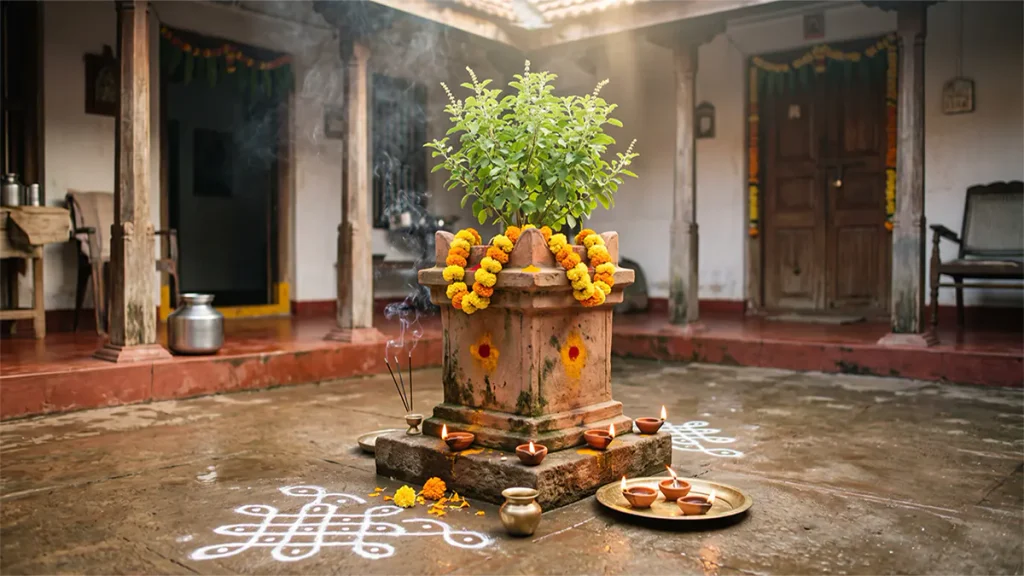
Lighting small oil lamps (deepams) near the household Tulasi plant at dawn and dusk is one of the most cherished daily traditions of Karthika Masam. (AI image)Whether you grew up watching your elders light tiny clay lamps on the front porch, or you are a beginner learning about Hindu traditions for the very first time, Karthika Masam can sometimes feel overwhelming. You might wonder why different regions start the month on different days, why both Shiva and Vishnu are honoured together, or whether you have to follow strict rules to take part.
This complete guide explains every part of Karthika Masam in plain, simple English. You will learn the meaning behind the calendar, the sacred stories from ancient texts, step-by-step ways to pray at home, flexible food and fasting traditions, regional customs across India, and a gentle routine any beginner can follow safely and happily.
Quick Information: Karthika Masam at a Glance
| Feature | Details and Cultural Context |
| Main Name | Karthika Masam (Telugu) / Kartika Masa (Kannada, Marathi) |
| Other Regional Names | Kartik Maas (Hindi), Damodara Masa (Vaishnava tradition), Karthigai Masam (Tamil solar overlap) |
| Meaning of the Name | Named after the Krittika star cluster (the Pleiades constellation), where the full moon aligns during this month |
| Gregorian Calendar Timing | Usually falls between mid-October and mid-November (dates vary by regional calendar system) |
| Primary Deities Worshipped | Both Lord Shiva and Lord Vishnu (along with Lord Kartikeya / Subrahmanya and Goddess Tulasi) |
| Core Daily Practices | Early morning bath, lighting oil lamps (Karthika Deepam), Tulasi worship, temple visits, reading sacred stories |
| Key Special Days | Karthika Somavaram (Mondays), Nagula Chavithi, Prabodhini Ekadashi, Ksheerabdi Dwadashi, Karthika Pournami, Polala Amavasya |
| Signature Social Custom | Vana Bhojanam (community and family picnics held in gardens or under the shade of an Amla / Usiri tree) |
| Central Spiritual Themes | Inner light over ignorance, self-discipline, gratitude to nature, unity in devotion, and charity (daanam) |
What Is Karthika Masam?
To understand Karthika Masam, it helps to first look at how traditional Hindu calendars measure time. Unlike the standard international calendar (the Gregorian calendar), which is based only on the Earth’s movement around the Sun, most traditional Hindu calendars are lunisolar. This means they track the cycles of the Moon as it waxes (grows fuller) and wanes (grows smaller), while gradually adjusting to match the solar seasons.
How the Month Gets Its Name
In traditional Indian astronomy, the night sky is divided into twenty-seven star groups called nakshatras (lunar mansions). When the Moon becomes completely full (Pournami or Purnima) during this specific autumn month, it usually shines right next to a bright cluster of stars called Krittika (known in Western astronomy as the Pleiades). Because the full moon rests near the Krittika stars, the entire thirty-day period is called Karthika Masam (Masam simply means “month”).
How a Lunar Month Works
Every Hindu lunar month lasts approximately 29.5 days and is divided into two fifteen-day halves, called pakshas (fortnights):
- Shukla Paksha (The Bright Fortnight): The fifteen days when the Moon grows brighter each night, starting after the new moon and ending on the full moon (Pournami).
- Krishna Paksha (The Dark Fortnight): The fifteen days when the Moon grows smaller each night, starting after the full moon and ending on the no-moon day (Amavasya).
Why Do Dates Differ Between North India and South India?
One of the most common questions families ask is: “Why did my cousins in Delhi or Varanasi start observing Kartik two weeks before my family in Vijayawada, Hyderabad, or Bengaluru?”
The answer comes down to two different ways of counting the start and end of a lunar month, along with one solar system:
- The Purnimanta System (Used Mainly in North India): Purnimanta means “ending on the full moon.” In states such as Uttar Pradesh, Bihar, Madhya Pradesh, Rajasthan, and Haryana, a new lunar month begins the day after the full moon (Purnima). Therefore, North Indian Kartik Maas starts right after Sharad Purnima in October and ends on Kartik Purnima in November.
- The Amanta System (Used in Andhra Pradesh, Telangana, Karnataka, Maharashtra, and Gujarat): Amanta means “ending on the new moon.” In these regions, a new lunar month begins the day after the new moon (Amavasya)—specifically the day right after Diwali (Deepavali Amavasya). It then continues for thirty days and ends on Karthika Amavasya (often called Polala Amavasya).
- The Solar Calendar System (Used in Tamil Nadu, Kerala, and parts of Eastern India): Tamil Nadu follows a solar calendar (Sauramana), where a month begins when the Sun enters a new zodiac sign. Their month of Karthigai begins around mid-November.
A Simple Example to Remember:
Think of two schools that both hold a thirty-day reading challenge. School A starts counting from the first day of the month to the thirtieth. School B starts counting from the fifteenth of the month to the fifteenth of the next month. During the middle two weeks—the bright fortnight leading up to Karthika Pournami—both North India and South India are celebrating Karthika Masam at the exact same time! Because of these regional systems, it is always wise to check a local panchangam (traditional almanac) calculated for your own city before planning specific rituals.
Why Is Karthika Masam Spiritually Significant?
Across India, elders often describe Karthika Masam as a spiritual recharge for the entire year. While festivals like Dussehra and Diwali are lively, colourful celebrations filled with sweets, new clothes, and fireworks, Karthika Masam begins right after Diwali and invites a quiet, peaceful shift inward.
Here is why this month holds such deep meaning in Hindu thought:
1. Importance in Shaiva Traditions (Worship of Lord Shiva)
For devotees of Lord Shiva (Shaivites), Karthika Masam is a time of purity, meditation, and gratitude. Traditional beliefs hold that during this month, Lord Shiva is especially pleased by simple, sincere offerings—such as pouring clean water over the Shiva Lingam (Abhishekam), offering three-pronged Bilva leaves, and lighting a single lamp with pure heart. Mondays in this month (Karthika Somavaram) are treated as miniature festival days in Shiva temples.
2. Importance in Vaishnava Traditions (Worship of Lord Vishnu)
For devotees of Lord Vishnu (Vaishnavites), this month marks the grand conclusion of Chaturmasya—the four-month monsoon period during which Lord Vishnu is believed to rest in cosmic sleep (Yoga Nidra) on the serpent Shesha. On the eleventh day of the bright fortnight (Prabodhini or Utthana Ekadashi), devotees celebrate Lord Vishnu waking up to bless the world again. In many Vaishnava traditions, the month is also lovingly called Damodara Masa, celebrating the childhood story of Lord Krishna being bound with a rope of love by his mother, Yashoda.
3. The Symbolism of Light (Tamaso Ma Jyotirgamaya)
In the Indian season cycle, Karthika Masam falls during Sharad and early Hemanta Ritu (late autumn and early winter). The days grow shorter, the mornings become misty and cool, and darkness arrives earlier in the evening. Lighting a small oil lamp (deepam) at sunrise and sunset is not only a welcoming glow in the physical dusk; in Hindu philosophy, the flame represents knowledge, kindness, and awareness pushing away the darkness of confusion, ego, and selfishness.
4. Spiritual Discipline and Self-Control
Many devotees use the thirty days of Karthika Masam to practice gentle self-discipline (niyama). By waking up a little earlier, eating simple vegetarian meals, avoiding harsh speech, and stepping away from bad habits, people train their minds to be calmer and more mindful. It is very similar to setting a thirty-day personal wellness and mindfulness goal grounded in faith.
5. Charity and Helping Others (Daanam)
Traditional texts like the Karthika Puranam repeatedly teach that prayer without kindness to other living beings is incomplete. Giving food to the hungry (Anna Daanam), donating oil or lamps to a dark temple (Deepa Daanam), helping someone in need, or feeding cows and birds are considered some of the highest forms of worship during this month.
6. Family Bonding and Cultural Continuity
Because many Karthika rituals happen right at home—around the courtyard Tulasi plant or in the family prayer corner—grandparents, parents, and children participate together. Lighting wicks, listening to stories in the evening, and going for nature picnics (Vana Bhojanam) pass down cultural values of respect, patience, and togetherness to younger generations without feeling like a classroom lesson.
The Connection Between Lord Shiva and Lord Vishnu
In many parts of the world, people assume that different religious branches stay completely separate. Even within Hinduism, some months focus mainly on one deity—for example, Shravana Masam often highlights Shiva and Goddess Parvati, while Margashirsha highlights Vishnu. What makes Karthika Masam extraordinary is that it brings Shiva and Vishnu worship together under one roof.
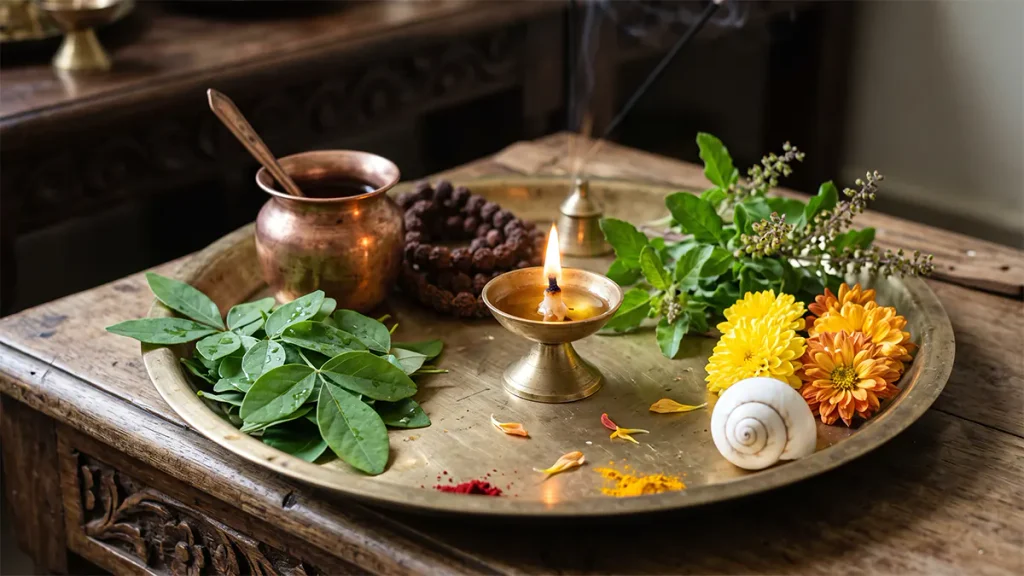
During Karthika Masam, devotees honour both Lord Shiva (often with three-leaved Bilva leaves) and Lord Vishnu (with sacred Tulasi leaves). (AI image)The Concept of Hari-Hara
In Hindu philosophy, Hari is another name for Lord Vishnu (the preserver of the universe), and Hara is another name for Lord Shiva (the transformer of the universe). Together, they are known as Hari-Hara—a symbolic reminder that creation, preservation, and transformation are parts of the same divine reality.
In traditional texts associated with this month, such as the Skanda Purana and Padma Purana, stories describe Lord Vishnu praising the devotion of Lord Shiva, and Lord Shiva praising the grace of Lord Vishnu. In many South Indian villages and towns, a family will visit a Shiva temple in the morning to perform Abhishekam on a Monday, and then return home to worship Lord Vishnu alongside the sacred Tulasi plant on the twelfth lunar day (Ksheerabdi Dwadashi).
How Different Families Experience This Unity
Not every community explains this connection in the exact same way, and that diversity is completely natural:
- Smarta and General Household Traditions: Many Hindu families worship five main forms of the divine (Panchayatana) and see Shiva and Vishnu as equal expressions of one supreme truth. For them, Karthika Masam is a joyful celebration of both deities.
- Shaiva-Focused Traditions: Families whose primary family deity (Kuladevata) is Shiva focus heavily on Karthika Somavaram, Rudrabhishekam, and the lighting of the grand Jwala Thoranam and Akasa Deepam at Shiva temples.
- Vaishnava-Focused Traditions: Families following specific Vaishnava lineages focus deeply on singing the Damodarashtakam hymn, celebrating Utthana Ekadashi, performing Tulasi Vivah, and offering lamps to Lord Krishna or Lord Venkateswara.
Respecting these variations helps us understand why Karthika Masam feels so welcoming across different regions and communities.
Important Stories and Legends of Karthika Masam
During the thirty days of Karthika Masam, many devotees read one chapter a day from the Karthika Puranam—a collection of devotional stories drawn largely from the ancient Skanda Purana and Padma Purana.
When reading these sacred narratives, it helps to separate devotional belief and sacred mythology from everyday history. These stories were preserved over centuries not as modern history textbooks, but as moral and spiritual parables meant to teach generosity, humility, and the value of sincere devotion. Here are five of the most famous legends connected with the month:
1. The Story of Tripurasura and Karthika Pournami (Shiva Tradition)
- Textual Tradition: Found in the Shiva Purana, Skanda Purana, and Mahabharata.
- The Story in Simple Words: Long ago, three powerful demon brothers known as the Tripurasuras built three flying fortress cities made of gold, silver, and iron in the sky, in space, and on Earth. Because of a boon they had received, their three fortresses could only be destroyed if they lined up in a single straight line and were struck by a single arrow. When the brothers began troubling the world, the gods prayed to Lord Shiva for help. The Earth itself became Shiva’s chariot, the Sun and Moon became its wheels, and Mount Meru became his bow. On the full moon day of Karthika Pournami, the three fortresses aligned for a brief moment, and Lord Shiva destroyed them with a single arrow of light.
- Devotional Meaning: In spiritual teaching, the three fortresses of iron, silver, and gold represent three human weaknesses: ego, attachment, and ignorance. Because Shiva conquered this darkness on Karthika Pournami, the day is also called Tripurari Purnima or Dev Deepawali (the Diwali of the Gods). Devotees light rows of lamps to celebrate the victory of wisdom over inner darkness.
2. The Awakening of Lord Vishnu on Prabodhini Ekadashi (Vaishnava Tradition)
- Textual Tradition: Found in the Padma Purana and Bhagavata Purana.
- The Story in Simple Words: According to Vaishnava tradition, after rescuing the cosmic waters and establishing order, Lord Vishnu rests for four months during the rainy season, beginning on Shayani Ekadashi (in June or July). During these four months, nature goes through heavy monsoon rains, and grand celebrations like weddings are traditionally paused. On the eleventh bright day of Karthika Masam—known as Prabodhini Ekadashi (or Utthana / Dev Uthani Ekadashi)—the gods and sages gather with music, prayers, and glowing lamps to gently wake Lord Vishnu from his cosmic rest.
- Devotional Meaning: Waking Lord Vishnu symbolizes the awakening of our own higher conscience, gratitude, and active service as the skies clear after the monsoon season.
3. The Marriage of Goddess Tulasi and Lord Shaligrama / Vishnu (Ksheerabdi Dwadashi)
- Textual Tradition: Found in the Padma Purana, Skanda Purana, and regional Karthika Puranam texts.
- The Story in Simple Words: On the twelfth day of the bright fortnight (Dwadashi), right after Ekadashi, devotees celebrate Ksheerabdi Dwadashi (also called Chilku Dwadashi or Tulasi Vivah). According to sacred lore, during the churning of the cosmic Ocean of Milk (Ksheera Sagara Manthanam), sacred treasures and divine grace emerged. On this day, the sacred Tulasi plant (considered an earthly manifestation of Goddess Lakshmi and devotion) is ceremonially wedded to Lord Vishnu (often represented by a sacred black Shaligrama stone or a small branch of the Amla / Usiri tree).
- Devotional Meaning: This story celebrates the bond between nature and the divine, reminding families to treat living plants and the natural environment as sacred members of the household.
4. Lord Krishna as Damodara (The Childhood Story of Love)
- Textual Tradition: Found in the Tenth Canto of the Srimad Bhagavata Purana.
- The Story in Simple Words: When Lord Krishna was a small toddler in Gokul, he broke a pot of butter and shared the treats with neighbourhood monkeys. To teach him a lesson, his mother Yashoda tried to tie him to a wooden grinding mortar with a household rope. Curiously, every time she tried to knot the rope around his waist, the rope seemed two fingers too short! Even when she tied all the ropes in the house together, it was still two fingers short. Finally, seeing his mother tired and sweating from her loving effort, little Krishna smiled and allowed himself to be tied. Because he was bound around the belly (udara) with a cord (dama), he earned the name Damodara.
- Devotional Meaning: According to traditional teachers, this story took place during Karthika Masam. It teaches a comforting lesson: the Divine cannot be captured by pride or wealth, but gladly allows itself to be bound by simple, sincere love.
5. The Parable of the Tiny Mouse and the Temple Lamp (Karthika Puranam)
- Textual Tradition: A popular teaching parable from the Karthika Puranam read in Telugu and Kannada households.
- The Story in Simple Words: Once, Inside an old Shiva temple, a devout person lit an oil lamp before leaving for the night. Over the hours, the cotton wick burned down low, and the flame grew weak and flickered. A tiny mouse crept into the sanctum looking for leftover food and tried to nibble the oil-soaked cotton wick. As the mouse nudged the wick forward with its nose, the wick accidentally slid up out of the oil, and the dying flame suddenly blazed bright again, lighting up the whole shrine! According to the parable, because the mouse accidentally revived a dying lamp in Lord Shiva’s temple during Karthika Masam, it was blessed with a noble birth in its next life.
- Devotional Meaning: Devotees tell this story to children not as a scientific fact, but to illustrate how deeply tradition values the act of bringing light to a dark place—even in the smallest way.
Important Rituals Observed During Karthika Masam
During Karthika Masam, you will notice many different customs being practiced in homes and temples. It is very important to know that not every Hindu family performs every ritual. Some practices are wide-reaching across India, some belong specifically to certain regions, and others are personal vows (vratas) chosen by individuals.
Here is a clear breakdown of the main rituals, why devotees follow them, and what a beginner should know:
1. Early-Morning Bathing (Karthika Snanam)
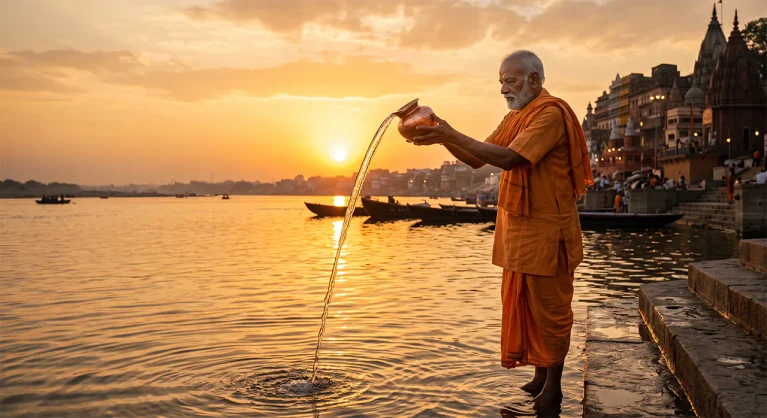
- What It Involves: Waking up early in the morning—ideally during Brahma Muhurta (roughly an hour and a half before sunrise)—and taking a bath before starting morning prayers. Traditionally, people living near sacred rivers (such as the Godavari, Krishna, Kaveri, or Ganga) take a dip in flowing water. At home, families simply bathe with clean water.
- Why Devotees Follow It: Waking before sunrise refreshes the body, clears sleepiness, and creates a quiet hour for prayer before the noise of daily work and school begins.
- Is It Universal or Optional? While bathing before prayer is a common custom across Hindu households, bathing in cold river water before dawn is completely optional. Elderly people, young children, anyone living in cold climates, or people prone to seasonal colds should always use comfortably warm water at home.
2. Lighting Oil Lamps Twice Daily (Karthika Deeparadhana)
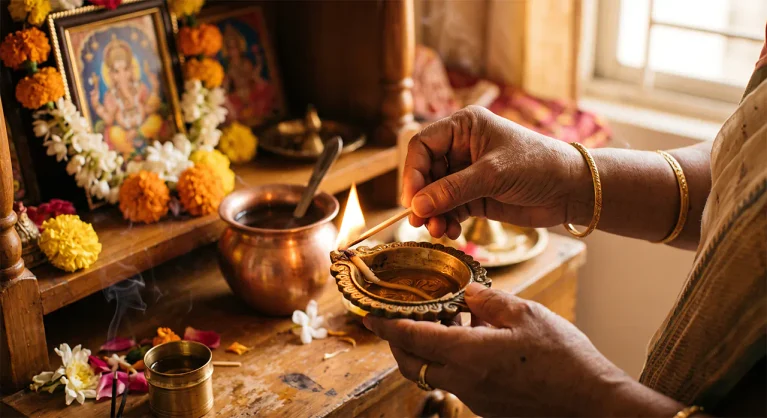
- What It Involves: Lighting small lamps filled with sesame oil (nuvvula nune) or cow’s ghee using twisted cotton wicks—once at dawn and once at dusk. Lamps are usually placed in the home altar, near the Tulasi plant, and at the main entrance of the house.
- Why Devotees Follow It: It symbolizes welcoming divine grace, peace, and wisdom into the home while dispelling gloom.
- Beginner Note: You do not need dozens of expensive silver lamps. One or two clean clay lamps (matti pramida) lit safely with love are completely sufficient.
Continue Reading: Why Do We Light a Diya? Meaning, Rules, Significance & Oil vs Ghee
3. Shiva Worship and Abhishekam
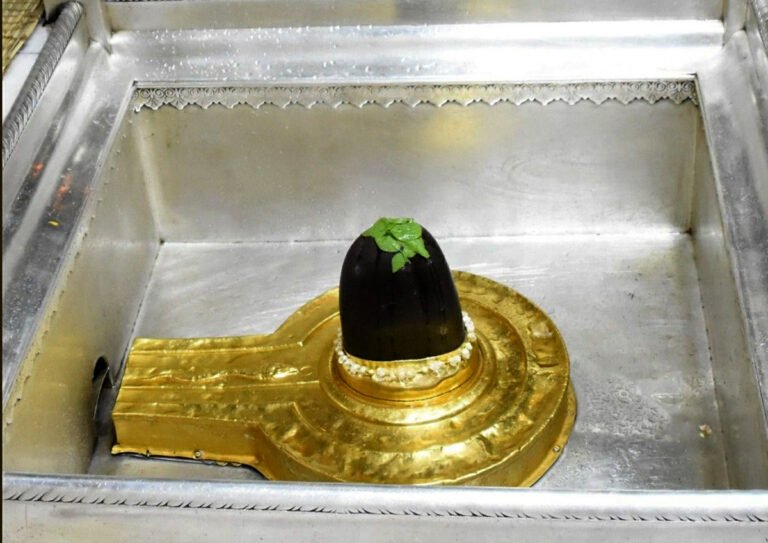
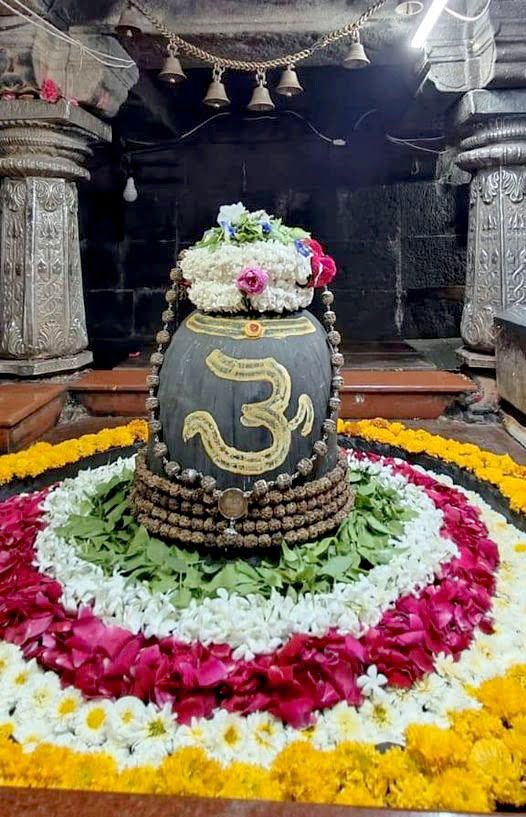
- What It Involves: Visiting a Shiva temple or praying to a small Shiva Lingam at home. Devotees pour pure water, milk, or honey over the Lingam (Abhishekam) while chanting “Om Namah Shivaya” or listening to the Sri Rudram. Many also offer three-leaved Bilva (Maredu) leaves.
- Why Devotees Follow It: In Shaiva tradition, cooling the Shiva Lingam with water and offering Bilva leaves represents offering one’s thoughts, words, and actions to the Divine.
- Scope: Especially prominent in Andhra Pradesh, Telangana, Karnataka, Tamil Nadu, and Maharashtra, particularly on Mondays.
4. Vishnu Worship and Damodara Prayers
- What It Involves: Offering prayers, yellow flowers, and tulasi leaves to Lord Vishnu or Lord Krishna, chanting the Vishnu Sahasranamam (the thousand names of Vishnu) or the Damodarashtakam, and offering a small lamp waved in a circle (arati).
- Why Devotees Follow It: To honour Lord Vishnu’s awakening on Ekadashi and remember his protective kindness.
- Scope: Observed widely by Vaishnava families and in temples dedicated to Lord Venkateswara, Rama, or Krishna across India.
5. Tulasi Worship and Amla (Usiri) Offerings
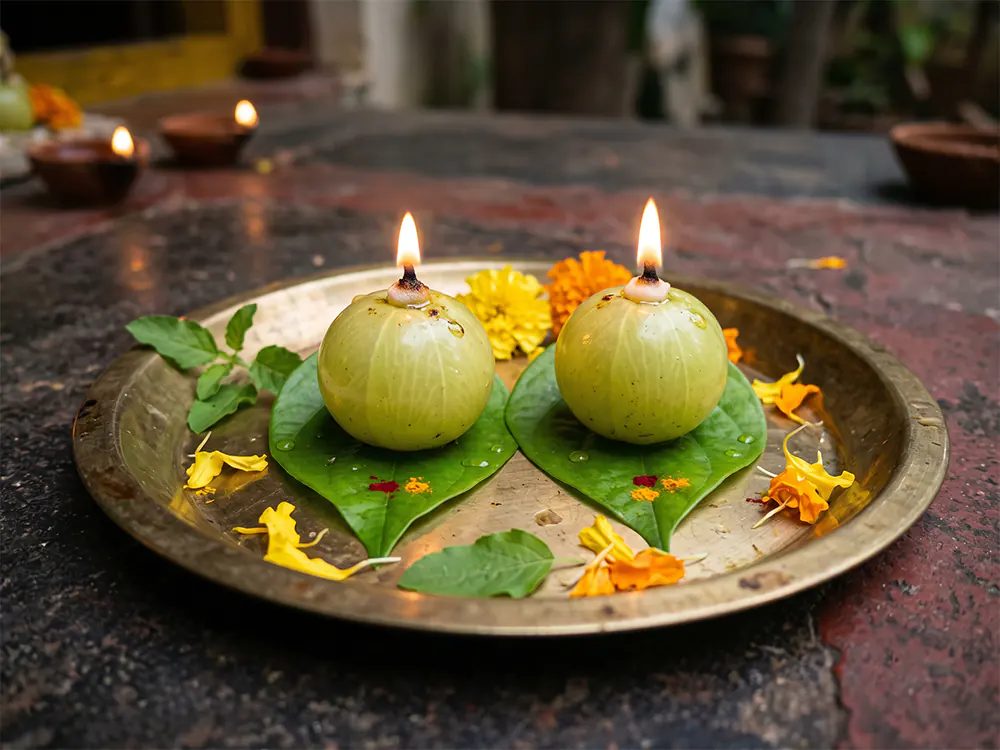
- What It Involves: Cleaning the area around the household Tulasi plant (Tulasi Kota), decorating it with simple rangoli (muggulu), offering water, turmeric, and vermilion (pasupu-kumkuma), and lighting a lamp beside it. In many regions, devotees also place a lamp placed on or beside an Amla (Indian gooseberry, called Usiri in Telugu and Nellikai in Tamil/Kannada) fruit.
- Why Devotees Follow It: Both the Tulasi plant and the Amla tree are considered sacred symbols of purity, health, and the presence of Lord Vishnu and Goddess Lakshmi.
- Beginner Note: If you live in an apartment without a courtyard, a small potted Tulasi plant on a sunlit balcony or windowsill works wonderfully.
Continue Reading: Sacred Tulsi Plant at Home: Meaning, Worship, Placement & Care
6. Reading or Listening to the Karthika Puranam (Puranam Parayanam)
- What It Involves: Reading one daily chapter of the Karthika Puranam (which contains thirty chapters for the thirty days) at home or listening to a priest or elder read it aloud at the neighbourhood temple in the evening.
- Why Devotees Follow It: It keeps the mind focused on ethical values, generosity, and devotional stories throughout the month.
- Scope: Very popular in Andhra Pradesh, Telangana, and Karnataka; optional for beginners, who can simply read a short summary or prayer instead.
7. Deepa Daanam and Charity
- What It Involves: Donating a lamp, oil, cotton wicks, food grains, or warm clothing to a temple, a priest, or a person in need.
- Why Devotees Follow It: Deepa Daanam literally means “the gift of light.” In ancient times before electricity, donating oil and lamps helped keep village temples and pathways lit for everyone. Today, it symbolizes sharing knowledge, warmth, and help with the community.
How to Perform Karthika Masam Pooja at Home (Step-by-Step Guide)
Many beginners worry that performing Karthika Masam pooja at home requires complex Sanskrit chants, hours of preparation, or a priest. In reality, Hindu home worship (Gruha Pooja) is built on sincerity, cleanliness, and calm devotion (Bhakti). Elaborate arrangements are never compulsory.
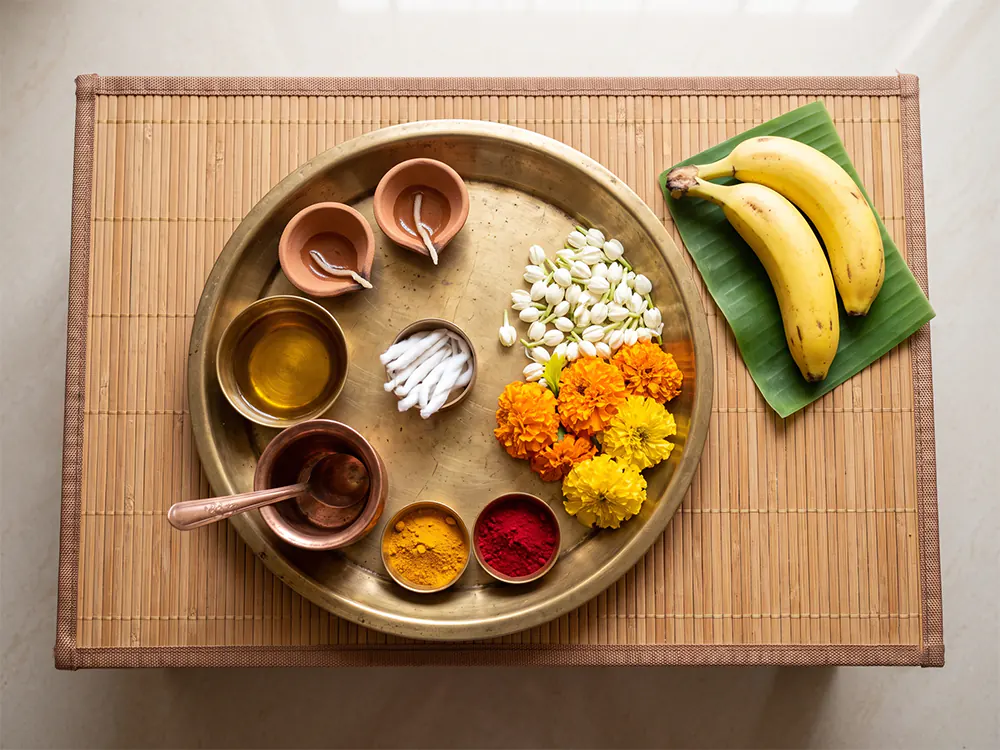
Here is a simple, respectful, step-by-step guide you can follow at home according to your family’s comfort:
Basic Materials Checklist (Keep Only What You Need)
- A small lamp (Deepam): A clean clay diya (matti pramida) or brass lamp.
- Oil or Ghee: Sesame oil (til / nuvvula oil) or cow’s ghee.
- Cotton wicks (Vattulu): Two wicks twisted together so they burn steadily as one flame.
- Matchbox or lighter: For lighting the lamp safely.
- A small bell and incense stick (Agarbatti) or camphor: Optional, for fragrance and focus.
- Clean water: In a small cup (kalasham or tumbler) with a spoon.
- Flowers or leaves: Any fresh flower available, a few Tulasi leaves (for Vishnu), or a Bilva leaf (for Shiva).
- Turmeric (Pasupu), Vermilion (Kumkuma), and Sandalwood paste (Chandanam): For placing a small mark on the altar.
- Simple food offering (Naivedyam): A piece of fruit (like a banana or apple), a few soaked chickpeas, jaggery (bellam), or raisins.
Step-by-Step Home Pooja Procedure
1.Prepare the Prayer Space and Yourself:Takes about 5 to 10 minutes.
Wake up in the morning, bathe (using warm water if needed), and put on clean, comfortable clothes. Gently wipe your home altar or prayer shelf and the area around your Tulasi plant. If your family enjoys drawing rangoli (muggulu), place a small, neat design in front of the altar using rice flour or chalk.
2.Prepare and Light the Deepam Safely:Keep flames away from curtains and loose clothing.
Place your clay or brass lamp on a small metal plate or stand (never directly on a wooden table or plastic cloth). Pour sesame oil or ghee into the lamp and soak the cotton wicks so the tip has oil on it. Light the lamp and place a tiny dot of sandalwood paste and vermilion on the base of the lamp to honour the light.
3.Set a Peaceful Intention (Sankalpam):In your own native language or simple English.
Sit comfortably on a mat in front of the altar. Fold your hands, take three slow breaths, and silently thank the Divine for your family’s well-being, praying for peace, kindness, and clarity during Karthika Masam.
4.Offer Prayers to Lord Ganesha First:Traditional opening prayer.
In Hindu tradition, every prayer begins by remembering Lord Ganesha to remove obstacles. You can simply bow your head and say in plain words, “Om Sri Ganeshaya Namah—please bless our home prayer today.”
5.Worship Lord Shiva and Lord Vishnu:Follow your family custom.
Place a fresh flower or a dot of sandalwood paste before the images or symbols of Lord Shiva and Lord Vishnu on your altar. Remember a simple traditional rule for sacred leaves: Bilva leaves are offered to Lord Shiva, while Tulasi leaves are offered to Lord Vishnu (Tulasi leaves are traditionally not placed on a Shiva Lingam).
6.Chant a Simple Name or Read a Short Story:2 to 10 minutes, completely flexible.
You do not need to know difficult chants. You may repeat these simple, verified traditional names eleven or twenty-one times:
- For Lord Shiva: “Om Namah Shivaya” (Meaning: “I bow respectfully to Lord Shiva, the auspicious inner self.”)
- For Lord Vishnu: “Om Namo Narayanaya” or “Om Namo Bhagavate Vasudevaya” (Meaning: “I bow respectfully to Lord Narayana / Vasudeva, who dwells in all beings.”)If you have time, you can also read one short story or page from a devotional book in any language you understand comfortably.
7.Pray at the Tulasi Plant:Morning or evening custom.
Carry a second small lit lamp (or light one beside your Tulasi pot), pour a small spoonful of clean water into the soil (in the morning), and walk around the plant clockwise three times if space allows, or simply stand before it with folded hands.
8.Offer Naivedyam (Food Offering) and Conclude:Share the blessed food as Prasadam.
Place your piece of fruit, jaggery, or cooked vegetarian meal before the altar. Sprinkle a tiny drop of clean water near the plate as a gesture of offering, ring the small bell if you have one, and bow respectfully. Afterward, share the fruit or food (Prasadam) with your family members.
Karthika Deepam: Meaning and Importance of Lighting Lamps
If there is one visual symbol that defines Karthika Masam from village lanes to bustling city apartments, it is the warm golden glow of the Karthika Deepam—the traditional oil lamp.
What Is a Deepam and Why Is It Lit?
A deepam (or diya) is a small lamp made of baked clay, brass, or silver that burns vegetable oil or clarified butter (ghee) through a cotton wick. During Karthika Masam, devotees light deepams at two special transitional times of the day:
- Before or at Sunrise (Pratah Sandhya): Welcoming the new day with clarity and gratitude.
- At Sunset (Sayam Sandhya): Bringing warm light into the home just as dusk settles outside.
The Spiritual Symbolism of the Lamp
In traditional Indian teachers’ explanations, every part of the oil lamp carries a simple lesson for daily life:
- The Oil or Ghee represents our negative tendencies, ego, and restlessness.
- The Cotton Wick represents the individual mind or self.
- The Flame represents spiritual wisdom, love, and mindfulness.As the wick slowly burns up the oil to give off steady light, it reminds us that when we let go of selfishness and anger, our lives naturally shine with kindness and peace for everyone around us. Notice also that no matter how you tilt a lamp, a flame always points upward—a gentle symbol of keeping our thoughts uplifting even during hard times.
Continue Reading: The Meaning of Sattva, Rajas, and Tamas in Daily Hindu Living
Common Household Placement vs. Temple Traditions
- At Home: Families commonly place a lamp inside the prayer room (pooja mandir), beside the Tulasi plant, and one or two small clay lamps on either side of the main front threshold (Simhadwaram) to welcome auspiciousness and guests.
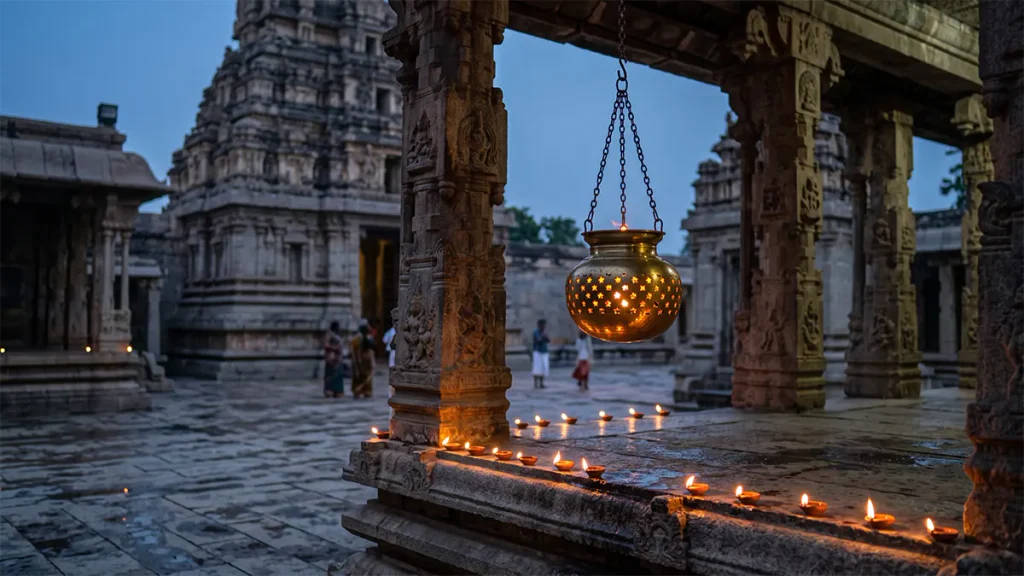
- At Temples (Akasa Deepam): If you visit a traditional South Indian Shiva or Vishnu temple during Karthika Masam, look up at a tall wooden or stone pillar standing in the courtyard. Every evening at dusk, temple priests light a clay lamp placed inside a perforated brass pot and hoist it high up to the top of the pole using a pulley. This is called the Akasa Deepam (“Sky Lamp”). Historically and spiritually, it served as a beacon over the village rooftops so that elderly people, sick people, or travellers who could not walk into the temple could still see the sacred light from afar and fold their hands in prayer.
- Special Lamp Customs (365 Wicks and Amla Lamps): On bright auspicious days like Ekadashi or Karthika Pournami, many devotees in Andhra Pradesh, Telangana, and Karnataka light a bundle of 365 tiny cotton wicks soaked in ghee inside a coconut shell or clay bowl at a temple courtyard. Devotees view this as a symbolic offering of light for every day of the year—especially to make up for any days when busy life prevented daily prayer. However, lighting a specific number of wicks is a devotional symbol, not a magic formula, and it never replaces everyday honesty and kindness.
Essential Fire Safety Rules for Every Household
Because oil lamps involve an open flame, practical safety must always come first:
- Use a stable metal tray or stone base: Never place a clay lamp directly on wood, paper, plastic, or cloth. Clay is porous and gets very hot at the bottom.
- Keep away from fabric and drafts: Ensure curtains, sarees, dupattas, and loose clothing stay far away from floor lamps, and avoid placing lamps right under a high-speed ceiling fan where sparks can blow.
- Protect children and pets: Place lamps on an elevated shelf or supervised courtyard ledge if you have toddlers, dogs, or cats at home.
- Never leave an open flame unattended overnight: While some traditional stories talk about continuous lamps (Akhanda Deepam), modern apartment safety requires putting out unattended flames or covering them safely before going to sleep or leaving the house.
Karthika Somavaram: Why Mondays Are Important
While all thirty days of Karthika Masam are considered auspicious, the Mondays that fall during this month—known as Karthika Somavaram (Soma means the Moon, and Varam means day of the week)—hold a very special place in Shiva worship.
The Connection Between Monday, the Moon, and Lord Shiva
In Hindu tradition, Lord Shiva is often known as Someshwara or Chandrashekhara—the one who wears the crescent Moon gently upon his matted locks. According to Puranic lore, when the Moon God (Chandra) was once afflicted by a curse that caused his light to fade away completely, he prayed with deep devotion to Lord Shiva during Karthika Masam. Pleased by his humility, Shiva placed the crescent Moon on his own head, restoring his glow and creating the waxing and waning cycle we see in the night sky today. Because the Moon denotes the mind in Indian philosophy, praying to Lord Shiva on Monday is believed to bring emotional calm, mental peace, and steadiness.
How Devotees Observe Karthika Somavaram
Depending on the calendar year, there are usually four or five Mondays in Karthika Masam. Common ways families observe them include:
- Temple Visits and Rudrabhishekam: Devotees visit neighbourhood Shiva temples early in the morning or evening. Famous Pancharama Kshetras and Jyotirlinga shrines see long, peaceful lines of families offering milk, water, and Bilva leaves.
- Nakta Vratam (Daytime Fasting Until Starlight): Some adult devotees choose to fast during the daytime on Mondays (drinking water, milk, or eating fruit) and eat a single simple, freshly cooked vegetarian meal at night only after seeing the evening stars appear in the sky (Nakshatra Darshanam).
- Evening Deeparadhana: Lighting lamps at home or under a sacred peepal (Ashwattha), bilva, or amla tree in the evening.


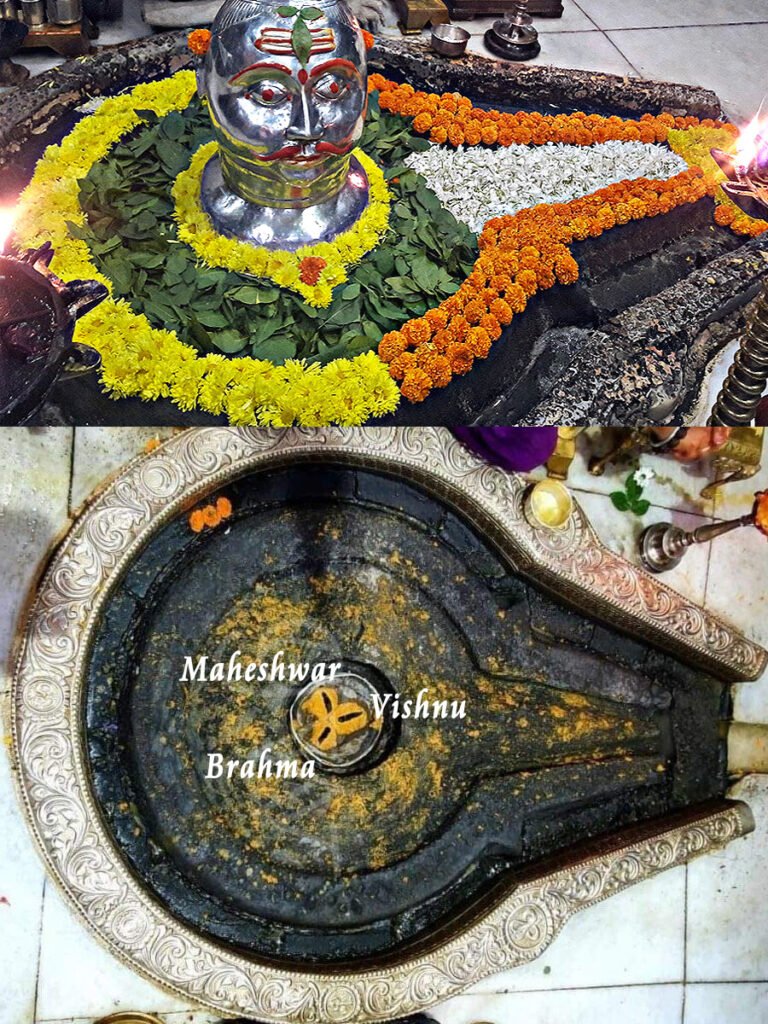

How a Beginner Can Participate
You do not have to fast all day to observe Karthika Somavaram. A beginner, student, or working parent can honour Monday simply by waking up peacefully, lighting a lamp, spending five minutes chanting “Om Namah Shivaya”, eating simple vegetarian meals for the day, and speaking kindly to family and coworkers.
Karthika Pournami and Other Important Observances
Karthika Masam is not a single one-day festival; rather, it is a thirty-day calendar filled with distinct milestones. To understand them clearly, remember that some days are based on tithis (lunar phases like the 4th, 11th, 12th, or 15th day of the moon), while others are weekday observances (like Mondays) or social traditions.
Here are the major observances during the month:
1. Yama Dwitiya / Bhai Dooj (2nd Day of the Bright Fortnight)
In the Amanta calendar (followed in Telugu, Kannada, and Marathi regions), Karthika Masam opens right after Diwali. On the second day (Shukla Dwitiya), sisters invite their brothers home for a festive meal, apply a protective mark (tilak) on their foreheads, and pray for each other’s long life and happiness.
2. Nagula Chavithi (4th Day of the Bright Fortnight)
Observed widely in Andhra Pradesh and Telangana on the fourth day after Diwali (Karthika Shukla Chaturthi), Nagula Chavithi is a traditional festival dedicated to the worship of serpent deities (Naga Devatas). Families visit earthen anthills (putta) or stone Naga shrines under peepal and neem trees, offering raw milk, soaked sesame seeds blended with jaggery (chimili), and rice flour sweets (chalimidi). Culturally, this observance also reflects rural gratitude toward nature’s balance on farms and fields.
3. Kanda Shashti / Subrahmanya Shashti (6th Day of the Bright Fortnight)
The sixth lunar day is sacred to Lord Kartikeya (also known as Murugan, Subrahmanya, or Skanda), the son of Lord Shiva and Goddess Parvati who was raised by the six mothers of the Krittika star cluster. In Tamil Nadu and among South Indian devotees worldwide, the six days leading up to Soorasamharam (the victory of Lord Murugan over the demon Surapadman) are observed with devotional songs (Kanda Shashti Kavacham) and prayer.
Continue Reading: Understanding Skanda Sashti Fasting & Significance: The Complete Guide to Lord Murugan’s Sacred 6-Day Vratam
4. Prabodhini / Utthana Ekadashi (11th Day of the Bright Fortnight)
One of the largest Ekadashis of the year, celebrating the awakening of Lord Vishnu from his four-month monsoon rest. Devotees spend the day in Vishnu prayers, singing bhajans, and observing a light diet according to their capacity.
5. Ksheerabdi Dwadashi / Tulasi Vivah (12th Day of the Bright Fortnight)
Falling the day right after Ekadashi, families decorate their home Tulasi plant like a bride with red cloth, flowers, mango leaves, and sugarcane stalks. In the evening, lamps are lit inside Amla fruits and clay diyas to celebrate the ceremonial wedding of Goddess Tulasi and Lord Vishnu.
6. Vaikuntha Chaturdashi and Pradosham (13th and 14th Lunar Days)
- Pradosham occurs on the thirteenth lunar day (Trayodashi) of both the bright and dark fortnights during the ninety-minute twilight window around sunset, dedicated to Lord Shiva and Nandi (the sacred bull).
- Vaikuntha Chaturdashi falls on the fourteenth bright day, just before the full moon. It is one of the rare days in the year when Lord Vishnu is worshipped with Bilva leaves and Lord Shiva is worshipped with Tulasi leaves, symbolizing complete harmony between the two traditions.
7. Karthika Pournami (The Full Moon Climax — 15th Day)
Karthika Pournami is the grand peak of the entire month. When the full moon aligns with the Krittika stars, temples and riversides across India glow with thousands of oil lamps.
- Jwala Thoranam: At major Shiva temples in Andhra Pradesh, Telangana, and Karnataka, priests build a tall archway of dried sacred grass and palm leaves in the temple courtyard and light it at night. The temple’s bronze processional deity (Utsava Murti) is carried three times underneath the glowing arch of fire. This ritual, called Jwala Thoranam, symbolizes burning away negative karma and fear.
- Dev Deepawali: In Varanasi (Kashi), millions of clay lamps are lit along all the river steps (ghats) of the Ganga on this very night.
- Guru Nanak Jayanti & Boita Bandana: Karthika Pournami is also celebrated across India by Sikh communities as the birth anniversary of Guru Nanak Dev Ji (Gurpurab), and in Odisha as Boita Bandana, where people float miniature decorative boats with lamps to remember ancient maritime traders.
8. Polala Amavasya / Karthika Amavasya (30th Day — End of the Amanta Month)
In the Amanta calendar regions (such as Andhra Pradesh, Telangana, and Karnataka), Karthika Masam concludes on the new-moon day called Polala Amavasya. Mothers often pray to Goddess Poleramma (a protective village form of Shakti) for the health and safety of their children, and devotees light a final set of farewell lamps (Udwasana Deepam) to thank the Divine for a peaceful month.
Karthika Masam Calendar and Important Dates (2026 Editorial Guide)
Why Two Reliable Calendars May Show Different Civil Dates
Even within the same state, you might see one calendar list Karthika Pournami on one date and another calendar list it the next day. This happens because a lunar day (tithi) does not run from midnight to midnight like a Western clock; it lasts between 19 and 26 hours based on the Moon’s angle from the Sun. Some observances require the tithi to be present at local sunrise (Udaya Tithi), while evening rituals like Pradosham, Ksheerabdi Dwadashi, or Karthika Deepam require the tithi to be active during sunset or moonrise.
2026 Lunar Observance Schedule Structure
| Observance / Festival | Lunar Tithi & Calendar Rule | Applicable Region / System | Civil Date Window & Verification Note [Please Verify with your local panchang date w.r.t location] |
| North Indian Kartik Maas Begins | Purnimanta Kartik Krishna Pratipada (Day after Sharad Purnima) | North India (Purnimanta system) | Late October |
| South & West Indian Karthika Masam Begins | Amanta Karthika Shukla Pratipada (Day after Deepavali Amavasya) | AP, Telangana, Karnataka, Maharashtra, Gujarat (Amanta system) | Early November |
| Yama Dwitiya / Bhai Dooj / Bhagini Hasta Bhojanam | Karthika Shukla Dwitiya (2nd bright day) | Pan-India | November |
| Nagula Chavithi | Karthika Shukla Chaturthi (4th bright day) | Andhra Pradesh & Telangana | November |
| Kanda Shashti / Subrahmanya Shashti | Karthika Shukla Shashti (6th bright day) | Tamil Nadu, AP, Telangana, Karnataka | November |
| Karthika Somavaram (Mondays) | All Mondays falling within the lunar month | Pan-India (especially South & West India) | 4 to 5 Mondays across Oct–Dec |
| Prabodhini / Utthana Ekadashi | Karthika Shukla Ekadashi (11th bright day) | Pan-India | Mid-to-Late November |
| Ksheerabdi Dwadashi / Tulasi Vivah | Karthika Shukla Dwadashi (12th bright day at dusk) | Pan-India | Mid-to-Late November |
| Vaikuntha Chaturdashi | Karthika Shukla Chaturdashi (14th bright day) | Pan-India (Major in Varanasi & Maharashtra) | Late November |
| Karthika Pournami / Dev Deepawali | Karthika Purnima (15th Full Moon day) | Pan-India (North Indian Kartik Maas ends here) | Late November |
| Karthigai Deepam (Thiruvannamalai) | Sauramana Karthigai month when Moon aligns with Krittika star | Tamil Nadu (Solar Calendar) | Late Nov / Early Dec (Note: May match Karthika Pournami or fall ~1 month later depending on solar alignment) |
| Masa Shivaratri | Amanta Karthika Krishna Chaturdashi (14th dark day) | AP, Telangana, Karnataka, Maharashtra | Early December |
| Polala Amavasya (Amanta Karthika Ends) | Amanta Karthika Amavasya (30th New Moon day) | AP, Telangana, Karnataka, Maharashtra | Early-to-Mid December |
Karthika Masam Fasting Rules and Food Traditions
Food and fasting during Karthika Masam are meant to support a calm mind, easy digestion during the seasonal change from autumn to winter, and self-control. However, dietary customs vary widely from family to family, and there is no single rule that every person is forced to follow.
1. The Shift to a Sattvic Vegetarian Diet
Even families who eat non-vegetarian food during the rest of the year commonly choose to eat a 100% vegetarian diet throughout the thirty days of Karthika Masam. In traditional Indian wellness and spiritual thought, food is grouped into three qualities:
- Sattvic foods (fresh fruits, milk, curd, ghee, rice, wheat, green gram, nuts, and mild vegetables) are believed to promote calmness, mental clarity, and steady energy.
- Rajasic foods (overly spicy, sour, salty, or stimulating foods) are believed to make the mind restless.
- Tamasic foods (meat, fish, eggs, alcohol, and stale or heavily fermented leftovers) are believed to bring sluggishness and dullness.
2. Why Do Some Families Avoid Onion, Garlic, and Certain Vegetables?
In many traditional households, cooks also avoid onions and garlic during Karthika Masam—or at least on Mondays, Ekadashi, and Pournami—because traditional texts classify them as Rajasic/Tamasic ingredients that generate strong body heat and strong odours during prayer.
Depending on regional and family custom, some households also temporarily avoid:
- Brinjal (Eggplant / Vankaya) and Drumstick (Munagakaya): Avoided in several Telugu and Kannada family traditions during this month, partly due to traditional Ayurvedic seasonal rules for autumn digestion (Sharad/Hemanta Ritu).
- Certain Lentils (like Masoor Dal or Urad Dal on specific fast days): While Moong Dal (yellow split green gram) and Toor Dal are widely used as light, nourishing proteins.
3. Different Levels of Fasting (Choose What Fits Your Life)
If someone says they are “fasting” (Upavasam) on Karthika Somavaram, Ekadashi, or Pournami, that word can mean very different things depending on their family custom and health:
- Simple Vegetarian Discipline (No Starvation): Eating three regular, home-cooked vegetarian meals without meat, eggs, onion, or garlic. This is the safest and most popular choice for working adults, students, and beginners.
- Ekabhuktam (One Main Cooked Meal): Eating one freshly cooked vegetarian meal at midday, and having milk, buttermilk, nuts, or fruits in the morning and evening.
- Nakta Vratam (Evening Star Fast): Having liquids, fruit, or light snacks during the day on Mondays, and eating a regular cooked vegetarian meal in the evening after sighting the stars.
- Phalaharam (Fruit and Milk Fast): Eating only fruits, milk, soaked sabudana (tapioca pearls), nuts, or sweet potatoes on Ekadashi or Pournami.
Continue Reading: Applying Tilak or Kumkum on the Forehead: 7 Powerful Reasons
Important Health and Safety Qualification
Religious fasting does not cure medical diseases, and no tradition requires you to harm your physical health. In traditional Hindu dharma, taking care of the body is considered the very first duty (“Shareeram Adyam Khalu Dharma Sadhanam”).
- Children, elderly family members, pregnant or breastfeeding women, people with diabetes or blood-pressure conditions, and anyone taking daily medication should never skip meals or restrict water without consulting a qualified medical doctor.
- If you cannot fast due to health or work demands, offering a two-minute sincere prayer and eating regular healthy vegetarian meals is completely respectful and accepted across traditions.
Karthika Masam Dos and Don’ts: Separating Tradition from Myth
On social media and messaging apps, readers often come across alarming lists claiming that if you forget a single rule during Karthika Masam, bad luck will follow. That is not how authentic Hindu tradition works.
The table below separates common traditional practices from optional family customs and practical safety advice:
| Practice | Common Traditional Approach | Important Qualification & Context |
| Lighting Daily Lamps (Deepam) | DO: Light a small sesame oil or ghee lamp at dawn and dusk in the home altar or near the Tulasi plant. | Qualification: If work hours prevent lighting at exact sunrise, light the lamp safely whenever you wake up and get ready. |
| Morning Bathing | DO: Bathe in the morning before performing daily pooja to feel fresh and clean. | Qualification: Cold river baths are not mandatory. Use warm water at home, especially in winter weather or if you have a cold or joint pain. |
| Food and Diet | DO: Follow a clean vegetarian diet, favouring fresh fruits, grains, milk, and mild vegetables. | Qualification: Specific vegetable bans (like avoiding brinjal or onion) vary by family. Never skip meals if you have medical needs or take medicine. |
| Sacred Leaf Offerings | DO: Offer Bilva leaves to Lord Shiva and Tulasi leaves to Lord Vishnu. | Qualification: Traditional Agama customs avoid placing Tulasi on a Shiva Lingam (except on Vaikuntha Chaturdashi). If you do not have specific leaves, any fresh flower or even a spoonful of clean water is enough. |
| Plucking Tulasi Leaves | DON’T: Traditionally, devotees avoid plucking leaves from the Tulasi plant on Tuesdays, Fridays, Sundays, Dwadashi, Pournami, Amavasya, or after sunset. | Qualification: This is a gentle custom meant to give the living plant rest so it isn’t stripped bare. You can simply use fallen clean leaves or fresh flowers instead. |
| Lamp Extinguishing | DON’T: Traditionally, people avoid blowing out a sacred lamp directly with the mouth (to avoid spitting saliva onto the altar). | Qualification: If you need to put out a lamp before leaving the house for fire safety, gently wave a flower, a small hand fan, or gently push the wick tip back into the oil using a metal toothpick. |
| Speech and Behaviour | DO: Practice patience, kind speech, and charity (Anna Daanam or Deepa Daanam). DON’T: Engage in arguments, gossip, or cruelty to animals. | Qualification: Traditional texts emphasize that peaceful behaviour and kindness to family and neighbours matter far more than expensive ritual items. |
| Fear-Based Superstitions | DON’T: Believe viral online claims that missing one Monday fast or having a lamp go out accidentally brings a curse. | Qualification: Devotion (Bhakti) is built on love, not fear. If a breeze blows out a lamp, simply relight it calmly. |
Karthika Masam Traditions Across Different Regions
India’s cultural beauty shines brightly during Karthika Masam. While the core themes of light, Shiva-Vishnu devotion, and gratitude remain connected, different states celebrate the month with unique local customs and calendars.
1. Andhra Pradesh and Telangana
In the two Telugu-speaking states, Karthika Masam (following the Amanta calendar) is arguably the most spiritually vibrant month of the year.
- Household Customs: Almost every traditional home courtyard glows with lamps placed inside the Tulasi Kota, and women draw intricate lotus and chariot muggulu (rangoli) at the doorstep.
- Pancharama Kshetras: Huge numbers of devotees visit the five ancient Shiva temples known as the Pancharama Kshetras—Amaravati (Amaralingeswara), Bhimavaram (Someswara), Palakollu (Ksheerarama), Draksharamam (Bhimeswara), and Samarlakota (Kumararama)—as well as Srisailam and Vemulawada, especially on Karthika Somavaram and Pournami.
- Vana Bhojanam & Nagula Chavithi: Families organize joyful outdoor garden meals under Usiri (Amla) trees, and observe Nagula Chavithi on the fourth day and Polala Amavasya on the final day.
2. Karnataka
Known as Kartika Masa (also following the Amanta calendar), the month begins right after Deepavali Bali Padyami.
- Laksha Deepotsava: Famous temples across Karnataka—most notably the Dharmasthala Manjunatheshwara Temple, Gokarna, Udupi Sri Krishna Matha, and Nanjangud—host grand Laksha Deepotsava festivals (festivals of a hundred thousand lamps), accompanied by cultural music and literary gatherings.
- Utthana Dwadashi: Families celebrate the wedding of the Tulasi plant with small branches of the Amla (Nellikai) tree, decorated with sugarcane and marigold flowers.
3. Maharashtra and Goa
Also observing the Amanta calendar (Kartik Mahina), Maharashtra celebrates the month with intense devotional singing (Bhajan and Dindi processions).
- Pandharpur Kartiki Ekadashi: Hundreds of thousands of Warkari devotees gather at the sacred Vithoba (Vitthal) Temple in Pandharpur on Prabodhini (Kartiki) Ekadashi, singing the poetry of Saint Tukaram and Saint Dnyaneshwar.
- Tulasi Vivah: Celebrated across households from Ekadashi to Kartik Purnima, officially marking the opening of the traditional Maharashtrian wedding season.
- Tripurari Purnima: Shiva temples feature tall stone lamp towers called Deepmalas that are lit from top to bottom on the full moon night.
4. Tamil Nadu (Karthigai Masam and Karthigai Deepam)
Tamil Nadu follows the solar calendar (Sauramana), so its sacred month of Karthigai starts in mid-November when the Sun enters the zodiac sign of Vrischika (Scorpio).
- Thiruvannamalai Maha Deepam: On the day when the full moon aligns with the Krittika star in the solar month of Karthigai, the world-famous Arunachaleswarar Temple in Thiruvannamalai lights a massive cauldron of ghee and camphor atop the 2,668-foot sacred Arunachala Hill. Devotees revere the hill itself as Lord Shiva appearing as a limitless column of fire (Agni Lingam).
- Bharani Deepam & Agal Vilakku: Homes across Tamil Nadu line their verandas and courtyards with rows of clay lamps (Agal Vilakku) and prepare sweet puffed-rice balls (Pori Urundai) and palm-leaf steamed cakes (Karthigai Appam).
5. North India (Uttar Pradesh, Bihar, Madhya Pradesh, Rajasthan)
Following the Purnimanta calendar, North Indian Kartik Maas begins two weeks earlier than the Southern Amanta month (starting right after Sharad Purnima in October) and encompasses Karwa Chauth, Dhanteras, Diwali, Govardhan Puja, Chhath Puja (in Bihar and Eastern UP), Dev Uthani Ekadashi, and culminates on Kartik Purnima.
- Varanasi Dev Deepawali: On Kartik Purnima, all 84 ghats along the River Ganga in Varanasi are illuminated with millions of earthen lamps, honouring the gods coming down to bathe in the river.
- Vrindavan & Mathura (Damodara Masa): Devotees walk barefoot around sacred Govardhan Hill (Parikrama) and offer evening ghee lamps to Lord Damodara throughout the month.
- Pushkar Camel Fair: In Rajasthan, the famous Pushkar Mela culminates with sacred bathing in Pushkar Lake on Kartik Purnima.
6. Odisha (Kartika Masa & Boita Bandana)
In Odisha, the final five days leading up to Kartik Purnima are known as Panchuka, a deeply sacred period when many families strictly eat mild vegetarian dishes cooked in clay pots without oil (Habisha Dalma). On Kartik Purnima morning, people gather by rivers, ponds, and the Bay of Bengal for Boita Bandana—floating tiny handmade boats made of banana stems or paper with a lit lamp inside, chanting “Aa Ka Maoi” (representing the months Ashadha, Kartika, Margashirsha, and वैशाख/Boishakha) to honour ancient Odia sailors (Sadhabas) who sailed across the ocean for trade.
Regional Comparison Summary Table
| Region / State | Calendar System | Local Month Name | Signature Observances & Highlights |
| Andhra Pradesh & Telangana | Amanta (Lunar) | Karthika Masam | Pancharama Shiva temple visits, 365-wick lamps, Nagula Chavithi, Vana Bhojanam under Usiri trees, Polala Amavasya. |
| Karnataka | Amanta (Lunar) | Kartika Masa | Laksha Deepotsava at Dharmasthala and Udupi, Utthana Dwadashi Tulasi-Amla worship, Jwala Thoranam. |
| Maharashtra | Amanta (Lunar) | Kartik Mahina | Pandharpur Kartiki Ekadashi pilgrimage, household Tulasi Vivah, lighting stone Deepmalas on Tripurari Purnima. |
| Tamil Nadu | Sauramana (Solar) | Karthigai Masam | Thiruvannamalai Maha Deepam on Arunachala Hill, Kanda Shashti, rows of Agal Vilakku lamps at home. |
| North India (UP, MP, Rajasthan) | Purnimanta (Lunar) | Kartik Maas | Month spans Diwali, Govardhan Puja, Dev Uthani Ekadashi, Vrindavan Damodara worship, Varanasi Dev Deepawali. |
| Odisha | Purnimanta (Lunar) | Kartika Masa | Five-day Panchuka observance, Habisha vegetarian food tradition, Boita Bandana miniature boat festival. |
Vana Bhojanam and the Cultural Importance of Nature
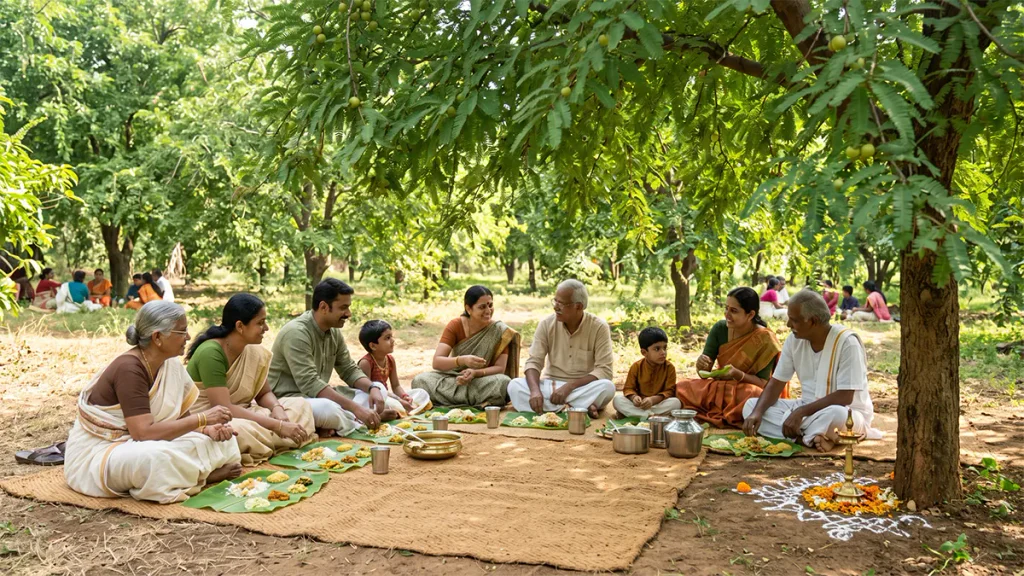
One of the happiest and most distinctive traditions of Karthika Masam—especially across Andhra Pradesh, Telangana, and parts of Karnataka and Odisha—is Vana Bhojanam (also called Karthika Vana Samaradhana).
What Does Vana Bhojanam Mean?
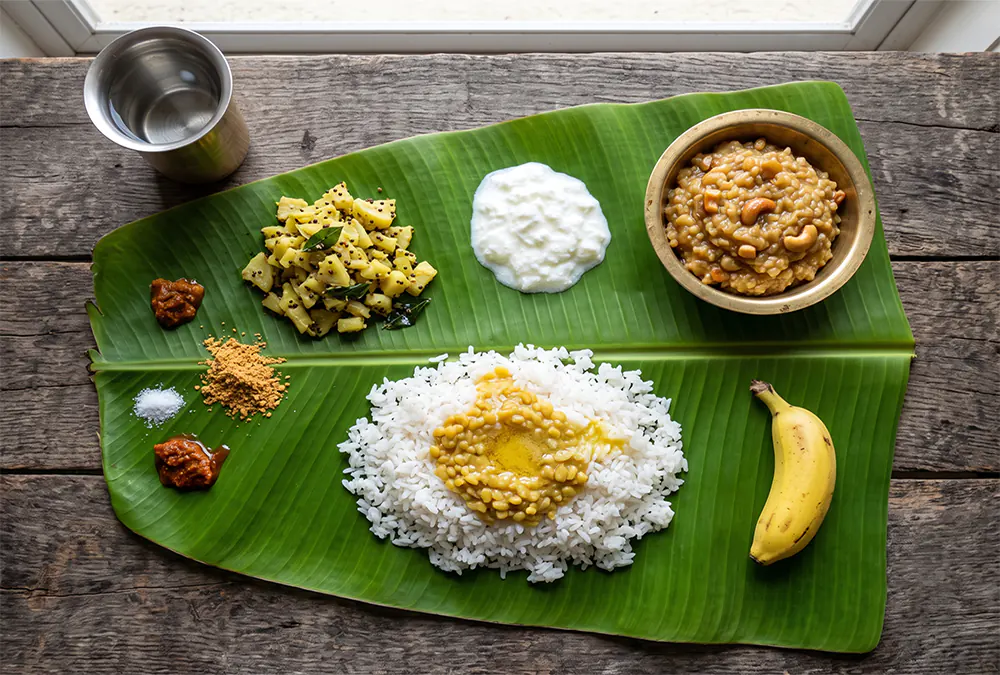
In Sanskrit and Telugu, Vana means “forest, grove, or garden,” and Bhojanam means “a shared meal.” During Karthika Masam, families, neighbours, school friends, and community groups pack home-cooked vegetarian dishes—or cook fresh meals together outdoors—and spend a sunny autumn day in an orchard, park, botanical garden, or rural grove.
The Sacred Role of the Amla (Usiri / Nellikai) Tree
Traditionally, a Vana Bhojanam gathering centres around an Amla tree (Indian gooseberry, known scientifically as Phyllanthus emblica, and called Usiri Chettu in Telugu or Nellikai Mara in Kannada and Tamil).
- Traditional Devotional Belief: According to the Karthika Puranam, both Lord Vishnu (Damodara) and Lord Shiva reside in the shade of the Amla tree during Karthika Masam. Before eating lunch, families clean a small spot at the base of the Amla tree, place an image or symbol of the deities, light deepams inside small hollows scooped into fresh Amla fruits, offer prayers, and share the meal under its branches.
- Cultural and Seasonal Wisdom: From a practical cultural perspective, late October and November bring pleasant, clear sunshine after months of monsoon rain, and the Amla tree is heavy with fresh, vitamin-rich fruit at this exact time of year. Gathering outdoors under the trees brings multiple generations together, removes social barriers as everyone sits side-by-side on the ground to eat off banana leaves, and teaches children to respect trees and green spaces.
Practical Eco-Friendly Etiquette for Modern Vana Bhojanam
Today, when hundreds of families visit public parks, mango orchards, or riverbanks for Vana Bhojanam, caring for the environment is the truest way to honour nature:
- Use biodegradable plates: Choose traditional stitched leaf plates (Vistaraaku), banana leaves, or reusable steel plates instead of single-use plastic or Styrofoam.
- Never leave litter behind: Carry sturdy garbage bags and bring every wrapper, water bottle, and food scrap back to a proper municipal bin.
- Protect tree roots and bark: Never light a wood stove or open cooking fire right against the trunk or roots of a living Amla or mango tree, and extinguish all small oil lamps completely before leaving the grove.
Tulasi Worship and Other Sacred Plant Traditions
Walk into almost any traditional Hindu home during Karthika Masam, and you will see the Tulasi plant (Holy Basil, Ocimum tenuiflorum) treated with deep affection and respect. Alongside Tulasi, two other plants play a central role in this month: the Bilva tree (Aegle marmelos, Wood Apple / Maredu) and the Amla tree (Phyllanthus emblica, Indian Gooseberry / Usiri).
Why Plants Are Worshipped in Household Devotion
In Hindu tradition, nature is never seen as separate from spirituality. Caring for a living plant every morning—watering its soil, keeping its surroundings clean, and thanking it with a small lamp—connects a household directly to the cycles of the Earth.
- Tulasi (Vrinda): Revered as an earthly form of Goddess Lakshmi and a symbol of pure devotion to Lord Vishnu. On Ksheerabdi Dwadashi, families celebrate Tulasi Vivah to honour the plant.
- Bilva (Maredu): Its signature trifoliate (three-part) leaf is sacred to Lord Shiva. In Shaiva symbolism, the three leaflets joined on one stem represent Lord Shiva’s three eyes, the three gunas (qualities of nature), or the three actions of creation, preservation, and transformation.
- Amla (Usiri): Revered as a bridge between Vishnu and Shiva during Karthika Masam, used both as a natural lamp holder (Usiri Deepam) and as a seasonal food offering.
Separating Traditional Belief from Botanical Fact
To appreciate these plant traditions fully, it helps to distinguish between two different lenses:
- The Devotional Lens (Religious Belief): Traditional texts teach that watering the Tulasi plant, walking around it clockwise (Pradakshina), and lighting a lamp beside it brings spiritual peace, humility, and family harmony.
- The Botanical & Nutritional Lens (Scientific Fact): Botanically, Tulasi is an aromatic herb from the mint family (Lamiaceae) that releases pleasant essential oils (such as eugenol), while the Amla fruit is a well-documented dietary source of Vitamin C and antioxidants. However, worshipping a plant or eating a single ritual leaf is not a substitute for medical treatment, and readers should avoid exaggerated claims that sitting near a plant cures serious illnesses.
Benefits and Spiritual Lessons of Observing Karthika Masam
When families look back at the end of the thirty days of Karthika Masam, what do they actually gain from observing these traditions? While Puranic texts use poetic language to praise the spiritual merit (punya) of lighting lamps and giving charity, no honest guide should promise that performing a ritual guarantees instant wealth, job promotions, or miracle cures.
Instead, the real, lasting benefits of Karthika Masam are experienced in daily character, family life, and inner peace:
- Building a Steady Morning Routine: Waking up calmly before the rush of work or school, bathing, and sitting quietly for ten minutes beside a gentle flame builds mental clarity and reduces morning stress.
- Practicing Mindful Self-Discipline: Choosing simple, wholesome vegetarian meals and pausing habits like late-night overeating, anger, or harsh gossip proves to yourself that you are in control of your habits.
- Finding Quiet Reflection in a Busy World: In an age of glowing smartphone screens and constant notifications, sitting quietly before a flickering clay oil lamp at dusk gives the eyes and mind a peaceful break to reflect on the day.
- Strengthening Family Warmth: When grandparents tell stories from the Karthika Puranam, parents prepare simple prasadam, and children help arrange clay lamps on the porch or pack food for Vana Bhojanam, generations connect in a warm, natural way.
- Cultivating Gratitude and Generosity: Through Deepa Daanam and Anna Daanam, the month shifts our focus from “What can I ask for?” to “How can I share warmth and food with someone who has less?”
How Beginners Can Observe Karthika Masam (A Simple 15-Minute Routine)
If you are a student living in a hostel, a busy professional with long commuting hours, a parent managing young children, or someone exploring Hindu traditions for the first time, you might think: “I can’t wake up at 4:00 AM, visit a temple every day, or fast on Mondays. Does that mean I can’t observe Karthika Masam?”
Not at all! Tradition always welcomes sincere effort according to one’s real-life capacity (Yatha Shakti). Here is a realistic, stress-free routine you can follow in just 10 to 15 minutes a day:
The Realistic Daily Beginner Plan
- Morning (5 to 10 Minutes):
- Wake up at your normal morning time, bathe with warm or comfortable water, and put on clean clothes.
- Light one small oil or ghee lamp safely on a metal plate at your prayer corner or near a potted Tulasi plant.
- Fold your hands and chant “Om Namah Shivaya” eleven times and “Om Namo Narayanaya” eleven times (this takes less than two minutes).
- Offer a piece of fruit, a few raisins, or a cup of clean water, and start your day with a calm smile.
- Daytime Food Choice:
- Eat your regular, healthy meals on time so you have full energy for work or study, simply choosing vegetarian dishes for the month (or at least on Mondays, Ekadashi, and Pournami).
- Evening (5 Minutes):
- When you return home in the evening, wash your hands, feet, and face, light the evening lamp safely, and spend two minutes thanking the Divine for the day.
- Weekly Touchpoints (Mondays & Weekends):
- On Mondays (Karthika Somavaram), if a temple is on your way home, step inside for five minutes to see the evening lamps.
- On one weekend during the month, take your family or friends to a clean local park for a simple homemade vegetarian picnic (Vana Bhojanam), and do one small act of charity—such as donating groceries to an orphanage or feeding a stray animal safely.
The “2-Minute Minimal Version” (For Travel or Sick Days)
If you are travelling, unwell, or working a night shift where you cannot light an open flame at all: simply sit quietly on your bed, close your eyes, visualize a warm golden lamp glowing in your heart, and repeat “Om Namah Shivaya, Om Namo Narayanaya” with gratitude. In Hindu thought, mental worship (Manasa Pooja) offered with a pure heart is considered just as meaningful as outward rituals.
Common Mistakes and Misunderstandings to Avoid
Because Karthika Masam involves both calendar astronomy and diverse regional customs, several misunderstandings frequently trip up readers. Keeping these seven points in mind will save you confusion and worry:
- Assuming All of India Follows the Same Start Date: Do not panic if a friend in North India starts Kartik Maas fifteen days before your family in Andhra Pradesh, Karnataka, or Maharashtra. Both are correct for their own lunar calendar systems (Purnimanta vs. Amanta).
- Confusing Karthika Masam with a Single One-Day Festival: Sometimes beginners confuse the entire thirty-day month (Karthika Masam) with its full-moon climax (Karthika Pournami) or with Tamil Nadu’s solar festival (Karthigai Deepam). Remember: Karthika Masam is the month; Karthika Pournami is the fifteenth bright day inside that month.
- Treating Optional Vows as Mandatory Rules for Everyone: Practices like eating only after seeing the stars (Nakta Vratam), lighting 365 wicks, or bathing in cold water before dawn are optional personal vows (vratas), not compulsory laws for every family member.
- Forcing Strict Fasts on Vulnerable Family Members: Never pressure children, elderly parents, pregnant women, or anyone with diabetes or medical needs to skip meals. Health and kindness always come before dietary restrictions.
- Believing Every Viral Social Media Claim Is Scripture: Every year, forward messages claim that “lighting a lamp with a specific coloured thread at 6:14 PM will make you rich in 7 days.” Authentic scriptures like the Skanda Purana and Padma Purana never teach superstitious shortcuts—they teach sincere devotion, self-control, and charity.
- Copying Old Years’ Dates Without Checking a Current Panchang: Because Hindu months follow the Moon, the English calendar dates for Ekadashi, Karthika Somavaram, and Karthika Pournami shift by about 10 to 12 days every single year. Always check a current local panchangam.
- Ignoring Basic Fire and Environmental Safety: Leaving oil lamps burning near curtains, placing hot clay diyas directly on wooden furniture, or leaving plastic plates under trees after Vana Bhojanam goes against the very care and mindfulness that Karthika Masam teaches.
Mini-Glossary of Simple Karthika Masam Terms
If you come across traditional Sanskrit or regional words while talking with elders or visiting a temple, this quick glossary explains them in plain English:
- Abhishekam: The sacred ritual of pouring pure water, milk, honey, or curd over a deity or Shiva Lingam while praying.
- Akasa Deepam: A perforated brass pot holding a lit oil lamp that is raised high on a tall pole in temple courtyards at sunset during Karthika Masam.
- Amanta Calendar: The lunar calendar system (used in Andhra Pradesh, Telangana, Karnataka, Maharashtra, and Gujarat) where a month ends on the no-moon day (Amavasya).
- Anna Daanam: The charitable act of sharing or donating freshly cooked food with hungry people.
- Bilva (Maredu): A sacred tree whose three-part leaves are offered in worship to Lord Shiva.
- Damodara: A loving name for Lord Krishna (Vishnu) used during Karthika Masam, remembering how his mother Yashoda tied a rope around his waist.
- Deepa Daanam: The charitable gift of a lamp, ghee, or oil to a temple or someone in need.
- Deepam (Diya / Pramida / Vilakku): A traditional lamp made of clay or metal fueled by oil or ghee.
- Hari-Hara: The combined form or spiritual unity of Lord Vishnu (Hari) and Lord Shiva (Hara).
- Jwala Thoranam: A tall archway of dried grass lit at Shiva temples on Karthika Pournami night, under which the deity’s palanquin passes.
- Karthika Pournami (Kartik Purnima): The full-moon day of Karthika Masam, considered one of the most auspicious days of the year.
- Karthika Somavaram: Any Monday falling during the month of Karthika, especially sacred to Lord Shiva.
- Ksheerabdi Dwadashi: The twelfth day of the bright fortnight, when families celebrate the wedding of the Tulasi plant and Lord Vishnu.
- Nakta Vratam: An optional fasting custom where a devotee abstains from cooked meals during the day and eats a simple vegetarian dinner after sighting the evening stars.
- Naivedyam / Prasadam: Food offered respectfully to the Divine during prayer (Naivedyam) and then shared as a blessed gift (Prasadam).
- Panchangam (Panchang): A traditional Hindu astronomical almanac that tracks lunar phases (tithis), stars (nakshatras), and festival timings.
- Purnimanta Calendar: The lunar calendar system (used across North India) where a month ends on the full-moon day (Purnima).
- Tulasi Kota (Brindavanam): The raised brick, stone, or clay planter where a household grows and worships the sacred Tulasi plant.
- Usiri (Amla / Nellikai): The Indian gooseberry tree and fruit, revered during Karthika Masam for lighting lamps and holding outdoor community meals.
- Vana Bhojanam: A traditional community and family picnic held in a natural garden or under the shade of an Amla tree during Karthika Masam.
Frequently Asked Questions (FAQs) About Karthika Masam
1. What is Karthika Masam in simple words?
Karthika Masam is the eighth sacred month in the traditional Hindu lunar calendar, usually falling between mid-October and mid-November. Named after the Krittika star cluster, it is a thirty-day period dedicated to worshipping both Lord Shiva and Lord Vishnu through daily lamp lighting, prayer, vegetarian living, and charity.
2. Why are both Lord Shiva and Lord Vishnu worshipped during Karthika Masam?
Karthika Masam celebrates the harmony of Hari-Hara (Vishnu and Shiva). For Vaishnavites, it marks the month when Lord Vishnu wakes from his four-month cosmic rest on Prabodhini Ekadashi and celebrates Lord Krishna as Damodara. For Shaivites, it commemorates Lord Shiva vanquishing the Tripurasuras on Karthika Pournami and blessing the Moon on Mondays.
3. Why do Karthika Masam dates differ between North India and South India?
North India follows the Purnimanta calendar (where a lunar month begins the day after the full moon), so Kartik Maas starts in mid-October right after Sharad Purnima. Andhra Pradesh, Telangana, Karnataka, and Maharashtra follow the Amanta calendar (starting the day after Diwali Amavasya), which begins roughly fifteen days later. Both calendars share the exact same bright fortnight leading up to Karthika Pournami.
4. How do I perform a simple Karthika Masam pooja at home?
Take a bath in the morning, wear clean clothes, and wipe your home altar. Light a small clay or brass lamp with sesame oil or ghee on a safe metal tray. Offer a fresh flower, a Bilva leaf to Shiva, and a Tulasi leaf to Vishnu, chant “Om Namah Shivaya” and “Om Namo Narayanaya”, light a lamp by your Tulasi plant, and offer a piece of fruit as Naivedyam.
5. Why do devotees light deepams (oil lamps) every day in Karthika Masam?
As autumn turns toward winter and evenings grow dark early, lighting a Karthika Deepam at sunrise and sunset symbolizes welcoming spiritual wisdom, warmth, and mindfulness into the home while pushing away inner ignorance and gloom.
6. What is the spiritual meaning of lighting 365 wicks on Karthika Pournami?
In Telugu and Kannada traditions, many devotees light a bundle of 365 tiny cotton wicks soaked in ghee on Karthika Pournami or Vaikuntha Ekadashi. Each wick symbolically represents one day of the year, offered in gratitude and to make up for any days when work or travel prevented lighting a daily lamp.
7. What is Karthika Somavaram and why are Mondays special?
Somavaram means Monday, the day associated with the Moon (Soma). Because Lord Shiva wears the crescent Moon on his head as Chandrashekhara and restored the Moon’s fading light during this month, Mondays in Karthika Masam are considered especially auspicious for Shiva Abhishekam, temple visits, and peaceful reflection.
8. Can beginners observe Karthika Masam without strict fasting?
Yes, absolutely. Fasting is an optional personal practice, not a compulsory rule. Beginners, working professionals, students, and anyone with health needs can observe Karthika Masam respectfully by eating regular, nourishing vegetarian meals, lighting a daily lamp, and spending a few minutes in sincere prayer.
9. What foods are commonly avoided during Karthika Masam?
Many observing Hindu families avoid meat, fish, eggs, and alcohol throughout the month to maintain a calm, Sattvic diet. Depending on regional and family custom, many households also avoid onions, garlic, brinjal (eggplant), and drumsticks, favouring fresh grains, yellow lentils (moong/toor dal), milk, ghee, and seasonal fruits.
10. Why do families place a lamp on an Amla (Usiri) fruit?
According to the Karthika Puranam, the Amla (Usiri or Nellikai) tree is dearly loved by both Lord Vishnu and Lord Shiva during this month. Placing a small ghee-soaked cotton wick atop a fresh Amla fruit (Usiri Deepam) during Ksheerabdi Dwadashi or Pournami is a traditional gesture of honouring nature and divine grace together.
11. What is Vana Bhojanam and why is it celebrated?
Vana Bhojanam literally means “a meal in a garden or forest.” During Karthika Masam, families and communities gather outdoors under the shade of an Amla (Usiri) tree or in a green orchard to pray together and share a home-cooked vegetarian meal on banana leaves, celebrating community equality and gratitude for nature.
12. Why is Tulasi worship so important during Karthika Masam?
The sacred Tulasi (Holy Basil) plant is revered as a symbol of Goddess Lakshmi and pure devotion. On the twelfth bright day of the month (Ksheerabdi Dwadashi or Tulasi Vivah), families decorate the household Tulasi planter with flowers and sugarcane and celebrate her ceremonial marriage to Lord Vishnu, thanking the plant for blessing the home.
13. What is the difference between Karthika Masam and Tamil Nadu’s Karthigai Deepam?
Karthika Masam in Telugu, Kannada, and Marathi regions is a lunar month (Amanta system). Tamil Nadu follows a solar calendar (Sauramana), where the month of Karthigai starts in mid-November. Karthigai Deepam is the grand lamp festival celebrated when the Moon aligns with the Krittika star during the Tamil solar month of Karthigai.
14. What is Akasa Deepam in temples?
An Akasa Deepam (“Sky Lamp”) is a lamp placed inside a perforated brass vessel and hoisted to the top of a tall pole in temple courtyards every evening during Karthika Masam. Historically and spiritually, it shines high above the village so that anyone who cannot walk to the temple can still see the sacred light from home.
15. What happens on Karthika Pournami?
Karthika Pournami is the full-moon climax of the month. Devotees take early baths, light rows of oil lamps at home and in temples, witness the fiery archway ritual of Jwala Thoranam at Shiva temples, and celebrate Dev Deepawali along riverbanks. It also coincides with Guru Nanak Jayanti and Odisha’s Boita Bandana boat festival.
16. How can I verify the exact Karthika Masam dates for my city?
Because Hindu lunar tithis depend on exact sunrise and moonrise times in your time zone, always check a trusted regional panchangam (such as the Tirumala Tirupati Devasthanams Panchangam, Sringeri Panchangam, or a verified local temple calendar) set specifically to your city and current year.
Conclusion: Welcoming Light, Peace, and Kindness Into Your Home
At its heart, Karthika Masam is much more than a list of calendar dates or ancient rules. It is an annual invitation to slow down as the seasons change, bring a warm flame of mindfulness into the quiet hours of morning and evening, and remember that the highest form of devotion shows up in how gently we treat our families, our community, and the natural world around us.
Whether your family observes the full thirty days with temple visits, Karthika Puranam readings, and outdoor Vana Bhojanam picnics, or you are a beginner lighting a single clay lamp for five quiet minutes before heading to work, remember that sincerity always matters more than complexity. Respect your family’s customs, take good care of your health, keep open flames safe, and let the simple glow of the Karthika Deepam bring calm and gratitude into your home this year.