Brihadeeswarar Temple: Mysterious Shadow That NEVER Falls
Brihadeeswarar Temple in Thanjavur, Tamil Nadu, commonly referred to as the Big Temple because, well, it’s really, really huge! It’s literally one of the most incredible sites on the planet and a UNESCO World Heritage Site, meaning it’s super special and preserved so that everyone can enjoy it.
Contents
- 1 My First Glimpse of the Giant
- 2 Brihadeeswarar Temple History
- 3 Legend of the Temple: The Gift of a Cowherdess
- 4 Cultural, Spiritual, and Mythological Significance of the Temple
- 5 Festivals and Special Days: A Time for Celebration and Prayer
- 6 Brihadeeswarar Temple Architecture:
- 7 Myths and Beliefs: Stories That Make the Temple Alive
- 8 Temple Timings: When to Visit
- 9 Places to visit near Brihadeeswarar Temple:
- 10 FAQ:
- 11 How to reach Brihadeeswarar Temple:
My First Glimpse of the Giant
The first time I laid eyes on the Brihadeeswarar Temple, my jaw dropped! It was even larger and more lovely than any photo I had ever seen. The towering building appeared to reach for the sky, and I felt so small in comparison to it. It’s just like a colossal sculpture hewn from stone, and each and every component of it has a story to tell. You can sense the history and the piety just standing there. It’s simply amazing.
Brihadeeswarar Temple History
It all starts more than a thousand years ago, in the year 1003 AD. Let’s imagine a strong and intelligent king named Rajaraja Chola I. He was a very courageous king who ruled a big kingdom. He had an elaborate dream to construct a temple for Lord Shiva, a very significant Hindu deity, that would be something different. He desired that it be a representation of his strength, his faith, and the incredible abilities of his people.
It took 12 long years to construct this staggering temple! Can you believe it? Hundreds, hundreds of people worked day and night, carving enormous stones and assembling them like giant Lego blocks, without glue! They employed a novel method of lock-stones, whereby that’s why the temple remains so sturdy despite all these years. Even the king laid the foundation stone himself, which depicts how much this endeavor was precious to him. The Brihadeshwara Temple was at last completed in 1010 AD and it was a grand fiesta! It was constructed to demonstrate the wealth and power of the Chola Empire and their religious devotion to Lord Shiva.
Read More>> Enchanting Beauty of Madurai Meenakshi Amman Temple
Legend of the Temple: The Gift of a Cowherdess
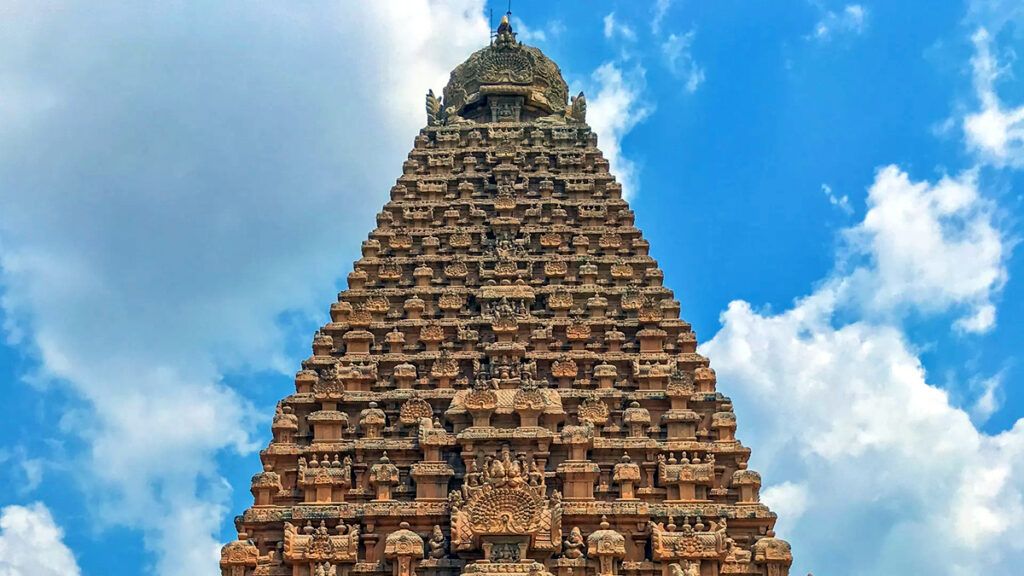
You know, there is a beautiful legend about how one of the largest stones in the temple ended up on top. The enormous, heavy stone perched atop the central tower, which is the vimana, is estimated at around 80 tons! Just think about how heavy that must be – like tons and tons of elephants! There are no cranes during those times, so how did they move it to the top?
The legend says that a kind cowherdess named Alagiya Nayaki wanted to donate something to the Brihadeshwara temple. She only had a small stone in front of her house. Lord Shiva appeared in a dream to both the cowherdess and King Rajaraja Chola, telling them to use this stone. And guess what? This seemingly small stone became the huge capstone for the vimana! They needed to push such a massive stone, so they constructed an extremely long ramp, roughly 6.5 kilometers (that’s over 4 miles!) long, originating from a site known as Sarapallam.
Subsequently, elephants and numerous robust men pulled and pushed the stone right up this ramp to the top. It’s a remarkable piece of engineering, isn’t it? In her memory, a temple was also constructed in her village, paying tribute to her simple but profound act of faith. This story teaches us that even small things, when offered with a pure heart, can be something really monumental.
Read More>> Chinese Kali Temple Tangra Kolkata
Cultural, Spiritual, and Mythological Significance of the Temple
This Brihadeeswarar Temple is not merely a structure; it’s a living, breathing aspect of India’s culture and religion.
Cultural Significance: The temple is more or less a large book of stories chiseled into stone. You can look around and imagine how people dressed, what they did, and what they believed around a thousand years ago. It demonstrates how great the artists, architects, and engineers of the Chola era were. It also reflects how significant dance and music are, as you can notice several dance positions carved on the walls. It’s such a great example of Dravidian architecture, which is a unique method of building temples in South India.
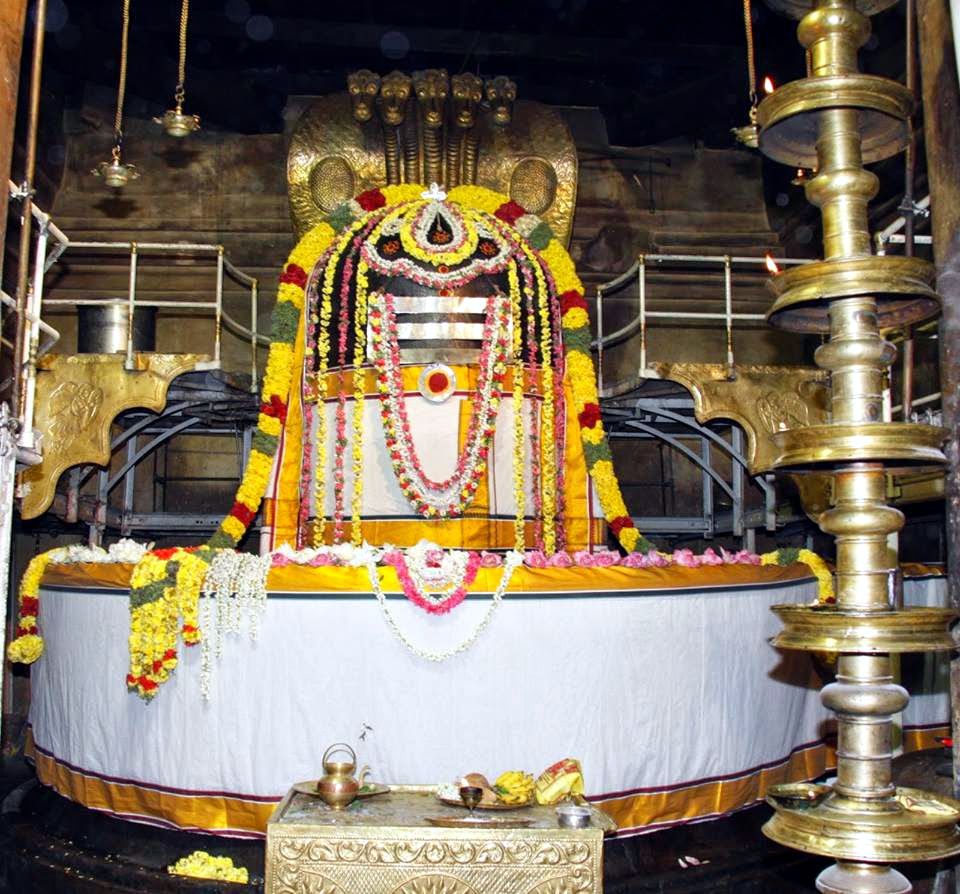
Spiritual Significance: The temple is meant for Lord Shiva, who is a very significant god in Hinduism. Folks from across the globe visit to worship here and be near Lord Shiva. The colossal Shiva Lingam in the central sanctum is a powerful representation of divine power. As you stroll around the Brihadeshwara temple, you can sense that there is peace and calmness around it, as if some special energy circulation. People believe that going around the temple in a clockwise direction makes them feel pious and thankful.
Mythological Significance: The walls of the Brihadeshwara temple are a comic book come to life, telling numerous Hindu mythological stories. You get to see sculptures of gods and goddesses, mythological beings, and moments from ancient legends. Not only are these carvings beautiful, but they also inform us about the beliefs and lore that Hindu people hold dear. For instance, you can view the sculptures of Lingodbhava, an avatar of Shiva, and numerous other gods.
Festivals and Special Days: A Time for Celebration and Prayer
The Brihadeeswarar Temple is always alive with activity, but on some days, it’s even more special!
Monthly Festival: Each month, on the star day Satabhishag, which was the birth star of King Rajaraja Chola, a special festival is celebrated. It’s a day of celebration and prayer, so it’s an extremely special day for devotees.
Annual Festival (Visaka/May): The largest festival takes place once a year for nine days in the Tamil month of Visaka (which falls in the month of May). During the festival, the main god, Lord Shiva, is bathed with water infused with scented Champaka flowers. Just think how lovely it must be and how spiritual! This is one of the busiest periods to visit as many tourists come to see these grand rituals.
Maha Shivaratri: This is another extremely significant festival in honor of Lord Shiva and is celebrated with great passion and special prayers. The Brihadeshwara temple is particularly lively and populated on this day with devotees performing prayers and keeping fasts. Special Poojas: There are several special poojas (worship rituals) conducted throughout the year. Some even organize “One Year Nithya Pujas” or “Shashwatha Pujas,” which are continuous prayer sessions conducted for a whole year. These special prayers are for asking blessings and showing utmost devotion to Lord Shiva. Grand royal ceremonies, such as anointing the kings, are also conducted by the temple in order to make the kings feel connected to the deity.
Brihadeeswarar Temple Architecture:
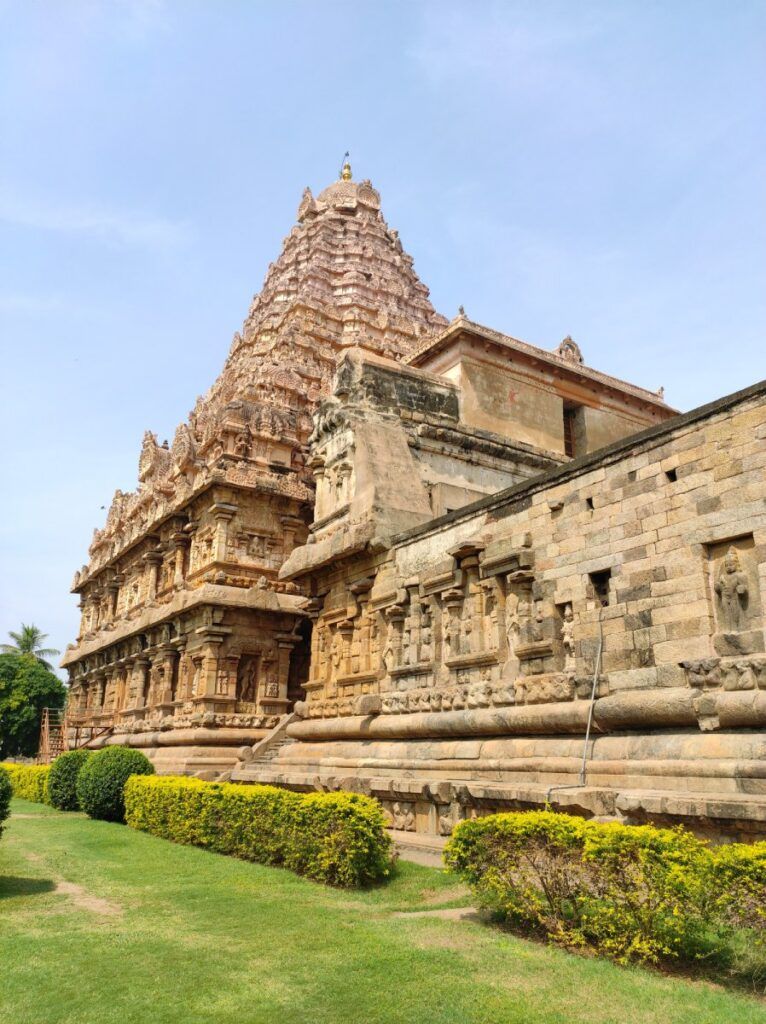
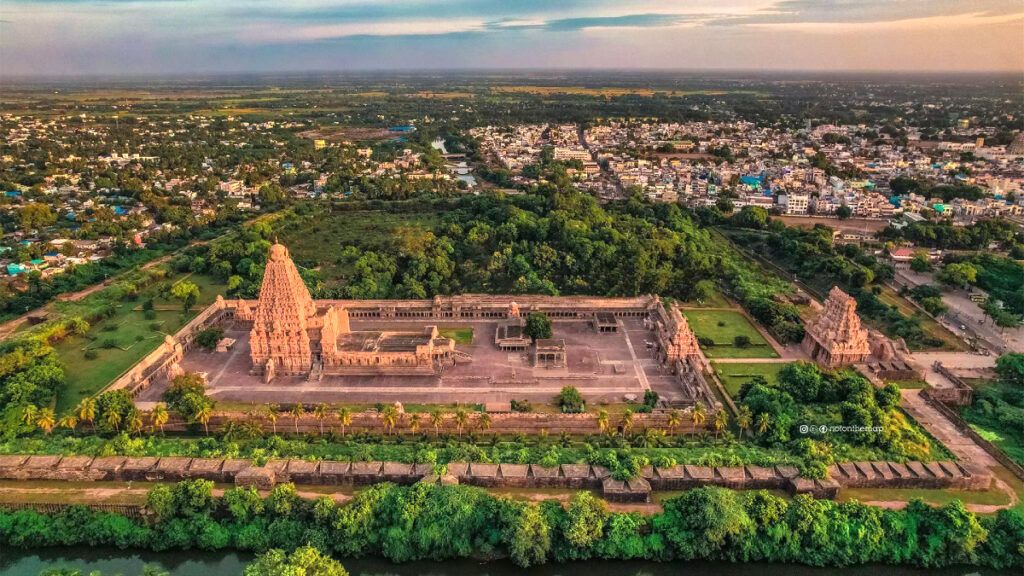
Let’s discuss how this fantastic temple came to be built! The Brihadeeswarar Temple is a wonder of Dravidian architecture.
The Vimana: The most impressive feature is the vimana, the towering central structure above the main shrine. It stands well over 200 feet tall – taller than a 20-story building! And the most amazing feature? The very apex of the vimana has a massive, heavy stone weighing some 80 tons, carved from a single block of granite. How did they manage to get it up there without cranes? They constructed a long ramp, as we have learned in the legend, and employed elephants and manpower. It’s staggering, isn’t it?
No Shadow? It’s a well-known rumor that the shadow of the central tower never touches the ground at noon. Scientists have demonstrated that indeed it does, but it’s so ingeniously constructed that it falls within the Brihadeshwara temple complex itself, giving the impression that it vanishes! It’s a demonstration of the extraordinary accuracy of the ancient builders.
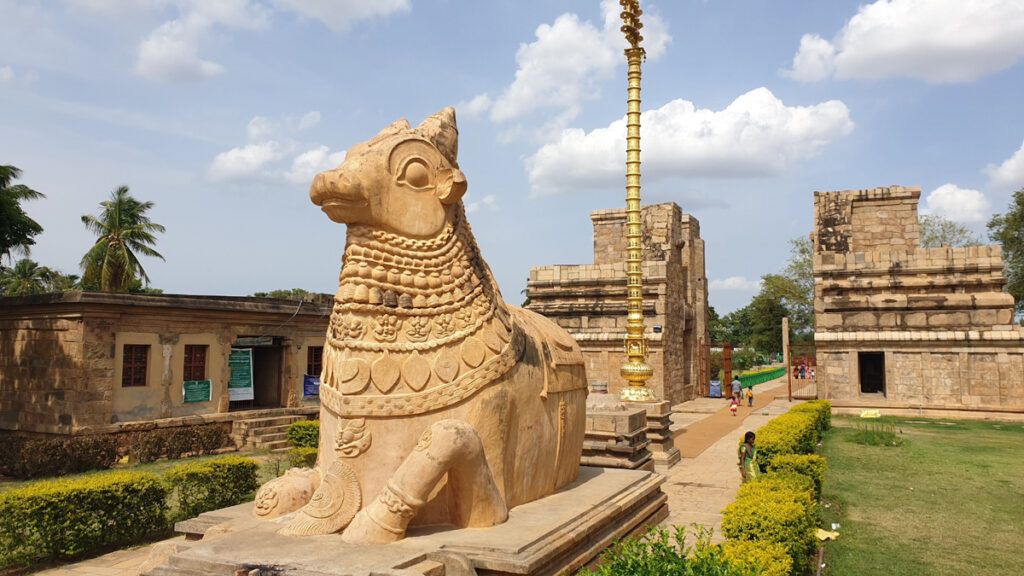
The Giant Nandi: On entering the Brihadeshwara temple, you can view a giant statue of Nandi, the divine bull, who is Lord Shiva’s vehicle and faithful companion. This one is also carved out of single stone and is among the largest monolithic statues of Nandi in India, measuring approximately 12 feet tall by 19 feet long. Legend has it that this Nandi would grow bigger and bigger, and individuals would have to nail something on its back to halt it!
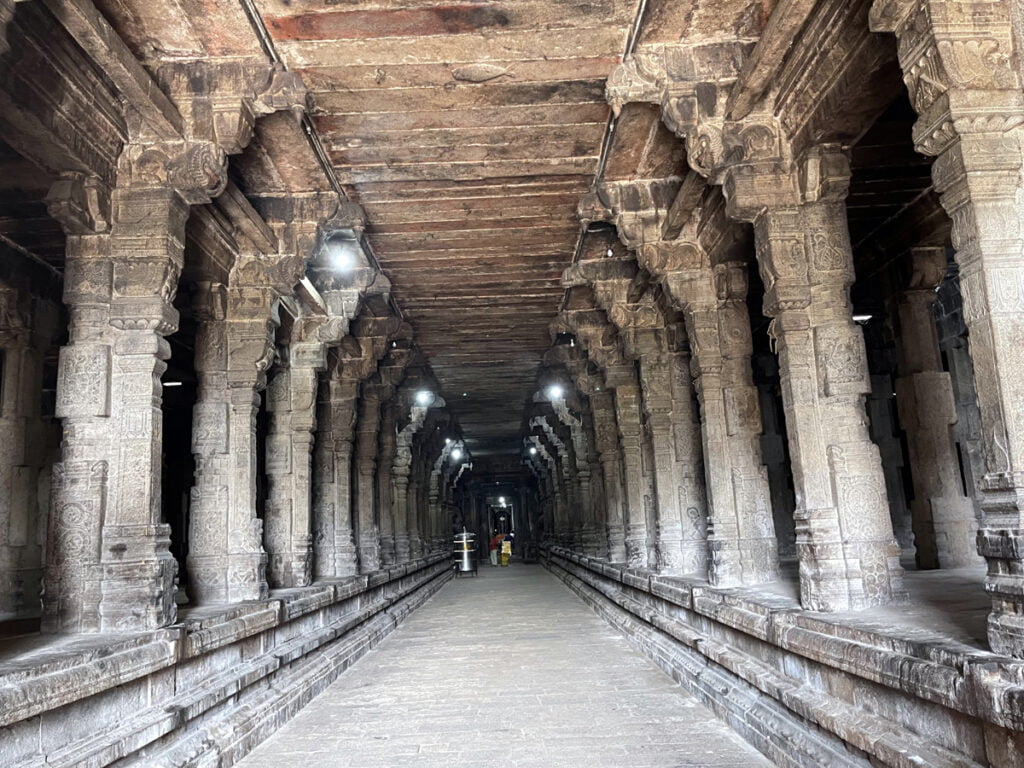
Delicate Carvings: From wherever you view, you see exquisite carvings and sculptures. There are hundreds of depictions of gods, goddesses, mythological animals, and even dancers with varied Bharatanatyam (a classical Indian dance) poses covering the walls. These statues are so intricately carved and realistic that they nearly narrate stories themselves. You can observe images of different avatars of Shiva, Vishnu, Brahma, and quite a few other gods and goddesses. Even a few of the paintings on the inner walls are also very old and colorful, depicting scenes from the Chola dynasty and other Hindu legends.
Read More>> Bhojpur Shiva Temple | Bhojeshwar Temple Holds Huge Lingam
Myths and Beliefs: Stories That Make the Temple Alive
Apart from the official history, there are numerous entertaining myths and legends that add to the appeal of the Brihadeeswarar Temple.
Secret Passages: Legend and tradition have it that there are more than 100 secret underground tunnels that link the temple to the King’s palace and other areas of the city! They supposedly were used by the royal family as a means of escape during invasions. Although most of them are now closed to visitors for their safety, it is an exciting prospect, isn’t it?
The Expanding Nandi: As I said, the superstition that the statue of the Nandi was expanding and needed to be “stopped” with a nail lends a fun air of mystery to the temple. Vedic Energy: It is believed by many that Brihadeshwara Temple’s architecture serves to harness strong Vedic energy, creating the ambiance within very soothing and spiritually rejuvenating for devotees.
Read More>> Char Dham Yatra – A Complete Guide to Spiritual Destination
Temple Timings: When to Visit
The Brihadeeswarar Temple is usually open daily from 6:00 AM to 12:30 PM and then from 4:00 PM to 8:30 PM. It is always best to confirm if there are any changes in timing, particularly during special festivals, as they may be different. It’s best to go early in the morning or late in the afternoon as that would be less hot outside and it is also less crowded during those times.
Read More>> Arupadai veedu | Six Abodes of Lord Murugan
Accommodation Options: Where to Stay in Thanjavur
Thanjavur has various accommodation options available, ranging from budget hotels to more luxurious stays. You will be able to find hotels close to the Brihadeeswarar Temple, and some of them even provide a “temple view”!
Some of the known options near the temple are:
Srirathna Temple View Inn
Hotel Gnanam
Sangam Hotel, Thanjavur
Svatma – A Luxury Heritage Resort (if you’re willing to splurge)
You’ll also discover numerous other hotels such as Hotel Akshith Inn, Hotel Victoriyah, and Tanjore Hi Hotel within a radius of a couple of kilometers from the Brihadeshwara Temple.
It’s also wise to pre-book your accommodation, especially if you visit during festivals when the city is crowded.
Read More>> Kashi Vishalakshi Temple Varanasi
Places to visit near Brihadeeswarar Temple:
Thanjavur is filled with lovely temples and fascinating sites to see, so your trip to the Brihadeeswarar Temple can be part of a greater experience!
Thanjavur Palace: This ancient palace is a must-see. It’s a piece of beautiful architecture, has an art gallery, and a library containing old manuscripts.
Saraswathi Mahal Library: Situated in the palace complex, this is one of Asia’s oldest libraries, containing a huge collection of ancient manuscripts.
Bangaru Kamakshi Amman Temple: This temple is dedicated to Goddess Kamakshi and consists of a stunning golden idol with colorful festivities.
Punnainallur Mariamman Temple: The temple is dedicated to Goddess Mariamman, who is worshiped as the Goddess of Rain and Fertility. It’s famous for its unusual rituals.
Kodi Amman Temple: This is another ancient temple dedicated to Goddess Amman, providing a serene and spiritual environment.
Sri Neelamega Perumal Kovil: It is a temple dedicated to Lord Vishnu with exquisite sculptures.
Swamimalai: This town is known for its Swaminathaswamy Temple dedicated to Lord Murugan. It’s located around 35 kilometers from Thanjavur and is famous for its association with learning and education.
These sites provide a further exploration of the rich history and culture of Thanjavur.
FAQ:
I know you may have some additional questions, so let’s address a few of the most popular ones regarding the Brihadeeswarar Temple:
Is there an admission fee? No, there isn’t an admission fee to see the Brihadeeswarar Temple. You can come and tour the temple grounds for free!
Is there a dress code? Yes, you should dress modestly when coming to the Brihadeshwara temple. That is, cover your shoulders and knees. Indian traditional clothing is encouraged, but neat and respectful clothing is completely acceptable.
May I photograph? Photography is permitted in the temple complex itself, but not within the main sanctum (the innermost sanctum where the Shiva Lingam is). Be considerate of the worshippers and do not photograph them unless they agree to it.
Why is it “Big Temple”? It is referred to as the “Big Temple” (Tamil: Periya Kovil) due to its colossal size and imposing architecture, particularly its imposing vimana and gigantic Nandi statue.
I hope you’ve enjoyed our little trip to the Brihadeeswarar Temple! It’s a place where history, art, and spirituality are brought together to create something truly magical. It’s a testament to human skill, devotion, and dreams that have held up over the centuries. When you go, you’ll feel the magic yourself, and trust me, it’s an experience you’ll never, ever forget!
Read More>> 4 CE Gokarna Mahabaleshwar Temple
How to reach Brihadeeswarar Temple:
Thanjavur is a great place to visit, and reaching the Brihadeeswarar Temple is very simple!
By Air: The closest airport is Tiruchirappalli International Airport (TRZ), which is some 60 kilometers (approximately 37 miles) away. From there, you can ride a taxi or a bus to Thanjavur.
By Train: Thanjavur boasts a railway station, Thanjavur Junction (TJ), which is well linked to important cities of Tamil Nadu and other Indian cities. Once you arrive at the station, the temple is very nearby, and it would be easy to take an auto-rickshaw or a taxi.
By Road: Thanjavur is well connected by roads. You can drive or take a bus from cities such as Chennai, Madurai, or Trichy, which are nearby. The brihadeshwara temple is very centrally located at Thanjavur, and local modes of transport such as auto-rickshaws and cycle rickshaws are easily available to take you around. From a city like Guntur, it’s quite a long but scenic drive, approximately 12-13 hours by car.
8 Comments