Ettumanoor Mahadevar Temple: Complete Darshan, History, and Ritual Guide
Ettumanoor Mahadevar Temple is one of the most ancient and celebrated Shiva shrines in Kerala, located in the Kottayam district. Dedicated to Lord Shiva worshipped in his powerful Aghora form, the temple is renowned for its 16th-century wooden carvings, stunning Kerala murals—most notably the Pradosha Nritham—and the legendary Ezhara Ponnana (seven-and-a-half golden elephants) brought out during its annual festival.

Devotees revere Ettumanoor as a prime spiritual center capable of dispelling planetary afflictions and negative energies. For further context on regional temple administration and heritage conservation, you can explore the Travancore Devaswom Board Official Portal. It is also an essential stop on the sacred one-day triad pilgrimage alongside the Shiva temples of Vaikom and Kaduthuruthy.
Quick Information: Ettumanoor Mahadevar Temple
| Detail | Information |
| Temple Name | Ettumanoor Sree Mahadevar Temple |
| Main Deity | Lord Shiva (Aghora Murthy / Nataraja, facing West) |
| Location | Ettumanoor, Kottayam District, Kerala, India |
| Administration | Travancore Devaswom Board (TDB) |
| Daily Darshan Timings | Morning: 04:00 AM – 12:00 PM; Evening: 05:00 PM – 08:00 PM |
| Major Offerings | Thulabharam, Dhara, Muzhukaappu, Oil for Valiya Vilakku |
| Flagship Festival | Kumbham Utsavam (February–March) featuring the Ezhara Ponnana |
| Nearest Railway Station | Ettumanoor Railway Station (ETM) – ~2 km; Kottayam (KTYM) – ~11 km |
| Nearest Airport | Cochin International Airport (COK) – ~76 km |
| Dress Code | Strict Kerala traditional dress: Dhoti (Mundu) for men; Sarees or Salwars for women |
The Origins and Sthala Puranam of Ettumanoor
The origin of Ettumanoor Sree Mahadevar Temple weaves together ancient Puranic legends, penance, and divine presence.
The Legend of Khara Asura and the Three Shivalingas
According to regional lore, the demon Khara Asura, an ardent devotee of Lord Shiva, performed intense austerities to earn Shiva’s grace. Pleased with his devotion, Lord Shiva granted him three sacred Shivalingas. Khara travelled southward carrying one linga in his right hand, one in his left hand, and holding the third linga with his teeth.
Exhausted from his travels, Khara placed the lingas down to rest:
- The linga held in his right hand was consecrated at Vaikom Mahadeva Temple.
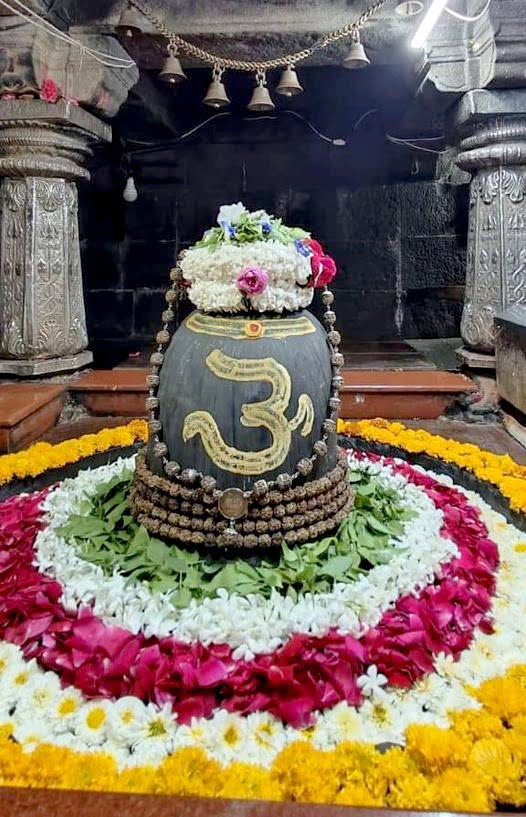
- The linga held in his left hand became the sanctified deity at Ettumanoor Mahadevar Temple.
- The linga held between his teeth was consecrated at Kaduthuruthy Thaliyil Mahadeva Temple.
Because these three Shivalingas were consecrated simultaneously from the same divine blessing, visiting all three shrines between sunrise and the noon Ucha Pooja on the same day is believed to confer immense spiritual merit and liberate devotees from deep-seated karmic obstacles. To understand more about regional architectural styles and historical backgrounds, travelers often refer to the Kerala Tourism Heritage Archives.
Sage Pingala and the Deer of Liberation
Another tradition links the name Ettumanoor to the sacred deer. In local etymology, Ettu means eight, and Manoor derives from Manoor (the abode of the deer), referring to the eight directions or the site where Lord Shiva accepted the deer into his hand during his celestial dance. Sage Pingala, having attained release from a curse through penance here, saw the divine manifestation of Lord Shiva holding the deer, fixing the site’s spiritual identity for millennia.

Distinctive Architectural Splendor and Wall Murals
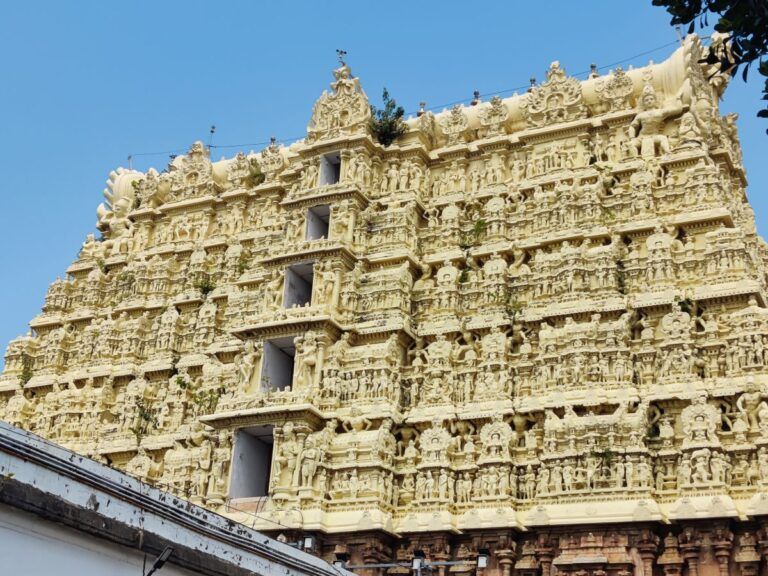
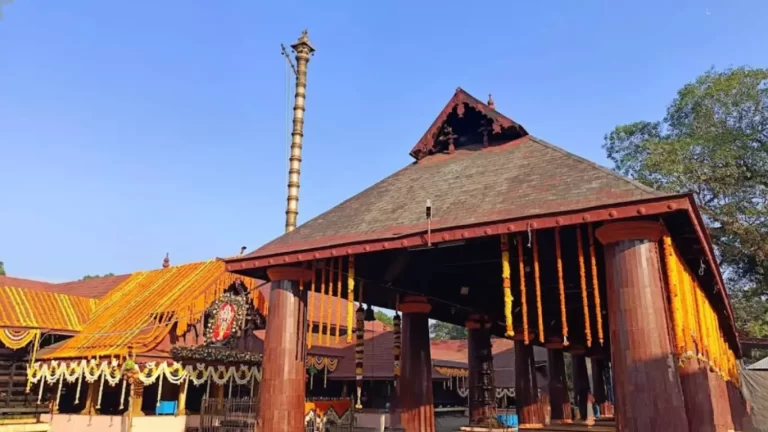
The temple exhibits classical Kerala wooden and stone architecture, characterized by sloping tiled roofs, detailed woodwork, and circular sanctum construction.
The Circular Sanctum (Vatta Sreekovil)
The Sreekovil (sanctum sanctorum) is circular, crowned with a conical copper-plated roof adorned with a glittering golden stupika (kalasam). Inside rests the fierce yet compassionate manifestation of Shiva as Aghora Murthy, facing west. The circular design allows energy currents to circulate uniformly, a signature hallmark of early medieval Dravidian-Kerala engineering reconstructed around 1542 CE.
The Iconic Pradosha Nritham Mural
On the western entrance wall of the sanctum complex rests one of Kerala’s most celebrated mural masterpieces: the Pradosha Nritham (The Cosmic Dance of Shiva during Twilight). Painted using organic vegetable dyes and mineral pigments, this fresco captures Lord Shiva dancing ecstatically, flanked by celestial beings, Gandharvas, and sages. Art historians consider this painting a crowning achievement of 16th-century indigenous South Indian mural art.
Unique Rituals and Sacred Traditions
Ettumanoor possesses distinctive ritual protocols preserved meticulously under the oversight of the Travancore Devaswom Board.
The Miracle of the Valiya Vilakku (The Great Lamp)
Positioned at the entrance of the inner courtyard stands the towering brass Valiya Vilakku. According to temple history, this lamp has remained lit continuously for over four centuries. Devotees offer sesame oil and coconut oil into this lamp.
The soot collected from the burning wick of the Valiya Vilakku is credited with restorative qualities. Devotees traditionally apply a tiny dot of this medicinal soot (kattil) to their foreheads or around their eyes as protection against negative influences and physical ailments.
Daily Pooja and Darshan Schedule
The temple follows an elaborate daily worship cycle:
- 04:00 AM: Temple opens with the resounding blowing of the conch (Nirmalya Darshan).
- 04:30 AM – 05:00 AM: Usha Pooja (Morning ritual accompanied by traditional drumming).
- 06:30 AM – 07:00 AM: Ethirettu Pooja (Honoring the morning sun and the deity).
- 07:30 AM – 08:00 AM: Pantheeradi Pooja.
- 11:00 AM – 12:00 PM: Ucha Pooja (Noon offering and main Abhishekam). Sanctum closes at 12:00 PM.
- 05:00 PM: Evening reopening.
- 06:30 PM – 07:00 PM: Deeparadhana (Evening illumination where the entire courtyard glows with oil lamps).
- 07:30 PM – 08:00 PM: Athazha Pooja (Night offering) followed by temple closure at 08:00 PM.

The Legendary Ezhara Ponnana Festival
The annual festival of Ettumanoor, celebrated during the Malayalam month of Kumbham (February–March), spans ten days. The undisputed pinnacle of this festival is the Ezhara Ponnana Ezhunallathu on the eighth night.
What is Ezhara Ponnana?
Ezhara translates to “seven-and-a-half,” and Ponnana signifies “golden elephants.” The temple possesses a set of eight statues cast in solid gold:
- Seven large elephants, each standing approximately 2 feet tall.
- One half-elephant (the calf), measuring approximately 1 foot tall.
These eight statuettes were presented to Lord Mahadeva by the Travancore monarch Anizham Thirunal Marthanda Varma (and finalized under his successor Karthika Thirunal Rama Varma) as an act of royal penance and tribute.
The Eighth-Night Procession
On the eighth day of the festival, at midnight, these golden treasures are brought out from the temple vaults and displayed in a grand ceremonial pavilion (Asthana Mandapam). Devotees gather in their thousands to witness the golden elephants glowing under the flicker of hundreds of handheld oil torches, accompanied by the powerful rhythms of Panchavadyam and Chenda Melam.
How to Complete the Sacred Vaikom–Kaduthuruthy–Ettumanoor Circuit
For thousands of pilgrims visiting central Kerala, undertaking the Triad Shiva Pilgrimage on the same morning is a life-affirming goal. Because the three lingas were consecrated by Khara Asura simultaneously, tradition dictates visiting all three between dawn and noon.
- First Stop: Vaikom Mahadeva Temple (East)Begin at Vaikom by attending the auspicious Nirmalya Darshan or Usha Pooja around 04:30 AM – 05:30 AM.
- Second Stop: Kaduthuruthy Thaliyil Mahadeva Temple (Central)Drive approximately 16 kilometers east to Kaduthuruthy to have darshan between 07:30 AM and 09:00 AM during Pantheeradi Pooja.
- Third Stop: Ettumanoor Mahadevar Temple (West)Cover the remaining 16 kilometers south to Ettumanoor, arriving before 11:30 AM to witness the grand Ucha Pooja and receive noon prasadam before the shrine closes at 12:00 PM.
Completing this sacred triangular route within a single morning is traditionally believed to bring peace to troubled families, eliminate obstacles, and bestow complete spiritual fulfillment.

Essential Visitor Information and Guidelines
To ensure a seamless visit, keep the following regulations and logistics in mind:
Dress Code Protocols
Kerala temples maintain strict purity standards.
- Men: Must wear a traditional Mundu (dhoti) around the waist. Upper shirts, t-shirts, vests, and modern garments must be removed before passing the inner gateway (Balikkalppura). A small cloth (Angavastram) may be draped across the shoulders.
- Women: Traditional Indian attire such as Sarees, Set-mundu, or Salwar Kameez with a dupatta is mandatory. Western clothing like jeans, skirts, and shorts is strictly prohibited.
- Footwear & Electronics: Footwear must be deposited at the counters outside the entrance. Photography, video recording, and mobile phone usage are strictly forbidden inside the sanctum perimeter.
Best Time to Visit
The ideal time to visit Ettumanoor is between October and March, when the central Kerala weather is pleasant. Visiting during the Kumbham Utsavam (February/March) provides an unforgettable cultural spectacle, though pilgrims should anticipate heavy crowds. For quiet meditation and unhurried darshan, normal weekdays during morning hours (05:30 AM to 08:30 AM) are best.
How to Reach Ettumanoor Mahadevar Temple
Ettumanoor is situated on the Main Central (MC) Road (State Highway 1), making it easily accessible from all corners of Kerala:
- By Train: Ettumanoor Railway Station (ETM) is located approximately 2 kilometers from the shrine and handles passenger and express stops. Kottayam Railway Station (KTYM), a major junction on the Southern Railway network, is roughly 11 kilometers away and connects to Chennai, Bengaluru, Mumbai, and Delhi.
- By Road: Kerala State Road Transport Corporation (KSRTC) buses run continuously connecting Kottayam, Ernakulam, Thrissur, and Thiruvananthapuram directly through Ettumanoor bus station, situated just 500 meters from the temple.
- By Air: Cochin International Airport (COK) at Nedumbassery is the closest airport, situated approximately 76 kilometers north. Taxis and airport cabs can complete the journey via MC Road in about 2 hours.

Frequently Asked Questions
What is the main offering at Ettumanoor Mahadevar Temple?
The most sought-after offerings are oil for the ever-burning Valiya Vilakku (Great Brass Lamp), Jala Dhara (continuous pouring of sanctified water over the Shivalinga), Muzhukaappu (sandalwood paste embellishment), and Thulabharam (weighing oneself against offerings like jaggery, plantains, or coins).
Why are there seven and a half golden elephants?
According to tradition, the Travancore royals commissioned eight elephant figures to signify ashta-diggajas (guardians of the eight directions). Seven were fashioned full-size (representing the major directions), while the eighth was made half-size (representing the subtle guardian of the nether regions), resulting in the unique collection called Ezhara Ponnana.
Are non-Hindus allowed inside Ettumanoor Temple?
In accordance with traditional Kerala temple customs and Travancore Devaswom Board regulations, entry into the inner temple precincts is traditionally reserved for practicing Hindus. Non-Hindu visitors may admire the outer architectural facade and gopuram.
Can the Vaikom, Kaduthuruthy, and Ettumanoor circuit be completed in reverse?
While classical custom favors starting at Vaikom (morning darshan) and finishing at Ettumanoor (noon darshan), pilgrims who miss early morning timings can also complete the circuit during the evening hours (05:00 PM to 08:00 PM), beginning at Ettumanoor and concluding with the night Athazha Pooja at Vaikom.