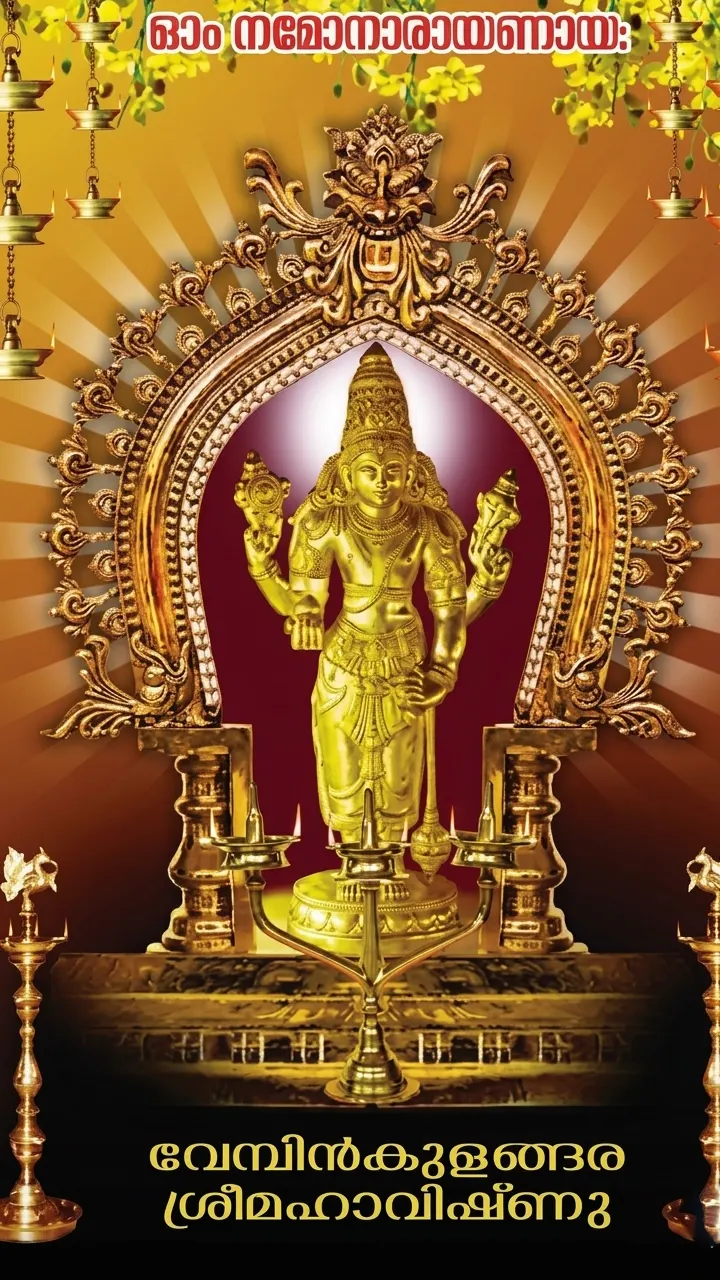
4. Payammal Shatrughna Temple
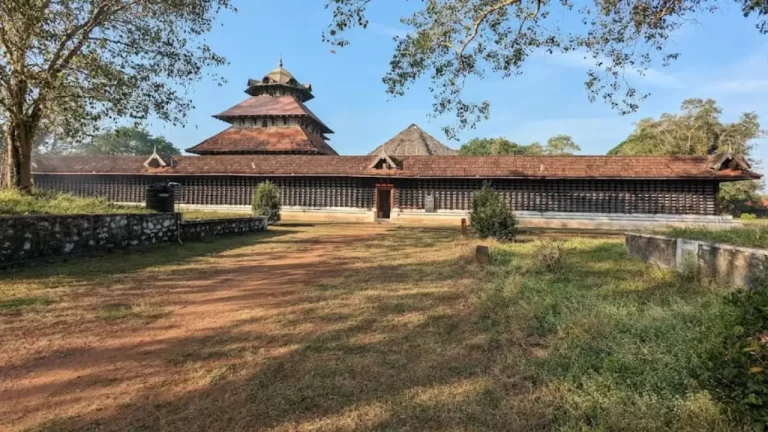
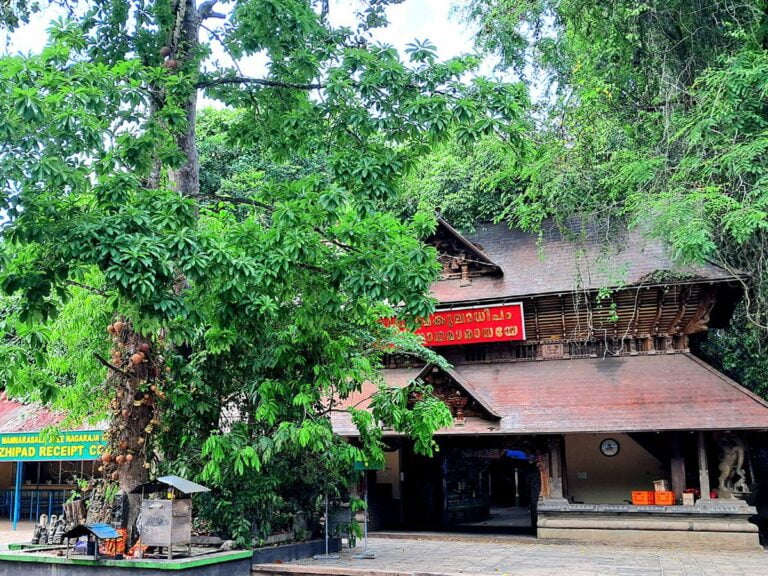
The Payammal Shatrughna Temple, which is a stunning place set amidst the tranquil village of Payammal in the vicinity of Irinjalakuda in Thrissur District of Kerala, India, is a rare spiritual gem indeed. The moment you step on these grounds made of red-earth, the first thing you notice about the temple is its complete lack of any kind of pretentious modesty. This temple does not rise like many other magnificent stone structures in the sky but rather stays low and close to the earth, which makes it the epitome of humility and devotion.
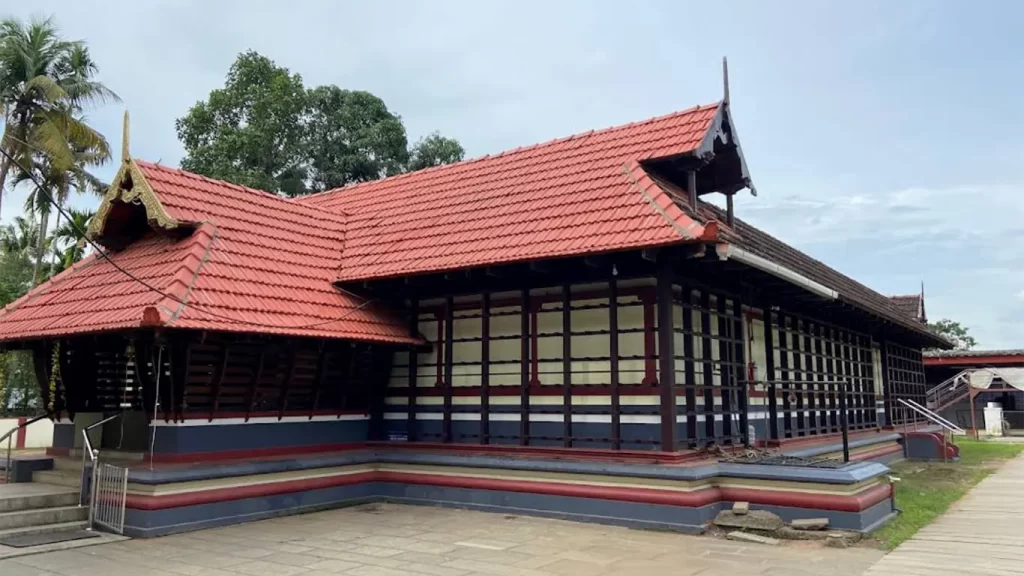
The special thing about the Payammal Shatrughna Temple lies in its unique nature. There are countless numbers of temples built for Lord Rama and Lord Hanuman and Lord Lakshmana spread across the whole expanse of India. However, the temples dedicated solely to Prince Shatrughna (the youngest brother of Lord Rama) are extremely few. In fact, Payammal Shatrughna Temple is the tiniest temple out of all the other temples in the world-renowned Nalambalam Yatra (a pilgrimage to visit the temples of the Ramayana brothers in one day).
Regardless of whether you are a devoted pilgrim who wishes to purify yourself from negative thoughts, an ardent history enthusiast desirous of knowing the age-old relationship between the dynasties in the region, or simply a traveler who wants to soak in the true essence of rural Kerala at leisure, the doors of the Payammal Shatrughna Temple are always wide open for you. Here, time moves extremely slowly to allow you to connect with the very heart of Indian spirituality.
Historical Background
The history of the Payammal Shatrughna Temple is like a glorious tapestry that is created through visions of God, kings of ancient times, and historical changes.
The Legend of Vakkay Kaimal
The basic legend of the Payammal Shatrughna Temple is traced back to thousands of years to a powerful ruler of the place by the name of Vakkay Kaimal. According to the local folklore, one stormy night, the ruler received a very vivid and divine vision. He saw a bright and mysterious form who appeared in front of him, shinning in a burst of lights and disclosing a great secret that there were four idols, which had come from the sea and were wrapped in moss and froth on the shores of that place.
Immediately the following day, a very shocked and humble King Vakkay Kaimal rushed to the seaside along with his ministers and guards. To his amazement, exactly as foretold in the dream, there were four splendid idols lying on the sands, touched by the waves of the sea. The idols were no one else but the four brothers of the ancient epic Ramayana, namely Lord Rama, Lord Bharata, Lord Lakshmana, and Lord Shatrughna.
According to the detailed geographical blueprint provided to him in the dream, the king built four temples:
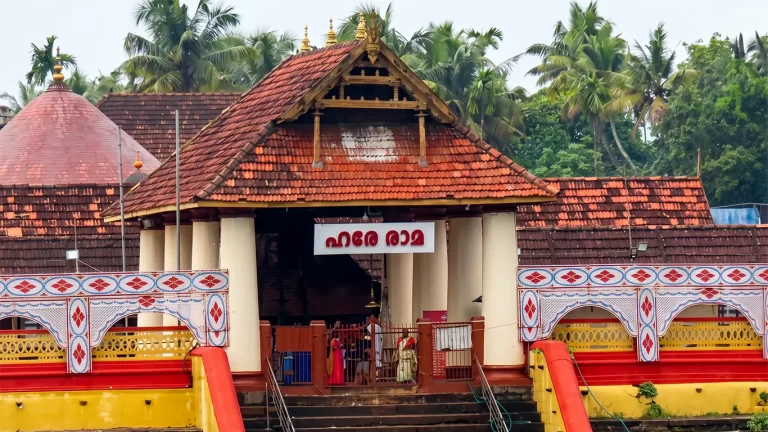
- The Idol of Lord Rama was enshrined in the beautiful Thriprayar Temple.
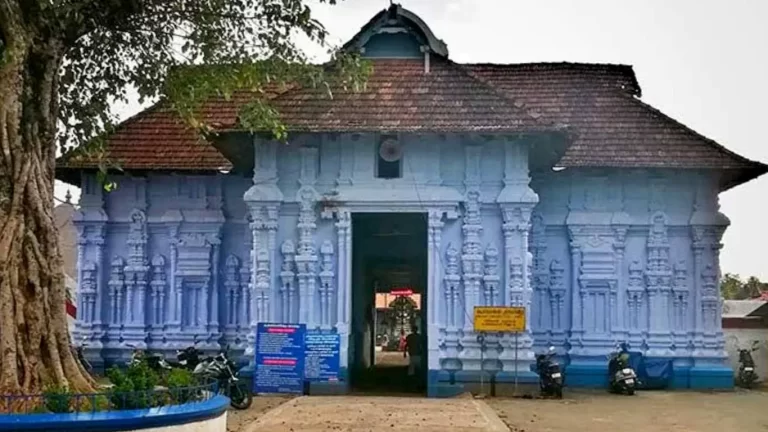
- The Idol of Lord Bharata was placed in the magnificent Koodalmanikyam Temple, Irinjalakuda.
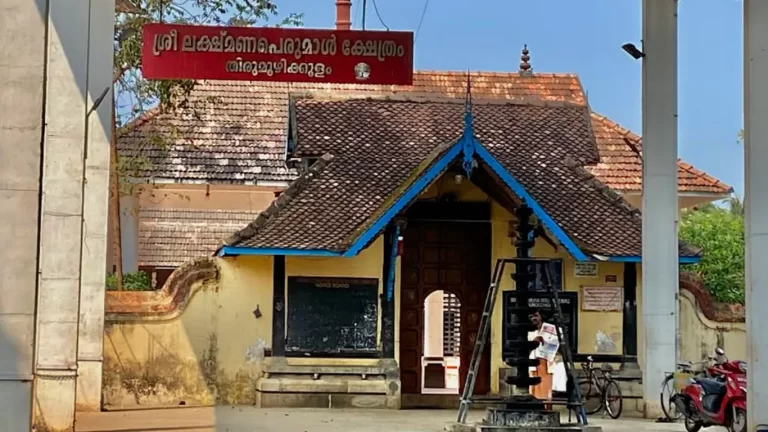
- The Idol of Lord Lakshmana was established in the historic Thirumoozhikkulam Temple.
- The Idol of Lord Shatrughna – the smallest and the most delicate of all, symbolizing his simple and innocent soul – was consecrated in the Payammal Shatrughna Temple.
Read More>> Shreenathji Nathdwara Temple
Testing Times: The Invasion of Tipu Sultan
Being a professional guide, I am convinced that the beautiful and the ugly sides of our history should be revealed. The Payammal Shatrughna Temple has experienced great difficulties in its existence. In the last decades of the 18th century, bloody battles of Tipu Sultan passed through the territories of Malabar and Thrissur, resulting in heavy damage to many historic structures.
Upon hearing the information about the approaching army of Tipu Sultan, the temple priests were faced with a hard choice. In order to save the valuable original Panchaloha idol (sacred alloy made of gold, silver, copper, brass, and bronze) from any harm, the high priest decided to take the idol out of the sanctuary of the temple in the dark moonless night. The precious idol was safely lowered into the waters of the west pond of the temple, where it should remain until the end of all the battles.
Regrettably, after some years, the place where the idol was hidden got lost. Despite numerous searches and diving attempts of many professionals, the original five-metal idol remains hidden under the temple pond waters to this day.
But this would never bring down the spirit of the locals. Through their cooperative efforts in providing free manual labor and modest financial contribution, the villagers managed to reconstruct the Payammal Shatrughna Temple from its ruins, creating an exquisite new idol of jet-black granite. This is the granite deity we worship today, as a shining manifestation of endurance, perseverance and unwavering faith of the locals.
Religious and Cultural Significance
And now let’s take a deep look at the theological enigmas that give the Payammal Shatrughna Temple such great significance in Hindu mysticism.
Reincarnation of the Sudarshana Chakra
As in popular narratives, Prince Shatrughna is often portrayed as a silent person, who does not speak much. But in the sacred precincts of the Payammal Shatrughna Temple, his divine identity is celebrated. In accordance with the ancient Puranas (sacred books of Hindus) and Agni Purana, the four sons of Ayodhya were incarnations of Lord Vishnu – the supreme Preserver of the Universe – not mortal princes. While Prince Rama was his incarnation, his other three brothers were incarnations of his divine celestial weapons.
Shatrughna Dev is revered at the Payammal Shatrughna Temple as the incarnation of Sudarshana Chakra, the highly powerful divine discus which rotates around the right index finger of Lord Vishnu. This bestows an extremely high spiritual energy on the Payammal Shatrughna Temple. Sudarshana Chakra denotes the highest level of clarity, killing of all evil forces, severing of human ego and immediate salvation of devotees from unseen evils within and outside. When you pray at Payammal Shatrughna Temple, you don’t pray to a humble young brother alone; you pray in front of the most lethal instrument of cosmic justice!
Proof from the Ancient Scriptural References
To grasp the scriptural basis behind such worship, let’s examine what has been explicitly mentioned by the ancient texts. As per Valmiki Ramayana, Section Bala Kanda, Verses 13-14:
“Bharato nama kaikeyaam jajne satya parakramah
Saushadhe sadrisah kshityam Vishnohrdha samanvitah
Lakshmana Shatrughnau cha Sumitrah janayat sutau
Vishnohrdha vihbhaagena sadrisau prabhavishnuna”
It can be translated into English as follows: “Born to Sumitra were Lakshmana and Shatrughna twins. They were courageous, handsome, and had divine, life-giving qualities of the cosmic attributes of Lord Vishnu Himself.”
In addition, the literature praises the literal meaning of Shatrughna’s name, which is “The Destroyer of Enemies.” It is worth noting that Shatrughna’s name does not only denote physical enemies on the battlefields. It denotes the six inner enemies of man—Shadripus: Kama (lust), Krodha (anger), Lobha (greed), Moha (attachment), Mada (pride), and Matsarya (jealousy). Pilgrims visit the Payammal Shatrughna Temple to get the mental power to defeat these six inner enemies and bring peace to their homes.
Architecture and Design
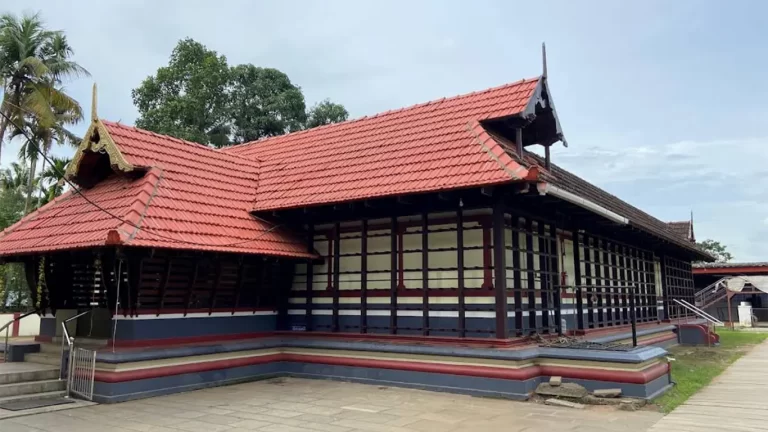
As you approach the temple, look up and have a good look at your surroundings. The design of the Payammal Shatrughna Temple is a perfect embodiment of the classical Kerala Style of Architecture, dictated by the environmental needs of the tropical coast of South India.
The Charm of Simplicity
In contrast to the grandiose Gopurams, typical of the Dravidian style of neighboring Tamil Nadu, Kerala temples are designed in such a way as to blend in perfectly with the environment. This is how the Payammal Shatrughna Temple utilizes the locally available resources with great proficiency:
- Durable Laterite Stone: The thick outer walls (Pradakshina Vazhi) of the temple are constructed from large blocks of red laterite clay, capable of naturally breathing and maintaining cool temperature of the ground even during the scorching heat of Indian summer.
- Strong Teak and Rosewood: Wooden screens, pillars, and rafters are all carved out of heavy-duty local wood.
- Terracotta Pitch Roofs: Steep sloping shape of the roof enables quick draining of the heavy rain of the Kerala monsoon.
The Rectangle in Sreekovil at the Payammal Shatrughna Temple
Now, I would like to reveal to you a very intriguing architectural mystery which most casual visitors overlook while passing through the temple premises! At the other three temples of the Nalambalam complex (Thriprayar, Irinjalakuda, and Moozhikkulam), the Sreekovil (innermost room holding the main deity) is invariably circular (Vatta Sreekovil).
However, the Payammal Shatrughna Temple has a very different Sreekovil (Chatura Sreekovil). In Vastu Shastra, an ancient art of Hindu architecture, the rectangular inner room helps concentrate the spiritual energy in a very linear way. It gives rise to a personal, focused line of sight between the eyes of the deity sitting inside and the devotee looking at him from outside through the metal railings. The complete absence of any sort of fancy decorations or paintings makes sure that you do not have any other choice than look at the dark outline of the lord.
Read More>> Ashtavinayak Temples Tour: 8 Shrines, 1 Perfect Road Plan
Main Attractions or Highlights
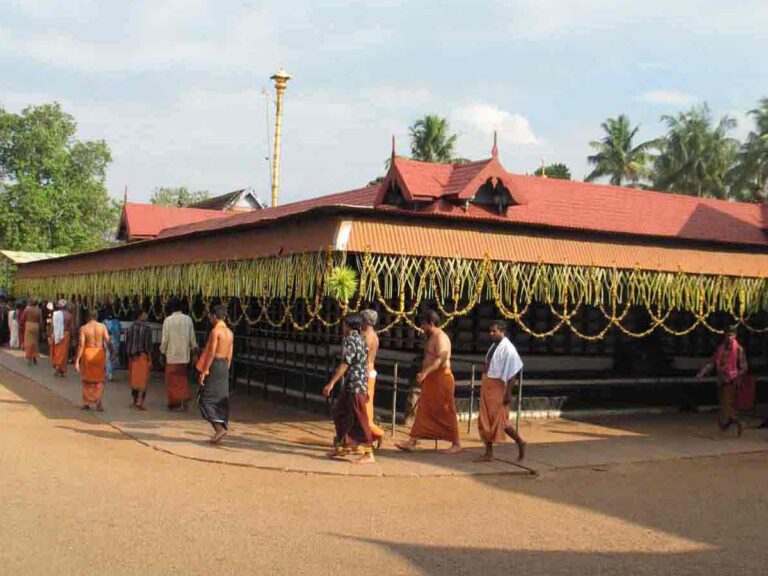
Let us now start our gradual circumambulation of the inner courtyard, following the direction of clockwise movement in order to show our utmost reverence. Let me draw your attention towards some great structures that you need to see here.
Sanctum Sanctorum (Garbhagriha)
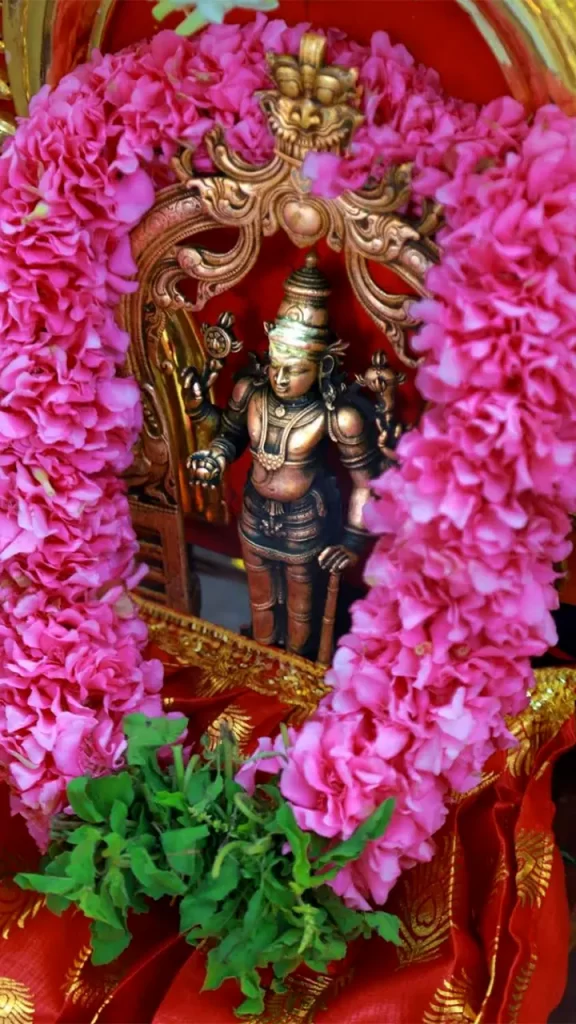
In the center of the temple complex lies the rectangle-shaped Garbhagriha. In the sanctum, where there are flickering yellow lights due to traditional oil lamps, sits the main deity of Lord Shatrughna. The deity is carved in an amazing manner from a single piece of black granite. It is portrayed in a glorious standing pose while holding the holy emblems of Lord Vishnu, which are Shankha (conch) and Sudarshana Chakra (disc).
Pinvilakku – The Secret Rear Lamp
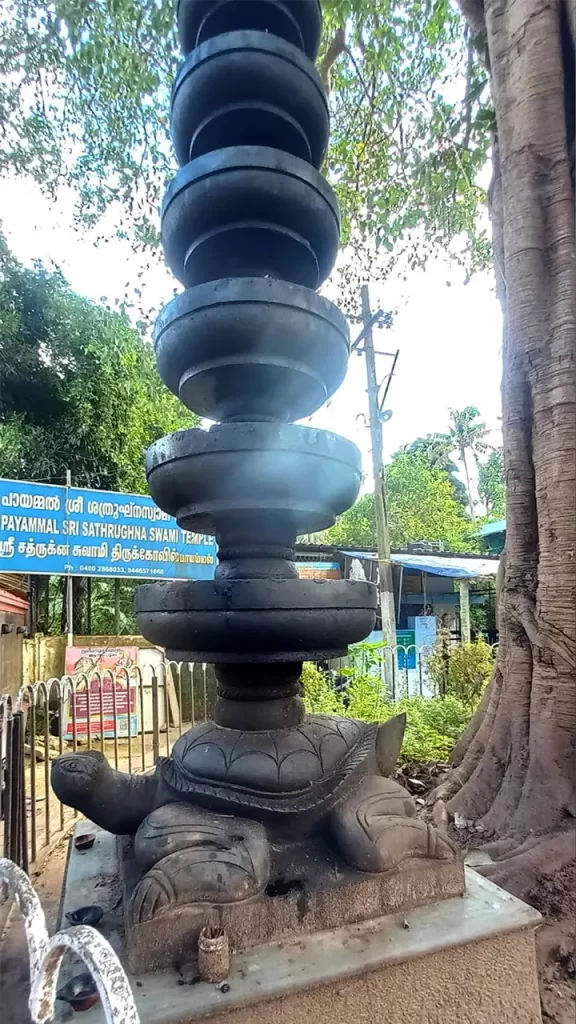
Turn your back to go around the Sreekovil to face its rear side. See the dimly glowing brass lamp smeared with oil standing in a secret nook built at the rear of the idol? This lamp is known as Pinvilakku which literally means “The Rear Lamp”.
This is one of the sweetest aspects of Payammal Shatrughna Temple. As per the belief of the temple, the lamp is lit only in reverence to Queen Shrutakirti who was the devoted wife of Lord Shatrughna. Historical legend says that Shrutakirti stayed quietly in the palace handling family matters in silence while her brothers were facing exile and battles. Worshiping this lamp would definitely bring harmony, mutual understanding, and everlasting love to a couple.
Sub-Shrines (Upadevatas)
Despite being wonderfully compact, the temple itself shelters two extremely significant secondary gods:
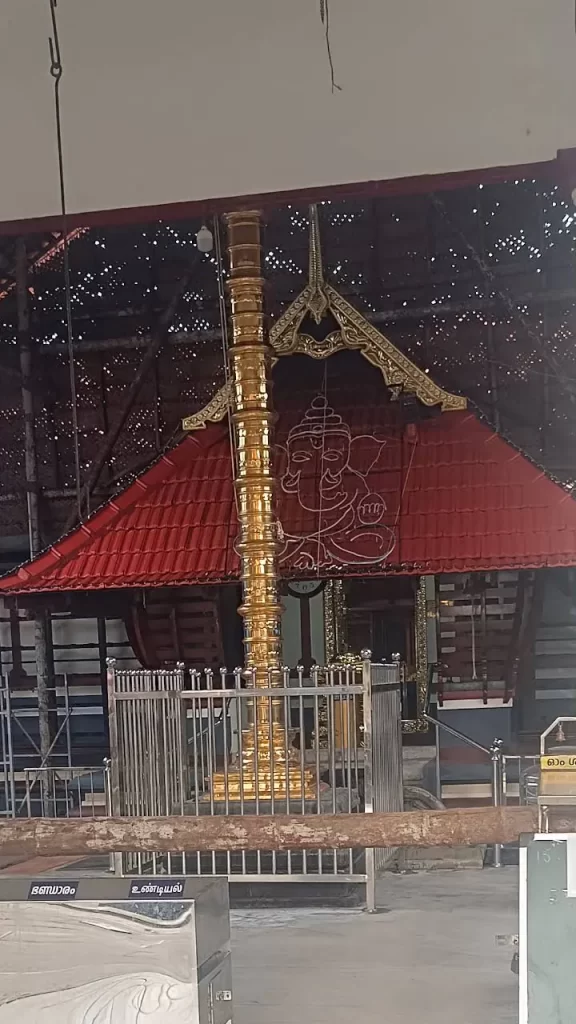
- Lord Ganapathy: In a snug south-facing sub-shrine, the elephant-faced god who rules beginnings is worshipped here for removing all physical barriers from the paths of pilgrims.
- Lord Hanuman: Near the outer boundary, the great ape god serves as the guardian forever watching over the youngest brother of his beloved lord, Rama.
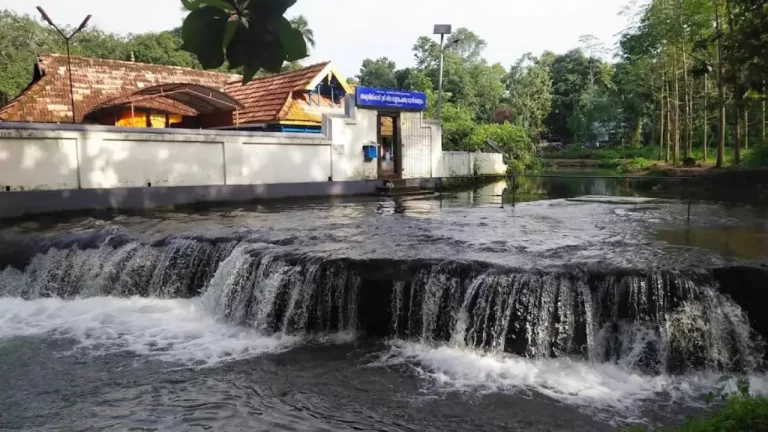
The Holy Temple Pond (Ambala Kulam)
On the west end of the temple complex rests the peaceful Ambala Kulam. The pond is bordered by old, worn laterite steps. Sitting on these stones and observing the water waves under the shade of the trees surrounding the pond, even on the hottest afternoons, is a highly meditative activity. Bear in mind, this is the exact water that still shelters the Panchaloha idol of times gone by!
Payammal Shatrughna Temple Timings and Rituals
For experiencing the real spiritual routine of the Payammal Shatrughna Temple, you will need to schedule your visit according to its regular ritual timings. This temple follows two different timing schedules throughout the year.
Regular Timings of the Temple
During normal months, the doors of this temple remain open at morning time, allowing you to experience the freshness of the dawn:
- Morning Timing Schedule: 05:00 AM to 10:30 AM
- Evening Timing Schedule: 05:30 PM to 07:30 PM
Karkidakam (Ramayana Month) Timings of the Temple
In Karkidakam (Ramayana Month) (which comes during mid-July to mid-August), thousands of pilgrims flock towards this temple to perform their Nalambalam Yatra before noon time. Thus, the temple opens very late in the evening due to huge crowds:
- Morning Timing Schedule: 05:00 AM to 01:30 PM
- Evening Timing Schedule: 04:30 PM to 08:00 PM
Core Daily Poojas
Every single day, the priests at the temple conduct three main poojas, which help maintain the spiritual vibe at the temple shrine:
- Usha Pooja (Pooja during dawn): Conducted immediately after sunrise with the ringing of bells and ghee wicks lit to represent the awakening of the soul.
- Ucha Pooja (Midday Pooja): This is a grand celebration during midday with rice naivedyam offered to the Lord just before the closing of the doors due to the heat of the noon sun.
- Athazha Pooja (Pooja during night): This is the ritual of shutting down the temple in the evening through chanting and prayers for the deity to sleep well.

Strong Special Offerings (Vazhipadu)
Should you choose to do so, there are three special offerings at the Payammal Shatrughna Temple, which are particularly effective for the visitor to perform:
- Sudarsana Pushpanjali: A beautiful offering with fresh flowers dedicated to the deity accompanied by priests chanting the powerful Sudarshana Mantra. The best option for those who struggle with mental issues such as anxiety and fear of the future or problems appearing unexpectedly.
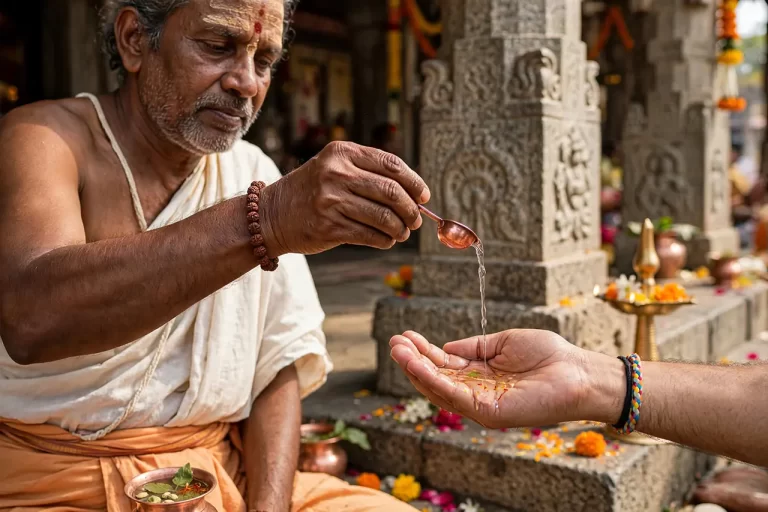
- Shankhabhishekam: An offering where the holy water is poured on the granite deity using a sanctified and pure white conch shell. It is considered to give great physical health and longevity, as well as peace of mind.
- Special Offering of Sudarsana Chakram: Devotes can buy miniature metal copies of the holy wheel disc at the temple counter and dedicate them to the deity to pray for the prosperity of their families.
Festivals and Events
The tranquil atmosphere of the Payammal Shatrughna Temple takes on a festive atmosphere through its two important annual festival seasons.
Five Day Annual Festival (Kumbha Month)
The Payammal Shatrughna Temple holds its impressive five day annual festival in the Malayalam month of Kumbha which usually occurs in the months of February/March. This festival is marked by Pooyam star.
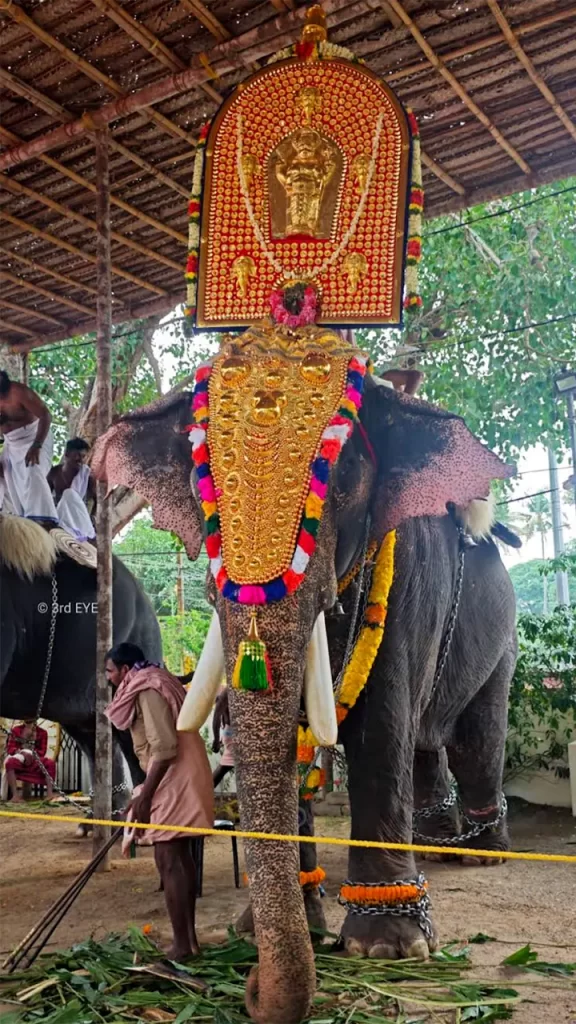
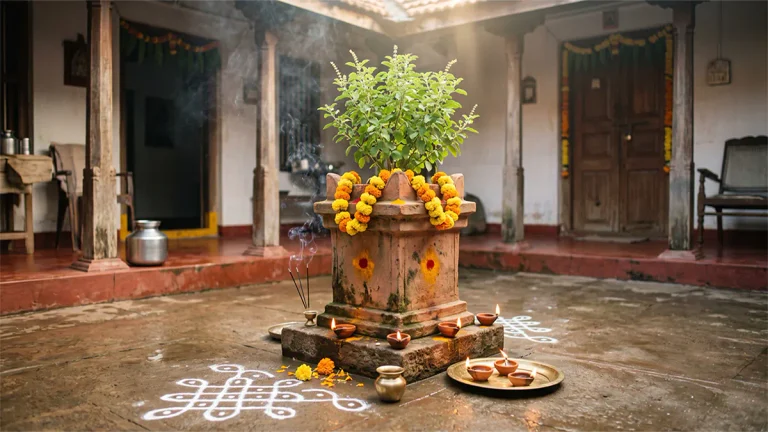
In these five days, the whole village of Payammal bursts into happiness. Strings of yellow marigold flowers and thousands of earthen oil lamps illuminate the temple courtyard. The strong thumping sound of Kerala temple percussion orchestras such as the Chenda Melam and Panchavadyam can be heard throughout. It is an overwhelming experience of music, dance, feasts and procession of the festival god.
Sacred Ramayana Masam (July-August)
The busiest period of visitors at the Payammal Shatrughna Temple occurs during the month of Karkidakam on the Malayalam calendar. This rainy month, in the Kerala tradition, has been named the Ramayana Masam (Month of Ramayana).
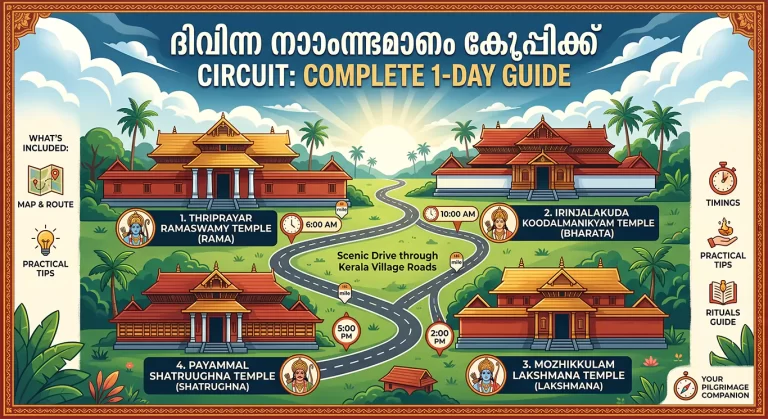
During this time, whole families sit in the wooden verandas of their houses reciting the verses of the poem. Tens of thousands of people join the Nalambalam Yatra trying to visit all the four brother temples on that day – starting from the early morning in Thriprayar (Rama), then going to Irinjalakuda (Bharata) and Moozhikkulam (Lakshmana), and finally coming to Payammal (Shatrughna) before the noon gates close.
Important Warning For Travellers: Since the temple is the last temple in the well-known pilgrimage circuit, the mornings in the month of Karkidakam are very crowded. The peaceful inner courtyard is filled with long lines of soaked by the rains and fervent pilgrims. If you seek an atmosphere of meditation, it is recommended to visit the temple in the off-season, for example, between September and January.
Travel Logistics: How to Get There and Facilities
Journey planning towards the Payammal Shatrughna Temple is extremely simple, provided that one knows the best way to travel. Let me list out all the travel information related to your visit here.
Getting There
The Payammal Shatrughna Temple enjoys connectivity by air, rail, and good roadways network:
- By Air: The nearest international airport to the temple is the Cochin International Airport (COK), which is around 42 to 45 kilometers from the temple site. One can easily opt for a prepaid taxi from the airport to reach the temple within an hour and a half drive on the National Highway.
- By Rail: The nearest important railway station is the Irinjalakuda Railway Station (IJK), which is about 7 to 15 kilometers away from the temple. Another prominent rail junction for inter-state trains is the Thrissur Railway Station. One can easily get an auto-rickshaw/taxi service right from the railway station gate itself.
- By Road: If you are traveling by car or by KSRTC bus, reach the well-known town of either Vellangallur or Irinjalakuda first. Take the route from Irinjalakuda to the south on the road that leads to Mathilakam, till you come across the small crossroad named Aripalam. Take the turn towards Aripalam and travel 1 km on a scenic, meandering rural road and you shall reach the temple.
Read More>> Pancharamalu List in andhra pradesh
Entry Fee and Required Cost
As per the age-old tradition of the spirituality practiced, there is not the slightest of entry fees that need to be paid in order to gain access into the Payammal Shatrughna Temple. One can come in freely, irrespective of his/her position and background in society, to receive the blessings offered at this place. In case one wants to make an offering through the Sudarsana Pushpanjali ceremony, the cost incurred is negligible, which is from 20 to 100 Indian Rupees only.
On-site Facilities
- Basic Washroom Facility: Simple washroom facility is present outside the main outer wall of the temple where people can wash their hands and feet prior to entering the temple.
- Food & Beverages: Although the temple does not operate its own commercial food outlets, several small tea stalls and tender coconuts vendors operate right near the temple gates. If you want a sumptuous traditional Keralite vegetarian meal for lunch, you can have a good time at some excellent restaurants in the town of Irinjalakuda, which is a 10 minutes drive from here.
- Lodging: Payammal is a very small and neat village that lacks big commercial hotels. It would be advisable to lodge in nearby towns like Irinjalakuda or Thrissur city where you will find budget accommodations and also luxury hotel options.
- Accessibility for Elderly People & People with Physical Challenges: The temple complex is made small enough that there are no giant stone steps to climb at all. The entire pradakshina path around the temple is made up of flat stones so that elderly people can make their rounds easily by walking at a slow pace. However, since it is an ancient temple and a heritage site, the stone pradakshina path lacks ramps so it is always advised to go with family members.
Dos and Don’ts: Cultural Etiquette to Observe
In order for us to keep the sanctity of this old place of worship intact, it is imperative for us to take note of the following ground rules before entering the temple premise.
The Essential Do’s
- Stick To The Traditional Dress Code: The temple has the traditional dress code of Kerala. The men should remove their shirts and vest prior to entering the inner courtyard of the temple and wear a traditional cotton Mundu (dhoti). The women can wear either a saree or set-mundu or salwar kameez. No modern day casual dresses such as ripped jeans, shorts, tank tops or short skirts are allowed inside the temple premises.
- Wash Your Feet: It is always necessary to wash your hands, face and feet at the outer taps before walking on the holy inner stoned pathways.
- Always Walk Clockwise Direction: Walk clockwise direction (Pradakshinam) around the sanctum sanctorum of the temple.
Read More >> 5 Pancha Bhuta Sthalam
The Absolutely Prohibited
- No Photography at All: You are free to capture the stunning beauty of the outer temple structure, the pond in the temple and the lush green palm trees around but no photographs or videos are allowed inside the inner sanctum of the temple. Capturing the inner temple structure (the Sreekovil and the deity in it) on camera is strictly prohibited. Mobile phones should be kept switched off or on silent mode in your bags.
- No Carrying of Certain Objects: Do not carry any objects made up of leather (e.g., leather belt, leather bags, leather jackets), cigarettes or any other tobacco products or meat products inside the temple complex.
- Keep the Place Silent: No loud conversation or chatting on the cell phones or running inside the compound area.
Nearby Attractions: Expanding Your Pilgrimage
Since you are already at Payammal, you must take time to explore the beautiful cultural and historical sites that are located not very far from there!
Other Nalambalam Sites
- Irinjalakuda Koodalmanikyam Temple (6KM away): A beautiful historically rich temple which is dedicated only to Lord Bharata. It has an excellent architecture which has a huge sacred tank (Kulipini Theertham) and known for its traditional temple arts.
- Thriprayar Sree Ramaswamy Temple (22 KM away): The beautiful starting point of the Nalambalam pilgrimage site having a majestic and powerful idol of Lord Rama near the clean and broad Thriprayar River.
- Thirumoozhikkulam Lakshmana Perumal Temple (30 KM away): The third site which is located in the Ernakulam district and is dedicated to Lord Lakshmana and is considered as one of the 108 holy Divya Desams revered by Vaishnava Alvars.
Historic Sites and Local Attractions
- Kodungallur Sree Kurumba Bhagavathy Temple: This temple is located about 18 kilometers away from Irinjalakuda. It is one of the oldest temples in India that is linked to the legendary tale of Kannagi and the ancient Chera dynasty.
- Pottery and Crafts Market: Irinjalakuda has its fair share of skilled artists who have been producing fine arts since generations. If you like pottery work and handcrafted objects, there are some local markets for you where you can purchase the best pots, mats, and brass oil lamps.

Frequently Asked Questions (FAQs)
As a guide, I would like to answer the popular and commonly asked questions of the tourists regarding the Payammal Shatrughna Temple.
Q1: Can people of other faiths come to the Payammal Shatrughna Temple?
As the overwhelming majority of ancient heritage temples operated in the Thrissur district, entering the inner premises of the temple is reserved for practicing Hindus only. Still, everybody can visit the site, view the impressive architecture and design of the building from the outside and walk around the temple pond in peace.
Q2: Which season is considered the best one for visiting Payammal?
The best season to travel to the Payammal Shatrughna Temple is definitely the winter and shoulder seasons which take place from October to January as the weather is cool without precipitation, there are no hot days, and the temple is quiet enough for meditation.
Q3: Why do we worship Shatrughna as the Sudarshana Chakra?
From the olden days, as per the Puranas, the Lord does not descend to Earth without his cosmic paraphernalia. In other words, if Lord Vishnu visits Earth, he comes along with his cosmic paraphernalia such as Lord Lakshmana, who is the multiheaded serpent called Adisesha; Lord Bharata, who is the divine Panchajanya Shankha; and Lord Shatrughna, who is the Sudarshana Chakra.
Q4: Is it mandatory to visit all four temples within a day?
As per the Nalambalam Yatra tradition, it is customary to visit all four brother temples from sunrise to noon in the month of Karkidakam. However, one can visit the Payammal Shatrughna Temple in isolation on any other day of the year if you are traveling for academic purposes or seeking peace and serenity at Payammal Shatrughna Temple.