Shri Shail Shakti Peeth: The Sacred Mahalaxmi & Sambaranand Bhairav Temple of Sylhet
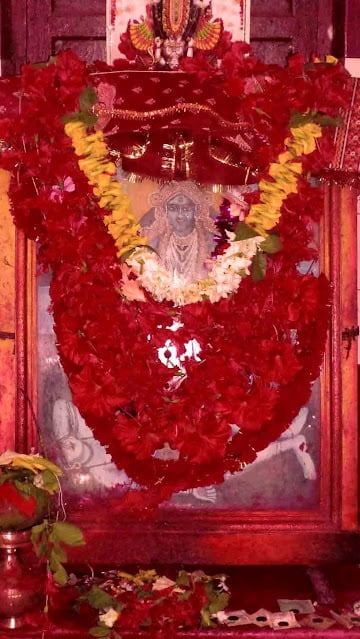
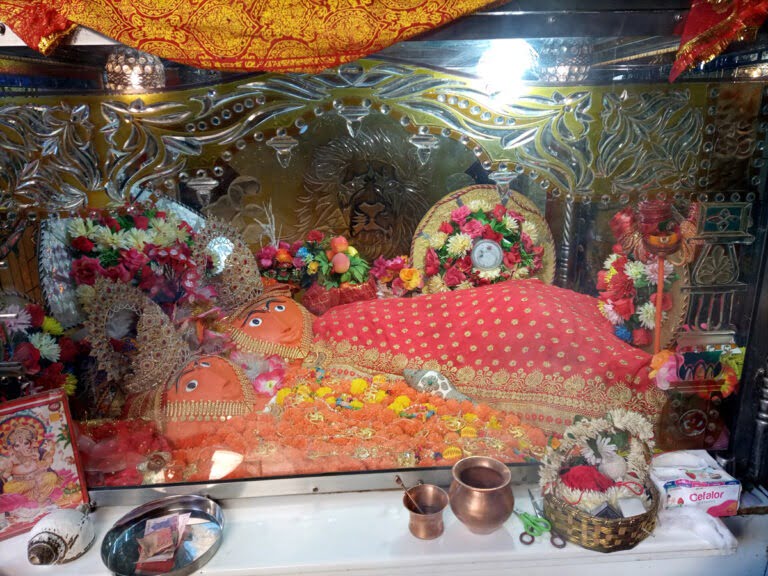
The Shri Shail Shakti Peeth (also known as the Mahalaxmi Bhairab Temple) is one of the revered 51 Shakti Peethas of Sanatana Dharma. Located at Joinpur (Gotatikar) in the South Surma region of Sylhet, Bangladesh, this holy shrine marks the spot where the Neck (Greeva) of Devi Sati fell following her self-immolation at Daksha’s sacrifice. At this holy peetha, the Divine Mother is venerated as Devi Mahalaxmi (the supreme personification of auspiciousness and spiritual prosperity), while Lord Shiva resides beside her as her fierce guardian consort, Sambaranand Bhairav (also worshipped as Shambarananda or Ishan).

For centuries, pilgrims have journeyed to this sanctified center to seek release from karmic afflictions, pray for household prosperity, and connect with the primal cosmic power of the Mother Goddess.
Quick Information: Shri Shail Shakti Peeth at a Glance
| Feature | Verified Details |
| Temple Name | Shri Shail Shakti Peeth (Mahalaxmi Bhairab Mandir) |
| Presiding Deity (Shakti) | Devi Mahalaxmi (alternatively revered as Mahasaraswati) |
| Consort (Bhairava) | Sambaranand (Shambarananda / Ishan) |
| Sacred Relic / Fallen Limb | The Neck (Greeva) of Goddess Sati |
| Location | Joinpur Village, Gotatikar, South Surma Upazila |
| District & Division | Sylhet District, Sylhet Division, Bangladesh |
| Temple Timings | 06:00 AM – 12:00 PM; 04:00 PM – 08:30 PM (Daily) |
| Aarti Timings | Mangala Aarti: 06:30 AM; Sandhya Aarti: 06:30 PM |
| Best Time to Visit | October to March (Pleasant winter climate; Navratri and Shivaratri) |
| Major Festivals | Maha Shivaratri, Sharad Navratri, Kali Puja, Maghi Purnima |
| Nearest Railway Station | Sylhet Railway Station (~3 km away) |
| Nearest Airport | Osmani International Airport, Sylhet (ZYL) (~11 km away) |
| Major Overland Border (from India) | Dawki–Tamabil Border Checkpost (Meghalaya) (~55 km north) |
| Dress Code | Modest traditional attire (Dhoti/Kurta for men, Sarees/Salwar for women) |
Continue Reading >> Danteshwari Temple Dantewada

The Spiritual Significance of Shri Shail Shakti Peeth
The roots of Shri Shail Shakti Peeth reside in the Puranic tradition of the Daksha Yajna. According to the Shiva Purana, Kalika Purana, and the Peetha Nirnaya Tantra, Goddess Sati sacrificed her life in the sacrificial fire after her father, Prajapati Daksha, publicly insulted her husband, Lord Shiva.
Unbearably grief-stricken, Lord Shiva hoisted Sati’s lifeless body upon his shoulders and performed the Rudra Tandava—the cosmic dance of dissolution. To arrest the destruction of the cosmos, Lord Vishnu dispatched his Sudarshana Chakra to divide Sati’s body into fifty-one sacred fragments. Wherever a holy fragment touched the earth, a Shakti Peeth emerged, eternally protected by a designated manifestation of Lord Bhairava.
At Shri Shail, the Neck (Greeva) of the Mother descended upon the elevated land of Sylhet. Because the neck and throat govern voice, truth, and spiritual expression (Vishuddha Chakra), esoteric traditions hold that meditation at Shri Shail awakens devotion, removes obstacles in speech, and bestows profound spiritual insight.
Explore the complete history and list of the 51 Shakti Peethas.
Clarifying the Difference: Sylhet Shri Shail vs. Andhra Pradesh Srisailam
A frequent point of confusion among pilgrims and spiritual seekers is the distinction between two venerable pilgrimage destinations bearing the name “Shri Shail”:
- Shri Shail Shakti Peeth (Sylhet, Bangladesh): This is the classical site celebrated for Sati’s neck relic, presided over by Devi Mahalaxmi and Bhairav Sambaranand. It is located on the plains near the Surma River in northeastern Bangladesh.
- Srisailam Mallikarjuna (Andhra Pradesh, India): Nestled in the Nallamala Hills of Andhra Pradesh along the Krishna River, this ancient tirtha is one of the rare shrines celebrated simultaneously as one of the 12 Jyotirlingas (Lord Mallikarjuna) and as a Shakti Peeth (Goddess Bhramaramba Devi).
While both shrines celebrate the supreme union of Shiva and Shakti, devotees seeking the specific classical peetha of Devi Mahalaxmi and Sambaranand journey to Joinpur in Sylhet.

The Divine Deities: Devi Mahalaxmi and Sambaranand Bhairav
The theological harmony of Shri Shail lies in the balance between benevolent grace and fierce protection.
Devi Mahalaxmi (The Primal Mother)
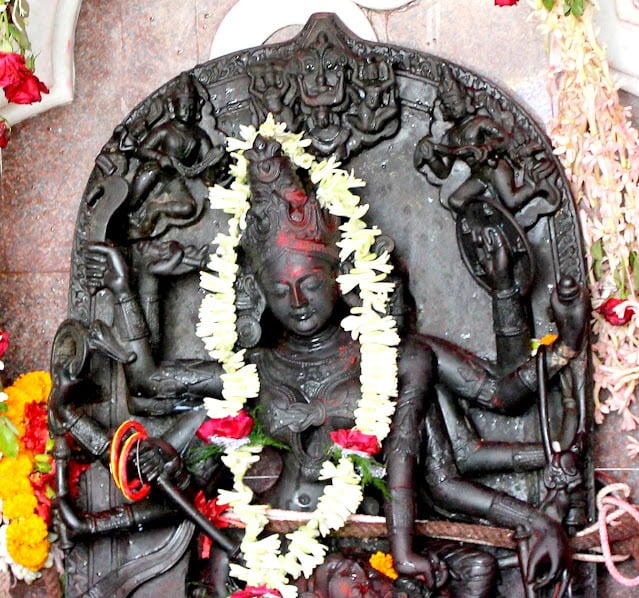
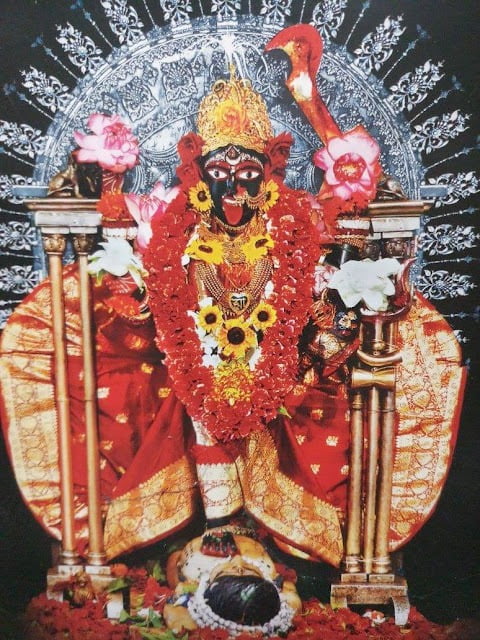
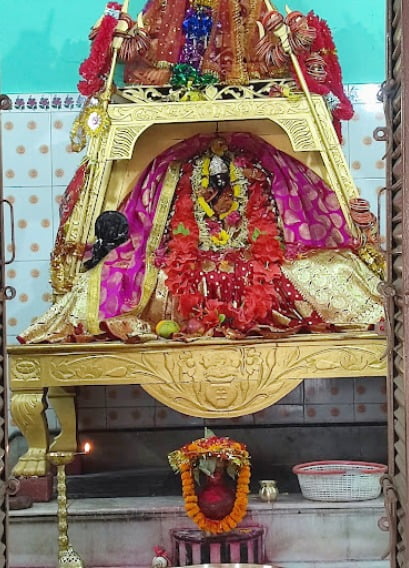
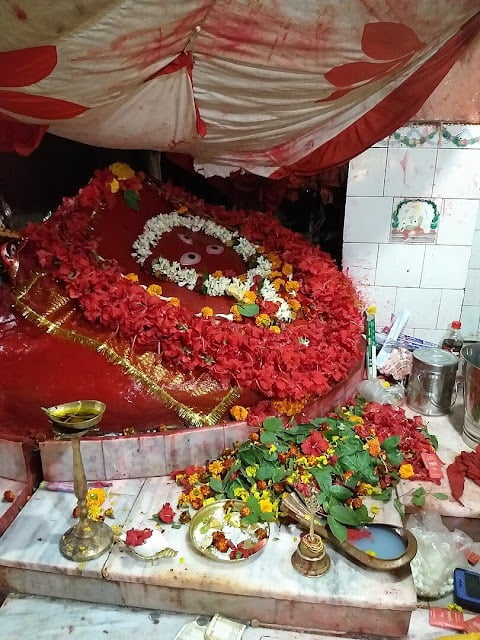
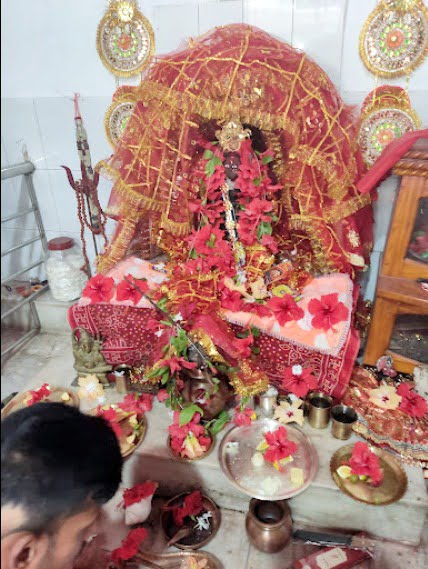
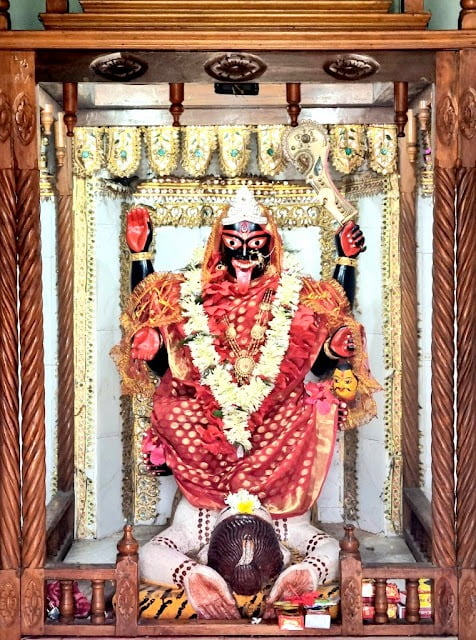
In the tantric cosmology of the Shakta tradition, the presiding goddess here is not merely the goddess of material fortune, but the primordial Adya Shakti manifested as Mahalaxmi. She represents spiritual wealth, inner purity, auspicious beginnings, and the nurturing energy that sustains the universe. The sanctum sanctorum houses sacred stone murtis and natural rock formations representing the sacred presence of the Mother.
Lord Sambaranand Bhairav
Accompanying the Divine Mother is her fierce guardian, Sambaranand Bhairav. In Sanskrit, Sambara signifies restraint, containment, and the mastery over ignorance and chaotic impulses. Pilgrims offer prayers to Sambaranand Bhairav before approaching the inner sanctum of the Devi, seeking his blessings to dismantle internal fear, ego, and negative external energies.
Continue Reading >> Bajreshwari Devi Temple Kangra
Architectural Layout and Sanctum Atmosphere
The temple complex at Joinpur presents an oasis of spiritual calm amidst the bustling surroundings of Greater Sylhet. Rebuilt and renovated across several historical epochs following regional conflicts and natural weathering, the shrine reflects traditional Bengali Hindu temple architecture:
- The Garbhagriha (Inner Sanctum): A simple sanctum preserving the consecrated idols and the sacred stone representing the holy relic. The atmosphere inside is kept fragrant with burning camphor, incense, and fresh marigold garlands.
- The Natmandir (Prayer Hall): A covered congregational hall directly facing the sanctum where devotees gather during daily aartis, bhajans, and community feasts.
- The Bhairav Shrine: A dedicated sacred altar dedicated to Lord Sambaranand where special oblations, bilva leaves, and prayers are offered.
- Sacred Water Tank: The surrounding grounds feature a traditional pond (pukur), where pilgrims historically performed ablutions before stepping onto the temple floor.

Daily Rituals, Temple Timings, and Worship Customs
The temple operates on a predictable schedule managed by dedicated local sevayats (priests) and the regional Hindu temple committee:
- Morning Opening & Mangala Darshan: The gates open at 06:00 AM. Devotees offer fresh flowers, batasha (sugar drops), sweets, milk, and red chunari (scarves) to Mother Mahalaxmi.
- Madhyanha Bhog (Afternoon Offering): At approximately 11:30 AM to 12:00 PM, an offering of cooked rice, lentils, and vegetarian curries (Anna Bhog) is made to the deities, after which the sanctum closes for midday rest.
- Evening Reopening & Sandhya Aarti: The temple reopens at 04:00 PM. The highlight of the evening is the Sandhya Aarti at 06:30 PM, accompanied by the vigorous sounding of conch shells (shankha), traditional double-headed drums (dhaak), and brass bells. The complex closes by 08:30 PM.
Special Offerings and Sevas
Devotees visiting the shrine can sponsor specialized archana and pujas for peace, prosperity, and the removal of physical debility. Providing vermilion (sindoor), red sarees, and fresh bilva leaves for Bhairav Baba is considered particularly meritorious.
Navratri fasting and puja rules for devotees visiting during the autumn festival season.
Festivals and Celebrations at Shri Shail
While daily worship continues throughout the year, Shri Shail awakens with immense devotional fervor during special Sanatana Dharma observances:
- Maha Shivaratri (February/March): The most grandly celebrated festival at the temple. Thousands of devotees observe a day-and-night fast, offering continuous streams of holy water and milk over the lingam and the altar of Sambaranand Bhairav across the four praharas of the night.
- Sharad Navratri & Durga Puja (September/October): As Sylhet comes alive with grand autumnal festivities, Shri Shail becomes a central hub for Devi worship. Chandi Path (recitation of the Devi Mahatmyam) echoes throughout the temple premises daily.
- Kali Puja and Deepavali (October/November): Celebrated with the lighting of hundreds of earthen ghee lamps (diyas), symbolic of dispelling ignorance and honoring the supreme victory of light over spiritual darkness.
- Maghi Purnima Mela: An annual traditional fair (mela) historically organized in the surrounding open fields, bringing together artisans, folk musicians, and wandering ascetics.
Comprehensive Travel Logistics: How to Reach Shri Shail
Traveling to Shri Shail Shakti Peeth requires planning, particularly for international pilgrims arriving from India or overseas.
1. From India via the Dawki–Tamabil Land Border (Shortest Route for Northeast India)
For pilgrims residing in or traveling through Assam, Meghalaya, or Tripura, the land route is convenient:
- Reach Shillong (Meghalaya) by road from Guwahati.
- Travel south approximately 82 km through the hills to the Dawki border crossing.
- After clearing Indian immigration at Dawki and Bangladeshi immigration at Tamabil, hire a private taxi or microbus to Sylhet city center (~55 km; approximately 1.5 to 2 hours of travel along the highway).
- Once in Sylhet, proceed straight to the South Surma / Joinpur region.
2. By Air via Dhaka or Direct to Sylhet
- Osmani International Airport (ZYL): Located just 11 km north of the temple, Sylhet’s airport receives regular domestic flights from Dhaka, alongside occasional direct international flights from the Middle East and the United Kingdom.
- Via Dhaka (Hazrat Shahjalal International Airport – DAC): Arrive in Dhaka, then board a quick 45-minute domestic flight to Sylhet on airlines like Biman Bangladesh or US-Bangla Airlines. Alternatively, high-speed intercity trains (such as the Parabat Express and Upaban Express) run daily between Dhaka’s Kamalapur Railway Station and Sylhet Railway Station (taking roughly 6–7 hours).
3. Local Inner-City Transit in Sylhet
The temple in Joinpur sits just across the Surma River in South Surma.
- CNG Auto-Rickshaws: Widely available across Sylhet city; a ride from Zindabazar, Ambarkhana, or the railway station takes roughly 15–20 minutes.
- Cycle Rickshaws: A peaceful, traditional way to travel shorter distances directly to the temple gates from local South Surma accommodations.
Continue Reading >> Shri Devikoop Bhadrakali Temple
Essential Travel Tips for Devotees and Cross-Border Pilgrims
- Visa and Border Documentation: Indian passport holders require a valid visa for Bangladesh prior to departure. Ensure your visa category matches your itinerary and that your entry and exit ports (such as Haridaspur/Benapole or Dawki/Tamabil) are clearly aligned with your travel plans.
- Currency and Payments: The currency is the Bangladeshi Taka (BDT). Currency exchange booths are located at the Tamabil border and throughout central Sylhet (Zindabazar). International credit cards work at major hotels in Sylhet, but local rickshaws, flower vendors, and temple donations require cash in small denominations.
- Language and Etiquette: Bengali is the native language; Hindi and English are widely understood in urban centers. Modest dress reflecting sacred custom is expected inside the temple premises. Remove leather footwear before entering the temple courtyard and prayer halls.
- Photography Rules: Photography of the external temple structure and grounds is generally allowed, but taking photos inside the sanctum sanctorum or capturing the consecrated idols directly is strictly prohibited without prior permission from the temple trust.
Nearby Spiritual and Cultural Attractions in Sylhet
Pilgrims visiting Shri Shail can enhance their spiritual journey by exploring neighboring sacred and historic landmarks in the Greater Sylhet region:
- Hazrat Shah Jalal & Shah Paran Dargahs: Highly revered Sufi shrines in Sylhet reflecting centuries of shared syncretic cultural heritage in the Surma Valley.
- Bholaganj Sada Pathor & Jaflong: Scenic nature destinations along the border with Meghalaya, where pristine mountain rivers cascade down from the Khasi Hills over beds of white stones.
- Srimangal Tea Gardens: Located approximately 80 km south of Sylhet, Srimangal is the tea capital of Bangladesh, famed for lush undulating hills, rainforest reserves, and historic temples.
If you are journeying onward to Eastern India’s major sacred sites, explore our comprehensive spiritual guide to the Kamakhya Temple in Guwahati or the iconic Kalighat Kali Temple in West Bengal.
Frequently Asked Questions About Shri Shail Shakti Peeth
What part of Goddess Sati’s body fell at Shri Shail Shakti Peeth?
According to classical Shakta texts like the Peetha Nirnaya Tantra, the Neck (Greeva) of Devi Sati fell at Shri Shail when Lord Vishnu dismembered her body with the Sudarshana Chakra.
Who are the presiding deities worshipped at this temple?
The temple is dedicated to Devi Mahalaxmi as the primary manifestation of Shakti and Lord Sambaranand (Shambarananda) as the accompanying Bhairava.
Where exactly is the temple situated?
The shrine is located at Joinpur (Gotatikar), under South Surma Upazila, situated near the banks of the Surma River in Sylhet District, northeastern Bangladesh.
Is Shri Shail the same as Srisailam in Andhra Pradesh?
No. Srisailam in Andhra Pradesh is one of the 12 Jyotirlingas (Mallikarjuna) and the Bhramaramba Shakti Peeth. Shri Shail in Sylhet is a distinct sacred site in the traditional 51 Shakti Peeth circuit celebrated specifically for the neck relic of Devi Sati.
How can Indian devotees visit the temple via road?
Devotees can travel from Guwahati or Shillong to the Dawki–Tamabil border checkpost in Meghalaya. After completing border formalities, Sylhet city is approximately 55 km away by road, accessible via private taxis, microbuses, or local transport.
What are the main festivals celebrated at Shri Shail?
Maha Shivaratri, Sharad Navratri (Durga Puja), Kali Puja, and the annual Maghi Purnima congregation are celebrated with great devotional joy and special temple rituals.
The Timeless Heritage of Shri Shail
Shri Shail Shakti Peeth remains a shining beacon of Sanatana Dharma’s sacred geography. Preserved with loving care through generations by local servitors and the devoted community of Sylhet, this holy shrine bridges geographic boundaries, uniting spiritual seekers in reverence of the divine Mother. Whether undertaking a formal Shakti pilgrimage or exploring the ancient roots of the Indian subcontinent’s shared spiritual heritage, a quiet moment of prayer before Devi Mahalaxmi and Sambaranand Bhairav leaves a lasting imprint of serenity and grace.