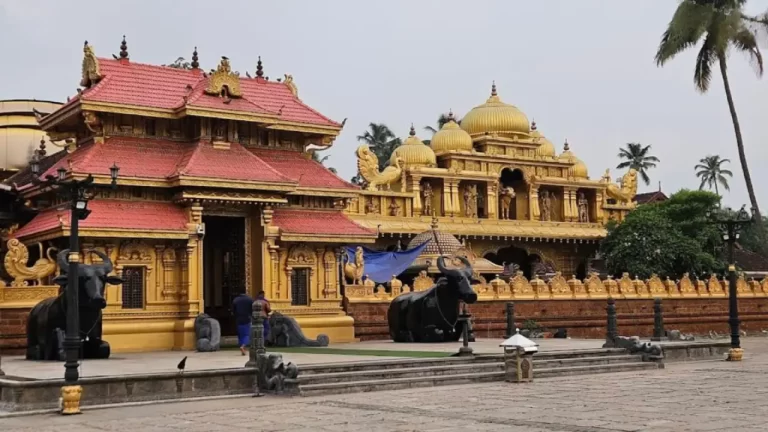
Swaminarayan Akshardham Temple, Delhi: Complete Visitor Guide, Timings, Tickets & History
Swaminarayan Akshardham Temple in New Delhi is open Tuesday through Sunday from 10:00 AM to 8:00 PM (last entry into the complex is at 6:30 PM) and remains closed every Monday. Entry to the campus and darshan inside the main Mandir are completely free, while the three indoor exhibitions (₹260 for adults) and the evening Sahaj Anand Water Show (₹110 for adults) require separate tickets. Visitors must cover their shoulders and knees and deposit all mobile phones, cameras, smartwatches, and bags at the free cloakroom before entering.
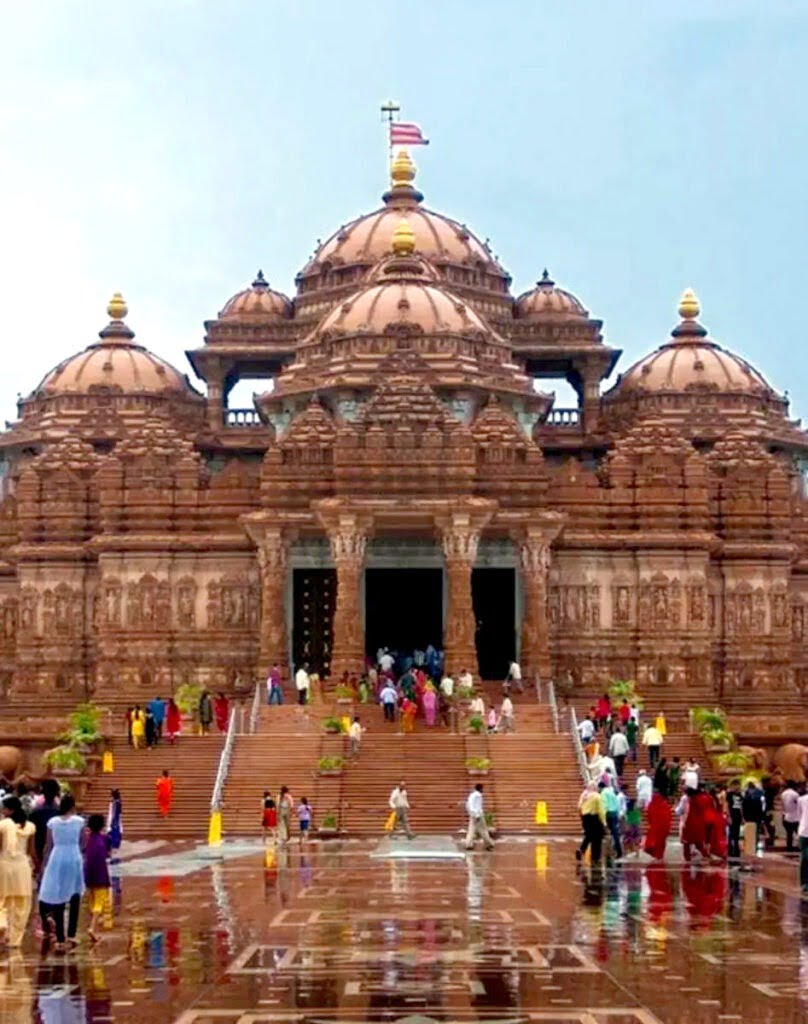
Located on the banks of the Yamuna River along National Highway 24 in East Delhi, Swaminarayan Akshardham stands as one of the most visited temples in India and a major landmark of Hindu art, architecture, and spiritual heritage. Built by the Bochasanwasi Akshar Purushottam Swaminarayan Sanstha (BAPS) and inaugurated on November 6, 2005, this 100-acre campus blends traditional Indian stone architecture with modern multimedia exhibitions that explore thousands of years of Indian history and values.
Whether you are visiting as a devotee for peaceful darshan, exploring Indian temple craftsmanship with your family, or planning a first-time trip to Delhi, knowing the exact entry cutoffs, security rules, and attraction schedules will save you hours of waiting.
Quick Information: Swaminarayan Akshardham Temple, Delhi
(Operational details verified against official Swaminarayan Akshardham New Delhi Visitor Information as of November 2026. Festival days may follow special schedules.)
| Feature | Verified Details |
| Official Name | Swaminarayan Akshardham (BAPS Swaminarayan Akshardham, New Delhi) |
| Main Deity | Bhagwan Swaminarayan (with altars for Shri Sita-Ram, Shri Radha-Krishna, Shri Lakshmi-Narayan, and Shri Shiv-Parvati) |
| Location & Address | NH 24, Pramukh Swami Maharaj Marg (near Noida Mor), Pandav Nagar, New Delhi – 110092 |
| Open Days | Tuesday to Sunday (Closed every Monday) |
| Complex Entry Timings | First Entry: 10:00 AM | Last Entry into Campus: 6:30 PM |
| Main Mandir Darshan | 10:00 AM to 8:00 PM (Daily Aarti at 10:30 AM and 6:00 PM) |
| Exhibition Ticket Window | 11:00 AM to 6:00 PM (Exhibitions run until 8:00 PM) |
| Sahaj Anand Water Show | After sunset (typically around 7:30 PM, varying slightly by season) |
| Entry Fee | Free for complex entry, gardens, and main Mandir darshan |
| Exhibition Ticket Price | Adults (12+): ₹260 | Seniors (60+): ₹210 | Children (4–11): ₹160 | Under 4: Free |
| Water Show Ticket Price | Adults & Seniors: ₹110 | Children (4–11): ₹80 | Under 4: Free |
| Abhishek Puja Donation | ₹50 per person (General darshan of Abhishek Mandap is free) |
| Nearest Metro Station | Akshardham Metro Station (Delhi Metro Blue Line — approx. 350 meters / 5-minute walk to Gate 1) |
| Dress Code | Modest attire mandatory: shoulders, chest, back, and upper arms covered; lower wear must extend below the knees (Sarongs available for purchase at ₹100) |
| Prohibited Items | Mobile phones, cameras, smartwatches, electronics, bags, luggage, and outside food are strictly banned inside |
| Recommended Duration | 1.5 to 2 hours (Mandir & Gardens only) | 4 to 5 hours (Mandir + 3 Exhibitions + Water Show) |
| Official Website | akshardham.com |
History and Spiritual Significance of Akshardham
The Sanskrit word Akshardham translates to the “divine abode of God”—an eternal, unchanging realm of purity, devotion, and peace. In the Swaminarayan tradition of Hinduism, Akshardham represents both the transcendental abode of Bhagwan Swaminarayan and an earthly sanctuary where seekers can experience spiritual stillness and moral inspiration.
Bhagwan Swaminarayan and the BAPS Tradition
The temple is dedicated to Bhagwan Swaminarayan (1781–1830 CE), born as Ghanshyam Pande in Chhapaiya near Ayodhya, Uttar Pradesh. At the age of eleven, he renounced home and walked barefoot across the Indian subcontinent for seven years as a teenage ascetic named Neelkanth Varni, practicing severe austerities from the Himalayas to Kanyakumari before settling in Gujarat.
Throughout his life, Bhagwan Swaminarayan promoted core principles of Sanatana Dharma, including non-violence (ahimsa), vegetarianism, personal integrity, family harmony, compassion, and selfless service (seva). Today, BAPS Swaminarayan Sanstha oversees the temple complex, continuing the spiritual lineage of gurus who followed him. Readers interested in the broader regional roots of this tradition can explore other famous temples in Gujarat, where many historic Swaminarayan mandirs are located.
Vision and Construction (2000–2005)
The idea of creating a monumental cultural and spiritual complex on the banks of the Yamuna in Delhi was originally envisioned by Brahmaswarup Yogiji Maharaj and brought to reality by His Holiness Pramukh Swami Maharaj.
- Foundation Stone: Laid on November 6, 2000.
- Construction Effort: Built in just five years through the combined craftsmanship of over 11,000 skilled stone artisans and more than 8,000 volunteers from around the world, contributing over 300 million volunteer hours.
- Inauguration: Officially consecrated and opened on November 6, 2005, by Pramukh Swami Maharaj in the presence of then President of India Dr. A.P.J. Abdul Kalam and Prime Minister Dr. Manmohan Singh.
- Global Recognition: On December 17, 2007, Guinness World Records officially certified Swaminarayan Akshardham in New Delhi as the World’s Largest Comprehensive Hindu Temple, recognizing its monumental scale and traditional stone craftsmanship.
Architectural Marvels of the Akshardham Complex
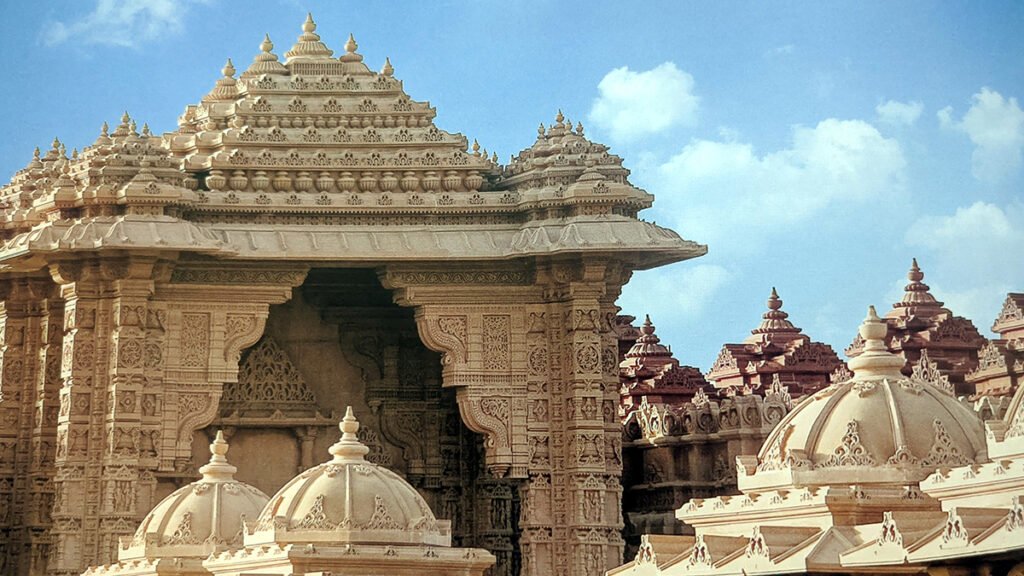
Unlike modern buildings supported by steel beams or reinforced concrete, the central Akshardham Mandir was constructed strictly according to ancient Indian architectural texts—the Shilpa Shastras and Vastu Shastra.
Traditional Stone Construction Without Steel
Just as historic stone sanctuaries and modern traditional projects like Shri Kalki Dham Temple rely on interlocking masonry rather than metal reinforcement, the Akshardham Mandir uses zero structural steel or iron. Interlocking blocks of hand-carved stone distribute weight naturally, a time-tested engineering method designed to endure for centuries.
Two primary stones define the monument’s appearance:
- Rajasthani Pink Sandstone: Used on the exterior walls, symbolizing devotion, warmth, and timeless strength.
- Italian Carrara Marble: Used throughout the interior halls, pillars, ceilings, and sanctum, symbolizing purity and inner peace.
Key Dimensions and Sculptural Features
According to official architectural records on the Akshardham Mandir portal, the main monument measures:
- Height: 141.3 feet (43 meters)
- Width: 316 feet (96 meters)
- Length: 356 feet (109 meters)
- Architectural Elements: 234 intricately carved pillars, 9 ornate domes, 20 quadrangled spires (shikhars), and more than 20,000 hand-carved statues of deities, Vedic sages, devotees, celestial dancers, and musicians.
The Garbhagruh (Inner Sanctum) and Sacred Altars
At the center of the Mandir beneath the main dome sits the Garbhagruh (inner sanctum). Here, devotees have darshan of an 11-foot-tall gilded murti of Bhagwan Swaminarayan, seated in blessing posture and accompanied by his spiritual successors: Gunatitanand Swami, Bhagatji Maharaj, Shastriji Maharaj, Yogiji Maharaj, and Pramukh Swami Maharaj.
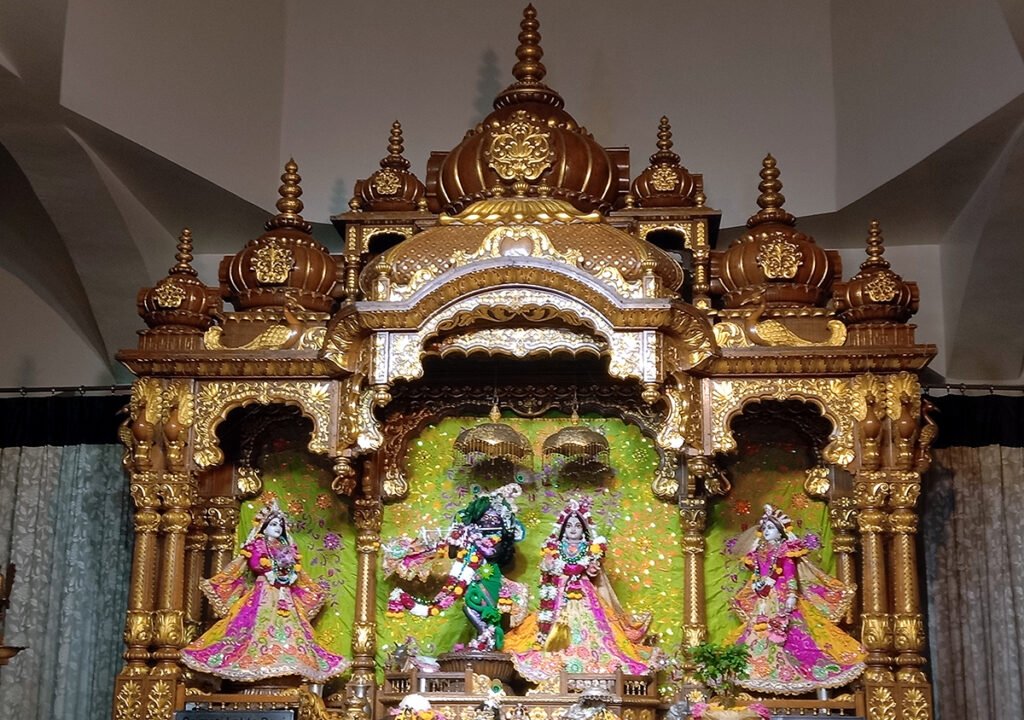
Surrounding the central sanctum are four prominent altars honoring major deities of Sanatana Dharma, making the Mandir welcoming to Hindu devotees from every tradition:
- Shri Sita-Ram (honored across India, including at historic shrines like Shree Kalaram Temple Nashik)
- Shri Radha-Krishna
- Shri Lakshmi-Narayan
- Shri Shiv-Parvati (whose sacred marriage site is celebrated at Triyuginarayan Temple)
Gajendra Peeth (The Elephant Plinth)
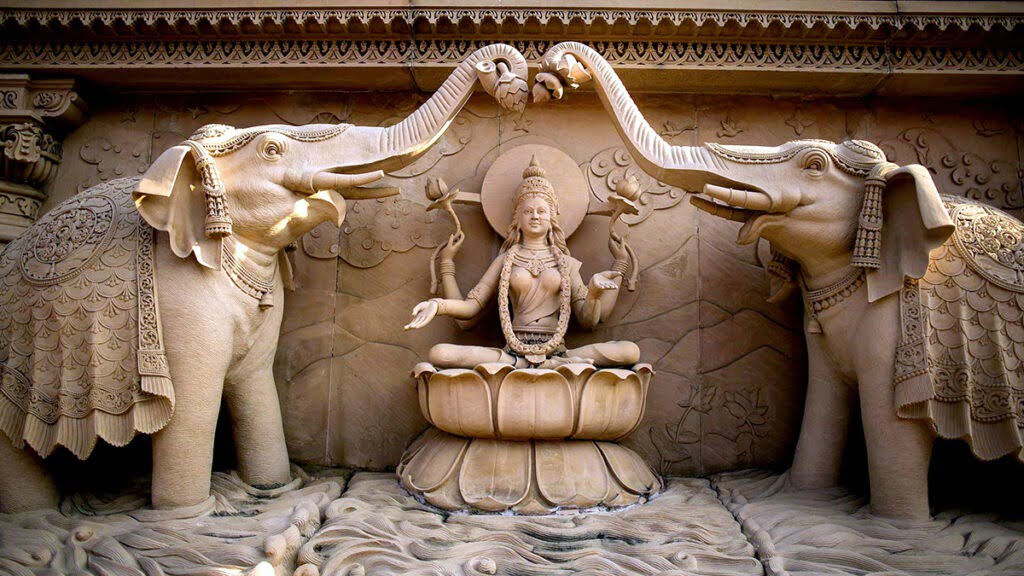
Traditional Hindu temples symbolically rest upon the backs of elephants. At Akshardham, the exterior base of the Mandir—known as the Gajendra Peeth—features 148 life-size stone elephants weighing a combined 3,000 tons. Rather than standing in identical rows, each elephant is carved in a unique, lifelike scene depicting stories of nature, human companionship, and devotion from Hindu texts such as the Gajendra Moksha.
Narayan Sarovar and the 108 Gaumukhs
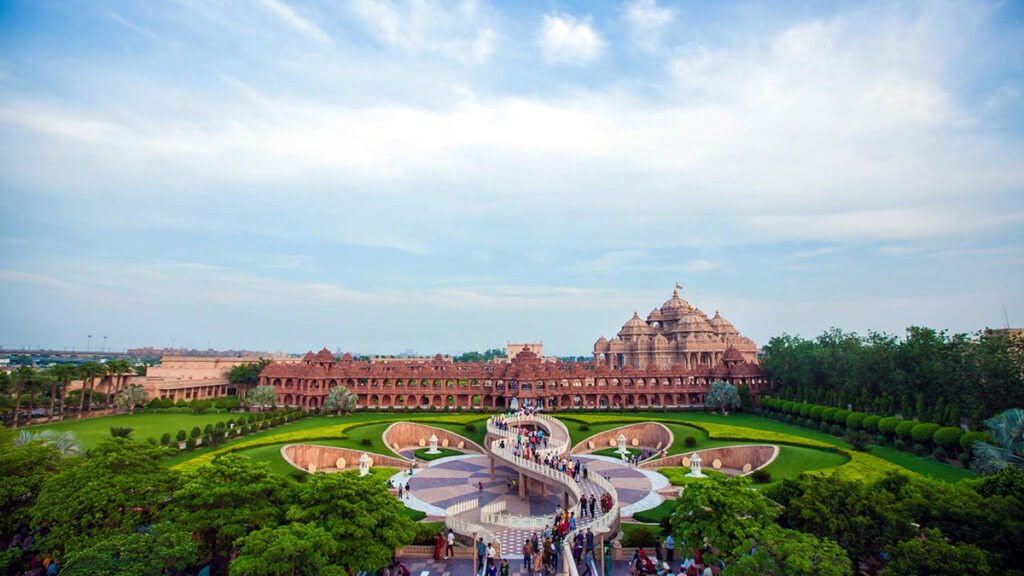
Surrounding the main Mandir on three sides is Narayan Sarovar, a sacred perimeter lake filled with holy waters collected from 151 rivers, lakes, and stepwells across India that Bhagwan Swaminarayan visited during his travels. Along the outer circumambulation wall (parikrama), 108 bronze gaumukhs (cow-shaped spouts) representing the 108 names of God pour continuous streams of sacred water into the reservoir.
Top Attractions and Things to See Inside Akshardham
A visit to Swaminarayan Akshardham is divided into free spiritual/garden areas and ticketed cultural exhibitions. Understanding how each section works helps you manage your time without rushing.
1. Swagatam, Mayur Dwar & Holy Footprints (Free)
Your journey begins at the Mayur Dwar (Peacock Gates), adorned with 869 carved peacocks welcoming visitors with the Vedic invocation “Aa no bhadrah kratavo yantu vishwatah” (“Let noble thoughts come to us from all directions”). Between the gates lie the white marble Charanarvind (Holy Footprints) of Bhagwan Swaminarayan, bearing 16 auspicious symbols bathed continuously by water from four conch shells.
2. The Main Akshardham Mandir & Nine Mandapams (Free)
After depositing your footwear at the free shoe counter outside the Mandir plaza, you climb the steps into the pink sandstone monument. Inside, the temple is organized into nine thematic mandapams (halls), each crowned by unique carved marble domes and ceilings depicting scenes from the Ramayana, Mahabharata, Bhagavata Purana, and the life of Bhagwan Swaminarayan. Visitors typically spend 45 to 60 minutes walking quietly through the mandapams and circumambulating the sanctum.
3. Abhishek Mandap (Free Darshan; ₹50 Optional Ritual)
Inside the Abhishek Mandap, visitors can participate in the sacred Hindu ritual of Abhishekam by pouring small vessels of sanctified water over a consecrated murti of Neelkanth Varni (the teenage yogi form of Bhagwan Swaminarayan). Volunteers guide participants through brief Sanskrit shlokas and prayers for family wellbeing and world peace. Viewing the hall is free; participating in the water-offering ritual carries a nominal ₹50 donation and takes about 15 to 20 minutes.
4. The Three Multimedia Exhibitions (Combined Ticket Required)
Akshardham features three indoor educational exhibitions that use robotics, dioramas, large-format cinema, and a boat ride to bring Indian culture to life. Important rule: Individual tickets are not sold; one combined exhibition ticket grants entry to all three halls in sequence:
- Hall 1 — Sahajanand Darshan (Hall of Values) (~55 minutes): Uses life-size animatronic figures, 3D dioramas, and light-and-sound effects to present timeless human values such as non-violence, honesty, prayer, perseverance, and family unity through episodes from Bhagwan Swaminarayan’s life.
- Hall 2 — Neelkanth Darshan (Giant Screen Film) (~45 minutes): Shown in a large-format theater, this film traces young Neelkanth Varni’s extraordinary 12,000-kilometer barefoot pilgrimage across India, filmed across 108 real locations from the icy Himalayas to southern coastal temples.
- Hall 3 — Sanskruti Darshan (Cultural Boat Ride) (~15 minutes): Visitors board peacock-shaped boats and glide through an indoor waterway showcasing 10,000 years of ancient Indian heritage—including Vedic gurukuls, ancient Takshashila University, early surgical practices by Sushruta, and India’s contributions to mathematics, astronomy, yoga, and chess.
(Note: Commentary in the exhibitions is primarily in Hindi, with English shows or audio options available at scheduled intervals—ask the volunteers at the hall entrance upon arrival.)
5. Sahaj Anand Water Show at Yagnapurush Kund (Separate Ticket)
Held after sunset in the Yagnapurush Kund—an expansive 300-by-300-foot stepwell with 2,870 steps and 108 small shrines—the Sahaj Anand Water Show is a 24-minute multimedia presentation. Combining multi-color lasers, video projections on water screens, underwater flames, surround sound, and live performers, the show dramatizes a classic story of self-realization and humility from the Kena Upanishad.
6. Thematic Gardens: Bharat Upavan & Yogi Hriday Kamal (Free)
- Bharat Upavan (Garden of India): Lush landscaped lawns lined with bronze sculptures honoring India’s sages, freedom fighters, scientists, valorous warriors, and notable women and children.
- Yogi Hriday Kamal: A sunken garden shaped like an eight-petaled lotus, engraved with timeless wisdom quotes from world thinkers, philosophers, and spiritual leaders.
Detailed Darshan Timings and Ticket Prices (2026)
Note: Some older third-party travel websites still list legacy 9:30 AM opening hours. According to the official Akshardham Visitor Information page, first entry begins at 10:00 AM. Always arrive before 6:00 PM if you plan to buy exhibition tickets.
| Attraction / Activity | Operating Days | Timings | Ticket / Fee Details |
| Campus & Welcome Gates | Tuesday – Sunday (Closed Mondays) | First Entry: 10:00 AM Last Entry: 6:30 PM | Free |
| Main Akshardham Mandir | Tuesday – Sunday | 10:00 AM – 8:00 PM (Aarti: 10:30 AM & 6:00 PM) | Free |
| Thematic Gardens | Tuesday – Sunday | 10:00 AM – 7:00 PM (Entry closes at 6:30 PM) | Free |
| Abhishek Mandap | Tuesday – Sunday | 10:00 AM – 8:00 PM (Aarti: 6:30 PM) | Darshan: Free Abhishek Ritual: ₹50 per person |
| 3 Exhibitions (Combined) | Tuesday – Sunday | 11:00 AM – 8:00 PM (Ticket counter closes at 6:00 PM) | Adults (12+): ₹260 Seniors (60+): ₹210 Children (4–11): ₹160 Under 4: Free |
| Sahaj Anand Water Show | Tuesday – Sunday | After Sunset (typically 7:30 PM) (Maha Aarti precedes the show) | Adults & Seniors: ₹110 Children (4–11): ₹80 Under 4: Free |
Dress Code, Security Rules, and Prohibited Items
Akshardham maintains strict standards of sanctity and government-mandated security. Preparing before you leave your hotel prevents delays at the gate.
Mandatory Dress Code
Visitors of all nationalities and faiths must wear modest clothing to enter the campus:
- Upper Wear: Must cover the shoulders, chest, back, and upper arms. Sleeveless tops, tank tops, tube tops, and low-cut shirts are not allowed.
- Lower Wear: Trousers, skirts, or dresses must extend below the knees. Shorts, capris above the knee, and mini-skirts are not permitted.
- On-Site Solution: If your outfit does not meet these guidelines, modest wrap-around sarongs are available at the entrance counter (currently listed on the official site for purchase at ₹100; older Delhi Tourism listings note a ₹100 refundable deposit).
Prohibited Items and Cloakroom Rules
To preserve peace inside the Mandir and ensure strict security, the following items are strictly prohibited inside the complex:
- Mobile phones, smartphones, and smartwatches
- Still cameras, video cameras, GoPros, and tripods
- Backpacks, handbags, purses larger than a small clutch, and luggage
- Laptops, tablets, earphones, power banks, and USB drives
- Outside food, snacks, tobacco, alcohol, lighters, and sharp objects
How the Cloakroom Works: A free, staffed cloakroom is located outside the security screening area. You must switch off all electronic devices before depositing them. Because queues at the cloakroom can stretch to 20–30 minutes on weekends, leave unnecessary electronics and large bags locked safely in your hotel or private vehicle whenever possible. Tip for families and groups: Agree on a specific physical meeting point and time before handing over your phones, as you will not be able to call or message each other inside.
How to Reach Swaminarayan Akshardham Temple, Delhi
Akshardham sits right beside National Highway 24 (Delhi–Meerut Expressway) near the Noida border in East Delhi.
- By Delhi Metro (Fastest & Most Convenient): Take the Blue Line (Line 3/4) to Akshardham Metro Station. Exit the station, turn right, walk about 100 meters, turn right again, and walk 250 meters to Gate 1 (roughly a 5-minute walk in total).
- From Indira Gandhi International (IGI) Airport (~23 km / 60–90 mins): Take the Airport Express (Orange Line) to New Delhi Metro Station, transfer to the Yellow Line toward HUDA City Centre/Millennium City Centre for one stop to Rajiv Chowk, and switch to the Blue Line toward Noida Electronic City/Vaishali to reach Akshardham Station. By cab, allow 60 to 90 minutes depending on Ring Road and NH-24 traffic.
- From Major Railway Stations:
- Anand Vihar Terminal (ANVT): ~5–6 km (15–20 minutes by auto/cab, or direct Blue Line Metro).
- Hazrat Nizamuddin Railway Station (NZM): ~6–7 km (15–25 minutes via Ring Road / Barapullah flyover).
- New Delhi Railway Station (NDLS): ~10–11 km (35–45 minutes by metro via Rajiv Chowk or by cab).
- By Car or Taxi: Paid visitor parking is available on-site from 10:00 AM until gate closing on a first-come, first-served basis.
Best Time to Visit & Suggested Trip Itinerary
Best Season and Best Day of the Week
- Best Months: October to March offers pleasant daytime temperatures in Delhi (15°C to 26°C), making it comfortable to walk barefoot on the outdoor stone courtyard and watch the open-air evening water show. Summer months (April to June) can exceed 40°C, so carry socks (if permitted in courtyard areas) or visit in the late afternoon.
- Best Days: Tuesday through Friday are noticeably quieter than Saturdays, Sundays, and public holidays. Never plan a visit on Monday, when the entire complex is closed.
- Major Festivals: The complex is especially vibrant during Diwali and Annakut (October/November, when hundreds of vegetarian dishes are offered before the deities), Swaminarayan Jayanti / Ram Navami (March/April), and Janmashtami (August/September). Expect much larger crowds and longer security lines during festival weeks.
Sample 4.5-Hour Complete Visit Plan (Afternoon to Evening)
If you want to experience the Mandir, all three exhibitions, and the evening water show without rushing, follow this schedule:
- 2:30 PM — Arrival, Cloakroom & Security: Arrive at Gate 1, deposit phones and bags at the free cloakroom, and clear security screening.
- 3:00 PM — Buy Exhibition & Water Show Tickets: Head straight to the ticket counter (closes at 6:00 PM) and purchase tickets for the three exhibitions and the evening water show.
- 3:15 PM — The Three Exhibitions: Complete Sahajanand Darshan, Neelkanth Darshan, and the Sanskruti Darshan boat ride (~2 hours total including brief queue times).
- 5:15 PM — Main Mandir Darshan & Evening Aarti: Visit the Akshardham Mandir, admire the carved domes and Gajendra Peeth elephants, and attend the 6:00 PM evening Aarti.
- 6:30 PM — Abhishek Mandap & Premvati Food Court: Offer prayers at Abhishek Mandap and enjoy a pure vegetarian meal or snack at the Premvati Food Court.
- 7:30 PM — Sahaj Anand Water Show: Take your seat at Yagnapurush Kund for the sunset water and laser show before collecting your belongings and exiting.
Visitor Facilities & Accessibility
- Premvati Food Court: Inspired by the rock-cut caves of Ajanta and Ellora, this clean, air-conditioned restaurant serves hygienic, 100% pure vegetarian Indian meals, South Indian dishes, snacks, and beverages prepared without onion or garlic, reflecting Hindu vegetarian traditions and ahimsa.
- Wheelchair Access for Senior Citizens: Wheelchairs are available near the entrance before security clearance (a ₹100 service charge/deposit applies per official visitor guidelines). Ramps allow wheelchair access across the campus gardens, exhibitions, and the Gajendra Peeth base level, though the upper steps leading inside the main Mandir sanctum are not wheelchair-accessible.
- Drinking Water, Restrooms & Bookshop: Free filtered drinking water stations and clean restrooms are located near every major building entrance and exit. An official Books and Gifts Center near the exit offers spiritual literature, souvenirs, and printed souvenir photos taken by official campus photographers (since personal cameras are banned).
If you are planning a broader spiritual journey across northern and western India after visiting New Delhi, explore our guides to other iconic sacred landmarks across the Famous Temples of India archive, including the Golden Temple Amritsar (Harmandir Sahib) in Punjab and the monumental Mayapur Temple of the Vedic Planetarium in West Bengal—or browse our complete guide to the Vadapalli Temple of Sri Venkateswara Swamy for southern pilgrimage inspiration.
Frequently Asked Questions (FAQs)
1. Is Swaminarayan Akshardham Temple in Delhi open on Mondays?
No. Swaminarayan Akshardham in New Delhi is closed every Monday for maintenance and weekly rest. It is open Tuesday through Sunday from 10:00 AM to 8:00 PM.
2. Is there an entry fee to visit Akshardham Temple Delhi?
No. Entry to the Akshardham campus, the main Mandir for darshan, and the landscaped gardens is completely free and requires no prior booking. Tickets are only required if you choose to attend the three indoor exhibitions (₹260 for adults) or the evening Sahaj Anand Water Show (₹110 for adults).
3. What is the last entry time for Akshardham Temple?
The last entry into the main complex gates is 6:30 PM, while the ticket counter for the indoor exhibitions closes earlier at 6:00 PM. Although the main Mandir remains open until 8:00 PM for visitors already inside, you will not be permitted through the entrance gates after 6:30 PM.
4. Are mobile phones, cameras, or bags allowed inside Akshardham?
No. Mobile phones, cameras, smartwatches, earphones, backpacks, handbags, and outside food are strictly prohibited inside the entire campus. You can store them at the free cloakroom outside the security check, though leaving valuables in your hotel or private car saves queue time.
5. What is the dress code for Akshardham Temple Delhi?
All visitors must dress modestly. Tops must cover your shoulders, chest, back, and upper arms (no sleeveless or low-cut tops), and bottoms must extend below the knees (no shorts or short skirts). If your clothing does not meet the dress code, a wrap-around sarong is available at the entrance for ₹100.
6. How much time is needed to see Akshardham Temple properly?
Plan 1.5 to 2 hours if you only want to visit the main Mandir, walk around the Gajendra Peeth, and stroll through the gardens. If you want to watch all three exhibitions (which take nearly 2 hours combined) and stay for the sunset water show, allocate 4 to 5 hours.
7. Which metro station is nearest to Akshardham Temple Delhi?
Akshardham Metro Station on the Delhi Metro Blue Line is the closest station. It is located roughly 350 meters (about a 5-minute walk) from Gate 1 of the temple complex.
8. Which God is worshipped inside Akshardham Temple?
The central sanctum (Garbhagruh) houses an 11-foot gilded murti of Bhagwan Swaminarayan alongside his spiritual gurus. Surrounding altars inside the same Mandir are dedicated to Shri Sita-Ram, Shri Radha-Krishna, Shri Lakshmi-Narayan, and Shri Shiv-Parvati.
9. Can senior citizens and wheelchair users visit Akshardham easily?
Yes, with minor limitations. Wheelchairs are available at the entrance counter, and smooth pathways allow easy access to the exhibitions, gardens, food court, and the exterior Gajendra Peeth plinth of the Mandir. However, the upper marble sanctum inside the main Mandir requires climbing stairs and is not wheelchair-accessible.
10. Can I buy a ticket only for the boat ride at Akshardham?
No. Akshardham does not sell separate tickets for individual exhibitions. The combined exhibition ticket (₹260 for adults, ₹210 for seniors, ₹160 for children aged 4–11) includes all three halls: Sahajanand Darshan, Neelkanth Darshan, and the Sanskruti Darshan cultural boat ride.