
Thirunallar Temple | Powerful Thirunallar Saneeswaran Temple
Thirunallar Temple, a one-of-a-kind and potent pilgrimage spot that lies in the peaceful village of Thirunallar, in the Karaikal district of the Union Territory of Puducherry, India. It’s not an ordinary temple; it’s where faith, astrology, and myths of ancient lore converge, bringing solace and strength to thousands of pilgrims. Be prepared to be mesmerized by its history, its mythology, and the elating energy that pervades every nook and cranny of this holy place.
Contents
- 1 The Sacred Hug of Thirunallar Temple: A Soul’s Pilgrimage
- 2 Thirunallar Saneeswaran Temple History: Whispers from the Past
- 3 Legend of the Temple: The Story of King Nala and Shani Dev
- 4 Cultural, Spiritual, and Mythological Significance of the Temple
- 5 Festivals and Special Days: A Calendar of Devotion
- 6 Special Architectural Features and Carvings: A Visual Treat
- 7 Myths and Beliefs: The Power of Faith
- 8 Thirunallar Saneeswaran Temple: Timings and Rituals
- 9 Why This Place is Very Special and Important Poojas Conducted
- 10 Sites to See Around Thirunallar Temple: Traversing the Sacred Terrain
- 11 Accommodation Options: A Home Away from Home
- 12 How to Reach the Temple: Your Travel Guide
- 13 FAQs about Thirunallar Temple: Your Questions Answered
The Sacred Hug of Thirunallar Temple: A Soul’s Pilgrimage
Picture yourself entering an environment where the cosmic forces of the powerful planet Saturn, or Shani Dev in our language, are said to be softened, and where once a king gained deep relief from his troubles. That is the spirit of the Thirunallar Saneeswaran Temple. It is a destination where individuals from all walks of life converge in hope of blessings, peace, and guidance on how to deal with the challenges that life, whereby often blamed on planetary positions, bestows upon them.
I’ve had the good fortune of seeing the unshakeable faith of so many of their devotees here, and it’s inspiring. The air resonates with piety, and you can sense the centuries of prayers infused into the very pillars of the temple.
Thirunallar Saneeswaran Temple History: Whispers from the Past
Thirunallar Temple has a history that is drenched in antiquity, going back more than 1500 years. It is supposed to have been originally constructed during the great Chola dynasty, which was famous for its architecture and patronage of the arts. Throughout the ages, the temple has been renovated and expanded a number of times, and the existing building is largely reflective of the architectural trends in and around the 10th century.
Great saints and spiritual gurus, such as Saint Sambandar and Saint Appar (both great Nayanmars, well-known Saivite poets), are said to have descended and sung praises about the gods here. Their songs, or Thevaram, are canonical texts in Saivism, and that this temple is a “Paadal Petra Sthalam” (holy site celebrated in Thevaram) really heightens its historical and religious status.
One of the interesting things about its history is where it got its name. “Thirunallar” comes from “Thiru,” which is holy, and “Nala,” which is the famous King Nala. “Aru” in “Nallaru” is a suffix which means “to heal” or “to redeem,” so named after the site in which King Nala was redeemed from the ill effects of Saturn. It’s a name that so well describes the depth of the purpose of the temple.
Read More>> Kanchi Kamakshi Temple: One of Powerful 18 Shakti Peethas
Legend of the Temple: The Story of King Nala and Shani Dev
The most touching and popular legend attached to the Thirunallar Saneeswaran Temple is the tale of King Nala, a just king of the epic Mahabharata. It’s a tale that speaks to anyone who has known troubles and beautifully depicts the reason why this temple occupies so much in the hearts of the believers.
King Nala, though a virtuous person, was under the evil influence of Shani Dev (Lord Saturn), a time which is usually termed as “Sade Sati” in Vedic astrology that can bring about huge troubles and calamities. King Nala lost his kingdom at a game of dice because of the power of Shani, was parted from his dear wife Damayanti and their children, and suffered worst of hardships, even going as far as being a beggar.
On his trials, he met a wise man who told him that he should go to Thirunallar. Having arrived at this holy place, King Nala performed a holy bath in the temple tank, which became presently well known as the Nala Theertham. According to beliefs, as soon as he stepped into Thirunallar and bathed in the tank, the influence of Shani Dev on him started to diminish. Shani Dev, seeing his agony on Nala was total and fearing the wrath of Lord Shiva, is stated to have gone into the temple and concealed himself.
Lord Shiva, being gratified with Nala’s piety, appeared before him and blessed him and made his kingdom, family, and prosperity all come back to him. Lord Shiva also ordained that from that day on, all those people who worship Him at Thirunallar and then pray to Shani Dev will be freed from the inauspicious effects of Saturn. It is this legend which forms the basis of the Thirunallar Temple’s sheer popularity and its fame as the quintessential solution for Shani Dosha.
A remarkable legend linked with the temple is that the site was formerly a thicket of Dharbai grass, and the presiding deity Lord Shiva is therefore called Dharbaranyeswarar. The Lingam (the aniconic form of Shiva) even today has impression marks caused by the Dharbai weeds in which it was placed, a reminder of its very old age.
Cultural, Spiritual, and Mythological Significance of the Temple
The Thirunallar Temple is not merely a shrine; it’s a cultural and spiritual center of activity.
Cultural Significance: The temple is a living testament to the architectural and sculptural traditions of Dravidian culture. Its elaborate carvings and imposing gopurams (temple towers) demonstrate the artistic excellence of ancient Tamil dynasties. Apart from the stone, the temple retains ancient customs and rituals, peering into centuries of Hindu tradition. The weekly festivals and other special occasions here are not only religious ceremonies but also lively cultural events that unite communities. The activity of going there, bathing in Nala Theertham, and performing rituals itself is a strong cultural tradition for many.
Spiritual Significance: Beyond all else, Thirunallar Saneeswaran Temple is a very spiritual pilgrimage site. It provides a special route for the devotees to reach out to the divine, especially seeking refuge and alleviation from the supposed ill effects of Shani Dev. The peaceful atmosphere of the temple, combined with pilgrims’ unshakable faith, generates a strong spiritual force. Most pilgrims talk about achieving inner peace and a calm of the mind after visiting.
The conviction that astrological difficulties can be overcome by devotion serves as a strong inspiration for spiritual development and surrender. Attention is not only towards finding solutions but also towards developing a strong relationship with the divine as well as embracing the karmic lessons given by Shani Dev.
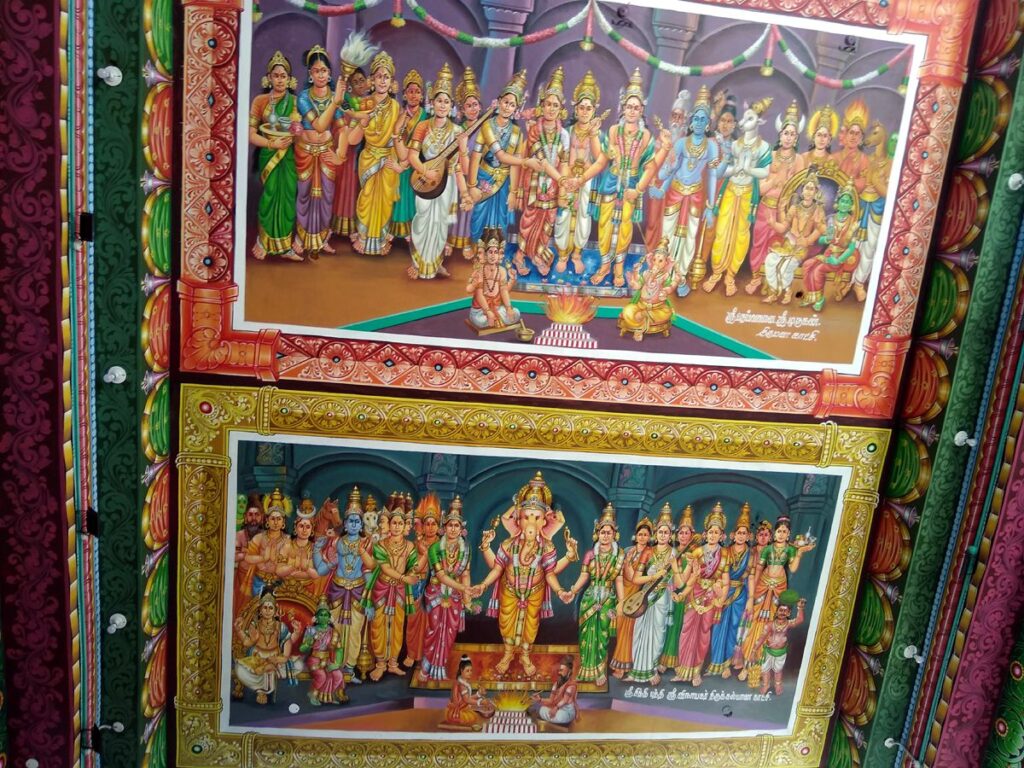
Mythological Significance: As we have explained with the King Nala myth, the temple is closely entangled with Hindu mythology. It is one of the nine Navagraha temples (temples of the nine celestial bodies or planets in Hindu astrology), uniquely famous as the dwelling place of Shani Dev. The existence of Dharbaranyeswarar (Lord Shiva) as the main deity, and Shani Dev as a kind sub-deity, emphasizes a special mythological story wherein Shiva saves his followers from the effects even of mighty planetary deities. The temple is also one of the “Saptha Vidanga Sthalams,” where Lord Shiva has done one of his seven dances. This elaborate mythological fabric gives layers of richness and sanctity to the temple.
Read More>> 3BCE Pathala Sembhu Murugan Temple: Underground Copper Pot
Festivals and Special Days: A Calendar of Devotion
The Thirunallar Temple comes alive during festivals and it attracts thousands of devotees from all over.
Sani Peyarchi (Saturn Transit) Festival: This is, by far, the most important and widely celebrated function at Thirunallar Saneeswaran Temple. Shani Peyarchi is the transit of Saturn from one Zodiac Sign (Rashi) to another. This astronomical movement takes place around every 2.5 years, and every transit is said to have varying impacts on people depending on their birth charts. The Sani Peyarchi festival at Thirunallar is a big event, with elaborate ritual procedures, homams (fire sacrifices), and special abhishekams (ritual bathing) to Lord Dharbaranyeswarar and Lord Saneeswaran.
The temple experiences an unparalleled influx of pilgrims at this time, with devotees approaching to seek blessings to counteract the negative effects of the transit and to bring about beneficial changes. The temple usually extends darshan timings from time to time, even providing 24-hour darshan, due to the overwhelming number of pilgrims.
The temple performs daily worship every day. Six pujas are performed every day, beginning at Usha Kalam (early morning) time at 6:00 AM and ending with Artha Jamam (night) at 9:00 PM. Every puja consists of abhishekam, alankaram (adornment), neivedyam (offering of food), and deepa aradhani (lamp lighting). Saturdays are special for the worship of Lord Saneeswaran as it is his day. Saturdays are very busy days in the temple, with people doing special pujas and offerings to mitigate Shani Dosha.
Other Festivals:
Tamil New Year (Puthandu): In April, with especial processions.
Vaikasi Brahmotsavam: A 18-day festival in the Tamil month of Vaikasi (May-June), culminating in major events such as darshan of Lord to a shepherd.
Nataraja Festivals: Celebrated during Aani (June-July), worshipped as the cosmic dancer Lord Shiva.
Purattasi Poornima (September-October Full Moon): Particular services are conducted to the Emerald Lingam.
Navaratri, Karthikai Deepam, Panguni Uthiram, Deepavali, and Pongal: These festivals of great significance to Hinduism are also celebrated with devotion and special pujas within the temple.
Special Architectural Features and Carvings: A Visual Treat
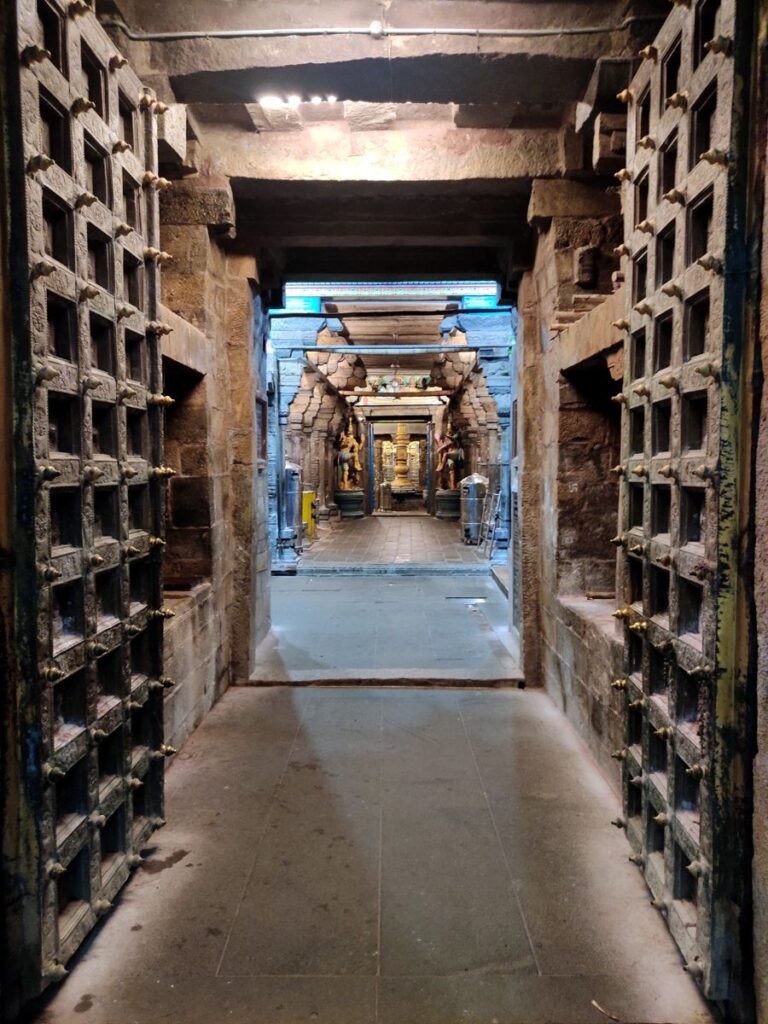
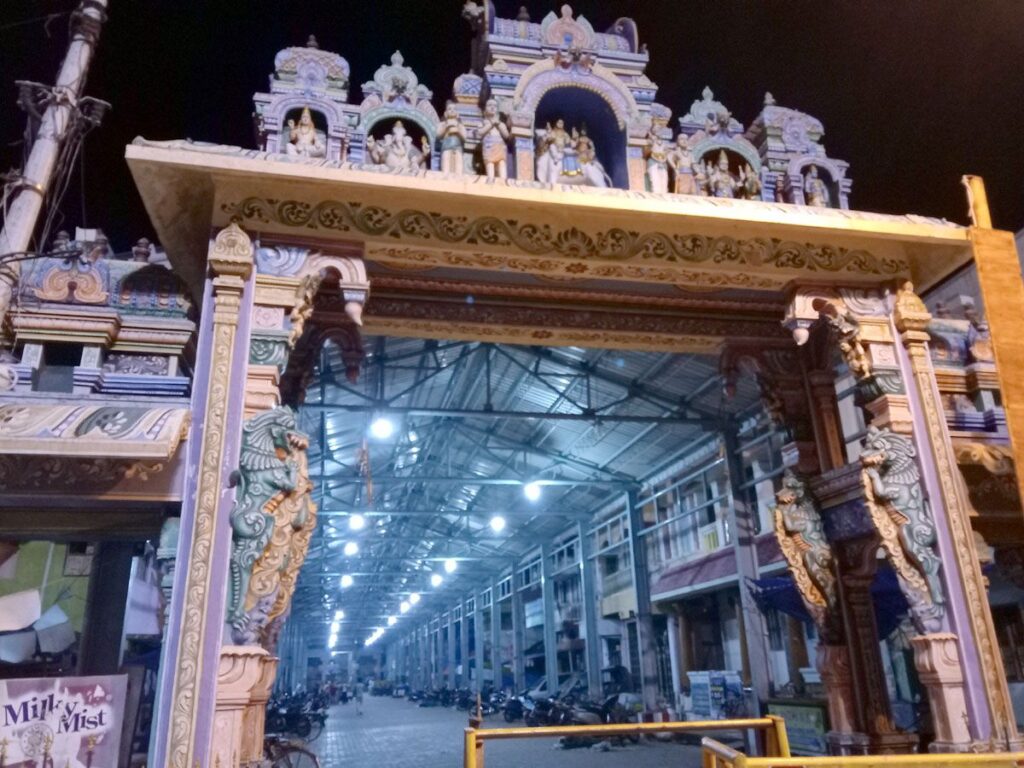
The Thirunallar Temple is a stunning representation of classic Dravidian architecture, a style that is known for its imposing gopurams, ornate carvings, and large courtyards. On entering, you will be awed by the majesty of the temple complex.
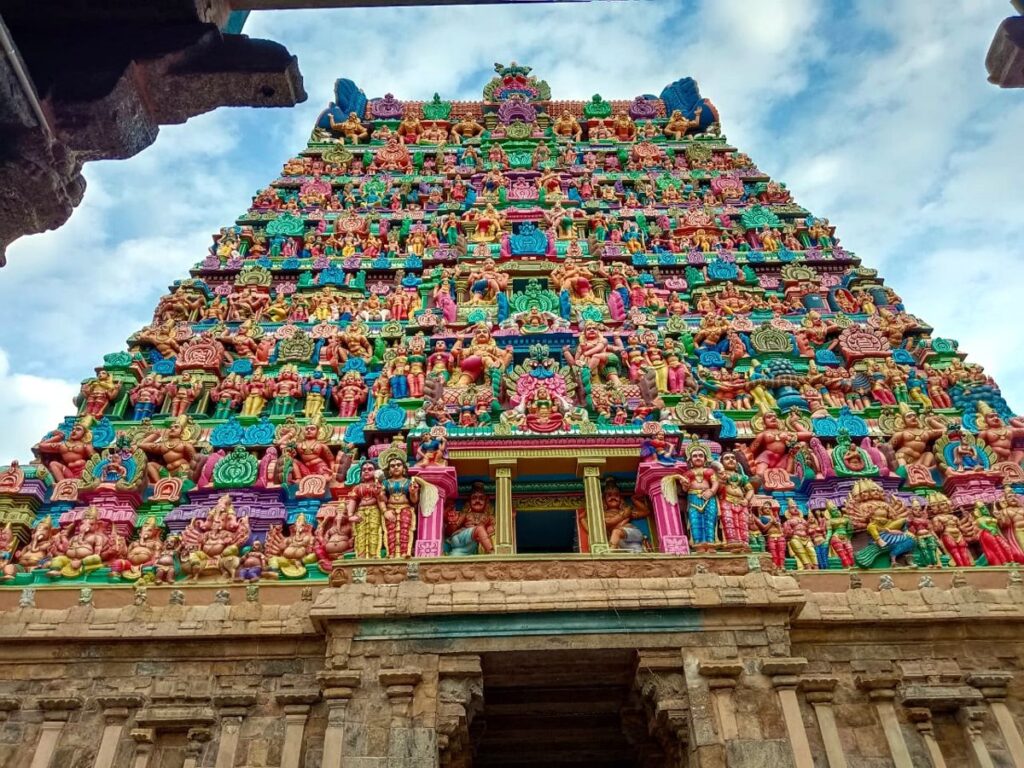
Gopurams: The temple has imposing high gopurams (entrance towers), with the one in the east being the_day’s tallest at a height of 72 feet. The multi-tiered towers have numerous sculptures on them with plenty of deities, mythological images, and divine creatures, all giving the visual discourse of Hindu mythology. Admire the sheer detail and craftsmanship here.
Main Shrine and Mandapams: The central sanctum enshrines Lord Dharbaranyeswarar (Lord Shiva) and his consort Goddess Pranambikai (also referred to as Bhogamartha Poonmulai Amman). The lingam here is a Swayambhu Lingam, i.e., self-manifested and not created by humans, increasing its sanctity. The temple complex also has large mandapams (halls) with intricately carved pillars, each a work of art and each story depicted in its minute details.
Shani Sannidhi: What really distinguishes this temple architecturally is that there is a distinct and dedicated shrine for Lord Saneeswaran. In most other Navagraha temples where Shani Dev is seated, in Thirunallar Saneeswaran Temple Lord Saneeswaran is always worshipped standing, with his typical attributes in his hand. This special portrayal is said to represent his kind nature and his granting of blessings to devotees who ask for it. You’ll see his vehicle’s idol, the Golden Crow, inside his shrine too.
Delicate Carvings: There isn’t a pillar, wall, or niche in the temple that is left unpainted in terms of beautiful stone carvings. They show a variety of Hindu gods and goddesses, celestial bodies, purana scenes, and elaborate floral and geometric designs. They bear a testament to the craftsmanship of the artisans of past years and act as visual aids for the faithful to worship through divine myths. You find yourself strolling through the temple, your eyes wide in admiration of the workmanship and the dedication put into every sculpted piece.
Read More>> Bhoo Varaha Swamy Temple Kallahalli
Myths and Beliefs: The Power of Faith
The Thirunallar Temple is surrounded by a rich tapestry of myths and beliefs that form the basis of its deep significance.
Mitigation of Shani Dosha: The primary belief is that worshipping Lord Saneeswaran here, after taking a dip in the Nala Theertham, can significantly mitigate the adverse effects of Shani Dosha (malefic influence of Saturn) in one’s horoscope. This is why the temple is a magnet for those undergoing periods of “Sade Sati,” “Ashtama Shani,” or other challenging planetary alignments.
Potency of Nala Theertham: Nala Theertham is not ordinary temple tank; it’s a holy pond where bathing is said to wash away one of their sins and ill-fate. The ritual is usually followed by leaving behind old clothes upon coming out of the dip, implying leaving behind the previous sorrows and going for a new beginning.
Gifts to Shani Dev: There are certain gifts offered to Lord Saneeswaran by devotees to placate him. These include burning sesame oil (gingelly oil) lamps, presenting black garments, black sesame seeds (ellu), and cooked rice and sesame powder (ellu sadam). Each gift is symbolic and is considered to take in negative energies and bring in blessings.
The Kind-hearted Shani: Although Shani Dev is usually depicted as a dispenser of stern justice and tribulations, in Thirunallar Saneeswaran Temple, he is thought to be in his kind-hearted form because he has been pacified by Lord Shiva. This affirms the belief that when sincerely worshipped, Shani Dev can bless with grace and cause a person to learn valuable lessons in life through their afflictions. Specific Gains through Prayers: Apart from Shani Dosha relief, people pray for many things, such as calm marriage unions, recovery from illness, attaining oratory skills, and mental calmness. The idea is that the spiritual power of Dharbaranyeswarar and Saneeswaran will create positive changes in life.
Thirunallar Saneeswaran Temple: Timings and Rituals
Knowing the temple timings is of great significance to ensure a smooth pilgrimage. The Thirunallar Temple also functions with fixed timings for darshan and pujas.
Morning Timings: 6:00 AM to 12:30 PM
Evening Timings: 4:00 PM to 8:30 PM
Saturdays, when it’s especially busy, have the timings extended slightly:
Morning Timings: 6:00 AM to 12:30 PM
Evening Timings: 5:00 PM to 9:00 PM
It’s always best to look on the official temple site or ask locally for any slight variations, particularly when there are big festivals such as Sani Peyarchi where times are usually increased considerably.
Read More>> Kedaragouri Temple Bhubaneswar
Why This Place is Very Special and Important Poojas Conducted
Thirunallar Temple is very significant to numerous people for a variety of reasons and is hence an especially special pilgrimage site:
The Sole Temple in which Shani Dev is Merciful: This is perhaps the biggest reason why it holds such significance. In other temples where Shani Dev may be a fearsome god, at Thirunallar, he is thought to be in his merciful form, eager to ease the problems of his followers. This singular factor attracts millions hoping to find relief from the problems brought about by Saturn’s shadow.
Direct Relief from Shani Dosha: For those suffering from Shani Dosha (malefic effects of Saturn), Sade Sati (7.5-year duration of Saturn’s influence), or Ashtama Shani (Saturn in the 8th house), Thirunallar Saneeswaran Temple is the first and best cure. The rituals executed here are specially prepared to pacify Shani Dev and lessen his ill effects.
The Sacred Nala Theertham: The existence of Nala Theertham, bearing the deep history of the redemption of King Nala, adds more spiritual value to the temple. A purifying dip in this tank is part of the pilgrimage routine, representing washing away of afflictions and sins.
Lord Shiva as Dharbaranyeswarar: The presiding deity, Dharbaranyeswarar (Lord Shiva), also finds great worship. The faith that Lord Shiva himself stepped in to safeguard King Nala from the displeasure of Shani Dev adds more vigor to this divine place. The devotees usually pray to Lord Shiva before visiting Lord Saneeswaran.
Special Poojas Performed:
Apart from the usual daily pujas, a few special pujas are conducted in order to seek blessings from Lord Saneeswaran:
Abhishekam using Sesame Oil (Ellu Ennai): This is a very popular and strongly recommended pooja. People offer sesame oil for the abhishekam (bath) of Lord Saneeswaran. This is supposed to calm him down and lessen his ill effects.
Navagraha Homam: Even though Lord Saneeswaran is the primary object of worship, a Navagraha Homam (fire ritual for all nine planets) is also practiced. This assists in balancing the energies of all the planets in one’s birth chart.
Lighting of Lamps (Deepam) with Gingelly Oil: Lighting lamps using gingelly oil (sesame oil) before Lord Saneeswaran’s altar is a strong prayer, said to remove darkness and bring in positive energy.
Purification with Sesame Seeds and Black Cloth: Devotees make a practice of offering black cloth and black sesame seeds to Lord Saneeswaran. These are ritual offerings to calm him down and indicate assimilation of negative forces.
Ashtothra Archana and Sahasranama Archana: These are formal chanting poojas, where Lord Saneeswaran’s names (108 names for Ashtothra and 1000 names for Sahasranama) are chanted while laying flowers or holy powders. These archanas can be reserved for periods, such as every Saturday of a year, or on one’s star birthday.
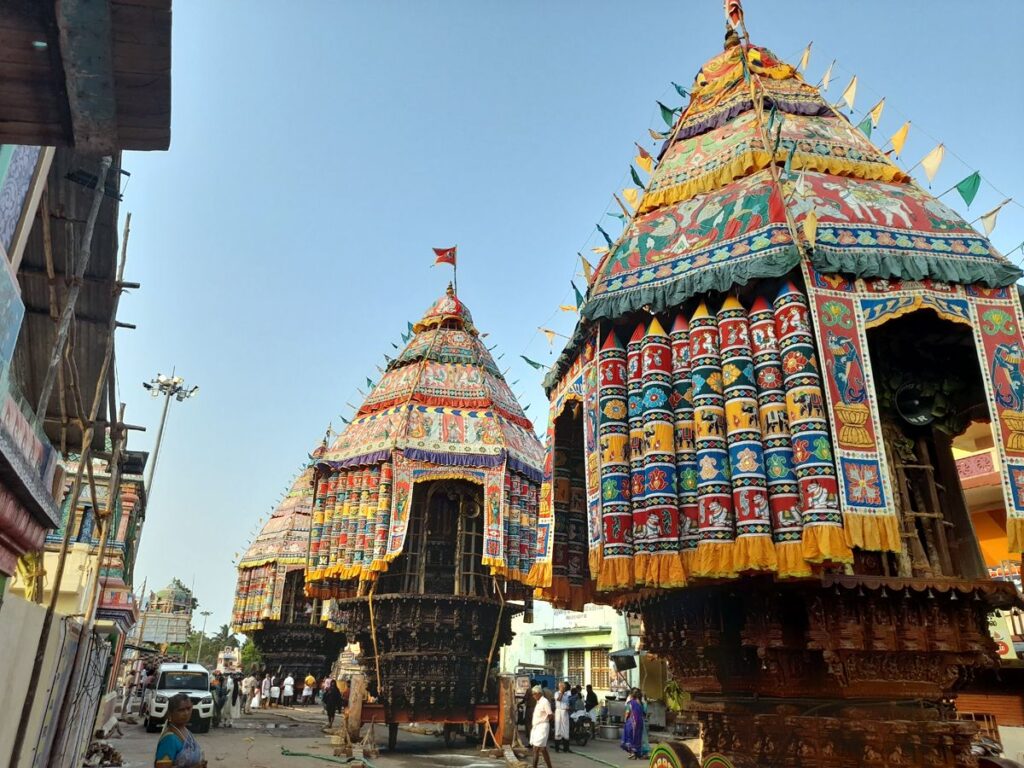
Lord Saneeswara Baghawan Procession on Golden Crow Vahanam: This is a majestic ceremonial procession in which the idol of Lord Saneeswaran is taken in a procession on his golden crow chariot. This is a part of grander festivals and is a spectacle to watch, felt to be most benevolent in its blessings.
Laksharchana to Lord Saneeswara Baghawan: Chanting the Lord Saneeswaran’s one lakh (100,000) times, a very powerful ritual for immense blessings.
Read More>> Garbarakshambigai Temple: Secret of Fertility & Safe Birth
Crowded Days: A Sea of Devotion
Being a guide, I can inform you that Thirunallar Temple is always packed but there are some days and some periods which witness an extraordinary influx of pilgrims:
Saturdays: Saturdays are the busiest of all days at Thirunallar Saneeswaran Temple. Several devotees go out of their way to visit on Saturdays to conduct pujas and take Lord Saneeswaran’s blessings, considering it the most auspicious day for him. Brace for longer lines and busier temple premises.
Sani Peyarchi Festival Days: The preceeding days and the day following a Sani Peyarchi (Saturn transit) are extremely busy. Lakhs, even thousands, of pilgrims from all over India and the world throng to Thirunallar during these times. Arranging for accommodation and transportation can be tough, and the temple atmosphere is very lively and charged.
Tamil New Year and Other Major Festivals: While not as crowded as Sani Peyarchi or Saturdays, major festivals like Tamil New Year, Pongal, and Deepavali also attract a significant number of pilgrims.
Tips for Crowded Days:
Arrive early, especially on Saturdays.
Be prepared for long queues.
Consider visiting on weekdays if possible for a more serene experience.
Book accommodations well in advance if traveling during Sani Peyarchi. For more inquiries, visit the temple’s official website.
Sites to See Around Thirunallar Temple: Traversing the Sacred Terrain
Your visit to Thirunallar Temple can be a subset of a greater religious pilgrimage, as the area around Pondicherry and Karaikal is scattered with scores of important Hindu temples. Following are some sites you may want to see:
Karaikal Ammaiyar Temple, Karaikal: Residing in Karaikal itself, this temple is devoted to Karaikal Ammaiyar, one of the 63 Nayanmars, and is easily accessible.
Nagore Dargah, Nagore: Although a Muslim shrine, Nagore is comparatively near and famous for its peaceful mixing of religions.
Navagraha Temples in Tamil Nadu: Temple of Thirunallar is one of the nine Navagraha temples. In case you wish to visit more, plan a circuit. A few other famous Navagraha temples are:
- Suryanar Kovil (for Surya – Sun God)
- Kanjanur (for Sukra – Venus)
- Thingalur (for Chandra – Moon God)
- Alangudi (for Guru – Jupiter)
- Thirunageswaram (for Rahu)
- Keezhaperumpallam (for Ketu)
- Vaitheeswaran Koil (for Sevvai – Mars)
- Thiruvenkadu (for Budhan – Mercury)
Most pilgrims prefer to remain in Kumbakonam, which is a convenient base to visit these Navagraha temples.
Read More>> Shani Shingnapur temple near Shirdi
Accommodation Options: A Home Away from Home
Though Thirunallar is a small village, there are various accommodation facilities for pilgrims.
Near the Temple:
RK Resorts: A highly recommended place with comfortable stays.
Chandrodayam Residency: Another recommended choice with good service.
Bliss – Family Home Stay: For pilgrims who want a homier experience.
Subasree Cottage & Udhayam Residency: Budget-friendly options.
Karaikal: As the district headquarters and barely 7-8 km from Thirunallar, Karaikal has more options ranging from budget guesthouses to mid-range hotels. This is a decent option if you like a bit more developed town with more facilities.
Kumbakonam: As you can see, if you are going to visit more than one Navagraha temple, it makes sense to stay in Kumbakonam (approximately 52 km from Thirunallar), as it has a greater variety of hotels and is well connected.
Puducherry (Pondicherry): If you have a longer itinerary and wish to experience a changed cultural atmosphere, Pondicherry (some 135 km away) has great boutique hotels, guesthouses, and resorts, but longer travel times to Thirunallar.
It’s always better to book your stay in advance, particularly during peak season and Sani Peyarchi times, since rooms get booked fast.
Read More>> Most Powerful Subramanya Swamy Temple at Thiruchendur
How to Reach the Temple: Your Travel Guide
Reaching Thirunallar Saneeswaran Temple is not too difficult, and several modes of transport connect it to the major cities.
By Air: The closest international airport is Tiruchirappalli International Airport (TRZ) at about 168 km from Thirunallar. A taxi or bus from Trichy can take you to Thirunallar. Another alternative is Chennai International Airport (MAA), which is more distant (about 300 km) but has better flight connections.
By Train: The closest railway station to Thirunallar is Nagore Railway Station (NCR), around 10 km away. Nagore is itself well-linked to important towns and cities of Tamil Nadu. From Nagore, you can reach Thirunallar by local bus or auto-rickshaw. Another important railway station close by is Mayiladuthurai Junction (MV), from which you can get frequent buses or taxis to Thirunallar.
By Road: Thirunallar is easily accessible by road to other cities in Tamil Nadu and Puducherry.
From Karaikal: It’s just a 7-8 km drive. There are available local buses, auto-rickshaws, and taxis.
From Kumbakonam: About 52 km, with frequent bus facility.
From Thanjavur: About 100 km, which can be reached by bus or taxi.
From Puducherry: About 135 km, with frequent state transport and private buses.
If you are traveling by car, the roads are good, so it’s a comfortable drive. Pilgrims prefer private taxis or tour buses, particularly if they are visiting more than one Navagraha temples.
Read More>> Jwala Ji Temple Jwalamukhi Kangra
FAQs about Thirunallar Temple: Your Questions Answered
As a guide, I experience the same questions repeatedly, so let’s try to answer some of the frequently asked questions regarding Thirunallar Temple:
Q: What is the prime importance of Thirunallar Temple?
A: The Thirunallar Temple is primarily significant for its association with Lord Saneeswaran (Saturn) and its power to mitigate the adverse effects of Shani Dosha in one’s horoscope. It is also the abode of Lord Dharbaranyeswarar (Lord Shiva).
Q: Is it necessary to take a bath in Nala Theertham?
A: Although not necessarily essential for darshan, holy bath in the Nala Theertham is an extremely significant ritual and essential pilgrimage activity at Thirunallar Saneeswaran Temple. It is said to wash away their bad luck.
Q: What can I present to Lord Saneeswaran?
A: Common offerings include sesame oil (for lamps or abhishekam), black sesame seeds (ellu), and black cloth. You can also offer ellu sadam (rice mixed with sesame powder).
Q: Can I perform pujas myself, or do I need a priest?
A: Although you can definitely provide prayers individually, for particular abhishekams or elaborate pujas such as Ashtothra or Sahasranama Archana, it’s advisable to take the services of the temple priests. There are counters where one can book these pujas.
Q: Can photography be done within the temple?
A: Usually, there is a ban on photography within the main temple complex, particularly in the sanctum sanctorum. It is always wise to follow temple rules and check if not sure.
Q: How long does a darshan and rituals take for the whole thing?
A: On an ordinary weekday, you could finish your darshan and simple rituals in 1-2 hours. But on Saturdays and more so at the time of Sani Peyarchi, it would take many hours, even half a day or more, because of the numerous people.
Q: Are there online bookings for pujas?
A: There are third-party services that allow online bookings of puja and prasadam delivery. For booking directly with temples, it’s usually done on-site. It’s best to verify the official temple website for the most current and correct information on any available online services.
Q: What is the best time to go to Thirunallar?
A: October to March is the best time to go as they are cooler months with good weather. But if you have a particular desire to see the Sani Peyarchi festival, you will have to schedule your trip around it (its dates that come every 2.5 years).
My dear friends, a visit to Thirunallar Temple is not merely a journey; it’s an experience that reaches out to your soul. It’s one of faith, a search for peace within, and a proof of the long-enduring strength of some very old beliefs. As you leave the temple, I pray you take with you a renewed sense of hope, inner strength, and the reassuring realization that even the most powerful of heavenly influences can be overcome through genuine devotion. May Lord Dharbaranyeswarar and Lord Saneeswaran guide your way!