Thuravoor Temple of 2 Powerful Deities Narasimha & Sudarsana
Thuravoor Temple, popularly referred to as Thuravoor Narasimha Temple is situated in a picturesque village of the same name in the Alappuzha district of Kerala. It’s just not very far from Kochi city, the hubbub of which is somewhere 25 kilometers to the north, situated right alongside the main road, NH-47. You can see its imposing beauty from the road itself!
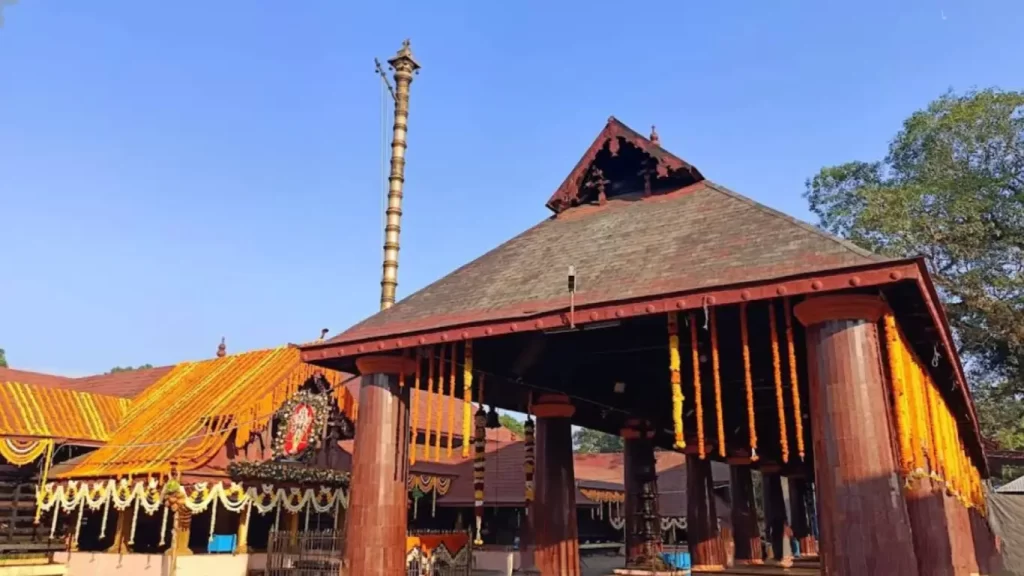
Now, just close your eyes for a second and visualize a location where gods and goddesses are said to reside, where there is a tale for every stone, and where the very air is holy. That is precisely what the Thuravoor Temple is like. It is not only one temple, but two great temples combined into one large complex, making it really special and rather unique! One of them is reserved for Lord Sudarsanamoorthy, and the other, the one that we’ll be writing a lot about, is for Lord Narasimhamoorthy who is fierce yet loving.
Contents
- 1 Thuravoor Temple History: A Walk Through Time
- 2 Legend of the Temple: Stories from the Past
- 3 Cultural, Spiritual, and Mythological Importance of the Temple
- 4 Festivals and Special Days: A Time for Joy!
- 5 Exclusive Architectural Designs and Sculptures: A Treat for the Eyes
- 5.0.1 Vembinkulangara Sri Mahavishnu Temple
- 5.0.2 Chelamattom Sreekrishna Swami Temple: Powerful Temple for Ancestors
- 5.0.3 Kalluthipara Temple: Lord Krishna Divine Footprint in Stone!
- 5.0.4 Thuravoor Temple of 2 Powerful Deities Narasimha & Sudarsana
- 5.0.5 Nelluvaya Sree Dhanwanthari Temple
- 5.0.6 3000 yr Old Sacred Neerputhoor Shiva Temple Water Encircled
- 6 Myths and Beliefs Thuravoor Narasimha Temple: Whispers of Devotion
- 7 Thuravoor Temple Timings: When to Go
- 8 Places to Visit Near Thuravoor Temple: Explore More!
- 9 Accommodation Options: Where to Stay
- 9.0.1 Shree Stambheshwar Mahadev Temple
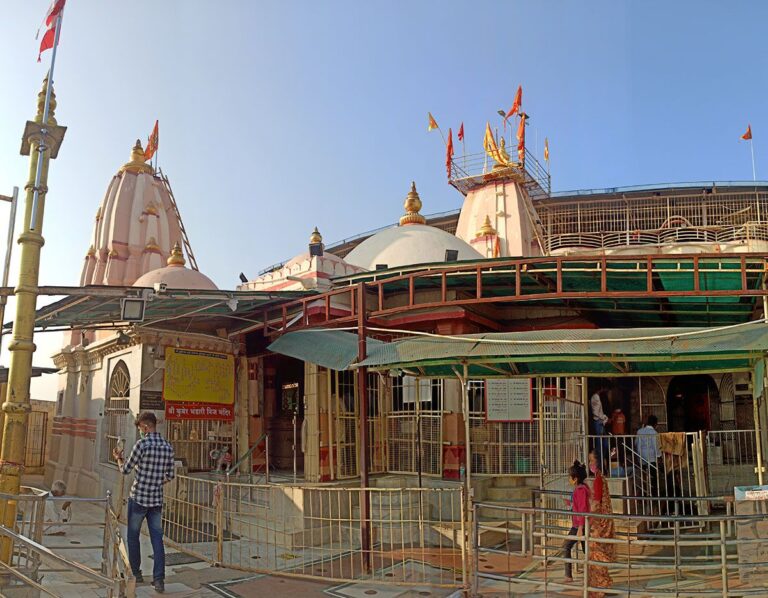
- 9.0.2 Kuber Bhandari Temple: 2500-Year-Old Legacy
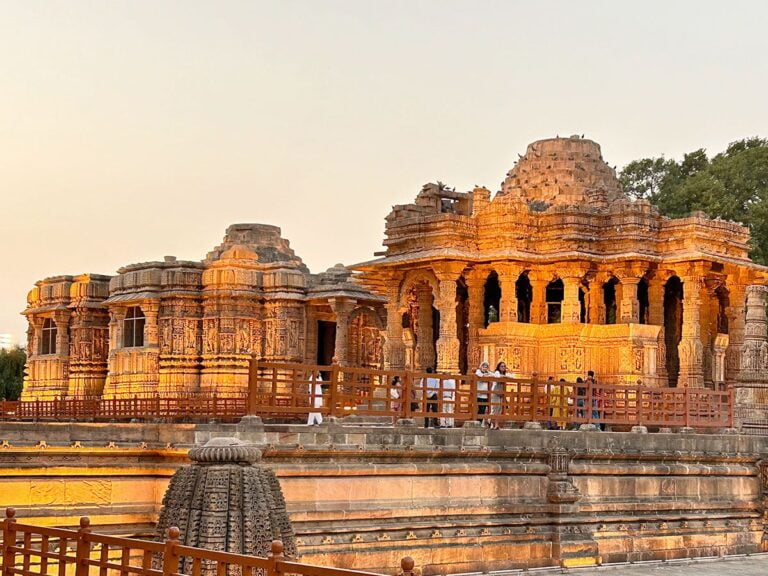
- 9.0.3 Modhera Sun Temple: Unveiling 11th CE Sunken City of Light
- 9.0.4 Nageshwar Jyotirlinga Dwaraka: 7th CE Temple with Divine Powers
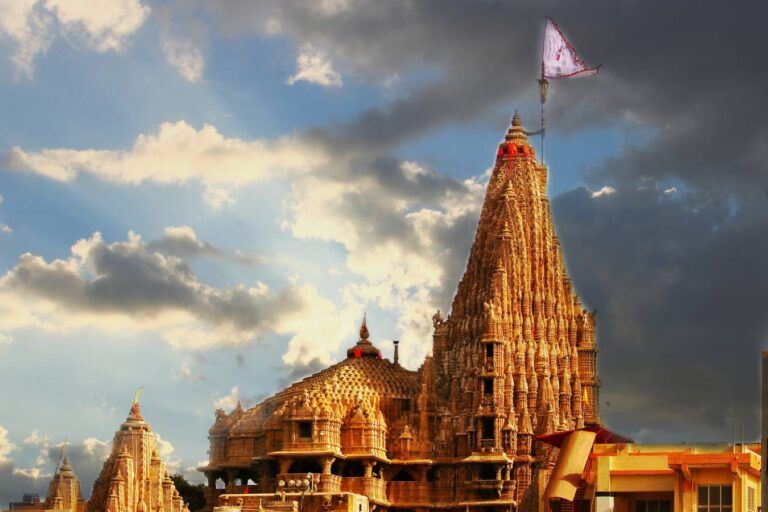
- 9.0.5 2500 Years Dwarkadhish Temple: Where Miracles Still Happen
- 9.0.6 Prabhas Shakti Peeth Chandrabhaga
- 10 How to get to the Temple: Your Pilgrimage to Thuravoor
Thuravoor Temple History: A Walk Through Time
Let’s start our journey by traveling back in time, way, way back! The Thuravoor Temple is really, really old, so old that some sections of it are more than 1300 years old! Can you believe it? That’s even older than your great-great-great-grandparents!
The section of the temple in honor of Lord Sudarsanamoorthy is considered to be the oldest. Nobody has a clear history of when it was constructed, but some enlightened scholars consider that it could even go back to the Treta or Dwapara Yugas, which are very old ages in Hindu mythology.
Then, during the 7th century AD, another stunning temple was constructed to the side of it – our Thuravoor Narasimha Temple. It was constructed in the period of a Chera King by the name of Keralendran, who had a very astute teacher, a Tulu Brahmin priest and scholar by the name of Muringottu Adigal. So, you see, this is a holy place for a very, very long time, with kings and wise men visiting here to obtain blessings.
It’s incredible to imagine that two large, significant temples are constructed so near to one another, occupying a single area. They say it’s like two strong divine forces colliding and creating an even more sacred place. Apart from these two primary temples, there are also smaller temples for other gods and goddesses such as Lord Ganapathy, Lord Sastha, and Goddess Bhagavathy, and it’s an absolutely divine neighborhood!
Read More>> Murudeshwar Temple Karnataka: India’s 2nd Massive Shiva Statue
Legend of the Temple: Stories from the Past
All ancient temples have a great story, and the Thuravoor Narasimha Temple has a great one too! It’s like a fairy-tale story in a storybook.
Long, long ago, there was a very religious priest from Angamally who went on a pilgrimage, a sacred journey, all the way to Varanasi, a very holy city in North India. While he was there, something wonderful occurred! He noticed a very bright, shining beam of light, like a huge flashlight beam, descending from the sky and traveling to the southwest. The priest, who was a very spiritual man, felt attracted by this light and followed it.
The light traveled a long distance and ultimately landed on the earth and vanished in the ground in a tiny village in Kerala named ‘Poothanilam’. The priest, in amazement, began digging at that same location. And what did he dig up? A very exquisite idol of Lord Mahavishnu, sculpted out of a very rare black stone named Anjanakallu!
As he was slowly drawing the idol out of the earth, the heavens themselves rejoiced! There was a burst of fireworks in the atmosphere, illuminating all, and a deafening roar, as the gods were clapping! This stunning idol came to be known as Sree Narasimhamoorthy, the ferocious and mighty half-man, half-lion incarnation of Lord Vishnu.
The priest then constructed a special small house, a ‘Sreekovil’, for this idol just beside the current Thuravoor temple of Lord Sudarsanamoorthy. It’s said that where Lord Narasimha currently stands, Goddess Bhagavathy had an idol there originally. But, with utmost respect, the Bhagavathy idol was shifted a bit to the west, according to ancient traditions. Even now, if you notice carefully at the large, lovely bronze lamp standing in front of the Narasimhamoorthy temple, you can see the face of a lion upon which is mounted the Goddess Bhagavathy, reminding us of this old association.
Since there were so many gods and goddesses here, folks began referring to this location as ‘Surapuri’, or “city of gods.” Isn’t that a sweet title?
Another fascinating anecdote about this Thuravoor temple is of the ancient Travancore and Cochin kings. You see, the Thuravoor Mahakshethram actually belonged to the Cochin region. But for some political maneuvers, it fell under the dominion of Travancore. There was one special pact though: if a king from Travancore ever set foot directly on temple property, the temple would at once revert to Cochin!
So, for ages and ages, no king of Travancore came to the temple. But then, in 1951, when Travancore and Cochin united, the Maharaja Sree Chithira Thirunal came to the Thuravoor Narasimha temple. To keep with the old tradition, he didn’t tread on the ground straight away; he walked on a soft carpet right up to the temple! What a clever trick to keep with tradition!
Read More>> Mayapur Temple of the Vedic Planetarium
Cultural, Spiritual, and Mythological Importance of the Temple
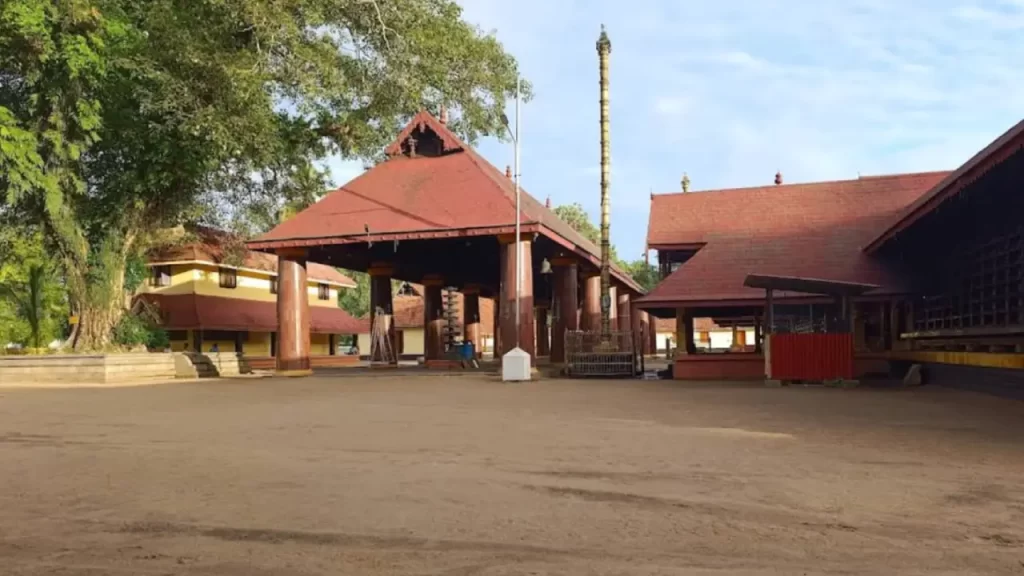
The Thuravoor Temple is more than a worship site; it’s a living example of Kerala’s rich spirituality and culture. It’s a highly significant pilgrimage site, i.e., a large number of devotees visit this temple seeking blessings and peace.
Spiritual Significance: Having both Lord Sudarsanamoorthy and Lord Narasimhamoorthy in the same complex is extremely rare. Lord Narasimha is referred to as the fierce savior, who appeared to rescue his devotee Prahlada from demon Hiranyakashipu. He is the embodiment of divine protection and power, and one prays to him for bravery, to vanquish challenges, and protection from evil. The Sudarshana Chakra, the mighty discus of Lord Vishnu, also symbolizes protection and the ability to annihilate negativity and usher in positive change. So, when you come here, you receive a deep feeling of divine energy and protection.
Mythological Associations: Lord Narasimha’s history is one of the most well-known myths in Hindu mythology, as it occurs in numerous Puranas such as the Vishnu Purana and Bhagavata Purana. He is the fourth incarnation of Lord Vishnu. If you pay close attention, you can overhear priests or elderly devotees discussing how young Prahlada was rescued by Lord Narasimha when he never stopped uttering the name of Lord Vishnu despite his cruel father Hiranyakashipu attempting to silence him.
Hiranyakashipu was given a special boon that no human being or animal could kill him indoors or outdoors, during day or night. Therefore, Lord Vishnu assumed the avatar Narasimha, half-man and half-lion, and slew Hiranyakashipu at sunset, on the doorway of his palace, with his razor-sharp nails – granting the boon but eliminating evil.
The Sudarshana Chakra also boasts some incredible history. It appears in the Rigveda as the wheel of time of Vishnu. In the Mahabharata, Lord Krishna employs it to darken the sun in battle. And in the Puranas, it’s said that the Sudarshana Chakra was made from the splendor of the sun god Surya by the divine architect Vishvakarma. It’s even believed that this chakra was used by Lord Vishnu to cut the body of Sati into 51 pieces, creating the famous Shakti Peethas across India!
Cultural Harmony: Thuravoor Narasimha temple complex is a perfect example of the stunning confluence of various deities being revered in equal measure, generating a harmonious atmosphere. It’s a spot where you can sense the time-honored customs of Kerala pulsating with life.
Read More>> Masani Amman Temple Coimbatore
Festivals and Special Days: A Time for Joy!
The Thuravoor Temple comes alive at its festivals! Picture a location adorned with flowers, lights, and music ringing through the air along with the smiling voices of people.
The grand festival of Deepavali Valiyavilakku is the principal one here, lasting for nine days. Deepavali, or Diwali, is the festival of lights, and it’s celebrated here with a lot of fervor. You’ll notice thousands of lights lit, and the Thuravoor Narasimha temple resembles a starry wonderland!
Some of the significant one-day festivals include:
Ashtamirohini: This is Lord Krishna’s birthday, and it’s a day of tremendous joy and piety.
Dwadashi: Particular Dwadashi days (the twelfth day of the fortnight) during the Malayalam months of Vrischikam and Dhanu are significant.
Thiruvathira: This day is specially dedicated to Lord Shiva, and also special prayers are offered.
Vishu: Malayalam New Year, a festival of prosperity and new starts.
Makarasankranthi: A festival of harvesting, celebrated with much enthusiasm.
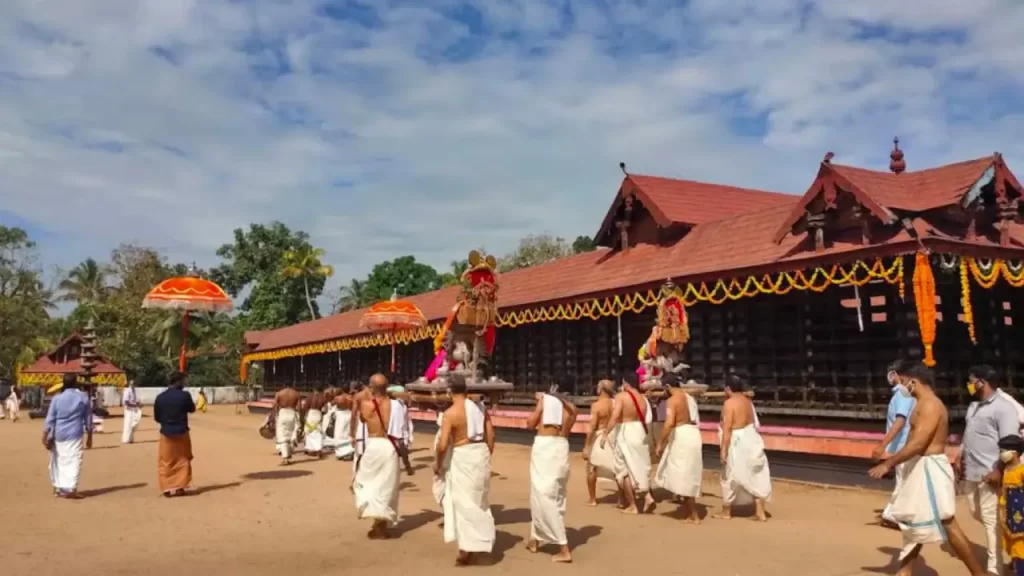
Pathamudayam: This is a very special day since the idols of both the Sudarsanamoorthy and Narasimhamoorthy temples are brought out in a grand procession right up to the site where the idol of Lord Narasimha was originally discovered! It’s almost like recapturing the ancient myth!
These festival days, particularly Deepavali, the Thuravoor Narasimha temple is extremely, extremely busy! Thousands of visitors from all over Kerala and even other places visit to see the splendor and get their blessings. So, if you need the strong energy of the festival, these are the times to go, but expect large crowds! If you’d rather go and see it when it’s quiet, early morning or late evening on a normal day is ideal.
Read More>> Enchanting Chidambaram Nataraja Temple: 5 Formless Akasha Lingam
Exclusive Architectural Designs and Sculptures: A Treat for the Eyes
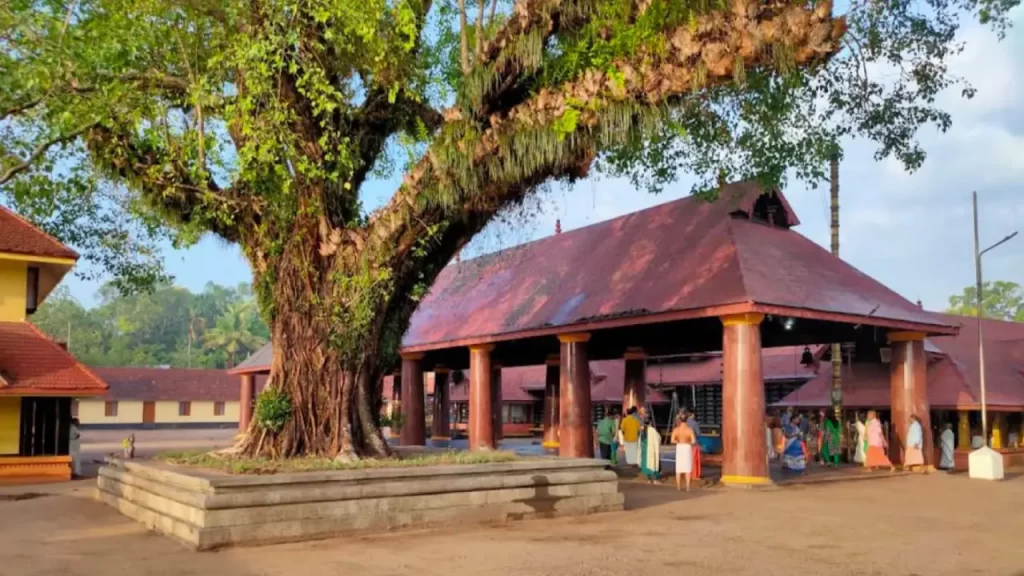
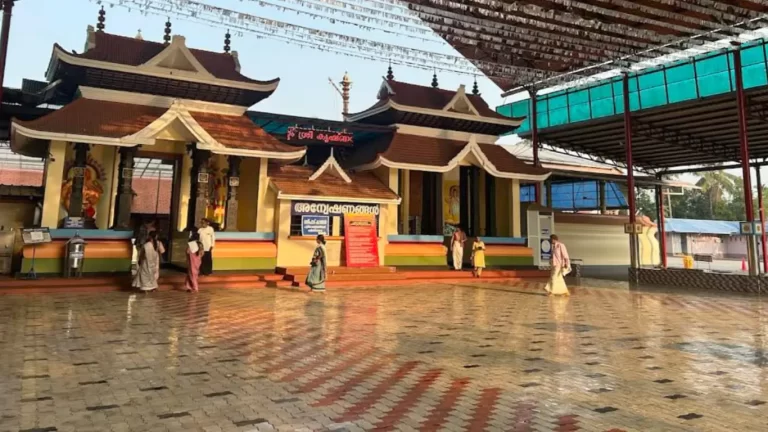
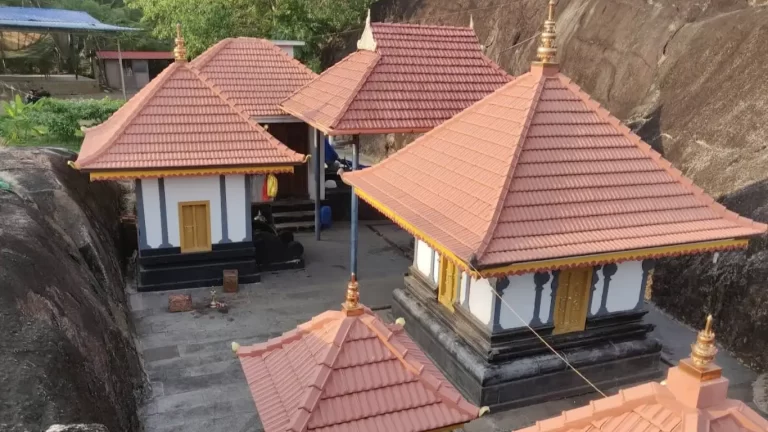
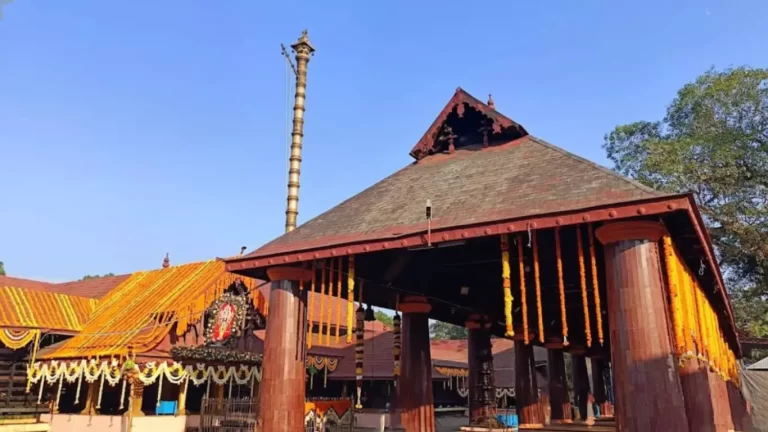
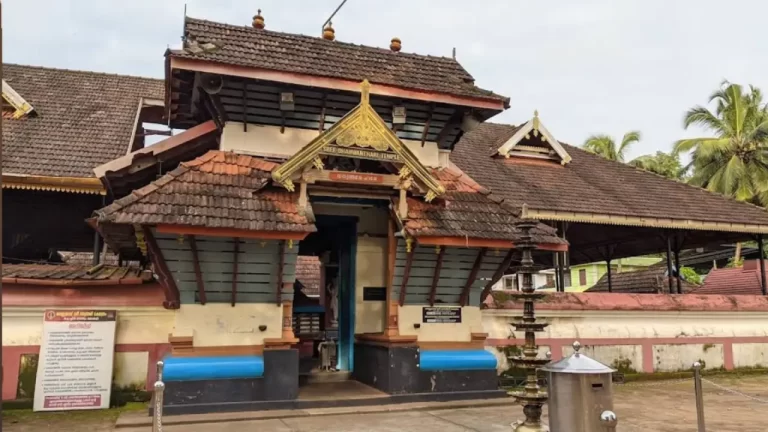
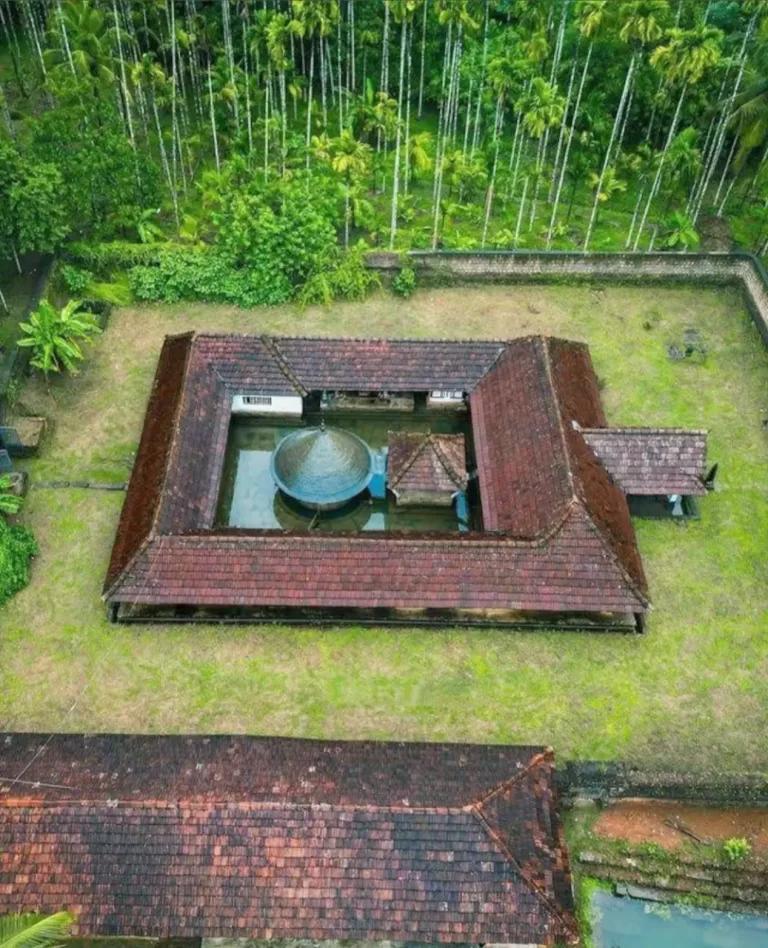
Prepare to be left awestruck by the architecture of the Thuravoor temple! The Thuravoor Mahakshethram is a work of wonder indeed. What sets it apart is that it features double Sreekovils (the central sanctums where the idols are housed) within a single ‘Nalambalam’ (the rectangular structure covering the sanctums). One is square in shape, and the other is round – this is really very rare and lovely!
Lord Sudarsanamoorthy Shrine: This features a round Sreekovil, which is considered extremely old.
Lord Narasimhamoorthy Shrine: This features a square-shaped copper-roofed Sreekovil, constructed using sturdy granite.
If you take a stroll around, notice the intricacies closely. The ‘Namaskara Mandapam’ (hall where devotees offer prayers) is adorned with lovely lotus flowers. The carvings on the granite pillars of this mandapam are just too imaginative! You may even find a stone pillar bearing Deepalakshmi’s image, a goddess carrying a lamp.
Sreekovil’s outer walls are more like a humongous art gallery! They are adorned with stunning sculptures and murals. Kerala’s traditional temple architecture shines brightly here. You’ll see sculptures of elephant heads all around the Sreekovil walls, some with their trunks down and some raised, which adds a lovely rhythm. The compound wall also has enchanting murals, like a painting of Lord Mahavishnu resting on the cosmic serpent Anantha. You could even see pictures of Nataraja (Lord Shiva in the form of the cosmic dancer), Indra with his thousand eyes, and several episodes of the Ramayana.
One interesting fact about the Narasimha idol here is that it’s standing in a position. Most Narasimha idols are typically seated. This makes the Thuravoor Narasimha Temple idol even more special! Some assume that it was in the form of a Mahavishnu statue standing from the beginning, and through all the strong prayers and rituals, it became seen as the ferocious Ugra Narasimha.
Art enthusiasts from far and wide come to visit this temple solely to learn about these invaluable sculptures and relief pieces. You can even spot nine various avatars of Narasimha here, including Ugra Narasimha, Lakshmi Narasimha (Narasimha with Goddess Lakshmi), and Yoga Narasimha (Narasimha sitting in a meditating pose). Don’t miss out on spotting carvings of Khadgi (a warrior) on a decorated horse and oratory scenes from the epic Ramayana. Every nook and cranny contains a slice of history and art!

Myths and Beliefs Thuravoor Narasimha Temple: Whispers of Devotion
The Thuravoor Temple is full of myths and beliefs that have been transferred generation after generation.
Power of the Gods: Most of the devotees feel that the deity presiding over here, Lord Narasimha and Lord Sudarsana, is very powerful and can grant wishes and safeguard their devotees in any way. Devotees visit here seeking solutions to their issues, blessings upon their families, and protection from evil energies.
Distinct Priestly Practice: It is said that priests performing the primary poojas here need to be ‘brahmachari’ (unmarried) and, in certain traditions, are forbidden from venturing outside the Thuravoor temple complex during their tenure of service. This reflects the sheer purity and commitment needed to serve such mighty gods.
Main Offerings: Among the most widely popular offerings here are ‘Vedi Vazhipadu’ (offering firecrackers, representing the removal of evil and negativity) and ‘Palpayasam’ (sweet milk pudding), which is a favorite offering to Lord Vishnu.
Temple Tank’s Calming Effect: Thuravoor temple boasts an enormous temple tank (a big pond) of 100 x 80 meters, which stands right in front of the Narasimhamoorthy shrine. It is popularly believed that the clean, cool, and peaceful water of the tank soothes the ferocity of Lord Narasimha. It is a common practice among devotees to take a dip in this tank before entering the temple, as it is very auspicious.
These beliefs contribute to the religious sheen of the Thuravoor Temple, transforming it from a destination to a destination to experience religion and tradition.
Read More>> Airavatesvara Temple Darasuram
Thuravoor Temple Timings: When to Go
If you are organizing your visit, the timings are helpful so that you may get the best out of your journey. The Thuravoor Temple is usually open:
Morning: 4:10 AM to 11:30 AM (on Thursdays and Sundays, it is till 12:30 PM)
Evening: 5:30 PM to 7:30 PM
It’s always better to reach early morning to see the peaceful environment and observe the morning rituals, which are very beautiful. The evenings too are quiet, particularly during the lamp-lighting ceremonies.
Read More>> Bhoo Varaha Swamy Temple Kallahalli
Places to Visit Near Thuravoor Temple: Explore More!
Kerala is a temple land with natural beauty, and so while you are at Thuravoor Narasimha Temple, there are plenty of other great places to visit around there:
Purandareswaram Mahadevar Temple: Also located in Thuravoor, this is a temple for Lord Shiva. This too is an ancient and sacred place where you can feel the divine presence of Lord Shiva. They also observe Narasimha Jayanthi here with great dedication!
Kottayil Kovilakam: Approximately 5 km from here, this is a historically and culturally important location. It used to be a palace of the royal members and now boasts the elaborate style of architecture for which Kerala is renowned.
Kodungallur Bhagavathy Temple: Extremely popular temple dedicated to Bhadrakali, a fierce form of Durga. It’s supposed to be the head temple of 64 Bhadrakali temples in Kerala and maintains ancient Shaktyeism traditions. The Bharani festival celebrated here is a grand one.
Beaches!: If you’re a sea lover, you’re blessed! Thuravoor is near some lovely beaches such as Andhakaranazhi Beach, Thyckal Beach, and Arthunkal Beach. Think of the refreshing wind and the audio of waves after a pious temple tour!
Backwater Experiences: Kerala is renowned for its backwaters. Experience beautiful boat cruises in the surrounding backwater villages, observing the peculiar lifestyle, coir production, and green surroundings. It’s a really peaceful experience.
Kakkathuruthu Island: A picturesque island renowned for its beautiful sunsets, particularly if you’re a birdwatcher and nature lover.
These spots combine spiritual peace and natural beauty, so your trip will be even more memorable.
Read More>> Chamundeshwari Temple Mysore: Architectural Marvel & Spiritual Wonder
Accommodation Options: Where to Stay
As Thuravoor Temple is nearby Kochi and Alappuzha, you have a number of choices for accommodation, based on your budget and preference.
Hotels in Kochi: Kochi, as a major city, offers a multitude of hotels ranging from luxury resorts such as the Kochi Marriott Hotel and Grand Hyatt Kochi Bolgatty to affordable choices. These are roughly 25-30 km away, so you will require transport to get to Thuravoor.
Hotel options in Alappuzha (Alleppey): Alappuzha, famous for its backwaters, also has other hotels such as houseboats and resorts that can offer a memorable stay experience. It is also within short driving distance from Thuravoor.
Homestays and Guesthouses: Near Thuravoor, you can also have smaller guesthouses or homestays that will offer you a more local and intimate experience. You can locate them on sites such as Expedia and Trip.com.
It’s always best to pre-book your accommodation, particularly peak season or festive holidays.


How to get to the Temple: Your Pilgrimage to Thuravoor
Getting to the Thuravoor Temple is not difficult at all, considering it is well-linked.
By Air: The closest international airport is Cochin International Airport (COK), which lies approximately 45-50 kilometers away. From the airport, you can rent a taxi or bus to get to Thuravoor.
By Train: The closest railway station is Thuravoor Railway Station. Bigger stations such as Alappuzha (Alleppey) or Ernakulam Junction (Kochi) may have better train connectivity. From these stations, it is easy to get local trains, buses, or taxis to Thuravoor.
By Road: Thuravoor lies directly on National Highway 66 (NH 66) (formerly NH 47), making it highly accessible by road.
If you’re approaching from Kochi, it is an easy southbound drive on NH 66.
If you’re approaching from Alappuzha, you’ll have to drive north on NH 66.
There are plenty of public buses that run on this road. You can also take a private taxi or ride-sharing services if they are available in the region.
So, my dear friends, that’s our trip to the beautiful Thuravoor Temple and the imposing Thuravoor Narasimha Temple. I hope you feel as though you’ve really strolled through its ancient halls, listened to its intriguing legends, and seen its spiritual majesty.
5 Comments