Sri Chamundeshwari Temple Mysore: Complete Pilgrimage & Visitor Guide
Sri Chamundeshwari Temple Mysore is an ancient Hindu shrine located atop the sacred Chamundi Hills in Mysuru (Mysore), Karnataka, elevated approximately 3,489 feet (1,063 meters) above sea level. Dedicated to Goddess Chamundeshwari—a fierce form of Shakti and the titular tutelary deity of the Mysore royal family—the temple is revered as one of the 18 sacred Maha Shakti Peethas. The temple is open daily for darshan from 7:30 AM to 2:00 PM, 3:30 PM to 6:00 PM, and 7:30 PM to 9:00 PM. Visitors can reach the shrine either by a well-paved 13-kilometer motorable ghat road or by climbing the traditional 1,008 stone pilgrimage steps.

Quick Information: Chamundeshwari Temple, Chamundi Hills
| Feature | Verified Details |
| Temple Name | Sri Chamundeshwari Temple (Chamundi Hill Temple) |
| Primary Deity | Goddess Chamundeshwari (Durga / Mahishasuramardini) |
| Location | Chamundi Hills, Mysuru (Mysore) District, Karnataka, India |
| Elevation | ~1,063 meters (3,489 feet) above sea level |
| Temple Architecture | Dravidian Style with a 7-tier Rajagopuram |
| Daily Darshan Timings | Morning: 7:30 AM – 2:00 PM Afternoon: 3:30 PM – 6:00 PM Evening: 7:30 PM – 9:00 PM |
| Abhisheka / Seva Timings | 6:00 AM – 7:30 AM and 6:00 PM – 7:30 PM |
| Entry Fee / Queues | General Darshan: Free Special Darshan: ₹100 VIP / Direct Darshan: ₹300 |
| Traditional Step Climb | 1,008 stone steps (features the famous 16-foot Nandi monolith at the 700th step) |
| Dress Code | Modest Indian attire recommended; avoid sleeveless tops and short skirts/shorts |
| Best Time to Visit | September to February (Pleasant weather; aligns with Mysore Dasara festival) |
| Nearest Transport Hubs | Bus: Mysore City Bus Stand (13 km) Railway: Mysuru Junction (13 km) Airport: Mysore Airport (19 km) / Bengaluru Kempegowda Intl (185 km) |
Continue Reading >> Bhojpur Shiva Temple | Bhojeshwar Temple Holds Huge Lingam

Spiritual Significance: Why Chamundi Hill is Sacred
Sri Chamundeshwari Temple holds an esteemed position in Hindu sacred geography. According to scriptural tradition and regional sthala puranas, Chamundi Hills was historically known as Mahabaladri.
1. The Slaying of Mahishasura
The hill represents the sacred battleground where the buffalo-headed demon king Mahishasura was slain by the Goddess. Endowed with a boon that made him invincible to any man or god, Mahishasura unleashed terror across the cosmic realms. The divine trinity—Brahma, Vishnu, and Shiva—fused their energies to manifest Goddess Durga.
Bestowed with divine weapons from all the devas, the Goddess waged a ten-day battle against the demon, finally vanquishing him atop this hill. Because she eliminated the demon generals Chanda and Munda as well as Mahishasura, she was worshipped as Chamundeshwari and Mahishasuramardini. The city of Mysuru itself derives its name directly from Mahishuru—the abode or domain of Mahishasura.
2. Status as an Ashtadasa Shakti Peetha
In the devotional tradition articulated by Adi Shankaracharya in his Ashtadasa Shakti Peetha Stotram, Chamundi Hill is identified as the Krouncha Peetha, representing the sacred spot where the hair of Goddess Sati fell during Shiva’s celestial dance of grief (Tandava).
“Krouncha pattane Chamundeshwari…”
Devotees across the country consider a pilgrimage here an essential step along the sacred Indian Shakti pilgrimage trail.
Continue Reading >> Nelluvaya Sree Dhanwanthari Temple
Architectural Splendor and Temple Layout
The temple complex showcases classical Dravidian architectural craftsmanship evolved across successive South Indian dynasties.
The Majestic 7-Tier Rajagopuram
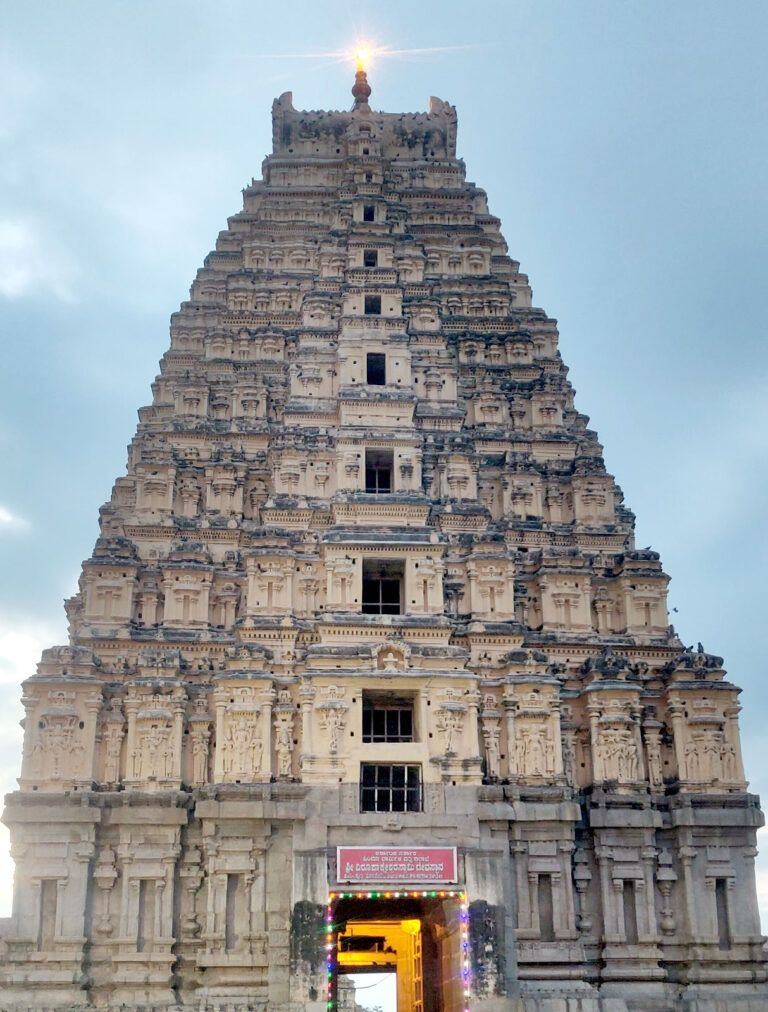
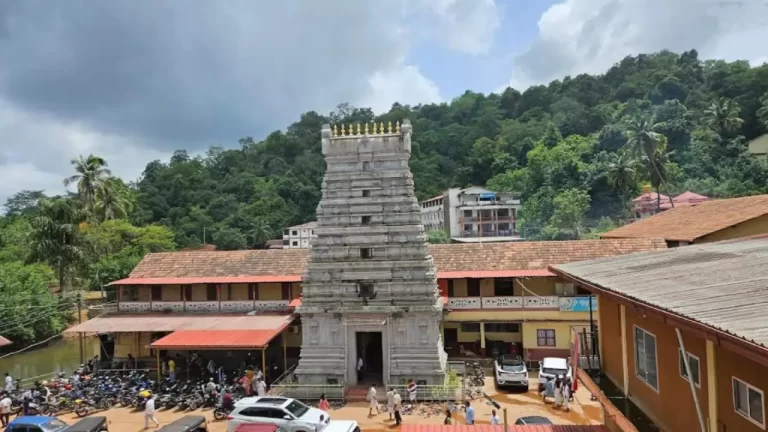
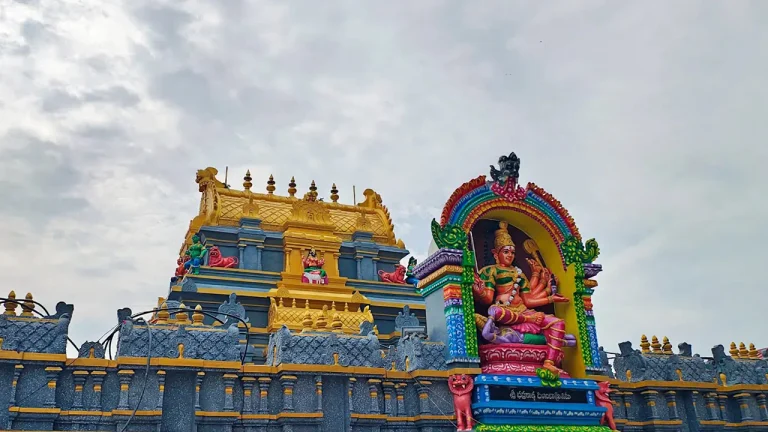
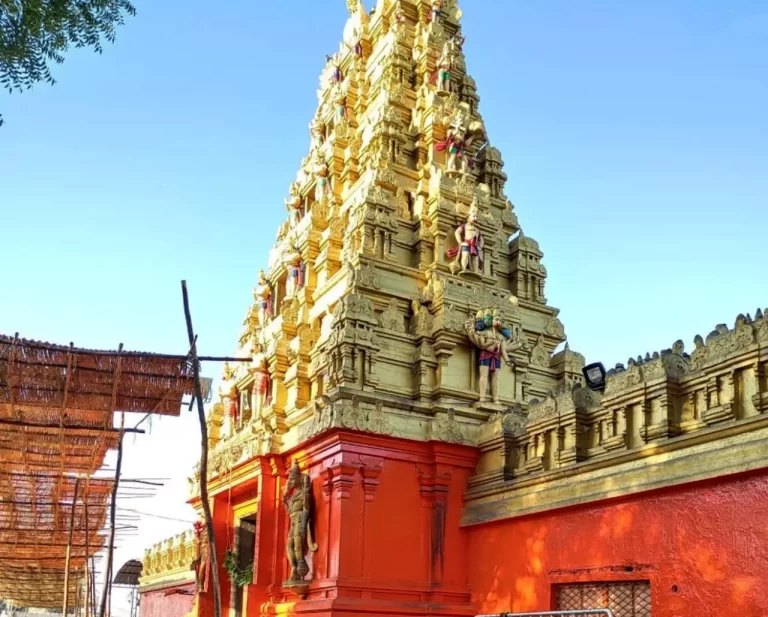
As you approach the summit, the eye is drawn to the impressive seven-tiered Rajagopuram (entrance tower) dominating the skyline. Built in classical Dravidian proportions, this ornate tower was constructed in 1827 CE by the King of Mysore, Mummadi Krishnaraja Wadiyar (Krishnaraja Wadiyar III).
The gopuram is adorned with intricate stucco carvings depicting various manifestations of the Divine Mother, deities from the Shaivite and Vaishnavite pantheons, and traditional guardian figures. Atop the gopuram sit seven golden kalashas (finials), signaling the temple’s sanctity from kilometers away.
The Sanctum Sanctorum (Garbhagriha)
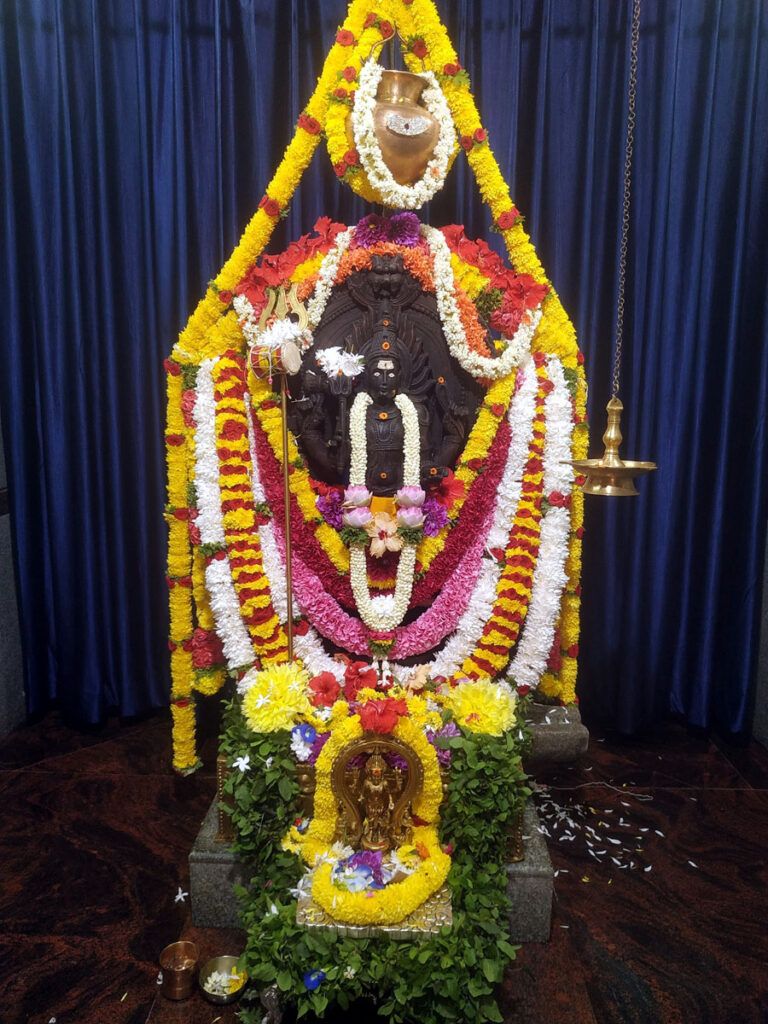
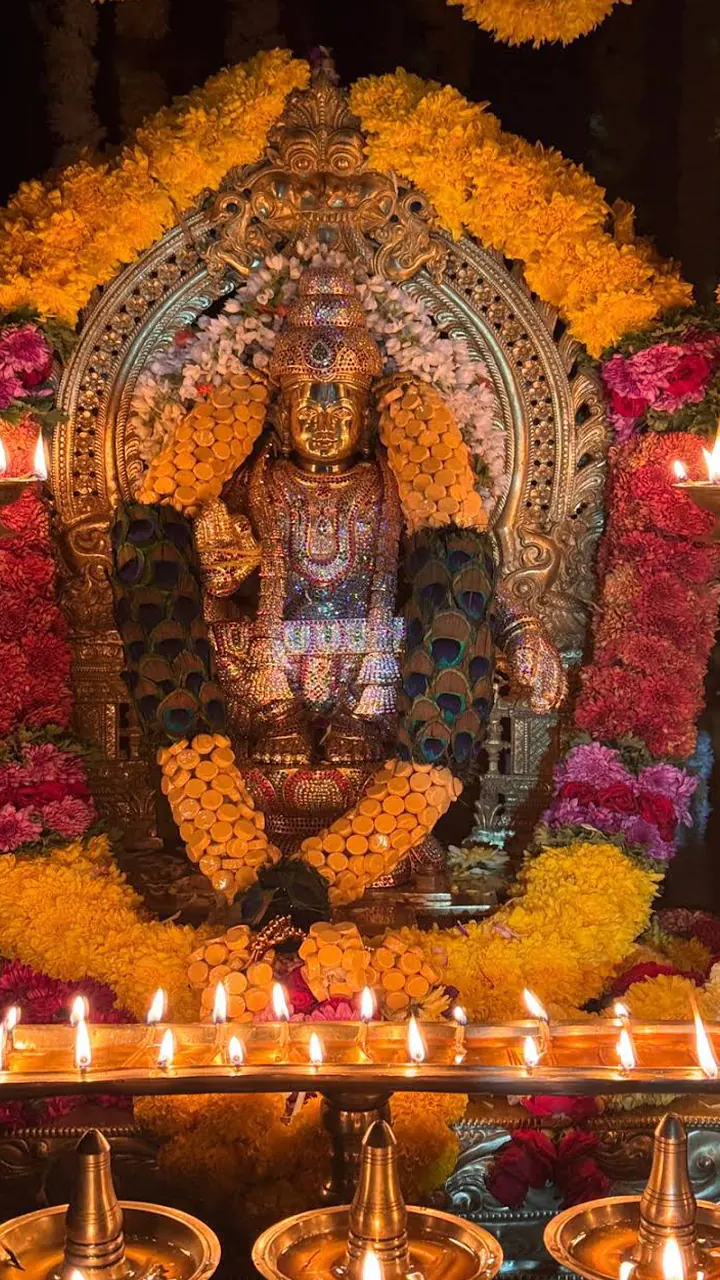
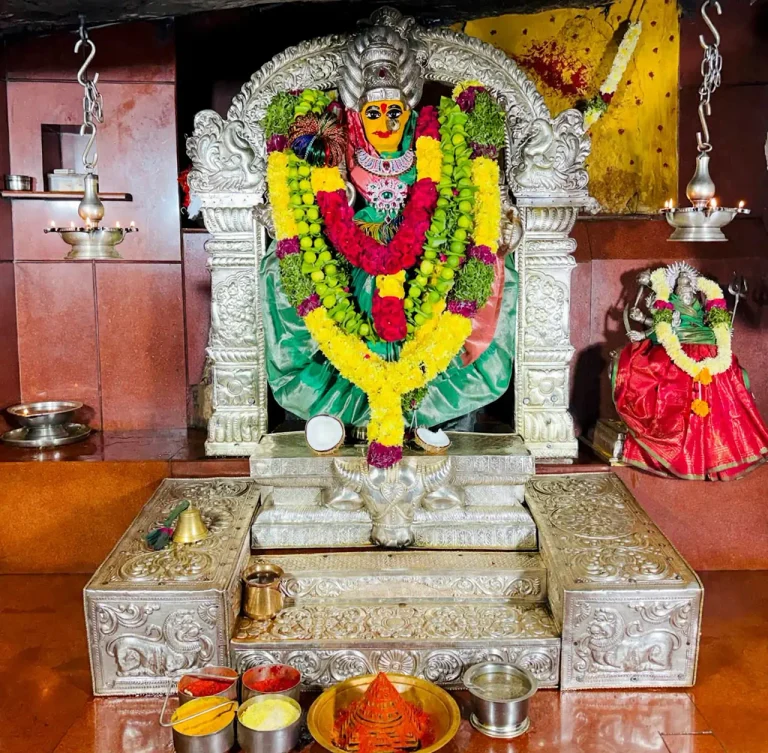
The sanctum sanctorum houses the ancient stone idol of Goddess Chamundeshwari. The deity is depicted in a seated yogic posture, possessing eight arms (Ashtabhuja), holding sacred implements including the trident (trishula), sword, disc, and bell, with her foot placed vanquishing the demon underfoot.
The inner sanctum features a silver-plated doorway flanked by statues of the guardian deities Nandini and Kamalini. Devotees also revere a small, beautifully crafted golden utsava murti (processional idol) that is taken out during royal celebrations and the grand Mysore Dasara Jamboo Savari.

Historical Timeline: From Ancient Hoysalas to the Wadiyars
Chamundi Hill has a documented history extending over eight centuries, transitioning through the patronage of South India’s greatest royal houses:
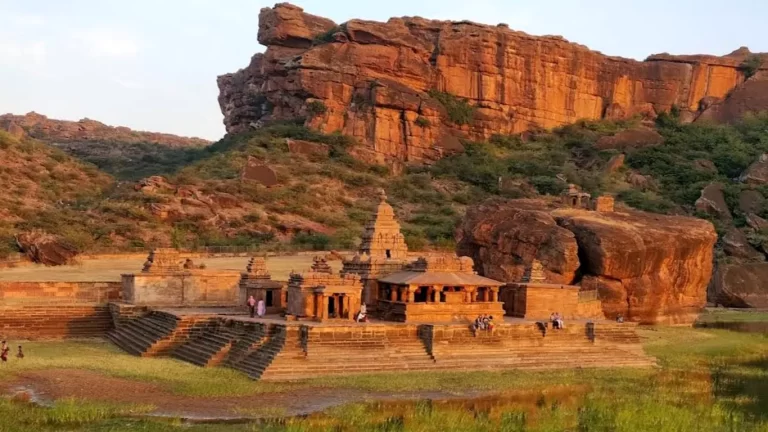
Hoysala Origins (12th Century CE): Epigraphical evidence confirms that the earliest stone temple structures on the hill date back to the Hoysalas. Inscriptions from 1128 CE record land endowments made by Hoysala monarchs on this hill.
Vijayanagara Influence: In the 15th and 16th centuries, feudatories and kings of the Vijayanagara Empire expanded the temple complex, reinforcing the sanctum and improving pilgrim access.
The Wadiyar Royal Era: In 1573 CE, Raja Wadiyar championed Goddess Chamundeshwari as the primary family deity (Kuladevi) of the Mysore royal lineage. In 1659 CE, Maharaja Dodda Devaraja Wadiyar had the 1,008 stone steps carved directly into the hill rock to facilitate pilgrim ascents. Later, in 1827 CE, Krishnaraja Wadiyar III funded major restorations, presenting gold and silver ornaments, divine vahanas (chariots), and building the towering entrance gopuram.
Continue Reading >> The Real Magic of Vadapalani Murugan Temple Revealed!
Daily Darshan, Pooja, and Aarti Timings
Knowing the exact daily timing structure prevents unnecessary delays, as the inner sanctum closes briefly for mandatory ritual alankara and naivedya offerings:
- Morning Darshan: 7:30 AM to 2:00 PM
- Afternoon Break / Alankara Interval: 2:00 PM to 3:30 PM (Sanctum closed for darshan)
- Afternoon Darshan: 3:30 PM to 6:00 PM
- Evening Break / Pooja Interval: 6:00 PM to 7:30 PM (Sanctum closed for darshan)
- Night Darshan: 7:30 PM to 9:00 PM
- Temple Closes: 9:00 PM
Abhisheka and Special Sevas
- Morning Abhisheka: 6:00 AM to 7:30 AM
- Evening Abhisheka: 6:00 PM to 7:30 PM
- Friday Special Pooja: Fridays are considered especially auspicious for the Goddess. Special poojas commence early, often causing larger lines.
Darshan Queues and Ticket Prices
The temple administration operates three clear queuing channels:
- Dharmadarshana (Free General Queue): Open to all devotees without any fee. On weekends and festival days, wait times can range from 1 to 3 hours.
- Special Darshan (₹100 Ticket): A dedicated ticket queue that bypasses the general line, reducing the waiting window considerably.
- VIP / Direct Darshan (₹300 Ticket): The fastest queue for devotees seeking minimal wait times, entering directly closer to the inner mantapa. Tickets are purchased at designated temple counters outside the gopuram.

The Pilgrim Walk: Climbing the 1,008 Steps
For spiritual seekers, fitness enthusiasts, and traditional pilgrims, ascending Chamundi Hill by foot via the 1,008 ancient stone steps is an unforgettable ritual practice.
1. Starting Point
The foot of the hill (Padada Mane) is located in the Jayanagar area of Mysuru, easily accessible by auto-rickshaw or local city bus. At the base, a dedicated parking area and a small shrine allow pilgrims to break a coconut and seek blessings before beginning the ascent.
2. The 16-Foot Monolithic Nandi at Step 700
At roughly the 700th step stands one of Mysore’s iconic landmarks: the Monolithic Statue of Nandi, the sacred bull mount of Lord Shiva. Carved in 1664 CE under the orders of Maharaja Dodda Devaraja Wadiyar, this magnificent sculpture is chiseled out of a single continuous boulder of black granite.
Measuring over 16 feet (4.8 meters) in height and 25 feet (7.6 meters) in length, it is one of the largest monolithic Nandi bulls in India. Despite its immense size, the sculpture displays delicate ornamentation, including intricately carved bells, necklaces, and floral garlands. A dedicated priest attends to the Nandi shrine throughout the day.
Practical Tips for the Step Climb
- Best Climbing Hours: Start early between 5:30 AM and 7:00 AM to avoid the mid-day tropical sun and high humidity.
- Duration: An average-paced climb takes between 40 to 75 minutes, depending on physical fitness.
- Footwear Advice: The steps are clean stone, but carry your shoes in a bag if you prefer climbing barefoot or want your shoes available at the summit.
- Hydration: Vendors sell fresh tender coconut water and bottled water along the lower and middle stations.
Continue Reading >> 4th Century Gokarna Mahabaleshwar Temple

Key Landmarks on the Hilltop
Beyond the main Chamundeshwari shrine, several historic landmarks dot the summit of Chamundi Hill:
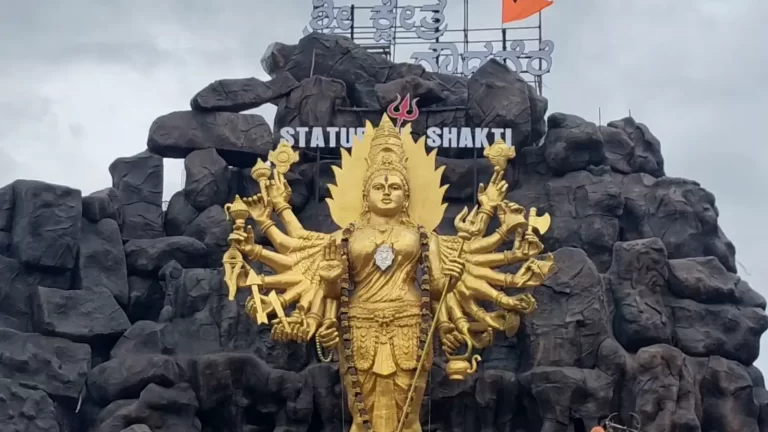
- The Mahishasura Statue: Standing prominently near the summit bus stand, this colorful, towering cement sculpture depicting the demon king Mahishasura holding a raised sword in his right hand and a cobra in his left is one of the most photographed monuments in Karnataka. Built during the early 20th century, it welcomes pilgrims arriving by road.
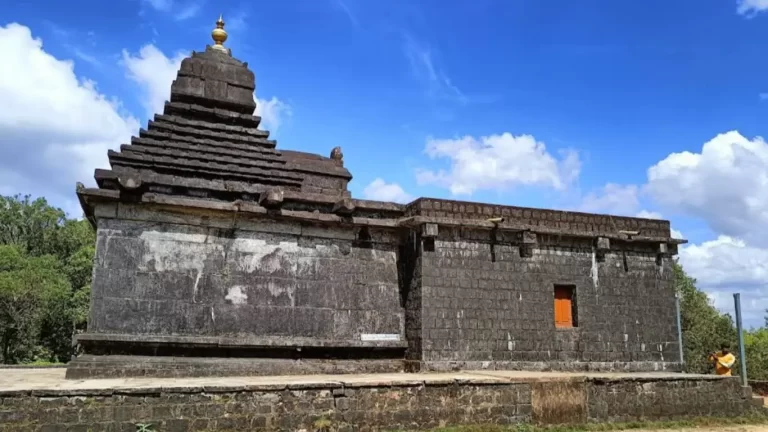
- Sri Mahabaleshwara Temple: Located just a few paces away from the Chamundeshwari shrine, this is actually the oldest recorded temple on the hill, dating firmly to the Hoysala era (circa 12th century). Dedicated to Lord Shiva (Mahabaleshwara), it houses an ancient Shivalinga and historical stone inscriptions. Devotees traditionally visit this quiet shrine after receiving darshan of the Goddess.
- Narayanaswamy Temple & Viewpoints: Several rocky overlooks around the hill crest provide sweeping, panoramic views of Mysore city, the sprawling Mysore Palace illuminated at dusk, the Lalitha Mahal Palace, and the distant Chamundi Lake basin.
Continue Reading >> Kondagattu Anjaneya Swamy Temple
Festivals and Celebrations
While daily rituals are conducted with strict Vedic devotion, the temple comes alive during regional festival seasons:
1. Mysore Dasara (Navaratri)
Chamundeshwari is the presiding deity of the world-famous ten-day Mysore Dasara celebration held in September/October (Ashwina month).
- The festival begins with a royal pooja conducted at this hilltop temple by the titular Maharaja of Mysore and state dignitaries.
- On the tenth day (Vijayadashami), the grand Jamboo Savari procession marches through Mysore city, where a 750-kilogram golden howdah (ambari) carrying the processional idol of Goddess Chamundeshwari is mounted atop a decorated lead tusker elephant.
2. Ashada Shukravara (Ashada Fridays)
The Fridays falling during the traditional Hindu month of Ashada (July–August) are deemed exceptionally sacred to Goddess Chamundeshwari. Tens of thousands of pilgrims climb the hill on foot. Special transport arrangements, barricaded queues, and massive community feasts (Annadhana) are organized by the state administration.
3. Chamundi Jayanti
Celebrated during Ashada Krishna Paksha Saptami, marking the celestial birthday of the Goddess. The temple priests perform grand Mahabhisheka using sacred waters, milk, curd, honey, ghee, and sandalwood paste, followed by a royal chariot procession around the hilltop.
Continue Reading >> Hadshi Temple Adventure Park Pune

Practical Pilgrimage Guide: Planning Your Visit
Best Time to Visit
- Winter (October to February): The weather is crisp, pleasant, and cool, making both the step climb and temple exploration delightful.
- Monsoon (July to September): Lush greenery carpets the hillsides, though steps can occasionally be slippery.
- Summer (March to May): Mornings and evenings remain pleasant due to the hilltop elevation, but afternoons can get quite warm.
Dress Code and Etiquette
- Recommended Clothing: Modest, respectful attire is expected. For men, dhotis, traditional kurtas, or full-length trousers are appropriate. For women, sarees, salwar kameez, or modest dresses covering shoulders and knees are recommended.
- Footwear: Footwear must be deposited at designated free and paid footwear counters located along the plaza leading to the main gopuram.
- Photography: Photography is strictly prohibited inside the inner sanctum sanctorum. You can freely take photos of the outer gopuram, the Mahishasura statue, and the surrounding viewpoints.
Facilities on the Hilltop
- Prasada Counters: Freshly made traditional Mysore Chamundi laddu prasada counters are located near the temple exit (charges range around ₹20–₹30 per laddu).
- Dining / Food: The temple management runs a clean, free community dining hall (Annadhana Mandira) serving traditional vegetarian meals to visiting pilgrims between 12:30 PM and 3:00 PM daily.
- Cloakrooms & Restrooms: Clean paid municipal public toilets and luggage cloakrooms are available near the bus stand area.
- Senior Citizen Accessibility: While wheelchairs cannot traverse the interior flight of stairs into the sanctum, senior citizens and physically challenged visitors can be driven directly to the hill crest parking lot, which sits within 200 meters of the main entrance.
How to Reach Chamundi Hills
1. By Local City Bus
The Karnataka State Road Transport Corporation (KSRTC) operates frequent city buses directly from the Mysore City Bus Stand (CBS) up to the Chamundi Hill bus terminal.
- Bus Route: Bus No. 201 (and its sub-variants like 201A, 201B) departs every 15 to 20 minutes throughout the day.
- Travel Time: Approximately 25 to 35 minutes.
- Fare: Around ₹20 to ₹35 per passenger.
2. By Taxi or Auto-Rickshaw
Auto-rickshaws and app-based cab services (Ola, Uber) run reliably across Mysore. A one-way auto ride from central Mysore to the hilltop takes around 25 minutes along a well-engineered ghat road featuring scenic viewpoints. Ensure you negotiate wait-time charges if you want your auto-rickshaw to bring you back down.
3. By Personal Car or Two-Wheeler
A smooth, two-lane ghat road winds up the hill. The uphill drive is gentle, but drivers must observe speed limits and yield to descending state buses. A spacious multi-level paid vehicle parking lot is situated near the hilltop bus terminal.
Continue Reading >> Hampi Uncovered: Achyuta Raya Temple Mystery You Need to See!
Frequently Asked Questions
1. What are the best hours to avoid crowds at Chamundeshwari Temple?
The best time to experience a quick, peaceful darshan is early in the morning between 7:30 AM and 9:00 AM on weekdays (Tuesday through Thursday). Avoid weekends, national holidays, and Ashada Fridays if you wish to bypass long lines.
2. How long does it take to climb the 1,008 Chamundi Hill steps?
A person of average fitness takes between 45 to 75 minutes to complete the ascent. The descent typically takes about 30 to 45 minutes.
3. Is there an entry ticket price for Chamundeshwari Temple?
General entrance (Dharmadarshana) is completely free. If you wish to join faster queues, you can buy a Special Darshan ticket for ₹100 or a VIP / Direct Darshan ticket for ₹300 directly at the temple ticket counters.
4. Can senior citizens visit Chamundeshwari Temple without climbing steps?
Yes. The 1,008 stone steps are completely optional. Visitors can drive personal cars, hire taxis, or board city buses that travel directly to the hilltop parking plaza, leaving only a short, flat 200-meter walk to the temple gates.
5. Are mobile phones and cameras allowed inside Chamundi Temple?
Mobile phones and cameras are allowed on the hill and within the outer temple courtyard. However, photography and video recording are strictly prohibited inside the inner sanctum sanctorum (Garbhagriha).
Nearby Spiritual and Heritage Attractions
To complete your pilgrimage, consider exploring these prominent historic sites located within a short drive of the hill:
- Sri Srikanteshwara Temple, Nanjangud (25 km): An ancient Shaivite pilgrimage destination famously revered as the Dakshina Kashi (Varanasi of the South).
- Sri Ranganathaswamy Temple, Srirangapatna (22 km): An iconic Adi Ranga shrine situated on an island in the sacred Kaveri River.
- Mysore Palace (13 km): The world-renowned Indo-Saracenic royal seat of the Wadiyar dynasty.
- Keshava Temple, Somanathapura (38 km): A UNESCO World Heritage site renowned for unmatched 13th-century Hoysala soapstone architecture.