Parasurameswara Temple Bhubaneswar: History, Architecture, and Complete Visitor Guide
The Parasurameswara Temple in Bhubaneswar is the oldest surviving, fully intact stone temple in Odisha. Built around the mid-to-late 7th century CE (circa 650–680 CE) during the reign of the Sailodbhava dynasty, this sacred Shaivite shrine stands as the foundational masterpiece of classical Kalinga architecture. Located in the sacred temple town of Ekamra Kshetra, it preserves some of the earliest stone carvings of Lord Shiva, the Saptamatrikas (Seven Mothers), and Lakulisa found anywhere in eastern India.
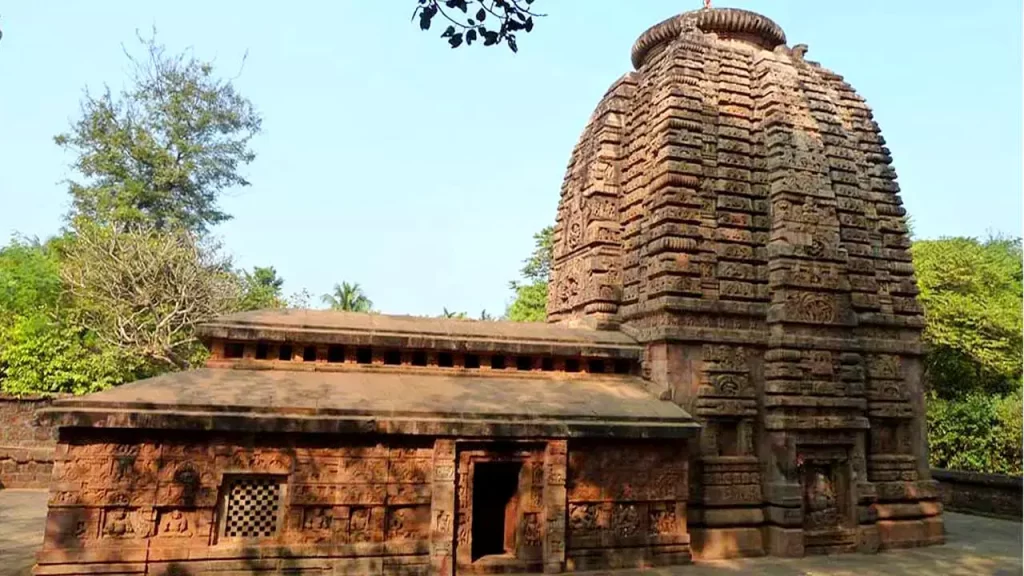
For devotees, pilgrims, and lovers of ancient Indian art, a visit to this serene shrine offers an unforgettable journey back to the formative era of temple building. This guide covers its sacred history, stunning stone architecture, daily timings, and everything you need to plan a smooth, meaningful visit.
Quick Information: Parashurameswara Temple at a Glance
| Feature | Verified Detail |
| Temple Name | Parashurameswara Temple (also spelled Shree Parasurameswara) |
| Main Deity | Lord Shiva (worshipped as Parashurameswara Lingam) |
| Historical Period | Circa 650–680 CE (7th Century CE, Sailodbhava Dynasty) |
| Architectural Style | Early Kalinga Style (Triratha Rekha Deula with a flat-roofed Jagamohana) |
| Location | Old Town, Bhubaneswar, Khordha District, Odisha, India |
| Heritage Status | Centrally Protected Monument under the Archaeological Survey of India (ASI) |
| Daily Darshan Timings | 6:30 AM to 6:00 PM (open daily throughout the year) |
| Entry Fee | Free entry (no ticketing required) |
| Best Time to Visit | October to March (pleasant weather for exploring stone carvings) |
| Nearest Railway Station | Bhubaneswar Railway Station (BBS), approximately 4 km away |
| Nearest Airport | Biju Patnaik International Airport (BBI), approximately 3.5 km away |
| Photography | Permitted in the outer courtyard and on exterior carvings; restricted inside the inner sanctum |
Read More>> Sri Bhoga Nandishwara Gudi: Famous 9 Century Nandi’s Abode
Sacred Legend and Historical Origins
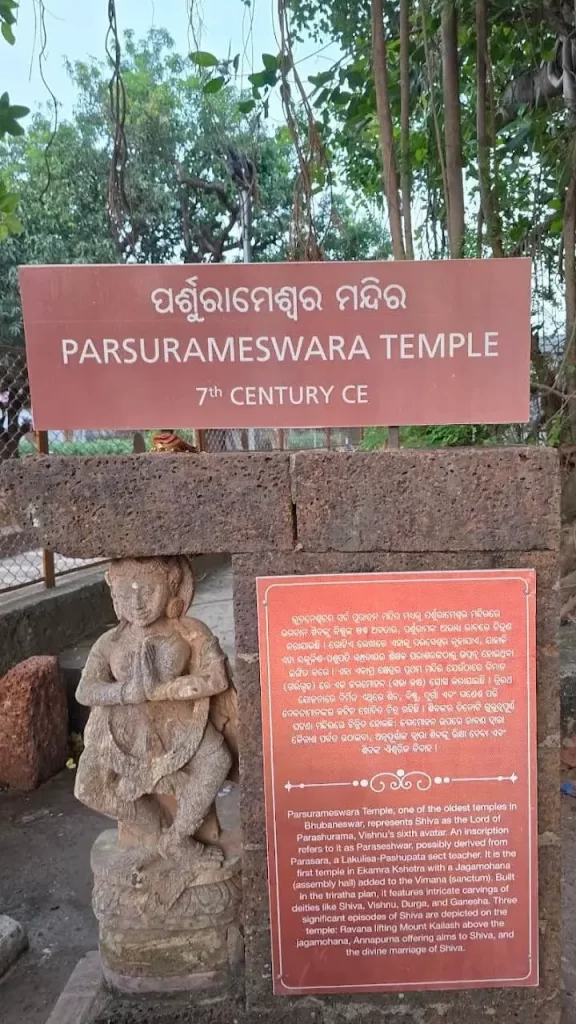
The name Parashurameswara connects this ancient sanctuary to the legendary warrior-sage Parashurama, the sixth avatar of Lord Vishnu. According to local lore and traditional temple chronicles (Sthala Purana), Parashurama sought deep penance after his fierce battles. To cleanse his sins and find peace, he journeyed to the sacred forest of Ekamra Kshetra (modern Bhubaneswar), installed a stone Shiva Lingam, and performed rigorous austerities. Pleased by his devotion, Lord Shiva appeared and granted him absolution, bestowing his divine presence permanently in the form of Parashurameswara.
Historically, the temple belongs to a pivotal moment in Odisha’s political and spiritual evolution:
- The Sailodbhava Dynasty (6th–8th Century CE): Epigraphic and architectural studies identify the temple as a creation of the Sailodbhava rulers, who were devout patrons of Shaivism. Under their reign, early stone cutters moved away from brick and wood to create permanent sandstone temples that could withstand centuries of tropical weather.
- The Rise of Pasupata Shaivism: The temple walls display prominent sculptures of Lakulisa, the 2nd-century teacher and founder of the Pasupata sect of Shaivism. His image—seated in a yogic posture holding a club (lakuta) surrounded by disciples—illustrates how influential Pasupata philosophy was in Odisha during the 7th century.
Read More>> 5 Pancha Bhuta Sthalam
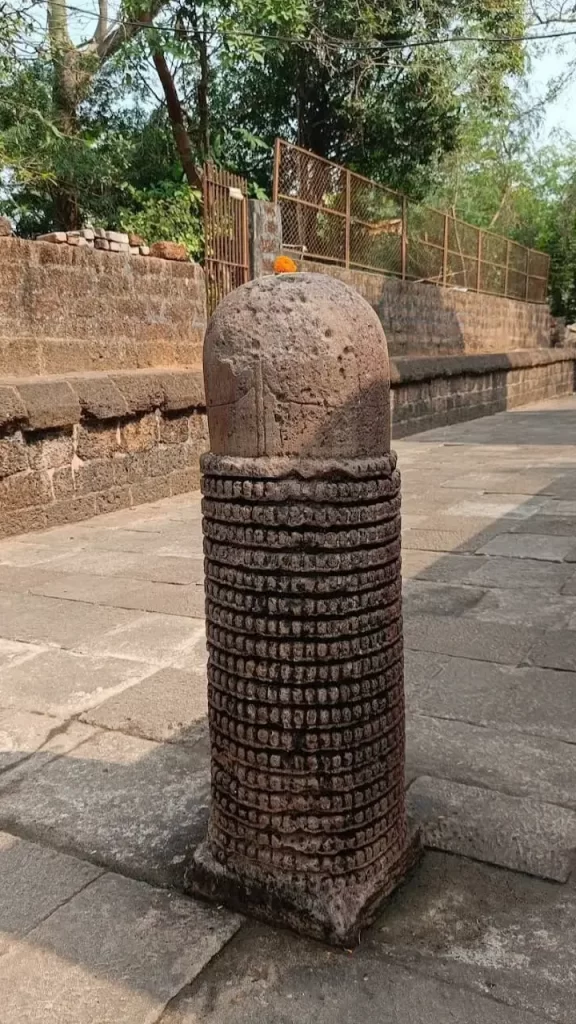
Architectural Mastery: The Foundation of Kalinga Architecture
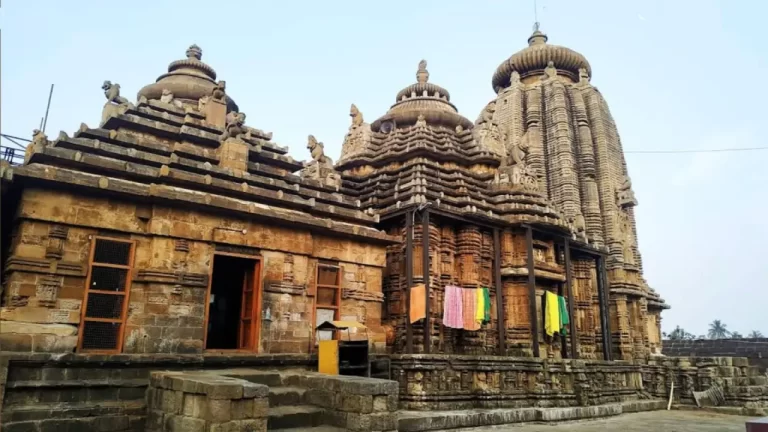
To appreciate Parashurameswara Temple, one must understand how Odishan temple architecture developed over time. In later centuries, grand temples like the majestic 11th-century Lingaraja Temple reached towering heights with four integrated halls: the Vimana (sanctum), Jagamohana (assembly hall), Natamandira (festival hall), and Bhogamandapa (hall of offerings).
At Parashurameswara, you see the brilliant first stage of this evolutionary path. The structure consists of only two interconnected components:
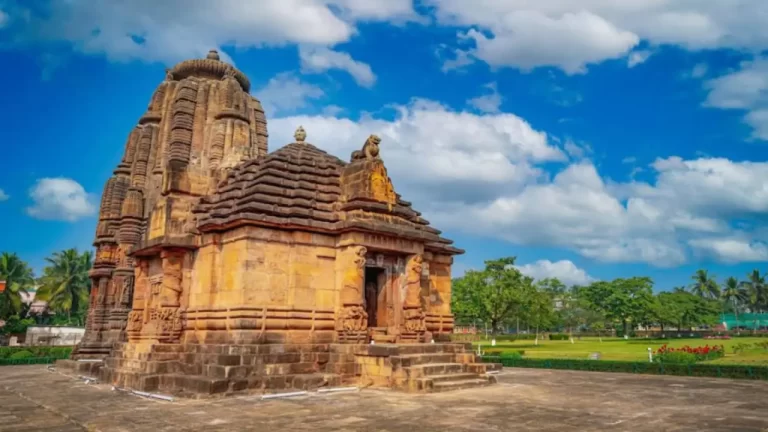
- The Vimana (Bada Deula / Sanctum Tower): Built in the Triratha style (a square plan with a central projection on each side), the sanctum tower rises to a modest height of approximately 40 feet (12.8 meters). The tower curves gently inward toward the top (Rekha Deula), capped with a flat fluted stone disk (Amalaka) and a sacred pot (Kalasha).
- The Jagamohana (Mukhasala / Assembly Hall): Unlike the later pyramid-roofed halls (Pidha Deula), the Jagamohana here is a low, rectangular hall with a flat, stepped roof made of sloping stone slabs. It features small clerestory windows between the roof tiers that let soft natural light into the interior chamber—an early architectural technique rarely seen in later temples.
The World-Famous Carved Latticed Windows (Jali)
One of the most celebrated artistic features of the temple is found on the outer walls of the Jagamohana: its carved stone latticed windows.
Instead of simple geometric screens, these stone panels are masterfully carved with dynamic figures of celestial dancers and musicians. If you look closely, you can clearly make out musicians playing ancient Indian instruments:
- Percussionists beating the mridangam and cymbals.
- Dancers frozen mid-movement in classical poses that foreshadow modern Odissi dance.
- Joyous expressions and flowing drapery carved into reddish-grey sandstone with remarkable delicacy.
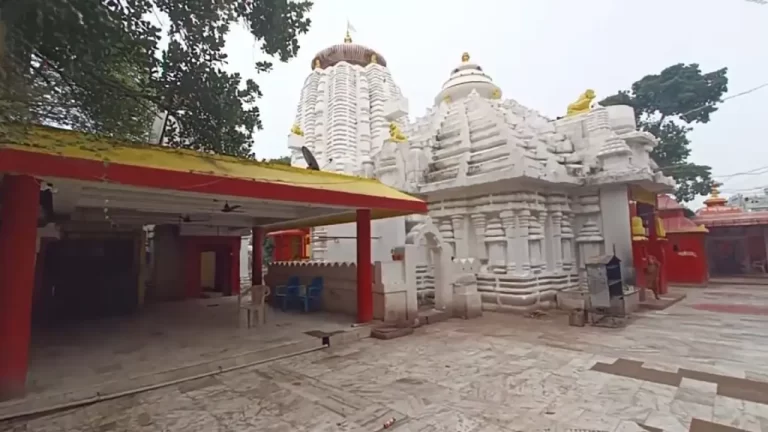
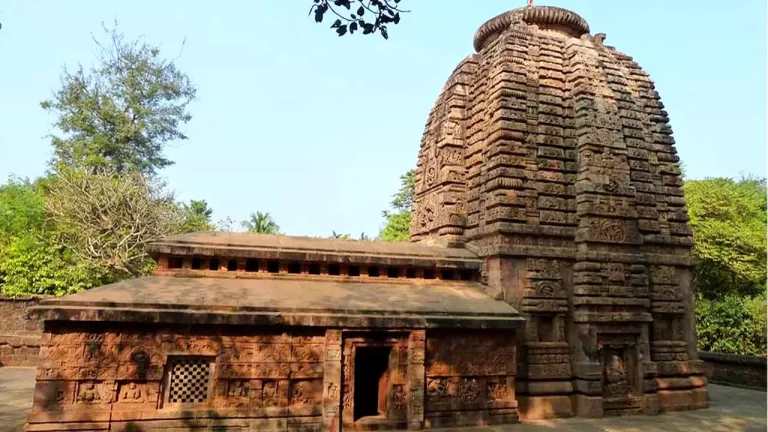
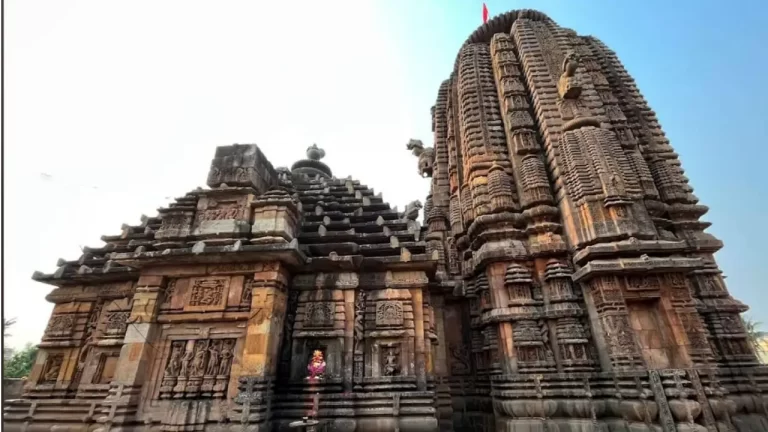

Divine Sculptures and Iconography: What to Look For
Walking clockwise (Pradakshina) around the temple’s outer walls reveals an extraordinary open-air gallery of early Hindu iconography. Because the temple dates to the 7th century, many deities appear in their earliest documented iconographic forms.
1. The Ancient Saptamatrika Frieze
On the north-western wall of the Jagamohana is an important stone frieze depicting the Saptamatrikas (the Seven Divine Mothers), flanked by Lord Ganesha and Virabhadra. In this early panel, eight female deities are depicted together:
- Brahmani, Vaishnavi, Indrani, Kaumari, Varahi, Maheshwari, and Chamunda, accompanied by Shiva.
- Notice that Chamunda is portrayed here as a fierce, skeletal figure with sunken eyes and an emaciated frame, representing the destruction of darkness and ego.
2. The Six-Armed Dancing Shiva (Nataraja)
High on the front facade (gandi) of the main tower, framed inside a horseshoe-shaped arch (Chaitya medallion), is a magnificent relief of a six-armed Nataraja. Shiva is shown dancing the cosmic dance of creation and dissolution, holding a snake, a musical lute, and divine weapons, with his faithful bull Nandi gazing upward in reverence at his feet.
3. Ganesha with a Bowl of Laddoos
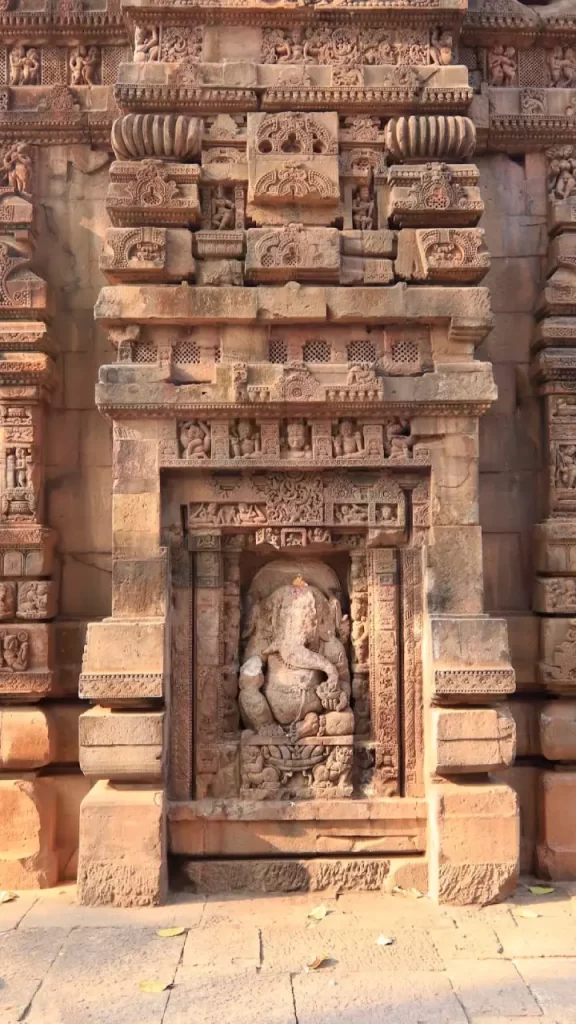
On the southern wall of the sanctum, you will find an early depiction of Lord Ganesha. Unlike some modern portrayals, this 7th-century murti depicts Ganesha in a natural, slender form, holding a radish in one hand and delicately dipping his trunk into a bowl of sweet laddoos held in another.
4. Ardhanarishwara and Harihara Panels
The walls also preserve iconic syncretic figures:
- Ardhanarishwara: The half-male (Shiva) and half-female (Parvati) form, symbolizing the indivisible unity of masculine and feminine energies in the cosmos.
- Harihara: The unified form of Shiva (Hara) and Vishnu (Hari), proving that peaceful harmony between Shaivite and Vaishnavite traditions existed in Odisha as far back as 1,300 years ago.
Read More>> Arupadaiveedu – Six major abodes of Lord Murugan
How to Plan Your Visit: Practical Pilgrimage Guide
A visit to Parashurameswara Temple is peaceful, unhurried, and deeply atmospheric. Because it is surrounded by well-kept green lawns maintained by the Archaeological Survey of India, visitors can stroll quietly around the monument without the heavy crowds seen at larger pilgrimage sites.
Temple Timings and Best Hours to Visit
- Daily Opening Hours: Open from 6:30 AM to 6:00 PM every day.
- Best Time of Day: Arrive either between 7:00 AM and 9:00 AM or between 4:00 PM and 5:30 PM. The morning light strikes the eastern and southern stone carvings beautifully, making it ideal for art lovers and photography enthusiasts.
- Best Season: The winter months from October to February offer comfortable temperatures ranging from 15°C to 28°C, making walking around the temple complex pleasant.
Dress Code and Temple Etiquette
- Dress Modestly: As this is an active place of worship as well as a protected national monument, respectful Indian or modest western clothing (shoulders and knees covered) is appropriate.
- Footwear: You can wear shoes while walking along the paved garden pathways. However, you must remove your footwear before stepping onto the stone plinth of the temple and entering the inner sanctum.
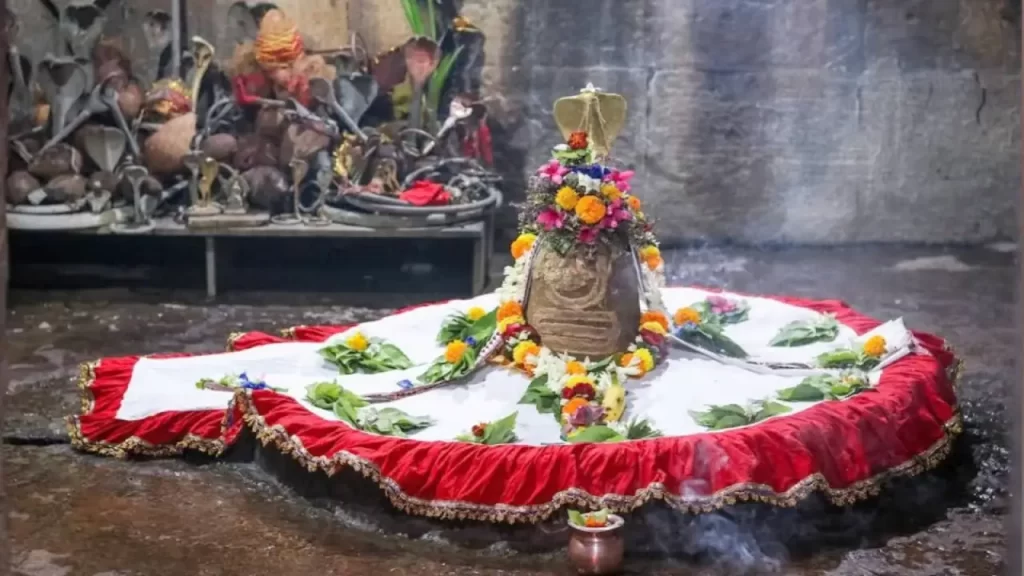
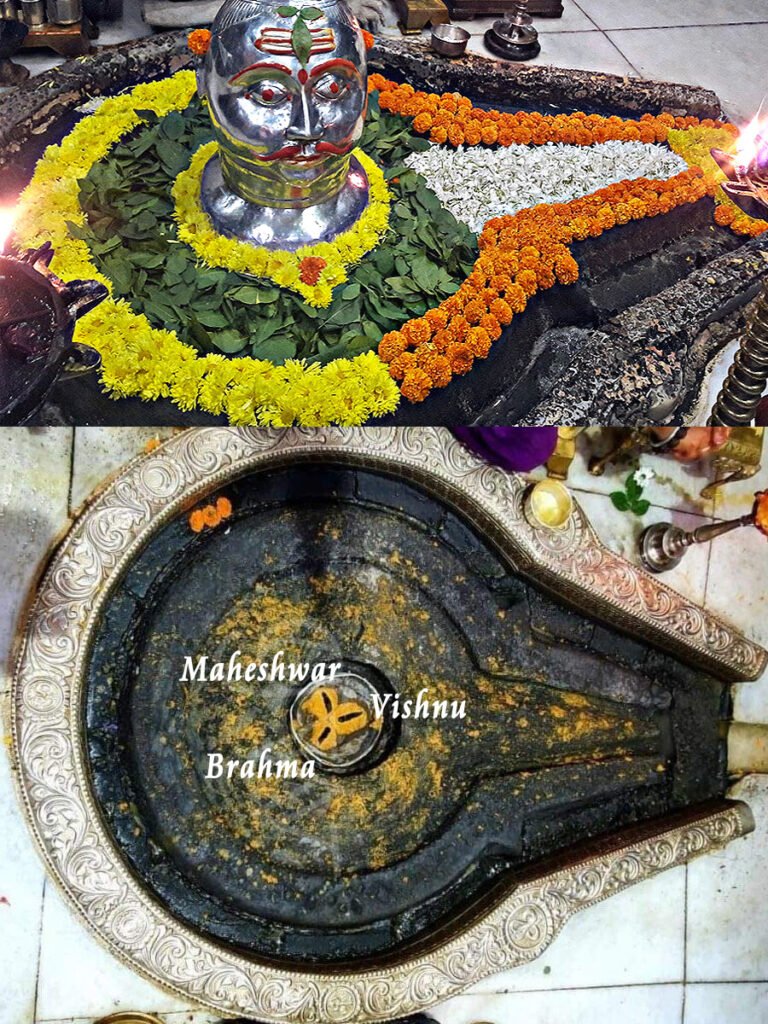
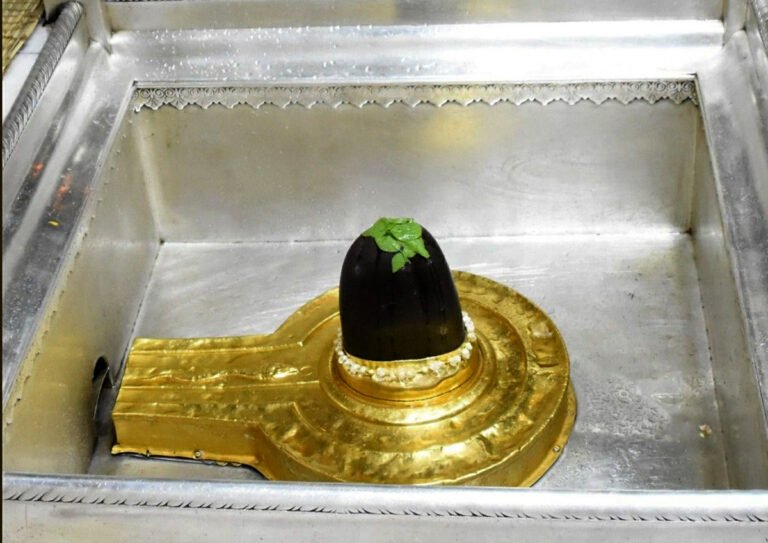
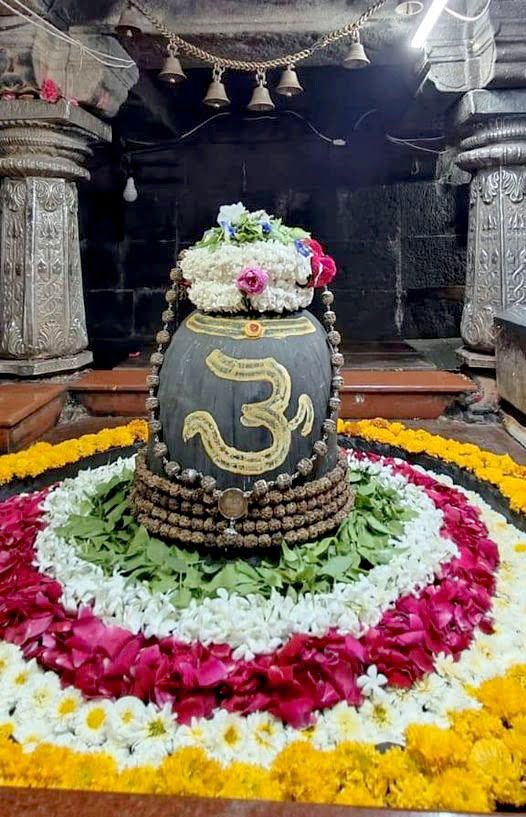
- Inner Sanctum Access: The central Shiva Lingam is actively worshipped by local priests with daily offerings of bilva leaves and water. Visitors may bow their heads and offer prayers, but avoid touching the sanctum deities unless instructed by the priest on duty.
Exploring the Nearby Temple Circuit
Parashurameswara Temple does not stand alone; it is part of a rich sacred landscape in the Old Town area of Bhubaneswar. You can easily walk to several other historic temples within minutes:
- Mukteswara Temple (Just 200 meters away): Built in the 10th century CE, Mukteswara is famously known as the “Gem of Odishan Architecture.” Visiting Parashurameswara first and then walking to Mukteswara allows you to see firsthand how temple architecture advanced over 300 years—from Parashurameswara’s flat-roofed hall to Mukteswara’s graceful pyramidal roof and world-famous arched gateway (Torana). For a comprehensive guide on Mukteswara Temple Bhubaneswar: Architecture and Darshan Guide.
- Siddheswara Temple: Located in the very same garden enclosure as Mukteswara, this is a later classic rekha deula temple featuring a beautiful red sandstone Ganesha image.
- Kedargouri Temple Complex: Just across the road, this lively living temple complex surrounds two sacred perennial water tanks (Kedar Kunda and Gouri Kunda), believed to possess medicinal and purifying properties.
- Lingaraja Temple (1.5 km away): The grandest and most towering monument in Bhubaneswar, representing the absolute zenith of Kalinga architecture in the 11th century CE.
How to Reach Parashurameswara Temple
Bhubaneswar is exceptionally well connected by air, rail, and road, making a pilgrimage here straightforward for both domestic and international visitors.
- By Air: The nearest airport is Biju Patnaik International Airport (BBI), located just 3.5 km away. Prepaid airport taxis, app-based cabs (Ola and Uber), and auto-rickshaws take approximately 15 minutes to reach the Old Town area.
- By Train: Bhubaneswar Railway Station (BBS) is an important junction on the East Coast line, situated approximately 4 km north of the temple. Auto-rickshaws and cycle-rickshaws are readily available right outside the station exits.
- By Road & Local Transport: State transport buses and city buses run frequently toward the Old Town and Lingaraja Temple station. Taxis and local auto-rickshaws can take you directly to the entrance gate of the Parashurameswara-Mukteswara garden compound.


Frequently Asked Questions (FAQ)
What is the historical age of Parashurameswara Temple?
The temple was constructed around 650–680 CE during the reign of the Sailodbhava dynasty, making it more than 1,350 years old. It is recognized by historians and the Archaeological Survey of India as the oldest surviving intact stone temple in Bhubaneswar.
Is there an entry ticket for Parashurameswara Temple?
No, entry to the Parashurameswara Temple complex is completely free. Visitors can enter the manicured garden grounds and view the monument without purchasing any tickets.
Is worship still performed at the temple?
Yes. Although it is a centrally protected monument under the Archaeological Survey of India (ASI), daily rituals, morning prayers, and worship of the Shiva Lingam continue to be performed by local servitors.
How much time is needed to explore the temple?
Plan for 45 minutes to 1 hour to admire the stone carvings, latticed windows, and Saptamatrika panels at a leisurely pace. If you combine it with the adjacent Mukteswara and Kedargouri temples, set aside approximately 2 to 2.5 hours in total.
Can I take photographs inside the temple?
Still photography of the temple exterior, gardens, and stone wall reliefs is permitted. However, avoid taking direct flash photography inside the dark inner sanctum where the Shiva Lingam is enshrined, in accordance with temple customs.
A Timeless Stone Heritage
Standing quietly in the morning breeze of Bhubaneswar’s Old Town, the Parashurameswara Temple reminds us of the extraordinary devotion and engineering skill of ancient India. Every carved petal, every sculpted dancer, and every sacred medallion on its sandstone walls tells the story of a civilization mastering the art of stone. Whether you come seeking the blessings of Lord Shiva or to admire the very beginnings of Kalinga architecture, this 7th-century sanctuary remains one of the most rewarding pilgrimage stops in Odisha.