Vedadri Narasimha Swamy Temple
Vedadri Narasimha Swamy Temple: Picture yourself in a world where legend is living, where the air vibrates with timeless hymns, and where you can sense near to something really enchanting.
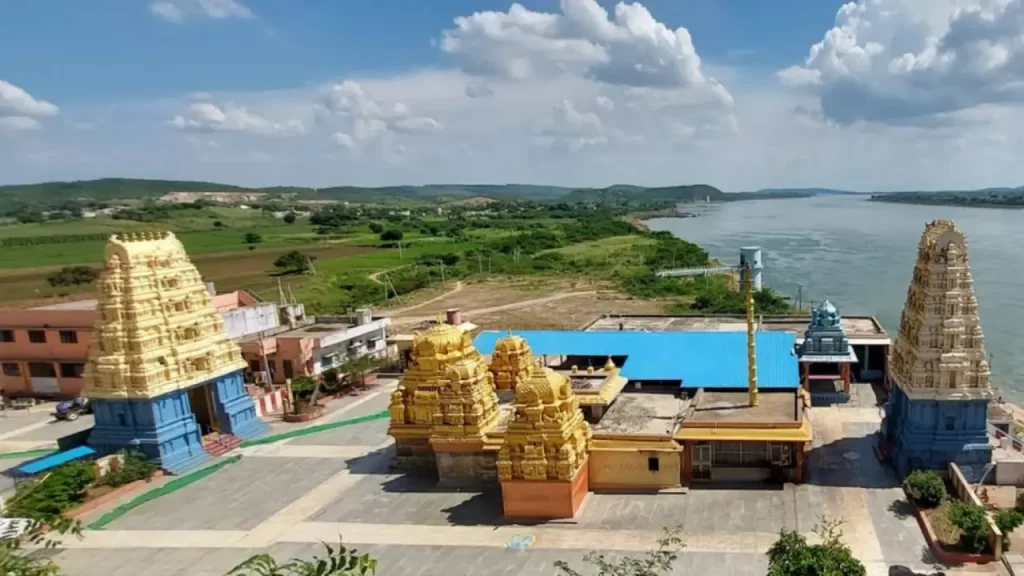
It’s a lovely temple located in a serene village named Vedadri, along the shores of the mighty Krishna River, in Andhra Pradesh’s Krishna district, India. It’s a temple where Lord Narasimha, a very courageous and strong incarnation of Lord Vishnu, resides in not one, but five unique manners! Isn’t that great? As your friendly tour guide, I’m here to explain everything about this amazing destination, so let’s start our journey!
A Warm Welcome to Vedadri!
As you approach the Vedadri Narasimha Swamy Temple, you can feel the peace of the place. The soft wind, the flowing Krishna River nearby, and the fragrance of incense and flowers – it all speaks to you that you’ve entered a very sacred place. This is no ordinary temple; it’s a site where myths were created, gods roamed the earth, and prayers have been granted for centuries.
Imagine me as your own storyteller, revealing secrets and marvels of this holy land. We’ll visit every nook and cranny, discover ancient lore, and learn why this Vedadri Narasimha Swamy Temple is so endearing to the hearts of so many.
Read More>> Famous Pedakakani Temple/ Pedakakani Malleswara Swamy Temple
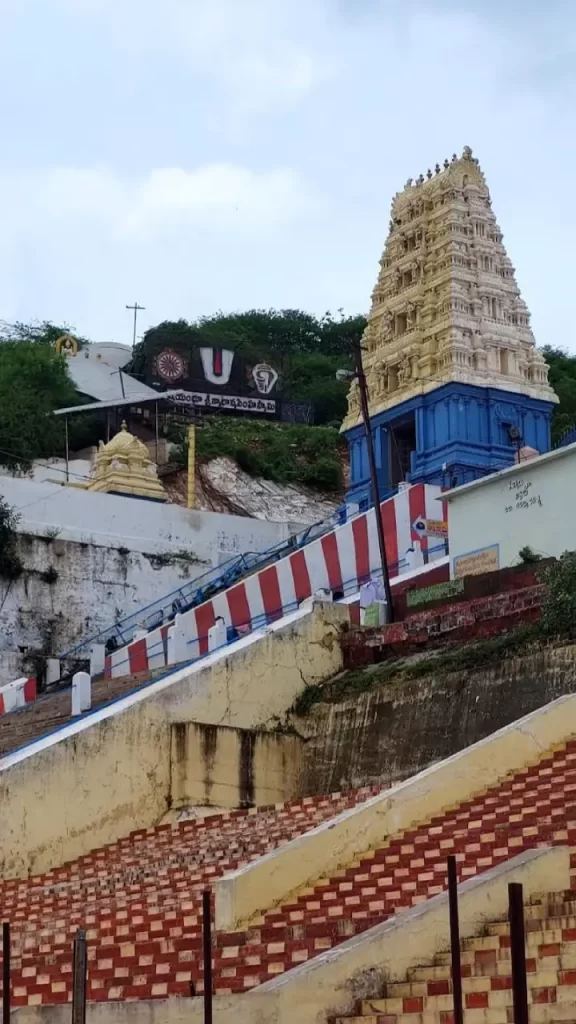
Vedadri Narasimha Swamy History: Secrets from a Bygone Era
Let us travel back in time to the history of the Vedadri Narasimha Swamy Temple when gods and demons walked on this earth. Picture this: a very, very long time ago, even before your great-grandfather or grandparents were born!
The story of Vedadri Narasimha Swamy Temple is deeply connected to ancient Hindu scriptures, especially the Brahmanda Purana. It’s not just a building; it’s a living testament to divine events. The Puranas are like ancient storybooks that tell us about the universe, gods, and great heroes.
In the Brahmanda Purana, it is mentioned that once upon a time, a naughty demon named Somakasura stole the sacred Vedas from Lord Brahma. The Vedas are similar to very, very old and valuable books of learning. Brahma was extremely sad, so he asked Lord Vishnu to save him. Lord Vishnu, who is always ready to guard us, took the form of a small fish, a Matsya Avatar, and dived deep into the sea to locate the demon and save the Vedas.
When Lord Vishnu returned with the Vedas, they were so joyful and thankful that they took a human form – we refer to them as Veda Purushas. They prostrated before Lord Vishnu and said, “Oh Lord, please remain always with us, on our heads, so that we may always enjoy your protection and blessings!” Lord Vishnu, smiling benevolently, accepted. He replied, “Yes, I shall live on your heads, but not just yet. Until then, you have to remain in the Krishnaveni River (another name for the Krishna River!) as special Saligrama stones.”
And surprise, surprise! Lord Vishnu also vowed the Krishnaveni River that she would be allowed to worship Him each and every day! He vowed all these desires would be fulfilled after He became the form Narasimha and defeated a very evil demon named Hiranyakashipu.
So, when Lord Narasimha did finally come and kill Hiranyakashipu and rescue his beloved devotee Prahlada, He fulfilled His promise! After that great war, Lord Narasimha arrived at this very temple, Vedadri Narasimha Swamy Temple, and chose to stay here in five different incarnations. That’s why this place is so very sacred! It’s like a superhero’s home, where he still blesses all.
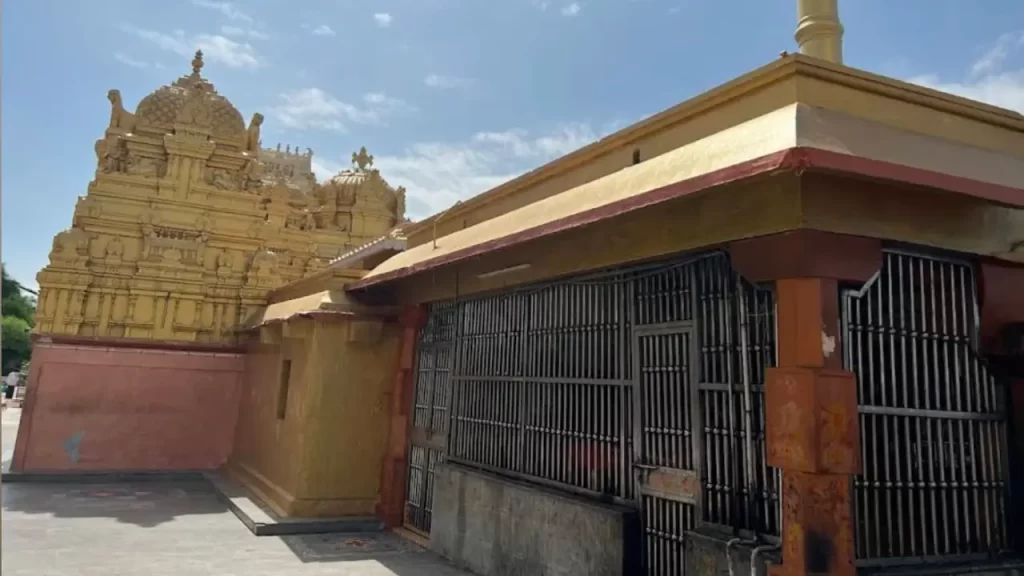
Legend of the Vedadri Narasimha Swamy Temple: The Five Narasimhas
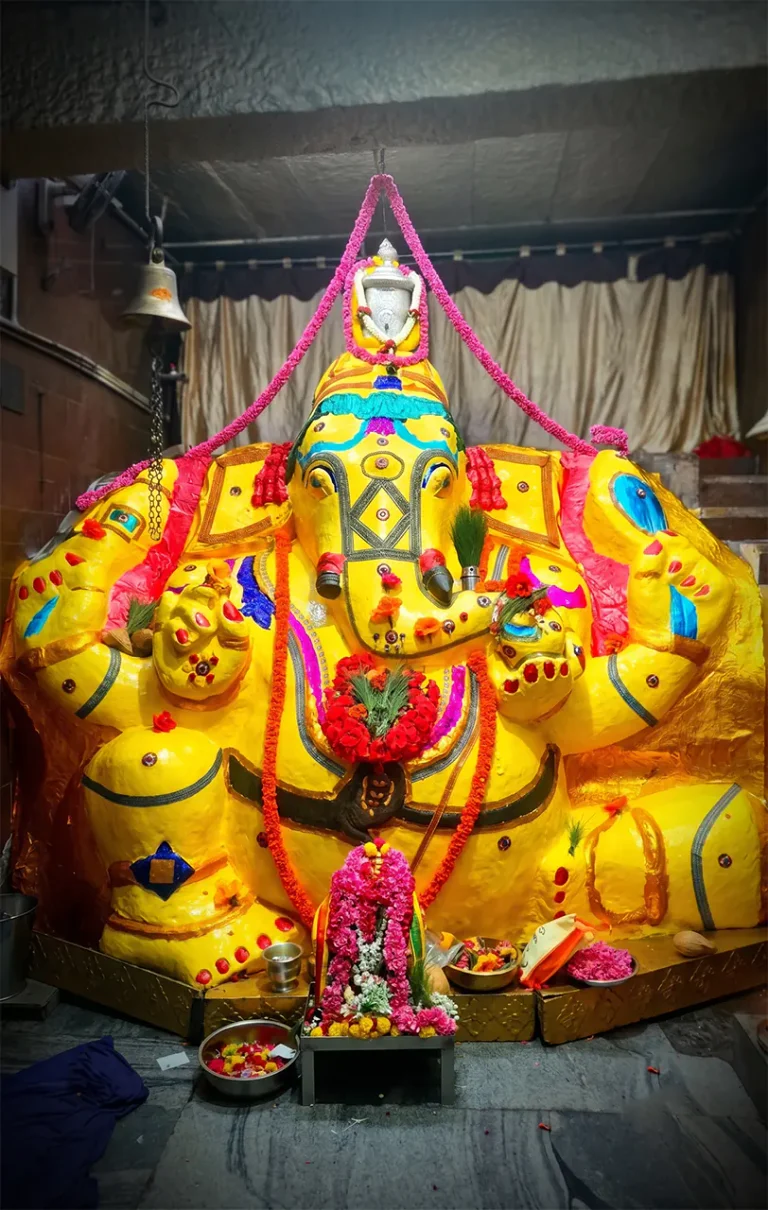
And now, let’s move on to the most thrilling part – the Pancha Narasimha Moorthy legend at the Vedadri Narasimha Swamy Temple! “Pancha” signifies five, and “Narasimha Moorthy” signifies the form of Lord Narasimha. Hence, this indicates that there are five unique forms of Lord Narasimha here, each with its own fantastic story.
Visualize Lord Narasimha, half-man and half-lion, manifesting in various forms to keep his promises and bless his devotees. That is what makes Vedadri Narasimha Swamy Temple so special.
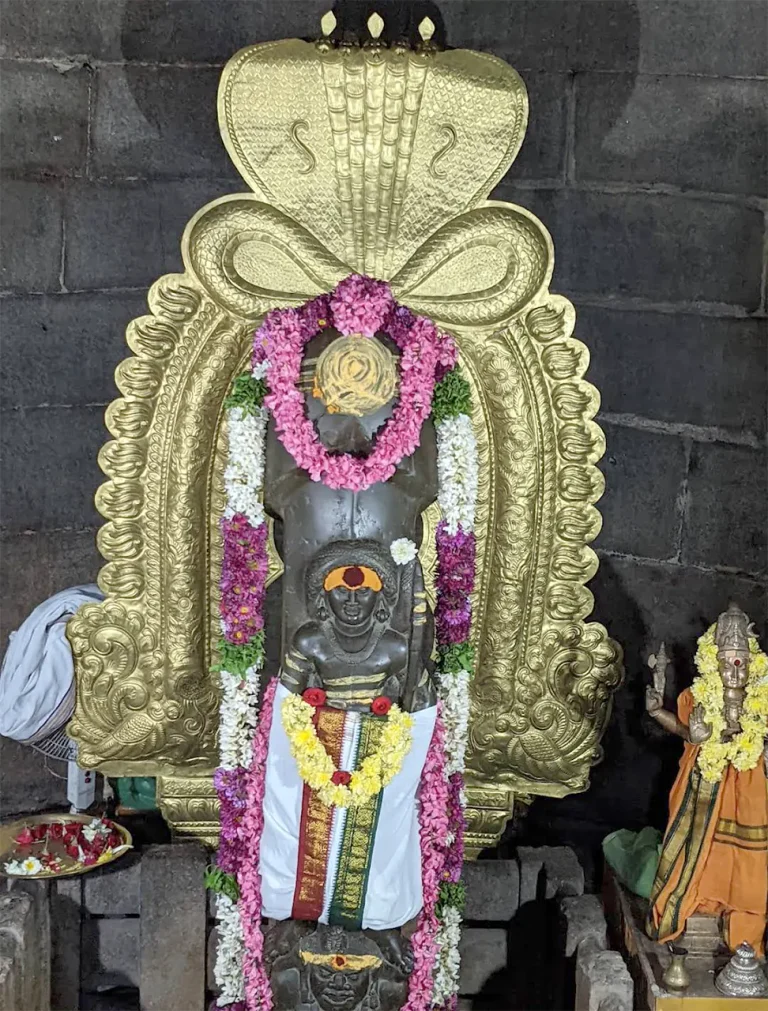
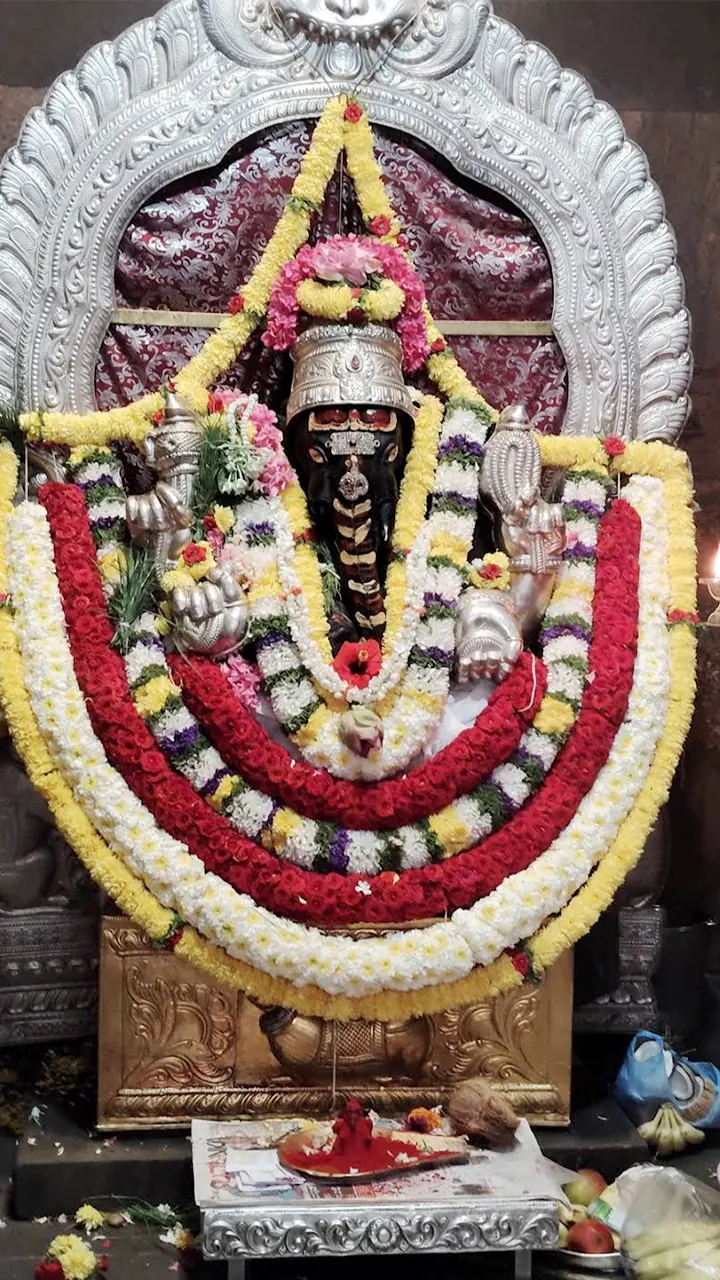
Sri Yogananda Narasimha Swamy: This is the presiding deity, the main Lord of the temple. According to legend, after killing Hiranyakashipu, Lord Narasimha assumed a peaceful and meditative stance, known as Yoga posture, here itself. Sage Rishyasrunga, a very saintly sage, is said to have installed this idol. You can see Him in the central shrine, facing west towards the Krishna River. As if he is always guarding the river and the land.
Sri Jwala Narasimha Swamy: “Jwala” signifies flame or blazing. This incarnation of Narasimha is said to have emerged atop the hill of Vedadri, exhibiting His keen and powerful form as He came out after defeating Hiranyakashipu. It is like a fiery explosion of energy. You can see his footprints on the hilltop, a reminder of His powerful presence.
Sri Saligrama Narasimha Swamy: Do recall the Veda Purushas and the Krishna River? It is said that Lord Brahma himself established this incarnation of Narasimha in the center of the Krishna River, in the shape of a holy Saligrama stone. It’s just wonderful that Lord Narasimha is present, even under water, praying for the river and the people who take a sacred bath! You can witness Him when the river water subsides.
Sri Lakshmi Narasimha Swamy: This avatar displays Lord Narasimha with Goddess Lakshmi, His divine consort, resting on His lap. This lovely form represents peace, prosperity, and blessings. Lord Lakshmi Narasimha is said to have appeared on the Yogananda Narasimha Peeta at the insistence of the Vana Devathas (forest deities). It reflects how powerful power can also be married with compassion and grace.
Sri Veera Narasimha Swamy: “Veera” denotes bold or heroic. This incarnation is situated on a hill named Garudachalam, five kilometers from the main temple. Lord Narasimha is said to have self-manifested here at the behest of Garuda, the powerful vehicle of Lord Vishnu. It symbolizes His power and unshakeable protection of His followers.
So, when you go to the Vedadri Narasimha Swamy Temple, you are not watching one idol, but five phenomenal forms of the Lord, each with their own history and meaning. It’s like going to five temples in one!
Significance of the Temple: Why This Place is So Important
The Vedadri Narasimha Swamy Temple is not merely an ancient structure; it’s a site abounding in great spiritual energy and profound significance. It’s one of the Pancha Narasimha Kshetras of Andhra Pradesh, which means it’s one of the five most sacred locations where Lord Narasimha is revered.
Fulfillment of Wishes: Many devotees believe that praying at the Vedadri Narasimha Swamy Temple can help fulfill their wishes, especially those related to overcoming obstacles, gaining knowledge, and achieving peace. Because Lord Narasimha here fulfilled the wishes of the Vedas and the Krishna River, it’s believed He will fulfill the earnest prayers of His devotees too.
Power of the Five Forms: The fact that there are five various forms of Narasimha is highly powerful. Each one is a different quality of the Lord – His ferocity, His calmness, His protection, His blessing with Lakshmi, and His presence in nature. This implies that whichever your problem or requirement is, there’s some form of Narasimha here that matches it.
A Place of Penitence: For centuries, numerous sages and saints have selected this serene location next to the Krishna River to perform their penance (intense meditation and prayers). They found the atmosphere here ideal for reaching out to the divine. As you stroll around, you can sense nearly the vibration of the devotion!
Historical and Spiritual Heritage: The temple is well documented, with renovations and additions carried out by rulers such as Raja Vasireddy Muktiswara Prasad Nayudu in the 1800s. This indicates that the Vedadri Narasimha Swamy Temple has been loved and preserved by generations, attesting to its significance.
Purity of the Krishna River: The temple’s siting on the Krishna River, which is a very holy river, contributes to its purity. A bath in the Krishna River here prior to visiting the temple is very auspicious and purifies your mind and body.
So come, remember you’re entering a place that’s not merely a tourist attraction, but a very much alive center of beliefs, where history, legend, and faith meet.
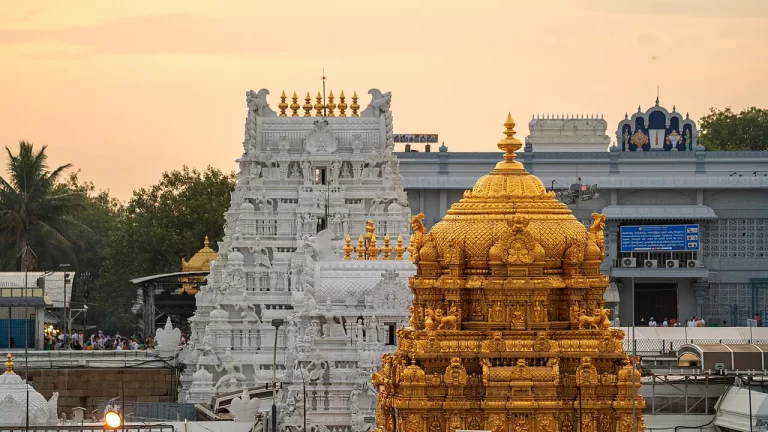
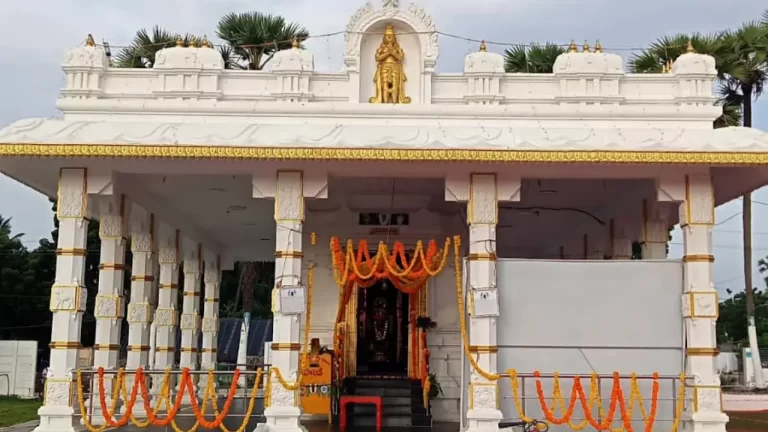
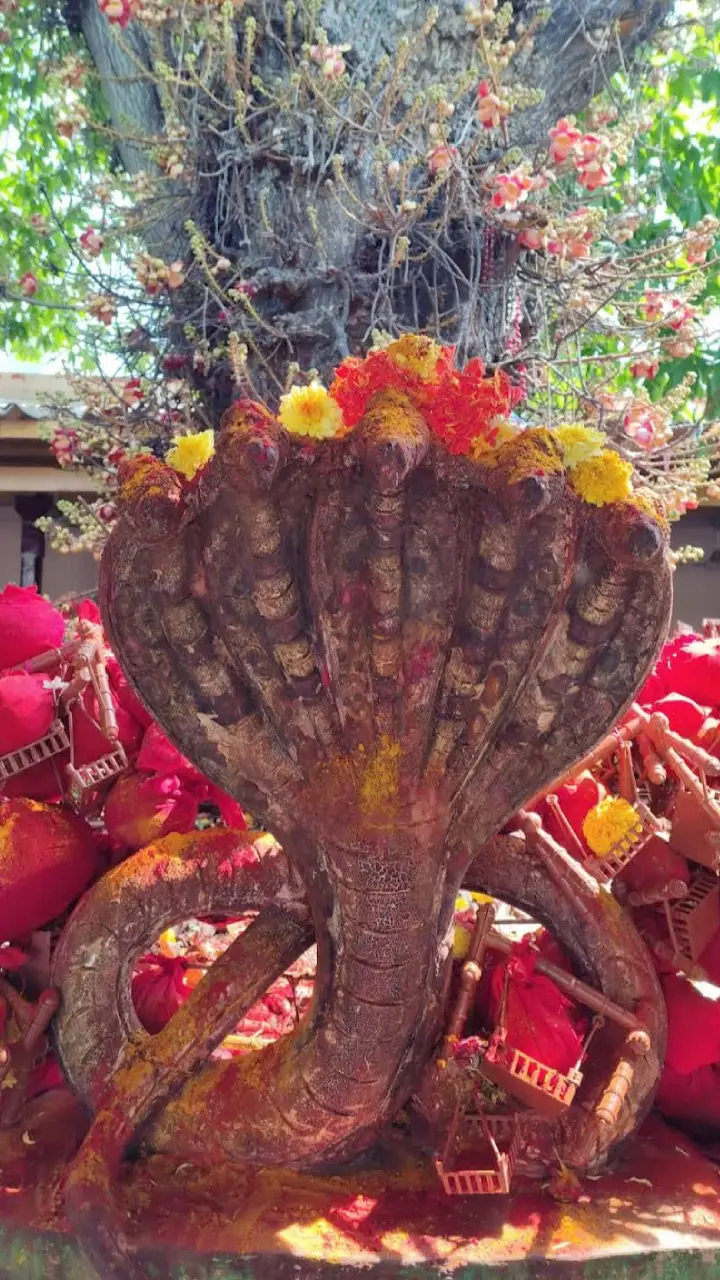
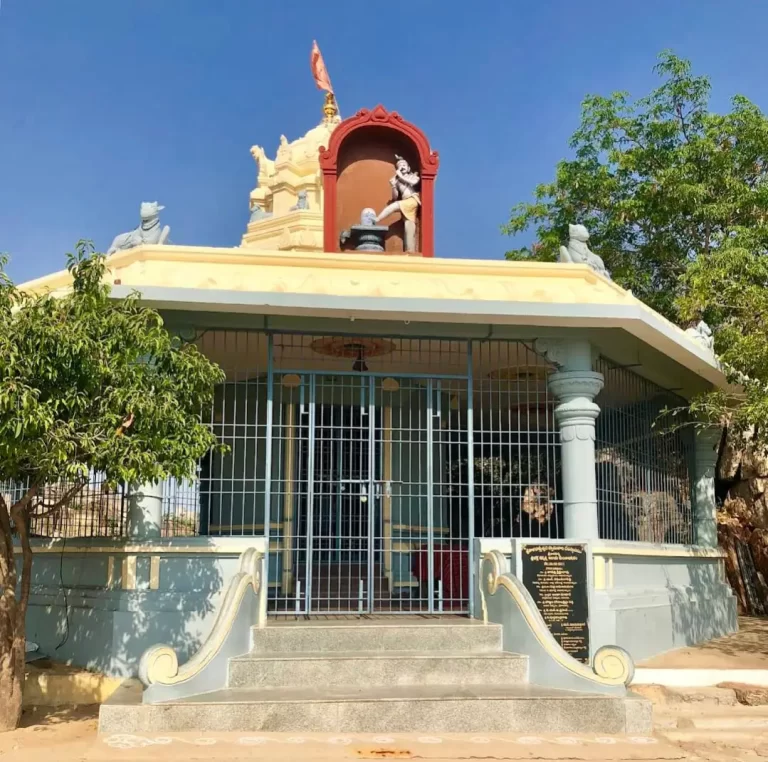

Architecture of Vedadri Narasimha Swamy Temple: A Temple Constructed Out of Love and Craftsmanship
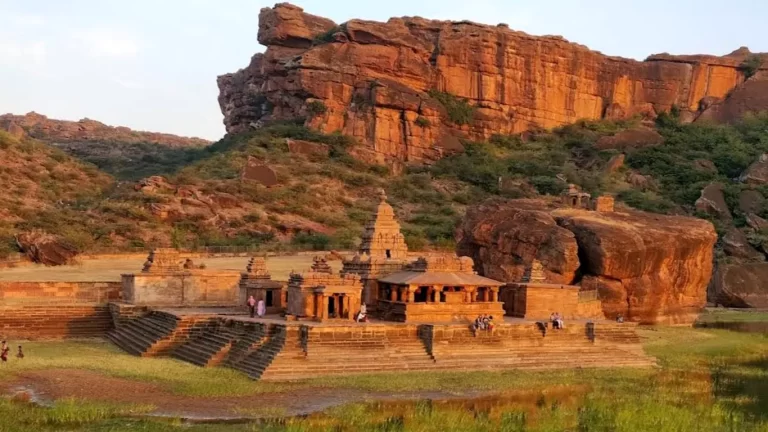
Even if you’re not a building expert, you’ll certainly appreciate the elegance of the Vedadri Narasimha Swamy Temple. The temple has a combination of traditional South Indian temple designs, particularly the Dravidian and Vijayanagara styles of architecture. Picture skilled ancient artists and builders, dedicating their hearts and souls to every single stone.
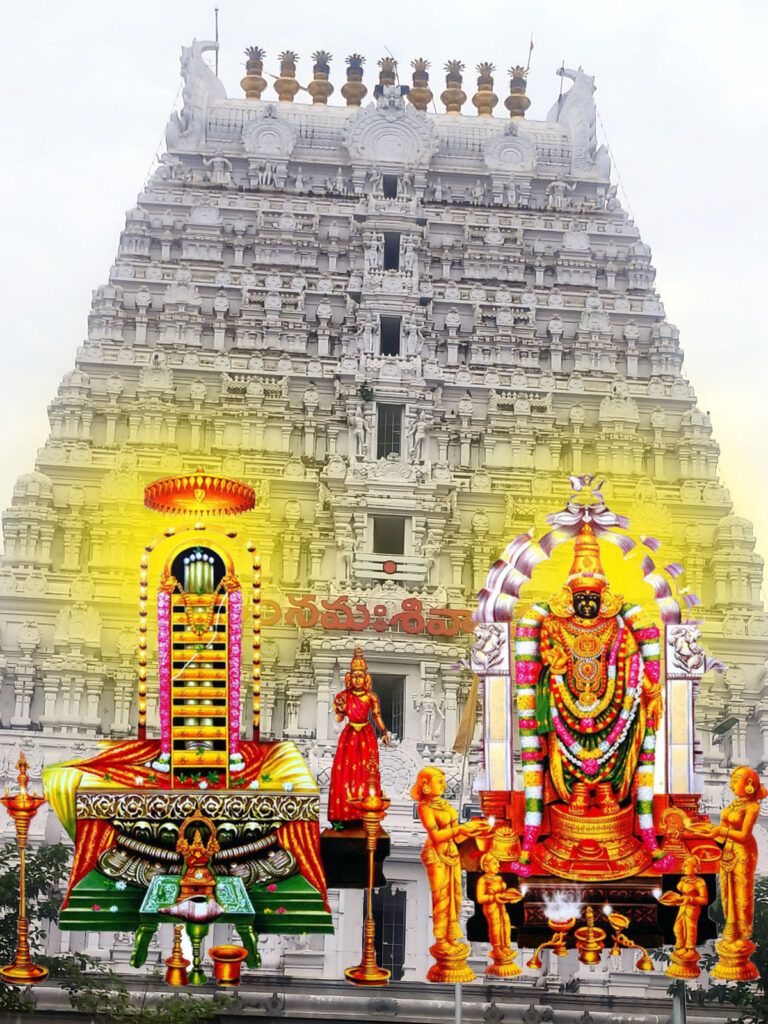
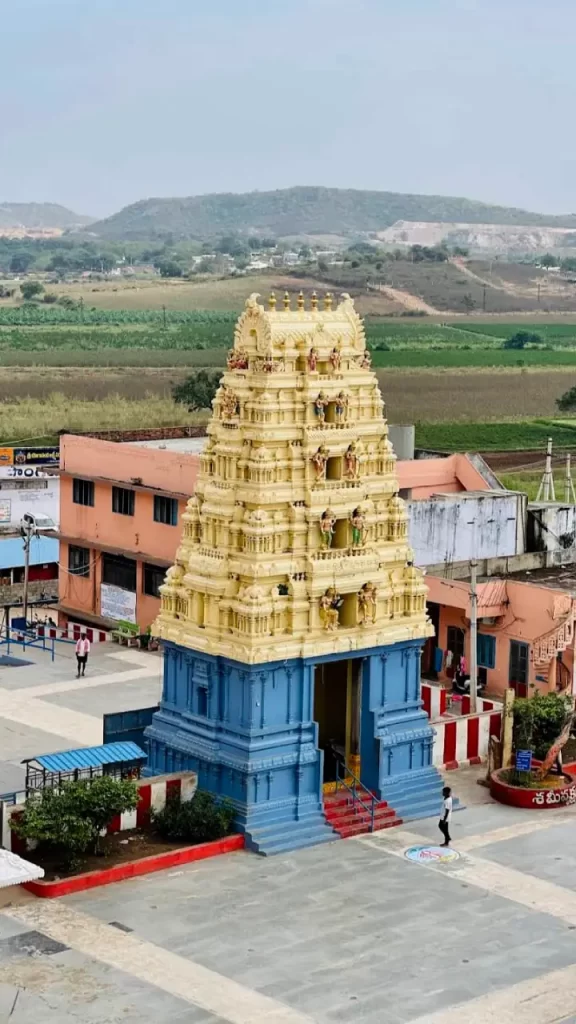
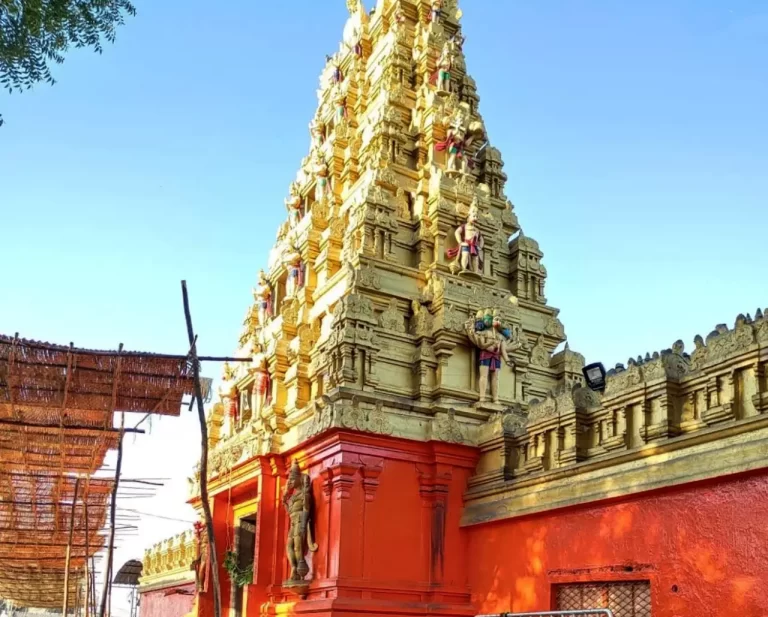
Gopuram: At the entrance, you’ll find the Raja Gopuram, a towering, multicolored gateway. It typically stands four stories high and is filled with numerous sculptures of gods, goddesses, and mythical beings. It’s almost like a sweeping gateway that bids you welcome into the holy precinct. There are gopurams at the eastern and western entrances.
Dwajastambha: As you enter past the gopuram, you will notice a towering flagpole known as the Dwajastambha. A very significant feature of any South Indian temple, it rises high in front of the sanctum’s main entrance, like a bridge between heaven and earth.
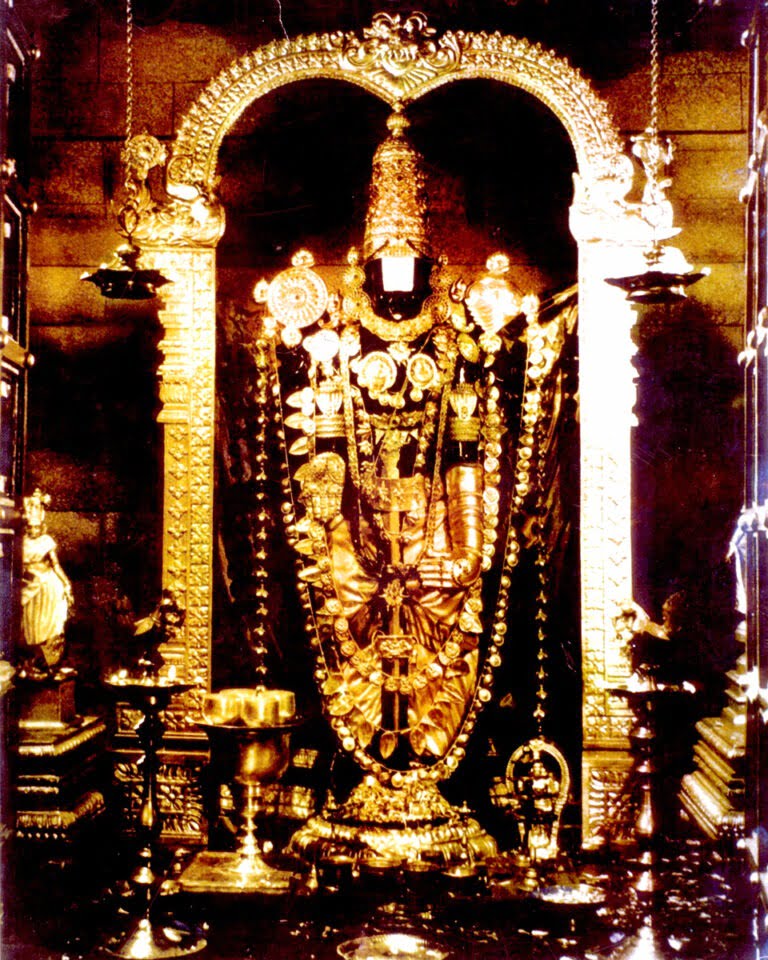
Sanctum Sanctorum (Garbhagriha): This is the sanctum sanctorum of the temple, home to the chief deity, Sri Yogananda Narasimha Swamy. It is generally a small, dark room, intended to concentrate your senses solely on the divine. The chief idol here is simply breathtaking, bringing awe and devotion.
Mandapams: Surrounding the central shrine are mandapams, pillared halls. These are rooms where devotees can assemble for prayer, rituals, or simply sit and meditate. Generally, there will be exquisite carvings on the pillars, narrating stories from the Puranas.
Sonder Shrines Lord Narasimha has a separate, smaller shrine in the temple complex for each of the consorts, Sri Rajyalakshmi Devi and Sri Godadevi. Both are beautifully constructed, with respect to the goddesses. There are also temples to Lord Shiva and Jwala Narasimha at the top of the hill.
Steps to the River: From the temple’s west entrance, there is a stairway of steps that takes you straight down to the Krishna River. This is provided so that the devotees can take a sacred dip before entering the temple, a practice followed over centuries.
The whole Vedadri Narasimha Swamy Temple complex is conceived to evoke a serene and spiritual ambiance, wherein each and every aspect, right from the massive gopuram to the elaborate carvings, testifies to devotion and divine benediction.
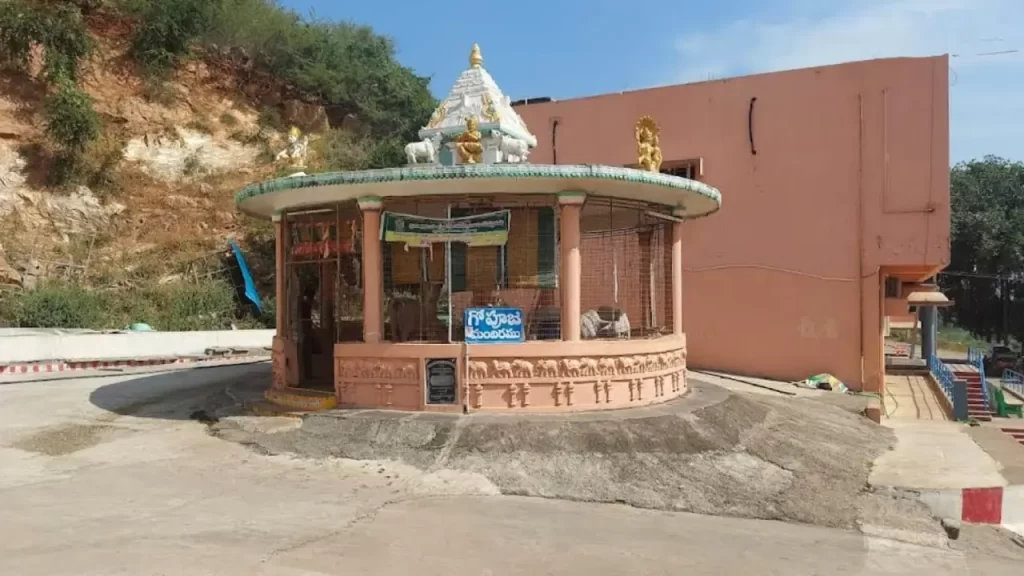
Myths and Beliefs: Stories That Touch the Heart
The Vedadri Narasimha Swamy Temple is a storehouse of myths and beliefs that have been kept alive through generations. These are not mere tales; they are strong beliefs that control the faith of millions of believers.
The Vedas as a Hill: One of the most central beliefs is that the Vedadri hill itself is the personified Vedas. Imagine the sacred books of knowledge transforming into a mountain to carry Lord Narasimha on its head! This myth emphasizes the profound connection between divine knowledge and the divine presence at this holy site.
The Might of Swathi Nakshatram: There are many who opine that Lord Narasimha’s birth star is Swathi Nakshatram. It is this day that comes every month and is considered particularly sacred to go to the Vedadri Narasimha Swamy Temple and pray. The devotees feel that on this day, the blessings of the Lord are all the more powerful.
Healing Properties of Holy Pond: There is a feeling that the temple complex contains a holy pond (also known as a Pushkarini) whose waters are healing in nature. A dip in it is believed to purify not only the body, but also the mind and spirit.
Monkeys as Devotees: You will see numerous monkeys surrounding the Vedadri Narasimha Swamy Temple. It is a widespread notion among Hindu tradition that monkeys are devotees of Lord Rama (who is an avatar of Vishnu, just like Narasimha) and Lord Hanuman. They are fed by people who consider them a part of the natural world around the temple. Always be cautious with them, though, as they can be mischievous at times!
Granting of Child Desires: Numerous couples who long for children visit the Vedadri Narasimha Swamy Temple to pray before Lord Narasimha and Goddess Lakshmi. They hope that their genuine prayers here will be granted, and they will be blessed with a child.
These beliefs and myths are not mere ancient tales; they are living traditions that go on inspiring faith and hope in the hearts of pilgrims visiting the Vedadri Narasimha Swamy Temple.
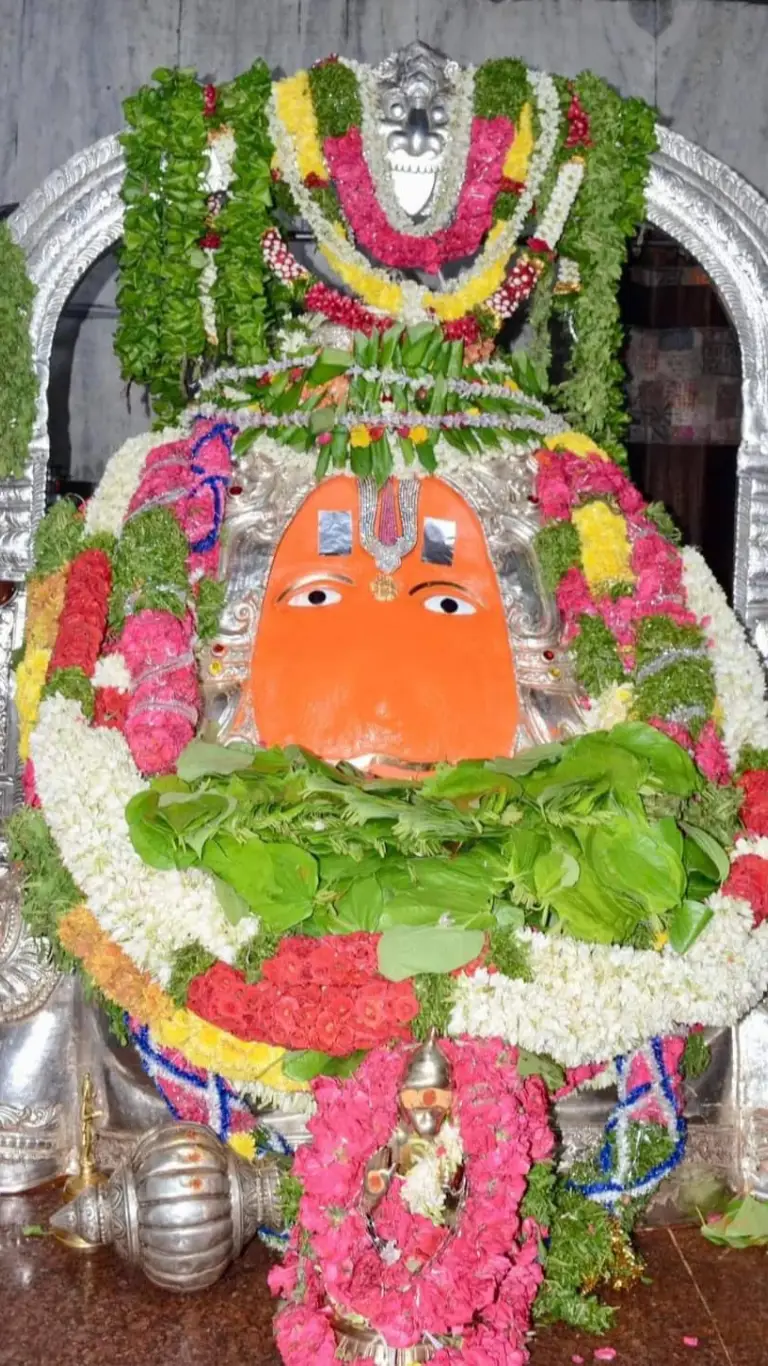
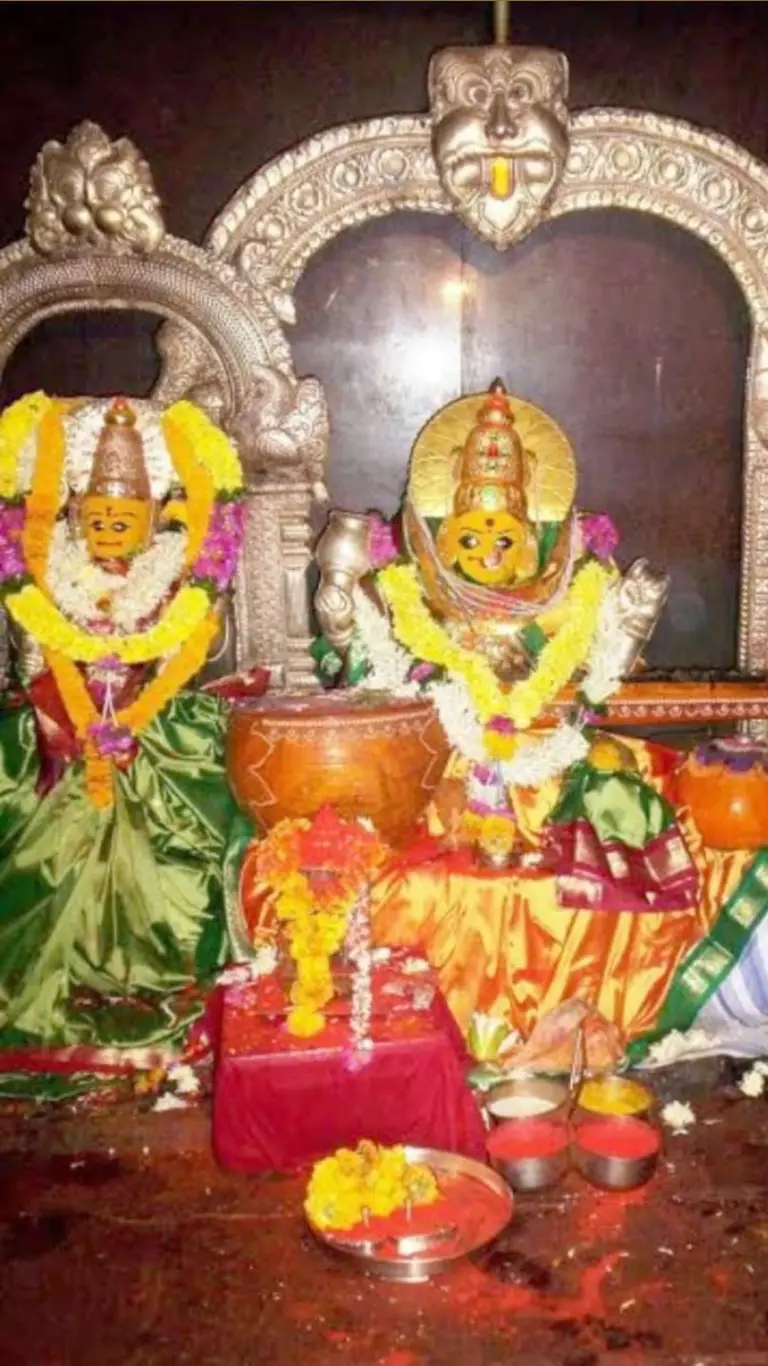
Vedadri Narasimha Swamy Temple Timings: When to Visit Our Lord
If you’re going to the Vedadri Narasimha Swamy Temple, it’s helpful to know when the temple is open so you can schedule your day and enjoy a serene darshan (holy viewing) of the Lord.
The Vedadri Narasimha Swamy Temple is usually open for devotees all day long, except for a brief afternoon break. Here are the normal timings:
Morning Darshan: 6:30 AM to 1:00 PM
(There may be a brief recess for individual rituals such as Suprabhatam or Abhishekam around early morning, typically from 6:30 AM to 7:30 AM, followed by general darshan.)
Afternoon Break: 1:00 PM to 3:00 PM
The temple is normally closed during this time for the rest of the deity and internal rituals.
Evening Darshan: 3:00 PM to 7:00 PM
The temple is open in the afternoon for visitors.
Please note that these timings do change at times, particularly on festival days or on extremely significant rituals. It is best to consult local sources or the temple website nearer your visit if you wish to be positive.
Crowded Days:
The temple will be busier at weekends and public holidays.
Festival days are typically very crowded, but also highly vibrant and thrilling! We’ll discuss those shortly.
The day of Swathi Nakshatram (Lord Narasimha’s birthday star, which occurs once a month) also attracts a good following of devotees.
Akshaya Tritiya is another day when the temple becomes very crowded.
Even on crowded days, the spiritual energy is so high that the visit is a real memorable experience.
Special Days and Rituals: Festivals for Our Lord
The Vedadri Narasimha Swamy Temple springs to life with special rituals and festivities all year round. These are not mere events; they are passionate displays of faith, with bright colors, melodic chants, and celebratory congregations.
Narasimha Jayanti: This is the most significant festival in the Vedadri Narasimha Swamy Temple. It commemorates the appearance day of Lord Narasimha! It generally occurs in the Hindu month of Vaisakha (April-May). The temple is decorated in a lovely manner, and special abhishekams (sacred baths) and poojas are conducted for the Lord on this day. It’s a day of unbound happiness and devotion, and the temple is generally very, very crowded.
Annual Kalyanotsavam: This is Lord Narasimha Swamy’s heavenly wedding with Goddess Lakshmi. It’s an 8-day celebration, normally observed from the Vaisakha Suddha Ekadasi day. Visualize a heavenly wedding ceremony for the divine! Sage Rishyasrunga is believed to have conducted the first heavenly wedding here, and the temple still adopts the same ancient rituals. It’s a serene beauty to witness, with music, prayers, and passion.
Vaikunta Ekadashi: It’s another major festival and particularly significant for temples of Lord Vishnu. It generally occurs in December or January. The devotees have a belief that on this day, “Vaikunta Dwaram” (the door to Lord Vishnu’s city, Vaikunta) is open, and going through it grants special blessings.
Daily Rituals: Besides the major festivals, the Vedadri Narasimha Swamy Temple conducts daily rituals to worship the Lord:
Suprabhatam: The dawn awakening service to the deity.
Abhishekam: Holy bath conducted with different auspicious fluids such as milk, honey, and water.
Archana/Pooja: Praying and flower offering to the deity.
Ekantha Seva: Calm evening service when the Lord is made to rest.
Special Poojas:
Narasimha Swamy Mokkubadi Kalyanam: A special wedding ceremony is conducted for the Utsava deities (the movable, smaller idols to be used in processions). The kalyanam can be sponsored by the devotees for blessings for marriage, family prosperity, and general well-being.
Sudarshana Homam: It is a strong fire ceremony in honor of Lord Sudarshana (Lord Vishnu’s divine discus). It is done to abolish obstacles and negative forces and safeguard the devotees from harm. A lot of individuals have this done for success and tranquility.
These unique days and ceremonies make it a truly rewarding experience to visit the Vedadri Narasimha Swamy Temple as you get to experience centuries-old traditions and witness the fervent faith of the populace.
Tourist Attractions Around the Temple: See More Wonders
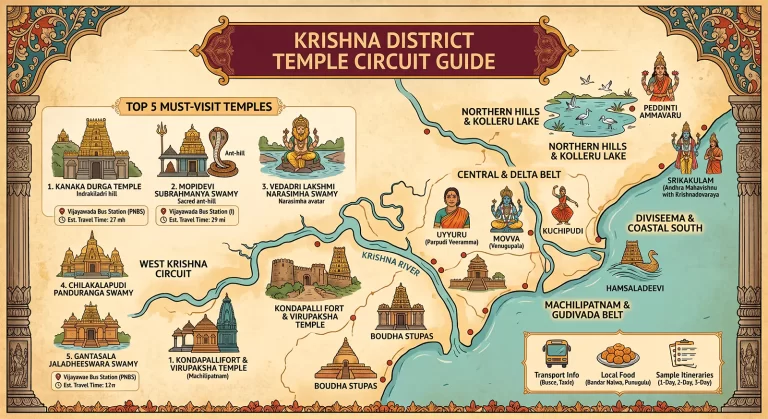
Once you’ve soaked in the divine energy of the Vedadri Narasimha Swamy Temple, you may want to visit some other great Hindu temples and spiritual places around. Andhra Pradesh is indeed a land of temples!
Here are some places you may want to visit, making your spiritual experience even more satisfying:
Garudachalam Sri Veera Narasimha Swamy Temple: Do you remember the fifth avatar of Narasimha that we discussed? This temple, where Sri Veera Narasimha Swamy resides, is approximately 5 kilometers from the central Vedadri Narasimha Swamy Temple. It is located on a hill named Garudachalam and is a must-visit to help you finalize your Pancha Narasimha Darshan!
Muktyala Shiva Temple (Mukteswara Swamy Temple): Situated in the nearby Muktyala Village, this is a lovely temple of Lord Shiva. It is on the banks of the Krishna River too and is rich in history and architectural appeal.
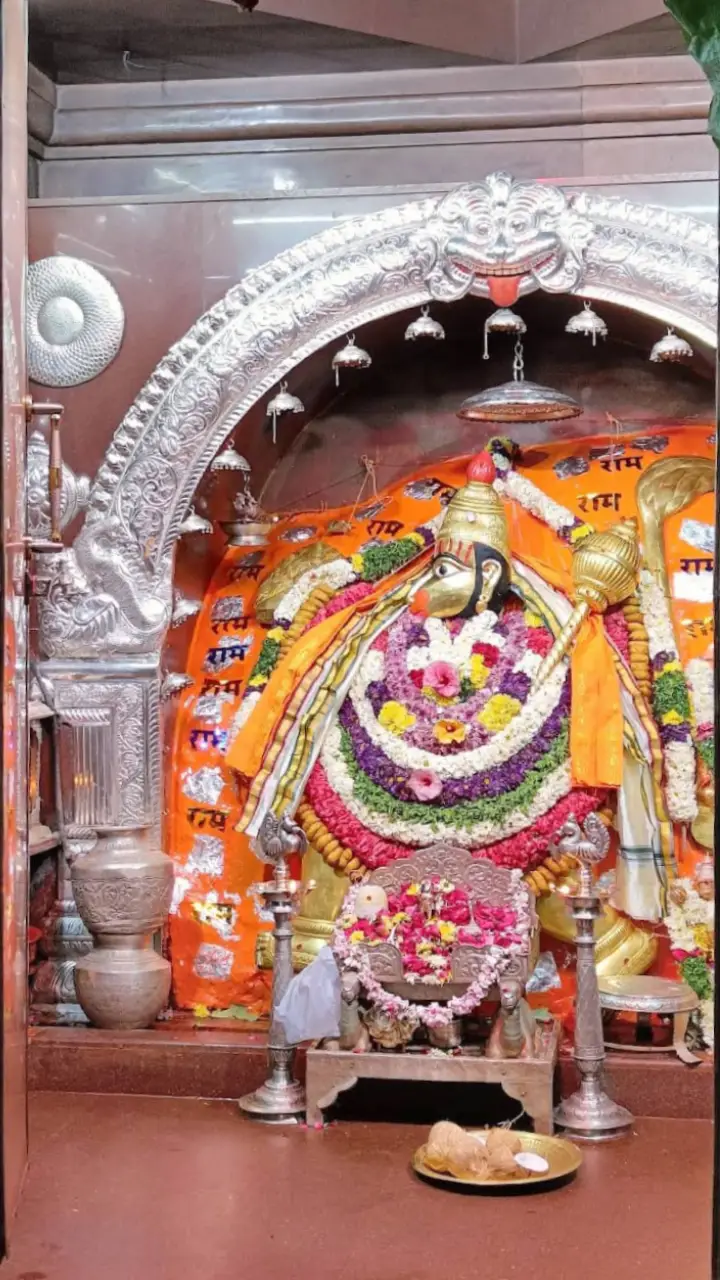
Jayanthipuram Hanuman Temple: If you are a devotee of Lord Hanuman, you may consider a visit to this temple at Jayanthipuram, another village in the vicinity. It’s a temple where believers pray to the great Vanara god.
Swayambhu Sri Satyanarayana Swamy Temple, Vedadri: Yes, there’s one more temple here itself dedicated to Lord Satyanarayana Swamy, a deity of Lord Vishnu worshipped for truth and prosperity.
Kotilingala Temple (Sri Kotilinga Hari Hara Maha Kshetram): This temple is a very important one, although it could be a bit further. It is famous for containing “Koti Lingas” (million Lingas), and it’s a holy site where Lord Shiva is revered.
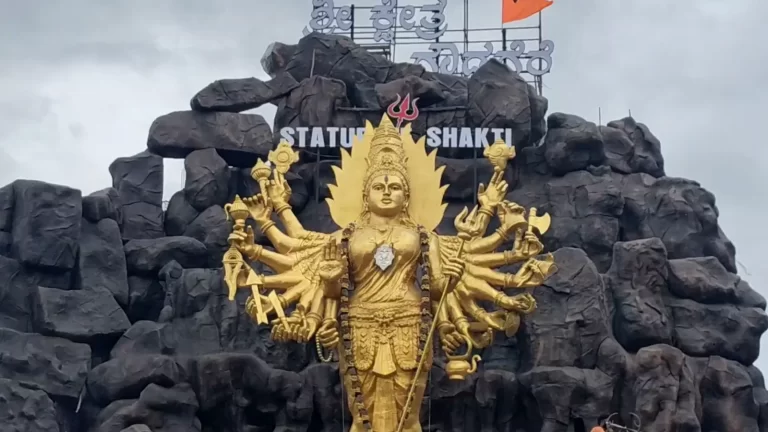
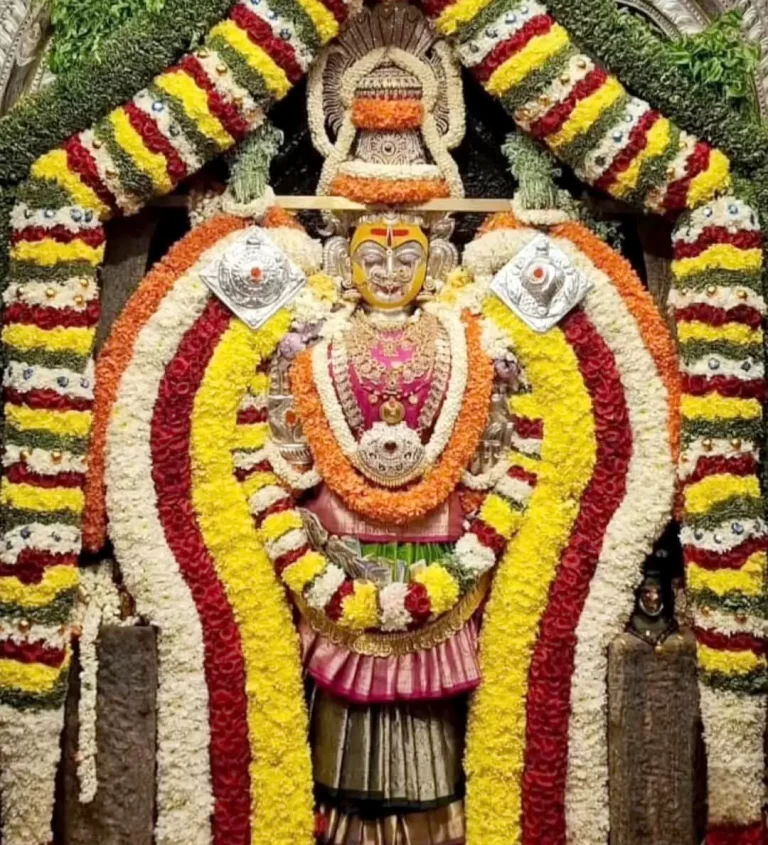
Kanaka Durga Temple, Vijayawada: A bit longer (about 60-70 km from Vedadri), but one of the best and most powerful temples in Andhra Pradesh, is Kanaka Durga Temple in Vijayawada, which is devoted to Goddess Durga. It is located on Indrakeeladri Hill, near the Krishna River. If you can find time, do give it a visit!
Penuganchiprolu Temple (Sri Tirupathamma Ammavari Temple): A popular temple of Goddess Tirupathamma, it is famous for its distinctive rituals and attracts lots of devotees.
Mopidevi Subrahmanyeswara Swamy Temple: Dedicated to Lord Subrahmanya (Kartikeya), this temple is renowned for its distinctive practice of praying to treat skin diseases.
Visiting these nearby locations will provide you with a stronger perception of the rich spiritual texture of Andhra Pradesh and enable you to feel different kinds of divine energies.
How to Get to the Temple: Your Travel to Vedadri Narasimha Swamy Temple
It is easy to get to the Vedadri Narasimha Swamy Temple, and you have several options, be it by road, rail, or air. It’s in a serene location, but well connected.
By Road:
From Vijayawada: Vijayawada is the closest big town, approximately 60-70 kilometers from Vedadri. You can find direct Vedadri buses from Vijayawada quite easily.
From Jaggayyapeta and Chillakallu: Vedadri is just near Jaggayyapeta town (around 16 km) and Chillakallu village (around 14 km). From these towns, you may easily take an auto-rickshaw or a personal taxi to the Vedadri Narasimha Swamy Temple.
Self-Drive: If you are driving, the temple is well accessed by good roads. You can use the navigation apps to guide you. For instance, from Amaravati, it’s a drive of around 87 km, which takes around 1 hour and 45 minutes.
By Rail:
Nearest Railway Station: The nearest railway station to Vedadri is Madhira, which is approximately 36-40 kilometers away. Numerous trains coming from various parts of India stop at Madhira. From Madhira, you can drive a bus or hire a taxi to reach the temple.
Vijayawada Railway Station: Alternatively, you can come to the big railway junction of Vijayawada and then board a connecting train or bus to Madhira, or take a taxi directly to Vedadri.
By Air:
Nearest Airport: The closest airport is Vijayawada Airport (Gannavaram Airport), which is about 90-95 kilometers from Vedadri. After arriving at Vijayawada, you can take a taxi or bus to the Vedadri Narasimha Swamy Temple.
However you may travel, part of the pilgrimage is the journey to the Vedadri Narasimha Swamy Temple, creating anticipation for the holy darshan that is to come.