Nelluvaya Sree Dhanwanthari Temple
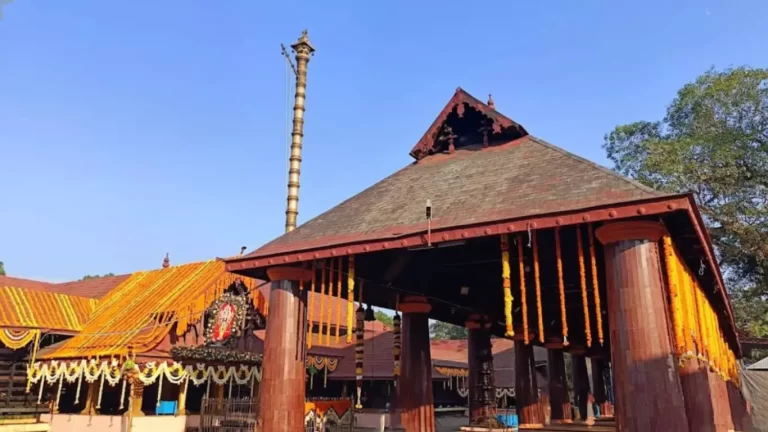
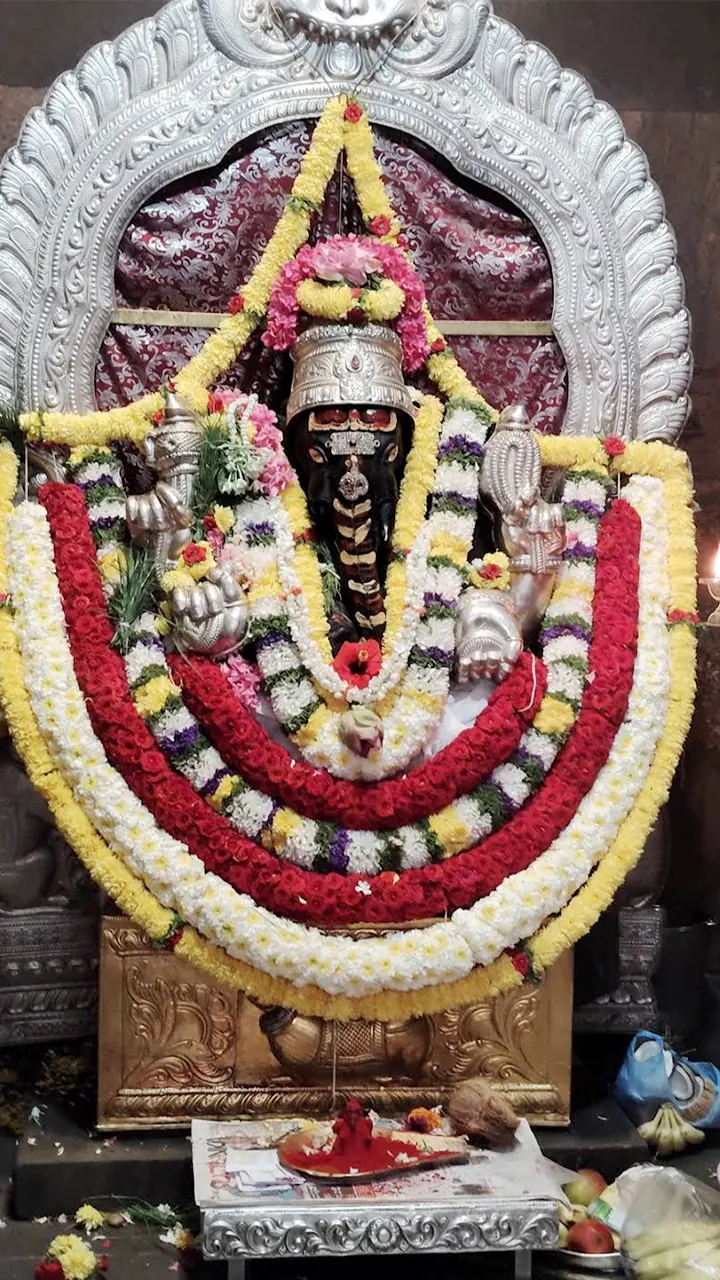
Nelluvaya Sree Dhanwanthari Temple – It’s located in a picturesque village named Nelluvai, which is in the Thrissur district of Kerala, India. Picture this: surrounded by rolling green fields of paddy and little hills, a soft stream running nearby. That’s Nelluvaya for you – where nature’s grace meets divine beauty!
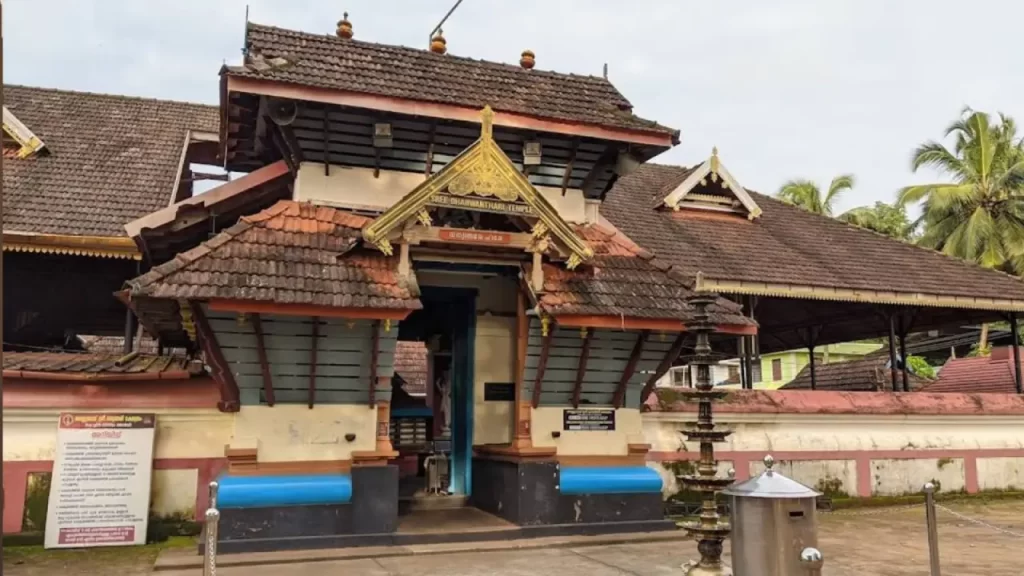
This isn’t an ordinary temple; this is a special home devoted to Lord Dhanwanthari, the God of Medicine. You see how when we are ill, we visit a doctor in order to recover? Okay, so Lord Dhanwanthari is basically the superdoctor of the world, and this temple is an extremely significant place to pray for good health and to cure diseases. So, let’s go on this incredible journey and learn all about this incredible temple!
Nelluvaya Sree Dhanwanthari Temple History: A Walk Through Time
Picture it, thousands and thousands of years ago, way before our grandparents or even their grandparents were born! That’s how old the Nelluvaya Sree Dhanwanthari Temple is thought to be. It’s one of the oldest temples of Lord Dhanwanthari in all of India!
The legends declare that the idol of Lord Dhanwanthari in this temple was not only installed by humans. It was installed by the Ashwini Devas themselves, who are divine twins and have unbelievable healing powers according to Hindu mythology. Divine beings visiting earth to install a temple? How awesome is that! Not only that, it’s also stated that even Lord Vasudeva, the father of Lord Krishna, worshipped this very same idol in a very ancient era known as the Dwapara Yuga. So, when you’re standing here, you’re standing at a location where gods and great sages have prayed for thousands of years. Isn’t that something special?
Legend of the Temple: Stories from the Past
Every ancient temple has interesting tales, and the Nelluvaya Sree Dhanwanthari Temple is not an exception. The most popular myth associated with Lord Dhanwanthari himself is based on a very, very ancient tale known as the Samudra Manthana, or the “Churning of the Ocean of Milk.”
Think of a gigantic ocean of milk! The Devas (good gods) and Asuras (not-so-good demons) desired a special nectar called Amrita, which would immortalize them. Therefore, they decided to churn this milky ocean with a giant mountain as a churning rod and a huge serpent as a rope. It was a very tough and thrilling task! As they churned, many marvelous things emerged from the ocean, and guess what? And one of the very last things to appear was Lord Dhanwanthari himself!
He came up with a pot of Amrita in one hand and a Jalooka (which is a leech, used in ancient medicine to extract bad blood) in the other. That is why he is revered as the divine physician, the one who imparted the blessing of healing and Ayurveda to mankind.
There’s a beautiful tale of how the idol was obtained by the Nelluvaya Sree Dhanwanthari Temple as well. Ages ago, the old idol in the temple was slightly damaged. So, the people decided to get a new idol carved out of a special stone. When they were bringing the new idol in a ceremonial procession to the temple, something miraculous happened! The Ashwini Devas, those heavenly doctors I informed you about, just appeared out of nowhere!
They brought with them a different idol, said to be the idol which Lord Vasudeva himself worshipped, and informed the people that this was the idol that had to be installed in the central sanctum. And then, suddenly, they vanished! Therefore, the idol you find within the core of the Nelluvaya Sree Dhanwanthari Temple is said to be that old, divinely blessed idol. Isn’t that an incredible story?
Read More>> Madapuram Kali Temple Madurai
Cultural, Spiritual, and Mythological Significance of the Temple
This temple is extremely significant for so many reasons!
Cultural Significance: Kerala, where Nelluvaya Sree Dhanwanthari Temple is situated, is renowned for Ayurveda, ancient Indian medicine. Lord Dhanwanthari is the Ayurvedic God, so it is a kind of privileged healing school for most people. Physicians and healers, particularly those who are Ayurvedic practitioners, usually visit this temple to obtain blessings prior to treating patients. They feel that praying to Lord Dhanwanthari will be able to heal diseases and grant good health to all. It’s a destination where the age-old wisdom of medicine is revered and nourished.
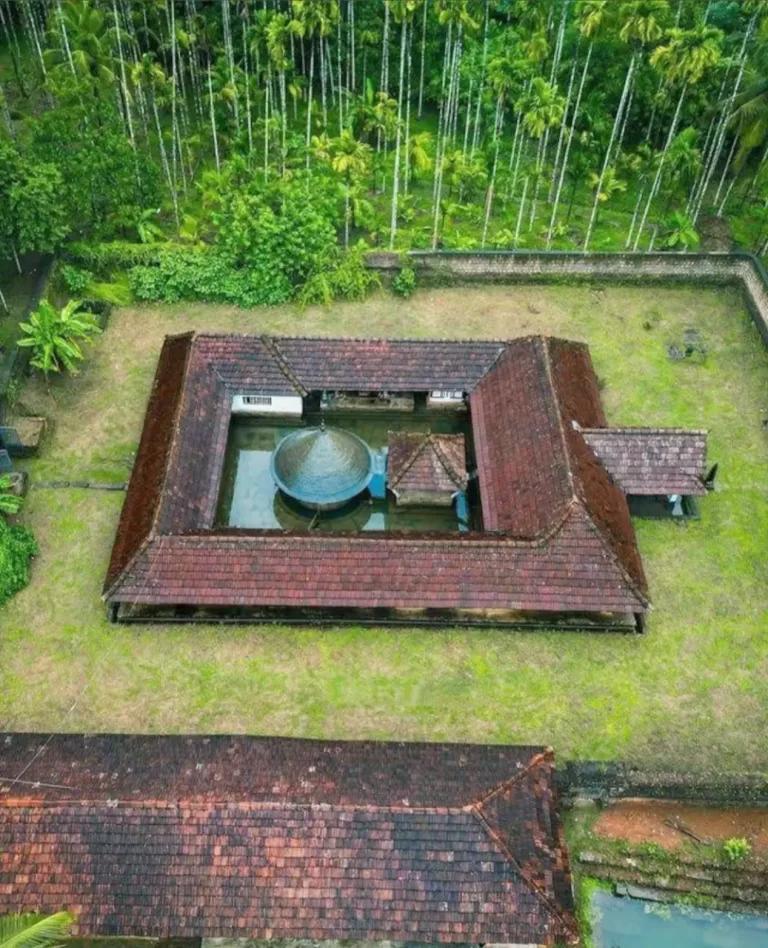
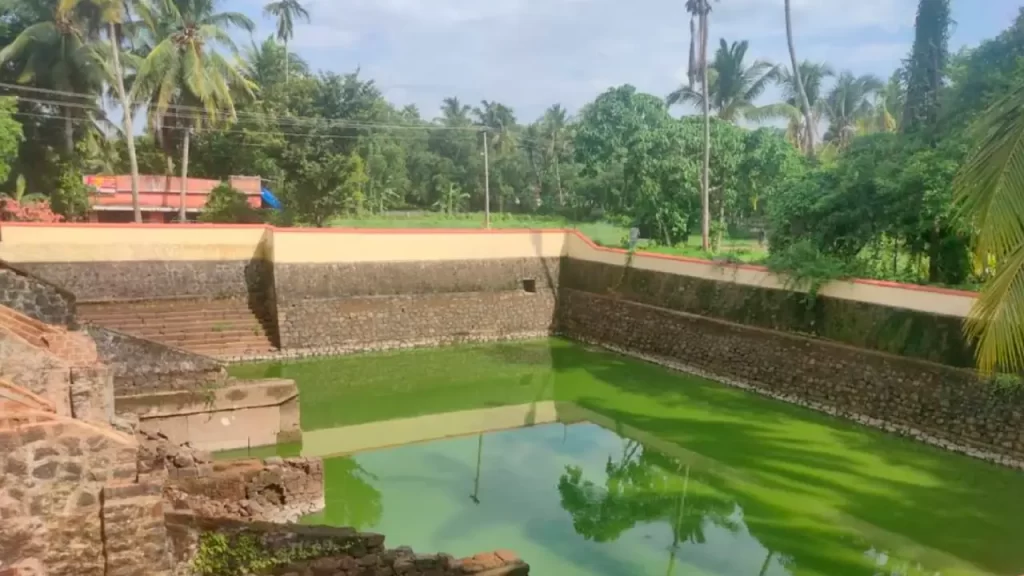
Spiritual Significance: For the devotees, this temple is a destination of great faith. Individuals visit here with solemn devotion, hoping that Lord Dhanwanthari will grant them good health, a cure from diseases, and general well-being. The serene environment of the temple, the picturesque scenery surrounding it, ensures that individuals become tranquil and at one with the divine. Many believe that just seeing the idol after taking a dip in the temple’s sacred pond can bring mental purity and a healthy body. It’s a place where your mind and body can feel really good!
Mythological Significance: As we learned in the myth of Samudra Manthana, Lord Dhanwanthari’s arrival is a very special moment in Hindu mythology. He is an avatar of Lord Vishnu, who is the most significant god in Hinduism and is recognized for guarding and preserving the world. So, traveling to the Nelluvaya Sree Dhanwanthari Temple is as good as connecting with a very powerful and beneficial incarnation of Lord Vishnu himself, namely in his avatar as the divine physician.

Festivals: Days of Happiness and Celebration
The Nelluvaya Sree Dhanwanthari Temple is filled with lively festivals all year round. These are days of immense joy, music, and worship!
Swargavathil Ekadashi: This is a very significant festival here, typically in December-January. Picture a month-long celebration with specific prayers and cultural activities! A lot of devotees visit during this period.
Dhanwanthari Jayanti: This festival marks the birthday of Lord Dhanwanthari. It’s a day of special importance when the believers give additional prayers and rituals, praying for good health and immunity against illness.
Aarattu Festival: This is a very big 3-day festival, typically celebrated during the Malayalam month of Medam. It’s a festive occasion with plenty of traditional music, such as Panchavadyam, and other cultural events.
Mukkudi Nivedyam: In some festivals, a special medicinal preparation known as Mukkudi is presented to the deity and subsequently distributed as prasadam (blessed food) to devotees. It is said to have curative properties.
Temple is usually busier on Thursdays since Lord Dhanwanthari is connected with Jupiter (Guru) and Thursday is Guruvar, the day of spiritual masters and divine blessings. During important occasions such as Swargavathil Ekadashi and Dhanwanthari Jayanti, you can see a tremendous crowd flocking to the Nelluvaya Sree Dhanwanthari Temple.
Read More>> 4th Century Gokarna Mahabaleshwar Temple
Distinguishing Architectural Forms and Sculptures
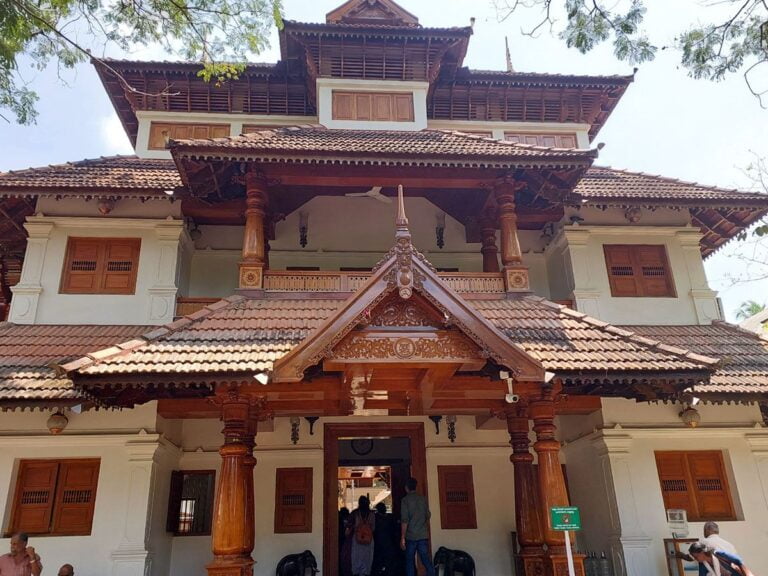
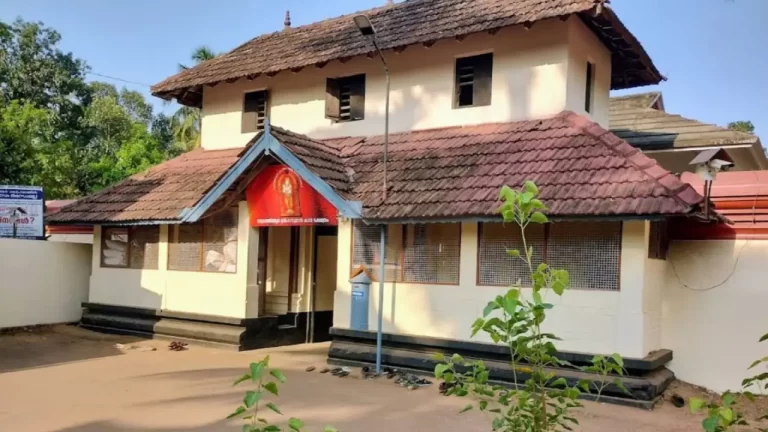
When you are visiting the Nelluvaya Sree Dhanwanthari Temple, notice the details of its architecture. Kerala temples boast a very unique and handsome architecture, and this temple displays some of them.
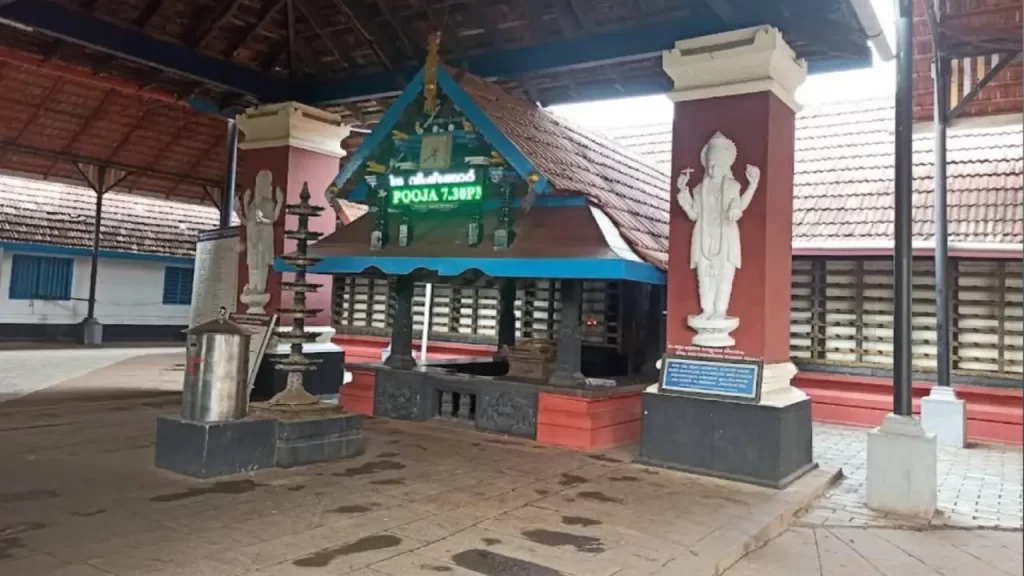
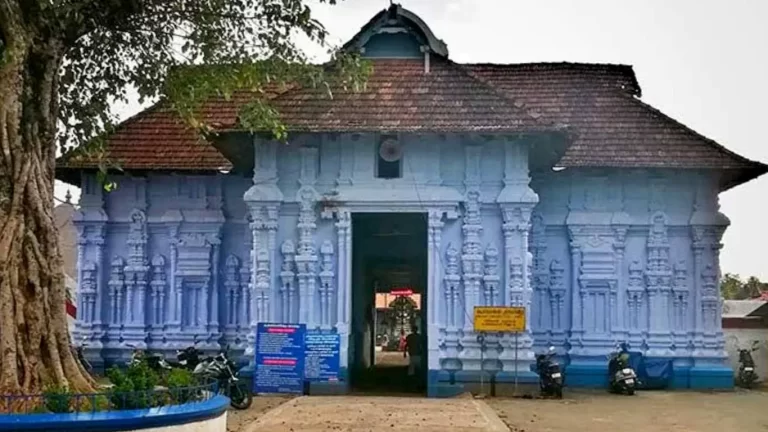
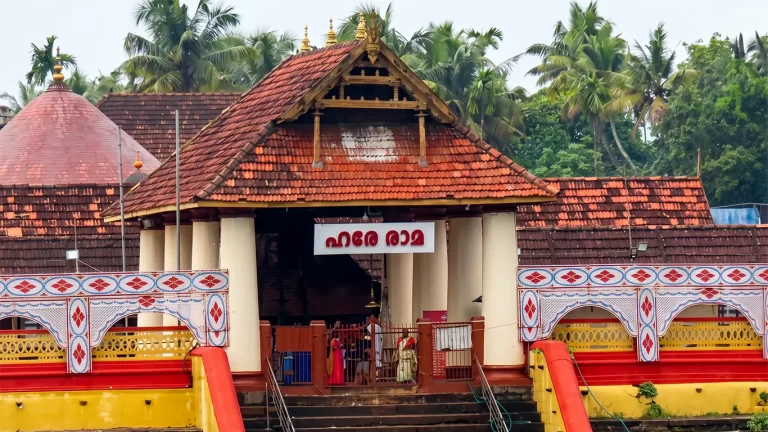
The shrine of Lord Dhanwanthari is positioned in the west direction, which is slightly different. The temple features Gopurams (decorated tower-like gates) both on its western and eastern facades. Inside, you can find a Nadappura (a path), a Balikkalpura (an offering place), and a huge Oottupura (dining hall) in the north direction. The ground around the central shrine is usually stoned-paved to keep it cool and comfortable to walk on. A traditional rock-paved Pradakshinavazhi, a walking path around the central deity as worship, can also be found.
Whereas certain information regarding detailed carvings on the Nelluvaya Sree Dhanwanthari Temple isn’t quite well-publicized, the majority of ancient Kerala temples have exquisite stone and wood carvings that illustrate several deities, mythological episodes, and customary motifs. You could find illustrations of heavenly creatures, animals, and plant species that contribute to the visual and spiritual atmosphere of the temple.
Read More>> 15 Best Places to Visit in Odisha
Myths and Beliefs: What People Believe
Many have strong beliefs regarding the Nelluvaya Sree Dhanwanthari Temple.
Healing Power: The most prevalent belief is that praying to Lord Dhanwanthari at this temple can heal all diseases. Several visit here for relief from long-standing illnesses, wishing for their beloved ones’ well-being, and even for a normal delivery.
Mukkudi Offering: The Mukkudi offering is one of a kind. It’s a blend of three ingredients (typically rice, green gram, and jaggery, with some Ayurvedic herbs) that is used to offer to the Lord. Devotees then eat this prasadam after the puja (prayer ritual) in the belief that it possesses healing powers from God. It’s a distinctive tradition at the Nelluvaya Sree Dhanwanthari Temple that speaks to its medicinal links.
Vaidyas’ Adoration: Ayurvedic doctors (Vaidyas) have a deep affection for this temple. It’s traditional for them to pray and make vazhipadu (offerings) here before proceeding with significant medical procedures or even opening their practice. They believe it guarantees their patients’ successful treatments.
Protection from Evil Deeds: It is said that Lord Dhanwanthari, who appeared in the Paalaazhi Madhanam (churning of the milk ocean), stays here to safeguard the world from every evil and bad influence, such as diseases.
Read More>> Unbelievable Facts About Udiyanoor Devi Temple You Never Knew!
Nelluvaya Sree Dhanwanthari Temple Timings: How and When to Visit
Knowing the timings will help you plan your visit to the Nelluvaya Sree Dhanwanthari Temple perfectly!
The temple usually opens for the day in the morning and closes for a few hours in the afternoon and reopens in the evening.
Morning: 5:00 AM to 11:00 AM (approx.)
Ushapoojam (morning prayers) around 6:00 AM
Pandeeradi pooja around 8:00 AM
Uchapooja (mid-day prayers) around 10:30 AM
Afternoon Break: 11:00 AM to 5:00 PM (approx.) – The temple is closed between these hours.
Evening: 5:00 PM to 8:00 PM (approx.)
Deeparadhana (lamp ceremony) around 6:00 PM
Athazha Pooja (evening prayers) at 7:30 PM
Keep in mind that sometimes these timings are altered because of special festivals or occasions, so it’s best to verify closer to your travel date, especially if you’re traveling a long distance.
Sites to See in the Vicinity of the Temple
As you are in the Thrissur district visiting Nelluvaya Sree Dhanwanthari Temple, there are numerous other great sites to see which will make your trip even more memorable!
Guruvayur Sree Krishna Temple: One of the most popular and prominent Krishna temples in Kerala, and widely referred to as the “Dwarka of the South.” It’s a colorful and spiritually vibrant site, easily within driving distance.
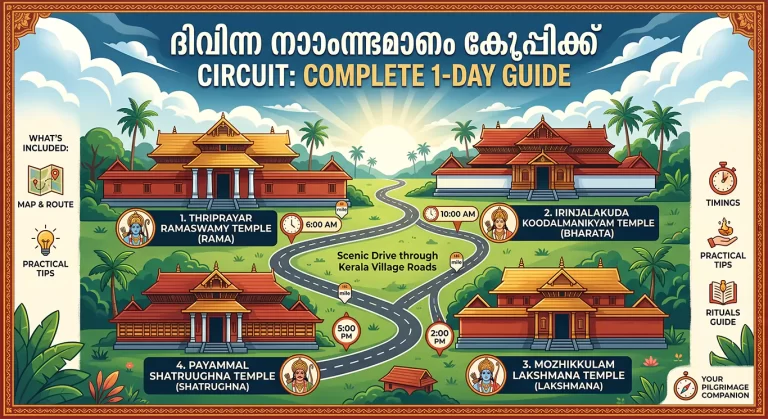
Koodalmanikyam Temple: In Irinjalakuda, this special temple is specifically for Lord Bharata, a brother of Lord Rama. It has some rather unique rituals and offerings.
Thriprayar Sree Rama Temple: Another major temple to Lord Rama, providing a serene and lovely experience.
Peechi Dam: Nature lovers will find the dam to be aesthetically pleasing and peaceful, providing an environment for relaxation.
Athirappilly Waterfalls: Famously known as the “Niagara of India,” the stunning waterfalls are breathtaking, particularly during monsoon months. It’s a little out of the way but well worth the visit if you can make it.
Visiting these locations will provide you with a clearer insight into Kerala’s rich religious and natural heritage.
Read More>> Avanangattil Kalari Vishnumaya Temple
Accommodation Options: Where to Stay
When you visit the Nelluvaya Sree Dhanwanthari Temple, you will have several options to stay, depending on your needs.
As Nelluvai is a small village, you may be able to get more simple guesthouses or homestays within the immediate area, providing a local experience. For additional choices, such as hotels with additional amenities, you may want to search for lodging in surrounding towns such as:
Thrissur: As a large city, Thrissur has plenty of hotels ranging from budget-friendly to more high-end options. It’s roughly an hour’s drive from Nelluvai.
Wadakkanchery: It is a nearer town to Nelluvai, and you may find some good hotels or lodges.
Kunnamkulam: It is an another nearest town with some accommodation options.
It is always good to reserve your accommodation well in advance, especially if you are visiting during the peak season or festival seasons, since the Nelluvaya Sree Dhanwanthari Temple receives a lot of visitors.
Read More>> Mannarasala Temple of Sree Nagaraja with 10000 idols
How to Reach Nelluvaya Sree Dhanwanthari Temple: Your Travel Guide
Reaching the Nelluvaya Sree Dhanwanthari Temple is very simple!
By Air: The closest international airport is Cochin International Airport (CIAL), which is near Nedumbassery, Ernakulam. From there, take a bus or a taxi to Thrissur and then drive further to Nelluvai. Alternatively, you can go to Calicut International Airport (Karipur), also a couple of hours away.
By Train: The nearest major train station is Thrissur Railway Station. Numerous trains from all over India pass through. By Thrissur, you can travel to Nelluvai in a local bus or taxi. Another fairly near train station is Wadakkanchery Railway Station.
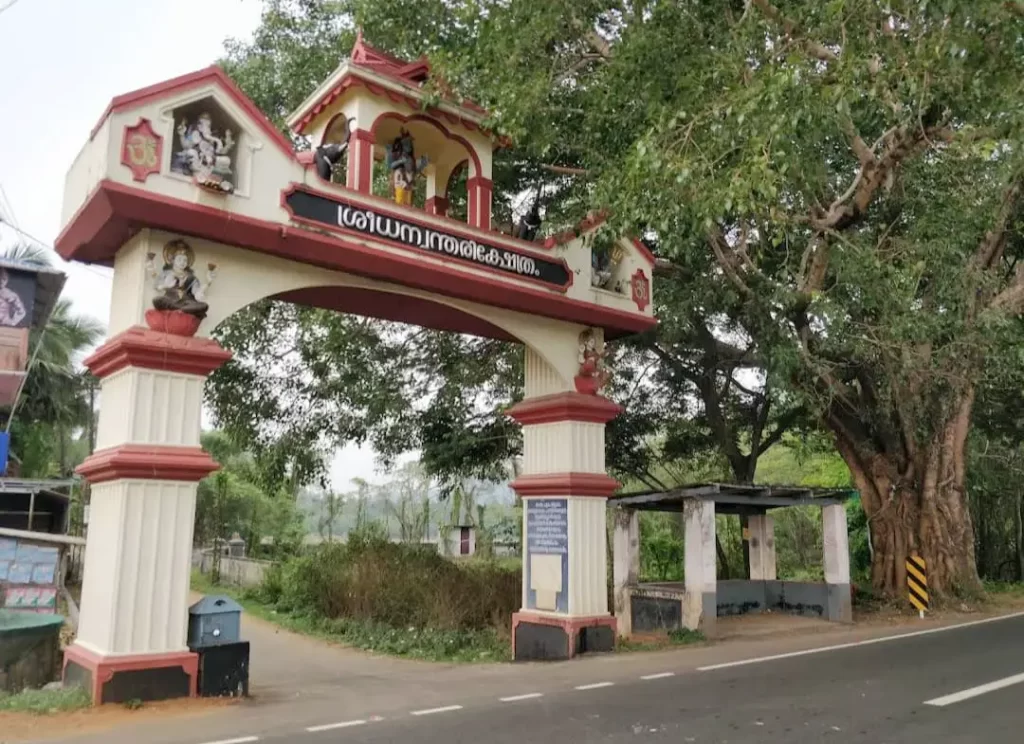
By Road: Nelluvai is adequately connected by road. It is quite simple to reach it by bus from the major cities of Kerala such as Thrissur, Palakkad, and Ernakulam. If you are driving, the temple is located along the Vadakkanchery-Kunnamkulam Road. GPS can be used to find your way there, and local signboards will lead you to the Nelluvaya Sree Dhanwanthari Temple.
Whichever means you take to get there, the trip to this holy place will be an unforgettable aspect of your journey!
Read More>> Powerful Balkampet Yellamma Temple: 15 Century Swayambhu Idol found in a well
Why This Place is Very Important and Special Poojas
The Nelluvaya Sree Dhanwanthari Temple is a real gem, a shining aura of health and wellness. Its significance is that it is the only place where one can approach the divine physician to gain his blessings for physical and mental restoration. In today’s world where we are so consumed by concerns, this temple serves as an antidote to our worries, reminding us of the strength of faith and the time-honored wisdom of Ayurveda.
Other than the routine daily pujas (prayers) done in the morning and evening, there are some special pujas that are in demand by devotees:
Mukkudi Nivedyam: As mentioned above, this is a special offering. It’s said to be a medicinal prasadam that cures diseases.
Vennacharthu: This is performed by smearing ghee (clarified butter) over the idol of Lord Dhanwanthari. Ghee is regarded as extremely pure and sacred, and this offering is said to ensure good health and prosperity.
Palpayasam: Offering Palpayasam (sweet milk pudding) is also a popular vazhipadu (offering) at the Nelluvaya Sree Dhanwanthari Temple, typically performed to make wishes come true or to thank someone.
Dhanwanthari Homam: A strong fire ceremony done to gain the blessings of Lord Dhanwanthari for health, healing from sickness, and well-being. This Homam is sponsored by many people and families to obtain divine help with health problems.
Mrityunjaya Homam: Though wholly dedicated to Lord Shiva, this Homam is also done at the Nelluvaya Sree Dhanwanthari Temple by others who pray to be free from premature death and life-threatening illnesses.
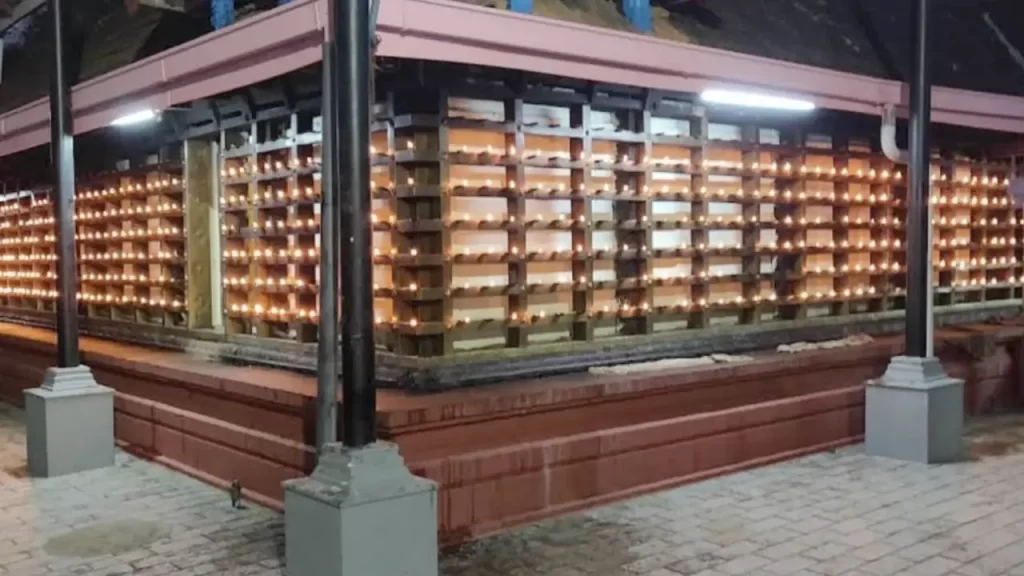
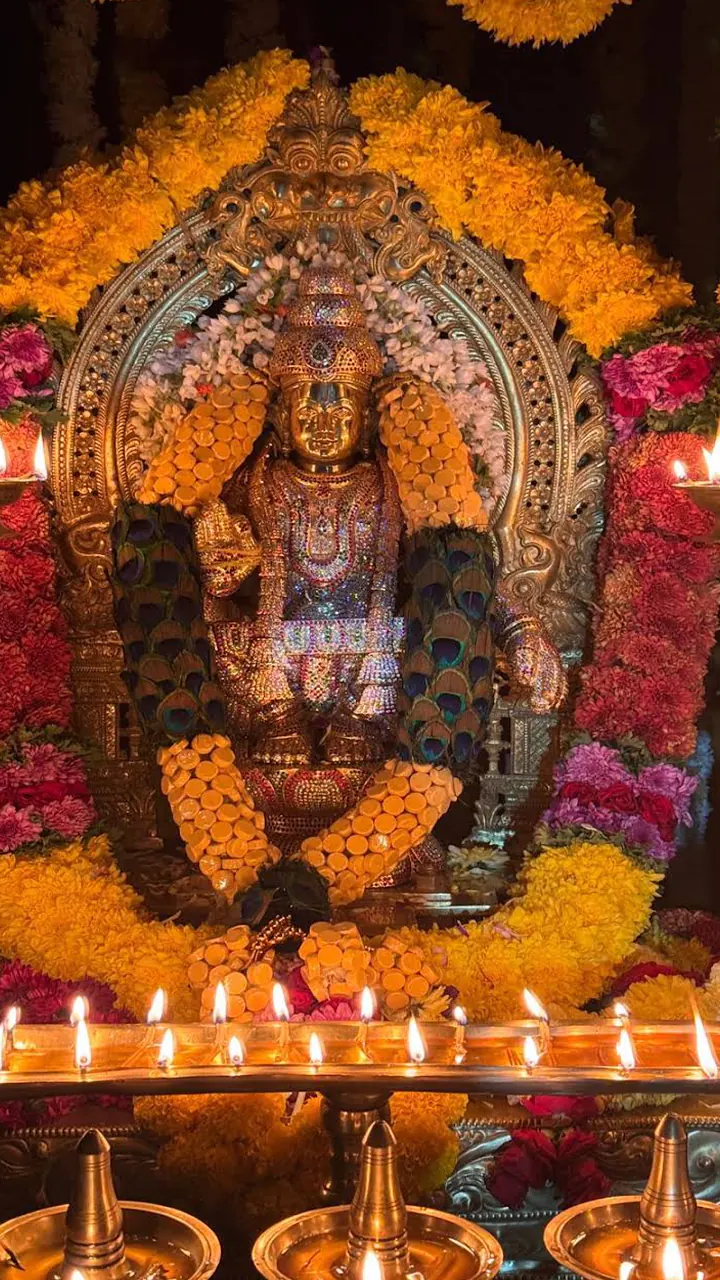
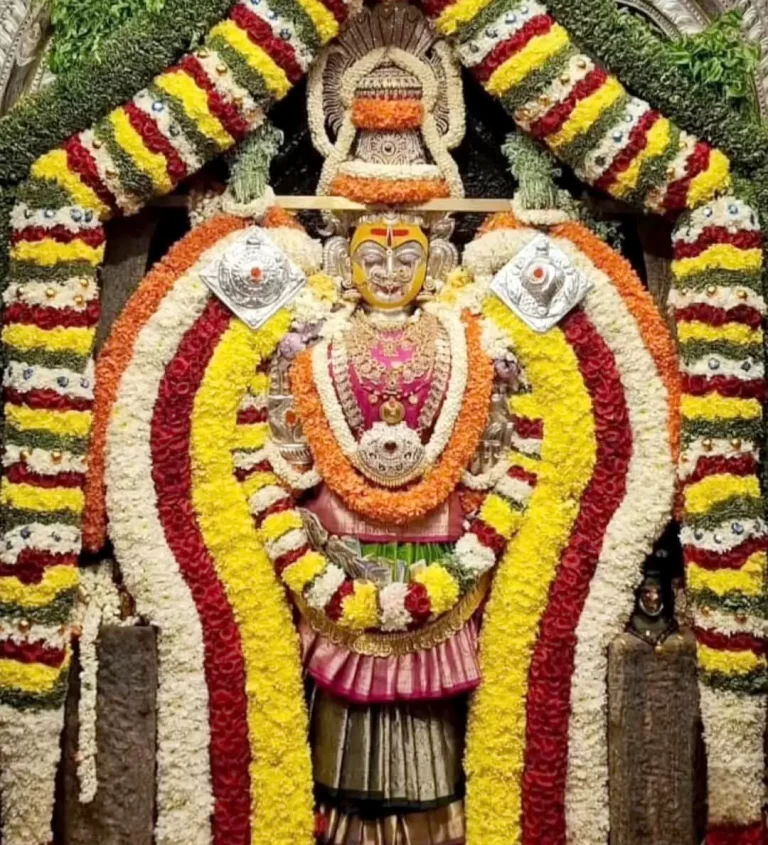
Niramala Vazhipadu: It is a unique offering in which the whole temple, including sanctum sanctorum, is adorned with lamps (malavilakku) and flower garlands, giving a stunning view, usually done to show devotion and seek blessings.
These unique pujas make the Nelluvaya Sree Dhanwanthari Temple an indispensable place to visit for all those who desire total well-being and heavenly healing.