Siddhivinayak Temple, Siddhatek
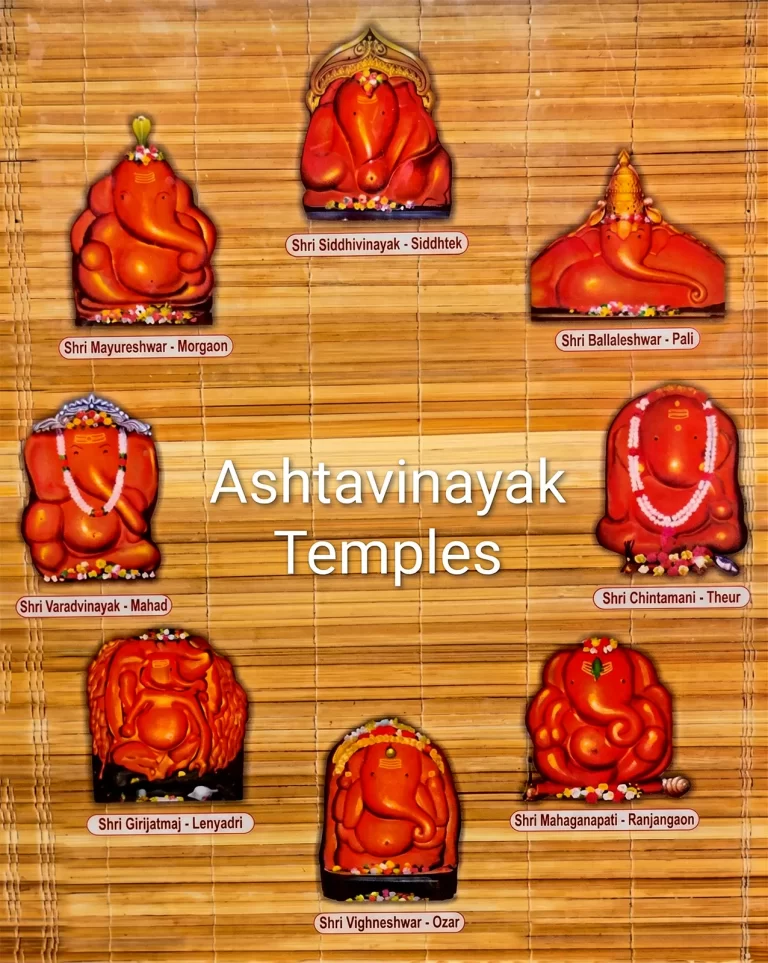
Siddhivinayak Temple Siddhatek is the revered name of the temple located in the serene and peaceful village of Siddhatek in the Karjat Taluka of the Ahmednagar district of Maharashtra. The Siddhivinayak Temple is situated in a beautiful location at the northern banks of the Bhima River and is approximately 18 kilometers away from the Daund Railway Station Junction and 100 kilometers away from Pune. This is not any normal temple but one which holds a glorious place being the second among the eight shrines of the famous Ashtavinayak circuit in Maharashtra, which includes the eight self-manifested (Swayambhu) shrines of Lord Ganesha.
Be it a dedicated devotee who intends to complete his/her vow, a historian interested in the glory of the Marathas and Peshwas or a traveler who would like to take a break from the hustle-bustle of the city life, there is something that Siddhivinayak Temple Siddhatek has to offer. What makes the siddhatek ganpati unique is the unique and strict discipline that one gets to witness here unlike any other place for worshipping Lord Ganesha.
Now, put on your boots, close your eyes, breathe and join me as I take you through the past, architecture and soul of the magnificent Siddhivinayak Temple, Siddhatek.
Siddhivinayak Temple, Siddhatek History
In order to gain a full understanding of the significance of stone walls and spiritual energy surrounding the Siddhivinayak Temple, Siddhatek, it is necessary to trace the history not only for a couple of human centuries but also in the timescales of Hindu mythology.
Mythology Behind the Siddhatek
According to tradition, before the birth of the current universe, Lord Brahma appeared from the lotus flower that grew on Lord Vishnu’s navel to start his chanting of “OM” in order to create the nature. Being completely occupied with the act of the cosmic creation, Lord Vishnu entered a deep sleep. During this period of weakness, two demons called Madhu and Kaitabha were created from the wax coming out of Vishnu’s ears, and they started their destruction.
Waking up from his sleep, Lord Vishnu tried to kill those demons, but to his surprise, he spent a thousand years fighting them without achieving success. Experiencing fatigue and frustration, Vishnu turned to the wise Lord Shiva for advice. Smiling at him, Shiva pointed out one thing Vishnu should know; he forgot to pray and honor Lord Ganesha.
Understanding his blunder, Lord Vishnu then visited a secluded hillock on the banks of the Bhima River, now known as Siddhatek. It was here that he undertook severe penance, constantly meditating on the holy six-lettered Ganesha Shadakshar Mantra, “Om Shri Ganeshaya Namah.” Pleased with his undying devotion, Lord Ganesha manifested himself and bestowed upon him supreme divine powers or siddhis. Using his divine powers thus acquired, Lord Vishnu then went back to the battleground and effortlessly wiped out Madhu and Kaitabha.
Since Lord Vishnu had attained his supreme siddhi (achievement/ success) in this very place (tek stands for hillock/mound in Marathi), henceforth, it would forever be known as Siddhatek and the presiding deity, in reverence, came to be known as the Siddhivinayak Temple, Siddhatek.
Read More>> Tungnath Temple: The Highest Shiva Shrine in the World 12k ft
The Temple’s Rebirth in the Hands of Royalty and Saints
Through cosmic ages, the once glorious four-pillared temple built by Lord Vishnu deteriorated into nothingness. According to legend, the idol, having revealed itself spontaneously, was later found by an ordinary shepherd. Realizing its significance, he began praying and looking after the idol, along with the assistance of a devout local priest.
The splendid stone architecture that we have today is evidence of the magnificent revival of Maratha during the 18th century. The sanctum sanctorum or Garbhagriha of the temple was constructed by the renowned, saintly Ahilyabai Holkar of Indore, who was well-known for reviving the desecrated shrines of the Hindu faith across the Indian sub-continent.
Later, a very significant nobleman and the leader of the army of Peshwas, Haripant Phadke added immensely to the structure. Historical sources state that Haripant had faced a lot of opposition at the court and hence lost his military rank. He visited Siddhatek and underwent a stringent Anushthan or ritual for 21 days during which he vowed to make 21 circumambulations of the hillock every single day. As God would have it, on the very 21st day, a respected messenger from the court of Peshwas arrived at Siddhatek from Pune, reinstating his military rank with great honor! Grateful and elated, Haripant erected the magnificent Mahadwar gateway, the stoneway, and the stone Ghats that lead to the Bhima river.
Siddhatek is also associated with some of the most revered saints. Some of the most significant saints such as Sage Vyas, Sage Bhrushundi, the well-renowned Ganesha devotee Morya Gosavi, and Narayan Maharaj all spent time on this holy hillock, performing rigorous penance and reinforcing the area’s spiritual gravity.
Religious and Cultural Significance
Upon entering the Siddhivinayak Temple, Siddhatek, you will be entering an energy field filled with enormous amounts of spiritual energy. According to the traditions of Maharasthra, the siddhatek ganpati is one of the most Jagrut devasthanam—the most awaken deity who can answer the call of those sincerely praying to him.
Proof from the Sacred Text: Mudgala Purana
Need not believe me alone and only hear about the legends regarding this place—this is a place mentioned directly in the holy books of Hindus. Both the Mudgala Purana and the Ganesha Purana, entirely devoted to the worship of the elephant-headed god, contain chapters describing Siddha-Kshetra of Siddhatek.
As per the Mudgala Purana:
“Siddha-kshetram param punyam bhukti-mukti-pradayakam, Yatra Vishnurganeshasya kripaya siddhimaptavan.”
In essence, the saying means, “Siddha Kshetra is the highly sacred location which provides both worldly pleasures or bhukti and eternal salvation or mukti; it is the same location where Lord Vishnu was successful through the grace of Lord Ganesha.”
The Mystery of the Right-Sided Trunk (Siddhi Vinayak)
Now coming to the highlight of the Siddhatek Ganpati; here is an important observation for you as my tour guide. Most of the Ganesha idols found in India have a curved trunk towards the left side (Vamamukhi). These are the left-sided idols, depicting the calming influence of the moon or Chandra Nadi.
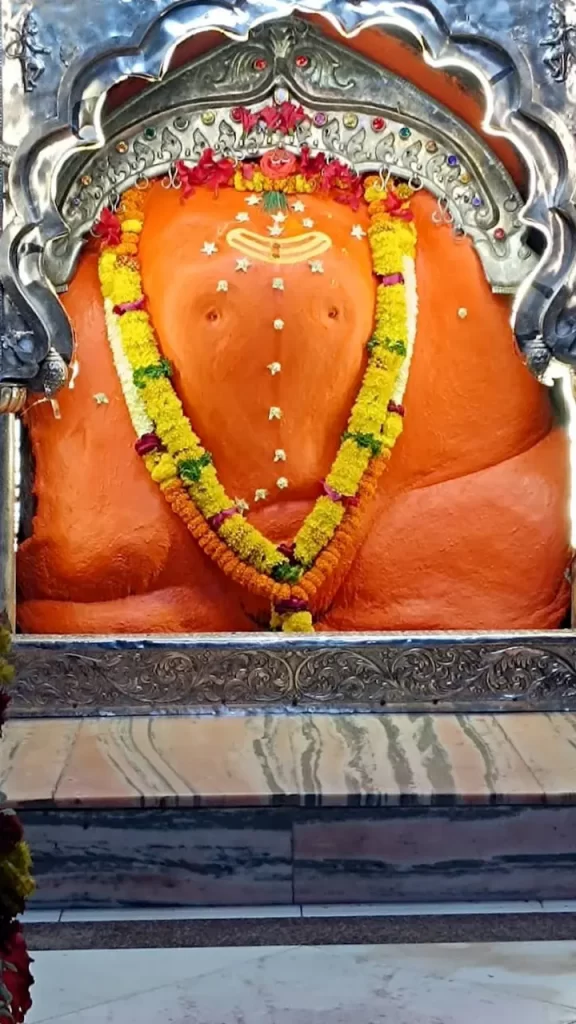
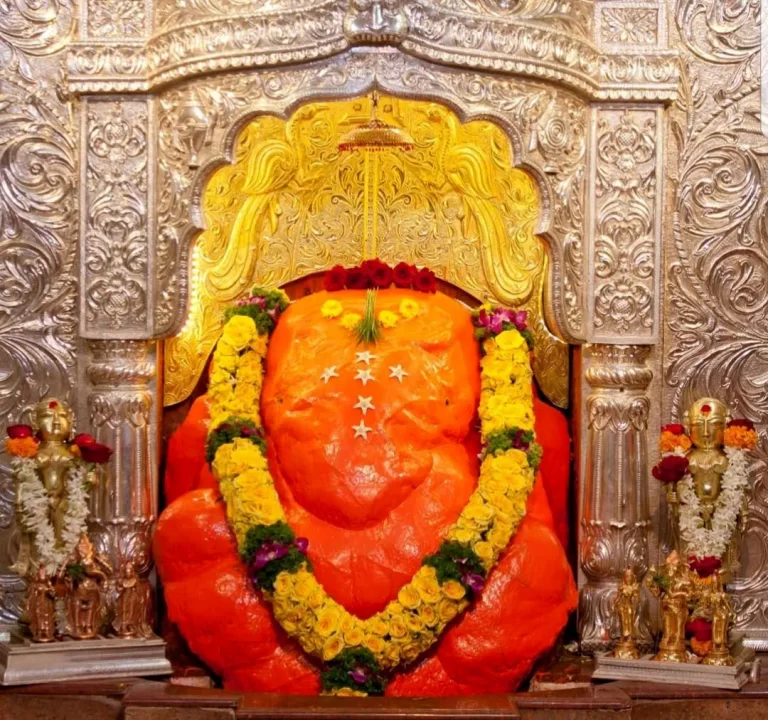
But the siddhatek ganpati is one among the Siddhivinayak forms. The characteristic feature here is the trunk being turned to the right side, which is known as Dakshinabhimukhi. A Ganpati with his trunk on the right symbolizes the dynamic solar energy called Surya Nadi. He signifies ultimate power, perfect cosmic justice, and absolute autonomy. According to the beliefs, while a Ganpati who is facing right is capable of bestowing exceptional siddhis, prosperity, and success instantaneously, he also requires strict spiritual discipline and ritual purity.
Read More>> Shri Kalabhairaveshwara Temple Bengaluru
Architecture and Design
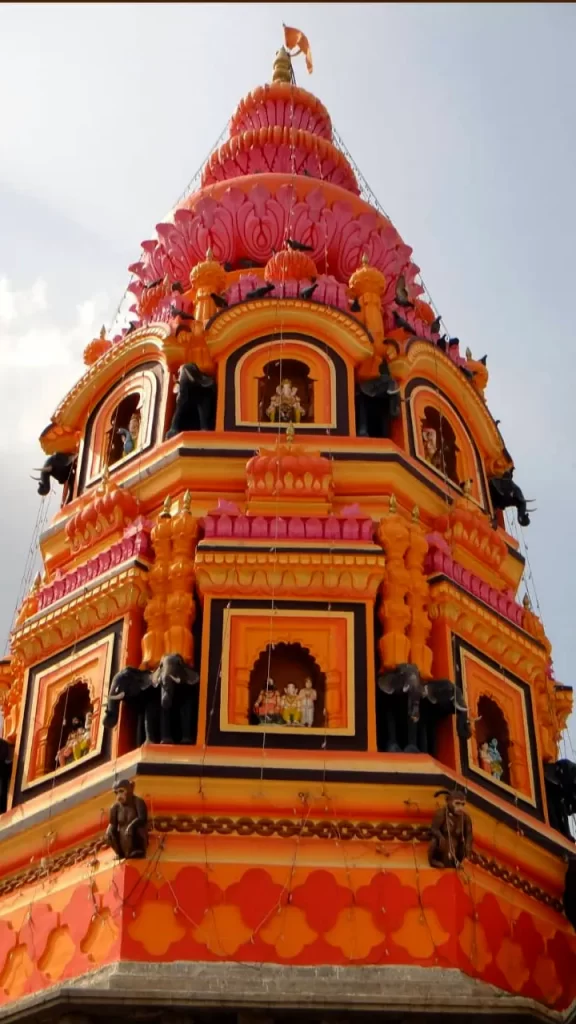
On approaching the building, however, one will observe that the temple of Siddhivinayak Temple, Siddhatek is not one of those temples having towering gopurams as in the case of South Indian Dravidian architecture, nor does it resemble the elaborately carved Shikhars that are associated with the Nagara style of North India. It is an absolutely splendid example of Maratha-Peshwa architecture, heavily influenced by the medieval Wada-style architecture.
External Structure and Fortification Architecture
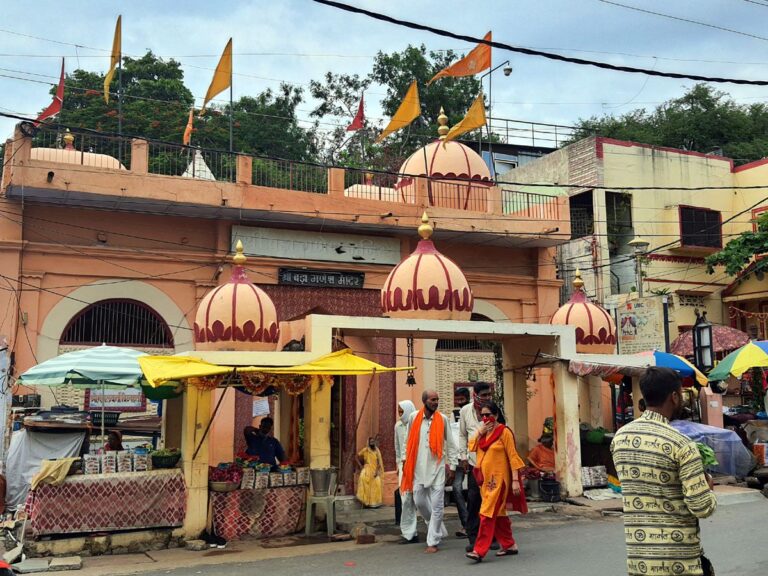
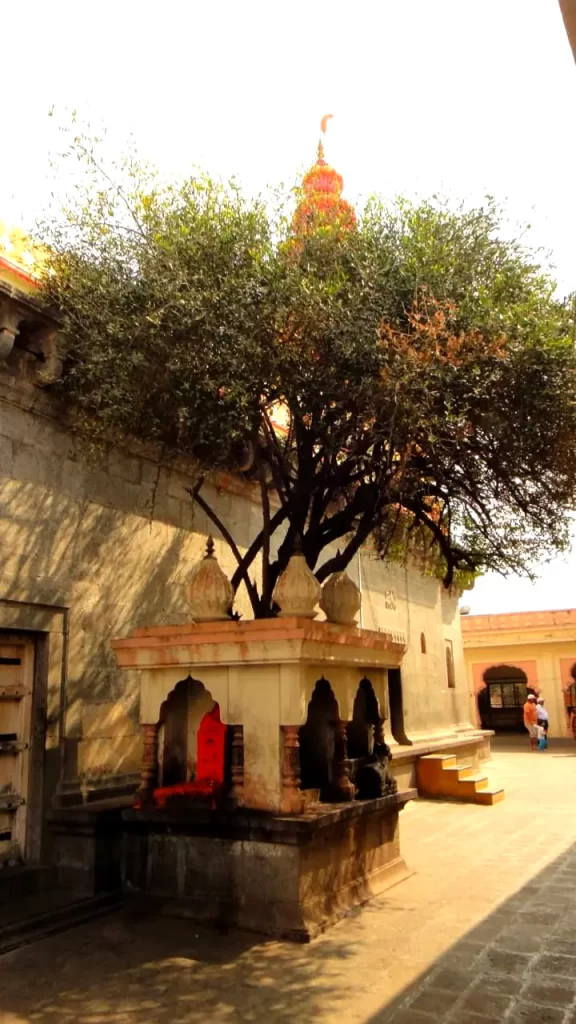
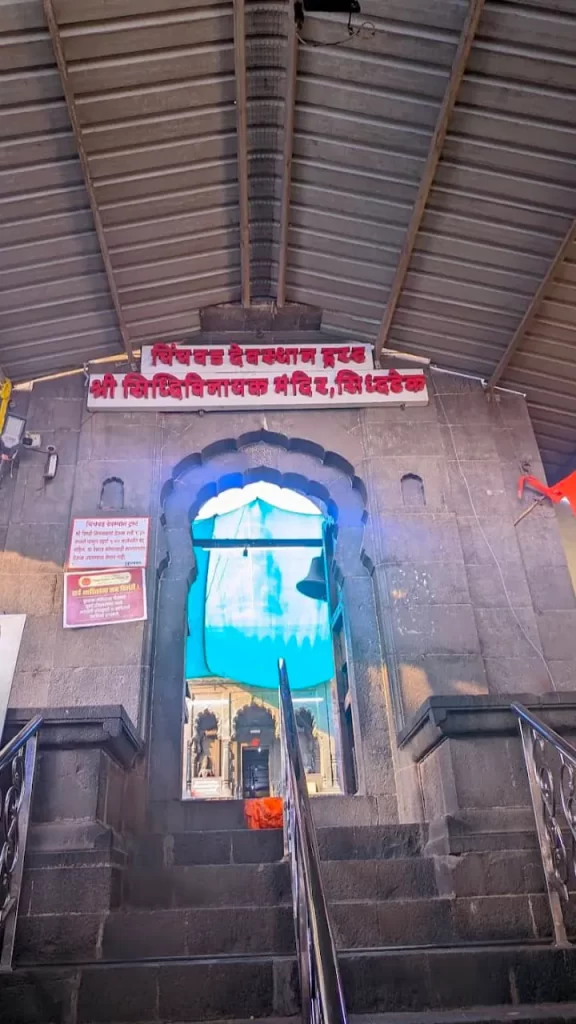
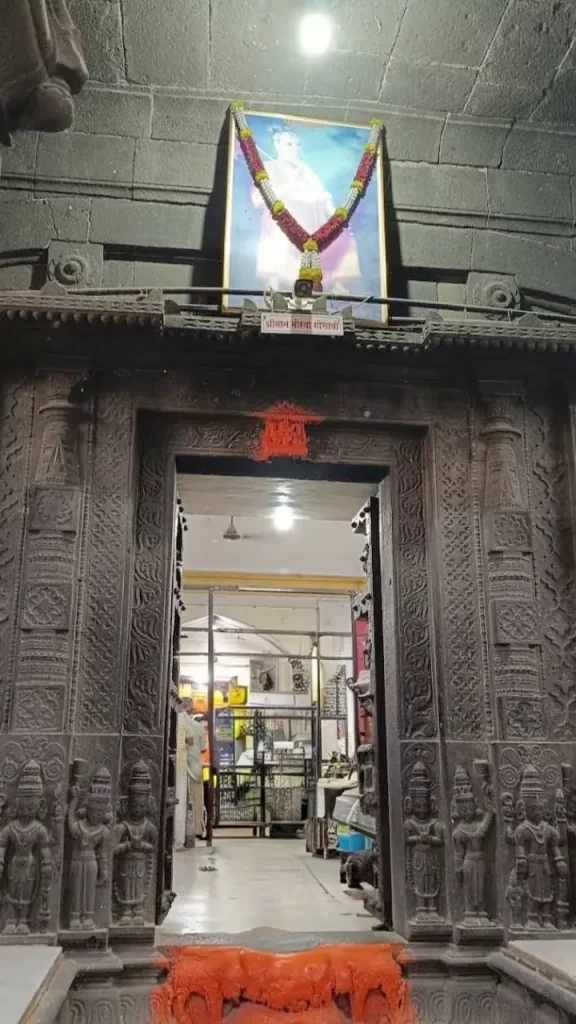
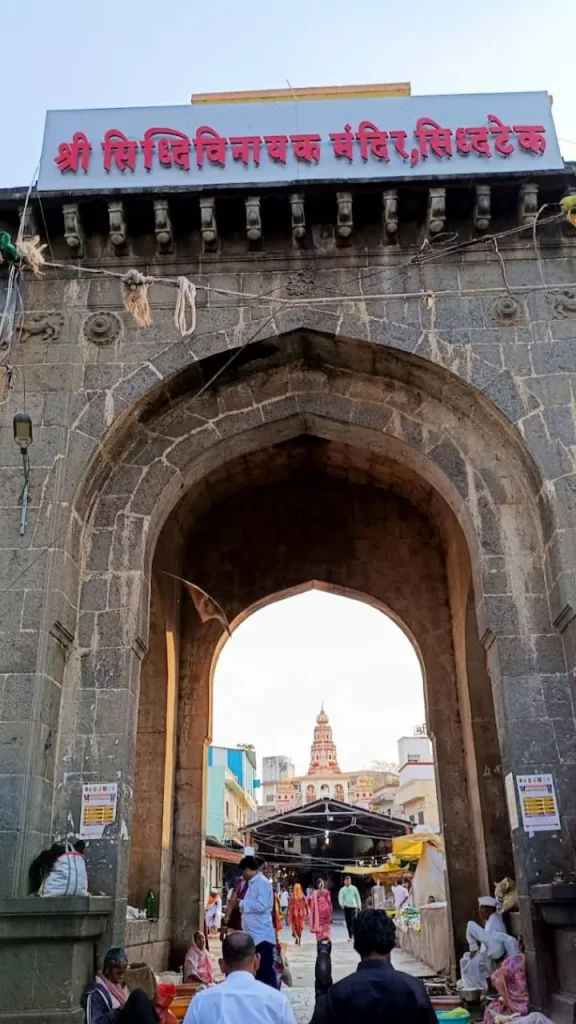
The temple stands upon a small hill and faces northwards, which according to Hindu tradition is regarded as an auspicious direction. On entering through the stone-paved path constructed by Haripant Phadke, you can see that there is a huge stone gate (Mahadwar) in front of you that looks just like a gatehouse of a military fort. On the walls of this arched gate are some beautiful carvings of lotuses and of the mythical creature called Sharabh (protector).
In the middle of the inner wall of this gate there is a striking relief carving of two wrestlers fighting each other symbolically depicting the struggle against baser tendencies of human nature. Above this imposing gate there is a classic Nagarkhana, from where large musical instruments used to be beaten during royal times.
Core Materials Used & Interior of the Temple
Black Basalt Stone, which can resist heavy rains, has been used in construction as a local material. The foundation of the main temple structure has been made by raising it at a lofty height of 12 feet from the ground level.
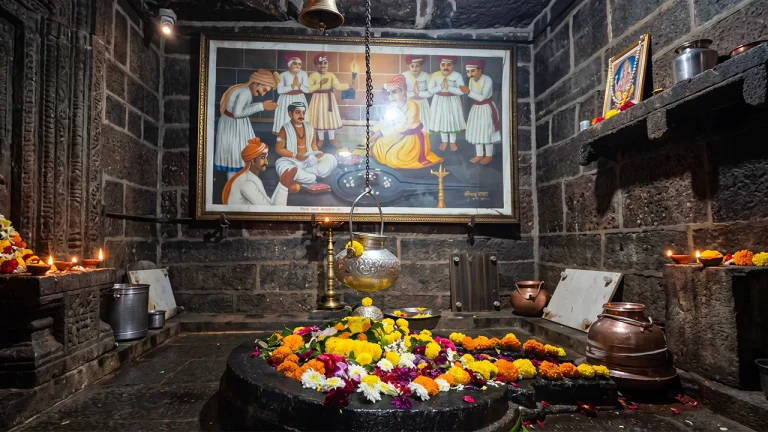
As soon as you enter the main Sabhamandap of the temple, a feeling of awe immediately surrounds you. Proceeding further into the temple, one gets to see the entrance door to the Garbhagriha (inner sanctum sanctorum). This chamber is only 5 feet tall but 10 feet wide. Brass has been used for making the threshold. The interior design of this chamber is based more on geometrical density rather than any ornamentation.
Read More>> Adi Kumbeswarar Temple Kumbakonam: Amazing Temple with 1000 Columns
Main Attractions or Highlights
As we move slowly across the temple premises, let me show you the few hidden treasures and specialities of Siddhivinayak Temple, Siddhatek.
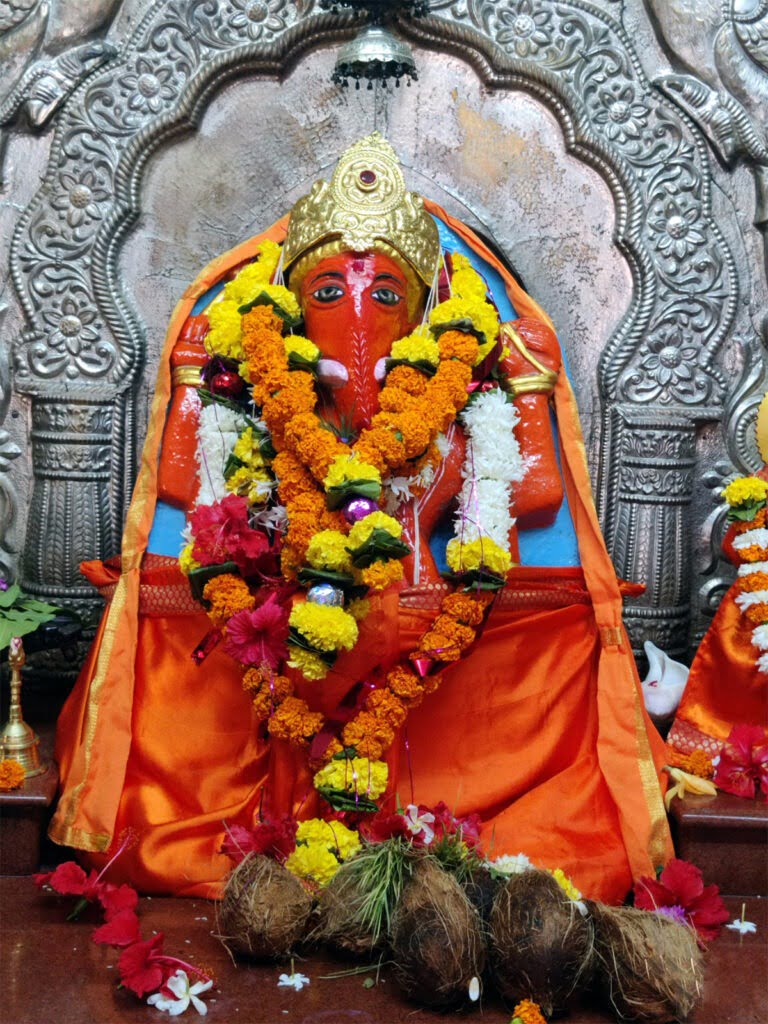
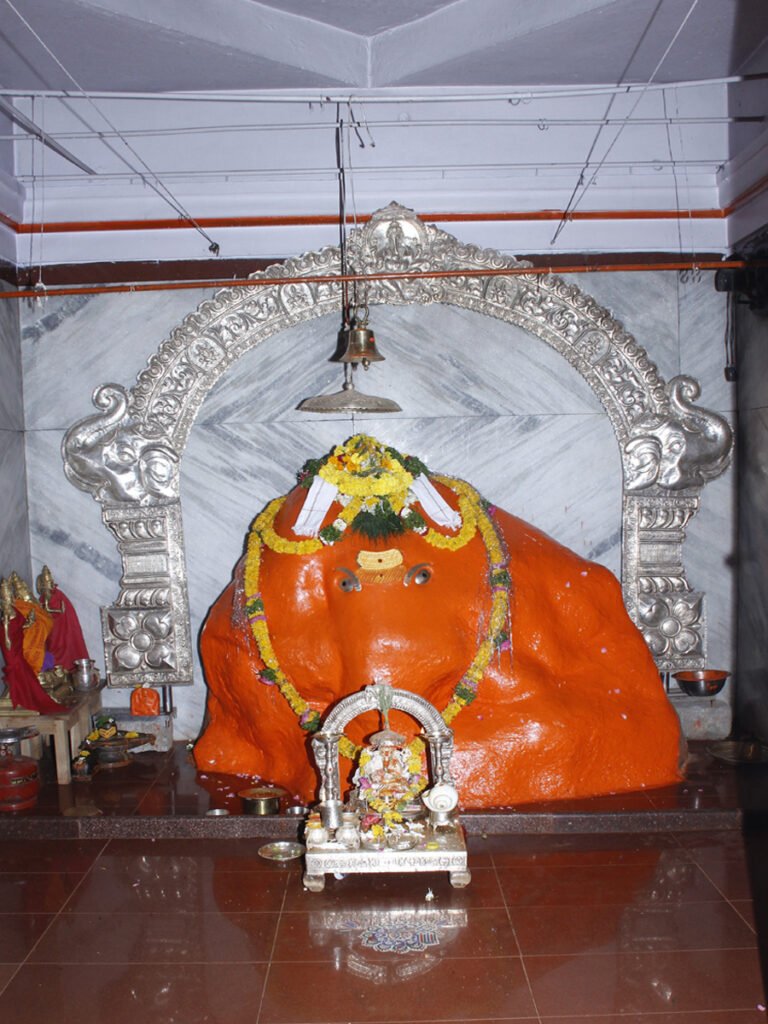
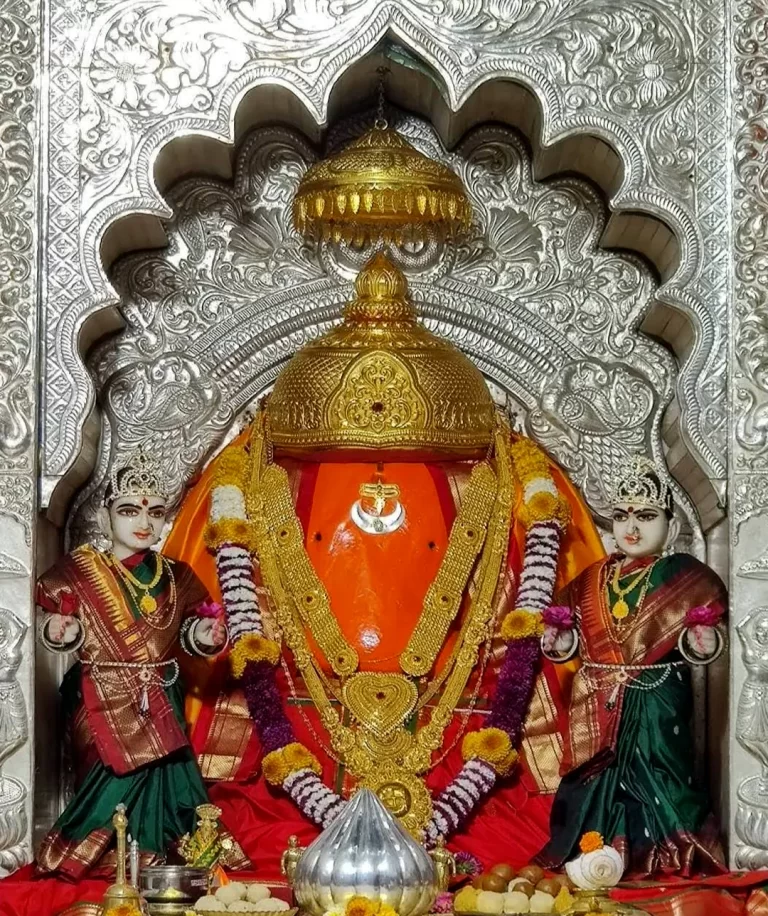
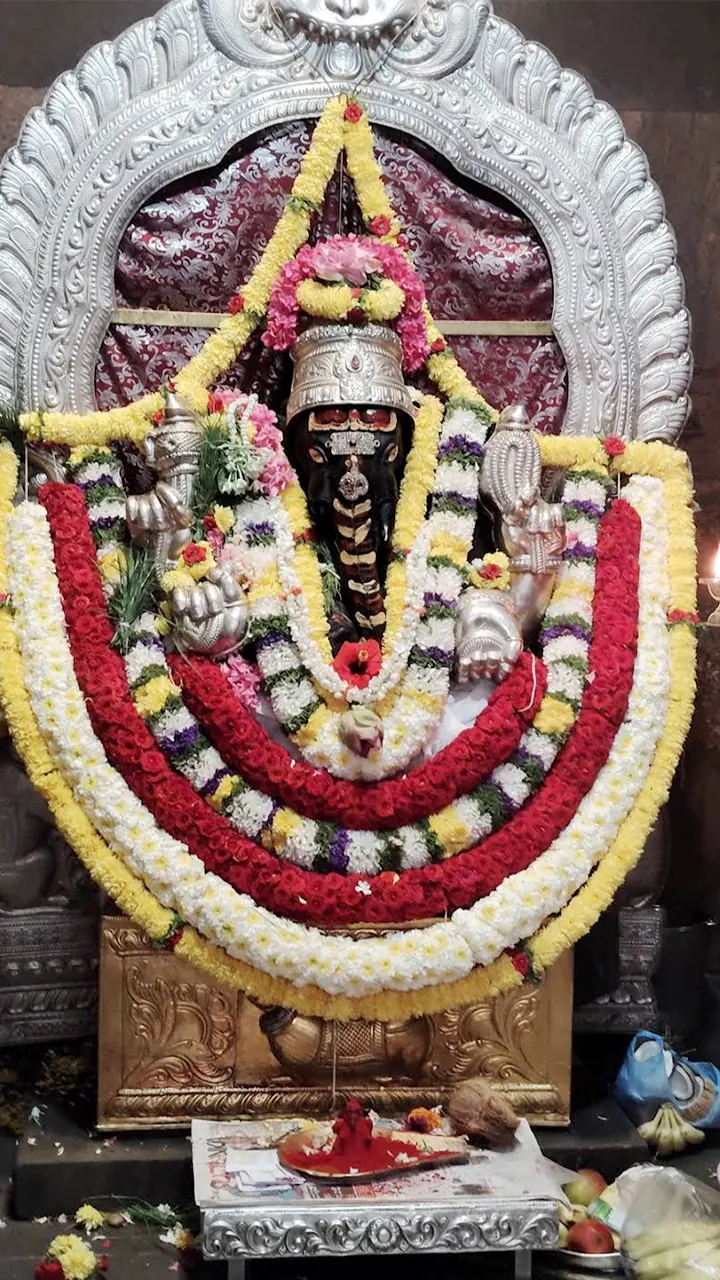
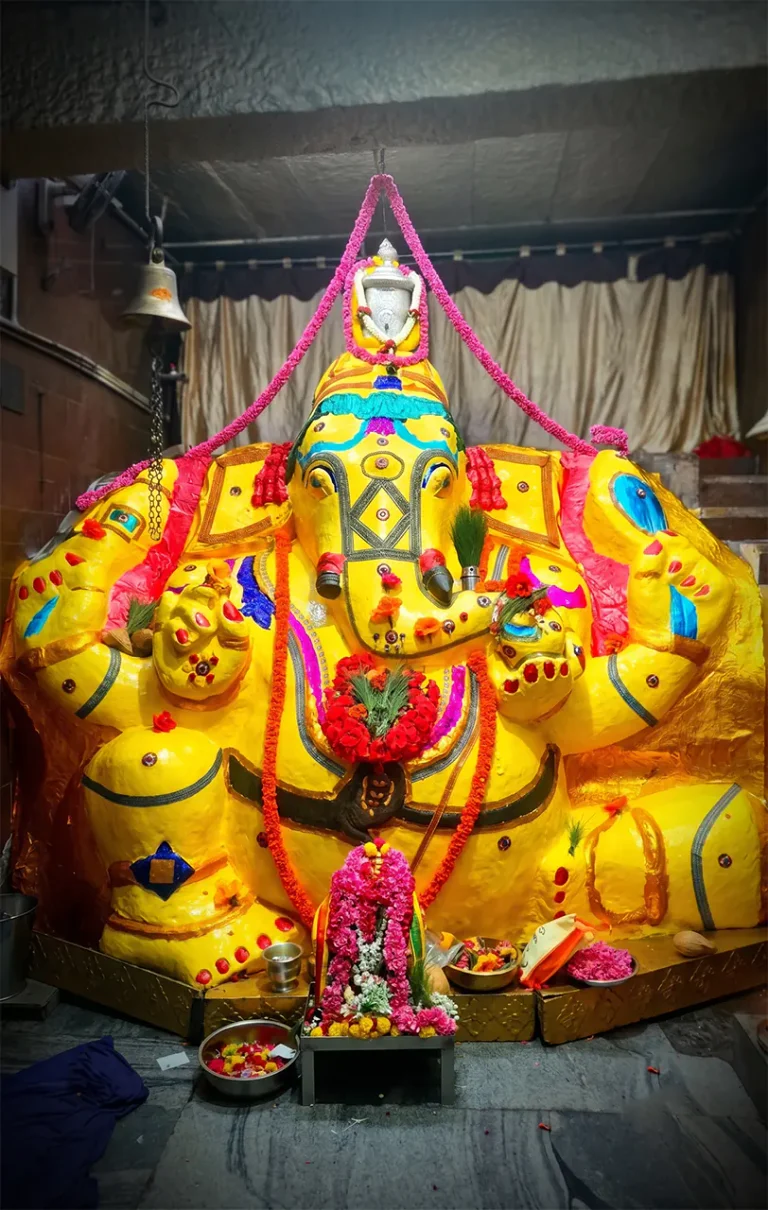
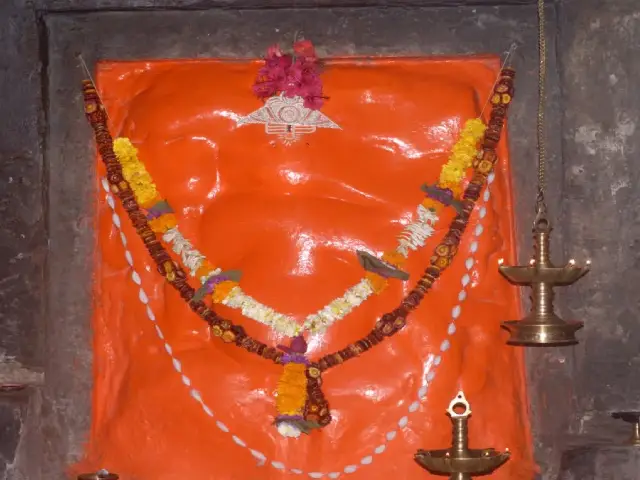
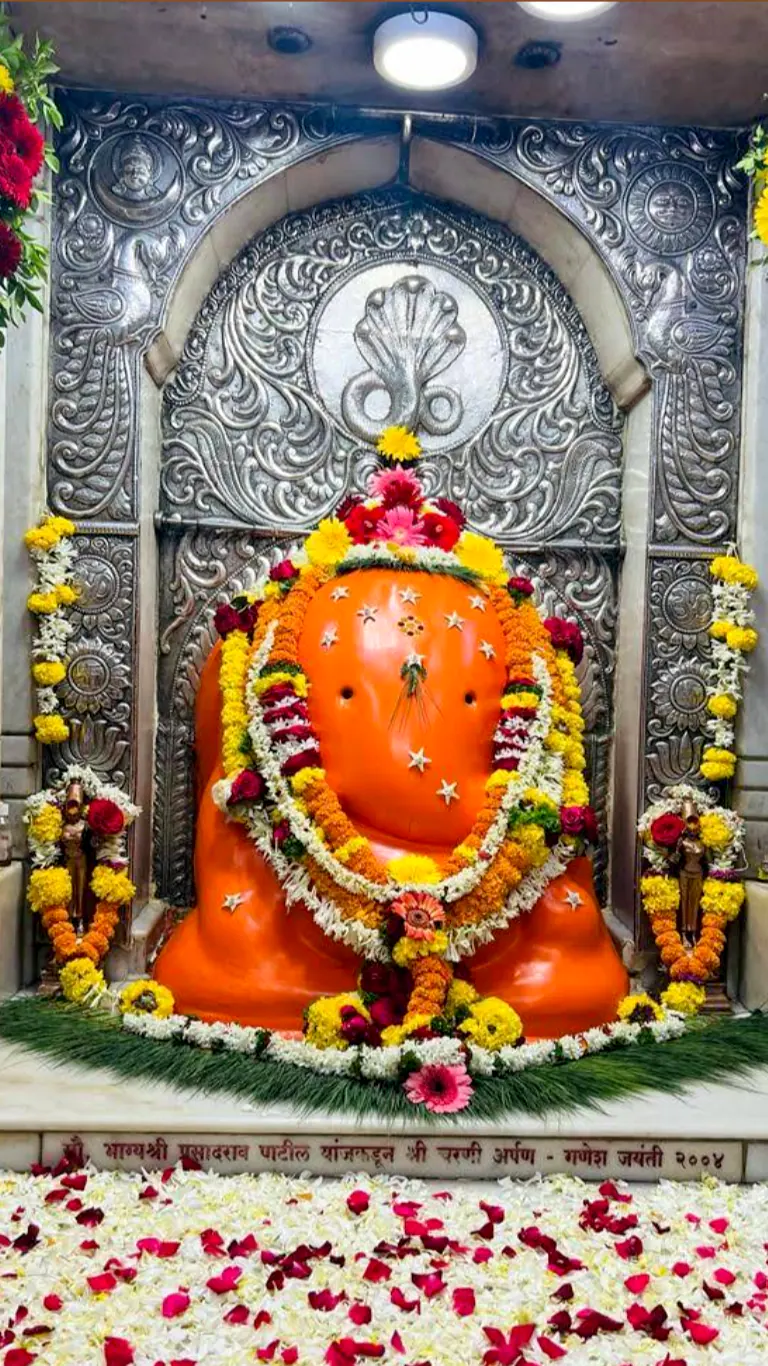
- Swayambhu Idol: As expected, the most prominent feature of the temple complex is its self-manifested stone idol of Ganesha. Being 3 feet tall and approximately 2.5 feet wide, Lord Ganesh appears to be sitting in the cross-legged meditation pose. The idol is decorated with beautiful saffron-colored sindoor paste. Lord Ganesh is also accompanied by his two consorts, Goddess Riddhi and Goddess Siddhi, who appear to be sitting gracefully on his lap.
- Jaya-Vijaya: As we step into the sanctum sanctorum of Lord Ganesh, a majestic sight of the brass-lined gate awaits us, where two intricately designed stones guard the entrance of the deity’s sanctum sanctorum like royal gatekeepers. The gatekeepers symbolically represent Jaya and Vijaya.
- Shiva Panchayatana Chamber: There is an important chamber adjacent to the main Ganesha’s shrine, where you can find the famous Shiva Panchayatana. Here the Shiva family – Lord Shiva, Lord Ganesha, Lord Vishnu, Lord Surya, and Goddess Parvati together are placed in their individual shrines.
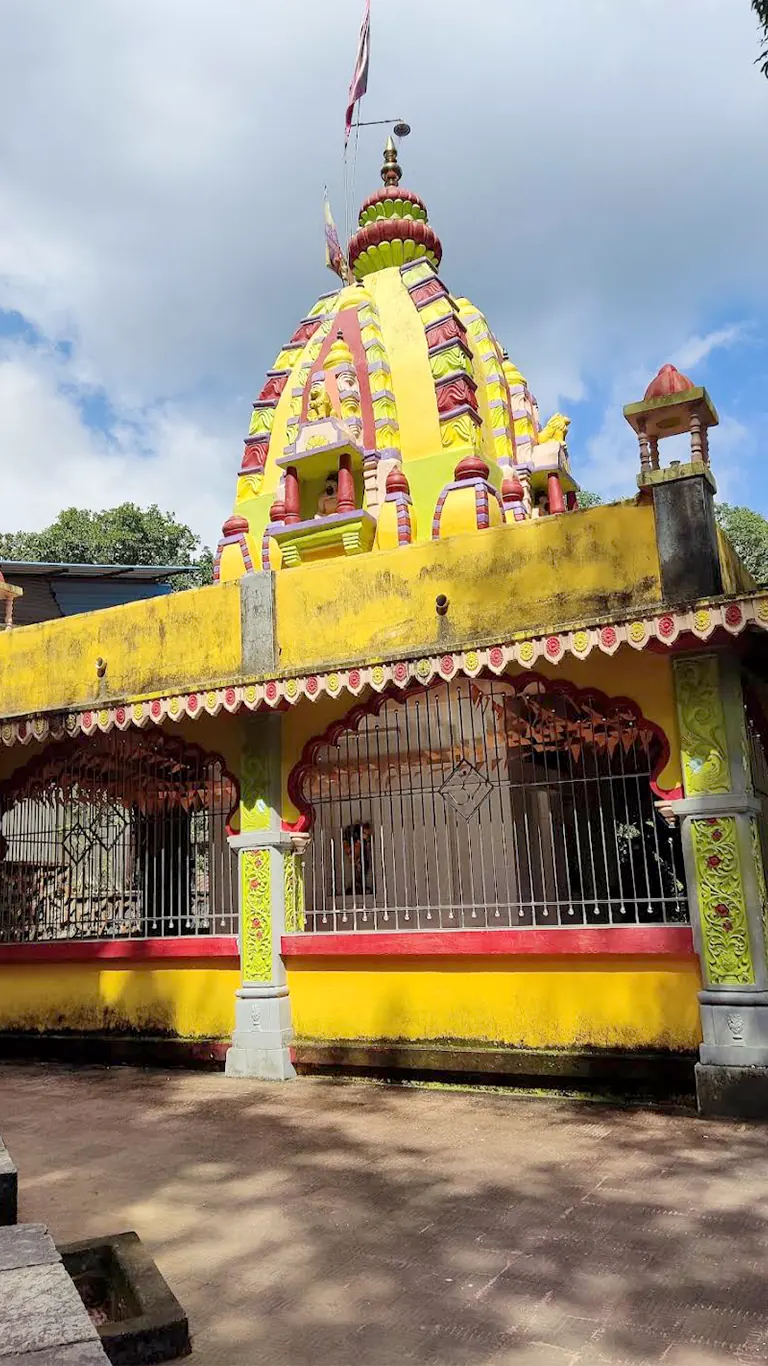
- Surrounding Sub-Shrines: Make sure that while strolling around the courtyard area, you visit these sacred sub-shrines of Lord Maruti (Hanuman), the Goddess Shivaidevi, and a riverside temple of Lord Bhairav.
- Sacred Pradakshina Path on the Hill: Here comes something truly unique, distinguishing this temple from virtually all other temples in India. The whole hill where the temple is located is actually treated as the physical body of the deity. So, instead of just circling the small idol placed in the temple, devotees carry out their full Pradakshina ritual around the entire hill! This rough path covers some 5 kilometers (3.1 miles) of distance. And it is quite common and even inspiring to see numerous pilgrims trekking this great distance along this route completely barefoot in the early morning sunlight.
- Silent River Bhima: Come and take a seat on the stone steps of these Ghats made by Haripant Phadke. It is a known tradition for pilgrims to draw the attention of others to one amazing feature of this sacred spot: even though there is such a fast-flowing river flowing so close to the temple mound, it makes absolutely no noise.
Read More>> Hasanamba Temple: Stone Sleeps & Spirit Awakes
Siddhivinayak Temple Siddhatek Timings and Rituals
In order to facilitate impeccable planning of your itinerary, it is essential that we examine the daily routine followed by the priests at Siddhivinayak Temple, Siddhatek. The management of the temple practices an orthodox timetable that has been in practice for centuries together.
| Time Slot | Ritual / Activity Name | Description |
| 04:00 AM | Temple Doors Open | Welcoming of devotees for the day. |
| 04:30 AM – 05:00 AM | Charan Puja | Washing of the Holy Feet. |
| 05:00 AM – 05:30 AM | Kakad Aarti | Sacred early morning prayer. |
| 10:00 AM | Khichdi Naivedya | Mid-morning food offering. |
| 11:00 AM | Panchamrut Puja | Holy bath with five auspicious elements (milk, honey, etc.). |
| 12:30 PM | Mahabhog / Maha-Naivedya | Grand lunch offering. |
| Sunset Time | Third Puja | Traditional evening prayers. |
| 08:30 PM – 09:15 PM | Dhoop Aarti | Incense offering accompanied by rhythmic chants. |
| 09:15 PM | Shej Aarti | The final lullaby prayer; temple closes for the night. |
Planning Note: Normal Darshan can be carried out throughout the day. You should, however, note that the inner sanctum remains inaccessible to visitors at the time of the major Aarti and Abhishek rituals so that the priests can perform the ritual without any hindrance.
Some Special Poojas for Selection
If you wish to organize a special ritual during your visit, here are some that the Chinchwad Devasthan Trust (which takes care of the temple’s administration) allows you to book:
- Maha-Abhishek: An elaborate ritual of bathing the idol in milk, sugarcane juice, curds, honey, and rose water accompanied by chanting of the sacred text of Ganapati Atharvashirsha.
- Sahasravartan: A very powerful, elaborate ritual involving the chanting of Atharvashirsha a thousand times.
Attire & Behavior
Being your guide, I would like to suggest you wear modest and traditional clothing in order to honor the spiritual sanctity of this holy site.
- Men: It is very strongly recommended that men should wear traditional outfits such as a dhoti and kurta or normal clothes like trousers and shirts. Sleeveless under-shirts or shorts are strictly prohibited.
- Women: Wear sarees or traditional outfits.
- Behavior: Mobile phones must be switched off before entering into Sabhamandap, and footwear must be left at the shoe stalls outside the entrance.

Festivals and Events
Though the Siddhivinayak Temple, Siddhatek remains a tranquil village setting on any other day, during festivals it becomes a colorful riot of music, joy, and devotion.
Important Festivals Per Year
Bhadrapada Ganeshotsav (Aug/Sep): This is the great Ganesh Chaturthi festival celebrated throughout India. The temple is lavishly decorated with numerous flower arrangements and light decorations. The entire festival lasts ten days, which concludes in spectacular parades.
Maghi Ganesh Jayanti (Jan/Feb): According to Maharashtrian beliefs, this is the birthday of Lord Ganesha. This is the most important event of Siddhatek. There is a huge festivity, and lakhs of devotees visit the temple from all parts of the nation.
Crowded Times and Recommended Time to Visit
For experiencing a tranquil and meditative form of darshan, it is recommended to plan your visit during regular weekdays including Monday, Wednesday, and Thursday.
Tuesdays, being the day associated with Ganesha across all of India, see a significant increase in number of devotees due to the presence of unique Ganesh with right turn trunk in Siddhatek. Another busy day would be Sankashti Chaturthi, which occurs once a month and attracts many pilgrims from neighboring villages.
The best time to visit for tourists would be between October and March when temperatures in Ahmednagar are low and walking 5 kilometers barefoot up the mountain is more enjoyable.
Read More>> 11th Century Ammapalli Temple of Sri Seetha Rama
Practical Traveler Information: How to Reach & Facilities
Visiting such an isolated place like Siddhatek requires some amount of practical planning; however, don’t fret! As your tour guide, all the best routes to get to your destination have been carefully worked out by me!
How to Get There?
By Road
Traveling via road is the most versatile way of reaching the Siddhivinayak Temple, Siddhatek.
From Pune (Approximately 100km): Journey via Pune-Solapur Highway (NH-65) till you reach Choula, after which take the route through Patas until you arrive at Daund & Karjat-Siddhatek.
From Mumbai (Approximately 250 km): Travel via the Mumbai-Pune Expressway, pass by Pune, and take the Solapur Highway further.
Public Bus: State Transport (MSRTC) buses depart on a regular basis from places like Pune, Ahmednagar, and Daund to either Siddhatek or the town near Siddhatek called Karjat.
By Train
The closest railway junction would be that of Daund (DD), only 18 kilometers away from the temple. The Daund railway junction is very well connected to major cities via express trains to Mumbai, Pune, Ahmedabad, and even Delhi. Once you alight from Daund Railway Station, you can catch a local/auto-rickshaw/rent a taxi that will take you to the temple gates.
By Air
The closest domestic and international airport would be Pune International Airport (PNQ), which lies around 95 kilometers away. A prepaid taxi can always be hired to reach the place in 3 hours of smooth driving from the airport to the temple.
Read More>> 5th CE Yaganti Temple with Mysteries
Entrance Tickets & Fees
General Entrance: 100% FREE of cost. The common entrance will give a visitor the chance to take a closer view of the deity.
VIP Darshan / Fast Lane Pass: At some special days like during Maghi Jayanti when the temple organizes festival events, some fast track pass facilities may be made available to visitors for a minimal amount (₹50 to ₹100).
On-Site Available Facilities
- Restrooms & Drinking Water: Drinking water stations and basic restroom facilities have been installed by the temple trust near the main parking area.
- Food & Dining: There are plenty of family-run small local restaurants called ‘Khanavals’ en route to the temple. They serve hot vegetarian food typical of the region including Pithla Bhakri, Misal Pav, and Puran Poli. Don’t forget the prasad sweets available locally!
- Lodging: Basic but hygienic lodging facilities called Dharamshalas have been provided in the proximity of the temple site by both the Purohits and the Chinchwad Temple Trust at very reasonable rates (from ₹100 per hall to ₹500 per private room). To stay at luxurious hotels, you should opt for staying at Daund or Patas, near the temple.
- Access for Aged/Differently Abled People: Being located on top of a hillock, visitors need to climb the stairs leading to the temple. But the temple authorities have made provisions of a special ramp access adjacent to the stairway for people in wheelchairs or aged pilgrims.
Dos and Don’ts
In order to ensure that your trip to the Siddhivinayak Temple, Siddhatek is one of respect and spirituality, follow these easy tips:
Do’s
- Do observe complete silence and decorum while standing in the Sabhamandap and Garbhagriha.
- Do carry an extra bottle of drinking water and an umbrella if you intend to perform the 5 kilometers Pradakshina of the hills.
- Do purchase traditional items such as coconuts, marigold garlands, and Durva (Ganesha’s special triple-blade grass) from the village vendors in order to boost their economic development.
- Do contact the temple authorities in case you wish to reserve any particular Abhishek or donate money.
Dont’s
- No Photography: Try not to use cameras or recorders for taking pictures within the holy premises of the sanctum sanctorum. It is important that no picture be taken of the ancient idol of Swayambhu.
- Prohibited Objects: Make sure that you do not carry around any objects such as heavy leather bags, large backpacks, and cigarettes and alcohol within the temple complex.
- Bhima River Monsoon Warning: If your visit falls within the month of July to September (Monsoon), try not to go very near the river waters as it is prone to fast currents.
Read More>>Rajarajeshwara Temple Vemulawada
Nearby Attractions
In case you wish to plan an entire day or even an entire weekend visit itinerary based on your tour to the Siddhivinayak Temple, Siddhatek, here are a few amazing historical and spiritual destinations that are very close by:
- Mayureshwar Ganpati Temple (Morgaon): This is one of the official starting temples of the Ashtavinayak Pilgrimage and is situated at a distance of about 40 km from Siddhatek. The temple is known for its grand structure made up of soft cream-colored stones and decorated with four defense towers to give the structure a unique Islamic touch on the exterior front.
- Bhigwan Bird Sanctuary: Bhigwan Bird Sanctuary is located near the Ujani Dam and is about 65 km away from Siddhatek. Nature enthusiasts can enjoy a serene boat ride to observe various migratory species of birds like Greater Flamingos feeding on the shallow waters during the months between December and March.
- Haripant Phadke Wada: Inside the village of Siddhatek, there are ruins of a beautiful stone-built house dating back to about 250 years ago. It belonged to Peshwa commander, Haripant Phadke.
FAQs (Frequently Asked Questions)
Being a tour guide, there are some commonly asked queries that I have come across when interacting with curious tourists over social media platforms. Let us see some of the definitive answers that will allow you to plan better.
Q1: Why is the trunk of Siddhatek Ganpati facing right, and what does this signify?
Ans: The turning of the trunk towards the right signifies the Siddhivinayak form of Lord Ganesha, who is associated with high levels of solar energy (Surya Nadi). This form of Lord Ganesha is very powerful and Jagrut in nature. Though the form helps fulfill wishes and remove obstacles extremely quickly, it needs devotion and strict ritual purity from its devotees.
Q2: Is it possible to visit Siddhatek Ganpati during monsoon?
Ans: Yes, one can visit the temple throughout the year. However, during monsoon months (July to September), the rural road leading to the temple gets slightly muddy, at times. So, you need to check out whether the journey by road is feasible or not before embarking on your travel mission.
Q3: How much time would it take us to do Pradakshina around Siddhatek hill?
Ans: A traditional Pradakshina path runs around the sacred hill and has a distance of around 5 kilometers or 3.1 miles. According to how fast or slow you walk and whether you prefer to take a Pradakshina walk with or without footwear, you may spend 1 to 1.5 hours.
Q4: Is it possible to book online for Poojas in Siddhatek?
Ans: Yes, the temple management provides e-seva facilities for people to make online bookings for particular rituals such as Maha-Abhishek or Sahasravartan in a convenient way from their homes.
Q5: Is it possible to easily visit both Morgaon and Siddhatek on the same day?
Ans: Definitely! You will have enough time to visit both Morgaon and Siddhatek, which lie at a distance of around 40 kilometers. It is usual for pilgrims to begin visiting Ashtavinayak from Morgaon and then reach Siddhatek on the same day for enjoying a sunset darshan in front of Bhima River.
Conclusion
With that, let us bid farewell to our wonderful tour and breathe deeply as we stand on the tranquil stones along the banks of the Bhima River, hearing the faint yet rhythmic ringing of the evening Aarti bells reverberating through the imposing walls of the temple.
Siddhivinayak Temple, Siddhatek is much more than just a mere destination point on any travel map, or a tick mark on a spiritual list. This place offers a unique combination of serenity, resilience, and spiritual power dating back centuries and manifested in every single stone within Siddhatek. The scriptures of the Mudgala Purana along with the splendid stone architecture rebuilt by the Maratha royal family tell stories of ultimate faith and accomplishment.
For all those who wish to overcome life’s hindrances, feel inner peace, or appreciate the amazing heritage of rural Maharashtra culture, a visit to Siddhatek is a must! With your luggage packed in faith and eagerness in mind, let us head towards Siddhatek Ganpati for his blessings!
Happy travels, may your journeys be absolutely obstruction-free! Ganpati Bappa Morya!