Varad Vinayak Mahad Temple
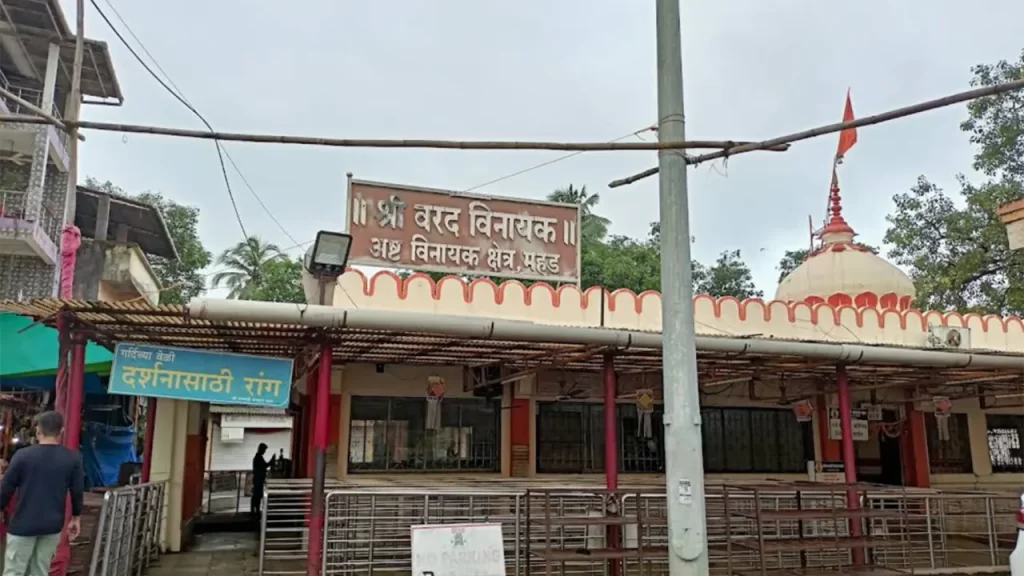
The Varad Vinayak Mahad Temple, fondly called as Varadhavinayak Temple Mahad by millions of devotees, is a huge and important pillar of faith, spirituality, and miracles for the people of Maharashtra. Located in the peaceful, scenic village of Mahad, Khalapur taluka, near Khopoli of Raigad District, the shrine forms an integral part of the highly respected and revered Ashtavinayak Pilgrimage Tour. Stepping inside this blessed and peaceful village is like stepping inside an abode that offers one peace, tranquility, and solace from the hustle-bustle of the modern world around us.
The uniqueness of the Varad Vinayak Mahad Temple lies in its amazing blend of simplicity and intense spirituality. Being a professional guide who has taken many people inside the sacred precincts of this pilgrimage point, I can confidently say that this is one of those temples where one enters with a heavy heart but leaves after being blessed with immense joy and happiness. The name of the temple itself is very significant, and signifies everything. While “Varada” means “bestower of boons,” Vinayaka refers to Lord Ganesha.
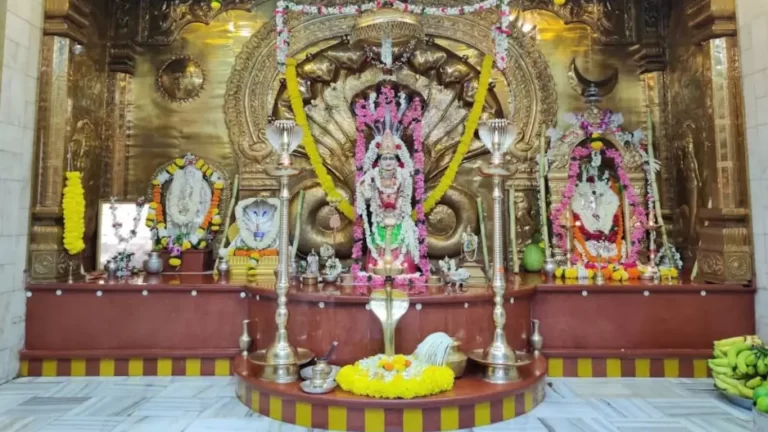
The special design permits an uncommon privilege which you will hardly ever find in any other similarly venerated temple in India. In the Varadhavinayak Temple Mahad, there is no gap between the deity and the pilgrim. The pilgrims are allowed to enter the Garbhagriha (innermost chamber) and pay their respects by touching the feet of the self-made deity. This special moment appeals to many types of travelers, including:
- Devout Pilgrims: Who come in search of blessings from Bappa for their problems.
- Historians: Interested in the history of operations of the Maratha Empire and the Peshwas.
- Culture Lovers and Travelers: Drawn to the traditional atmosphere, myths, and the famous oil lamp which has remained lit forever since over a century ago.
Read More>> Gowdagere Chamundeshwari Temple: Famous 61 ft Panchaloha statue
Varad Vinayak Mahad Temple History
Understanding the significance of the Varadhavinayak Mahad Temple would require us to travel back into history and trace the various legends of the temple’s interesting background. As per one of the legends, the Varadhavinayak Temple in Mahad is rooted in the Pushpak forest area (Bhadraka now).
Legend of the Sage Gritsamada
As per the ancient records, King Bhima of Koudinyapur had a very virtuous and extremely handsome prince as his son named Rukmaganda. Once on a hunting mission, the prince visited the ashram of the sage Vachaknavi. The wife of the sage named Mukunda fell madly in love with the prince and desired him but the honest prince rejected her advances.
Taking notice of the desperation of Mukunda, Lord Indra took the form of Prince Rukmaganda and united with her to give birth to an extremely brilliant son named Gritsamada. Gritsamada grew up to become a very learned person. During one of the famous debates among many eminent scholars including Vasistha and Vishwamitra, his parentage was brought under scrutiny. When he discovered the reality of his birth through his mother, Gritsamada became extremely angry and cast upon his mother the curse of being transformed into the thorny fruit yielding Bhor tree. Enraged at the same time, the mother placed a curse on him saying that he will give birth to an extremely wicked child in future (Tripurasur demon in particular).
Unable to bear the shock and pain caused by this act, Sage Gritsamada entered the dense forest of Pushpak and went under penance solely for Lord Ganesha.
Granting The Sacred Boon:
Greatly impressed with his complete dedication, Lord Ganesha appeared before
him and bestowed upon him the status of a Brahmin. On being offered a boon
by Lord Ganesha, Sage Gritsamada asked him to live in the forest forever for the
prosperity of the future devotees worshipping him at this place.
Historical Resurrection
After many years, the physical resurrection of the temple was accomplished in form. While the original self-created idol of Swayambhu had long been forgotten, it lay silently buried in an adjacent lake. In 1690 AD, a local resident by the name of Dhondu Paudkar chanced upon this sacred idol when he dived into the pond. This ancient yet sacred idol was recovered by the exuberant local residents.
| Historical Milestone | Year / Era | Key Personality Involved | Significance |
| Ancient Mythological Foundation | Satya Yuga / Treta Yuga | Sage Gritsamada | Intense penance and initial consecration |
| Discovery of the Swayambhu Idol | 1690 AD | Dhondu Paudkar | Retrieved the immersed idol from the local pond |
| Grand Temple Reconstruction | 1725 AD | Subhedar Ramji Mahadev Biwalkar | Built the stone structure and founded Mahad village |
| Igniting of the Akhand Nandadeep | 1892 AD | Temple Priests & Devotees | The eternal oil lamp was lit, burning to this day |
In 1725 AD, Ramji Mahadev Biwalkar, the renowned General of Peshwa and Subhedar of Kalyan, decided to restore this shrine and built the beautiful yet strong stone structure which exists till date. Around this temple, a village by the name of Mahad was erected in a systematic fashion, ensuring the survival of Varadhavinayak Temple Mahad for generations to come.
Religious and Cultural Significance
The religious significance of the temple known as varad vinayak mahad temple is rooted deeply in the very foundation of the Hindu sacred texts. It finds clear mention and praise in the Ganesha Purana and the Mudgala Purana, which are the main Hindu texts that praise the elephant headed god.
Prooftext from Hindu Scriptures
The name of the region called Mahad is Bhadraka or Madhak in the Ganesha Purana. It beautifully describes how lord Ganesha picked this place to root his divine presence for mankind. Sage Gritsamada, who is renowned for being the author of the Vedic hymn “Gaṇānāṃ Tvā Gaṇapatiṃ Havāmahe” found in Rigveda, 2.23.1, blessed the land with his mantras.
It is stated in the puranas that:
Rigveda 2.23.1: गणानां त्वा गणपतिं हवामहे कविं कवीनामुपमश्रवस्तमम् ।
As per the scriptural text, offering prayers to the Lord in Bhadraka Kshetra (Mahad) is the way to wipe out the sins inherited from one’s forefathers and receive immediate blessings and boons. According to the scriptural texts, anyone who sincerely worships in the Varadhavinayak Temple Mahad is destined to acquire mental purity, assured success in their righteous deeds, and ultimate salvation.
Cultural Celebrations and the Blessing of Lineage
This temple occupies a distinct place in terms of culture compared to the other seven Ashtavinayak temples. There exists a deep cultural belief linked to the celebration of Maghi Utsav (a festival observed during the month of Magh, i.e., mid-January to mid-February).
According to belief, if a couple, which fails to conceive children, takes a coconut as Prasad at the time of midnight celebration of Maghi Chaturthi at the varad vinayak mahad temple, then it would grant them healthy children as long as they eat the fruit with pure intentions in mind. Every year, this ancient belief brings numerous childless couples to this small village, making it a sea of hope and gratitude.
Read More>> Mahaganapathi Temple Malleswaram
Architecture and Design
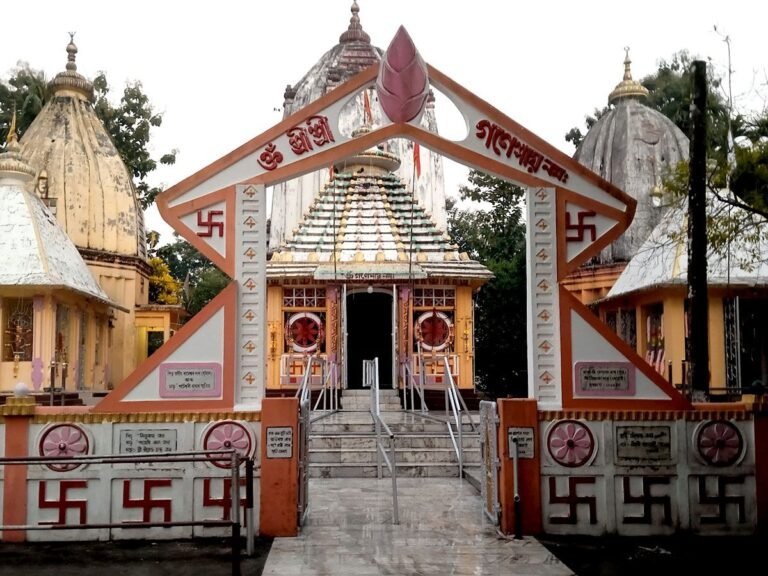
In case you were expecting an awe-inspiring Dravidian architecture style with its grandiose, intricate carvings on the Gopuram towers, then the Varadhavinayak Temple Mahad will come across as a surprise. This magnificent temple has elements of both the ancient Maratha-style architecture of the stone temple and the Nagara style of architecture.
Notable Architectural Characteristics of the Temple
The building of the temple is made purely of the robust black basalt stone, which is used for withstanding heavy rainfall in the Konkan region. The temple area is positioned along the well-built, stone lined, temple pond, whose reflection can be seen at sunrise.
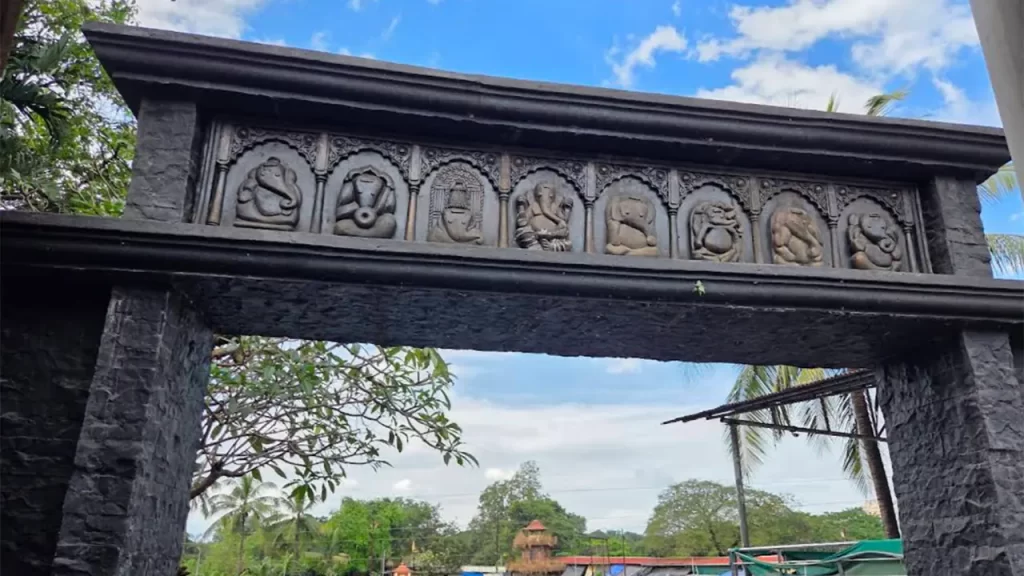
- Guarding Elephants: Four elephants, which serve to guard the entrance to the temple and each of the four corners of the temple itself, are artistically carved out of stone. These idols represent royal dignity, strength, and divine protection.
- Assembly Hall (Mandapam): Surprisingly enough, the hall inside the temple is small and measures only 8×8 feet in size. This brings devotees closer together and creates an energizing atmosphere during aartis.
- The Main Dome: This majestic dome reaches an impressive height of 25 feet and has a unique design with carved and designed pictures of a cobra (Nag) coiling around its base, ending in a gold spire (Kalash).
- Design Symbolism: By facing the east, the temple is positioned such that the first rays of the sun shine on the door of the Garbhagriha. In this way, the temple’s simple outer design compared to the inner sanctity can be seen as a perfect metaphor for spirituality, which hides itself in plain sight.
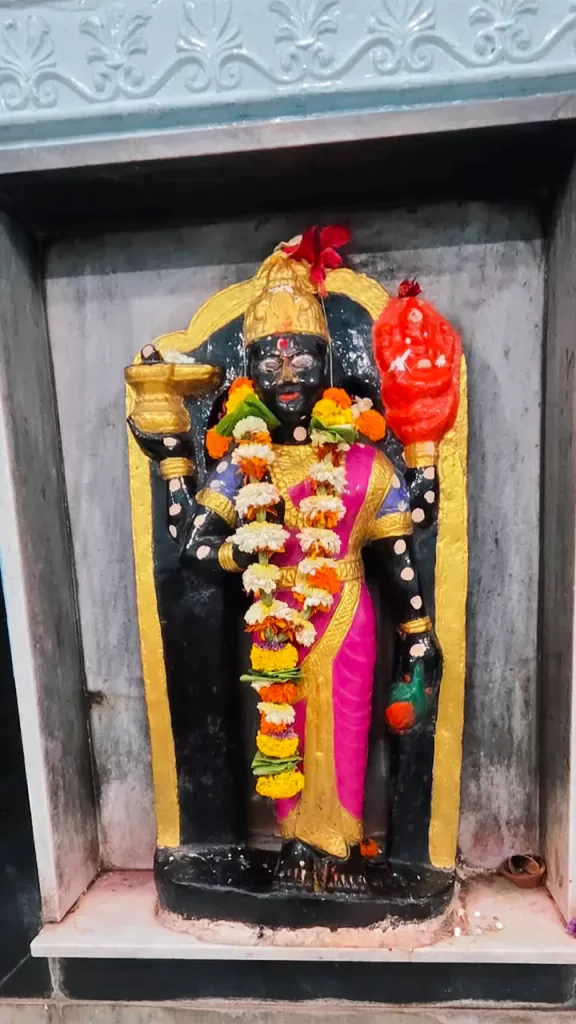
Main Attractions or Highlights
As a knowledgeable guide, allow me to virtually show you around some of the most important aspects that you will need to notice when visiting the Varad Vinayak Mahad temple. All the aspects of this divine compound have stories of their own.
The Garbhagriha and Swayambhu Idol
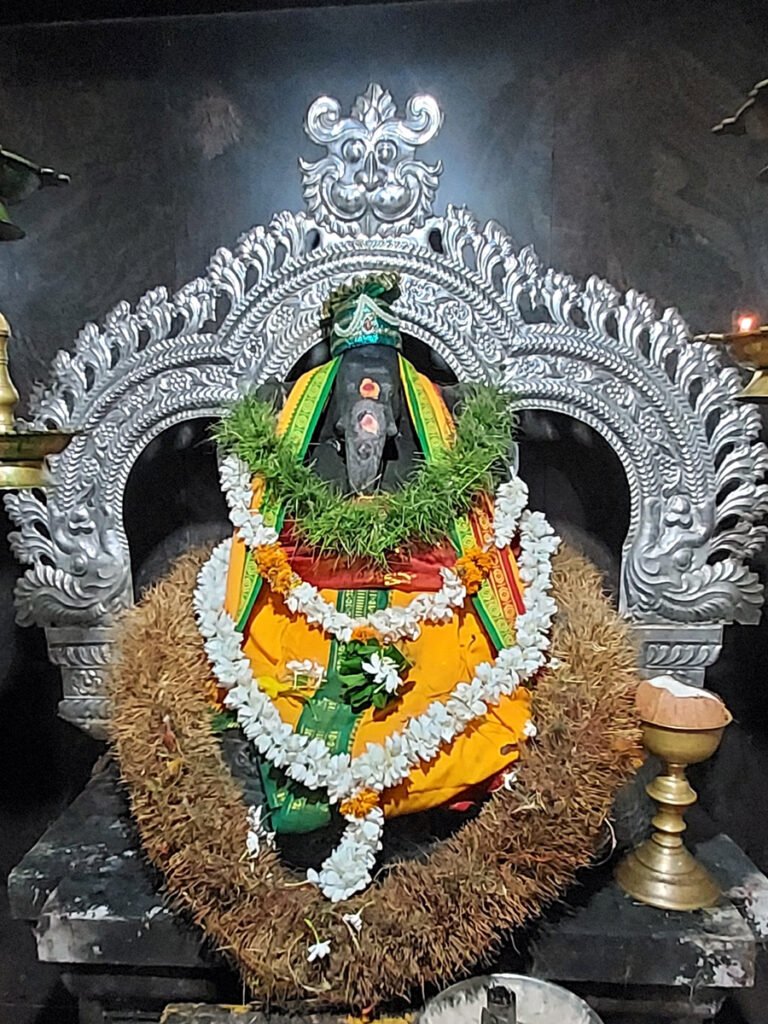
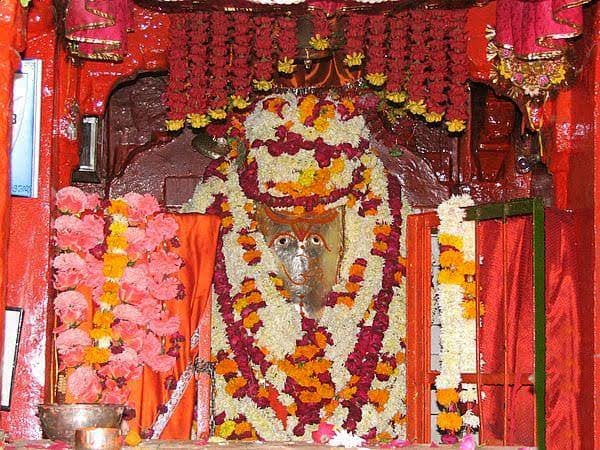
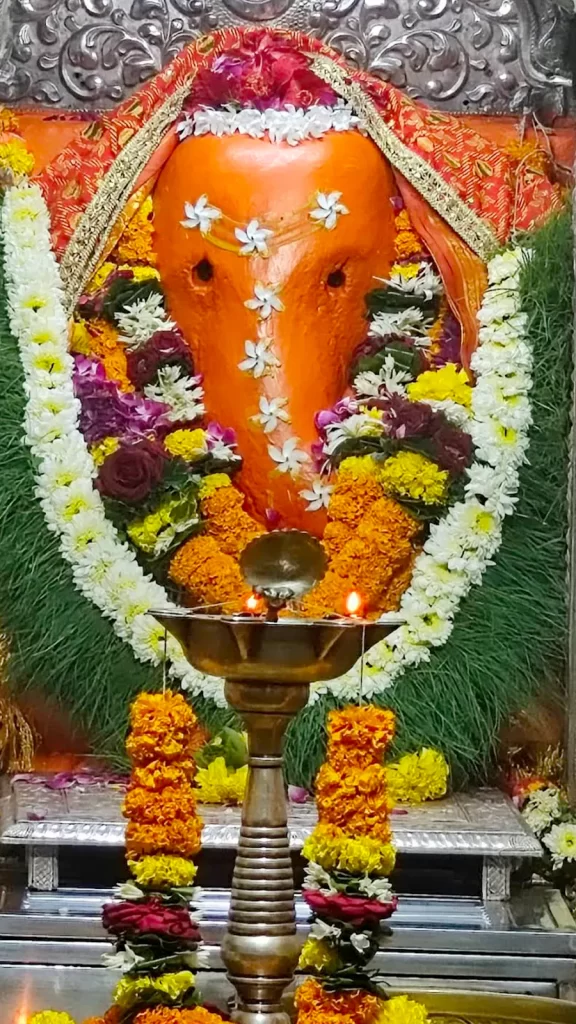
The heart of your journey is the Garbhagriha, which houses an exquisite Swayambhu idol of Lord Varadavinayaka. This idol looks to the east and has a special feature—the trunk is gracefully turned to the left. The idol being underwater for several centuries before it was discovered in 1690 gives it a unique appearance of being weathered, soft, and organic.
The eyes of the deity are adorned with gemstones, providing you with a wise, all-seeing gaze towards every worshipper standing before Him. Please note that you can visit this divine place and put your head right at His feet!
Eternal Nandadeep Oil Lamp
Inside the main chamber, close to the main deity, there lies the legendary Nandadeep. It is an oil lamp which keeps burning perpetually since the year 1892.
The flame of Nandadeep can give you immense joy. For more than a hundred years now, priests of the temple have ensured its uninterrupted burning by periodically filling it up with fresh oil, making it a living example of everlasting hope, unshaken faith, and divine knowledge forever illuminating human souls.
Other Important Sites to Explore
Don’t make a hasty exit after meeting the main deity. Instead, stroll slowly on the Pradakshina path to see these sites which too deserve your attention equally:
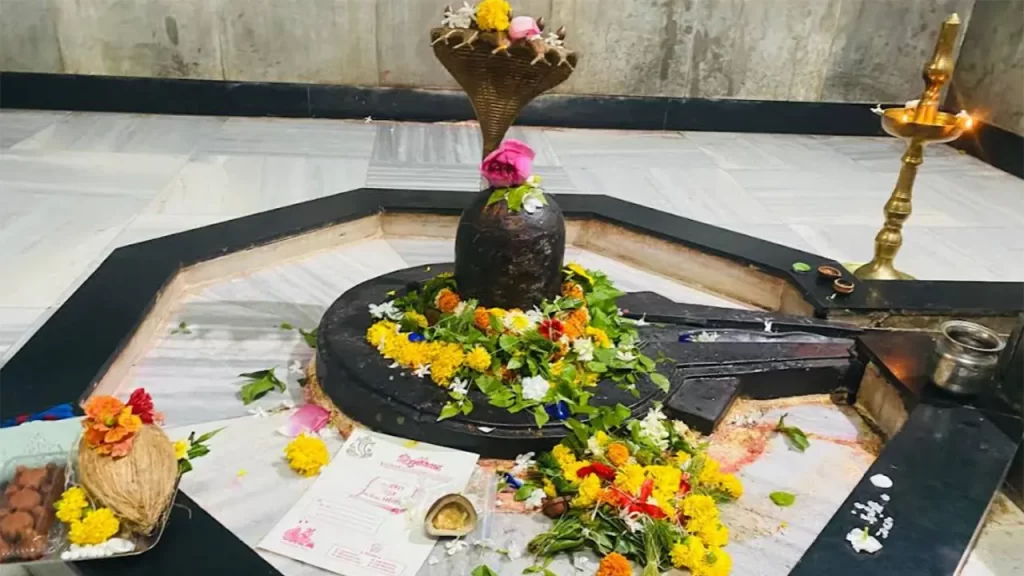
- The Shivalinga: In the same complex lies the stone Linga dedicated to Lord Shiva, recalling the link between Shiva and his son Ganesh, as described in the story of Gritsamada’s son being unbeatable only by Lord Shiva.
- Navagraha Devatas: A special temple dedicated to the worship of the nine deities of the planets, offering oil for appeasement from their negative influence.
- Mushika Idol: The sacred vehicle of Lord Ganesha who listens intently to the confidential thoughts of the devotees through his keenly perceptive ears.
- Temple Tank: The ancient pond that the idol was first discovered in. Bathing in the pond is not allowed to maintain its purity, but sitting quietly on its stone steps brings pure bliss.
Varadhavinayak Temple Timings and Rituals
In order to plan a perfect visit to the Varadhavinayak Temple Mahad, it will definitely help you to coordinate your visit according to the daily spiritual timings in the temple.
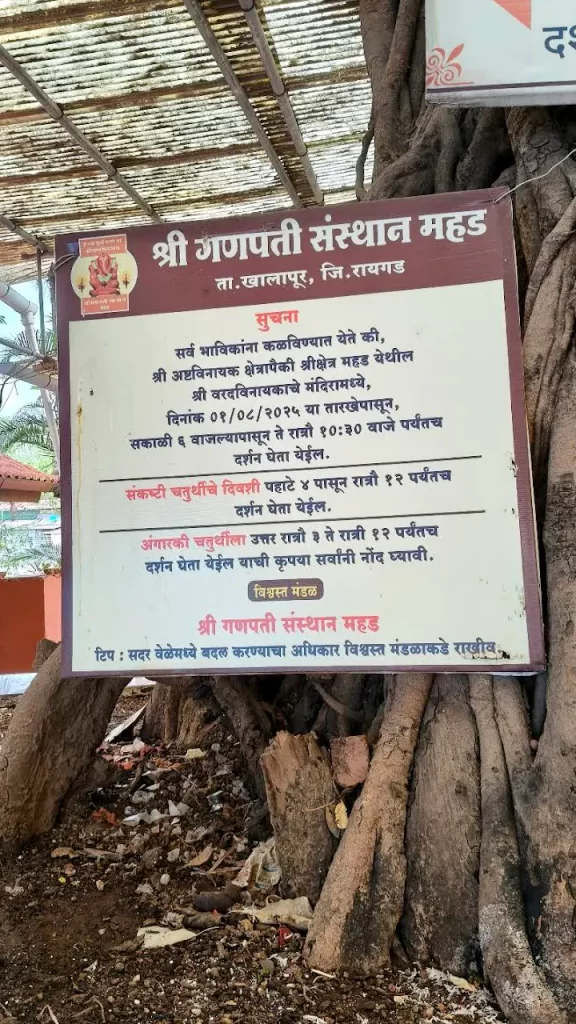
Operating Hours per Day
Temple gates are opened as the sun rises, and they remain closed at dusk after the deity goes to sleep for the night.
- Opening Hour: 5:30 AM
- Closing Hour: 9:00 PM
The Schedule of Daily Rituals
There are some specific rituals that priests follow every day at the varad vinayak mahad temple. If you get an opportunity to witness these rituals, then your travel experience will definitely take on a different dimension.
- Kakad Aarti (5:30 AM): This ritual marks the waking up ceremony of the deity. The air is fresh, cool, and filled with the sounds of ringing bells and hymns sung at dawn.
- Panchamrut Pooja (Morning): It is a sacred bathing ceremony of the deity, in which five different things are used. These include milk, curd, honey, ghee, and sugar.
- Mahapooja & Naivedya (12:00 PM): Grand prayer takes place during noon time when the Lord is served a delicious lunch, his most favorite item being Modaks (steaming).
- Sandhya Aarti (7:30 PM): The prayers at dusk. The temple bathes in a warm glow provided by many lamps, while the chanting rises into a beautiful crescendo.
- Shej Aarti (9:00 PM): The last prayer of the day when a soothing aura envelops the place with the Lord being put to rest after a busy day.
Read More>> Sri Bhoosameta Venkateswara Swamy Temple Dokiparru
Special Poojas and Devotee Options
A variety of personalized poojas can be booked via the temple trust, including the Laghu Ganesh Yaag, Ganesh Atharvashirsha Sahastravartan Puja, or a simple Shodashopachara Puja.
The One-of-its-Kinds Devotee Governance Scheme for One Full Day: An innovative offer by the temple trust to a family that makes a certain amount of donation (traditionally about ₹31,000). The privilege allows a devotee with their family to take charge of all temple activities for a day as the family members get to execute all major rituals, cleaning the temple room, and serving the Lord personally on this particular day, guided by the priests only.
Code of Dress and Conduct
Whereas the temple authorities are very cooperative, following the cultural traditions demonstrates great reverence for the sanctity of the place:
- For Men: Traditional clothing such as dhoti or simple kurta with pajamas is very much advisable, especially if you wish to enter the Garbhagriha directly. Modest western clothes such as jeans and T-shirts are allowed, but shorts and sleeveless tops are discouraged.
- For Women: Saris, salwar kameez or modest traditional dresses are preferable.
- General Protocol: It is compulsory to remove footwear at designated locations before entering the clean stone steps of the temple precincts.
Festivals and Events
Varadhavinayak Temple Mahad comes alive with vivid displays of colors, music, and deep devotion during the yearly festivals celebrated here. If you enjoy festivities, make sure that your visit is planned on these days to have experiences that will last a lifetime.
Important Annual Celebrations
- Bhadrapada Ganesh Chaturthi (August/September): It is the popular 10-day festival celebrating the birth of Lord Ganesha. During these days, the village of Mahad is decorated with colorful lighting and flowers. Various cultural performances, devotional singing, and huge community meals called Bhandara take place.
- Maghi Ganesha Jayanti (January/February): Undoubtedly, it is the most important day for this temple since it involves huge crowds due to its legendary coconut prasad offering tradition. The crowd is so huge at Maghi Chaturthi because it is known to be a night of electric energy.
Crowd Numbers and Finding the Optimum Time to Visit
- Crowd Spikes: High crowd numbers are to be expected during weekends (Saturday & Sunday), holidays, and all Sankashti Chaturthi (monthly day devoted to Ganesha). At the time of Maghi & Bhadrapada, long queues are to be expected.
- The Ideal Time (Optimum Timing): For people who want a peaceful, thoughtful darshan experience and want to spend their time sitting in the main hall for hours without any disturbances, visit during weekdays – preferably on Tuesdays, Wednesdays, and Thursdays early in the morning.
- Ideal Season for Visiting: The best time to visit should be from October to March since the weather in Maharashtra at that time would be cool and good for travelling via roads. In case you wish to see the area during monsoons (June to September), be prepared for rains since the Western Ghats will look like heaven in the rain.
Read More>> Mopidevi Subramanya Swamy Temple
Practical Traveler Information
As your practical tour guide, I shall assist you with the logistics details for an easy-to-reach destination. Let’s see how you can visit this temple without any hassle.
How to Reach Mahad
The Varadhavinayak Temple is easily reachable from the two metropolitan cities of Maharashtra – Mumbai and Pune. This temple is located at around 3 kilometers off the Mumbai-Pune Highway by the side of Khopoli.
By Road:
- From Mumbai: The distance is around 80 km away. It is easy to reach the temple within a few hours via the Bengaluru-Mumbai Highway or Mumbai-Pune Expressway by taking the exit at Khopoli.
- From Pune: The approximate distance from the temple is 85 km and is accessible through regular drives on the Expressway, which takes one hour and twenty minutes by reaching the exit towards Khopoli or Pen road.
- Bus Service: You may use the public bus service provided by MSRTC, which operates from Mumbai, Pune, Thane, and Khopoli stations. Alighting at Khopoli or Mahad Phata will give you a direct ride to the temple in shared auto rickshaws from both places.
Train: The nearest major railway station is Karjat Railway Station (around 30 km) or Khopoli (6 km). Private taxis and auto-rickshaws are readily available to drop you directly at the temple.
Traveling by Air: The closest international airports include Chhatrapati Shivaji Maharaj International Airport (Mumbai) approximately 80 kilometers from the temple and Pune International Airport, around 90 kilometers from the temple. Prepaid taxis from the airport to reach the temple are easy to get.
Entry Charges and Other Structural Amenities
- Entry Charge: Entry into the temple and the inner sanctum sanctorum has an absolute zero entry fee cost as Lord Ganesha is for all.
- Donation Counters: There are proper computerized donation counters run by the temple committee where donations are receipted instantaneously. All these receipts will be utilized for social welfare and other maintenance purposes.
- Bathrooms and Cloakroom: Proper bathrooms have been arranged close to the parking area. There is a cloakroom where you may keep your footwear along with other luggage.
- Cafeteria and Food: There is a cafeteria managed by the temple trust that offers simple yet tasty food. Food is offered by way of Mahaprasad at minimum cost or as a free service based on the temple schedule. Local vendors offer delicious local dishes such as Ukadiche Modak, Batata Vada, and hot ginger tea.
- Facilities for Accommodation: There is a guesthouse maintained by the temple trust known as Yatri Niwas which provides neat accommodation at very cheap rates. Apart from these, there are very good hotels and luxury resorts in nearby towns like Khopoli, Lonavala, and Khandala.
Accessibility for Senior Citizens and Differently Abled Persons
The management of Varad Vinayak Mahad temple has taken some laudable measures that help people to reach God without any hassle:
- The approach path from parking to the main entrance of the temple is plain with minimal steps.
- Ramps are available at significant points to make movements easy for all.
- During non-peak days, the temple staff assists wheelchair users in reaching the vicinity of the Garbhagriha.
Dos and Don’ts
To make sure your visit to the temple is respectful from a cultural point of view and that you do not break any local administrative laws, here are some tips to follow before entering the Varadhavinayak Temple Mahad:
The Dos
- Do be completely quiet inside the small hall measuring 8 feet by 8 feet in order to allow other devotees to pray.
- Do keep an eye on your things during the festivals where the crowd is dense, for example, during the Maghi Utsav festival.
- Do wash your hands and feet at the tap facilities provided before proceeding into the main temple complex.
- Do respect the local villagers and vendors, who are extremely kind-hearted folks proud of hosting the guests of Bappa.
- Do buy offerings from the local sellers, such as durva grass, hibiscus flowers, and fresh modaks.
The Don’ts
- Don’t take pictures or videos in the inner Sanctum Sanctorum (Garbhagriha). While photography is allowed in the outer area, clicking images of the chief idol is not permitted due to its profound spiritual importance.
- Avoid carrying prohibited items such as cigarettes, liquor, leather belts, and unnecessary big leather bags while in the prayer room of the main temple.
- Never push yourself while waiting in the darshan queue and allow seniors and people with children to walk past you with ease.
- Avoid littering the ancient temple pond and the green village pathways around the temple. Dispose of plastic and floral waste at their designated spots only.
Read More>> Sree Suvarna Temple Powai
Nearby Attractions
If you wish to plan an adventurous weekend trip to a destination, the prime location of the varad vinayak mahad temple gives you the opportunity to visit many amazing places around.
- Ballaleshwar Ashtavinayak Temple (Pali)
This temple is situated about 38 km from the town of Mahad and is one of the most venerated shrines belonging to the group of Ashtavinayak. This particular temple holds special significance owing to the name given to the Pali Ganpati which means that this Ashtavinayak deity was named after a boy called Ballal. - Hill Stations of Lonavala and Khandala
The beautiful hill stations of Lonavala and Khandala are located just about 25 km away from the temple at a distance of about 30 minutes up the ghats and are worth exploring as there are some great sites like the Karla and Bhaja Buddhist caves, Tiger Point, and even the famous Lonavala chikki! - Zenith Waterfall (Khopoli)
The Zenith waterfall is located in the town of Khopoli, close to the Varad Vinayak Temple and forms an ideal attraction for those traveling during the monsoon period. - Imagicaa Theme Park
Those families who want to combine their pilgrimage with something new and exciting may visit Imagicaa Theme Park and Water Park, which lies at a distance of only 12 km from the Mahad temple complex.
FAQs
Q1: Is it possible to touch the idol at Varadhavinayak Temple Mahad?
A: Yes, that’s what makes it unique among other temples. While most of the temples don’t allow devotees to touch their idols, Varadhavinayak Temple allows its devotees to go inside the sanctum sanctorum and put their heads at the feet of Lord Ganesh whenever the temple does not have many devotees except during peak periods like Maghi Chaturthi when the devotees’ line becomes very long.
Q2: What makes the trunk of Mahad Ganpati to the left?
A: An idol of Ganesha with the trunk tilted towards left is referred to as “Vamamukhi idol.” The left-turned trunk is associated with the qualities of moon or Chandra Nadi which makes such idols very benevolent, peaceful and quite easy to pacify through prayers and devotion of ordinary householder.
Q3: What is the significance of the coconut Prasad offered here?
Answer: There is an ancient, revered tradition at the Varadhavinayak Temple Mahad that childless couples who have their coconut offered as Prasad at midnight during Maghi Chaturthi celebrations and eat it with unwavering belief have children blessed on them. It is due to the puranic traditions associated with the temple that Lord Ganesha granted many times the gift of nobility as a boon to his followers who were childless, such as the parents of Sage Gritsamada and King Bhadrak.
Q4: How much time does it take to get Darshan on any normal day?
Answer: The crowds at the temple on any average day, which means Monday to Thursday, are extremely low. You can do your whole darshan, which also involves entering the inner shrine and exploring all the shrines outside, in 15 to 30 minutes. On weekends and Sankashti days, however, the time can increase to 1 to 3 hours.
Q5: Is there any specific dress code for performing Abhishek rituals?
A: Yes. In case you have already booked your private Abhishek or Laghu Rudra/Ganesh Yaag at the temple office, the performing devotees will be compulsorily expected to dress themselves in proper Indian attire. This includes dressing up in silk or cotton dhoti with upper cloth (uparne) for men and Saree/salwar suit for women.
Q6: Can we visit this temple after visiting Pali Ganpati Temple on the same day?
A: Certainly! Since the Varad Vinayak Mahad temple and the famous Ballaleshwar Temple in Pali are only a distance of 38 kms away from each other by local roadways, most pilgrims prefer to pay a visit to both these two major temples on the same day.
Conclusion
Varad Vinayak Mahad temple, known as the Varadhavinayak Temple Mahad, is much more than a historical site and another point to mark on the tourist map of Maharashtra state. It is the embodiment of human faith in its purest form, which proves how powerful it can be. This place has seen the meditation miracles of Sage Gritsamada and the miraculous protection of the Swayambhu idol from the bottom of the village lake in 1690.
It does not matter whether you visit Mahad because of the spiritual quest, admiration for the stunning Maratha stone style or your wish to see an eternal miracle — Nandadeep light burning since 1892. Being your guide, I strongly recommend leaving your busy everyday life behind, packing a bag and starting your journey towards the peaceful place of Raigad district.
Feel the kind atmosphere of Bappa watching you from his statue; let your feet walk upon cold stone; speak all your wishes into the ear of Mushika, and get the greatest reward ever possible – the gift of success from the most generous being in the world.
Ganpati Bappa Morya! Happy journey, and may your paths be forever cleared of all obstacles.