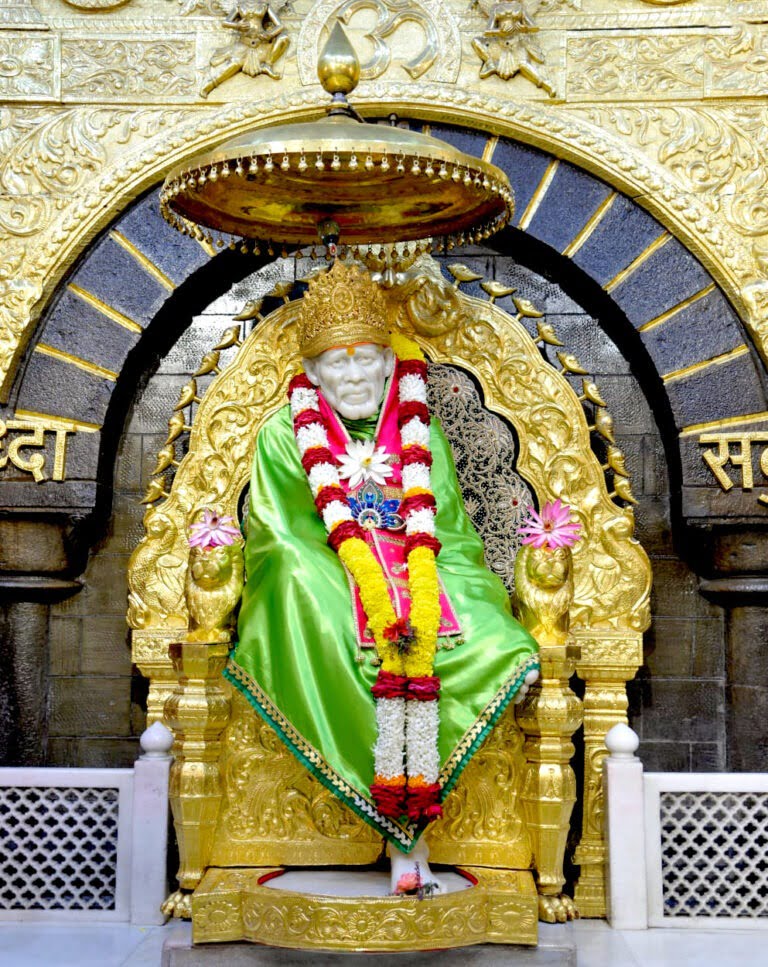
Raireshwar Temple: Ultimate Pilgrim & Trek Guide
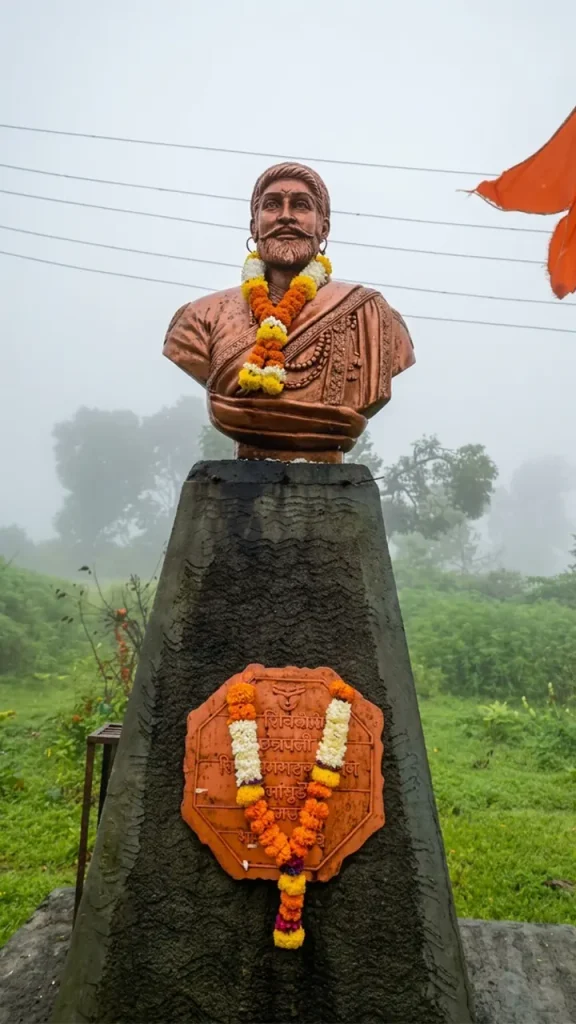
Perched atop an expansive, cloud-swept laterite plateau at an elevation of roughly 1,370 meters (4,500 feet) in the Sahyadri range of Maharashtra, Raireshwar Temple occupies a singular place in Indian history. Located in the Bhor taluka of Pune district, this ancient stone shrine dedicated to Lord Shiva is not only a revered regional tirtha for local agrarian communities of the Maval region, but also the crucible of indigenous self-rule. On April 27, 1645, a sixteen-year-old Chhatrapati Shivaji Maharaj gathered his loyal Mavala comrades here, slashed his finger to perform a blood abhishekam over the Swayambhu Shivalinga, and pledged to establish Hindavi Swarajya.
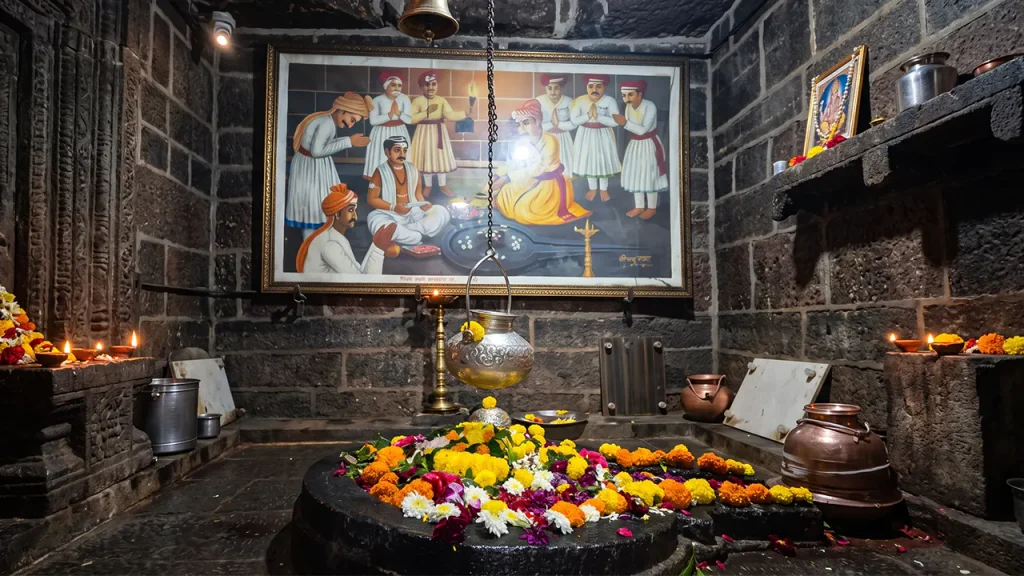
Today, the shrine invites both devout Shaivite pilgrims and heritage travelers who climb the rugged escarpments of the Raireshwar plateau. Reaching the temple requires a short trek through metal ladders and stone paths anchored directly into the basalt cliffs, rewarding visitors with sweeping panoramic views of the Kenjalgad fort, the deep gorges of the Nira River basin, and an austere, living sanctum untouched by commercialization.
| Attribute | Details |
| Presiding Deity | Lord Shiva (manifest as the Swayambhu Raireshwar Linga) |
| Associated Figures / Deities | Goddess Parvati, Lord Ganesha, Nandi, Chhatrapati Shivaji Maharaj |
| Location & Coordinates | Raireshwar Plateau, Korle Village, Bhor Taluka, Pune District, Maharashtra (18.046° N, 73.664° E) |
| Architectural Style | Indigenous Sahyadri stone masonry / Hemadpanti sanctum foundation with tiled wooden sabhamandap |
| Primary Historical References | Shiva Bharat (Paramananda, 17th c.), Sabhasad Bakhar |
| Daily Darshan Hours | 06:00 AM – 06:30 PM (Closes at sunset) |
| Dress Code | Modest traditional or functional trekking attire; shoes removed outside the wooden mandap |
| Nearest Transit Hubs | Pune Railway Station (90 km), Pune Airport / PNQ (95 km), Bhor Bus Stand (35 km) |
| Special Ritual Highlight | Bilva Patra and Jalabhishekam on Mondays and Maha Shivaratri; Swarajya Din remembrance ceremonies |
Sthala Purana & Sacred Lore
Direct Answer: Raireshwar Temple is traditionally revered as an ancient abode of Lord Shiva embedded in the Maval hills, celebrated as a Swayambhu (self-manifested) kshetra. While primarily immortalized in Maratha records for the foundational 1645 Swarajya pledge, regional lore associates the high plateau with the penance of wandering Vedic sages seeking communion with Shiva.
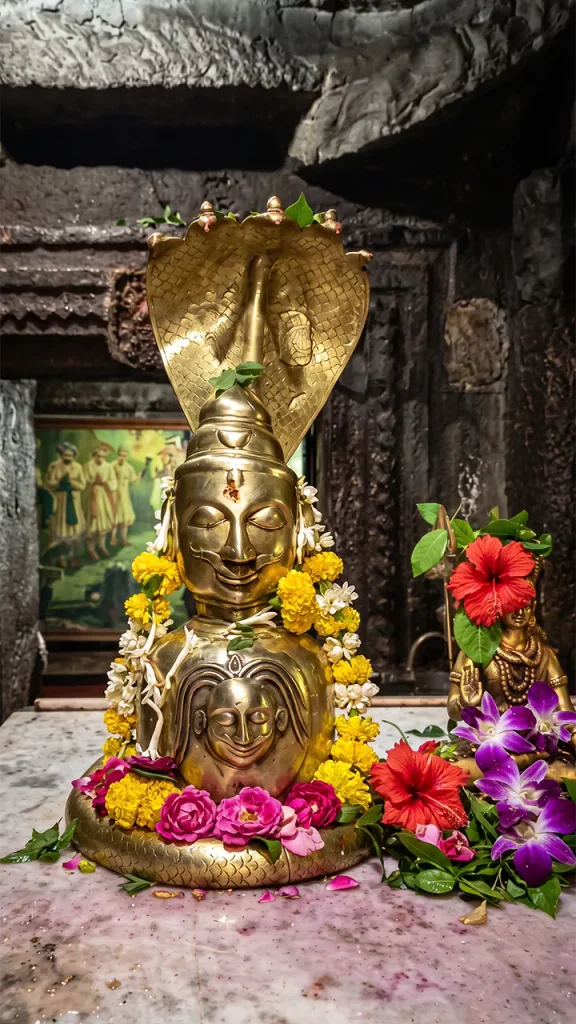
According to regional Sthala Mahatmya maintained across the Maval belt, the high laterite plateau of Raireshwar was chosen by rishis for solitary tapasya because the mountain isolates the aspirant above the mist of the river valleys. Shiva is worshipped here as Raireshwar—the Sovereign Lord of the Plateau. The Shivalinga within the inner sanctum is revered as self-manifested (Swayambhu), deeply anchored into the bedrock rather than carved and consecrated by human hands.
While Raireshwar does not claim direct pan-Indian Puranic citations found in texts like the Skanda Purana or Shiva Purana, regional Shaivite tradition integrates it into the wider spiritual fabric of the Sahyadri mountains. In local oral belief, the forested escarpments were viewed as natural protectors of Dharma, providing refuge and divine sanction for righteous rulers. The foundational event of April 1645 is recounted in contemporary 17th-century texts like Kavindra Paramananda’s Shri Shiva Bharat, describing Shivaji Maharaj’s solemn consecration of his enterprise to the divine will of the Almighty (Jagadamba and Hara):
Devanagari:
शिवस्य हृदयं विष्णुः विष्णोश्च हृदयं शिवः।
यथा शिवमयो विष्णुरेवं विष्णुमयः शिवः॥
IAST Transliteration:
śivasya hṛdayaṃ viṣṇuḥ viṣṇośca hṛdayaṃ śivaḥ |
yathā śivamayo viṣṇurevaṃ viṣṇumayaḥ śivaḥ ||
Literal Translation:
“Vishnu is the heart of Shiva, and Shiva is the heart of Vishnu. Just as Vishnu is full of Shiva, so too is Shiva full of Vishnu.”
In regional temple chronicles, this syncretic, steadfast Shaivite devotion gave young Shivaji Maharaj and his chieftains—including Tanaji Malusare, Suryaji Malusare, and Yesaji Kank—the moral sanction to declare their struggle not as personal ambition, but as Shri-nchi Ichha (the divine will of God).
Historical Timeline & Epigraphy
Direct Answer: Raireshwar entered documented history prominently in the 17th century through contemporary Maratha chronicles (Bakhars) and 18th-century land-grant deeds (Sanads). The structural shrine traces medieval roots back to the 13th–14th century Yadava era, with subsequent patronage and restorations recorded under the Pant Sachivs of the Bhor princely state.
- 13th – 14th Century (Foundational Stone Phase): Construction of the subterranean stone sanctum and water harvesting kunds, showing characteristics of late Hemadpanti stonework common throughout the Deccan under Yadava rule.
- April 27, 1645 (The Swarajya Oath): Chhatrapati Shivaji Maharaj, along with Mavala chieftains, takes the historic vow to establish sovereign self-rule (Hindavi Swarajya), anointing the Shivalinga with their blood. Recorded in the Sabhasad Bakhar and contemporary British/Mughal references to Shivaji’s early rebellions against the Bijapur Sultanate.
- 18th Century (Peshwa & Bhor Sansthan Patronage): The temple received revenue grants (Inam lands) from local Deshmukhs and the Pant Sachiv rulers of Bhor for regular maintenance, daily nitya-poojas, and naivedya offerings.
- 19th – Early 20th Century (Structural Renovations): The outer timber-frame sabhamandap with local Mangalore roof tiles was reconstructed by local villagers and regional chieftains to shelter pilgrims from heavy monsoon downpours.
- Present Day: Preserved under state heritage initiatives and actively managed by local temple trustees and village residents of Korle and Raireshwar.
Read More >> Marleshwar Temple: Mystery, Cobras, Waterfall & Cave Shrine
Architectural Anatomy & Temple Layout
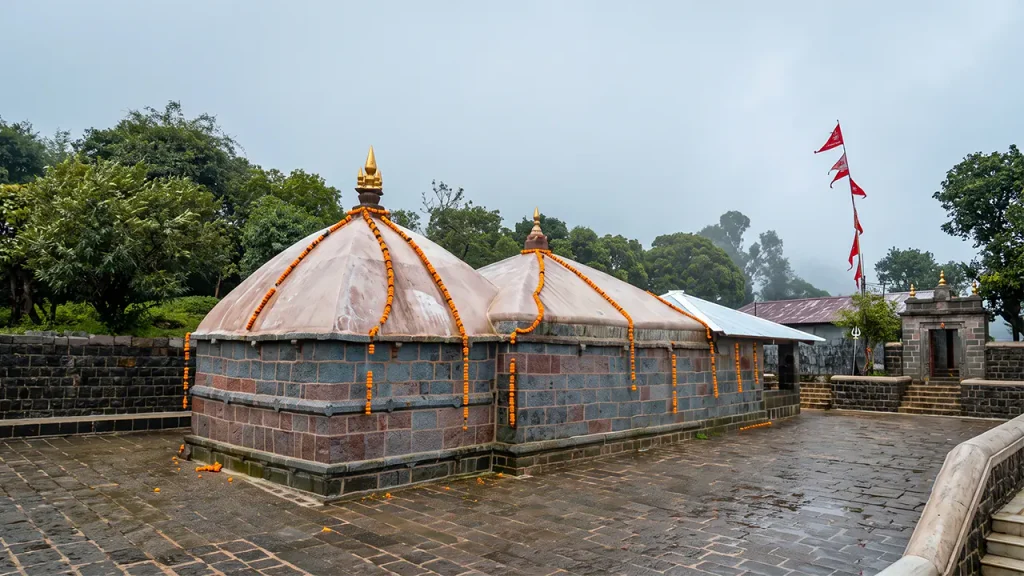
Direct Answer: Raireshwar Temple features a vernacular blend of subterranean medieval basalt stone masonry and a traditional Maratha wooden sabhamandap. Built to withstand extreme Sahyadri weather, the temple sits half-sunken into the rock, featuring an inner sanctum, antechamber, and a rustic pillared gathering hall.
Style Classification & Structural Masonry
The lower core of the temple exhibits classic Hemadpanti architectural elements: interlocking, mortarless dark basalt stones cut to fit flush against the mountain bedrock. Because winds on the Raireshwar plateau frequently exceed 80 km/h during the monsoons, the builders did not erect an imposing stone shikhara (spire). Instead, they kept the profile low and recessed, protecting the sanctum from severe moisture penetration and lightning strikes.
Walking the Complex: From Mahadwara to Garbhagriha
- The Stone Threshold & Deepstambha: Approaching the compound, you pass simple basalt boundary stones and a modest Deepstambha (lamp tower) weathered by centuries of rain.
- The Sabhamandap (Assembly Hall): The outer hall features heavy timber pillars, plastered half-walls, and a sloping roof designed to handle the heavy monsoon rainfall of the Sahyadri range. This hall houses historic depictions, commemorative plaques, and murals illustrating the 1645 oath.
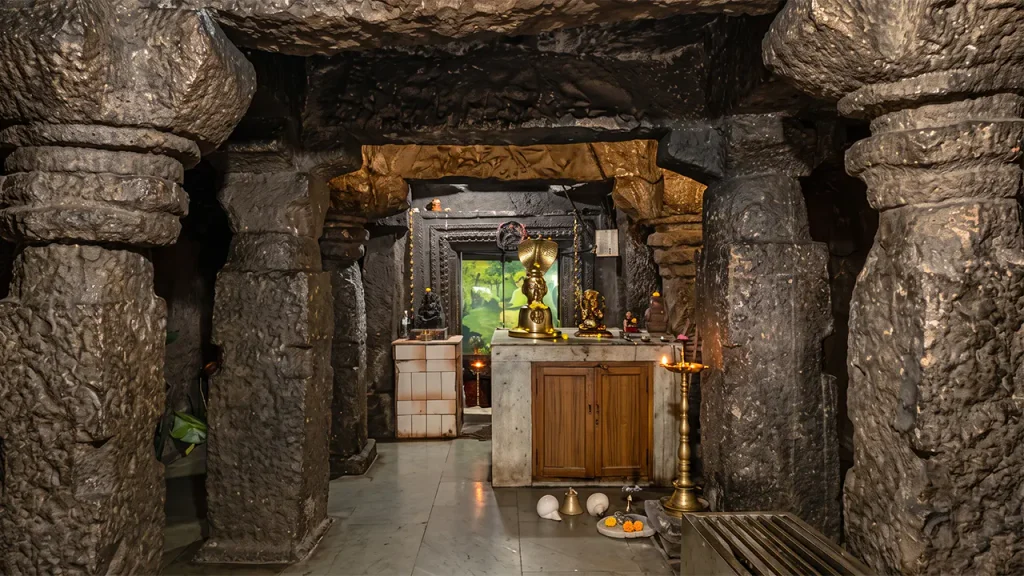
- The Antarala (Vestibule) & Nandi: Guarding the entrance to the inner shrine is a stone-carved Nandi, oriented directly toward the sanctum. The doorway to the sanctum is deliberately low, compelling every devotee to bow their head upon entering.
- The Garbhagriha (Sanctum Sanctorum): Stepping down into the cool, dimly lit sanctum, the chamber reveals the sacred Swayambhu Shivalinga resting in a stone yoni-peeth. Unlike modern urban shrines, the chamber retains its primitive, subterranean character, filled with the resonance of dripping holy water and oil lamps.
- Gomukh Kund & Sacred Tanks: Just outside the main complex lie natural perennial rock-cut cisterns (Kunds), including the Gomukh tank, which supplies potable mountain water collected through underground rock seams throughout the year.
Read More >> Ashtavinayak Temples Tour: 8 Shrines, 1 Perfect Road Plan
Darshan Guide, Daily Timings & Sacred Poojas
Direct Answer: Raireshwar Temple is open daily from 6:00 AM to 6:30 PM. The temple does not follow commercialized online booking systems; rituals are conducted by local village pujaris. Visiting hours are strictly restricted to daylight due to the lack of electrical infrastructure on the plateau.
- Morning Opening & Nirmalya Visarjan: 06:00 AM – 06:30 AM (Removal of the previous day’s flowers and cleaning of the Shivalinga).
- Prathahkal Pooja & Abhishek: 07:00 AM – 08:30 AM (Chanting of the Rudra Sukta, holy water bath from Gomukh Kund, and offering of fresh Bilva leaves).
- Madhyanh Darshan: 09:00 AM – 12:30 PM (General public darshan and personal archana offerings).
- Afternoon Recess: 01:00 PM – 03:00 PM (Quiet hours; sanctum remains accessible, but formal rituals pause).
- Sayankal Aarti: 06:00 PM – 06:30 PM (Evening lamp ceremony accompanied by traditional ringing of bells).
- Temple Closing: 06:30 PM (Sanctum doors closed for safety; pilgrims are advised to descend before nightfall).
Pooja Tariff & Seva Breakdown
Raireshwar maintains traditional rural worship protocols with no commercial tickets:
- General Darshan: Free for all devotees.
- Rudrabhishekam & Archana: Voluntary donation to the resident village priest (typically ₹101 to ₹501); devotees bring raw cow milk, flowers, and bilva patra purchased at the base village.
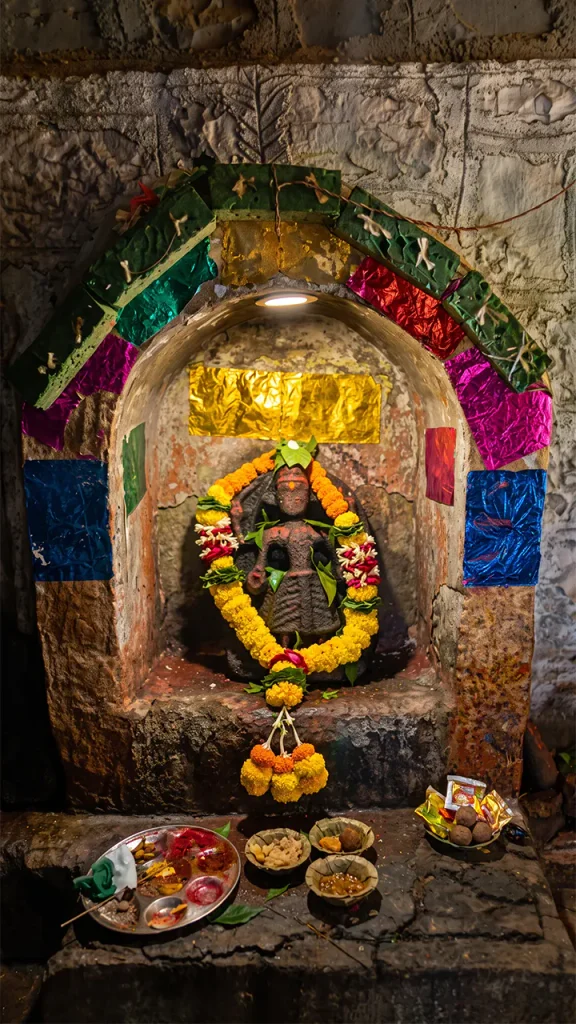
Essential Visitor Logistics & Etiquette
Direct Answer: Visitors to Raireshwar should dress modestly, prepare for a moderate 45-minute trek, remove footwear before entering the wooden sabhamandap, and strictly carry all personal waste back. The temple lacks commercial stalls, so carrying drinking water and comfortable footwear is essential.
- Dress Code: Men are expected to wear full-length trousers, dhotis, or modest trekking attire; women should wear sarees, salwar suits, or modest trekking clothes. Sleeveless shirts and short trousers should be avoided out of respect for the sanctum.
- Footwear Protocols: Leather belts and wallets are allowed in the outer hall, but all shoes and sandals must be placed on the designated stone racks outside before entering the sabhamandap.
- Accessibility Limitations: Raireshwar is not wheelchair-friendly. Reaching the temple involves navigating a steep iron staircase ladder bolted to the vertical rock face from the parking point, followed by a 20–30 minute walk along the plateau. It is suitable for active seniors with trekking poles, but difficult for those with severe mobility limitations.
- Monsoon Safety & Flash Mists: Between June and September, thick clouds reduce visibility to less than 5 meters on the plateau. Stick strictly to the worn path to avoid falling off unguarded cliff edges.
- Crowd Dynamics & Best Time to Visit:
- Peak Crowds: Weekends in July–August (trekkers), Maha Shivaratri, and October during Shivrajyabhishek/Swarajya celebrations.
- Best Season: October to February offers clear, cool days, vibrant green landscapes, and comfortable conditions for trekking.
Read More >> Yamai Devi Temple Aundh: Mystery of the Black Stone Goddess
How to Reach Raireshwar Temple
Direct Answer: Raireshwar Temple is situated approximately 90 km south of Pune. Travelers must drive or take a bus to Korle village via Bhor, from where a motorable ghat road leads to the base parking area, followed by a short iron-ladder climb to the plateau.
By Road
- From Pune (90 km / ~3 hours): Take the NH-48 (Pune-Bengaluru Highway) south past Shirwal. Divert right towards Bhor town. From Bhor, continue past Ambavade and follow the country road to Korle village. From Korle, a steep 5 km concrete/gravel ghat ascends to the official base parking lot.
- From Mumbai (230 km / ~5.5 hours): Take the Mumbai-Pune Expressway to Pune, bypass through the Katraj tunnel onto NH-48, and follow the Bhor-Korle route.
- Bus Transport: State Transport (MSRTC) buses operate from Pune’s Swargate bus station to Bhor. From Bhor, limited local transport (mini-buses or shared jeeps) goes to Korle village. Private vehicles or hired cabs are strongly advised.
By Train
- Nearest Major Station: Pune Junction (PUNE), 92 km away, offering nationwide broad-gauge rail connectivity.
- Secondary Station: Satara Railway Station, approximately 70 km south via regional rural roads.
- Onward Journey: Hire a private cab from Pune Railway Station directly to Korle/Raireshwar base.
By Air
- Nearest Airport: Pune International Airport (PNQ), roughly 98 km away.
- Transit: Book a pre-paid taxi from the airport via the NH-48 corridor to Bhor.
Complete 1-Day Pilgrimage Circuit & Nearby Attractions
Direct Answer: A balanced 1-day circuit allows devotees to experience the Raireshwar sanctum, explore the seven-colored soil formations on the plateau, pay homage at the Nageshwar temple in Ambavade, and explore the nearby Kenjalgad fort.
- 06:00 AM – 08:30 AM: Depart Pune via NH-48; breakfast in Bhor town (famous for traditional Maharashtrian misal and poha).
- 08:30 AM – 09:30 AM: Drive from Bhor through picturesque valleys to the Raireshwar base parking lot above Korle.
- 09:30 AM – 10:15 AM: Ascend the iron-ladder stairway and walk across the open plateau.
- 10:15 AM – 11:30 AM: Enter Raireshwar Temple, participate in quiet darshan, offer Abhishek, and inspect the Swarajya memorial murals.
- 11:30 AM – 01:00 PM: Explore the Seven-Colored Soil (Rangiit Maati) formations and Gomukh Kund on the plateau; enjoy panoramic views of the Sahyadri ranges.
- 01:00 PM – 02:00 PM: Descend to the base; enjoy a simple home-cooked Maharashtrian lunch (Pithla Bhakri and Thecha) prepared by local villagers in Korle.
- 02:30 PM – 04:00 PM: Visit Ambavade to see the ancient Nageshwar Temple (intricate Hemadpanti stone architecture) and the historic suspension bridge.
- 04:30 PM – 05:30 PM: Stop at Bhor Rajwada (historic palace of the Pant Sachiv rulers).
- 05:30 PM: Begin return journey to Pune.
Notable Nearby Attractions
- Kenjalgad Fort (Ghera Khelanja) (8 km from base): A rugged rhomboid table-land fortress offering commanding views of the Wai valley and Dhom dam backwaters.
- Nageshwar Temple, Ambavade (18 km): A remarkably preserved 12th-century Hemadpanti Shiva temple featuring deeply carved stone ceiling rosettes and a perennial spring.
- Necklace Point, Bhor (32 km): The scenic confluence of the Nira and Velwandi rivers forming a natural loop resembling a necklace.
- Varandha Ghat (45 km west): A dramatic mountain pass connecting the Deccan plateau with the Konkan coast, famous for roaring waterfalls during monsoon months.
Frequently Asked Questions
Where is Raireshwar Temple located?
Raireshwar Temple is situated on the Raireshwar plateau in Bhor Taluka, Pune District, Maharashtra, roughly 90 kilometers south of Pune city. It sits at an elevation of 1,370 meters in the Sahyadri mountains near Korle village.
What is the historical significance of Raireshwar Temple?
Raireshwar Temple is the site where Chhatrapati Shivaji Maharaj, at the age of sixteen on April 27, 1645, took the historic oath to establish Hindavi Swarajya (indigenous self-rule), solemnizing the pledge by performing a blood anointment over the sacred Shivalinga.
What are the daily timings of Raireshwar Temple?
The temple is open daily from 6:00 AM to 6:30 PM. The sanctum closes at sunset because there is no electricity on the high plateau, and visitors are required to descend to the base parking area before dark.
How difficult is the trek to Raireshwar Temple?
The trek is easy to moderate. From the base parking area, it takes 30 to 45 minutes to reach the temple. The trail includes well-maintained iron staircases bolted to the cliff face, followed by a flat walk across the plateau.
Is Raireshwar Temple suitable for elderly visitors?
Active elderly visitors who can climb steep staircases can complete the visit using trekking poles. However, the iron ladders and unpaved, rocky plateau paths mean the temple is not accessible for individuals with severe mobility issues or wheelchair users.
What is the dress code for Raireshwar Temple?
Visitors should wear modest clothing. Traditional Indian attire such as dhotis, kurtas, sarees, and salwar kameez, or modest full-length trekking clothes are recommended. Revealing attire is discouraged out of respect for the sanctum.
Are food and accommodation available on Raireshwar plateau?
Commercial hotels do not exist on the plateau. Basic rustic homestays and freshly cooked local meals (such as pithla bhakri) are provided by local village families in the small hamlet near the temple and in Korle village at the base.
What is the famous seven-colored soil at Raireshwar?
The Raireshwar plateau features a unique geological formation of laterite soils occurring in seven distinct natural shades, ranging from pale yellow to deep ochre, pink, and dark brown, located a short walk from the temple.
Which festivals are celebrated at Raireshwar Temple?
Maha Shivaratri is celebrated with traditional Abhishek rituals and village fairs. Additionally, Maharashtra Day and Swarajya Din (anniversary of the 1645 oath) see regional gatherings, historical tributes, and flag-hoisting ceremonies.
How can I reach Raireshwar from Pune by public transport?
Take a Maharashtra State Road Transport (MSRTC) bus from Pune’s Swargate station to Bhor. From Bhor, board a local bus or shared jeep heading towards Korle village. From Korle, hire a local jeep or walk up the ghat road.
Can we touch the Shivalinga at Raireshwar?
Yes, devotees are traditionally allowed to directly touch the Swayambhu Shivalinga to offer water (Jal) and Bilva leaves, provided they respect temple rules, maintain cleanliness, and do not cause damage to the sacred stone.
Is there an entry fee for Raireshwar Temple?
No, there is no entry fee to visit the temple or plateau. Local village committees occasionally collect a modest environmental/parking fee (typically ₹50 per vehicle) at the base of the ghat road for sanitation and road maintenance.