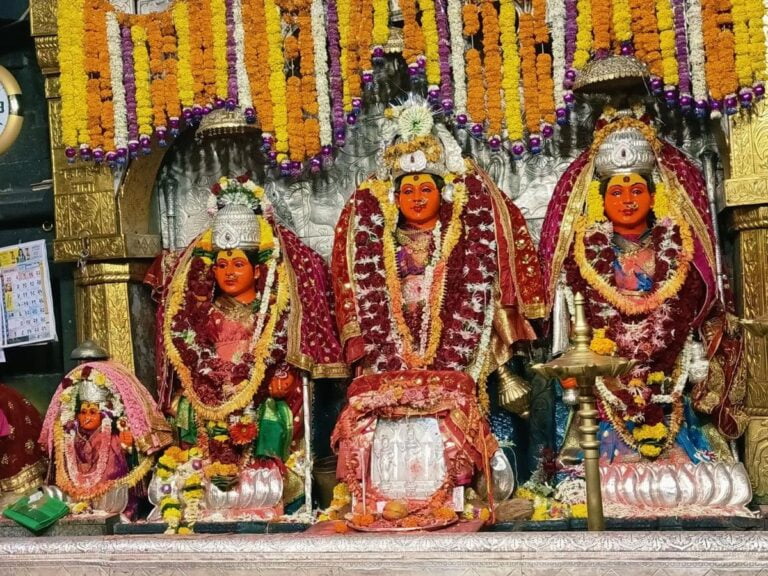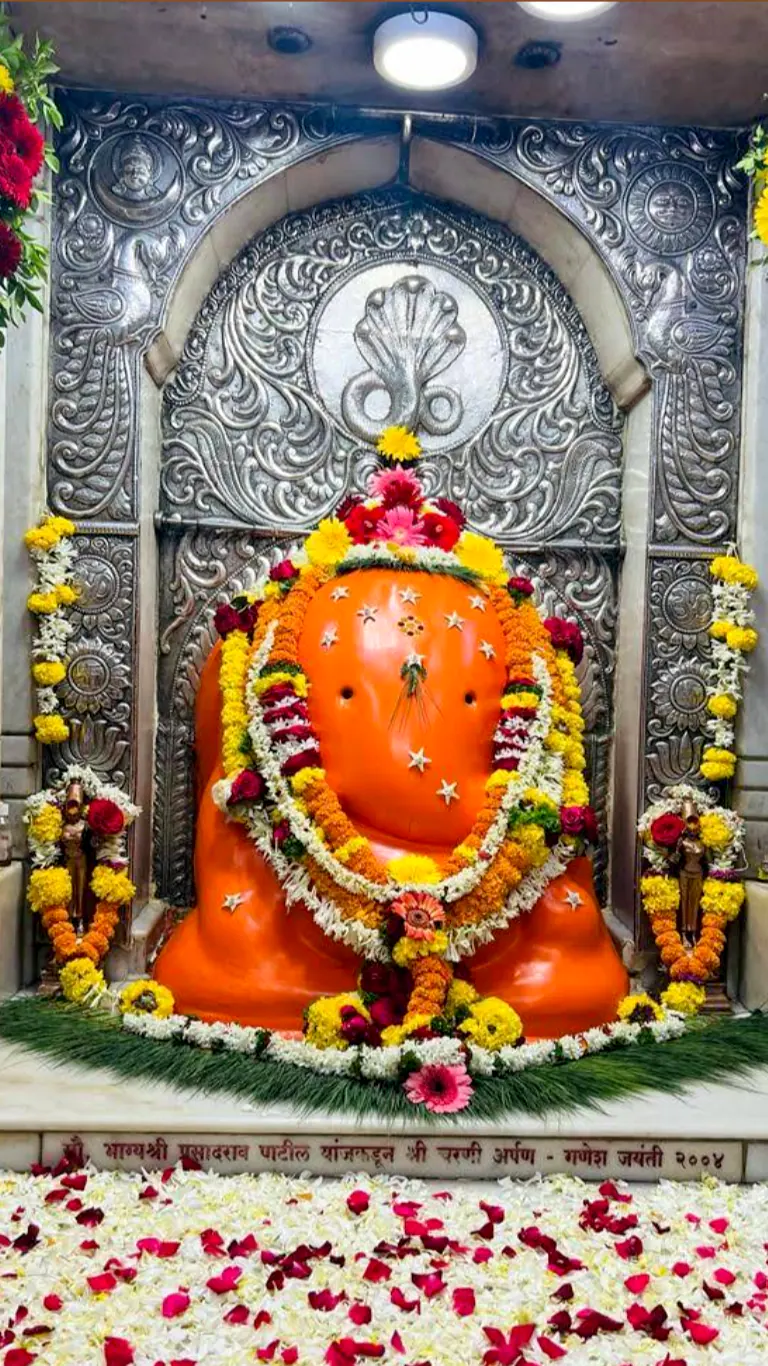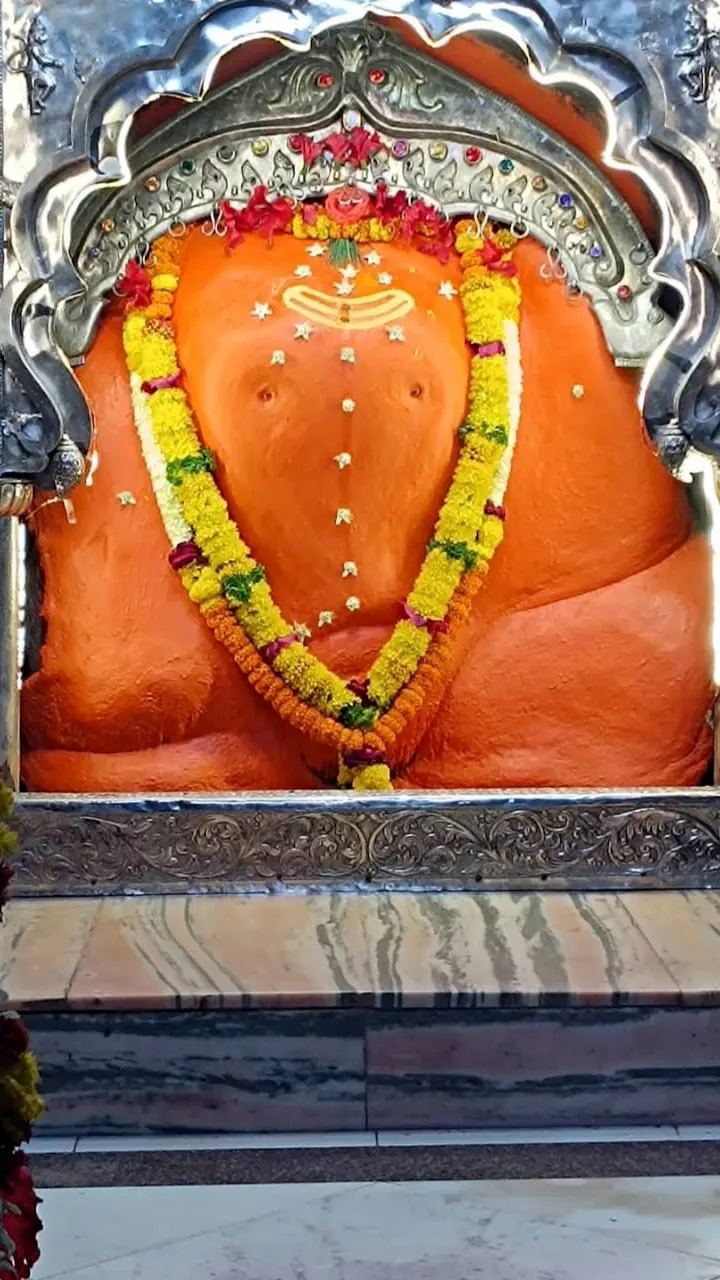
Marleshwar Temple: Mystery, Cobras, Waterfall & Cave Shrine
Welcome to Marleshwar Temple, one of the most fascinating, mysterious, and spectacular cave temples of India!
Situated in the Western Ghats (Sahyadri ranges) in the Konkan region of Maharashtra, the ancient cave temple of Marleshwar, also known as “the Trimbakeshwar of Konkan,” is the place where nature, spirituality, and adventure come together.
From a spiritual pilgrim to a family seeking your next adventure weekend or an adventure lover who wants to explore the hidden caves of mountains, this full guide gives you all the information you need on the visit to Marleshwar Temple.
What Makes Marleshwar Temple So Unique?
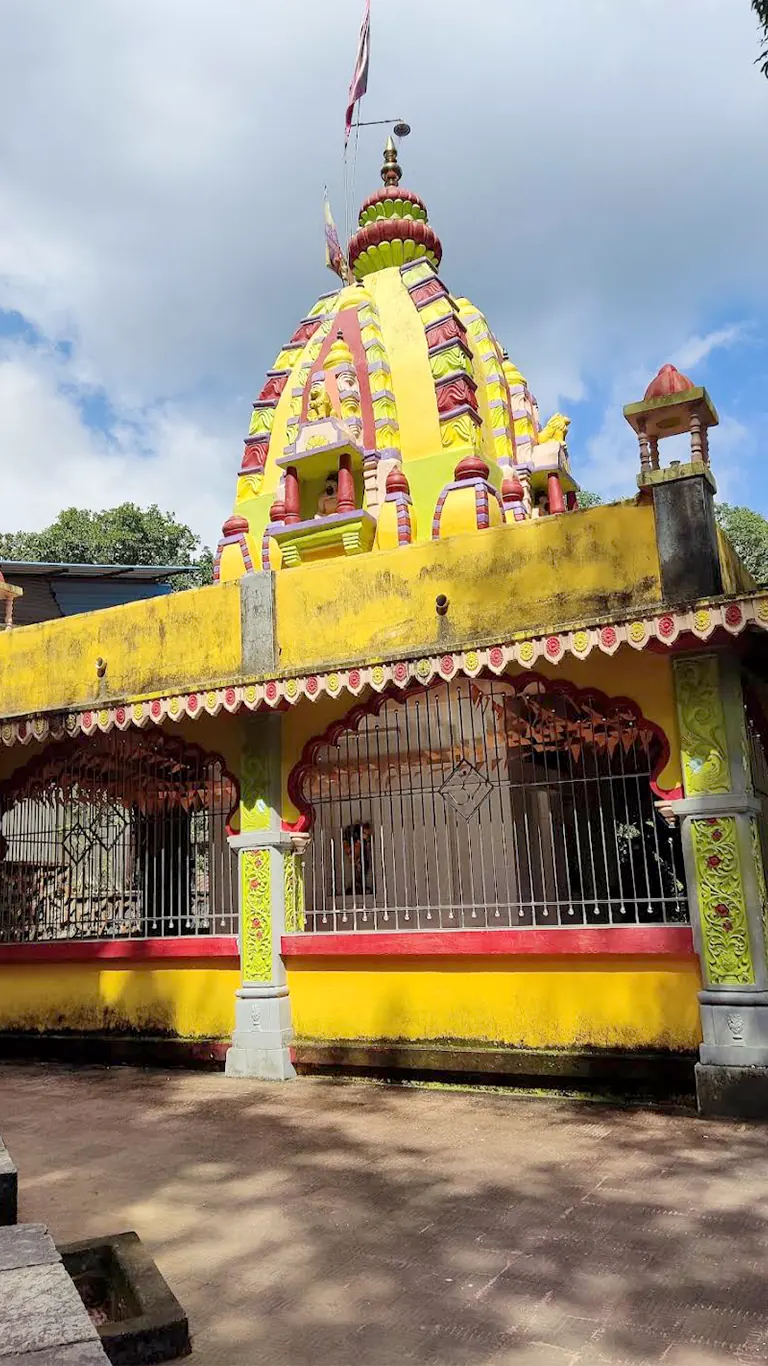
This temple, known as Marleshwar Temple, is situated in Maral village, near Devrukh in the Ratnagiri district of Maharashtra. It is not a regular city temple constructed from bricks and cement. This is an ancient temple that has been naturally carved out of a rock cave.
| Key Feature | Details |
| Location | Maral Village, Sangameshwar Taluka, Ratnagiri, Maharashtra |
| Primary Deities | Lord Marleshwar (Shiva) & Lord Mallikarjuna |
| Temple Type | Natural Rock Cave Shrine (Swayambhu) |
| Climb Required | ~500 to 520 paved stone steps |
| Key Attraction | Dhareshwar Waterfall & Friendly Cobras |
| Best Season | Monsoon (July–Sept) & Winter (Oct–Feb) |
| Entry Fee | Absolutely Free! |
The 4 Big Wonders of Marleshwar
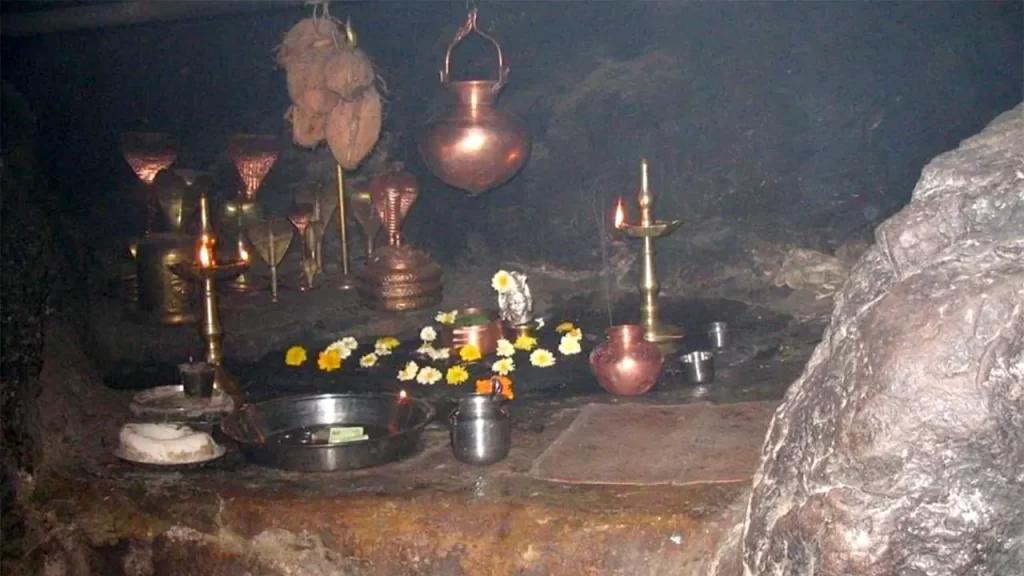
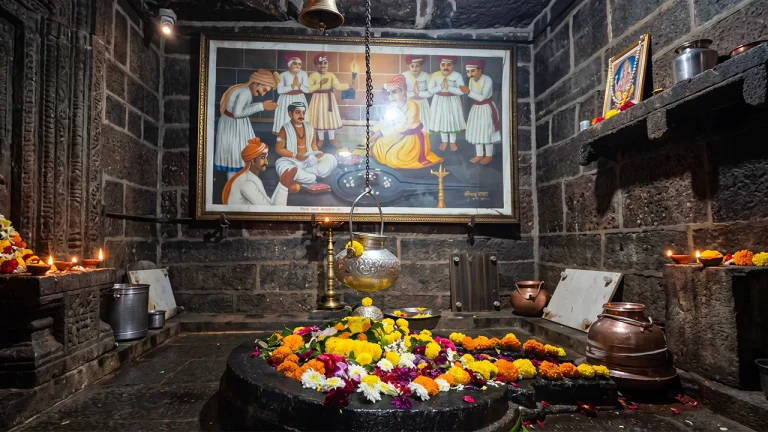
- The Swayambhu Twin Shivlings: Within the dark cave interior lie two naturally formed (Swayambhu) Shivlings, one dedicated to Lord Marleshwar and the other dedicated to Lord Mallikarjuna. The Shivlings were not created by sculptors, but they naturally emerged from the cave rocks.
- The Amazing Cobras’ Survival: According to local legend and scientific evidence, the cobra species live in the narrow slits of the rock caves. Yet, despite millions of pilgrims passing through this area over generations, no record of a snake biting any of the pilgrims inside the premises exists.
- Natural Abhisheka Round-the-Year: In any season—no matter how hot it gets, as in May—the cold water flows naturally from the rock cracks in the cave ceiling and falls directly on the Shivling. Thus, nature performs eternal 24/7 Abhisheka of Lord Shiva.
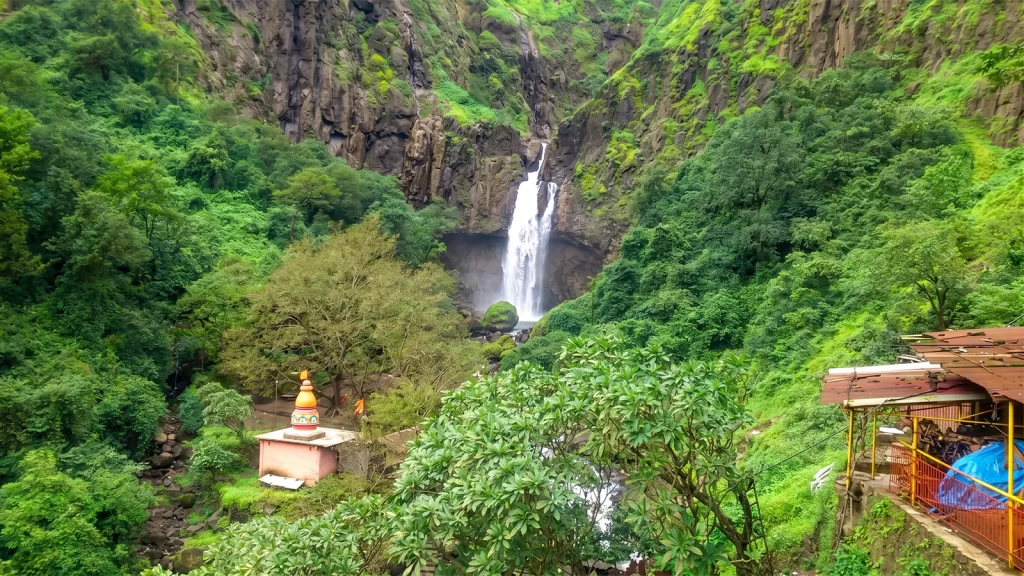
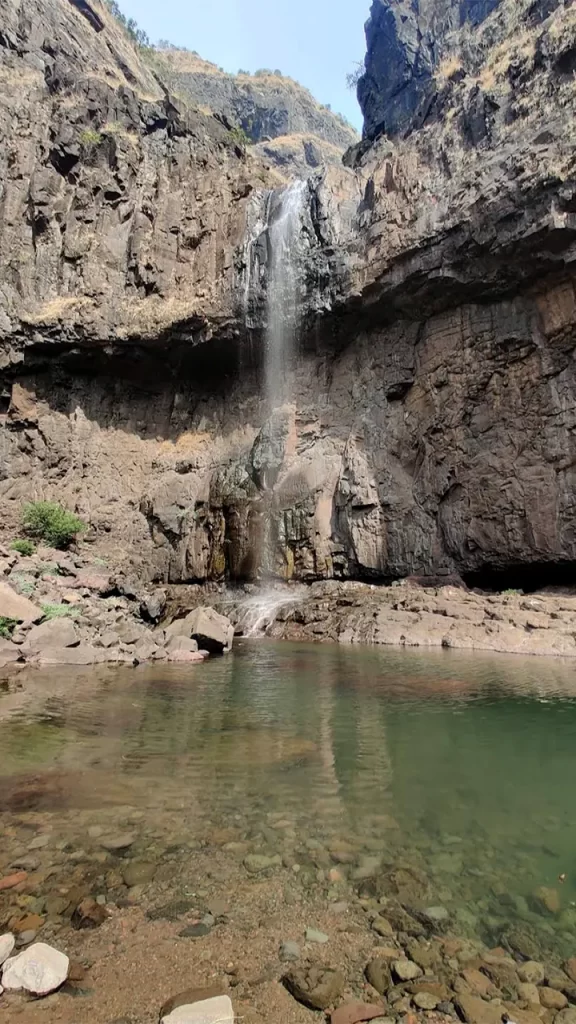
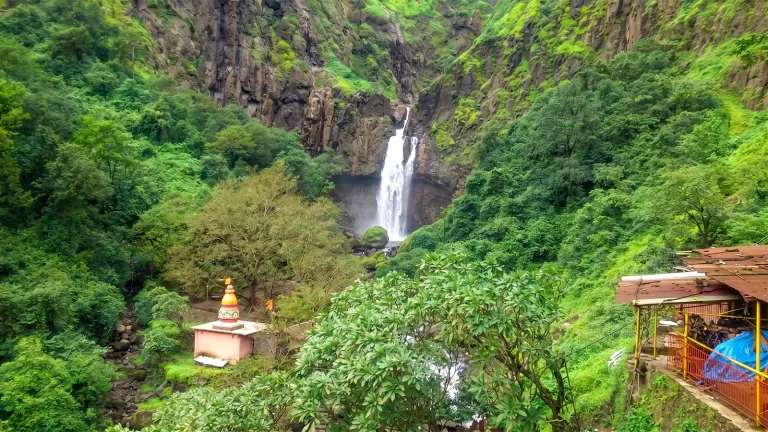
- Dhareshwar Waterfall Setting: Right next to the cave cliffs lies the powerful Dhareshwar Waterfall, plunging hundreds of feet deep into the valley below to create the Bav River.
Behind the tradition: Read about… Divine Nalambalam Temples Circuit: Complete 1-Day Guide
Who Should Visit Marleshwar Temple?
- Pilgrims & Devotees: Worshippers of Lord Shiva who want to witness firsthand the sheer, silent power of a cave temple of the ancient Guhya (secret) tradition.
- Hikers & Nature Lovers: Tourists who like scaling staircases that lead to peaks amid monsoon water streams, vegetation, and valley scenery.
- Cultural & Folklore Researchers: Anybody who wants to research the folklore culture of Western India.
Historical Legends, Scriptural Evidence & Folk Tales
The Legend of Lord Parashurama
How does this cave acquire its sanctity? As per the Konkani legend, this entire area was created by Lord Parashurama (incarnation of Lord Vishnu).
Having reclaimed the lush coastal lands of Konkan from the ocean, Lord Parashurama sought to safeguard this area in terms of its spiritual importance. He set up many sacred temples all along the Sahyadri mountain range and dedicated this cave shrine at Marleshwar Temple to Lord Shiva.
Scriptural Proof in the Ancient Puranas
Does Marleshwar Temple find mention in any ancient Hindu texts? Indeed it does! Ancient Hindu scriptures have made references to the divine sanctity of the hidden cave shrines (Guhya Kshetras):
Skanda Purana (Sahyadri Khanda):
“In the high ridges of the Sahyadri mountains, where cool springs flow endlessly and natural rock caves shelter the Mahadeva, sincere prayer brings instant peace and frees the mind from all fear.”
The Shiva Purana also states that Lord Shiva loves residing in natural caves wetted by fresh mountain streams, as nature itself performs his continuous Abhisheka (holy bath).
Behind the tradition: Read about… Ashtavinayak Temples Tour: 8 Shrines, 1 Perfect Road Plan
The Divine Relocation: From Angavali to Maral
One of the most revered tales associated with the folklore of Konkan is about how Marleshwar Temple came to be situated in its current location.
Many years ago, the Shivling was worshiped at a neighboring village known as Angavali. But due to the socio-political instability prevailing in the region along with a general disregard of the holy rituals, the deity decided to desert the place. As per the legend, the Shivling walked through the dense forest, escorted and covered by thousands of cobras.
The inaccessible and protected cave of Maral village became the final resting place of the deity. Till today, in the annual celebration of Makar Sankranti, the people of Angavali are bestowed with the honor of carrying the ceremonial banner in the procession.
Religious Significance and The Divine Cobra Mystery
Deities Worshipped at Marleshwar
These three sacred deities have been installed in the sanctum of Marleshwar Temple:
- Marleshwar: First Shivling signifying calmness and penance power as well as the protective essence of nature.
- Mallikarjuna: Second Shivling placed alongside Marleshwar representing divine knowledge and enlightenment.
- Girija Devi: Local manifestation of Goddess Parvati. Her temple is located at Kholdev village and her divine marriage with Lord Marleshwar is the heart of the cultural year.
The Cobra Phenomenon: Miracle, Harmony, and Faith
The existence of wild venomous snakes—King Cobras (Naja naja) and Pit Vipers—in Marleshwar Temple is an acknowledged feature that attracts both true worshippers and inquisitive scientists.
- The Spiritual Viewpoint: According to the Hindu mythology, snakes are the revered associates of Lord Shiva (Nagabhushana—the one adorned by snakes). Worshippers are convinced that these cobras are the protectors (Naga Devatas) of the cave from any profanation.
- The Ecological Viewpoint: The narrow rock crevices in the Sahyadri mountain are the natural dwelling place for reptiles. The combination of a cool climate inside the cave and the lack of glaring artificial illumination and aggression from humans creates a tranquil environment. As people have always been respectful rather than afraid of the cave, the snakes got used to people without considering them dangerous.
This is the perfect real-life example of the ecological equilibrium between man and nature.
Behind the tradition: Read about… Scriptural Mystery of Khatu Shyam Temple: Legend of 3 Arrows
Architecture and Design: Nature’s Sacred Cavern
Natural Rock Cave Architecture
Unlike classical Indian temple architecture—which follows strict manual designs like Nagara (northern spires) or Dravidian (southern layered towers)—Marleshwar Temple is an exemplar of Natural Cavern Architecture.
| Architectural Aspect | Marleshwar Temple Feature |
| Structural Base | Solid, naturally eroded basaltic rock cavern. |
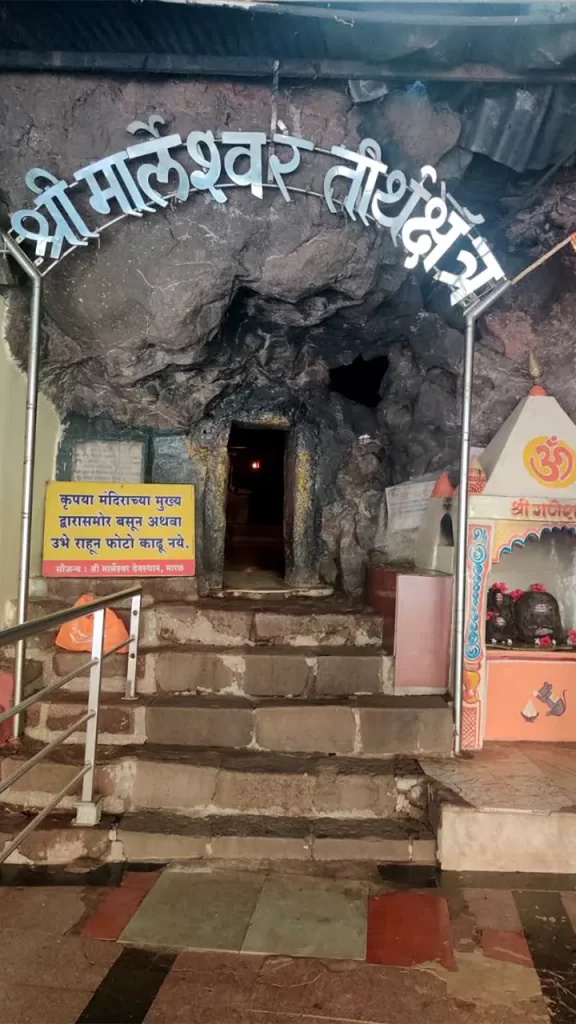
| Facade & Entrance | Simple stone archway retrofitted with protective iron grilles to manage crowds. |
| Sanctum (Garbhagriha) | A dim, low-ceilinged inner chamber lit naturally by brass oil lamps (Diyas). |
| Roof & Ceiling | Natural basalt roof featuring water-bearing fissures that trickle onto the deities. |
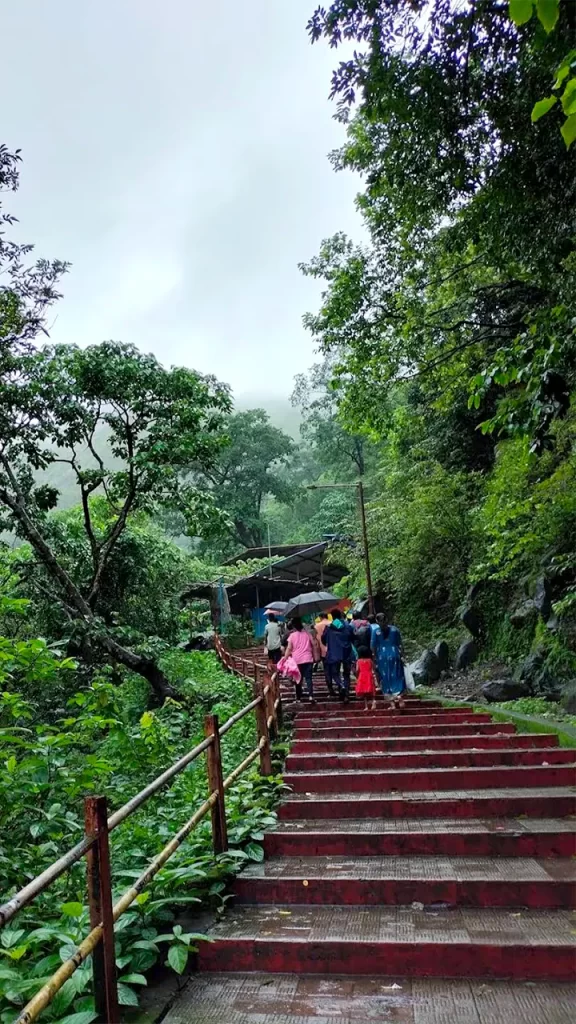
| Access Way | ~500 carved stone stairs fitted with handrails and covered rain-shelter sheds. |
Symbolic Elements of the Cave Design
- The Dark Cave Interior: This depicts the inner part of the human heart (Anahata), which is a serene area that is away from external noises where the holy light shines gently.
- The Water Droplets: These symbolize the ever-flowing descent of the holy river Ganges from the matted hair of Lord Shiva.
- The Mountain Ascent: This denotes the journey of life itself—where there is discipline in ascending, breathing control, and patience in order to attain peace.
Main Attractions and Highlights Around the Shrine
- The Cave Sanctum
Entering the main chamber of Marleshwar Temple is a completely engaging experience in terms of one’s senses. It is cool, and there is the smell of wet rock, incense of camphor, fresh Bel leaves, and coconut water. With the low roof, people have to bend their head while walking towards Shivlings. - The Dhareshwar Waterfall
There is the magnificent waterfall of Dhareshwar just a small walk around the corner from the cave entrance. Plunging over a cliff into a steep gorge, this waterfall is the primary source of Bav River. In the monsoon period (July-September), the waterfall is incredibly powerful and creates a layer of water fog on the whole area around it. - The Covered Mountain Stairway
There are more than 500 steps on the way to Marleshwar Temple. In order to facilitate climbing for the families with children and elder people, there is a corrugated metal roof above most of the staircase. It protects the visitors from heavy rains in monsoon and the scorching heat of summer days.
Behind the tradition: Read about… Srikalahasti Temple: 4th Air Vayu Lingam
Daily Timings, Rituals, and Etiquette
Temple Schedule
Plan your visit around the official daily schedule of Marleshwar Temple:
- 06:00 AM: Cave doors open to devotees.
- 07:00 AM – 07:30 AM: Morning Maha Aarti and ritual bath (Abhisheka).
- 12:30 PM – 01:30 PM: Midday offering (Nivedya) and brief cleaning break.
- 06:30 PM – 07:00 PM: Evening Maha Aarti accompanied by traditional drums (Dhol-Tasha) and bells.
- 07:30 PM – 08:00 PM: Night closure of the cave entrance.
Key Rituals Performed Here
- Rudra Abhisheka: The Shivling is washed with holy liquids such as raw milk, water from a tender coconut, honey, curd, and sugarcane juice while reciting verses from the Shukla Yajurveda.
- Bilvarchana: Devotees offer fresh three-leafed Bel (Bael) leaves, which are considered holy for Shiva and are believed to wipe off the sins of three categories of karmas.
- Maha Pooja: This is an evening ritual in which the Shivling is dressed with silver covers (Pindi Kavach) along with flower decorations of marigold and jasmine.
Visiting Etiquette and Guidelines
- Dress Code: Dress appropriately. Typical Indian clothing, such as dhoti, kurta, saree, or salwar suits, is preferable. Regular pants and t-shirts are perfectly acceptable, but short skirts and sleeveless tops should not be worn.
- Shoes: Shoes need to be taken off at the designated shoe stand near the entrance or at the bottom of the last staircase leading to the caves.
- Monkeys on the Route: Monkeys can be found in the tree canopy on the staircase route. Ensure that all items of food, coconut, and other loose things are kept in your bags.
Behind the tradition: Read about… Kottaiyur Kodeeswarar Temple
Major Festivals, Annual Events, and Crowd Patterns
The Grand Makar Sankranti Yatra (Mid-January)
The biggest event at Marleshwar Temple takes place during Makar Sankranti in January.
This festival celebrates the symbolic divine marriage between Lord Marleshwar and Goddess Girija Devi. Thousands of devotees gather as decorated silver palanquins (Palkhis) are carried up the mountain accompanied by traditional drums, chanting, and music.
| Season | Months | Why Visit? | What to Keep in Mind |
| Monsoon | July – Sept | Waterfalls are at peak power; scenery is lush green. | Steps can be slippery; carry rain gear. |
| Winter | Oct – Feb | Pleasant weather; perfect for climbing steps; Makar Sankranti festival. | Higher weekend crowds. |
| Summer | March – June | Peaceful cave experience; lowest crowd levels. | Warm afternoon weather; carry extra water. |
How to Reach Marleshwar Temple & Insider Travel Tips
1. By Road
- From Devrukh: 20 km (approx. 35 mins by state transport bus or auto).
- From Sangameshwar: 32 km.
- From Ratnagiri City: 65 km.
- From Mumbai / Pune: Approx. 325–350 km (7 to 8 hours drive via NH-66 Mumbai-Goa Highway).
2. By Train
The closest rail station is Sangameshwar Road Station (32 kilometers away) on the Konkan Railway Track. The second rail station that can be considered closer is Ratnagiri Railway Station (60 kilometers away). It is a bigger station where most of the express trains halt.
3. Food and Accommodation
Food: Small local restaurants (Khanavals) at the foot of the hill offer scrumptious homemade food including the traditional Konkani vegetarian meals like Thalis, Pithla Bhakri and Sol Kadi.
Accommodation: Most people stay in Ratnagiri or Devrukh town close to it, and visit Marleshwar Temple as a day’s excursion from there.


Nearby Places You Can’t Miss
Combine your tour of Marleshwar Temple with the following cool sites around you:
1. Machal Hill Station (“Mahabaleshwar of Ratnagiri”)
- Distance from Marleshwar: ~30 km (close to Devrukh)
- Why Not to Miss: Located at a height of more than 2,500 feet, Machal is a calm and little-known tableland plateau. It holds the nickname of being the “Mahabaleshwar of Ratnagiri” due to its ever-cool breeze, misty valleys, and dense forests.
- Highlights:
- Pandava Caves: The local stories make the connection between the caves of Machal, which are cut in the rocks, to the Agnatavas period of Pandavas.
- Machal Viewpoint: A place that offers panoramic 360 degrees views of the nearby Sahyadri ranges and the deep green Konkan valleys.
- When to visit: After monsoon (Oct-Nov), or pre-monsoon (July-Sep) for lush green views and walking clouds experience.
2. Prachitgad Fort & Amba Ghat Pass
- Distance from Marleshwar: 18 km to 35 km
- Why You Shouldn’t Miss It: Amba Ghat falls right on the borders of Ratnagiri and Kolhapur districts and is a mountain pass providing one of the most picturesque drives in the entire state of Maharashtra. Standing atop the ghat is the historical hill fort Prachitgad, which was used during the rule of Maratha Empire.
- Highlights:
- Trekking Prachitgad: Ideal destination for history lovers and trekkers with ancient stone forts, water tanks carved out of the rock, and ancient cannons.
- Amba Ghat View Points: Ideal place to capture the beautiful sunset, paraglide (seasonal) and hike through the forest trails.
- Travel Tip: Be careful while driving on the mountain passes of Amba Ghat as the region gets covered in dense fog during the monsoon season!
3. Tikaleshwar Temple & Hidden Waterfalls
- From Marleshwar: Approx. 22 km (near Devrukh)
- Reasons Not to Miss It: Located on a hill near Devrukh, the Tikaleshwar Temple is an old Shiva Temple located amidst dense forests and some natural waterfalls such as Nive Dam and Devale Waterfall in the vicinity.
- Features:
- Calm and Serene Atmosphere: More calm and quiet compared to other pilgrim spots and ideal for meditation and prayer.
- Natural Trail: Trekking to the temple through cashew and mango farms offers rural Konkani experience.
4. Ganpatipule Beach & Swayambhu Ganesha Temple
- Distance to Marleshwar: Approx. 85 km (about 2 hours scenic drive towards the sea)
- Why You Must Not Miss It: Ganpatipule is one of the best-known places in the Konkan region that blends spirituality with seashore beauty. The old Ganesha temple here stands right on the seashore facing the blue waters of the Arabian Sea.
- Highlights:
- Swayambhu Temple: The Lord Ganesha Idol is self-manifested out of white sand, with a rare west-facing direction of any temple in India.
- White Sand Seashore: Good place for various water activities or camel rides or even having some local Konkani food like Modak and Sol Kadi available here.
- Twin Beaches – Aare Ware: This place is about a few kilometers before Ganpatipule and has a pair of seashores, having a cliff-side coastal road like foreign coastal roads.
5. Thibaw Palace & Ratnadurg Fort (Ratnagiri City Cluster)
- Distance from Marleshwar: 60 km to 65 km
- Why You Must Not Miss This: Should you go farther out in Ratnagiri city, then these two historical sites will tell you about the past of the coastal area in relation to its colonial and regal history.
- Major Attractions:
• Thibaw’s Palace: Built by the British for King Thibaw of Burma (Myanmar), who was the last exile king. This palace is a red-bricked structure having wooden stairs and a museum housing items belonging to the royal family.
• Bhagwati Fort: Also called Ratnadurg Fort, it is a horseshoe shaped coastal fort surrounded by the Arabian sea from three sides. The ancient Bhagwati temple and a functional lighthouse stand within this fort complex.
- Major Attractions:
Frequently Asked Questions (FAQs)
Is it safe for children and elderly people to climb Marleshwar Temple?
Yes! The stairs are wide and in great condition, complete with railings for added support. But as there are more than 500 stairs, the elderly should make regular breaks at the covered seating spots on the way.
Do I have to pay any entry fees at Marleshwar Temple?
No. Admission to the Marleshwar Temple and entry to the cave temple is entirely free for all people.
Are the cobras really harmless?
Although king cobras are naturally venomous snakes, those that reside within the cave temple have coexisted alongside humans for years without any problems. It is best to treat them with reverence and move about quietly.
Can we take photos inside the cave?
Photography of the mountain route, waterfalls, and entrance of the temple can be done, but taking photos inside the sanctified inner cave sanctuary is not allowed.
Final Thoughts: Are You Ready for a Journey?
A journey to Marleshwar Temple is no vacation; it is an adventure that remains with you forever. Where else can you hike through rainforest-clad hills, see a thundering waterfall, enter an ancient rock cave, and experience spiritual bliss like never before?
Gear up your hiking boots, round up your family, and prepare yourself to witness the magic of Marleshwar Temple!
Har Har Mahadev!