
Basara Gnana Saraswati Temple
Gnana Saraswati Temple, Basara resplendent on the banks of Godavari, a river revered by crores. This temple has for centuries been a guiding light for people who come seeking enlightenment, particularly students and parents praying to seek the blessings of Goddess Saraswati for success at studies and for sharp intellect. It’s where learning begins – a lovely ceremony called Aksharabhyasam.
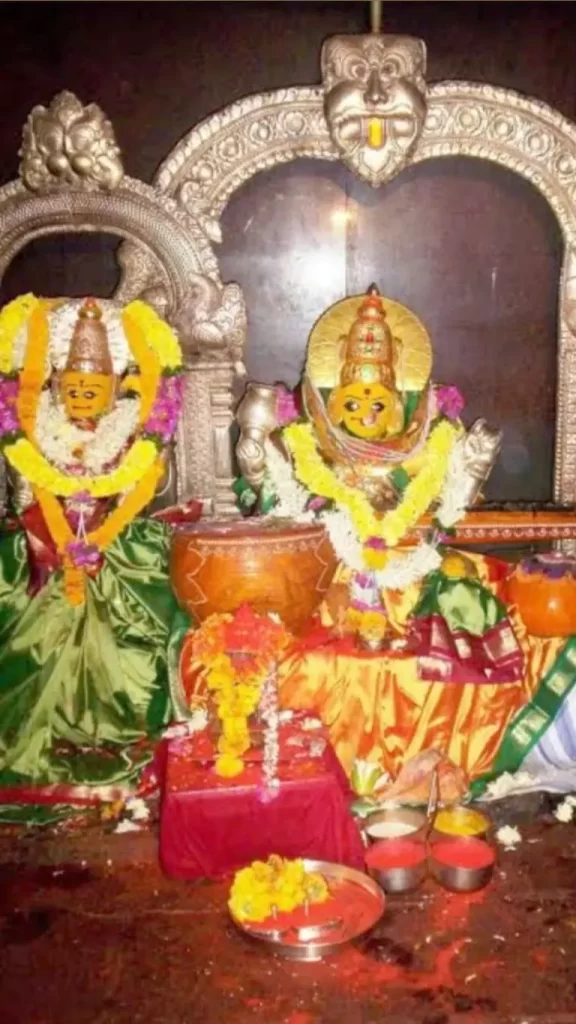
Most sites claim to provide spiritual consolation, but Basara gives something deeper: a sense of direct access to the source of all wisdom. It’s not only prayers; it’s a journey along the way of intellectual and spiritual development. The very atmosphere here appears to vibrate with the ancient incantations and silent dreams of millions of believers. I have witnessed families cross states, carrying their tiny tots for Aksharabhyasam, their faces gleaming with hope and belief. It is a heartwarming sight.
Contents
- 1 Basara Temple History : Echoes of Antiquity
- 2 Legend of the Gnana Saraswati Temple: A Divine Manifestation
- 3 Cultural, Spiritual, and Mythological Significance of the Temple
- 4 Festivals and Special Days: A Calendar of Devotion
- 5 Aesthetic Architectural Forms and Carvings: A Glimpse into Artistry
- 6 Myths and Beliefs: The Fibers of Faith
- 7 Basara Temple Timings: Planning Your Darshan
- 8 Places to Visit Near Basara Temple: Extending Your Spiritual Journey
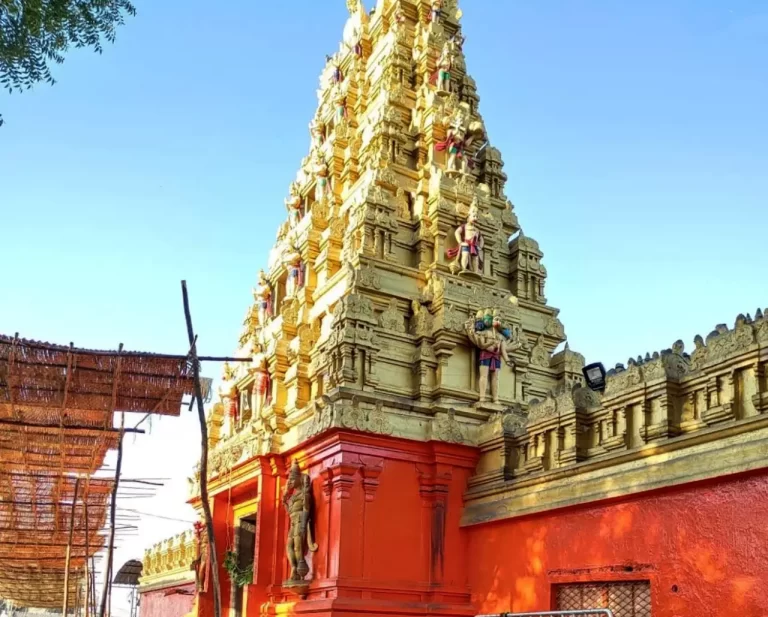
- 8.0.1 Karmanghat Hanuman Temple made Aurangzeb Shiver to Destroy
- 8.0.2 Basara Gnana Saraswati Temple
- 8.0.3 Kondagattu Anjaneya Swamy Temple
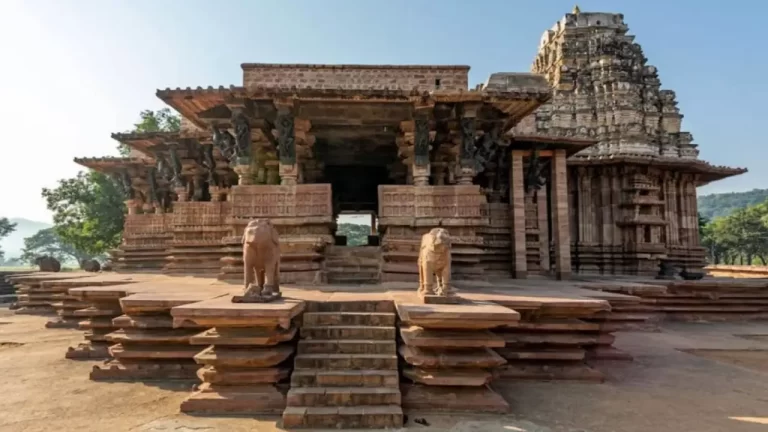
- 8.0.4 Ramappa Temple: An 800 Years Old Architectural Marvel
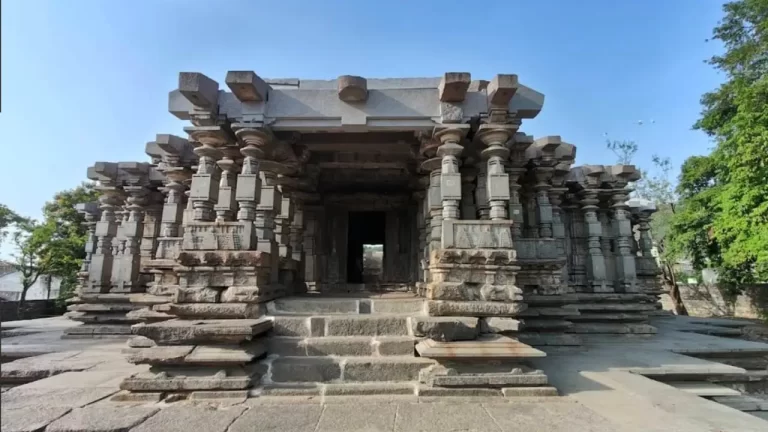
- 8.0.5 Thousand Pillar Temple: India’s Amazing 1000 Pillar Temple!
- 8.0.6 Tadbund Hanuman Temple: The Most Powerful Temple in Telangana
- 9 Accommodation Options: Resting Your Pilgrim’s Heart
- 10 How to Reach the Basara Temple: Your Journey to Knowledge
- 11 Trending Questions About Gnana Saraswati Basara Temple
Basara Temple History : Echoes of Antiquity
History of the Basara Temple is as complex and multilayered as the ancient land beneath which it stands. Though its past is lost in the mists of time, folkloric tradition and some history indicate a deep association with the post-Mahabharata period.
Legend has it that the temple was founded by no less a person than Sage Veda Vyasa, the great compiler of the Vedas and the writer of the epic poem Mahabharata. Following the earth-shaking Kurukshetra War, it is said that Sage Vyasa, eager to escape the carnage he had witnessed and attain spiritual peace, had moved south along with his disciples, among them Sage Suka. They came to this peaceful place on the banks of the Godavari, then in the Dandakaranya forest. The peacefulness of the surroundings greatly struck him, and he sat here for meditation.
In meditation, Goddess Saraswati is said to have appeared before him, bestowing her divine grace in the form of the Tridevi – the divine trinity of Saraswati, Lakshmi, and Kali. She ordered the sage to put three handfuls of sand in three places. Amazingly, the sand dunes turned into the idols of Saraswati, Lakshmi, and Kali. Although all three gods are worshipped here, the temple is mostly devoted to Goddess Saraswati, who is worshipped as Gnana Saraswati, the goddess of knowledge.
Since Sage Vyasa lived and did penance here, the site was originally referred to as Vyasara or Vyasapuri. Through ages, because of local linguistic influences, especially Marathi, the name gradually transformed into Basara.
Historically, it is said that a Chalukya king called Bijialudu, who ruled the province of Nandagiri with Nanded as its capital in the 6th century CE, had a strong role in building or maybe even repairing the temple. There are also stories of the idols being restored in the 17th century by a chieftain of Nandagiri following vandalism by invaders, indicating the temple’s strength over centuries.
What is really interesting is the fact that the Brahmanda Purana, which is one of the eighteen Mahapuranas in Hinduism, makes a mention of this holy site. It says that Adi Kavi Valmiki, the poet of the epic Ramayana, also composed some portions of his masterpiece here, in praise of Goddess Saraswati.
Even close to the temple, there is a marble rock where the Samadhi (resting spot) of Maharshi Valmiki is believed to be located. This is further evidence of the ancient and deep religious heritage of Basara Temple. For me, having such venerated names once walking upon these lands brings an incredible richness to the pilgrimage. It’s being introduced into the pages of history and mythology at the same time.
Read More>> Kanchi Kamakshi Temple: One of Powerful 18 Shakti Peethas
Legend of the Gnana Saraswati Temple: A Divine Manifestation
The Basara Temple legend and that of Gnana Saraswati is not merely a tale; it’s the very essence of this holy place. As I have stated already, everything centers around Sage Veda Vyasa and his search for inner tranquility.
As a sequel to the disastrous Kurukshetra War, Sage Vyasa was shaken at the vast destruction of life and the unimaginable suffering. He was looking for a spot of deep peace where he might find spiritual reconciliation and pen down the Mahabharata. His quest took him to the shores of the pious Godavari River, here in Basara. The peaceful environment, the soft current of the river, and the lush green surroundings struck a chord of peace in his exhausted heart.
He chose to meditate here, and it was while in this concentrated meditation that Goddess Saraswati, with Goddess Lakshmi and Goddess Kali, appeared to him. This divine appearance was a gift, and the goddesses taught Vyasa to do a daily practice: to leave three handfuls of sand, gathered from the river, in three designated places. At each installation, there was a miracle – the sand became the sacred idols of Saraswati, Lakshmi, and Kali. It was a miracle that welcomed the birth of the temple we have today.
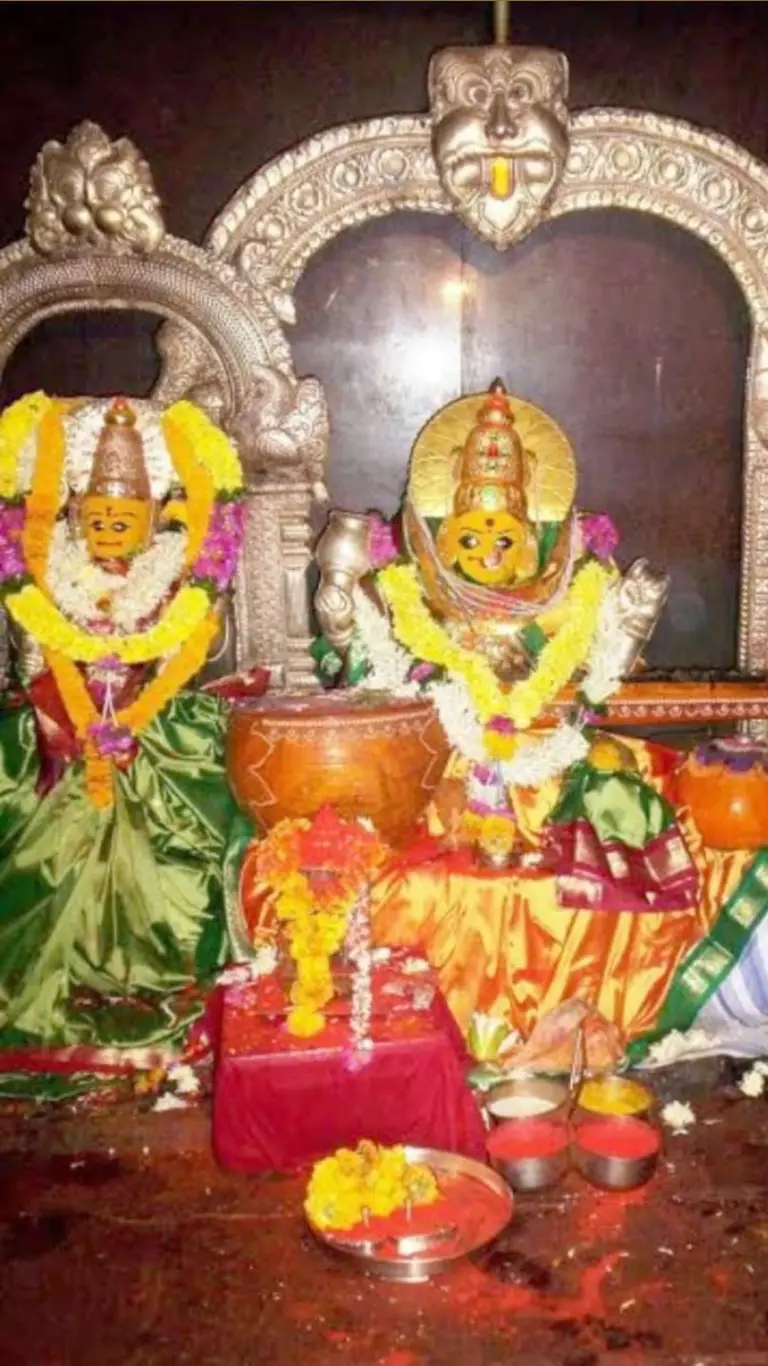
The idol of Goddess Saraswati, the presiding deity, is especially distinctive. Unlike most sculpted idols, it is said to have grown naturally out of a rock, which lends it an earthy and timeless quality. She sits, holding in her hand the Veena, or the musical instrument, representing the arts, and turmeric has been placed on her as an offering by devotees, as it is highly auspicious.
The myth stresses the temple’s status as a seat of learning. Through meditation here, it is said that Sage Vyasa became inspired and enlightened to accomplish the gargantuan work of compiling the Vedas and writing the Mahabharata. This supports the belief that Gnana Saraswati is actually the grantor of deep knowledge and understanding. Numerous devotees are also of the opinion that eating the turmeric (kumkum) prasadam given here can give one wisdom and a keen mind. I have seen individuals take special care to gather this prasadam, a show of respect, a reflection of their faith in the story not wavering at all.

Cultural, Spiritual, and Mythological Significance of the Temple
The Gnana Saraswati Basara Temple is extremely important on cultural, spiritual, and mythological levels and is a central pilgrimage site in South India.
Culturally, Basara is a lively center where old customs are preserved. The Aksharabhyasam ceremony, when children are officially introduced to the world of letters, is an extremely deep-rooted cultural practice. Parents from all over the country, particularly from Telangana, Andhra Pradesh, and Maharashtra, throng here to carry out this ritual for their children. It’s a lovely expression of the importance of learning and the acknowledgement of Goddess Saraswati as the guardian of knowledge.
The temple grounds ring with the animated conversation of kids and the optimistic petitions of parents, weaving a rich cultural fabric. The fact that a child sits down and writes their first letters on a slate using chalk or rice grains, taught by the priests, is a profoundly affecting experience that bridges generations.
At a spiritual level, the temple is an influential hub of faith. The existence of the Tridevi – Saraswati, Lakshmi, and Kali – represents the comprehensive nature of blessings of the divine: knowledge, wealth, and strength. Fans and pilgrims are convinced that a pilgrimage here not only earns academic boons but also cleanses the mind and spirit, resulting in peace of mind and spiritual development. Proximity to the holy Godavari River adds to its spiritual holiness.
A religious dip in the Godavari prior to temple darshan is a well-loved ritual, which cleanses one of sin and readies one for divine darshan. The air of piety is thick; you sense the genuineness in each prayer and the optimism in each offering. For me, it’s a site where the mundane really becomes the magnifico through belief.
Mythologically, as mentioned, the association of the temple with Sage Veda Vyasa and Maharshi Valmiki gives it a grand status. The mention of this holy site in the Brahmanda Purana makes it a living testament to its ancient history and divine blessings.
Brahmanda Purana, Chapter 44, Verse 70-71 (Partial Reference):
“There, on the shores of the sacred river Godavari, where the sage Vyasa did penance, stands the hallowed home of Vagdevi (Saraswati), pouring knowledge and blessings on all who approach her.”
This citation from the scriptures certifies the beliefs of millions, reassuring them that they are actually visiting a site of great mythological significance. It’s a living proof of the lore told across generations.
Read More>> Vidyashankara Temple Sringeri 12 Pillars Reveal Your Destiny
Festivals and Special Days: A Calendar of Devotion
The Basara Temple truly comes alive during its various festivals and special days, drawing massive crowds of devotees from far and wide. If you’re planning a visit, understanding these times can enhance your experience, though be prepared for large gatherings!
Vasantha Panchami (Magha Shuddha Panchami): This is arguably the most significant festival celebrated at Basara. It is the Jayanti (birthday) of Goddess Saraswati and the beginning of spring. The whole temple complex is decorated with colourful flowers and glittering lights. Thousands of kids are taken for Aksharabhyasam on this day, so it is an extremely lively and spiritually intense environment. The queues are extremely long but the combined energy and faith are worth witnessing. It is a day when pursuit of knowledge is rejoiced with unprecedented passion.
Dasara Navaratri (Ashweyuja Shuddha Padyami to Dashami): The nine nights of Navaratri are observed with grand majesty. The Goddess Saraswati is decorated with a new Alankaram (ornament) every day, symbolizing her different divine manifestations. Special poojas and homams (fire oblations) are conducted, and cultural events featuring music, dance, and traditional arts are frequently arranged. The temple is gorgeously illuminated, and the atmosphere is filled with devotional hymns. Vijayadashami, the tenth day, is especially favorable for Aksharabhyasam.
Vyasa Pournami (Ashada Shuddha Pournami/Guru Purnima): Also dedicated to the mythological founder of the temple, Sage Veda Vyasa, this full moon day is celebrated with special poojas. It’s a day of celebration for disciples paying homage to their gurus, and with Vyasa connected to learning, it is an apt tribute here.
Maha Shivaratri (Phalguna Trayodashi): Although Saraswati is the main deity, Lord Shiva too is worshipped, particularly as the husband of Saraswati in a few schools of tradition. Lord Shiva receives special abhishekams and prayers on this night, with devotees keeping fasts and singing bhajans and devotional songs through the night. There is a Shiva temple in the Godavari banks near the main temple that also witnesses huge crowds.
Crowded Days: Apart from the major festivals, Basara Temple is thronged on Sundays and weekdays during public holidays. Favorable days for Aksharabhyasam, as decided by the Hindu calendar (such as Saraswati Jayanti or specific Nakshatras), also experience a crowd. Avoiding a crowded visit, weekdays, apart from festival seasons, are normally advised. But visiting the temple in a festival time really submerges you in its energetic spiritual vibe. I always advise travelers that despite the crowds, there’s something special in the shared devotion that you get to experience that makes the chaos worth it.
Special Poojas and Offerings: A Personal Connection There are quite a few special poojas and offerings at Gnana Saraswati Basara Temple that enable devotees to bond with the Goddess on a personal level. Aksharabhyasam: This is perhaps the most important and popular ritual at Basara.
“Akshara” refers to letter, and “Abhyasam” refers to practice or initiation.
It is a lovely ceremony in which young children, usually between two and five years old, are introduced into formal learning.
Parents bring their children with them, and the priests under instructions make the child practice their first writing – generally “Om” or the alphabet – on a slate using chalk, or on a plate of rice grains with the finger, representing the initiation of their learning path.
Basara temple supplies all the materials such as slate, chalk, and books for a small charge. It is said that conducting Aksharabhyasam here grants the children the blessings of Gnana Saraswati, guaranteeing brilliant academic careers and keen minds. I’ve seen many parents crying with tears of gratitude and hope in their eyes during the ceremony. It’s a moment of immense importance for most families.
Abhishekam: It includes showering the idol of Goddess Saraswati with different holy materials such as water, milk, honey, yogurt, and other items. It is done in the early morning, and seeing the Nijaroopa Darshan (glimpse of the deity in its true form without any ornamental decorations) during Abhishekam is deemed very auspicious. One can provide their own holy material for the Abhishekam. The ceremony is said to cleanse sins and destroy obstacles.
Kumkum Archana: This is the process of pouring kumkum (vermilion powder) on the Goddess while reciting her sacred names. It’s a well-liked seva (service) conducted by devotees praying for well-being, prosperity, and accomplishment of desires.
Nitya Chandi Yagam: A daily ritual of fire performed to obtain the blessings of Goddess Chandi (one of the manifestations of Durga, who is a manifestation of Saraswati). It is said to bestow peace, prosperity, and protection.
Pallaki Seva: At night, a ceremonial walk in which the deity is taken in a palanquin (pallaki) around the temple grounds. This seva is a feast for the eyes and the soul, with devotional music and chanting.
Though there are specific charges for these poojas, the temple management keeps them affordable. It is always wise to inquire about the current timings and fees at the temple counter on arrival. These poojas are not mere rituals; they are expressions of devotion and an opportunity to receive direct blessings from the Goddess of knowledge, Gnana Saraswati.
Aesthetic Architectural Forms and Carvings: A Glimpse into Artistry
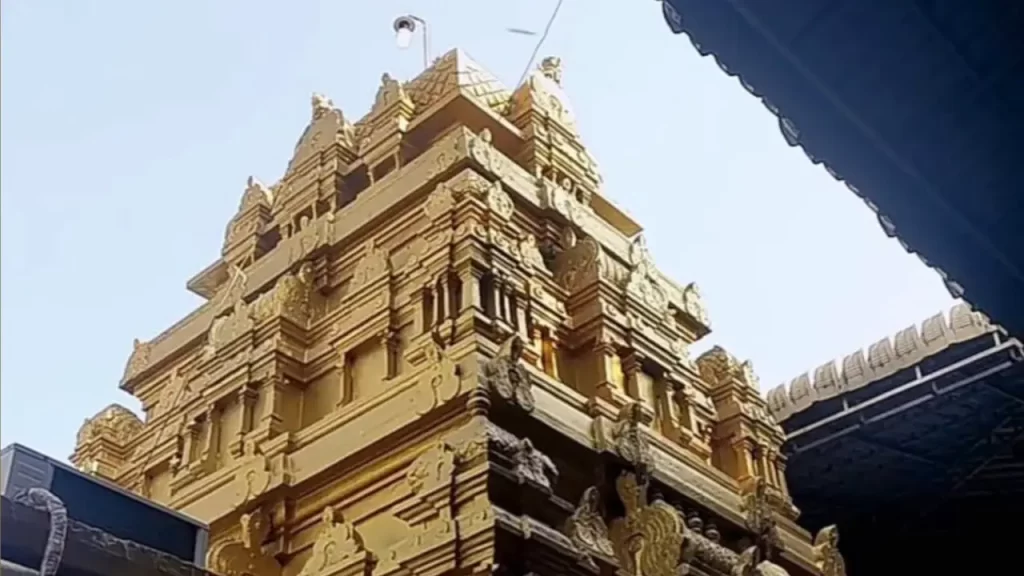
The Basara Temple, though old, may not have the imposing, high gopurams or complex sculptural ensembles of some of the South Indian temples. It is rather charming because it is simple, historical, and uniquely a combination of architectural influences, most notably the Vesara style.
The Vesara style temple architecture is an interesting blend, and most commonly found in the Deccan peninsula, particularly Karnataka and some parts of Telangana.
It is the pleasing combination of the Northern Indian style Nagara and the Southern Indian style Dravida.
While the Nagara style usually has a curvilinear tower (shikhara) above the sanctum, and the Dravida style has pyramidal towers (vimanas), the Vesara style tends to have a tower that is pyramidal in shape but lower than a Nagara shikhara, and occasionally has a circular or elliptical base.
At Basara Temple, you can see facets that suggest this Vesara influence.
The overall architecture is quite modest in relation to some mega temples, but it has a subtle elegance. The primary shrine containing Gnana Saraswati is supposed to have been constructed with local stone. Though complicated, very detailed carvings may not be its hallmark, you’ll discover subtle ornamentations and classic motifs that mirror the regional craft of the time it was built or refurbished.
The temple complex is not only the central shrine. There are other smaller shrines for other deities, and you may see differences in their build. The simplicity allows you to pay more attention to the spiritual aspect than be dazed by architectural designs. What really stands out is the natural rock structure of the idol of the Goddess Saraswati herself, rendering it an unusual, untamed feel. Usually, as in Basara temples, the emphasis is less on outward decoration and more on the divine presence that abides.
The building is merely a modest covering for the divine power. I want you to notice the design of the temple, the building materials, and the slightest of decorative touches you can perceive. It speaks of worship and the development of architectural traditions in the area.
Read More>> Chamundeshwari Temple Mysore: Architectural Marvel & Spiritual Wonder
Myths and Beliefs: The Fibers of Faith
Apart from the recognized legends, the Gnana Saraswati Basara Temple has many myths and beliefs that enhance its aura and deep spirituality. These legends, long held by generations, enhance the bond between the devotee and the god.
The Turmeric Power (Kumkum): One of the most widely known beliefs revolves around the kumkum (turmeric powder blended with lime to provide it a reddish color). They say the idol is covered from top to bottom with kumkum for some time, and this purified kumkum is distributed as prasadam among devotees. There is a firm belief that eating this kumkum grants extraordinary knowledge, improves the mind, and makes children good at studies. Parents mostly bring small vessels to take home this prasadam for their kids. It is a material connection with the Goddess’s blessings.
The Trinity of Gods: Goddess Lakshmi (goddess of riches) and Goddess Kali (goddess of power and time) provide their presence together with Goddess Saraswati (goddess of intelligence) to emphasize the thought that this is a site where success in all its forms – intellectual, material, and spiritual – may be achieved. Adherents have faith that praying before the Tridevi here ensures comprehensive wellness.
Valmiki’s Ramayana: As discussed above, the myth that Maharshi Valmiki wrote some sections of the Ramayana at this very location prior to the arrival of the Mahabharata adds even more literary and spiritual importance to the temple. It makes Basara not just an ancient association with the Mahabharata period but also with much older, root Hindu scriptures. The existence of a Samadhi (mausoleum) of Valmiki close to the temple supports this myth.
Sanctity of the Godavari: The union of the Manjira River with the Godavari near Basara is specifically sacred. Holy bath in the Godavari at the ghats (steps leading to the river) before visiting the temple is a firmly rooted belief. The waters here are said to have cleansing properties, washing away one’s previous wrongdoings and making the devotee worthy of the blessing of the Goddess.
Fulfillment of Wishes: Like many sacred sites, there’s a strong belief that sincere prayers offered at Basara Temple are heard by Gnana Saraswati and wishes, particularly those related to education, career, and intellectual pursuits, are fulfilled. This faith drives countless devotees to undertake the pilgrimage, seeking divine intervention in their lives. These myths and beliefs are not tales, they are the foundation of faith here. They give hope, comfort, and a way to appreciate the deep spiritual energy that pervades Basara.
Basara Temple Timings: Planning Your Darshan
To make your visit to Gnana Saraswati Basara Temple smooth and fulfilling, it’s essential to know the temple timings. Please note that these timings can sometimes be adjusted during major festivals or special occasions, so it’s always good to confirm upon arrival, but here’s a general schedule:
Temple Opening: Approximately 4:00 AM. The day starts with the Melukolupu Seva (awakening the god) and morning poojas.
Abhishekam: Generally between 4:30 AM and 7:30 AM. This is a special period for those devotees who want to see or be a part of the ritual bathing of the god. Nijaroopa Darshan is accessible during this period.
Aksharabhyasam and General Darshan:
Morning slot: 7:30 AM to 12:30 PM
Afternoon slot: 2:00 PM to 6:30 PM
In these hours, normal darshan for the devotees and the Aksharabhyasam ceremony are performed.
Temple Closure for Nivedana (Offering): 12:30 PM to 2:00 PM. The temple generally closes for a brief while for naivedyam (offering of food to the deity) and rest.
Pradosha Pooja/Evening Seva: 6:30 PM to 7:00 PM (approx.). This is the time of evening pooja.
Maha Harathi and Final Darshan: 7:00 PM to 8:30 PM (approx.). The day ends with a grand Harathi (lighting of lamps) and final darshan chances.
Temple Closing: Approximately 8:30 PM.
Must-Do Tip: Weekends, public holidays, and also major festivals such as Vasantha Panchami and Navaratri attract a huge crowd to the temple. It would be best to plan your visit early on these days in order to avoid long waiting lines, especially if you are going to conduct Aksharabhyasam. Weekdays, however, are less congested, providing a more peaceful experience.
Read More>> Madapuram Kali Temple Madurai
Places to Visit Near Basara Temple: Extending Your Spiritual Journey
While the Gnana Saraswati Basara Temple is the primary draw, the region around Basara offers a few other interesting places that can enrich your spiritual or cultural experience. Think of it as extending your pilgrimage beyond the main destination.
Sri Mahankali Temple: This temple, situated very near the main Saraswati temple, is dedicated to Goddess Mahankali, yet another powerful manifestation of the Divine Mother. Most devotees pray at this shrine after worshipping at Gnana Saraswati. It provides a different, yet equally powerful, spiritual energy.
Sri Dattatreya Temple: Located close by is this temple dedicated to Lord Dattatreya, the much-worshipped deity who is considered an avatar of the divine trinity of Brahma, Vishnu, and Shiva. It is a center of meditation and prayer for blessings from this complex deity.
Vyasa Maharshi Guha (Cave): Just a little way from the central temple, usually on a small hill, is a cave said to be the spot where Sage Veda Vyasa used to meditate. It’s a small, unassuming cave, but for those who connect with the legend, it’s an intense place for contemplation and tuning into the sage energy. It’s another dimension to the history and mythology of Basara.
Godavari River and Bathing Ghats: River Godavari itself is a holy place of pilgrimage. The ghats are the bathing ghats where the pilgrims take a dip in holy waters before going to the main temple, a tradition well established in Hindu dharma. Boating on the river is also possible here, which gives a calm view of the area.
Lord Shiva Temple: Situated on the banks of the Godavari near the bathing ghats, this ancient temple dedicated to Lord Shiva is another important stop for devotees. It highlights the interconnectedness of deities in Hindu worship.
Further Afield (within 50-100 km):
Kuntala Waterfall: If you want to mix your spiritual quest with a dash of nature, the Kuntala Waterfall, found in Adilabad district, is a lovely natural wonder, particularly when it’s in full flow during the monsoons. It’s a bit of a road trip, but scenic beauty is worth the drive.
Kanteshwar Temple, Nizamabad: This ancient Shiva temple in Nizamabad is famous for its beauty and history. It’s roughly 60 km from Basara.
Sarangpur Hanuman Temple: Also in Nizamabad, it’s a well-known Hanuman temple that attracts a decent number of devotees.
Visiting these surrounding areas can give a better picture of the religious and natural environment of the region. Just be sure to include travel time and transportation!
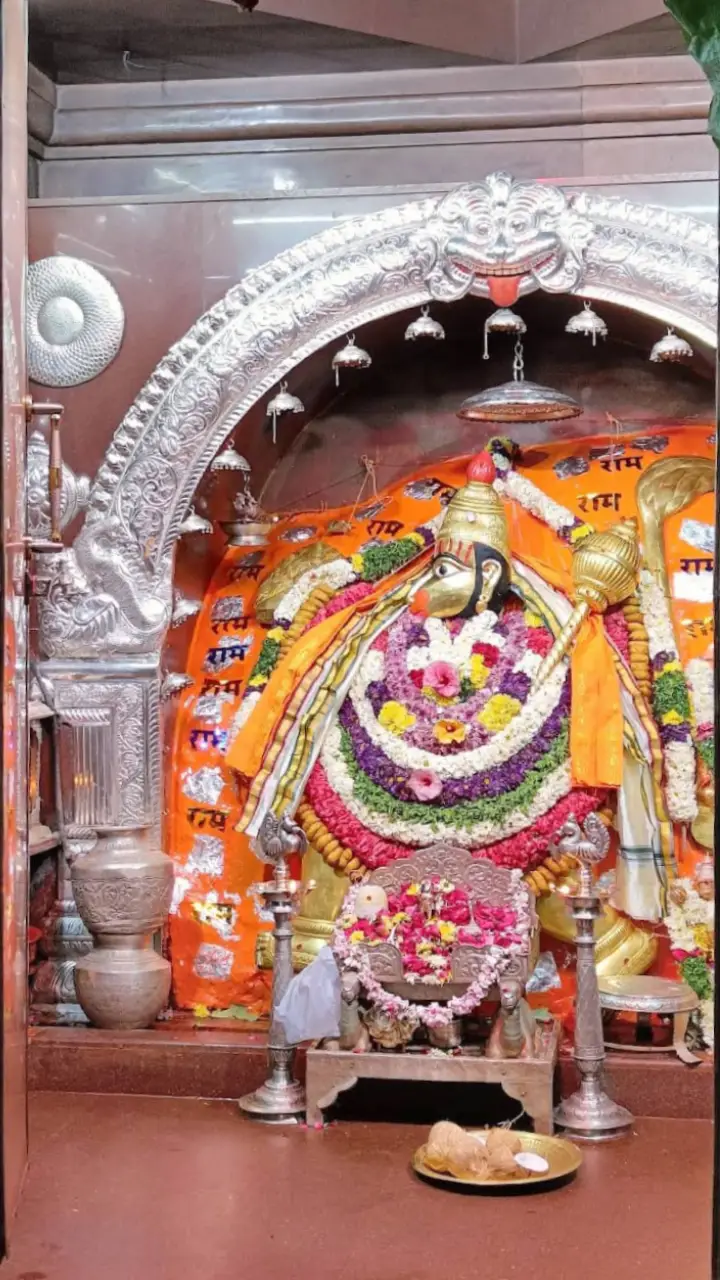

Accommodation Options: Resting Your Pilgrim’s Heart
After a day of religious sightseeing at Gnana Saraswati Basara Temple, you’ll want a restful place to rest your head. Basara, as a pilgrimage town, has a variety of accommodation options available, mainly for devotees and low-budget travelers.
Temple-Run Guest Houses (Devasthanam Accommodations): Various guest houses and choultries (pilgrim rest houses) are run by the temple administration itself. These are usually the most convenient and affordable ones, situated very near the temple complex.
TTD Guest House: Tirumala Tirupathi Devasthanam (TTD) has its own guest house here, with very affordable rates (e.g., Rs. 100-200 per day for simple rooms).
Other temple-related guest houses may include Vemulawada Guest House, Rajanna Nilayam, Babli Soma Guest House, etc., with both AC and non-AC facilities.
Brahmana Choultry and Vyshya Choultry are also available, providing basic lodging, often with communal facilities.
Pro Tip: These temple accommodations are usually on a first-come, first-served basis and cannot be booked online. It’s best to inquire about availability directly upon arrival, especially during peak seasons.
Private Hotels and Lodges: Basara has a few private lodging hotels that go from extremely simple to a bit more cozy.
There are lodges such as Hotel Laxmi Nivas, Hotel Kamadhenu, Omkar Residency, Hotel Sri Rama, Hotel Deeksha, VNR Lodge, and Hotel Tejaswini.
Some may provide AC rooms, typically at a slightly higher rate (Rs. 800 – Rs. 1800+). Non-AC rooms are less expensive (Rs. 300 – Rs. 1000).
Lords Hrim Akshara Resort – Basar is referred to as one of the good choices to stay comfortably.
Punnami Basara (Telangana Tourism Development Corporation) also has a hotel, which is generally a safe bet.
What to Expect: Majority of the stays in Basara are simple and hygienic, aimed at pilgrims instead of luxury seekers. Don’t anticipate five-star facilities. Simple amenities such as hot water, clean bed, and attached bathroom are generally provided. Rates in private ones might rise during peak season.
My recommendation is to always pre-book if you’re visiting during a big festival or a holiday weekend. Otherwise, you’ll probably be able to find something on arrival if you’re not too fussy with your options. Personally, I like the sparsity of temple accommodation; they do get you into the appropriate mindset for a spiritual pilgrimage.
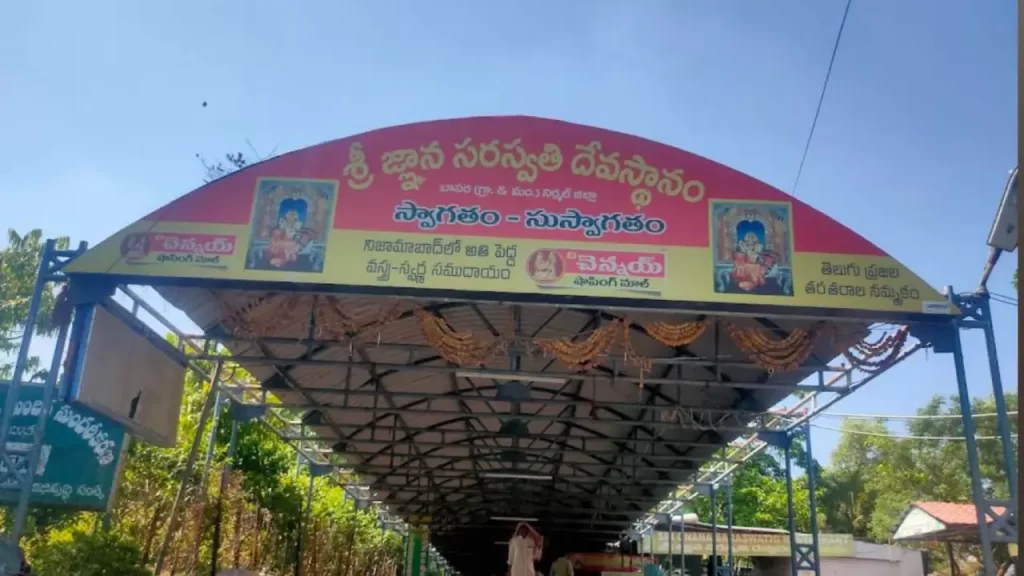
How to Reach the Basara Temple: Your Journey to Knowledge
It’s easy to reach the Gnana Saraswati Basara Temple, as it’s well connected by all modes of transport. Here’s an overview to assist you in planning your trip:
By Road:
From Hyderabad: Basara lies around 200-210 km from Hyderabad. It’s a good road, and it takes around 4-5 hours to reach there by car.
From Nizamabad: Basara is relatively closer to Nizamabad, around 35-40 km, a short drive.
From Nirmal: It’s approximately 70-75 km from Nirmal.
From Nanded (Maharashtra): Basara can also be reached easily from Nanded, Maharashtra, which is located approximately 110 km away, hence making it a favorite pilgrimage for devotees of that state too.
Bus Services: The Telangana State Road Transport Corporation (TSRTC) runs regular bus services from big cities and towns in Telangana, such as Hyderabad, Nizamabad, and Nirmal, to Basara. Bus services are available from areas of Maharashtra too.
By Train:
Basar Railway Station (BSX): The only positive aspect is that Basara boasts its own railway station, which is roughly 2.5 to 3 km away from the temple. Therefore, it is a very convenient option to travel by train.
Trains from Basara to major cities such as Hyderabad (Secunderabad, Kacheguda), Nanded, and other Telangana and Maharashtra cities are available in large numbers. You can find trains on railway websites. Auto-rickshaws and shared taxis are easily accessible from the railway station to reach the temple.
By Air:
Nearest Airport: The nearest main airport to Basara is Rajiv Gandhi International Airport (HYD) in Hyderabad, which is roughly 230 km from Basara.
Other Airports: Nanded Airport (NDB) at Maharashtra is the other alternative, which is roughly 110 km from Basara, with limited air connectivity.
Either airport, you would have to take a bus/train or hire a taxi to go to Basara.
Personal Tip: If you’re traveling from Hyderabad or the vicinity, a mix of car/taxi or bus is highly convenient. If trains are your preference, the accessibility of Basar railway station to the temple is a great boon. Whichever way you make your way, the travel to Gnana Saraswati Basara Temple becomes part of the experience, a journey towards wisdom and serenity.
Read More>> Nitya Kalyana Perumal Temple: Unlock Your Marriage Destiny!
Trending Questions About Gnana Saraswati Basara Temple
Let’s answer some of the most frequently asked questions about Gnana Saraswati Basara Temple, since a good guide already knows what’s on your mind!
Is Basara Temple the sole Saraswati temple in South India?
No, it is one of India’s two oldest and most famed Saraswati temples, the other being in Kashmir. In South India, though there may be other Saraswati shrines, Basara occupies a special and highly auspicious position, particularly for Aksharabhyasam.
Can Aksharabhyasam or accommodation be booked online?
For the most part, no. For Aksharabhyasam, tickets are typically booked on arrival at the temple counter. Likewise, temple-run guest houses are first-come, first-served. Private hotels may have online booking, but for temple services, it’s largely on-site. It’s always best to arrive ready for direct booking.
What do I take with me for Aksharabhyasam?
While the temple offers the required items (slate, chalk, small book, at times rice for writing), most parents prefer to take their own brand new slate, chalk, and small notebook/pencil as a personal offering. Some also carry a small quantity of rice and turmeric powder. The temple will advise what is required.
What are the best days for Aksharabhyasam
Anyday is auspicious, but Vasantha Panchami and Vijayadashami (Dasara) are most preferred and are the busiest days for this ceremony. Weekends also account for a large number of Aksharabhyasams.
Are there any dress restrictions in the temple?
Although there is no formal dress code like in some temples, it is recommended to dress modestly and respectfully. Dressing up in traditional Indian clothing (sarees, salwar kameez for women, dhotis or pants/shirts for men) is best. No revealing outfits.
Can I bring my phone or camera with me into the temple?
Photography within the sanctum sanctorum is usually not permitted for religious sanctity. You may be permitted to bring phones on the temple campus, but usually, they will request you to turn them off or keep them in silent mode. It’s always wise to inquire at the entrance.
Are there any particular do’s and don’ts?
Do: Keep quiet and respectful within the temple, go for a sacred dip in Godavari if feasible, remove your shoes before entering the temple, and respect temple traditions.
Don’t: Don’t have non-vegetarian food or liquor before coming to the temple, disturb fellow devotees, or click photographs where not allowed.
Is Basara good for a day trip?
Yes, if traveling from neighboring cities such as Nizamabad. From Hyderabad, it is a long day trip, but most people do. It’s better to stay overnight to relax, particularly if you want to undergo several poojas or visit other places nearby.
6 Comments